Historical Textile Embroideries

A collection of vintage textiles featuring intricate embroidery, lace details, and floral patterns, showcasing craftsmanship from England, France, and China, dating from the 1700s to early 1800s.

Square cashmere scarf, with mid -motif with beveled corners, filled with loose flowers, anonymous, c. 1830 - c. 1840 Square palms scarf, woven from wool, with a white center whose corners are chamfered. The middle is filled with loose flowers and border with densely overlooked flowers. The pattern is symmetrical around both cruising axes. In the heart a fine star flower in yellow, red, gray and white. Around it eight in a window, loose flowers in the same colors, of which four carnations with an inward Bota and four palm -shaped carnations. Around a circle of twelve flowers, of which eight carnations in yellow and four leaf -shaped yellow flowers. An outer edge of twenty other flowers, four times two Spitsovaal and the middle leaf -shaped, the latter is attached to the finely drawn gridwerkhoeke on which small Botas are and a square. The edge consists of smooth wavy treings, full of pattern flowers in the same colors. The side edges walk on the crosses with their lists. The technology
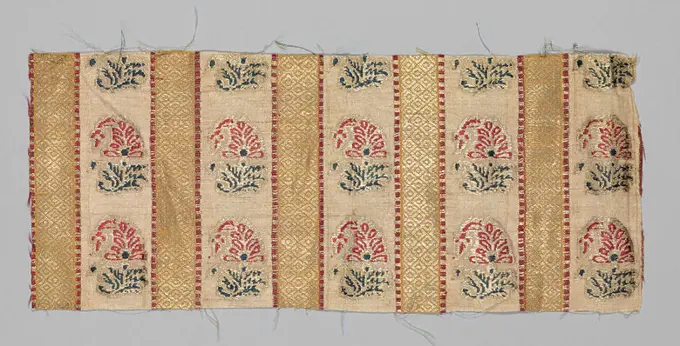
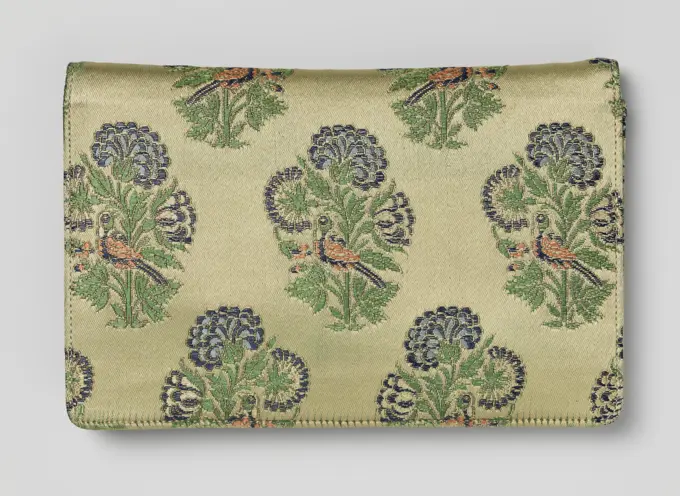
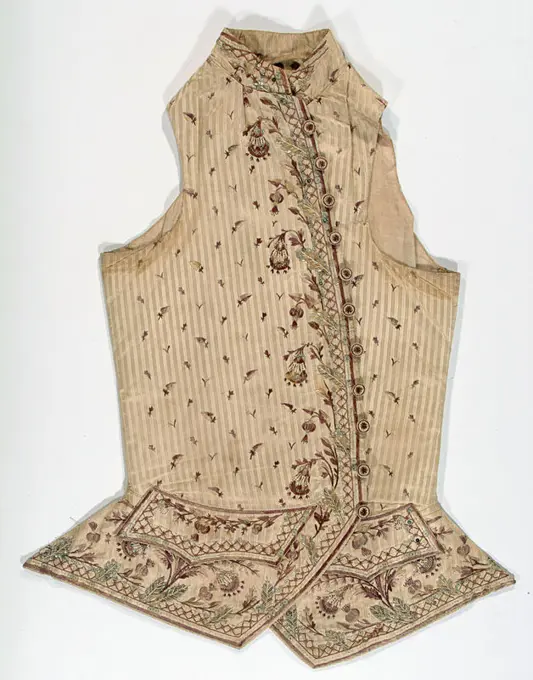
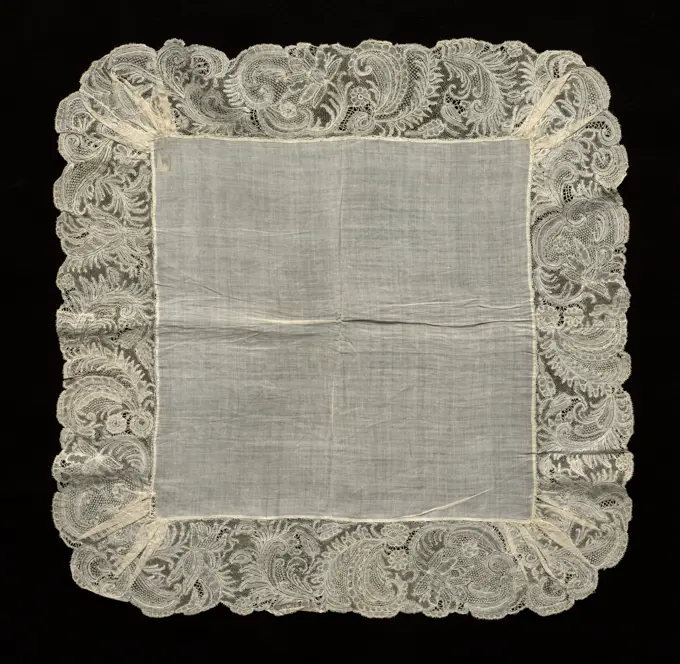
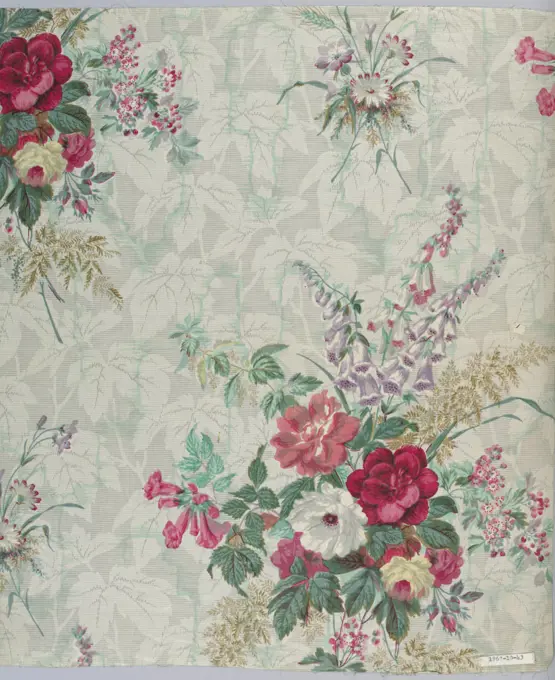
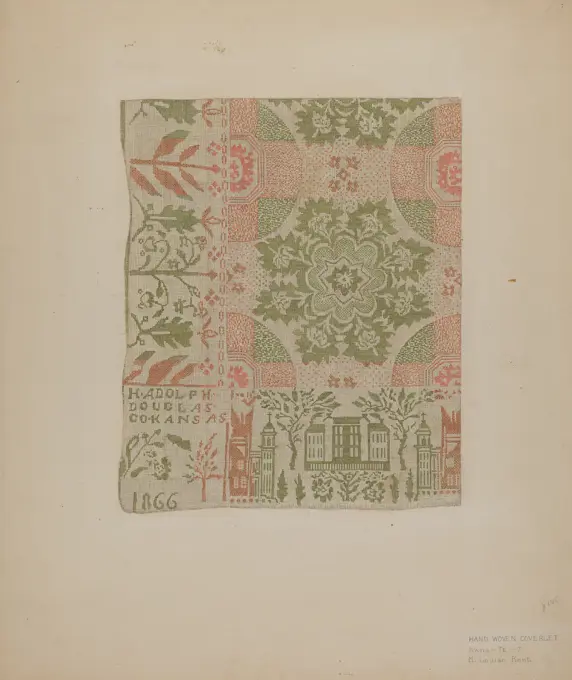
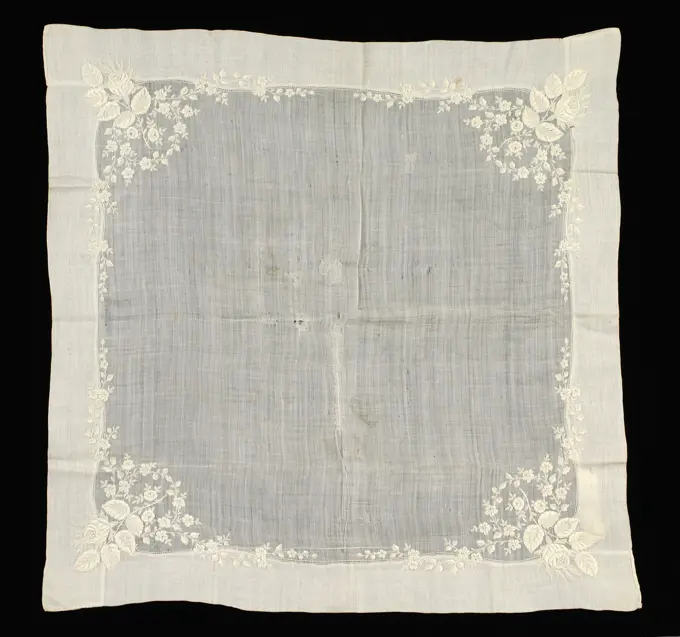
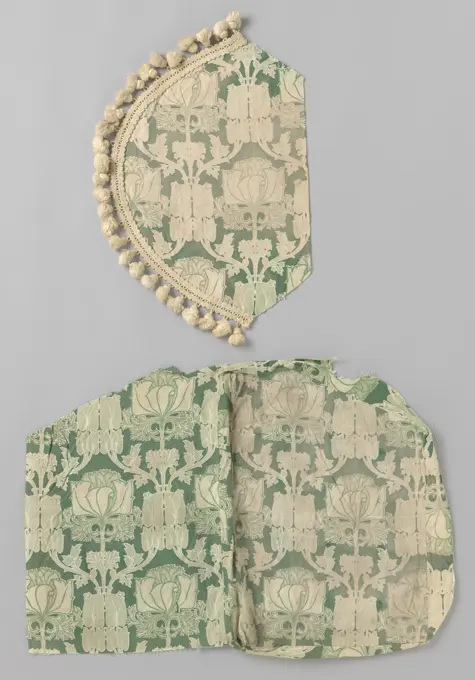
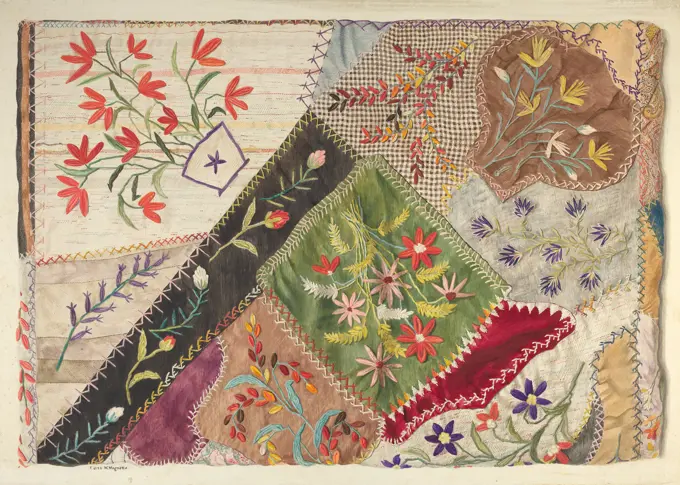
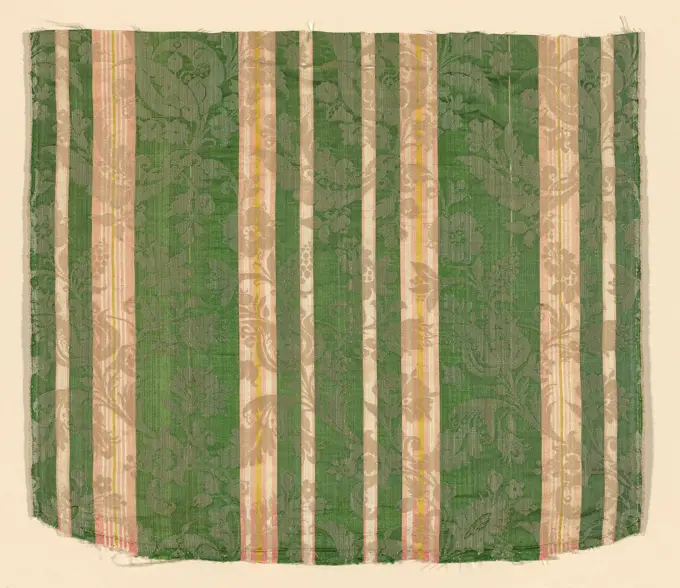
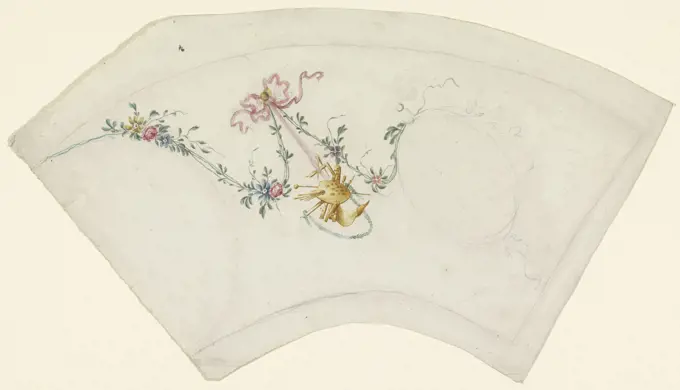
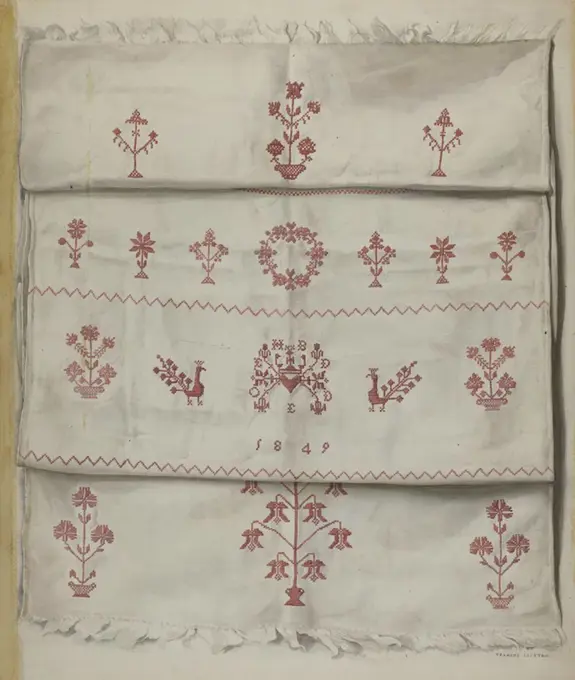
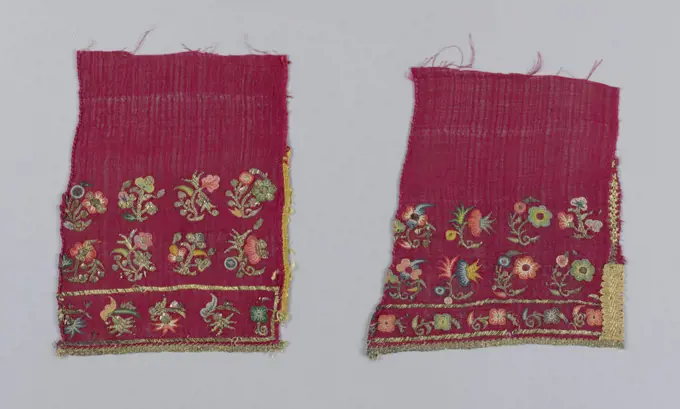
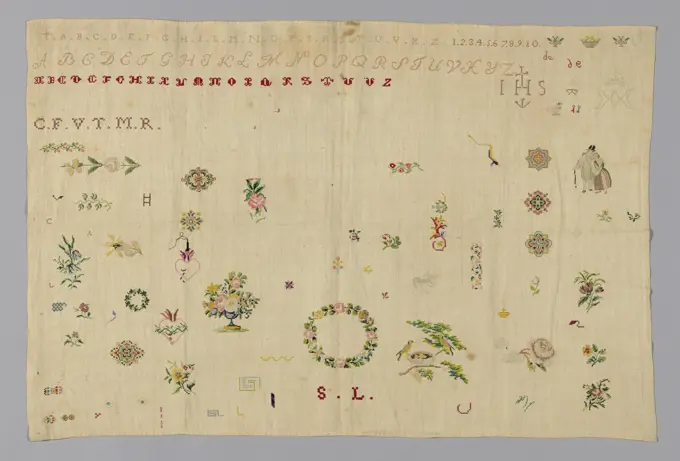
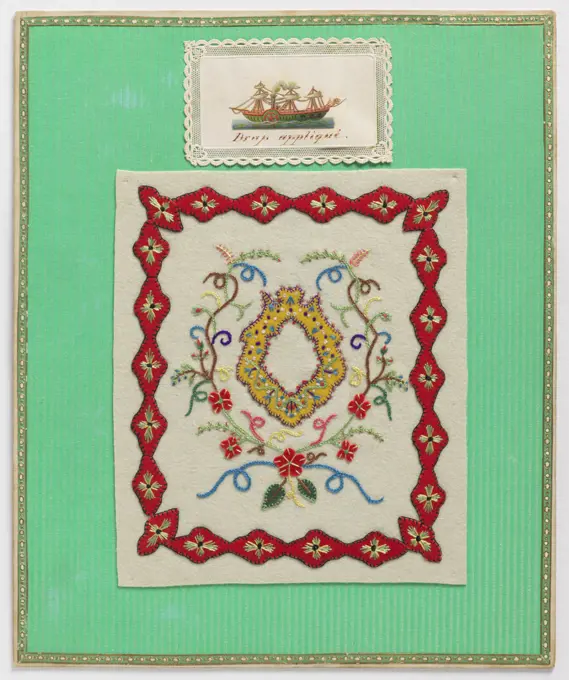
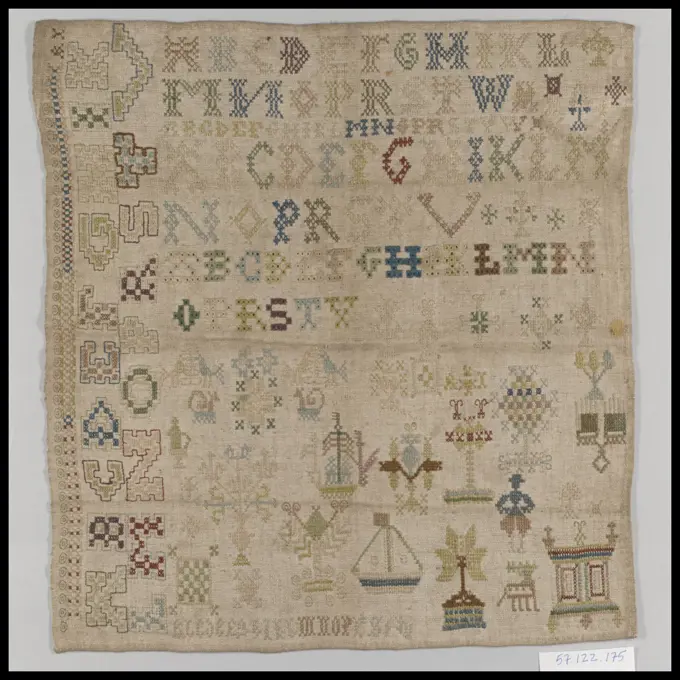
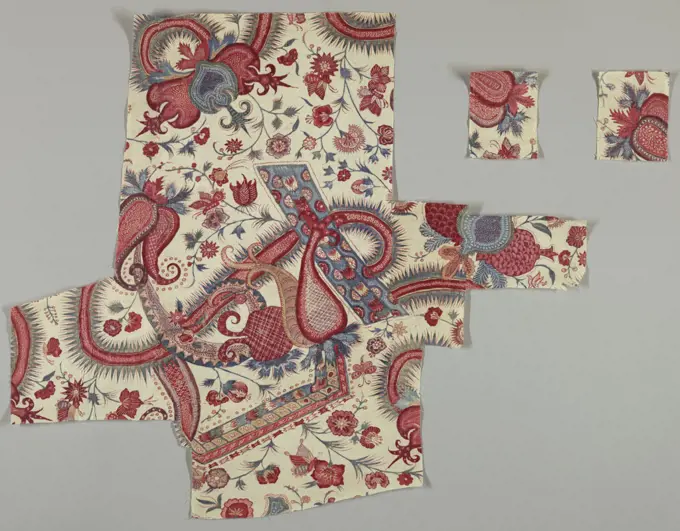
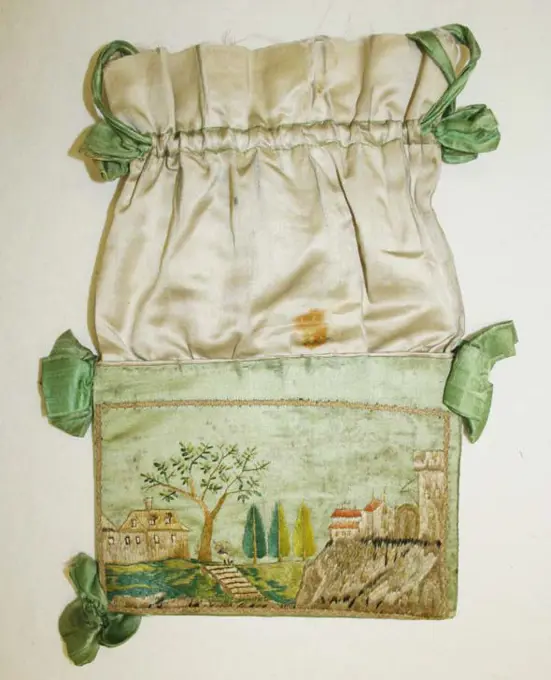
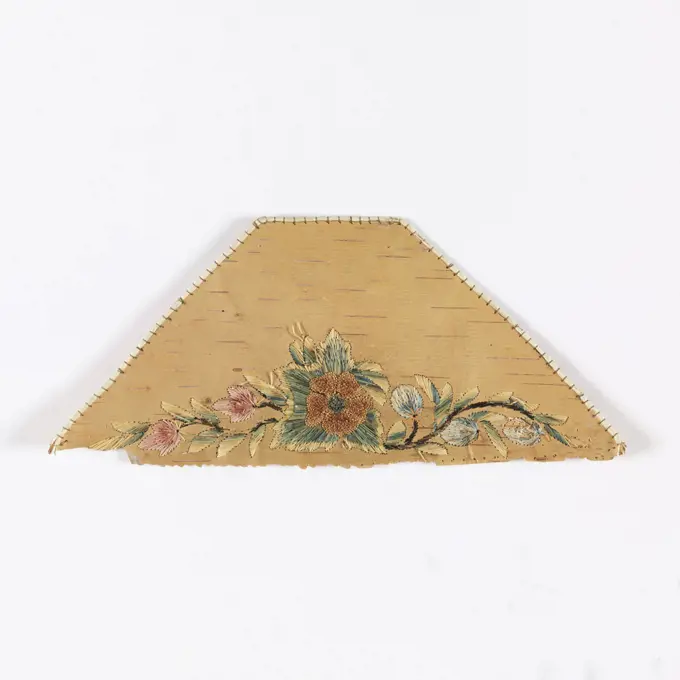
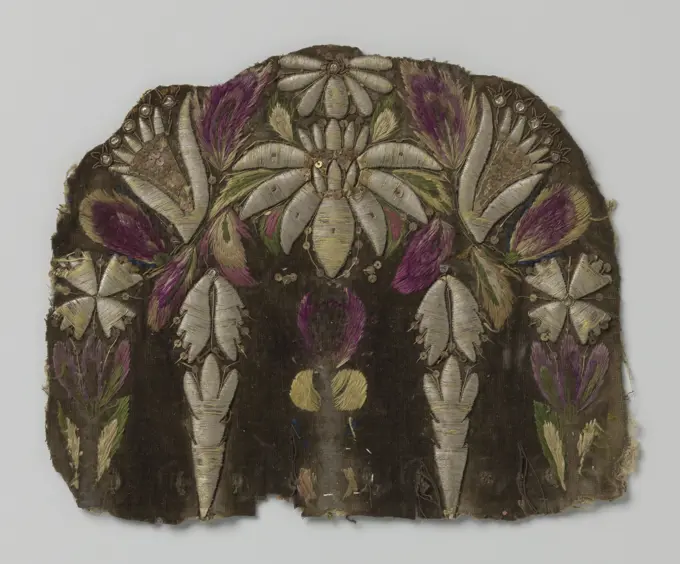
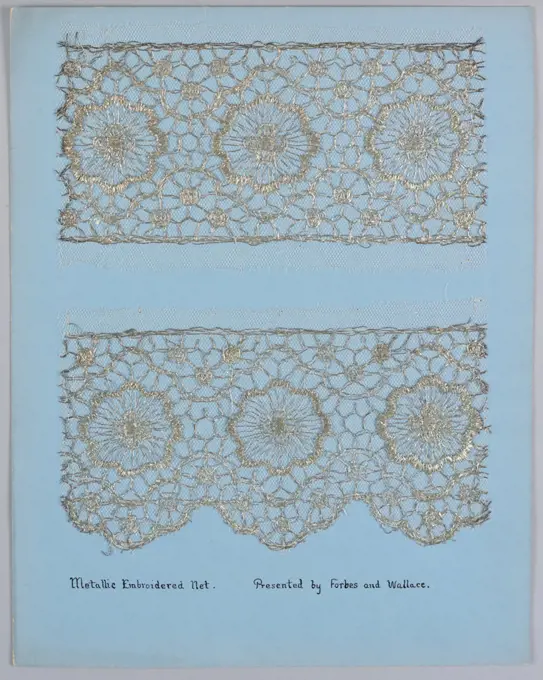
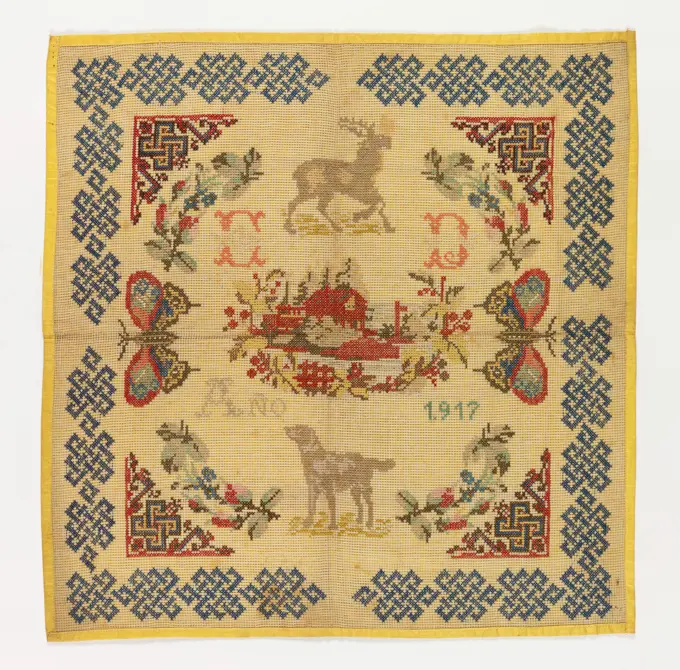
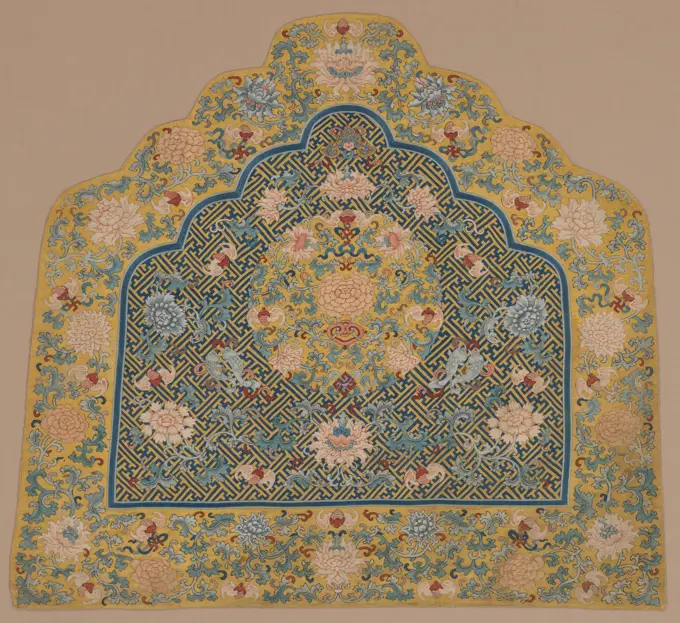
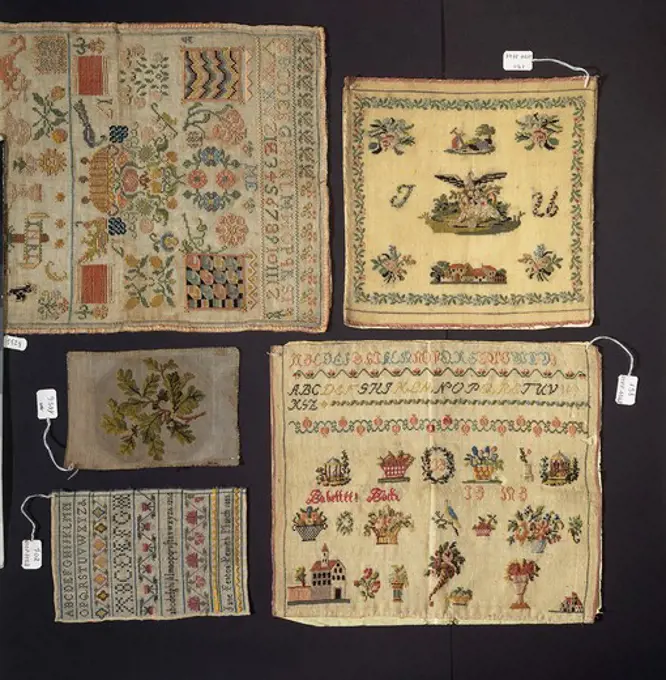
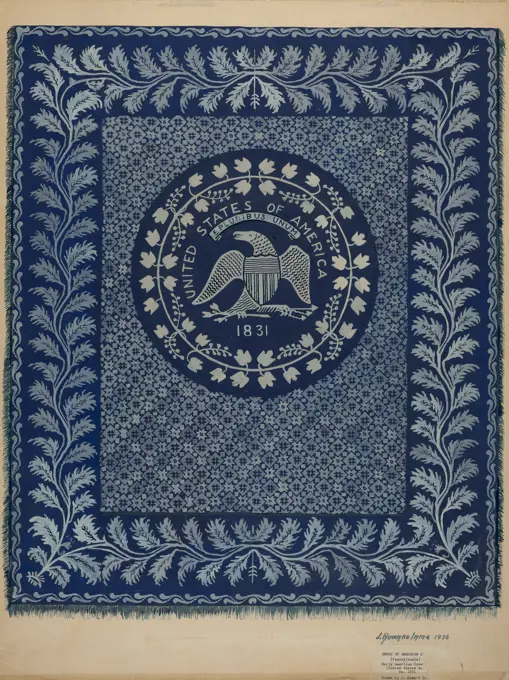
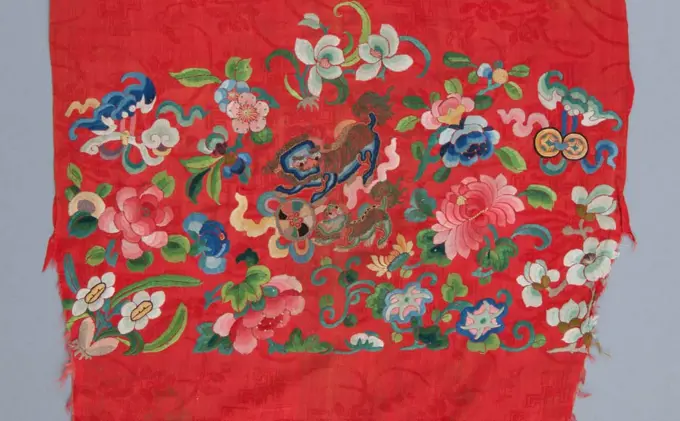
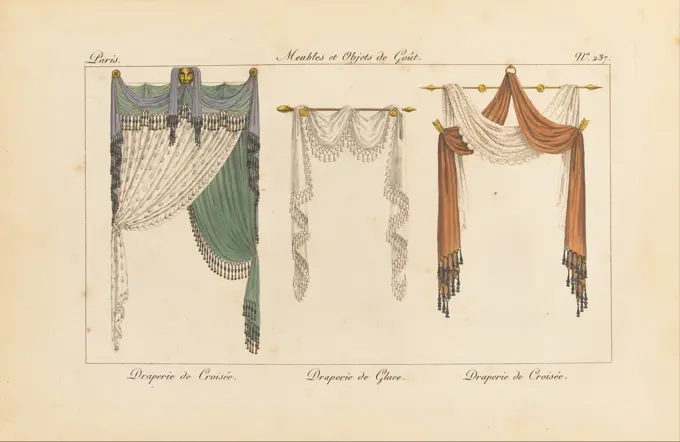
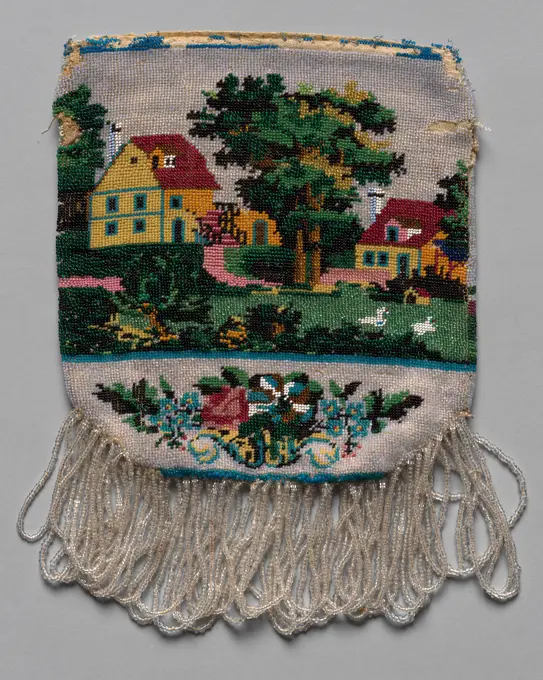
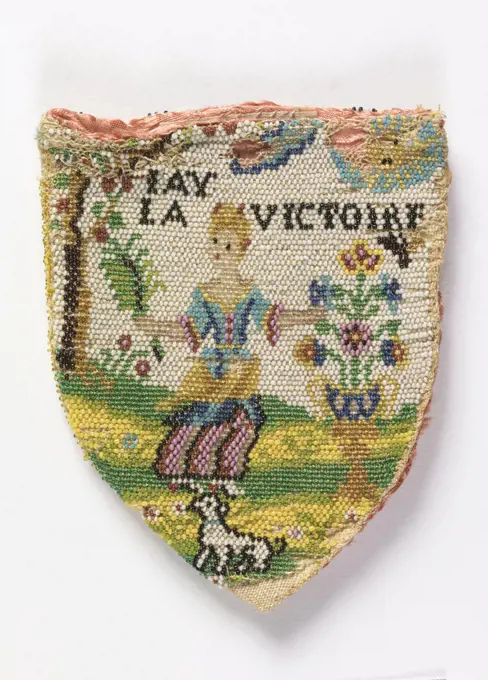
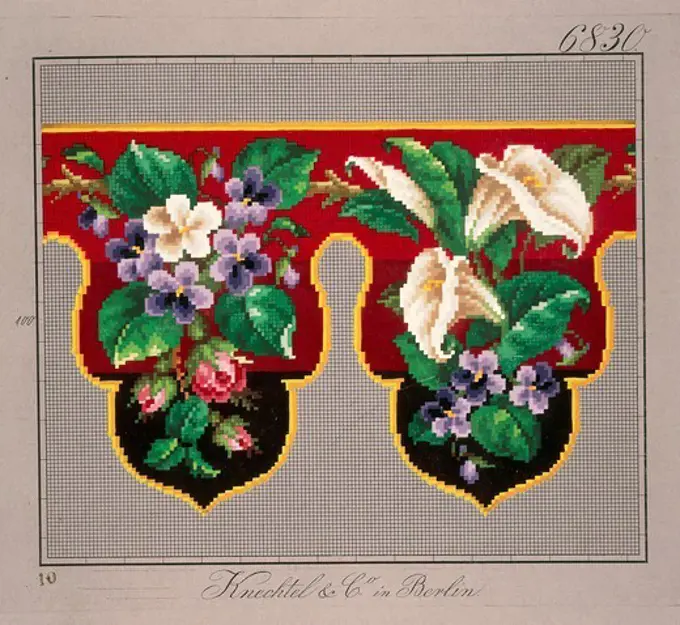
Closed pocket of the 18th. Gal1969.1.12_1Sewing sample, France, late 19th century, Sewing sampleSampler (Mexico); silk embroidery on linen foundationTextile, Medium: linen, wool Technique: crewel embroidery on plain weave, Band of crewel embroidery with fantastical foliage and flowers in blue, green and red wools on an ivory ground., England, 18th century, embroidery & stitching, TextileTextile fragment. Dimensions: L: 3.25 in (8.3 cm) x W: 8 in (20.3 cm). Date: 18th century. Museum: Metropolitan Museum of Art, New York, USA.Bag in a rectangular model with valve, of green -yellow brocade with a pattern of flowers and birds, with a fair and mirror, Fa. van Goethem, c. 1950 Bag in a rectangular reinforced model with valve, of green -yellow brocade with a pattern of loose floral motifs, each with a bird. On the inside a narrow front and back pocket and large middle section. In the middle compartment on the one hand a Beige Ripszijde and a bracket stock exchange with copper closure, in which a powder cushion and on the other hand a box with a rectangular mirror, bordered with chamois leather, on a strip of silk. The bag has one soufflé and is lined with beige rips side. The valve closes by means of a copper snap button. maker: BrusselsParis whole: Silk. Reinforcement: Paper. Closure: Copper (Metal). Lining: Silk. Mirror: Glass. Mirror: Aluminum (Metal). Spiegel: Leather forging Bag in a rectangular reinforced model with valve, of green -yellow brocade with a pattern of loose floral motifs, each with a bird. OnFragment, Medium: wool embroidery on cotton foundation Technique: embroidered in chain stitch (needle-made), knots and satin stitch on a 2/2 twill foundation, Piece of crewel embroidery colored yarns with scattered motifs in a grid arrangement. The motifs do not repeat in a regular manner but alternate a florral motif 8 different ones, sometmes facing in different directions with an animal or bird motif 8 different ones Different colors are used when a motif is repeated., France, 18th century, embroidery & stitching, FragmentTowel or Napkin Made 1875-1900 Turkey. Embroidered . AnonymousTextile (England); cotton; Warp x Weft: 44.5 x 64 cm (17 1/2 x 25 3/16 in.) Repeat H: 35 cm (13 3/4 in.)Handkerchief 1893 American. Handkerchief 121631Waistcoat. unknown, authorETUI in fan. 1830. GAL1995.37.XBobbin Lace (Point d'Angleterre) Handkerchief, first half of 18th century. Belgium, Brussels, first half of 18th century. Linen center with bobbin lace edging; average: 44.5 x 44.5 cm (17 1/2 x 17 1/2 in.).Textile, Schwartz-Huguenin, Medium: cotton Technique: printed by engraved roller and block printed; glazed, Ground an elaborate effect of foliage leaves in white with grey background and beining of leaves with areas of green-blue crossing the groudn; all this probably by molette. Pattern of large rose clusters and other garden flowers printed over ground; smaller clusters of wild flowers - glazed, Mulhouse, Alsace, France, 1851-63, printed, dyed & painted textiles, TextileM Louise Kent, Handwoven Coverlet, c 1939 Handwoven CoverletGalloon ca. 1830 French. Galloon 213974Towel Made 1840-1850 Turkey. Embroidered floral border designs .Fragment multicolored silk tissue with a blue soil, anonymous, c. 1740 - c. 1760 Fragment brochureed silk. White side garlands run on a blue ground in which and between which multi -colored flower branches and bouquets. Netherlands silk twill Fragment brochureed silk. White side garlands run on a blue ground in which and between which multi -colored flower branches and bouquets. Netherlands silk twillNachtzak puts a-day in Entre-Deux, Anonymous, c. 1890 Night zak Netherlands cotton (textile) embroidering Night zak Netherlands cotton (textile) embroideringPiece 18th-19th century Japan. Piece 67612Job broached silk with naturalistic design of flowers and leaf refines. Job broached silk with naturalistic design: up rising, wagging flower and leaf refines in two colors green, pink, salmon color, two colors blue, black, lilac and soft lila (brochation) and gold (Liseré). On the right itself side a retracted number: 3555. On slotted note (ca. 1978-1990) The letter P. Condition: dirt, but to exhibit properly.Textile (France); silk, metallic threadValance Made 1600-1640 China. Gold Ko'ssu strip .Handkerchief 1840-60 American. Handkerchief 169720Frivolitétas in the rectangular model of ivory -colored taf side, on which 21 thrown flower branches embroidered with colorful ribbons, with silk bobbin lace, anonymous, c. 1770 - c. 1790 Bag in flat and rectangular model of ivory -colored taf side, on which 21 sprinkled flower branches on both sides embroidered with colorful ribbons and vloszijde. The bag is bound with a silk bobbin and fed with ivory -colored silk. At the top is an opening, which can be closed with a plain ripping sides ribbon. Netherlands (possibly) whole: Silk. Embroidery: Silk. Embroidery: Silk. board:. Lining: Silk. Lint: Silk embroidering / bobbin lace Bag in flat and rectangular model of ivory -colored taf side, on which 21 sprinkled flower branches on both sides embroidered with colorful ribbons and vloszijde. The bag is bound with a silk bobbin and fed with ivory -colored silk. At the top is an opening, which can be closed with a plain ripping sides ribbon. Netherlands (possibly) whole: Silk. Embroidery: SilkPiece 18th-19th century Japan. Piece 66247Sampler, Rosalie le Marchand, Italian, Medium: silk embroidery on linen foundation Technique: embroidered in cross stitch on plain weave, Alphabet introduced by Maltese cross followed by isolated motifs, predominantly religious, contained within floral border, Italy, 1827, embroidery & stitching, SamplerSampler (Netherlands); silk embroidery on cotton foundationTwo covers for back cushions for garden bench made of green-white-printed heavy cotton with pattern of iris or lily browsing in rushed stems in the style of William Morris, c. 1890 - c. 1900 Two covers for back cushions for garden bench made of green-white-printed heavy cotton with pattern of iris or lily browsing in Spitsovale growing stems in the style of William Morris. Pattern: Large symmetrical irises or lilies with green, outlined white and light green petals on bottle green soil. They are in staggered rows within Spitsovaal rising double white outlined stems with twice a three -sheet at the nodes. England cotton (textile) printing Two covers for back cushions for garden bench made of green-white-printed heavy cotton with pattern of iris or lily browsing in Spitsovale growing stems in the style of William Morris. Pattern: Large symmetrical irises or lilies with green, outlined white and light green petals on bottle green soil. They are in staggered rows within Spitsovaal rising dHelen Balfour, Coverlet, c 1940 CoverletFragment silk tissue of a seat cover., C. 1805 Fragment yellow silk tissue, from a seat cover. The pattern has pink palmets and arabesks on a yellow ground. The fragment is part of thirteen fragments with invnr. BK-1992-18-A to BK-1992-18-M. France silk Fragment yellow silk tissue, from a seat cover. The pattern has pink palmets and arabesks on a yellow ground. The fragment is part of thirteen fragments with invnr. BK-1992-18-A to BK-1992-18-M. France silkNapkin with flowers and garlands, anonymous, c. 1800 - c. 1810 Linnamast napkin with flowers and garlands. Midfield: A straight -up fine swinging branch, with cord and brush, is intersected by a wide wavy -leafed branch. Edges: three times a straight list, coordinously wound; The middle one is wide and with leaves wound, the outer narrow and with a fine flower branch overranks. Brabant (possibly) linen (material) damask Linnamast napkin with flowers and garlands. Midfield: A straight -up fine swinging branch, with cord and brush, is intersected by a wide wavy -leafed branch. Edges: three times a straight list, coordinously wound; The middle one is wide and with leaves wound, the outer narrow and with a fine flower branch overranks. Brabant (possibly) linen (material) damaskEdith Magnette, Crazy Quilt, 1935 1942 Crazy QuiltFragment Made 1645-1675 France. Silk, satin damask weave .Sampler (Germany); linen, silk; Bequest of Emily Coe Stowell from the Coe Collection; 1970-28-21Sampler (England); Embroidered by E. Grant; silk embroidery, cotton foundationGarland and trophy with painter's attributes, anonymous, 1600 - 1800, A fan blade with medallions, a floral garland and a trophy with painter's attributes., draughtsman: anonymous, 1600 - 1800, paper, brush, h 165 mm × w 350 mmHooked Rug. Dated: c. 1936. Dimensions: overall: 23 x 30.9 cm (9 1/16 x 12 3/16 in.) Original IAD Object: 63" long; 29 1/2" wide. Medium: colored pencil and graphite on paper. Museum: National Gallery of Art, Washington DC. Author: Lillian M. Mosseller.Trimming (Russia); linen, silk; 1952-80-18Stopper with nine stoppers and needle lace worked in colored silk on loosely woven cream colored cotton, marked WC, exercise, stoplap needlework footage silk cotton, textile stopping stitching embroidery open hem stitch needle lace rectangular piece of bleached coarse woven cotton with hem edge of all sides of 0.5 cm left and up is fastened with an open hem stitch The patch is decorated with silk in the colors pink old pink green red and blue The layout consists of an irregular arrangement of the stoppers around the middle set embroided in the center: WK handwerk course handwerkonderwijsFragment 17th century Italian. Fragment 230673Pa. German Linen Towel. Dated: c. 1937. Dimensions: overall: 61.4 x 52.1 cm (24 3/16 x 20 1/2 in.). Medium: watercolor and graphite on paperboard. Museum: National Gallery of Art, Washington DC. Author: Frances Lichten.Fragment Sits with symmetrical lace pattern and flower drinks on Oknergele Fond. Fragment Sits. Design: symmetrical striptic, filled with grid pattern, so-called lace pattern, and flower drinks; in the axle large flower arrangements in red, blue, eggplant, yellow and green against an ocheral fond; The fond of the bandwork is white. Hindeloopens fur. Note: Previously other inv.nrs. Given: BK-NM-3725 and BK-NM-12206-B, with references to the catalog of the textile art in the Dutch Museum of History and Art in Amsterdam (1903), Cat.nrs 344 and 345.Sampler, Medium: silk embroidery on wool foundation Technique: embroidered in cross, chain, satin, eye, overcasting and back stitches on plain weave foundation, Alphabets and letters at the top divided by an embroidered band with traditional scattered motifs including; Adam and Eve and the tree of knowledge; crowned initials; urns with flowers, a stag and a temple like building. In the center a crowned cartouche containing the initials, 'P.S.D. 1702.', Denmark, Sweden, 1702, embroidery & stitching, SamplerTextile, Medium: cotton, silk and metal Technique: embroidery, Sheer red muslin embroidered in floral border design in colored silks and metal strips and metal wound on silk in a variety of stitches., Turkey, 19th century, embroidery & stitching, TextilePeony and bond;  around 1800 (1790-00-00-1830-00-00);Embroidered chair upholstery unknownChair seat. Culture: British. Dimensions: W. 17 3/4 x H. 15 5/8 inches (45.1 x 39.7 cm). Date: mid-19th century. Museum: Metropolitan Museum of Art, New York, USA.Chasuble. unknown, authorSampler Made 1801-1900 France. Linen, plain weave; embroidered with silk .Fragment of silk fabric unknownSewing sample, France, late 19th century, Sewing sampleSampler 18th century Dutch. Sampler 228102Bedcover Made 1825-1875 United States. Cotton, plain weave; appliquÈd with cotton and silk, plain weaves; some padded; embroidered with silk in chain and satin stitches; quilted with cotton thread through cotton batting and cotton, plain weave backing; edged with cotton, plain weave .Sampler, Ludmilla Herzog, Medium: wool embroidery on cotton foundation Technique: embroidered in cross stitch on plain weave foundation, Spot motifs of animals, flowers, a house, a cross, and a dancing couple, with floral bands and two lines of text in unidentified script, in bright colors on a white ground., Hungary, 1817, embroidery & stitching, SamplerSampler, Medium: silk embroidery, linen foundation Technique: cross, satin, knot, back, and stem stitches on plain weave, Detached motifs including religious symbols and double-headed eagle., Germany, 1797, embroidery & stitching, SamplerPocket, Medium: wool embroidery, linen foundation, cotton backing Technique: embroidered on plain weave, Woman's pocket of cream-colored linen, backed and lined with cotton, bound with linen tape, and furnished with tape at top for securing around the waist. Slit opening in the front to allow entrance of hand is bound with linen tape. Embroidered in colored wools with a vase of flowers and flowering vine motifs., England or France, 18th century, embroidery & stitching, PocketChintz fragments, Medium: cotton Technique: mordants for 3 reds, black and 2 purples applied over resist; dyed; blue applied by immersion over resist; yellow applied by brush; chintz on plain weave, Bars and exotic organic shapes. Component A is five pieces pasted together., India, 18th century, printed, dyed & painted textiles, Chintz fragmentsReticule 1795-1800 French. Reticule 116948Mary Berner, Bedspread, c 1936 BedspreadTextile, Medium: birch bark embroidered with dyed porcupine quills, USA, late 19th century, embroidery & stitching, TextileBeaded Bag. Dated: c. 1940. Dimensions: overall: 28 x 23 cm (11 x 9 1/16 in.). Medium: watercolor, goauche, and graphite on paperboard. Museum: National Gallery of Art, Washington DC. Author: Robert Stewart.Sampler, Maria Lamborn, American, Medium: silk embroidery, linen foundation Technique: embroidered in cross, satin, chain, rococo, knotting and stem stitches on plain weave foundation, Flowering branches growing out of a basket at the center bottom form a heart around a verse and inscription., The verse reads:, Extract, When beautys charms decay as soon they must, And all its glories humbled in the dust, The virtuous mind beyond the reach of time, Shall ever blossom in a happier clime, Saco, Maine, USA, 1827, embroidery & stitching, SamplerFragment silk tissue with embroidery ,, c. 1650 Fragment dark silk tissue with embroidery in red, silver color and yellow. Half beads are sewn between the embroidery. Germany silk. linen (material). velvet (fabric weave) embroidering Fragment dark silk tissue with embroidery in red, silver color and yellow. Half beads are sewn between the embroidery. Germany silk. linen (material). velvet (fabric weave) embroideringBeugelbag, consisting of pouch decorated with white beads and multicolored silk in floral pattern on bracket with cut closure and chain of copper -colored metal, Reveillon, c. 1920 - c. 1930 Evening bag, consisting of pouch decorated with white beads and multicolored silk in rose pattern on the bracket and chain of copper -colored metal. The Knipbeurs has rectile narrow braces, with leaves in relief. The bag is horseshoe -shaped. The design consists of a two-sided pattern with a rosentoef organized in colorful silk petit-point, around which the white beads are concentrically embroidered; After all, their tours become circles. At the front a large dash of a pink rose, a tea -free, with buds all around and leaves and a few violins. On the back a miniature destroy a red and an orange rose. On the round seam is a slim wavy branch with leaves in gold thread. Light beige moiré side, with a sewn in one side with a double mirror without a border. manufacturer: FranceAmsterdam Bracket: Metal. BMachine-made openwork samples, Medium: cardboard, linen, silk, metallic Technique: linen embroidery with ground cloth dissolved Examples of embroidery on net produced by the Schiffli machine Metallic embroidery on net Machine-made openwork in imitation of hand-embroidered net Mostly floral and a few geometric patterns, some designs described as 'Spanish' Imitation hand-made filet Machine filet Imitation filet crochet Ploven (burnt-out lace) Fancy curtain lace made on the Levers machines Real filet (handmade) next to Machine-made filet Spotted curtain nets, made chiefly at Nottingham, England and Caudry, France., Samples of machine-made openwork and several examples of hand made lace mounted on boards. They imitate hand-embroidered net, crochet, or needlepoint. All are floral patterns plus a few of early 1920's geometric style., 'Embroidered net' produced by the Schiffli Machine., USA, ca. 1910, lace, Machine-made openwork samplesStop patch of multicolored silk on cotton mousseline., 1758 Stop patch with multi -colored embroidery. The embroidery consists of the initials SE and Anno 1758.  cotton (textile). silk. linen (material) embroidering Stop patch with multi -colored embroidery. The embroidery consists of the initials SE and Anno 1758.  cotton (textile). silk. linen (material) embroideringChasuble 16th century French. Chasuble 219819Fragment (China); silk, metallic threadsGeorgine E Mason, Bag, c 1941 BagPart of a bag, Medium: dyed porcupine quills on birch bark Technique: embroidered, Birch bark embroidered with dyed porcupine quills showing a flowering branch., USA, late 19th century, embroidery & stitching, Part of a bagSampler; silk and mercerized cotton embroidery on cotton foundationPillow Cover 19th century China. Pillow Cover 60508Daff late 19th century Arabian. Daff 501012Embroidery, 19th century. Series of beginner's works.Hand Warmer or Flask, mid 1700s. France, Marseilles(), mid 18th century. Faience; overall: 20 x 15 x 5.5 cm (7 7/8 x 5 7/8 x 2 3/16 in.).J Howard Iams, Coverlet (US Seal), 1936 Coverlet (U.S. Seal)Darning Sampler; silk embroidery on cotton foundationCushion Cover (Germany); wool, silkTop of embroidered pall unknownAntike, französische Grußkarte Beautiful Vintage French Greeting Card, 1930s A piece of embroidered fabric in a frame of goffered paper. My grandfather brought it from France in World War II. Antike, französische Grußkarte mit Stickerei, aus dem 2. Weltkrieg. Copyright: xZoonar.com/MartinaxI.xMeyerx 338384Ornament 6th-7th century. Ornament 445697Stick;  2nd half 18th century (1751-00-00-1800-00-00);Sampler, Medium: silk embroidery on linen foundation Technique: embroidered in cross and satin stitches on plain weave foundation, Square sampler with a large brick building, a school, at center bottom, flanked by smaller brick structures. Adam and Eve in center top medallion, flanked by flowering trees, spot motifs. 1794 IEC at top., North Holland, Netherlands, 1794, embroidery & stitching, SamplerBorder (France); block printed on handmade paper; 64.5 x 12 cm (25 3/8 x 4 3/4 in.)Photo album (empty), Anonymous, 1860 - 1900  Photo album in the form of a leporello with four passe-partouts for a cabinet photo.  cardboard. wood (plant material). textile materials paintingA fragment of red silk fabric with colorful embroidery unknownCollection de Meubles et Objets de Goût, vol. 1 1802-07 Edited by Pierre de La Mésangère French Volume 1 of a three volume set.. Collection de Meubles et Objets de Goût, vol. 1 353937Beaded Bag (landscape scene), 19th century. America, 19th century. Glass beads stitched individually to plain weave background; overall: 22.5 x 16.5 cm (8 7/8 x 6 1/2 in.).Rank Badge (China); silk and metallic embroidery on silk foundationPurse, Medium: silk, glass beads Technique: looping incorporating strung beads. Two panels worked separately., Looped bag with solid beadwork. Design shows a woman with bouquet in pastoral setting, with 'Jay La Victoire' above her head. On other side of bag, two cupids by a stream with illegible (damaged) inscription in French (Se Trouvent Ris). Lined with pink silk damask, probably of later date., France, 18th century, costume & accessories, PurseTile (Spain), late 18th-early 19th century; earthenware, glazed, high fire decorationEmbroidery, Germany 19th century. Pelmet pattern with roses, violets and callas.Embroidered message on a wall hanging, Sweden.Bookmark with Tassel Made 1801-1900 Coventry. Silk, plain weave with supplementary brocading wefts with knotted tassel . Thomas Stevens