Historical Textile Fragments

Fragments of richly patterned textiles, showcasing intricate brocade and unique designs, emphasizing cultural craftsmanship and historical significance.

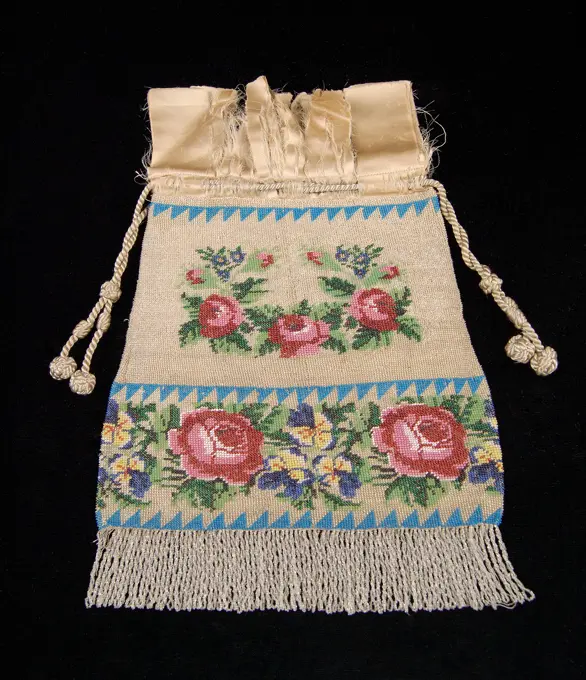
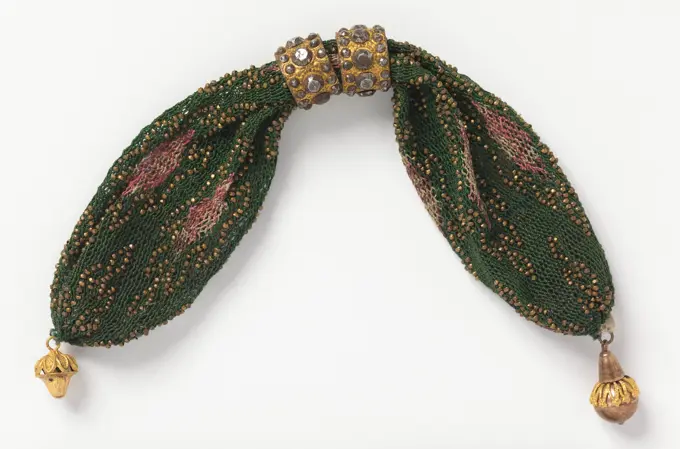
Réticule. 1840. 1850. Saved. Gal1995.74.3_2
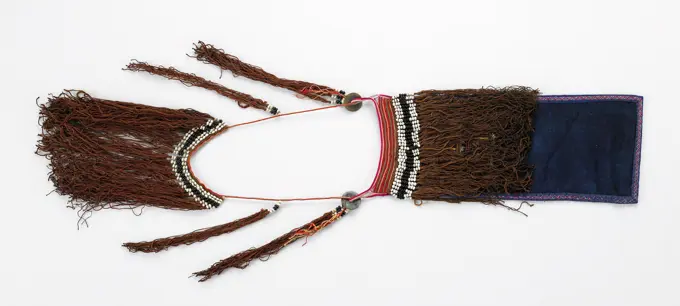
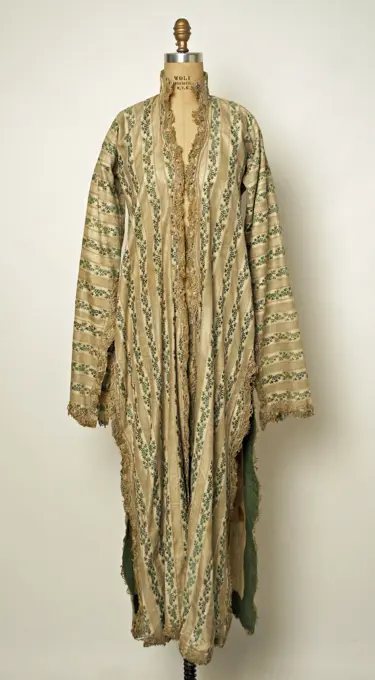
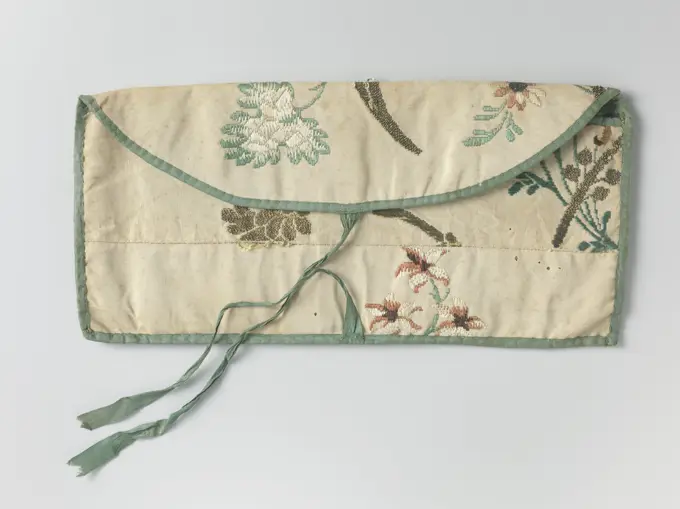
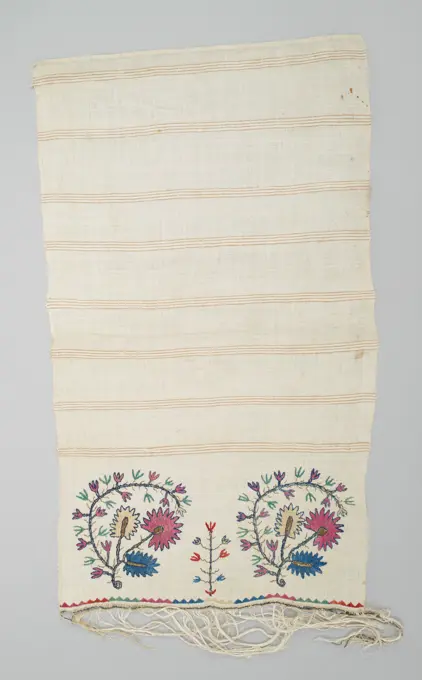
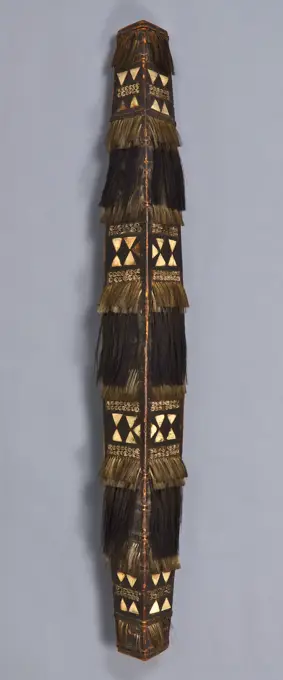
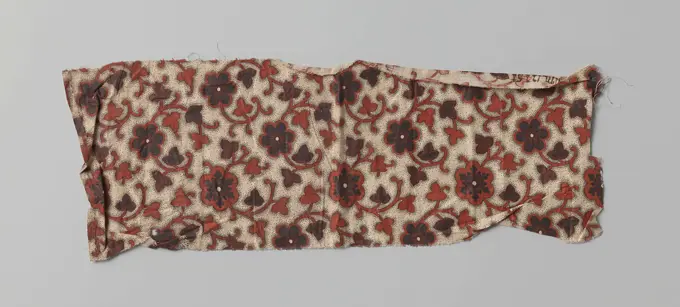
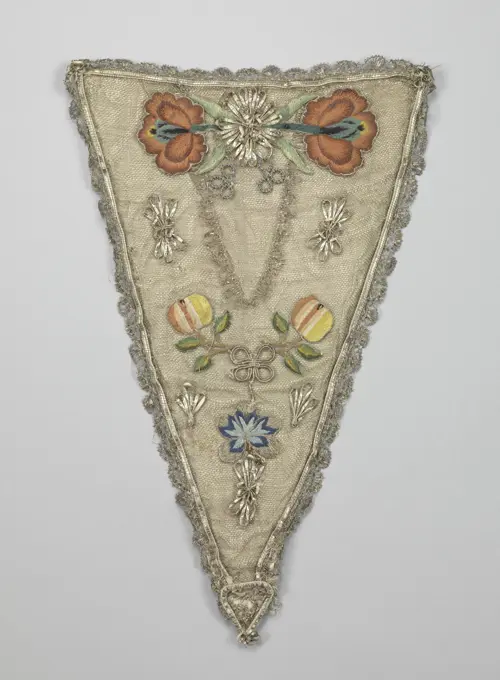
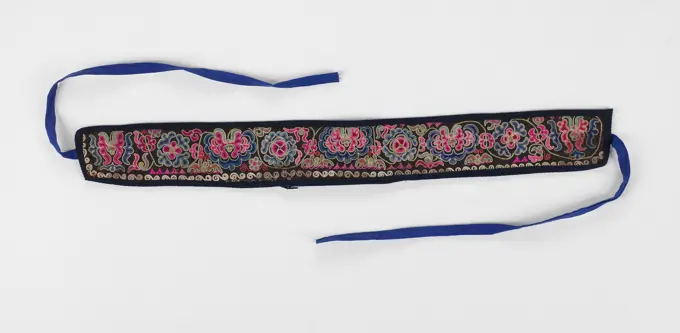
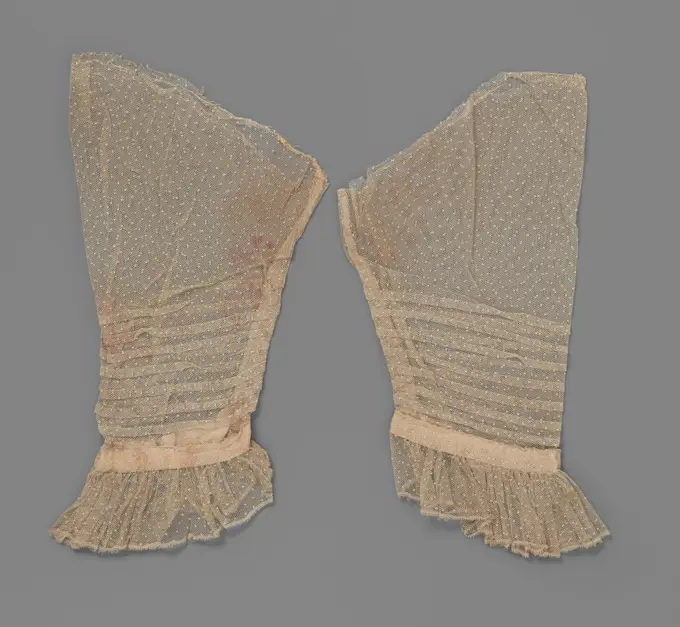
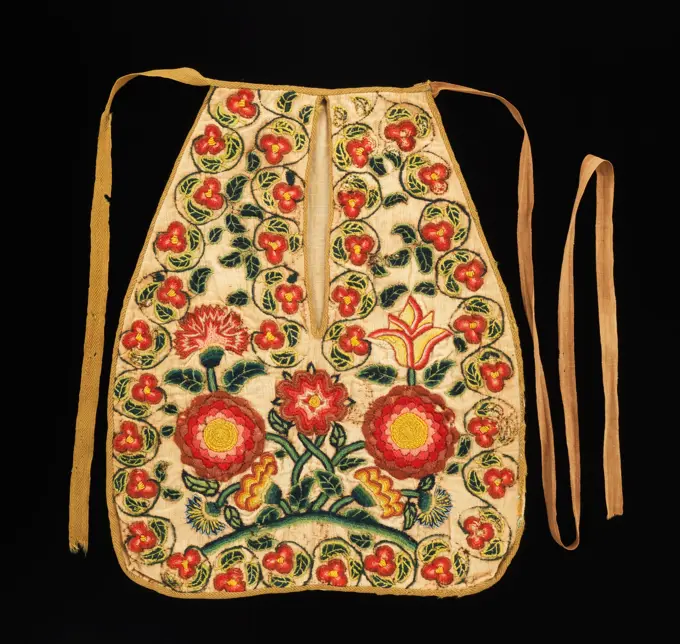
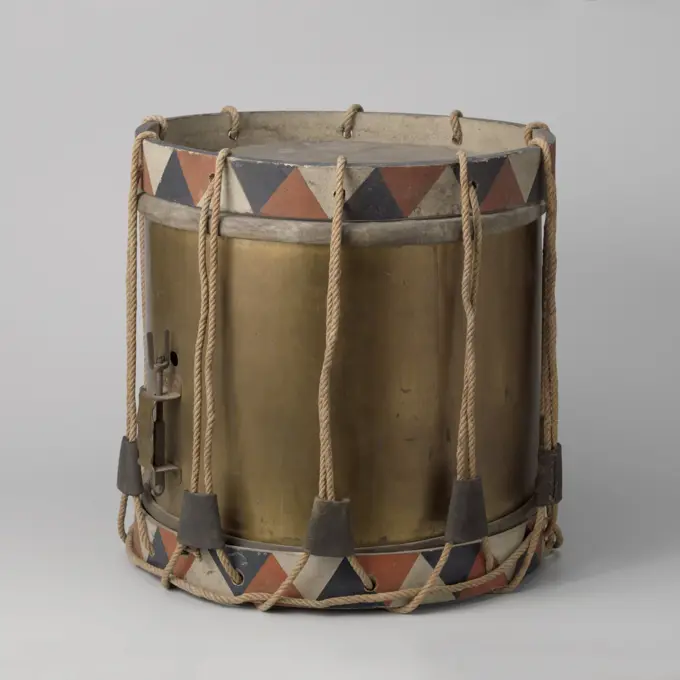
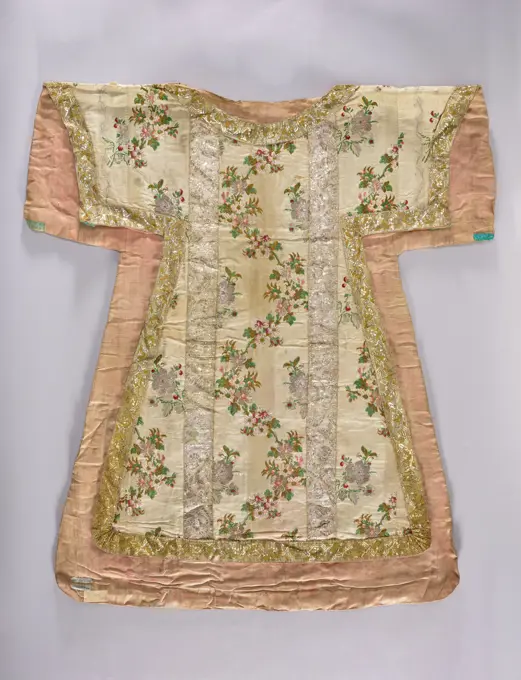
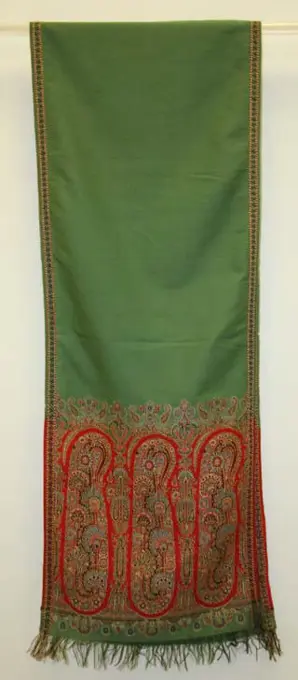
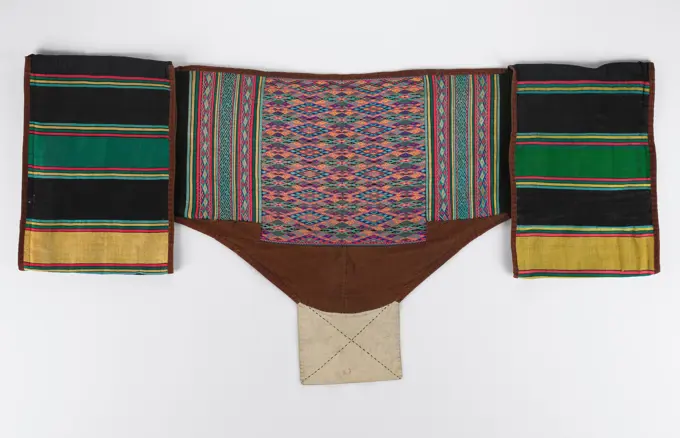
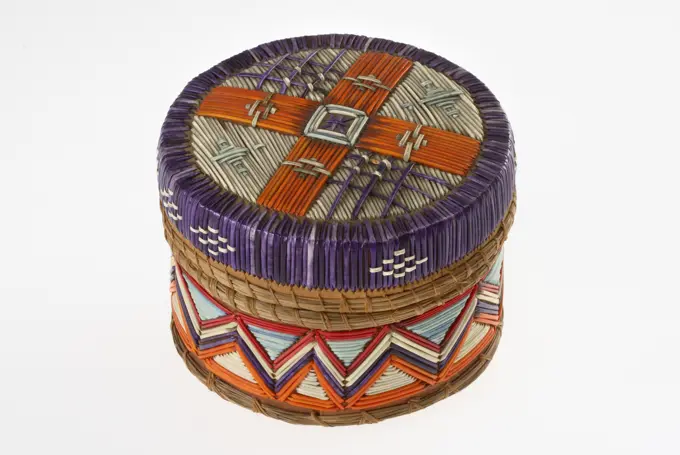
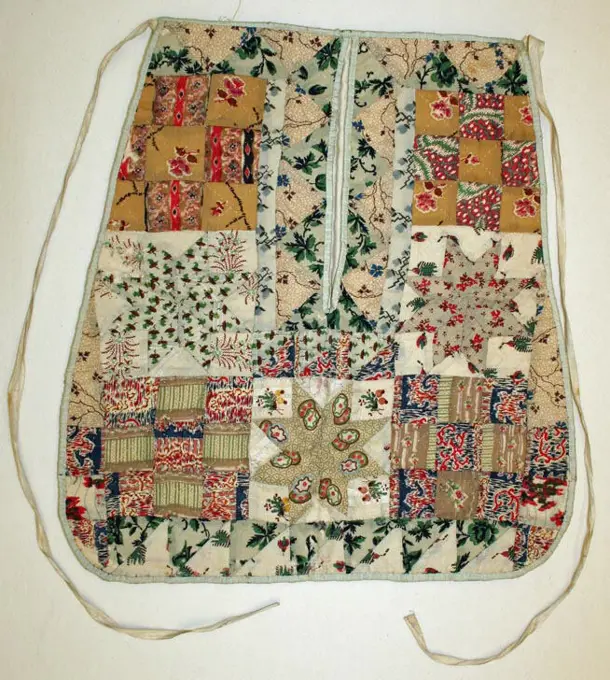
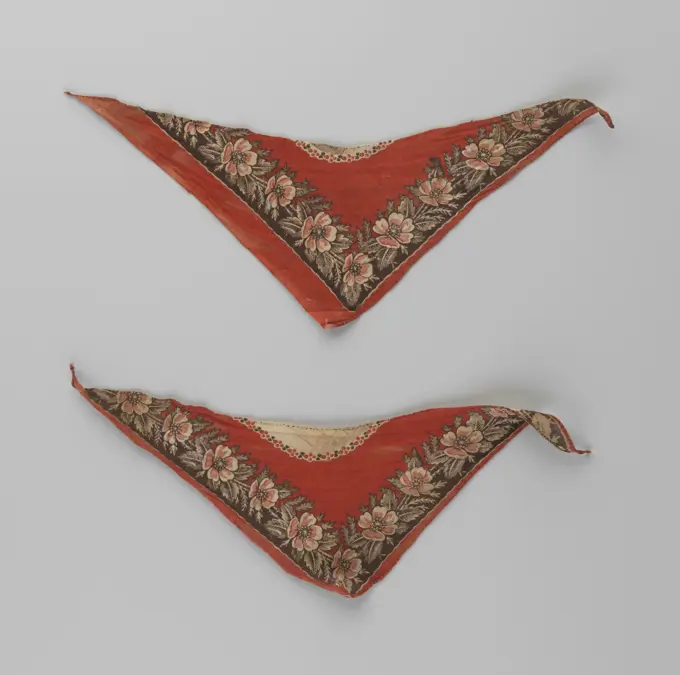
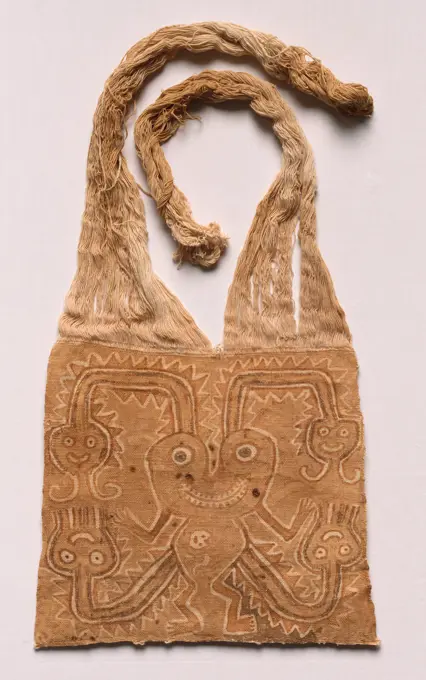
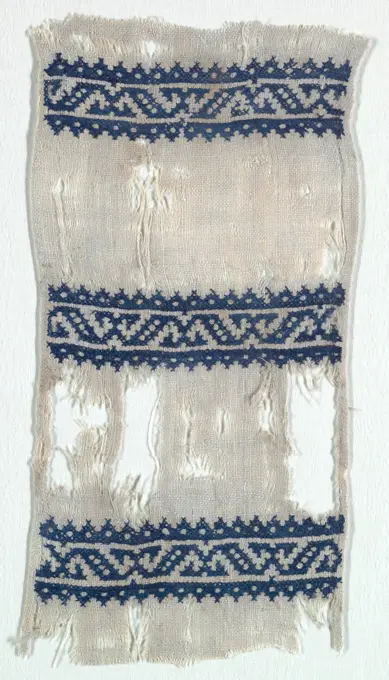
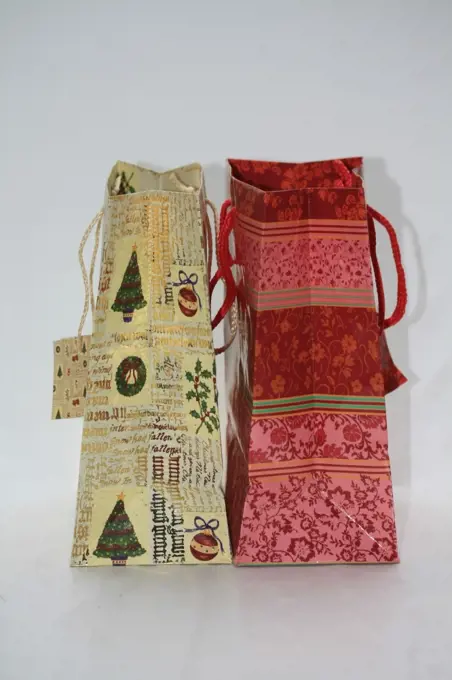
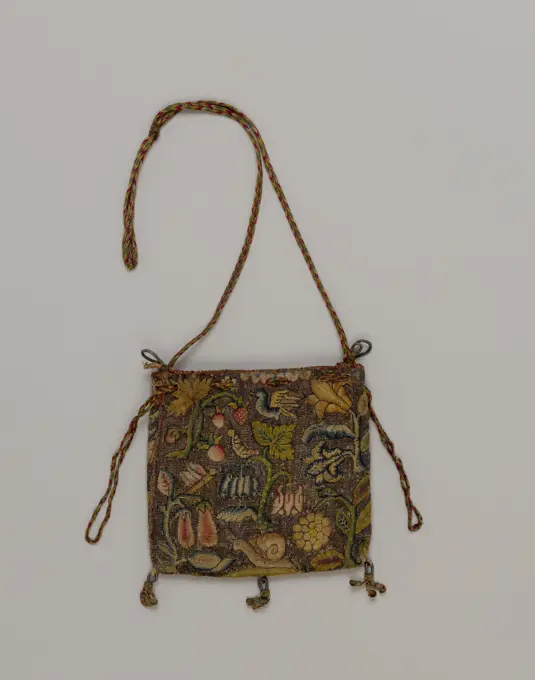
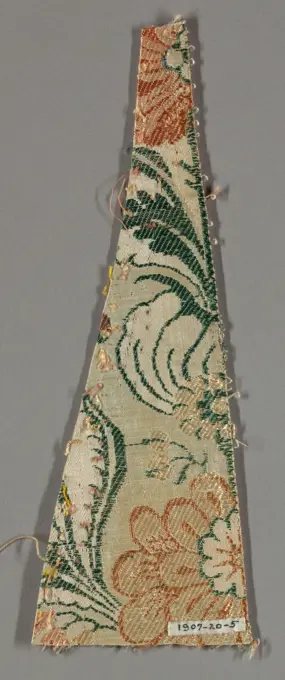
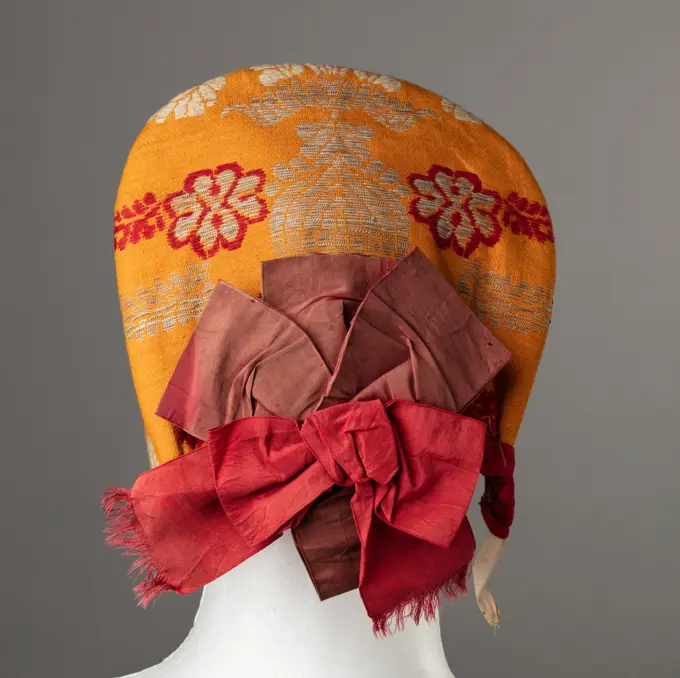
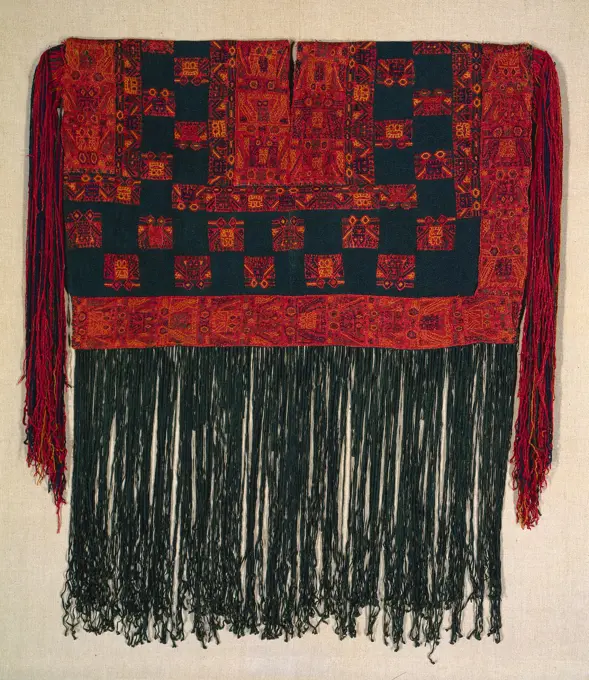
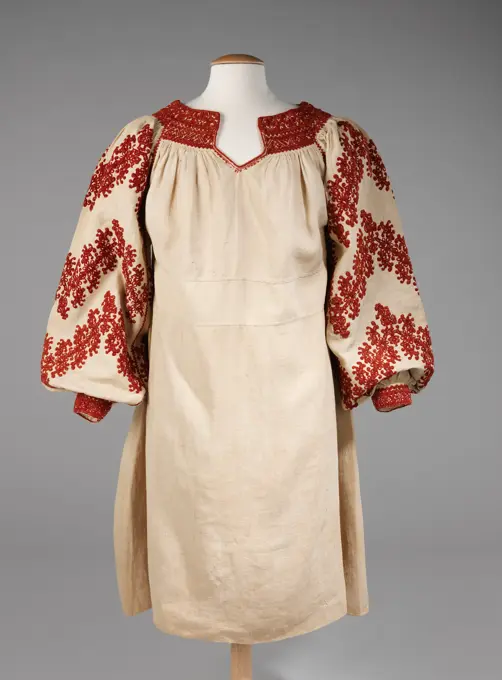
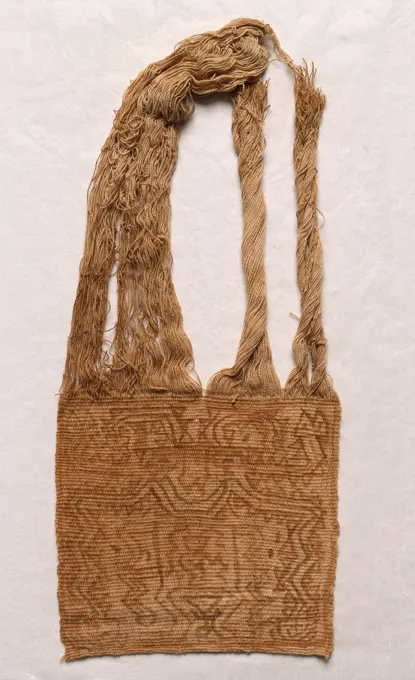
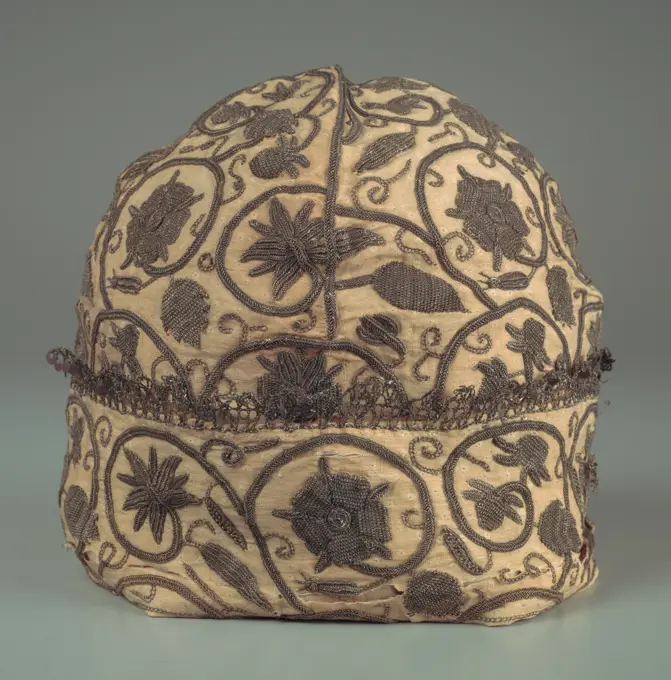
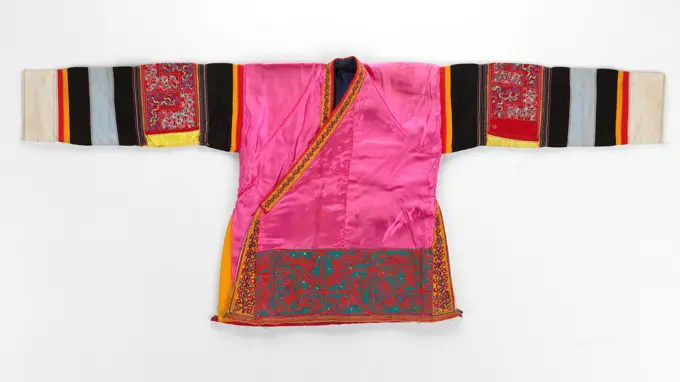
Fragment Made 1625-1675 Italy. Silk, gold, and silver gilt strips wound around silk fiber core, plain weave with supplementary brocading wefts .Fragment, Medium: silk, metallic Technique: woven, Fabric cut for right front of vest., India, 19th century, woven textiles, FragmentJacket(Baju)Needle Case (USA); cotton, woolLetter bag of side brokaat, anonymous, c. 1740 - c. 1760 Letter bag of side brokaat. Envelope model. On a cream -colored stock, colorful silk and gold thread have been broched, in a pattern of large lancet -shaped leaves of gold and small vine leaves and flowers in white, rose red and brown. Lining of green large -leaved sides damask. Finish when closing green ribbon. France (possibly) silk. brocade (textile) Letter bag of side brokaat. Envelope model. On a cream -colored stock, colorful silk and gold thread have been broched, in a pattern of large lancet -shaped leaves of gold and small vine leaves and flowers in white, rose red and brown. Lining of green large -leaved sides damask. Finish when closing green ribbon. France (possibly) silk. brocade (textile)Chasuble. unknown, authorFragment (half) of embroidered IInen belt unknownCardigan with two bags with valve, high -standing collar and four fabric buttons of cream silk, embroidered with a leaf vank in vegetable tones, brown zigzagline with sequins and piping, anonymous, c. 1800 - c. 1825 Label with text: 4 pieces and 1 to still embroider, Mrs. Six van Hillegom Heerenvest Z.O.Z.; 4 Bord. vests 1780-85, the white side of French origin, acc. () Van Rothstein (English side was always narrower), 13-1-1973. Note with text: 109-43. 3 white sides cardigans kl. Embroidery, 1 white silk vest white embroidery, 2 pieces of white side for Heerenvest with drawn pattern, a small piece as a front. embroidered. from Heerengracht, fam. Six of Hin (); 1st quarter 19th century. France (possibly) silk. flannel. wool embroidering Label with text: 4 pieces and 1 to still embroider, Mrs. Six van Hillegom Heerenvest Z.O.Z.; 4 Bord. vests 1780-85, the white side of French origin, acc. () Van Rothstein (English side was always narrower), 13-1-1973. Note with text: 109-43. 3 white sidRéticule. 1840. 1850. Saved. Gal1995.74.3_2Fragment seat cover in red and white velvet. Seat of a chair covering of hammered silk velvet.White case in the form of an envelope, Susanna Maria from Pabst Rutgers-Linse, c. 1836 - c. 1898 The case has red edges and a green one and has a white conical knot; A second knot is missing. There are nine fragments in the case. Six small fragments of red ribbon, a bow of red ribbon with a white tulle medallion on it, a blue ribbon with a wrinkled white strip of lace and a light green bow. Netherlands Textile Materials. button:. hook: Metal The case has red edges and a green one and has a white conical knot; A second knot is missing. There are nine fragments in the case. Six small fragments of red ribbon, a bow of red ribbon with a white tulle medallion on it, a blue ribbon with a wrinkled white strip of lace and a light green bow. Netherlands Textile Materials. button:. hook: MetalApron Hungarian-Slovak 19th centuryBaby Carrier, 36 1/2 x 14 in. (92.71 x 35.56 cm), Cotton, silk, metallic threads; needlework, ChinaShieldHandicraft with art nouveau motif. Handicraft with art nouveau edge motif in red and moss green, in the engagement stitch, on white satin rectangle. Belonging to series of eight white and ten colored needlework, manufactured by Aagje tapp for obtaining the deed beautiful and / or useful needlework to the industrial school, BK-1974-105-A to R.Coca Leaf Bag, 19th century, 8 1/2 x 16 1/2 in. (21.6 x 41.9 cm) (strap and tassels excluded), Alpaca fiber, Bolivia, 19th centuryBaby Carrier, 28 1/2 x 69 1/2 in. (72.39 x 176.53 cm) (including ties), Cotton, metallic threads; needlework, ChinaBourse. GAL1948.11.28Textile Fragment. Great Britain, Saxon, circa 9th century. Textiles; ribbons. Silk and metallic-thread tablet weave with metal beadsBag (Spain); silk, metalBag 17th century. Bag. 17th century. Silk and metal. Attributed to Iran. Textiles-CostumesHalf of the index belt; Manufaktura Szczepan Filsjean (Kobyłka; Pasów Factory; 1787-1794); 1787-1794 (1787-00-00-1794-00-00);Fragment bedrukte katoen.Fragment printed cotton. On the white cotton, stylized flower branches are printed in red-brown colors. The surrounding of the flower branches have dots.Rainbow Skirt, late 1800s. China, Qing dynasty (1644-1911). Silk: embroidery; overall: 74.3 x 85.1 cm (29 1/4 x 33 1/2 in.).Baby Carrier, 34 1/2 x 51 1/2 in. (87.63 x 130.81 cm), Cotton, silk, yellow metal; needlework, ChinaChasuble. unknown, authorPouch of ecru-colored woolen fabric, decorated with a multicolored non-figurative contours in (felt) pin, at the bottom of a brush with green, pink and purple ends. Pouch of ecru-colored woolen fabric, decorated with a multicolored non-figurative contours in (felt) pin. The fabric has a seam and is coinaged at the bottom, to which an incertainty strip and a brush of the same woolen fabric, with green, pink and purple colored ends. With a braided cord of purple silk, yellow wool and beige cotton, which is strung through a tunnel along the top edge. The bag is unlined.Pouch third quarter 19th century German. Pouch 168382Purse, Medium: silk, gilt wire, metal-wrapped silk, coils of gilt and silver wire, and gilt spangles on silk foundation Technique: embroidered with couched threads on supplementary weft patterned foundation, Purse with drawstring top and tasseled bottom, made up of six shield-shaped panels of figured silk sewn together; the seams are covered with gilt wire. Each panel is ornamented with embroidery in couched bullion and metal thread embroidery. Secured at the top with silk cords ending in tassels with braided metallic heads., Italy or France, ca. 1600, costume & accessories, PurseDevant-de-Gorge or triangular breastpiece of silver tulle, on which multicolored, embroidered silk flower appliques and bows of silver, all around with silver side, anonymous, c. 1750 - c. 1775 A devant-de-gorge or triangular breastpiece made of silver tulle, on which multicolored, embroidered silk flower appliques and bows of silver, all around with silver side. Model: Long triangle ending in a heart -shaped ornament. The circumference is marked by a parchment border with silver. Lined with cream -colored silk and equipped with six black metal press studs. Decoration: Winded a small rosette -shaped bow of parchment on each corner with silver. The decoration in it is symmetrically constructed with a rosette -shaped parchment with silver -silver with a flower appilique of red silk on either side. Below two Klaver-three-like ornaments of blue silk wound with silver canetille. Furthermore, two rosette -shaped bows of leaf silver. Below two apples of apples in yellow/orange/white side on eLidded Basket ca. 1860 Oneida. Lidded Basket 319010Chintz fragment, Medium: cotton Technique: mordants for red (over resist) gray, purple and black applied by pen or brush; madder dyed; blue applied by immersion over resist, (chintz) on plain weave, Design of curving vine alternate with overlapping mounds., India, late 18th century, printed, dyed & painted textiles, Chintz fragmentBonnet. Culture: German. Date: third quarter 19th century. Museum: Metropolitan Museum of Art, New York, USA.Belt -Alliance Banner and Shaft for a Wedding Procession for the Families Bessere von Thalfingen and Seutter von Lötzen. Culture: German. Dimensions: banner: 22 x 19 in. (55.9 x 48.3 cm); shaft: 9 ft. 11 in. (327.7 cm). Date: ca. 1730. Museum: Metropolitan Museum of Art, New York, USA.Sampler (England); silk and linen embroidery on linen foundationSash  -Sac. 1880. 1885. GAL2001.177.XUnder Apron, 13 1/2 x 5 1/2 in. (34.29 x 13.97 cm)9 x 5 1/2 in. (22.86 x 13.97 cm) (fringe, b), Cotton, silk, beads, metal coins, ChinaBridegroom's wedding day bag, c. 1960, 11 1/4 x 8 x 6 3/4 in. (28.58 x 20.32 x 17.15 cm) (approximately, without strap or tassels), Cotton, wool, metal, beads; needlework, India, 20th centuryWoman's Parasol. England, circa 1840. Costumes. Silk knit with glass beads, silk fringe, wood, bone, and metalPurse (or Sash), 64 1/2 x 3 1/4 in. (163.83 x 8.26 cm), Cotton, zipper, ChinaApparel From A Dalmatic; silkChasuble. unknown, authorDock;  18th century (1701-00-00-1800-00-00);Fragment; silkPillow late 17th century British. Pillow 223008Drom, old model of the arches. Groom of the militia. The brass boiler is provided with a veal sheet on both sides, held by a hoop and tense by means of a tensioner with tractors and screws. Both hoops are decorated with a motif of triangles in the colors red, white and blue. With engraved numbers: 1829-3061.Sub -sleek of dotted tulle, anonymous, c. 1850 - c. 1900 Underemen of tulle with a recommended, fanning cuff. The sleeve is decorated with moes and strips of sewn tulle. The seam between sleeve and cuff is lined with a satin ribbon. West-Europa lint: satin Underemen of tulle with a recommended, fanning cuff. The sleeve is decorated with moes and strips of sewn tulle. The seam between sleeve and cuff is lined with a satin ribbon. West-Europa lint: satinPocket ca. 1784 American In the 18th century, a woman's pocket was a separate accessory item, not a feature built into any one particular skirt. Women carried their personal necessities in these pockets which were tied around the waist, including items like keys, thimbles, handkerchiefs, spectacles and coins. The vibrant and exuberant design of this example probably was worked by an untrained embroiderer at home who worked the design freehand. The motifs of roses, tulips and carnations are similar to those in samplers worked in Chester County, Pennsylvania in the fourth quarter of the 18th century. The gradation and shading of the greens and the general black outlining of the stems and central motif seem to be derived from English crewelwork. While the name of the maker is now lost, she clearly took some effort to fully decorated this pocket, filling every space with color and pattern.. Pocket. American. ca. 1784. cotton, woolFragment sits with symmetrical edge pattern and flower vines on ocher yellow stock, c. 1720 - c. 1730 Fragment sits. Dessin: Symmetrically built -up band work, filled with grid pattern, supposedly lace pattern, and flower vines; In the ashes large flower arrangements in red, blue, eggplant, yellow and green against an ocher yellow stock; The stock of the band work is white. Hindeloopens fur. Note: rather other inv.nrs. Got in: BK-NM-3725 and BK-NM-12206-B, with references to the catalog of textile art in the Dutch Museum of History and Art in Amsterdam (1903), Cat.nrs 344 and 345. Coromandelkust cotton (textile). stain (coating). paint (coating) Fragment sits. Dessin: Symmetrically built -up band work, filled with grid pattern, supposedly lace pattern, and flower vines; In the ashes large flower arrangements in red, blue, eggplant, yellow and green against an ocher yellow stock; The stock of the band work is white. Hindeloopens fur. Note: rather other inv.nrs. Got in: BK-NM-3725 and BKFragment, Medium: silk Technique: 4&1 satin damask, Blue and white silk damask., China, 15th century, woven textiles, FragmentDrum, anonymous, 1829 musical instrument. percussion instrument. drum Trom of the militia. The brass boiler is equipped with a veal sheet on both sides, held by a hoop and tense by means of a tension with tractors and screws. Both hoops are decorated with a motif of triangles in the colors red, white and blue. With engraved numbers: 1829-3061. Netherlands Kettle: Brass (Alloy). Hoop: Wood (Plant Material). Team resorts: RopeBaby carrier, ChinaDalmatic;  18th century (1701-00-00-1800-00-00);Chasuble Back (France); silk, gold threadChasuble. unknown, authorBag (Italy); silkScarf early 19th century probably French. Scarf 119333Bouyei (Buyi) Baby Carrier, 19th-20th century, 27 1/4 x 186 in. (69.22 x 472.4 cm), Cotton, silk, China, 19th-20th centuryCoca Bag(Chuspa).  Artist: UnknownBox -Pocket early 19th century American or European. Pocket 122261Glass mosaic bowl fragment. Culture: Roman. Dimensions: Overall: 1 1/2 x 1 7/16 in. (3.8 x 3.7 cm). Date: late 1st century B.C.-early 1st century A.D.. Museum: Metropolitan Museum of Art, New York, USA.Triangular fragment red fabric, anonymous, c. 1850 - c. 1920 Triangular fragment red fabric with flowers printed on it. Europe textile materials printing Triangular fragment red fabric with flowers printed on it. Europe textile materials printingBaby carrier, ChinaMummy Bundle "Mask", 400-200 BC. Peru, South Coast, Ica Valley, Ocucaje site, Paracas style (700 BC-AD 1). Cotton and pigment, plain weave; overall: 103.5 x 40 cm (40 3/4 x 15 3/4 in.). The Paracas people of Peru's South Coast buried their dead in pear-shaped mummy bundles made of a seated human body carefully wrapped in garments and other textiles. Sometimes a painted cloth was placed at the top of the bundle, as though it served as the bundle's face, head, or "mask." The cloth was padded on the back so it curved outward like a face, and the tress-like yarns (unwoven warps) at the upper edge were arranged around a solid cotton disk that, in turn, was wrapped with a headband (see photo). Some cloths were painted with mask-like faces, and others with full figures, apparently mythical creatures. A painted mummy bundle "mask" still stitched to cotton padding and attached, via unwoven yarns at the top, to a solid cotton disk around which headbands are wound. Photo of a mask at the TextileLegging strip -Fragment (Egypt); linen, silk; 1939-11-21Embroidery, England 17th century. Pillow with floral and geometric motifs, embroidered on small stitch linen.Two decorated christmas giftbags with name tagsIscayo, 20th century, 43 x 43 in. (109.2 x 109.2 cm), Alpaca (); warp-faced plain weave, Bolivia, 20th centuryBaby carrier, ChinaPurse first quarter 17th century British. Purse 228966Necklace (India); Made by Marens and Co.; braided gold, enamel, cabochon turquoises and pearls, baroque pearls, foil, embroidered silk (box)Fragment; silkExcerpt of a dish with red -baking shard, with at the front in Sgrafitto technology and white, yellow and green glaze stripes and floral shapes, anonymous, 1200 - 1899  Italy earthenware  Italy earthenwareHead coverning, early 20th century, 39 1/2 x 23 in. (100.33 x 58.42 cm) (without fringe), Cotton, buttons, metal, coin, paper (), sequins, shells; needlework, Yemen, 20th centuryChintz Fragment (India); cotton; Warp x Weft: 61.5 x 58.9 cm (24 3/16 x 23 3/16 in.)Rattle Native American (Tsimshian) 19th century The form of this rattle is that of a bird (raven) bearing a totemic emblem on its breast. On the bird's back are the figures of a shaman and a kingfisher, the mythological source of the shaman's supernatural powers. The figures are united by one tongue, which forms the bridge through which the magic force flows. View more. Rattle. Native American (Tsimshian). 19th century. Wood, paint, sinew, pebbles. British Columbia, Canada. Idiophone-Shaken-rattleBliżej Kultury unknownStorage Bag 19th century. Storage Bag. 19th century. Glass bead, silk. Attributed to Iran. TextilesShirt. Culture: Spanish. Date: 1840-70.This object was collected by Stewart Culin (1858-1929) during a collection expedition in 1921. Culin was the Brooklyn Museum's first Curator of Ethnology, serving from 1903 to 1929. Possessing an insatiable curiosity and appetite for collecting objects of all kinds, Culin conducted over twenty worldwide collecting expeditions between 1901 and 1928. The trips covered American Indian territories, New England, Asia, India, Great Britain, and all of Eastern and Western Europe. The seven expeditions between 1917 and 1928 were specifically focused on collecting regional textiles and costumes from Eastern and Western Europe and, to a lesser extent, New England. Culin's goals for these trips were not just to expand the Museum's holdings, but also to preserve their cultural contexts. He did so through amassing photographs, notebooks, and ephemera which documented the social, commercial, and cultural circumstances surrounding their acquisition. His collectBaby's Hat, 19th-20th century, 3 5/16 x 5 1/4 x 5 1/4 in. (8.41 x 13.34 x 13.34 cm), Cotton; embroidery, appliqué, warp twining, quilting, Turkmenistan, 19th-20th centuryTunic, c. 300 BC-AD 200. Peru, South Coast, Paracas, Cavernas Style, 3rd-2nd Century BC. Plain weave with embroidery, plain weave with warp substitution; camelid fiber; overall: 94 x 83.8 cm (37 x 33 in.); mounted: 111.8 x 101.6 cm (44 x 40 in.).Shirt 1840-70 Spanish This object was collected by Stewart Culin (1858-1929) during a collection expedition in 1921. Culin was the Brooklyn Museum's first Curator of Ethnology, serving from 1903 to 1929. Possessing an insatiable curiosity and appetite for collecting objects of all kinds, Culin conducted over twenty worldwide collecting expeditions between 1901 and 1928. The trips covered American Indian territories, New England, Asia, India, Great Britain, and all of Eastern and Western Europe. The seven expeditions between 1917 and 1928 were specifically focused on collecting regional textiles and costumes from Eastern and Western Europe and, to a lesser extent, New England. Culin's goals for these trips were not just to expand the Museum's holdings, but also to preserve their cultural contexts. He did so through amassing photographs, notebooks, and ephemera which documented the social, commercial, and cultural circumstances surrounding their acquisition. His collecting philosophy embMummy Bundle "Mask", 400-200 BC. Peru, South Coast, Ica Valley, Ocucaje site, Paracas style (700 BC-AD1). Plain warp-faced cloth, painted: cotton; overall: 61 x 24.1 cm (24 x 9 1/2 in.). The Paracas people of Peru's South Coast buried their dead in pear-shaped mummy bundles made of a seated human body carefully wrapped in garments and other textiles. Sometimes a painted cloth was placed at the top of the bundle, as though it served as the bundle's face, head, or "mask." The cloth was padded on the back so it curved outward like a face, and the tress-like yarns (unwoven warps) at the upper edge were arranged around a solid cotton disk that, in turn, was wrapped with a headband (see photo). Some cloths were painted with mask-like faces, and others with full figures, apparently mythical creatures.. Pouch, embroidered with zigzag pattern (point d'hongrie) in green, white and red-brown silk with drawstring with silver pomers, silver-watted shells and 'bezoar' ('stone' from the stomach and the intestinal tract of ruminants). Model: flat and square. A braided silk cord on the seams. Decoration: Ajour carved silver cracking balls or pomers, shells caught in a silver border with ring, just like Bezoar.Man's Nightcap, late 1500s. England, Elizabethan Period, late 16th century. Silk, silver thread, plaited braiding, linen; embroidery: chain and buttonhole stitches; overall: 16.9 x 18 x 18 cm (6 5/8 x 7 1/16 x 7 1/16 in.).Piece 18th century French. Piece 224524Jacket, ChinaMiser's Purse (France); silk, metalHat -Collar -Fringe probably European 19th centuryWoman's Bag, 20th century, 35 x 27 in. (88.9 x 68.6 cm), Leather, embridery, pigment, natural fiber, Morocco, 20th centuryBag, Medium: wool Technique: knitted, Bag knitted in stockinette stitch, with a drawstring at the top; now open at bottom. Deep band of decoration in red and blue on a white ground. Three tassels attached to the bottom. Red, white and blue plaited cord at top, ending in two tassels., 19th century, costume & accessories, BagCoin purse. Culture: Mexican. Date: 1790.This coin purse, with its latticework patterning, floral motifs, and Spanish inscription reflects the confluence of European design and Spanish colonial workmanship in its design. It is part of the Mexican beadwork collection of over 600 pieces assembled by Elizabeth Morrow (1873-1955), mother of writer Anne Morrow Lindbergh, the wife of renowned aviator Charles Lindbergh. Morrow collected the objects between 1927 and 1930, when her husband, Dwight Morrow, Sr., served as U.S. ambassador to Mexico. She lent the collection to the Brooklyn Museum in 1938 and upon her death, her children donated it. A collection of 155 pieces of Mexican ceramics and other decorative arts were given to Amherst College, her husband's alma mater. Mrs. Morrow collected Mexican beadwork, along with other examples of colonial and native arts, to decorate their country home in Cuernavaca in order to promote a more peaceful image of that country through its works. The MorUcetek Entari 19th century. Ucetek Entari 126806Glass Fragments 4th-early 5th century Coptic. Glass Fragments 478410