Historical Textile Fragments

A collection of antique textile pieces from different eras, showcasing intricate patterns and materials, likely used in clothing.
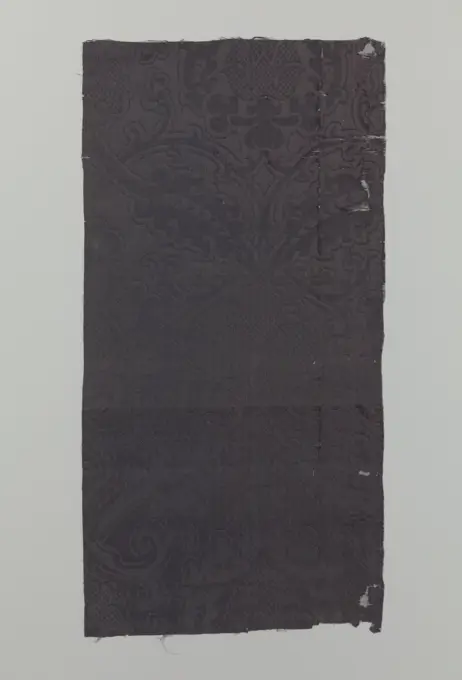
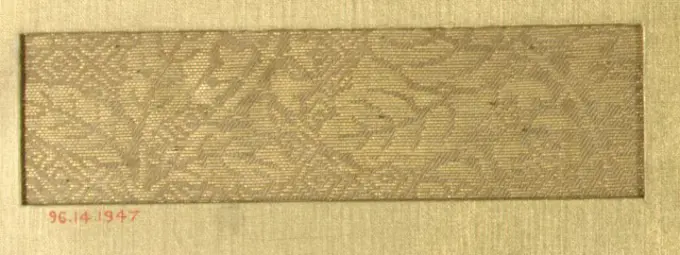
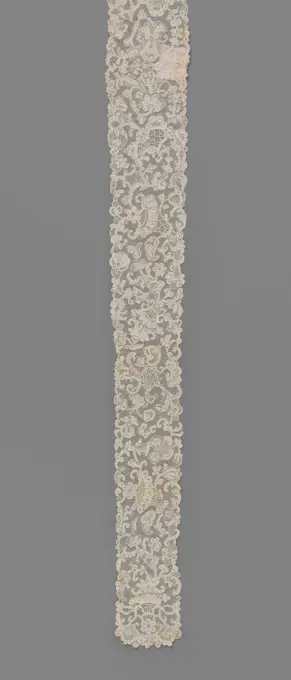
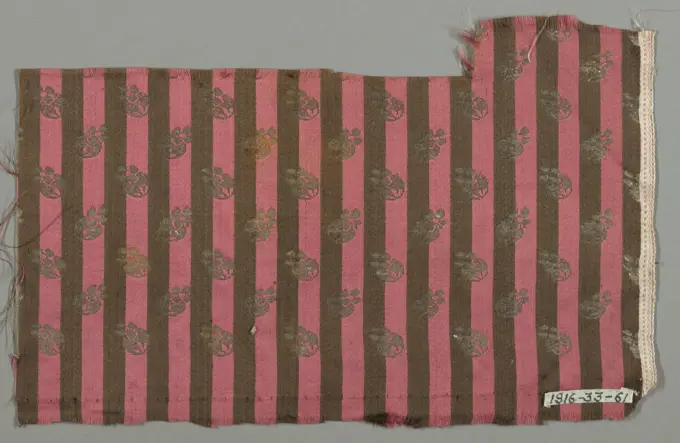
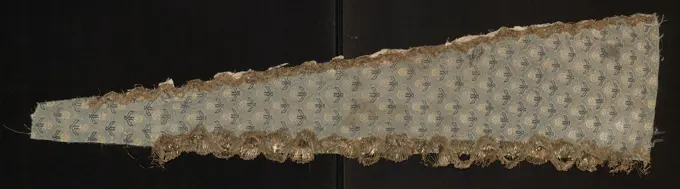
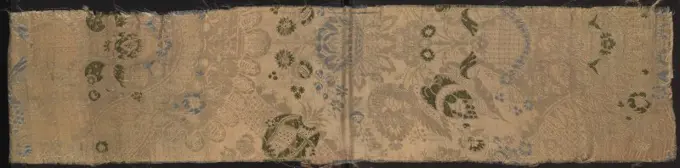
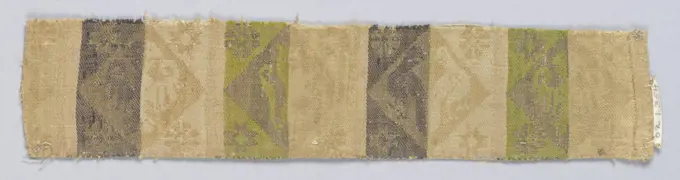
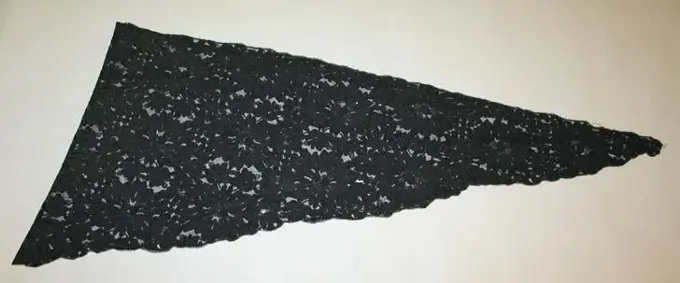
Fragment zijdedamast, anonymous, c. 1450 - c. 1499 Fragment dark gray -blue silk with pattern of large lancet -shaped leaves on stems, which form ogival fields, in which stylized loofed grenades. Italy (possibly) silk damask Fragment dark gray -blue silk with pattern of large lancet -shaped leaves on stems, which form ogival fields, in which stylized loofed grenades. Italy (possibly) silk damask
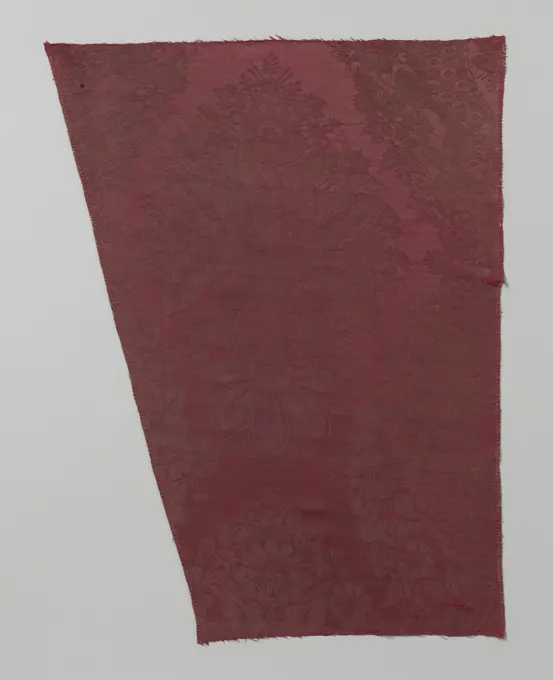
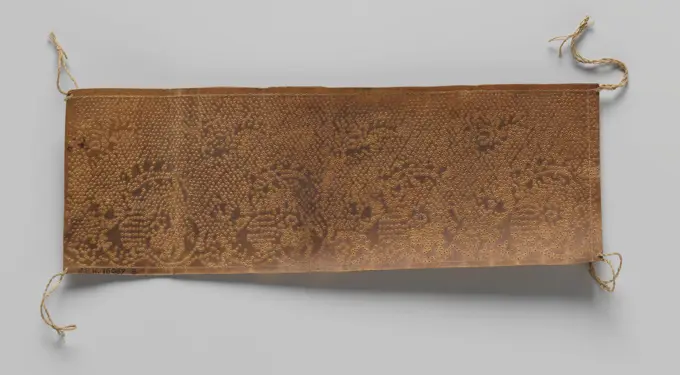
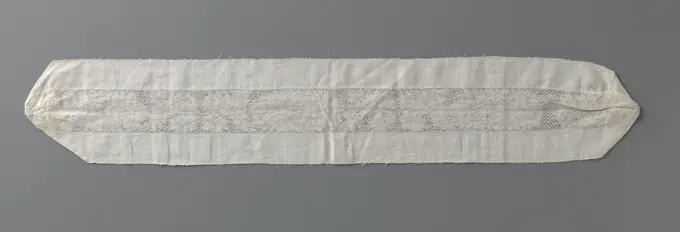
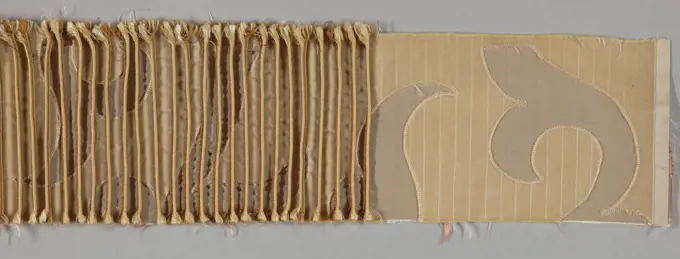
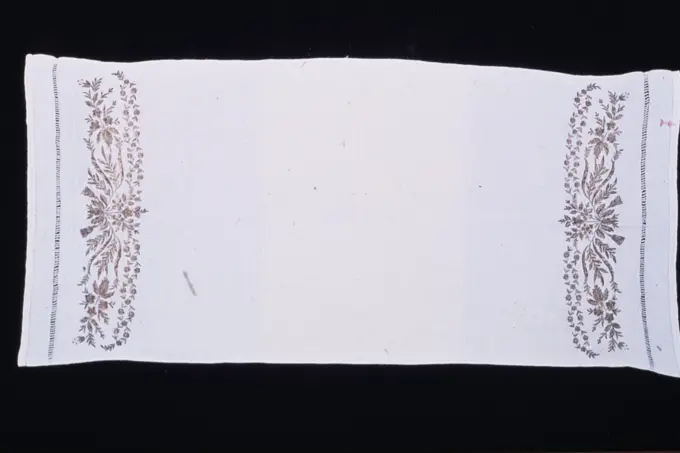
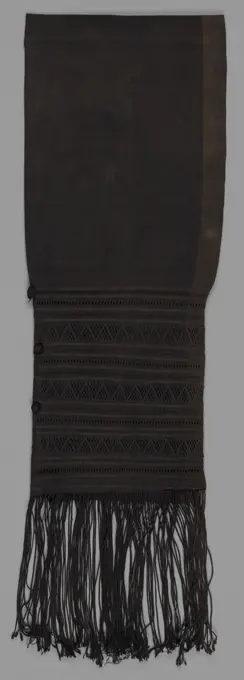
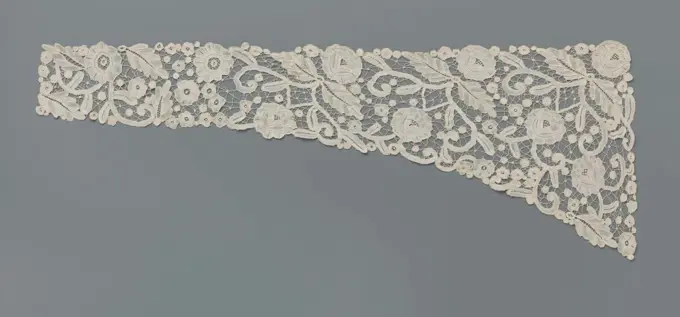
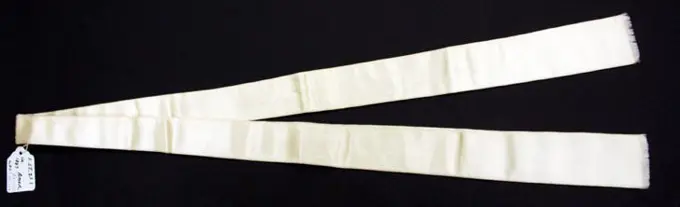
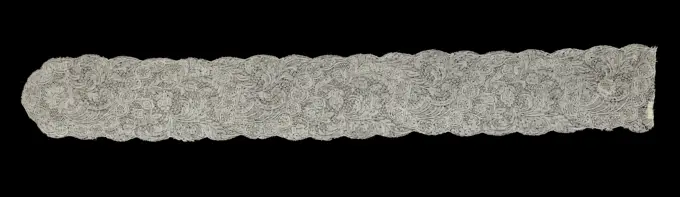
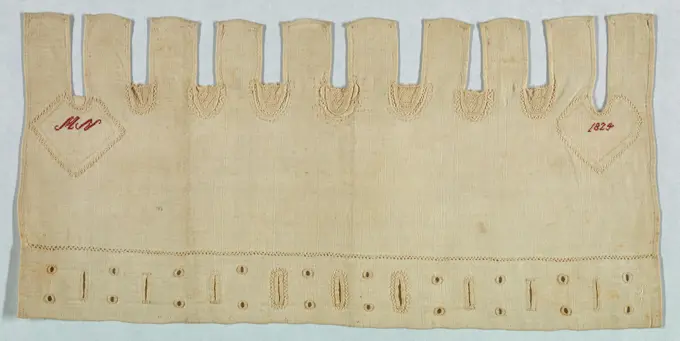
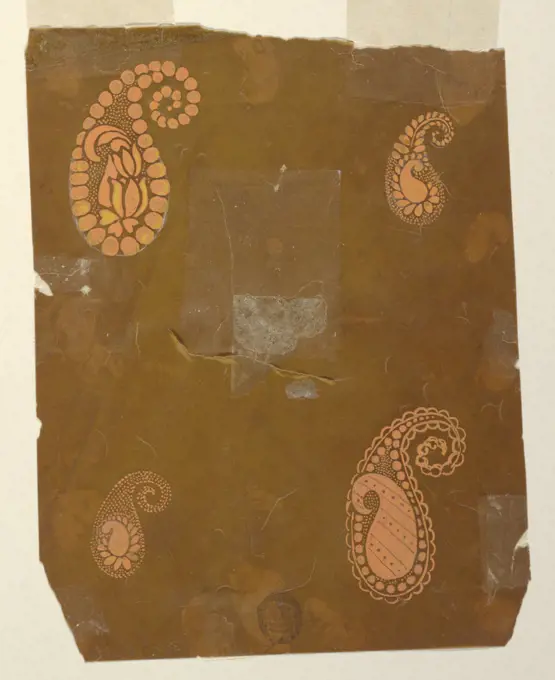
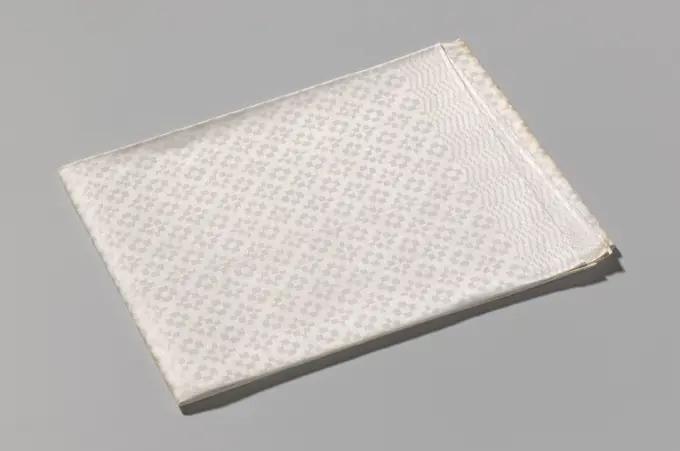
Ceintuur ribbon of gold -colored Zijddamast, with a Rips stock and spread pattern of windows, anonymous, c. 1820 - c. 1830 Ceintuur ribbon of gold -colored Zijddamast, with a Rips stock and spreading pattern of windows, probably women's clothing. Netherlands (possibly) whole: Silk Ceintuur ribbon of gold -colored Zijddamast, with a Rips stock and spreading pattern of windows, probably women's clothing. Netherlands (possibly) whole: SilkPiece 18th-19th century Japan. Piece. Japan. 18th-19th century. Silk. Textiles-WovenSash Made 1875-1900 Turkey. embroidered .Piece 19th century Japan. Piece 67682Fragment zijdedamast, anonymous, c. 1450 - c. 1499 Fragment dark gray -blue silk with pattern of large lancet -shaped leaves on stems, which form ogival fields, in which stylized loofed grenades. Italy (possibly) silk damask Fragment dark gray -blue silk with pattern of large lancet -shaped leaves on stems, which form ogival fields, in which stylized loofed grenades. Italy (possibly) silk damaskFragment 16th century Italian, Florence. Fragment 230104Strip bobbin with coral vranks, anonymous, c. 1675 - c. 1699 Strip of natural -colored bobbin: Old Flemish side with braid ground. The repeating but confusing pattern consists of three rows of continuous coral vines with S-shaped and C-shaped motifs with a round button at each end. The motifs are made in linen battle with openwork edges and are connected by a braid of soil, where the braids form almost a regular Maas soil. Top and bottom of the strip are straight finished, with the bottom with picots. Southern Netherlands linen (material) bobbin lace / Flemish lace with plaited ground Strip of natural -colored bobbin: Old Flemish side with braid ground. The repeating but confusing pattern consists of three rows of continuous coral vines with S-shaped and C-shaped motifs with a round button at each end. The motifs are made in linen battle with openwork edges and are connected by a braid of soil, where the braids form almost a regular Maas soil. Top and bottom of the strip are straight fFragment wine red silk damask with pattern of flower and leaf work and so-called lace, anonymous, c. 1740 - c. 1760 Fragment wine red silk damask with pattern of diamond shape with stylized flower (including Anjelieren) and leaf work, around which supposedly lace work. France Ketting an element: Silk damask Fragment wine red silk damask with pattern of diamond shape with stylized flower (including Anjelieren) and leaf work, around which supposedly lace work. France Ketting an element: Silk damaskPattern for a strip of bobbin on brown parchment with curved leaves and flowers, anonymous, c. 1600 - c. 1799 Pattern for a strip of bobbin - Valenciennes side - Picked in brown -colored parchment. The repeating and continuous pattern consists of a flower, scoops and curved leaves and flowers sprinkled at the top. In every corner a string is tied to the leather in a hole. Southern Netherlands (possibly) parchment (animal material) Pattern for a strip of bobbin - Valenciennes side - Picked in brown -colored parchment. The repeating and continuous pattern consists of a flower, scoops and curved leaves and flowers sprinkled at the top. In every corner a string is tied to the leather in a hole. Southern Netherlands (possibly) parchment (animal material)Kloskant's intermediate base with large oval peony between sloping leaves with a smaller peony and attached between the remnant of a linen demolition, anonymous, c. 1650 - c. 1699 Intermediate springs of natural -colored Dutch bobbin side. The repeating and symmetrical pattern consists of a width -filling oval peony between sloping leaves with a smaller peony each. The motifs are made in linen battle with openwork edges that also provide the drawing in the flowers and leaves. The motifs are connected by a five -part ground. Top and bottom of the strip are straight. The short sides are sewn into a tip by folding and securing the corners. The strip side is set between a strip of linen, the short sides of which are sewn together: the remnant of a demolition. The side is probably made in the Southern Netherlands, the demolition probably in the Northern Netherlands. Antwerp (possibly)Northern Netherlands linen (material) bobbin lace Intermediate springs of natural -colored Dutch bobbin sideTwo hat slips from Venise or Burano Fin a reséau needle side, anonymous, c. 1700 - c. 1750 Two legs slips of Italian needle side. The pattern has flower branches, flowers and C-volutes. The scalloped edge is trimmed with picots. Italy . Venetian needlepoint Two legs slips of Italian needle side. The pattern has flower branches, flowers and C-volutes. The scalloped edge is trimmed with picots. Italy . Venetian needlepointTower at Lacock. William Henry Fox Talbot; English, 1800-1877. Date: 1837. Dimensions: 10.7 × 10.2 cm (image/paper). Photogenic drawing; using silver chloride paper; printed-out in camera; stabilized (fixed) in ammonia. Origin: England. Museum: The Chicago Art Institute, Chicago, USA.Linnamast napkin with putti and flowers, c. 1660 Linnamast napkin. The pattern has flowers and fruits between which putti that wear horns of abundance and putti that wear a flower basket. The running edge has a wavy line between which birds and flowers and a block edge. The napkin is general cargo, so it has no horizontal edges and corners. The napkin belongs to a tablecloth (BK-KOG-227-A).  linen (material) damask Linnamast napkin. The pattern has flowers and fruits between which putti that wear horns of abundance and putti that wear a flower basket. The running edge has a wavy line between which birds and flowers and a block edge. The napkin is general cargo, so it has no horizontal edges and corners. The napkin belongs to a tablecloth (BK-KOG-227-A).  linen (material) damaskPiece 19th century Japan. Piece 72136Linnamast napkin with a weapon, brothers Rath (firm), c. 1867 Linnamast napkin with the weapon of Schimmelpenninck. The napkin is part of eleven napkins (BK-1973-216-A to BK-1973-216-L) and a tablecloth (BK-1973-215). Veghel linen (material) damask Linnamast napkin with the weapon of Schimmelpenninck. The napkin is part of eleven napkins (BK-1973-216-A to BK-1973-216-L) and a tablecloth (BK-1973-215). Veghel linen (material) damaskCoupon white parasol cotton with beige stripes on either side, Gustav Schnitzler, c. 1910 - c. 1940 Coupon white parasol cotton with beige stripes on either side. Nijmegen cotton (textile) Coupon white parasol cotton with beige stripes on either side. Nijmegen cotton (textile)Elongated scarf made of finely woven ecrinkey cotton with three colorful embroidery with gold thread and a narrow strip of gold side along the edge, anonymous, c. 1800 - c. 1830 Elongated scarf made of finely woven ecrinkeur cotton with three colorful embroidery of (palm) branches in pink, blue and gray -green with gold thread at both ends. Along the edge a job within which a zigzag pattern and on the edge a narrow strip of gold side. Turkey (Possible) whole: Cotton (textile). Decoration:. Decoration: Silk embroidering Elongated scarf made of finely woven ecrinkeur cotton with three colorful embroidery of (palm) branches in pink, blue and gray -green with gold thread at both ends. Along the edge a job within which a zigzag pattern and on the edge a narrow strip of gold side. Turkey (Possible) whole: Cotton (textile). Decoration:. Decoration: Silk embroideringPiece 16th century Italian. Piece 213056Fragment of semi silksemi silk fabric  diverging rows of symmetrical motifs of carnations and palmette flower unknownBed sheet. Brand: Kroon IIVG and year 1725, Kroon WG3 HW12., Anonymous, 1725 Cloths of White Linen, Brand Kroon IIVG 1725 and Kroon WG 3 HW 1 2 Northern Netherlands (Possible) linen (material) Cloths of White Linen, Brand Kroon IIVG 1725 and Kroon WG 3 HW 1 2 Northern Netherlands (Possible) linen (material)Lace Strip, c. 1600 (edging added later), 53 1/2 x 10 in. (135.89 x 25.4 cm), Linen; embroidered knotted net (Lacis); lace, Italy (), 16th-17th century, Knotted net was a textile which had been used by fishers and trappers since ancient times. In the 16th century, refined versions with small grid structures were developed to be used by embroiderers as a ground fabric as they created fashionable new fabrics. Using a simple darning stitch, fanciful patterns, which related to the popular design aesthetic of the day, could easily be developed.Textile Swatches Onondaga Silk Company, Inc. (1925-1981). , 1948-1959. 55 acetate, 45 rayon, 42 3/4 x 18 3/4 in. (108.6 x 47.6 cm).    1948-1959Swatch, Medium: silk Technique: machine embroidery on silk, Fragment of a fabric prepared for a dress. Cording applied on top of a woven pattern., France, late 19th century, embroidery & stitching, SwatchCap Streamer (Belgium); linenPiece 18th century Japan. Piece 71574Key 13th century German. Key 468872Fragment, Medium: silk Technique: cut supplementary warp pile (velvet), Long narrow fragment of red cut velvet., Italy, 17th century, woven textiles, FragmentStays 1700-1799 American. Stays 104454Shaft decorated with crosses pattées and rosettes inscribed in circles. On the upper part, capital with vegetal motifs. Marble. 7th century. From Toledo's Vega Baja archaeological site, Spain. Museum of Visigoth Councils and Culture. Toledo, Castile-La Mancha, Spain.Bobbin Lace Lappet, late 18th century. France, late 18th century. Lace, bobbin: silk; average: 7.7 x 63 cm (3 1/16 x 24 13/16 in.).Textile Sample from Sample Book. Culture: Japan. Dimensions: 3 15/16 × 1 1/2 in. (10 × 3.8 cm). Date: 19th century. Museum: Metropolitan Museum of Art, New York, USA.Ballastlood from the wreck of the East Indians Hollandia, Anonymous, 1700 - in or Before 1743  Ingot; (1) corroded, oblong, semicircular slightly tapered ends, flat upper side (80l, 13.5-14.4w, 7.8h), tapered underside, marks legible on top AM. Netherlands lead (metal)   SecondHanddwaal of white linen ,, c. 1692 - c. 1735 White linen handwaal with peel pattern. Brand G 3. North Netherlands linen (material) White linen handwaal with peel pattern. Brand G 3. North Netherlands linen (material)Wei Scabbard Buckle, 206 BCE - 220 CE, 2 15/16 x 1/2 in. (7.46 x 1.27 cm), Opaque yellow jade with brown markings, China, 3rd century BCE - 3rd century CEWomen's non -circle;  beginning of the 20th century (1901-00-00-1910-00-00);gift (provenance), collarFragment (France); silkFragment of bobbin lace unknownNapkin van Linen with peel pattern ,, 1670 - 1690 White linen napkin with a peel pattern. Brand PG and 24 and HW 23. North Netherlands linen (material) White linen napkin with a peel pattern. Brand PG and 24 and HW 23. North Netherlands linen (material)Pricked Pattern For Lace (Belgium); parchment; 1938-49-3Towel scarf, 19th century, 54 3/4 x 18 in. (139.07 x 45.7 cm), Cotton, silk; needlework, Turkey, 19th centuryLappet early 18th century Flemish. Lappet 219931Towel, 19th-20th century, 50 x 24 in. (127 x 61 cm), Linen (), metallic thread; needlework, Turkey, 19th-20th century"Hopi Brocade" style Dance Sash, c. 1880-1900. America, Native North American, Southwest, Pueblo (Hopi), Post-Contact, Transitional Period. Plain weave with supplementary weft wrap: cotton and wool (handspun, Germantown, and bayeta); overall: 152 x 62 cm (59 13/16 x 24 7/16 in.).Widows Hood (Pote)Hoe Blade 3000 BCE-1000 BCE China. Jade .Wall Facing (Netherlands); tin-glazed earthenware, underglaze; 5 tiles tall, various wideNapkin van Wit Linnamast, Passchael Staes, 1706 White linen damask napkin with the conquest of Meenen by the Duke of Marlborough. Netherlands (possibly) linen (material) damask White linen damask napkin with the conquest of Meenen by the Duke of Marlborough. Netherlands (possibly) linen (material) damaskElongated scarf made of ecrinkey cotton mesh with blue stripes that are too long long and three colorful embroidery with gold thread, anonymous, c. 1800 - c. 1830 Elongated scarf of ecrinkey cotton mesh with blue stripes on the long side and three colorful embroidery on both ends, on the one hand in bright pink, green and yellow with gold thread, on the other hand all three in bright pink, gold thread and green. Turkey (Possible) whole: Cotton (textile). Decoration: embroidering Elongated scarf of ecrinkey cotton mesh with blue stripes on the long side and three colorful embroidery on both ends, on the one hand in bright pink, green and yellow with gold thread, on the other hand all three in bright pink, gold thread and green. Turkey (Possible) whole: Cotton (textile). Decoration: embroideringFragment of clothing;  XVII century (1601-00-00-1700-00-00);gift (provenance), fabricsTextile Fragment late 17th century. Textile Fragment. late 17th century. Silk. Made in Iran. TextilesSierstuk voor een avondmantel van gemengde kant met rozenhaag.Decorative piece for an evening casing of natural-colored mixed side - climbing side in combination with coniferous lace - Brussels Duchesse. In a widely spread braid soil there are roses that usually support two leaves. An intermediate ornament consists of a few and double voluntaries and many small flowers.Cap streamers, Medium: linen Technique: needle lace, Cap streamers in an early Louis XV style., Belgium, early 18th century, lace, Cap streamersMitts 1680-1720 British. Mitts 170537Towel of white linen ,, 1800 - 1899 White linen towel with peel pattern 'circles' and edges, brand SH 12 Wh 2oonl. Netherlands (possibly) linen (material) White linen towel with peel pattern 'circles' and edges, brand SH 12 Wh 2oonl. Netherlands (possibly) linen (material)Fragment of a Ship Flag. Large fragment of a white ship flag with a red cross (St. George's Cross).Collar of white ribbed linen, trimmed with white leather and twice marked in green, anonymous, c. 1815 - c. 1830 Collar of ribbed linen, trimmed with white leather. On both sides a green brand in the form of a circle with browse edge with 'no.'. Possible court clothing. West-Europa linen (material). leather Collar of ribbed linen, trimmed with white leather. On both sides a green brand in the form of a circle with browse edge with 'no.'. Possible court clothing. West-Europa linen (material). leatherWedding necktie ca. 1887 American. Wedding necktie 100509Fragment, Medium: silk and metallic thread, Trimming (galloon) with design of scrolls in silver on gilt ground; furnishing trim., France, late 19th century, trimmings, FragmentBobbin Lace Lappet, 18th century. Belgium, Binche, 18th century. Lace, bobbin: linen; average: 61.6 x 9 cm (24 1/4 x 3 9/16 in.).Fragment application side with me seasons, anonymous, c. 1880 - c. 1899 Fragment, possibly a test piece, natural -colored application side, bobbin on drochel soil. On a fine mesh network there are staggered rows of widely spread, standing and falling me season. Brussels linen (material) Fragment, possibly a test piece, natural -colored application side, bobbin on drochel soil. On a fine mesh network there are staggered rows of widely spread, standing and falling me season. Brussels linen (material)Sewing Sampler; cotton, silkDesigns for Woven Paisley, Brush and orange-pink, yellow gouache, graphite on brown oiled translucent paper, Designs for paisley (four woven Persian cones). At upper left, a small cone resembling a plant sits inside a dotted larger cone bordered with circular beads. At upper right, the larger cone consists of dots and a leaf bough, and the smaller one is lined by leaves. At lower left, the larger cone consists of dots, and the smaller cone resembles the one at upper right. At lower right, the larger cone consits of a lace-like border, circular beads along the border, and dots, while the smaller one contains oblique bands with dots inside drawn in graphite., France, 1825-40, textile designs, Drawing, DrawingFragment of LaceInsertion Made 1725-1775 Hungary. Linen, bobbin part lace .Piece of fabric. unknown, authorPleated fan and case, Silk net leaf embroidered with gold spangles, carved, pierced and gilded bone sticks, mother-of-pearl washer, gilt metal bail, Pleated fan. Gold net leaf heavily embroidered with variously shaped gold spangles. Carved, pierced and gilded bone sticks showing scrolls and flowers. Mother-of-pearl washer and gilt metal bail., possibly France, possibly USA, early 20th century, costume & accessories, Pleated fan and caseTextile Swatches Onondaga Silk Company, Inc. (1925-1981). , 1948-1959. 72 silk, 28 metal, 47 x 17 in. (119.4 x 43.2 cm).    1948-1959Napkin with the coat of arms of Cornelis Hop, Anonymous, c. 1700 - c. 1724 Napkin van Linnamast with the coat of arms of Cornelis Hop. Midfield: Symmetrical pattern of multifaceted volutes with blocked thickenings at the junctions. In between a lying oval shield with a weapon of Cornelis Hop (1685-1762), ambassador at the court of King Louis XV of France: celebrated, 1 and 4 header standing on Bol (the bird of 1, that of 4 surrounding); 2 and three two lined wings. Heart shield shared: 1 a crossbar, 2 on the right a five -pointed star, on the left a desired Wassenaar. The shield covered with five -sized crown. Shield holders: On the right an eagle, on the left an aligned lion. Edges: weapon trophies. Corners: a round axle. All around blocks. Southern Netherlands linen (material) damask Napkin van Linnamast with the coat of arms of Cornelis Hop. Midfield: Symmetrical pattern of multifaceted volutes with blocked thickenings at the junctions. In between a lying oval shield with a weapon oZanze late 19th century Nigerian (Efik) Pyro-engraved leaf or geometric patterns and symbolic ideograms (nsibidi) are associated with the Efik people of Nigerias coastal Calabar region. Rattan lamellae laced to the body are characteristic of this area.. Zanze. Nigerian (Efik). late 19th century. wood (Kapok, Ceiba pentandra), rattan. Calabar, Nigeria. Idiophone-Plucked / DepressedTablecloth with the coat of arms of Cornelis Hop, Anonymous, c. 1700 - c. 1724 Tablecloth from Linnamast with the coat of arms of Cornelis Hop. Midfield: Symmetrical pattern of multifaceted volutes with blocked thickenings at the junctions. In between a lying oval shield with a weapon of Cornelis Hop (1685-1762), ambassador at the court of King Louis XV of France: celebrated, 1 and 4 header standing on Bol (the bird of 1, that of 4 surrounding); 2 and three two lined wings. Heart shield shared: 1 a crossbar, 2 on the right a five -pointed star, on the left a desired Wassenaar. The shield covered with five -sized crown. Shield holders: On the right an eagle, on the left an aligned lion. Edges: weapon trophies. Corners: a round axle. All around blocks. Southern Netherlands linen (material) damask Tablecloth from Linnamast with the coat of arms of Cornelis Hop. Midfield: Symmetrical pattern of multifaceted volutes with blocked thickenings at the junctions. In between a lying oval shield wOld vintage postcard isolated on white. Reverse side. Close up. Top viewPiece 18th century China. Piece 71114Fragment of the lace;  18th century (1701-00-00-1800-00-00);Sidewall - Fragment (USA); block-printed and combed, varnish; 30.5 x 21 cm (12 x 8 1/4 in.)Napkin of linen with pellet pattern ,, 1726 White linen napkin with peel pattern, brand GS 60 and 1726 Northern Netherlands (Possible) linen (material) White linen napkin with peel pattern, brand GS 60 and 1726 Northern Netherlands (Possible) linen (material)Long Shawl Made 1810-1825 England (Object made in), Norwich (Object Probably made in). The multicolored paisleys along the border emulate the detail found in this red shawl border in the collection. European weavers took advantage of technology to speed the weaving process and used the Jacquard mechanism, which automated the action of creating the pattern on the loom.. Silk, wool and cotton, warp-float faced 3 1 'Z' twill weave with supplementary patterning wefts bound in weft-float faced 1 3 'S' twill interlacings and 1 3 and 2 2 'Z' twill interlacings; attached side borders warp-float faced 3 1 'Z' twill weave with supplementary patterning wefts bound in weft-float faced 1 3 'Z' twill interlacings; attached ends and fringe of wool, weft-float faced 1 2 'Z' twill weave; main warp fringe; woven on loom with Jacquard attachment .Band (from Woman's Trousers or Robe) Made 1875-1900 China. .Band, Medium: silk, linen, metallic Technique: complementary weft 2/1 twill, Band with heraldic motifs; double-headed eagle, crowned lion and addorsed birds within diamonds., Germany or Spain, 14th century, woven textiles, BandMitts early 19th century American. Mitts 81581Study, c. 1751  Probably a tense fabric, possibly a canvas, and masts. Page 5 from a sketchbook with 158 pages.  paper. chalkShawl, Medium: silk Technique: machine lace, Chantilly-style lace shawl, triangular in shape, in a design of naturalistic flowers and leaves in the field and border., France or Belgium, mid-19th century, lace, ShawlPlace mat on wooden deck table.Strook kloskant met toegewende takken.On the ground soil, a mechelen soil (also known as ice soil), two symmetrical, dawn and sloping branches, of which the side branches of which with leaf and flour has an oval excess that is filled with grid work. In the faint scalloped edge smaller ovals. Halved cross flowers and rosettes are halved against the straight inside. Mechelen side.Textile Fragment (China); silkNapkin van Linen with peel pattern ,, 1700 - 1799 White linen napkin with a peel pattern in Keper, Brand Kroon H 18 and X P Poon Northern Netherlands (Possible) linen (material) White linen napkin with a peel pattern in Keper, Brand Kroon H 18 and X P Poon Northern Netherlands (Possible) linen (material)Textile (France); silk, metallic threadPiece 18th-19th century Japan. Piece. Japan. 18th-19th century. Silk. Textiles-WovenVintage looking Paper swatch Vintage looking Paper swatch cut with pinking shears zig zag scissors Copyright: xZoonar.com/ClaudioxDiviziax 9723460Woman's Shoulder Cloth (Selendang limar) Made 1801-1900 Sumatra. Silk and gold-leaf-over-lacquered-paper-strip wrapped silk, warp and weft resist dyed (warp and weft ikat) plain weave with supplementary patterning and brocading wefts .Fichu 1860s American or European. Fichu 118777Fragment rękawa z podwójnym pasem dekoracyjnym. unknown, authorWooden cutting board on tableclothSherd ca. 3rd-7th century A.D. Sasanian. Sherd. Sasanian. ca. 3rd-7th century A.D.. Ceramic. Sasanian. Iran, Qasr-i Abu NasrShoulder Cloth (Kumbut Juangga,Cindé)Strook machinale kant met een rococorand van naaldkant.Strip natural-colored coniferous lace: Alençon side. The strip has been placed on a strip of machining. It is a scalloped edge with rococo ornament, filled with ornamental grounds and a hexagonal maas soil. No finish on the top, the tulle has been cut.Folded Cloth Amulet ca. 1479-1425 B.C. New Kingdom. Folded Cloth Amulet 561061Piece Japan 18th-19th centuryShell fragment ca. 2900-2350 B.C. Sumerian. Shell fragment 324891close up of an empty wooden sign on white background with clipping path. Cardboard case for impeller, consisting of shaft and lid on the exterior covered with red stiff marble. Neck of the shaft stuck with blue steel marble paper. Lined with French newspaper.