Historical Textile Fragments

Woven textile fragments from different regions and centuries, showcasing intricate patterns and colors, used in fashion and interior design.

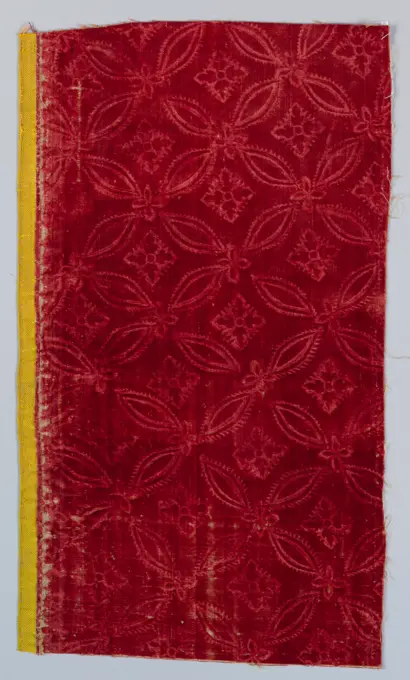
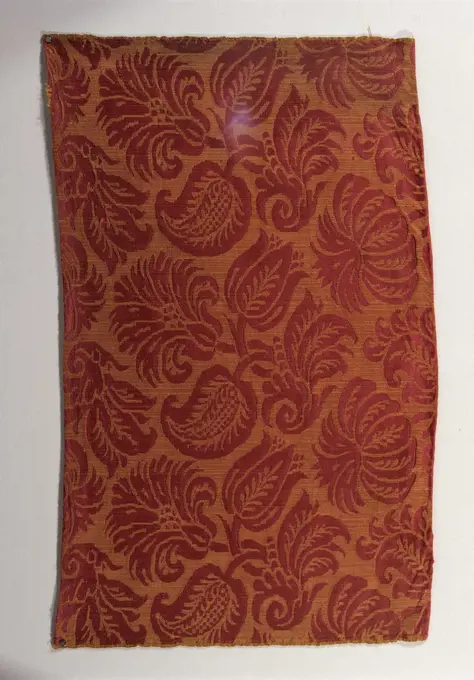
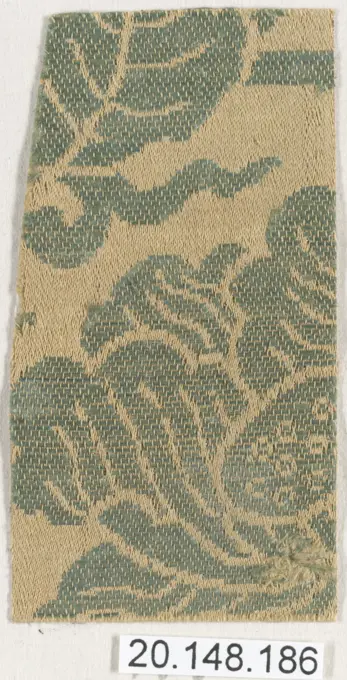
Fragment, Medium: silk Technique: 5-harness satin damask, Red damask in an allover repeating pattern of a bar with a scrolling floral forms arranged in rows., Italy, 17th century, woven textiles, Fragment
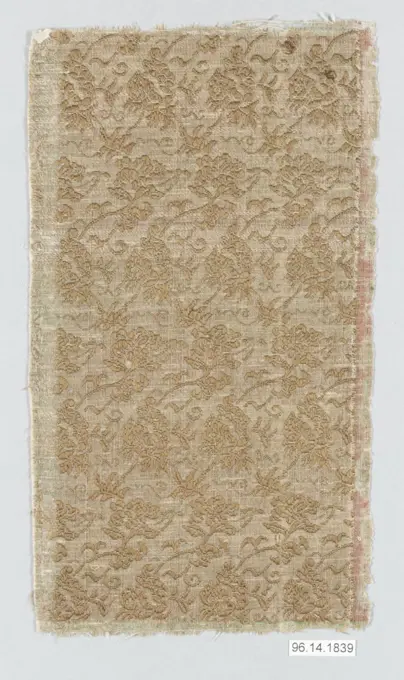
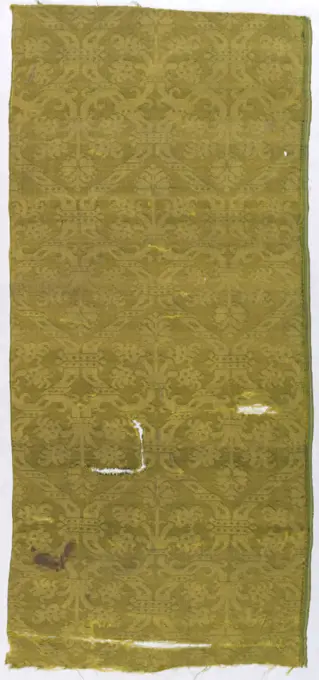
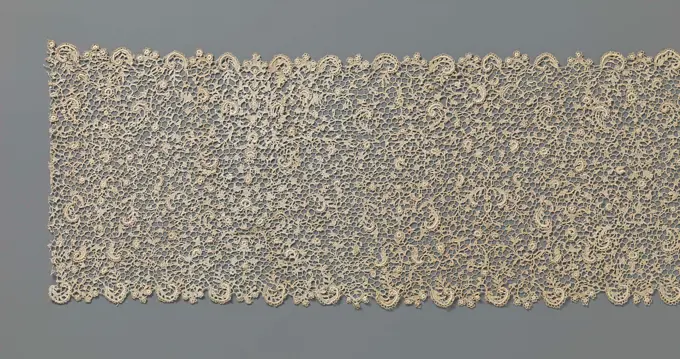
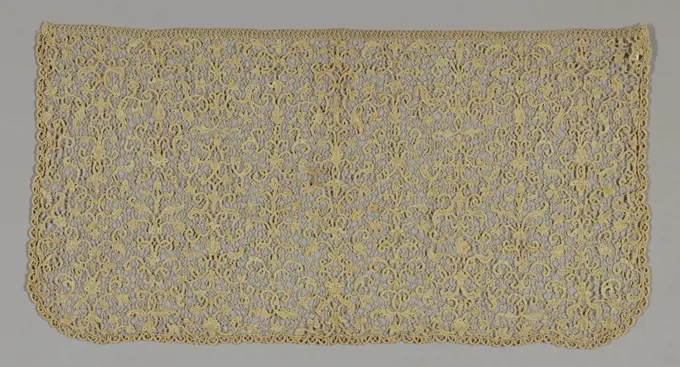
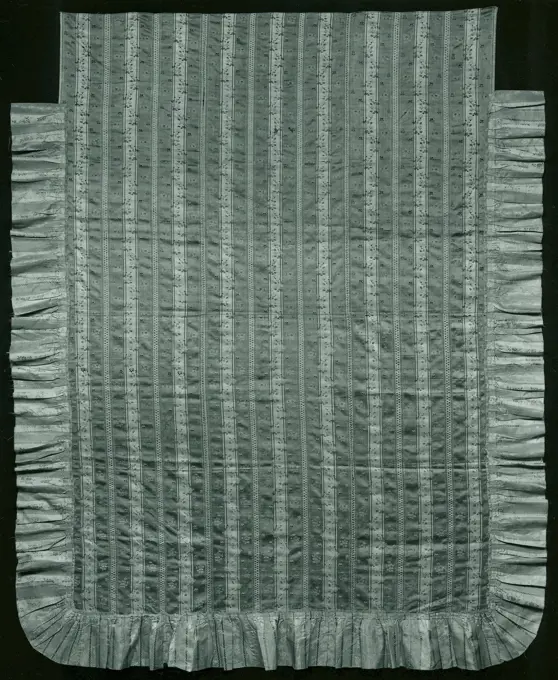
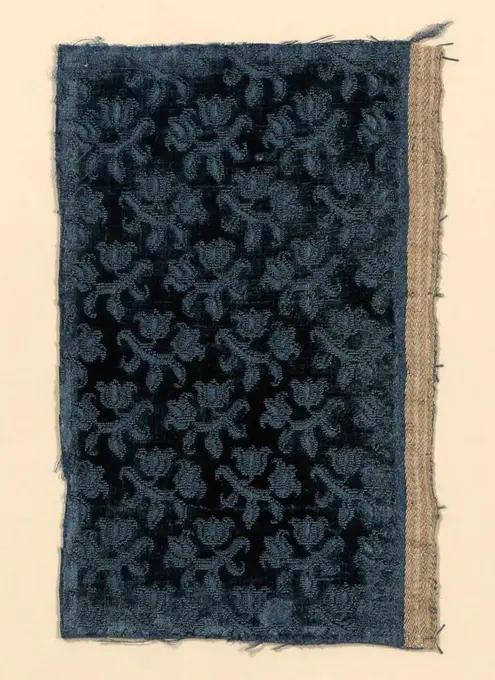
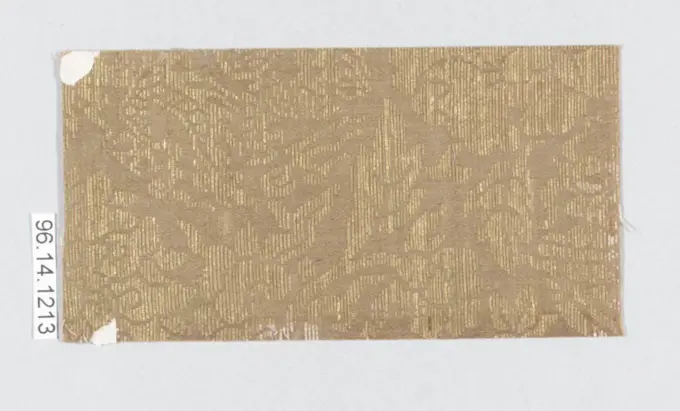
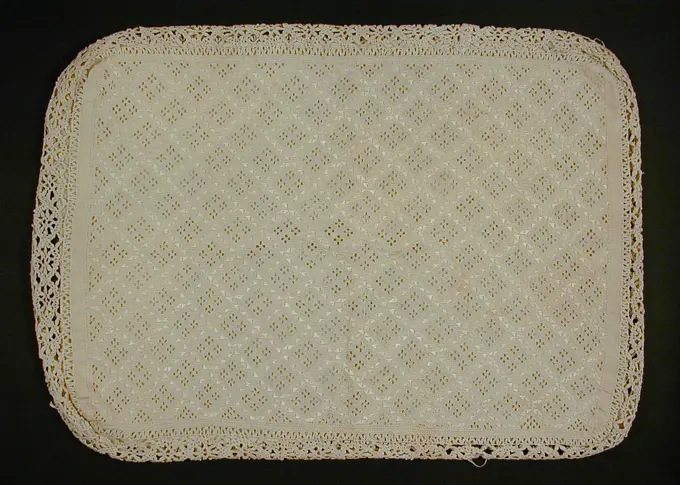
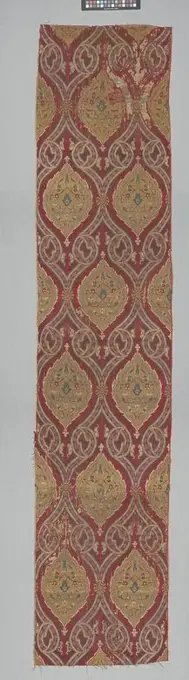
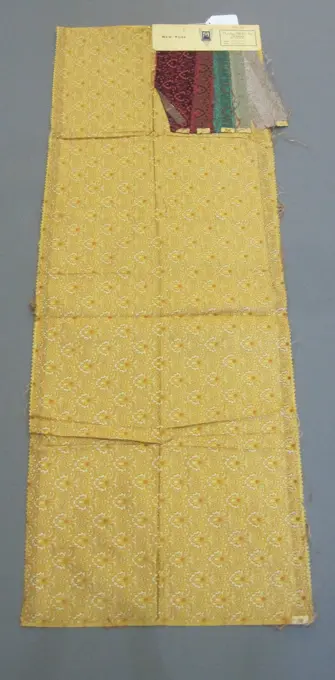
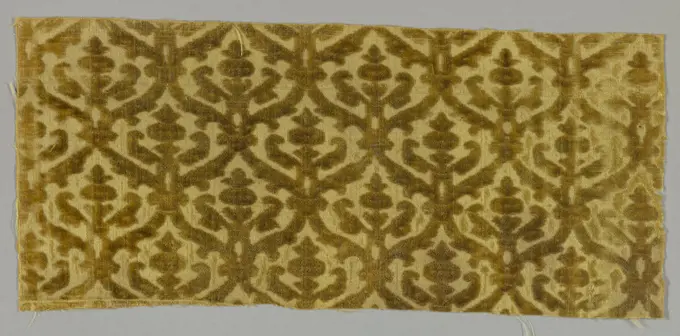
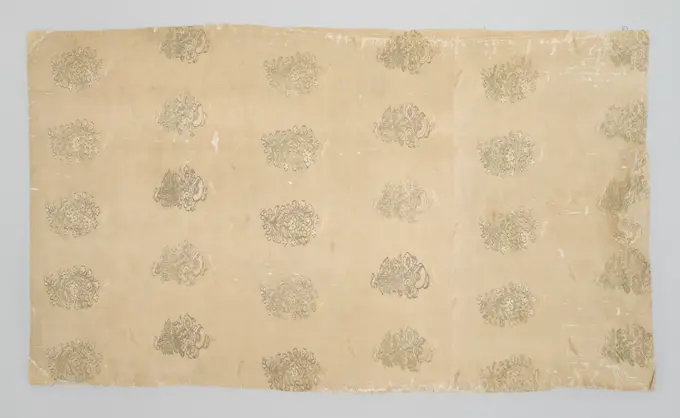
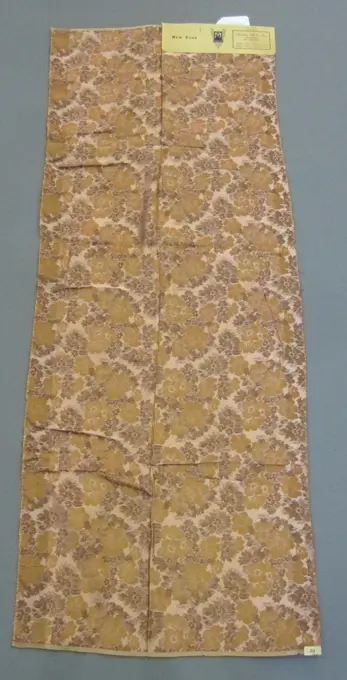
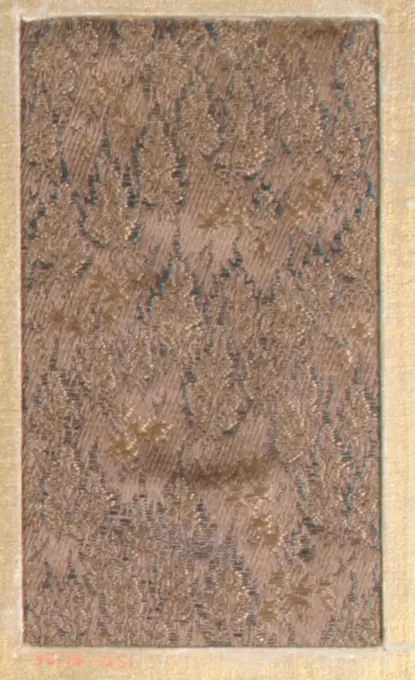
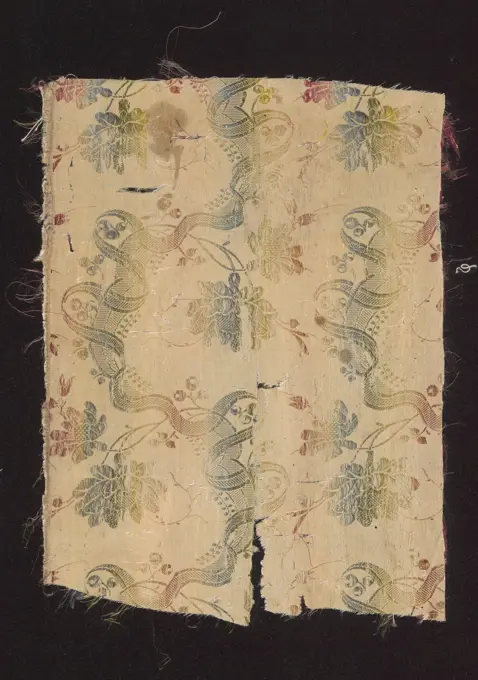
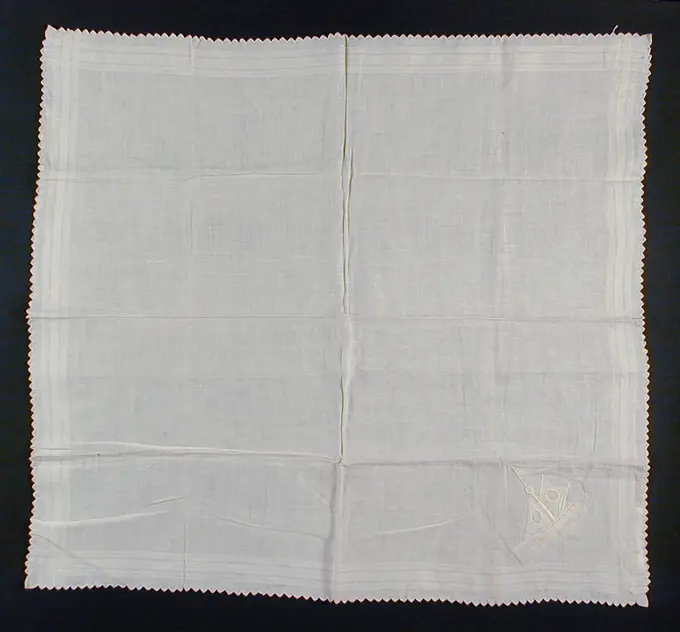
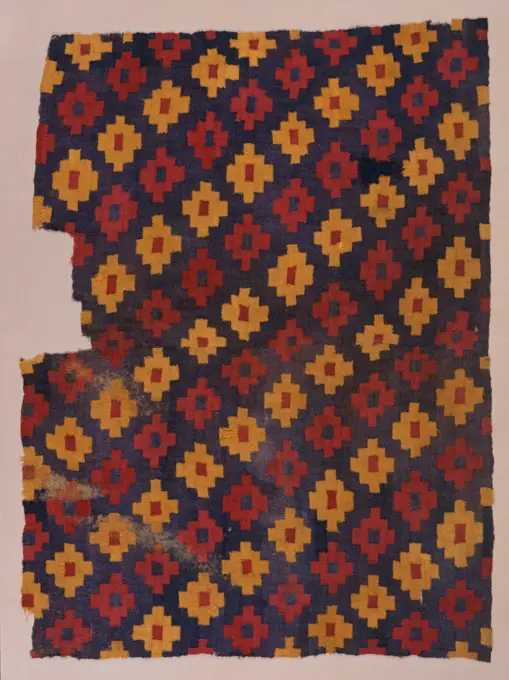
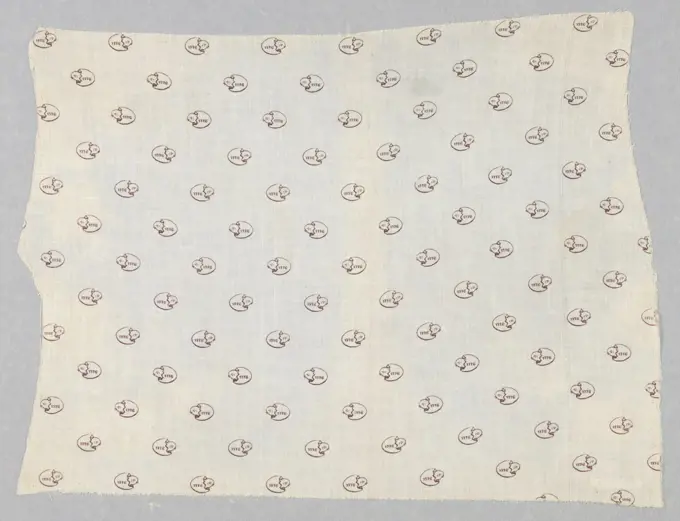
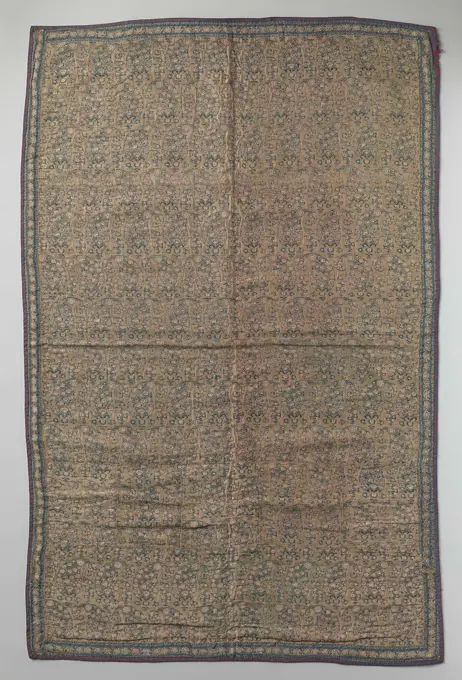
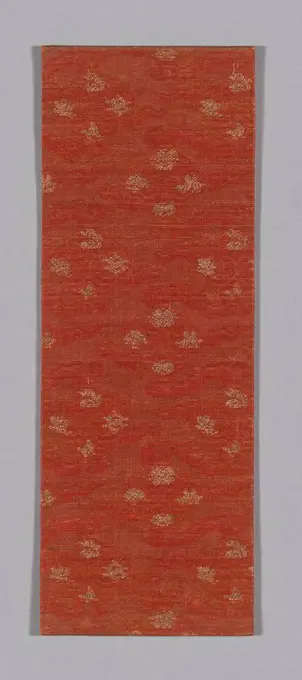
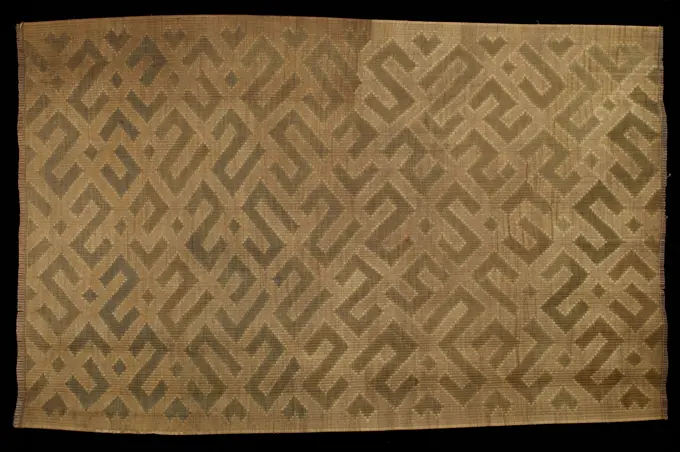
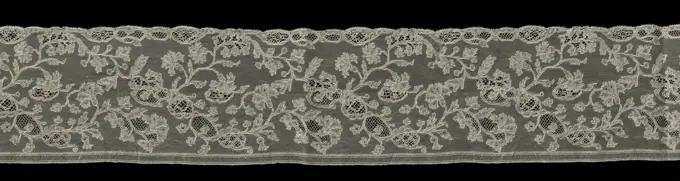
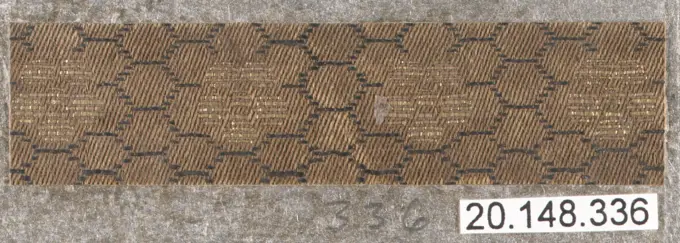
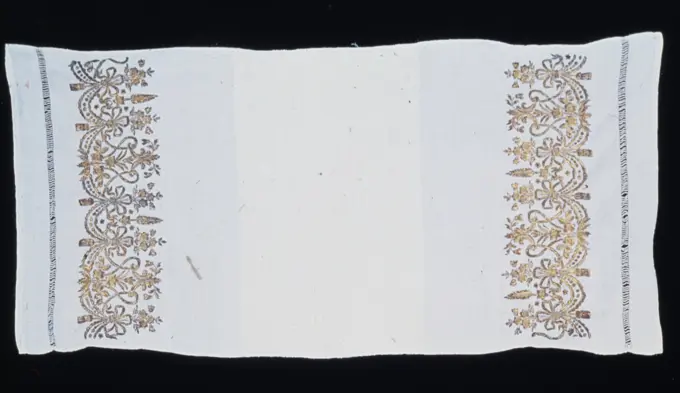
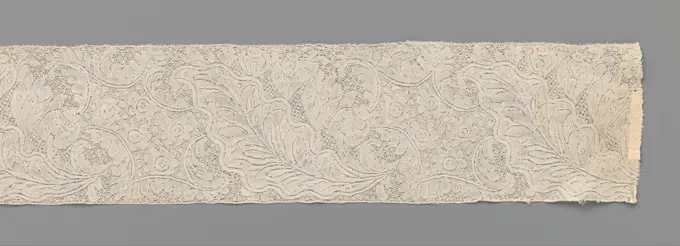
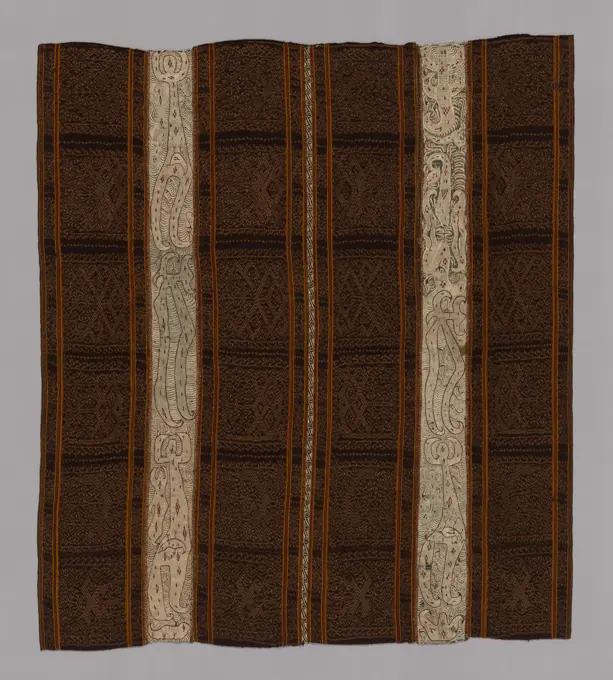
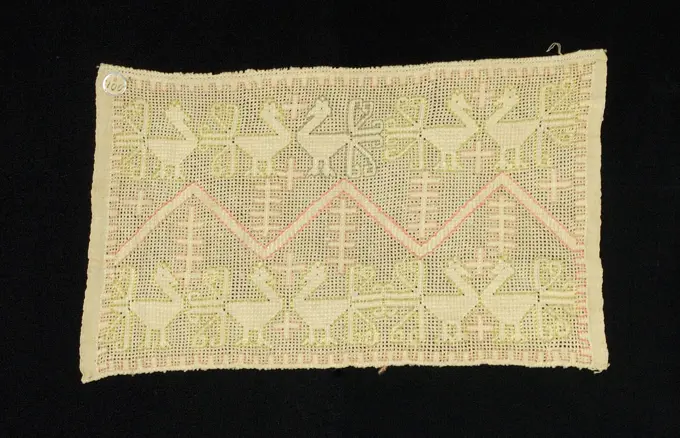
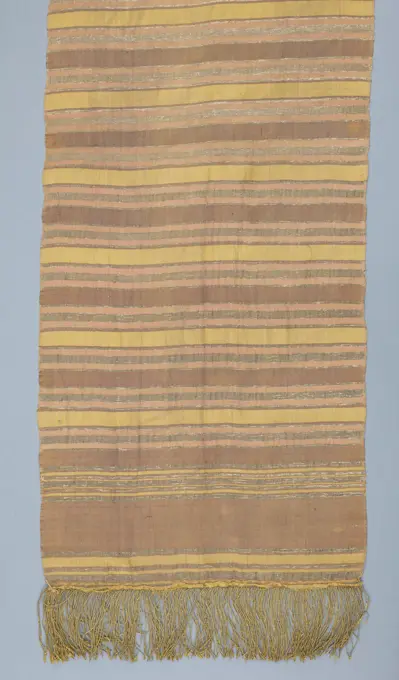
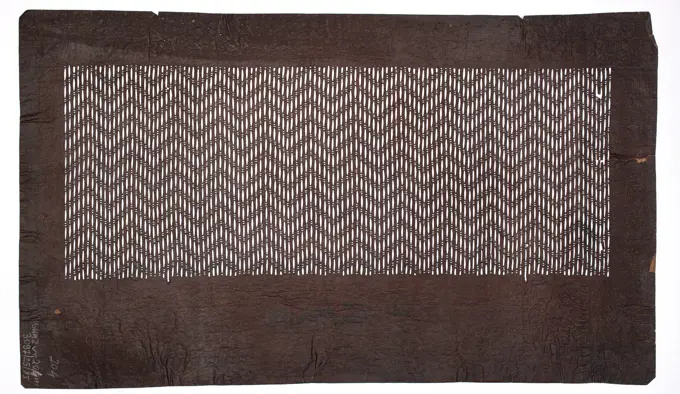
Textile, Medium: silk Technique: compound satin, Lavander ground with white, brown, and orange fern fronds., Japan, late 19th century, woven textiles, TextilePiece 18th century Japan. Piece 67552Fragment, Medium: silk Technique: 5-harness satin damask, Red damask in an allover repeating pattern of a bar with a scrolling floral forms arranged in rows., Italy, 17th century, woven textiles, FragmentFragment, Medium: silk Technique: 5-harness satin damask, Italy, 16th century, woven textiles, FragmentPiece 18th-19th century Japan. Piece 67325Fragment, Medium: silk Technique: 4&1 satin damask, Small-scale designs in olive green. One selvage., 17th century, woven textiles, FragmentPiece 18th century Japan. Piece. Japan. 18th century. Silk / Compound weave. Edo period (1615-1868). Textiles-WovenPanel Made 1701-1725 England. Linen, plain weave; backed with linen, plain weave; quilted with silk in backstitch; cotton batting .Strook naaldkant voor een superplis met rozetbloempjes en c-vormen.Strip natural needle side, point de france. Pattern of coral reflections ending in volutes, buttons and rosette flowers on vertical axes of symmetry. Irregular land with picoted bars. Full work with recesses and largely without relief. However, in different places the tendras are accentuated with thick cordons and also many rosette flowers have a circular cordon as a flower heart. Plump edge on top and bottom, alternating with C-Volutes and three rosette flowers.Fragment Made 1601-1700 Japan. Plain compound twill, silk and gilt paper; 2 1/2 strips to m.m. .Piece 18th-19th century Japan. Piece 67099Cravat end, Medium: linen Technique: needle lace, Cravat end showing a design of scrolling flower and leaf forms arranged in a candelabra pattern. Edged on three with narrow scallops of needle lace., France, late 17th century, lace, Cravat endBedcover late 18th century Spain, possibly Valencia or Talavera. Bedcover 460290Fragment. Italy. Date: 1601-1650. Dimensions: 21.6 x 7.9 cm (8 1/2 x 5 1/2 in.). Cisele voided satin velvet. Cut and uncut velvet. Origin: Italy. Museum: The Chicago Art Institute, Chicago, USA.Piece 18th-19th century Japan. Piece 66932Leaf pattern of twig on points stock, Anonymous, 1780 - 1820  Leaf with spreading pattern of twig with fruit on a stock of points in windscreen pattern. With label with inscription: 'W.C. Dickens ... Inventing. " Half of a cover.  paper. block printing (relief printing process) ornament derived from plant formsPillowcase. Probably Italy, 1550-1632. Textiles; covers. Linen embroidery (satin stitch and cutwork) on linen with linen bobbin lace insertionTextile Fragment. Dimensions: Textile: H. 123 1/2 in. (313.7 cm) W. 26 1/2 in. (67.3 cm)Tube: Diam. 2 1/2 in. (6.4 cm)W. 38 1/2 in. (97.8 cm). Date: ca. 1570-80.The unusual length of this silk fragment suggests that it may have been used as a furnishing fabric rather than for a garment. It bears a repeating ogival pattern in silver, blue, and gold on a red ground, with red, blue, and silver floral patterns within the ogival forms. The small red-and-white checkered motifs that fill the scrolling borders around the ogival medallions may be derived from Italian textiles, demonstrating the cultural and artistic relationship between Italy and the Ottoman Empire in the sixteenth century. Museum: Metropolitan Museum of Art, New York, USA.Fragment, Medium: silk Technique: 4&1 satin damask, Rows of birds facing in alternate directions separated by curled brackets., 17th century, woven textiles, FragmentFragment; silk, metallicFragment Made 1575-1600 Italy. Silk, warp-float faced satin weave with supplementary pile warps forming cut, uncut and voided velvet .Textile Swatches Onondaga Silk Company, Inc. (1925-1981). , 1948-1959. Silk, 47 x 17 in. (119.4 x 43.2 cm).    1948-1959Linnamast napkin with a flower pattern, anonymous, c. 1690 - c. 1699 Linnamast napkin. The field has a mirrored pattern of thin volute -shaped flower vines. The running and lying edges have stylized flowers, rosettes and bows. The napkin is marked: Kroon GS 12 Wh. Southern Netherlands (possibly) linen (material) damask Linnamast napkin. The field has a mirrored pattern of thin volute -shaped flower vines. The running and lying edges have stylized flowers, rosettes and bows. The napkin is marked: Kroon GS 12 Wh. Southern Netherlands (possibly) linen (material) damaskFragment. Italy. Date: 1575-1600. Dimensions: 24.5 x 16.6 cm (9 5/8 x 6 1/2 in.)Repeat: 3.7 x 3 cm (1 1/2 x 1 1/8 in.). Silk, plain weave with supplementary patterning wefts bound by main warps in plain interlacings. Origin: Italy. Museum: The Chicago Art Institute, Chicago, USA.Piece 19th century Japan. Piece 67886Fragment, Medium: silk Technique: cut and uncut velvet, Brown silk velvet, cut and uncut, on yellow ground; palmette in ogival frame., Italy, 16th-17th century, woven textiles, FragmentFragment of fabric unknownPanel Made 1701-1800 India. Silk, double cloth .Textile Swatches Onondaga Silk Company, Inc. (1925-1981). , 1948-1959. Silk, 48 x 17 3/4 in. (121.9 x 45.1 cm).    1948-1959Piece 18th-19th century Japan. Piece. Japan. 18th-19th century. Silk. Textiles-WovenTextile, Medium: silk Technique: 5-harness satin damask, Green damask patterned by a straight repeat of exotic flowers on a very fine curving vine., France, 18th century, woven textiles, Textileold paper isolated on a white backgroundPiece 18th-19th century Japan. Piece 66773Box covered with sit paper with a stray pattern of flowers, anonymous, 1790 - 1792 box Box covered with sit paper with a spray pattern of flowers in red and green on a point stock in red, covered inside with solid blue paper, on the underside '35 ST uivers 1792 '. Netherlands paper. block printing (relief printing process) ornament derived from plant formsPiece 18th-19th century Japan. Piece 66030Fragment 16th century Italian. Fragment 230526Fragment; silkSilk and Linen Fragment, 17th century. Spain, 17th century. Fancy satin (damask): silk and linen; average: 104.1 x 43.2 cm (41 x 17 in.).Children's towel. Brand: HW 18., Anonymous, 1852 - 1860 Children's towel of white linen. HW 18 brand. Northern Netherlands (Possible) linen (material) Children's towel of white linen. HW 18 brand. Northern Netherlands (Possible) linen (material)Robbery, jacquard tissue with pattern of striker drinks, golden -yellow impact on beige chain, Theo Nieuwenhuis, c. 1920 - c. 1930 Seconditional, Jacquard tissue with pattern of spitsOvals with Winger drinks, Gougele Inslag on Beid Necklace. Helmond cotton (textile) Seconditional, Jacquard tissue with pattern of spitsOvals with Winger drinks, Gougele Inslag on Beid Necklace. Helmond cotton (textile)Fragment of the fabric;  Ok. PO. 18th century (1740-00-00-1760-00-00);fabricsLinen runner with edges of bobbin, anonymous, c. 1675 - c. 1699 Linen runner with edges of Kloskant on the short sides, Antwerp side. The repeating and continuous lace pattern consists of a regularly wavy leaf vend with a large up -curly rosette flower in each golf valley and a smaller down -curled rosette flower under each wave top. The leaves have many different shapes and fillings. The motifs are connected by a braid ground. And they are made in linen battle with openwork edges. Various decorative lands have been used in the leaves, including fine and coarser snowflake grounds. In the Bloemharten, motifs are made in shape. The straight underside of the strips are finished with picots. Northern NetherlandsAntwerp linen (material) bobbin lace / Antwerp lace Linen runner with edges of Kloskant on the short sides, Antwerp side. The repeating and continuous lace pattern consists of a regularly wavy leaf vend with a large up -curly rosette flower in each golf valley and a smaller down -cuHandkerchief. Europe, mid-19th century. Costumes; Accessories. Cotton plain weave with cotton embroideryHandekrchief, early 1800s. France or Flanders, early 19th century. Embroidery on linen ground; lace edging; overall: 64.7 x 64.7 cm (25 1/2 x 25 1/2 in.).Lace sampler early 19th century British. Lace sampler 213485Textile; silk, metallic threadSample ca. 1825-50 French. Sample 219188Apron 19th century probably French. Apron 102521Textile FragmentPiece 17th century Japan. Piece 71179Textile sample, American Print Works, founded 1835, Medium: cotton Technique: printed on plain weave, White fabric in a design showing a repeating motif of a chick breaking through its shell which is marked '1776.', Fall River, Massachusetts, USA, 1870s, printed, dyed & painted textiles, Textile sampleVolant van kloskant met ruitvormige medaillons.Volant of natural colosside: Parisian side. The ground has been shared in two in a paris soil with clover leaves at the top and a tulet below. In the last one is a symmetrical pattern of diamond-shaped openwork medallions with sidewalks crowned by a flower between two leaves. The leaves, the side drinks and a series of flowers and ranks in the sculpture are released in three closed garlands. The motifs are made in linen stroke and equipped with contour wires. A rose soil has been applied as ornamental ground.Ciseléfluweel fragment, Anonymous, c. 1550 - C. 1650 A fragment of a ciseled velvet, decorated with sprinkled sheets and flowers in green. The design is surrounded by a salmon -colored impact. NOTE: MEERSHIP; 1 cm, plain binding, 1 cm folded at the top and bottom.  silk. velvet (fabric weave). ciselé velvet A fragment of a ciseled velvet, decorated with sprinkled sheets and flowers in green. The design is surrounded by a salmon -colored impact. NOTE: MEERSHIP; 1 cm, plain binding, 1 cm folded at the top and bottom.  silk. velvet (fabric weave). ciselé velvetFragment silk with diamond pattern within which flower branches, anonymous, c. 1700 - c. 1799 Fragment silk with diamond pattern within which flower branches. Brocade. Six pieces put together.  brocade (textile). silk Fragment silk with diamond pattern within which flower branches. Brocade. Six pieces put together.  brocade (textile). silkRug with serabent motifs, filled with flowers. Rug with serabent motifs, filled with flowers. Dress is trimmed with a border with rosettes. Cotton lining in green / red. Oriental textile.Fragment, Medium: Technique: printed, 19th century, printed, dyed & painted textiles, FragmentFragment (France); silk and metallic thread; 1907-30-3Border, Technique: bobbin lace, Bobbin lace entre-deux, repeat of diamonds; mid-18th century Maline, mid-18th century, lace, BorderVelvet Fragment, 1700s. Italy, 18th century. Velvet; overall: 20.5 x 40 cm (8 1/16 x 15 3/4 in.).Two fragments serried sewn multicolor stitching for zijde.Five fragments or satin little finger, in Which flowers and houses are woven. Note: Self-side; 0.6 cm 4 coarse self-board wires, multicolored.Sampler (England); linenHandkerchief. Dated: 1935/1942. Dimensions: overall: 26 x 23.2 cm (10 1/4 x 9 1/8 in.). Medium: watercolor, gouache, and graphite on paper. Museum: National Gallery of Art, Washington DC. Author: George Constantine.Piece of silk shirt. Culture: Portuguese. Dimensions: L. 20 1/2 x W. 11 1/2 inches (52.1 x 29.2 cm) (one breadth). Date: 1775-1824. Museum: Metropolitan Museum of Art, New York, USA.Shoulder Cloth or Wrapper (Kumbut Juangga,Cindé)Fragment, Technique: plain weave with supplementary weft floats, Minute all-over design of a bird alternating with a broken branch in yellow and brown., 17th century, woven textiles, FragmentPiece 18th century Japan. Piece 71727Piece 18th-19th century Japan. Piece. Japan. 18th-19th century. Silk. Textiles-WovenTextile Fragment, 1800s. Italy, 19th century (copy of late 15th - 16th-century style). Damask; wool; overall: 53 x 22 cm (20 7/8 x 8 11/16 in.).Sutra Cover. China. Date: 1590-1599. Dimensions: 32.8 × 11.8 cm (13 × 4 5/8 in.)Repeat: 9 × 8.2 cm (3 1/2 × 3 1/4 in.). Silk and gold-leaf-over-lacquered-paper strips, 1:1 plain gauze weave with supplementary brocading wefts and self-patterned by areas of plain weave. Origin: China. Museum: The Chicago Art Institute, Chicago, USA.Sleeping mat, 20th century, 47 x 74 3/4 in. (119.4 x 189.9 cm), Raffia; plaiting, Democratic Republic of Congo, 20th centurySuspension of lace -ups on tulle for a Zaans costume, anonymous, c. 1810 - c. 1824 Apron of natural-colored lace: Lierse Kant or Limerick side (Tamboerwork on Tulle). Rectangular model with a spreading pattern of V-tjes. Along the lower edge a continuous pattern of a pendulum and below that a wavy flower srivel. The pendulum consists of an S-shaped pearl cord that is always interrupted by an elongated S-Volute. The flower vend consists of larger and smaller flowers, varied rosette -shaped, round and in the form of a squeezed oval. Side branches transfer the pendulum above it. The faintly scalloped bottom edge forms along the lower part of pattern that consists of a continuous line, which forms alternately oval loops and small eights in a straight row. The sides of the tulle are formed in pointed shells, along which two lines winding around each other run around each other. The top is finished with a zoompje that fits a ribbon. One kind of decorative land appears in the Bloemharten and Damask, by Italian workmanship, 17th Century, Unknow. Italy, Liguria, Genoa, Palazzo Spinola National Gallery. Detail. Phytomorphic patterns: motifs flowers leaves red.Bed sheet. Brand: Kroon WG10 and Year 1738 and B., Anonymous, 1738 Cloths of White Linen, Brand Kroon WG 10 1738 B Northern Netherlands (Possible) linen (material) Cloths of White Linen, Brand Kroon WG 10 1738 B Northern Netherlands (Possible) linen (material)Strip needle side with sloping rosette flower between three curling leaves and multi-sheet flowers. Strip natural-colored coniferous lace, Venetian rosary. The repeating pattern consists of multi-sheet flowers and leaves, including in the upper part of the strip, a sloping rosette flower set between three curling leaves. The motifs are connected by an irregular open bars soil with picots. The full work was made with feston stitches decorated with recesses, embossed contours and raised cordons. Ornamental grounds are applied in various motives. The top is finished with a border needle side with a zigzag pattern. The underside is finished with a straight edge with shifts, which are alternately formed by a rosette flower and picoted arcs.Kloskant dress strip with reserves and carnations, anonymous, c. 1850 Japon strip of natural -colored bobbin: Mechelen side. Continuous pattern with wavy stems over the entire width, with branches, along which oval reserves stand and which end in Carnations. The motifs are connected by a fine Maas soil, the Mechelen soil. The motifs are made in linen battle with thicker and shiny contour threads. Ornamental grounds in the reserves. Flat sculpture on the bottom occurring from a pattern with connected reserves. The top is finished with a separate strap. Bruges (possibly) linen (material) bobbin lace / Mechlin (lace) Japon strip of natural -colored bobbin: Mechelen side. Continuous pattern with wavy stems over the entire width, with branches, along which oval reserves stand and which end in Carnations. The motifs are connected by a fine Maas soil, the Mechelen soil. The motifs are made in linen battle with thicker and shiny contour threads. Ornamental grounds in the reserves. Flat sculptuPiece 17th century Japan. Piece 71327Textile Swatches Onondaga Silk Company, Inc. (1925-1981). , 1948-1959. acetate, rayon, 44 3/4 x 24 in. (113.7 x 61 cm).    1948-1959White Towel, 19th-20th century, Linen (), metallic threads; needlework, Turkey, 19th-20th centuryStrip bobbin with slanted leaves and seven -pointed cartouches, anonymous, c. 1715 - c. 1725 Strip of natural-colored bobbin, binche side. The repeating pattern consists of a strip width filling, slanted leaf with wavy border, under which a row of skewers hangs. Parallel to this is a seven -pointed cartouche, framed by leaves and filled with rosettes. The motives are against each other and partially overlap each other. Where they don't touch each other, they are connected to each other by a fine decorative soil, a snowflake ground. The motifs are made in linen battle with openwork edges and mains fillings. The top and bottom of the strip are straight finished, with the bottom with picots. Southern Netherlands linen (material) Bobbi Lace / Binche Lace Strip of natural-colored bobbin, binche side. The repeating pattern consists of a strip width filling, slanted leaf with wavy border, under which a row of skewers hangs. Parallel to this is a seven -pointed cartouche, framed by leaves and Anonymous. Underwear: pair of openwork stockings of patterns on feet and forever. White cotton thread, openwork knitting, rear sewing, around 1850. Galliera, fashion museum of the city of Paris. 79127-5 Stockings, female lingerie, women's fashion, under-nomination, 19th 19th 19th 19th 19th 19th 19Farmer Driving Vehicle While Talking on Walkie TalkieFragment; silk, metallicInteresting side side with rosettes. Langgroekt U-shaped intersection of needle side, reticella or cut work. Possible from a bed sheet. The grid work of the pattern consists of one row of large squares, constructed per square from four small squares. Two types of rosettes were alternately made in the large squares. One with eight-panned points and the other with eight spiral points that are connected to each other with triangles. Worked on two-sided linen, soil with both festived and abusive bars, partly picoted. Full work with buttonhole stitches, without decorative stitches. Top and bottom of the strip are finished with a double straight edge.Fragment Made 1775-1800 Italy. Silk; twill velvet foundation .Button. Culture: French. Date: ca. 1790. Museum: Metropolitan Museum of Art, New York, USA.Fragment blue sides Samiet with ferrunner pattern in silver of asymmetrical coaching tulip, palm with rosette. Fragment blue silk with ferrunner pattern in silver of asymmetrical hooking tulip, palm with rosette.Piece 18th century Japan. Piece 71175Cover fragment, Medium: wool Technique: plain weave, Red, blue and white cover fragment in a checkered plaid pattern., Canada, early 19th century, woven textiles, Cover fragmentFragment (Border) Made 1601-1625 Italy. Linen, needle lace worked on a laid and plaited thread grid, Reticello pattern .Towel, 20th century. America, 20th century. Linen; overall: 104.5 x 38.5 cm (41 1/8 x 15 3/16 in.).Woman's Ceremonial Cloth (Tapis) Made 1801-1900 Indonesia. Five panels joined three panels of stripes of cotton and silk, plain weave with supplementary brocading wefts and stripes of cotton, warp resist dyed (warp ikat) plain weave with paired warps and two panels of stripes of cotton plain weave; embroidered with silk and cotton in back, chain, running, split, stem and surface satin stitches and stripes of cotton and silk, plain weave with supplementary brocading wefts . PaminggirTextile Swatches Onondaga Silk Company, Inc. (1925-1981). , 1948-1959. Silk, 47 x 17 1/2 in. (119.4 x 44.5 cm).    1948-1959Heupdoek, anonymous, 1900 - 1949 Jalampran; morning/evening doek. Java cotton (textile) Jalampran; morning/evening doek. Java cotton (textile)Trimming, Medium: silk Technique: cut and uncut, voided supplementary warp pile (velvet), Red trimming fragment in a design of a curving stem with flowers, leaves and buds between wavy borders., France, 18th century, trimmings, TrimmingFragment (India); silk warp, cotton, silk and metallic weftsTowel border 1800-1850 Russian. Towel border 173357Textile Swatches Onondaga Silk Company, Inc. (1925-1981). , 1948-1959. 81 wool, 19 silk, 26 x 18 1/2 in. (66 x 47 cm).    1948-1959Silk sash unknownDying template katagami; Dese geometric;  XIX/XXW. (1868-00-00-1912-00-00);Ise-Catagami, Japanese (culture), geometric ornament, templates, Japanese art, purchase (provenance)Textile Swatch , 1950s to 1960s. Silk, 41 1/2 x 12 1/4 in. (105.4 x 31.1 cm).    1950s to 1960s