Historical Textile Fragments

A diverse range of textile fragments showcasing intricate patterns and textures from different centuries and cultures.

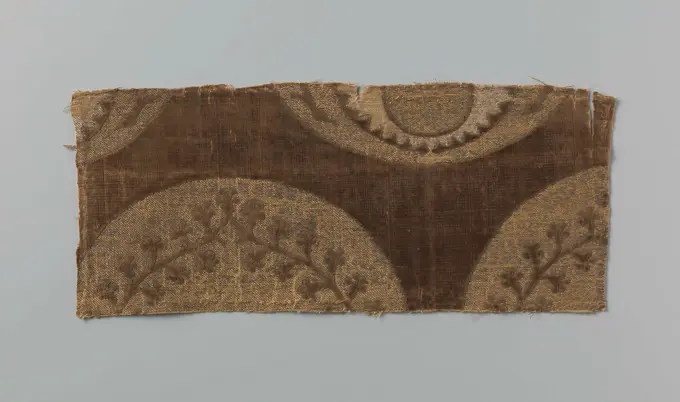
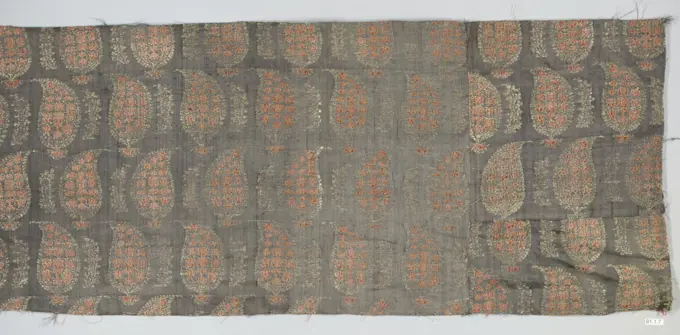
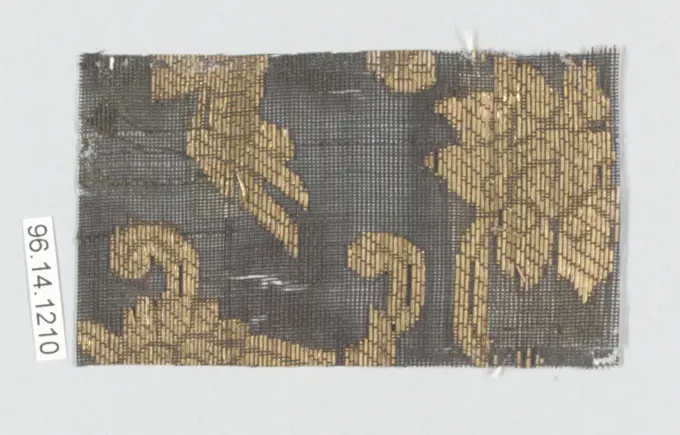
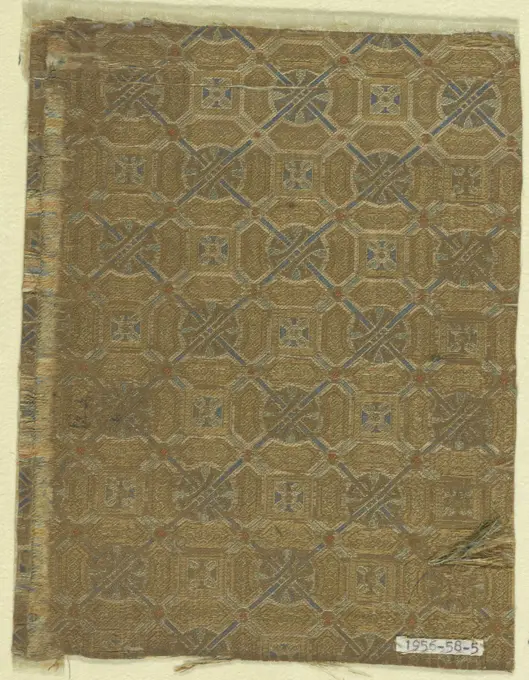
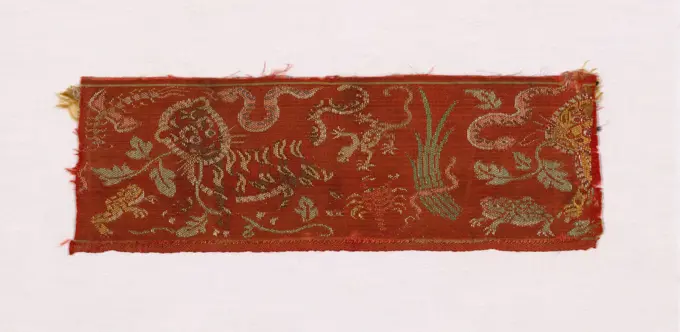
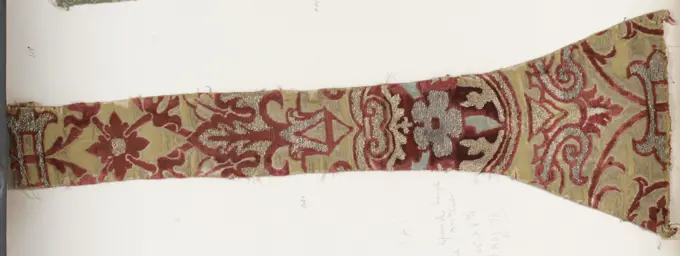
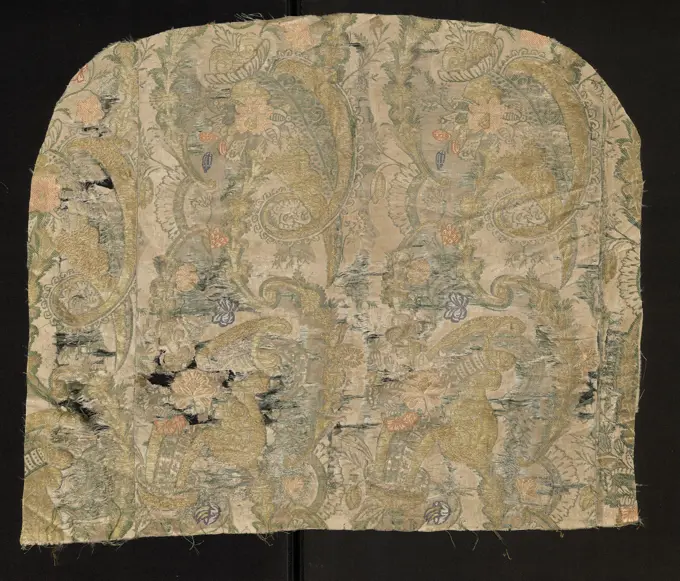
Fragment, Medium: silk, metallic Technique: twill with supplementary wefts, Sprouting logs arranged diagonally., 17th century, woven textiles, Fragment
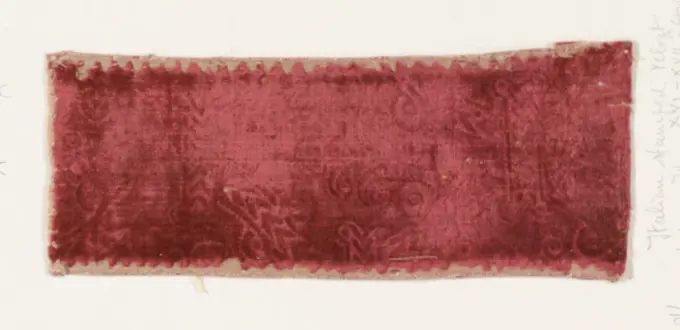
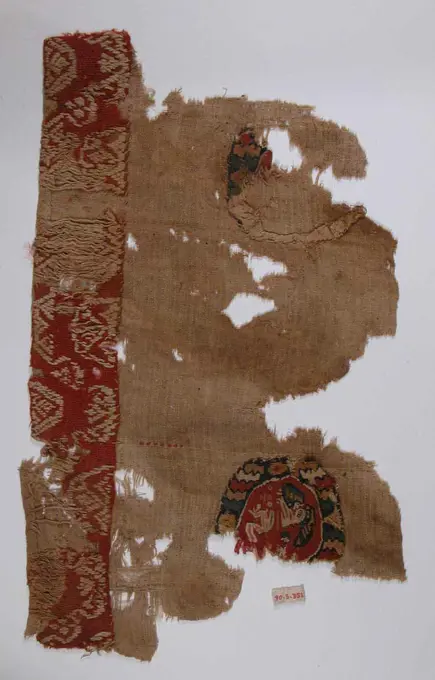
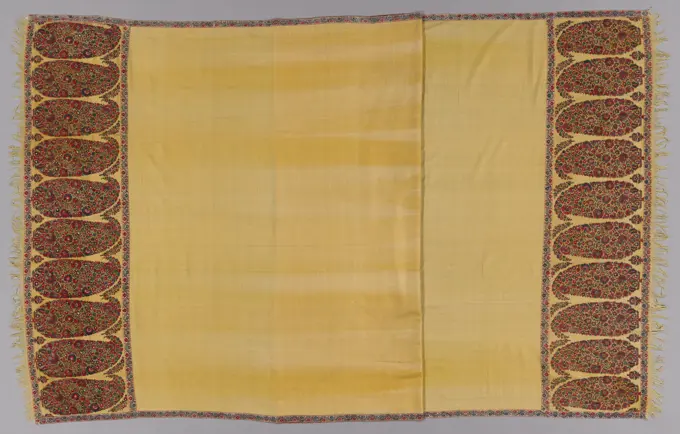
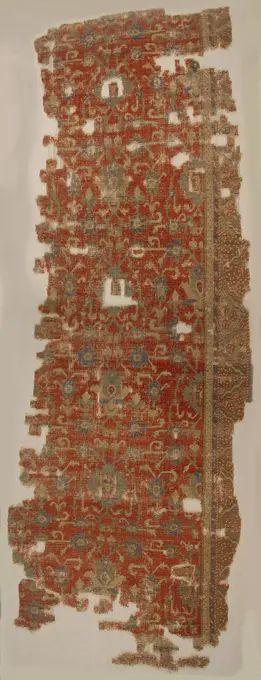
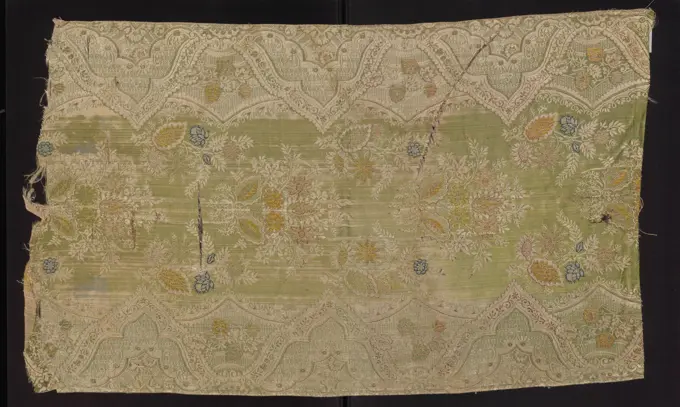
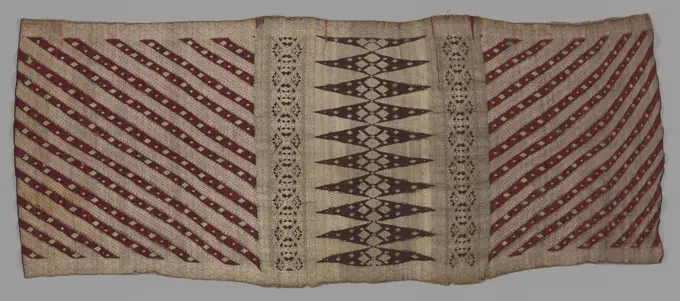
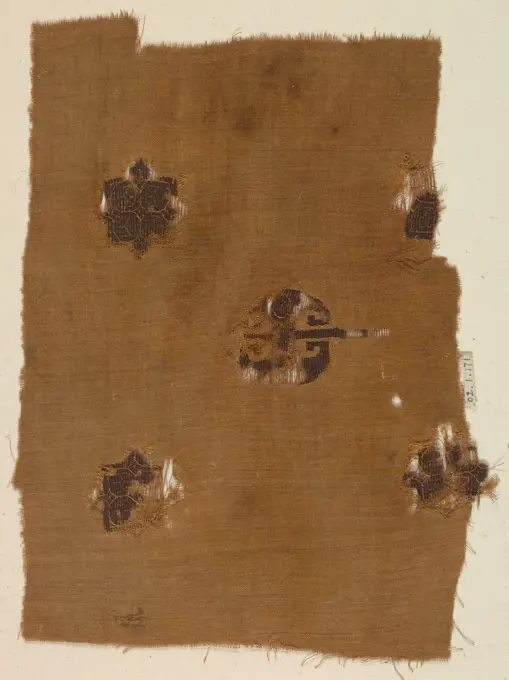
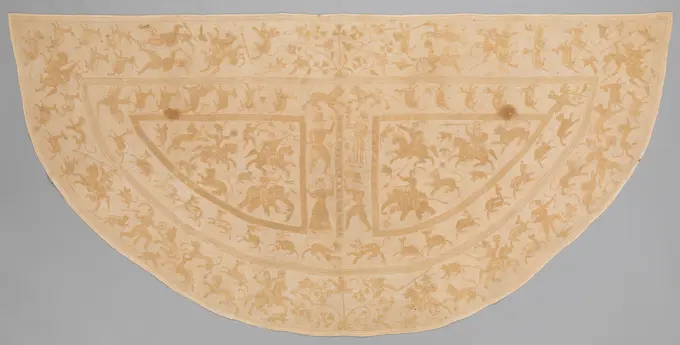
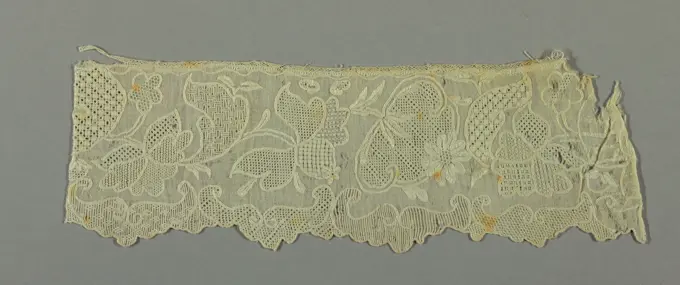
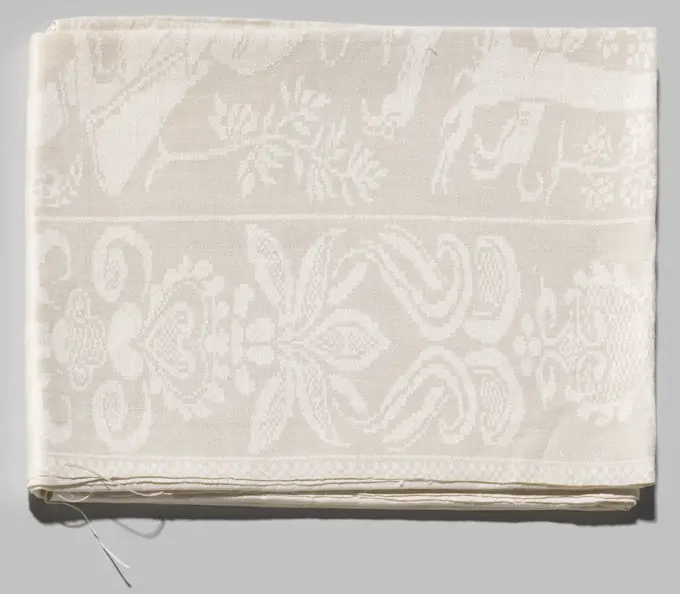
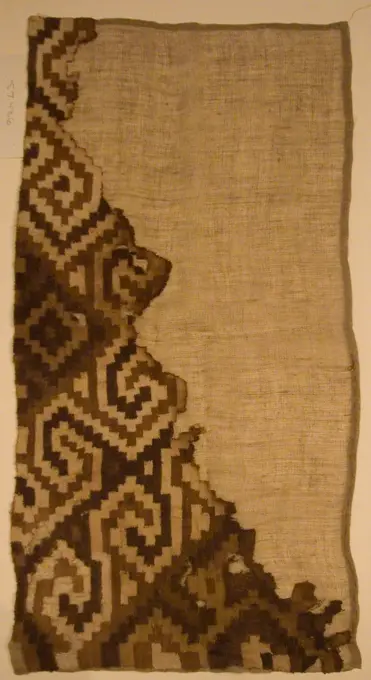
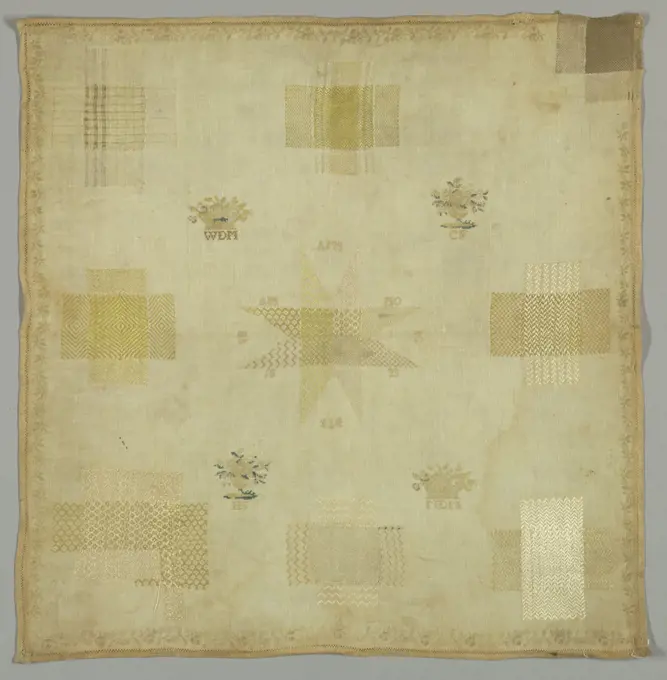
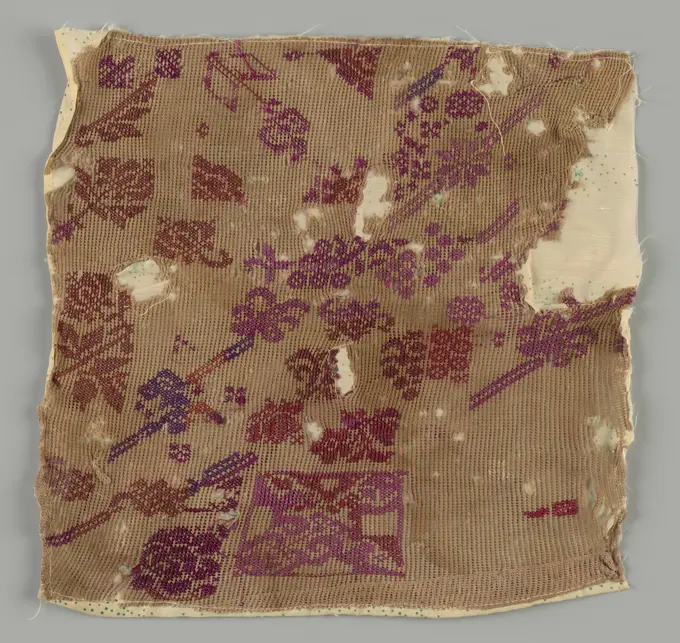
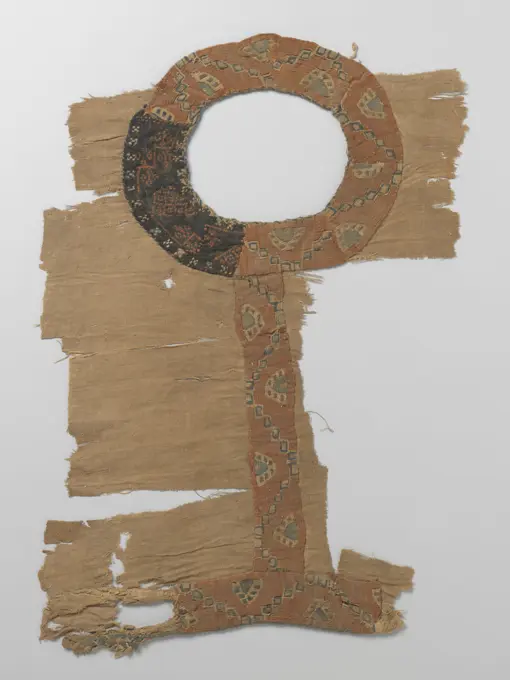
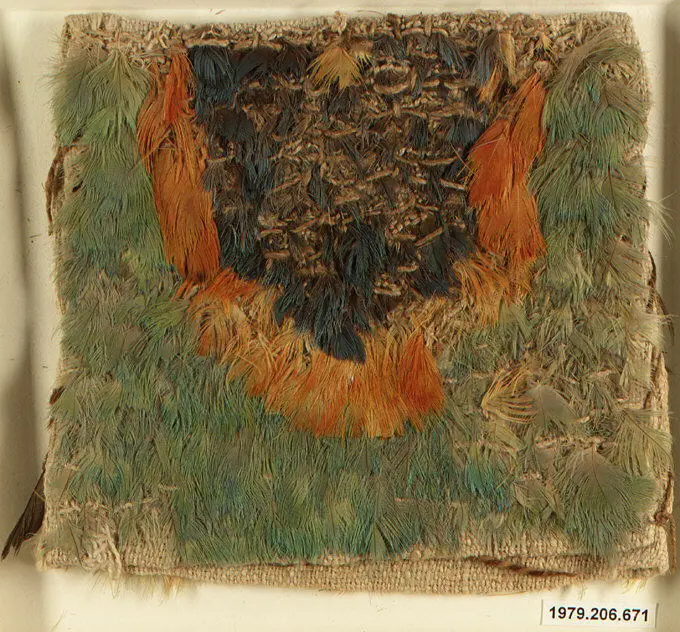
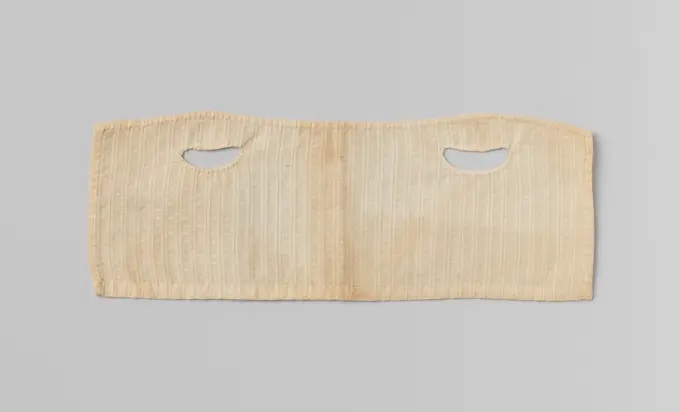
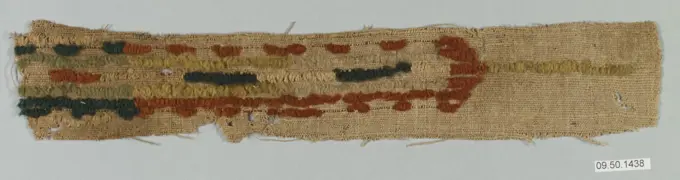
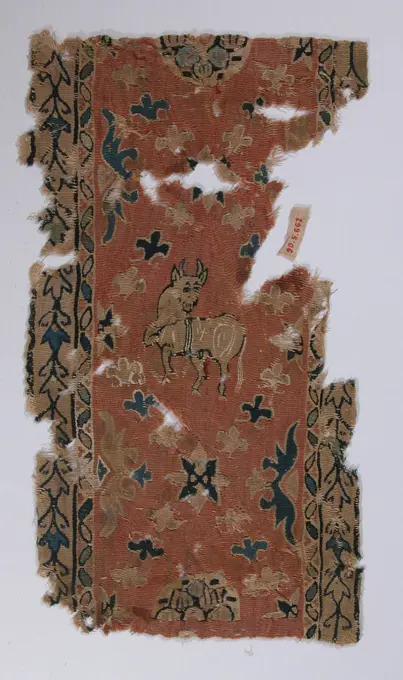
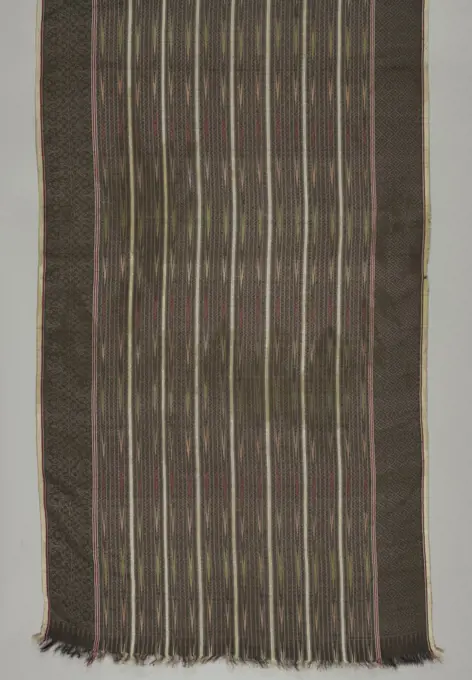
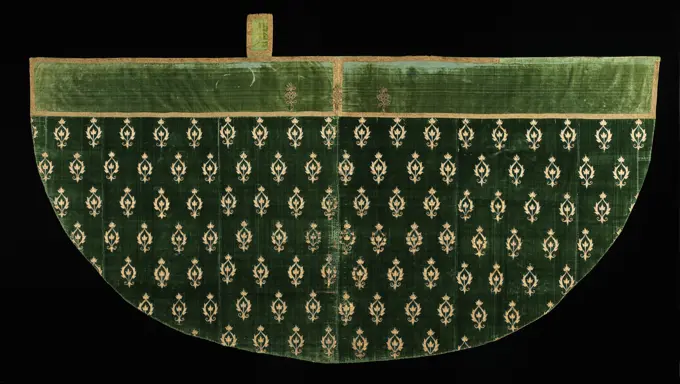
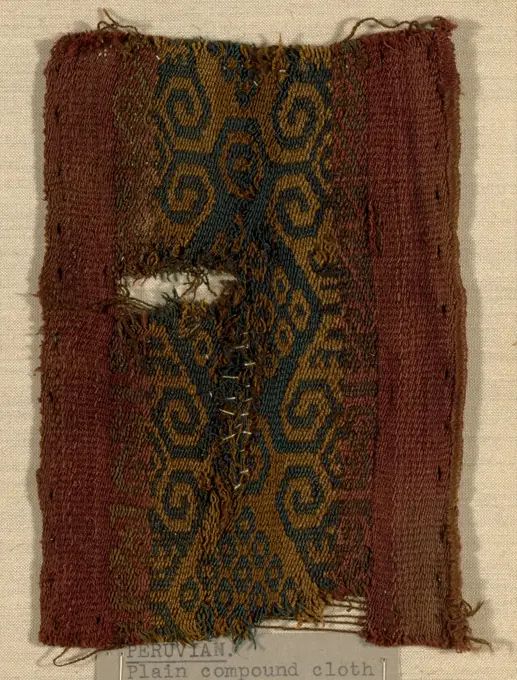
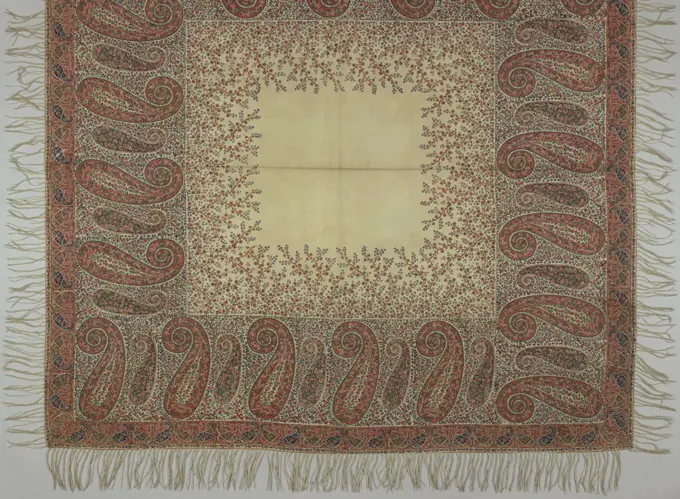
Fragment bruine zijden brokaatfluweel.Fragment with pattern of round or oval medallions filled with a shielded figure around which hyacinth branches.Piece 17th century Japan. Piece 71098Fragment 16th-17th century Italian. Fragment 230541Fragment of a Tunic 5th-6th century. Fragment of a Tunic 443837Textile Fragment 18th-19th century. Textile Fragment 444412Fragment of a Ship Flag, anonymous, c. 1665 ship flag Fragment of a ship's flag, left bottom corner, with a red cross (St. George's Cross) on a white background, and a double red-white checkered edge. This flag is a 'Guinea Jack', which was conducted by the English Royal Africa Company. This specimen was probably conquered in 1665 from the Cormantijn Fort on the coast of West Africa. England wool  flag, colours (as symbol of the state, etc.) GhanaPiece 19th century Japan. Piece 66929Fragments (France); silkPiece 16th-17th century Italian. Piece 223748Fragment, Medium: silk, metallic Technique: twill with supplementary wefts, Sprouting logs arranged diagonally., 17th century, woven textiles, FragmentFragment; silk, linen and metalFragment; linen, silkFragment. Italy. Date: 1640-1660. Dimensions: 27 x 20 cm (10 1/2 x 7 7/8 in.). Silk, plain compound cloth. Origin: Italy. Museum: The Chicago Art Institute, Chicago, USA.Valance (Russia); linenShawl , before 1815. India, Kashmir, early 19th century. 2/2 twill tapestry weave S, double interlocking; wool; overall: 318.7 x 137.2 cm (125 1/2 x 54 in.).Carpet with Chintimani Border and Lotus Design early 17th century. Carpet with Chintimani Border and Lotus Design 453318Fragment of the fabric;  1. W. 18th century (1715-00-00-1725-00-00);Fragments of silk fabrics, lace pattern, fabric, fabrics, patterned fabricsFragment, Medium: silk Technique: cut and uncut supplementary warp pile (velvet) in a woven foundation, Fragment of dark magenta silk velvet, cut and uncut, in a small floral pattern set within a repeating diamond shape., Italy, 16th century, woven textiles, FragmentWaist Wrapper(Sarung)Textile, China, 18th-19th century, woven textiles, TextileFragment of Draped Court Apparel, 1700s. India, Rajasthan or Northern Deccan, 18th century. Block printed with gold leaf on cotton muslin; average: 31 x 12.5 cm (12 3/16 x 4 15/16 in.).Fragment (India); cottonExcerpt blue silk tissue with stylized acanthus vranks and palmets, anonymous, 1500 - 1599 Fragment blue silk with pattern in gold from zigzag tumbles with cross -ranking palmets and large hooking curly side drinks. Italy silk. metal thread Fragment blue silk with pattern in gold from zigzag tumbles with cross -ranking palmets and large hooking curly side drinks. Italy silk. metal threadWoman's Cape, 20th century, 90 x 48 in. (228.6 x 121.92 cm), Wool, cotton; supplementary weft patterning, Tunisia, 20th centuryTextile Fragment 3rd-4th century. Textile Fragment 445819Fragment 15th-16th century Spanish. Fragment 216282Fragment borty lub pasa dekoracyjnego. warsztat egipski, workshopBandbox fragment, Block-printed paper on pasteboard support, a,b) On pale green ground a little girl in pink dress feeding turkey amidst white floral vine with green leaves; c) Unconnected fragment of same paper,with turkey in his pride. Mounted on cardboard. Used by Katzenbach and Warren for Wallpaper 'Farmington', England/USA, 1800-1820, Wallcoverings, Bandbox fragmentScarf End Made 1801-1900 Spain. .Excerpt multi -colored silk tissue, anonymous, c. 1740 - c. 1760 Fragment silk tissue with a white soil on which a pattern of vertical zigzag lines around which a winding branch and along which fruit balls. Germany silk Fragment silk tissue with a white soil on which a pattern of vertical zigzag lines around which a winding branch and along which fruit balls. Germany silkFragment (China); silk on linen; Bequest of Marian Hague; 1971-50-14Fragment (Border) Made 1801-1900 Russia. Cotton, plain weave; embroidered with silk floss in back, Bosnian, chained border, double running, hem, satin, and single faggot stitches .Fragment; warp; s-spun linen. wefts; z-spun linen, z-spun woolsCope early 17th century. Cope. early 17th century. Cotton; embroidered in tasar or muga silk. From India, Bengal, Satgaon. Textiles-CostumesFragment; linen; Bequest of Marian Hague; 1971-50-252Sampler 19th century Spanish. Sampler 228187Cover Made 1601-1700 Italy. Linen, plain weave; embroidered in silk .Sample Made 1801-1900 France. Silk and straw, plain weave self-patterned by areas of twill interlacing over interlacing; woven on loom with Jacquard attachment .Fragment (Italy); cottonNapkin with a hunting scene, anonymous, c. 1650 - c. 1699 Linnamast napkin with a hunting scene. Midfield: The symmetrical pattern shows two scenes: 1 a horn blowing and musket -bearing hunter walk from the middle to the side. He is dressed in Justaucorps, low shoes and wide -rigid hat. A running dog for him. Upstairs, between the trees, a crowd of dogs that follows a hare. 2 From the side, a hunter walks to the middle in ditto clothing. He has a musket in the attack and follows the dogs that surround a deer. In the distance in the middle a hunting lock between trees. Standing and lying edges, separated from midfield: symmetrical volute vines, decorated with checkered inner drawing; Beyond narrow blocking edge. Southern Netherlands linen (material) damask Linnamast napkin with a hunting scene. Midfield: The symmetrical pattern shows two scenes: 1 a horn blowing and musket -bearing hunter walk from the middle to the side. He is dressed in Justaucorps, low shoes and wide -rigid hat. A ruBanner, 1700s. Spain, 18th century. Crimson silk brocade; scalloped border with fringe and tassels; overall: 129.5 x 113 cm (51 x 44 1/2 in.).Fragment Made 1000-1476 Peru. Cotton; discontinuous warp and weft plain weave with dovetailed warps and interlocking wefts. . IcaSampler, Medium: silk embroidery on linen foundation Technique: embroidered in counted running (pattern darning) stitches on plain weave, Darning sampler, very faded, with eight square holes filled with pattern darning in various weaves, and one corner tear., Netherlands, 19th century, embroidery & stitching, SamplerPillow Sham (USA); cottonWeefselfragment in tapijtwerk.Black tissue fragment with three woven jobs. The widest path at the top is divided into yellow, red and green by plain streaks and has a shift design in red on yellow. In the tires above and under a yellow braided motif. The narrower band below has lines in yellow, red and green. The narrow band at the bottom of yellow and red has a thicker weft that mixes the two colors.Textile Sample from Sample Book 19th century Japan. Textile Sample from Sample Book 68250Strip of white side with one straight side, the other side is sculpted and picoted, on cardboard, Gustav Schnitzler, c. 1925 Strip of white side with one straight side, the other side is sculpted and potented, on cardboard. Nijmegen cardboard Strip of white side with one straight side, the other side is sculpted and potented, on cardboard. Nijmegen cardboardSampler(Limar)Fragment red seals with floral motif in silver language, anonymous, c. 1600 - c. 1699 Fragment red silk with silver colored ornament with blue circumference of winding branches with flowers and leaves. Persia (possibly) silk. Fragment red silk with silver colored ornament with blue circumference of winding branches with flowers and leaves. Persia (possibly) silk.Fragment of a Shoulder Band 4th century. Fragment of a Shoulder Band 443737Log Cabin, Medium: silk, wool, cotton Technique: pieced and sewn patchwork, Fragment of a patchwork quilt top with a design of concentric octagons made from folded strips of woven and printed fabrics, primarily gray, dull green and reddish tones. Backed with brown printed cottons., Texas, USA, 1880, embroidery & stitching, Patchwork quilt top fragment, Patchwork quilt top fragmentFragment blue velvet broker with pomegranate pattern. Fragment silk velvet brocade with blue ground pattern of golden by flowers and leaves surround pomegranate in lobby contour. See also A and C.Fragment (Italy); silkLieutenant braid. Two golden braids on a background of khaki cloth, mechanical seams, 1939-1945. General Leclerc Museum of Hauteclocque and the Liberation of Paris, Jean Moulin Museum.Fragment China. Silk and gold-leaf-over-lacquered-paper strip, satin weave with supplementary brocading wefts .Band Fragment 7th-10th century Peruvian. Band Fragment 316904Fragment of a children's tunic, anonymous, c. 600 - c. 799 Ocher -colored linen fragment of a children's tunica with sewn -up decoration of two right -handed straight strips and a strip mounted in a circle. These decorations have a red woolen soil with stepped pendulum motif in beige and donler blue with triangular figures in beige, green, dark brown and blue. In the circle strip, a fragment is incorporated with a black soil with red diamond pattern and crosses in yellow and green. There is no tissue within the circle, which seems to suggest a neck opening. At the bottom of the fragment there is a reinforced edge. Egypt Ketting an element: Linen (material). Entry: Wool tapestry Ocher -colored linen fragment of a children's tunica with sewn -up decoration of two right -handed straight strips and a strip mounted in a circle. These decorations have a red woolen soil with stepped pendulum motif in beige and donler blue with triangular figures in beige, green, dark brown and blue. In the ciBand, Medium: linen. silk Technique: plain weave and slit tapestry weave, Two bands; one striped, the other of undulating curves., 8th-10th century, woven textiles, BandFragment. United States. Date: 1801-1825. Dimensions: 23.2 x 16.5 cm (9 1/8 x 6 1/2 in.). Sample of stripe and check patterns of blue, white and tan. Origin: United States. Museum: The Chicago Art Institute, Chicago, USA.Altar Cloth; linenLength of Velvet, 1600s. Italy, 17th century. Velvet; silk; overall: 193 x 55.3 cm (76 x 21 3/4 in.).Shawl ca. 1790-1800. Shawl. ca. 1790-1800. Wool. Attributed to India, Kashmir. Textiles-CostumesVeil. unknown, authorMiniature Tunic 12th-13th century Ica. Miniature Tunic 312858Fragment 18th century Italian. Fragment 230397Digger with diamond and stripe pattern. A body of cotton with diamond and stripe pattern; Rectangular piece with two horizontal half moon shaped holes.Fragment, Medium: silk Technique: supplementary warp pile on a foundation of 4&1satin (velvet), Small strip of dark blue voided velvet of the ferronerie type with portion of a much larger pattern., Spain, 15th century, woven textiles, FragmentTextile Fragment 4th-5th century. Textile Fragment 445757Fragment, 17th century; silkFragment, Medium: silk Technique: plain weave, Striped in blues and browns., Middle East, 13th century, woven textiles, FragmentTextile Fragment 5th century. Textile Fragment 443675Fragment. Egypt. Date: 1201-1400. Dimensions: 9.7 × 10.2 cm (3 7/8 × 4 in.). Linen, plain weave; embroidered with silk floss in back and running (pattern darning) stitches. Origin: Egypt. Museum: The Chicago Art Institute, Chicago, USA. Author: Islamic.Cushion cover. Linen Tijken Cover for a lumbar cushion, blue penetrated. Amazed. Brand (wg) 1765Wallet (Austria); tooled and stained leather, silk liningGalloon late 18th-early 19th century European. Galloon 225004Fragment 16th century Spanish. Fragment 230286Textile Fragment 4th-5th century. Textile Fragment 443227Fragment of Shoulder Band 5th century. Fragment of Shoulder Band 444141Towel End; cotton, silk, silver gilt foil on silk coreFragment van rode zijde.Fragment of red silk with pattern in yellow, gold and silver of leaf and tape work.Tissue unknownTextile, Medium: silk, metallic thread Technique: ikat with supplementary weft, Stole with a design of narrow vertical bands in dark blue, red, green, white, and yellow. Brocaded throughout with wider bands on either side., 19th century, printed, dyed & painted textiles, TextileSteel bobbin with coarse wire as an example of a potented braid as is used at Brussels bobbin, Anonymous, c. 1900 - c. 1930 sample Steel natural -colored bobbin with coarse wire as an example of a potented braid with a fragment Brussels bobbin side in which the braid land is formed by such braids. The date concerns the steel. Amsterdam cotton (textile) bobbin laceCope third quarter 17th century Italian Part of a collection that was purchased from Duveen Brothers, pre-eminent art dealers of the early 20th century, this cope belongs to a set that includes two chasubles (2009.300.2949 and 2009.300.2952a-c) and two dalmatics (2009.300.3411a, b and 2009.300.3412a, b).. Cope 158345Border ca. 1600 Italian. Border 217937Fragment of the fabric;  beginning of the 18th century (1712-00-00-1731-00-00);Fabrics, purchase (provenance)A fragment of the one;  IV-VI century (301-00-00-500-00-00);Band, Medium: linen Technique: bobbin made continuous tape lace with net added (Valenciennes-style net), Band of northern Italian guipure in a design of angular scrolls., Italy, 17th century, lace, BandEmbroidery (Egypt); linen, silk; Warp x Weft: 22.9 x 37.1 cm (9 x 14 5/8 in.); 1939-11-15CASA DE LOS BALCONES-TRILLA. Location: CASA DE LOS BALCONES. LA OROTAVA. TENERIFFA. SPAIN.Conciliate belt;  half. 18th century (1740-00-00-1760-00-00);Wooden stick after 1538 showing a cube construction with hints on creating a cuboctahedron with rounded edges.Fragments, Medium: silk Technique: 4&1 satin pattterned by plain weave (lampas), Broad ogee bands containing blossoms in green, red, yellow and white on blue., Spain, 15th century, woven textiles, FragmentsBorder (possibly England); block-printed and flocked; 11 x 4 cm (4 5/16 x 1 9/16 in.)Tissue fragment in tapestry, anonymous, c. 200 - c. 399 Natural linen tissue fragment with two dark purple decorative tires with central windows with triangles and circles with a four -pass. The outer edges have a pearl motif. There is a seam with sewn strip on one long side. In addition, two parallel dark blue impacts run. Egypt Ketting an element: Linen (material). Entry: Wool tapestry Natural linen tissue fragment with two dark purple decorative tires with central windows with triangles and circles with a four -pass. The outer edges have a pearl motif. There is a seam with sewn strip on one long side. In addition, two parallel dark blue impacts run. Egypt Ketting an element: Linen (material). Entry: Wool tapestryFragments, Medium: silk and metallic thread on wool foundation Technique: embroidery on twill weave, Boteh shaped fragments. Motifs embroidered in purple, blues, golds, and greens on white ground., India, early 19th century, embroidery & stitching, FragmentsPhoto album with recordings of sights in Japan and studio portraits, various manufacturers, c. 1860 - c. 1900  Photo album with front and back cover covered with a tissue of yarn chain lines and an impact of vegetable fibers. Presumably the album originally had a Japanese bond. On the frontplat a remnant of a label and three figures with umbrellas. The album contains 12 not cut sheets with a total of 24 photos. It is his hand -colored albumin prints of sights in Japan including landscapes, parks, street views, bridges and shrines. Also staged studio photos of Riksjarijders, of women during cleaning, from girls in traditional clothing, of workmen etc. Japan cardboard. fiber. yarn. paper. photographic support. paint (coating) albumen print travelling; tourism JapanFragment 1476-1532 Peru. Plain compound cloth (old card) .Fragment of a Woman's Collar. Europe or North America, 1830-1840s. Costumes; Accessories. Cotton machine net, appliqued cotton embroidery motifsShawl, Medium: wool Technique: printed on twill weave Label: printed wool twill, Square cream-colored shawl printed in strong shades of pink, blue, green, and brown with a deep border of large, stylized paisleys on a ground of close-set flowering branches; more trees rise from these into field. Paisley and floral guard borders., England or Scotland, 19th century, costume & accessories, Shawl