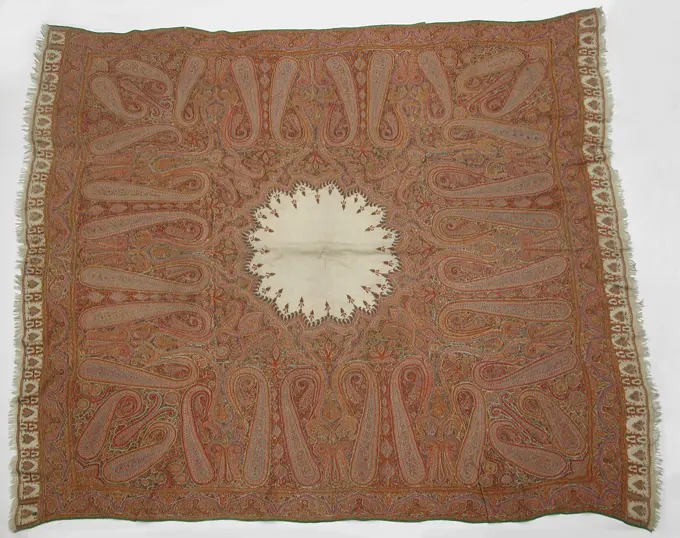
Historical Textile Fragments

Beautifully crafted fragments of silk textiles and embroideries from various historical periods, showcasing intricate patterns and cultural designs.

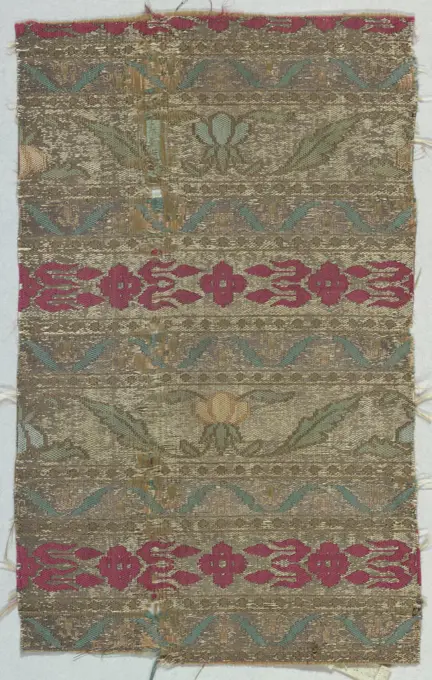
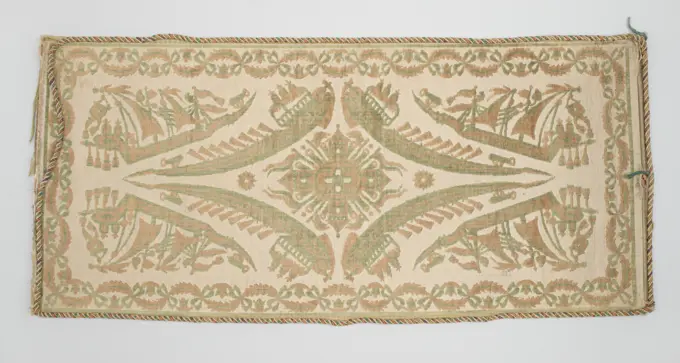
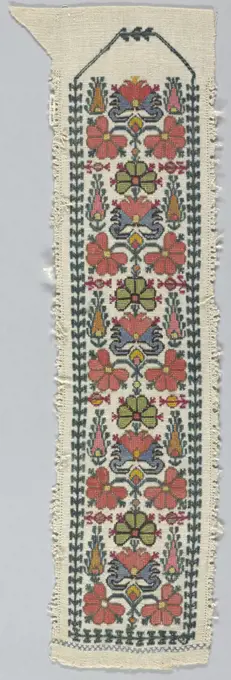
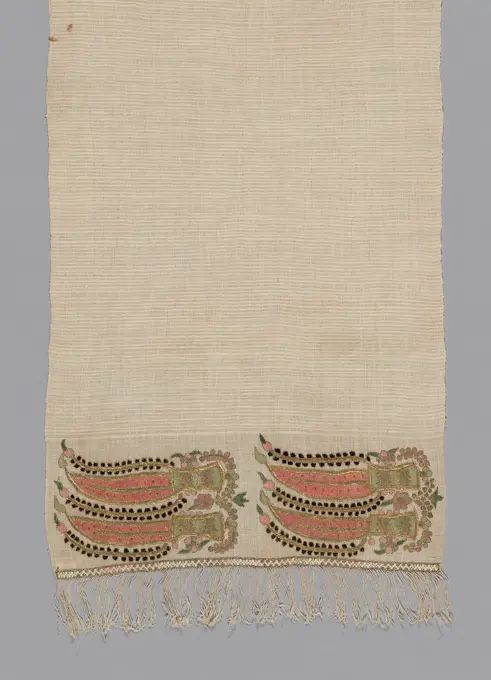
Border, Medium: silk embroidery on linen foundation Technique: embroidered on plain weave, Fragment pieced in two places. Cream-colored hand-woven linen, embroidered in red, green, yellow, blue and pale rose silks. Stylized plant form flanked by birds in profile. Narrow geometric guard borders., Greece, 18th century, embroidery & stitching, Border
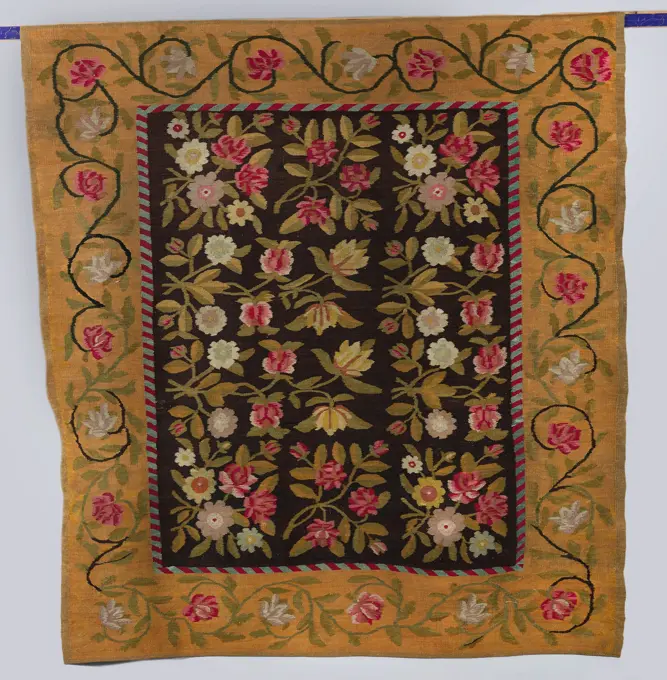
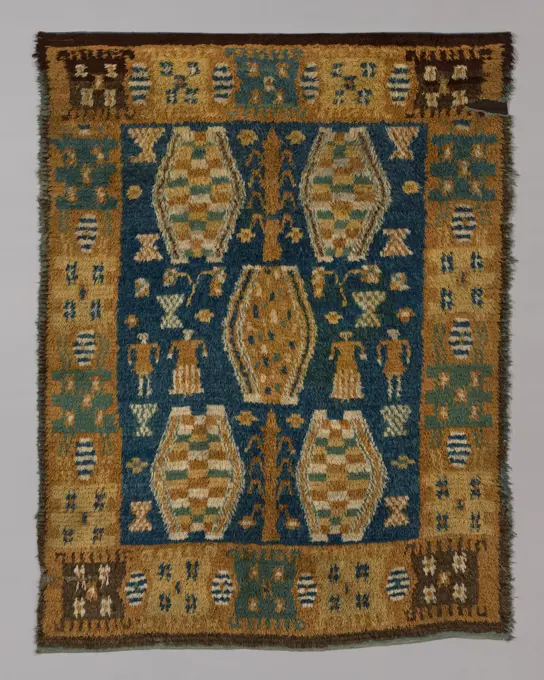
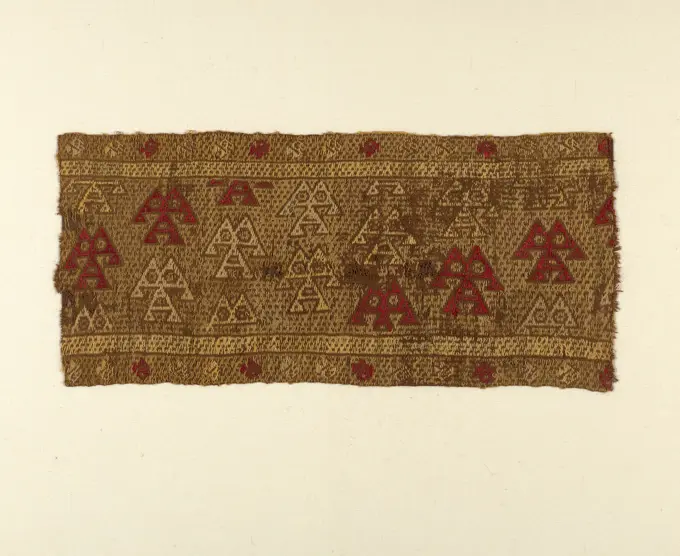
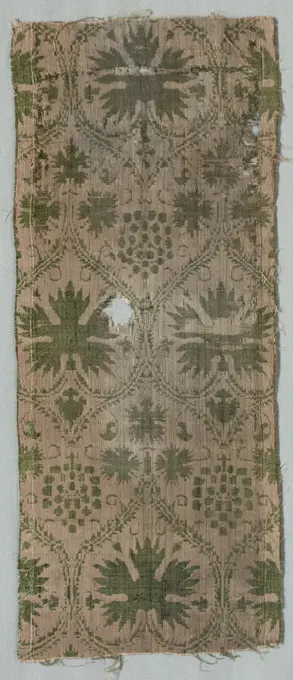
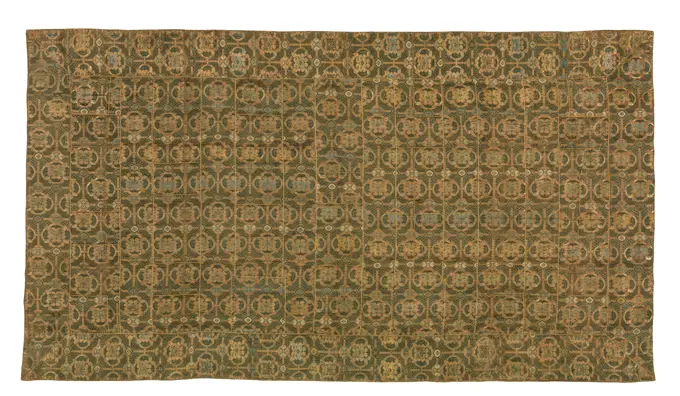
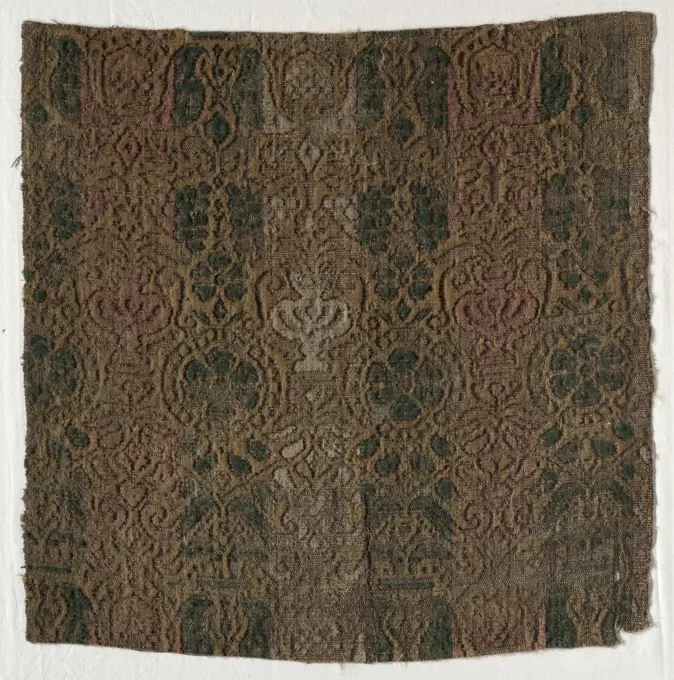
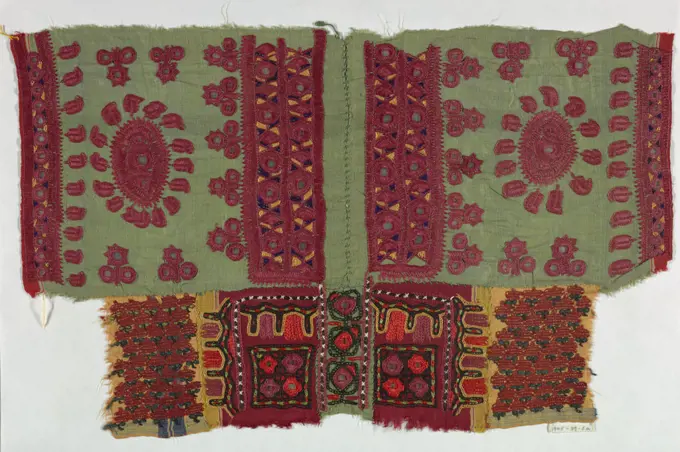
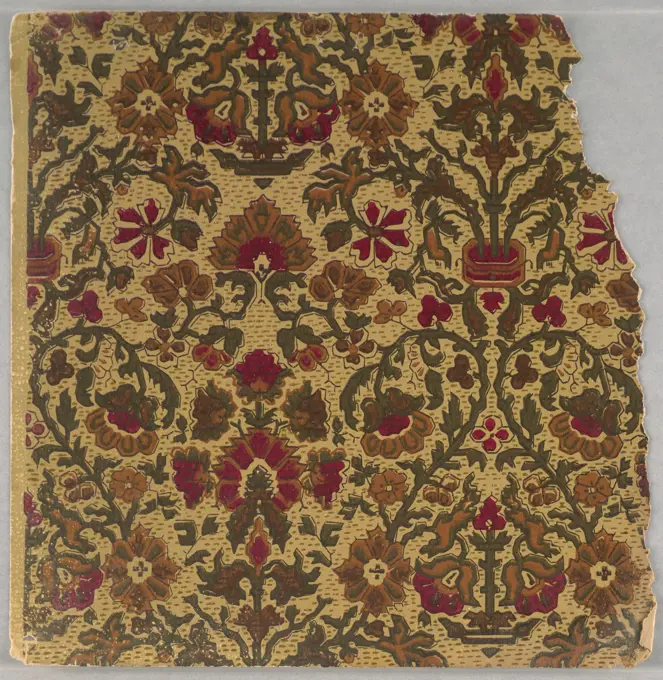
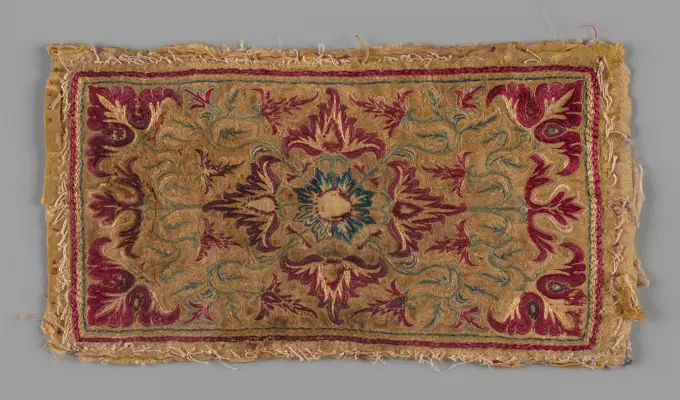
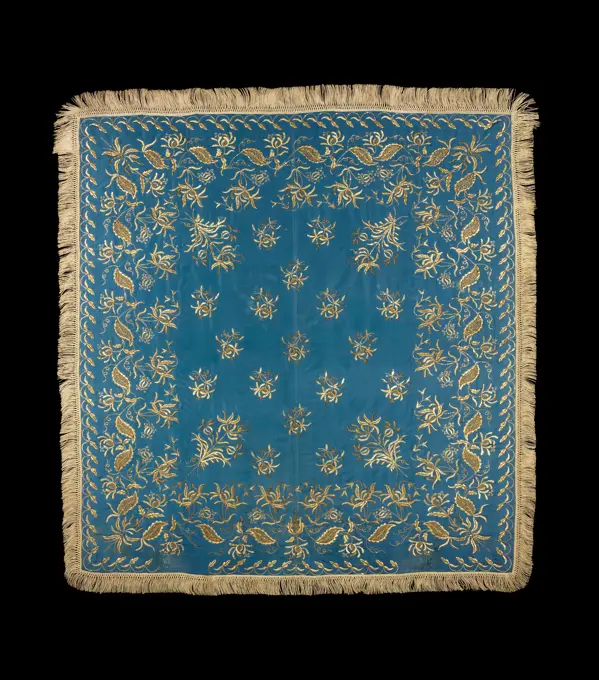
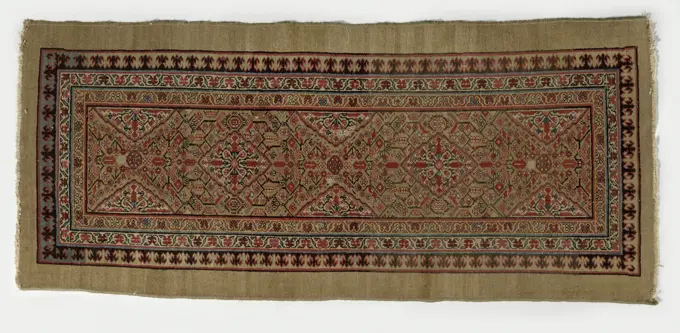
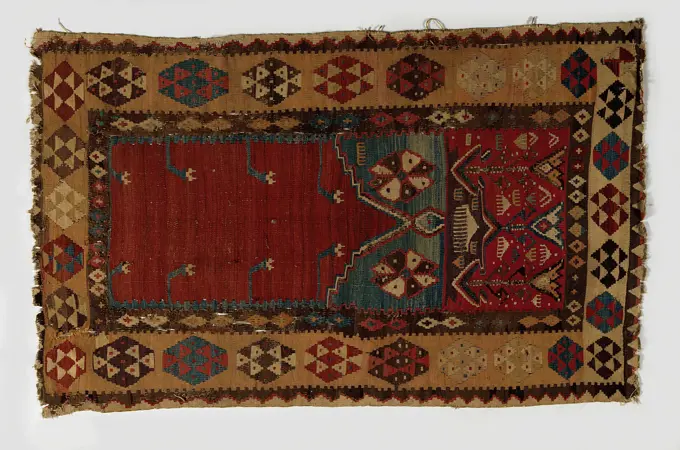
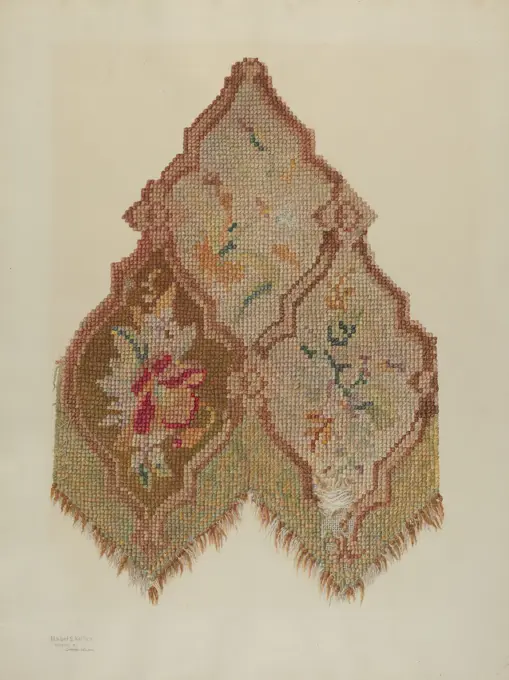
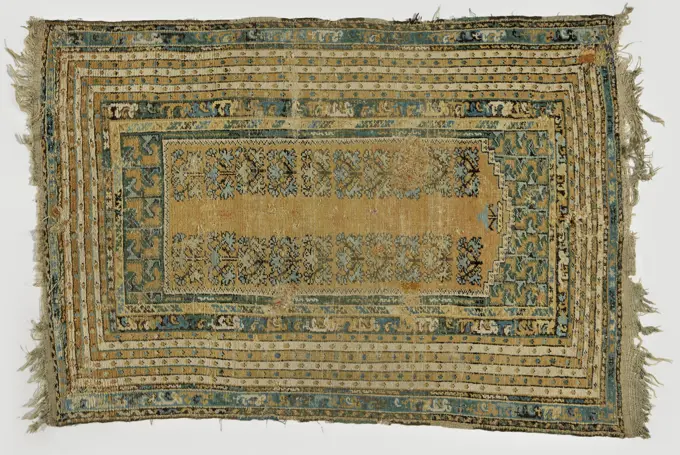
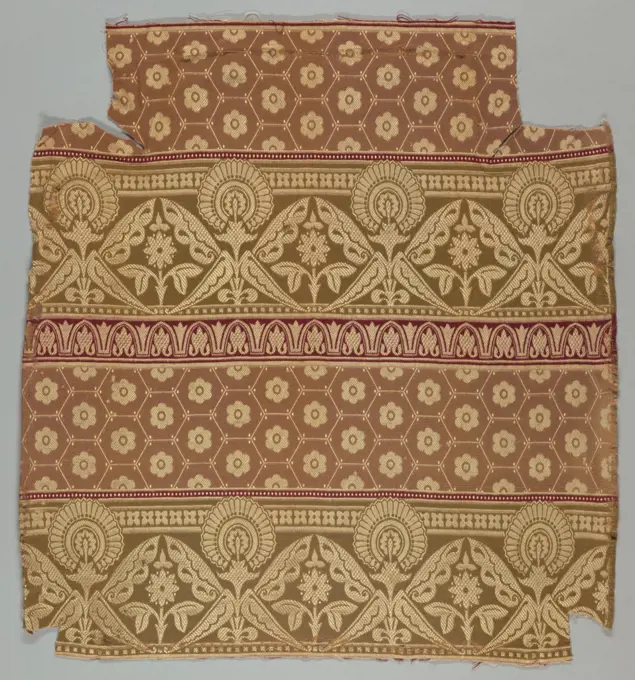
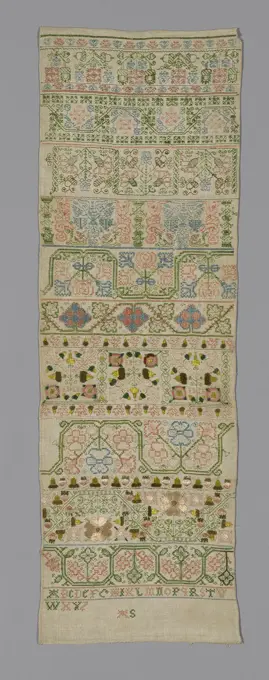
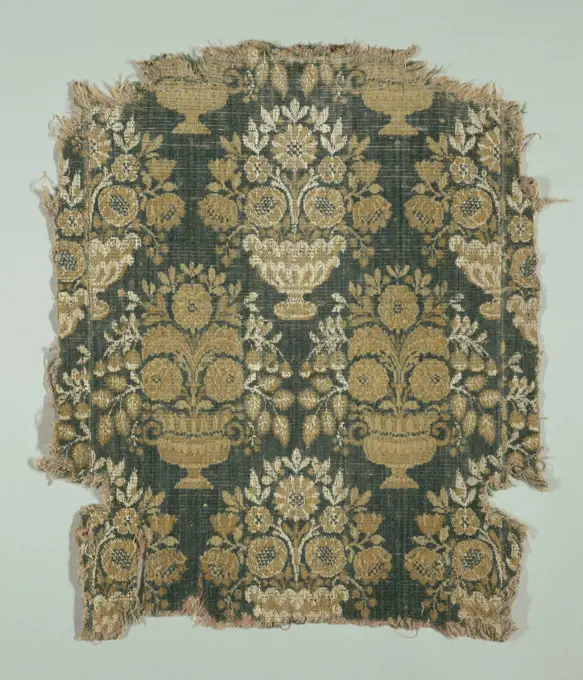
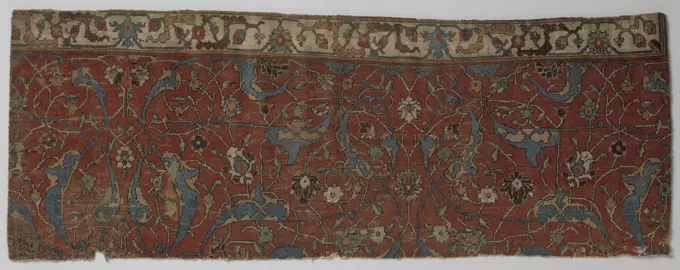
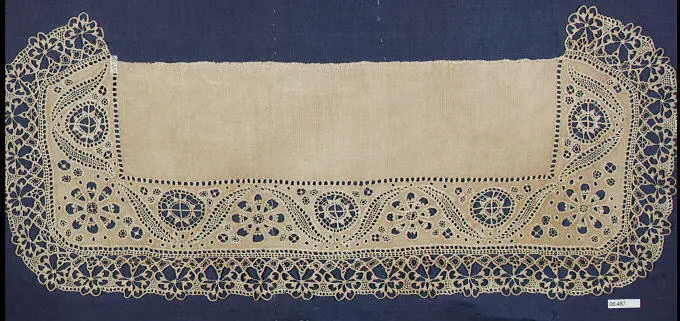
Fragment, Medium: silk, Iran, 17th century, woven textiles, FragmentPiece ca. 1460 Italian or Spanish. Piece 227233Border, Medium: silk embroidery on linen foundation Technique: embroidered on plain weave, Fragment pieced in two places. Cream-colored hand-woven linen, embroidered in red, green, yellow, blue and pale rose silks. Stylized plant form flanked by birds in profile. Narrow geometric guard borders., Greece, 18th century, embroidery & stitching, BorderTapestry. unknown, creatorCover Made 1701-1900 Turkey. .Oriental carpet, Baluchi Volk, 1860 - 1900 Eastern carpet, flower gridwork rug. In midfield a grid with a filling of drizzly flowers. A sham window in the middle. Double edge, the widest of which with wine glass motif and sawtand leaves. Baluchestan (possibly) Necklace and impact: Wool Eastern carpet, flower gridwork rug. In midfield a grid with a filling of drizzly flowers. A sham window in the middle. Double edge, the widest of which with wine glass motif and sawtand leaves. Baluchestan (possibly) Necklace and impact: WoolTextile 1700-1899 Russian. Textile 173396Carpet (Known as a Ryijy or Rya ) Made 1701-1725 Finland. Wool, weft-faced warp-rib plain weave with supplementary wrapping wefts forming cut pile through a technique known as Ghiordes knots .Fragments; silk, metallic threadTapestry. unknown, authorEmbroidered band sampler 1684 Esther French Band samplers are composed of horizontal rows ("bands") of embroidered patterns stitched along the linen foundation fabric. Many of the patterns stitched onto band samplers can be traced to sixteenth-century pattern books, and often include depictions of fruit, flowers, and geometric patterns. The sampler includes bands of floral and geometric patterns, in addition to a band that includes "boxers," male figures who flank a floral motif and hold a "trophy," in this case a flower. The figure of the boxer is derived from the motif of a lover offering a flower to his beloved, which is found in a number of sixteenth-century pattern books.Included on the sampler is the name Esther French and the year 1684, presumably the name of the maker and the year in which she completed her work. She may have been Esther French (sometimes written as "Hester") of Warminster, Wiltshire, England, who was born on November 25, 1670. This would make her thirteen or fFragment brochure silk, c. 1700 - c. 1740   silk   silkKesa Made 1875-1900 Japan. .Fragments, Medium: silk Technique: cut and uncut supplementary warp pile (velvet) in a plain weave foundation, Green cut and uncut velvet; stylized plant in diamond frame with dark yellow ground., Italy, 16th-17th century, woven textiles, FragmentsFragment (Spain); silkOriental carpet. Oriental carpet, rastrover, in Soumm technique. In the midfield a grid pattern against a yellow fond. Diressed edge, the middle of the middle with saw blade and wine glass motif.Sampler Made 1801-1900 México. Linen, plain weave; cut and drawnwork; embroidered with silk floss, and silk yarns in darning, double faggot, hem, interlocking, knotted and overcast stitches; embroidered in the back, cross, detached chain, double running, feather, hem, interlacing, long-armed cross, running, atin, and stem stitches .Fragment red silk damest. Fragment red silk with pattern in yellow from pomegrases and lilies stuffed spindons shaped by tie work with sprinkling pattern.Fragment Made 1000-1476 Peru. Cotton and wool (camelid), plain weave with patterning and brocading wefts . ChancaySilk Fragment, c. 1360s-1380s. Italy, second half of 14th century. Lampas weave, silk; overall: 39 x 16.3 cm (15 3/8 x 6 7/16 in.).Tapa Cloth Pacific Islands. .Mans Cloth (Hinggi)Womans Ceremonial Skirt (Tapis)Cover Made 1601-1700 Turkey. Linen, plain weave; embroidered with silk floss in running and split stitches .Sampler (Spain); cotton on cottonSkoutari carpet unknownTapestry. unknown, authorBuddhist Priest's Mantle (Kesa). Japan, late Edo (1615-1868)-early Meiji (1868-1912) period, 19th century. Costumes; ecclesiastical. Silk twill with silk and gilt-paper thread supplementary-weft patterning, with gilt-paper-wrapped-silk thread embroideryFragment 16th-17th century Italian. Fragment 230567Womans Skirt (Kain Kebat)Velvet, 1600s. France, 17th century. Velvet; overall: 47 x 47.6 cm (18 1/2 x 18 3/4 in.).Shoulder Cloth(Limar)Womans Ceremonial Skirt (Tapis)Rug;  19th century (1801-00-00-1900-00-00);Kilimy, purchase (provenance)Fragment, Medium: silk, mirrored glass Technique: ladder, buttonhole, surface and chain stitch embroidery on plain weave, Fragments of green, yellow and red silk pieced together and embroidered in a stylized design of geometric and floral motifs., India, 19th century, embroidery & stitching, FragmentFragment, Medium: linen Technique: needlework on hand knotted net, Fragment of a border with a symmetrical vine and flower pattern., Italy or Spain, 16th-17th century, lace, FragmentFragment of two pieces of red silk, anonymous, c. 1690 - c. 1710 Fragment of two pieces of red silk with pattern of vase shape with pomegranates () Surrounded by lush flower and leaf vines. Germany Ketting: Silk. Entry: Linen (Material) damask Fragment of two pieces of red silk with pattern of vase shape with pomegranates () Surrounded by lush flower and leaf vines. Germany Ketting: Silk. Entry: Linen (Material) damaskIngrain carpet piece. Culture: American. Dimensions: 35 x 35 in. (88.9 x 88.9 cm). Date: ca. 1870. Museum: Metropolitan Museum of Art, New York, USA.Pouch(Dompet)Sidewall Sample; machine-printed on paper; 22.5 x 22.5 cm (8 7/8 x 8 7/8 in.)CoasterOriental carpet. Oriental carpet. Midfield is a solid red triangle along which a tilting edge is running. Triple border whose widest is decorated with rosette flowers.Textile, Pain satin, corded silk., A red satin fragment with heart-shaped motifs, stylized flowers, and scrolls., Italy, 17th century, embroidery & stitching, TextileFragment. Italy. Date: 1675-1700. Dimensions: 56.5 x 20.6 cm (22 1/4 x 8 1/8 in.). Silk and silvered-metal-strip-wrapped silk, warp-float faced satin weave self-patterned by areas of plain weave with supplementary brocading wefts. Origin: Italy. Museum: The Chicago Art Institute, Chicago, USA.Headscarf 1800-1815 Russian This object is from the collection of Natalia de Shabelsky (1841-1905), a Russian noblewoman compelled to preserve what she perceived as the vanishing folk art traditions of her native country. Traveling extensively throughout Great Russia, she collected many fine examples of textile art of the wealthy peasant class. From the 1870s until moving to France in 1902, Shabelsky amassed a large collection of intricately embroidered hand-woven household textiles and opulent festival garments with rich decoration and elaborate motifs. The Brooklyn Museum holdings include many fine examples including the majority of the garments. Portions of Shabelsky's collection are also housed at the Museum of Fine Arts, Boston, the Cleveland Art Museum, and the Russian Museum of Ethnography in St. Petersburg.. Headscarf 157570Sampler(Limar)Fragment of a lotus and palm tree. .Sari Border 18th century. Sari Border 450986Textile Fragment, 1800s. Japan, 19th century. Silk; average: 56.2 x 14.6 cm (22 1/8 x 5 3/4 in.).Bliżej Kultury unknownOriental carpet ,, 1850 - 1900 Eastern carpet, medal rug, made of knotted wool, carpet format. In midfield there are two diamond -shaped medallions and three half medallions along both sides. The stock is covered with irregular gridding and rosettes. Around four edges. Hamad wool Eastern carpet, medal rug, made of knotted wool, carpet format. In midfield there are two diamond -shaped medallions and three half medallions along both sides. The stock is covered with irregular gridding and rosettes. Around four edges. Hamad woolOriental carpet, Anonymous, 1800 - 1900 Eastern carpet, medailla rug. In midfield two diamond -shaped medallions against a red stock. The middle edge is decorated with octagonal rosettes. Franking on the upper and bottom and bottom. Caucasus wool Eastern carpet, medailla rug. In midfield two diamond -shaped medallions against a red stock. The middle edge is decorated with octagonal rosettes. Franking on the upper and bottom and bottom. Caucasus woolFragment, Medium: silk, metallic yarns Technique: compound satin weave with supplementary weft patterning (brocade), Fragment of brocaded silk, probably a symmetrical design. Pink and silver design showing a central column of silver chevron, on either side from which springs plant stems with multiple leaves. To the left, meandering bands of leaves, diaper pattern and scallops., France, ca. 1725, woven textiles, FragmentRug 19th century China. Rug 39710Oriental carpet. Barred in Kelim technology. A rust-red Mihrab in midfield. Blue swing with large flowers. In the upper resistance panel three tulips. Triple edge. Middle edge decorated with hexagons. enclose.Border, Medium: silk on linen Technique: selected warps and wefts of the linen plain weave fabric wtihdrawn, leaving a 1/16 of an inch square grid for needlework; natural linen darned into solid pattern areas; red silk wrapped around the grid and pulled tight for an openwork background., Border with needlework fringe showing a design of a curving floral vine., Italy, mid-16th century, embroidery & stitching, BorderSampler Made 1775-1825 France. Linen, plain weave; embroidered with cotton and silk in cross and satin stitch; all edges finished in feathered hem stitches .Panel, Medium: wool, silk Technique: appliqué, Bits of colored woolen cloth applied on a light ground in a pattern of vases containing flowers and scrolls, arranged around a niche and in borders. The niche and outer border are of red velvet; silk fringe in several colors at top and bottom., Turkey, 19th century, woven textiles, PanelCarpet, Kazak, with medallion pattern. Carpet, Kazak, with medallion pattern. Midfield: On a red fond that is strewn with stars and cubes, four hexagonal medallions over the length axis, two of ultramarine, one of cobalt blue and one of light green with diamond and hook fillings. Borders: A white fond is divided into red, ultramarine, yellow, orange and greenery in diamond fields through lateral triangles, on which angular rosettes are located. Indoor zoom of interlocking triangles of red and green. Condition: with moths, larvae etc. arrived. Cleaned in the snow. With large ink stain. In the corners and in the middle holes.Fragment of two pieces of red silk.fragment or two pieces of red silk constructed with pattern or vase form with pomegranates () Surrounded by Lush Flower and Leaf Refrenences.Oriental carpet, Anonymous, 1800 - 1900 Eastern carpet of knotted wool, grid-star rug, of which the ocher yellow midfield is decorated with windows in which eight-pointed stars. Around three edges of which the middle is decorated with triangles with hooks. Caucasus wool Eastern carpet of knotted wool, grid-star rug, of which the ocher yellow midfield is decorated with windows in which eight-pointed stars. Around three edges of which the middle is decorated with triangles with hooks. Caucasus woolMabel S Kelton, Embroidered Table Scarf, c 1941 Embroidered Table ScarfKerchief (England); glazed cottonFragment of a rug in cashmere scarf technology, c. 1700 - c. 1950 A fragment of a rug with a wide edge of palm motifs filled with fine red and blue twigs and a bunch of green leaves from below. Austria (possibly) wool. cashmere (wool) A fragment of a rug with a wide edge of palm motifs filled with fine red and blue twigs and a bunch of green leaves from below. Austria (possibly) wool. cashmere (wool)Oriental carpet, Anonymous, 1800 - 1815 Oriental carpet, prayer rug, knotted wool, decorated with an ocher yellow Mihrab, with a low white stepped stair gable. A lamp hangs in the top. Two columns built from flower garlands. Around three edges and four hems. Care wool Oriental carpet, prayer rug, knotted wool, decorated with an ocher yellow Mihrab, with a low white stepped stair gable. A lamp hangs in the top. Two columns built from flower garlands. Around three edges and four hems. Care woolVeil. unknown, authorFragment of a shirt fourth quarter 18th century Russian. Fragment of a shirt. Russian. fourth quarter 18th century. Linen, silk, metallic. Textiles-EmbroideredEastern carpet ,, 1830 - 1870 Oriental carpet, prayer rug. In midfield a golden -yellow mihrab with a brown -black grid pattern and flowers. In the top of the niche an amulet -like ornament. Five -time edge of which the widest with a kufic pattern. Shirvan Necklace and impact: Wool Oriental carpet, prayer rug. In midfield a golden -yellow mihrab with a brown -black grid pattern and flowers. In the top of the niche an amulet -like ornament. Five -time edge of which the widest with a kufic pattern. Shirvan Necklace and impact: WoolFragment, Medium: cotton, silk, metallic thread Technique: embroidered on plain weave, Design of conventionalized floral forms arranged as band or border. Embroidered in red, orange, pink, green, yellow, and brown silk and gold thread. Enclosed by a dark green border., Turkey, 19th century, embroidery & stitching, FragmentFragment (half) of embroidered IInen sash unknownTextile; silk on linenTowel Made 1801-1900 Turkey. embroidered .Fragment Made 1675-1700 Italy. Silk and gilt-metal-strip-wrapped silk, satin weave and plain weave with supplementary brocading wefts and supplementary self-patterning warps .Fragment; silk, Fragment, Medium: silk,  Technique; supplementary warp forming velvet pile and supplementary warp forming pattern, Cartouches containing plant forms. Yellow and rose selvage at left., 17th century, woven textiles, FragmentSleeve band, Medium: wool on cotton Technique: embroidered, Sleeve band of grey cotton, embroidered in wool at one side in small-scaled geometric pattern, outlined by a running and repeated 'T' pattern., China, late 19th century, embroidery & stitching, Sleeve bandCarpet fragment, Medium: wool Technique: double cloth, Carpet fragment showing a partial design of vaguely Islamic medallions with framing leaves and stems. In shades of beige, tan, brown, red, pink and black., England, mid-19th century, woven textiles, Carpet fragmentPalmet rug with repeating pattern of stylized lotus flowers and volute rosons and triangles; Edge with floral motifs. Oriental carpet, palmet rug. In the midfield a repeating pattern of stylized lotus flowers and volute rosons; Along the inner edge triangles. Edge with floral motifs.Cushion cover, 18th century, 15 1/4 x 13 1/2 in. (38.7 x 34.3 cm), Embroidery on linen, Algeria, 18th centuryFragment Made 1601-1700 Italy. Linen, plain weave; embroidered with wool and silk floss in flame stitch .Oriental carpet. Fragment of an oriental carpet, prayer dress. The rectangular dress consists of two equal squares. In midfield is a medallion of Azalea flowers and an azalea on a double branch in the corners. Edge with meanders.Curtain with imitation style directoire, anonymous, c. 1800 - c. 1825 Curtain with grotes' pattern of medallions, portrait busts, vases and volute vines in cream against a satin surface in dark brick red. Neo-Pompeiaan. Red lining. With large, profiled rings and fringes on one side.  satin. silk. ringen: brass (alloy). voering: cotton (textile) Curtain with grotes' pattern of medallions, portrait busts, vases and volute vines in cream against a satin surface in dark brick red. Neo-Pompeiaan. Red lining. With large, profiled rings and fringes on one side.  satin. silk. ringen: brass (alloy). voering: cotton (textile)Ritual Weaving(Tampan)Sidewall - fragment, Block-printed on handmade paper, Green bouquet in white wreath. Printed on yellow background., USA, 1820-50, Wallcoverings, Sidewall - fragmentFragment, Medium: silk Technique: supplementary warp forming raised pile in plain weave foundation (velvet), Alternate red and white stripes with a white scrolling design on the red stripe., 17th century, woven textiles, FragmentPortion of a Carpet, 17th century. Iran, Northwestern, 17th century. Knotted pile: jufti knot; wool and cotton; average: 89 x 185.5 cm (35 1/16 x 73 1/16 in.).Towel End; cotton, silk, metallic threadFragment; silk and metallic thread; Warp x Weft: 20.3 x 8.3 cm (8 x 3 1/4 in.)A Jain Manuscript Cover. Western India, 16th century. Manuscripts. Blue cloth with metallic threadCloth; PUA. Cloth with geometric motifs.Fragment, James W.& C. Ward, Christopher Dresser, Scottish, 1834 - 1904, Medium: silk, wool Technique: jacquard woven Label: jacquard woven silk and wool, Fragment of woven upholstery fabric with a design of alternating pattern bands: flowers in hexagonal tiles in gold on terra cotta, stylized palmette pattern in gold on olive green, narrower bands of egg and dart pattern in gold on maroon., England, 1873, woven textiles, FragmentSampler (Mexico); silk embroidery on cotton foundationTextile (India); cottonSampler Made 1650-1670 England. Linen, plain weave; embroidered with silk .Carpet fragment, Medium: wool, linen Technique: cut velvet (moquette or velour d'Amiens), Large repeat of symmetrical bouquet in urns; rose and tan wool, white linen, on dark blue-green wool ground. Broad warp-surfaced plain cloth selvages., France, early 17th century, woven textiles, Carpet fragmentBaby carrier panel, ChinaFragment of the edge of an Eastern carpet ,, 1600 - 1625 Rand clip of an Eastern carpet. Fine spreading racks with flowers, rosettes and arabesks on a terra surface. White inner hem with angular tendrils and cloud tires. Northwest Perzia cotton (textile). wool Rand clip of an Eastern carpet. Fine spreading racks with flowers, rosettes and arabesks on a terra surface. White inner hem with angular tendrils and cloud tires. Northwest Perzia cotton (textile). woolTextile, Medium: linen, silk Technique: satin stitch embroidery on plain weave, Rectangle of undyed linen cloth embroidered with widely-set diagonal repeat of floriated cross in red silk., 12th-13th century, embroidery & stitching, TextileHeaddress (Coiffe) 18th century Danish. Headdress (Coiffe) 212709Shawl mid-19th century or later. Shawl 451009