Historical Textile Fragments

Beautifully crafted fragments of silk textiles and embroideries from various historical periods, showcasing intricate patterns and cultural designs.

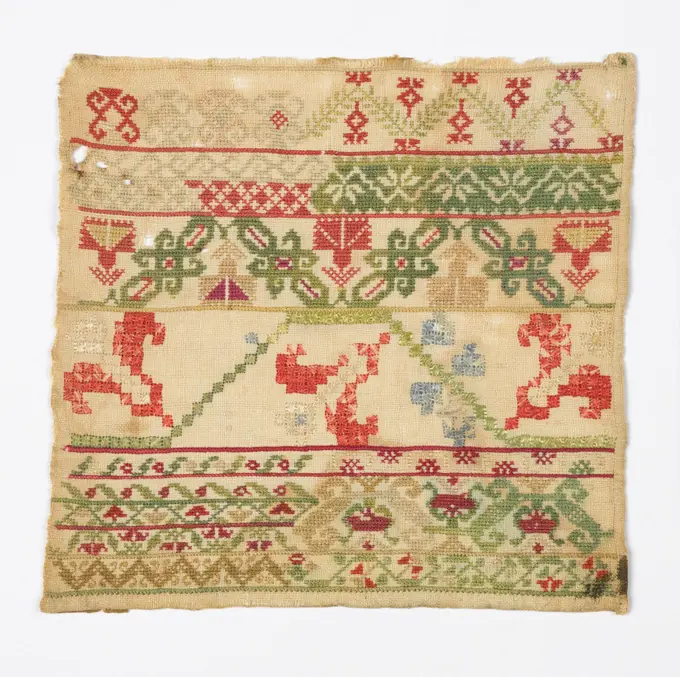
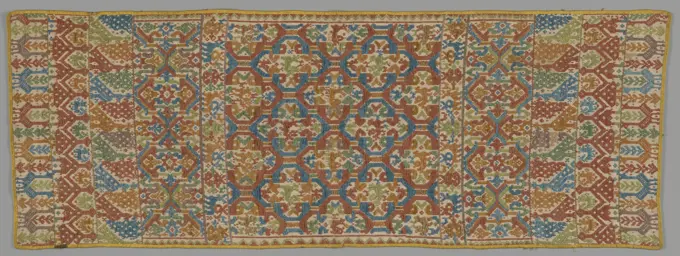
Border, Medium: silk embroidery on linen foundation Technique: embroidered on plain weave, Fragment pieced in two places. Cream-colored hand-woven linen, embroidered in red, green, yellow, blue and pale rose silks. Stylized plant form flanked by birds in profile. Narrow geometric guard borders., Greece, 18th century, embroidery & stitching, Border
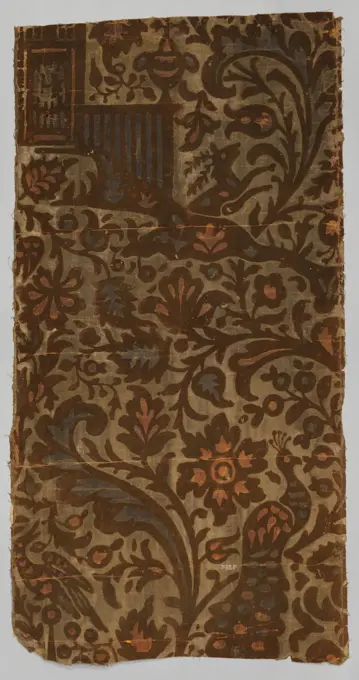
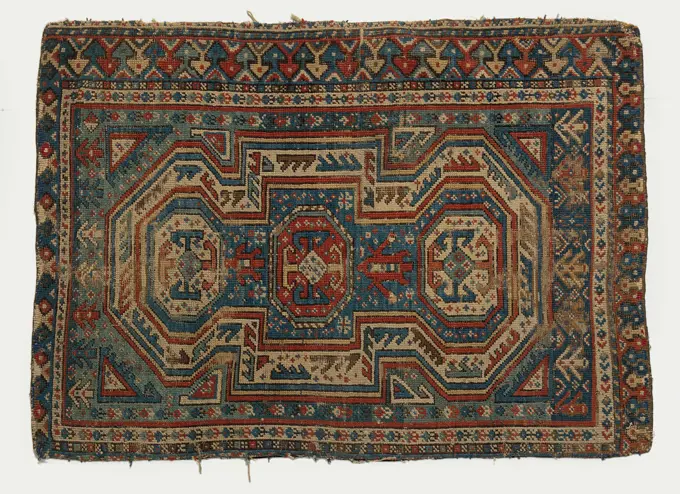
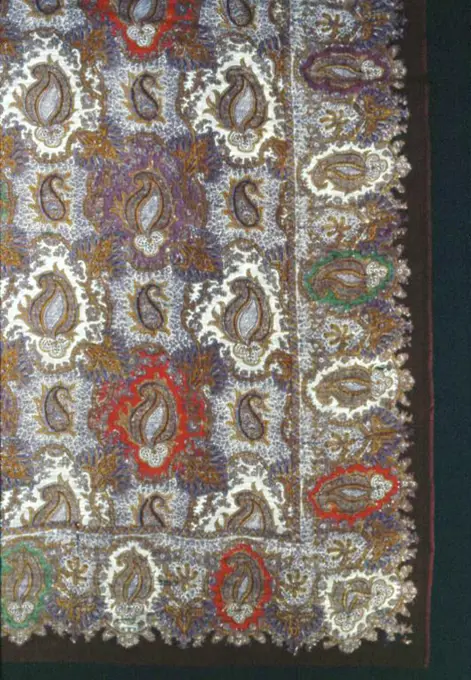
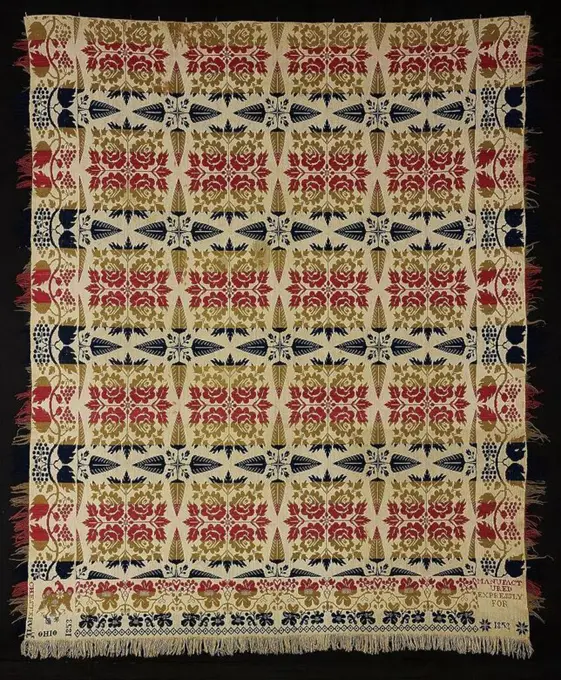
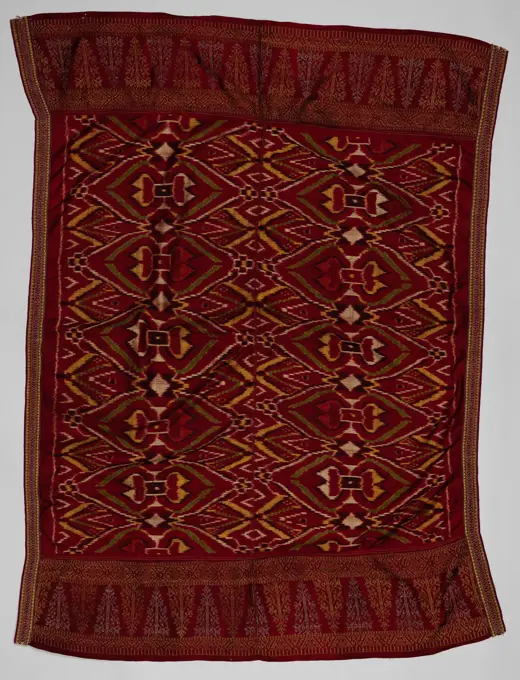
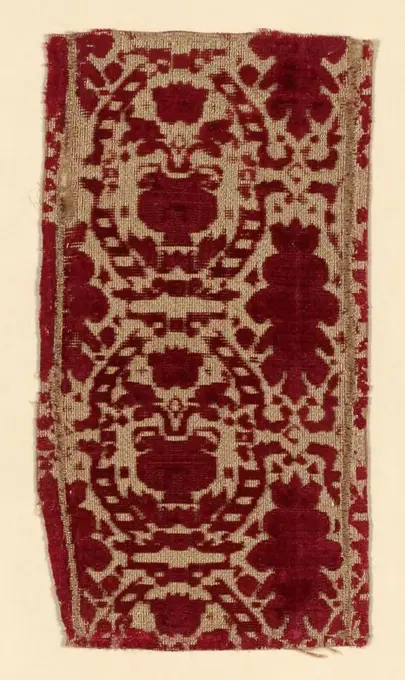
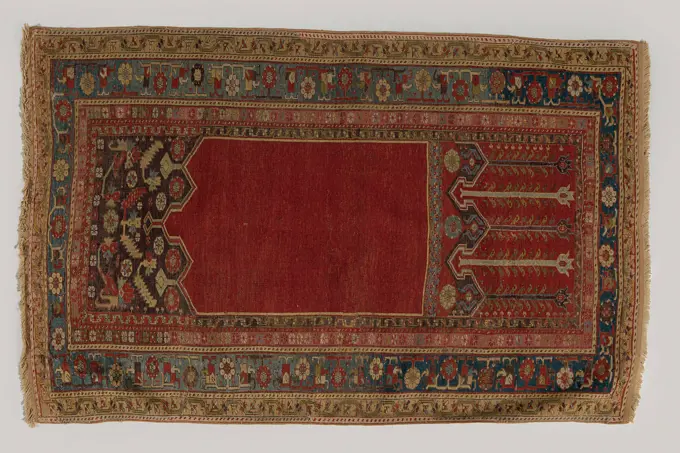
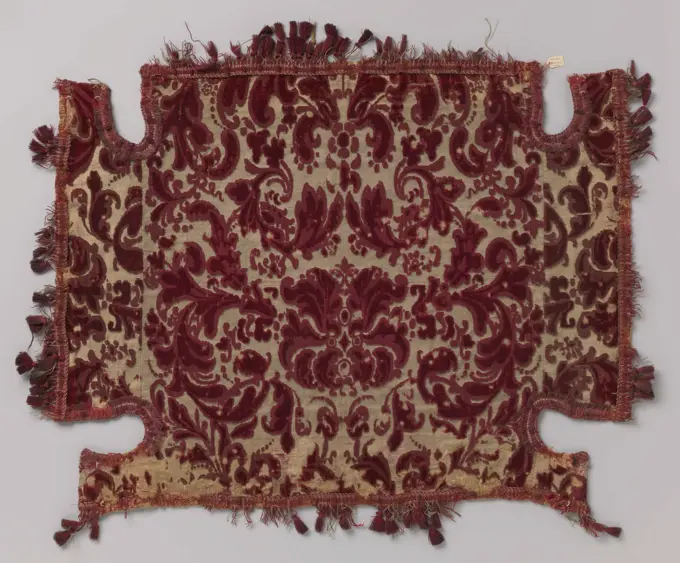
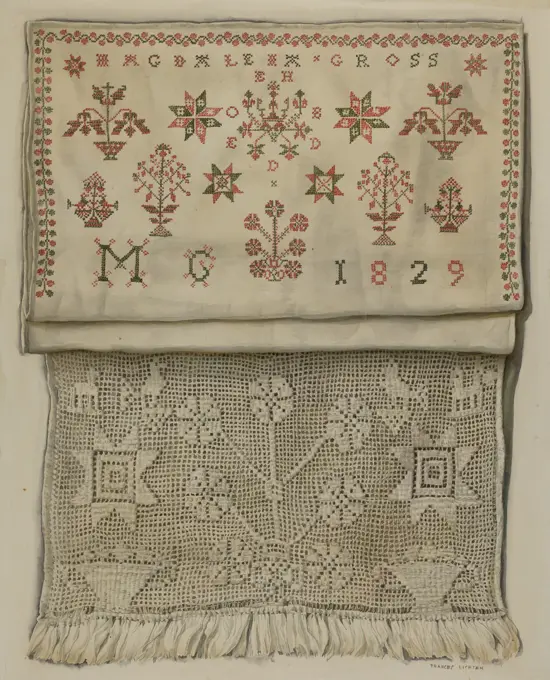
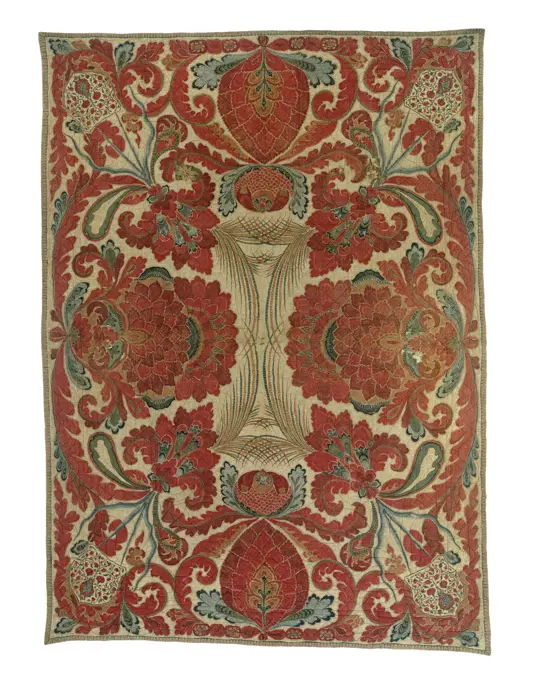
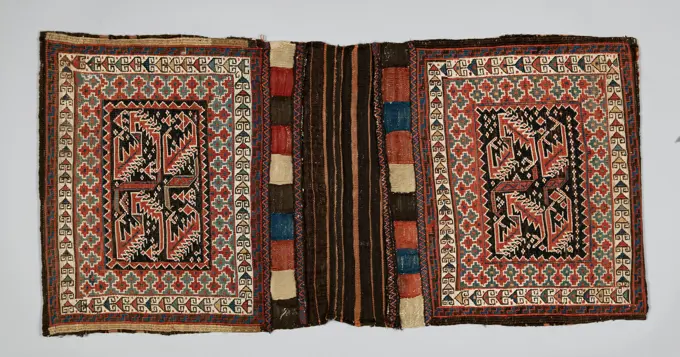
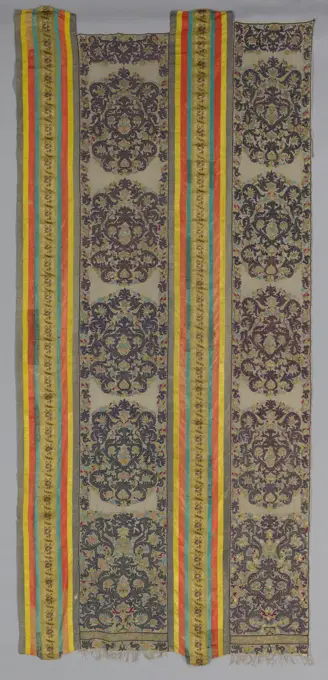
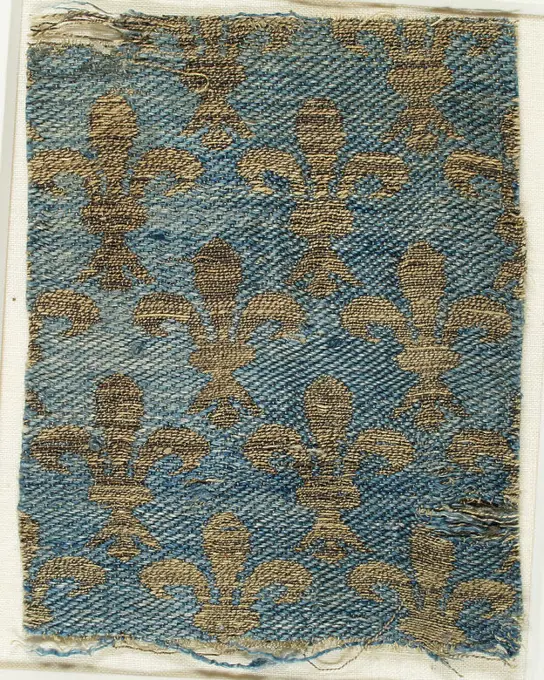
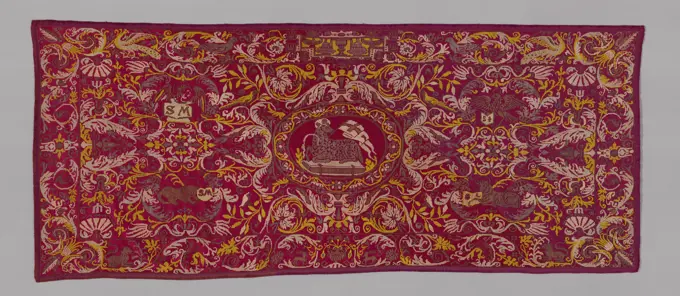
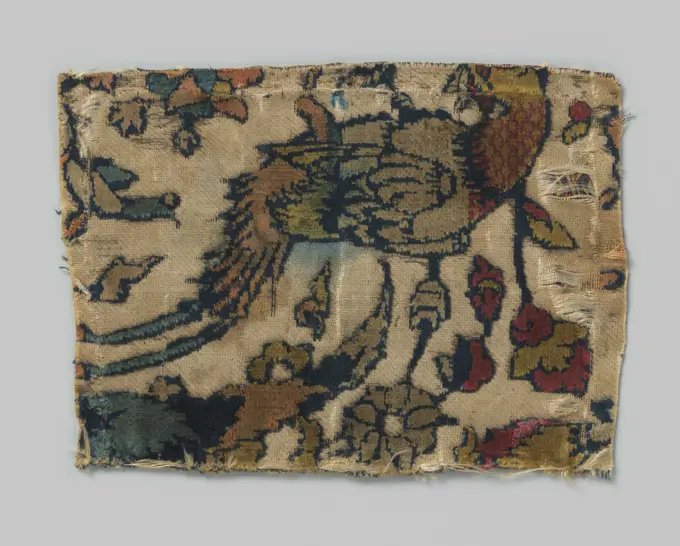
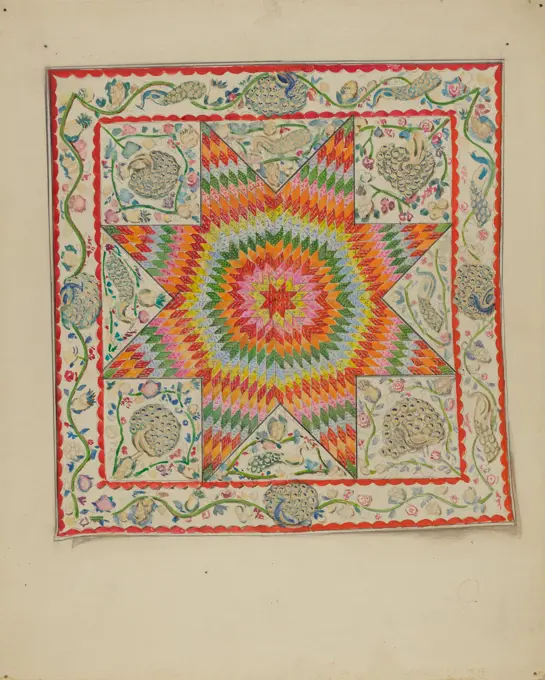
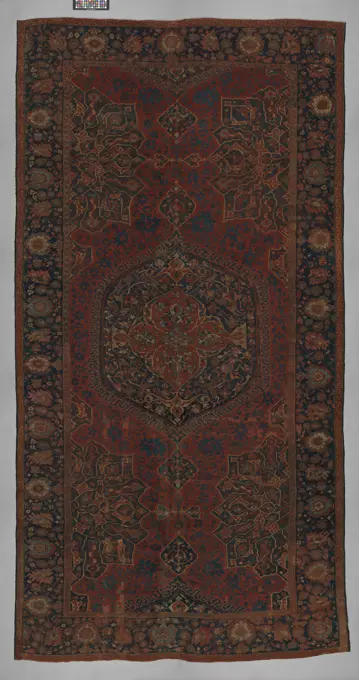
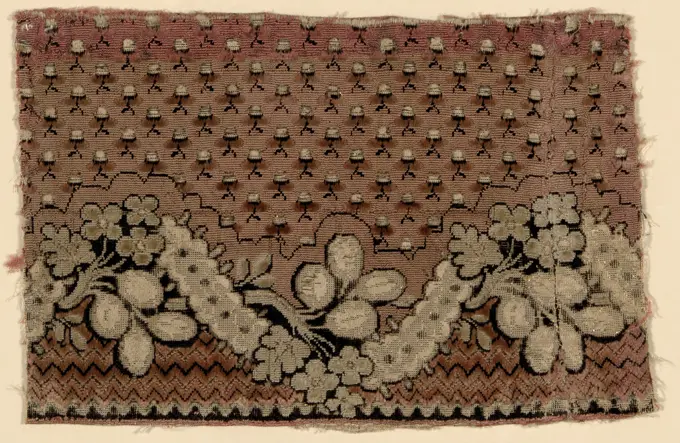
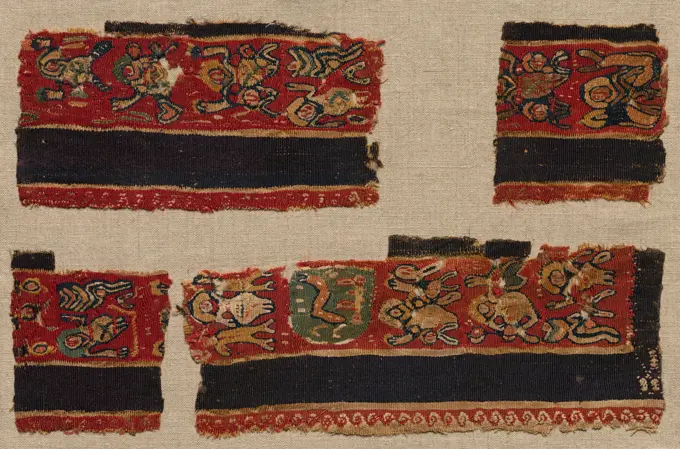
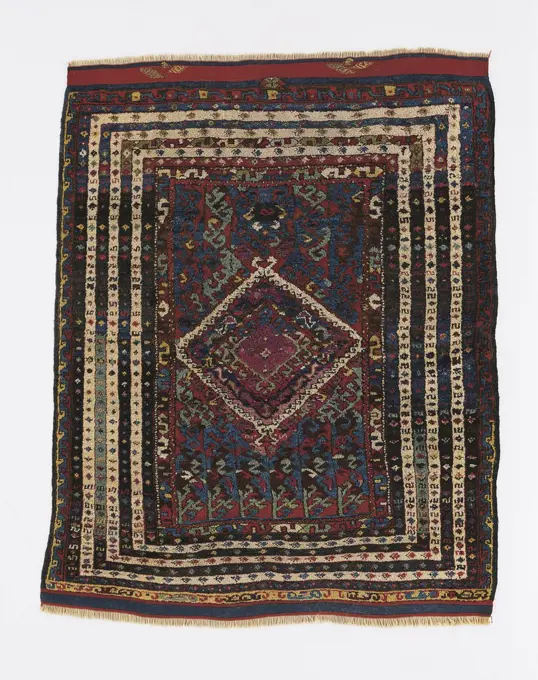
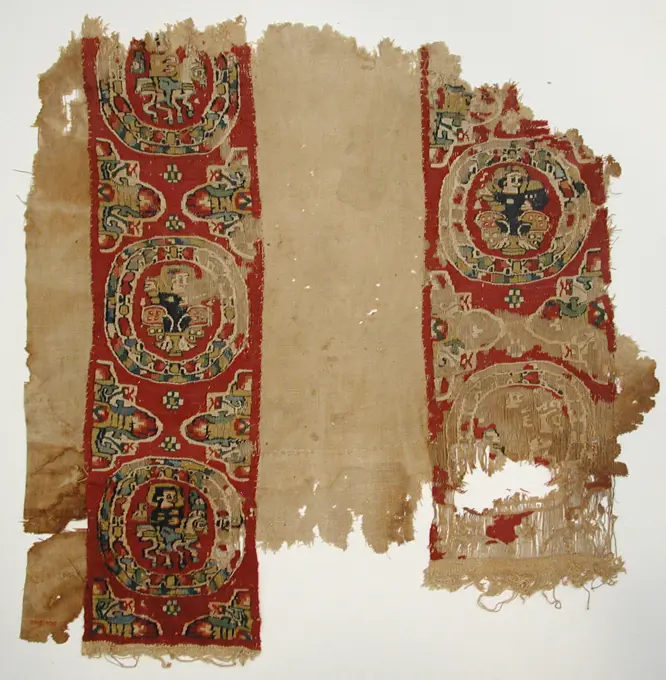
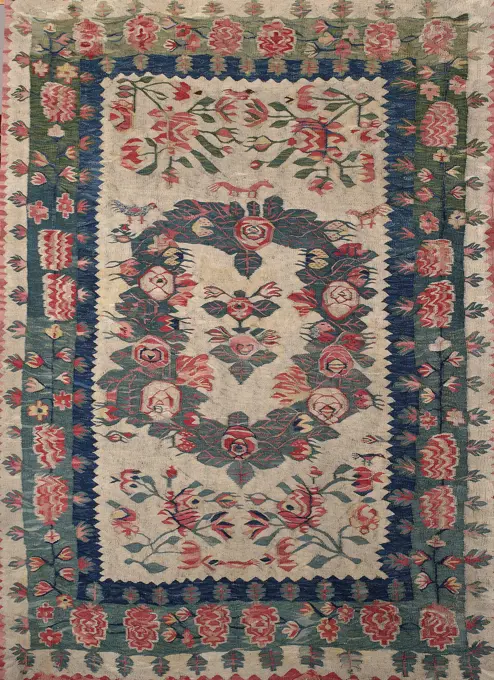
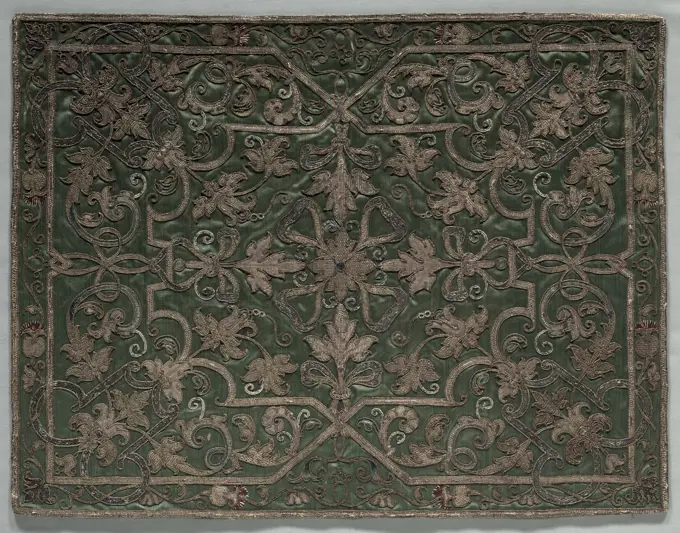
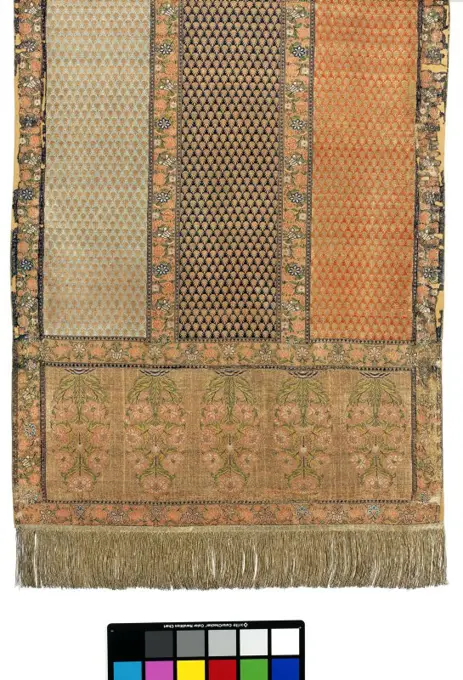
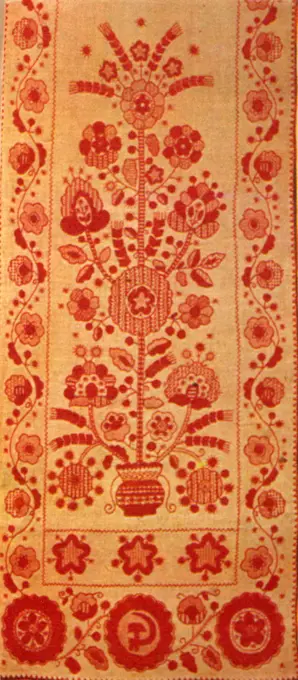
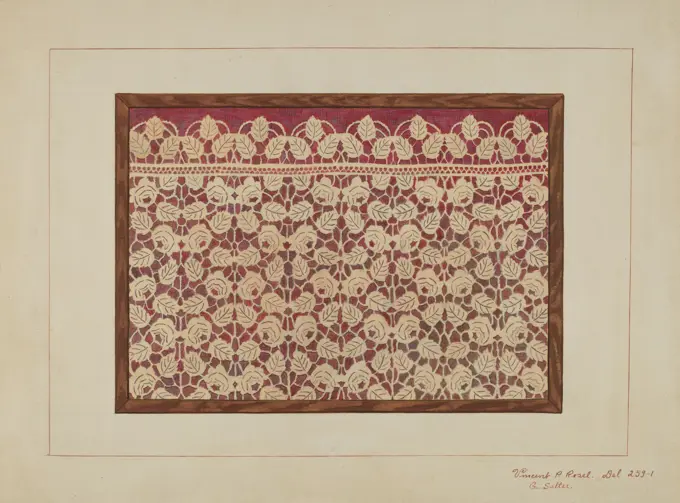
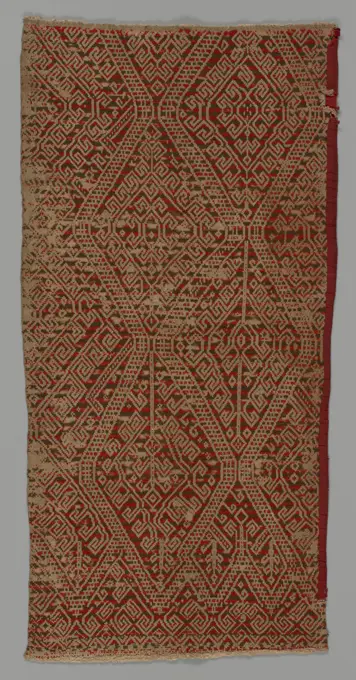
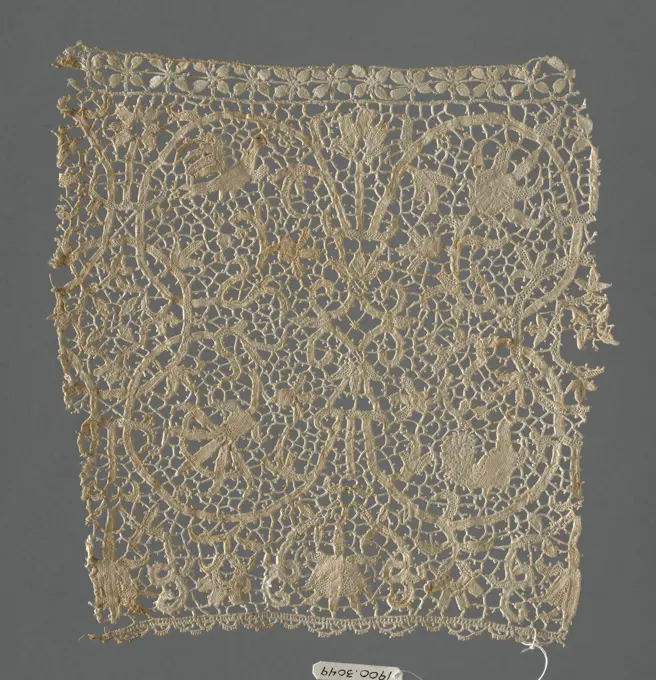
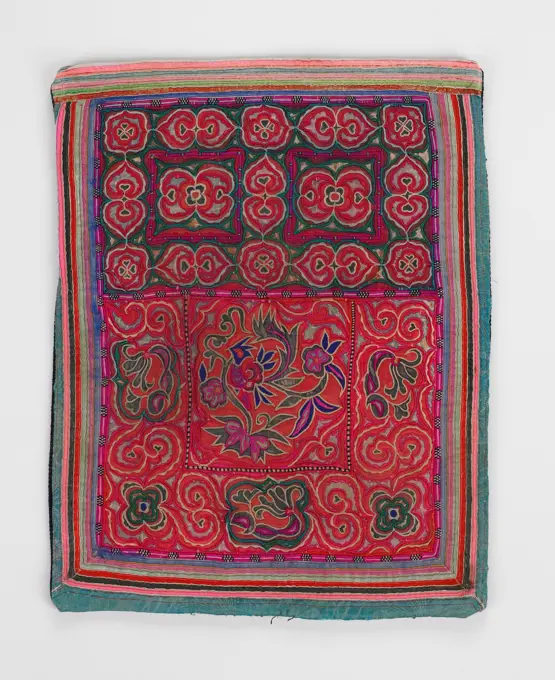
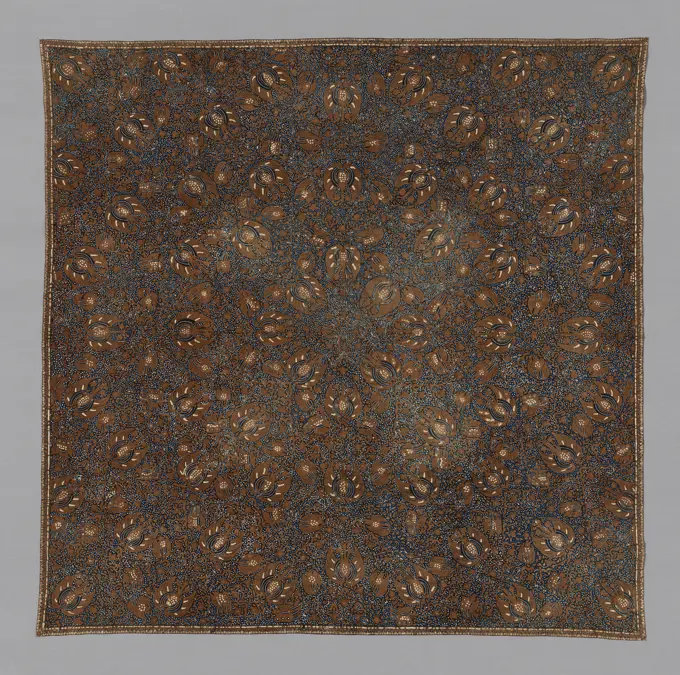
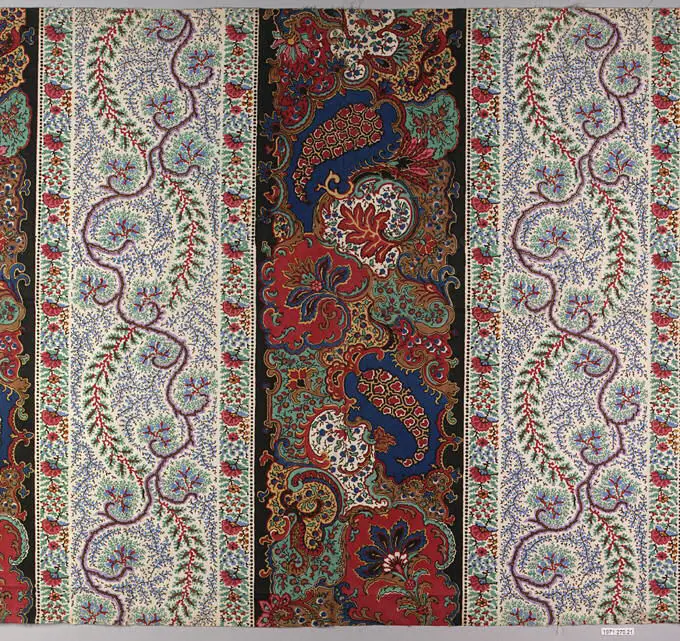
Patolu Made 1701-1900 India. Silk and silver-metal-strip-wrapped silk, stripes of warp and weft resist dyed (double ikat), plain weave, stripes of weft resist dyed (weft ikat), plain weave , bands of plain weave and bands of open warps; plied and knotted main warp fringe .Baan veloutébehang, anonymous, c. 1700 - c. 1750 Baan Velouté wallpaper, which on a broken white stock shows a pattern in brown Velouté with red and green fillings. Jagers on horseback, deer and dogs can be seen between flower and leaf vines. See also: BK-NM-9825-B/C. Northern NetherlandsNetherlands wool. linen (material)   Amsterdam Baan Velouté wallpaper, which on a broken white stock shows a pattern in brown Velouté with red and green fillings. Jagers on horseback, deer and dogs can be seen between flower and leaf vines. See also: BK-NM-9825-B/C. Northern NetherlandsNetherlands wool. linen (material)   AmsterdamChasuble (Back Only) Made 1501-1600 Italy. Silk and gilt- and silvered-metal-strip-wrapped silk, warp-float faced 2 1 twill weave with gilt-metal wire supplementary patterning wefts bound by secondary binding warps in twill interlacings and supplementary patterning and brocading wefts forming weft loop pileSilk and gilt- and silvered-metal-strip-wrapped silk, twill weave with gilt-metal wire supplementary patterning wefts bound by secondary binding warps in twill interlacings and supplementary patterning and brocading wefts forming weft loop pileSilk and gilt- and silvered-metal-strip-wrapped silk, twill weave with gilt-metal wire supplementary patterning wefts bound by secondary binding warps in twill interlacings and supplementary patterning and brocading wefts forming weft loop pile .Cushion leaf with an unknown alliance weapon, c. 1650 Two Renaissance shields in the central field with weapons, helmet, helmet sign and extensive cover rugs, consisting of acanthus leaves. Northern Germany Ketting: Wool. Entry: Wool. Entry: Silk tapestry Two Renaissance shields in the central field with weapons, helmet, helmet sign and extensive cover rugs, consisting of acanthus leaves. Northern Germany Ketting: Wool. Entry: Wool. Entry: Silk tapestryCopy Book: Manuscript Bound in Gilt Paper, Gilt embossed book paper, paper, Four leaves of a fragment of a copy book, bound in rose and gilt embossed book paper, with 'tight' floral design. Fragment only of a larger sheet., Augsberg, Germany, United Staes, 1775-1800, bookpap, bookpapMedaillonled, Shirwan ,, 1850 - 1900 Medaillonled, Shirwan. Midfield: stone red with three eight -sided medallions all around with long hooks, one between two dark blue, filled with flowers and branches with hook motifs. In each medallion a small stone red octagon with star flower in light green and blue green. Field filling of large and small star forms and rosette flowers. Edges: triple. The middle one is white with concatenations of rimmed obschovers in many shades of yellow, blue and red. This edge is contained in a black and a red trim with white S-s-sen and it inside blue/black and white/black block straps. Shirvan wool Medaillonled, Shirwan. Midfield: stone red with three eight -sided medallions all around with long hooks, one between two dark blue, filled with flowers and branches with hook motifs. In each medallion a small stone red octagon with star flower in light green and blue green. Field filling of large and small star forms and rosette flowers. Edges: triple. The middleOriental carpet. Oriental carpet, probably prayer cloth, made of knotted wool, decorated with a double mihrab with high top faces. Three edges with two intermediate.Long Shawl Made 1850-1900 Europe. Silk, plain gauze weave; block printed; weft fringe .Panel, 19th century, L.94 x W.48 in., silk and metal, India, 19th centuryShawl, Anonymous, 1900 - 1949 Shawl with animal figures. Timor cotton (textile) Shawl with animal figures. Timor cotton (textile)Coverlet. United States, Ohio, Chesterville. Date: 1853. Dimensions: 250.8 x 209 cm (98 7/8 x 82 1/4 in.)Centerfield repeat: 44.5 x 38.2 cm (17 1/2 x 15 in.). Cotton and wool, plain weave with supplementary patterning wefts bound by main warps in plain interlacings with main warp and supplementary patterning weft fringe. Origin: Ohio. Museum: The Chicago Art Institute, Chicago, USA.Tempeldoek, anonymous, 1900 - 1949 Temmel cloth with geometric motifs. Bali silk. Temmel cloth with geometric motifs. Bali silk.Oriental carpet. Oriental carpet, medallian felt, in soumm technique. There are four diamonds in midfield, filled with hooks and animals. Spiked edge with octos. Outside a row of rosettes. Quadruple edge, the widest with a red zigzag.Coverlet. Dated: c. 1941. Dimensions: overall: 55.2 x 33.9 cm (21 3/4 x 13 3/8 in.) Original IAD Object: 90" wide; 101" long. Medium: watercolor and graphite on paperboard. Museum: National Gallery of Art, Washington DC. Author: Betty Jacob.Fragment. Italy. Date: 1575-1600. Dimensions: 18.7 x 10.2 cm (7 3/8 x 4 in.). Silk; velvet cut and uncut voided on satin weave foundation. Origin: Italy. Museum: The Chicago Art Institute, Chicago, USA.Fragment Made 1775-1800 Japan. Silk, satin weave with self-patterning wefts .Rug;  XVIII/19th century (1790-00-00-1810-00-00);Prayer cloth with used resource panels, Ladik. Prayer cloth with used resource panels, Ladik. Midfield: solid red mihrab with three-part top with middle increase. Switching in eggplant with toothed leaves in red and light yellow and with multicolored carnations. A tilt edge under the niche intervenes in a red down panel, with five hanging tulips in purple (3) and light blue (2). Edges: Multiple. The middle is in blue, running to light blue, on which angular tendrils stand with multicolored rosettes. The indoor zoom is in discolored pink, on which rosettes are. The outside zoom is yellow with the - for Ladik typical - acorry.Oriental carpet, Anonymous, 1800 - 1900 Woolen Eastern carpet of which the midfield is decorated with diagonals stripes on which squares with crochet motifs. Three edges of which the middle is decorated with rosettes and squares. Kazakh (Possibly) wool Woolen Eastern carpet of which the midfield is decorated with diagonals stripes on which squares with crochet motifs. Three edges of which the middle is decorated with rosettes and squares. Kazakh (Possibly) woolIncomplete Carpet Made 1730-1739 China. Silk, warp-float faced 3 1 'Z' twill weave with plain interlacings of secondary binding warps and supplementary brocading wefts, and with supplementary pile warps forming cut voided velvet; edged with silk, weft-float faced 1 7 satin weave with supplementary pile warps forming cut solid velvet; four panels joined .Rug, 19th-20th century, 140 x 101 in. (355.6 x 256.54 cm), Cotton; woven fabric, Iran, 19th-20th centuryWallow, painted on side with stripes, strict bouquets, interspersed with loose flowers and upright slender with leaves and flower variations, anonymous, c. 1750 - c. 1800 A wall compartment with painted wallpaper on the side. The cream-white soil in rip binding is per track by two gray-blue stripes in satin binding, divided into a wide middle section and narrower side sections. On the blue bouquets were painted with loose flowers painted, a raised slender with leaves and flower variations in pink, lilac and blue and a narrower slender with flowers on the sides. In later time, the wallpaper was put on paper and on jute. Northern Netherlands (possibly)Netherlands (possibly) silk. paint (coating). paper. A wall compartment with painted wallpaper on the side. The cream-white soil in rip binding is per track by two gray-blue stripes in satin binding, divided into a wide middle section and narrower side sections. On the blue bouquets were painted with loose flowers painted, a raised slender Table Napkin. Dated: c. 1940. Dimensions: overall: 40.5 x 43.7 cm (15 15/16 x 17 3/16 in.). Medium: watercolor and graphite on paper. Museum: National Gallery of Art, Washington DC. Author: Arthur G. Merkley.Sampler (Germany); linen embroidery on cotton foundationSampler (Mexico); silk embroidery on linen foundationRelief velvet seat cladding .. a seat cladding of relief velvet of red acanthus leaves on a yellow soil.Baby Carrier, 16 x 15 1/4 in. (40.64 x 38.74 cm), Silk, metallic strips, cotton; needlework, ChinaFrances Lichten, 1829 Show Towel, 1935 1942 1829 Show TowelFragment Made 1675-1700 Italy. Silk and silvered-metal-strip-wrapped silk, warp-float faced satin weave self-patterned by areas of plain weave with supplementary brocading wefts .Strip 18th century Italian. Strip 219380Textile Fragment 4th-7th century Vibrantly colored flowers associated with abundance and prosperity, often accompanied by personifications of the earth and the seasons, are frequently depicted on late Roman and early Byzantine textiles, including clothing and domestic textiles. In this fragment, flowering trees, a blossoming shrub, and a basket of flowers fill the spaces between a series of columns; each capital is decorated with a cross and each base with an ivy leaf. A partial figure is preserved at the far right, and a wavecrest forms the lower border. The rounded forms and combination of monochrome figures with brightly colored decorative elements are characteristic of textiles dating from the sixth and seventh centuries.. Textile Fragment 443327Blanket of sits, padded and lined with red cotton, c. 1700 - c. 1750 Blanket of sits. In the middle of the four sides, on a white stock, a large flower palm with red - two rush -hour and two fan -shaped - on a leaf rosette of blue and red volute libel, the red of which partly forms the edge, partly framed. In the corners, a smaller palm with the shape of a Fleur de Lys and Overhoeks placed, which hangs a coat of arms by means of a tied blue ribbon, which shows a flower vase on a white field with fine spiral vines, on which red carnations and pomegranates. The middle palms consist of scaly and ranked petals and crap red and craatcher with very fine grain drawings. The top is or formed by a pumpkin on leaf rosette or by a fan -shaped leaf rod. In the middle fine aigrettes, in turn of blue and red-yellow. A very narrow border surrounds the whole. Stitched, padded and lined with red cotton. India cotton (textile) printing Blanket of sits. In the middle of the four sides, on a white stock, Double Saddle Bag (Khorjin) second half 19th century. Double Saddle Bag (Khorjin). second half 19th century. Wool and cotton; sumak brocaded, wool slit tapestry weave. From probably Iran, Fars. Textiles-Woven-BrocadeTwo Parts of a Curtain, 1700s. Algeria. Silk, gold, and silver on linen; embroidery; overall: 295.3 x 135.9 cm (116 1/4 x 53 1/2 in.). During the 1700s, stunning large embroidered door curtains such as these hung across doorways onto interior courtyards of multistoried residences. Light entered through their loosely woven linen ground while the reversible embroidered decoration provided beauty and privacy. Such curtains have three embroidered widths, the third missing here, joined by colorful plain silk ribbons flanking a French floral ribbon in the center.Cover sheet saddle bag, decorated with grid work with hook-crossing flowers. Cover sheet of a saddle bag, Jaffi Kurdistan Mosul. Midfield is divided into windows through a grid work in which cross flowers with hooks. Top and bottom of a beard. Down residues of sewn loops.Square, Medium: Warp; S-spun Z-twist linen. Wefts; S-spun linen, S-spun wool. Technique: slit tapestry with supplementary weft wrapping and supplementary weft loops, Purple square at the center filled with geometric tile-like pattern. Edged with border of senna knot loops., 3rd-4th century, woven textiles, SquareCurtain of velvet from blue, wine red, salmon color and fletschel on a white satin fond. Curtain (right) of scilated velvet of blue, wine red, salmon color and fletschel on a white satin fond. The pattern has large symmetrical acanthus leaves, ending in volutes, and with dotted contours and small carried fields. This curtain belongs to the so-called Rosendaelbed.Head covering, late 20th century, 113 x 36 5/8 in. (287.02 x 93.03 cm), Silk, cotton, Cambodia, 20th centurySampler 1798 British. Sampler. British. 1798. Silk on wool. Textiles-EmbroideredTextile with Brocade. Culture: French or Italian. Dimensions: Overall: 4 13/16 × 3 1/2 in. (12.3 × 8.9 cm)Storage (Mat with 46.156.54): 8 1/2 × 13 in. (21.6 × 33 cm). Date: 13th-14th century. Museum: Metropolitan Museum of Art, New York, USA.Carpet fragment, Medium: wool Technique: double cloth, Floral and lozenge design in red, green and blue., USA, 19th century, woven textiles, Carpet fragmentHandwork with Jugendstil motif, Aagje Tiket, c. 1900 Handicraft with Jugendstil edge pattern in red and moss green, in the ingredient stitch, on white satin rectangle. Belonging to series of eight white and ten colored crafts, made by Aagje Tiket for achieving the deed of beautiful and/or useful handicrafts at the industrial school, BK-1974-105-A to R. Amsterdam  embroidering Handicraft with Jugendstil edge pattern in red and moss green, in the ingredient stitch, on white satin rectangle. Belonging to series of eight white and ten colored crafts, made by Aagje Tiket for achieving the deed of beautiful and/or useful handicrafts at the industrial school, BK-1974-105-A to R. Amsterdam  embroideringAntependium Made 1801-1900 Italy. Silk, knotted square netting; embroidered with silk and gilt-metal-strip-wrapped silk in cloth and darning stitches; edged with silk, warp-faced plain weave extended ground weft uncut fringe .Fragment of a silk persian tissue with a pheasant between flowers and leaves, anonymous, c. 1400 - c. 1500 Fragment of a silk tissue. A white satin soil, decorated with a scarce impact of flat silver. A pheasant then stands in multicolored velvet (shaved pool) between flowers and leaves. The colors are light and dark blue, brown and red, yellow and green. Persian. Persia silk. satin. silver (metal). velvet (fabric weave) Fragment of a silk tissue. A white satin soil, decorated with a scarce impact of flat silver. A pheasant then stands in multicolored velvet (shaved pool) between flowers and leaves. The colors are light and dark blue, brown and red, yellow and green. Persian. Persia silk. satin. silver (metal). velvet (fabric weave)Textile (Peru); cottonBand Fragment; silk, linen, metallicTable cover 16th century Italian, possibly Sicily. Table cover 222700George Loughridge, Applique & Patchwork Coverlet, 1935 1942 Applique & Patchwork CoverletCarpet first half 17th century. Carpet 453277Beadwork Panel (England); beads, linenFragment Made 1650-1700 Italy. Silk, velvet cut, uncut, voided; twill weave foundation and gilt strip .Carpet 16th century. Carpet 456979Lace from the collection of the Minutoli Institut, Liegnitz (now Legnica, Poland). Belitski, Ludwig (1830-1902), photographerFragment Made 1750-1775 France. Silk, cut, uncut, and voided velvet with additional patterning wefts of gold foil tied at intervals against twill weave foundation .Oriental carpet. Oriental carpet of knotted wool whose midfield is decorated with rows stagged to the left or to the right-handed Mir-I-Bota. Two decorated edges.Sunburst Quilt. Dated: c. 1938. Dimensions: overall: 45.5 x 59.8 cm (17 15/16 x 23 9/16 in.). Medium: watercolor and graphite on paper. Museum: National Gallery of Art, Washington DC. Author: Charlotte Winter.Four Fragments of the Clavi of a Tunic, 400s - 600s. Egypt, Byzantine period, 5th - 7th century. Tabby weave with inwoven tapestry ornament, linen and wool; overall: 22.9 x 35.9 cm (9 x 14 1/8 in.).Tablecloth Made 1850-1870 Ukraine. Linen, plain weave; cut and drawn work embroidered with cotton yarns in Vandyke stitch; and embroidered with cotton yarns in cross stitch .Close-up of an Anatolian Yuruk rug, TurkeyAnonymous, attributed to the Ispahan workshops, long Persian carpet decorated with flowers, fourth quarter of the 16th century. Long rectangular carpet: wool. Decor: in the center, large flowers on a bright pink background; On the border, similar flowers but on a dark green background. Paris, Cognacq-Jay museum. 35077-1 carpetTextile Fragment 6th-7th century. Textile Fragment 444299Sampler, Medium: silk embroidery on linen foundation Technique: embroidered, bobbin lace (), Sampler with three compartments containing a variety of pattern bands embroidered using a running stitch with black thread., Mexico, 18th century, embroidery & stitching, SamplerFragment of pale green silk. Fragment of pale green silk with pattern of sprinkled flower to branch in red and green.Spread from white keeper with tambourish, to which a piece of sits is sewn. Spread consisting of four consistent fragments. The center piece with top and bottom edge have been edited with thin tires with various flowers, including carnations in tamboer. A piece of worn sits is sewn at the top edge. Oriental textile.Sampler. Date/Period: 1685. Sampler. Medium: silk embroidery on linen foundation. Technique: cross, double running and eyelet stitches on plain weave. Author: UNKNOWN.Ritual Weaving(Cepuk)Rug;  1. PO. 19th century (1801-00-00-1850-00-00);rugApparel from a Dalmatic, early 1500s. Italy, early 16th century. Embroidery; silk and metallic threads; average: 42.3 x 55 cm (16 5/8 x 21 5/8 in.).Cover ca. 1860. Cover 445232Kerchief late 19th century Philippine The pattern on this scarf is subtly woven to look like it is veiled, not unlike the painstaking Filipino shadow work embroidery technique known as "sombrado." that is worked on pineapple cloth.. Kerchief 155983Sash. unknown, authorBaby Carrier, 41 x 25 in. (104.14 x 63.5 cm), Cotton, horsehair, metal tape, silk, metal, wool; needlework, ChinaPiece 19th century Japan. Piece 71744Piece 18th-19th century Japan. Piece 66587Fragment (China); silk, cotton; Bequest of Marian Hague; 1971-50-152Sampler 18th century Dutch. Sampler 228121Rug;  3. W. 19th century (1850-00-00-1870-00-00);Krystall, Bronisław (1887-1983) - collection, flowers, plant ornaments, decorative fabrics, testamentary record (provenance)Fragment, Medium: cotton Technique: woven, Fragment has a design of red roses with buds and leaves set between upper and lower borders of diagonal lines on a tan ground., France, ca. 1830, trimmings, FragmentFragment (China); silkFragments; silkSampler. Culture: British. Dimensions: H. 9 1/4 x W. 8 3/8 inches (23.5 x 21.3 cm). Date: ca. 1825. Museum: Metropolitan Museum of Art, New York, USA.STOPLAP of multicolored silk on cotton mousseline., 1766 Stop patch with embroidery. The embroidery consists of the initials CVG, the year 1766 and in the middle a square in which a flower.  silk. cotton (textile) embroidering Stop patch with embroidery. The embroidery consists of the initials CVG, the year 1766 and in the middle a square in which a flower.  silk. cotton (textile) embroideringWall Pocket (Italy); silk, metalTowel border early 19th century Russian This object is from the collection of Natalia de Shabelsky (1841-1905), a Russian noblewoman compelled to preserve what she perceived as the vanishing folk art traditions of her native country. Traveling extensively throughout Great Russia, she collected many fine examples of textile art of the wealthy peasant class. From the 1870s until moving to France in 1902, Shabelsky amassed a large collection of intricately embroidered hand-woven household textiles and opulent festival garments with rich decoration and elaborate motifs. The Brooklyn Museum holdings include many fine examples including the majority of the garments. Portions of Shabelsky's collection are also housed at the Museum of Fine Arts, Boston, the Cleveland Art Museum, and the Russian Museum of Ethnography in St. Petersburg.This towel end is unique in that it represents an aspect of everyday life rather than mythology. Russian bed curtains and towels were not only used for decorativeWelum;  19th century (1801-00-00-1900-00-00);O. Zakerka. Towel. Poltava region, Lubny. 1972. Fragment.Fragment 16th-17th century Italian, Sicily. Fragment 217245Vincent P Rosel, Paper Fire Grate Cover, c 1937 Paper Fire Grate CoverRugs and Carpets: Iran - 20th century. Qum carpet, dyed with chemical substancesKhilim rug, 19th century, L.65 x W.36 in., Wool, Turkey, 19th centurySkirt Cloth (KainPilih)Border (Fragment) Made 1625-1650 Venice. Linen, needle lace .Baby Carrier, 20 x 15 7/8 in. (50.8 x 40.32 cm), Cotton, silk; needlework, ChinaIket (Headcloth) Made 1801-1900 Java. Cotton, batik dyed .CeremonialclothPiece 1835-55 French or British. Piece. French or British. 1835-55. Cotton. Textiles-PrintedKontusz sash/belt. Manufaktura Paschalisa Jakubowicza (Warszawa ; wytwórnia pasów ; 1788-1794), manufactureTable cover, 18th century, L.115 x W.29 in, silk,gold thread,cotton, embroidery, China, 18th centurySampler (Denmark); cottonLetter Case (Morocco); leather, silk, metal thread