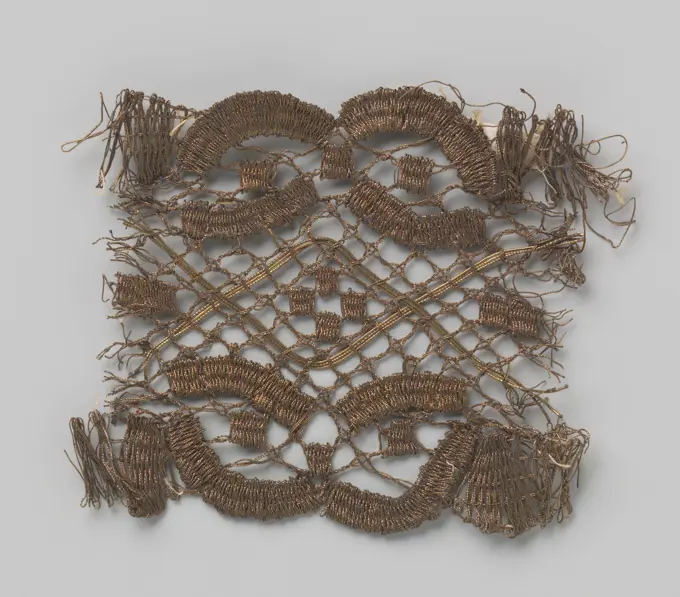
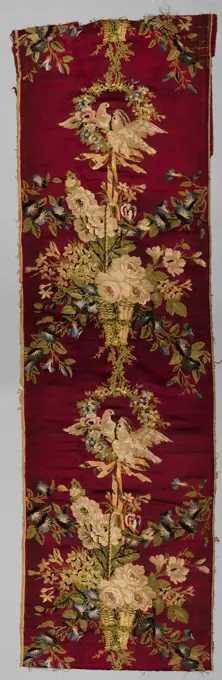
Historical Textile Fragments

Beautifully crafted fragments of silk textiles and embroideries from various historical periods, showcasing intricate patterns and cultural designs.

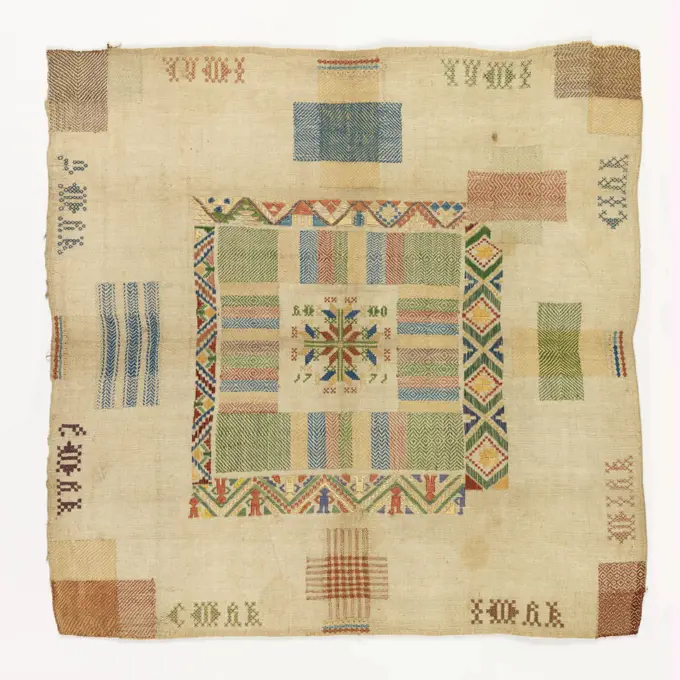
Border, Medium: silk embroidery on linen foundation Technique: embroidered on plain weave, Fragment pieced in two places. Cream-colored hand-woven linen, embroidered in red, green, yellow, blue and pale rose silks. Stylized plant form flanked by birds in profile. Narrow geometric guard borders., Greece, 18th century, embroidery & stitching, Border
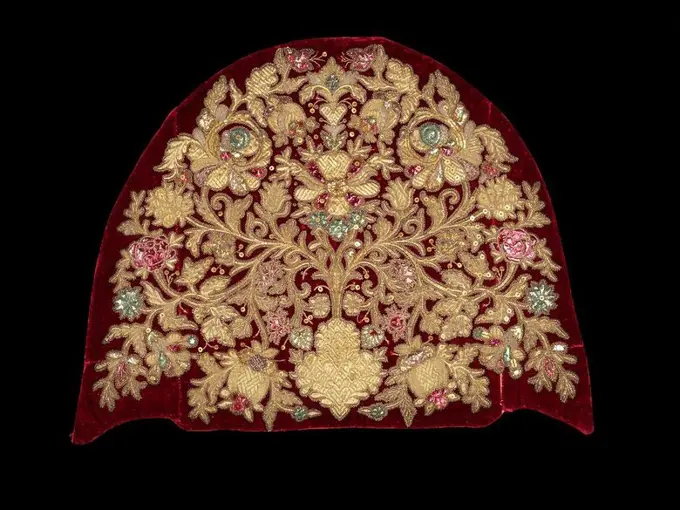
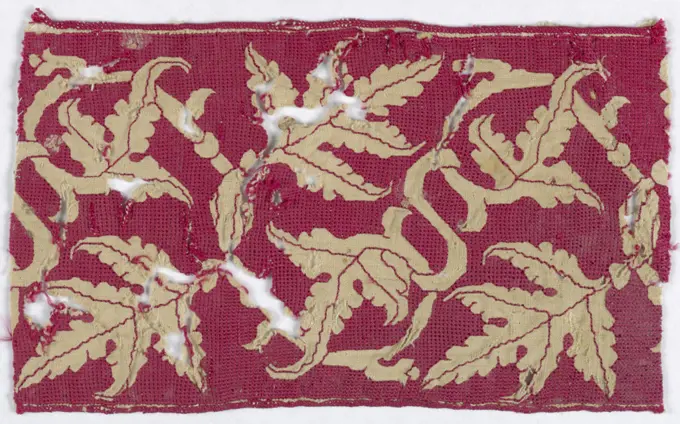
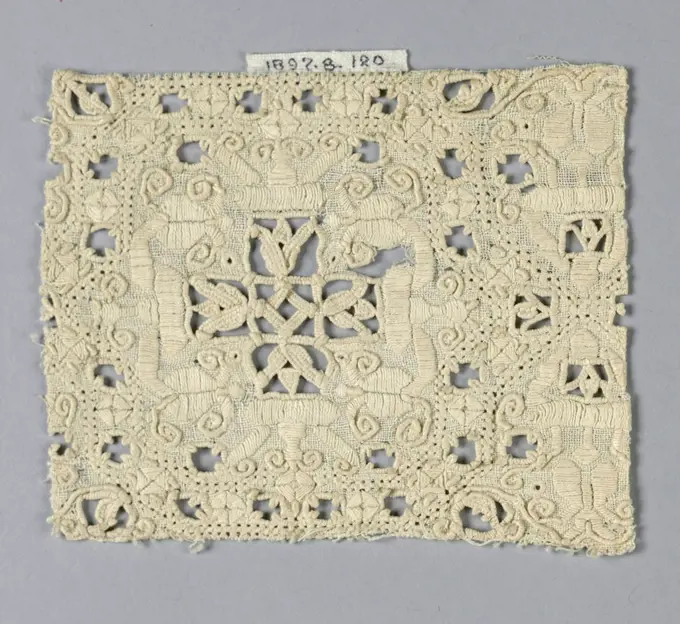
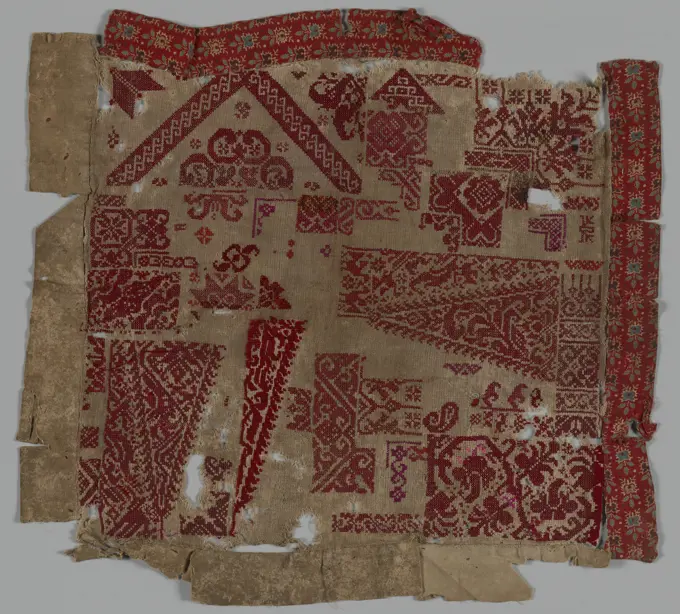
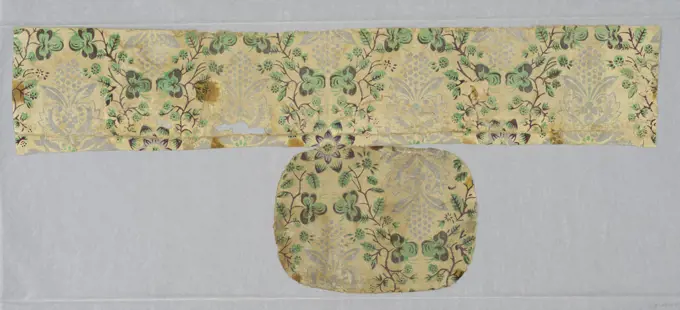
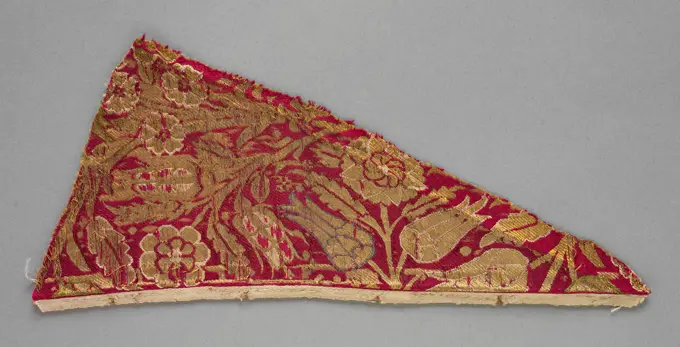
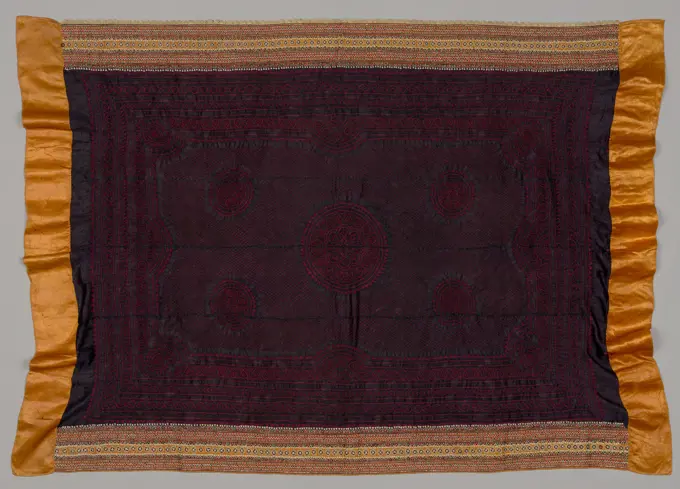
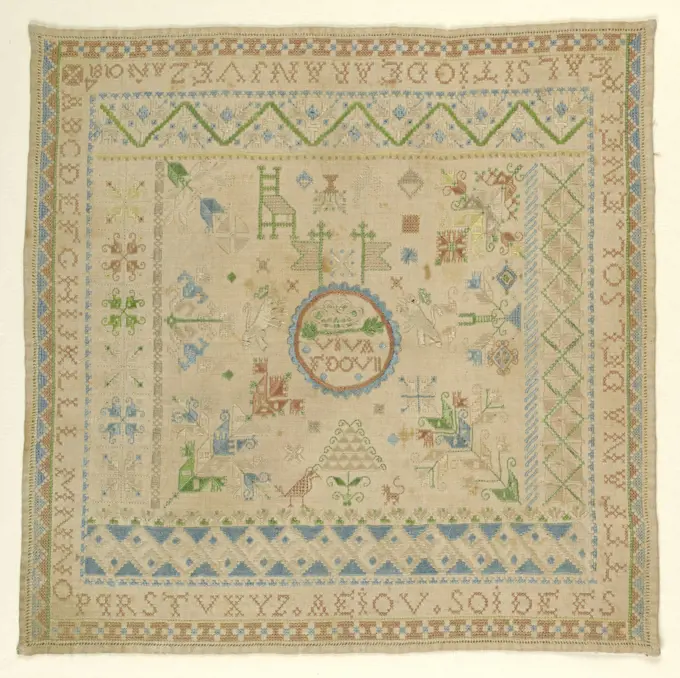
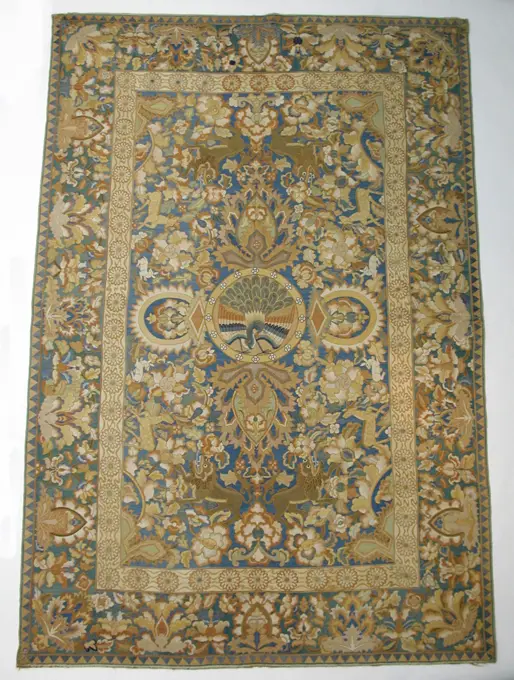
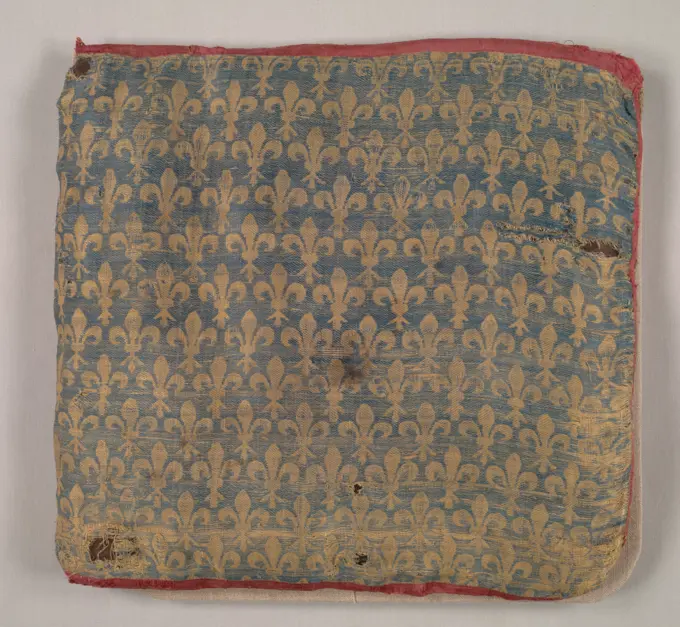
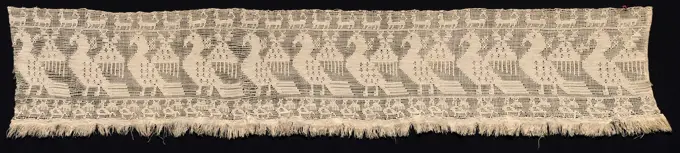
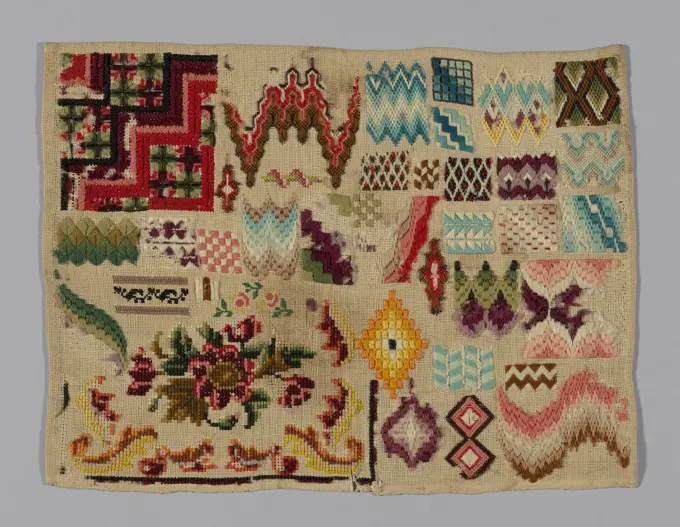
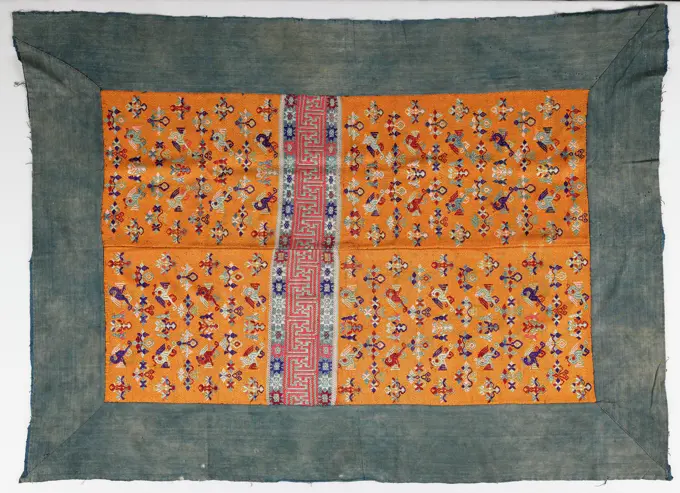
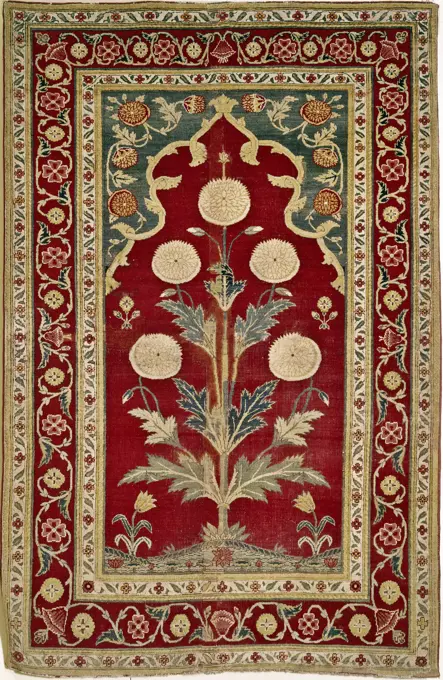
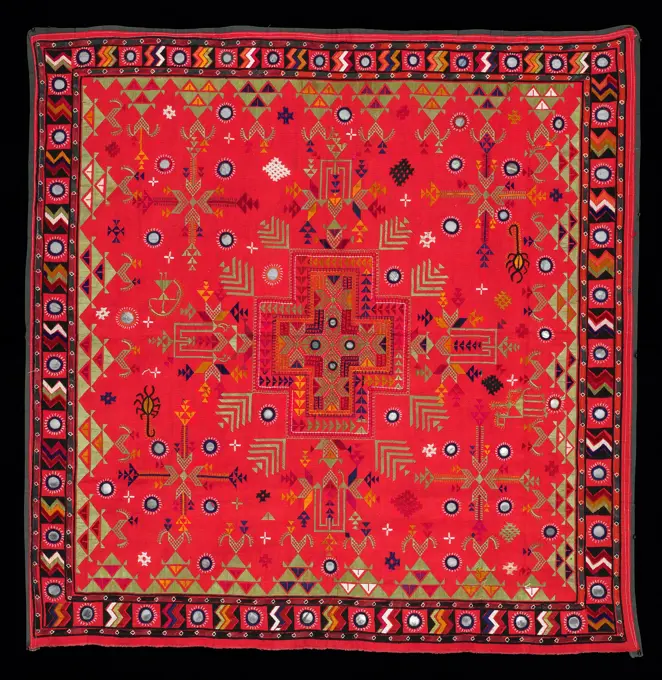
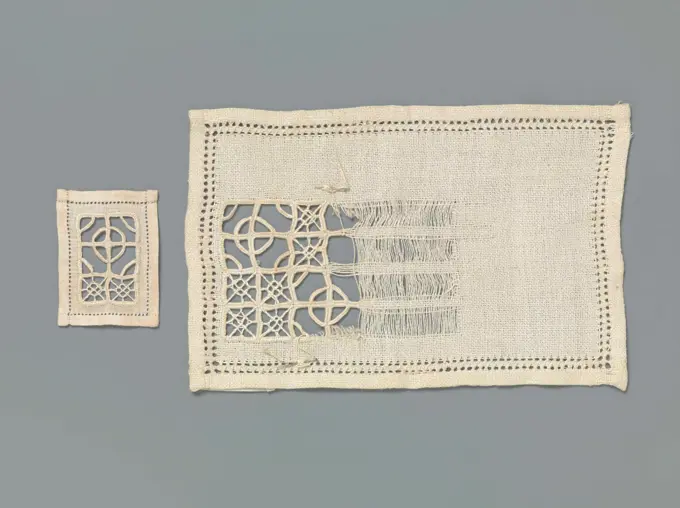
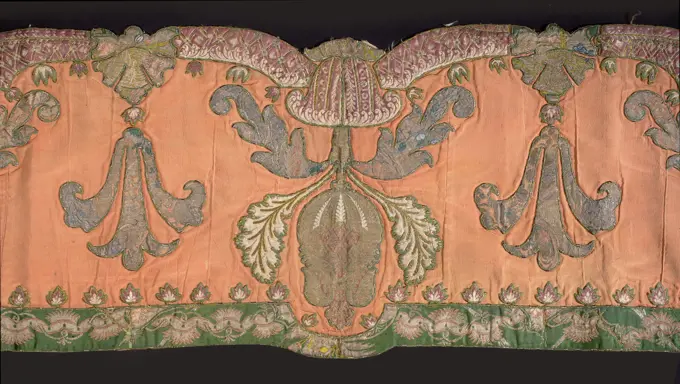
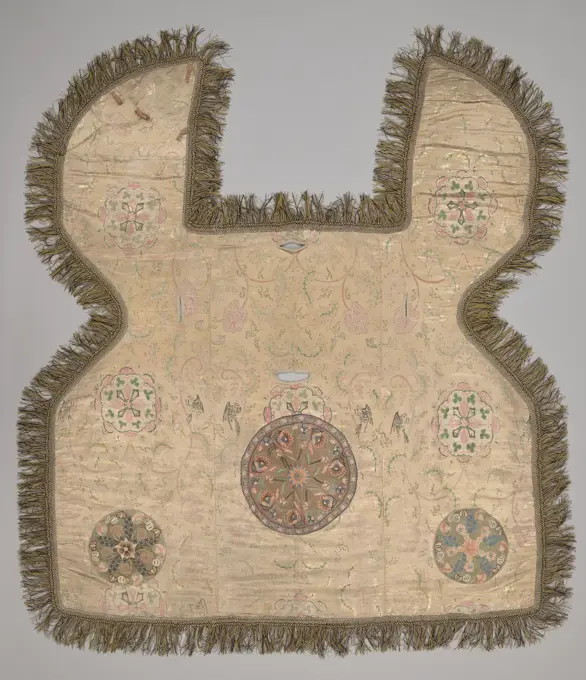
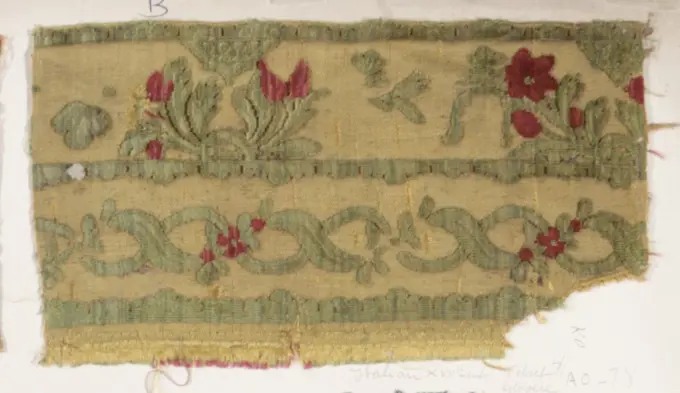
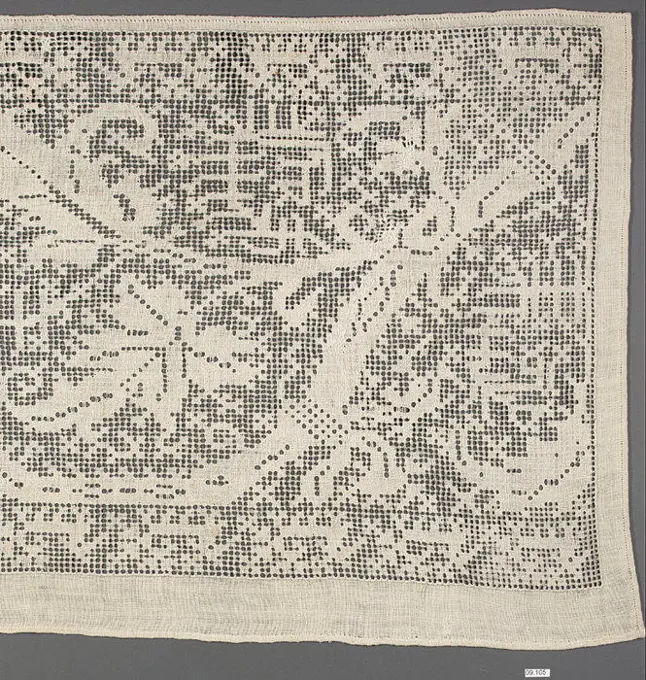
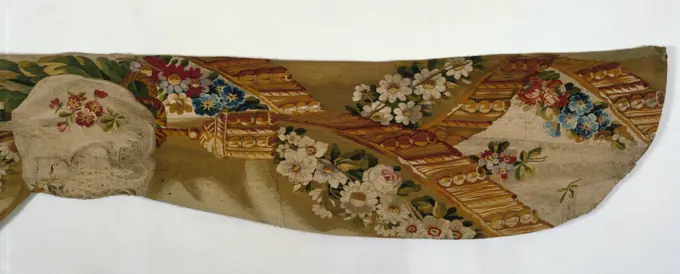
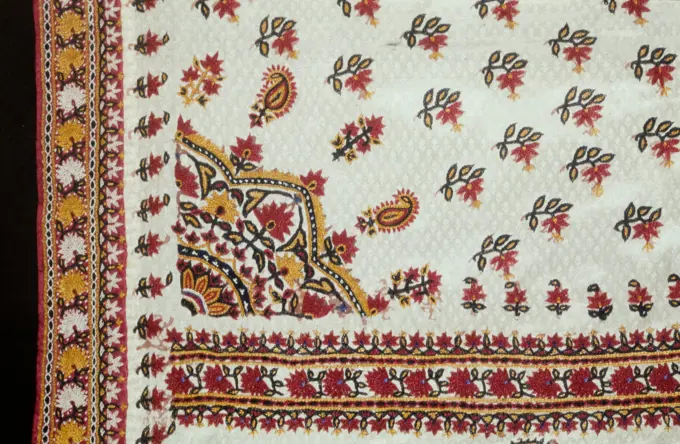
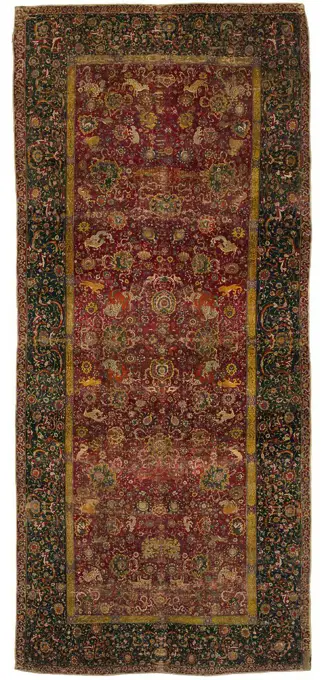
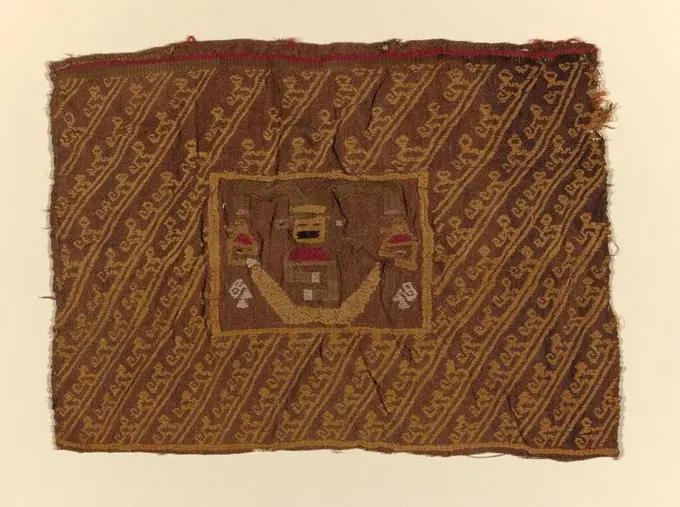
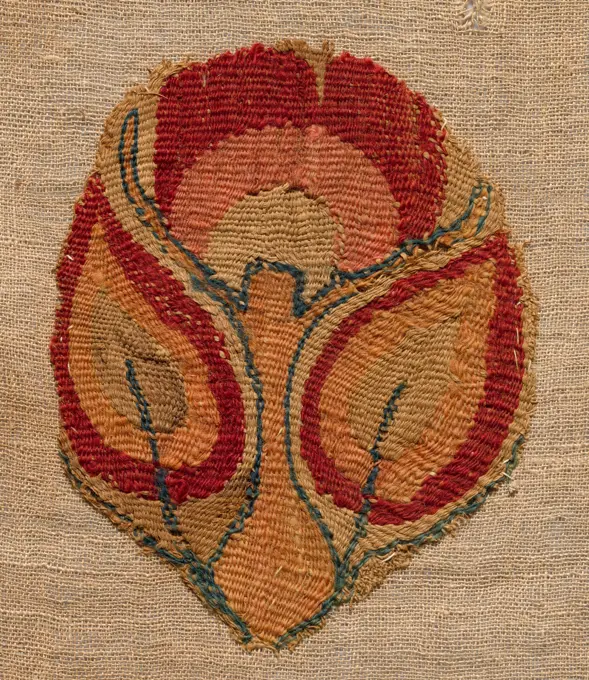
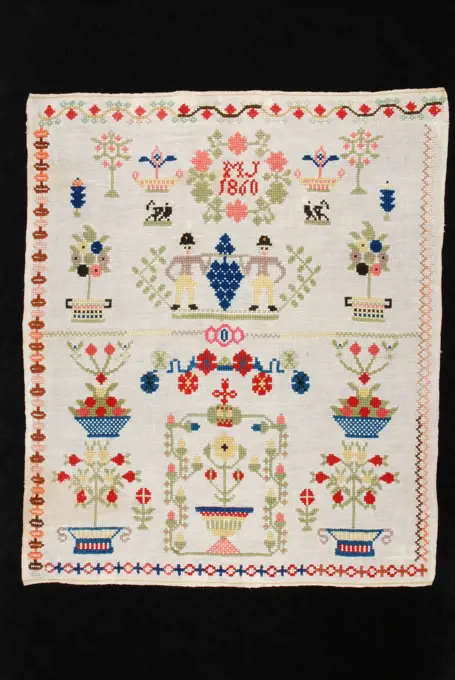
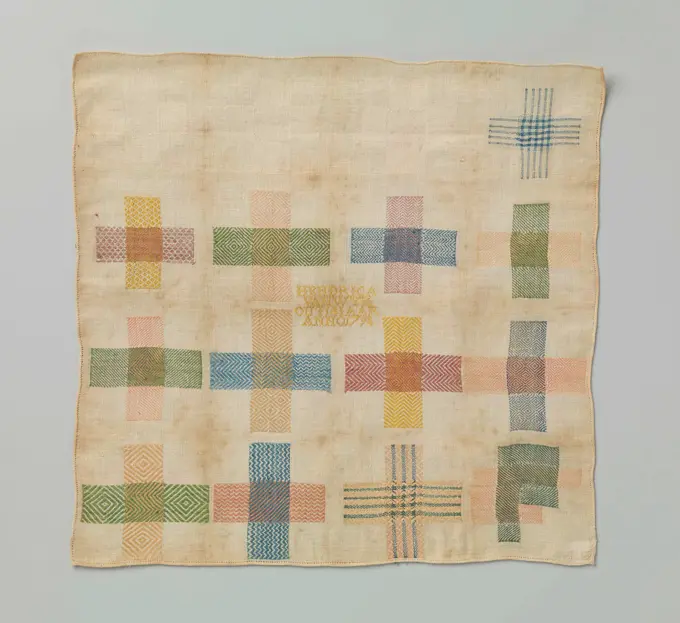
Rugs and Carpets: Iran - Lorestan - 20th century. Saraband-Mir carpet with Botteh and Shekari motifsBarred from Sits with an image of a Cypres and Fish. Barred from Sits with an image of a Mihab. From a scaly formation, a cypress-shaped tree shoots up, within which a symmetrical flower branch is populated with monkeys, parrots and pheasants. Around the Cypres, equal flower branches are populated with birds and squirrels. On either side of the tree is a showing paauw with a snake in the mouth. Fish are shown under the peacocks. Oriental textile.Fragment, Medium: silk on linen Technique: embroidered, Border fragment showing entwined and pointed leaves in reserve on a red embroidered ground., Italy, 16th or 17th century, embroidery & stitching, FragmentAltar Carpet. Portugal, Arraiolas. Date: 1601-1700. Dimensions: 356.7 x 191.5 cm (141 1/8 x 75 3/8 in.). Linen, plain weave; embroidered with wool in long-armed cross stitches. Origin: Spain. Museum: The Chicago Art Institute, Chicago, USA.Fragment, Medium: linen Technique: cutwork, Fragment of punto tagliato with embroidered designs in satin and curl stitches with tiny reticella squares. Central section has a reticella cross with lilies., Italy, 16th century, lace, FragmentFragment zijdeweefsel van een stoelbekleding..Fragment yellow silk tissue, from a seat cover. The pattern has pink palmets and arabesken on a yellow ground. The fragment belongs to thirteen fragments with Invnr. BK-1992-18-A T / M BK-1992-18-m.Confronted Animal Rug. Dimensions: Rug: L. 65 in. (165.1 cm)W. 54 1/2in. (138.4 cm)Tube: L. 62 in. (157.5 cm)Diam. 6 in. (15.2 cm). Date: 14th century.With its highly geometricized design, this wool rug differs markedly from the refined courtly carpets, and represents an earlier tradition of weaving that was popular in Europe, where rugs like this are found in fourteenth- and fifteenth century churches and paintings. In fact, the depiction of a rug with the same design as this in an early fifteenth-century Sienese painting allowed for the dating of this example. This is one of only three complete rugs of such an early date and its design of large confronted animals, each with a smaller animal inside, probably derives from contemporary textiles. Museum: Metropolitan Museum of Art, New York, USA.Carpet probably late 18th century In this abstract interpretation of the earlier "Bellini" carpet design, the octagon motif has become a pointed arch that appears twice. A large medallion surrounded by triangles occupies the center. As in many central Anatolian prayer rugs, the background of the central field is a deep red. The border, also characteristic of this tradition, displays a yellow stylized scroll with abstract floral motifs in pink, blue, and white on a black background.. Carpet 452578Purse (USA); silkTapestry. unknown, authorCarpet belonging to Ameublement Jan de Meyer design. Violet fond .. rug belonging to Ameublement Jan de Meyer design. Violet Fond. Note: Some pieces of the Ameublement were already donated by Mr and Mrs Loeb-Levenbach in 1973. Western rug.Sampler(Limar)Bandbox, Machine-printed paper, Bandbox side, flattened, and lid without rim. Festooned foliage in green and purple, bordering conventional floral motifs in lavender, against glazed white background., USA, 1825-35, Wallcoverings, BandboxTable mat, Medium: linen Technique: bobbin lace, Linen cover with hemstitching, bobbin lace edging and central panel of bobbin lace showing two Indian motifs (two braves with bows and one paddling a canoe)., Oneida, Wisconsin, USA, ca. 1900, lace, Table matBedcover (Cherry Trees and Robins Bride's Quilt) Made 1810-1830 United States. AppliquÈd quilt; dyed and undyed plain weave cotton fabrics .Sampler Made 1828 Europe. Cotton, plain weave; examples of darning in polychrome, embroidered around outer edges in silk and in cross stitch with tiny border of punched work held in place by cotton thread stitches .Textile Fragment, 16th century. Turkey, Bursa, 16th century. Brocaded silk with metal thread weft; average: 27.3 x 11.5 cm (10 3/4 x 4 1/2 in.).Sampler 19th century German. Sampler 228618Odhani or Bandhani (Veil worn over Head), early 1900s. India, Cutch, early 20th century. Silk, tie-dyed (but not ironed flat) and embroidered with polychrome silk and flat strips of silver plaited with silk thread; overall: 144.8 x 111.8 cm (57 x 44 in.).Embroidered textile with dragons and lotuses 7th-8th century China. Embroidered textile with dragons and lotuses 74032Handwork with embroidered water lilies, Aagje Tiket, c. 1900 Handwork with in diamond shape red water lilies and gold thread ranks in Jugendstil on a white satin rectangle in laid in the laid -in (unfinished). Belonging to series of eight white and ten colored crafts, made by Aagje Tiket for achieving the deed of beautiful and/or useful handicrafts at the industrial school, BK-1974-105-A to R. Amsterdam  embroidering Handwork with in diamond shape red water lilies and gold thread ranks in Jugendstil on a white satin rectangle in laid in the laid -in (unfinished). Belonging to series of eight white and ten colored crafts, made by Aagje Tiket for achieving the deed of beautiful and/or useful handicrafts at the industrial school, BK-1974-105-A to R. Amsterdam  embroideringSampler, Estefana del Sol, Medium: silk embroidery, linen foundation Technique: double running, counted satin, hem, fishbone and cross stitches on plain weave, Viva F D O VII under a crown with medallion and flags. Surrounded by detached motifs and five borders. Inscription translation: Made by Estefana del Sol in the Royal Palace at Aranjuez. Long live Ferdinando VII King of Spain., Spain, 1810, embroidery & stitching, SamplerFragment (Japan)Cover 17th century. Cover 444963Curtain And Fragment (Spain); silkReliquary Bag, 13th century. Spain, Mudejar, 13th century. Compound twill weave: silk; overall: 34 x 35.9 cm (13 3/8 x 14 1/8 in.).Fragment, 1100s - 1300s. India, 12th-14th century. Plain cloth, resist dyed; cotton; overall: 22.6 x 14 cm (8 7/8 x 5 1/2 in.).Fragment 18th century possibly Spanish. Fragment 217730Panel (Italy); linenChalice cover, Medium: linen Technique: grid of withdrawn element work with reticella style needle lace, embroidery and bobbin lace trim, Chalice cover edged by Venetian bobbin lace of elaborate triangles. Cover is ornamented by wide insertion of reticella. Pattern geometric in character., Italy, mid-17th century, lace, Chalice coverFragment of a Border with Repeated Pattern of Fantastic Winged Animals, 1500s-1600s. Italy, 16th-17th century. Bleached linen: needle lace, burato (twined ground and darned in two directions) and fringe; overall: 28.8 x 143.2 cm (11 5/16 x 56 3/8 in.). A four-legged animal pattern repeats in the top register, and winged birds appear in the central and bottom register. The birds, which are significantly larger in the central panel, may be peacocks.Textile Fragment, undetermined Chimú. , 1000-1532. Cotton, camelid fiber, 15 1/16 × 15 11/16 in. (38.3 × 39.8 cm).   Arts of the Americas 1000-1532Sampler(Limar)Back of the ornate;  XVII/18th century (1601-00-00-1700-00-00);Conciliate belt; Studio of Franciszek Masłowski (Kraków; Pasów Factory; 1781-1806); 1781-1806 (1781-00-00-1806-00-00);Stop piece of multicolored silk on linen .. Stop stack of silk on linen. The embroidery has a bouquet in the middle and is signed and dated: Gesina Tjaden Old 1 year anno 1895.Fragment of chasuble embroidery unknownHeaddress. Culture: Russian. Date: fourth quarter 18th century.This object is from the collection of Natalia de Shabelsky (1841-1905), a Russian noblewoman compelled to preserve what she perceived as the vanishing folk art traditions of her native country. Traveling extensively throughout Great Russia, she collected many fine examples of textile art of the wealthy peasant class. From the 1870s until moving to France in 1902, Shabelsky amassed a large collection of intricately embroidered hand-woven household textiles and opulent festival garments with rich decoration and elaborate motifs. The Brooklyn Museum holdings include many fine examples including the majority of the garments. Portions of Shabelsky's collection are also housed at the Museum of Fine Arts, Boston, the Cleveland Art Museum, and the Russian Museum of Ethnography in St. Petersburg.The colored foil in this partial headdress is particularly striking in contrast with the red velvet and gold embroidery. Headdresses, or Sampler Made 1801-1900 Germany. Linen; embroidered with wool and silk .Shawl, Medium: wool Technique: 2/2 (S-spun) twill tapestry, embroidery Label: wool twill tapestry with embroidery, Taupe center field that radiates in pairs toward the four corners. Swirling pattern in various shades of red, blue, green, yellow, white, and black on red ground. Most notably in the pattern are four pairs of Paisley shapes on the two diagonal axes. Small floral motifs decorate the shapes and fill the spaces in between., India, 19th century, woven textiles, ShawlSampler Made 1801-1900 Spain. Linen, plain weave; cut and drawn work; embroidered with cotton yarns in buttonhole, darning, hem, Italian hem, interlocking overcast, serpentine hem, and square openwork, stitches; coral knots .ChaIIce veil  geometricised floral ornamentation unknownBorder, Machine-printed and flocked, Three scalloped bands of scroll-like strap work in Chinese red flocking on pastel green ground., France, ca. 1850, Wallcoverings, BorderJoined Fragments 15th-16th century. Joined Fragments 451464Ritual Cloth(Osap)Blanket, 61 3/4 x 43 1/2 in. (156.85 x 110.49 cm), Cotton; needlework, ChinaTowel, Medium: cotton, metallic thread Technique: plain weave with supplementary weft looping; embroidered, White solid looped uncut towel except at the ends, where on a border of plain weave is embroidered, in gold, a serpentine stem with five-pointed leaves and small flowers. Scalloped fringe on ends., Turkey, 19th century, embroidery & stitching, TowelKesa Made 1775-1800 Japan.Bag, decorated with Botehs (front) and windows (rear)., Qashqa'i Volk, 1850 - 1900 Bag whose front is decorated with two Botehs and the rear with windows. Shiraz (possibly)maker: Iran Necklace and impact: Wool Bag whose front is decorated with two Botehs and the rear with windows. Shiraz (possibly)maker: Iran Necklace and impact: WoolSampler, Medium: silk embroidery, linen foundation Technique: wrapped bars, eyelet, tent, rococo, and satin stitches on plain weave, Random spot sampler, detached motifs, with interlacings and geometric types., England, early 17th century, embroidery & stitching, SamplerDetails of a Mughal carpetSampler (Spain); Embroidered by Estefana del Sol; silk embroidery, linen foundation; Warp x Weft: 39.5 x 40.5 cm (15 9/16 x 15 15/16 in.); Bequest of Mrs. Henry E. Coe; 1941-69-233Chair Seat Made 1701-1800 France. Linen, plain weave; embroidered with wool and silk .Shawl;  19th century (1801-00-00-1900-00-00);Piotrowska, Maria (Fl. Ca 1950) - collection, fashion accessories, bot (ornament), gift (provenance), plant ornamentsCovering, c. 1925, 26 5/8 x 27 1/4 in. (67.63 x 69.22 cm), Silk, cotton, mirrors; needlework, Pakistan, 20th centuryFragment (India); cottonTextile Fragment 16th-17th century. Textile Fragment 454525Steel linen with a start of carved work with wheels and squares as an example of this technique with matching fragment. Steel natural linen with edge embroidery: reticella in open sewing technique (cut work). Study material. In the coarse linen, a start is made of a geometric pattern with four rows of openwork squares, as an example of this technique. In a diagonal line, wheels are around three intersections, one wheel per intersection, made by sprinkling chain and weft threads with feston stitches. Also the tanning wires with which the wheels are formed with feston stabs opposed. In six opened squares, a wheel is in a network of non-founded tanning threads per square. To the right of the pattern you see how chain wires (vertical) and weft threads (horizontally) are partly cut away and pulled out. A start has been made with the festions of the bundles of weft threads that have left. The linen is finished with hems along which a edge of work is made with pulled out wires. The steel beloSampler, Medium: silk embroidery on linen foundation Technique: embroidered in running (pattern darning), rococo, cross, tied cross, satin, and eyelet stitches on plain weave foundation, Five darning crosses, four darning corners, central patch. Initials along outer edge, date in center., Netherlands, 1771, embroidery & stitching, SamplerKazuifel, fragment, with silk and gold thread embroidered flowers. Fray, Fragment, With Silk and Gold Thread Embroidered Flowers on Blue VelvetOne half of a Kontusz sash/belt. Manufaktura Szczepana Filsjeana (Kobyłka ; wytwórnia pasów ; 1787-1794), manufactureSampler, Polley Thomas, American, b. 1784, Medium: silk embroidery on linen foundation Technique: embroidered in cross stitch with withdrawn and deflected element work on plain weave foundation, Bands of alphabets worked in several colors on a coarse brown ground, with the inscription: Polley Thomas was born April 01 1784 and worked this sampler in the 12 year of my age 1796, Massachusetts, USA, 1796, embroidery & stitching, SamplerLambrequin;  beginning of the 18th century (1701-00-00-1710-00-00);With LambSampler (Mexico); silk and metal embroidery on linen foundationTile with a cloud motif, anonymous, c. 1640 - c. 1660 Tile of quail fritry with lead decorated with cloud motif in blue, white, black and red under transparent lead-alkali-laze. Iznik earthenware. glaze painting / vitrification Tile of quail fritry with lead decorated with cloud motif in blue, white, black and red under transparent lead-alkali-laze. Iznik earthenware. glaze painting / vitrificationPrzeszo Przyszoci unknownFragment 16th-17th century Italian. Fragment 230609Border (in two pieces) early 17th century Italian. Border (in two pieces) 218599Manufacture of Aubusson (attributed to), cantonnière with drapery and garlands of flowers, Louis XVI. Long bundle tapestry, creamy, one piece: tapestry, wool and silk; Linen canvas and decay (dubbing); Velcro (editing). Decor: simulated drapery, with macaroons, fringes, cords and acorns; Roses, daisies and oak leaves. Paris, Cognacq-Jay museum. 35078-16 Flower, lambrequin, paleRibbon 1870-90 probably French. Ribbon 156495Chasuble;  XVII century (1601-00-00-1700-00-00);Pulchari, 19th century, W.59 x L.78 in., silk; needlework, India, 19th centuryTurkish walking carpet unknownScarf, 14 3/16 x 11 7/8 in. (36.04 x 30.16 cm) (without fringe), Cotton, ChinaSampler 19th century Spanish. Sampler 228201Sidewall (Japan); block-printed paper, embossed; 118 x 94 cm (46 7/16 x 37 in.)Scarf early 19th century American. Scarf. American. early 19th century. cottonLength of batik fabric, ChinaTowel Made 1801-1900 Turkey. Linen and cotton, plain weave; embroidered with silk, linen and gilt-metal-strip-wrapped silk in darning, fishbone, hem, overcast, double running, twined double running and satin stitches; main warp fringe .Strip 19th century. Strip 445879The Emperor's Carpet. Dimensions: Rug: L. 299 in. (759.5 cm)W. 133 1/2 in. (339.1 cm)Wt. on a 10" tube: 144 lbs. (65.3 kg). Date: second half 16th century.One of the finest products of the Safavid court ateliers, this carpet once adorned the summer residence of the Habsburg emperors. The main field balances a sophisticated net of floral scrolls, large composite palmettes, cloud bands, buds, and blossoms with a myriad of real and fictional animals--dragons and Chinese antelope, lion and buffalo, tigers and leopards, ducks and pheasants. A verse found in the inner guard band likens a garden in springtime to the Garden of Paradise. Museum: Metropolitan Museum of Art, New York, USA.Mirror Case with Filled Diagonal Lattice. Culture: China. Dimensions: Overall: 7 3/4 x 7 3/4 in. (19.7 x 19.7 cm). Museum: Metropolitan Museum of Art, New York, USA.Yastik 17th century Yastiks are cushion covers used by the Ottoman elite to decorate the interiors of their palaces. They are distinguished by their rectangular shape, a dominant red velvet background, and a composition framed on both sides with a band formed of a linear repeating motif. These cushion covers were produced in quantity; the same pattern type was woven one after the other in a continuous length on the loom and later cut to size.. Yastik. 17th century. Silk, cotton, metal wrapped thread; cut and voided velvet, brocaded. Attributed to Turkey. Textiles-WovenFragment. Probably Chimú; Probably north coast, Peru. Date: 1250-1470. Dimensions: 22.9 x 30.5 cm (9 x 12 in.). Cotton, plain weave with paired warps; embroidered with wool (camelid) and cotton in running and stem stitches. Origin: Peru. Museum: The Chicago Art Institute, Chicago, USA.Piece 18th century China or Japan. Piece 71688Fragments; silk, silver thread; a) Warp x Weft: 25.9 x 21.6 cm (10 3/16 x 8 1/2 in.) b) Warp x Weft: 15.7 x 9.3 cm (6 3/16 x 3 11/16 in.)Fragments from a Curtain, 300s - 500s. Egypt, Byzantine period, 4th - 6th century. Tapestry (originally inwoven in tabby ground, applied to plain tabby linen); linen and wool; overall: 10.8 x 13.5 cm (4 1/4 x 5 5/16 in.).Handkerchief fourth quarter 19th century Philippine. Handkerchief 169695Large sampler worked in cross stitch with colored wool on coarse canvas of bleached cotton, marked MJ 1860, exercise, sampler embroidery needlework images cotton wool, textile embroidery cross stitch tapestry large piece of coarse woven bleached cotton topped and underneath selvedge with woven hard yellow and beige stripes and left and right hem edge of 0.6 cm. The piece is embroided in cross-stitch with wool in the colors bright pink pale pink medium pink salmon beige beige dark brown gray black white red orange red light green olive green pale yellow and dark blue. the rag has symmetrical layout the motifs left and right are the same. Embossed around four different ornamental borders in different colors: MJ and 1860 crafts exercise bible religion spy CanaanShawl mid-19th century American or European. Shawl 98165Handkerchief of Helena Modrzejewska unknownStop flap of multicolored silk and linen on cotton muslin .. stoppaper with embroidery. The embroidery has the year Anno 1798 and various colored stops.Sampler (Northern Germany); linen embroidery on linen foundationWall attenuation of lamp axle with turtle pigeon pattern. Wall attenuation, consisting of a lamp axis. Tilth deaf pattern.Strip of gold side with squares in a window, anonymous, c. 1925 - c. 1930  Strip bobbin, gold side, cluny side. The pattern is inspired by sixteenth -century gold sides and consists of a window on the center line, formed by crossing lines. In the window is a configuration of four squares. Along the top and bottom edge are two ovals placed against each other, each formed by two thick arches, with a square in the center. The arches and squares are made in shape and are connected by a mesh ground, a lace-hole stroke grid. The lines that form the window consist of three adjacent threads, which are stuck between the thinner threads with which the meshes are formed. The arches form scallops on both long sides of the strip. Volvic . bobbin lace / Cluny laceLampas wall covering with lovebird pattern, c. 1770 - c. 1790 Wall extension, consisting of a lane Lampas. Lovebird pattern. Lyon (possibly) lampas (textile material) Wall extension, consisting of a lane Lampas. Lovebird pattern. Lyon (possibly) lampas (textile material)Length of batik fabric, ChinaGalloon 17th-18th century Unknown. Galloon 213855Sampler, Medium: glass beads, cotton Technique: embroidery with beads, Unfinished beadwork sampler with five patterns: two floral borders, one stylized and one naturalistic; two confronted birds; a wreath with the initial M; and an agnus dei., Mexico, 19th century, embroidery & stitching, SamplerKamben Geringsing (ceremonial Cloth) (Indonesia); silk