Historical Textile Fragments

Beautifully crafted fragments of silk textiles and embroideries from various historical periods, showcasing intricate patterns and cultural designs.

Border, Medium: silk embroidery on linen foundation Technique: embroidered on plain weave, Fragment pieced in two places. Cream-colored hand-woven linen, embroidered in red, green, yellow, blue and pale rose silks. Stylized plant form flanked by birds in profile. Narrow geometric guard borders., Greece, 18th century, embroidery & stitching, Border
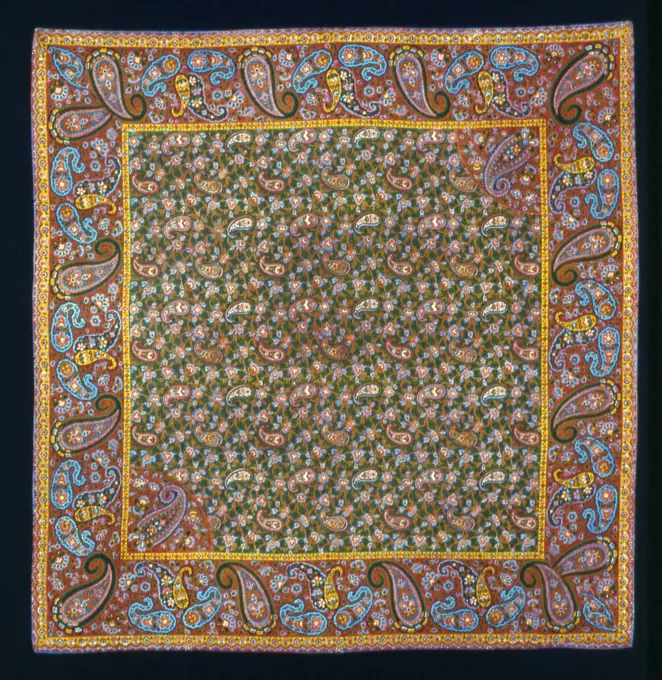
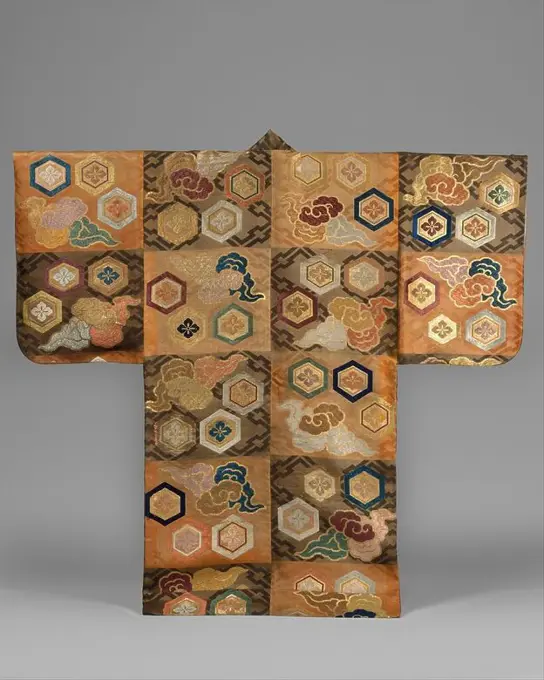
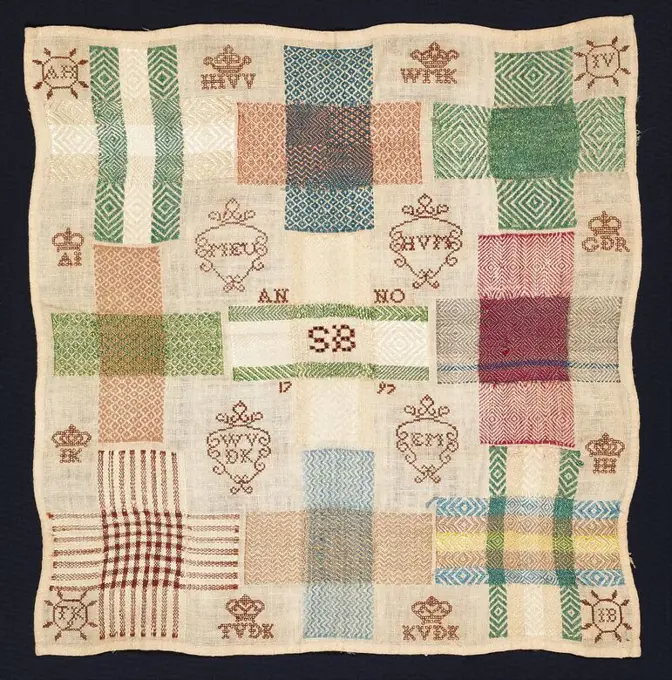
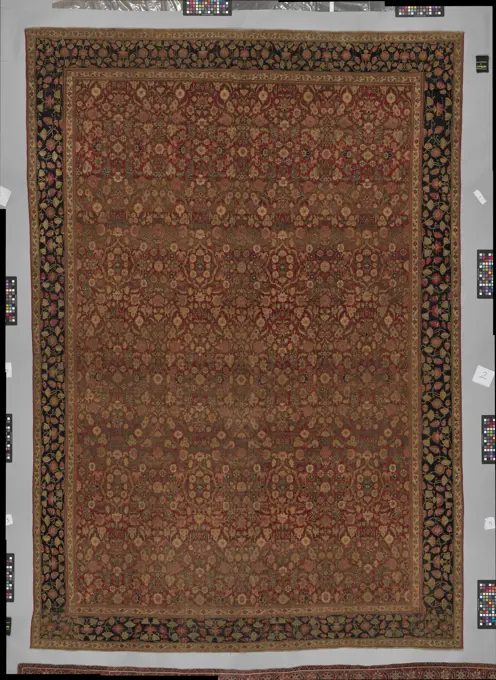
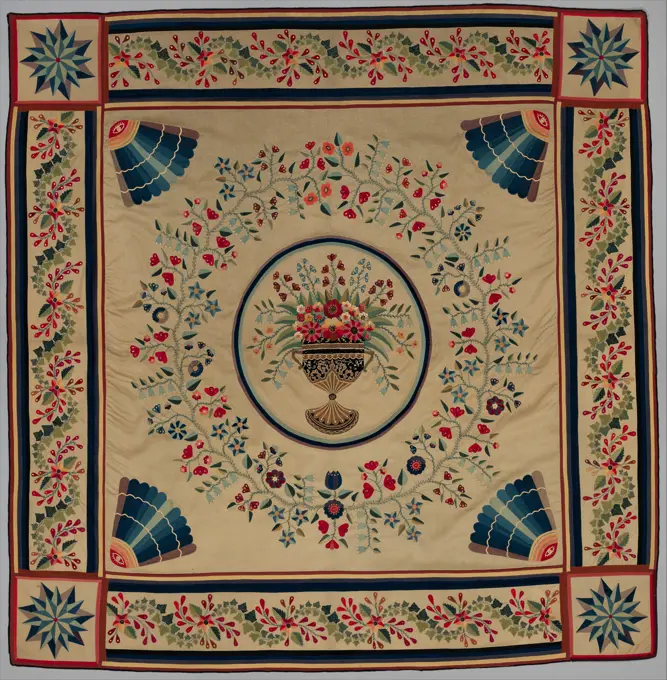
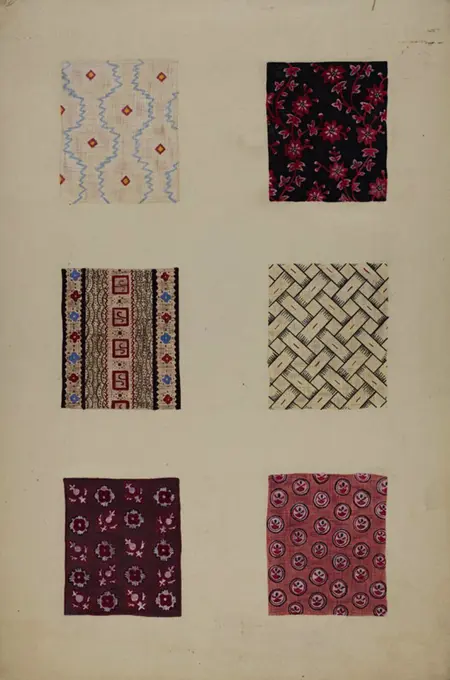
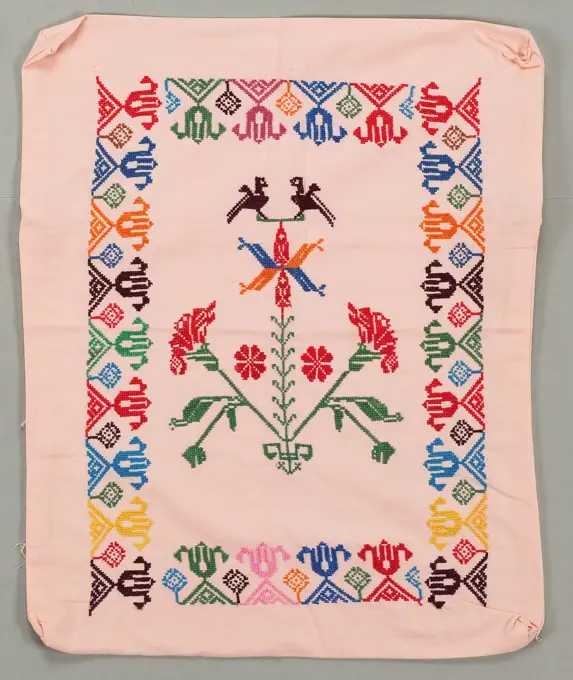
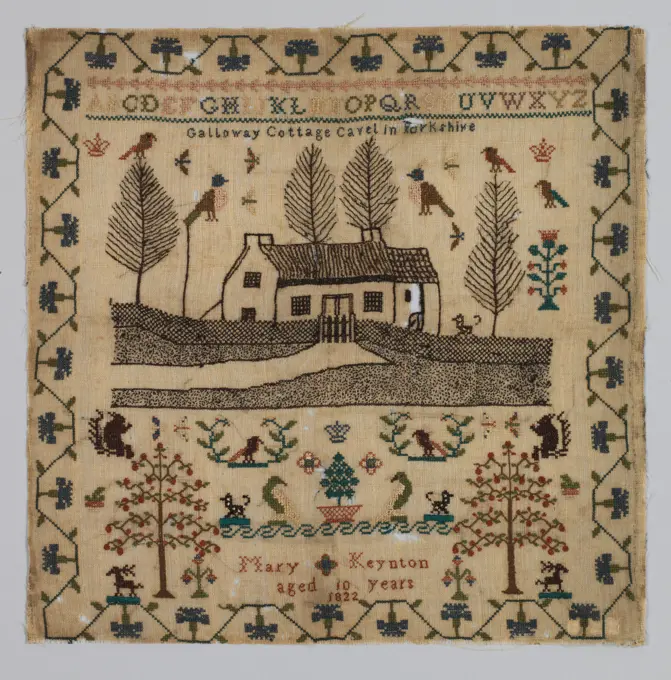
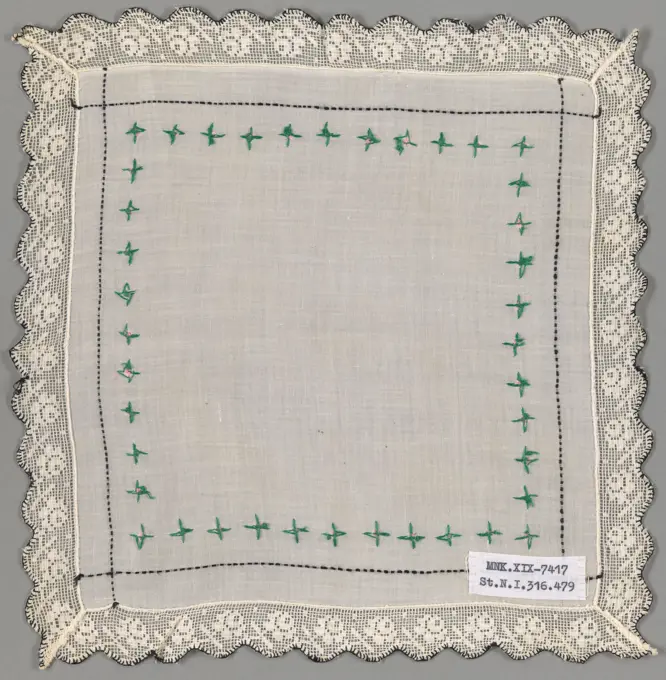
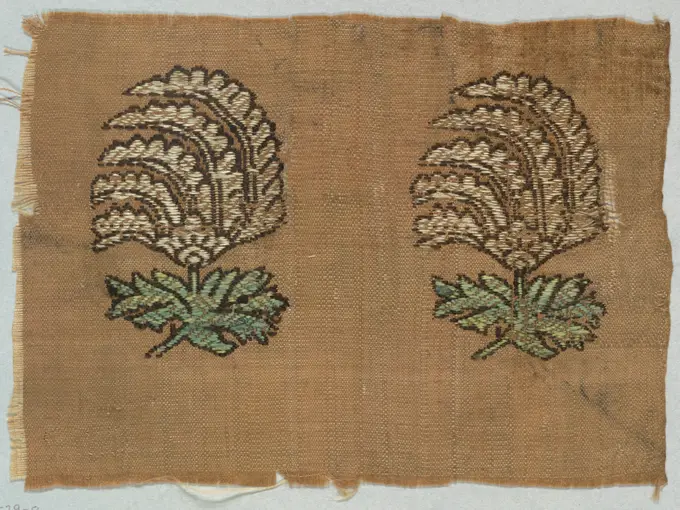
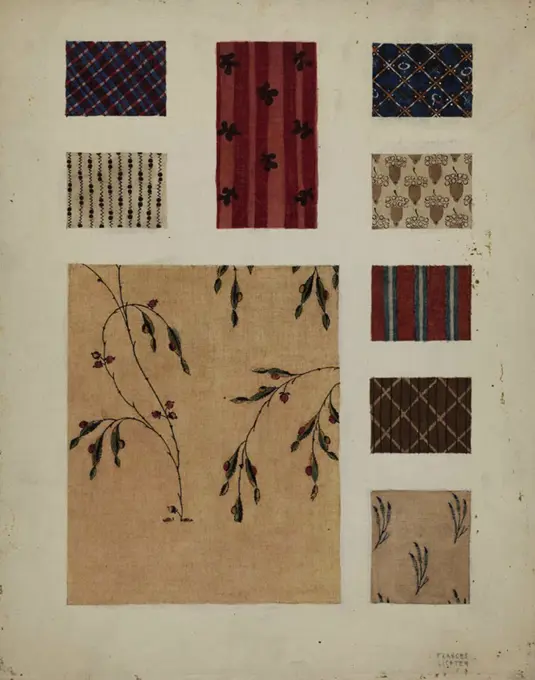
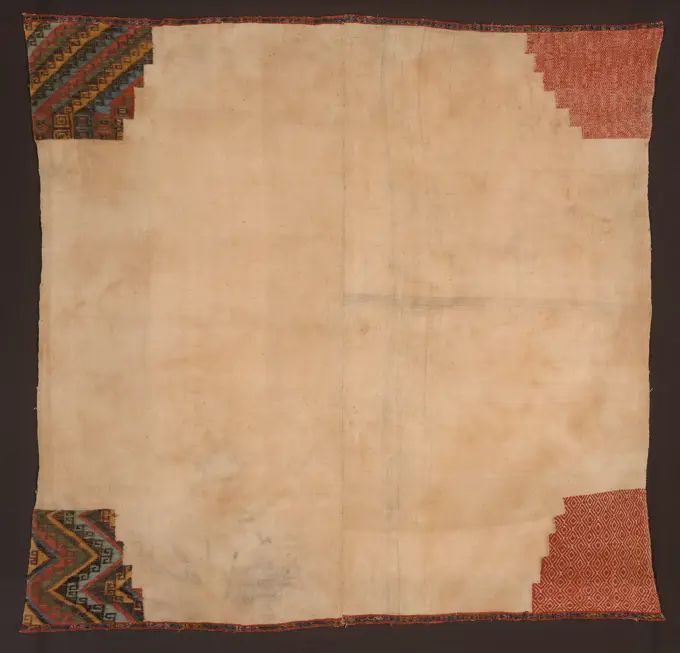
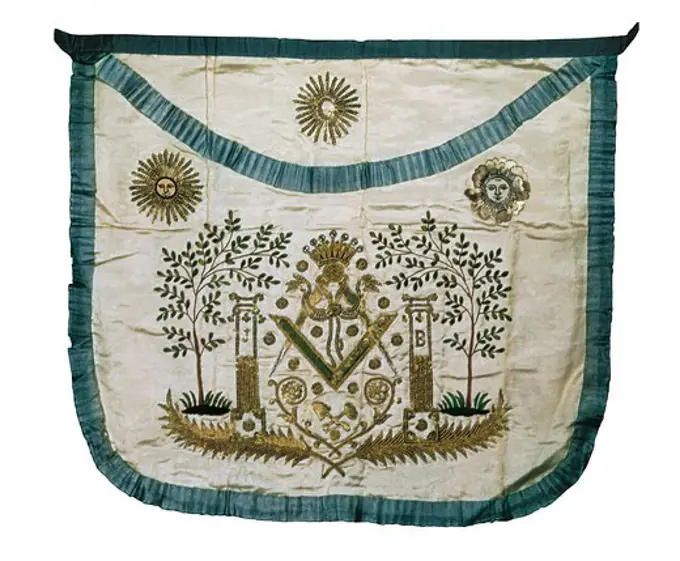
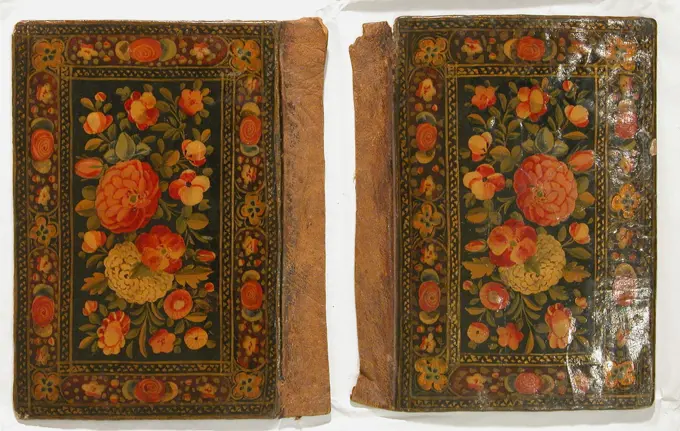
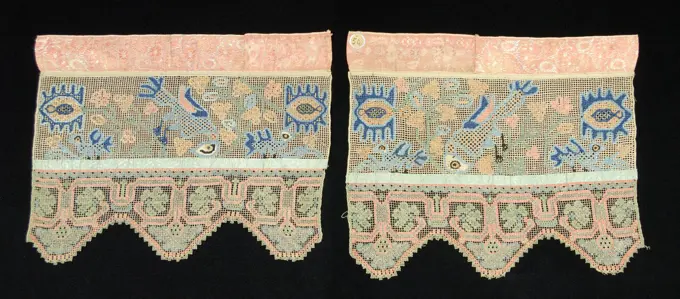
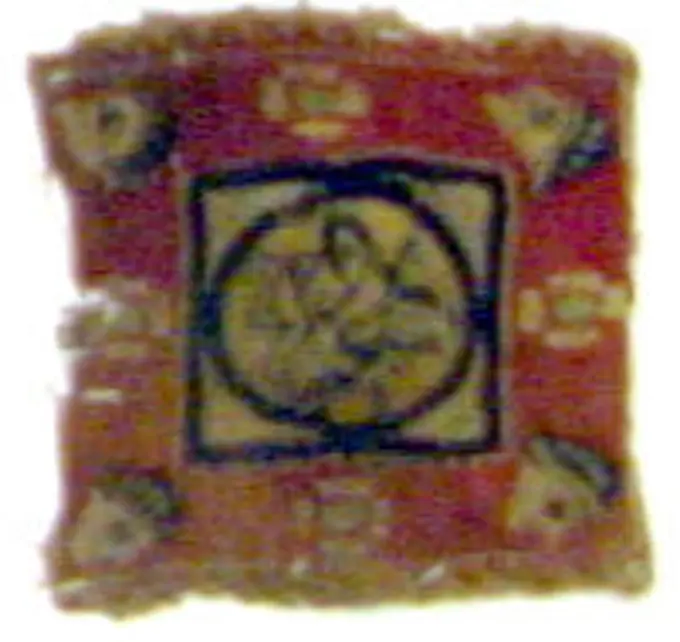
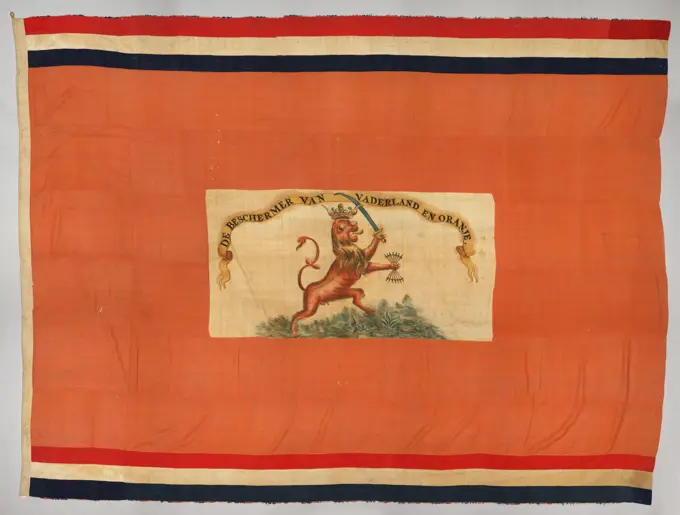
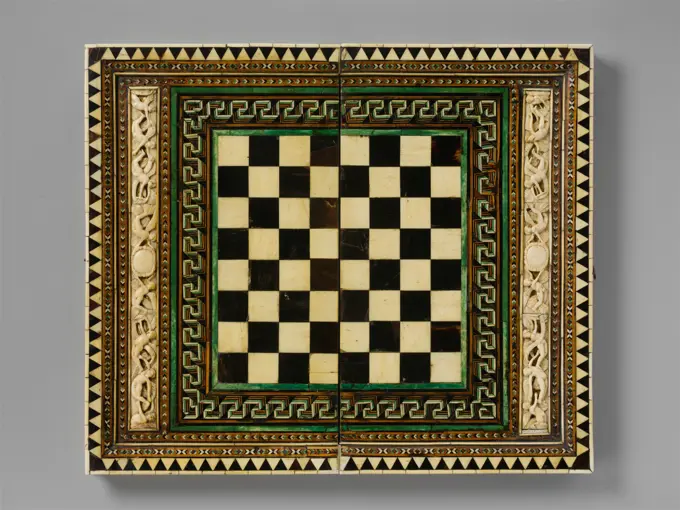
Ribbon 18th century French. Ribbon 217132Dog blanket -Handkerchief Made 1825-1835 France. .Noh Costume (Atsuita) with Clouds and Hexagons. Culture: Japan. Dimensions: Overall: 65 x 55in. (165.1 x 139.7cm). Date: 19th century.Characteristic of the type of Noh robe known as atsuita, used for male roles, is this plain-weave robe with a bold supplementary weft pattern of scattered clouds over clusters of hexagons enclosing a stylized blossom. A conventional tortoise-shell pattern of interlocking hexagons, expressing auspicious connotations of long life, is combined here with clouds, a motif associated with supernatural power. Museum: Metropolitan Museum of Art, New York, USA.Fragment wit zijdeweefsel met veelkleurig borduurwerk.Fragment white silk tissue with multicolored embroidery. The fragment has three parallel flower garlands.Darning sampler. Culture: Dutch. Dimensions: H. 11 3/4 x W. 12 inches (29.8 x 30.5 cm). Date: 1797.The initials S.B. in the center of this elaborate collection of darning samples are most likely those of the instructor, as there are several surviving examples with the same initials. It's possible that these initials belonged to a teacher at an orphan school in Amsterdam, and the other initials in decorative cartouches surrounding the center, and surmounted by crowns on the edges, are likely to be those of other teachers, and administrators or supporters of the institution. Museum: Metropolitan Museum of Art, New York, USA.'Holbein' Carpet Fragment first half 16th century. 'Holbein' Carpet Fragment 453245"Millefleur" Carpet probably 18th century Densely patterned and formally arranged flowers occupy the red ground of this Mughal carpet. The rendering of lotus flowers in various stages of development is distinctly Indian. Scholars have not yet reached a consensus on the date of this work, although certain details in the patterning and technique indicate that it was likely produced in the eighteenth century.. "Millefleur" Carpet 446635Fragment (possibly Spain); linen warp, silk weftPart of a carpet with a pattern of fantasy ornaments, Anonymous, in or after 1907 - 1929 photomechanical print   paper. cardboard  carpet, rug. fantasy ornamentPillow cover, one of a pair, 20th century, 21 1/2 x 18 1/4 in. (54.61 x 46.36 cm), Cotton; needlework, Egypt, 20th centuryA fragment of a cashmere scarf;  19th century (1801-00-00-1900-00-00);Dygas, Stefania (Fl. Ca 1949) - collection, bot (ornament), plant ornament, palmetta (ornament), purchase (provenance)Fragment, Medium: silk on linen Technique: embroidered on plain weave, White linen foundation forms the design. Ground of drawn work embroidered with red silk. Symmetrical conventionalized floral groups, with one central branch and two flanking branches., 17th century, embroidery & stitching, FragmentTablecover ca. 1876 American. Tablecover. American. ca. 1876. Wool embroidered with silkMulticolored Silk Stopplap on Cotton Musseline, Anonymous, 1790  The embroidery has the initials CD in a wreath with guardian angels, the text 13, the Dates 1790 and at the top two red crowns. Amsterdam (possibly) silk. cotton (textile) embroideringLegging strip -Shawl of Joined Fragments ca. 1825-35. Shawl of Joined Fragments 447114Goldsmith's art, Italy, 20th century. Mario Buccellati, make-up case in engraved silver and gold, set with cabochon cut topazes and amethysts, 1950s.Sampler (USA); Embroidered by Vashti Wellington (American, b. 1805); silk embroidery on linen foundationQuilt Patches. Dated: c. 1938. Dimensions: overall: 38.5 x 25.5 cm (15 3/16 x 10 1/16 in.). Medium: watercolor, graphite, and gouache on paperboard. Museum: National Gallery of Art, Washington DC. Author: Katherine Hastings.Banner with a Quartered Royal Arms of Spain and the Madonna and Child (banner), 1500s. Spain, 16th century. Red and dark brown velvet, embroidered; fringe; overall: 109.2 x 138.4 cm (43 x 54 1/2 in.).Carpet with weapon of Pallandt van Eerde/van Neukirchen called Nyvenheim, van Calkar, in or before 1826 Carpet of knotted wool. Dessin: In the middle of a red distance with a pattern of flowers and lancet -shaped toothed leaves the weapon of Pallandt van Eerde/van Neukirchen called Nyvenheim on a white stock surrounded by oak leaves and a wreath of flowers and oak) leaves. The edge of the carpet is made up of nine edges of different width with Eastern geometric (flower) designs. Deventer wool Carpet of knotted wool. Dessin: In the middle of a red distance with a pattern of flowers and lancet -shaped toothed leaves the weapon of Pallandt van Eerde/van Neukirchen called Nyvenheim on a white stock surrounded by oak leaves and a wreath of flowers and oak) leaves. The edge of the carpet is made up of nine edges of different width with Eastern geometric (flower) designs. Deventer woolTexts and floral ornaments. Draughtsman: anonymous. Dating: 1740 - 1760. Place: India. Measurements: h 300 mm × w 250 mm. Museum: Rijksmuseum, Amsterdam.Curtain early 17th century Italian. Curtain 215007Cofradía Tzute for Santos, c. 1940, 23 3/4 x 23 1/2 in. (60.33 x 59.69 cm), Cotton, Guatemala, 20th centuryPillow cover, one of a pair, 20th century, 22 1/4 x 17 5/8 in. (56.52 x 44.77 cm), Cotton; needlework, Egypt, 20th centurySampler 1822 British. Sampler. British. 1822. Silk on wool. Textiles-EmbroideredDalmatics of gold brocade ,, c. 1700 - c. 1725 Dalmatics with an aurifries and a praetext of appliqued and filled plilled gold brokaat. An equal dalmatics (BK-1972-1-C) is part of the Dalmatics. Both Dalmatics belong to nine ecclesiastical tissues with embroidery with invnrs. BK-1972-1-A to BK-1972-1-I and a non-corresponding stock market with invnr. BK-1972-1-J. France brocade (textile) embroidering Dalmatics with an aurifries and a praetext of appliqued and filled plilled gold brokaat. An equal dalmatics (BK-1972-1-C) is part of the Dalmatics. Both Dalmatics belong to nine ecclesiastical tissues with embroidery with invnrs. BK-1972-1-A to BK-1972-1-I and a non-corresponding stock market with invnr. BK-1972-1-J. France brocade (textile) embroideringMoney Bag, 20th century, 6 1/4 x 14 in. (15.9 x 35.6 cm), Silk, cotton, sequins, China, 20th centuryBliżej Kultury unknownFragment (Near East); silkSilk Fragment, 1300s. Egypt or Syria, Mamluk period, 14th century. Lampas weave, silk; overall: 14.7 x 12.4 cm (5 13/16 x 4 7/8 in.).Medallion (Egypt); warp; s-spun z-twist linen. wefts; s-spun woolsMaterials from Patchwork Bedspread. Dated: c. 1936. Dimensions: overall: 35.2 x 28 cm (13 7/8 x 11 in.). Medium: watercolor, graphite, and gouache on paperboard. Museum: National Gallery of Art, Washington DC. Author: Frances Lichten.Embroidered pall unknownCarrying Cloth or Shawl. Peru, South Coast, Nasca, Wari-related, 500-700. Costumes. Camelid fiber and cotton plain weave with supplementary weft patterning, borders of complementary weft weave and weft-faced plain weave.Handkerchief (England); cotton; L x W: 54 × 64 cm (21 1/4 × 25 3/16 in.); 1953-170-1Apron of a Masonic Master. Textiles. FRANCE. ëLE-DE-FRANCE. Paris. MusŽe du Grand Orient de France et de la Franc-Maonnerie EuropŽenne.Bookbinding (Jild-i kitab) 18th-19th century. Bookbinding (Jild-i kitab) 447395Carpet ca. 1800. Carpet 456983Towel borders 1800-1850 Russian. Towel borders. Russian. 1800-1850. Linen, silk. Textiles-LacesPart of a carpet with flower pattern, anonymous, in or after 1907 - 1929 photomechanical print   paper. cardboard  carpet, rug. flowers ~ ornamentPart of a carpet with flower pattern, anonymous, in or after 1907 - 1929 photomechanical print   paper. cardboard  carpet, rug. flowers ~ ornamentPiece 18th century Japan. Piece 71719Cope and Hood 19th century Russian () or Italian. Cope and Hood 460381Fragment, Medium: linen Technique: bobbin lace (continuous tape with connections), Fragment using continuous tape in a closely spaced design of flowers and foliage. Scalloped edge., Belgium, 17th century, lace, FragmentKerchief (Tensifa), 1700-1899. Algeria, 18th-19th century. Embroidery: silk, gold, and silver on linen; overall: 241.9 x 39.4 cm (95 1/4 x 15 1/2 in.).Textile Fragment 6th century Coptic. Textile Fragment. Coptic. 6th century. Linen, wool. Made in Byzantine Egypt. Textiles-WovenDutch flag, Anonymous, c. 1840 flag Orange flag; In the middle a rectangle, in which a red climbing lion with a crown and profil to the right, with crooked sword and rod bundle (the arrows have a point at both ends), standing on a green circle. Above a banderole, on which in classic capital: the protector of Fatherland and Orange. Red-white-blue with short frills red-white-blue on top and bottom sides. On the Broek: TR.53.1953.N.O.M. Netherlands Baan red and blue: wool. Baan white: Cotton (textile) painting  NetherlandsSampler (USA); Embroidered by Abigail Adams; silk embroidery on linen foundationMary E Humes, Coverlet, c 1938 CoverletLivery Trimming (France); silkGame Board 15th century Italian Checkered on one side to accommodate a game of chess, this board is marked on the reverse for a game of backgammon. The artist made it foldable for easy storage and transport.. Game Board 469715Sampler, 1800s. Italy, 19th century. Embroidered linen or cotton; overall: 44.5 x 45.8 cm (17 1/2 x 18 1/16 in.).France, 1786-1789 1910. Vinkhuijzen, Hendrik Jacobus. still image. Illustrations. General Research Division. Military uniforms , History, FranceLetter case, Medium: leather, silk, metal thread Technique: embroidered in couching stitches, Envelope-shaped case embroidered in stylized floral design in couched metal-wrapped silk on red leather, with word TETUAN and the date 1753. A piece of leather divides the interior into two pockets. Lined with green silk, with a silk cord for closing., Tetuan, Morocco, 1753, costume & accessories, Letter case