Historical Textile Fragments

Vintage textile pieces and garments from various periods, showcasing intricate patterns and craftsmanship in fabrics like silk and velvet.

Leg Wrap, 199 1/2 x 2 5/8 in. (506.73 x 6.67 cm) (including fringe), Cotton, China
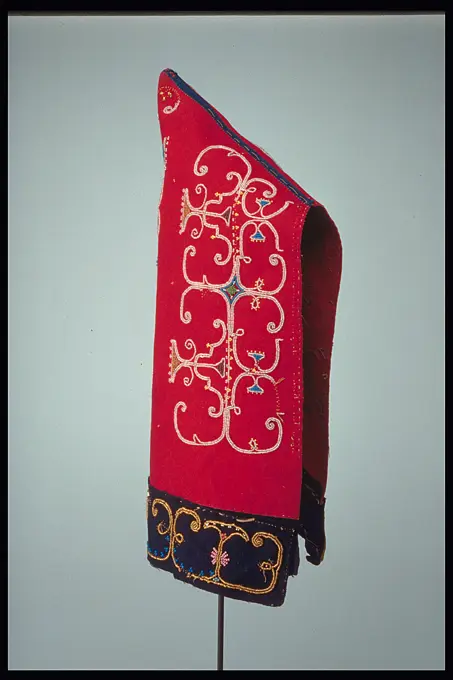
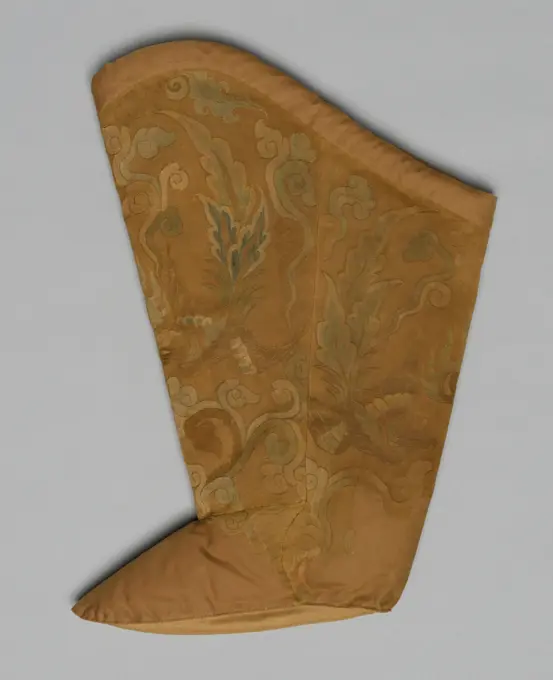
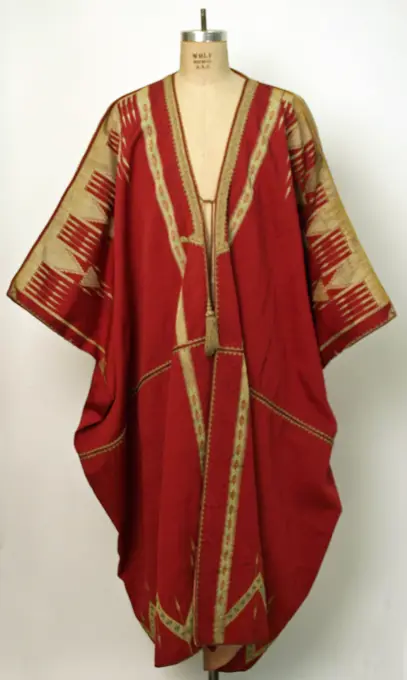
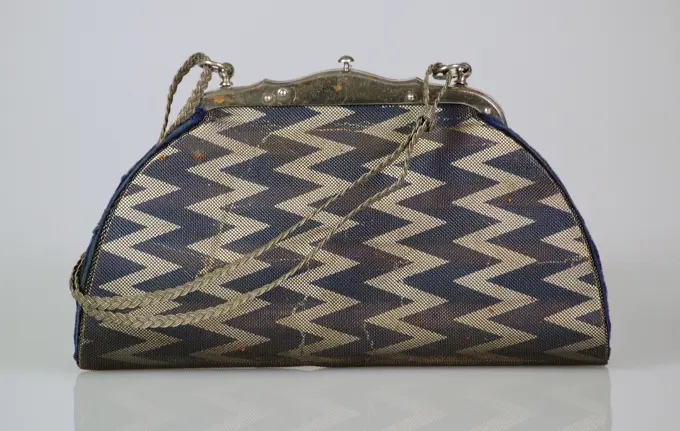
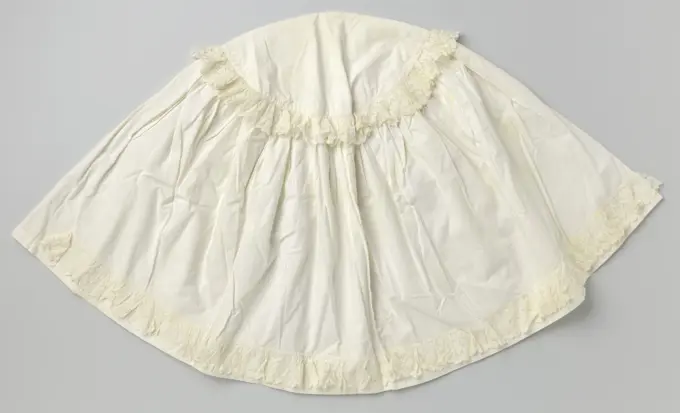
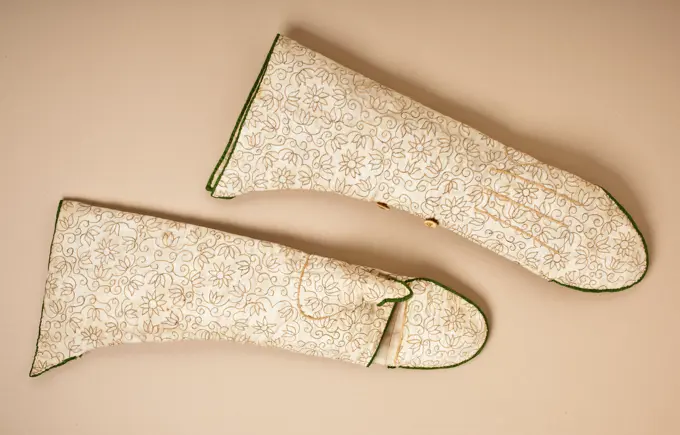
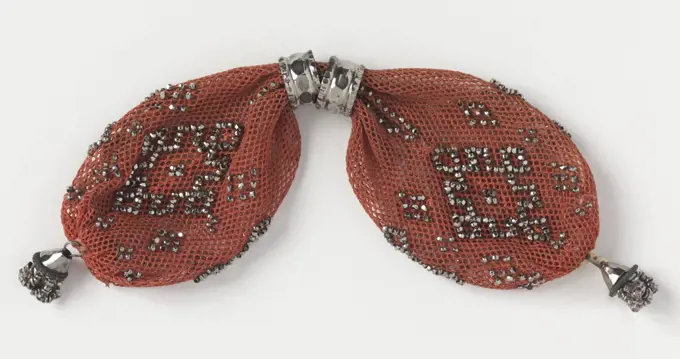
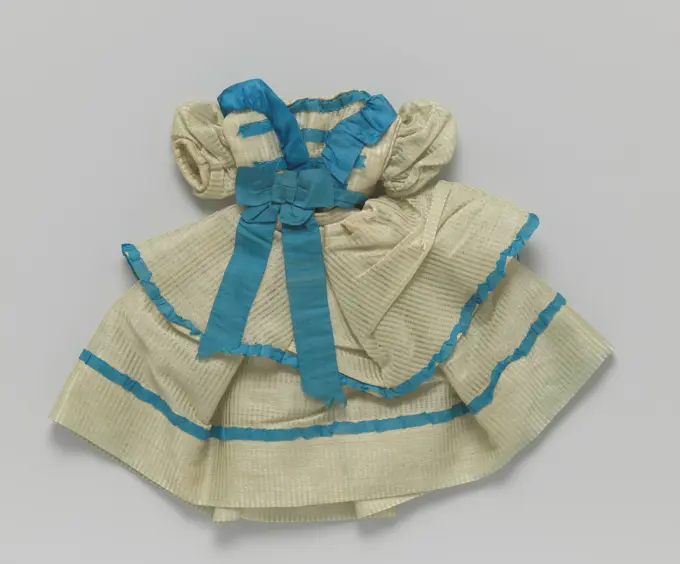
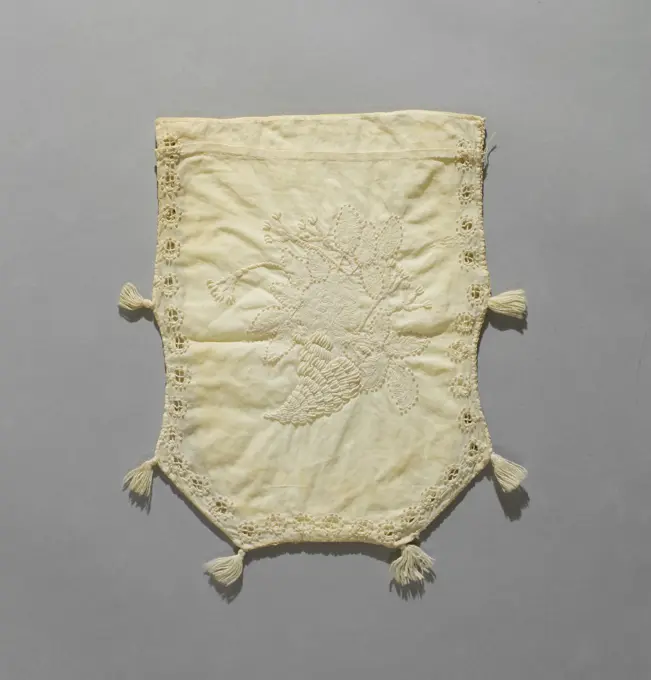
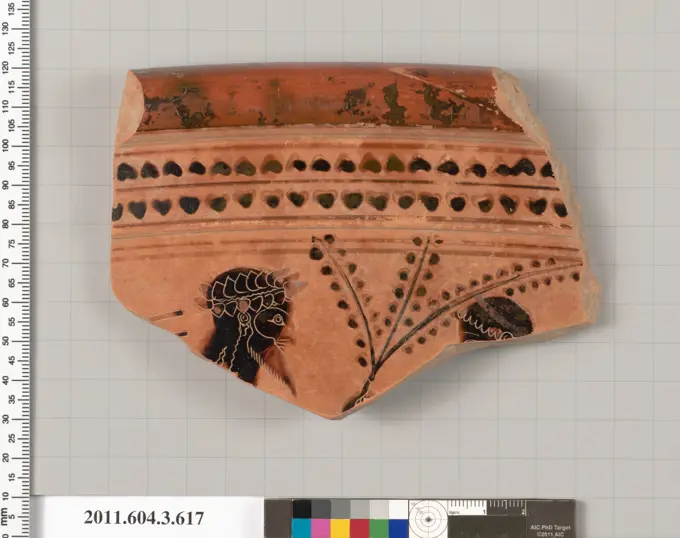
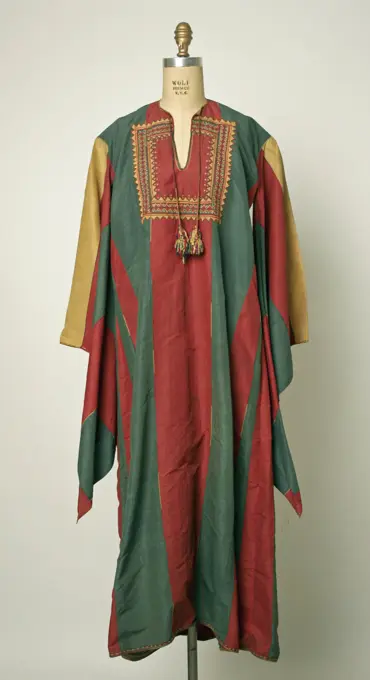
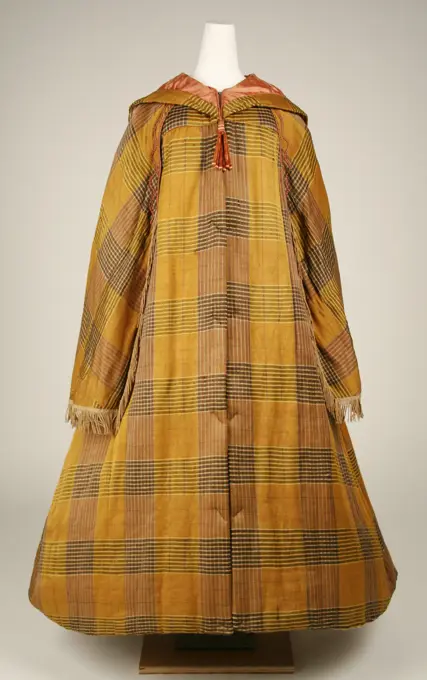
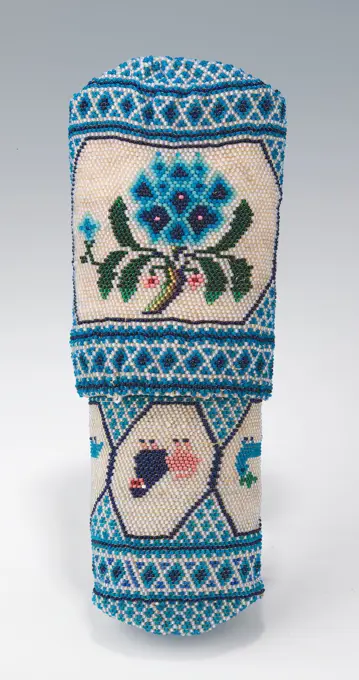
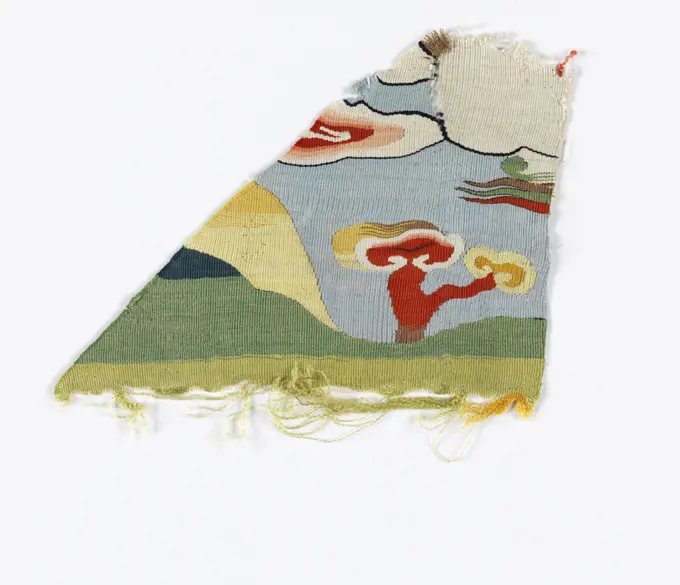
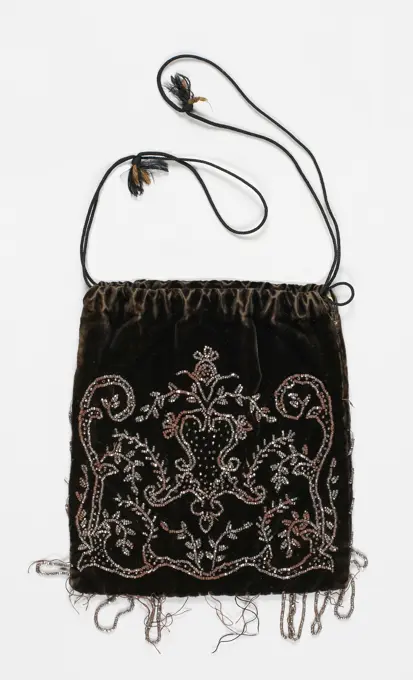
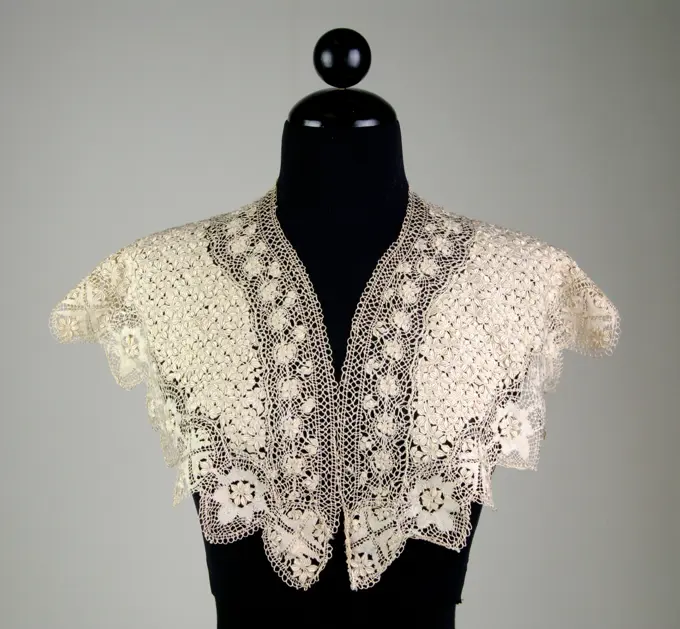
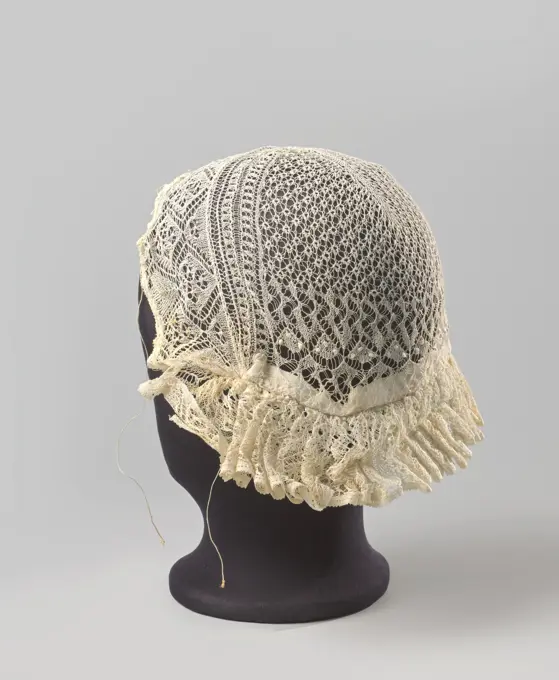
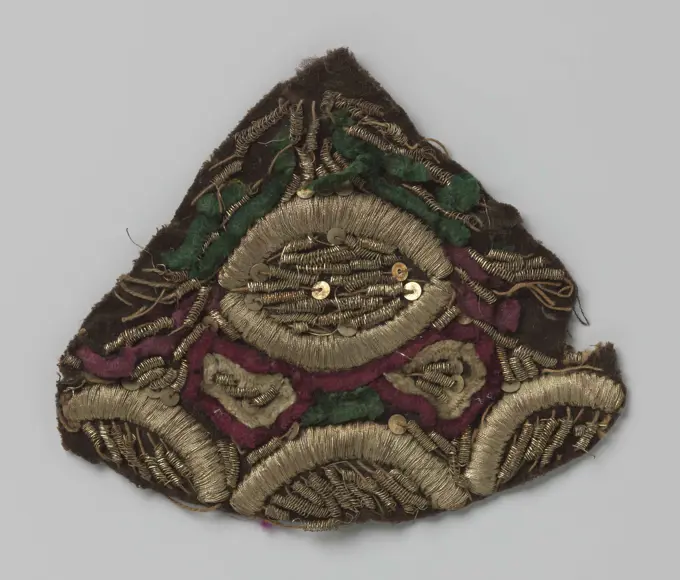
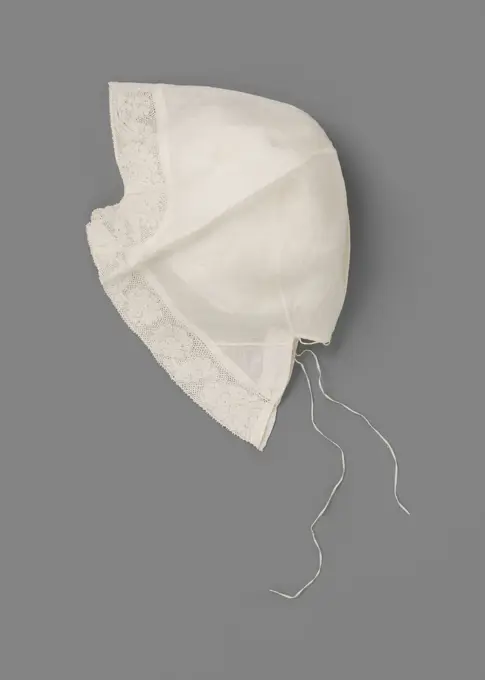
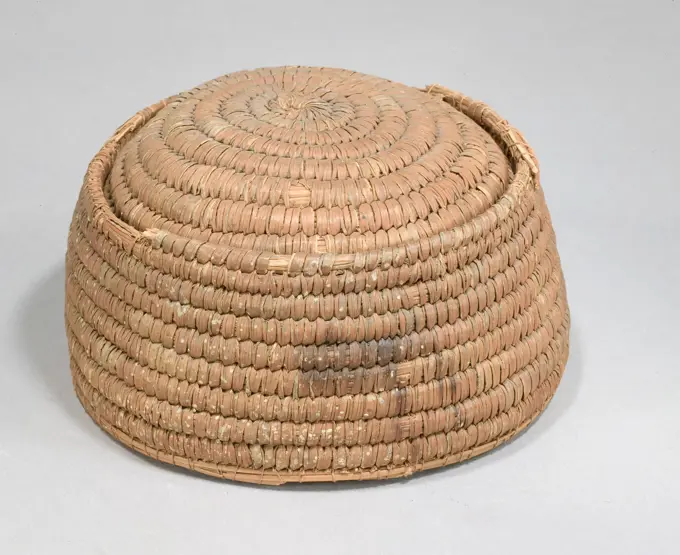
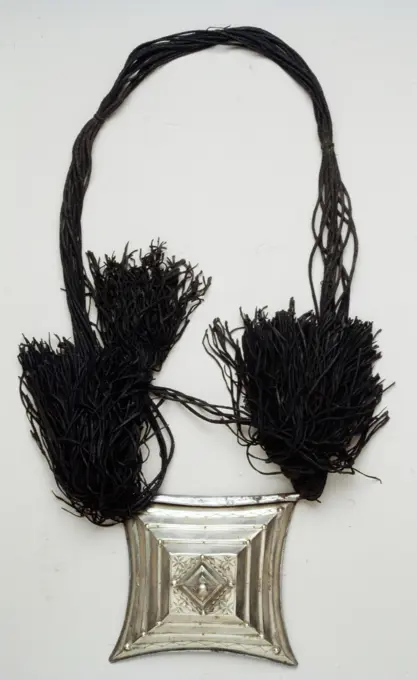
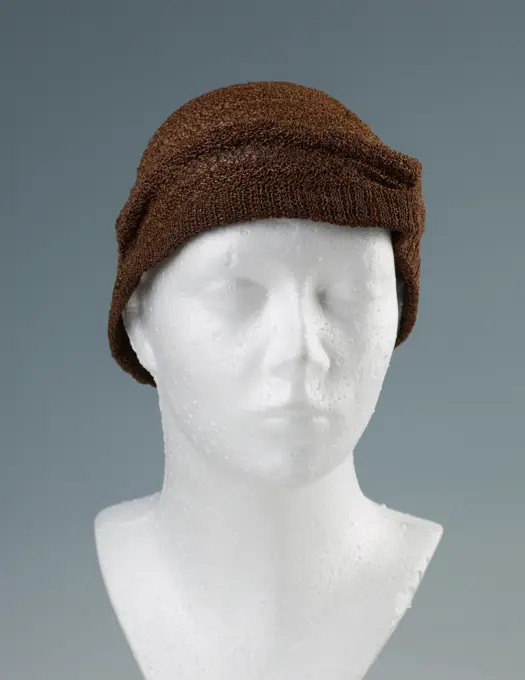
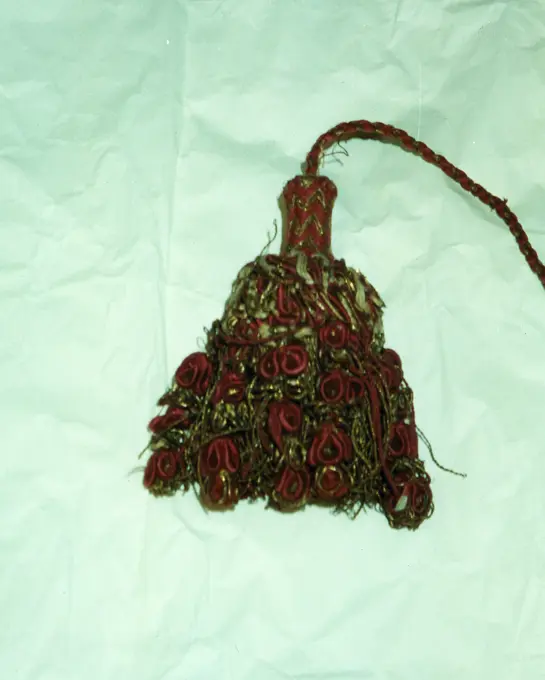
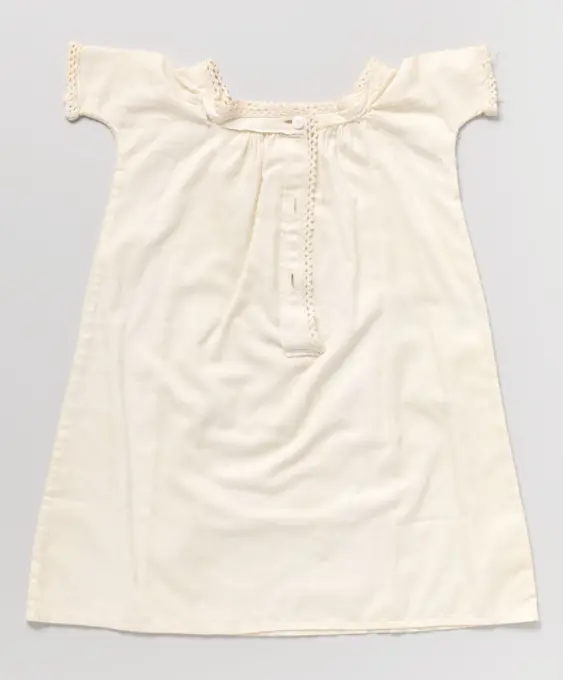
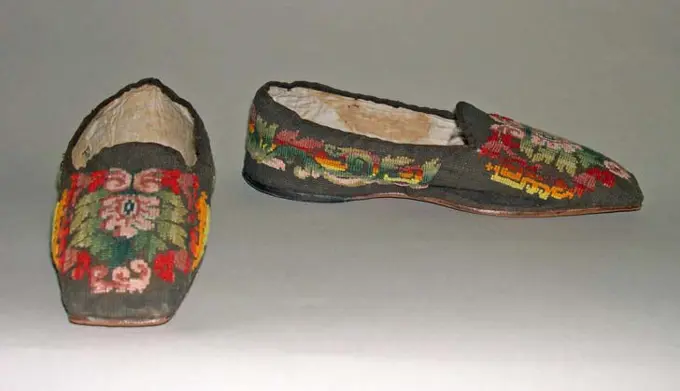
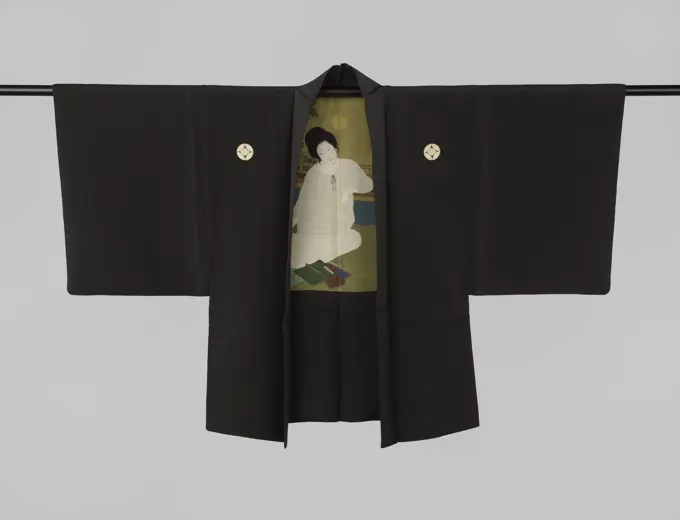
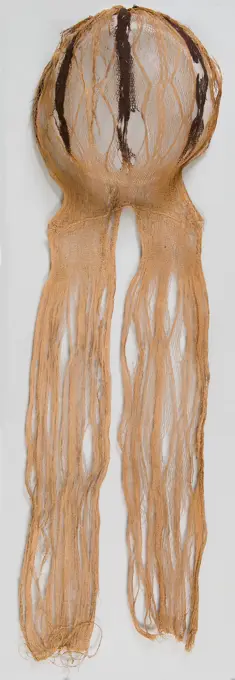
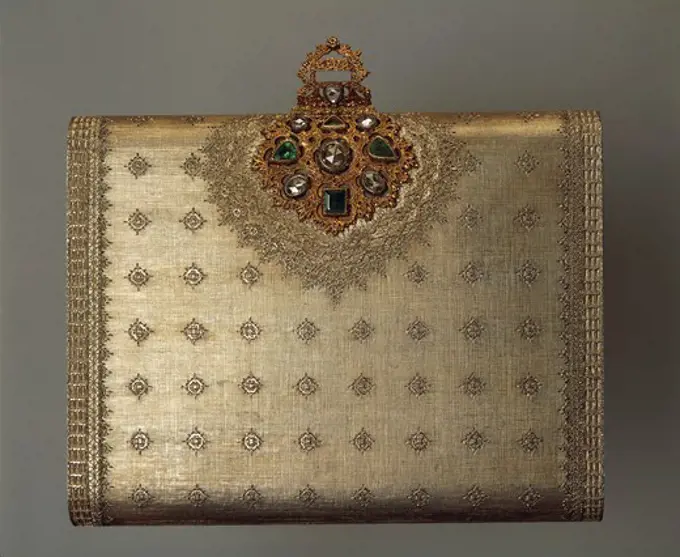
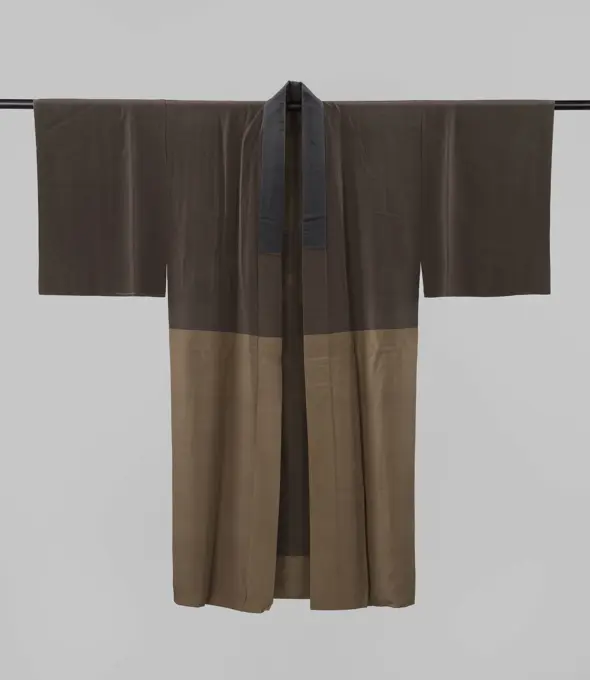
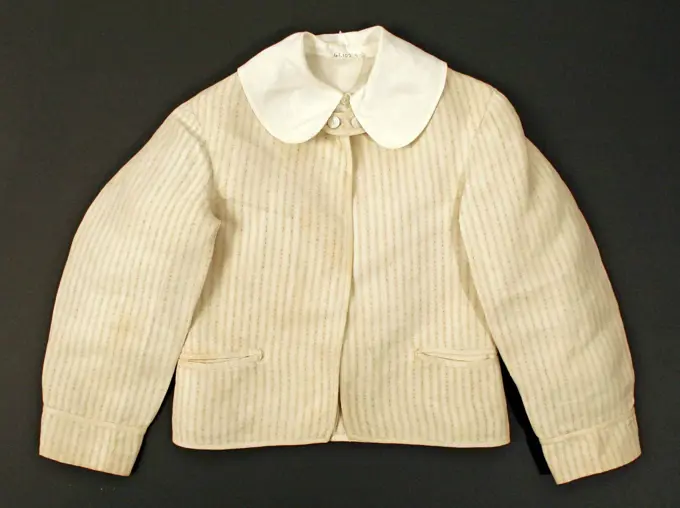
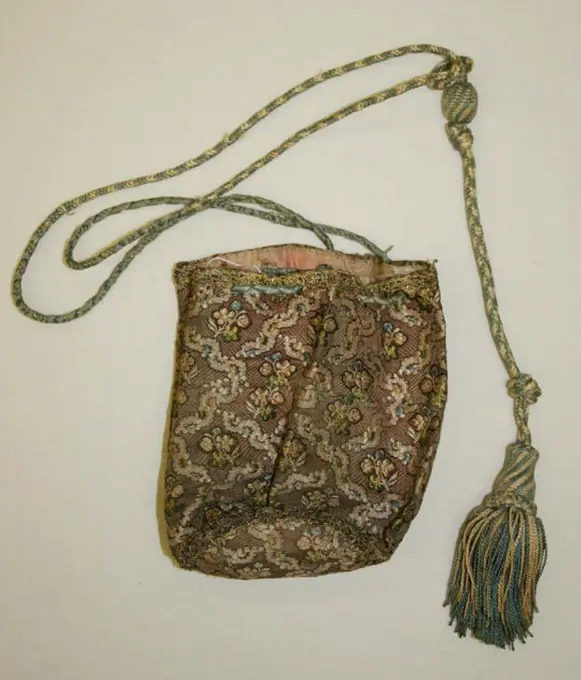
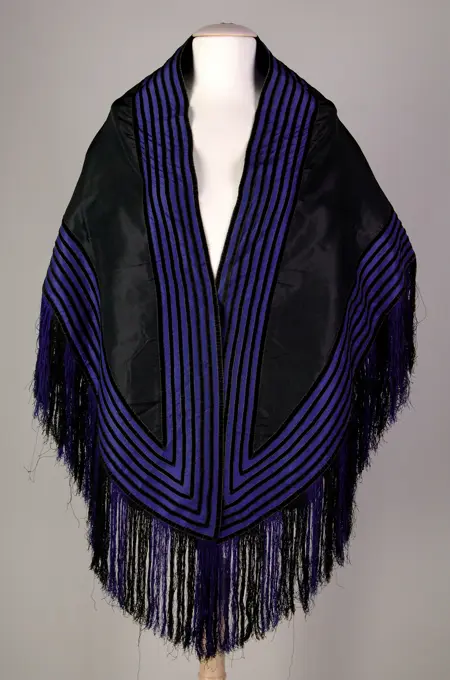
Pelerine ca. 1870 American. Pelerine 169321Wentke, anonymous, c. 1750 - c. 1775  Coromandelkustpainter: CoromandelkustHindeloopen cotton (textile). chintz chintz  Coromandelkustpainter: CoromandelkustHindeloopen cotton (textile). chintz chintzPeaked cap -Woman's Handbag. United States, circa 1860. Costumes; Accessories. Glass beads, gilded brassBag (Iran); woolPiece 16th century Italian. Piece 213046Buff Jerkin of Hendrik Casimir I, anonymous, 1630 - 1640  Learning Kolder from Hendrik Casimir I, Count of Nassau-Dietz. Yellow leather Kolder, without sleeves, with a bullet hole on the left of the loins. Netherlands leather   HollyBoot, 907-1125. Northern China, Liao dynasty (907-1125). Silk: tapestry weave; two kinds of metal threads; overall: 47.5 x 30.8 cm (18 11/16 x 12 1/8 in.). The kesi outer fabric of the boots is woven with pairs of phoenixes chasing a flaming pearl among clouds. The sections were carefully cut so that the flaming pearl occurs at the centers of the shin and calf, and at the top of the instep. To accommodate the particular cut and smaller area of the instep, the phoenixes were depicted slightly differently and the design was reduced in scale. The wide cut of the top of the boots enabled pants to be tucked inside. Skirts, jackets, robes, gloves, and a hat would have completed the outfit. Liao kesi is distinguished by its exceptional refinement. Considered a national specialty, it was used extensively for both clothing and furnishings. Not only were kesi robes worn by the Liao emperor, but they were sent to the Song emperor as imperial gifts.Abayah 19th century. Abayah 86275Bag ca. 1865 French. Bag. French. ca. 1865. Metal, horsehair, silkBag late 19th century probably French. Bag 102707Batist's fall with a machine side, for a taboeret, anonymous, c. 1800 - c. 1920 Batists fall with machine side for a taboeret in a boudoir. Netherlands batiste. Batists fall with machine side for a taboeret in a boudoir. Netherlands batiste.Infantry grenadier cap of the Duchy of Warsaw unknownTextile (Italy); silk; Bequest of Richard Cranch Greenleaf in memory of his mother, Adeline Emma Greenleaf; 1962-56-58Woman's Mitts. Probably India for the Western market, 1700-1725. Costumes; Accessories. Linen plain weave with silk embroideryMiser's purse, Medium: silk, metal Technique: crocheted, Crocheted silk in dark pink ornamented with cut steel beads in simple geometric pattern. Two faceted steel rings at side opening; a metal drop at each end attaches to tiny tassels of steel beads., France, early 19th century, costume & accessories, Miser's purseCloth from Hindelopen, narrow red stripes in the form of windows, anonymous, c. 1800 - c. 1900 Cloth from Hindelopen, narrow red stripes in the form of windows, white soil with two silk stripes.  linen (material). silk Cloth from Hindelopen, narrow red stripes in the form of windows, white soil with two silk stripes.  linen (material). silkFringe early 19th century British. Fringe 224920Glove of light green knitted silk, anonymous, c. 1800 - c. 1875 Left glove made of light green knitted silk me top the back three cords. West-Europa whole: Silk knitting Left glove made of light green knitted silk me top the back three cords. West-Europa whole: Silk knittingHat 1883 American. Hat 170107Beaded Bag, c. 1920, 11 1/4 x 4 1/2 in. (28.58 x 11.43 cm), Tanned leather, glass beads, United States, 20th centuryApron of light green silk with blue piping, anonymous, c. 1850 - c. 1920 The apron closes at VDE rear with a hook and eye of metal. Europe Silk. hooks and eyes: metal The apron closes at VDE rear with a hook and eye of metal. Europe Silk. hooks and eyes: metalHead covering, c. 1920, 62 x 64 3/8 in. (157.48 x 163.51 cm), Silk, metallic threads, sequins; dyed, India, 20th centuryEmbroidered Reticule 1811 Martha Kittredge, New England. Embroidered Reticule 18954Headdress -Parasol 1850-1900 American or European. Parasol 121626Close up of packing paper on wallBoys Miyamairi Kimono with arrow and goals, 1920 - 1940 Formal Kimono for a boy for the first visit to a Shinto shrine (Miyamairi Kimono), with a decoration of scattered round goals, with a large arrow. Hand-woven side of hand-spun raw silk (tsumugi) with tie-dye decoration (shibori) in green, brown and black. White silk lining. Five family weapons (Mon) from Paulownia (Kiri). Japan silk painting Formal Kimono for a boy for the first visit to a Shinto shrine (Miyamairi Kimono), with a decoration of scattered round goals, with a large arrow. Hand-woven side of hand-spun raw silk (tsumugi) with tie-dye decoration (shibori) in green, brown and black. White silk lining. Five family weapons (Mon) from Paulownia (Kiri). Japan silk paintingCap. Culture: German. Date: 1850-70.The vibrant design of this festive headwear incorporates the contemporaneous aniline dyes in its depiction of a traditional tree of life. The first aniline dyes were created in the 1850s by William Henry Perkin (1838-1907). Synthetic dyes allowed for a broad range of brilliant colors and performed better than natural dyes. The tree of life, as represented here is symbolic of birth, death, and rebirth in many cultures. Museum: Metropolitan Museum of Art, New York, USA.Terracotta fragment of a calyx-krater (bowl for mixing wine and water) late 6th century B.C. Greek, Attic Below the rim, ivy; at the left, flutes; wreathed head of Dionysos to right, holding a branch with his left hand; top of the head of a filleted youth to left. Terracotta fragment of a calyx-krater (bowl for mixing wine and water). Greek, Attic. late 6th century B.C.. Terracotta; black-figure. Archaic. VasesRobe 19th century. Robe 126647Shoes 16th century British. Shoes 101685Purse (Germany); silk, metal, glass and ceramic beadsSamuel O Klein, Carpet Bag, c 1939 Carpet BagHat of straw, an edge of black taf side and black ostriches, anonymous, c. 1908 - c. 1915 Hat of fine, smooth straw, black taf side and black ostriches. Model: very flat sphere, something oval, filled with her inside. Very wide, flat edge, on top of which a taf side, with thick piping sewns sewn on the outside. Along the onset of the bol, a continuous wrong of black ostriches, from behind something in a point. The Hague hat:. Lint: Taffeta. edge:. lining: Hat of fine, smooth straw, black taf side and black ostriches. Model: very flat sphere, something oval, filled with her inside. Very wide, flat edge, on top of which a taf side, with thick piping sewns sewn on the outside. Along the onset of the bol, a continuous wrong of black ostriches, from behind something in a point. The Hague hat:. Lint: Taffeta. edge:. lining:Tie  womans jabot unknownCloak ca. 1850 American. Cloak 82163Sjerp for the army of army, militia and marines M. 1815 with Kwasten M. 1860, Anonymous, 1815 - 1830  Sjerp van Oranje (Fabbled) cord side, in technology of "Egyptian braid" in the middle, the braid is braided together. On both sides a brush is attached from the cord side, to which long fringes are attached, the sash is pulled through the brushes, and attached to the undersides with buttons. The buttons are reinforced with stitching. Netherlands silk. wool. wood (plant material)   NetherlandsShirt. Culture: French. Date: ca. 1865. Museum: Metropolitan Museum of Art, New York, USA.Miser's purse, Medium: silk, steel Technique: crochet, Crocheted silk of yellowish-green is ornamented with cut steel beads in double zigzag and diamond patterns. Steel rings with relief pattern control side opening; ornate acorn-shaped drops at each end., France, early 19th century, costume & accessories, Miser's purseStudy of white cotton, with ajour knitted and embroidered geometric decoration of Klink and instep, anonymous, c. 1800 - c. 1900 Pair of white cotton stockings. Bold decoration of the instep to halfway through the tibia, 'pattes'. Pattern of alternating crossbands with diamond shapes and stretched hexagons and ending in a row of small pine trees. Brand B and embroidered brands MP. Netherlands (possibly) whole: Cotton (textile) knitting / embroidering Pair of white cotton stockings. Bold decoration of the instep to halfway through the tibia, 'pattes'. Pattern of alternating crossbands with diamond shapes and stretched hexagons and ending in a row of small pine trees. Brand B and embroidered brands MP. Netherlands (possibly) whole: Cotton (textile) knitting / embroideringCap early 17th century British. Cap 101818Sash (), from a three-piece set, 27 1/2 x 11 3/4 in. (69.85 x 29.85 cm) (each panel), Cotton, ChinaCap 1840-70 Slovak. Cap 157097Dictyota dichotoma Meeresalge unter dem Mikroskop 100x Dictyota dichotoma Meeresalge unter dem Mikroskop 100x Copyright: xZoonar.com/Dr.xNorbertxLangex 13847762Tassel (Italy); linenCuff of linen batist decorated with embroidery, anonymous, c. 1850 - c. 1900 Cuff of linen batist, decorated on two sides with a cartel edge of embroidery and needle side in the form of leaves. A leaf motif in the corner between these two sides. The cuff has been conducted. West-Europa linen (material). rand: embroidering Cuff of linen batist, decorated on two sides with a cartel edge of embroidery and needle side in the form of leaves. A leaf motif in the corner between these two sides. The cuff has been conducted. West-Europa linen (material). rand: embroideringKimono Kimono, 19th century. Bast-fiber cloth (possibly hemp or ramie), resist dyed in indigo, 44 x 43 in. (111.8 x 109.2 cm).   Asian Art 19th centuryPurse late 19th century Mexican A good example of elaborate beadwork, this Mexican purse features a remarkable amount of detail. The alternating animal forms on the bottom half and tent-stitch-like flower at the top require considerable skill to execute. The bag is fully lined with a printed textile and is part of the Mexican beadwork collection of over 600 pieces assembled by Elizabeth Morrow (1873-1955), mother of writer Anne Morrow Lindbergh, the wife of renowned aviator Charles Lindbergh. Morrow collected the objects between 1927 and 1930, when her husband, Dwight Morrow, Sr., served as U.S. ambassador to Mexico. She lent the collection to the Brooklyn Museum in 1938 and upon her death, her children donated it. A collection of 155 pieces of Mexican ceramics and other decorative arts were given to Amherst College, her husband's alma mater. Mrs. Morrow collected Mexican beadwork, along with other examples of colonial and native arts, to decorate their country home in Cuernavaca in orFringe (Italy); silkFragment of a rank badge, Medium: silk, metal wrapped silk thread Technique: tapestry woven, Fragment of a rank badge. Partial image of a blue sky with white and pink clouds, with green ground, yellow sunset, and red tree., China, 15th-17th century, woven textiles, Fragment of a rank badgeShield(Kelibit)Bourse. 1860. 1890. GAL2004.279.XPelerine third quarter 19th century Maltese. Pelerine 169571Knitted hat made of white cotton with a pleated edge all around and with two bow tires; Decorated with leaf edges and openwork edges and on the back with star motif, anonymous Knitted hat made of white cotton with a pleated edge all around and with two bow tires; Decorated with leaf edges and openwork edges and on the back with star motif. White cotton knitted hat with lid edges; A straw in the bulb.  cotton (textile) knitting Knitted hat made of white cotton with a pleated edge all around and with two bow tires; Decorated with leaf edges and openwork edges and on the back with star motif. White cotton knitted hat with lid edges; A straw in the bulb.  cotton (textile) knittingShirt late 19th century probably American. Shirt 91152Smoking cap -Girl's Hat, 6 x 8 x 11 in. (15.24 x 20.32 x 27.94 cm) (approximately), Cotton, silk, sequins, ChinaFrisian side; The sphere is trimmed with a strip that is folded along the forehead, anonymous, c. 1800 - c. 1900 Frisian side; The ball is trimmed with a strip that is folded along the forehead. Friesland whole: Linen (Material) knitting Frisian side; The ball is trimmed with a strip that is folded along the forehead. Friesland whole: Linen (Material) knittingShirt. Culture: Spanish. Date: 1808. Museum: Metropolitan Museum of Art, New York, USA.Mantel for Maria statue of red velvet with Maria-Monogram embroidered, Anonymous, c. 1800 - c. 1900 Mantel for Maria statue of red velvet with Maria-Monogram embroidered. Netherlands velvet (fabric weave). yarn embroidering Mantel for Maria statue of red velvet with Maria-Monogram embroidered. Netherlands velvet (fabric weave). yarn embroideringFragment velvet with multicolored embroidery. Fragment velvet with multicolored embroidery. The fragment is triangular and has three half circles of silver colored yarn along a side. An oval in silver color is embroidered in the middle.Hat of linen with a strip of Dutch side, anonymous, c. 1675 - c. 1700 Hat of linen with a strip of Dutch side. At the back at the neck opening, a red 'C' is embroidered in the cross stitch. Antwerp (possibly) whole: Linen (Material) Antwerp lace Hat of linen with a strip of Dutch side. At the back at the neck opening, a red 'C' is embroidered in the cross stitch. Antwerp (possibly) whole: Linen (Material) Antwerp laceBasket ca. 2030-1640 B.C. Middle Kingdom. Basket. ca. 2030-1640 B.C.. Halfa grass and rush basketry. Middle Kingdom. From Egypt, Upper Egypt, Thebes, Asasif, East of Pabasa, Radim, Burial 6A.X.B12, MMA excavations, 1918-19. Dynasty 13-17Baby cradle with muslin blanket and wooden toys in a baby roomAmulet (tcherot), 20th century, 5 x 4 1/2 x 1 3/4 in. (12.7 x 11.4 x 4.45 cm), Metal, braided leather, Algeria, Mali, or Niger, 20th century, Tuareg men and women wear metal amulets containing Quranic verses and other protective messages suspended from cords around their necks. The large example is especially rare because of an inscription incised on the outside in Tifinar script, which is related to ancient Libyan scripts dating to 150 BCE. The inscription, whose letters are made of lines, circles, and dots, reads from right to left and transcribes as NK SDLMQTR XLYFA. It means, 'I am Mr. Lmqtar Khalifa,' likely referring to a previous ownerBonnetCanvas pouch on beige background, isolatedPair of tassels 17th-19th century European. Pair of tassels 461160Bliżej Kultury unknown. In 1980 archaeologists investigated the graves of 185 Dutchmen - whale hunters and workmen of the train oil refineries - who had died on or near Spitsbergen during the 17th century. The skeletons were still wearing theirknitted woollen caps. Each cap was individualized; the men recognized one another only by the pattern of stripes on the caps. The men were bundled up so tightly against the fierce cold that only their eyes were visible.Strip of bobbin with stylized flour between two vertical lines and ovals on a triangular fragment linen batist, anonymous, c. 1600 - c. 1635 Strip of natural -colored bobbin, Old Flemish side or Dutch bobbin side. The strip is attached to a triangular fragment linen batist. The side has a pattern that consists of vertical straight lines, between which a stylized flower stands. On the center line, the flower is flanked on the left and right by a lying rush -hour, which always cuts the vertical line. The motives are made in linen battle with recesses, there is hardly any soil, the motives are connected by very short braids. Up and bottom of the strip are finished with a straight edge. Southern Netherlands linen (material) bobbin lace / old Flemish lace Strip of natural -colored bobbin, Old Flemish side or Dutch bobbin side. The strip is attached to a triangular fragment linen batist. The side has a pattern that consists of vertical straight lines, between which a stylized flower stands. Cotton nightdown, Anonymous Cotton nightdown. Part of a set of underwear.  cotton (textile) Cotton nightdown. Part of a set of underwear.  cotton (textile)Slippers mid-19th century American. Slippers 98059Basket, 19th century, 6.25 x 13 x 13 in. (15.9 x 33.0 x 33.0 cm), Woven grass, United States, 19th centuryPair of gloves with tassels, c. 1860 Left glove of white calf leather decorated with blue silk stitching, copper eyes and blue silk cord ending in ditto brushes. Model: Long slender fingers. Closure on the inside wrist by means of Metal snap button. Decoration: Stitching on top of the blue side hand. Jeweling of eight copper rings through which blue silk cords are strung, ending in thick brushes. The calf leather is sculpted and serrated. England (possibly) calf (leather). copper (metal). silk cutting Left glove of white calf leather decorated with blue silk stitching, copper eyes and blue silk cord ending in ditto brushes. Model: Long slender fingers. Closure on the inside wrist by means of Metal snap button. Decoration: Stitching on top of the blue side hand. Jeweling of eight copper rings through which blue silk cords are strung, ending in thick brushes. The calf leather is sculpted and serrated. England (possibly) calf (leather). copper (metal). silk cuttingHandbag. Around 1815. GAL1995.41.XHat 1830s French. Hat 95800Men Haori with a 'study of elegance', c. 1920 Haori for a man with a decoration on the lining of a sitting woman on a window with a view of a veranda, tree and moon, with books around her, paper and an easel. One of the books bears the title 'Furyu Kenkyu' ('Study of Elegance'). At the bottom right in red the Seal Shaha. Black shiny silk (habutae) with hand -painted and stenciled Yuzen decorations. Five family weapons (Mon) from Shippo and Hanabishi motifs. Japan silk painting Haori for a man with a decoration on the lining of a sitting woman on a window with a view of a veranda, tree and moon, with books around her, paper and an easel. One of the books bears the title 'Furyu Kenkyu' ('Study of Elegance'). At the bottom right in red the Seal Shaha. Black shiny silk (habutae) with hand -painted and stenciled Yuzen decorations. Five family weapons (Mon) from Shippo and Hanabishi motifs. Japan silk paintingWaist 1799-1820 American or European. Waist 120872ChainShoulder strap, late 19th-early 20th century, 52 in. (132.1 cm), silk, beads; passementerie, Morocco, 19th-20th centuryCord with two brushes, presumably trumpet or bazuink brushes, Kingdom of Holland, Anonymous, c. 1805 - c. 1810  Two elongated brushes, each consisting of (from top to bottom) a ring of knotted red cord, including a handle of wrapped ditto cord, which runs into a semi -round ditto sphere, contained in a network of red and yellow galon. The ball ends in an edge of red wool, this whole is put on a wooden core. Red (partially worn) broths hang on the underside of the woolen edge. The inside of the brush is made of wood with a hole, so that cord is stuck with a knot and a little wood. Cord keeps the two cupboards together. Netherlands (possibly) wood (plant material). wool   NetherlandsHeaddress from the Head of a Mummy of a Child 2nd-early 4th century Roman Period. Headdress from the Head of a Mummy of a Child. 2nd-early 4th century. Yellow linen, brown wool. Roman Period. From Egypt; Said to be from Northern Upper Egypt, Akhmim (Khemmis, Panopolis)Bliżej Kultury unknown, Tatar productShirt of Mail. European. Date: 1525-1575. Dimensions: Wt. 12 lb. 14 oz. Iron. Origin: Middle East. Museum: The Chicago Art Institute, Chicago, USA.Maternity hat made of double -knitted cotton, with turned edge, anonymous, c. 1775 - c. 1850 Maternity hat made of knitted cotton, with undefeated edge. The outside is in jersey stitch with an ajour window pattern. Netherlands cotton (textile). knitting Maternity hat made of knitted cotton, with undefeated edge. The outside is in jersey stitch with an ajour window pattern. Netherlands cotton (textile). knittingSpeech fair of wine red velvet, embroidered in gold, silver thread and multicolored silk with an unidentified alliance weapon. Speech fair of wine red velvet, embroidered in gold, silver thread and multicolored silk with an unidentified alliance weapon. Model: flat round bottom of which a wavy upright edge has holes through which a cord of yellow and red silk - ending in a button with wooden core covered with yellow silk and metal wire - is drawn. Halfway through two buttons - with a core of wood are washed with silk. Lined with goat leather. Decoration: The 20 bulges or 'ribs' are decorated with long stacked ornaments with lobes on the bottom, wings in the middle and curls on top. Along the top it is completely trimmed with a narrow silver passing. The bottom is circled with a double edge within which a zigzag line of silver wire. Herein is a golden-colored field in Relief on which an unknown double weapon.Negligée. Culture: probably American. Date: ca. 1890. Museum: Metropolitan Museum of Art, New York, USA.Goldsmith's art, Italy, 20th century. Mario Buccellati, make-up case in silver engraved with ornamental patterns and pink gold, set with emeralds and rose-cut diamonds, 1950-1955.Hat of black straw imposed with mechanical tulle, m.hoogland, c. 1900 - c. 1940 Hat of black straw. Model: flat helmet -shaped sphere, continuously in a wide edge that is narrower at the rear, imposed with machine lace and light blue and dark blue velvet corsages. Utrecht geheel:. corsage: velvet (fabric weave). band: cotton (textile). Hat of black straw. Model: flat helmet -shaped sphere, continuously in a wide edge that is narrower at the rear, imposed with machine lace and light blue and dark blue velvet corsages. Utrecht geheel:. corsage: velvet (fabric weave). band: cotton (textile).Shirt of Mail (Zireh). Culture: Indian. Dimensions: Wt. 14 lbs. 0.7 oz. (6370.1 g). Date: 18th-19th century. Museum: Metropolitan Museum of Art, New York, USA.Pair of Woman's Shoes. England, 1765-1770. Costumes; Accessories. Brocaded silk, leather, kid leather, linenFingerchapp of cotton damask with rose pattern and trimmed with a red border, anonymous, c. 1900 Finger cloth of cotton damask with red edges, with roses and a neo-Louis XIV ornament. The canvas has a Franjerand. Ten finger cloths (BK-1973-200-A to BK-1973-200-K) and a tablecloth (BK-1973-199) belong to the canvas. Belgium (possibly) cotton (textile) damask Finger cloth of cotton damask with red edges, with roses and a neo-Louis XIV ornament. The canvas has a Franjerand. Ten finger cloths (BK-1973-200-A to BK-1973-200-K) and a tablecloth (BK-1973-199) belong to the canvas. Belgium (possibly) cotton (textile) damaskMen Nagajuban with musicians, 1920 - 1940 Onderkimono (Nagajuban) For a man with a decoration on the upper half of the backs of three musicians: a young man sitting on a lacquer box in a kimono with maple motifs and a hand drum, a seated woman in a kimono with banana leaf motifs and young man In a kimono with accolade -shaped squares, both with a three -pane lute (shamisen). On the ground a leaf with smoking utensils and a folding screen with a landscape in the background. Probably a reference to a house of entertainment, where the guest (with smoke utensils) is entertained with music. Nostalgia: Clothing and hair style grab on mid-17th century fashion. Brown silk with stenciled Yuzen decorations. Brown side. Japan silk painting Onderkimono (Nagajuban) For a man with a decoration on the upper half of the backs of three musicians: a young man sitting on a lacquer box in a kimono with maple motifs and a hand drum, a seated woman in a kimono with banana leaf motifs and young man In a kimoBliżej Kultury unknownSuit 1868 American. Suit 103215Shirt. Culture: American or European. Date: 1795-1800. Museum: Metropolitan Museum of Art, New York, USA.Reticule 18th century European. Reticule 116991Bliżej Kultury unknown