Historical Textile Fragments

Vintage textile pieces and garments from various periods, showcasing intricate patterns and craftsmanship in fabrics like silk and velvet.

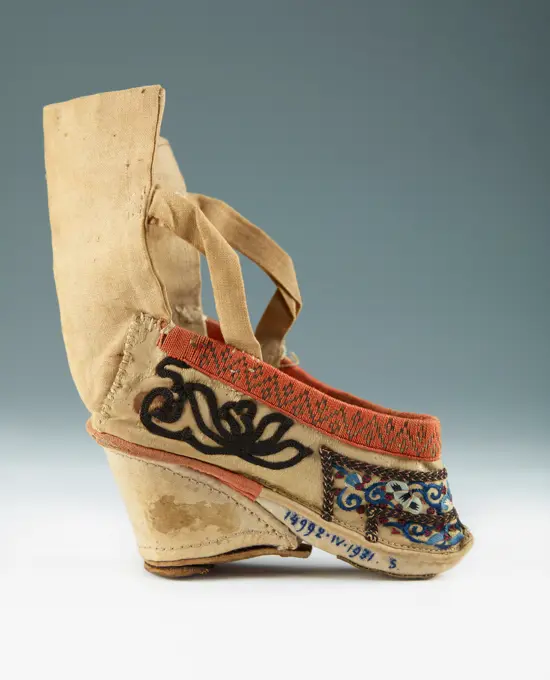
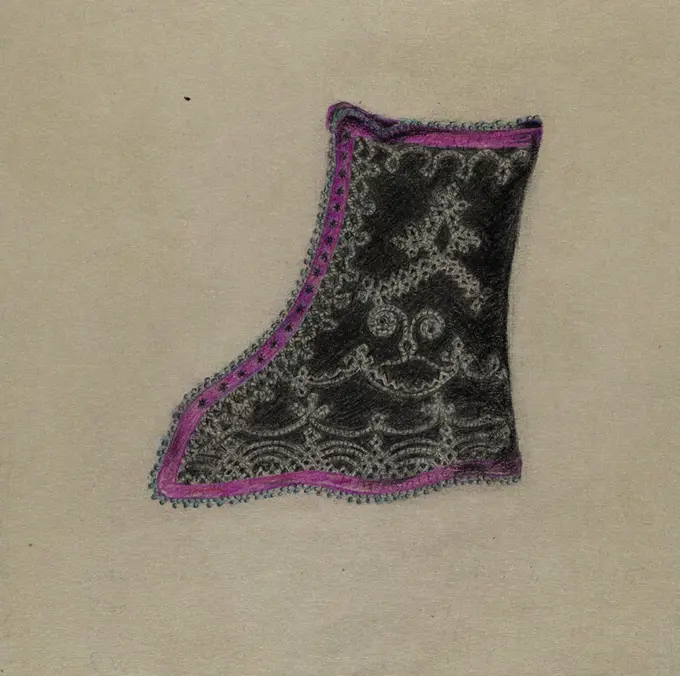
Leg Wrap, 199 1/2 x 2 5/8 in. (506.73 x 6.67 cm) (including fringe), Cotton, China
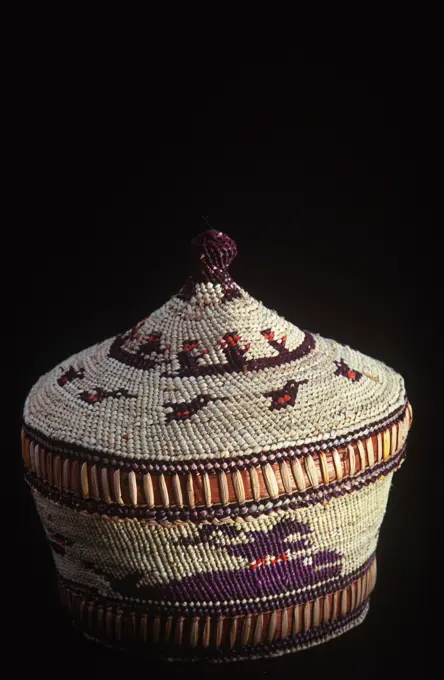
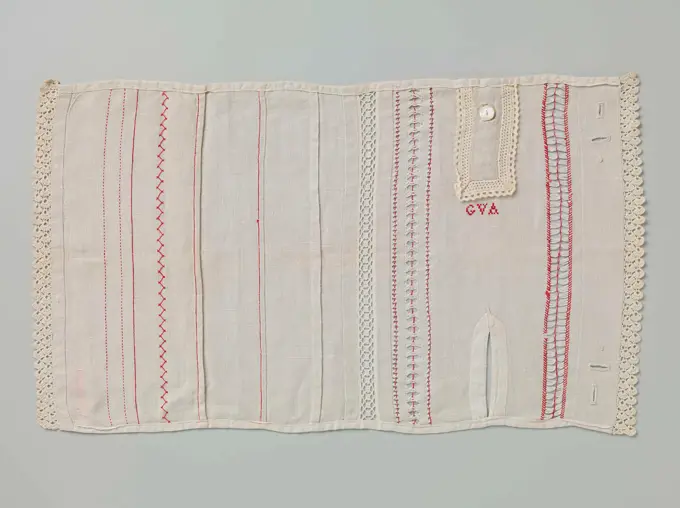
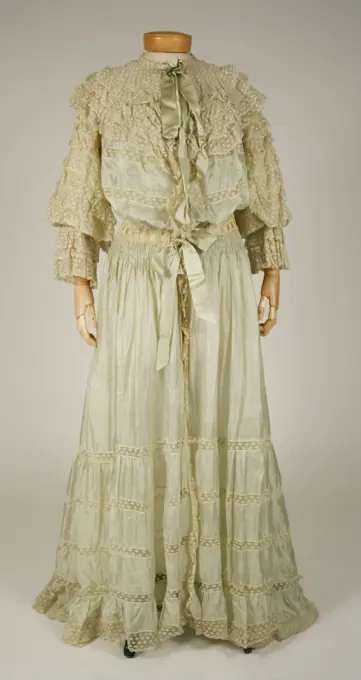
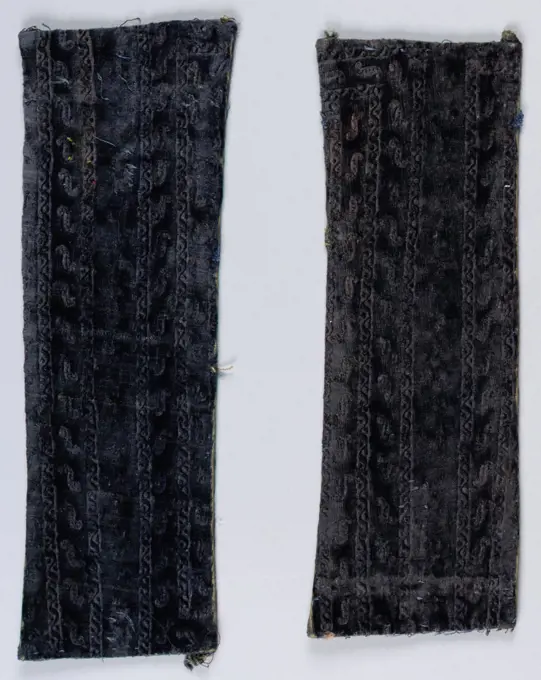
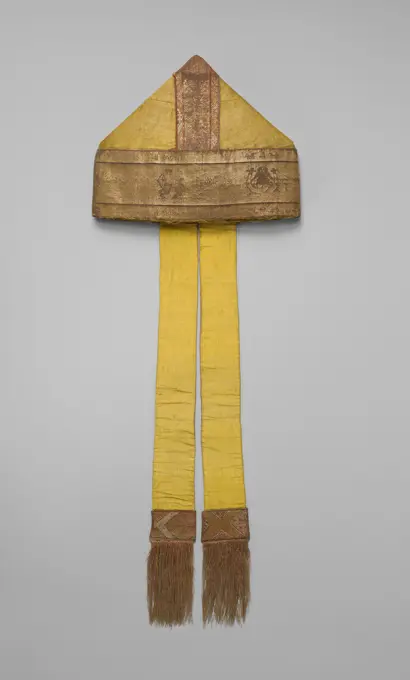
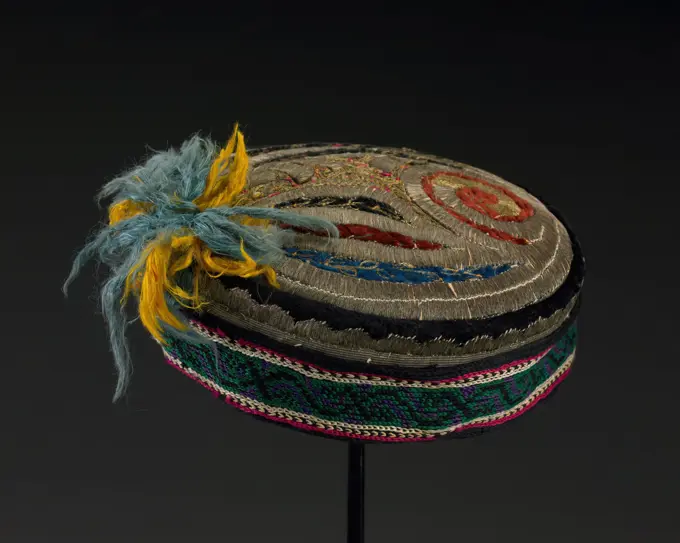
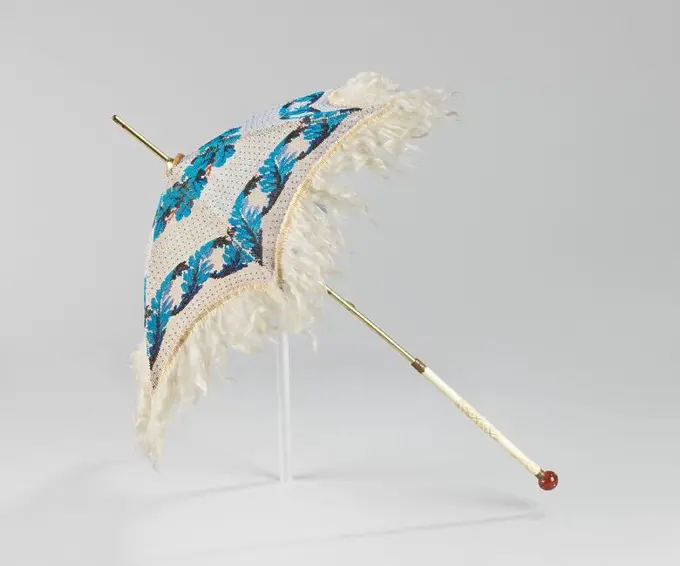
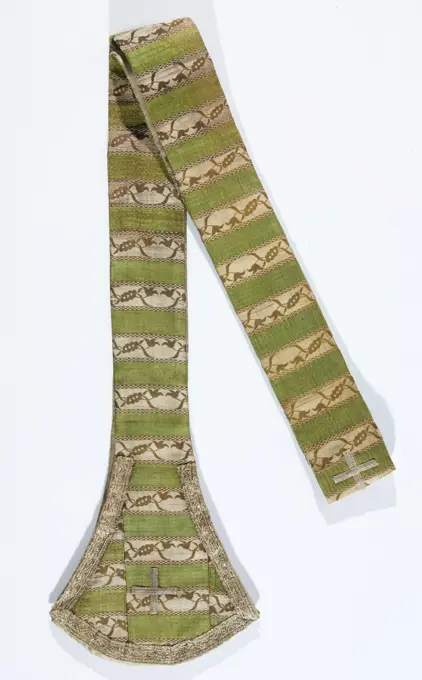
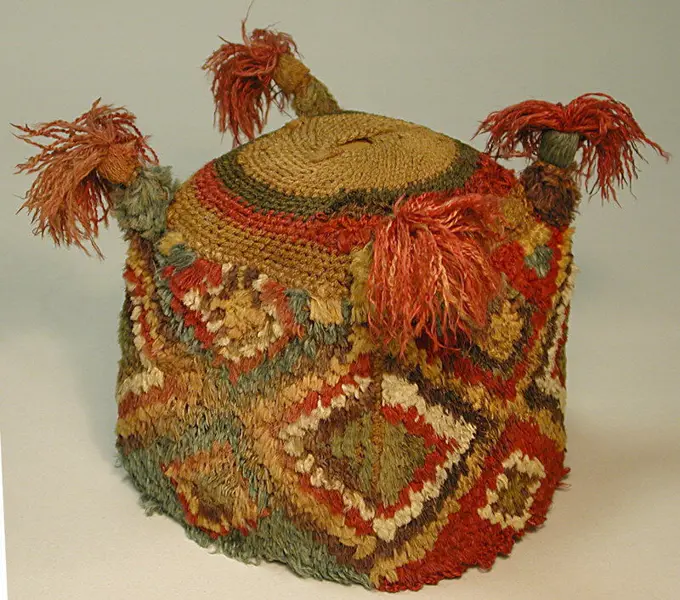
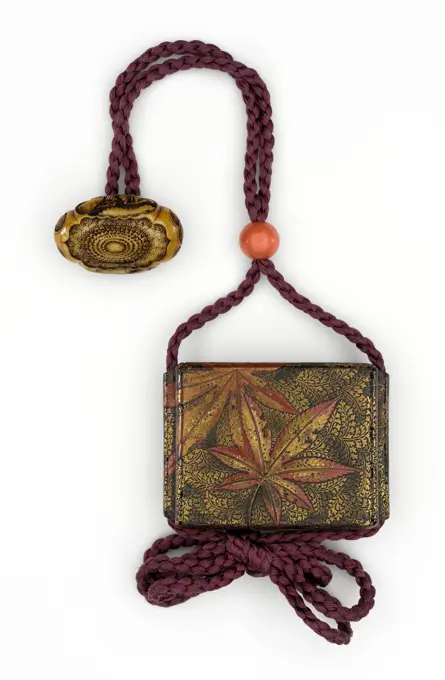
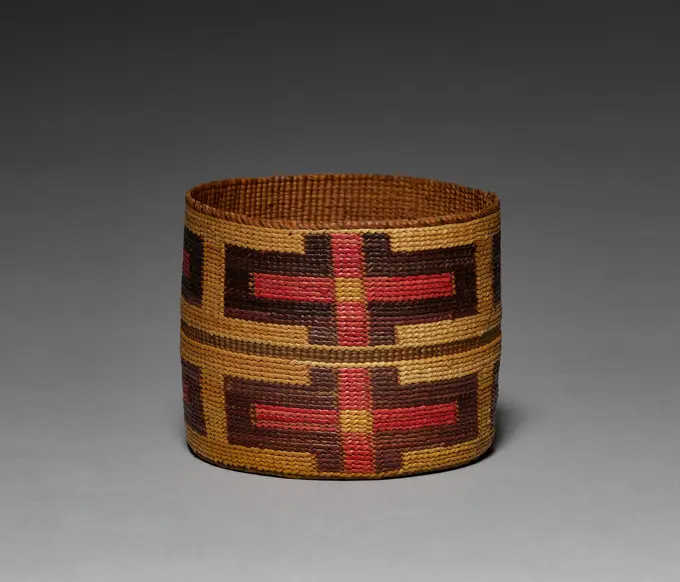
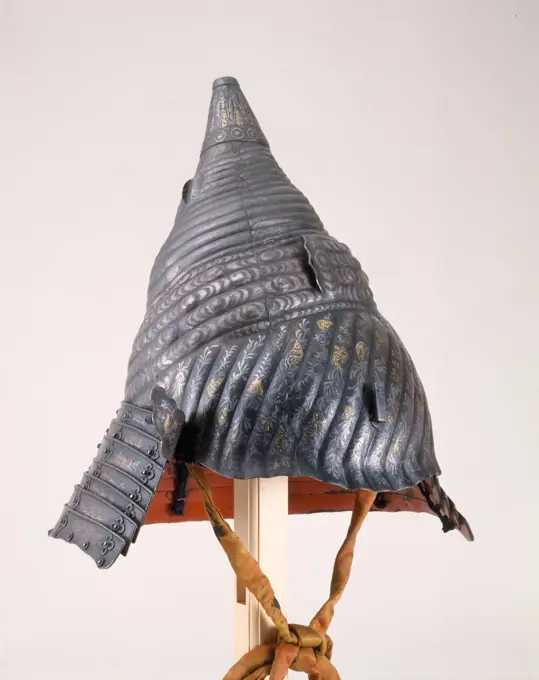
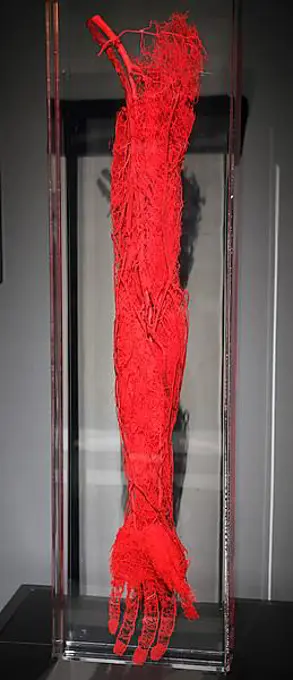
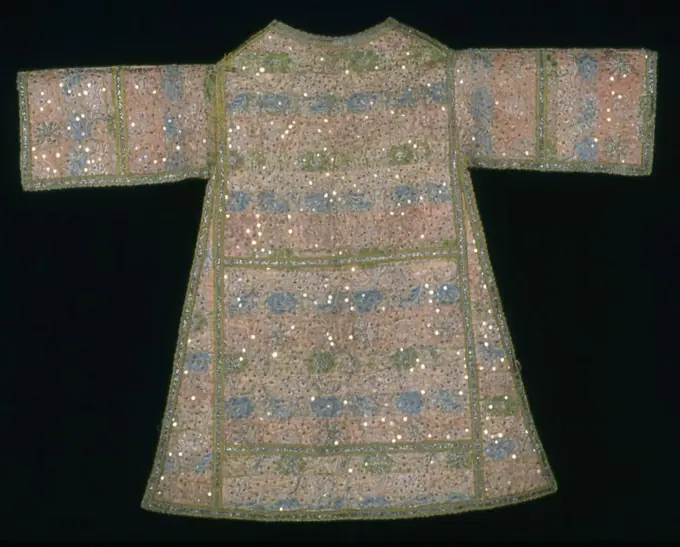
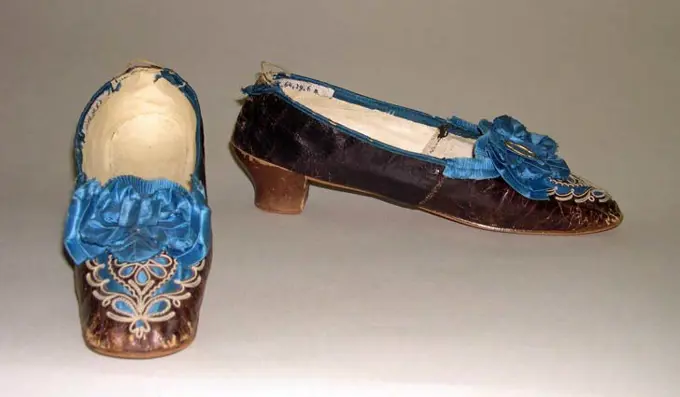
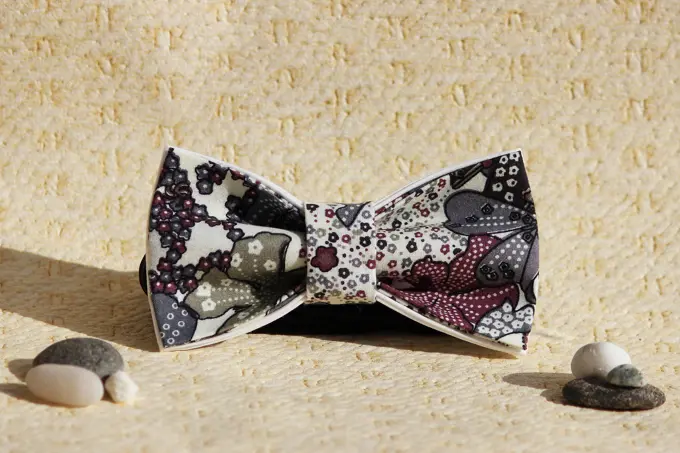
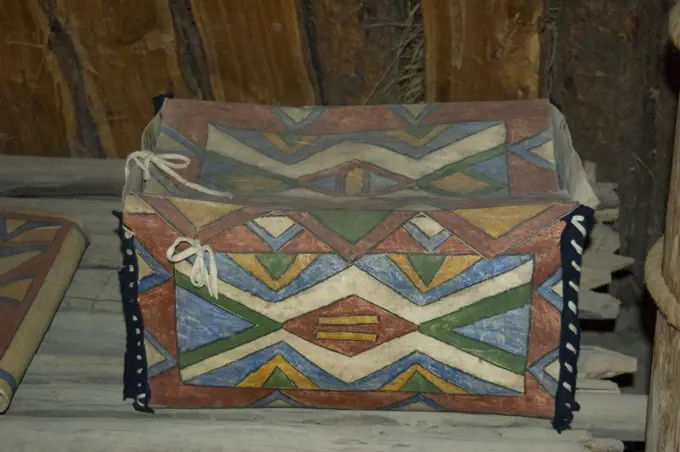
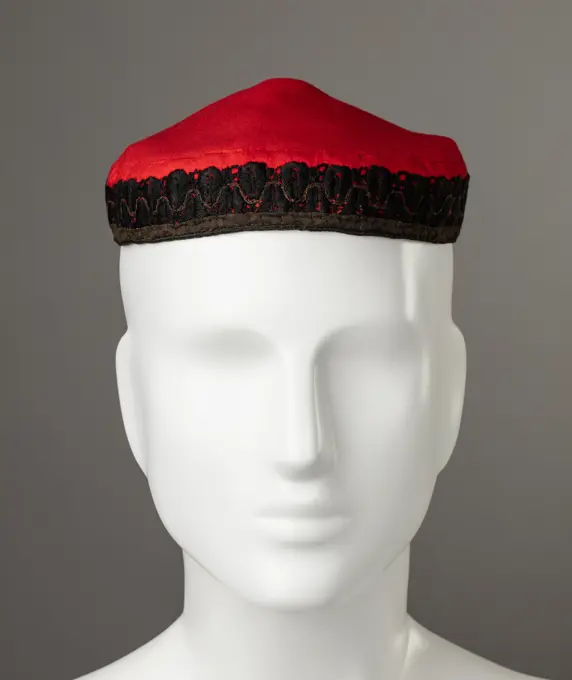
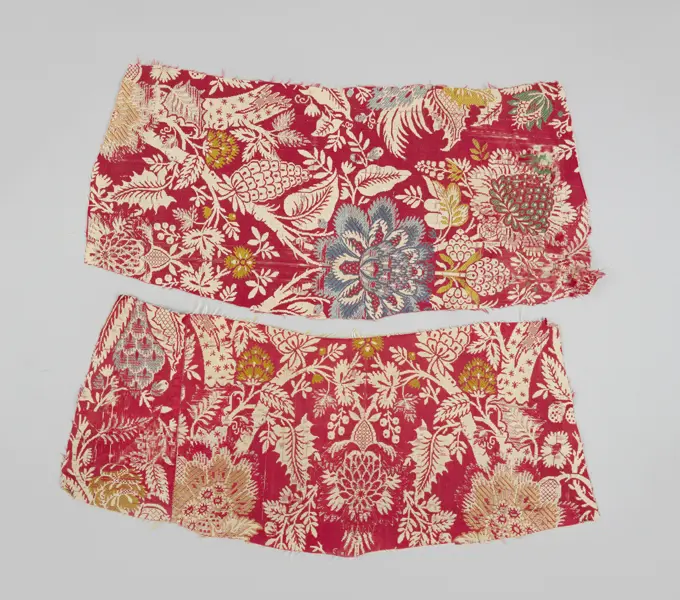
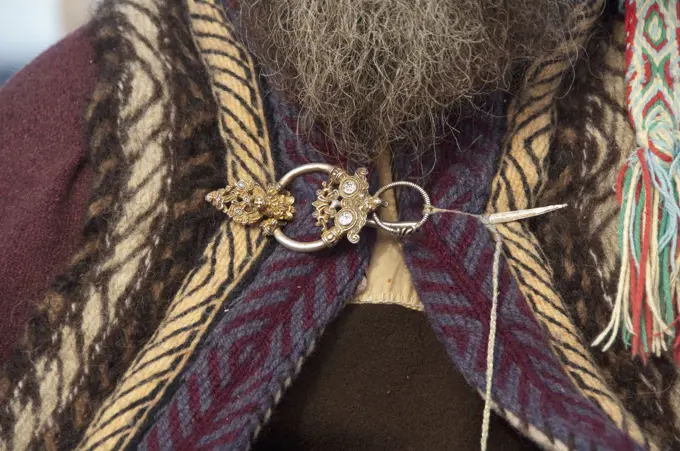
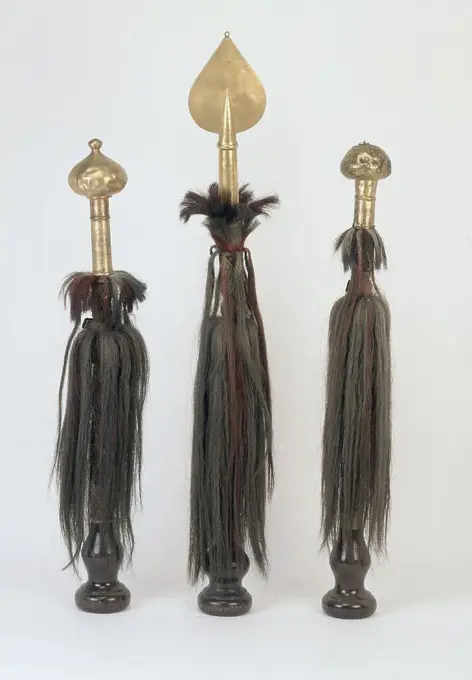
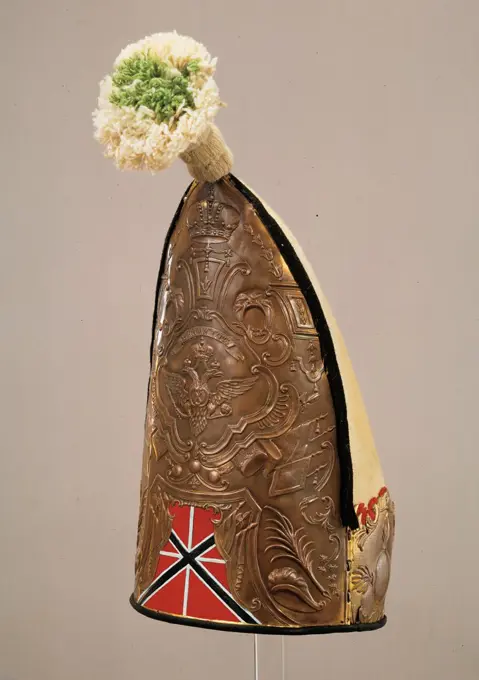
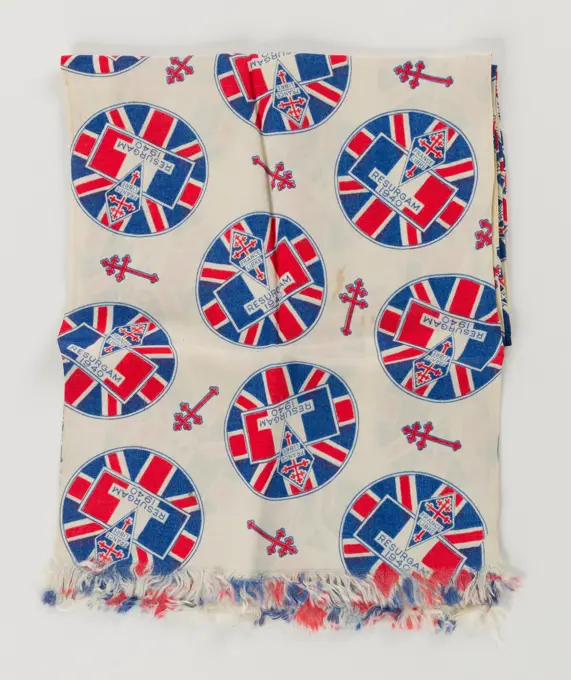
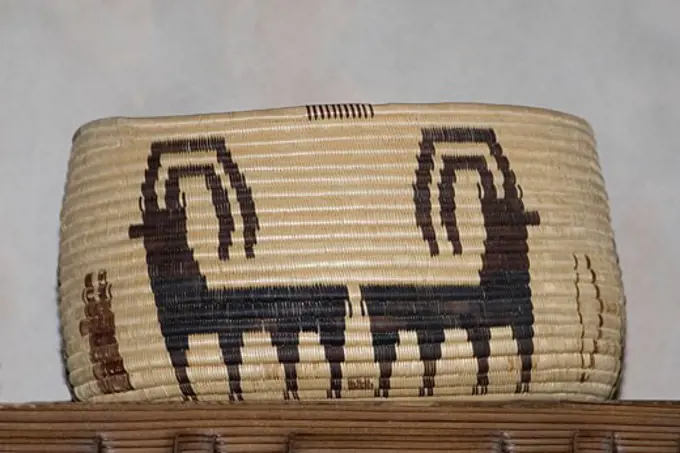
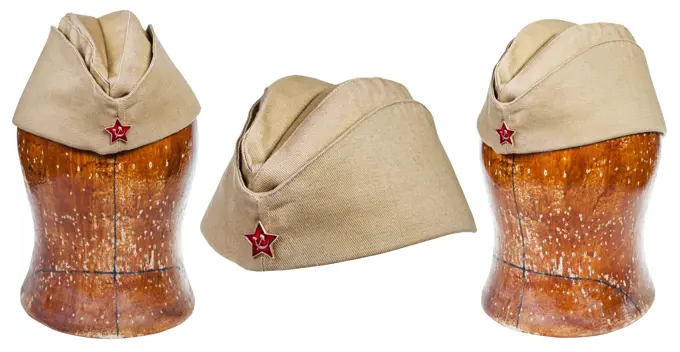
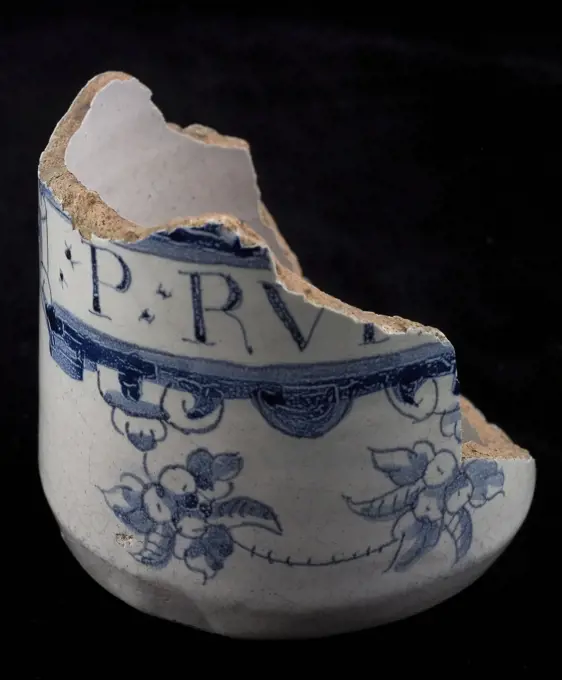
Childs shoe unknownFolder of white ostrich feathers on a closed, unprocessed mother -of -the -art frame, anonymous, c. 1900 - c. 1925 Folder of white ostrich feathers on a closed, unprocessed mother -of -the -art frame. The frame has 16 consecutive legs, on which a metal fan ring and a mother -of -pearl disc at the closing pin. Netherlands (possibly) sheet:. frame: Mother of Pearl. fan ring: Metal cutting Folder of white ostrich feathers on a closed, unprocessed mother -of -the -art frame. The frame has 16 consecutive legs, on which a metal fan ring and a mother -of -pearl disc at the closing pin. Netherlands (possibly) sheet:. frame: Mother of Pearl. fan ring: Metal cuttingNu-Chah-nulth whaling motif on woven basket, British Columbia, CanadaLinen seams and pieces of clothing. Linen and red DMC seams and pieces of drawers. The embroidery has the initials GVA, Amsterdam and the Text Geertruid van Akkeren.Baby's cap, Medium: cotton, glass beads Technique: beaded knitting, Baby's cap with stylized floral beadwork on the crown and border in a design of roses and small blue flowers. Ties of white tape not original., Germany, 18th century, costume & accessories, Baby's capVeil; medium:; 1923-11-16Gloves last quarter 19th century probably American. Gloves 102556Negligée ca. 1890 probably American. Negligée 109040Fragments, Medium: silk Technique: embossed velvet, Deep purple fragments that once formed part of a stole have a stamped pattern of narrow vertical bands containing small scrolls., Spain, 16th-17th century, woven textiles, FragmentsMitre 12th century Austrian. Mitre. Austrian. 12th century. Silk, gold thread. Made in Tyrol, Austria (possibly). Textiles-Costumes-EcclesiasticalPofle sleeve from white side lined with yellow side, anonymous, c. 1800 - c. 1900 Pofle sleeve from white side lined with yellow side. The sleeve should support a puff sleeve to support it. West-Europa whole: Silk Pofle sleeve from white side lined with yellow side. The sleeve should support a puff sleeve to support it. West-Europa whole: SilkHat, c. 1950-1960, 7 x 7 x 2 1/2 in. (17.78 x 17.78 x 6.35 cm), Metallic theads, silk, cotton; needlework, Uzbekistan, 20th centuryConciliate belt; Manufaktura Szczepan Filsjean (Kobyłka; Pasów Factory; 1787-1794); 1787-1794 (1787-00-00-1794-00-00);Mrs Inez Montgomery, Basque, 1935 1942 BasqueGloves of nautical leather, with narrow rebushed caps of liver-colored rips silk broached with flowers. Right gloves of yemen leather, with liver-colored sides () Narrow-droped caps. Close a inside with a push button. In the hand three embroidered lines consisting of garlands in Rose and green. There is a thin garnish of brown stitching stitches. Four pink / red roses on the caps with leaves. Address (in the left glove a stamp): Made in France, (in the left glove the stamps): VALLET PARIS / MADE IN FRANCE / 6.Purse ca. 1873 European. Purse 116884Parasol. Culture: French. Date: 1850-70.Part of the appeal of this parasol is the novelty of its being made from glass beads, which are more typical for handbags prevalent in the nineteenth century. The unusual decorative touch to this particular parasol is the addition of lamb's wool fringe instead of the usual silk fringes. It is an excellent example of the frivolity of fashion for the upper classes during this period. Museum: Metropolitan Museum of Art, New York, USA.Armor (Gusoku). Armorer: Helmet signed by Bamen Tomotsugu (Japanese, Eichizan province, Toyohara, active 18th century). Culture: Japanese, Toyohara, Eichizan province. Dimensions: as mounted, H. 58 5/8 in. (148.8 cm); W. 18 3/4 in. (47.6 cm). Date: 18th century.The workmanship of this armor and its materials are of the highest quality. It features a kusazuri (skirt) with an extremely rare color scheme of silk lacings in red, yellowish-green, black, and white. The mon (heraldic badge), in the form of three whirling commas (mitsudomoe mon), is that of the Okabe family, feudal lords of Kishiwada (present day Kishiwada City in Osaka Prefecture). The armor is signed on the inside of the helmet: Eichizan no Kuni Toyohara ju Bamen Tomotsugu Saku (Bamen Tomotsugu living in Eichizan province, Toyohara village). Bamen Tomotsugu was the leading armorer of the Bamen school in the eighteenth century. Complete armors signed by him are extremely rare. Museum: MetropolitanInstall shoe from to pink faded silk, broched in lanes with green with flat, pink-red heel, anonymous, c. 1750 - c. 1770 Install shoe from to pink faded silk, babbling with greenery in lanes. Flat, pink-red heel. Lined with white leather and paper. Netherlands (possibly) whole: Silk. Sole: Leather. lining: Leather. lining: Paper Install shoe from to pink faded silk, babbling with greenery in lanes. Flat, pink-red heel. Lined with white leather and paper. Netherlands (possibly) whole: Silk. Sole: Leather. lining: Leather. lining: PaperBonnet 19th century American. Bonnet 102344Tassel (Italy); wood core, metallic threadGloves late 18th century French. Gloves 118381Under skirt of white cotton, anonymous, c. 1850 - c. 1920 The skirt closes with a metal hook. Europe Cotton (textile). hook: Metal The skirt closes with a metal hook. Europe Cotton (textile). hook: MetalOne hundred;  2. PO. 18th century (1750-00-00-1799-00-00);stoleHatRochet 1824 Belgian, Brussels. Rochet 220738Four-Cornered Hat 8th-10th century Wari Finely woven, brightly colored hats, customarily featuring a square crown, four sides, and four pointed tips, are most frequently associated with two ancient cultures of the Andes: the Wari and the Tiwanaku. The Wari Empire dominated the south-central highlands and the west coastal regions of what is now Peru from 500-1000 A.D. The Tiwanaku occupied the altiplano (high plain) directly south of Wari-populated areas around the same time, including territory now part of the modern country of Bolivia. The cultures not only developed and flourished as contemporaries, but also occupied adjacent lands for nearly four centuries. A Wari ceremonial center called Cerro Baúl was located a mere five miles from Tiwanaku-settled fields in the Moquegua Valley of Peru. The two cultures likely encountered each other at Cerro Baúl and elsewhere, but the nature of these interactions remains largely unknown. Four-cornered hats from both the Wari and the Tiwanaku wereHat -Inrō, Ojime, Netsuke. Japan, late 18th-early 19th century. Costumes; Accessories. Inrō: lacquer on substrate, sprinkled gold flecks; saya type; Ojime: coral; Netsuke: ivory; manjū typeLivery. Culture: Italian. Date: early 19th century. Museum: Metropolitan Museum of Art, New York, USA.Telescoping basket, 1800's. Northwest Coast, Tlingit, 19th century. Twined spruce root with grass false embroidery; overall: 8 x 9.8 cm (3 1/8 x 3 7/8 in.).Helmet in the Shape of a Sea Conch 17th century Japanese. Helmet in the Shape of a Sea Conch. Japanese. 17th century. Iron, gold, silver. HelmetsBag, Medium: glass beads, silk, metal Technique: beaded knitting, Knitted bag with colored beads in design of floral band above leaf pattern arranged in lozenge design; bead fringe. With blue satin at top with metal cord and balls., USA, 19th century, costume & accessories, BagBattle surcoat (jinbaori) with Mount Fuji and waves Japan first half 19th century The graphically powerful design on the back of this surcoat (jinbaori ) depicts a stylized volcano in white wool applique against a green wool ground. At the feet of the volcano are black waves. The mountains triple peak indicates that it is Mount Fuji, the subject of religious veneration in Japan since ancient times.A well-known wool jinbaori with Mount Fuji pictured, is now owned by the Osaka Castle Museum. It is said to have been owned by Toyotomi Hideyoshi (1537-1598) and its bold colors and stylized decoration captures the flamboyant taste of the powerful warlord. Following the example of this famous jinbaori, Mount Fuji became a popular pattern on battle surcoats. Using imported European wool, called rasha in Japan, it was skillfully made as a warm, durable short jacket with long sleeves. Mount Fuji occupies a special place in the Japanese artistic imagination, for the beauty of its symmetrical sloPouch. Culture: American. Date: 1820-40.The iconography on this bag contrasts modest, single gable, Shaker-style houses against a grand medieval structure. The incorporation of pink seems idiosyncratic; it is an unlikely for period houses. The original top and ribbons add to its presence. According to the donor, it was made in the Catskill Mountain region of New York State.Margaret S. Bedell (1861-1932) donated, by gift or bequest, over 500 objects to the Brooklyn Museum, including furniture, quilts, samplers, costume and Native American beadwork. Her collection of American and European beaded bags includes examples from Philadelphia and the Catskill Mountain region of New York State, as well as Italy, Austria, Germany, and Holland. Museum: Metropolitan Museum of Art, New York, USA.Colorful designers cloth for sale  Udaipur  Rajasthan  India Copyright: xRavixShekhar/DinodiaxPhotoxGlove of white wool, c. 1900 - c. 1920 Right (skate) gloves of white wool knitted, so -called 'Ringwood'. Double, closed wrist board. Pattern of barley grain. Amsterdam (possibly) whole: Wool knitting Right (skate) gloves of white wool knitted, so -called 'Ringwood'. Double, closed wrist board. Pattern of barley grain. Amsterdam (possibly) whole: Wool knittingAumonière. 1880-1890. GAL2004.267.XAnonymous. "Three-quarter American Mackinaw". Wool. 1938-1945. General Leclerc Museum of Hauteclocque and the Liberation of Paris, Jean Moulin Museum. 158809-2Bliżej Kultury unknownArmor with Archery Equipment and Box ca. 1840 Chinese. Armor with Archery Equipment and Box 105347Plastinate, blood vessels, human arm and hand, Body Worlds, Menschen Museum, Berlin, Germany, EuropeDalmatic Made 1675-1725 Italy. Silk, satin weave self-patterned by ground weft floats; embroidered with gilt- and silvered-metal-strip-wrapped hemp in couching and padded couching; metal spangles; edged with woven tape .. Gloves of white leather with incised cream colored silk hood, on which embroidery with fruits, flowers, cornucopia and birds of gold thread with freshwater pearls, frosty silk and silver lovers, lined with pink silk. At the end of the hood each three glans from gold thread with silk straps.Hat ca. 1855 American. Hat 168322Brogans. Culture: probably American. Manufacturer: Little & Co.. Date: third quarter 19th century.The brogan is a heavy ankle-high work shoe with a pegged or nailed sole which was worn in rural areas and by laborers and slaves. Brogans of this type were mass produced in New England factories for wear by men, women, and children with no differentiation in style. Being utilitarian items for the working classes, brogans were usually worn out and discarded. This shoe, in a size suitable for a child or small woman, was kept as sample and never worn, and consequently is preserved in relatively good condition. The brass tip is a less common feature, incorporated to extend the wear of the shoe. It is also surprising to see a shoe of this quality stamped by the manufacturer. While this example and another from the same donation lack the usual lace holes, another brogan in the collection is furnished with a riveted buckle and strap, suggesting that the finishing of the closure was a distinct proc for keeping food away from flies on table and white backgroundRigid straw hat, called magiostrina, 1920s, Italy, 20th century.Zulu unisex beadwork jewellery from South Africa. Dated 1920gorgeous Christmas tree decoration isolated on white backgroundRibbon French 19th century View more. Ribbon. French. 19th century. Textiles-TrimmingsSaddle (gser sga). Culture: Eastern Tibetan or Chinese for the Tibetan market. Dimensions: H. 10 3/4 in. (27.3 cm); L. 22 1/2 in. (57.2 cm); W. 11 3/4 in. (29.8 cm). Date: 17th-18th century.This saddle represents a particular form found in Tibet, one that is Chinese or strongly influenced by Chinese types. It belongs to a small group of closely related saddles that may stem from a single workshop or reflect a specific type developed in one region. Notable features are the lively dragons, chiseled free from the scrollwork ground, and the unusual decorative technique involving silver damascening of the entire surfaces of the saddle plates, with select design elements highlighted by mercury gilding over the silver. Also very distinctive is the use of three layers of decoration: the outer layer of pierced scrollwork with long tendrils deeply undercut to give an appearance of depth, a second layer forming a subsidiary ground underlying each saddle plate and consisting of an iron grill damaHerbalist for A Scout Uniform, Hufiec Wolbrom unknown labelGlove of lined gray wax leather, c. 1900 - c. 1915 Right glove from lined gray wax leather. maker: FranceNetherlands whole: Chamois (Animal Material). Lining: Rayon Right glove from lined gray wax leather. maker: FranceNetherlands whole: Chamois (Animal Material). Lining: RayonBlack hairfelt two-sided stitch, bicorne, with orange silk cockade, and gold-colored metal trim, tassels, bicorne stitch hat headgear men's clothing clothes hair felt silk metal leather, to 103.0 textile Stitch with silver tassels at the end No ostrich feathers. Stitch worn by subaltern sea officer At the ends thin silver tassels torsades. On the side an orange cockade and golden iris of metal gold thread (broth). With gold button with anchor-emblem Kokarde on the right sheet MANUFACTU .. PARIS dress man militaria marine subaltern officer head coverRattle, anonymous, c. 1900 - c. 1920 Rattle of braided pit riet in the form of a glans on a handle with oval, wicker teeth. Inside a tin bell. Netherlands (possibly) rattle:. Bell: tin plate. handle:. bite: braiding / cutting / cutting Rattle of braided pit riet in the form of a glans on a handle with oval, wicker teeth. Inside a tin bell. Netherlands (possibly) rattle:. Bell: tin plate. handle:. bite: braiding / cutting / cuttingMen's haori with dragon. Haori for a man with an adornment to the lining of a rectangular image of a dragon between clouds, partially overlaps at the bottom left by a square with a called text: 'Daijobu Kotae yuhi' (literally: 'confident answers the big jump'; forward The big jump with certain mood, signature 'Nanshu', seal: 'Takamori'. Saigo Takamori (1828-1877) was a highly placed Samurai who played an influential role in the early Meiji period, as opponent of far-reaching Western influences. The text here may refer to Takamori's wish to fall into Korea; In that nationalistic significance, the dragon could be a symbol of the emperor's house. Black glossy silk (habutae) with decorations in stencilde yuzen. Five family arms (mon) of three folding ranges (OGI).Hat -Ensemble ca. 1750 American. Ensemble 102306Slippers 1850s American. Slippers 112792Composition: Extravagant bow tie and pebbles on a beige background. Composition: Extravagant bow tie and pebbles on a beige background Copyright: xZoonar.com/OvchinnikovaxOlgax 10635792Gloves ca. 1867 Alexandrine French. Gloves. French. ca. 1867. leatherHat 1880s American or European. Hat 116534Glove of beige silk jersey, c. 1920 - c. 1940 Right glove of beige silk jersey. Three radiating cords on the back. West-Europa whole: Silk. Right glove of beige silk jersey. Three radiating cords on the back. West-Europa whole: Silk.Man's bag, 27 x 16 in. (68.58 x 40.64 cm) (includes fringe, does not include strap)18 x 6 in. (45.72 x 15.24 cm) (single element, shoulder strap), Wool, cotton, beads, shells, metal; woven fabric, beading and embroidery, Myanmar (Burma)Bridle with Cloissone Mounts. Culture: Chinese. Dimensions: laid flat, H. 29 in. (73.7 cm); W. 34 1/2 in. (87.6 cm); Wt. 2 lb. 15.3 oz. (1340.9 g). Date: 18th-19th century. Museum: Metropolitan Museum of Art, New York, USA.Belt 1860s American. Belt 107573Middle ages. Latvia. Leather mask. 13th century. Museum of History and Navigation. Riga.Pouch first quarter 19th century probably French. Pouch 170529Stockings third quarter 19th century American. Stockings 174769Painted Mandan storage box made from rawhide parfleche on display inside a earthen lodge at the Knife River Indian Village, North DakotaCatalogs card, so -called catalog patch, from the Nordic Museum. Objects Inv. No. 16257, money pung from Pite Lappmark, Arjeplog parish. Watercolored drawing depicts the item. The drawing made by Emelie von Waltersorff. NordicMarriage baskets used to carry the trousseau items for the bride's new home. Made from fibre, silk, leather, mother-of-pearl and wool. Dated 20th CenturyTibet: Conch shell trumpet. Conch shell deorated with Tibetan silver, coral and turqiouse.Bliżej Kultury unknownFragments of silk fabric  a thick pattern of flowers and fruits unknown. At first glance, the object resembles a scissor with a small pouch at the front, lined with leather and equipped with a drawstring of braided gold thread. However, the case cannot open and the pouch is so small that hardly fits coins. Of the three examples preserved in the Netherlands (R.M., A.M. Inv. KA-18660, Oranje-Nassau museum) are two lined with solid velvet and the third embroidered with river pearls and gold thread. The specimens in France (Musée de Cluny, Paris) and Italy (Bargello, Florence) are identical to the Dutch. The form seems to like that of a phallus and possibly the exhibition had an erotic connotation; Three coins (W.O. one from 1591) were found in the specimen in the Amsterdam Historical Museum.Zwaluwnest probably from a Tamboer Pijper or Halvemalaan der Infanterie, 1806-1810, Kingdom of Holland, or militia. Zwaluwnest probably from a Tamboer-Pijper or Halvemalaan der Infanterie, 1806-1810, Kingdom of Holland, or militia. Hemistern piece of dark blue sheet, wiped off with white galon, and on the sheet of ditto galon ornament. Bottom of this with white frills. Backside: white sheet with stitching man galon.Canada, Newfoundland and Labrador, L'Anse Aux Meadows. Archaeological site is the only known Norse village in North America. UNESCO. Actor in period Viking costume, pin detail.ESTANDARTES (TUG)-TURQUIA H 1570-COBRE,MADERA,CRIN DE CABALLO(PROC LEPANTO). Location: PALACIO REAL-REAL ARMERIA DE MADRID. MADRID. SPAIN.Woven Talisman Frog andSnake.  Artist: UnknownMasonic chain. Jewelry. ITALY. LOMBARDY. Milan. Risorgimento Museum.Pair of Embroidery Samples, 20th century, 7 x 8 3/8 in. (17.8 x 21.3 cm) (each), Cotton, embroidery, China, 20th centuryTraditional decorated bowls Traditional decorated bowls, West Africa, 19th century, pumpkin bark and pigment, Anthropology National Museum, Madrid, Spain Copyright: xZoonar.com/BartomeuxBalaguerxRotgerx 21997730Woman's Gaters. Dated: 1935/1942. Dimensions: overall: 13.1 x 13.3 cm (5 3/16 x 5 1/4 in.). Medium: colored pencil and graphite on paper. Museum: National Gallery of Art, Washington DC. Author: Mary Berner.Grenadier cap of the Izmaylovsky Lifeguard regiment by Russian master   State History Museum, Moscow 1797-1798 Russia Applied Arts History,Objects Applied ArtsAnonymous. "Longue" Libre France, Resurgam 1940 ". Silk. 1940-1944. General Leclerc Museum of Hauteclocque and the Liberation of Paris, Jean Moulin Museum. 158806-7Gloves beige made of knitted silk, decorated with golden stitching and frills, anonymous, c. 1750 - c. 1800 Left glove from knitted silk. For priest gloves with gold stitching and frills. West-Europa whole: Silk. FRANK: Metal thread knitting Left glove from knitted silk. For priest gloves with gold stitching and frills. West-Europa whole: Silk. FRANK: Metal thread knittingPanamint Indiean basket showing Bighorn Sheep Johnson collection in Scottys Castle Death Valley National Park CaliforniaEngland, London, Greenwich, National Maritime Museum, Exhibit of Captain Horatio Nelson's Uniform in which he died at The Battle of Trafalgarset of military field caps with soviet red star set of military field caps with soviet red star sign on wooden dummy isolated on white background Copyright: xZoonar.com/ValeryxVoennyyx 7646090A figure made of female clothing on the chair with a map in the background of the stone wall.Fragment apotherspot, blue on white, cartouche with P RU, apothecary jar ointment container soil find ceramic earthenware glaze tin glaze, hand turned baked glazed decorated baked Cylindrical pot with straight side wall. Completely glazed. Orange shard. Blue decor on white fond Cartouche with text in cartouche: P.RV  archeology homeopathic indigenous pottery packing store pharmacy craft medicine drug