Historical Textile Fragments

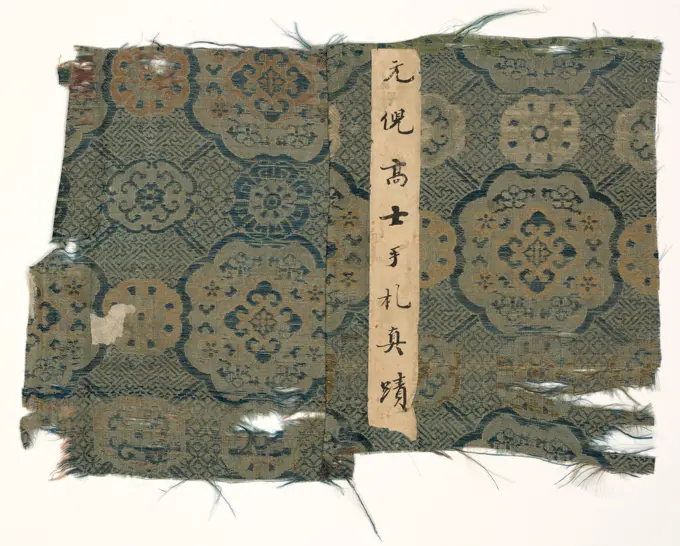
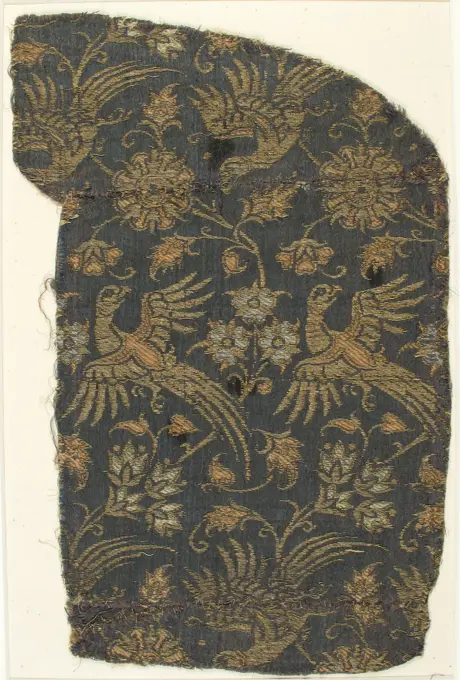
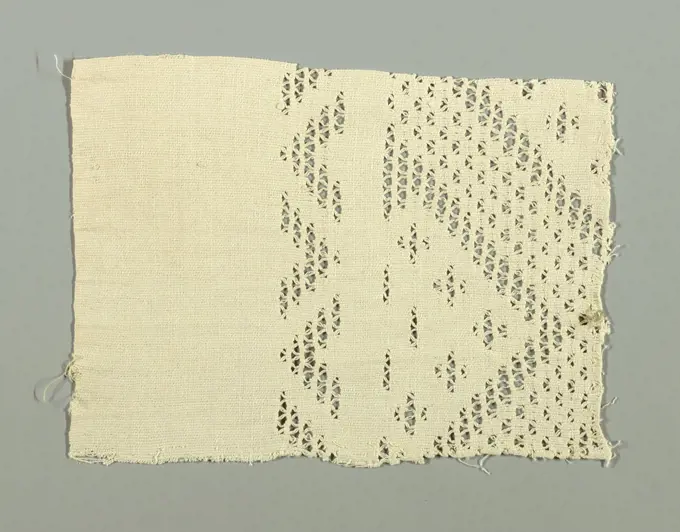
A collection of textile fragments including samplers, silk, and linen, showcasing intricate patterns and historical craftsmanship from various centuries.
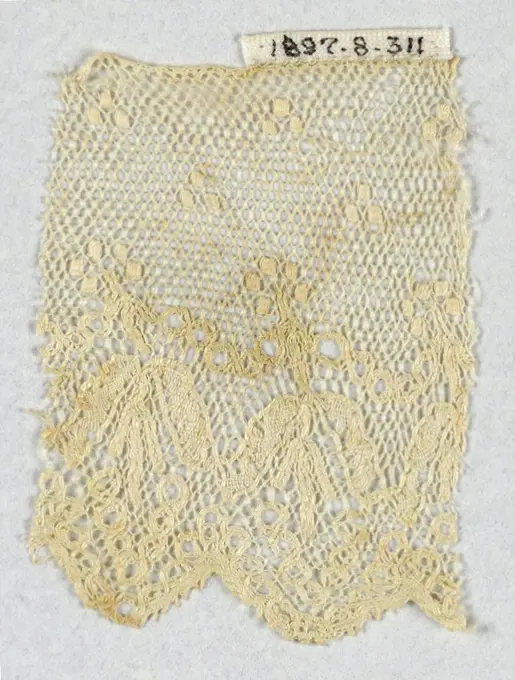
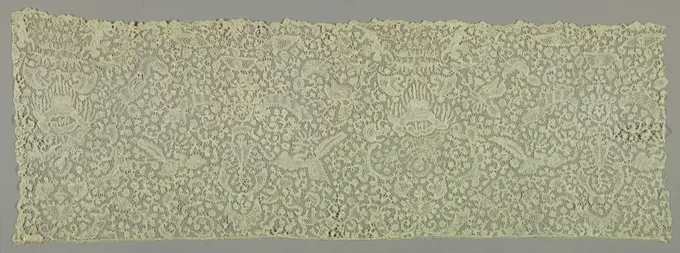
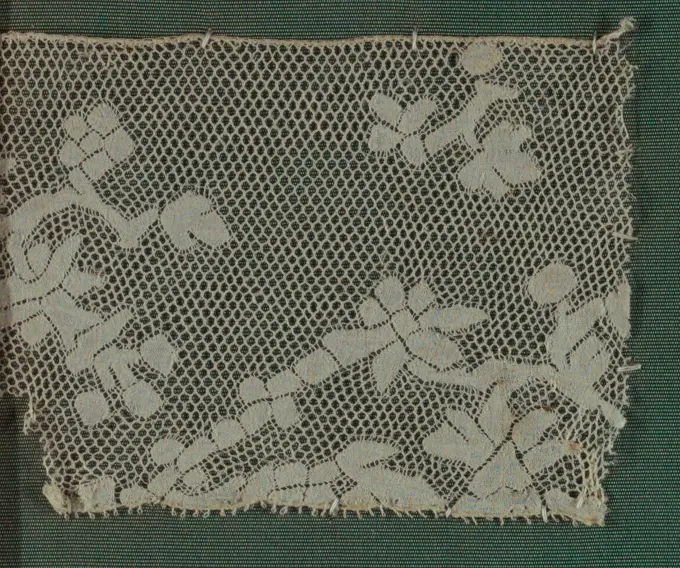
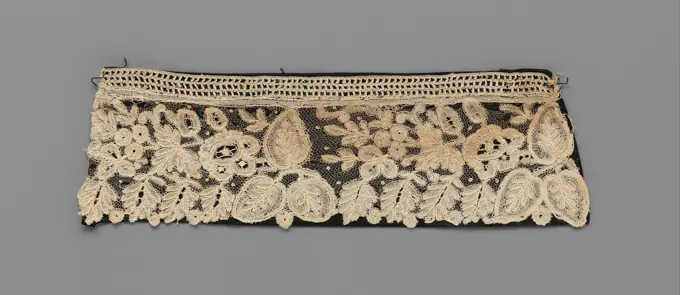
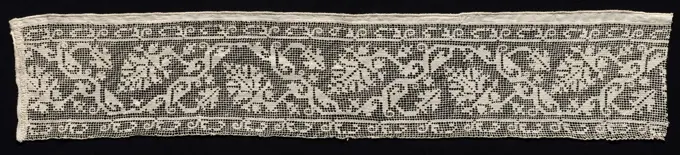
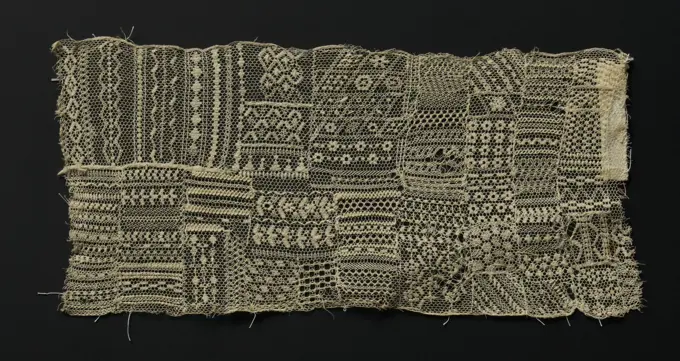
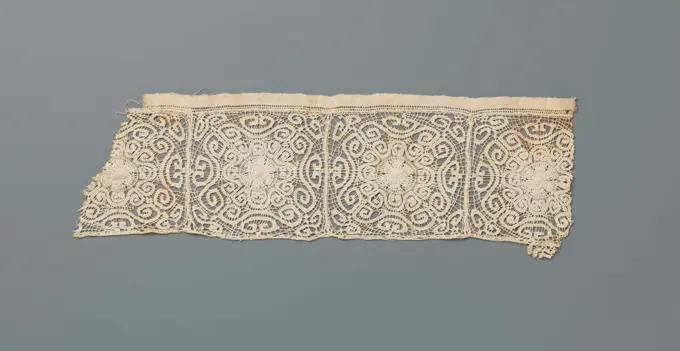
Fragment, Medium: Linen Technique: bobbin lace (Lille-style with heavy outlining cord), Fragment of Lille type bobbin lace., 19th century, lace, Fragment
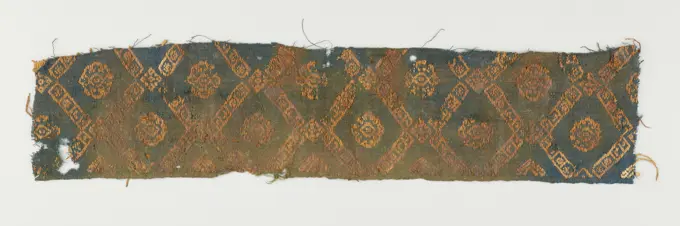
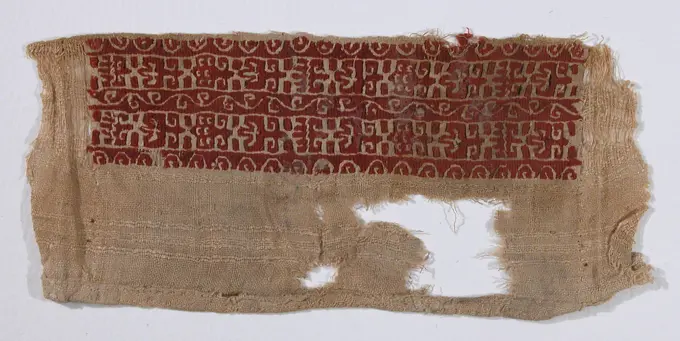
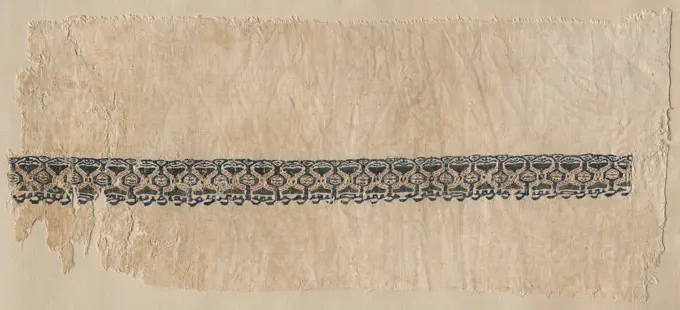
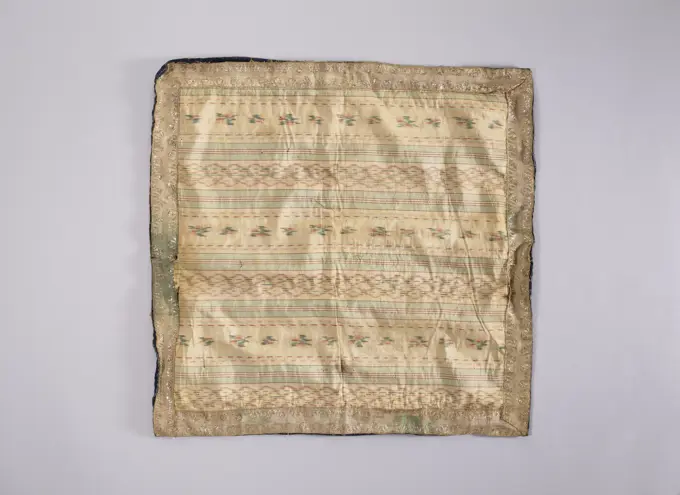
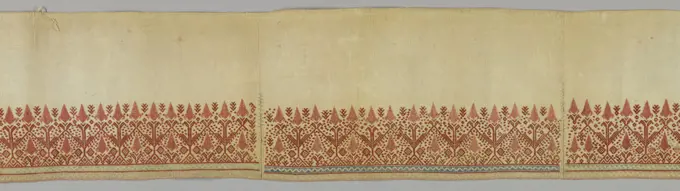
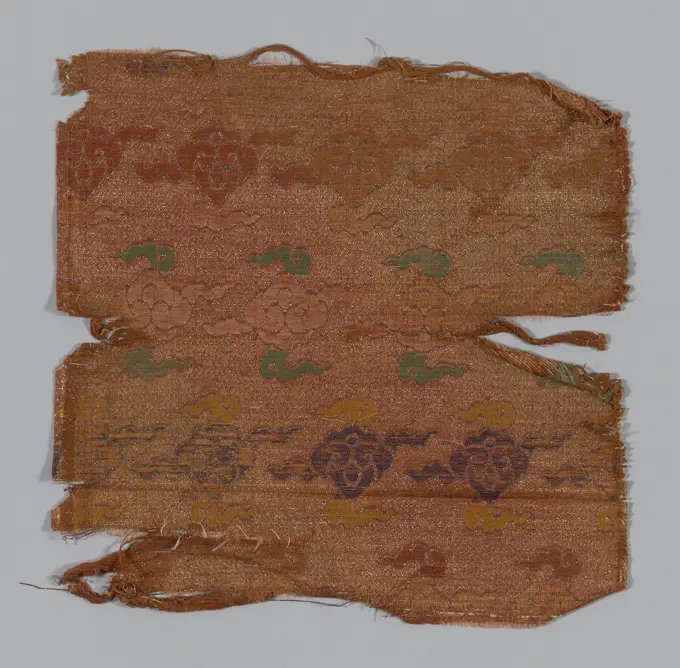
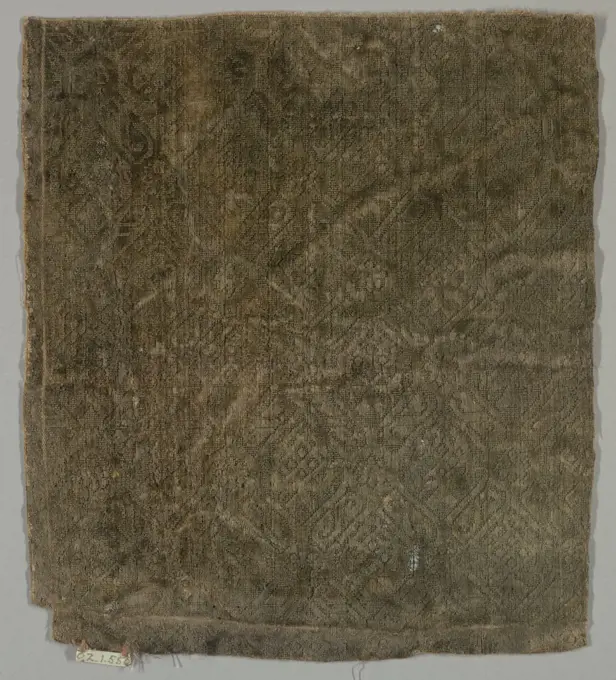
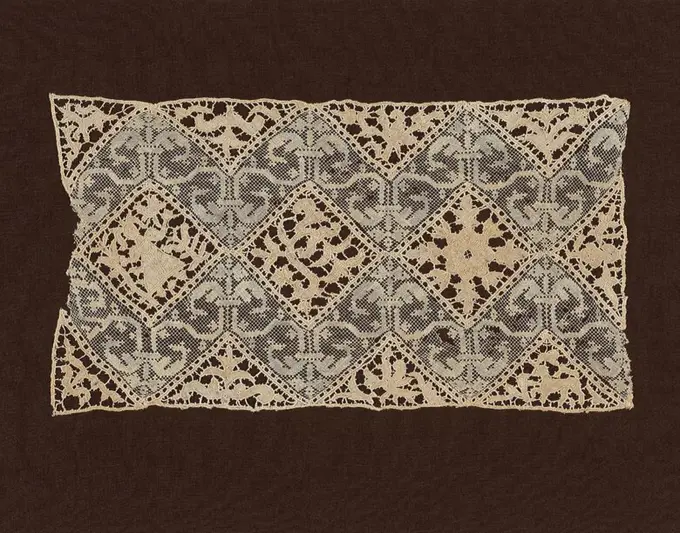
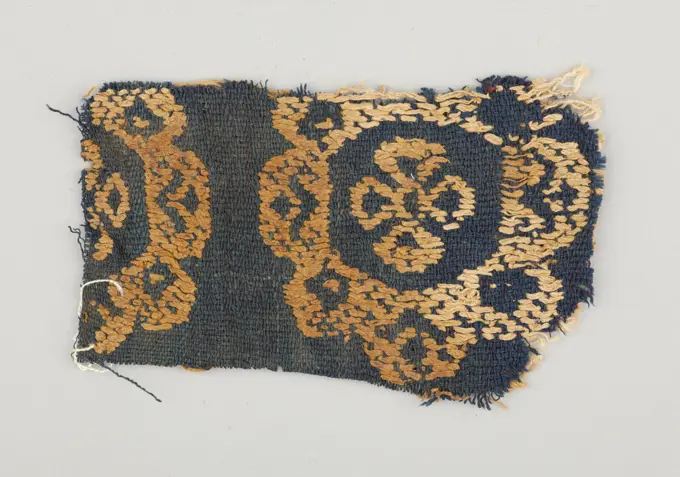
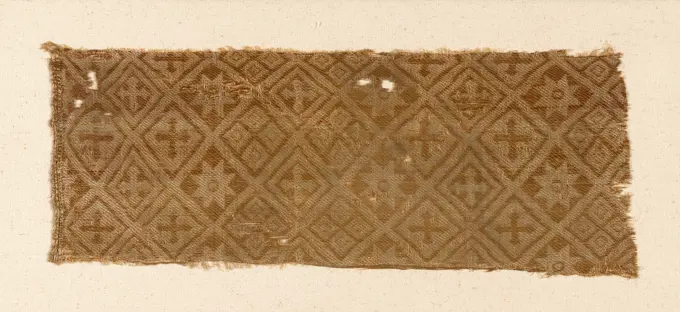
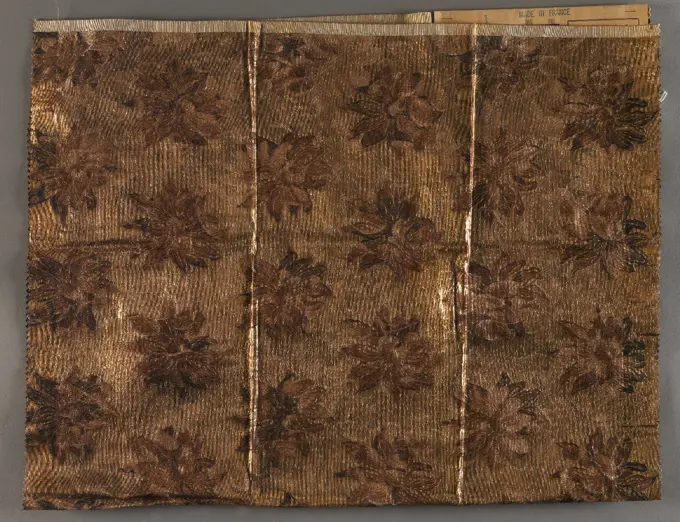
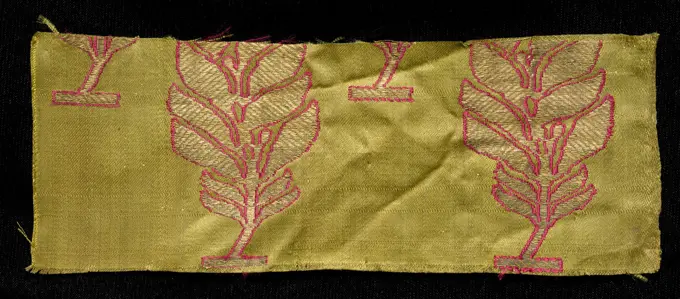
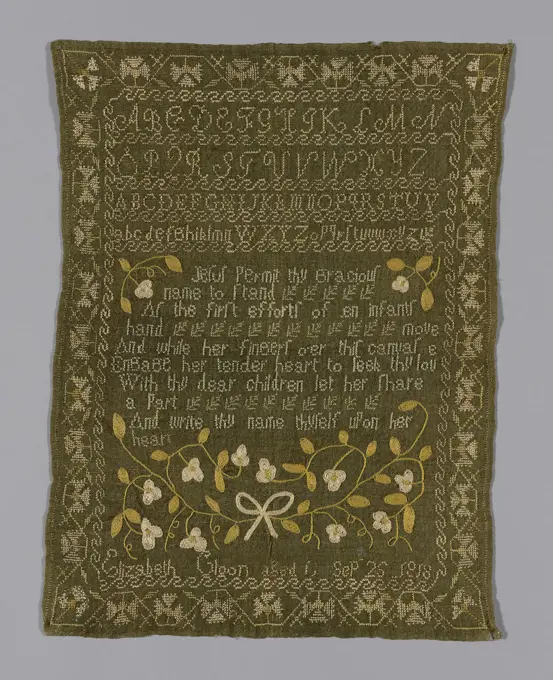
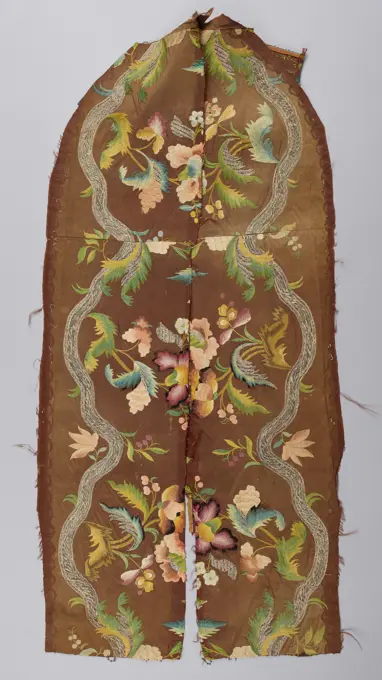
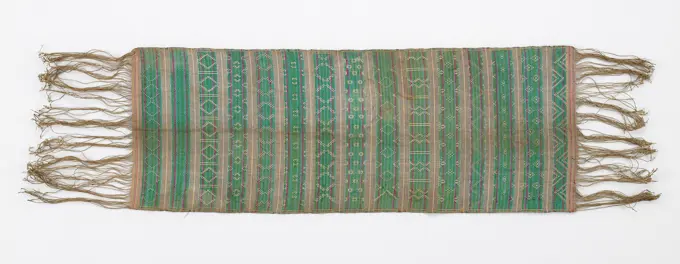
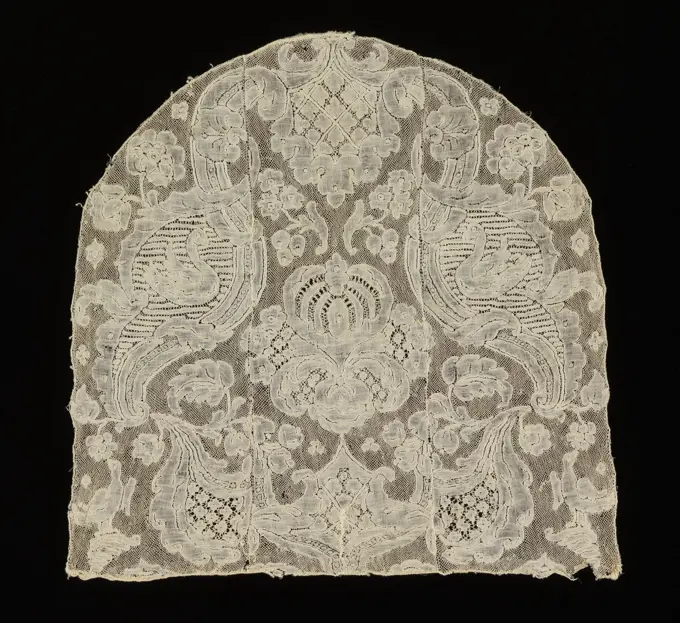
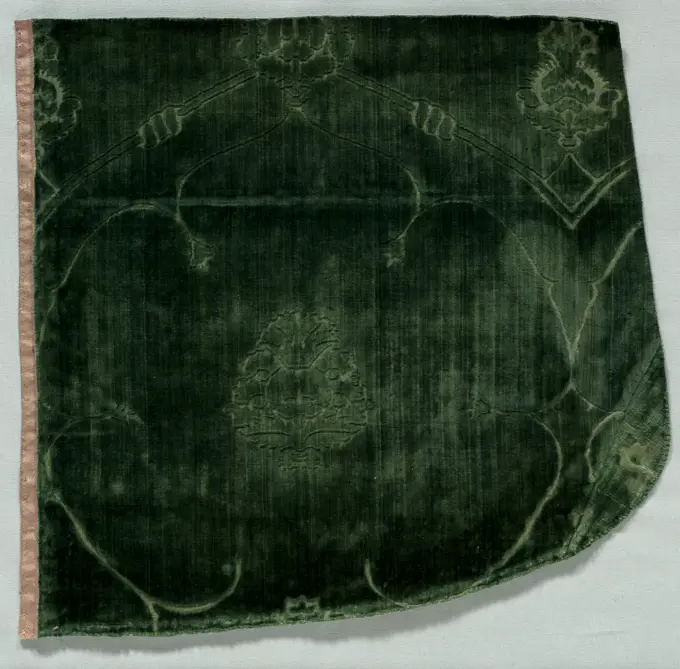
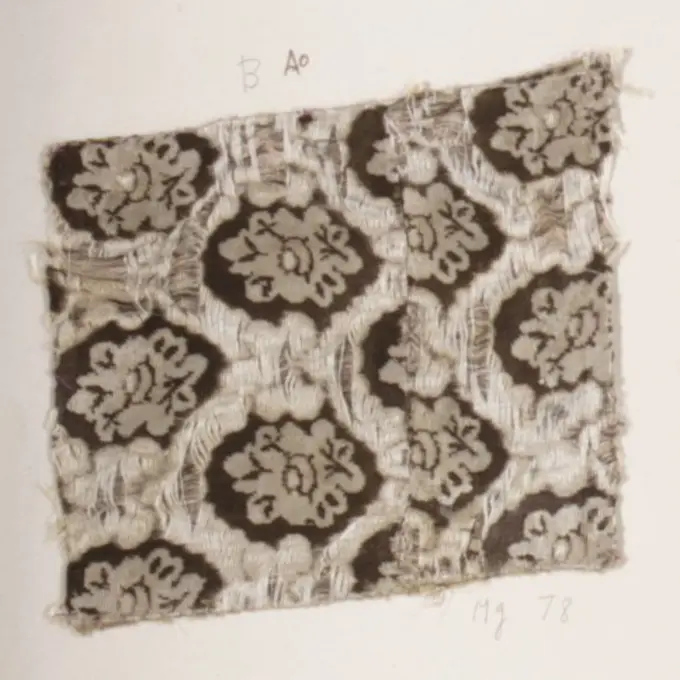
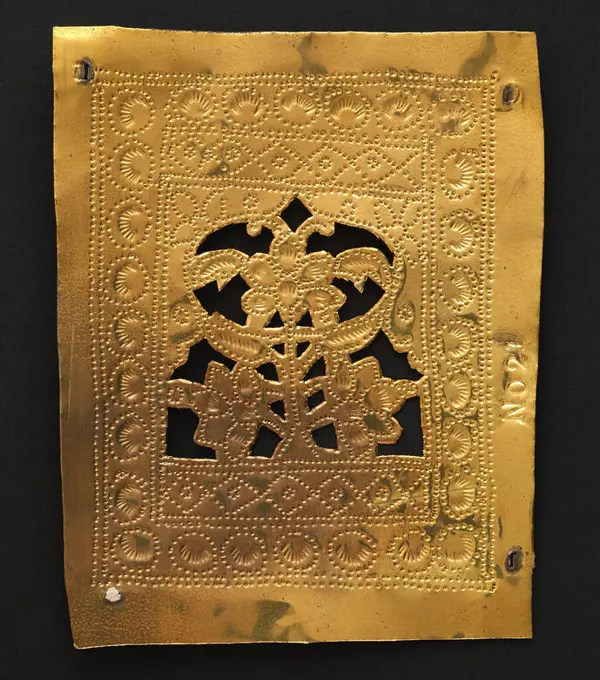
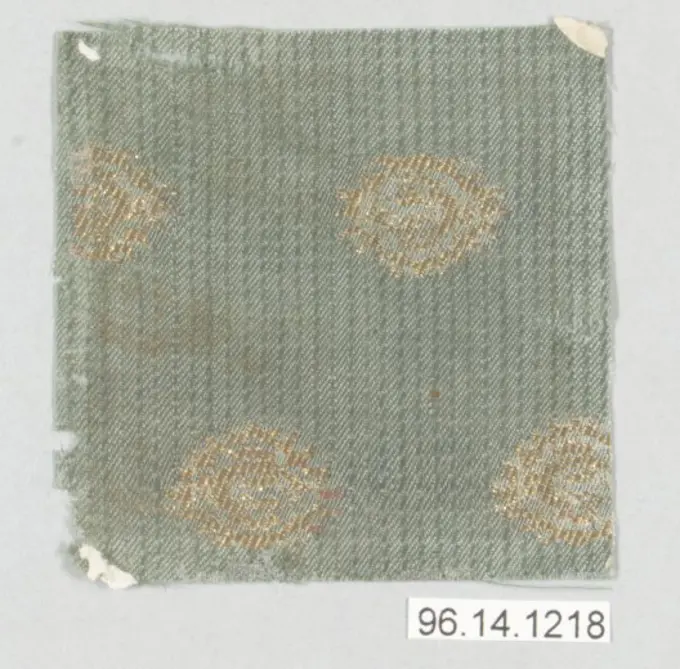
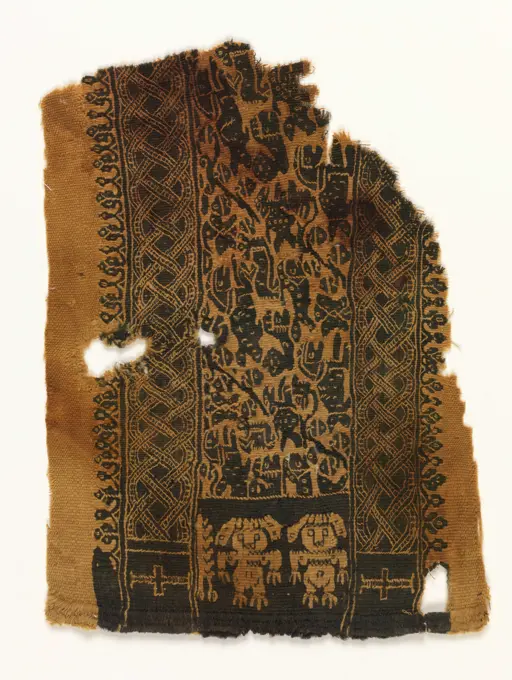
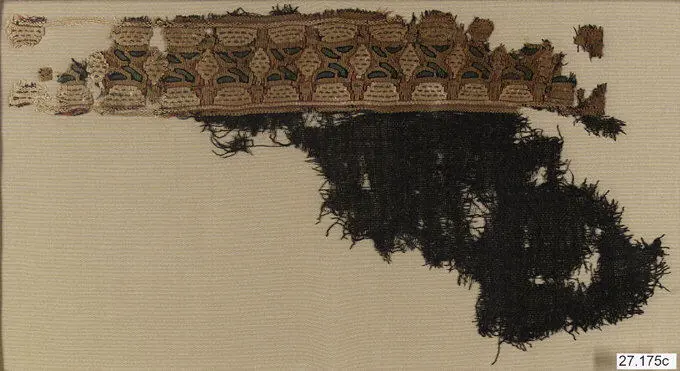
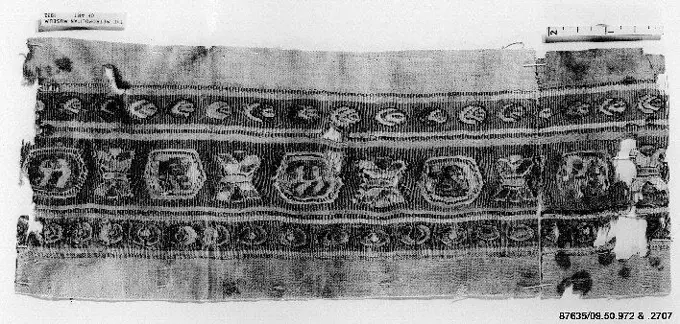
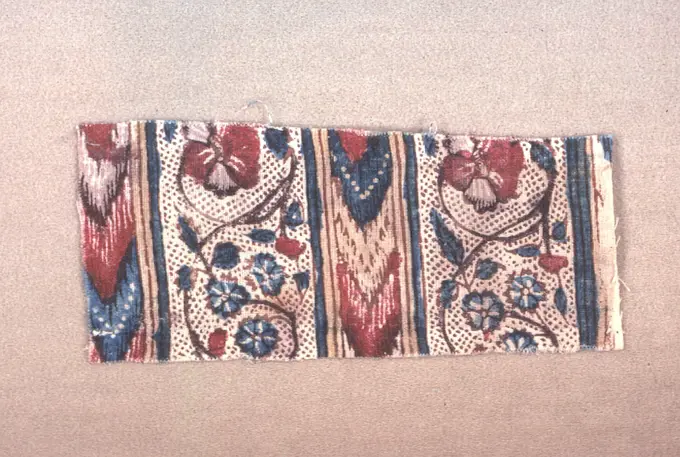
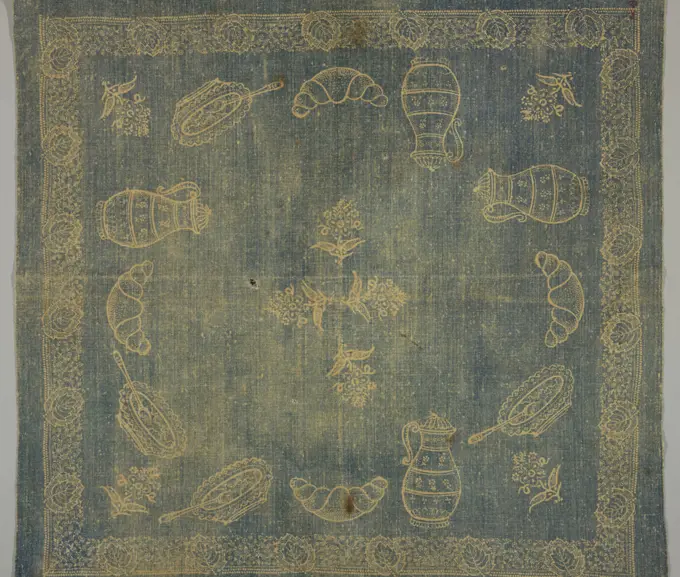
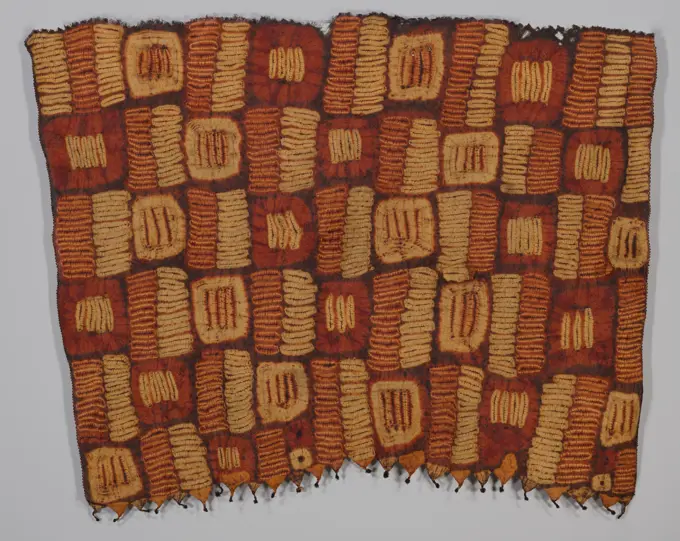
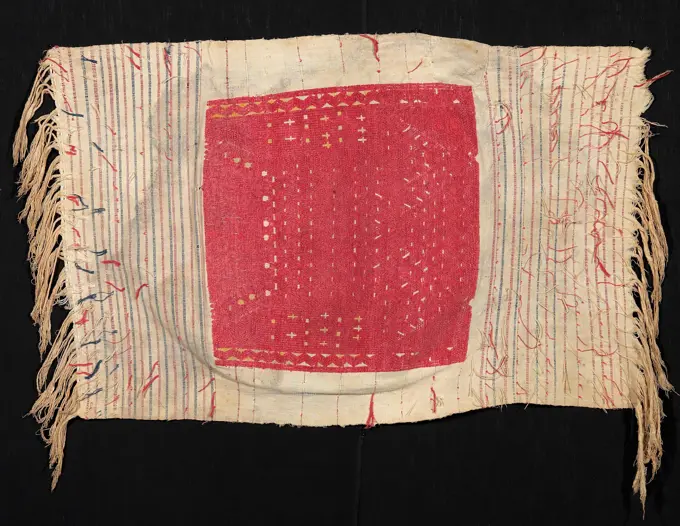
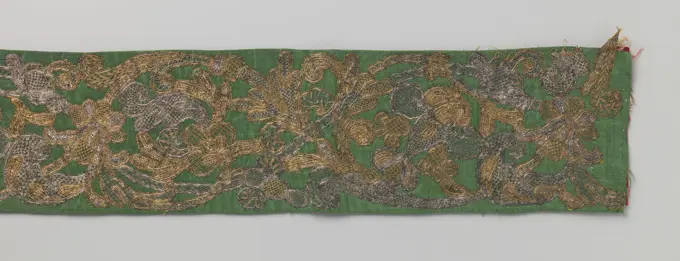
Sampler 18th century British. Sampler 218737Silk Fragment, 1350-1399. Iran or Iraq, mid or 2nd half of 14th century. Tabby weave with supplementary weft; silk; overall: 11.5 x 16 cm (4 1/2 x 6 5/16 in.).Fragment of Coptic fabric unknownFragment; silk, cotton ()Fragment; silk on linen; Bequest of Marian Hague; 1971-50-131Fragment of a Sleeve 5th-6th century. Fragment of a Sleeve 445681Fragment of a Tiraz-Style Textile, 1094 - 1101. Egypt, Fatimid period, Caliphate of al-Musta'li, AH 487-495 (A.D. 1094-1101). Tabby ground with inwoven tapestry ornament; linen and silk; overall: 16.5 x 36.5 cm (6 1/2 x 14 3/8 in.).Fragment (Peru); cotton, woolFragment, Medium: Linen Technique: bobbin lace (Lille-style with heavy outlining cord), Fragment of Lille type bobbin lace., 19th century, lace, FragmentFragment, 1100s - 1300s. India, 12th-14th century. Plain cloth, resist dyed; cotton; overall: 15.9 x 6.4 cm (6 1/4 x 2 1/2 in.).Welum;  18th century (1701-00-00-1800-00-00);Fragment (Italy); linen; Bequest of Marian Hague; 1971-50-201Border, Medium: silk embroidery on linen foundation Technique: embroidered on plain weave, Three pieces stitched together, each patterned by upright symmetrical stylized plants in rust red silk with two narrow geometric borders at botton in blue on yellow; plain undyed linen at top., Greece, 19th century, embroidery & stitching, BorderFragment Made 1670-1830 China. Plain compound satin, silk and silvered paper; 1 1.2 strips to m.m., heavy cotton filling, white .Fragment, Medium: silk Technique: supplementary warp forming cut and uncut raised pile (velvet), Very dark grey pattern of a diamond grid containing pineapple-like forms., 17th century, woven textiles, FragmentFragment. Italy or Spain. Date: 1675-1725. Dimensions: 22.8 x 40.1 cm (9 x 15 3/4 in.). Linen, bands of knotted square netting embroidered in cloth stitch; inserts of linen, plain weave; cut work embroidered in buttonhole, four-sided, and squared ground stitches; buttonhole bars and rings and bullion picots. Origin: Italy. Museum: The Chicago Art Institute, Chicago, USA.Fragment, Medium: silk Technique: cut and uncut velvet pile in a satin foundation, S-shapes and floral sprigs in rusty brown on white., 17th century, woven textiles, FragmentFragment of galloon unknownSampler(Limar)Border, Medium: Technique: bobbin lace made in Lille style with heavy outlining thread, England, 19th century, lace, BorderSchön newes Modelbuch (Page 64r). Dimensions: Overall: 4 1/2 x 6 11/16 in. (11.5 x 17 cm). Publisher: Sigismundus Latomus (German, active 1599-ca. 1627) , Frankfurt am Main. Date: 1608.Published by Sigismundus Latomus, Frankfurt a.M.Illustrated and hand-colored title page, 94 pages of designs for lace and embroidery. Museum: Metropolitan Museum of Art, New York, USA.Head Scarf, 31 x 11 in. (78.74 x 27.94 cm), Cotton, metallic threads, ChinaHanging with Instruments of the Passion 1799 Spanish. Hanging with Instruments of the Passion 229758Unfinished Sampler (USA); Made by Scuola d'Industrie Italiane; linentiraz tapestry, Medium: silk Technique: slit tapestry, possibly 10th century, woven textiles, tiraz tapestryScarf, 19th century, L.54 x W.12-1/4 in., wool, 19th centuryTextile Fragment 3rd-4th century. Textile Fragment 443806Purse, Medium: silk, metal Technique: woven, Small and flat envelope-shaped pocket book woven in salmon-colored silk, gold and silver thread and small areas of colored silk. Pattern has a square in the center that frames four fleurs-de-lis in the corners. Surrounding area is patterned with birds, medallions and stylized floral forms., France, late 17th-early 18th century, costume & accessories, PurseFragment red damask broker with pomegranate motifs. Fragment of red silk damask broker with pomegranate motifs.Border Made 1601-1700 Italy. Linen, plain weave; embroidered with silk floss and gold gilt strip wound around a silk fiber core in back, individual satin, and satin stitches .Fragment Made 1201-1300 Italy. Silk, complementary weft twill weave with inner warps .Textile Swatches Onondaga Silk Company, Inc. (1925-1981). Textile Swatches, 1948-1959. Silk and metallic threads, (a) - (f): 13 1/2 x 8 in. (34.3 x 20.3 cm).    1948-1959Cover, 19th century, L.38 x W.29 in., wool; needlework, India, 19th centuryTextile Fragment 5th-6th century. Textile Fragment. 5th-6th century. Wool. Attributed to Egypt. TextilesFragment, Medium: silk, metallic yarns Technique: compound twill weave with discontinuous supplementary weft patterning (brocade), Fragment of woven silk with a repeating pattern of a bird perched on a branch of roses arising from a mound. In pale blue, green, and pink silks on a silver metallic ground., Persia, present-day Iran or India, 17th century, woven textiles, FragmentFragment, 1800s. China, 19th century. Silk; overall: 50.8 x 11.5 cm (20 x 4 1/2 in.).Sampler(Limar)Band (possibly Russia); linenMantle or Textile Fragment, Undetermined Nasca. , 200-600 C.E. Cotton, camelid fiber, 17 11/16 x 38 3/16 in. (44.9 x 97 cm).   Arts of the Americas 200-600 C.E.Brocade, 1800s. India, Benares , 19th century. Brocade, "kimkhwab"; silk and gold; overall: 6.4 x 16.5 cm (2 1/2 x 6 1/2 in.).Sampler Made 1818 England. Linen; embroidered with silk .Fragments of embroidery unknownWoman's Trouser Band Made 1875-1900 China. Floral design, black and white border embroidered on gauze. . Han-ChineseKang Rug 17th century China. Kang Rug 67873Textile (Peru); woolAltar Frontal Made 1401-1500 Spain. .Fragment Mounted Onto A Support Fabric (Egypt); warp; s-spun linen, wefts;s-spin wool, s-spun linenPiece 18th-19th century Japan. Piece 66818Head Scarf, 24 1/2 x 9 1/4 in. (62.23 x 23.5 cm) (without fringe), Cotton, ChinaStatus Cloth (Democratic Republic of the Congo); raffiaFragment, 1800s. China, 19th century. Silk; overall: 24.2 x 16.5 cm (9 1/2 x 6 1/2 in.).Flounce, Medium: linen Technique: bobbin lace, Brussels style, Brussels-style flounce fragment with alternating motifs of volutes, flying birds, angels on either side of a fountain, flags and portrait-filled medallions., Belgium, late 17th-early 18th century, lace, FlounceTabula. Tabula, sewn on a natural linen tissue fragment. This consists of a red woolen ground on which fine black leaf garlands forming windows in which geometric ornaments in diamond and circle form.Sampler 19th century German. Sampler 228649Textile with Brocade 14th century Italian. Textile with Brocade 463599Fragment with Inscription, before 1968. Iran, Buyid period, 10th century. Lampas weave on compound tabby ground; silk; overall: 30.5 x 61 cm (12 x 24 in.).Fragment, Medium: wool Technique: woven, Thick border with two selvedges (or loom ends) Pattern of narrow bands of kufic inscriptions, all alike but in different color combinations: brown on tan, blue on orange, blue on red., Egypt, 13th-15th century, woven textiles, FragmentTextile Fragment 16th century. Textile Fragment 454462Towel fragment, Medium: linen Technique: eccentric weft, Fragment with a pattern of open slits., Europe, 19th century, woven textiles, Towel fragmentCap Crown (Belgium); linenVelvet Fragment, 1400s. Italy, 15th century. Velvet (cut and voided); overall: 33 x 34.3 cm (13 x 13 1/2 in.).Fragment 18th century Italian. Fragment 230401Fragment (France); linenFragment, Medium: linen Technique: bobbin lace (continuous tape with connections), Fragment with a symmetrical, fine, wavy, and ribbon-like design., Belgium, 17th century, lace, FragmentCutout. Designer: Lockwood de Forest (American, New York 1850-1932 Santa Barbara, California). Dimensions: H. 5 1/4 in. (13.3 cm)W. 4 1/4 in. (10.8 cm). Date: ca. 1892.A key figure in the Aesthetic movement, New York-born artist Lockwood de Forest (1850-1932) was very inspired by Indian arts and crafts, and created the Ahmedabad Woodcarving Company in Gujarat, which exported many items to the United States. These cut and chased brass cutouts, designed by de Forest, were based on examples found in wood, plaster, and stone in Indian architecture. In his designs, they would have been used as ornament on architecture or furniture. Museum: Metropolitan Museum of Art, New York, USA.End of Needlepoint (Drawnwork) Lace Towel, late 18th-early 19th century. Italy, Sicily, late 18th-early 19th century. Lace, needlepoint and embroidery: linen; average: 16.6 x 74.9 cm (6 9/16 x 29 1/2 in.).Fragment (Spain); silkPiece 18th-19th century Japan. Piece 66937Towel or Napkin ( ) Made 1601-1700 Turkey. Embroidered .Fragment with Blue Bands 5th-7th century. Fragment with Blue Bands 444075Fragment (Egypt); wool; Warp x Weft: 17.8 x 23.5 cm (7 in. x 9 1/4 in.); Bequest of Gertrude M. Oppenheimer; 1981-28-454Mixed side with heart -shaped leaves interspersed by bunches of roses or berries, anonymous, c. 1875 - c. 1899 Cuff made of natural -colored mixed side - bobbin in combination with a needle -seal - Brussels Duchesse. The pattern consists of heart-shaped leaves, placed in three and five times, and interspersed by bunches of florets (or berries). The motifs have been hit in linen and mains. The large motifs are accentuated by contour threads, which consist of roughly sutured wire bundles. The side is placed on a black (artificial) silk surface. Brussels (possibly) linen (material) mixed lace / mixed Brussels / needle lace ground Cuff made of natural -colored mixed side - bobbin in combination with a needle -seal - Brussels Duchesse. The pattern consists of heart-shaped leaves, placed in three and five times, and interspersed by bunches of florets (or berries). The motifs have been hit in linen and mains. The large motifs are accentuated by contour threads, which consist of roughly sutureBliżej Kultury unknown. Linen, needle lacePiece 16th-17th century Italian. Piece 223553Fragment of Coptic fabric unknownFragment of embroidery unknownTextile, Medium: wool Technique: crewel wool embroidery, Embroidery fragment, France, late 18th century, embroidery & stitching, TextileFragment of a Band with Vines and Leaves, 1600s. Italy, 17th century. Needle lace, filet/lacis (knotted ground and darned in two directions); bleached linen (est.); overall: 12.7 x 64.8 cm (5 x 25 1/2 in.). A scrolling vine with budding vegetation or a tendril is a recurring pattern in needle lace. The frequent use of the motif, adapted in lace from different centuries and regions, suggests that it was found in a pattern book.Textile Fragment 9th century. Textile Fragment 448141Piece ca. 1730 () French. Piece 217033Band, Medium: silk and metal-wrapped threads Technique: couched-stitch embroidery, Narrow yellow band with a red border on top and bottom embroidered with scrolling leaf forms using metal threads., Italy, 17th-18th century, embroidery & stitching, BandFragment silk velvet brokaat (four pieces sewn together), anonymous, 1800 - 1899 Fragment silk velvet (four pieces sewn together) with a pattern of pomegranates with slender work of gold thread on pale -red soil. Italy silk. linen (material). metal thread Fragment silk velvet (four pieces sewn together) with a pattern of pomegranates with slender work of gold thread on pale -red soil. Italy silk. linen (material). metal threadWomans Ceremonial Skirt (Tapis)Fragment of embroidered chasuble orphrey  floral twig unknownTextile Fragment 8th-9th century. Textile Fragment 445938Chintz Fragment (India); cottonLace -in lace border on machine tulle, anonymous, c. 1850 - c. 1874  Testlap of natural -colored lace bobbin: tulleboarding on mechanical tulle. Many different motifs have been made in horizontal and vertical direction, grouped in rows or rectangular plains, creating a kind of patchwork effect. Belgium (possibly)  embroideringFragment, Medium: linen Technique: bobbin lace, Mechlin style with five hole ground, Belgium, 18th century, lace, FragmentStrook naaldkant met voluutbandjes die een zon vormen.Strip natural-colored sunny side (needle side): Tenerife. In four adjacent square fields, there is a repeating and symmetrical pattern of a 'sun' that is made up of narrow voluntary straps. In the center of the square field is a round flower around which the voluntary straps form a quadruped motive. Other voluntary straps form a circle to the Vierlubbed motif. In the corners of the square field, which is almost entirely filled by the sun, is a shaking places. The top of the strip is finished with a narrow border linen with a simple openwork edge. The first and the last square field are partly cut, one of which is sloping sloping.Textile Fragment 4th-5th century. Textile Fragment 443976Fragment of a Tunic 4th century. Fragment of a Tunic 443422Table cover, Medium: linen Technique: block printed using resist, then indigo dyed on plain weave, Small table cover with design of a croissant, pot of chocolate or coffee and a dish with a long handled spoon repeated on each side. In white on blue. Hemmed top and bottom., France, late 18th century, printed, dyed & painted textiles, Table coverSampler (Germany); silk embroidery on linen foundationFragments of a Carpet, 1600-1650. Imperial Manufactory (Indian). Silk and wool; average: 85.1 x 21.6 cm (33 1/2 x 8 1/2 in.).Textile fragments, 19th century, 11 5/8 x 8 1/2 in. (29.51 x 21.59 cm) (irregular), Wool; woven fabric, Iran, 19th centuryMan's Garment, possibly early 1900s. Africa, West Africa, Côte dIvoire, Dida-style weavers and dyers. Raffia palm fiber (Raphia ruffia or R. vinifera) and dye; overall: 169.8 x 211.5 cm (66 7/8 x 83 1/4 in.). Displayed flat to highlight its designs and preserve its delicate fibers, this wrapper was meant to drape around the body. An elite man wore it with one corner over a shoulder, the knotted fringe skimming his ankles. The garment gained its earth-toned geometric patterns through plangi, a knot-and-twist resist dyeing technique; each color is applied in a different dye bath, from lightest to darkest. While their patterns are unique, these garments reflect regional influence: Dida women likely learned hand interlacing from Liberian Kpelle weavers. Such garments were given as gifts or worn on special occasions, at least into the 1990s.Seven gold -colored passions on cardboard, anonymous, c. 1800 - c. 1899 Cardboard with seven gold -colored passions made with gold thread. On the cardboard stand next to the strips from top to bottom the letters A to G. unknown metal Cardboard with seven gold -colored passions made with gold thread. On the cardboard stand next to the strips from top to bottom the letters A to G. unknown metalMantle Centro, 1890-1900, 42 x 21 in. (106.68 x 53.34 cm) (including fringes), Cotton, Guatemala, 19th-20th centuryStrip of green silk with large flowers and leaves of silver side and gold side, anonymous, c. 1680 - c. 1720 Strip red -lined green side on which a decoration is sewn from burst silver side and gold side. The continuous pattern consists of large flowers and leaves. Inside contour lines of three against each other on the threads placed, decorative land and motifs have been applied in shape. We worked with slat gold thread and silver thread and with filé yarn, in different thicknesses. There is a label of the art trade on the strip: "French & Co, Inc.", where the strip was purchased. West-Europa silk. silver thread bobbin lace Strip red -lined green side on which a decoration is sewn from burst silver side and gold side. The continuous pattern consists of large flowers and leaves. Inside contour lines of three against each other on the threads placed, decorative land and motifs have been applied in shape. We worked with slat gold thread and silver thread and with filé yarn, in different