Historical Textile Fragments

A series of intricate textile fragments from different eras, showcasing unique patterns and materials, reflecting rich cultural craftsmanship.
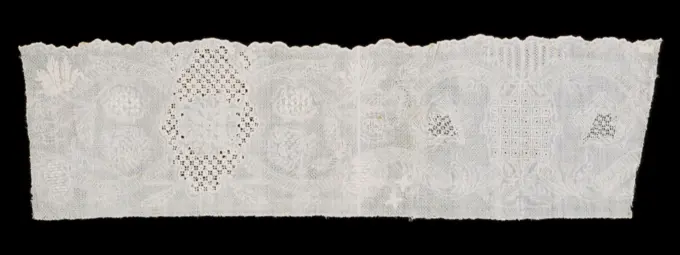
Flounce, 18th century, 26 5/8 x 7 5/8 in. (67.61 x 19.37 cm), Linen; point-ground lace (Tonder), Denmark, 18th century
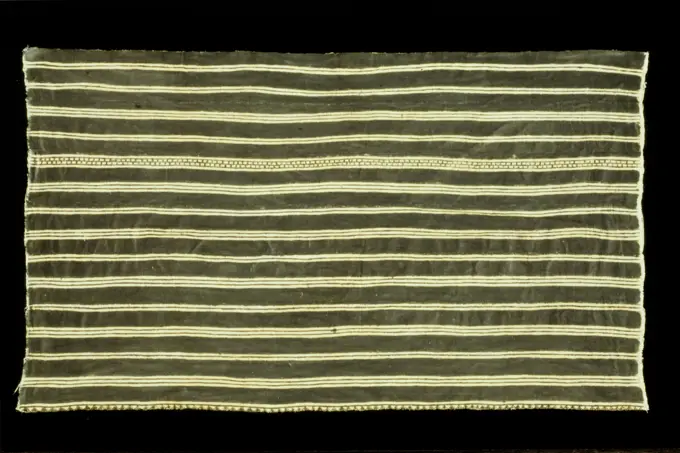
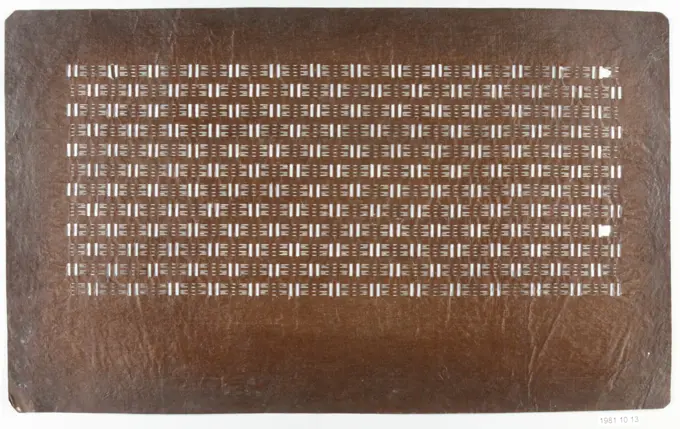
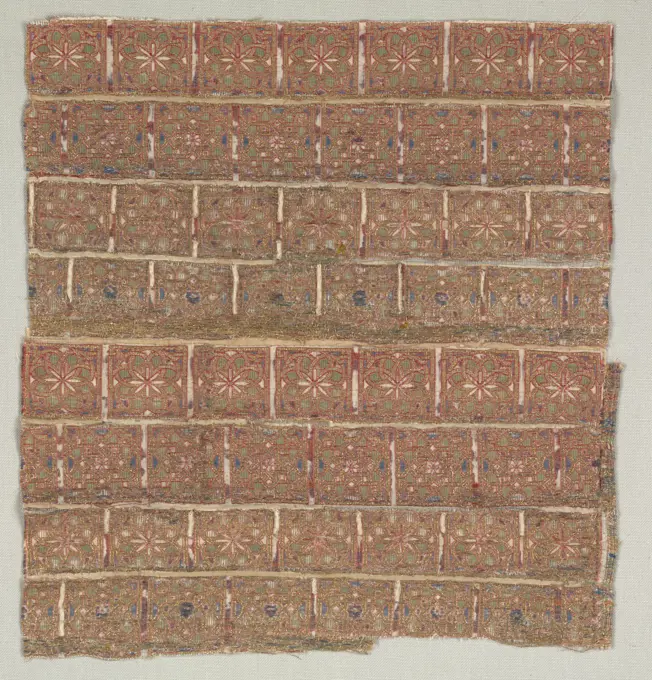
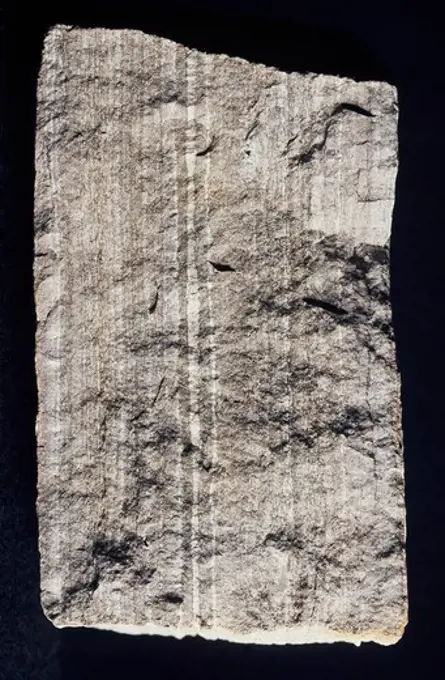
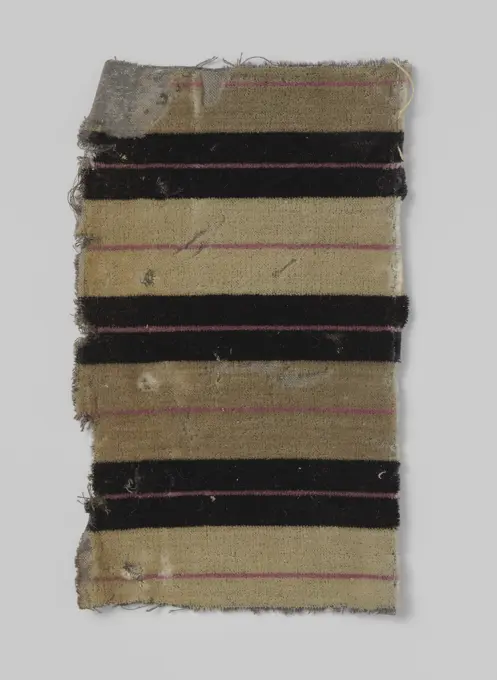
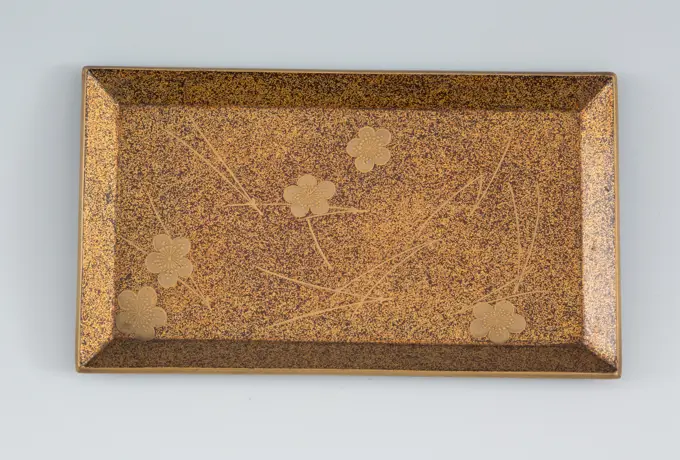
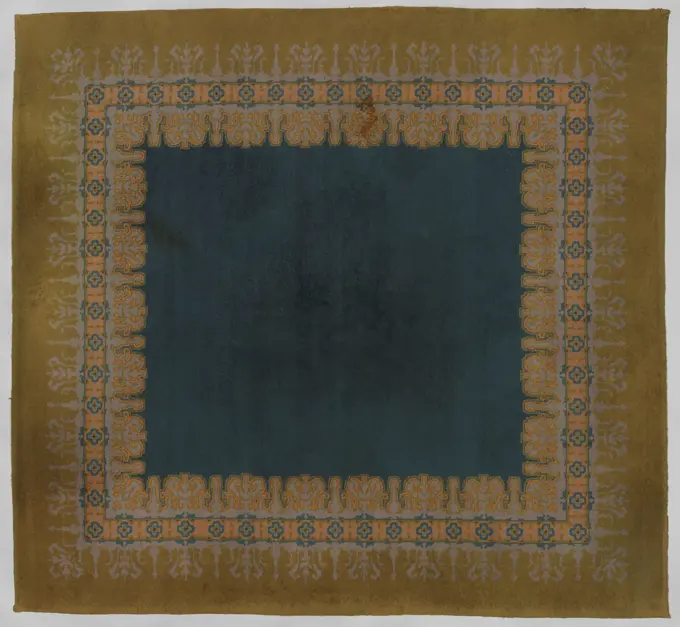
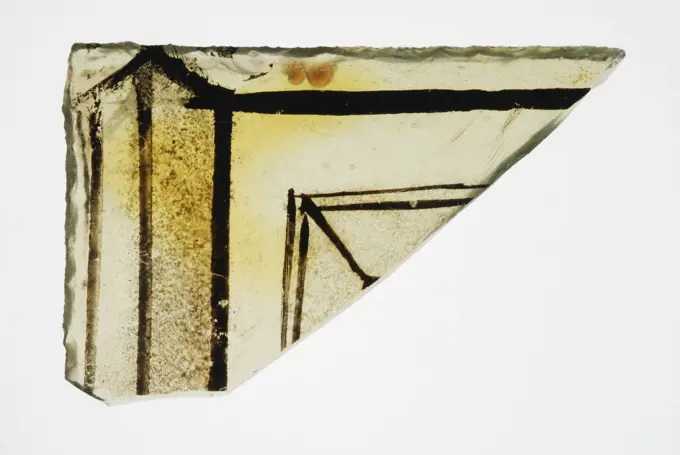
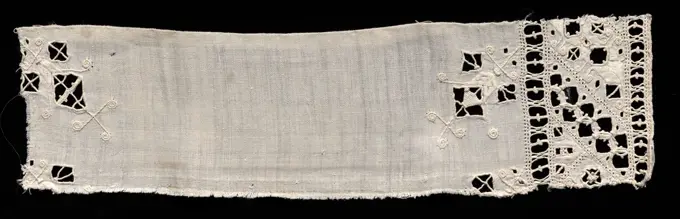
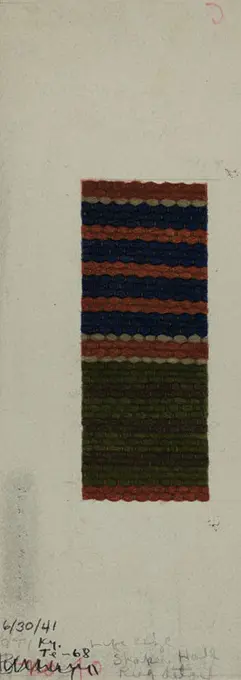
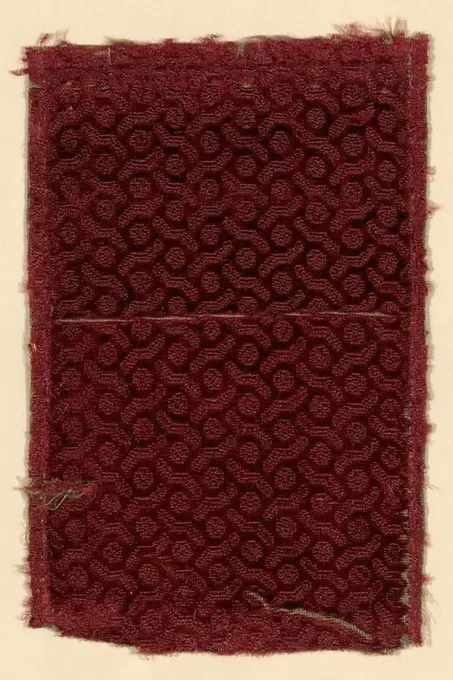
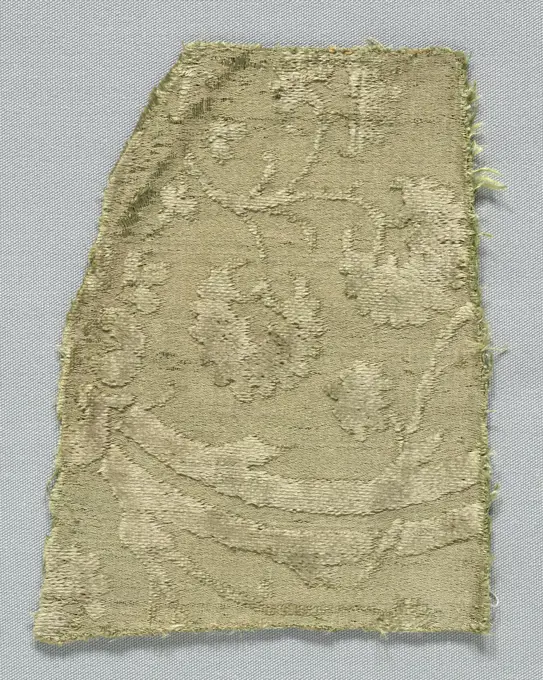
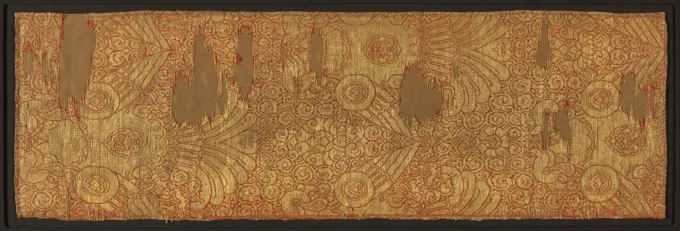
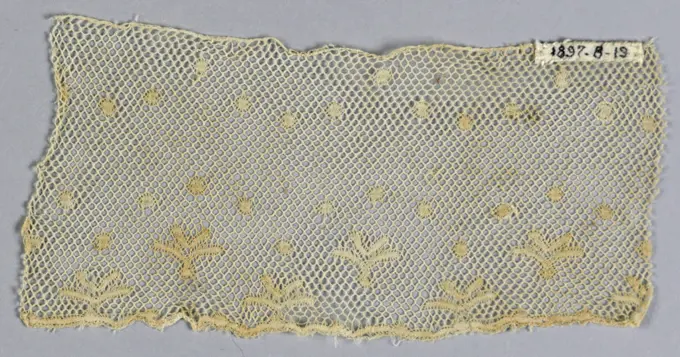
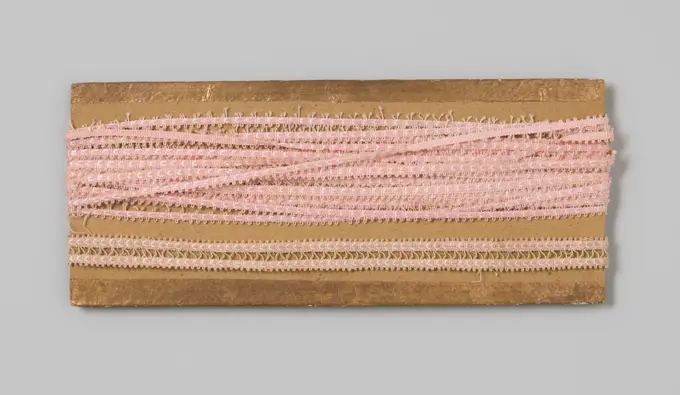
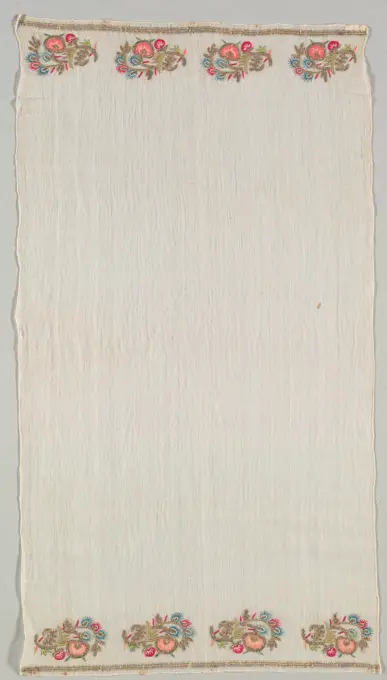
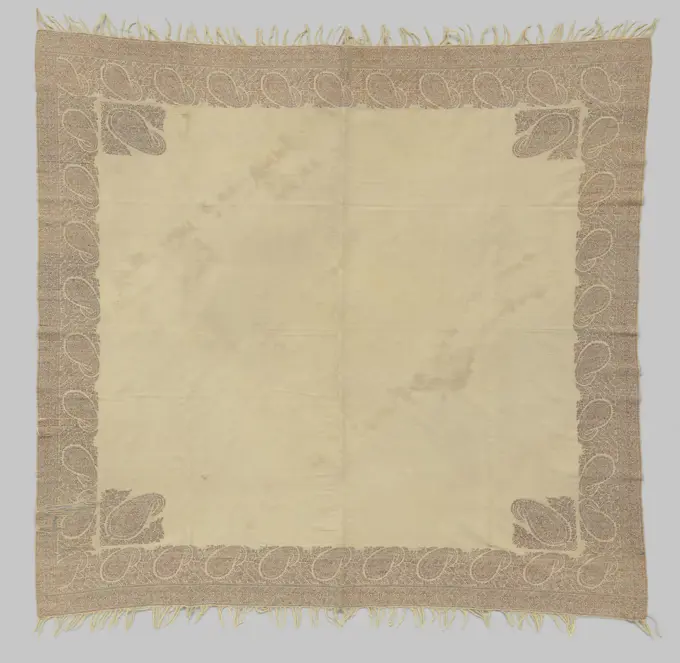
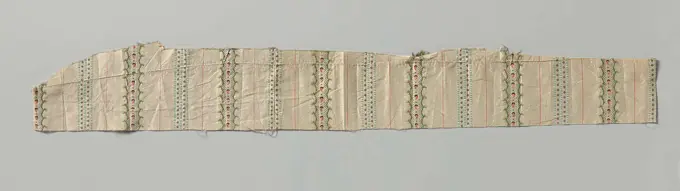
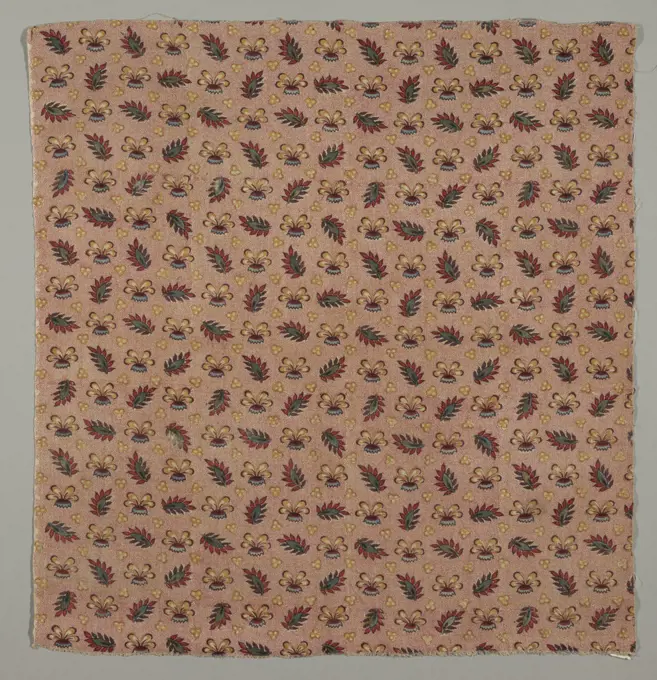
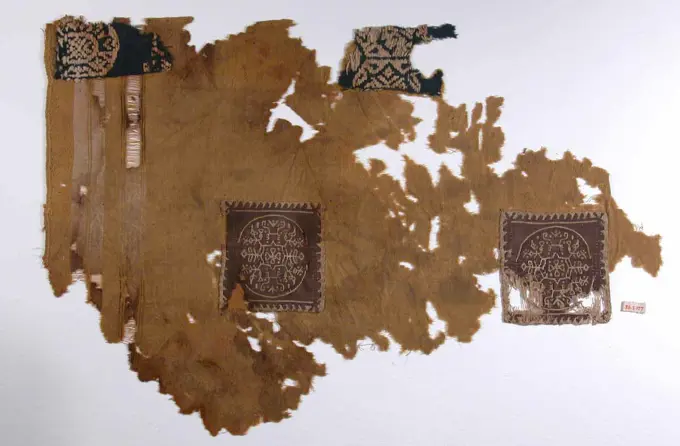
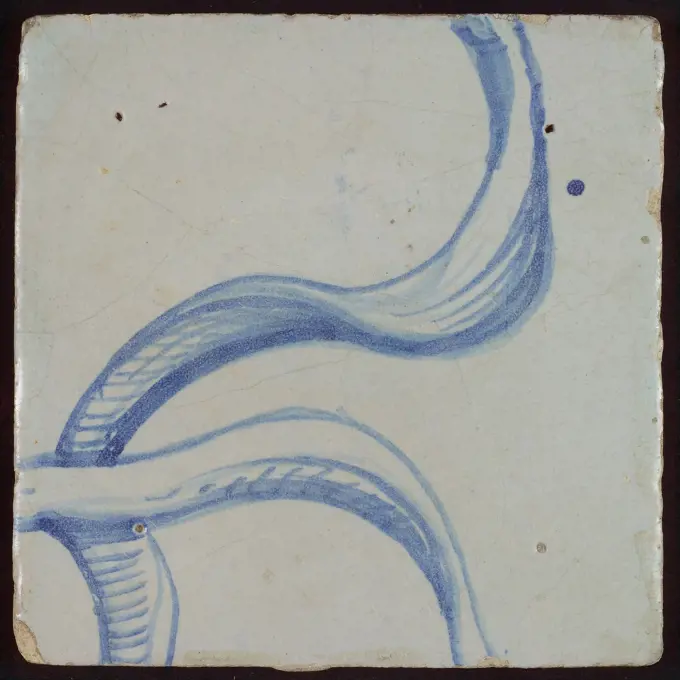
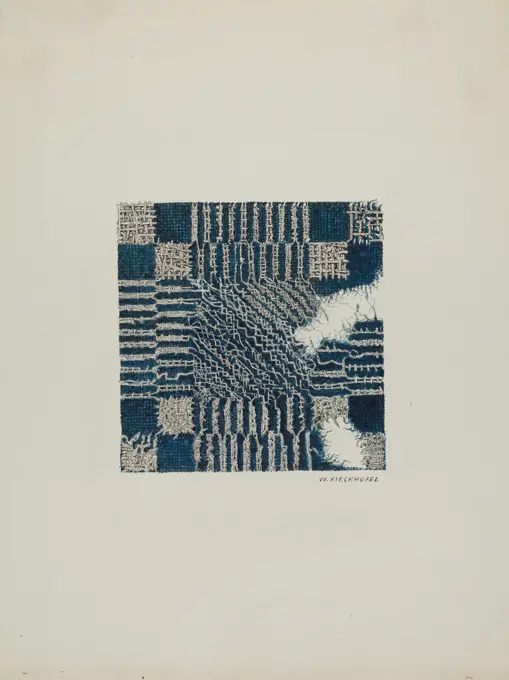
Piece 18th-19th century Japan. Piece 67354Skirt Flounce (Philippines); silk, banana-leaf fiberFragment, Medium: silk Technique: weft floats in satin foundation, Diagonal bands with acorns in blue. One selvage present., 17th century, woven textiles, FragmentTextile Sample from Sample Book 19th century Japan. Textile Sample from Sample Book 68212Flounce, 18th century, 26 5/8 x 7 5/8 in. (67.61 x 19.37 cm), Linen; point-ground lace (Tonder), Denmark, 18th centuryTextile Fragment late 17th century. Textile Fragment. late 17th century. Silk. Made in Iran. TextilesFragment, Medium: silk, linen and metal Technique: brocatelle, Swirling scrolls and leaves in mauve, brown and yellow., 17th century, woven textiles, FragmentTowel scarf, 17th century, 49 x 19 3/8 in. (124.5 x 49.21 cm), Linen; needlework, Armenia, 17th centuryFragment, Medium: linen, silk Technique: plain weave, Red and tan plaid., Middle East, 13th century, woven textiles, FragmentFragment; silk; Bequest of Richard Cranch Greenleaf in memory of his mother, Adeline Emma Greenleaf; 1962-56-118Piece 17th century China or Japan. Piece. China or Japan. 17th century. Silk / Compound weave. Textiles-WovenPriest's Robe 19th century Japan. Priest's Robe 69032Piece 15th century Japan. Piece 71125Fragments, Medium: silk, metallic Technique: plain weave with complementary wefts, Reversible fabric with silver crescents on a blue ground., before 17th century, woven textiles, FragmentsMudcloth skirt, 20th century, 68 3/4 x 34 1/4 in. (174.63 x 87 cm) (Uneven; with frayed fringe), Cotton; mudcloth (bogolanfini); dyed, Mali, 20th centuryGordellin tint made of white rips side with woven flower pattern; At both short ends of the ribbon are hooks and eyes attached, anonymous, c. 1800 - c. 1820 Gordellin tint made of white rips side with woven flower pattern. Hooks and eyes are attached to both short ends of the ribbon. Netherlands silk Gordellin tint made of white rips side with woven flower pattern. Hooks and eyes are attached to both short ends of the ribbon. Netherlands silkTextile with Spotted Dyeing (kanoko shibori) Japan. Textile with Spotted Dyeing (kanoko shibori). Japan. Resist-dyed plain-weave bast-fiber (asa) crepe. Edo period (1615-1868). Textiles-DyedBuratto ca. 1600 Italian or German. Buratto 217951Stencil 19th century Japan. Stencil 70671Fragment; silk, metallicPiece 18th-19th century Japan. Piece 67275Sleeve top early 19th century () Hungarian or Transylvanian. Sleeve top 221337Vestment fragment with stars in staggered squares, 1200s. Spain, probably Almeria. Silk and gold thread: lampas weave with areas of double cloth; overall: 28.6 x 26.7 cm (11 1/4 x 10 1/2 in.); mounted: 38.7 x 36.8 cm (15 1/4 x 14 1/2 in.).Towel-scarf, 19th century, L.59-1/4 x W.18 in., linen, silk; needlework, Turkey, 19th centuryPiece 15th century Japan. Piece 71057Fragment, Medium: linen Technique: bobbin lace, Border with a picot edge. Design of small, squarish flowering brances. Round mesh., France, late 18th century, lace, FragmentPiece 18th century Japan. Piece 71676Laminated Dolostone, rock.Wall Facing (Netherlands); tin-glazed earthenware, underglaze; 5 tiles tall, various wideBand (Peru)Textile Sample from Sample Book 19th century Japan. Textile Sample from Sample Book. Japan. 19th century. Silk / Tapestry. Textiles-WovenFragment (Japan)Textile 16th century German. Textile 463254BeltChest. Chest.CDK unknownBedcover. Made for the wedding chest of Eliza Ann Hunnewell; United States, Massachusetts, Newton. Date: 1778. Dimensions: 244.2 x 228.6 cm (96 1/8 x 90 in.). Wool, plain weave, glazed (calimanco); quilted with silk thread. Origin: United States. Museum: The Chicago Art Institute, Chicago, USA.Cape (Handira), 20th century, 108 x 57 in. (274.32 x 144.78 cm) (length includes fringe), Wool, silk, cotton, glass beads, sequins; weft-faced brocade, Morocco, 20th century, The Berber women of Morocco have long been admired for their elaborate weaving. Like cloth in many parts of the Islamic world, a mantel such as this is often multifunctional. When worn as a wraparound winter cloak, the fabric is held in place by a pin inserted through the overlapping corners under the chin. With its glass beads and sequins, the cloth can also serve as a decorative bedcovering for an honored guest.Retro look Postcard Vintage looking A blank postcard useful as a background - isolated over white background Copyright: xZoonar.com/ClaudioxDiviziax 5826016Knoted rug, with blue middle part and ornament edge, Theo Colenbrander, c. 1925 Knoted rug, with blue centerpiece and ornamnet edge in gray, green, blue and yellow -orange and plain green outer edge. Design by Th.A.C. Colenbrander (1841-1930). There are wear spots and a few small moth holes in a number of places. Netherlands wool. cotton (textile) Knoted rug, with blue centerpiece and ornamnet edge in gray, green, blue and yellow -orange and plain green outer edge. Design by Th.A.C. Colenbrander (1841-1930). There are wear spots and a few small moth holes in a number of places. Netherlands wool. cotton (textile)Corner fragment of green window glass with stained-glass decor, plinth or frame, window glass building material soil find glass, cast drawn cut painted baked Fragment of glass of tinted window glass. Stained glass corner fragment. Image shows part of the picture or plinth archeology Landpoortstraat Geervliet Bernisse indigenous glasswork adorn living building glasier hof van Putten archaeological find in the soil Geervliet pit Landpoortstraat 1 September 1983.Piece of blank brown torn notepaper on a white backgroundSample early 19th century French. Sample 219335Fragment of Needlepoint (Cutwork) Lace, 17th century. Italy, 17th century. Lace, needlepoint: linen; average: 35 x 9.6 cm (13 3/4 x 3 3/4 in.).Shaker Rug. Dated: 1941. Dimensions: overall: 24.6 x 9 cm (9 11/16 x 3 9/16 in.). Medium: watercolor and graphite on paperboard. Museum: National Gallery of Art, Washington DC. Author: Mona Brown.Sarong, 19th century, L.79 x W.41-½ in., cotton; dyed, Indonesia, 19th centuryPiece 18th-19th century Japan. Piece. Japan. 18th-19th century. Silk. Textiles-WovenFragment. Italy. Date: 1775-1800. Dimensions: 17.5 x 11.4 cm (6 7/8 x 4 1/2 in.). Silk, warp-float faced broken twill weave with supplementary pile warps froming cut and uncut solid velvet. Origin: Italy. Museum: The Chicago Art Institute, Chicago, USA.Ribbon, Medium: silk Technique: uncut supplementary warp pile (velvet) in a satin foundation, Pale pink ribbon with pile warp loops over several wefts., France, late 19th century, woven textiles, RibbonPattern ca. 1840 British. Pattern. British. ca. 1840. Parchment. Textiles-Methods and MaterialsFragment of a Chasuble, 1400-1420. Italy, beginning of the 15th century. Velvet (cut and voided); silk; overall: 23.8 x 12.2 cm (9 3/8 x 4 13/16 in.).Turban Band, Medium: wool weft Technique: slit tapestry, Narrow slit tapestry strip with adjacent diagonal stepped repeats in white, rose reds, browns, golden yellow. One end finished with attached long tassel of brown wool yarns joined at top by a small piece of plaited casing, and the other with a wound casing in yellow, brown, red wool., Peru, 11th-12th century, woven textiles, Turban band, Turban bandPiece 18th-19th century Japan. Piece. Japan. 18th-19th century. Silk. Textiles-Wovenwindow,  military tent as a frameUnattached Spacers from a Bracelet or Anklet of Sithathoryunet. Dimensions: l. 16.5 cm (6 1/2 in); w. 4.4 cm (1 3/4 in). Dynasty: Dynasty 12. Reign: reign of Senwosret II-Amenemhat III. Date: ca. 1887-1813 B.C.. Museum: Metropolitan Museum of Art, New York, USA.Tapestry Band Fragment 10th-15th century Peru; central coast (). Tapestry Band Fragment 307803Cloth of Gold: Displayed Falcons, mid 1200s. Central Asia, mid-13th century. Lampas, silk and gold thread; overall: 57.5 x 18.4 cm (22 5/8 x 7 1/4 in.); mounted: 67.9 x 29.8 cm (26 3/4 x 11 3/4 in.).Piece 18th-19th century Japan. Piece 72029Stole, Maniple, Pair of Amice Made 1675-1725 Spain. Silk, warp float-faced 7 1 satin weave self-patterned by ground weft floats; embroidered with gilt- and silvered-metal coils and gilt- and silvered-metal-strip-wrapped hemp in couching and padded couching; metal spangles; edged with tape of strips of plain and diamond twill weave .Fragment, Medium: linen Technique: bobbin lace, Fragment of Valenciennes lace has dots and conventionalized leaves in groups of four. Round mesh., France, 18th century, lace, FragmentWoman's wrapper, late 19th century, 78 3/8 x 48 7/16 in. (199.07 x 123.03 cm), Cotton, silk, Nigeria, 19th centurymaterial of old sacking bagRohscanFragments of velvet late 13th-14th century Iranian, probably Tabriz Imported Middle Eastern textiles were highly valued luxury goods during this period, and this velvet pattern was originally the product of the Persian workshops of Tabriz. The number of surviving pieces in European and American collections suggests that this attractive pattern was produced in relatively large quantities; it may have been imitated by Italian velvet weavers and produced for a long period of time.. Fragments of velvet 230033Fragment of lace 18th century Italian. Fragment of lace. Italian. 18th century. Textiles-LacesAnonymous, small French tricolor flag (1919 - 1944 - 1945) (usual name), 1919. Cotton, metal, wood. Museum of the Liberation of Paris - General Leclerc Museum - Jean Moulin Museum.Leaf with branches with flowers, anonymous, 1700 - 1850 brocade paper Leaf with tibaries with flowers. With label with inscription: 'H. Carbasius ... Solitis'. Used as a cover.  paper. paint (coating) relief printingFragment yellow silk tissue with a yellow pattern. Fragment yellow silk fabric with a pattern of a network of wavy motifs that form spaces in which a stylized vase with flowers.Band Fragment (Egypt); warp; s-spun linen. wefts; s-spun linen, s-spum woolPassement rose in color and equipped with picots, c. 1920 Passement rose in color and with picots. NijmegenFrance (possibly) cardboard Passement rose in color and with picots. NijmegenFrance (possibly) cardboardEmbroidered Towel (Peshkir), 19th century. Turkey, 19th century. Embroidery; silk and gold filé on cotton tabby; average: 81.2 x 43.5 cm (31 15/16 x 17 1/8 in.).Shaker Chair Seat Covering. Dated: c. 1936. Dimensions: overall: 20.3 x 25.6 cm (8 x 10 1/16 in.). Medium: watercolor and graphite on paper. Museum: National Gallery of Art, Washington DC. Author: Alice Stearns.burlap hessian sacking and aged paperFragment 18th century Italian, Venice. Fragment. Italian, Venice. 18th century. Silk, metal thread. Textiles-VelvetsSkirt Cloth (Kain panjang) Indonesia. Cotton, plain weave; wax resist dyed (batik) .number one in isolated wood letterpress printing block, stained by red inkTextile Fragment 3rd-4th century. Textile Fragment. 3rd-4th century. Wool, linen; plain weave, tapestry weave. Made in Egypt. TextilesSquare scarf with solid white midfield with a small corner motif and light blue and red striped edge with botas, anonymous, c. 1830 Square scarf with solid white midfield with a small corner motif and light blue and red striped edge with saved botas. Technology: White Silk Necklace, White and Colorful Woolen Insert Went in 2: 2 Tweers binding. Launched cross edges and browned standing edges. Corner pattern: small squares with bota, turned in in red, light blue and white stripes. The bent top is small and pointed. Rand: Without inner zoom, the field is separated from the edge. In the cross edges, the pattern is running of one -sided botas, the latter of which is at the self -sided, as cut off. The standing edges are symmetrical to the standing panel and have added botas. A white border has been saved between a full intermediate pattern around all Botas. Frank: with sewn, fluffy woolen necklace. Norwich impact: Wool. Necklace: Silk. fringe: Wool twill Square scarf with solid white midfieFragment gestreepte, veelkleurige zijden mexicaine.Fragment white silk with colored stripes (presumably sleeve garnish). Note: Self side; 5 mm in the solid bond. Consists of three jobs of 44.5 cm. Self-sides on the inside plus one self-side folded right to inside.Textile, Oberkampf & Cie., (Jouy-en-Josas, France, 1759-1815), Medium: linen warp, cotton weft Technique: block printed on plain weave, Heavyweight fragment in a small allover design of leaf and bud clusters. Ground in red picotage. Leaf with a green center and leaves in red and dark brown. Buds are yellow rising from small mounds of red and blue., Jouy, France, ca. 1780, printed, dyed & painted textiles, TextileFontaneldoek of white linen with lace; marked in Red Cross stitch: H8, Anonymous, c. 1750 - c. 1900 12 linen fontanelletjes with different side deposited, 4 marked LH8, 3 gem. H8, 5 Gem. HVS (Gr. Hoogenhuize "1772-1852" tr. 1802 S.E. von Schmid "1771-1843"). 1 of Damast gem. HH6 (W.R. Hoogenhuize "1747-1804" TR 1787 W. Helmerich "1752"). Europe linen (material). 12 linen fontanelletjes with different side deposited, 4 marked LH8, 3 gem. H8, 5 Gem. HVS (Gr. Hoogenhuize "1772-1852" tr. 1802 S.E. von Schmid "1771-1843"). 1 of Damast gem. HH6 (W.R. Hoogenhuize "1747-1804" TR 1787 W. Helmerich "1752"). Europe linen (material).Back doublure.. Hervieu, Paul (1857-1915). bindings (gathered matter components), Book covers. 1890. Spencer Collection. BookbindingTextile Fragment 3rd-4th century. Textile Fragment 443896Fragment of a Tunic 5th century. Fragment of a Tunic 443663Fragment of silk fabric unknownTextile (France); silk; Anonymous bequest in memory of Albert and Rebecca Elsberg; 1938-82-204-cSidewall, Block printed on handmade paper, Octagonal coffers printed in grisaille with green inset, surrounded by white lacey floral and anthemia design. Honeycomb pattern on verso., France, ca. 1810, Wallcoverings, SidewallEnsemble of various objects from side exhibited against a dark background; Exhibition Kant from Royal Property ..Fragment. Peru, north coast, Culebra Vallery, La Capilla. Date: 1000-1476. Dimensions: 24.8 × 13.3 cm (9 3/4 × 5 1/4 in.). Origin: Peru. Museum: The Chicago Art Institute, Chicago, USA.Lacquer Samples. Culture: Japanese. Dimensions: H. 4 11/16 in. (11.9 cm); W. 1 1/2 in. (3.81 cm). Date: 19th century. Museum: Metropolitan Museum of Art, New York, USA.Tile with blue winding garlands, tile pilaster footage fragment ceramic pottery glaze, d 1.4William Kieckhofel, Coverlet (Section of), c 1940 Coverlet (Section of)decorative frame on white backgroundShawl, Medium: wool Technique: 2/2 twill tapestry (field); 2/2 twill double interlocked tapestry (inner border); 2/2 twill tapestry patches embroidered mainly in stem stitch, Square shawl with red center or field made to folded on a diagonal and worn as a triangle. Inner border has Kashmir woven strips with Kashmir woven inserts. Outer fringed border with patchwork and embroidery of above average quality. Embroidered inscription on one corner., Kashmir, India, 19th century, woven textiles, ShawlHalfovaalvormig fragment van kloskant met strooipatroon en bladerenrand.Semi-relocal fragment of black climbing side: Chantilly side. Sprinkle pattern with dots on a fine hexagonal grille. A scalloped edge of large leaves runs along the curved side. Above the large leaves a flower branch with round leaf flowers around and interspersed with a flower branch with flowers with heart-shaped petals. The other sides have been cut and not finished. The side may be a fragment of a hat veil.Ribbon of cream-colored silk, in bulk the Tours-binding, decorated with a repeating motif consisting of a pink flower between two white leaves in, anonymous, c. 1760 - c. 1770 Cream -colored silk ribbon, decorated with a repeating flower motif. The ribbon in Gros de Tours-binding is decorated with a repeating motif consisting of a pink flower between two white leaf vines. The motifs are separated from each other by the middle of an originally woven with silver wire. Hanekammen adorn the self -sides. France (possibly) whole: Silk Cream -colored silk ribbon, decorated with a repeating flower motif. The ribbon in Gros de Tours-binding is decorated with a repeating motif consisting of a pink flower between two white leaf vines. The motifs are separated from each other by the middle of an originally woven with silver wire. Hanekammen adorn the self -sides. France (possibly) whole: SilkPaper bag in which 22 hairs, packed per 2 or 3 pieces, with English / Japanese inscription. Black hairs, in 22 bags with Japanese address, on the other hand with English text. In a Japanese department store bag. Most pockets with two or three neatly folded in a trunk. Inscription 'Hair just' next to a women's head with her in a net. Four bags with 'La Parisienne Self Conforming Cap-Shape Net'.Glass Fragment. Culture: European. Dimensions: Overall: 2 3/4 x 2 1/4 inches (7 x 5.5 cm). Date: 17th century. Museum: Metropolitan Museum of Art, New York, USA.Fragment of a cloak of ciselé velvel with dock edge, according to surrender from Hugo de Groot. Fragment of a mantle of black ciselé velvel on which black climbing side is sewn. According to tradition, the fragment comes from a cloak of Hugo de Groot.Sampler 19th century German. Sampler 228602