Historical Textile Fragments

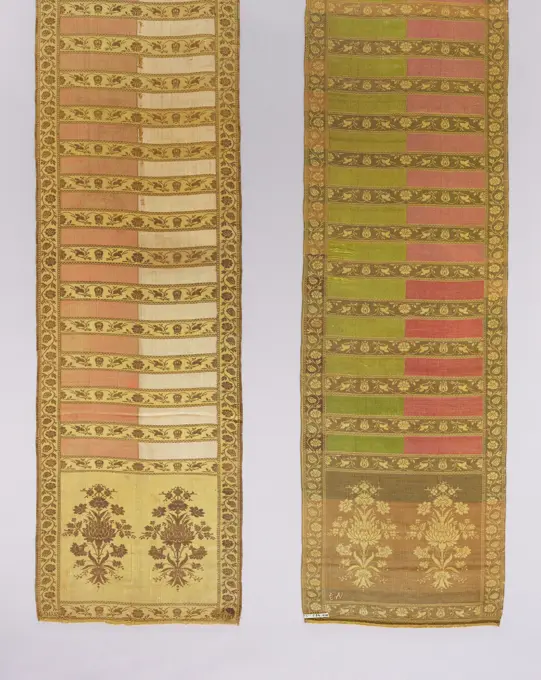
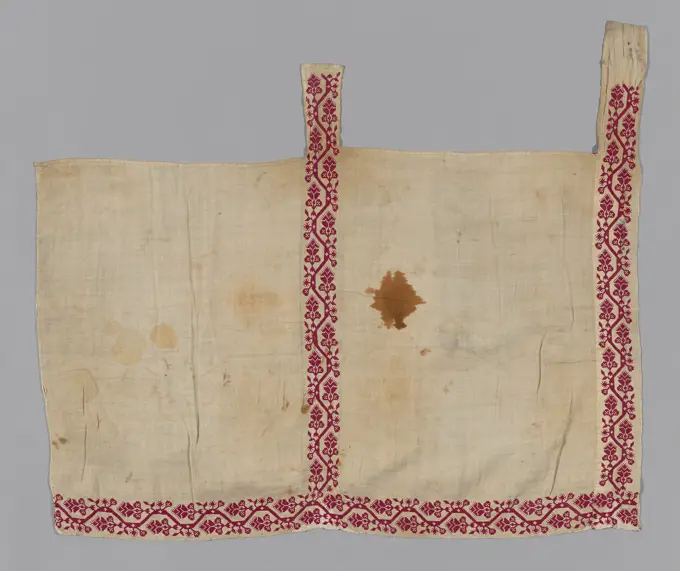
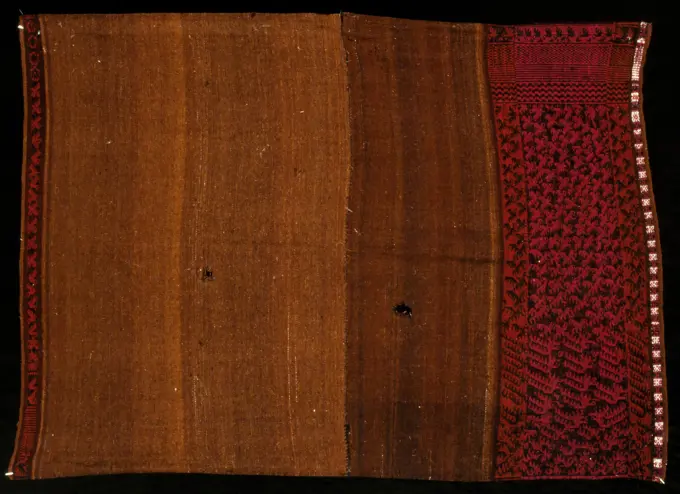
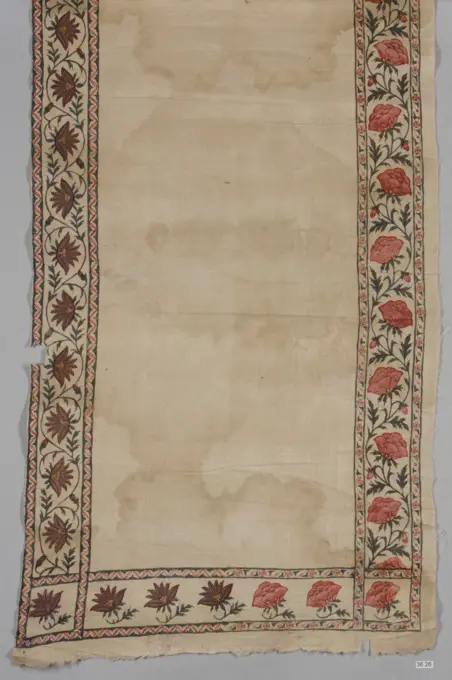
Intricate textile pieces featuring patterns and embroidery, showcasing artistry from various historical periods and regions.

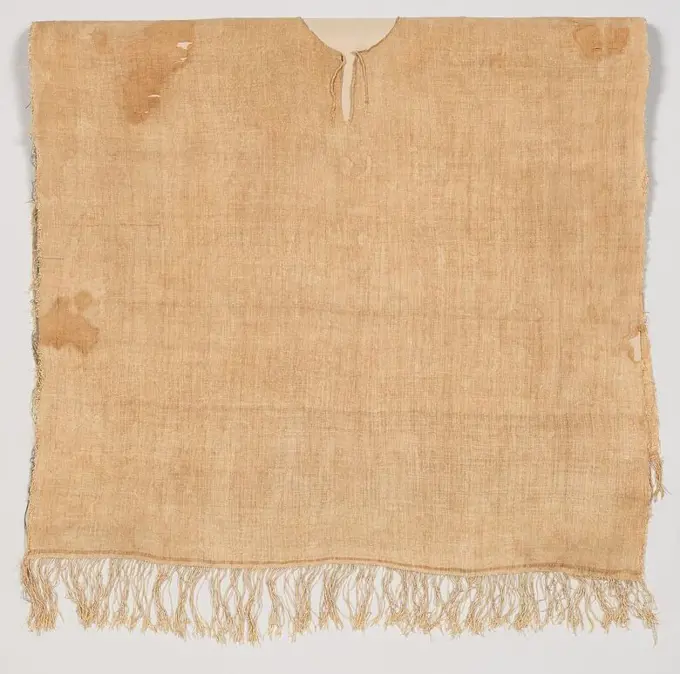
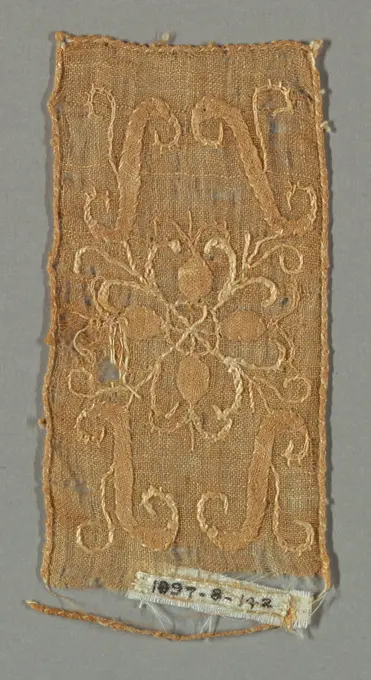
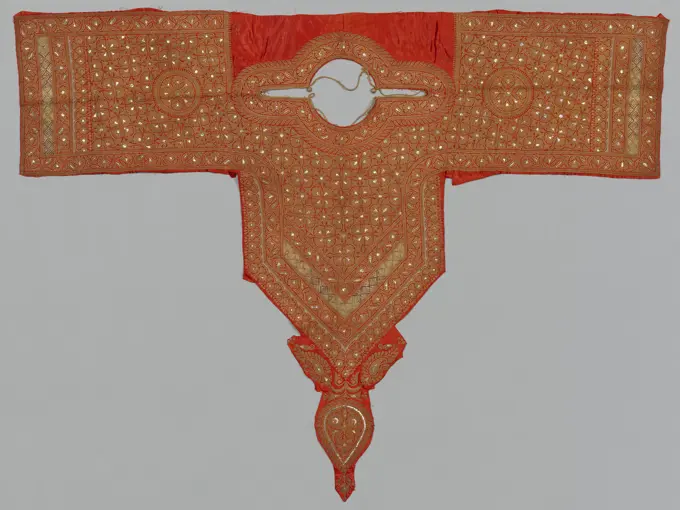
Comforter cover, 19th century, H.63-5/16 x W.36-1/16 in., Cotton, China, 19th century
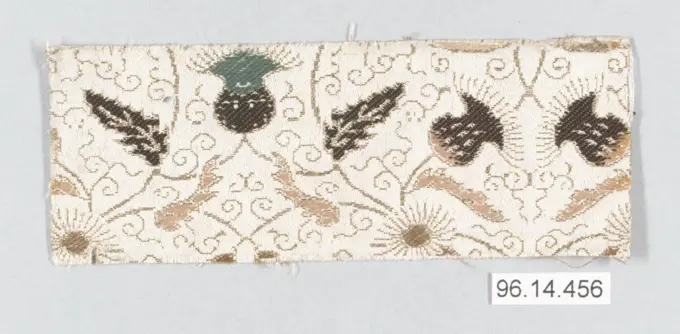
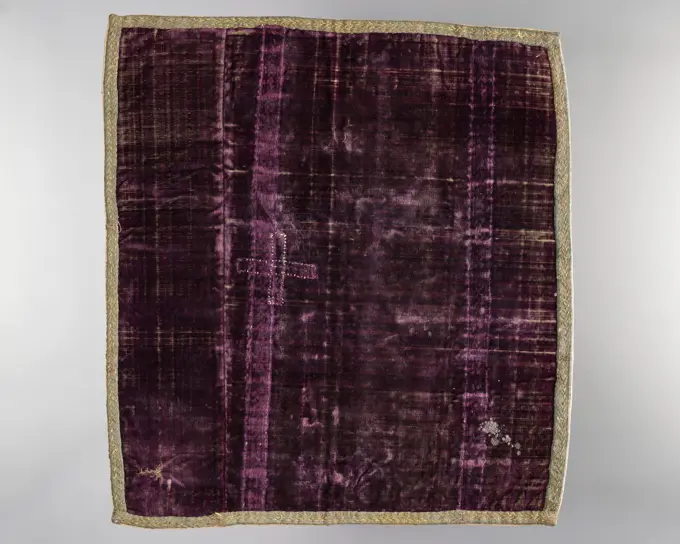
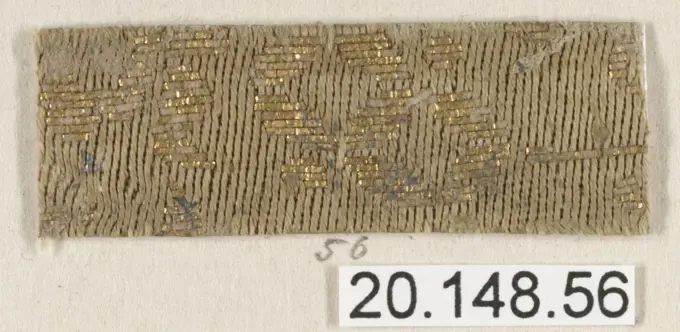
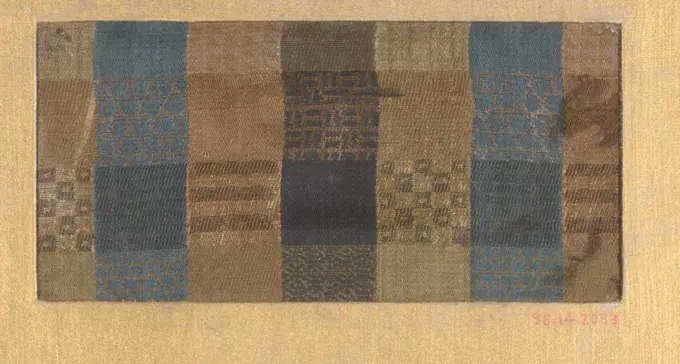
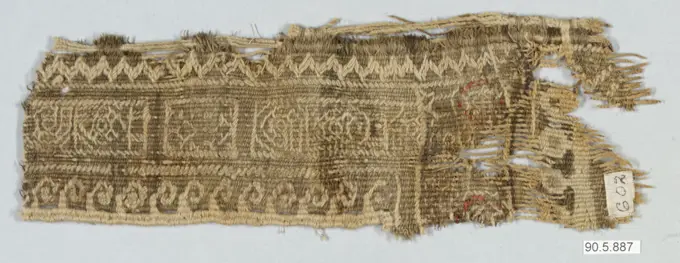
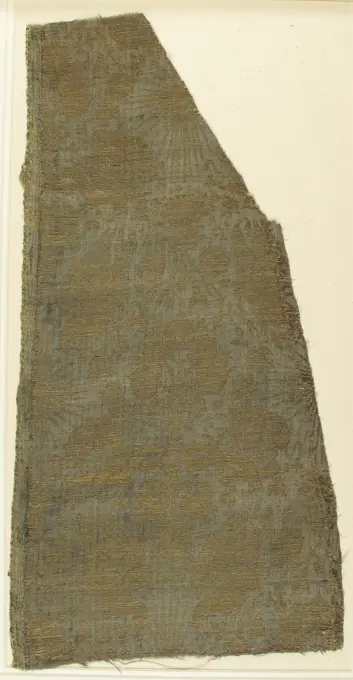
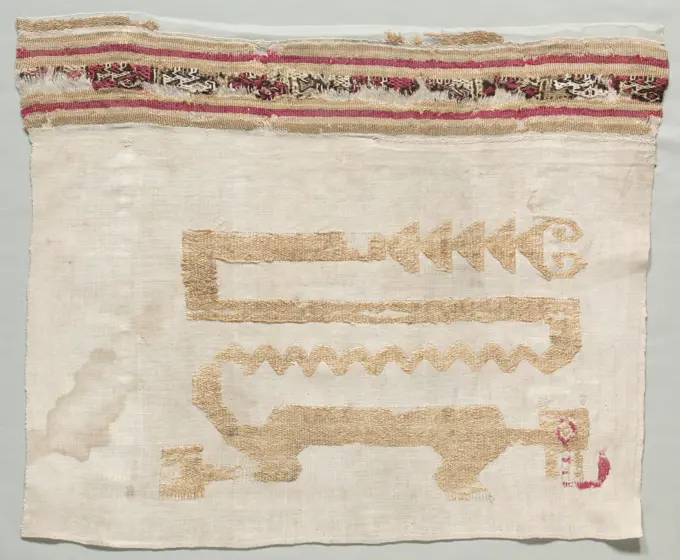
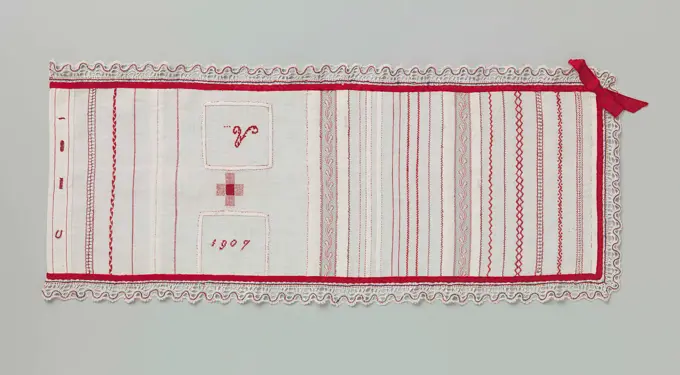
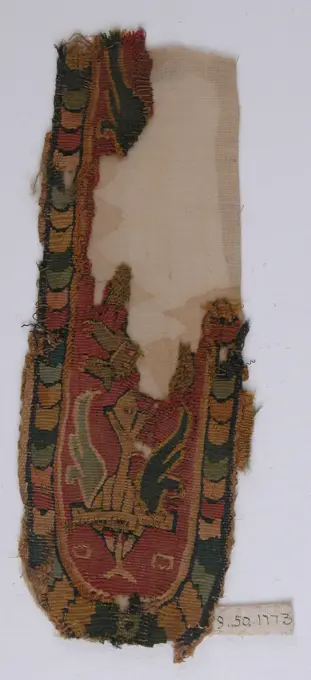
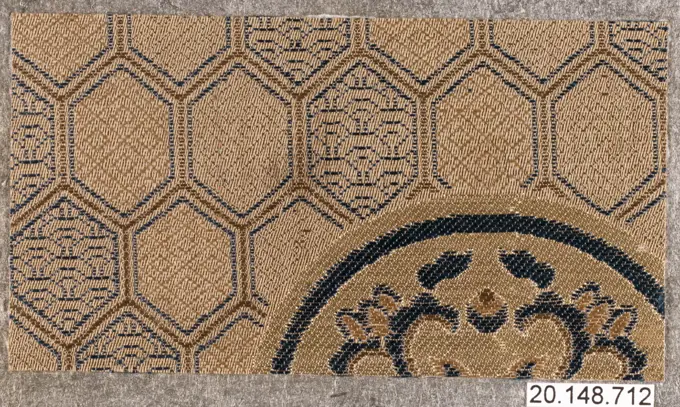
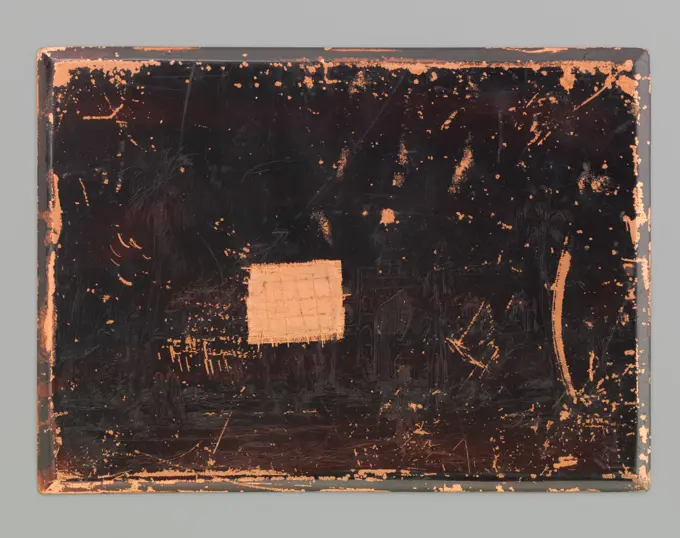
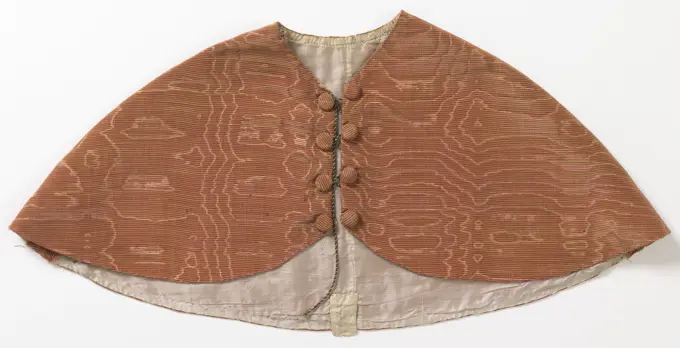
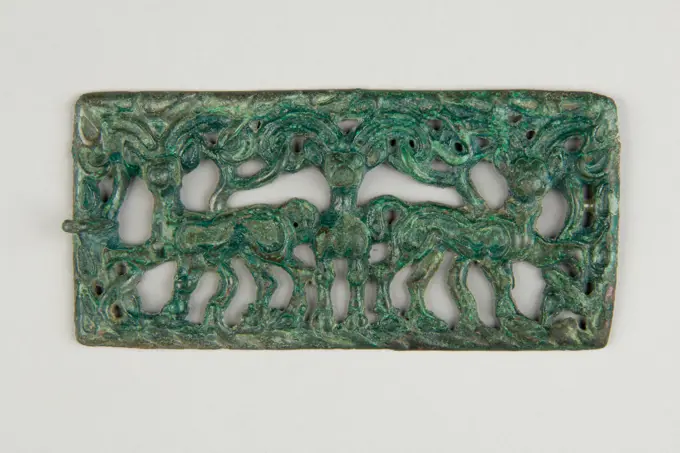
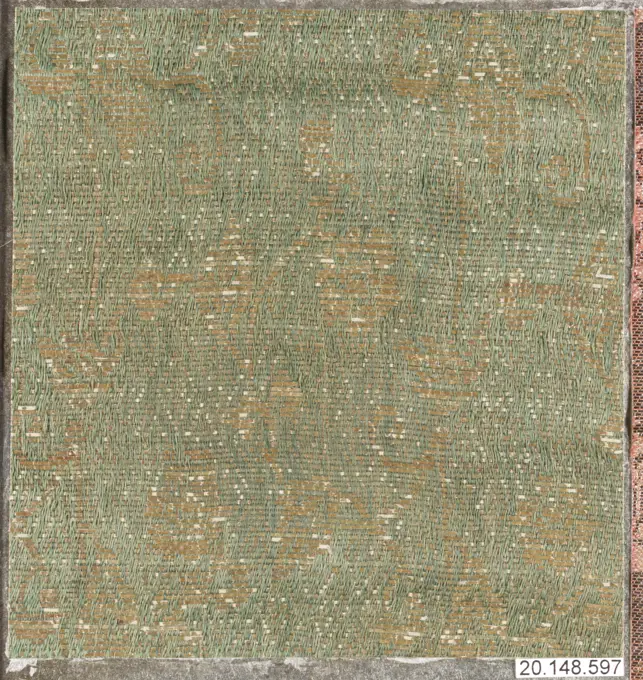
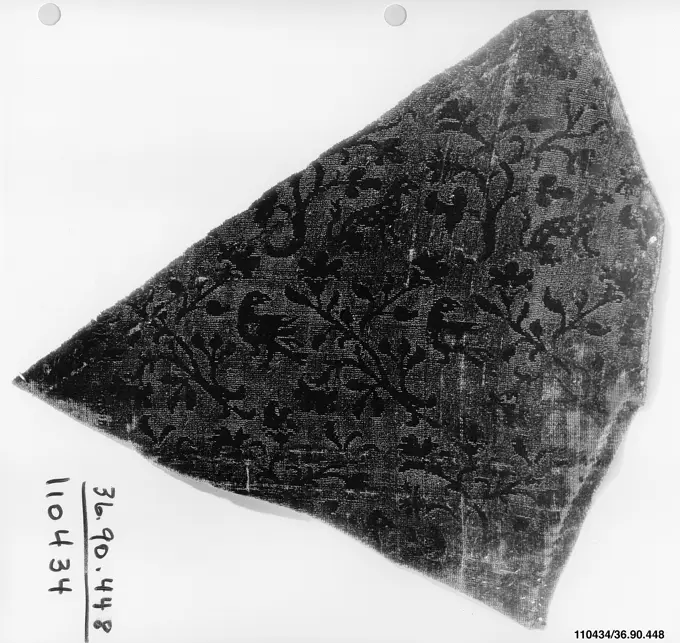
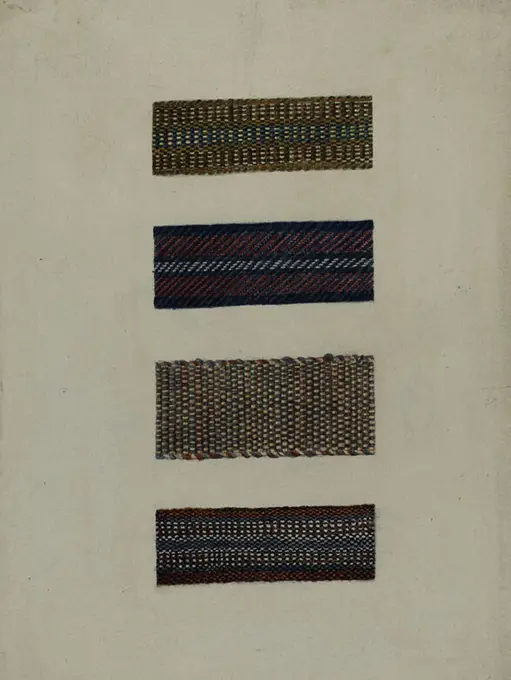
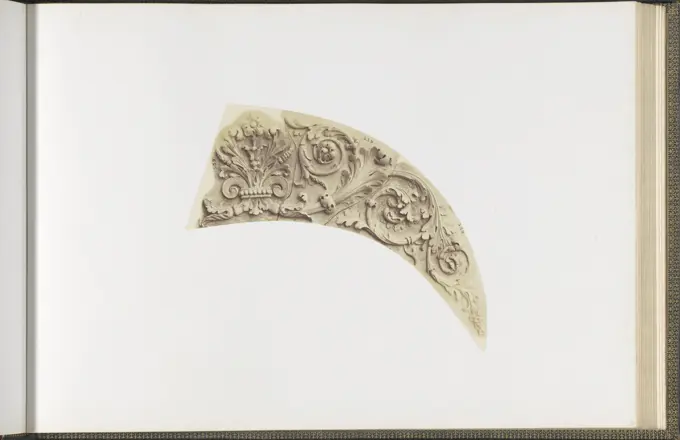
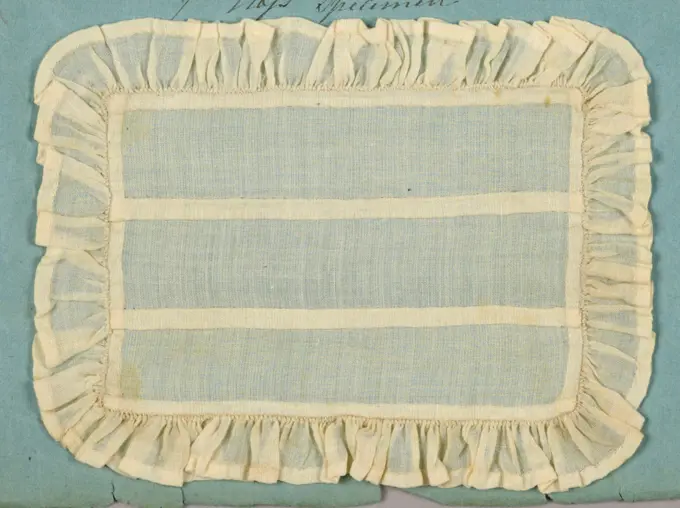
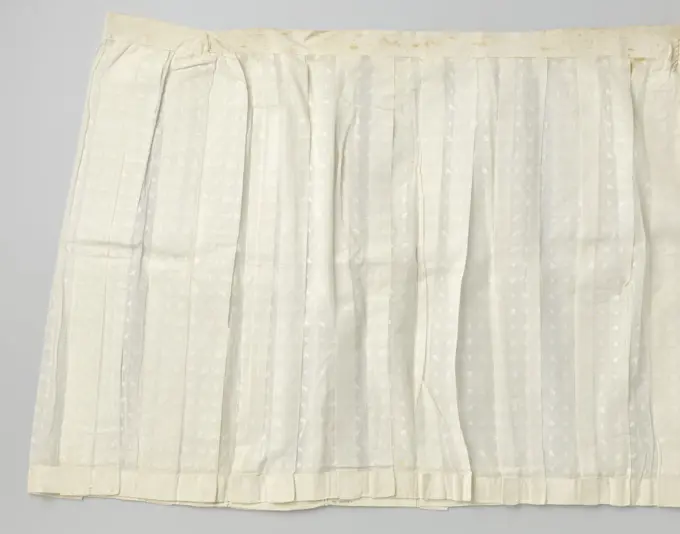
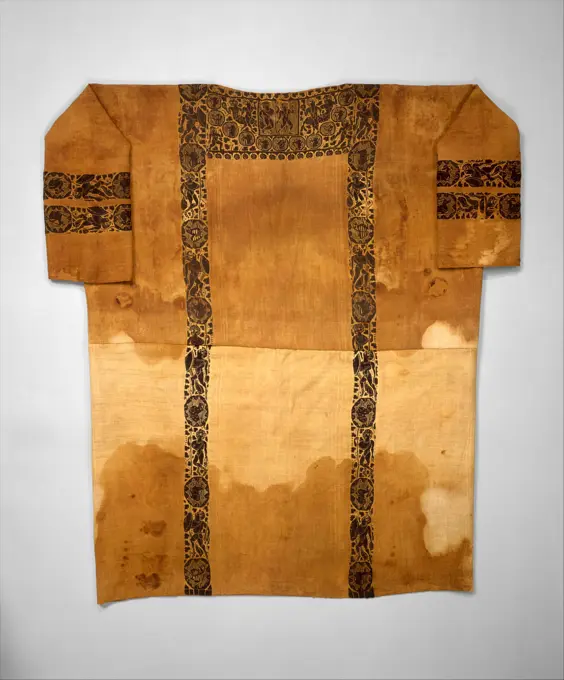
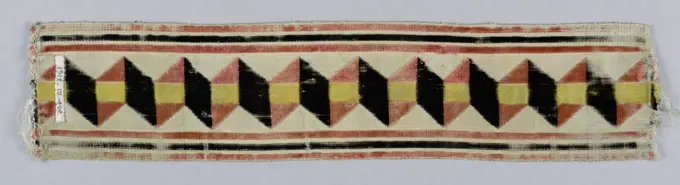
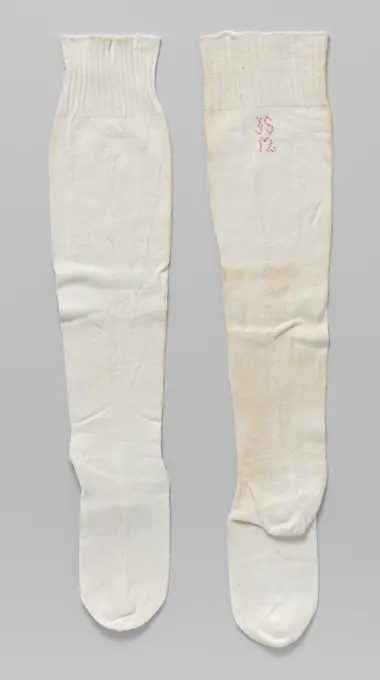
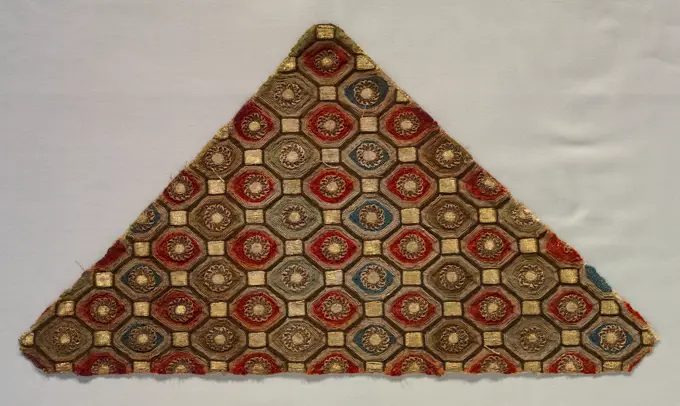
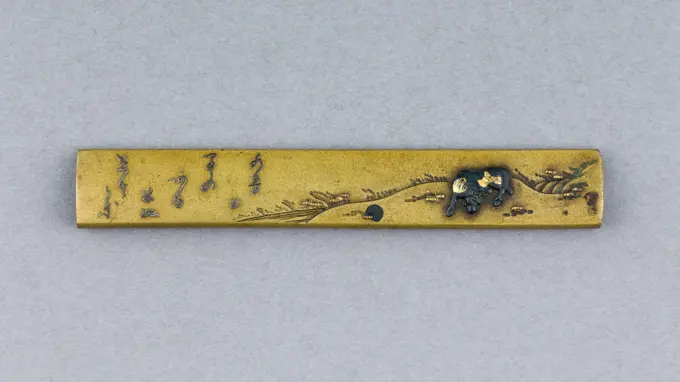
A fragment of silk fabric unknownSquare 17th century Italian. Square 214785Fragment (Japan); silk, cotton ()Towel End (Denmark); linen; Bequest of Marian Hague; 1971-50-222Fragment (Italy); silk, metallic; Warp x Weft: 26.2 x 10.3 cm (10 5/16 x 4 1/16 in.); 1896-2-53Piece 18th-19th century Japan. Piece 66181Fragment of a Ship Flag, anonymous, c. 1630 - c. 1707 ship flag Fragment of the brush side of a ship's flag, blue with a white rectangle with a red cross (St. George's Cross). This is a blue ship's flag of the period 1630-1707. England wool  flag, colours (as symbol of the state, etc.) EnglandWitte rokzak, anonymous, c. 1850 - c. 1920 White skirt bag with woven stripe pattern. Europe cotton (textile) White skirt bag with woven stripe pattern. Europe cotton (textile)Siapo mamanu (tapa cloth) textiles, ceremonial objectsWelum;  18th century (1701-00-00-1800-00-00);Tunic (Shirt) with Tapestry-woven Yoke, 650-850. Central Andes, Northern Central Coast. Camelid fiber and cotton; tapestry-weave yoke and chest plaque, plain-weave body; overall: 71.1 x 100 cm (28 x 39 3/8 in.); mounted: 86.4 x 116.8 cm (34 x 46 in.).Test paper of an incustation of reticella (needle side), anonymous, c. 1920 Test paper of a square incustation of needle side - Reticella - attached to a square piece of fine batist. Pattern with an eight -pointed star in a wheel of concentric circles. Netherlands linen (material). batiste Test paper of a square incustation of needle side - Reticella - attached to a square piece of fine batist. Pattern with an eight -pointed star in a wheel of concentric circles. Netherlands linen (material). batistePiece 16th century Japan. Piece 71050Piece 18th-19th century Japan. Piece. Japan. 18th-19th century. Silk. Textiles-WovenTextile Fragment 5th-6th century. Textile Fragment. 5th-6th century. Wool. Attributed to Egypt. TextilesTextile 14th century Italian. Textile 463297Trimming, USA, ca. 1880, trimmings, TrimmingBorder, Medium: cotton Technique: block printed using padded ground, glazed, Short curtain or border of yellow cotton with detached conventionalized motif in body of curtain. Border of classic revival design. Enlaced bands form medallions to frame a hippocamp. Color are dark red, black and green (probably blue over yellow). Lined with terra cotta-colored muslin., England, ca. 1805, printed, dyed & painted textiles, BorderFragments, Medium: silk, metallic thread Technique: complementary weft plain weave., Two fragments from a mantle, one with border, Spain, 13th century, woven textiles, FragmentsCornelius Christoffels, Woven Mat, c 1940 Woven MatSquare 18th century Flemish. Square 212347Fragment from a Mantle, c. 1100-1400. Peru, North Coast, Chimú Culture, 12th-15th century. Tabby, brocaded; border: single-face pattern weave (fancy twill); cotton and wool; average: 52.1 x 64.8 cm (20 1/2 x 25 1/2 in.).Textile Fragment 5th-6th century. Textile Fragment 444041Merklap met een strook Valenciennes kant en Clunykant.Brandlap with various stitches and interruptions of two Valenciennes Entre-deux and two square adjustment pieces, in which an a and 1907. The LAP is finished with a red ribbon, an angle bow and a cluny side.Conciliate belt;  18th century (1701-00-00-1800-00-00);Cover Made 1601-1700 Italy. linen and silk .Skirt (Aksu), 1960-1970, 45 x 32 1/2 in. (114.3 x 82.6 cm), Wool, Bolivia, 20th centuryTextile swatch, Deerfield Society of Blue and White Needlework, (Deerfield, Massachusetts, USA, 1896-1926), Deerfield, Massachusetts, USA, 1910-20, Textile swatchGalloon 18th century French. Galloon 214011Child's Shirt. Dimensions: L. 65 cm (25 9/16 in.); W. 75 cm (29 1/2 in.). Dynasty: Dynasty 26-27. Date: 650-400 B.C.. Museum: Metropolitan Museum of Art, New York, USA.Textile Fragment 7th-8th century. Textile Fragment 444215Fragment, 1100s - 1300s. India, 12th-14th century. Plain cloth, resist dyed; cotton; overall: 20 x 10.5 cm (7 7/8 x 4 1/8 in.).Conciliate belt;  18th century (1701-00-00-1800-00-00);Textile, Medium: cotton, silk, metallic thread Technique: satin stitch embroidery on plain weave, Fragment of sheer cream-colored muslin embroidered in a detached small-scale flower design worked in yellow silk and silver thread. Small dots in silver thread between flowers., France, early 19th century, embroidery & stitching, TextileKontusz sash/belt. Pracownia Franciszka Masłowskiego (Kraków ; wytwórnia pasów ; 1781-1806), atelierPiece 18th-19th century Japan. Piece 66795Fragment Made 1 CE-1532 Peru. Plain compound cloth (old card) .Fragment of tunic band, Medium: linen, wool Technique: slit tapestry woven with supplementary weft wrapping, Shape with one oval end. In the center a procession of spitited animals., 5th-7th century, woven textiles, Fragment of tunic bandBliżej Kultury unknownFragment Made 1450-1500 Italy. Silk, warp-float faced 4 1 satin weave with supplementary pile warps forming cut voided velvet; stamped .Red Silk Velvet., 1600 - 1699 A dress of dark red silk velvet. A patch is sewn on one of the shorter sides. On three sides surrounded by red sides fringe. Unsurbed. A corner used. NOTE: MEERSHIP; 1.1 cm, twill binding, galon 2 cm wide, 1 cm sewn. Italy silk. velvet (fabric weave) A dress of dark red silk velvet. A patch is sewn on one of the shorter sides. On three sides surrounded by red sides fringe. Unsurbed. A corner used. NOTE: MEERSHIP; 1.1 cm, twill binding, galon 2 cm wide, 1 cm sewn. Italy silk. velvet (fabric weave)Shoulder Band Fragment 6th-7th century. Shoulder Band Fragment 445804Piece 19th century Japan. Piece 71708Tissue fragment with Tabula. Natural linen tissue fragment in loop technology with a woven tabula in purple with natural colored motifs in flying wire technique of a border in continuous braid and centrally a square with the same circular braid.Mahogany Sofa. Dated: 1935/1942. Dimensions: overall: 23.9 x 30.4 cm (9 7/16 x 11 15/16 in.) Original IAD Object: 36"high; 26"deep; 82"long.. Medium: watercolor, gouache, colored pencil, and graphite on paperboard. Museum: National Gallery of Art, Washington DC. Author: Edward A. Darby.Towel (Near East); cotton, silk, metallic threadSash 17th century. Sash 449094The grave of Akbar, c. 1924 - c. 1932    copper (metal) etchingStrip -Scarf 1800-1810 British. Scarf 113792Tunic. Chimú; Possibly Trujillo, north coast, Peru. Date: 1470-1532. Dimensions: 71.4 x 72.4 cm (28 1/8 x 28 1/2 in.). Cotton, plain weave; painted; applied metal ornaments. Origin: Peru. Museum: The Chicago Art Institute, USA.Fragment, Medium: wool, linen Technique; supplementary warp froming pile in a plain weave foundation (velvet), Blue/green fabric stamped (embossed) with a pattern that indicates French royalty. Within cartouches of vines and birds a close-crowned sheild with three fleur-delys, On one side of the sheild are paired crescents (Diane de Poiters), on the other a close-crowned 'H' (Henri II)., 16th century, woven textiles, FragmentTextile Sample from Sample Book 19th century Japan. Textile Sample from Sample Book. Japan. 19th century. Silk / Tapestry. Textiles-WovenCape; silk and wool; 1910-24-9Piece 18th-19th century Japan. Piece 67840Model Sheet from the Foundation Deposit for Hatshepsut's Tomb ca. 1479-1458 B.C. New Kingdom. Model Sheet from the Foundation Deposit for Hatshepsut's Tomb. ca. 1479-1458 B.C.. Linen. New Kingdom. From Egypt, Upper Egypt, Thebes, Valley of the Kings, Tomb of Hatshepsut (KV 20), Foundation deposit, Davis/Carter excavations, 1903-04. Dynasty 18Fragment of a Band 5th-6th century. Fragment of a Band 443779Belt Plaque with Three Ibex 2nd-1st century B.C. Northwest China. Belt Plaque with Three Ibex. Northwest China. 2nd-1st century B.C.. Bronze. MetalworkFragment Made 1601-1700 Italy. .Textile; silk, linenPiece 18th century Japan. Piece 71591Trimming (France); silk, gilt stripsFragment multicolored silk dryuet Liseré. A fragment multicolor silk tissue. The pattern has stripes in red, white and black between which stripes filled with a finelygered, green garland with a flower branch in yellow, white and green in every bend.Piece 16th-17th century Italian. Piece 223550Piece 17th century Japan. Piece 71759Roundel from a Tunic with Palmette Tree, 650-850. Egypt or possibly Syria. Silk: samite; overall: 18.3 x 17.8 cm (7 3/16 x 7 in.); mounted: 27.9 x 26.7 cm (11 x 10 1/2 in.).Fringe 17th-18th century probably European. Fringe 213667Tapes for Chair Seat. Dated: 1935/1942. Dimensions: overall: 22.5 x 16.9 cm (8 7/8 x 6 5/8 in.). Medium: watercolor and graphite on paper. Museum: National Gallery of Art, Washington DC. Author: Lucille Gilchrist.Sleeves of pearl gray Haarlem ribbed silk, decorated with loose flowers, anonymous, c. 1830 A few sewing loose sleeves of pearl gray Haarlem ribbed silk with loose flowers decorated. On one of the sleeves is a ribbon with a metal hook. Europe Silk. hook: Metal A few sewing loose sleeves of pearl gray Haarlem ribbed silk with loose flowers decorated. On one of the sleeves is a ribbon with a metal hook. Europe Silk. hook: MetalBanner ca. 1683 Turkish. Banner 25644Plaster model for a vault decoration of the Pavillon Richelieu in the Palais du Louvre, c. 1855 - c. 1857 photograph Part of Réunion des Tuileries au Louvre 1852-1857, album 4. Paris paper. photographic support salted paper print permanent exhibition, museum. ornamenting, decorating ~ applied arts Palais du Louvre. Tuilerieënpaleis. Louvre Museum. ParisTwo textile fragments. Textile jacks, two embroidery on brown silk.Mud cloth skirt, 20th century, 30 3/8 x 48 in. (77.15 x 121.92 cm), Cotton, Mali, 20th centurySewing instruction book sample, Medium: silk, cotton, linen Technique: overcast, backstitch, buttonhole, running, and stem stitches on plain weave, a) Rectangle of white linen folded, overcast edges and border of backstitching in purple silk, five buttonholes and border of running stitches in green silk. b) Strip of white linen gathered at each end into a band, which is ornamented with rows of stem stitch worked in green and yellow silk. c) Cover made of a rectangle of linen with two tucks and hemmed edges surrounded by a ruffle with hemmed edges., USA, 1829, Sewing instruction book sampleHandkerchief, Medium: linen, cotton Technique: embroidered, White linen handkerchief with border of four woven and two embroidered stripes and a monogram, W.P.C with vine pattern embroidered in red and white cotton., France, ca. 1880, embroidery & stitching, HandkerchiefToilettafelval van batist, anonymous, c. 1800 - c. 1920 Batists fall with embroidered repeating pattern of two flowers for a toilet table in a boudoir. Netherlands batiste embroidering Batists fall with embroidered repeating pattern of two flowers for a toilet table in a boudoir. Netherlands batiste embroideringTunic with Dionysian Ornament probably 5th century Tunics were typically made of undyed linen with decorative patterns worked in colored wool threads. The medallions and ornamented bands, called clavi, were decorated with images from nature, the classical world, or Christian themes. Here Dionysos, the Greek god of wine, is depicted in the underwater realm of fishtailed Nereus and his daughters.. Tunic with Dionysian Ornament. probably 5th century. Undyed linen with tapestry woven wool decorations. Said to be from Egypt, Akhmim (former Panopolis). TextilesBed cover, Medium: linen, wool Technique: continuous supplementary wefts free floating from face to face in a plain weave foundation. Pattern would have required 16 harnesses., Bands of squares alternately red on brown or green on green connected by rows of diamonds. Narrow band of flowers create borders at top and bottom. Woven tape with two-inch long weft loops for fringe sewn to four sides., Switzerland, 19th century, woven textiles, Bed coverTrimming, Medium: silk Technique: supplementary warp pile in a satin foundation (velvet), Trimming fragment of narrow panel of white satin ground with central yellow satin stripe. Over this is velvet in geometric zigzag in pink and black., possibly Spain, 18th century, woven textiles, TrimmingFragment with Two Roundels and a Band, 600s - 700s. Egypt, Umayyad period (661-750). Tabby weave with inwoven tapestry ornament, linen and wool; overall: 10 x 41 cm (3 15/16 x 16 1/8 in.).Sample early 19th century French. Sample 224712Fragment with Figural and Potted Botanical Decoration Coptic. Fragment with Figural and Potted Botanical Decoration, 5th-7th century C.E. Flax, wool, 4 1/4 x 8 1/2 in. (10.8 x 21.6 cm).   Egyptian, Classical, Ancient Near Eastern Art 5th-7th century C.E.Velvet Fragment, early 1600s. Italy, early 17th century. Velvet; overall: 10 x 13.5 cm (3 15/16 x 5 5/16 in.).Piece 18th century Japan. Piece 71225Men's stocking of white cotton knitting; In Red Cross stitch marked: J.S./12., Anonymous, c. 1875 - c. 1925 Men's stocking of white cotton knitting; marked in Red Cross stitch: J.S./12. Amsterdam cotton (textile) knitting Men's stocking of white cotton knitting; marked in Red Cross stitch: J.S./12. Amsterdam cotton (textile) knittingFragment; linenNeedle Case (Germany); label: stamped leather covers, painted silk leaves lined with woolBliżej Kultury unknownModel Sheet from the Foundation Deposit for Hatshepsut's Tomb ca. 1479-1458 B.C. New Kingdom. Model Sheet from the Foundation Deposit for Hatshepsut's Tomb. ca. 1479-1458 B.C.. Linen. New Kingdom. From Egypt, Upper Egypt, Thebes, Valley of the Kings, Tomb of Hatshepsut (KV 20), Foundation deposit, Davis/Carter excavations, 1903-04. Dynasty 18Triangular Textile, 19th century. Unassigned, 19th century. Embroidery with metal thread; average: 32.4 x 58.5 cm (12 3/4 x 23 1/16 in.).Piece 17th century Japan. Piece 71416Fringe 18th century () European. Fringe 225130Knife Handle (Kozuka) ca. 1615-1868 Japanese A kozuka is a handle of a by-knife that is part of a sword mounting. It is kept in a slot on the reverse of a katana scabbard, often with a matching kōgai (hairdressing tool).. Knife Handle (Kozuka) 34677Fragment Peru. .Part of a Woman's Dress, 1800s - early 1900s. India, Cutch, 19th - early 20th century. Embroidery; silk and metal on silk ground, cotton backing; overall: 84.5 x 108.5 cm (33 1/4 x 42 11/16 in.).Wall Hanging (msimsim), 1800s. Africa, North Africa, Morocco, Tétouan, Moroccan weaver(s). Silk and dye; overall: 314.9 x 62.5 cm (124 x 24 5/8 in.).Fragment, 1400-1532 AD. Peru, Inka, 1400-1532 AD. Pottery; overall: 5.5 x 21.6 cm (2 3/16 x 8 1/2 in.).Model Sheet from the Foundation Deposit for Hatshepsut's Tomb ca. 1479-1458 B.C. New Kingdom. Model Sheet from the Foundation Deposit for Hatshepsut's Tomb. ca. 1479-1458 B.C.. Linen. New Kingdom. From Egypt, Upper Egypt, Thebes, Valley of the Kings, Tomb of Hatshepsut (KV 20), Foundation deposit, Davis/Carter excavations, 1903-04. Dynasty 18Fichu of cotton cheese cloth, anonymous, c. 1790 - c. 1810 Fichu made of cotton cheese cloth, with narrow roller soil. Netherlands whole: Cotton (textile) Fichu made of cotton cheese cloth, with narrow roller soil. Netherlands whole: Cotton (textile)blue jeans and metal on white background