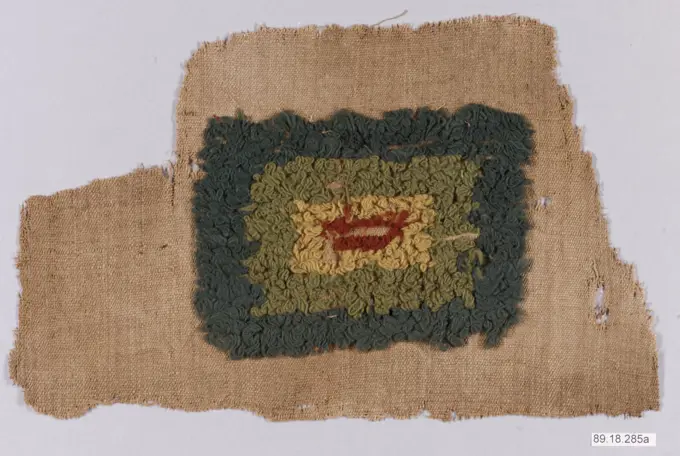
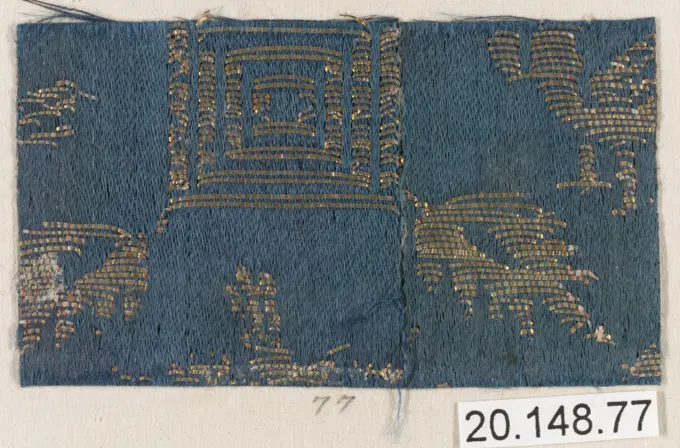
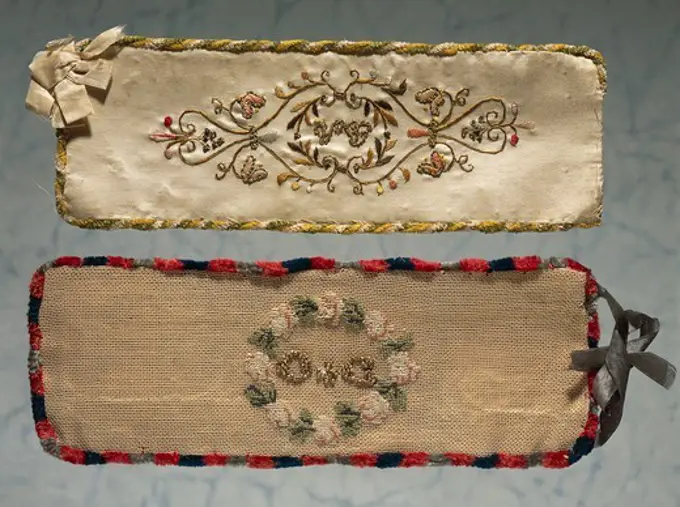
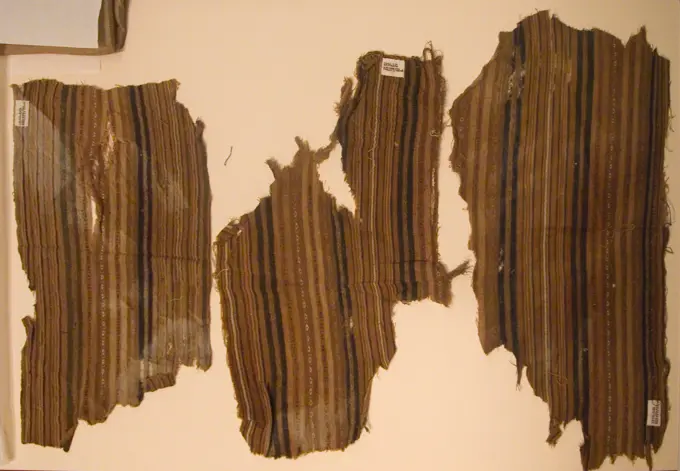
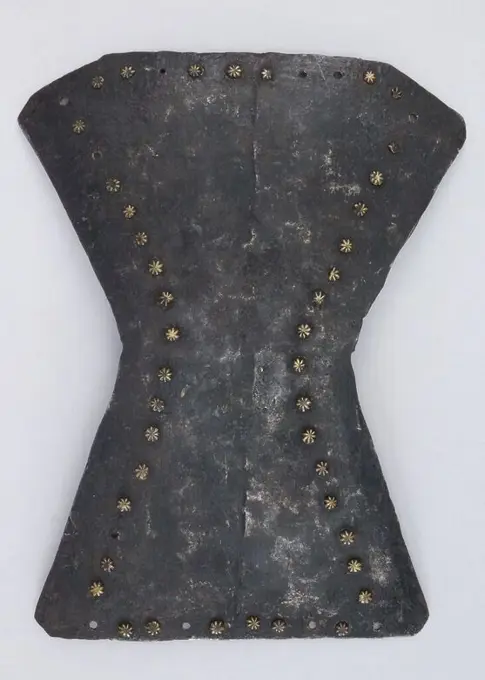
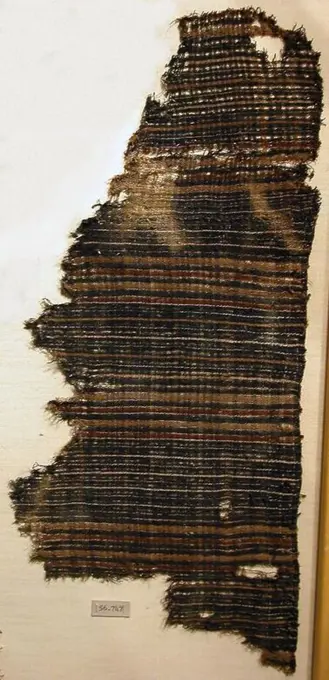
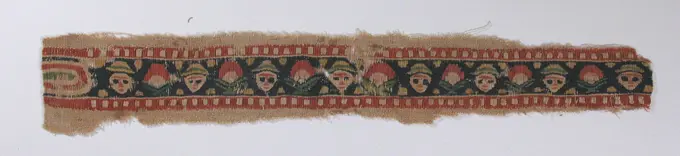
Historical Textile Fragments

Intricate textile pieces featuring patterns and embroidery, showcasing artistry from various historical periods and regions.

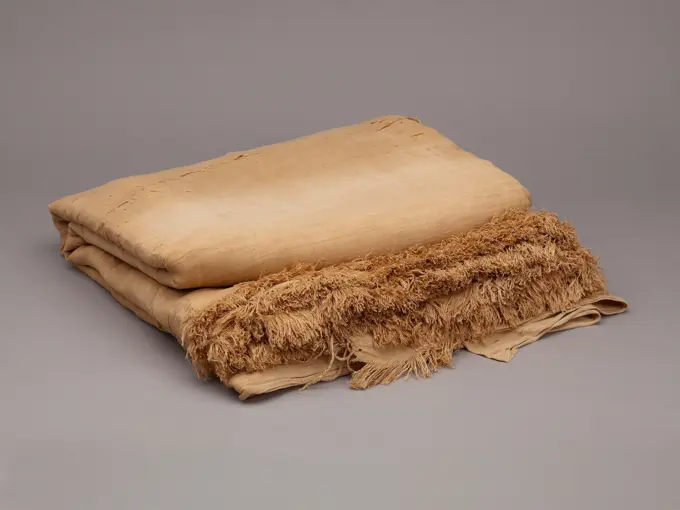
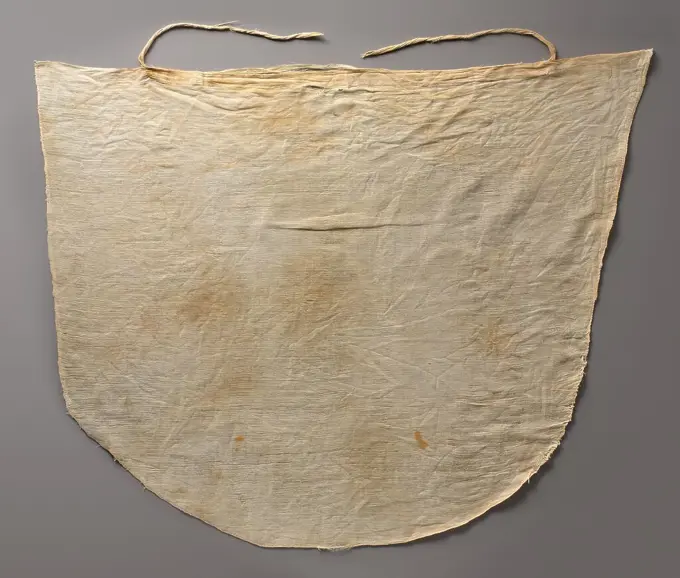
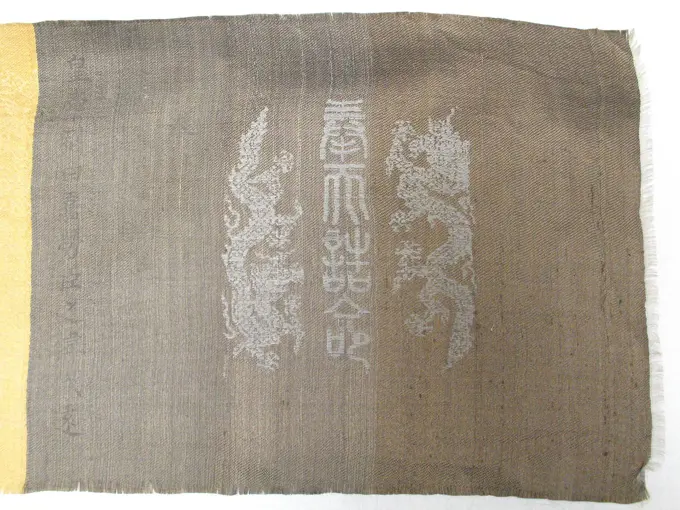
Comforter cover, 19th century, H.63-5/16 x W.36-1/16 in., Cotton, China, 19th century
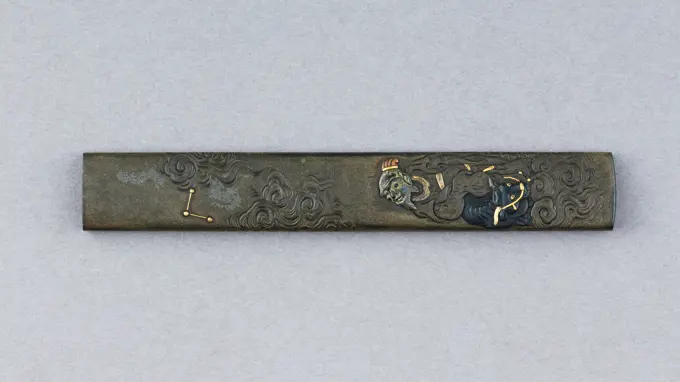
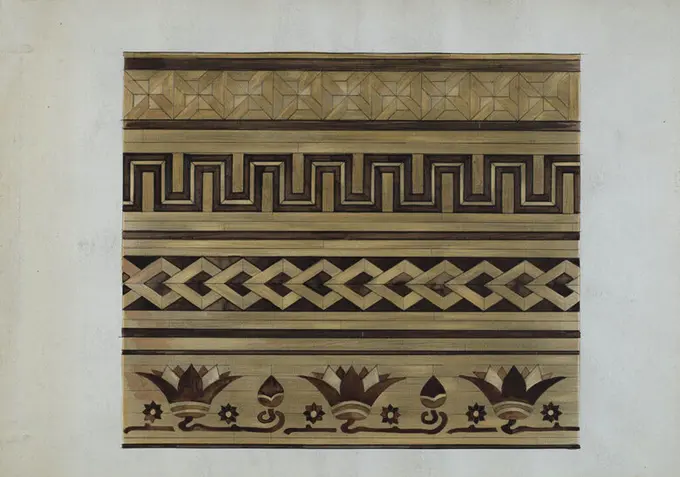
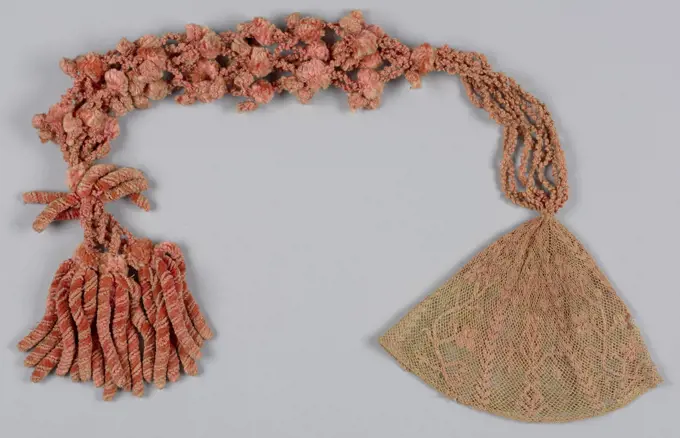
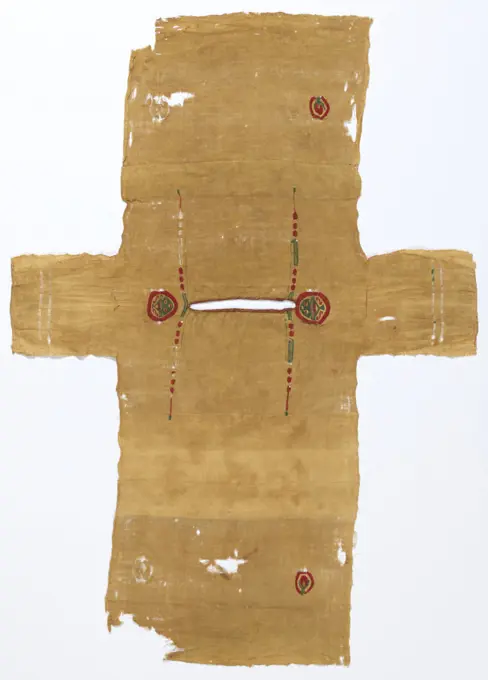
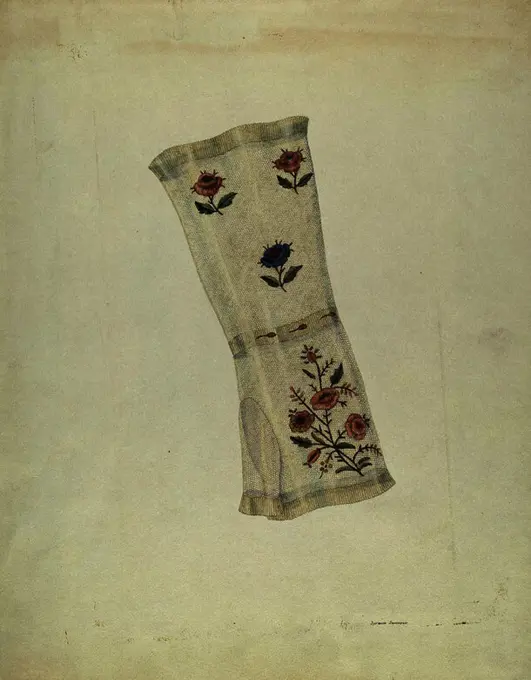
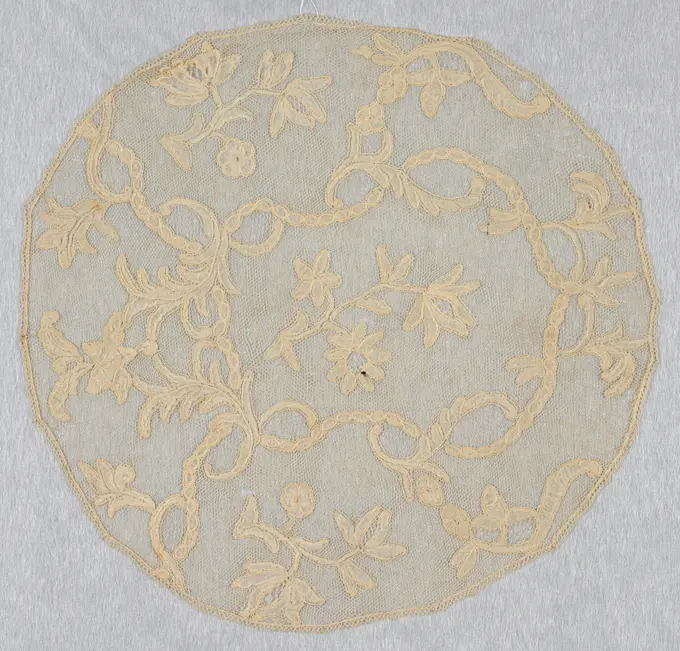
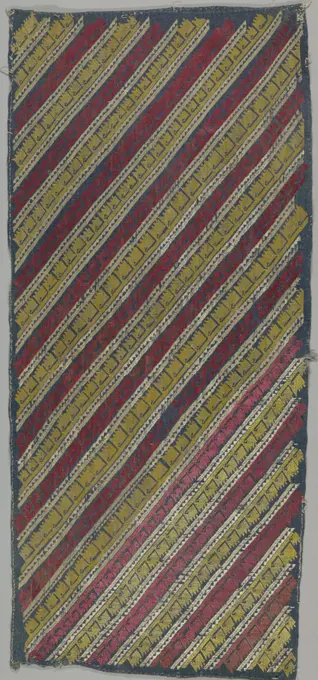
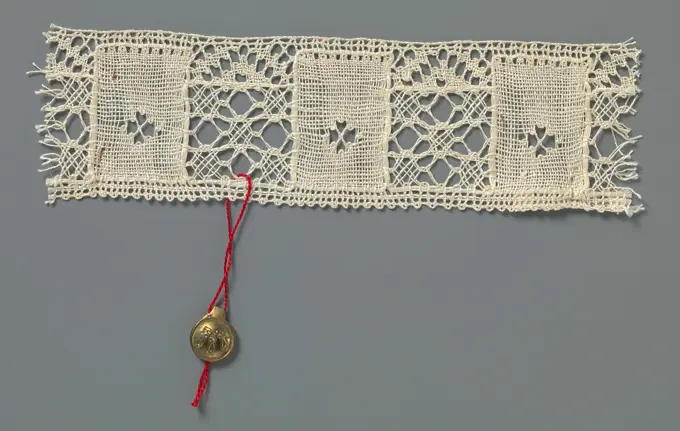
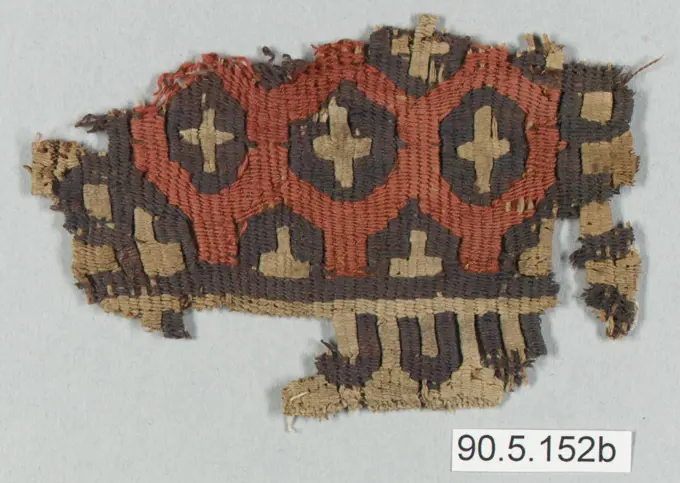
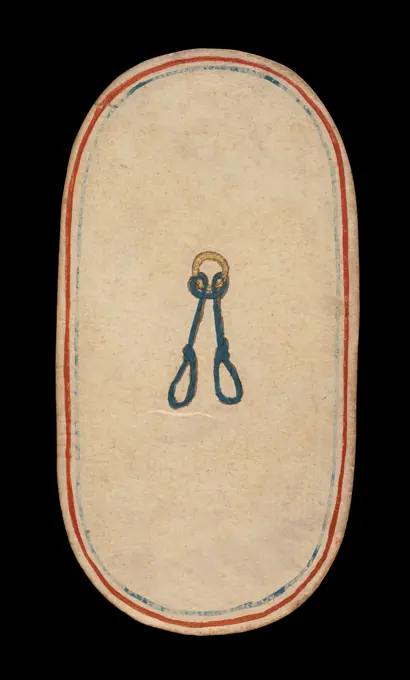
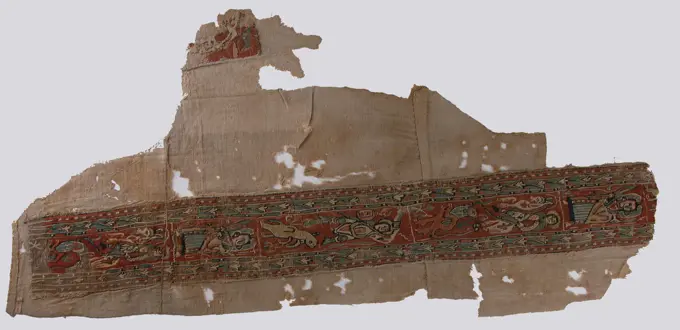
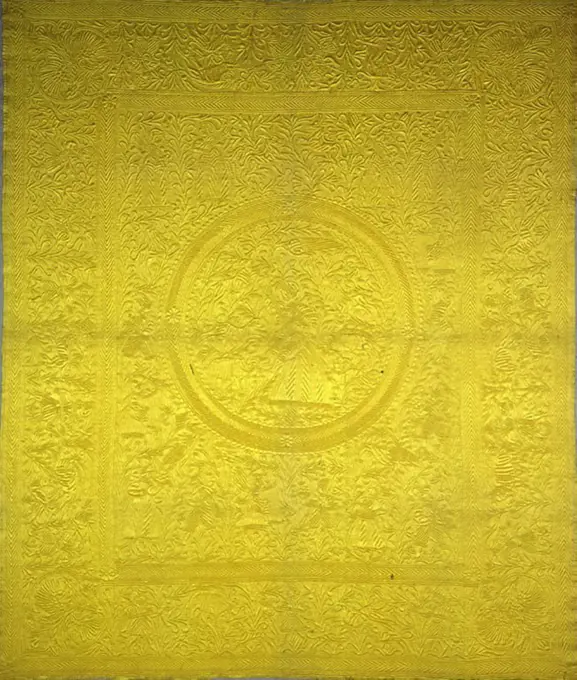
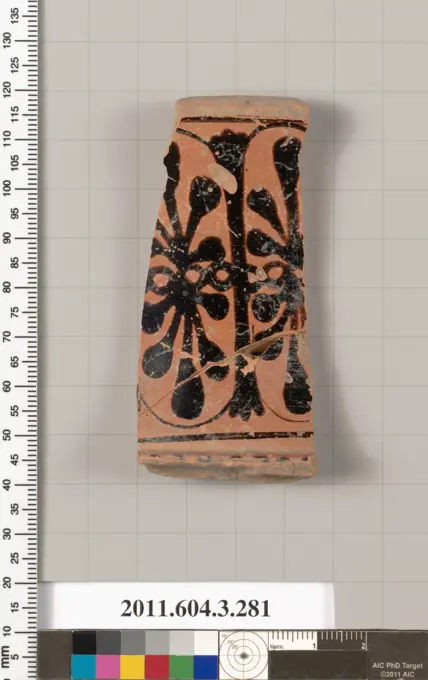
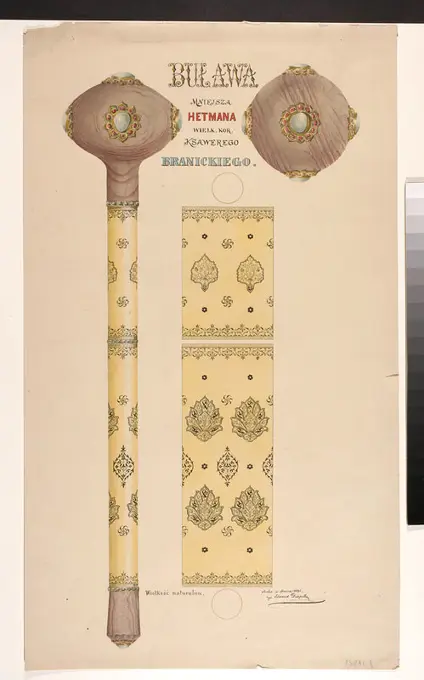
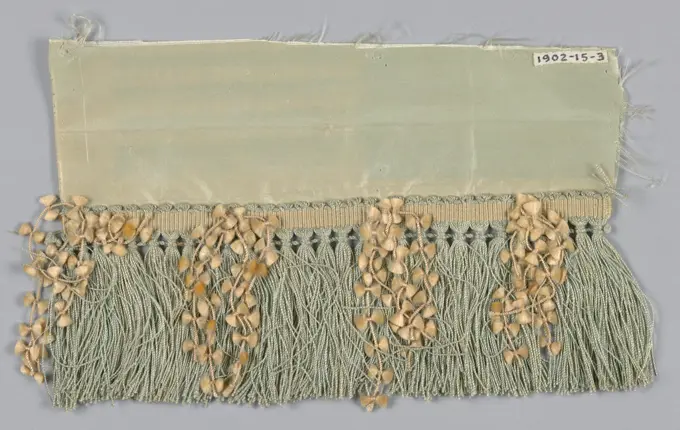
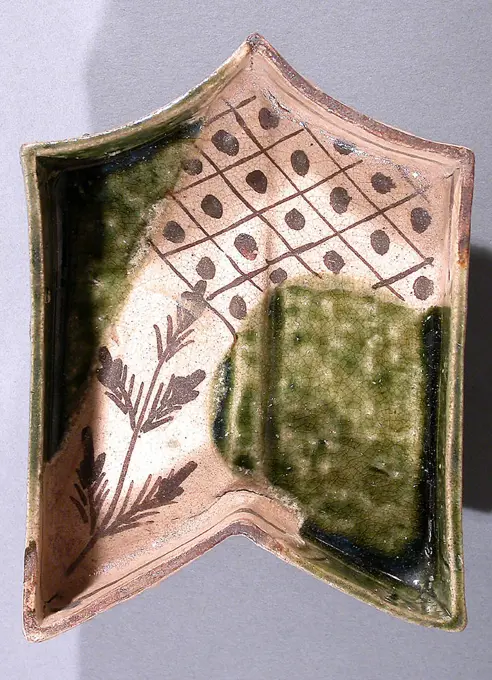
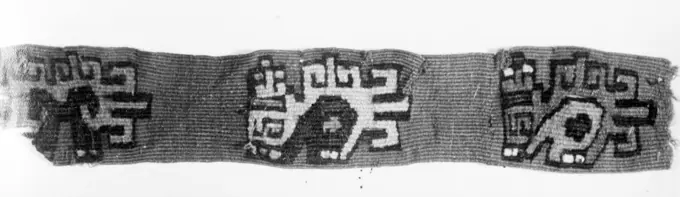
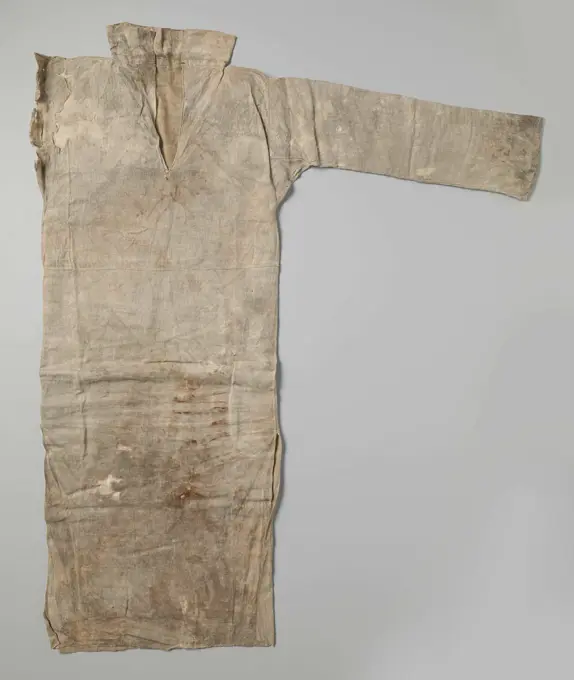
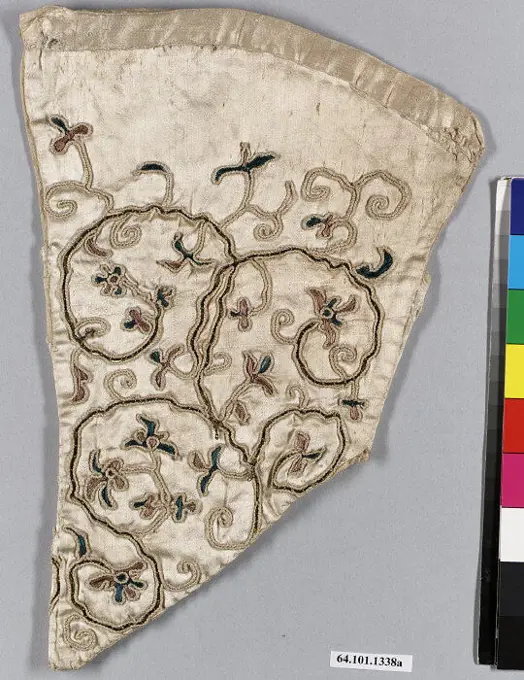
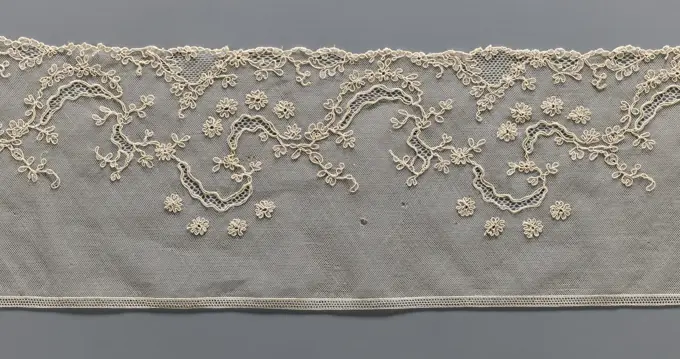
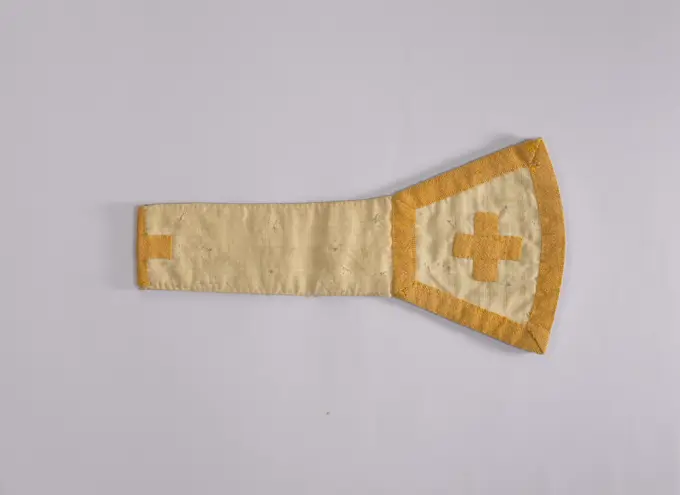
Linen Towel - Flower Design. Dated: c. 1936. Dimensions: overall: 35.3 x 27.9 cm (13 7/8 x 11 in.). Medium: watercolor and graphite on paper. Museum: National Gallery of Art, Washington DC. Author: Eva Wilson.Baby's Cap (back And Side) (England); linenKnife Handle (Kozuka) ca. 1615-1868 Japanese A kozuka is a handle of a by-knife that is part of a sword mounting. It is kept in a slot on the reverse of a katana scabbard, often with a matching kōgai (hairdressing tool).. Knife Handle (Kozuka) 34594Parquetry Floor. Dated: c. 1936. Dimensions: overall: 34.9 x 24.5 cm (13 3/4 x 9 5/8 in.). Medium: watercolor and graphite on paper. Museum: National Gallery of Art, Washington DC. Author: Sebastian Simonet.Cap, Medium: silk Technique: knitted, Close fitting skull cap of pink silk net. Embroidered in pink silks. Very long elaborate tassel of strands of chenille in coral pink, made into a group of strands., Spain, late 18th century, knotted, knitted and crocheted textiles, CapPocketbook. Dated: c. 1939. Dimensions: overall: 28.8 x 39.2 cm (11 5/16 x 15 7/16 in.). Medium: watercolor, graphite, and gouache on paper. Museum: National Gallery of Art, Washington DC. Author: Norma Lockwood.Fragment of a Stola, late 1600s. Italy, late 17th century. Velvet (cut and uncut); silk; overall: 44.5 x 20 cm (17 1/2 x 7 7/8 in.).Child's tunic, Medium: linen, wool (warp - S-spun linen warp; weft - Z-spun linen, Z-spun undyed wool, Z-spun red wool, Z-spun green wool, S-spun red wool in the three spots of clavus bands) Technique: plain weave with tapestry woven areas; one weft carried at a time, A whole child's tunic of linen with in-woven tapestry decorations. The back is approximately 18 cm shorter than the front due to a wide, horizontal tuck that was taken in it originally and stitches from a similar tuck remain in front of the tunic. Selvage at bottom of front and back and at inside of sleeves. Neckline is a slit which has been finished with two rows of red crocheted edging. Sleeves similarly finished, in tan, with only one row. At shoulders, circular tapestry-woven decorations - a green and red floral design with red border. Green and red simple, narrow decorative clavi, front and back, passing over the shoulders. Tapestry-woven medallion containing red bud with green stem in red border, at lower corners frCollar 1700-1942 American. Collar 119201Dyed and woven silk cloth. Okene people, Nigeria circa 1973Textile Fragment 5th-6th century. Textile Fragment 443492Gaming stick -Piece 17th century Japan. Piece 71071Bag; Bequest of Erskine Hewitt; 1938-57-1157Embroidery, 19th century. Napkin holder, embroidered in small stitch on tulle with glass beads initials and blue, red and green chenille edge; Napkin holder, embroidered in small stitch with silk and golden threads on satin, with initials and green and ecru chenille edge.Collar 1700-1939 American. Collar 119126Fragment late 17th century Italian. Fragment. Italian. late 17th century. Silk. Textiles-VelvetsFragment, Medium: linen Technique: needle lace, Fragment in a pattern of a trefoil blossom with a stem and trefoil bud. Center in a diamond diaper pattern. One petal scalloped., Venice, Italy, 17th century, lace, FragmentFragments 9th-10th century. Fragments 448979Sherd ca. 6th-8th century A.D. Sasanian or Islamic. Sherd 322834Fragments of Tadeusz Kościuszko's Bedroom DecorationsShield for presenting items;  19th/20th century (1890-00-00-1910-00-00);Sheet with linen mark, coarse spin, medium weave ca. 1492-1473 B.C. New Kingdom. Sheet with linen mark, coarse spin, medium weave 545139Mitt. Dated: c. 1938. Dimensions: overall: 35.5 x 27.9 cm (14 x 11 in.). Medium: watercolor and graphite on paper. Museum: National Gallery of Art, Washington DC. Author: Syrena Swanson.Textitle Fragment, undetermined Chancay. , 1000-1532. Cotton, camelid fiber, 3 1/8 x 4 5/16 in. (8 x 11 cm).   Arts of the Americas 1000-1532Coif (opened flat) 1575-1600 British. Coif (opened flat) 228949Sample early 19th century French. Sample 219331Coif; medium:Cope ca. 1500 Spanish (). Cope 466595Fragment (Italy); silkPatriotic badge with the image of the monument to the fallen shipyard workers in 1970 in Gdańsk unknown labelSample (USA); linenDarning sampler, Medium: silk embroidery on cotton foundation Technique: embroidered in running, satin, and cross stitches on plain weave foundation, Ten squares of darning pattern, four patched corners, insert patch in center with crowned monogram and 'gottmit uns' in a square., Denmark or Northern Germany, 1814, embroidery & stitching, Darning samplerPair Of Waistcoat Fronts; silkSleeve of white silk, long, smooth and cut around, with two embroidered dust buttons, anonymous, c. 1750 - c. 1800 Sleeve of white silk, long, smooth and cut around, with two embroidered dust buttons. Netherlands (possibly) silk embroidering / sewing Sleeve of white silk, long, smooth and cut around, with two embroidered dust buttons. Netherlands (possibly) silk embroidering / sewingTextile, Medium: silk embroidery on linen foundation Technique: embroidered in counted running stitches on plain weave foundation, Coarse blue linen tabby embroidered with saw-tooth bands of white separating diagonal rows of red and yellow running stitch which reserve rows of backward L-shaped forms., Thasos, Greece, 18th century, embroidery & stitching, TextileTrimming Fragment; silkEmbroidered Reticule. Culture: American. Dimensions: 10 x 7 1/2 in. (25.4 x 19.1 cm). Maker: Martha Kittredge, New England. Date: 1811. Museum: Metropolitan Museum of Art, New York, USA.Sleeve, one of a pair, 20th century, 17 5/8 x 6 1/8 in. (44.77 x 15.6 cm), Cotton; needlework, Laos and North Vietnam, 20th centuryBedcover. Made by the great-great grandmother, Jane Bolas Vaughan, or great-great-great grandmother, Elizabeth Ottiwell Vaughan, of Edward Goldisborough Chambre Vaughan, 1834-1914; England, Shropshire, Lobbington, Ellesmere, Burlton Hall. Date: 1675-1725. Dimensions: 212.9 x 218.3 cm (83 3/4 x 86 in.). Linen, plain weave; underlaid with cotton, plain weave; embroidered with silk in back, chain, open chain, leaf, Roman, Roumanian, satin and stem stitches; edged with linen, plain weave tape; two loom widths joined. Origin: Shropshire. Museum: The Chicago Art Institute, Chicago, USA.Textile Fragment 17th century. Textile Fragment 454519Fan 13th-14th century. Fan 448124Ragidup (Ceremonial Cloth), 20th century, 33 1/2 x 80 1/2 in. (85.1 x 204.47 cm) (plus 5 1/4 in. fringe), Cotton, Indonesia, 20th centuryCoverlet: Gentleman's Fancy. Dated: 1935/1942. Dimensions: overall: 17.4 x 32.8 cm (6 7/8 x 12 15/16 in.). Medium: watercolor, graphite, and pen and ink on paper. Museum: National Gallery of Art, Washington DC. Author: Elbert S. Mowery.Fragment from a Hanging, 800s. Egypt, Tulunid period, 9th century. Tapestry; linen and wool; overall: 23.2 x 21.7 cm (9 1/8 x 8 9/16 in.).Kerchief from Tutankhamun's Embalming Cache. Dimensions: L. 52.5 cm (20 11/16 in.); W. 68.5 cm (26 15/16 in.). Dynasty: Dynasty 18. Reign: reign of Tutankhamun. Date: ca. 1336-1327 B.C..In December 1907 Theodore M. Davis, a wealthy American who was funding excavations in the Valley of the Kings, discovered a small pit near the tomb of Seti I. Inside the pit were approximately a dozen large sealed whitewashed storage jars (09.184.1). Among other things, the jars contained bags of natron (a kind of salt), pieces of linen with hieratic inscriptions dated to Years 6 and 8 of a king named Tutankhamun (throne name Nebkheperure). At the time, almost nothing was know about Tutankhamun, and Davis declared that he had discovered the king's tomb.Davis received a number of the jars and their contents in the division of finds and, in 1909, he gave most of his share to the Metropolitan Museum. It was only later that Herbert Winlock, the field director of the Museum's excavations at Thebes, realized Revers of Blue Laeken with seven applications of silver plaque, c. 1800 - c. 1825 Refers of Blue Laeken with seven applications of Silverborderel. Netherlands cloth. silver thread sewing / embroidering Refers of Blue Laeken with seven applications of Silverborderel. Netherlands cloth. silver thread sewing / embroideringSteel bobbin with coarse wire as an example of Parisian soil (grid), anonymous, c. 1900 - c. 1930 sample Steel natural -colored bobbin side with coarse wire as an example of a Parisian soil with a fragment side in which this technique has been applied. The date concerns the steel. Amsterdam cotton (textile) bobbin laceFragment of silk flows, anonymous, c. 1550 - c. 1599 A fragment of silk polychrome velvet, decorated with windows, in which palm -shaped sheets in purple velvet on Groenen Fond. Italy silk. velvet (fabric weave). ciselé velvet A fragment of silk polychrome velvet, decorated with windows, in which palm -shaped sheets in purple velvet on Groenen Fond. Italy silk. velvet (fabric weave). ciselé velvetSteel bobbin with coarse wire as an example of a ribbon in linen stroke with a fierce thread that is used in Russian ribbon side of which a fragment is attached, anonymous, c. 1900 - c. 1930 sample Steel natural -colored bobbin with coarse wire as an example of a ribbon in linen stroke with a fierce thread that is used in Russian ribbon side of which a fragment belongs to the steel in which this can be seen. The date concerns the steel. West-Europa cotton (textile) bobbin lace / tape lace (bobbin lace) / Russian tape lacePrinting block, Medium: wood, Block for printing textiles with a design of stems and flowers forming a diamond lattice. Design is a horizontal rectangle., India, 19th century, appliances & tools, Printing blockFragment, Medium: silk, metallic thread Technique: plain satin weave with supplementary weft, Iran, 18th century, woven textiles, FragmentStrook kloskant met kerkraam of "Kyrkfönster".Natural Lace Strip, Swedish Side. The strip is mounted with pins on a light blue cardboard, with four other strips. At the top of the cardboard is "Wadstena. Sweden." Written and under the strip is "Church Windows. (Kyrkfönster.)". The repeating pattern consists of two standing rectangles. One rectangle is made in linen stroke with a rosette-shaped recess. The other rectangle is filled with an ornamental ground with a pattern in which a diamond-shaped rosette was made with two zigzag arcs in linen stroke, which are connected by crossing couples. Around the rectangles run contours made with thread bundles. The top and bottom of the strip are directly finished. On the strip a red thread hangs with a golden seal on which three bobbins are depicted on one side and a monogram on the other side with a V and an Ö (Vadstena Östergötland).Steel clamping side with coarse thread as an example of Armure-soil (Groundground). Steel natural colosside with coarse thread as an example of an armure ground with a fragment of mashing side in which this technique has been applied. The date concerns the steel.BeltSleeve flounce, Medium: silk Technique: bobbin lace, blonde, Blonde sleeve flounce in a design of deep scallops along the bottom edge. Above scallops is a horizontal vine with foliage and blossoms., Spain, 1850-1900, lace, Sleeve flounceStrip 16th century Italian. Strip 212285Textile Fragment 5th century. Textile Fragment. 5th century. Wool, linen; plain weave, tapestry weave. Attributed to Egypt. Textiles1 of Nooses, from The Cloisters Playing Cards ca. 1475-80 South Netherlandish The Cloisters set of fifty-two cards constitutes the only known complete deck of illuminated ordinary playing cards (as opposed to tarot cards) from the fifteenth century. There are four suits, each consisting of a king, queen, knave, and ten pip cards. The suit symbols, based on equipment associated with the hunt, are hunting horns, dog collars, hound tethers, and game nooses. The value of the pip cards is indicated by appropriate repetitions of the suit symbol. The figures, which appear to be based on Franco-Flemish models, were drawn in a bold, free, and engaging, if somewhat unrefined, hand. Their exaggerated and sometimes anachronistic costumes suggest a lampoon of extravagant Burgundian court fashions. Although some period card games are named, it is not known how they were played. Almost all card games did, however, involve some form of gambling. The condition of the set indicates that the cards were hTextile Swatches Onondaga Silk Company, Inc. (1925-1981). , 1948-1959. 83 wool, 17 silk, 23 3/4 x 17 1/2 in. (60.3 x 44.5 cm).    1948-1959Woolen Textile. Dated: 1940. Dimensions: overall: 26.6 x 35.7 cm (10 1/2 x 14 1/16 in.) Original IAD Object: 25" long; 19" wide. Medium: watercolor and gouache on paperboard. Museum: National Gallery of Art, Washington DC. Author: Archie Thompson.Ribbon French 19th century View more. Ribbon. French. 19th century. Textiles-TrimmingsLinen mark, Wah ca. 1981-1975 B.C. Middle Kingdom. Linen mark, Wah 564896Band 6th-7th century. Band 444312Bedcover Made 1601-1800 Portugal. Yellow silk, satin weave; quilted in yellow silk floss through two thicknesses; reverse identical in crimson red silk, satin weave; quilted areas hand corded .Armband -old paper and rope on canvas, frameBorder, Medium: silk Technique: bobbin lace, with point de Paris net, Black lace showing a Lille-patterned border and 'point de Paris' net., France or Belgium, early 19th century, lace, BorderTerracotta fragment of a neck-amphora (jar) 520-510 B.C. Greek, Attic On the neck, a palmette-lotus chain; the inside of the neck is glazed. Terracotta fragment of a neck-amphora (jar). Greek, Attic. 520-510 B.C.. Terracotta; black-figure. Archaic. VasesSmaller" mace of the Grand Hetman of the Kingdom of Poland, Franciszek Ksawery Branicki. Drapella, Edward (1834-1907), painterTrimming Fragment (France); silkComb. Egypt, 10th-12th century. Jewelry and Adornments; combs. WoodTrimming; 1902-15-3Sample early 19th century French. Sample 224772Fragment, Medium: silk Technique: woven, Cross-shaped fragment with patteen of serpentine floral and leaf shapes., 18th century, woven textiles, FragmentDish in the Shape of an Arrow's Fletching early 17th century Japan Originally part of a larger set, these dishes would have been used during the informal meal (kaiseki) before the formal part of the tea ceremony.. Dish in the Shape of an Arrow's Fletching 49281Piece 18th century Japan. Piece 71331Fragment; silkBulla. UnknownFragment (Italy); linen; 1946-42-44-a,bFringe 18th century Italian or Spanish. Fringe 224932Fragment (Band) Made 700 CE-900 CE Peru. . NazcaTextile for a handscroll dated October 9, 1862 China. Textile for a handscroll 44710Loincloth, 32 x 32 1/2in. (81.3 x 82.6cm), Cotton; discontinuous supplementary weft-patterning, Peru, Pre-ColumbianLint, anonymous, c. 1800 - c. 1899 Fragment ribbon of dark pink silk with green and white flowers. Europe silk embroidering Fragment ribbon of dark pink silk with green and white flowers. Europe silk embroideringShirt, long, made from linen. Shirt, long, made from linen. The shirt is amazed, one sleeve is missing, set collar (6.2 cm) with the right iron hook probably new and split-v-neck (18.6 cm deep).Handkerchief unknownScheepsvlag, Anonymous, 1800 - 1890 flag. ship flag Three jobs Red-white-blue. Inscription: Ned VL 6 kl. Netherlands woolPair of short dress sleeves ca. 1700 British. Pair of short dress sleeves. British. ca. 1700. Silk and metal thread on satin. Textiles-EmbroideredGreen silk damask with a pattern of pomegranate motifs. Damask from green silk, in a few fragments, with a pattern consisting of a seven-lubber leaf in which a pomegranate in flower wreath. To bend the leaf, floured branches, which are crowned at their gathering and wear a pomegranate. Similar pattern such as BK-Nm-11476-a, but with other type of pomegranate. Italian manufacture. The fragments are sewn on white cotton.Frame Drum Native American (Hupa, probably) 19th century Square or rectangular double-headed drums are found in Northern California among the Hupa (Athabaskan), Twana and Klallam (Coast Salishan) peoples. Late nineteenth-century ethnologists observed a "box drum covered with leather" was used to accompany Hupa gambling songs.Fragments Made 1000-1476 Peru. . ChancayBrigandine Plate. Culture: Italian. Dimensions: H. 9 1/4 in. (23.5 cm); W. 6 15/16 in. (17.6 cm); Wt. 3 lbs. 3.3 oz. (547.1 g). Date: 1400-1450. Museum: Metropolitan Museum of Art, New York, USA.Fragment. Peru, north coast, Culebra Vallery, La Capilla. Date: 1000-1476. Dimensions: 39.4 × 17.2 cm (15 1/2 × 6 3/4 in.). Origin: Peru. Museum: The Chicago Art Institute, Chicago, USA.Cooper Union Museum Lace Study Card, Medium: linen Technique: bobbin lace, Lace fragment in a Louis XV pattern., Belgium, 18th century, lace, Fragment, FragmentFragment of a Shoulder Band 5th century. Fragment of a Shoulder Band 443836Textile Swatches Onondaga Silk Company, Inc. (1925-1981). , 1948-1959. 47 silk, 36 nylon, 17 metal, a: 21 x 17 in. (53.3 x 43.2 cm).    1948-1959Fragment, Medium: linen Technique: bobbin lace (continuous tape with connections), Fragment of continuous tape bobbin made lace., Belgium, 17th century, lace, FragmentFragment of the lace;  1765-1780 (1765-00-00-1780-00-00);Maniple. unknown, author