Historical Textile Fragments

Intricate textile pieces featuring patterns and embroidery, showcasing artistry from various historical periods and regions.

Comforter cover, 19th century, H.63-5/16 x W.36-1/16 in., Cotton, China, 19th century
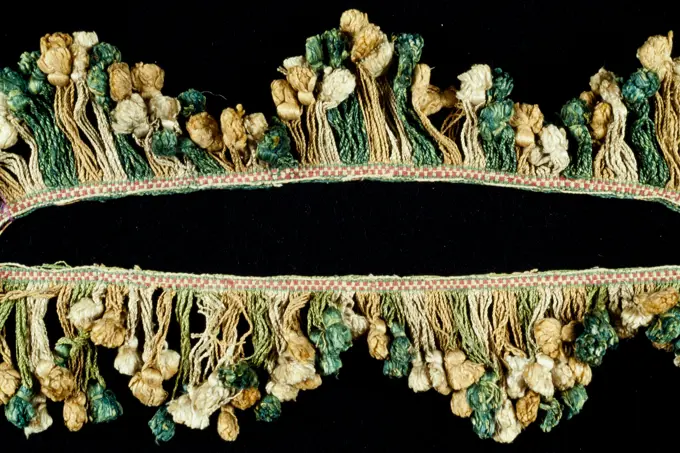
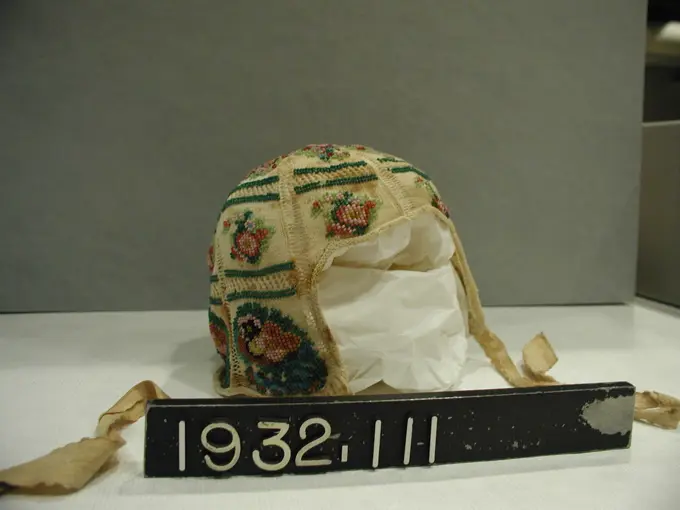
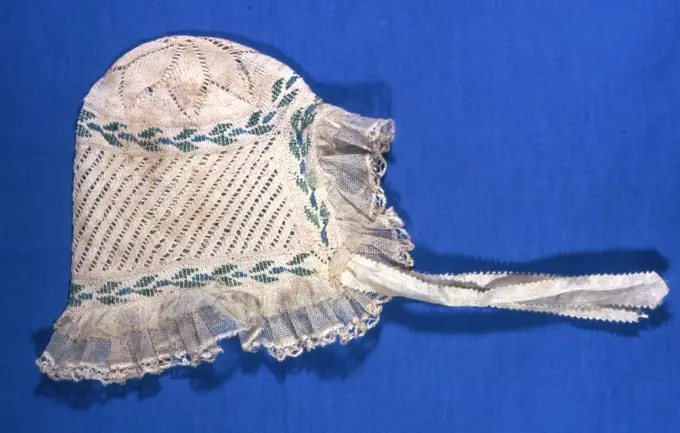
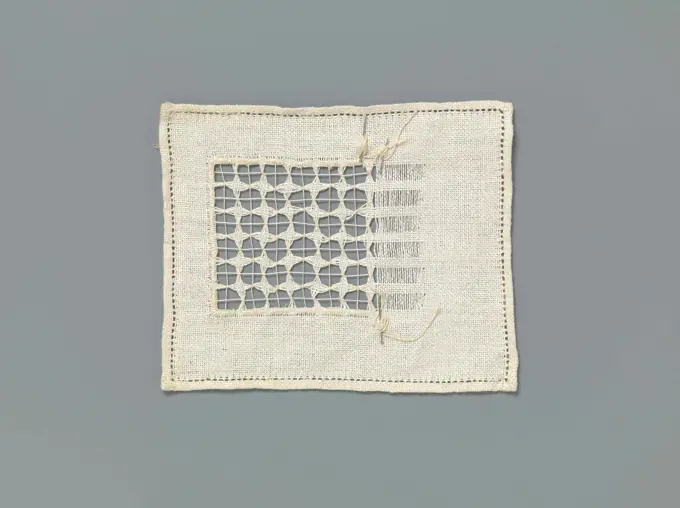
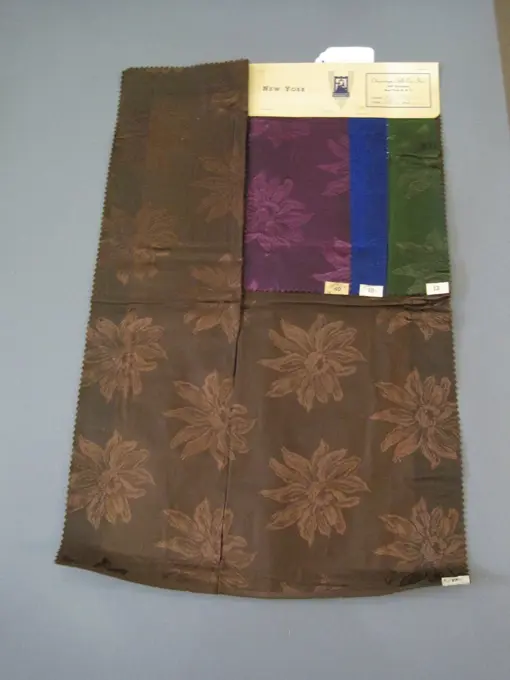
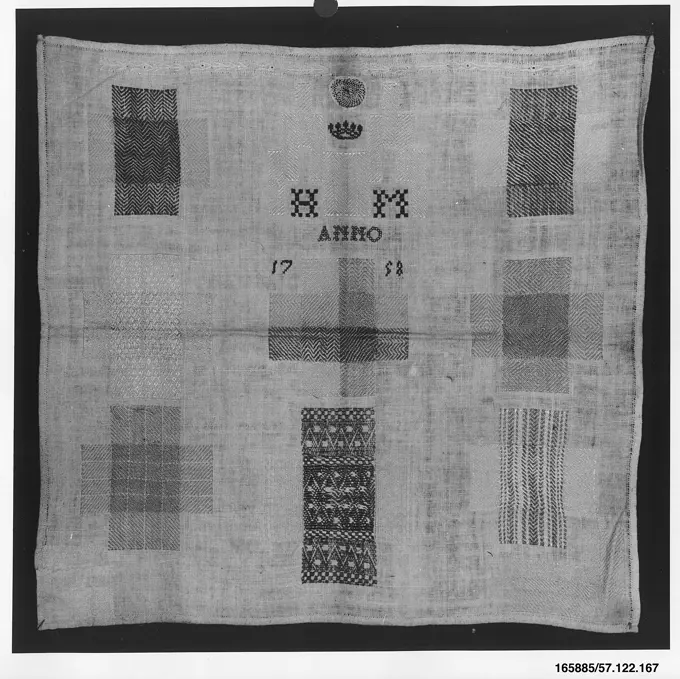
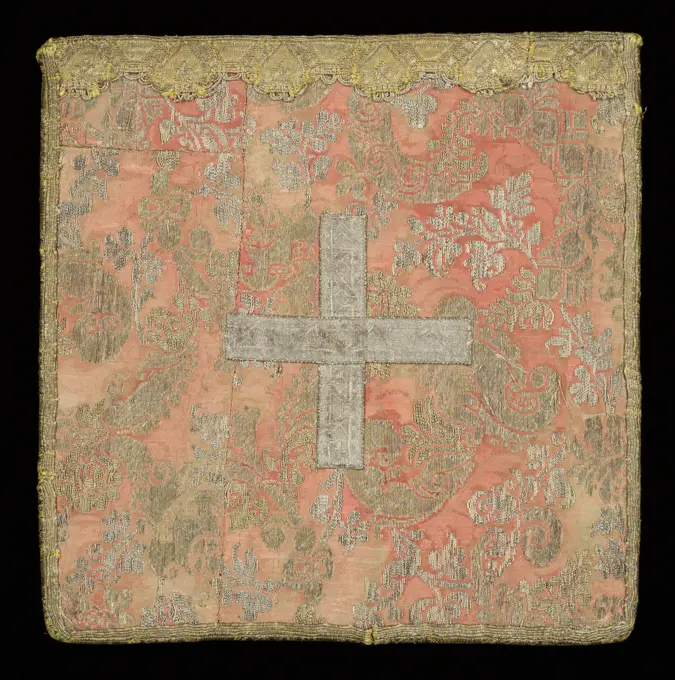
vintage chessboard vintage wooden chess-board isolated on white Copyright: xZoonar.com/YuryxZapx 14698462Patriottenlint, , 1795 ribbon (material) Ribbon with three lanes, blue, white and red. In the Witte Baan between the words of the inscription the repeated motif v.l.n.r.: Returned half column furnished as an altar on which fire, two hands extending to each other above it; Apples; Freedom tree with hat and apples; Apples; Freedom tree with hat and lion; Apples; Freedom tree with hat, scales and apples; Apples. Inscription: Alliance Freedom. Equality. den 19. January. Anno 1795. First year. From freedom. And Fatherland. Netherlands silk printing  NetherlandsTablecloth, 19th century, 24 1/2 x 24 1/2 in. (62.2 x 62.2 cm), Embroidery and drawn work, Philippines, 19th centuryFragment of a vessel. A low curvature of the glass fragment allows the assignment to a vessel, possibly a shell. The glass shows a checkerboard pattern from white, blue and red. For the production, different colored glasses were shaped to tubes and rods. These were compressed and heated, causing a long bar. The glass sliced now had different amorphous or floral patterns. Thereafter, several of these platelets were folded together, heated again and pressed into the vascular shape. Burry for the elaborate manufacturing process and its fragility was one of the luxury articles of antiquity.Sampler 19th century Italian. Sampler. Italian. 19th century. Cotton on linen. Textiles-EmbroideredFountain from above.Embroidered pocket. Culture: British. Dimensions: H. 3 1/2 x W. 3 3/4 inches (8.9 x 9.5 cm). Date: 1798. Museum: Metropolitan Museum of Art, New York, USA.Cover for a Smallsword Hilt ca. 1780 Santerre Leather bags of this kind were intended as covers to protect the hilts of smallswords, the ubiquitous side-arm of the eighteenth-century gentleman. These covers, called "hoods" in English documents, were provided by the sword cutler, or fourbisseur, and (at least in the two known French examples) bore his name as an advertisement. Another leather cover stamped with the name of the Paris cutler Pagès is also in the collection of the Metropolitan Museum (acc. no. 1995.52). A delightful example of eighteenth-century ephemera, this cover complements the Metropolitan Museums extensive collection of French smallswords.. Cover for a Smallsword Hilt. French. ca. 1780. Leather, silk, paper, ink. Swords-AccessoriesEmpty wooden rectangular cutting board on a plain background, flatley with copy space Empty wooden rectangular cutting board on a plain background, flatley with copy space. Kitchen utensils in home kitchen Copyright: xZoonar.com/TetianaxChernykovax 21757975Trim, fringe with tassels, 18th-19th century, 38 3/4 in. (98.43 cm), Passementerie, 18th-19th centuryChristeningCapBaby's Bonnet Made 1701-1800 Norway. Knitted cotton thread with multicolor beads .Tkanina koptyjska. warsztat egipski, workshopSidewall (United States or England); block-printed; 43 x 47 cm (16 15/16 x 18 1/2 in.); 1973-42-31Example of lace stitch Irish 19th-20th centurySteel linen with edge embroidery with pulled wires and four-pointing stars in a square grid. Steel natural linen with edge embroidery: work with pulled out wires. Study material. In a significant part of the linen, a square grid was created by pulling up wires in a horizontal and vertical direction. With an added thread, a start was made with bundling the remaining wires that form the grid and finish the edges around the grid with feston stitches. The bundling is carried out in horizontal and vertical lines, the added wire forms its own square grid in this way. The bundled wires form four-pointing stars. To the right of the pattern you see how weft threads (horizontal) are partly cut and pulled out of the coarse linen fabric, the warp threads are still intact here. The linen is finished with hems along which a border of work with wires pulled out.Embroidered darning sampler. Culture: Dutch. Dimensions: H. 16 5/8 x W. 17 1/4 inches (42.2 x 43.8 cm). Date: 1758. Museum: Metropolitan Museum of Art, New York, USA.Textile Swatches Onondaga Silk Company, Inc. (1925-1981). , 1948-1959. Silk, 24 x 15 1/2 in. (61 x 39.4 cm).    1948-1959Embroidered darning sampler 1758 Dutch. Embroidered darning sampler 228094Sample early 19th century French. Sample 224840vector vintage frame with crestA sash from the funeral of Adam Mickiewicz in Krakow on July 4, 1890Burse (Corporal Case), second half of 18th century. Italy, Venice, second half 18th century. Silk satin damask, brocaded; silk, silver and gold; overall: 25.5 x 25.5 cm (10 1/16 x 10 1/16 in.).Fragment, Medium: cotton and wool Technique: slit tapestry, A small fragment of figured tapestry with stylized plant details on a crimson ground., Spain or Peru, 17th century, woven textiles, Fragment