Historical Textile Fragments

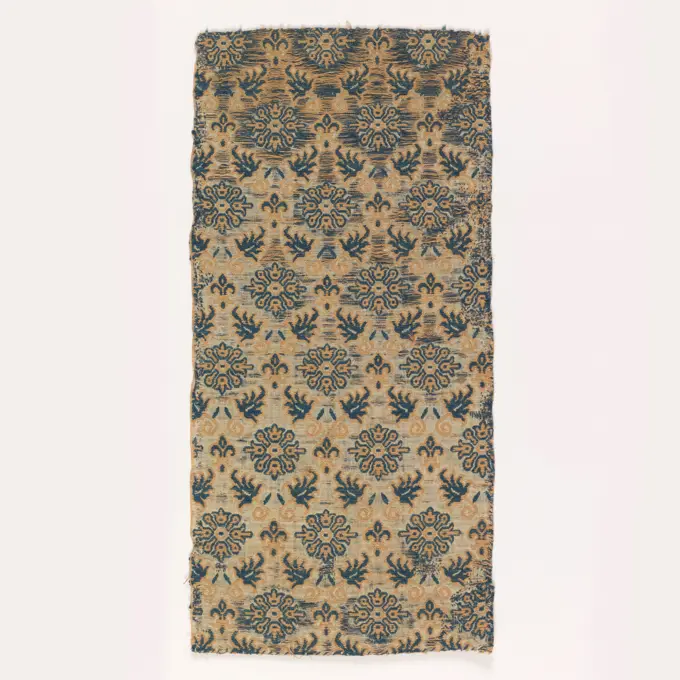
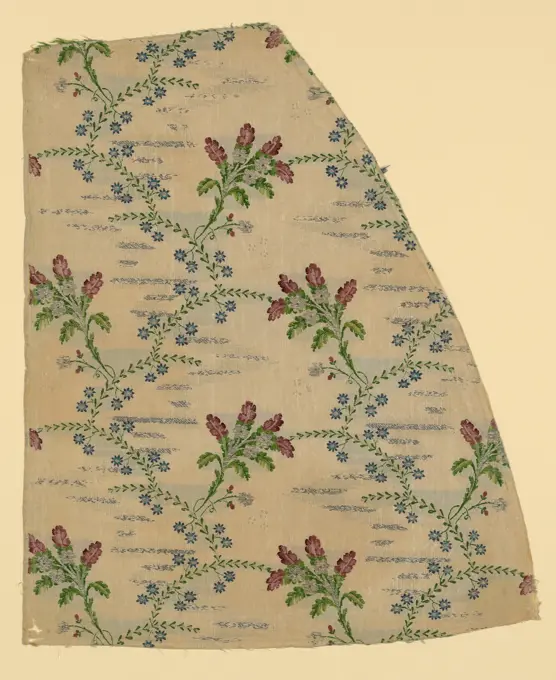
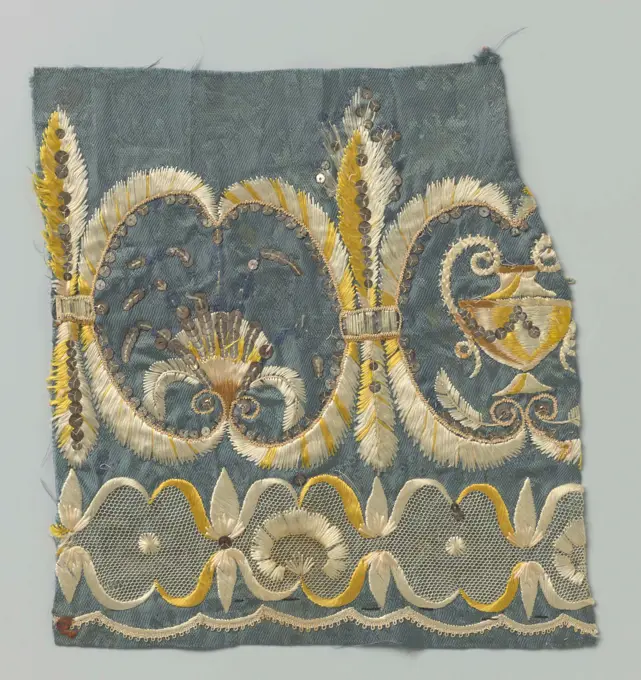
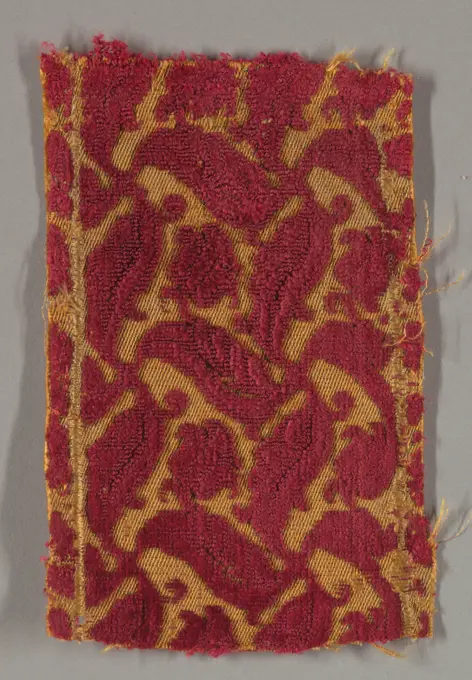
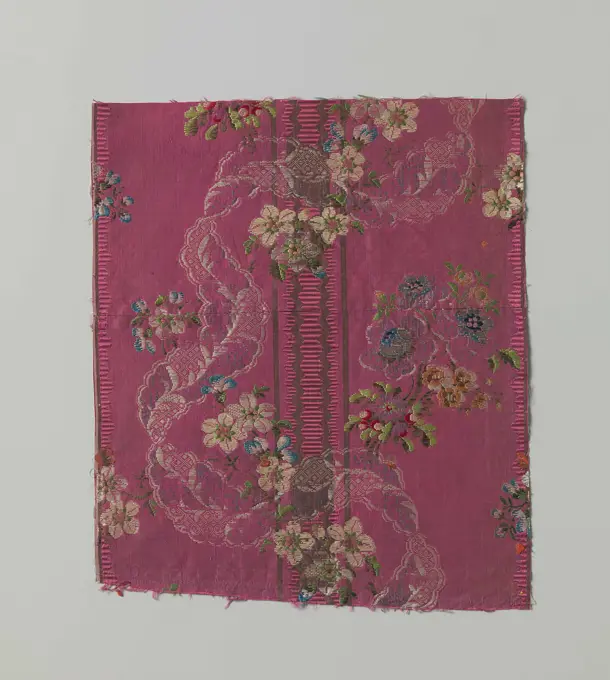
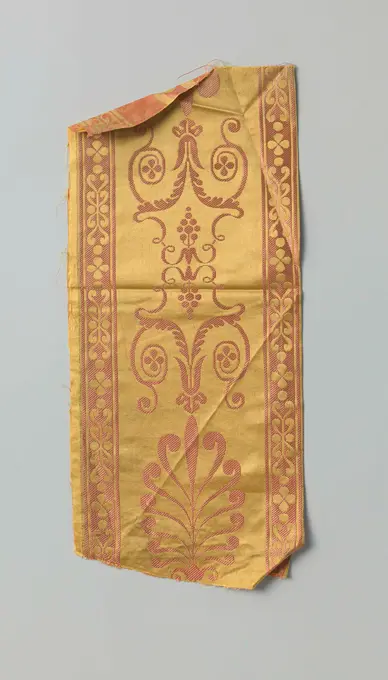
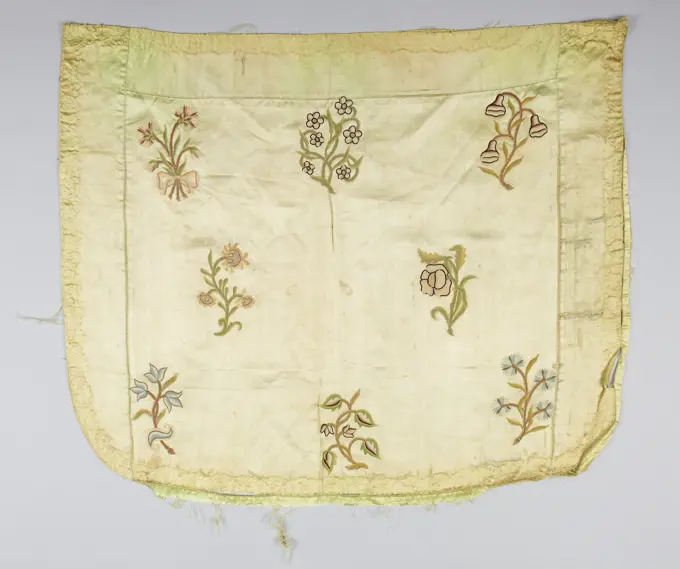
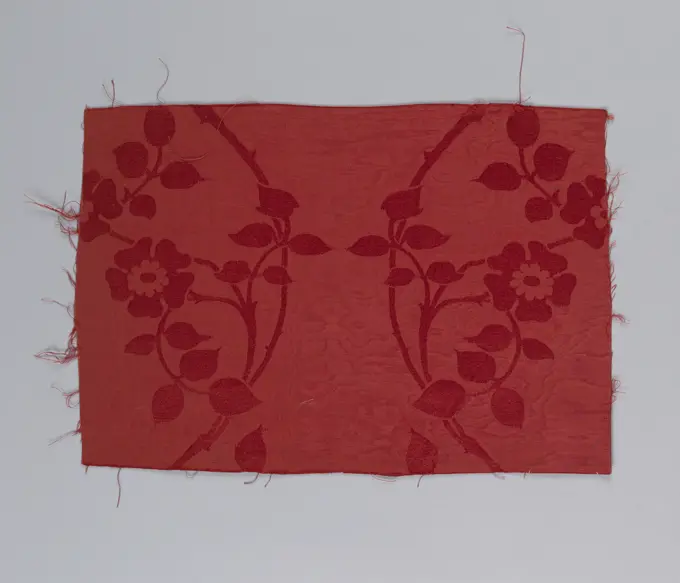
Fragments of ornate textiles featuring complex patterns and floral designs, exhibiting craftsmanship from different historical periods.

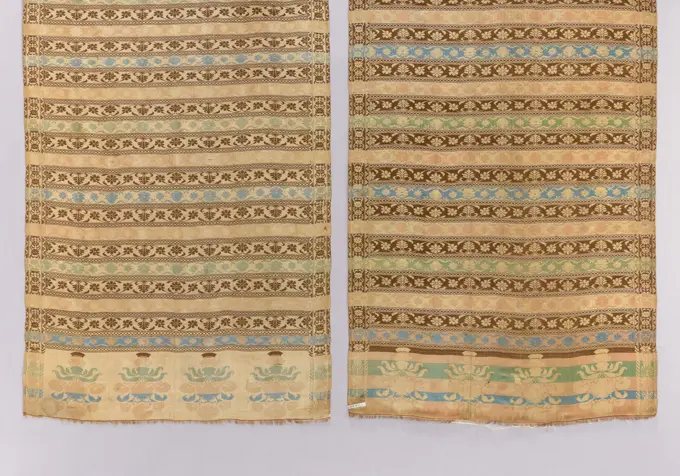
Welum;  2nd half 18th century (1751-00-00-1800-00-00);
Welum; 2nd half 18th century (1751-00-00-1800-00-00);
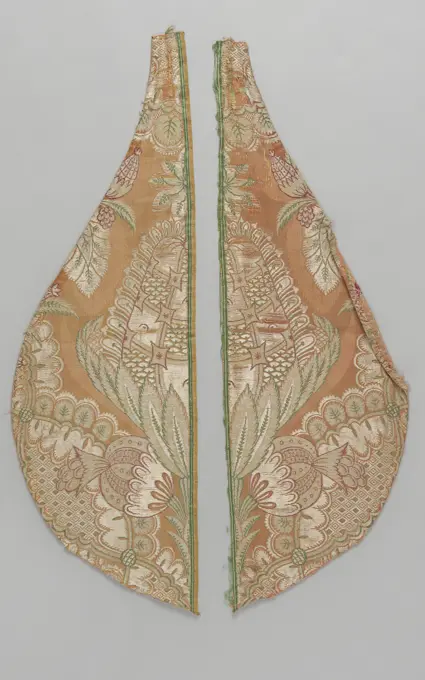
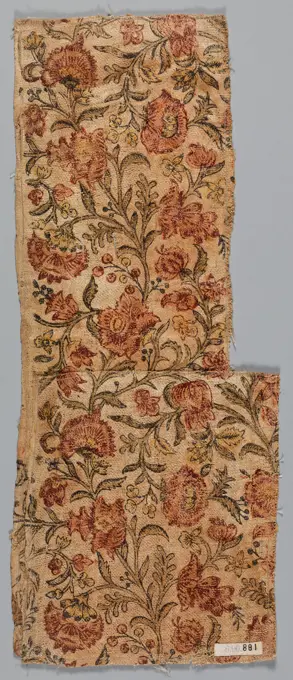
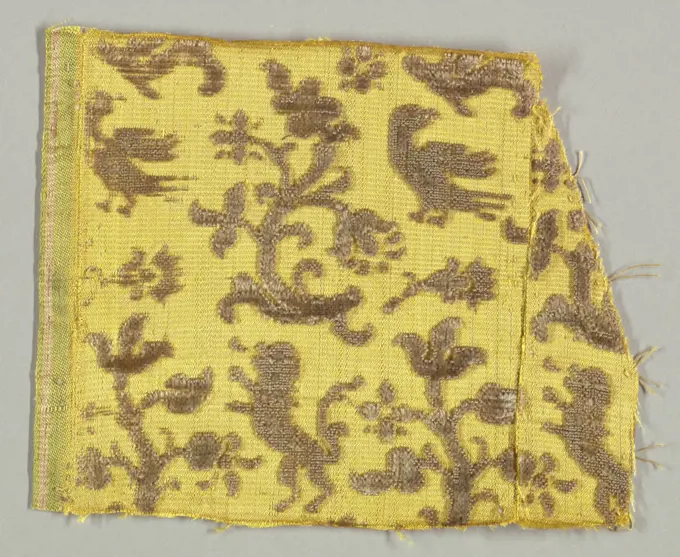
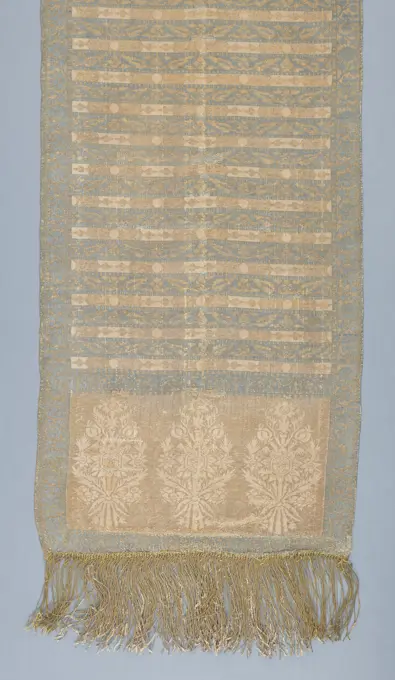
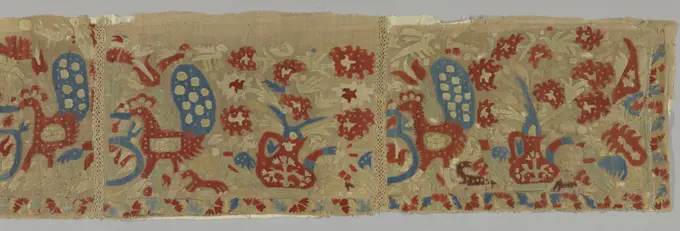
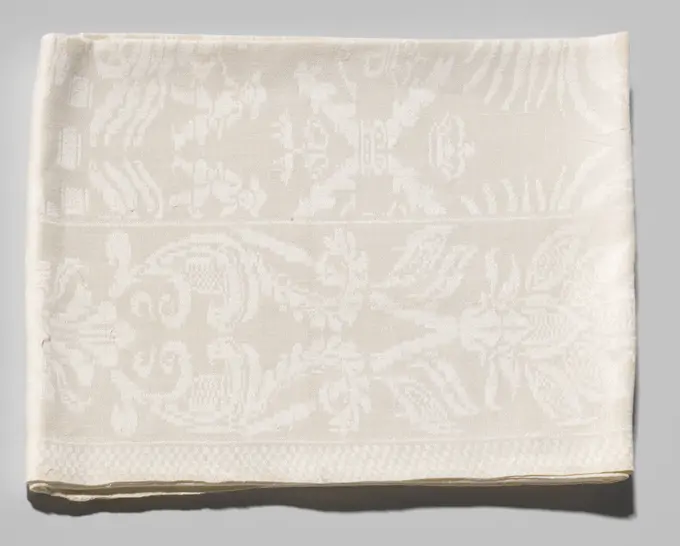
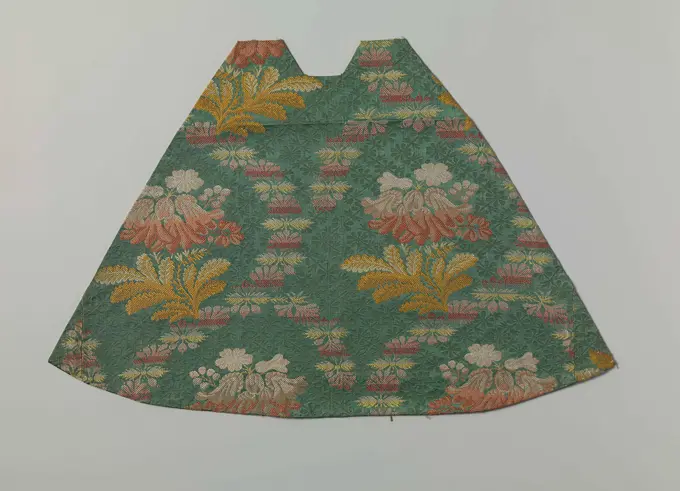
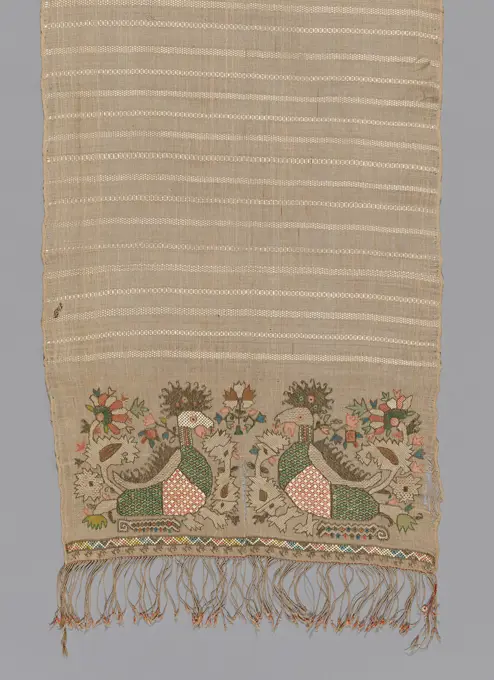
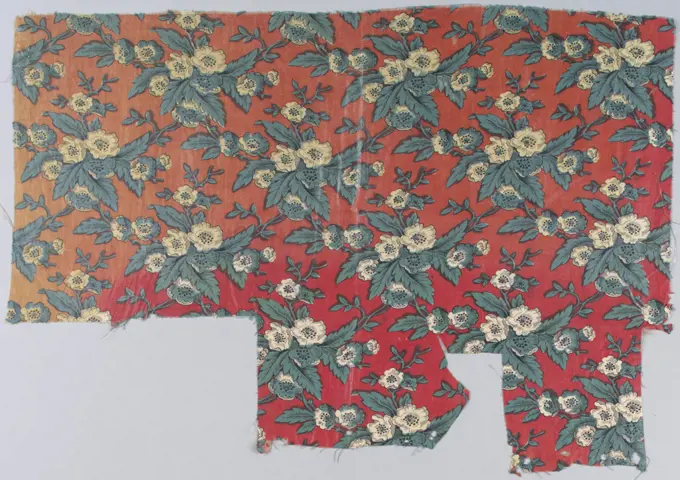
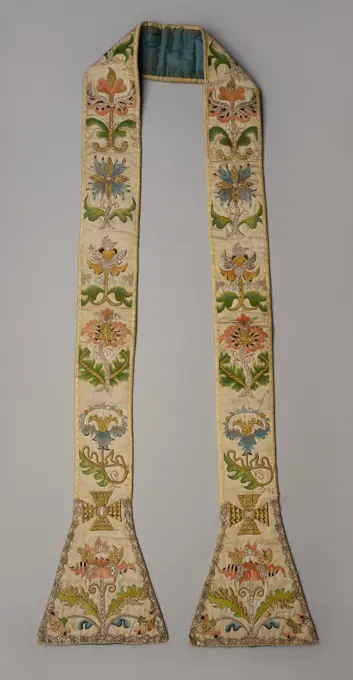
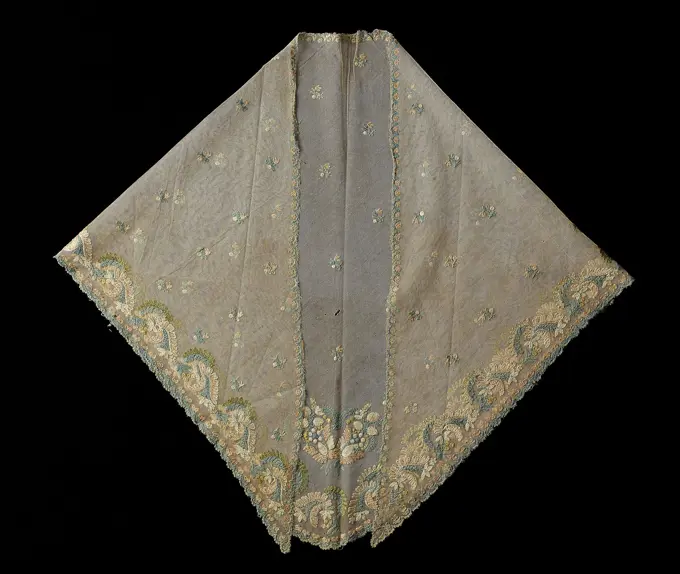
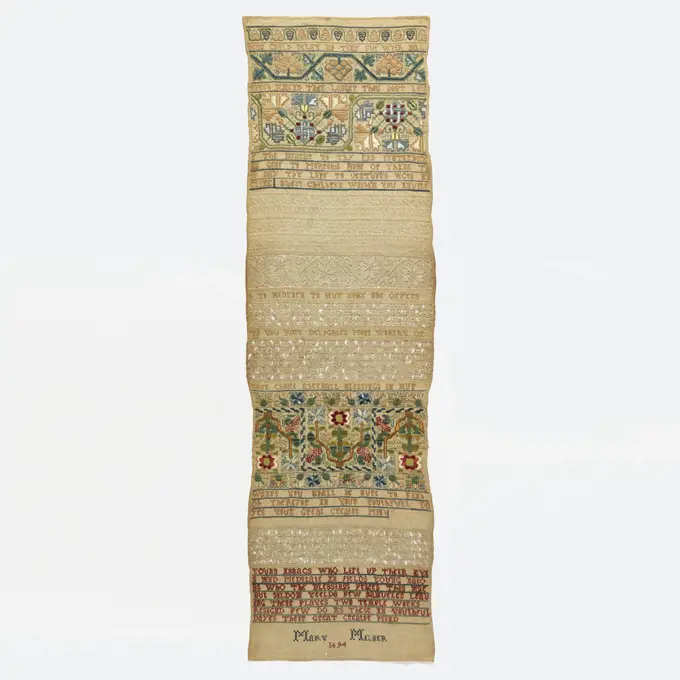
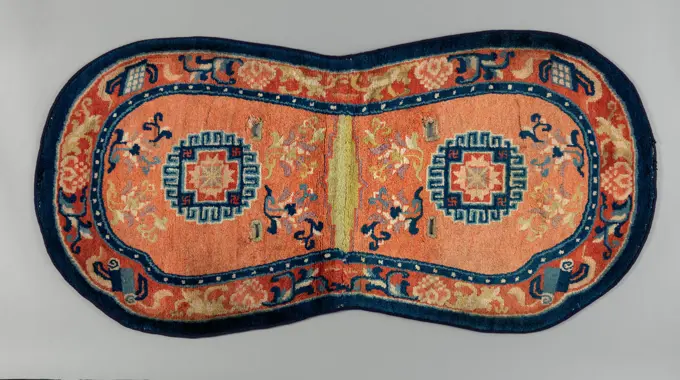
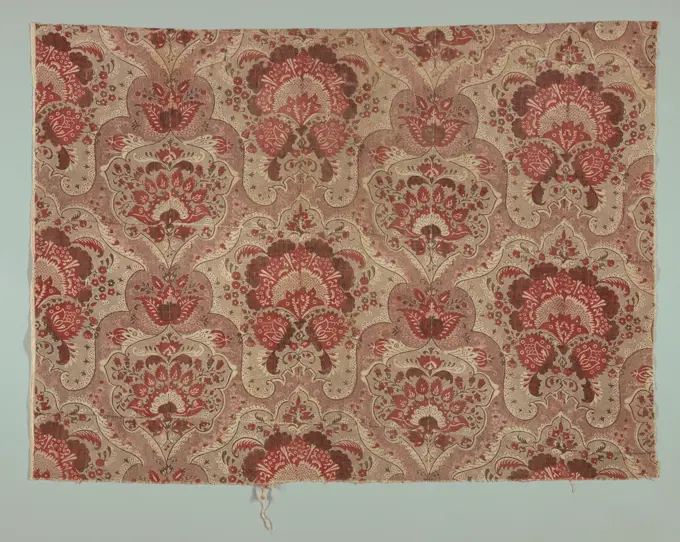
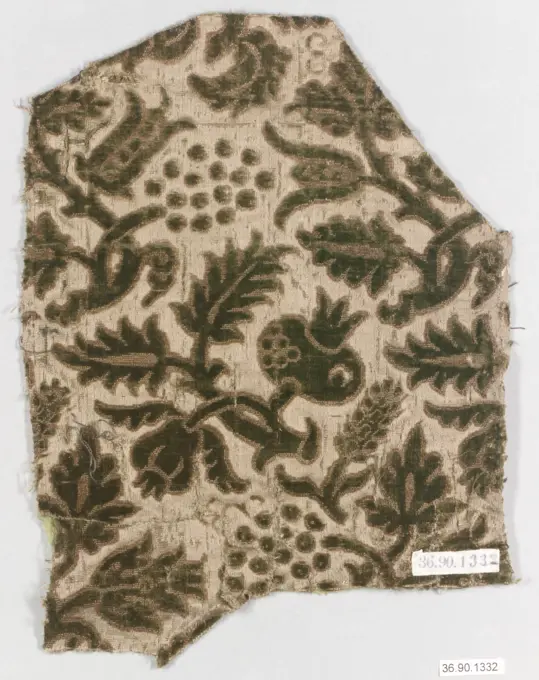
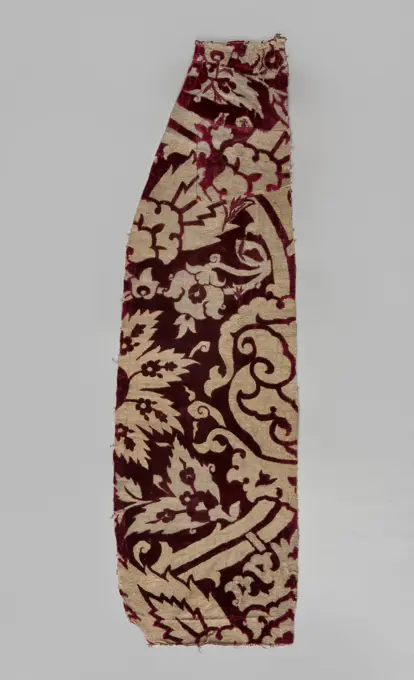
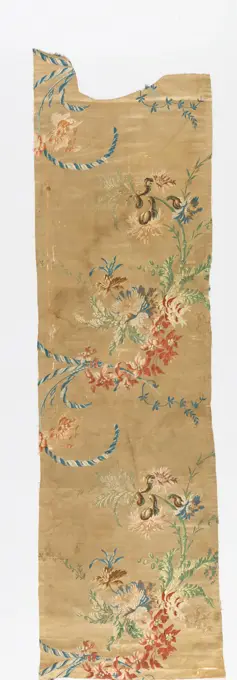
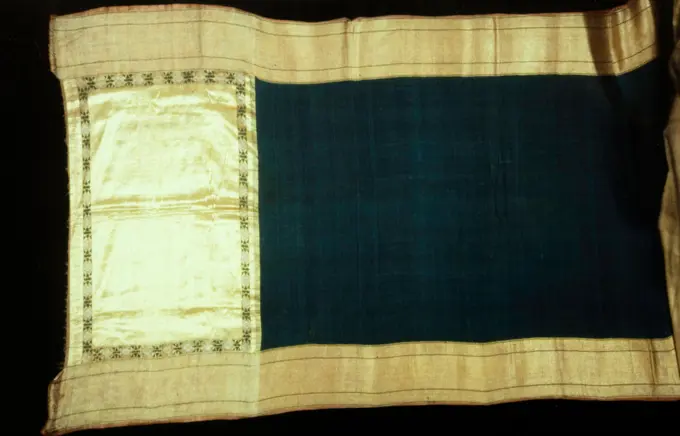
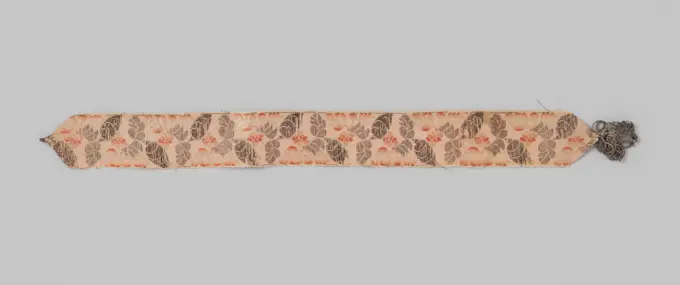
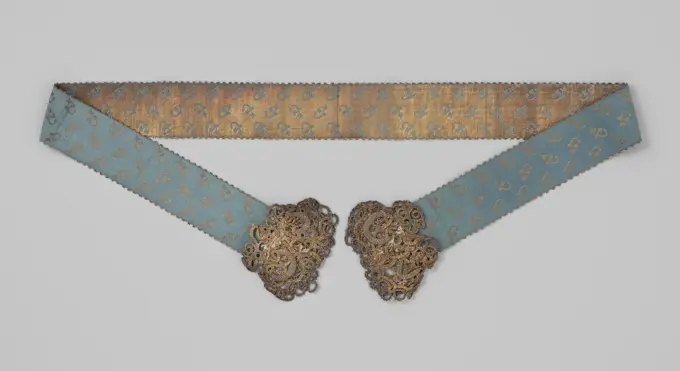
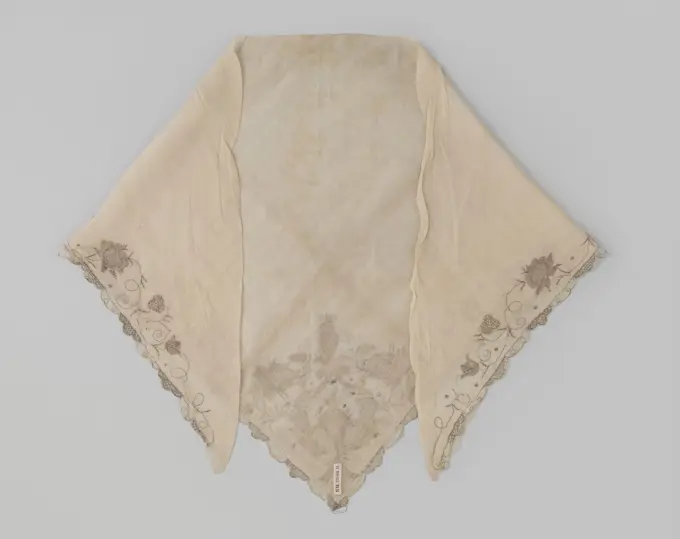
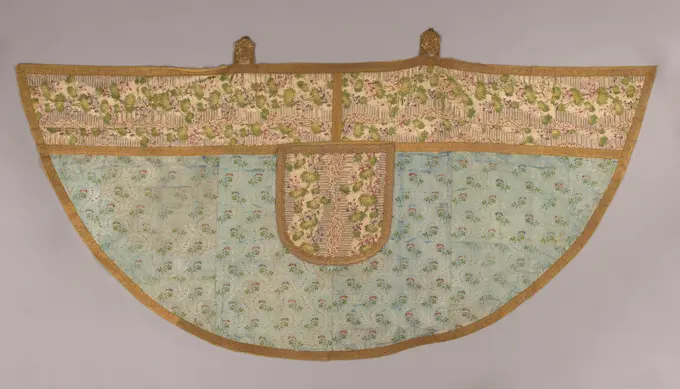
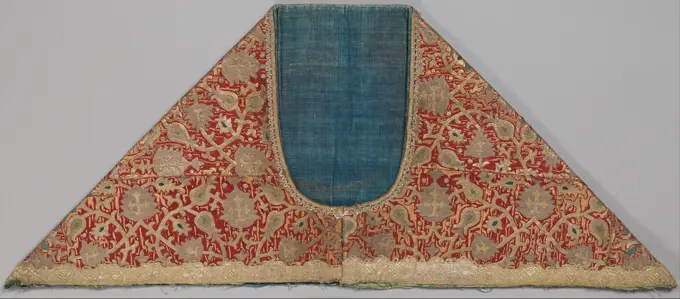
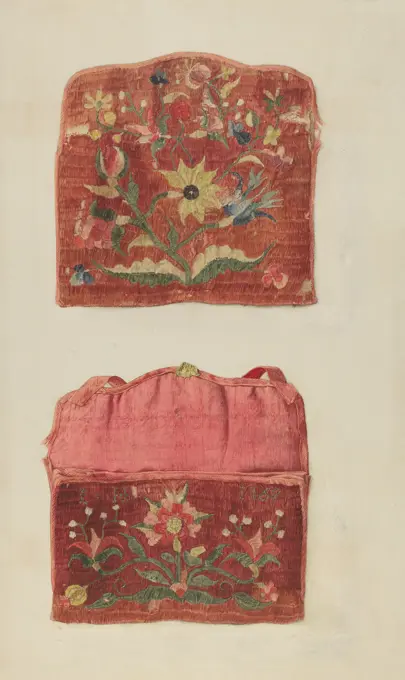
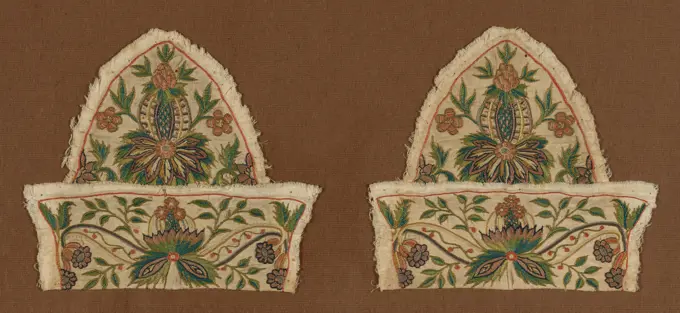
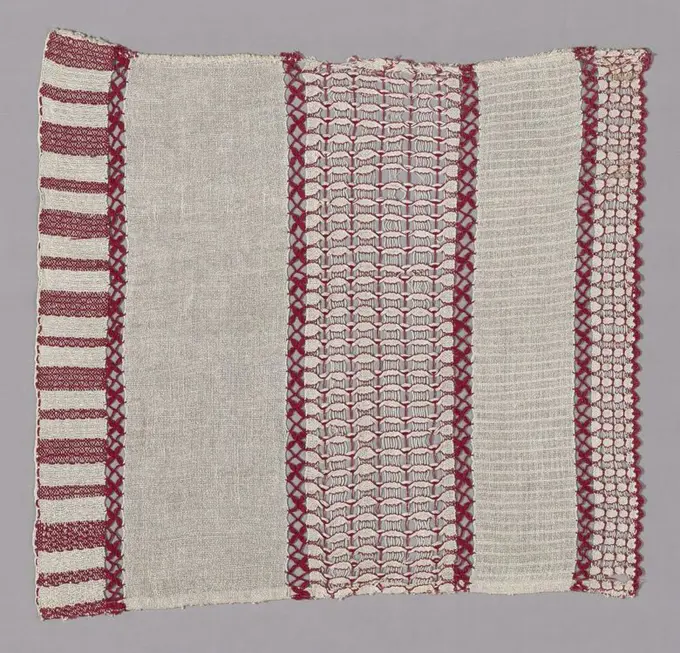
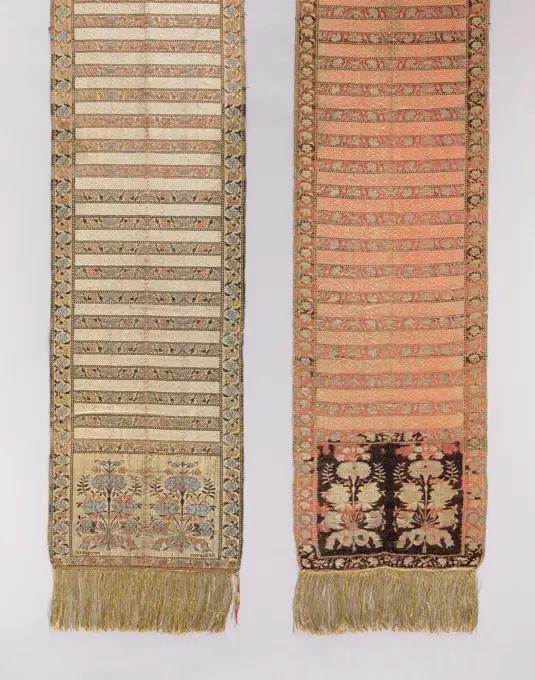
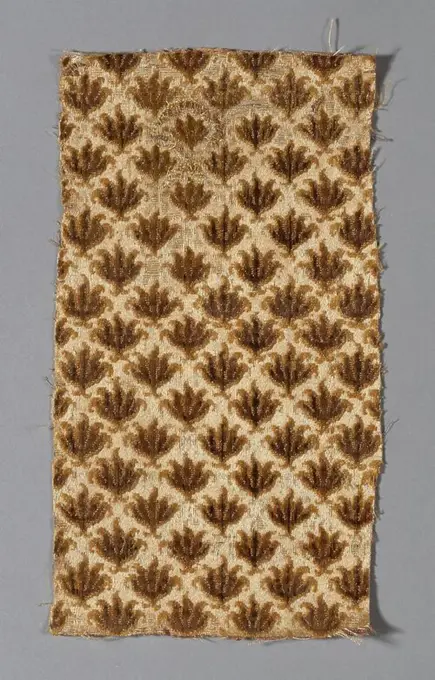
Textile; silk, metallic threadKontusz sash/belt. unknown, authorFragment, Medium: silk Tewchnique: woven, Polychrome floral on white ground., late 18th century, woven textiles, FragmentFragment, Medium: silk Technique: satin weave with continuous and discontinuous supplementary weft patterning (brocade), White satin ground with design of floral sprays repeated in horizontal rows. Green and white continuous supplementary wefts form part of the design, with yellow and rose brocading., Spain, 17th century, woven textiles, FragmentWelum;  XVII century (1601-00-00-1700-00-00);Fragments of silk fabric  lace pattern unknownPiece 18th century Dutch. Piece 223982Fragment; silkFragment, Medium: silk Technique: cut and uncut pile in a satin foundation (velvet), Animals, birds and plant forms in brownish-purple on yellow. Selvage with green and white edge at left., 17th century, woven textiles, FragmentWelum;  2nd half 18th century (1751-00-00-1800-00-00);Fragment multicolor, complex silk tissue. A fragment of light brown silk tissue with a palm with surrounded by flowers and lace motif.Armenian Sash unknownFragment, Medium: silk and metallic threads Technique: embroidered on satin weave, Fragment of narrow trimming of purple satin embroidered with small flowers and Buddhist symbols in white, blue, and green silks. Backed with pink silk plain weave., China, late 19th century, embroidery & stitching, FragmentFragment silk tissue with pattern of fan-shaped bouquet surrounded by floral wreath. Fragment silk tissue of 3 assembled pieces with pattern of fan-shaped bouquet Iomes through a floral wreath.Textile, Medium: silk embroidery on linen foundation Technique: embroidered on plain weave, Panel made up of three sections pieced together with bands of linen bobbin lace. Embroidered design of vases, two with handle and spout, containing flowers and flanked by peacocks, birds and animals. Narrow floral border on right and along bottom. One end has linen bobbin lace edging. Embroidery in red, blue, green, yellow and white silks., Rhodes, Greece, 17th-18th century, embroidery & stitching, TextileNapkin with the Battle of Turin, Anonymous (Possible), 1707 Linnamast napkin with the Battle of Turin. Midfield: The symmetrical pattern shows three scenes from bottom to top. 1 In the middle is a winner on two defeated enemies. Fallen enemies and standard with the German Rijksadelaar. Urgent are the banners with the Andries cross and with the bourbonlelies. 2 guns are aimed at the city of Turyn and are fired at command. 3 three round coats of arms of the England coalition, the German Empire and Savoye are connected by a ribbon and are above two palm leaves. In the middle a fleur de lis, aside the crowned thorned St. Andries Cross with fires, golden fleece and crowned monogram PV (Philips V). Woven 1707. Standing and lying edges: symmetrically doubled volute leaves with some flowers. Round: Blocking edge. Kortrijk linen (material) damask  Turin Linnamast napkin with the Battle of Turin. Midfield: The symmetrical pattern shows three scenes from bottom to top. 1 In the middle is a winnerTowel or Napkin (Altered ) Made 1801-1900 Turkey. Embroidered . AnonymousFragment of silk fabric  brocade, colourful sprays of flowers unknownFragment; silk; Bequest of Richard Cranch Greenleaf in memory of his mother, Adeline Emma Greenleaf; 1962-56-101Fragment bedrukte katoen.Fragment printed cotton. Flower branches in the colors light brown, yellow and white are printed on a brown soil.Fragment multicolored whipped satin. Fragment silk tissue with a green soil with a pattern of Zig-Zag lines consisting of a stylized floral pattern. Garlands consisting of leaves and fruits on the motif. The garlands form fields within which leaves, flowers and fruits.Fragment; silk, cottonFragment, Medium: silk, metallic yarns Technique: compound twill weave with discontinuous supplementary weft patterning (brocade), Fragment of woven silk with a repeating pattern of a bird perched on a branch of roses arising from a mound. In pale blue, green, and pink silks on a silver metallic ground., Persia, present-day Iran or India, 17th century, woven textiles, FragmentFragment Made 1701-1800 France. Silk and gilt metal strips, plain weave; with supplementary patterning and brocading wefts .Fragment multi-colored side lamps. Fragment multicolor silk tissue, with a white ground on which a flower branches pattern around a flower bouquet.Fragment silk tissue with embroidery. Fragment blue silk tissue with embroidery in yellow and white. The embroidery has a band medallions formed by French lilies in which and around a vase and a palm with. Below the tire runs an ornament band with a sewing tulle. The pattern has segregated sequins.Fragment; silkFragment multicolor silk mexicainian. Two fragments multicolor silk tissue. A purple ground has purple stripes on which a white lace garland and scattered multicolored flower bouquets.Fragment zijdeweefsel van een stoelbekleding..Fragment yellow silk tissue, from a seat cover. The pattern has pink palmets and arabesken on a yellow ground. The fragment belongs to thirteen fragments with Invnr. BK-1992-18-A T / M BK-1992-18-m.Textile, Medium: silk, Sixteen pieces of brocaded silk: large naturistic bunch of flowers arranged in staggered rows - two per row - in pink, red, yellow-green and ochre chenille on a green-blue 'ribbed' backround. Loomed width about 20 1/2 inches., France, 18th century, woven textiles, TextileChasuble Orphrey unknownEmbroidered kerchief trimming unknownFragment; medium" silk, metallicSidewall Sample; machine-printed on paper; 22.5 x 22.5 cm (8 7/8 x 8 7/8 in.)FragmentFragment of embroidery unknownFragmentSample (USA); Manufactured by Orinoka Mills (United States); 1989-80-43Towel Made 1701-1800 Greece. Linen and silk, plain weave with supplementary patterning wefts; embroidered with silk and gilt-metal-strip-wrapped silk in double running, flat twined double running, and satin stitches; plied warp fringe with knotted silk tassels .Tunic, Medium: silk, metallic Technique: embroidery on plain weave, Sleeveless tunic of salmon-pink silk embroidered solidly with flat strips of silver foil in a geometric design., Tunisia, 19th century, costume & accessories, TunicTextile, Medium: cotton Technique: printed by engraved roller on plain weave, Pattern of white flowers and green leaves forming boquets, arranged in staggered rows, on a red ground. Outlines and shading in dark brown., USA, mid-19th century, printed, dyed & painted textiles, TextileLetter bag in a flat, rectangular model, of white cotton with woven stripes, decorated with multicolored floral silk embroidery, with the initials 'GMH', 'Souvenir d'Amitie' and '1799', Anonymous, 1799 Letter bag in a flat, rectangular model, of white cotton with woven stripes, decorated with multi -colored floral silk embroidery. On one side a bouquet with violins and pink tulips within a swinging orbit of red and blue silk, on the other side five different branches with flowers, four of which are in the corners and a central in the middle. Inside two embroidered medallions on pink bows and green branches. In the left medallion the initials 'GMH', in the edge of the right medallion 'Souvenir d'Amitie' with in the circle 'Aja' and below the year '1799'. In the middle an opening to two rectangular compartments, which are lined with white shiny linen. The bag is folded double and wounded with a blue -gray ribbon of synthetic silk. Francemaker: West-Europa whole: Cotton (textile). DecoratStole, embroidered, white unknownFragment, Medium: cotton Technique: plain weave; block printed using mordants and immersion dyeing, Poppy-like plants arranged in staggered rows on a red with white dotted background., India, 18th century, printed, dyed & painted textiles, FragmentTextile; embroidered net. Fichu of silk tulle, triangular, chewy farm with spreamother of bouquets and along two silk floral edge motifs in green, beige and rose floss side. Model: Sculpt around. Decoration: above the blunt point a double motif with flowers. Along two sides a pattern of a running rank of a sickle leaf and a chalis flour, both with zigzag contours. At two sides a flower in and at the other two a flower on the glule. Spreading of bouquets.Panel Made 1601-1700 Italy. Silk and gilt-strip-wrapped around a silk fiber core, warp-float faced satin weave with supplementary brocading wefts and self-patterned by main warps in floats .Fragments of silk fabric  lace pattern unknownSeven fragments of the chasuble;  1. PO. 18th century (1730-00-00-1740-00-00);Sampler, Mary Milner, English, Medium: silk and linen embroidery on linen foundation Technique: embroidered in cross, long armed cross, Montenegrin cross satin, back, double running, herringbone, fern, and detached looping stitches on plain weave foundation. Two bands of withdrawn element work with needle-made fillings; looping, looping with a twist, wrapping and interlacing., Bands of polychrome pattern alternate with text and whitework. Text: Dear child delay no time/ But with all speed amend/ Thee longer thou dost live/ the nearer to thy end./ Yesterday is gone/ Tomorrow's none of thine/ This day thy life/ to virtuous acts incline./ Sweet children wisdom invites/ To heave to Hur (sic) voice/ She offeres to you rare delights/ Most worthy of your choice./ Eternal blessings in hur wayes/ You shall be sure to find/ Of therefore in your youthful dayes/ Your great creator mind./ Young Isaacs who lifted up their eyes and mediate in fields/ Young Jacobs who the blessings prizes this age butWall Pocket; silk, metallic thread, metal paillettes, gilt wirePurse ca. 1795 European. Purse 117187Pillow cover 16th century Italian. Pillow cover 212259Muff 1799-1821 probably European. Muff 122059Saddle Rug late 19th century Inner Mongolian, probably Baotou This is a good example of an Inner Mongolian under saddle rug of a type that was widely used in Tibet. It is notable for its attractive design, vibrant colors, and good condition. It appears to have come from the Baotou-Suiyuan area, a renowned rug making center in Inner Mongolia.This is an oblong under saddle rug that narrows towards the middle and has rounded ends. It is made of two symmetrical halves stitched together at the center. There are four lined rectangular holes for double girth straps, two on either side of the center. The symmetrical design of the main field features a central fretwork medallion with two floral sprigs above and below. The main field is surrounded by a narrow dotted inner border and a wider outer border filled with stylized auspicious symbols and floral blossoms. The field is light red, the borders dark blue and the designs yellowish green, light blue, white and violet. The border is notched sliBag in a rectangular model with flap, from green yellow brocade with a pattern of flowers and birds, equipped with a fair and mirror. Bag in a rectangular reinforced model with flap, from green yellow brocade with a pattern of loose floral motifs, each with a bird. On the inside a narrow front and rear area and large center compartment. In the middle section on the one hand a Beige Rips side exhibition and a bracket with copper closure, in which a powder cushion and on the other hand a compartment with a rectangular mirror, surround with swap leather, on a strip side. The bag has one souffle and is lined with beige rips. The valve closes through a copper snap button.Textile, China, 18th-19th century, woven textiles, TextileTextile (France); cottonPiece Italian 16th-17th centuryTextile Fragment. Dimensions: L: 19 in (48.3 cm) x W: 8 in (20.3 cm). Date: 17th century. Museum: Metropolitan Museum of Art, New York, USA.Sutra Cover with Pattern of Hanging Lanterns with Ribbons 16th century China Sutra cover with repeating pattern of hanging lanterns with ribbons; light red on a dark background. Silk twill damask in two colors.. Sutra Cover with Pattern of Hanging Lanterns with Ribbons. China. 16th century. Silk. Ming dynasty (1368-1644). Textiles-WovenFragment (Spain); silkFragment of the fabric;  XVII century (1601-00-00-1700-00-00);Museum Friends Society, collection, fragments of silk fabrics, fabrics, patterned fabricsTextile Swatches Onondaga Silk Company, Inc. (1925-1981). , 1948-1959. Silk, 23 3/4 x 9 in. (60.3 x 22.9 cm).    1948-1959Textile (England); silkHoedensluier van machinale tule met ovale bloemen aan c-vormige takken en langs de randen in tuledoorstopwerk.Hat veil of natural-colored machine tulle with natural-colored edges along the edges: tuledo strop. Square model with bland scalloped edges. Along the bottom of the veil is a row of seven the same thin C-shaped branches, which are busy on both sides with oval flowers on a short stem and with a border petals along the upper half. A larger flower originates at the bottom of the branch and is central to the C. Along all sides a border with always one oval flower in a shell walks. Ornamental grounds are applied in the flower hearts. The upper edge has turned and secured, this zoom is equally wide as the edge pattern with the oval flowers.Sari, 19th century, L.187-1/2 x W.64-1/2 in., cotton, metal, India, 19th centuryGar tire from beige silk with Lancé effect; The garter is decorated with flowers and leaves in silver and orange; with silver torsade, c. 1700 - c. 1800 Gar tire from beige silk with Lancé effect. The garter is decorated with flowers and leaves in silver and orange. A silver torsade is attached to one of the short sides; On the other one hook. Netherlands geheel: silk. versiering: silver thread. torsade: silver (metal) Gar tire from beige silk with Lancé effect. The garter is decorated with flowers and leaves in silver and orange. A silver torsade is attached to one of the short sides; On the other one hook. Netherlands geheel: silk. versiering: silver thread. torsade: silver (metal)Fragment. Italy. Date: 1601-1700. Dimensions: 23 × 26.8 cm (9 × 10 1/2 in.). Silk, cut, uncut, and voided velvet against plain weave foundation. Origin: Italy. Museum: The Chicago Art Institute, Chicago, USA.Fragment; cottonCeintuur, bridal ribbon (), On blue silk and gold thread; A spray pattern of flower branches has been applied to a blue surface; Both ends are trimmed with passions of gold and silver wire, anonymous, c. 1700 - c. 1800 Ceintuur, bridal ribbon (), On blue silk and gold thread; A spray pattern of flower branches has been applied to a blue surface; Both ends are trimmed with passions of gold and silver wire. Europe geheel: silk. silver thread. brocade (textile) Ceintuur, bridal ribbon (), On blue silk and gold thread; A spray pattern of flower branches has been applied to a blue surface; Both ends are trimmed with passions of gold and silver wire. Europe geheel: silk. silver thread. brocade (textile)Fichu of natural -colored silk, triangular, sculpted along two sides and embroidered with a floral edge of silver wire, anonymous, c. 1700 - c. 1750 Fichu of natural -colored silk, triangular, sculpted along two sides and embroidered with a floral edge of silver wire. Model: Originally square, but double -beaten and secured along the two sloping sides with thread stitches. Worked diagonally on the wire. Decoration: A stacked symmetrical ornament with leaves and flowers, from which a meandering pendulum with flowers on either side. Curls and servetwork along and in the sculptes. Different stitches have been used for the flowers such as the stalk, steel stitch and needle side stitches. Netherlands (possibly) whole: Silk. Decoration: Silver thread embroidering Fichu of natural -colored silk, triangular, sculpted along two sides and embroidered with a floral edge of silver wire. Model: Originally square, but double -beaten and secured along the two sloping sides with thread stitches. WorkeTrimming from embroidered kerchief for covering fruits unknownSampler (Germany); silk and cotton embroidery on linen foundationTan Block Print Textile Unknown. Tan Block Print Textile, 16th century. Linen, 21 7/8 x 14 9/16 in. (55.5 x 37 cm).   Decorative Arts 16th centuryFragments (France); silk, metallic yarnsBliżej Kultury unknownCope Collar 17th century The embroidered pattern of tulips and foliate interlace imitates Ottoman silks and embroideries. This piece represents the neck opening and yoke of a phelonion, a poncho-like vestment worn by priests and bishops. It was likely embroidered in Russia as the upper part of a vestment made from a contrasting woven silk (now lost) imported from either Italy or the Ottoman Empire.. Cope Collar 446975Bag in envelope model of green velvet, on which a butterfly between small insects embroidered in gold thread, trimmed all around with yellow -red cord; Cotton printed lining, anonymous, c. 1800 - c. 1850 Bag in envelope model of green velvet, on which a butterfly is embroidered between small insects, flower motifs and two birds at the front in gold thread and vloszijde, trimmed all around with yellow -red cord. The back is made of unadorned green velvet and comes to two -thirds of the bag, where the upper edge is sealed with pink embroidery stitches. The lining is made of printed cotton with small flowers in dark brown and pink, against a background of horizontal dotted tracks. By folding the bag double it can be closed with a copper hook and eye. A blue-orange band Omboard the entire outer edge. West-Europa (possibly) whole: Silk. Decoration:. Decoration:. lining: cotton (textile). lining: cotton (textile). Closure: Copper (Metal) cutting / embroidering / printing Bag in envelope modeDress of strips of bobbin with windows in windscreen pattern, anonymous, c. 1800 - c. 1809 Dress of six strips of natural -colored bobbin side. Square model with rounded corners, which are straightened out on one side with a deployed piece. On this side the rug is finished with an openwork edge with cubes that are created by double braids and along which a narrow edge. The strips have the same repeating pattern of a loose window on the center line in a strip -filling pattern of smaller diamonds. The smaller checks are made in a mains, partly combined with linen battle and openwork edges all around. The large windows are made with a decorative land, also surrounded by openwork edges. Top and bottom of the strips are straight. England (possibly) silk bobbin lace Dress of six strips of natural -colored bobbin side. Square model with rounded corners, which are straightened out on one side with a deployed piece. On this side the rug is finished with an openwork edge with cubes that are creaPhyllis Dorr, Purse, c 1936 PurseFragment of Persian silk fabric unknownTextile Swatches Onondaga Silk Company, Inc. (1925-1981). , 1948-1959. Silk, 23 1/2 x 17 1/4 in. (59.7 x 43.8 cm).    1948-1959Cap (Disassembled) Made 1701-1800 England. Wool, twill weave; embroidered in chain stitch and French knots .Fragment silk tissue; damaged Lampas, Anonymous, c. 1725 - c. 1750 Two fragments of silk tissue with a pattern of flowers of green, brown, yellow and pink silk and of gold council. The color pink has faded to cream. Lyon silk lampas (textile material) / damask Two fragments of silk tissue with a pattern of flowers of green, brown, yellow and pink silk and of gold council. The color pink has faded to cream. Lyon silk lampas (textile material) / damaskTextile (Italy); silk and metallic thread on silk; Overall: 48.3 x 40.6 cm (19 x 16 in.)Fragment multi-colored side lamps. Three knitted fragments of silk tissue, with a middle motif of silver leaves, palmets and flowers. NOTE: Self edors: 1.1 cm, Solid binding Satin (2 Different colors 3 courses)Curtain. Designed by Elise Grill (German, active c. 1889-1890); Germany. Date: 1889-1890. Dimensions: 86.5 x 89 cm (34 x 35 in.). Linen and cotton, strips of: plain weave; plain weave with bands of weft floats; plain weave and alternating weft-float weave; plain weave, open work with crossed wefts; and plain weave, open work with knotted weft wrapping; joined with cotton, crochet and crocheted borders. Origin: Germany. Museum: The Chicago Art Institute, Chicago, USA.Fragment; silk wovenTextile Swatches Onondaga Silk Company, Inc. (1925-1981). , 1948-1959. 71 wool, 26 silk, 3 nylon, 22 1/2 x 17 3/4 in. (57.2 x 45.1 cm).    1948-1959Conciliate belt; Manufaktura Szczepan Filsjean (Kobyłka; Pasów Factory; 1787-1794); 1787-1794 (1787-00-00-1794-00-00);Chasuble. unknown, authorFragment of fabric, Eastern unknownPiece French 19th century View more. Piece. French. 19th century. Silk. Textiles-WovenSleeve Ruffles (England); linenFragment (Dress Fabric). Possibly Italy. Date: 1650-1700. Dimensions: 24.1 × 13.5 cm (9 1/2 × 5 5/16 in.). Cisele voided satin velvet. Origin: Italy. Museum: The Chicago Art Institute, Chicago, USA.Textile; silkFragment; silk, metallic threadFragment of silk fabric  pattern made of rose bunches arranged in geometrical divisions unknownChasuble. unknown, author