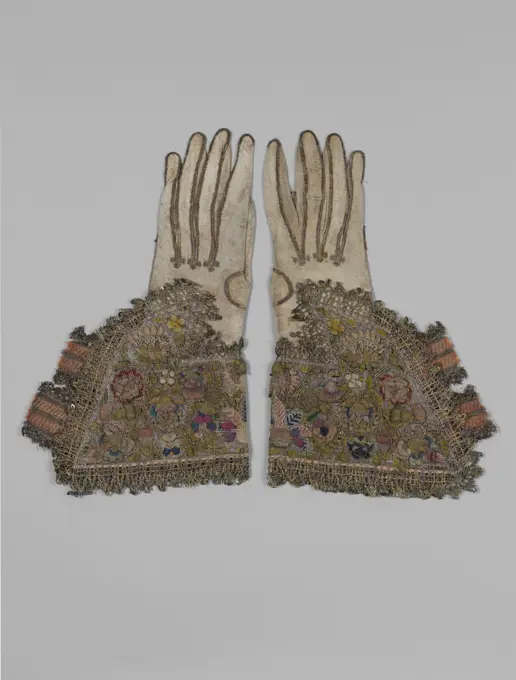
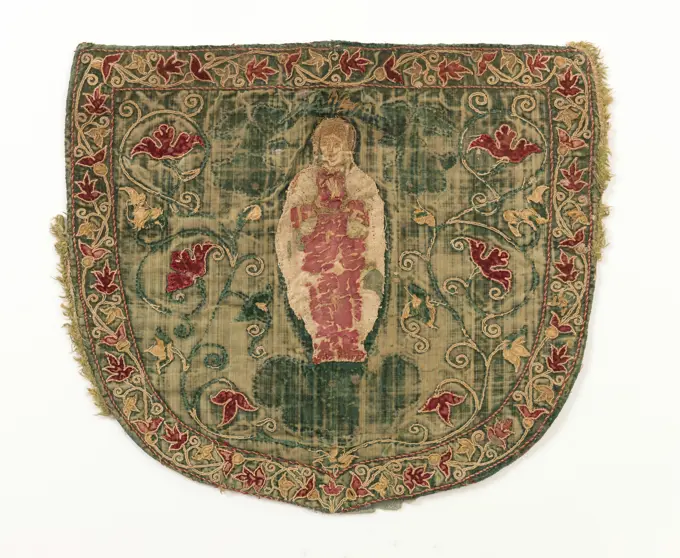
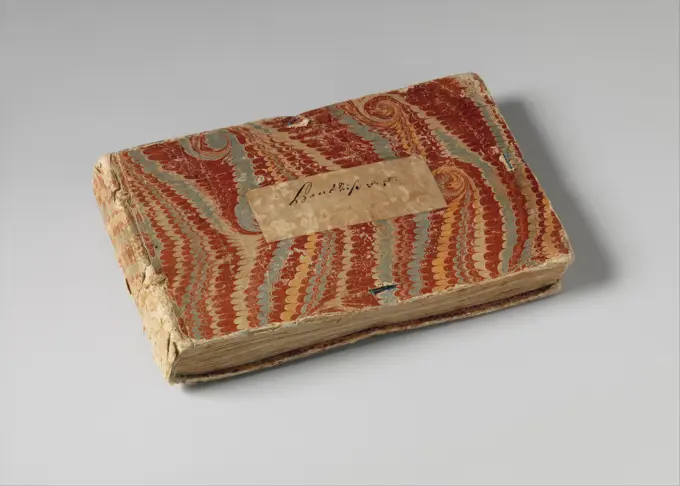
Historical Textile Fragments

Fragments of ornate textiles featuring complex patterns and floral designs, exhibiting craftsmanship from different historical periods.

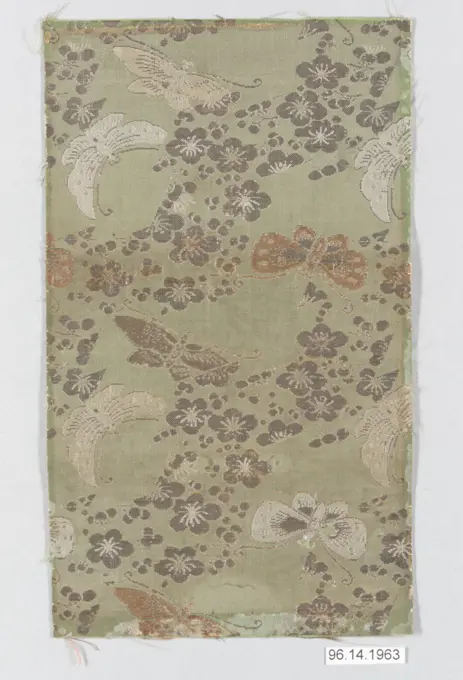
Welum;  2nd half 18th century (1751-00-00-1800-00-00);
Welum; 2nd half 18th century (1751-00-00-1800-00-00);
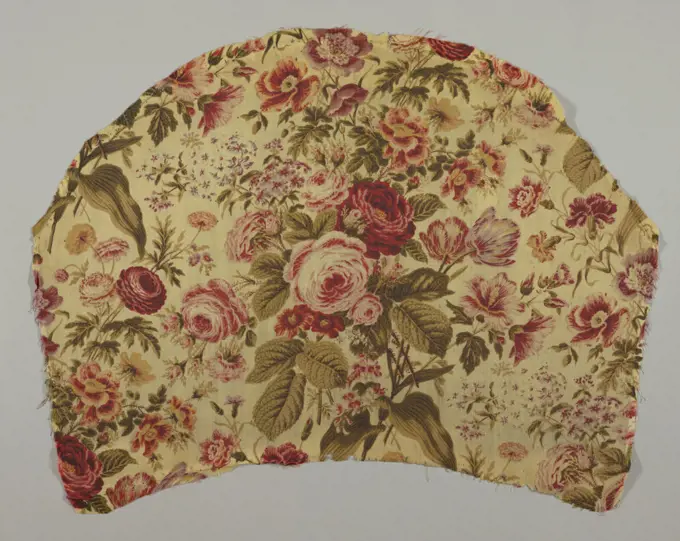
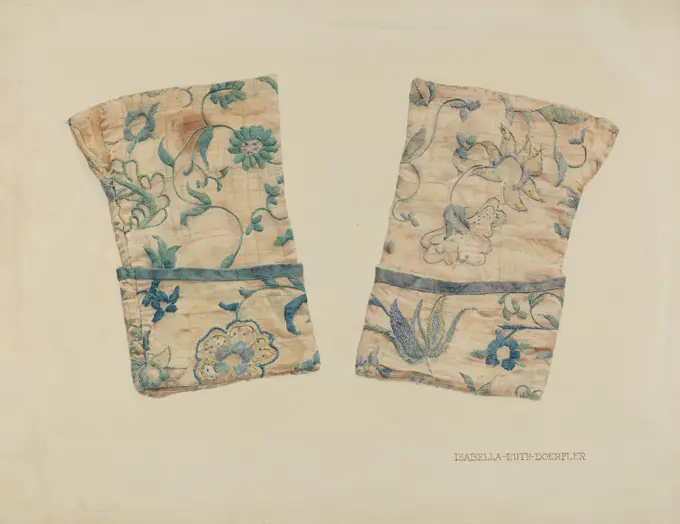
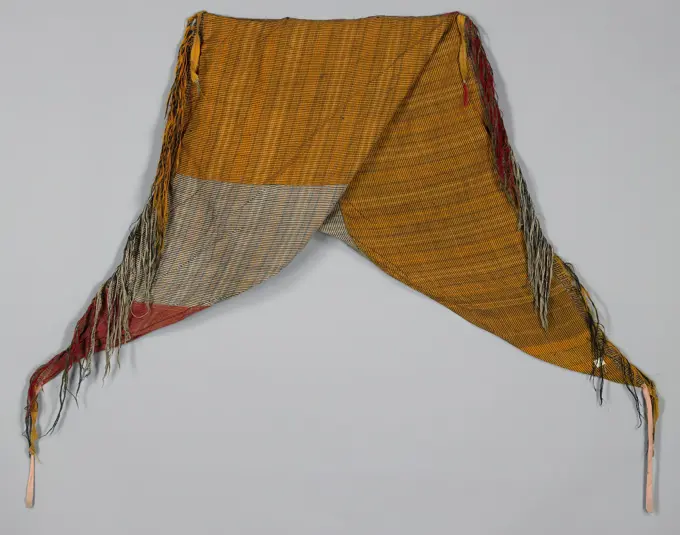
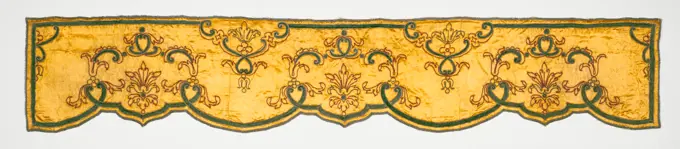
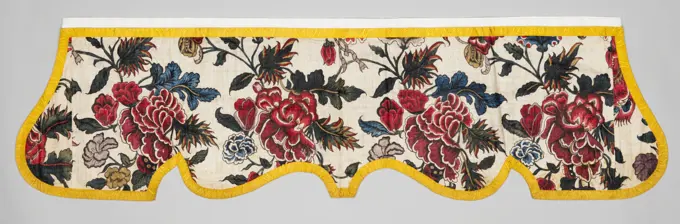
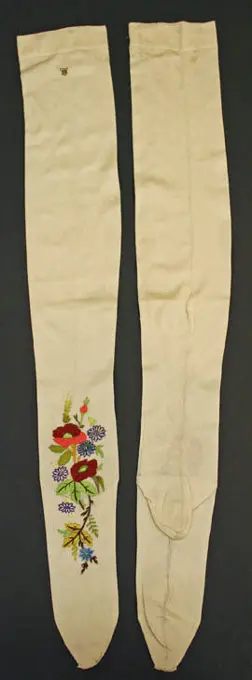
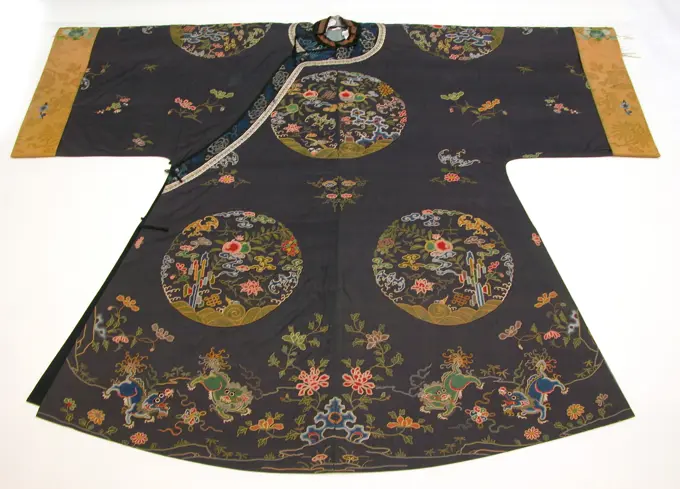
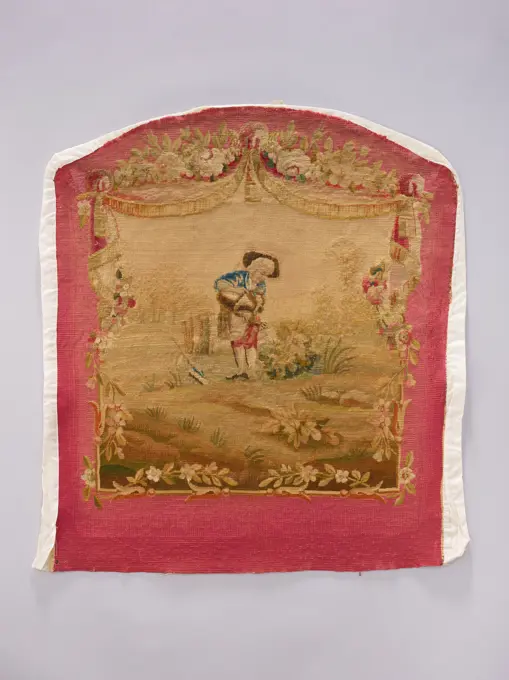
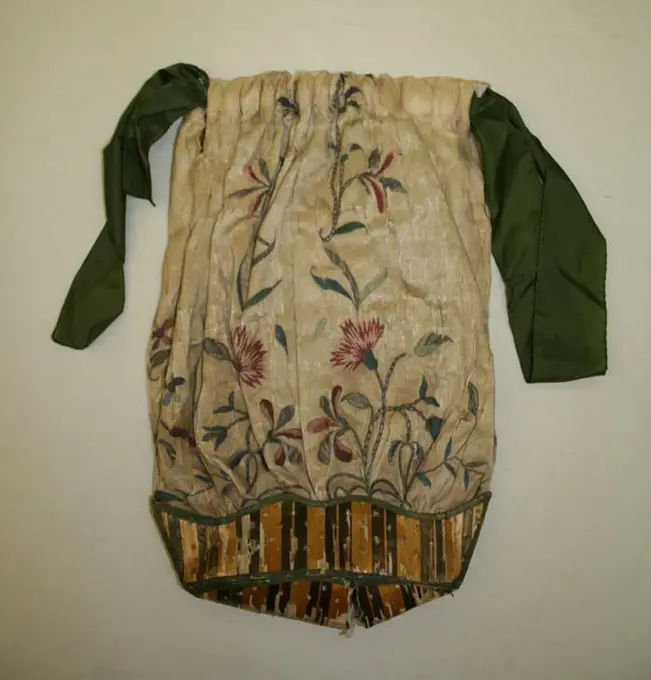
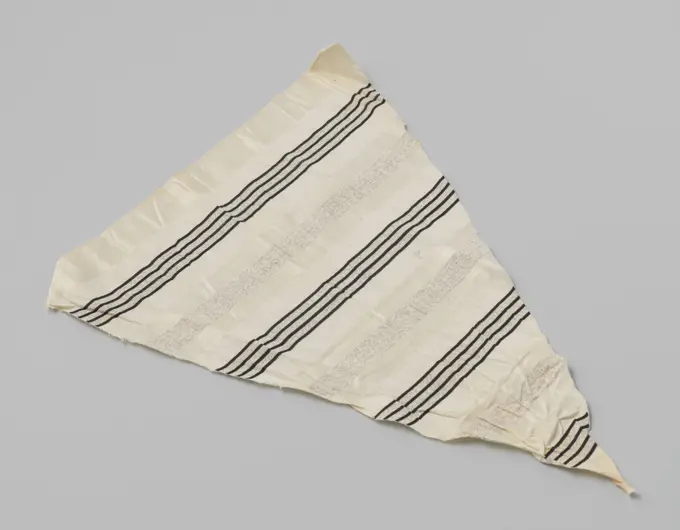
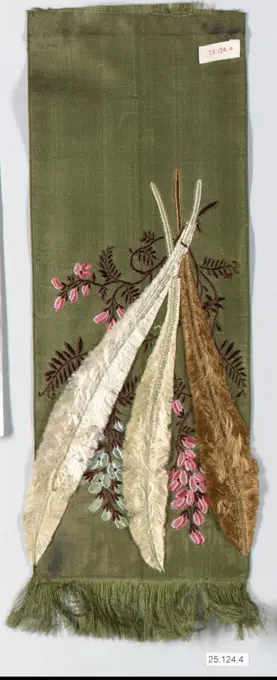
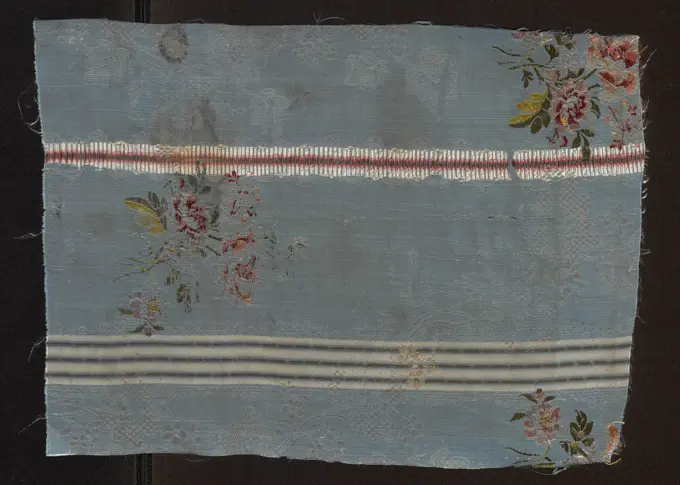
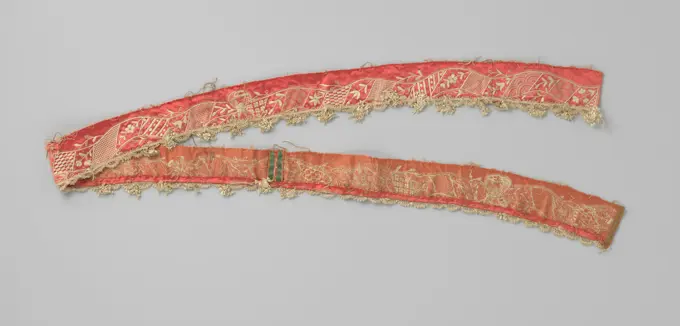
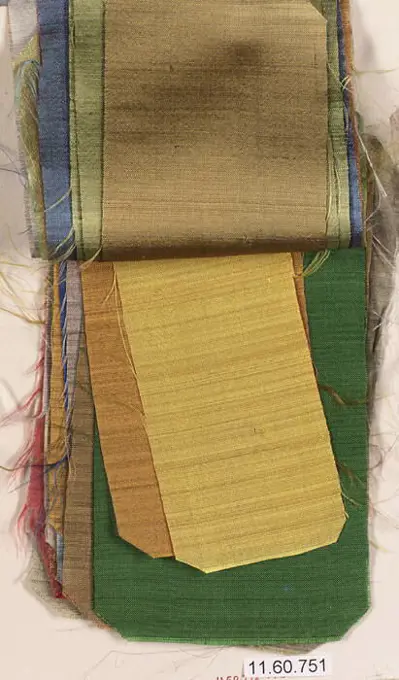
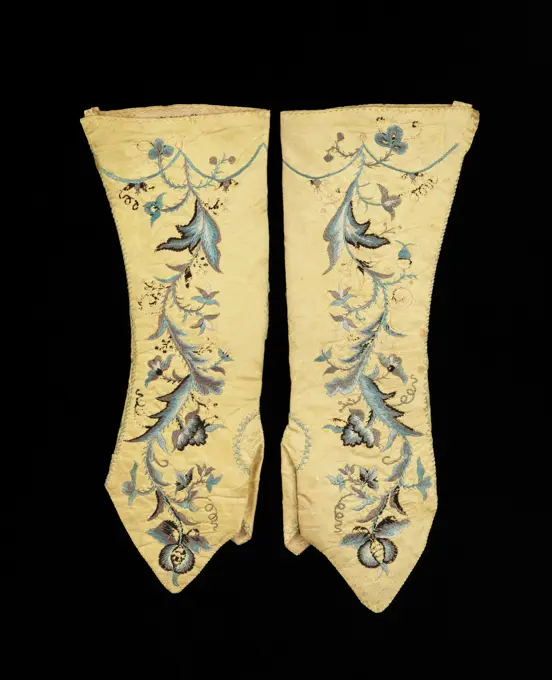
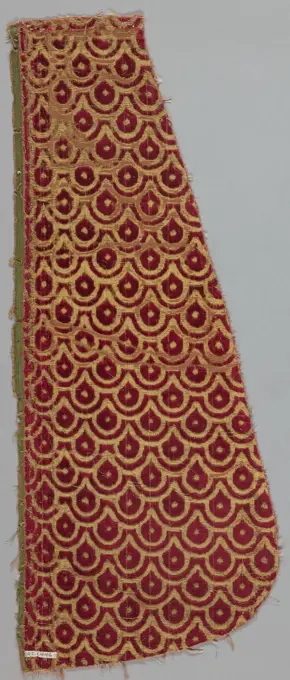
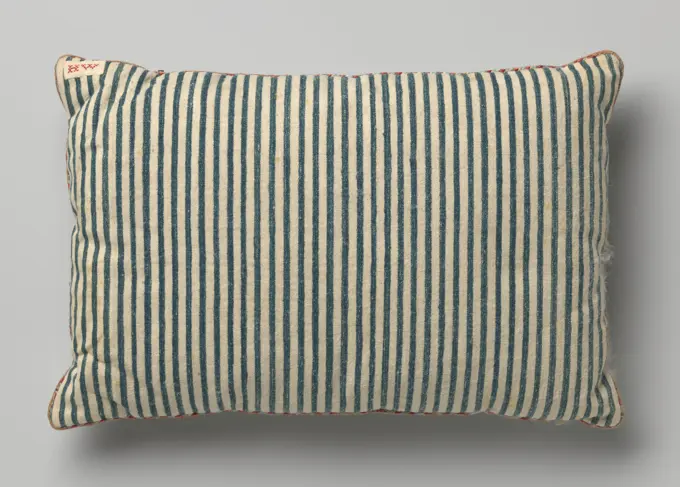
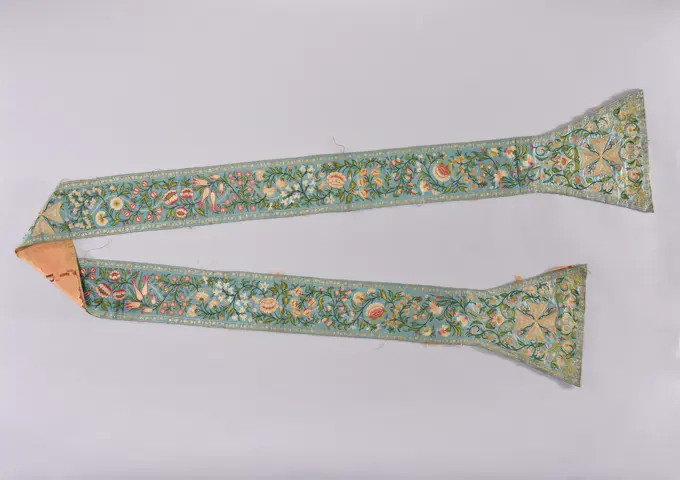
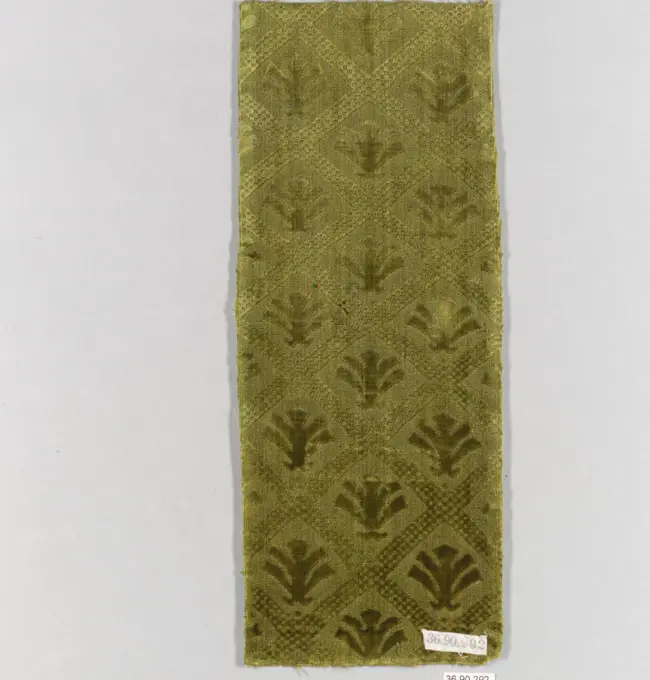
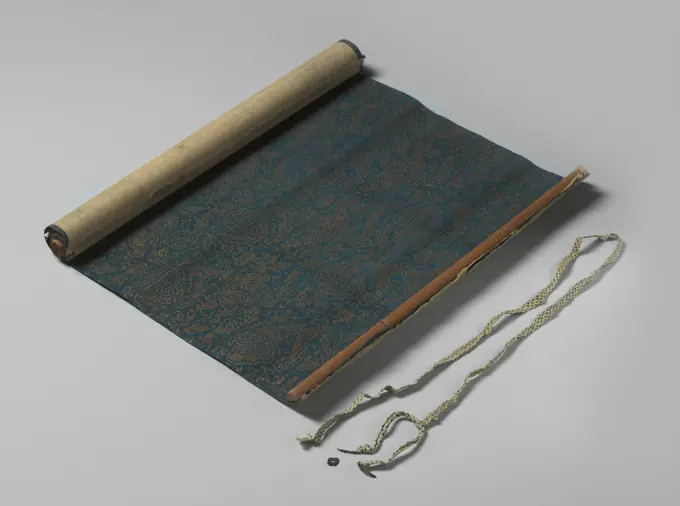
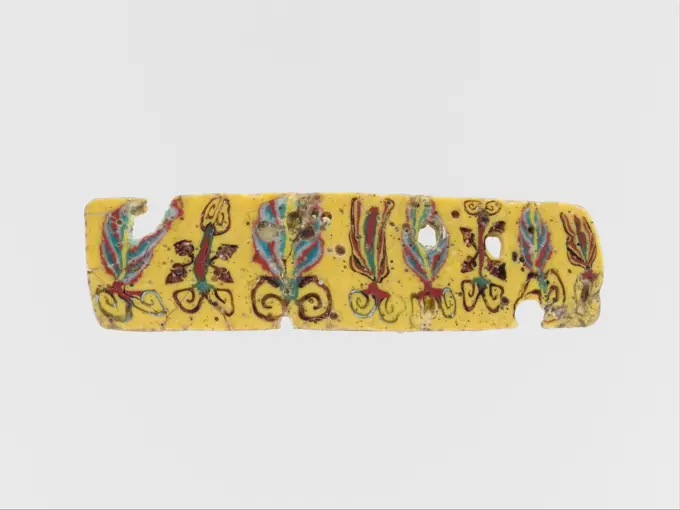
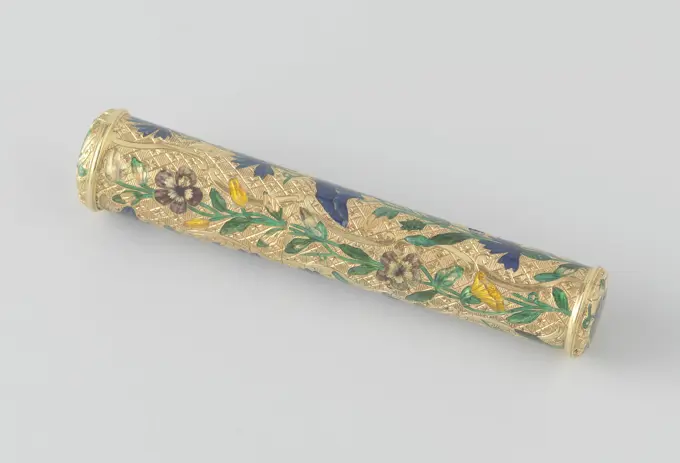
Necessary of gold with enamelled cornflowers, anonymous, c. 1750 - c. 1756 Necessary of gold with enameled cornflowers, bindweed and green leaves on an engraved soil. Content: fox hat, tweezers, 2 pencil sleeves and scissors. Paris gold (metal). steel (alloy) Necessary of gold with enameled cornflowers, bindweed and green leaves on an engraved soil. Content: fox hat, tweezers, 2 pencil sleeves and scissors. Paris gold (metal). steel (alloy)Coif (England); silk and metal-wrapped silk-core embroidery on linen foundationFragment striped, multi -colored silk tissue, anonymous, 1750 - 1775 Fragment striped, multi -colored silk tissue. Germany silk Fragment striped, multi -colored silk tissue. Germany silkPipe Bag, late 19th century, 19 5/8 x 7 x 1 in. (49.85 x 17.78 x 2.54 cm) (without fringe), Animal hide, quills, feathers, metal beads, United States, 19th century, Pipe bags are often called 'Containers for the Heart,' because they contain the sacred pipe and tobacco used in ceremonies that capture the very heart, or essence, of the Lakȟóta people and their cosmology. Highly ornate pipe bags, like those shown here, would have been used during public ceremonies. The size of the bags evolved over time. Before Lakȟóta people were forcibly relocated to reservations, theSet of Two Embroidered Panels, 24 1/2 x 6 1/2 in. (62.23 x 16.51 cm) (a)24 x 6 1/8 in. (60.96 x 15.56 cm) (b), Satin, paper pattern, gold colored metal, rayon () tape, cotton; needlework, ChinaTextile, Medium: wool Technique: probably printed by engraved roller with over print by block on twill weave, Fragment cream colored wool, twill weave; semicircular in shape, printed in shades of red, yellow, olive green, drab, violet. Naturalistic cluster of roses, tulips, etc. Probably roller print with overprint by block. Left selvage present., Europe, mid-19th century, printed, dyed & painted textiles, TextileIsabella Ruth Doerfler, Linen Cuffs, 1935 1942 Linen CuffsMan's Waist Wrap (Kusak), Second quarter of the 20th century, 99 1/2 x 34 in. (252.73 x 86.36 cm), Wool (), cotton, Turkey, 20th centurySampler (USA); Embroidered by Ann Thornton, American; silk embroidery on linen foundationCap 1845-50 American. Cap 116790Upper inner head valence. UnknownPiece 18th century Japan. Piece 67675Cap 19th century British. Cap 98186Embroidery for Ja.r. Thorbecke (cuff), Anonymous, c. 1850  Embroidery for jacket belonging to the office of J.R. Thorbecke as Minister of the Interior. Netherlands textile materialsBow With Ribbons (USA); silk (); H: 90 cm (35 7/16 in.)Fragments of embroidery with habit  flower ornament unknownDemolition of white cotton with ajour embroidered edges and intermediate sinks, marked AW in red randed white., C. 1890 Demolition of white cotton with ajour embroidered edges and intermediate sinks, marked AW in red randed white. Netherlands cotton (textile) Demolition of white cotton with ajour embroidered edges and intermediate sinks, marked AW in red randed white. Netherlands cotton (textile)Dalmatic;  2nd half 18th century (1751-00-00-1800-00-00);Baby Carrier, 20th century, 31 5/8 x 21 3/8in. (80.3 x 54.3cm), Cotton, China, 20th centuryFragment (Germany); linen, tinTrimming fragment, Medium: silk Technique: woven, Ornate scroll in white on red ground., France, ca. 1830, woven textiles, Trimming fragmentDalmatica made of silk fabric unknownTable Mat (USA); Made by Sybil Carter Indian Mission and Lace Industry Association (United States); linenLambrequin of multicolored sits, anonymous, c. 1735 - c. 1740 Lambrequin of cotton in multicolored sits with a painted design of large and smaller red flowers and smaller flowers in ecru and gel and with leaves in blue and green on a white stock; lined with light brown coarse linen and blue and white checkered cotton, omboard with yellow silk passion. Coromandelkust cotton (textile). paint (coating). stain (coating) Lambrequin of cotton in multicolored sits with a painted design of large and smaller red flowers and smaller flowers in ecru and gel and with leaves in blue and green on a white stock; lined with light brown coarse linen and blue and white checkered cotton, omboard with yellow silk passion. Coromandelkust cotton (textile). paint (coating). stain (coating)Stockings 19th century French. Stockings 121589Cofradia Tzute, 1955-1960, 33 3/8 x 30 in. (84.76 x 76.2 cm), Cotton; supplementary weft patterning, Guatemala, 20th centuryA Pair of Oversleeves, anonymous, c. 1750 - c. 1775 Children's sleeve or "Bereklauw" from Sits, with a white stock with floral motifs and red flamed lanes with white flower and leaf vines and red stitching; The lining is made of white linen. Coromandelkust Cotton (textile). Lining: Linen (Material). Chintz. Crochet: Metal sewing Children's sleeve or "Bereklauw" from Sits, with a white stock with floral motifs and red flamed lanes with white flower and leaf vines and red stitching; The lining is made of white linen. Coromandelkust Cotton (textile). Lining: Linen (Material). Chintz. Crochet: Metal sewingWoman's Informal Robe with Garden Roundels China early 18th century The roundels on this robe show garden rocks with flowers, fruit, and auspicious elements such as the endless knot and bats ( fu, a homophone with the word for good fortune). At the lower edge of the garment, two pairs of Chinese lions gambol with beribboned balls in a flower-filled garden setting.Gobelin cover;  PO PO. 18th century (1750-00-00-1780-00-00);Reticule 18th century British. Reticule. British. 18th century. silk, strawFlounce; linen netParasol sector of white cotton with crepe stripes and smooth satin stripes in different colors, Gustav Schnitzler, c. 1910 - c. 1940 Parasol sector of white cotton with crepe stripes and smooth satin stripes in different colors. Nijmegen cotton (textile). satin Parasol sector of white cotton with crepe stripes and smooth satin stripes in different colors. Nijmegen cotton (textile). satinExcerpt cream -colored silk damask with pattern of fruits, flowers and leaves, anonymous, 1750 A fragment cream -colored silk damask with a pattern of fruits, flowers and leaves. Netherlands (possibly) silk damask A fragment cream -colored silk damask with a pattern of fruits, flowers and leaves. Netherlands (possibly) silk damaskGUIRLANDE and trophy with painter's attributes, anonymous, 1600 - 1800 drawing A fan sheet with medallions, a flower guilland and a trophy with painting attributes.  paper. watercolor (paint). pencil brush ornament ~ festoon, garland. trophy, i.e.: decorative arrangement of symbolic or typical objects ~ ornament. tools, implements of painterTop of embroidered pall unknownBourse. 1860. GAL1977.50.17Tools for a needle side application in the form of a cotton piece on which a black leaf is sewn with white traced wires in the shape of a butterfly, anonymous, c. 1900 - c. 1914 Tools in the form of a black leaf in which the pattern of butterfly wings and a butterfly are 'stung'. The leaf or 'incineration' is sewn on a cotton piece and the pattern lines of the motifs are sewn through the leaf and the patch with white tracing wires. They are then filled in with a mesh side and the body of the butterfly (below) with feston stitches closed, with recesses here and there. Ornamental stitches have also been applied. With this motif a white strip of paper is stuck with the text "4th ouvraage" (fourth work). The extra butterfly wings (at the top) have also been processed in this way and, moreover, a start has been made here with the application of relief lines of founded thread bundles. A white strip of paper is stuck with the text "5th ouvraage" (fifth work). When this work is completed, the Kościelna Kapa;  18th century (1701-00-00-1800-00-00);Strip bobbin with thistles in symmetrical sculpts, anonymous, c. 1685 - c. 1699 Strip of natural-colored bobbin, Old Flemish side or Van Dyck side. The pattern consists of symmetrical scales, which are formed by thistle flowers hanging downwards, always one per shell. The motifs are connected by short -crossing couples, a land is missing. The motifs are made in linen battle with recesses and openwork edges. In various places, leaves are made in forms in the recesses. The scoops are trimmed with picots. The top is finished with a straight edge. The strip was at the beginning of the twentieth century by 'Conservator' Mrs. C.J. Hudig used to act as a collar on the mantle of Ernst Casimir. For that reason, the strip is sewn on a U-shaped piece of linen, which is still attached to. Southern Netherlands linen (material) bobbin lace / old Flemish lace Strip of natural-colored bobbin, Old Flemish side or Van Dyck side. The pattern consists of symmetrical scales, which are formed by thistle floWoman's necktie 1870-80 French. Woman's necktie 221659Fragment of the fabric;  18th century (1701-00-00-1800-00-00);Fabrics, purchase (provenance)Embroidered Interior Textile, anonymous, c. 1750 - c. 1760  France (possibly) silk. braid embroidering  France (possibly) silk. braid embroideringFragment; silkBaby carrier, ChinaKitchen towel isolated on white background18th grade cover, back GAL2001.168.X_2Cap 1854 American. Cap 169868Fragments, Medium: wool on linen Technique: crewel embroidery on plain weave, Fragments showing formal floral forms in multicolored wool on linen., France, 18th century, embroidery & stitching, FragmentsInterknotted Ornament with Tassels 19th century China. Interknotted Ornament with Tassels. China. 19th century. Fan: silk, bamboo, and paper; tassel: knotted silk. Qing dynasty (1644-1911). FansA Pair of Oversleeves, anonymous, c. 1750 - c. 1775 Sleeve, white with colored flowers and green silk knots and decoration (part of a Frisian children's costume). Coming from Schiermonnikoog. Coromandelkust cotton (textile). chintz. lint: linen (material). knoop: wood (plant material). silk chintz Sleeve, white with colored flowers and green silk knots and decoration (part of a Frisian children's costume). Coming from Schiermonnikoog. Coromandelkust cotton (textile). chintz. lint: linen (material). knoop: wood (plant material). silk chintzDouble collar 1825-35 American. Double collar 118953Textile Fragment, 1774-1793. France, late 18th century, Period of Louis XVI (1774-1793). Velvet; overall: 6.7 x 3.5 cm (2 5/8 x 1 3/8 in.).Sample early 19th century French. Sample 219326Fragment, Medium: silk, gilt paper Technique: woven of ikat dyed yarns, Fragment from a fabric woven for a Noh robe. Design of wisteria blossoms and leaves., Japan, 19th century, woven textiles, FragmentBag.   Maker: UnknownSampler, Medium: glass beads, cotton Technique: beads sewn on individually; strung individually for the edge, Three bands sewn together with withdrawn element work. Each end has four beadwork tabs., Mexico, 19th century, embroidery & stitching, SamplerMitts first quarter 18th century British An example of fine English embroidery, the design on these mitts is worked in a naturalistic style with the use of gradated color that adds depth and richness to the motifs. As an extra luxurious detail, the underside of the V-shaped extension, which would not have been visible, carries its own delicate floral embroidery.. Mitts 157526Fragments; silk, metallicSharp worn by a Belgian officer, "deprived" in the war of 1830/32. Outdoor model sash of green silk, pales.Child's Boot (one of a pair) 18th-19th century China. Child's Boot (one of a pair) 68780Only leaf of a pouch of ivory-colored satin, on which in watercolor green branches and pink flowers. Only leaf of a pouch of ivory-colored satin, on which in the middle in watercolor green branches and pink flowers and buds. The leaf is bordered with a braided tres band from white silk and gold thread, with a tire in V-shape at the bottom and where the tires cross a bow. The tire continues in a handle at the top. In a tunnel along the upper edge is a reinforced strip.Girls Furisode with Koto Curtains and Chrysanthemums. Formal kimono with long sleeves for a girl (furisode) with an ornament on the underside of sleeves and fronts of peonies, chrysanthemums and silk curtains, at the bottom of the backs with peonies, chrysanthemums, a zither (Koto) and a folding fan with a prunus decoration. Yellow silk with damask woven paulownia motifs with a painted yuzen decoration and embroidered detail. Red silk lining. Five family weapons (mon) of melon (Mokko).Paper collectors badge in the shape of a ribbon folded in a triangle, with the letters S.Z. Central Office of Publishers of the Supreme National Committee, Printing House of the Jagiellio UniversityFragment 17th century Italian. Fragment 230105Embroidered darning sampler. Culture: German. Dimensions: H. 21 1/8 x W. 12 inches (53.7 x 30.5 cm). Date: 1732. Museum: Metropolitan Museum of Art, New York, USA.Mitts. Culture: Spanish. Date: late 17th century. Museum: Metropolitan Museum of Art, New York, USA.Purse; silk, wire; silk liningTextile Fragment 17th century. Textile Fragment 454568Kisses, exaggerated with a strap, anonymous, 1700 - 1850 Lumbar cushion exaggerated with a colorful cord. In a corner initials HW. Northern Netherlands (possibly) ticking Lumbar cushion exaggerated with a colorful cord. In a corner initials HW. Northern Netherlands (possibly) tickingSeven fragments of a chasuble. unknown, authorStole. unknown, authorFire panel. Fire panel made of blue silk damask with asymmetrical pattern of large flowers. Trimmed with frills and passing element that has been laid in voluntaries, flowers and candidabilities.Piece 16th-17th century Italian. Piece 223393Passe-partout for painting with geese in a landscape. Passe-partout for geese in a landscape.Cap 18th century. Cap 446668Turban, 96 1/2 x 8 1/4 in. (245.11 x 20.96 cm), Cotton, metallic thread, ChinaHandkerchief, Vue de L'Exposition Universelle de 1878; France; printedSampler. Netherlands. Date: 1791. Dimensions: 32 x 29.5 cm (12 5/8 x 11 5/8 in.). Twelve samples of darning in colored silk. Origin: Netherlands. Museum: The Chicago Art Institute, Chicago, USA.Glass mosaic inlay 1st century B.C.-1st century A.D. Egyptian, Roman Opaque yellow ground; decoration in opaque white, red, and greyish green, and translucent deep purple appearing black.Narrow horizontal strip, tapering slightly towards the right and rounded right edge.Asymmetrical repetitive floral motif with palmettes, lotus buds, and stems flanked by four ivy leaves.Broken and repaired with some cracks and losses; upper, underside, and edges ground and polished; deep pitting of some surface bubbles.This piece is cut from the same mosaic glass bar as 17.194.377, but decoration appears in mirror image.. Glass mosaic inlay 249617Screen. Culture: American. Designer: Designed by Lockwood de Forest (American, New York 1850-1932 Santa Barbara, California). Dimensions: 65 x 69 3/4 x 1 3/4 in. (165.1 x 177.2 x 4.4 cm). Date: ca. 1881-90.With its carved teak frame, vividly patterned plaited matting, and Japanese lacquer and mixed-metal finials, this unusual screen epitomizes the 1880s fascination with exotic styles and materials. The screen's designer, Lockwood de Forest, who was trained as a painter, did much to foster popular taste for such exoticism in decorative arts and architecture during the late nineteenth century. In 1881, with the ambition of reviving traditional methods of craftsmanship and indigenous designs, he established workshops in Ahmedabad, India, where carved woodwork was produced for use in American interiors and furniture. The workshops continued under his direction until 1907, when he turned over their management to Louis Comfort Tiffany. Over the years, de Forest amassed a sizeable collectionPair of gloves first half 17th century British The wide wrist gauntlets of this pair of gloves are decorated with stitches and motifs also found on purses of the period. In addition, the gold and silver bobbin lace trim is also similar to that found on some embroidered jackets. The delicacy of the decoration on these gloves emphasizes the fact that they were intended as decorative accessories rather than practical gloves for protection from severe weather.. Pair of gloves 222225Embroidery Hood (Germany); silk, metal thread, linenWomen Maru Obi with plant motifs, 1920 - 1940 Ceintuur of side brokaat for a formal kimono (maru obi) for a woman, with a decoration over the entire plane of pine, prunus and bamboo (the three friends of winter), with different types of chrysanthemums. Sand -colored silk with brokaat woven decoration (Nishiki). Japan silk Ceintuur of side brokaat for a formal kimono (maru obi) for a woman, with a decoration over the entire plane of pine, prunus and bamboo (the three friends of winter), with different types of chrysanthemums. Sand -colored silk with brokaat woven decoration (Nishiki). Japan silkZoller Album Amicorum 18th century. Zoller Album Amicorum. 18th century. 75 sheets of laid paper inside a cardboard binding covered in marbled paper.. BooksTunic 17th-18th century () Aymara. Tunic. Aymara. 17th-18th century (). Camelid hair. Bolivia. Textiles-WovenFan leaf, Silk leaf painted with gouache and applied with lace, Fan leaf. Black net with scalloped black lace applied at edge, painted with gouache showing a border of yellow roses., France, late 19th-19th century, costume & accessories, Fan leafRoll painting, anonymous, 1368 - 1644 Painting, branch with flowers and leaves. In wooden box. China silk. ink. dye Painting, branch with flowers and leaves. In wooden box. China silk. ink. dyeVintage French postcard illustrated with mauve flowers and a four leaf clover roses. 1900Homongi with flower balls. Semi-formal women's kimono for visit (homongi), with an ornament over the entire plane of flower balls of peonies, chrysanthemums and balloon bells with long cords. Cinnamon crepe silk (Chirimen) with a damask woven decoration of chrysanthemum motifs and a painted yuzen ornament with embroidered detailing in colored and gold thread. Red silk lining. Only family crest (mon) of balloon clock (kikyo).Textile Swatches Onondaga Silk Company, Inc. (1925-1981). , 1948-1959. Silk, 23 x 14 1/2 in. (58.4 x 36.8 cm).    1948-1959