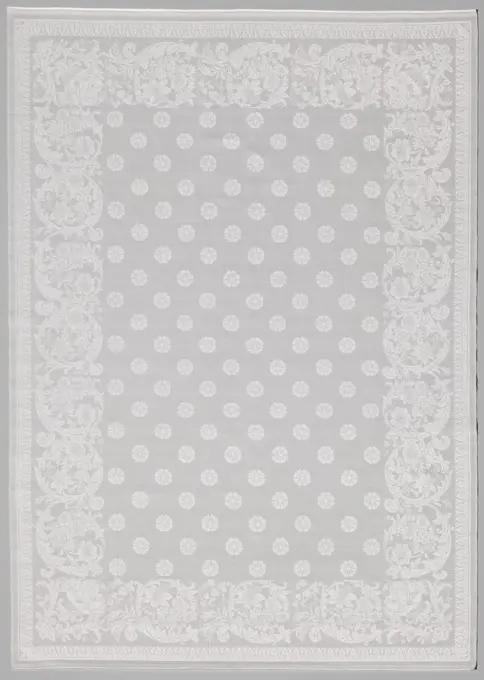
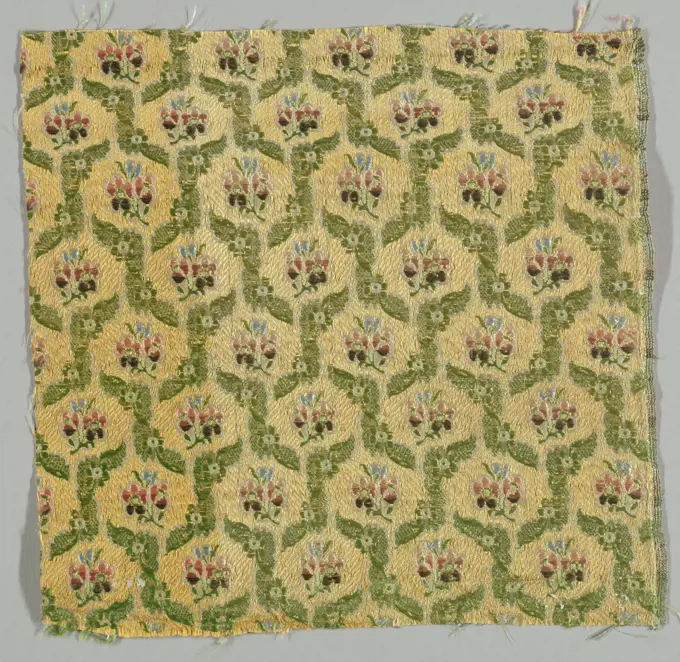
Historical Textile Fragments

A collection of textile fragments featuring intricate patterns in muted colors, showcasing techniques like damask and brocade from various centuries.

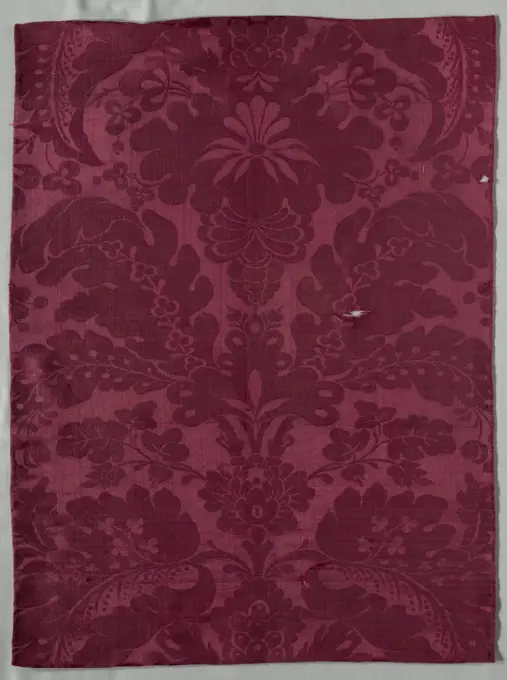
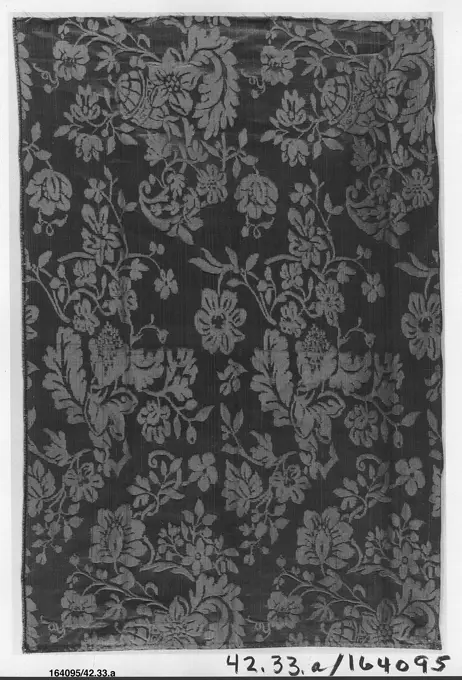
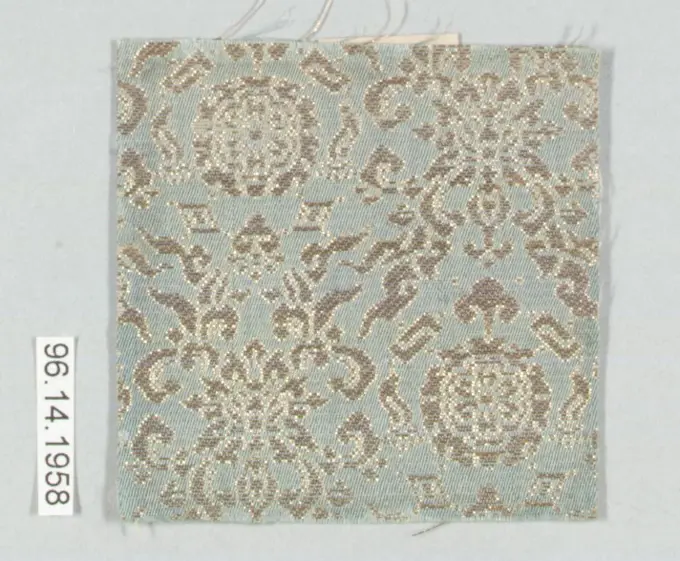
Fragment, Medium: silk Technique: damask, Chinoiserie design of symmetrical floral repeat with ragged head, straight stem, encircled with crown and supported at each side at the base by a twig rising from a thicker branch. Smaller variant in interspaces., China, 16th century, woven textiles, Fragment
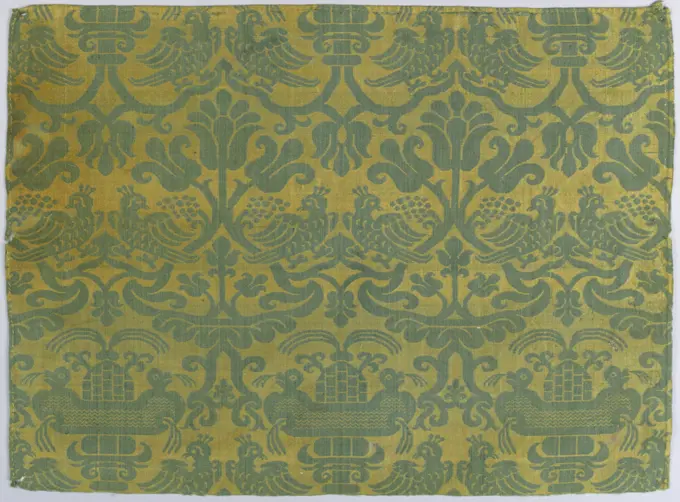
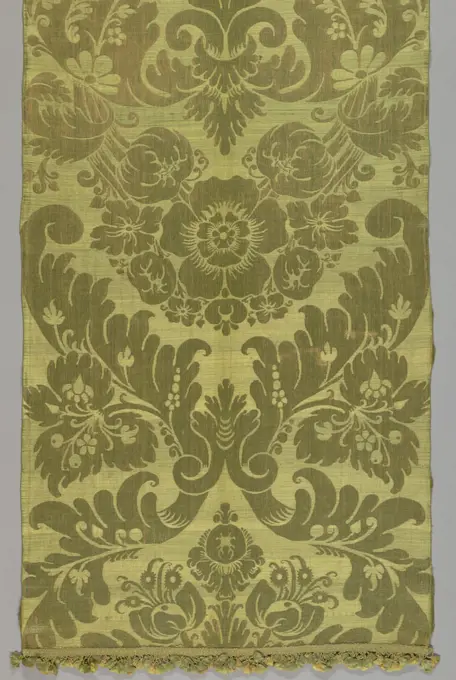
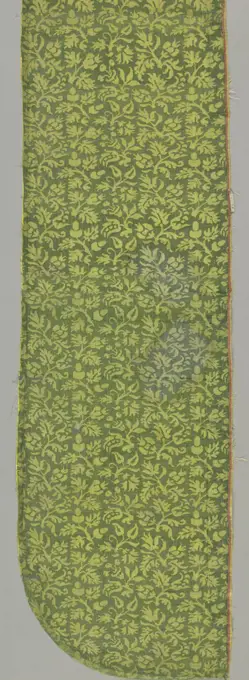
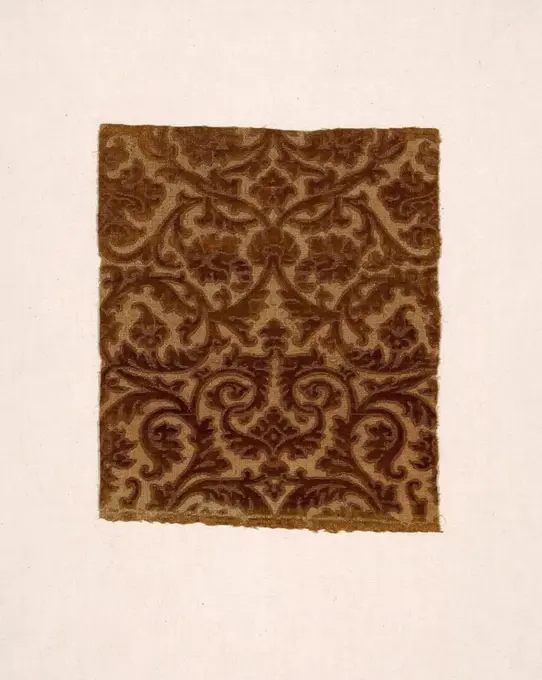
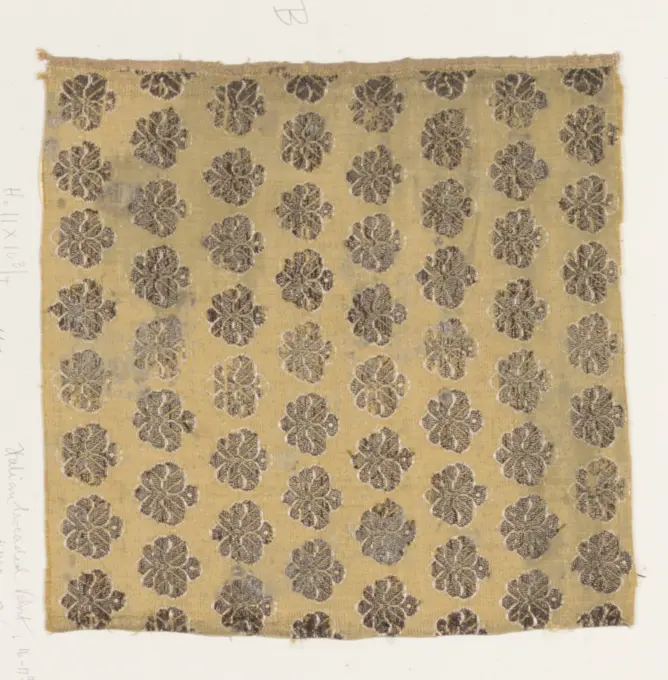
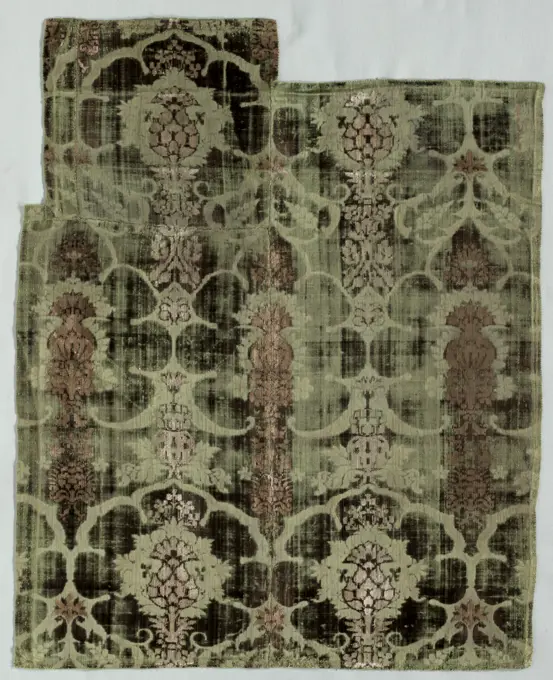
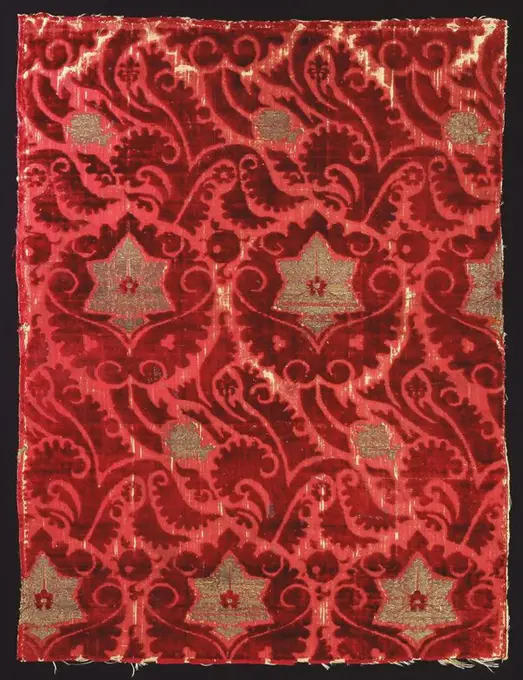
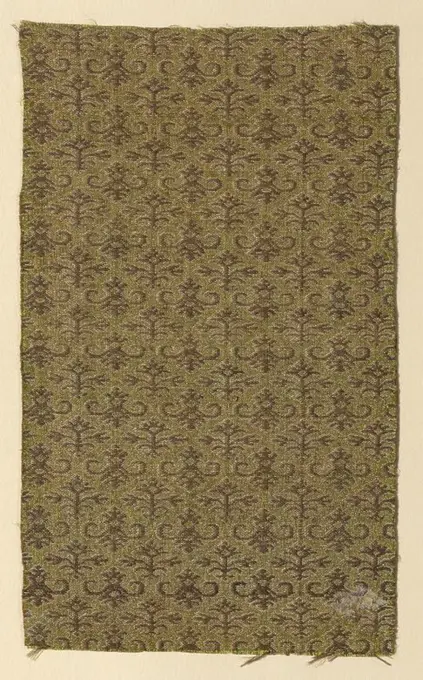
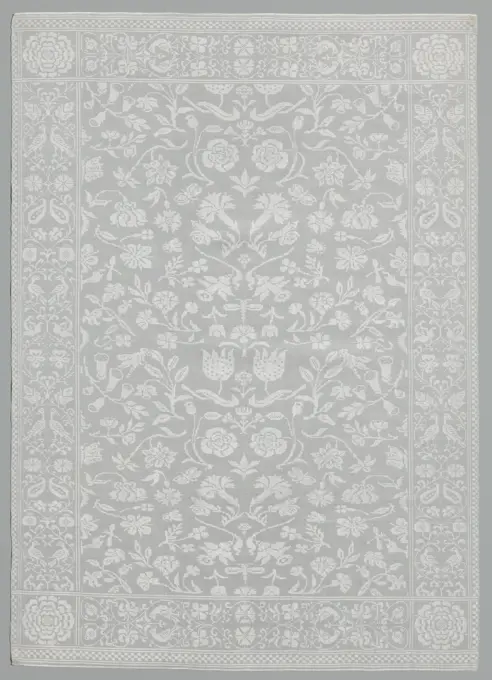
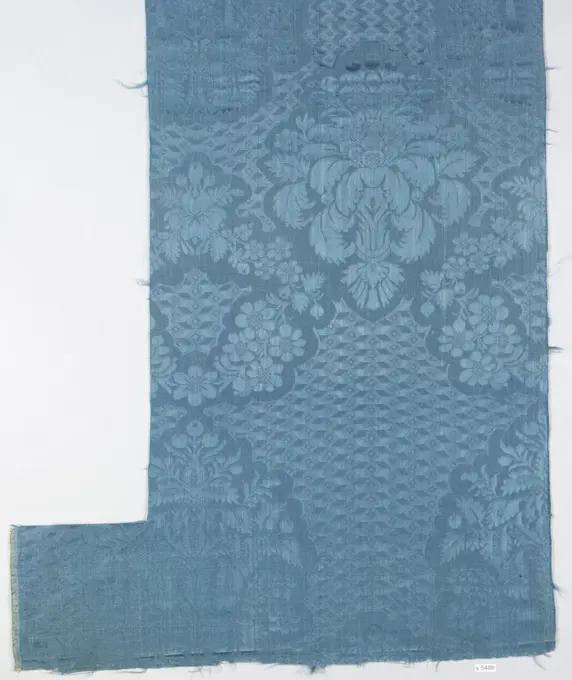
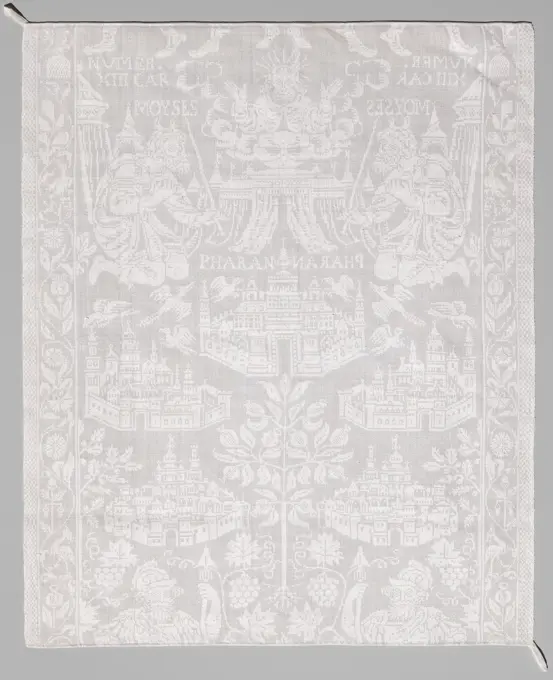
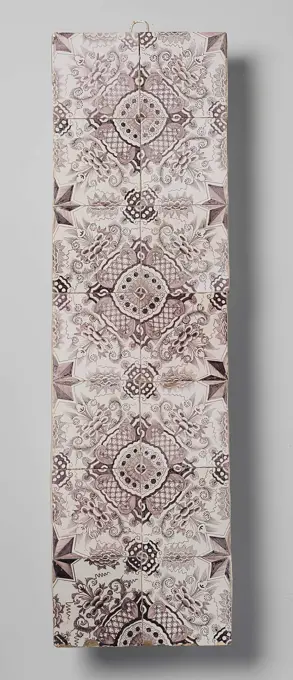
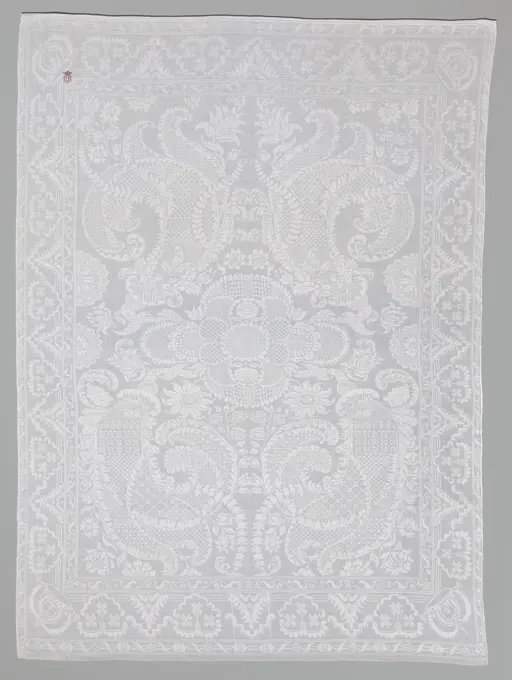
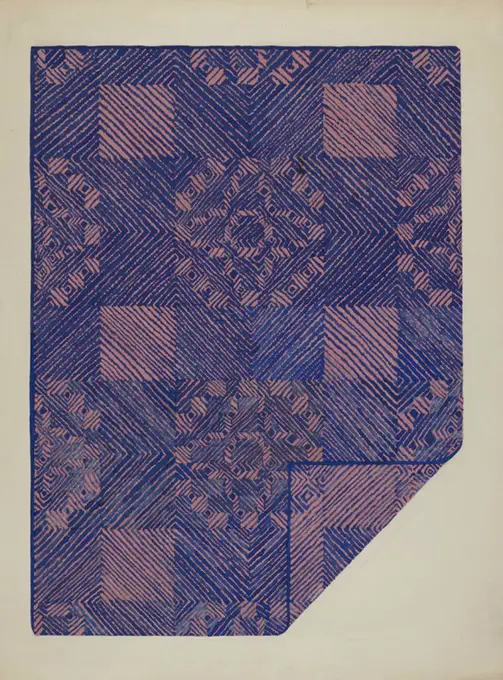
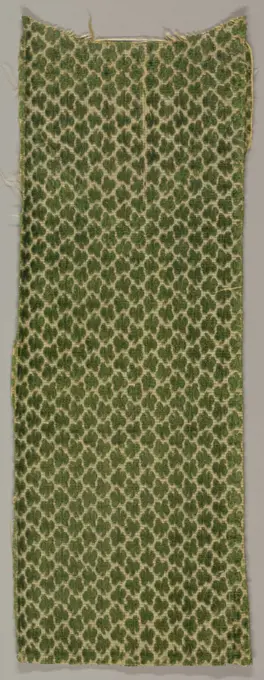
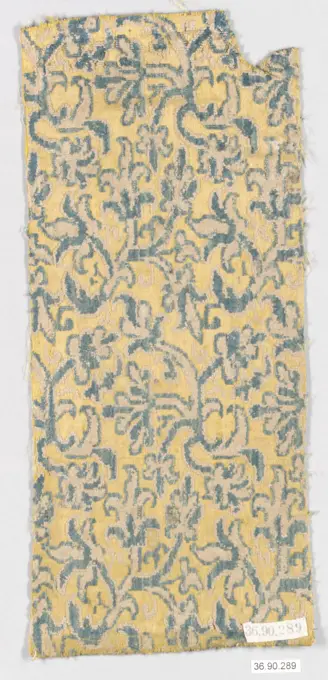
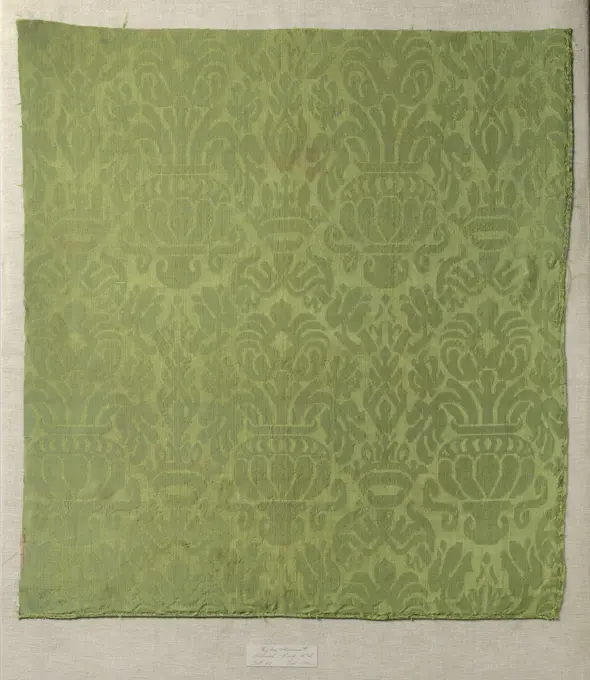
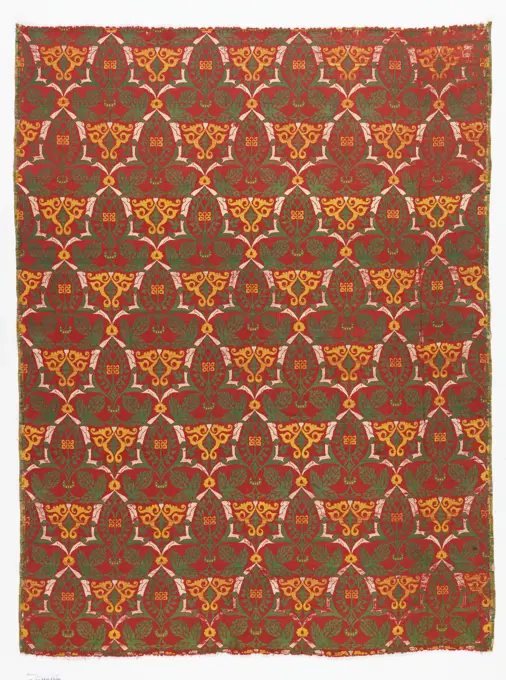
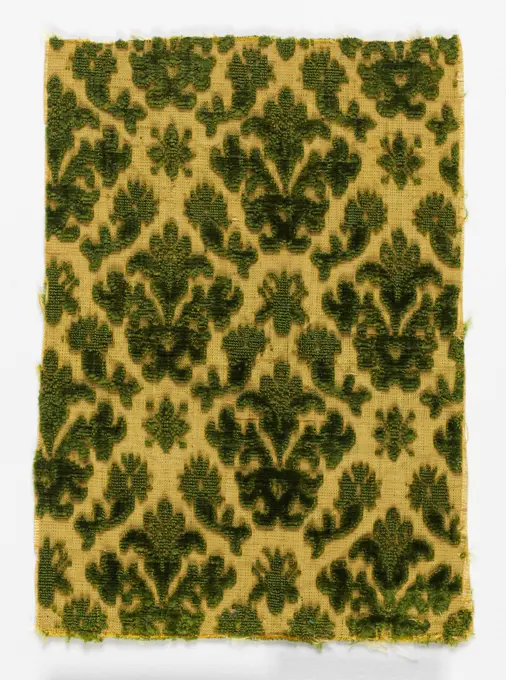
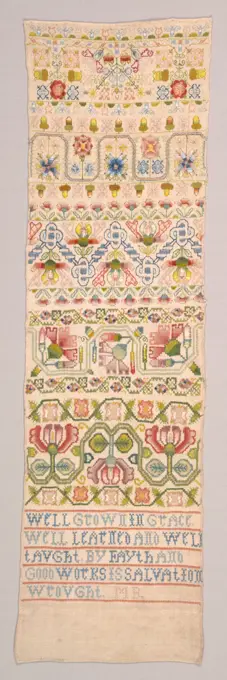
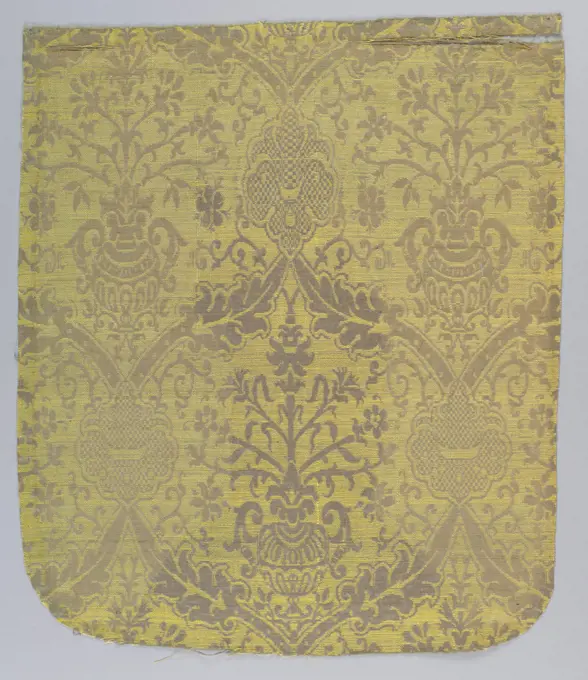
Fragment, Medium: silk, linen () Technique: two integrated structures, plain weave plus twill; brocatelle, Ogee lattice formed by lancet leaves framing flowering plants in urns. The background is yellow and the pattern a faded mauve. Cut into the shape of a cope hood., 17th century, woven textiles, FragmentFragment 16th century Italian. Fragment 230195Fragment silk silver brocade with pattern of peonies and leaves between which tired tires, anonymous, c. 1725 - c. 1735 Fragment silk silver brocade with multicolored pattern of peonies and leaves, between which threshed tires swing. Rinceaux was strictly stylized on both sides. Netherlands (possibly)France (possibly) Ketting an element: Silk. lampas (textile material) Fragment silk silver brocade with multicolored pattern of peonies and leaves, between which threshed tires swing. Rinceaux was strictly stylized on both sides. Netherlands (possibly)France (possibly) Ketting an element: Silk. lampas (textile material)Fragment, Medium: silk Technique: damask, Chinoiserie design of symmetrical floral repeat with ragged head, straight stem, encircled with crown and supported at each side at the base by a twig rising from a thicker branch. Smaller variant in interspaces., China, 16th century, woven textiles, FragmentFragment of silk fabric unknownNapkin of white linen, 1660 - 1670 White Linnamasten napkin with a pattern of stripped flowers. Northern Netherlands (Possible) linen (material) damask White Linnamasten napkin with a pattern of stripped flowers. Northern Netherlands (Possible) linen (material) damaskCeiling Paper (USA); Manufactured by Maxwell & Co., S.A. (United States); machine-printed paper; 79.5 x 49 cm (31 5/16 x 19 5/16 in.)Piece 19th century Japan. Piece. Japan. 19th century. Bast fiber(). Textiles-WovenTwo Lengths of Silk Damask, 1600s. Italy, 17th century. Damask, silk; overall: 51.2 x 59 cm (20 3/16 x 23 1/4 in.).Textile, Medium: silk Technique: plain compound weave, Reversible design in green and gold-colored silk of symmetrical pattern in alternating horizontal rows. One row has three tulips crowning a pedestal formed by curving bands that have pairs of confronted birds. The other row has a fountain of a highly stylized animal forms., Italy, 17th century, woven textiles, TextileLinnamast napkin with a flower pattern, anonymous, c. 1670 - c. 1690 Linnamast napkin with a flower pattern. The field has flowers and acanthus leaves. The current edge has winding vines. The upper lying edge has a wine rank and a deer, the bottom lying edge a vine and a sheep. The corners have a crowned monogram. The napkin includes a napkin with invnr. BK-1979-270-B. Northern Netherlands (possibly) linen (material). damask Linnamast napkin with a flower pattern. The field has flowers and acanthus leaves. The current edge has winding vines. The upper lying edge has a wine rank and a deer, the bottom lying edge a vine and a sheep. The corners have a crowned monogram. The napkin includes a napkin with invnr. BK-1979-270-B. Northern Netherlands (possibly) linen (material). damaskFragment early 16th century Northern Italian. Fragment 230632Silk and Gold Brocade Fragments, 1600-1650. Turkey, Bursa, first half of 17th century. Brocade; silk and gold; average: 135.3 x 35.6 cm (53 1/4 x 14 in.).Fragment Made 1601-1700 Europe. Silk, linen, and cotton, plain weave, tied and free double cloth with self-patterning ground wefts .Piece Japan 18th-19th century View more. Piece. Japan. 18th-19th century. Silk. Textiles-WovenTextile, Medium: silk, linen Technique: compound satin (brocatelle), Gold ground patterned in leaf green with large symmetrical trophies of foliage and blossoms enclosed within ogives of boldly scrolling leaves and surmounting festoons of pomegranates centering on a cinquefoil., Italy, 17th century, woven textiles, TextileFragment (From a Quilt) Made 1701-1800 France. possibly resist dyed . Fauquet-Lemaître (Producer)Fragment, Medium: silk Technique: 4&1 satin damask, pattern of leaves and acorns in two shades of green, 17th century, woven textiles, FragmentTextile, Medium: cotton Technique: printed by engraved roller on plain weave, All-over repeat of large scale flowers in blue and background of blue picotage dots. One selvage present., France, Alsace, ca. 1860, printed, dyed & painted textiles, TextileCeiling Paper (USA); Manufactured by C. & W., Cresswell & Washburn Ltd; machine-printed paper, ribbed, liquid mica; 92 x 49.5 cm (36 1/4 x 19 1/2 in.)Fragment (France); technique: plain weave foundation. block-printed: a resist medium. dyed blue; Warp x Weft: 61 x 84 cm (24 x 33 1/16 in.) Repeat H: 37.5 cm (14 3/4 in.)Bed hanging, Medium: silk, metal-wrapped silk-core yarns Technique: embroidery in satin and couching stitches on plain weave foundation Label: silk embroidered with silk in satin stitch and couched metallic yarns, Bed hangings of heavy white silk, embroidered in gold thread, gold foil strips, and colored silks. Each panel is made up of two breadths of fabric seamed down the center and is lined in white silk plain weave. The design is arranged so that golden rococo curves meet at the center seam to form a symmetrical v-shaped pattern, with flowering branches and birds, worked in satin stitch in colored silks. While the flowers are symmetrical, the birds are vertically off-set; each panel shows eleven birds, all different, which appear to be taken from a set of ornithological prints by Xaviero Manetti. Metallic effects in several textures are created with couched crimped gold lamella and couched foil-wrapped silk-core threads., France, 1730-70, embroidery & stitching, Bed hangingLength of furnishing velvet first quarter 18th century French. Length of furnishing velvet 222642Fragment; silk, metallicFragment, Medium: silk Technique: cut and uncut supplementary warp pile (velvet) in a woven foundation, Small panel of green cut and uncut velvet in a cream-colored ground with a pattern of stylized leaf forms arranged in rows of opposing diagonals., Italy, 16th-early 17th century, woven textiles, FragmentFragment. Italy. Date: 1575-1600. Dimensions: 31.5 x 27 cm (12 3/8 x 10 5/8 in.). Silk, warp-float faced 3:1 broken warp chevron twill weave with gilt-metal-strip supplementary facing wefts and supplementary pile warps forming cut and uncut voided velvet. Origin: Italy. Museum: The Chicago Art Institute, Chicago, USA.Textile, Medium: silk Technique: predominantly warp-faced plain weave patterned by floats of a supplementary warp bound on the back only at regular intervals across fabric, Small-scale floral pattern on blue background., France, late 18th century, woven textiles, TextileFragments of silk fabric  a naturalistic floral pattern unknownFragment 16th-17th century Italian. Fragment. Italian. 16th-17th century. Silk, metal thread. Textiles-WovenSidewall (USA); Manufactured by Robert Graves Co. (United States); machine-printed; 54 x 49.5 cm (21 1/4 x 19 1/2 in.)Length of Printed Fabric Made 1780-1789 Jouy-en-Josas (Object Possibly made in), France (Object Probably made in). After struggling with technical problems for decades, color block printing techniques advanced in Europe during the late 18th century. The innovations enabled manufacturers to print more colors on a single fabric and to more successfully imitate brilliantly colored, hand-painted Indian chintzes.. Linen and cotton plain weave; block printed . Oberkampf Manufactory (Manufacturer)Piece 18th-19th century Japan. Piece 67265Stola van Kloskant with symmetrical flower motifs and scrap edge, anonymous, c. 1825 - c. 1830 Stola of natural -colored bobbin: blonde. Scalloped edge of large leaves with a flower branch above it. Symmetrical pattern in midfield, with five symmetrical flower and leaf motifs on either side of central flower and leaf motif that is similar but slightly larger. The sixth and largest flower and leaf motif from the middle, at the two ends, is symmetrical over the length axis. The motifs are largely made in linen and mains and are equipped with shiny contour threads. The motifs are connected by a traly land, a tuler land. A decorative land has been used in various flowers and whether or not provided with a grid with contour threads. The scrap edge with semicircular scallops Rondon de Stola, are finished with picots. France silk bobbin lace / blonde (lace) Stola of natural -colored bobbin: blonde. Scalloped edge of large leaves with a flower branch above it. Symmetrical pattern in midfield, Fragment, Medium: silk Technique: 4&1 satin damask, Diagonal logs sprouting leaves., 17th century, woven textiles, FragmentVelvet Fragment, 1400s. Italy, 15th century. Velvet (cut and voided); silk; overall: 61 x 53.3 cm (24 x 21 in.).Fragments; silk, cotton. metallicExcerpt yellow and blue silk tissue, anonymous, 1600 - 1699 Two fragments of half sides tissue. The pattern of blue is a symmetrical Renaissance ornament, stylized tendrils, flowers and sheets in a stock of flotty yellow silk threads. Italy silk. cotton (textile) lampas (textile material) Two fragments of half sides tissue. The pattern of blue is a symmetrical Renaissance ornament, stylized tendrils, flowers and sheets in a stock of flotty yellow silk threads. Italy silk. cotton (textile) lampas (textile material)Napkin van Wit Linnamast, Anonymous, 1890 - 1910 White Linnamasten napkin with rose edge, in corner Wapen van Heeckeren, brand HB 12. North Brabant linen (material) damask White Linnamasten napkin with rose edge, in corner Wapen van Heeckeren, brand HB 12. North Brabant linen (material) damaskLength of Silk Damask, late 1600s-early 1700s. Italy, late 17th-18th century. Damask, silk; average: 76.9 x 51.9 cm (30 1/4 x 20 7/16 in.).Panel. Italy or Spain. Date: 1401-1450. Dimensions: 65.8 x 49.9 cm (27 7/8 x 19 5/8 in.)Weft repeat: 19 cm (7 1/2 in.). Silk and gilt-metal-strip-wrapped silk, warp-float faced 4:1 satin weave with supplementary brocading wefts bound by main warps in weft-float faced 1:2 'Z' twill interlacings and with supplementary pile warps forming cut voided velvet. Origin: Italy. Museum: The Chicago Art Institute, Chicago, USA.Fragment of fabric unknownFragments, Medium: silk Technique: cut and uncut voided supplementary warp pile in a satin foundation (velvet), Small-patterned or 'miniature' velvet fragments with the ground divided into roughly lozenge-shaped areas by serpentine bands of taupe and black cut velvet, with clover leaf at intersections. Floral spray in each lozenge, in taupe, black and yellow cut and uncut pile and the beige satin of the ground., France, 1750-1800, woven textiles, FragmentsTextile. Culture: Italian. Dimensions: Overall: 20 x 10 1/2 in. (50.8 x 26.7 cm). Date: 14th century. Museum: Metropolitan Museum of Art, New York, USA.Fragment. Europe. Date: 1601-1700. Dimensions: 30.2 × 18.1 cm (11 7/8 × 7 1/8 in.). Linen, compound weave (ie. Beiderwand or Lampas 2:1). Origin: Europe. Museum: The Chicago Art Institute, Chicago, USA.Linnamast napkin with a weapon, brothers Rath (firm), c. 1867 Linnamast napkin with the weapon of Schimmelpenninck. The napkin is part of eleven napkins (BK-1973-216-A to BK-1973-216-L) and a tablecloth (BK-1973-215). Veghel linen (material) damask Linnamast napkin with the weapon of Schimmelpenninck. The napkin is part of eleven napkins (BK-1973-216-A to BK-1973-216-L) and a tablecloth (BK-1973-215). Veghel linen (material) damaskPiece late 18th-early 19th century Japan. Piece 65966Piece ca. 1730 Italian. Piece 226812Napkin from white Linnamast ,, 1640 - 1650 White Linnamasten napkin with pattern of stripped flowers and insects, brand IB 24. The same design as BK-1980-358-. Northern Netherlands (Possible) linen (material) damask White Linnamasten napkin with pattern of stripped flowers and insects, brand IB 24. The same design as BK-1980-358-. Northern Netherlands (Possible) linen (material) damaskFragment; silk, linen, cotton; Warp x Weft: 66 x 32.5 cm (26 x 12 13/16 in.)Band, Medium: linen Technique: embroidered, Band of light brown linen with a stylized vine pattern embroidered in brown and yellow., Italy, late 16th century, embroidery & stitching, BandPiece 18th-19th century Japan. Piece. Japan. 18th-19th century. Silk. Edo period (1615-1868). Textiles-WovenPiece 18th century French. Piece 230919Template with butterflies, Anonymous, 1800 - 1909  Japanese template (Katagami) with a pattern of butterflies against a uniform background with knotted vertical lines. Japan paper. silk cutting ornament derived from animal forms. insects: butterflyTextile (France); silk, metallic threadPiece 1760-70 French. Piece 219668Spieders. Mark: ptgb14wh 2oonl, anonymous, c. 1600 - c. 1650 Wit linen napkin with the spies in the Promised Land (Numeri 13), brand PTGB 14 Netherlands linen (material) Wit linen napkin with the spies in the Promised Land (Numeri 13), brand PTGB 14 Netherlands linen (material)Tegelveld van veertien tegels.Tile field of 14 tiles (7 x 2) with a purple painted ornament of stars, flowers, leaves and napkin.Linnamast napkin with a edge pattern, c. 1725 - c. 1735 Linnamast napkin with a edge pattern. The napkin includes a napkin with invnr. BK-1980-104-A and a tablecloth (BK-1980-103). The napkin is marked: crowned letters Ve 26. Flanders (Possible) linen (material) damask Linnamast napkin with a edge pattern. The napkin includes a napkin with invnr. BK-1980-104-A and a tablecloth (BK-1980-103). The napkin is marked: crowned letters Ve 26. Flanders (Possible) linen (material) damaskTextile (France); Manufactured by Tassinari & Chatel (France); silk, cottonFragment veelkleurige gebrocheerde zijde.A fragment silk tissue. A white ground has a white checkered pattern with dots in the windows, horizontally striped tires that surrounded a colored flower garland and white to override multicolored flower branches.Piece 18th century Japan. Piece 71361Piece Portuguese early 18th centuryPiece 18th-19th century Japan. Piece 67640Rug from Kloskant with a rosette rays surrounded with golden rain branches and flowers, Louise Wilhelmina van der Meulen -Nulle, c. 1912 Red from natural-colored bobbin: Duchesse side. Rectangular model, irregularly sculpted. In the center is a rosette flower with eight Spitsovale leaves. Sixteen rays placed straight lines run from the center, surrounded by three -part leaves and bending flower clusters as from a golden rain. The motifs are largely made in netslag and linen battle with openwork edges and recesses. The motifs are connected to each other by traly rounds and braids, which alternate in concentric 'circles' from the center to the edges. Many leaves in shape have been used on the Spitsovale leaves. The design drawing and lace patterns have been preserved during the rug. Apeldoorn cotton (textile) bobbin lace Red from natural-colored bobbin: Duchesse side. Rectangular model, irregularly sculpted. In the center is a rosette flower with eight Spitsovale leaves. Sixteen rays plaPiece. Culture: Spanish. Dimensions: L. 22 1/4 x W. 11 inches (56.5 x 27.9 cm). Date: 16th century. Museum: Metropolitan Museum of Art, New York, USA.Piece 18th-19th century Japan. Piece 67670Fragment, Medium: silk Technique: damassé, Blue fragment with off-white floral bouquets set within diamond-shaped scrolling vines., France, late 18th century, woven textiles, FragmentTextile (France); silk; Anonymous bequest in memory of Albert and Rebecca Elsberg; 1938-82-163-ePiece 18th-19th century Japan. Piece 67013Piece of a Coverlet - Cobalt Blue & Rose. Dated: c. 1936. Dimensions: overall: 53.5 x 40.2 cm (21 1/16 x 15 13/16 in.) Original IAD Object: 36" high; 40" wide. Medium: watercolor and graphite on paper. Museum: National Gallery of Art, Washington DC. Author: Katherine Hastings.Textile (United States or England); linenFragment, Medium: silk and metal Technique: velvet, Tiny tri-lobed leaf repeat in moss-green cut and uncut velvet closely set on tan cloth ground originally run through with strips of metal., Italy or France, late 16th-early 17th century, woven textiles, FragmentPiece 19th century Japan. Piece 67596Piece 16th-17th century Italian. Piece. Italian. 16th-17th century. Silk. Textiles-VelvetsPiece 18th-19th century Japan. Piece 67409Textile Fragment 17th century. Textile Fragment 454563Piece 19th century Japan. Piece 72144Fragments, Medium: silk, metal on linen core Technique: lampas (plain weave and 3/1 twill), Large scale symmetrical design of fruit, flowers, leaves and arabesques in silver on various twill bindings., Italy, 18th century, woven textiles, FragmentsPiece 18th century Japan. Piece. Japan. 18th century. Silk / Compound weave. Edo period (1615-1868). Textiles-WovenPiece 16th-17th century Italian. Piece 216949Fragment green silk dam mast, anonymous, c. 1690 - c. 1710 Fragment of green silk with pattern of flower vases. Spain silk damask Fragment of green silk with pattern of flower vases. Spain silk damaskTextile (Spain); silk; Warp x Weft: 104.5 x 79 cm (41 1/8 x 31 1/8 in.)Fragment Made 1701-1800 France. Linen, twill weave; resist printed .Fragment; silk; Warp x Weft: 19 x 12.5 cm (7 1/2 x 4 15/16 in.)Fragment of fabric unknownFragment cotton in red printed with an asymmetrical pattern of butterfly shaped flowers. Fragment Cotton in red printed with an asymmetrical pattern of butterfly shaped flowers on the right growing branches upwards from the right. From the top of the branches, the same branch with large flowers is always sprout, the middle butterfly of which is.Fragment veelkleurige gebrocheerde zijde.Fragment multicolor silk tissue. On a yellow soil a white swinging side strip runs that crossing a swinging strip multicolored flower branches.Long Sampler, c. 1650-70. England, 17th century. Embroidery: silk on linen tabby ground; overall: 59.4 x 17.5 cm (23 3/8 x 6 7/8 in.).Textile, Schwartz-Huguenin, Medium: cotton Technique: printed by engraved roller and possibly block printed on plain weave; highly glazed, Group having same ground, roller-printed, of a broad grey stripe formed of minute white dots alternating with white stripe edged with fancy foliage pattern. Different floral patterns printed over this ground, probably by block. A) Large Iris pattern, purple and green.B) Garden flowers. C) Sprays of blue flowers with grey-green foliage D) Small flower sprays, brown and green. E) Lillies of the Valley , pansies and roses in violet. F) Bright pink, all-over floral sprays. G) Same flower sprays as F in reds and browns. All highly glazed., 1851-63, printed, dyed & painted textiles, TextileCap crown, Medium: linen Technique: bobbin lace, Mechlin ground, Mechlin-style cap crown with a central fountain surrounded by elaborate cartouches and floral sprays. Two separately made pieces sewn together., Belgium, mid-18th century, lace, Cap crownBand, Medium: silk on linen Technique: embroidered, Band fragment showing a faded red geometric pattern on linen., Italy, 16th-17th century, embroidery & stitching, BandPiece 1815-30 British. Piece. British. 1815-30. Cotton. Textiles-PrintedLinnamast napkin with a flower pattern ,, 1849 Linnamast napkin. The field has staggered rows of rosettes and the edge has flowers and acanthus leaves. The corners have a vase with fruits. The napkin is marked: HW 36 1849. The napkin belongs to thirteen napkins (BK-1980-377-A to BK-1980-377-N). Northern Netherlands (Possible) linen (material) damask Linnamast napkin. The field has staggered rows of rosettes and the edge has flowers and acanthus leaves. The corners have a vase with fruits. The napkin is marked: HW 36 1849. The napkin belongs to thirteen napkins (BK-1980-377-A to BK-1980-377-N). Northern Netherlands (Possible) linen (material) damaskMachine-made Openwork Samples (USA); cardboard, linen, silk, metallic; 1971-26-2-11Woven sample ca. 1850 British. Woven sample 14018Fragment; silkFragment cotton with multi -colored embroidery in silk, c. 1675 - c. 1725 Fragment, presumably from the same bedspread as BK-NM-3613, of tambour work on cotton. The pattern has thin spiral vines, on which rosette flowers, pebbles, pomegranates, berries and leaves. Bed linen, possibly a bedspread. Persia cotton (textile). silk embroidering Fragment, presumably from the same bedspread as BK-NM-3613, of tambour work on cotton. The pattern has thin spiral vines, on which rosette flowers, pebbles, pomegranates, berries and leaves. Bed linen, possibly a bedspread. Persia cotton (textile). silk embroideringFragments. Date/Period: 17th-early 18th century. Fragments. Medium: silk, metallic thread (narrow strips of gold and silver metallic foil wound onto silk core). Technique: 7&1 satin patterned by weft floats and discontinuous supplementary wefts. Author: UNKNOWN.Textile (France); silk, metallic thread; Anonymous bequest in memory of Albert and Rebecca Elsberg; 1938-82-42-cFragments, Medium: silk Technique: plain compound cloth, Orange twill ground divided into hexagons by ribbon-like bands in extra green and white silk wefts. Small floral spray in center of each hexagon woven in extra wefts of blue, green, red and rose. Twill in ground of hexagons runs right to left in one horizontal row and left to right in alternating row. a/ and b/ have one selvage present., France, late 18th century, woven textiles, Fragments