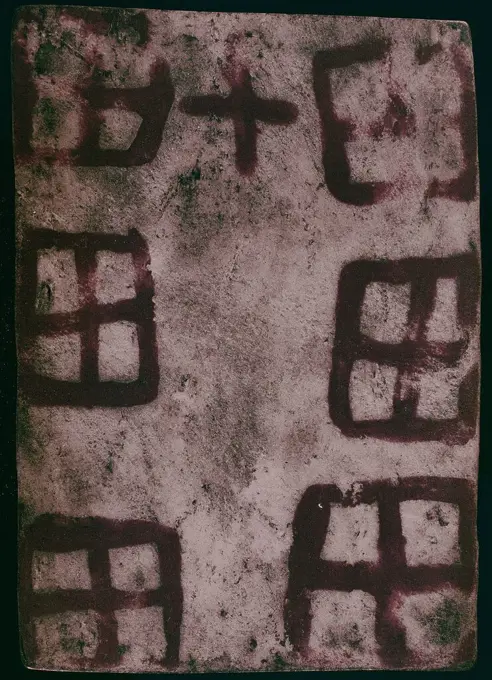
Historical Textiles

Fragments of intricate silk and velvet with floral and geometric patterns, showcasing historical textile artistry from Italy and France.
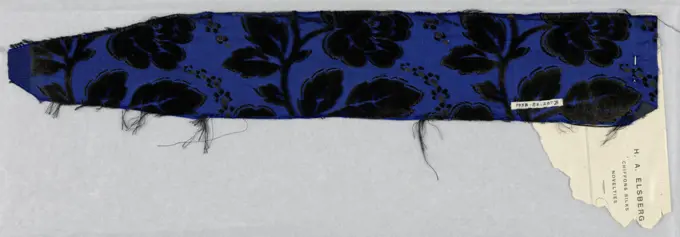
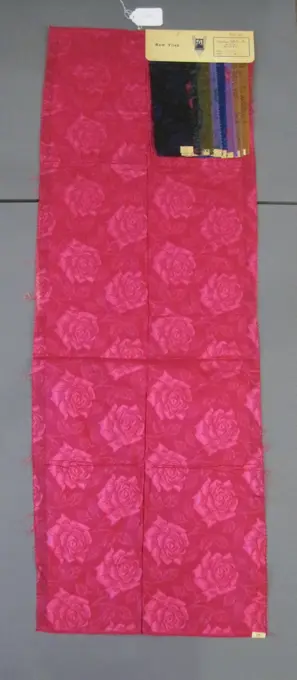
Samples, Herman A. Elsberg, (American, 1869-1938), Medium: silk warp, cotton weft Technique: cut and voided supplementary warp pile (velvet) in a satin foundation, Portfolio with woven fabric samples in a design of slender serpentine stems with large stylized roses in black velvet outlined with short floats of secondary silk weft. Sprays of minute flower in the same technique form serpentine lines that connect to flower heads., Lyon, France, 1919, sample books, Samples
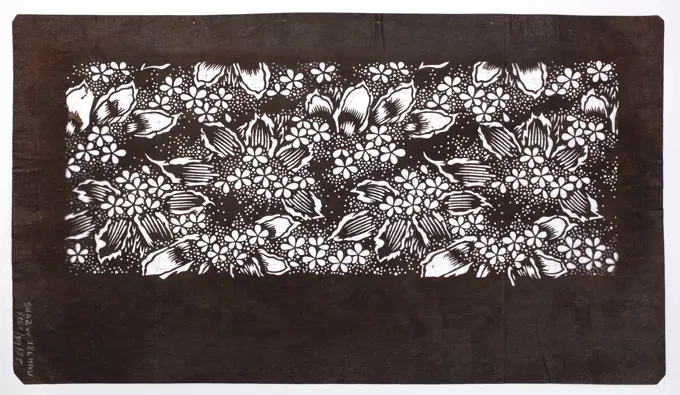
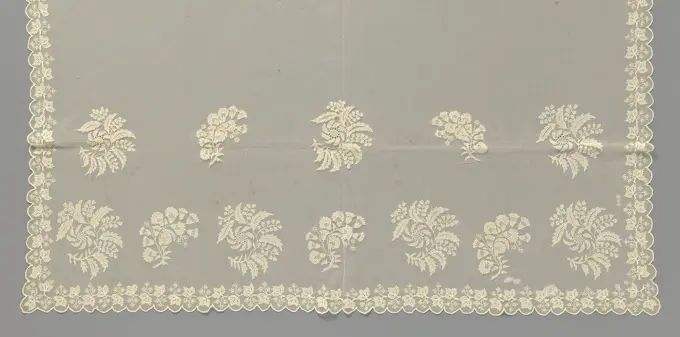
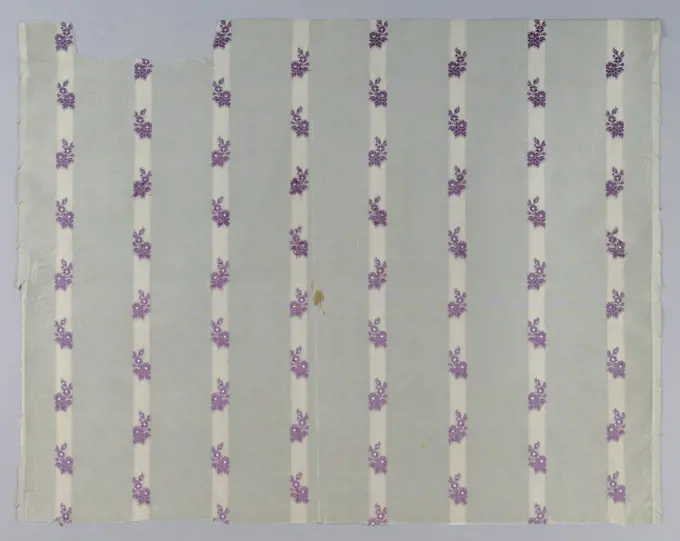
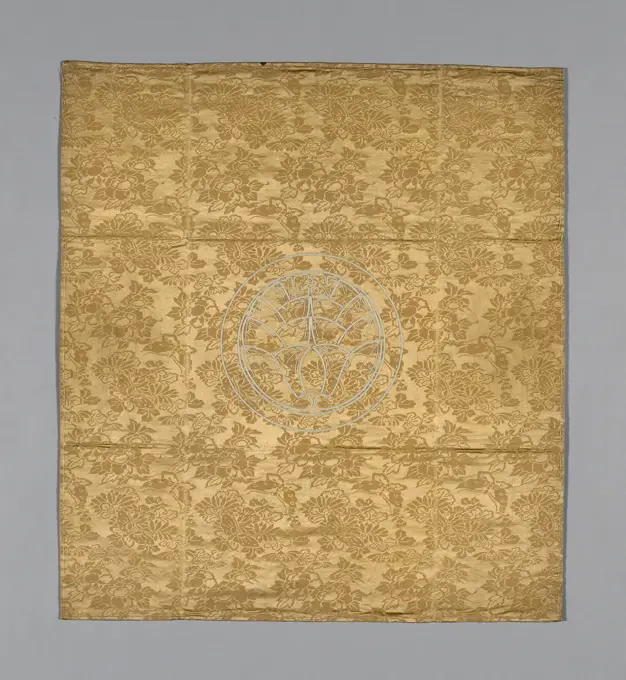
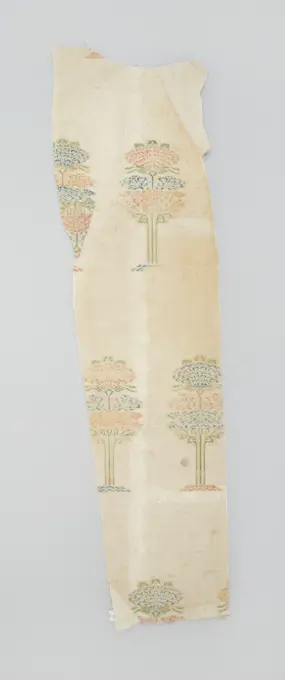
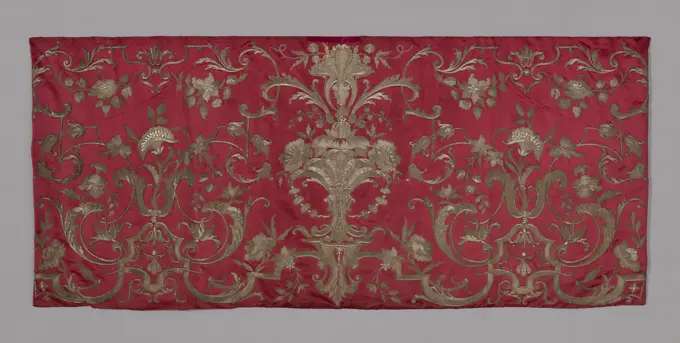
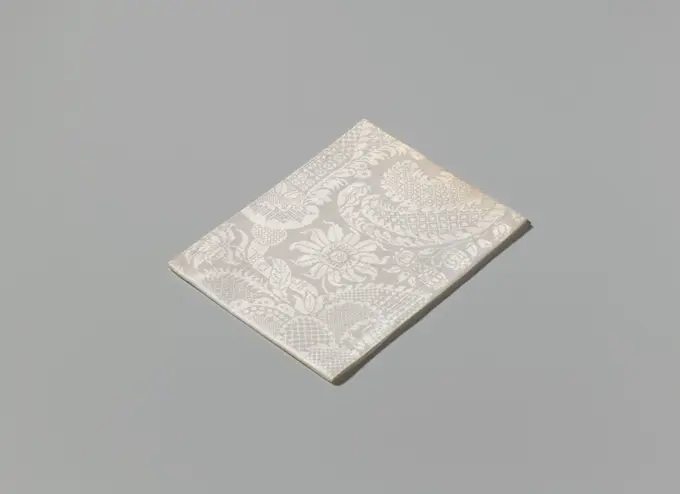
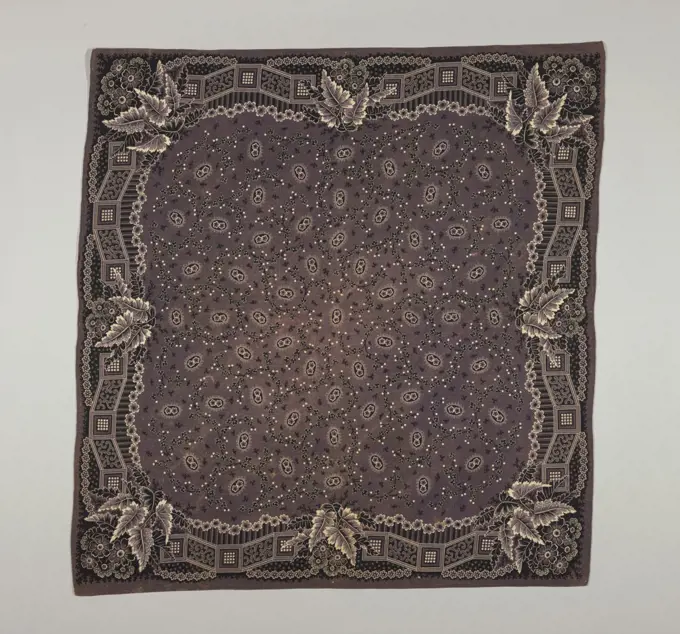
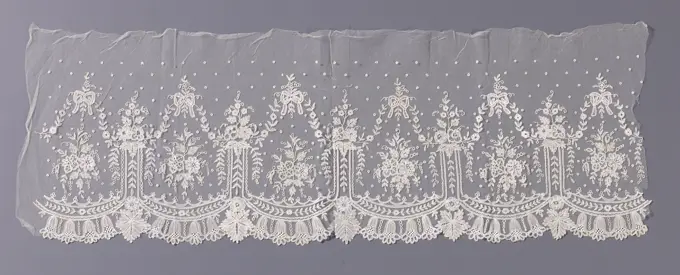
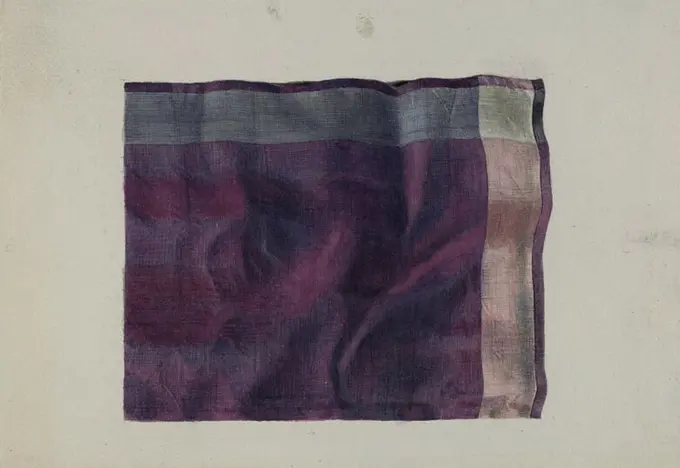
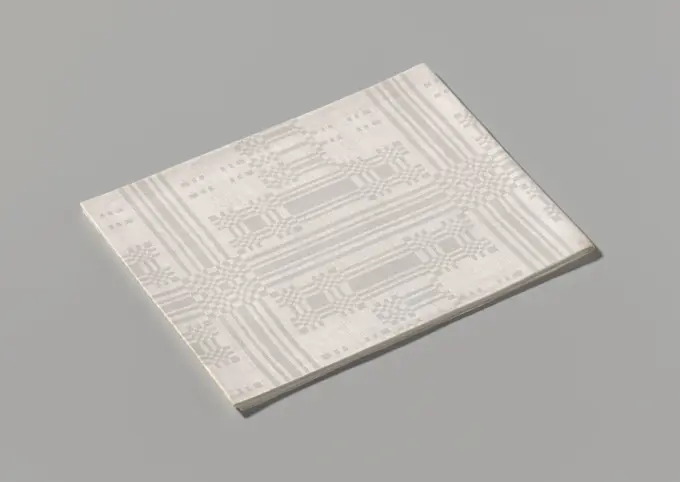
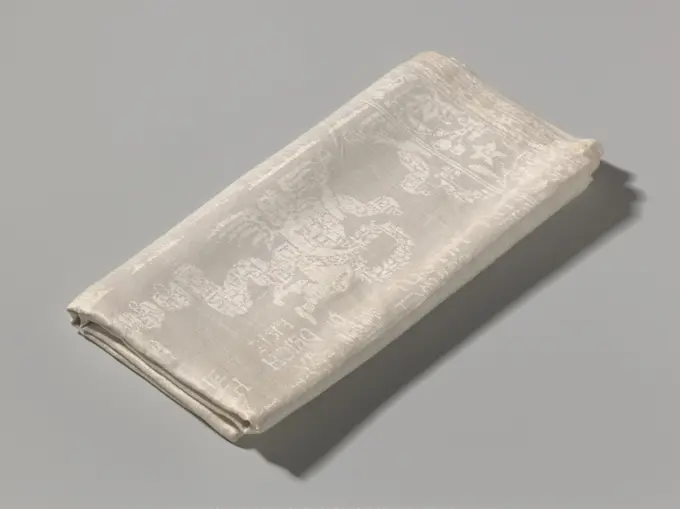
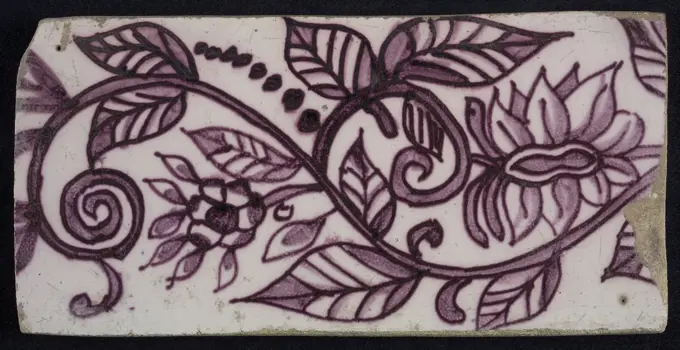
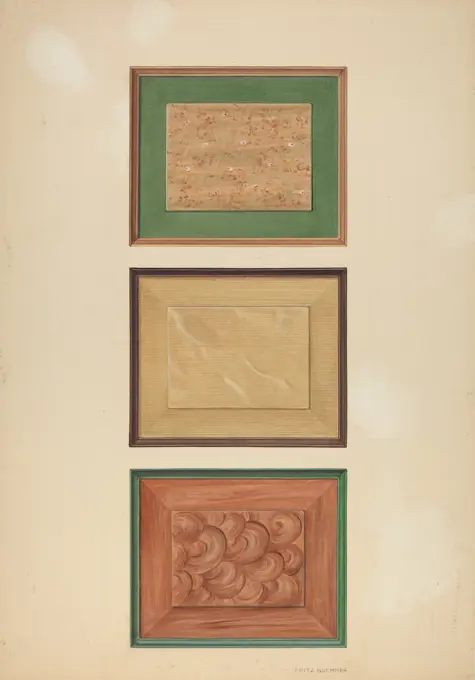
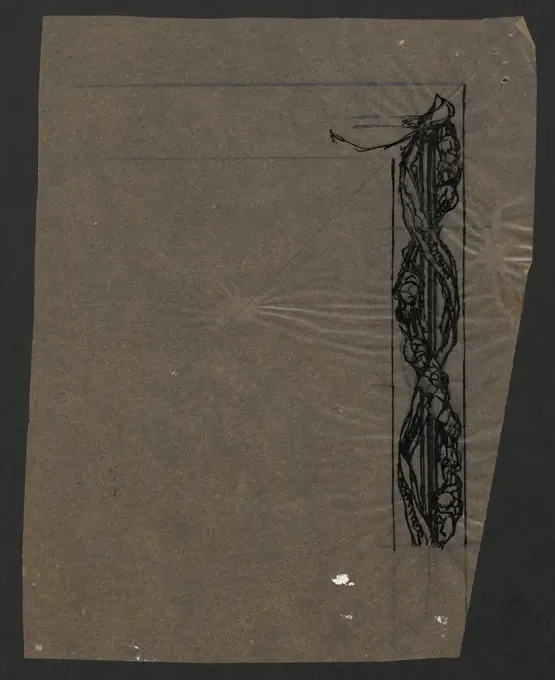
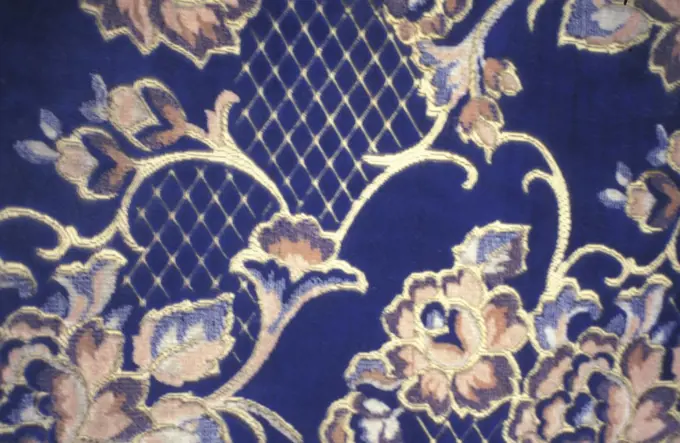
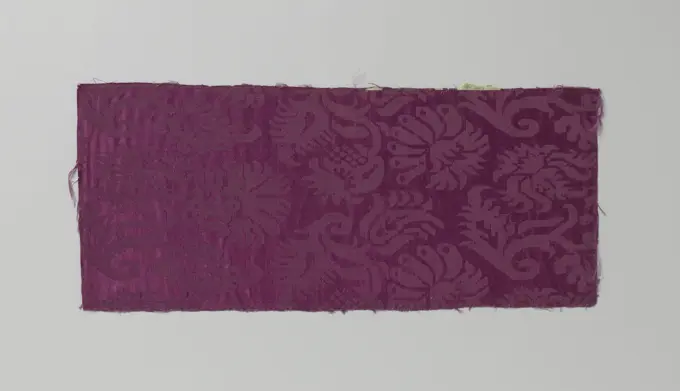
Fragment of Purple Zijddamast, Anonymous, 1575 - 1699 A fragment of red silk tissue. A stylized drawing of flowers and leaves. France (possibly)Italy (possibly) silk damask A fragment of red silk tissue. A stylized drawing of flowers and leaves. France (possibly)Italy (possibly) silk damaskFragment fluweel..A fragment of a purple velvet. The drawing in shaved and drawn pole shows shunch stimulates half circles, between palmets. NOTE: Under the 5th report from the top right a weep.Fragment 17th century Italian. Fragment 230339Fragment, Medium: silk, cotton Technique: combination od two structures; plain weave plus plain weave, Frontal flowers and diagonal leaves in coral and white., 17th century, woven textiles, FragmentDye template katagami cut into a flower ornament from small flowers and large lines;  19th/20th century (1868-00-00-1912-00-00);Flower ornaments, templates, purchase (provenance)Fragment, Medium: silk Technique: uncut velvet, S-shaped form turning in alternate directions. Three pieces sewn together., 17th century, woven textiles, FragmentFragment zijdelampas.A fragment white silk tissue with red flowers and gold thread. Note: Self side; 0.4 cm wide, Single binding Multiple allowances in one jump.Textile Swatches Onondaga Silk Company, Inc. (1925-1981). , 1948-1959. Silk, 24 x 9 in. (61 x 22.9 cm).    1948-1959Fragment pink silk tissue. A fragment pink silk tissue. The pattern has light pink wavy leaf garlands.Samples, Herman A. Elsberg, (American, 1869-1938), Medium: silk warp, cotton weft Technique: cut and voided supplementary warp pile (velvet) in a satin foundation, Portfolio with woven fabric samples in a design of slender serpentine stems with large stylized roses in black velvet outlined with short floats of secondary silk weft. Sprays of minute flower in the same technique form serpentine lines that connect to flower heads., Lyon, France, 1919, sample books, SamplesFragment of the fabric;  End of the 18th century (1791-00-00-1800-00-00);Roads, fragments of silk fabrics, patterned fabricsBaptismal rug of Machinale Tulle with two rows of flower branches along one short side, anonymous, c. 1825 - c. 1835 Baptismal rug of natural -colored application side: batist applicated on mechanical tulle with mechanical embroidery. Rectangular model. Along the sculpy edges runs around a repeating pattern with a three -part, serrated leaf with a blossom branch on it in every semi -circular shell. The leaf is made of batist that is finished with a simple mechanical embroidery edge. The blossom branches with openwork flowers are made of machine embroidery. There is a double row of curved flower branches along one short side, the rest of the midfield is empty. It concerns four different types of branches with seven branches on the bottom row, with two types alternating each other. The row above consists of five flower branches, where two types are also next to each other, with flowers other than in the bottom row. The scrap edge is finished with a simple machine -embroidered edge and loDress fabric, Medium: silk Technique: Jacquard woven. Plain weave (grey with white stripe) with a supplementary warp (purple). In the centers of the flowers the supplementary warp shares a complementaryfunction with the white warp, allowing it to float on the front. The long floats between motifs on the back were cut away after weaving a part of thefinishing process. Loomed width: 23 inches, France, 1880-90, woven textiles, Dress fabricPiece 18th century Japan. Piece 71916Fragment, Medium: silk Technique: cut and uncut supplementary warp pile (velvet) on satin ground, Fragment of rose (faded to brownish) cut and uncut velvet on cream satin ground. Design of serpentine, scalloped bands of uncut pile on which are scattered tiny four-petal blossoms in cut pile. Space between bands in cream satin., France, mid-late 18th century, woven textiles, FragmentTextile Swatch Textile Swatch, 1950s to 1960s. Silk, 8 1/4 x 3 1/4 in. (21 x 8.3 cm).    1950s to 1960sFukusa (Gift Cover) Made 1868-1883 Japan. Mon side silk, warp-float faced 7 1 satin weave self-patterned by areas of weft-float faced 1 3 'Z' twill interlacings; embroidered with silk, laidwork and couchingLined with silk, warp-float 4 1 satin weave (shusu); sewn with front and lining matched in size (Tachikiri awase); silk, running controlling stitches along all edges .Piece 18th-19th century Japan. Piece 66267Textile Swatches Onondaga Silk Company, Inc. (1925-1981). Textile Swatches, 1948-1959. silk; metal, (a): 4 1/2 x 3 1/2 in. (11.4 x 8.9 cm).    1948-1959Fragment of silk fabric unknownNapkin with the coat of arms of Karel III of Spain and a face on Rijssel, Anonymous, c. 1702 - c. 1713 Linnamast napkin with the coat of arms of Karel III of Spain and a face on Rijssel. The symmetrical pattern shows the following scenes from bottom to top: 1 a face on Rijssel with many towers. 2 Map of a fortress with Lille top. 3 rider on horseback (Karel III of Spain). 4 The coat of arms of Karel III of Spain flanked by banners. Standing and lying edges: weapons, including Savoye, and weapon trophies; Outside of that: blocking edge. Kortrijk (Possible) linen (material) damask  Spain. Lille Linnamast napkin with the coat of arms of Karel III of Spain and a face on Rijssel. The symmetrical pattern shows the following scenes from bottom to top: 1 a face on Rijssel with many towers. 2 Map of a fortress with Lille top. 3 rider on horseback (Karel III of Spain). 4 The coat of arms of Karel III of Spain flanked by banners. Standing and lying edges: weapons, including Savoye, and weapon troTextile, Medium: silk, metallic thread Technique: plain compound satin, Part of a chasuble with a design of a central palmette, flowers and foliage in shades of red, blue, green on a silver background. Some leaves in gold. Piece has gold lace trimming., Russia, late 18th century, woven textiles, TextilePanel Made 1801-1900 Germany. Silk, satin weave; embroidered .Mitaine of machining, in blue nylon. Left mitaine in blue nylon. Machinally manufactured lace in flower pattern.Tablecloth with peel pattern, anonymous, 1734 Tablecloth of white linen with peel pattern "Oranjeboom", brand Kroon WG 5 and 1734. Northern Netherlands (Possible) linen (material) Tablecloth of white linen with peel pattern "Oranjeboom", brand Kroon WG 5 and 1734. Northern Netherlands (Possible) linen (material)Textile Swatches Onondaga Silk Company, Inc. (1925-1981). , 1948-1959. 40 silk, 52 Poliamide, 8 metal, a: 19 1/2 x 15 1/2 in. (49.5 x 39.4 cm).    1948-1959Linnamast napkin with a volute pattern ,, 1723 - 1730 White Linnamasten Napkin with Pattern of Volutes, Brand: Kroon WG 26. Northern Netherlands (Possible) linen (material) damask White Linnamasten Napkin with Pattern of Volutes, Brand: Kroon WG 26. Northern Netherlands (Possible) linen (material) damaskTextile (France), ca. 1855; cottonTextile (France), ca. 1855; cottonStencil 19th century Japan. Stencil 70687Square, Medium: cotton Technique: machine printed, Scattered floral and vine pattern printed in dark violet and blue-black, with picotage outlining in reserved white. Elaborate border with large leaf clusters separated by ornament suggesting a balustrade., France, mid- 19th century, printed, dyed & painted textiles, SquareStrip Application side with U-shaped cartouches with bows and flowers above and bell flowers underneath, anonymous, c. 1840 - c. 1860 Japon strip of natural -colored Brussels Application side: bobbin with needle lace -up stitches - Brussels Duchesse - Applicated on mechanical tulle. The repeating pattern consists of U-shaped cartouches with a flower branch in each. Above each cartouche a flower garland with a bow. Under each cartouche there are four bell flowers between two large leaves, each crowned by a rosette flower. The machine tuler is littered with ring -shaped moes. The motifs are made in linen battle with openwork edges. The motifs are largely equipped with contour threads and in various places, bursts of relief contours have been used. Needle -lace -up stitches have been used in the largest flowers, whether or not applicated on pieces of finer tulle. The top of the strip is cut and not finished. The scrap edge stems from the pattern with the U-shaped cartouches, where the cloBanknote motifs: band of lace-like lathe work ornament ca. 1824-42 Associated with Cyrus Durand American. Banknote motifs: band of lace-like lathe work ornament 393960Shaker Silk Kerchief. Dated: 1936. Dimensions: overall: 15.1 x 22.2 cm (5 15/16 x 8 3/4 in.). Medium: watercolor and graphite on paper. Museum: National Gallery of Art, Washington DC. Author: Elizabeth Moutal.Textile Swatches Onondaga Silk Company, Inc. (1925-1981). , 1948-1959. Silk, 23 x 7 1/4 in. (58.4 x 18.4 cm).    1948-1959Textile (Italy); silk; Warp x Weft: 174 x 54 cm (5 ft. 8 1/2 in. x 21 1/4 in.) Repeat H: 137.2 cm (54 in.)Fragments of silk fabric  lace pattern unknownNapkin van Linen with peel pattern ,, 1740 - 1786 White linen napkin with peel pattern, Brand Kroon IAVG 36 Northern Netherlands (Possible) linen (material) White linen napkin with peel pattern, Brand Kroon IAVG 36 Northern Netherlands (Possible) linen (material)Textile (England); cottonRibbon, silk, USA, 19th century, woven textiles, RibbonAlokun, 77 13/16 x 68 3/16 in. (197.64 x 173.2 cm), Cotton; dyed, NigeriaFragment of silk fabric  lace pattern unknownTextile (India); silk, silver gilt tinsel on silk coreNapkin van Linen with peel pattern ,, 1750 - 1775 White linen napkin with peel pattern, so -called Oranjeboom, brand wo 20 Northern Netherlands (Possible) linen (material) White linen napkin with peel pattern, so -called Oranjeboom, brand wo 20 Northern Netherlands (Possible) linen (material)Katherine Hastings, Materials from Patchwork Quilt, c 1936 Materials from Patchwork QuiltWool Embroidery Design (Berlin Wool Work), T. P. Devrient, active ca. 1860, Brush and gouache, pen and black ink over etching on cream laid paper, Design for wool work on squared paper. A green scroll with a burgundy colored cross., Berlin, Germany, ca. 1860, embroidery & stitching, Drawing, DrawingSpanning fabric with backdrop of branches, leaves, flowers and fruits, anonymous, c. 1750 - c. 1790 A lane multicolored painted cream spancing material from silk. See Description A. China silk printing / painting A lane multicolored painted cream spancing material from silk. See Description A. China silk printing / paintingTextile (France); cotton; Warp: 229cm (90 in.) Weft: (selv - selv): 85cm 33 1/4in.); Bequest of Elinor Merrell; 1995-50-227Two pieces of fabric. unknown, authorAccessory set 1715-74 French. Accessory set 116841Wall Facing (Netherlands); tin-glazed earthenware, underglazeFragment Made 1250-1470 Peru. . ChimúTablecloth, 1670 - 1700 White linen dams of tablecloth with a face on Krakow, with investment "cracavw" and "mit got wagt vnd vnverzagt" and "Friedrich Avgvst", marked RMR and Burrough. Germany linen (material) damask White linen dams of tablecloth with a face on Krakow, with investment "cracavw" and "mit got wagt vnd vnverzagt" and "Friedrich Avgvst", marked RMR and Burrough. Germany linen (material) damaskTextile (France); cottonPaper for diploma Beautiful needlework. Round motif in Frivolité.Anonymous, 1855. Shaped white silk with checkered pattern alternating brilliant (satin) and mat (in ottoman) tiles (matte tiles decorated with a foliage pattern in the center). Back and lining in cream cotton. Palais Galliera, fashion museum of the city of Paris.Shawl.   Maker: UnknownBorder tile with serpentine decor, curled tendrils with leaves and flowers, manganese decor on white ground, edge tile wall tile tile material ceramics earthenware enamel tinglage, in shape made baked glazed painted baked Wall tile with manganese decor on white background. Border tile. Garland decor of curled leaves with leaves and flowers without frame Yellow shard Slightly angled sides of indigenous potteryVest of linen on one side finished with a strip of bobbin with arcs and leaves, royal lace working school 'Queen Sophie of the Netherlands', c. 1925 - c. 1949  Vest of linen on the top finished with a strip of natural-colored bobbin: Cluny side. Rectangular model with scrap edge at the top. The repeating and symmetrical pattern consists of semi -circular arcs, four in total. And each bow are four leaves clopped in shape in a fan composition. Between the successive arches there are always four leaves in form in the composition of a cross. An orange bow is attached to the side with a label with the text: "Kon. Kantage school; Queen Sophie; of the Netherlands; Sluis". On the other side of the label are two digits, written by hand: "78" and "438". Lock linen (material) bobbin lace / Cluny laceFritz Boehmer, Zoar Door Panels, c 1937 Zoar Door PanelsFrame design: garland interwoven with the introduction; Ruszczyc, Ferdynand (1870-1936); 1. W. 20th century (1900-00-00-1936-00-00);Partage Plus, projects, frames, purchase (provenance)Handkerchief Case. Dated: c. 1936. Dimensions: overall: 34.5 x 24.5 cm (13 9/16 x 9 5/8 in.) Original IAD Object: 8" long; 6 1/2" wide; 1" deep. Medium: watercolor, gouache, and graphite on paper. Museum: National Gallery of Art, Washington DC. Author: Gordena Jackson.Fragment (France); silkSilk fabric with Dragons and an Eagle in a Medallion, hand-woven with metal threads, West European Applied Art  Batisten zakdoek met borduursel en kloskant met de initialen CB.Handkerchief with a batters center piece on which embroidery and an edge of dump edge: Malinois. The side has a repeating pattern on a ground ground, with a continuous branch along the top (inside) that alternately hangs a pomegranate and a triple flower branch. The motifs are made in linen stroke, the contours around the motifs are made with a thicker wire. The motifs, pomegranate and semi-relocal cartouches along the bottom edge are filled with a simple diamond-shaped ornamental soil. A flat sculpture runs along the bottom (the outer edge). The side has been placed smoothly on the handkerchief, with the exception of the corners that have been wrinkled. The embroidery pattern has four double straight piping with meandering corners and middle parties. Between the inner two lines, leaf garlands walk, between the outer two a spiral, on the corners crowned by a voluntary ornament. A closed palmet edge runs against the outer tMan's wrapper, 20th century, 84 x 56 1/2 in. (213.36 x 143.51 cm), Cotton, India, 20th centuryJaponversiering van applicatiekant met mimosatakjes.Japanese decoration of natural applicators, climbing side applicated on machine tulle. A rectangular piece of tulle is finished with flat shelters on the two short sides. On the short axis there is a substantially symmetrical wavy branch with three bunches of mimosakes and wide varied side branches with feathered leaves. The branch starts with a bow above a landscape C-voltage.Leaf with alternating straw pattern of flowers, Anonymous, 1750 - 1900  Leaf with alternating spreading pattern of flowers. With label with inscription: 'J.G. Heineocius ... Jure Consultis. " Half of a cover.  paper. block printing (relief printing process) ornament derived from plant formsTextile Swatch Textile Swatch, 1950s to 1960s. Silk, 27 x 16 1/4 in. (68.6 x 41.3 cm).    1950s to 1960sTextile Swatches Onondaga Silk Company, Inc. (1925-1981). , 1948-1959. Silk, 23 1/2 x 7 1/2 in. (59.7 x 19.1 cm).    1948-1959Swatches (France); silk; 1896-27-7-1/17Wall Facing (Netherlands); tin-glazed earthenware, underglaze; 5 tiles tall, various wideWool rug with plain blocks and squares ,, c. 1910 - c. 1927 Wool rug with plain blocks and squares, belonging to room design to design G.C. SCHUBAD. Netherlands wool Wool rug with plain blocks and squares, belonging to room design to design G.C. SCHUBAD. Netherlands woolTile Wall Facing (Holland); tin-glazed earthenware, underglazeTextile Swatches Onondaga Silk Company, Inc. (1925-1981). , 1948-1959. Silk, 47 1/2 x 17 in. (120.7 x 43.2 cm).    1948-1959Bed Cover (Switzerland); linen, wool; 1976-2-3Fragment of a cloak of ciselé velvel with dock edge, according to surrender from Hugo de Groot. Fragment of a mantle of black ciselé velvel on which black climbing side is sewn. According to tradition, the fragment comes from a cloak of Hugo de Groot.Piece 19th century European. Piece 212479Fragment 19th century French, Chantilly. Fragment 212653Piece of fabric. unknown, authorTextile Swatches Onondaga Silk Company, Inc. (1925-1981). , 1948-1959. 83 wool, 17 silk, 22 3/4 x 18 in. (57.8 x 45.7 cm).    1948-1959Swatches (France); silk; 1896-27-20-1/19Fragment coarse linen tissue, red soil, flowers of yellow and brown, anonymous, c. 1750 - c. 1825 Fragment coarse linen tissue, red soil, flowers of yellow and brown. Germany.  linen (material) Fragment coarse linen tissue, red soil, flowers of yellow and brown. Germany.  linen (material)Piece 18th-19th century Japan. Piece 67307Textile, Nil; Designed by Josef Hoffmann (Austrian, b. Moravia, 1870-1956); Made for Wiener Werkstätte (Austria); silkWoman's sarong, 20th century, 65 3/8 x 40 3/8 in. (166.05 x 102.55 cm), Synthetic, Bangladesh, 20th centurySample early 19th century French. Sample 224807Top of a mirror of Esdoornhout, partially gold painted. On the back of the FA. Pander & Sons; Nummered 969., H. Pander & Zonen, c. 1900  Netherlands maple (wood). leather. paint (coating)  Netherlands maple (wood). leather. paint (coating)Vintage frame elements decoration rectangel set vector illustrationStill-Life with Cockatoo, Ornamental Ball, Lace, Peacock Feathers 1850s T. R. Williams British. Still-Life with Cockatoo, Ornamental Ball, Lace, Peacock Feathers. T. R. Williams (British, born 1825). 1850s. Daguerreotype. PhotographsWoman's handkerchief, circa 1920-1950, maker unknown. Gift of Margaret Anderson, 1998.Printing Block (USA); wood, metalLooking glass 1730-60 American Japanning, the use of paint and gilded gesso to imitate the glossy finish on Asian lacquerwork, was a popular method of furniture decoration in colonial Boston. This looking glass, part of a group (40.37.1, .2, .4) of japanned furniture that descended in the Pickman family of Salem, Massachusetts, is an extraordinary survival. The painted decoration on the high chest, dressing table, and looking glass is all by the same hand.. Looking glass. American. 1730-60. White pine. Made in Boston, Massachusetts, United StatesChief's Poncho Made 1850-1900 Chile. Wool, stripes of plain weave, warp ikat plain weave, and-two color complementary warp weave; plied warp fringe . MapucheViewer for autochrome slides, c. 1907 - c. 1930 binocular Viewer for car chrome slides in Cassette. unknown leather. metal. glassWall Facing (Holland); tin-glazed earthenware, underglazeTextile Swatches Onondaga Silk Company, Inc. (1925-1981). , 1948-1959. Silk, 23 1/2 x 9 in. (59.7 x 22.9 cm).    1948-1959Fringe, Medium: silk Technique: woven, Heavy black fringe in two tiers. Made of chenille and twisted silk with tassels., France, ca. 1870, trimmings, FringeEmbroideryNAIPE DECORADO EN COLOR ROJO CON CRUCES INSCRITAS EN CUADRADOS - CUERO Y PIGMENTO - SIGLO XVIII - PROCEDENTE DE CHILE - ESTILO MAPUCHE - 10,8x7,7 CM. Location: MUSEO DE AMERICA-COLECCION. MADRID. SPANIEN.