Historical Textiles and Accessories

Fragments of patterned textiles, a macrame bag, and decorative accessories, showcasing intricate designs and vibrant colors from various historical contexts.
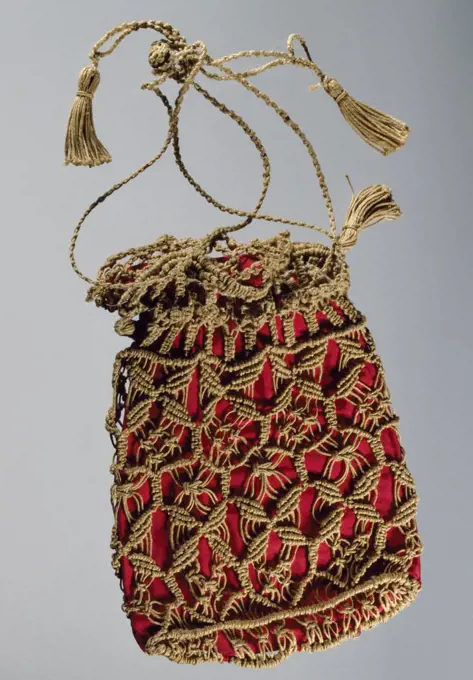
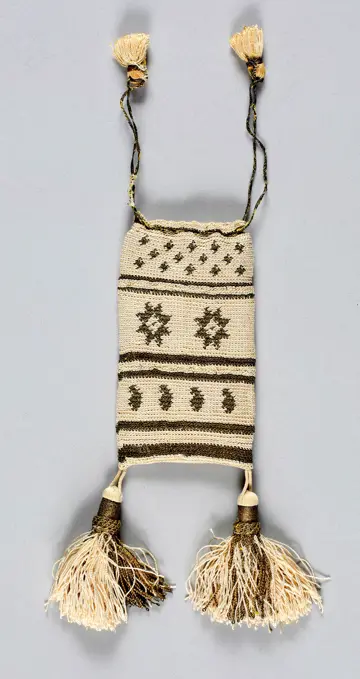
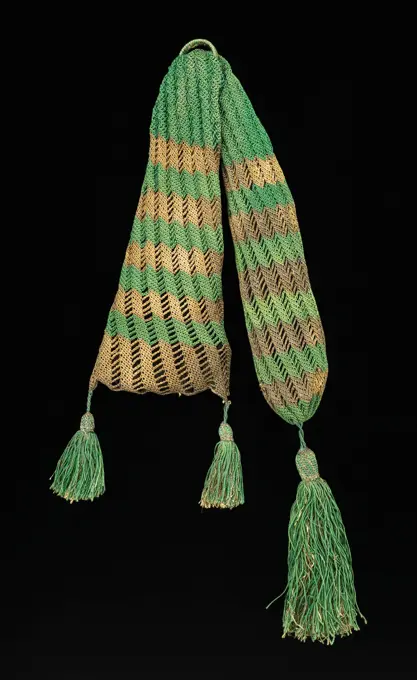
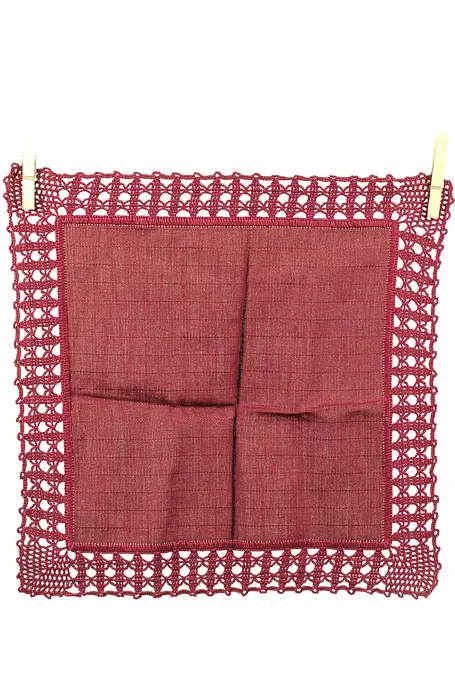
Bag in greige twine macrame and cherry red sateen lining of a later time, 1915, fashion accessories, Italy, 20th century.
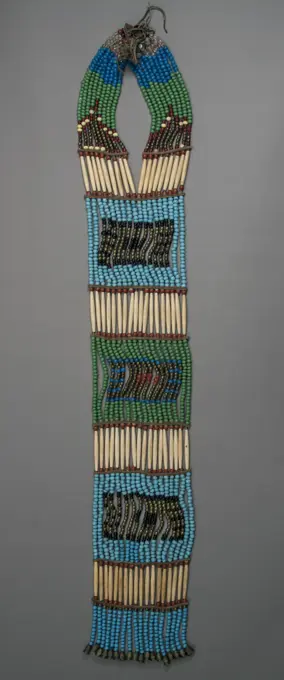
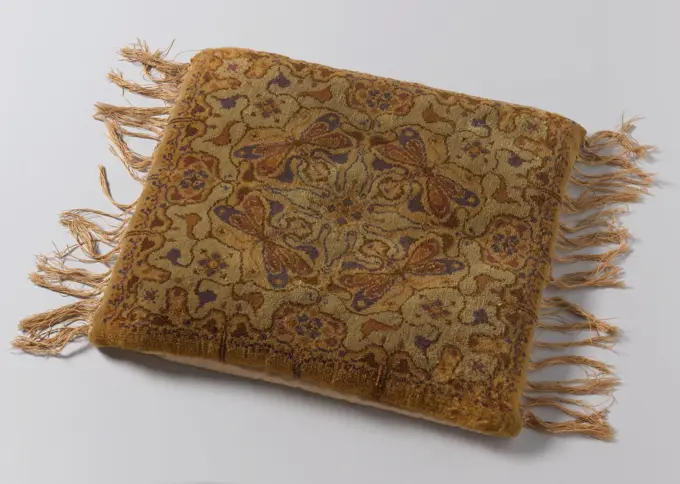
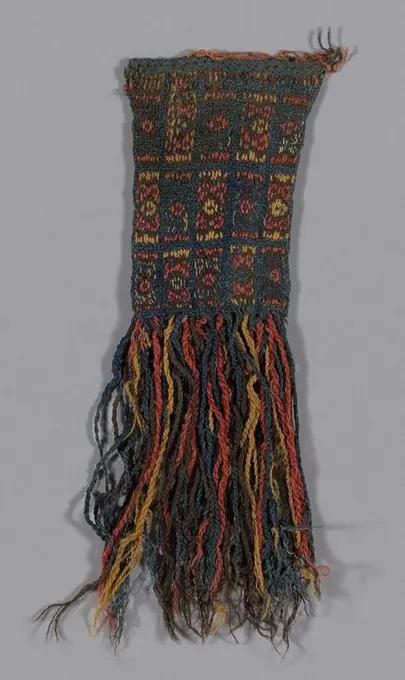
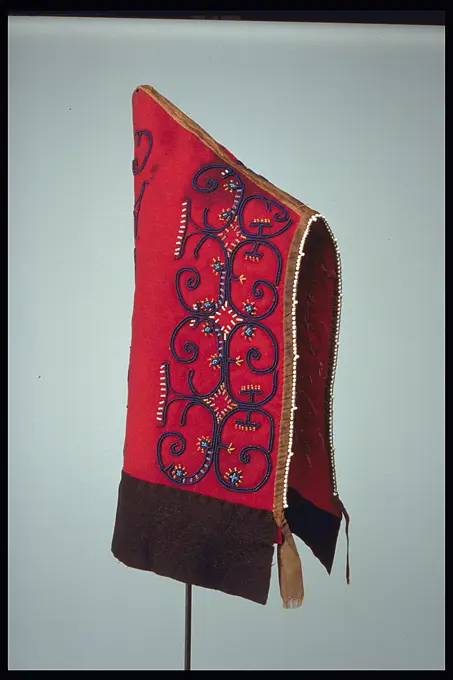
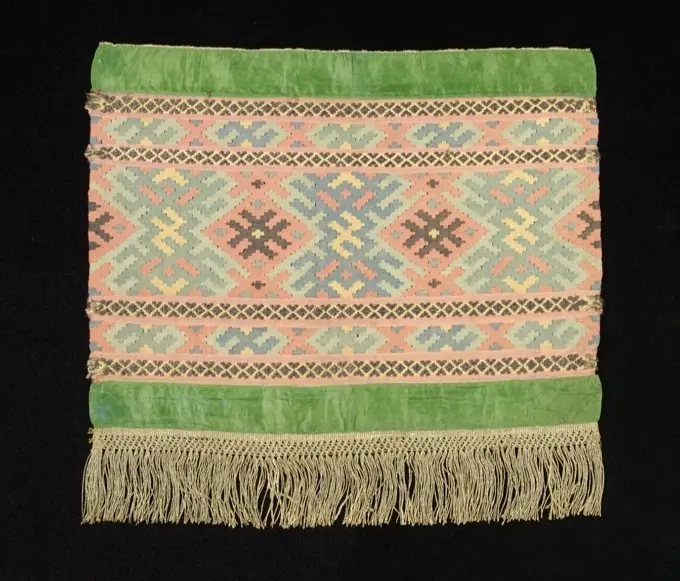
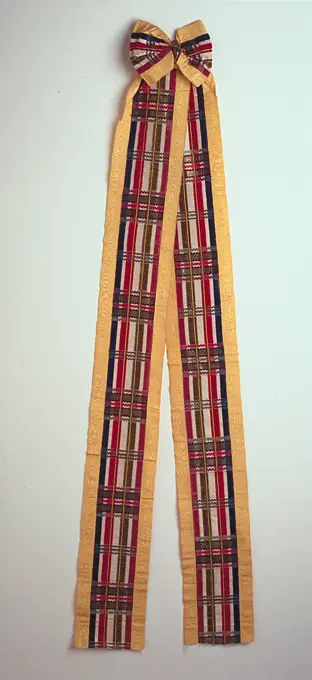
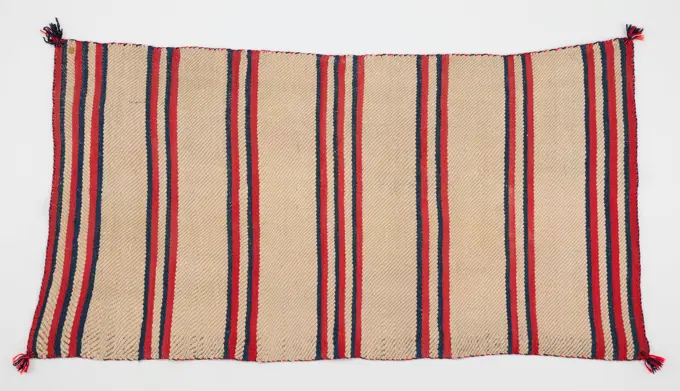
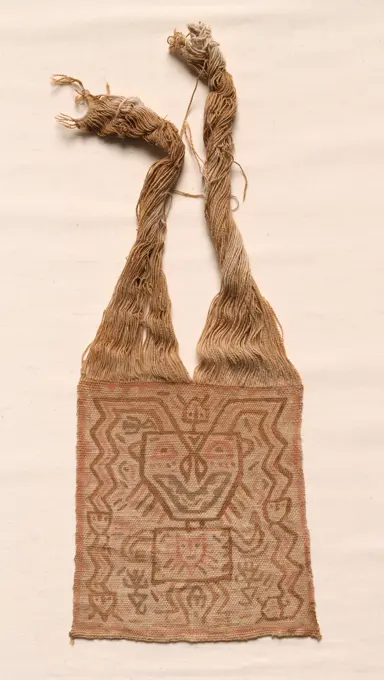
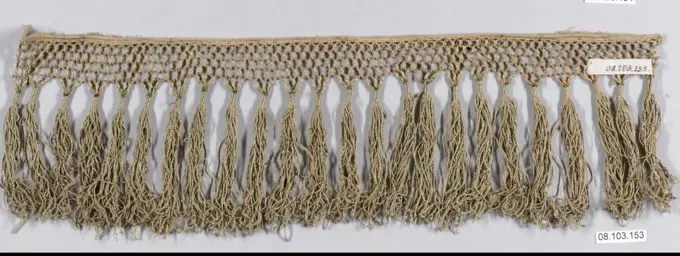
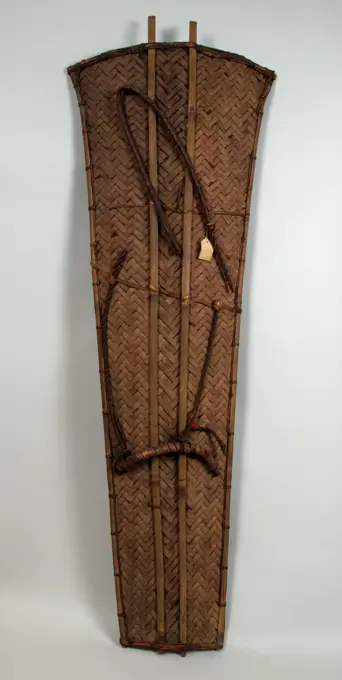
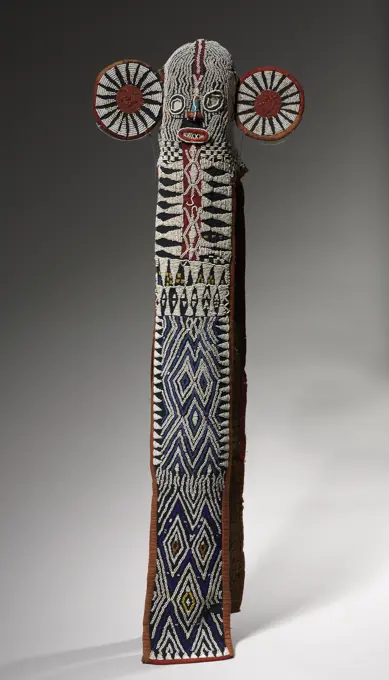
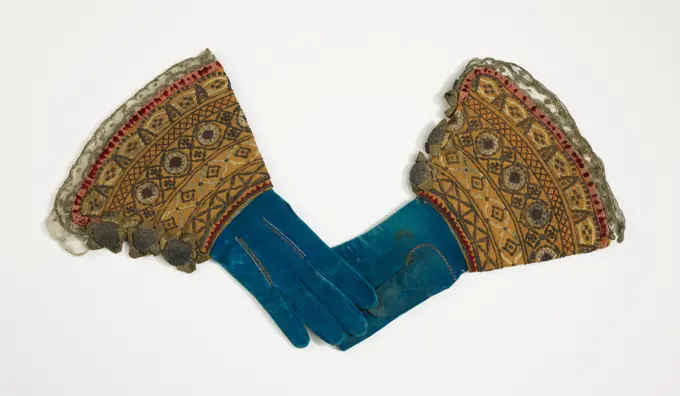
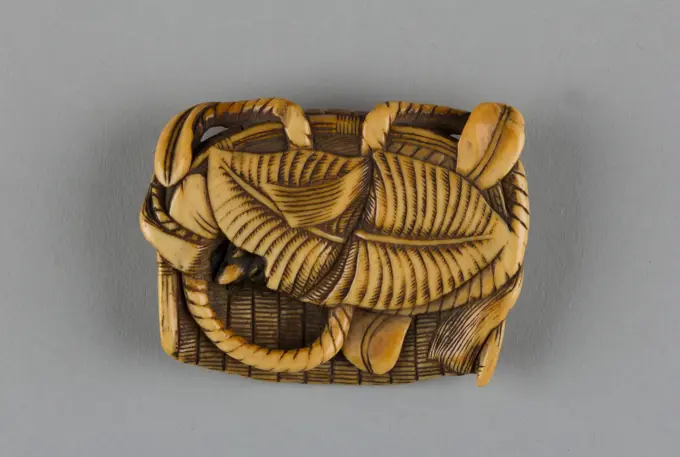
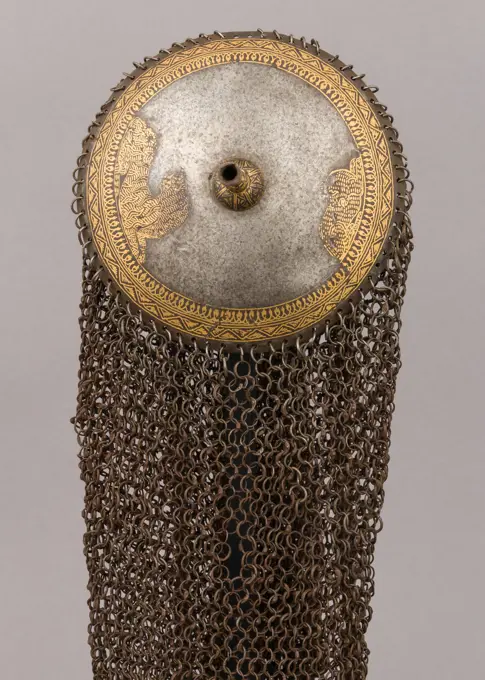
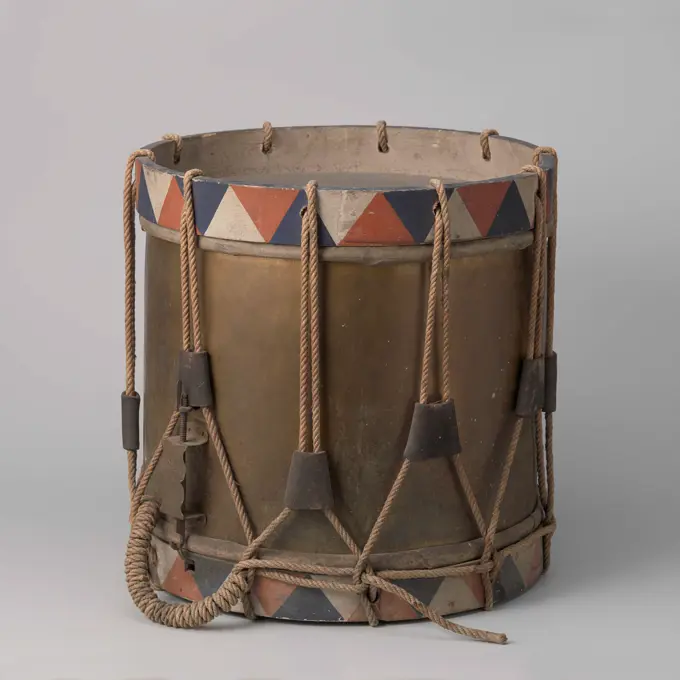
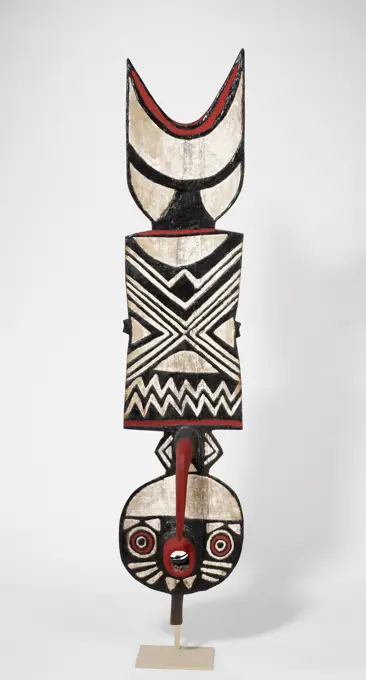
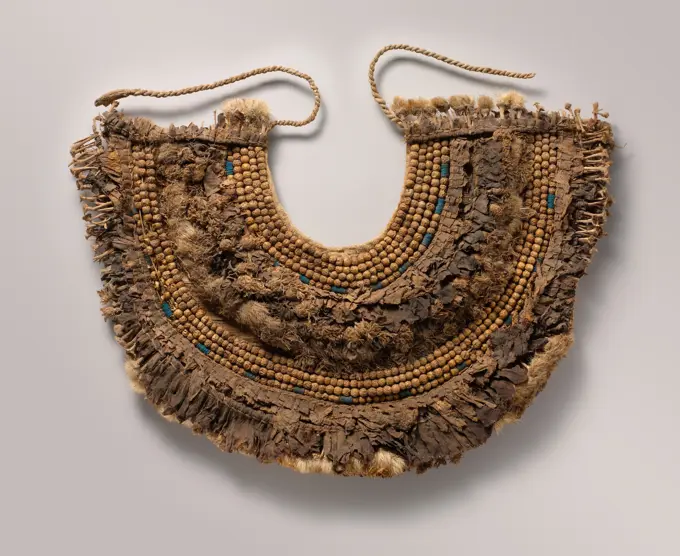
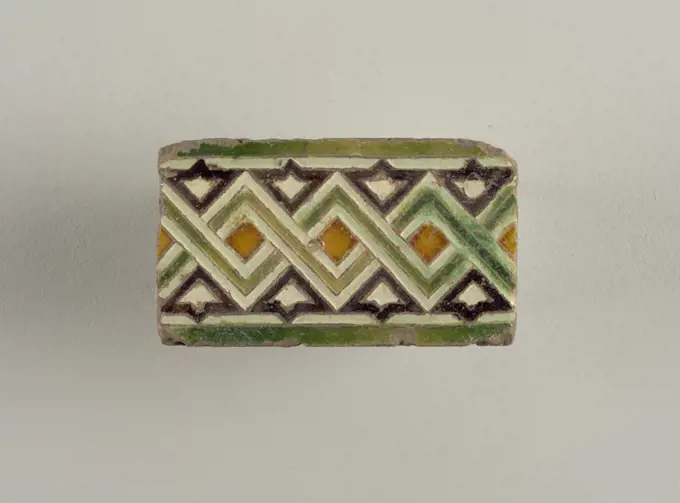
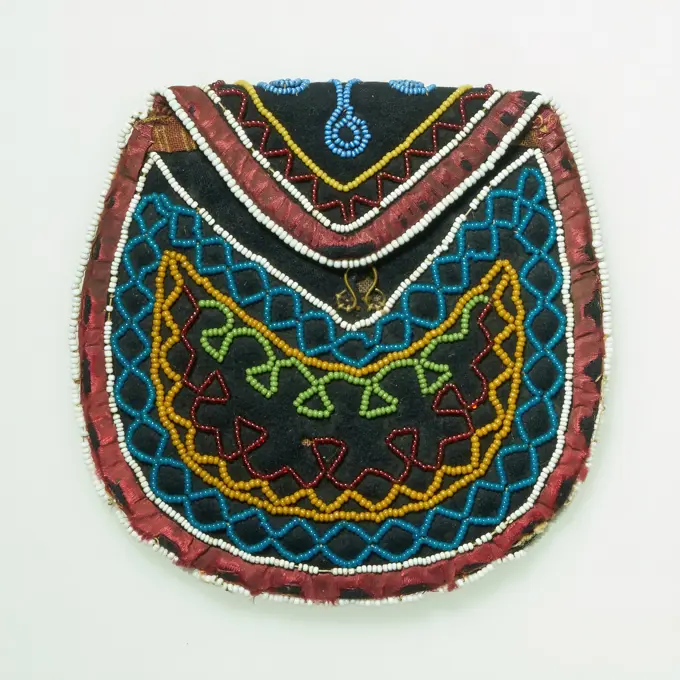
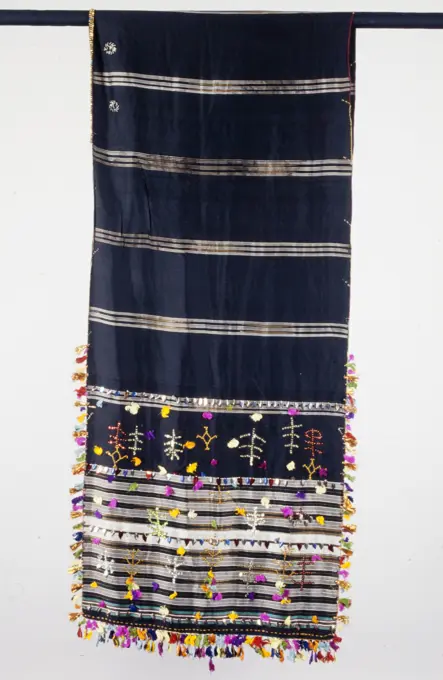
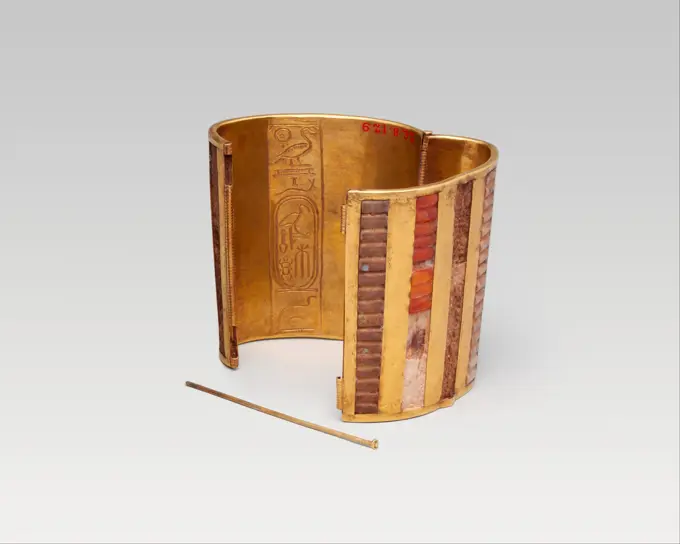
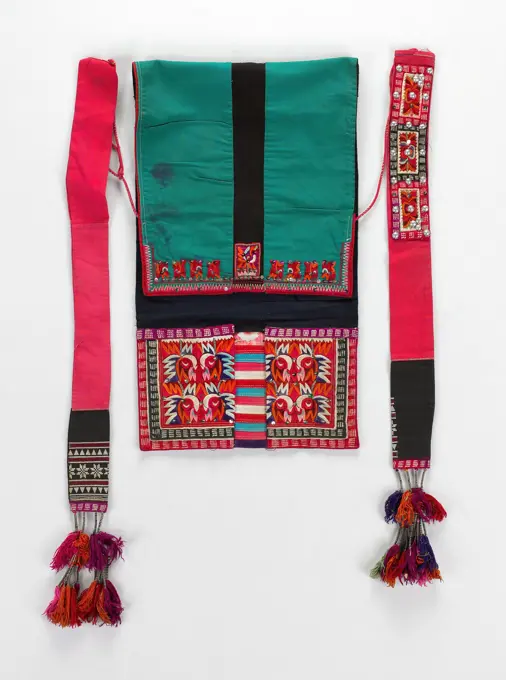
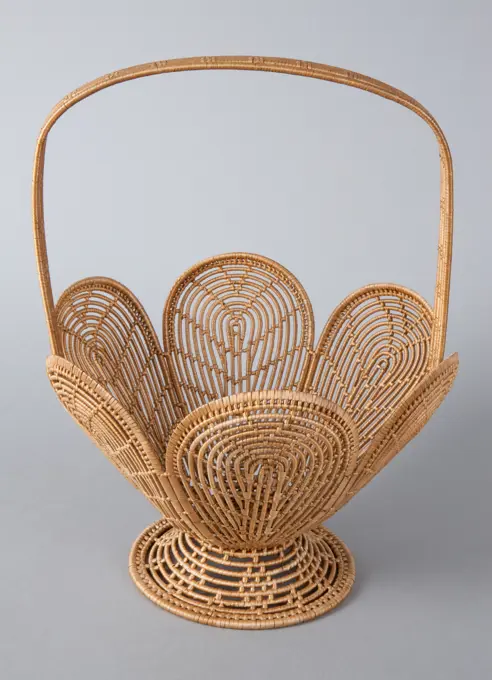
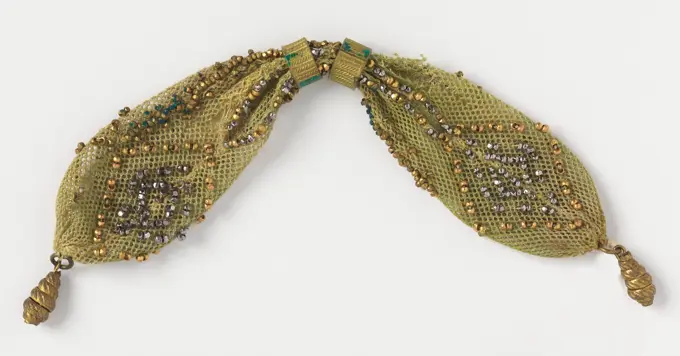
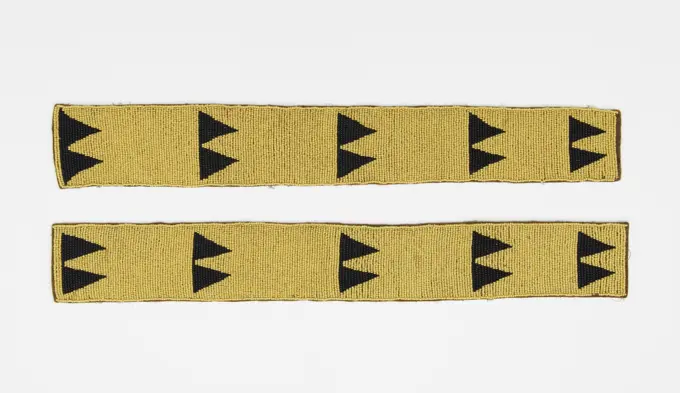
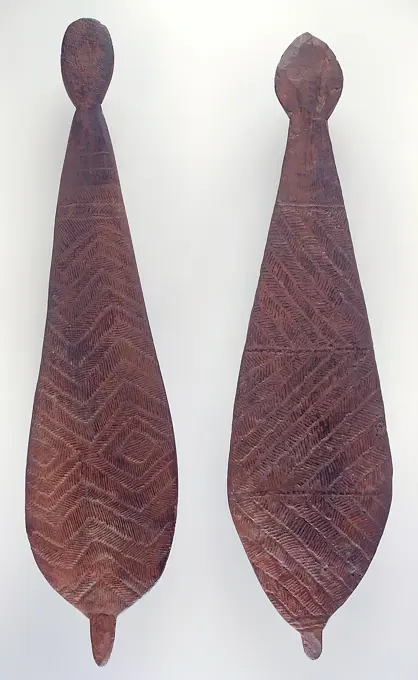
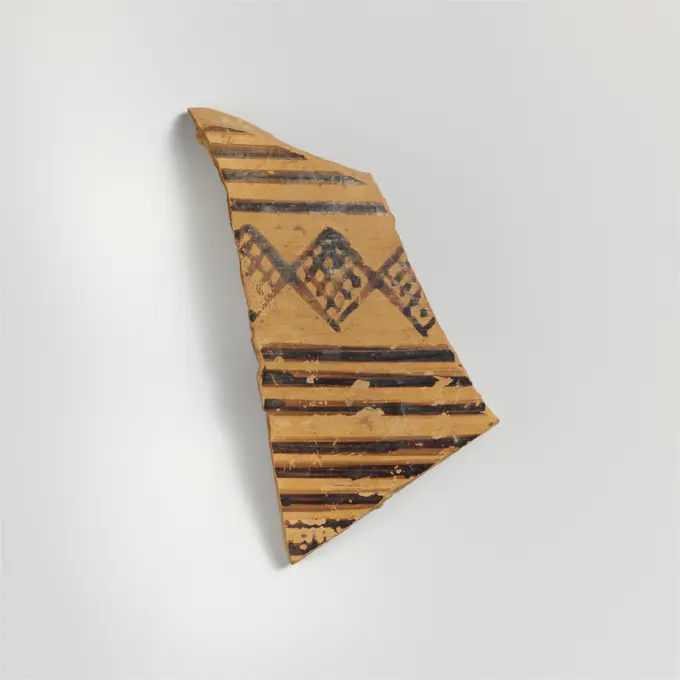
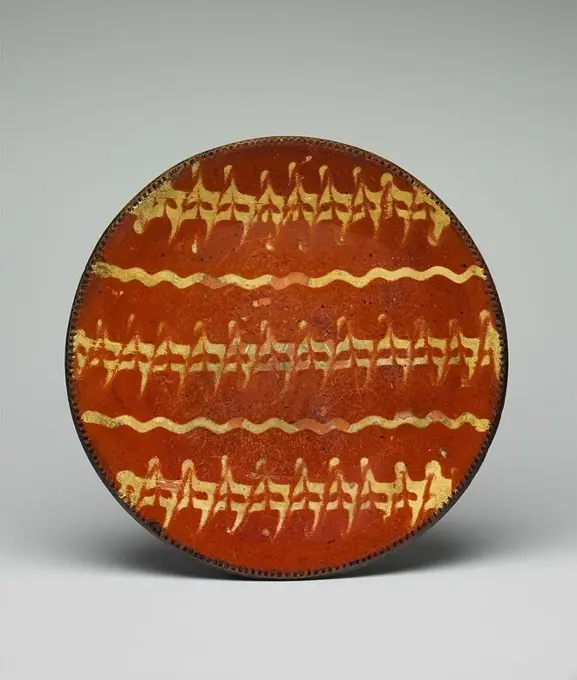
Two fragments of red side lampas, with pattern of arabesks and stylized leaf vines in white, yellow and green, anonymous, c. 1400 - c. 1599 Fragment of two pattern patterns set together red side with arabesks and stylized leaf vines in white, yellow and green. Spain silk lampas (textile material) Fragment of two pattern patterns set together red side with arabesks and stylized leaf vines in white, yellow and green. Spain silk lampas (textile material)Tapestry.   Maker: UnknownBag in greige twine macrame and cherry red sateen lining of a later time, 1915, fashion accessories, Italy, 20th century.Necklace -Jacket(Baju)Foot cushion made of knotted wool with a pattern of four dragonflies in pale green, yellow, purple and brown. Design Th.W. Nieuwenhuis., Theo Nieuwenhuis, carpet factory Kinheim, c. 1910 Foot cushion made of knotted wool with a pattern of four dragonflies in pale green, yellow, purple and brown. Design Th.W. Nieuwenhuis; Made by Kinheim carpet weaving mill in Beverwijk. Beverwijk wool Foot cushion made of knotted wool with a pattern of four dragonflies in pale green, yellow, purple and brown. Design Th.W. Nieuwenhuis; Made by Kinheim carpet weaving mill in Beverwijk. Beverwijk woolBorder (Peru); cotton, woolSatin fan case. unknown, craftsmanModel of a Jeer, anonymous, 1820 demonstration model Model of a gin made of two blocks. Each block has two rows of discs that are in a perpendicular flat together; Due to the hoist, the blocks are connected to such a way that outer and inner rows of discs of the gin run parallel. The outer row of discs of the top block has five discs, the inner row three, the inner row of the bottom block three and the outer row four. The hoist runs through the upper row of the upper block to the inner row of the lower block, from there between the two inner rows, further to the bottom row of the bottom block and finally back and forth between the two outerest rows of the blocks. Double mine of this type were used for mills. Netherlands wood (plant material). brass (alloy). ropePanel (Probably from a Mantle). Nazca; Peru, Probably south coast. Date: 800 AD-900 AD. Dimensions: 28.9 x 10.2 cm (11 3/8 x 4 in.). Cotton and wool (camelid), tubular plain weave double cloth with stripes of four-color complementary warp weave; plied warp fringe. Origin: Peru. Museum: The Chicago Art Institute, Chicago, USA.Bourse. GAL1985.84.3Firebag ca. 1820 Ojibwa or Cree. Firebag. Ojibwa or Cree. ca. 1820. Wool, silk, glass, metal. Canada, Manitoba or Saskatchawan. Textiles-BeadworkSERVATE;  Unspile (0-00-00-0-00-00);Peaked cap -Textile 1840-70 Russian. Textile 173424Fringe (Spain); silkBourse. Gal1993.98.2Fragment. Chancay; Central coast, Peru. Date: 1000-1476. Dimensions: 41 x 40.3 cm (16 1/8 x 15 7/8 in.). Cotton and wool (camelid), bands of plain weave, slit tapestry weave with wrapping outlining wefts, and three-color complementary weft weave; edged with plain weave extended weft loop fringe. Origin: Peru. Museum: The Chicago Art Institute, Chicago, USA.Sash -Double twill saddle blanket, c. 1875, 55 3/4 × 29 1/2 in. (141.61 × 74.93 cm), Wool, pigments, United States, 19th centuryMummy Bundle "Mask", 200 BC-1. Peru, South Coast, Ica Valley, Ocucaje site, Paracas style (700 BC-AD1). Plain warp-faced cloth, painted: cotton; overall: 48.3 x 18.3 cm (19 x 7 3/16 in.). This mummy bundle was likely found on mummy bundles made of a seated human body carefully wrapped in textiles. In some instances, the Paracas people placed a painted cloth like these at the top of the bundle. The cloth was padded on the back so it curved outward like a face, and the tress-like yarns (unwoven warps) at the upper edge were arranged around a solid cotton disk that, in turn, was wrapped with a headband. The cloths, then, seem to have functioned as the bundles face or mask.Legging strip  -Bag of knotted (macramé) rope with bag side covered, wooden clamping and lined with light blue silk Bag of knotted (macramé) rope with a taf side covered, wooden clamping and lined with light blue silk. Model: hemisphere. Bag of knotted (macramé) rope with a taf side covered, wooden clamping and lined with light blue silk. Model: hemisphere.CombHeaddress, early 20th century, 8 11/16 x 4 3/4 in. (22.1 x 12.1 cm), Cotton; embroidered, Vietnam, 20th centuryFringe European 19th centurySash, 51 3/4 x 3 3/4 in. (131.45 x 9.53 cm) (without fringe), Cotton, silk, ChinaBelt -Wrapper, 20th century, 67.5 x 42 in. (171.5 x 106.7 cm)(w/o fringe), Cotton, rayon, lurex thread, Nigeria, 20th centuryTextile Fragment 4th-5th century. Textile Fragment 443925Shield (Dhàl) 19th century Indian, Assam, Naga Hills. Shield (Dhàl). Indian, Assam, Naga Hills. 19th century. Cane. Assam. ShieldsSash, 20th century, 91 x 1 5/8 in. (231.14 x 4.1 cm), Silk, China, 20th centuryTassel French 19th century View more. Tassel. French. 19th century. Cotton and silk. Textiles-TrimmingsCeremonial Headpiece, 18 x 8 in. (45.72 x 20.32 cm) (with fringe)1 5/8 x 3 1/2 in. (4.06 x 8.89 cm) (comb)3 x 3 x 3 in. (7.62 x 7.62 x 7.62 cm) (two pompons, each), ChinaFront Apron, 20th century, 14 1/2 x 17in. (36.8 x 43.2cm), Cotton, China, 20th centuryTassel (Spain); silk, metal thread, wooden coreMiser's purse first quarter 19th century American. Miser's purse 157828Fringe (USA); cottonMask (mbap mteng): Elephant (aka), early 1900s. Africa, Central Africa, Cameroon, Grassfields region, Bamileke-style maker. Cotton, burlap, glass beads, twine, leather, and wood; overall: 139.7 x 50.8 x 19.1 cm (55 x 20 x 7 1/2 in.).Trim from Man's Jacket, 19th century, 6 1/4 x 3/4 in. (15.88 x 1.9 cm), Wool; passementerie, Turkey or North Africa, 19th centuryBourse.Close up burnt blank page with party eye mask locker doorGauntlets 1690-1710 British Expensive and ornate, men's gloves form this period were signifiers of wealth and status and, as such, were often given as presentation objects. The multiplicity of expensive materials used here - metallics upon metallics, laces and velvets- and the use of colors - royal blue suede, burgundy velvet and the gold and silver - exemplify the opulence that was part of British protocol when England was a preeminent force on the world stage.. Gauntlets 157532Paul Ward, Homespun Tablecloth, 1935 1942 Homespun TableclothBow -Hat, before 1929. Africa, Central Africa, Democratic Republic of the Congo, Mangbetu, 20th century. Plant fibers and dye; overall: 8.9 cm (3 1/2 in.); diameter of top: 16.5 cm (6 1/2 in.).Headdress -Bag (USA); leather, felt, glass beadsBelt. Culture: Recuay. Dimensions: H. 3-7/8 x L. 61 in.. Date: 1st century B.C.-A.D. 5th century. Museum: Metropolitan Museum of Art, New York, USA.Skirt, from a three-piece set, 29 1/4 x 27 1/4 in. (74.3 x 69.22 cm), Cotton, ChinaSjerp Worn by A.F. Meijer, Lieutenant General Commander of the 3rd Division, Anonymous, 1800 - 1830 in 1830-32  Sjerp, whipped, with damage to the Orange cord side in technology of 'Egyptian braid'. The sash has a seam in the middle. Both ends of the sash are each braided together, from which fringes arise. Every fringe has a knot. On one side a leather label with '13'. Netherlands .Netsuke of Flat Basket Containing Leaves and a Mouse 19th century Japan. Netsuke of Flat Basket Containing Leaves and a Mouse. Japan. 19th century. Ivory. Edo (1615-1868) or Meiji period (1868-1912). NetsukeBreast valve or plastron, white with golden galon, c. 1800 - c. 1880  Breast valve or plastron of white fabric with golden galon and a kind of brushes of a fantasy or imitation design, presumably for masquerade or theater. Netherlands cloth.Helmet 18th century Indian. Helmet 32091haekeleien 20 haekeleien 20 Copyright: xZoonar.com/murxxxx 1882546Hat of knit and/or crochet, anonymous, c. 1917 - c. 1920 Hat of knit and/or crocheted. Amsterdam yarn crocheting / knitting Hat of knit and/or crocheted. Amsterdam yarn crocheting / knittingDrom, old model of the arches. Groom of the militia. The brass boiler is provided with a veal sheet on both sides, held by a hoop and tense by means of a tensioner with tractors and screws. Both hoops are decorated with a motif of triangles in the colors red, white and blue. With engraved numbers: 1846.Embroidered Case 19th century China. Embroidered Case 70463Belt -Basket, 1900-1942, 1 5 /16 x 2 1/16 x 2 1/16 in. (3.3 x 5.2 x 5.2 cm), Natural plant fibers, United States, 20th centuryMiser's purse, Medium: silk, steel Technique: crocheted, Silk, crocheted in lengthwise narrow bars of red and green, ornamented evenly with cut steel beads. Two steel rings control side closing; steel drops at either end., France, early 19th century, costume & accessories, Miser's pursePlank Mask, c. 1960, 82 1/2 x 18 x 9 1/2 in. (209.6 x 45.7 x 24.1 cm), Wood, pigment, Burkina Faso, 20th century, Masks play an important role in the renewal ceremonies of the Bwa. The masks are danced during initiation ceremonies for young men and women, and appear at funerals and memorial services. They are also danced during the harvest ceremonies. During the fifteen day initiation ceremony, young petitioners are taught the meanings of the symbols on the mask. They learn the importance of becoming a respected Bwa, and the dangers of straying from the path of social behavior established by the ancestors. These lessons are symbolically represented on the mask. The double zig-zag line on the plank of the mask represents the path of the ancestors. The crescent shape on the top of the plank represents the moon, and the importance of time in the ceremonial year when masks are danced. The checkerboard pattern on the back of the mask represents the value of learning. When young initiates grFloral Collars from Tutankhamun's Embalming Cache ca. 1336-1327 B.C. New Kingdom These remarkably well preserved floral collars, from the embalming cache of Tutankhamun, illustrate how the broad collars so frequently depicted in Egyptian tomb paintings were made. Alternating rows of flower petals and blossoms, leaves, berries, and blue faience beads were sewn to a papyrus backing, and linen ties secured the collar around the wearer's neck. Some of the flora used in the Tutankhamun collars have been identified as olive leaves, cornflowers, and poppies. Several collars in the cache were bound around the edge with red cloth, and the resulting combination of red, blue, black, and green must have been very colorful and similar to the polychrome decoration on some of the terracotta vessels in the same deposit (09.184.83).After the king's funeral, the floral collars, broken dishes, and other materials used during the ceremonies were placed in the large pottery storage jars that were found in Headdress -Tile/tile fragment, Glazed earthenware, Spain or Italy, 17th century, tiles, Decorative Arts, Tile/tile fragmentBaby carrier (), ChinaPouch, c. 1860, 3 7/8 x 3 15/16 x 3/8 in. (9.84 x 10 x 0.95 cm), Wool, beads, cotton, silk ribbon, United States, 19th centuryEva Wilson, Coverlet (Plaid), c 1936 Coverlet (Plaid)Tobacco pouch -Mirror 19th century China. Mirror 69714Weaving Basket 12th-14th century Chancay. Weaving Basket 313148Clan Emblem, 13 x 20 3/4 in. (33 x 52.7 cm), Plant fibers, Democratic Republic of CongoDormitory;  XVII century (1601-00-00-1700-00-00);Brandt, Józef (1841-1915) - collection, dormitory, gift (provenance)Ship full of Viking warriors, 10th c. Gotland, Sweden.Kontusz sash/belt. Manufaktura Szczepana Filsjeana (Kobyłka ; wytwórnia pasów ; 1787-1794), manufactureBasket, 20th century, 2 x 6 1/4 x 6 1/4 in. (5.1 x 15.9 x 15.9 cm), Natural plant fibers, United States, 20th centuryShawl mid-19th century probably European. Shawl 84612Basket, 5 1/4 × 10 5/16 × 7 9/16 in. (13.34 × 26.19 × 19.21 cm), Plant fibers, United StatesMiser's Purse (France); silk, steel; L: 23.5 cm (9 1/4 in.)Head Cover, early 20th century, L.123 x W.26-1/4 in., Silk, metallic thread, sequins, beads; needlework, Syria, 20th centuryHinged Cuff Bracelet ca. 1479-1425 B.C. New Kingdom These hinged bracelets (26.8.129, 26.8.130) are made of burnished gold inlaid with carnelian and glass that was originally turquoise and dark blue, but has faded. Each is inscribed on the inner surface with the cartouches and epithets of Thutmose III. They were worn on the wrist or upper arm with the king's name close to the woman's skin.. Hinged Cuff Bracelet 547644Apron, ChinaFragment armbedekking, anonymous, 1600 - 1800 Arm cover as a maliëkolder with appliques decorated; Up to the top consists of a wide center piece and hinged side pieces. Japan iron (metal). gold (metal). silver (metal) Arm cover as a maliëkolder with appliques decorated; Up to the top consists of a wide center piece and hinged side pieces. Japan iron (metal). gold (metal). silver (metal)Glengarry style cap. Culture: Haudenosaunee (Iroquois). Dimensions: H. 4 1/2 x W. 12 x D. 5 1/2 in. (11.4 x 30.5 x 14 cm). Date: ca. 1880. Museum: Metropolitan Museum of Art, New York, USA.Strip -Headdress -Flower basket LevêqueMiser's Purse (France); silk, steelTruman cap of the Lightning Regiment of Napoleon Guard i unknownPursePair of shin covers, 5 7/8 × 6 × 1/2 in. (14.92 × 15.24 × 1.27 cm) (a, without ties)6 1/4 × 6 1/2 × 1/2 in. (15.88 × 16.51 × 1.27 cm) (b, without ties), Beads, leather, cotton thread, United StatesCribbage Board (Scotland); woodShoulder bag Delaware Artist Native American ca. 1840 View more. Shoulder bag. Delaware Artist. Delaware. ca. 1840. Wool cloth, cotton cloth, wool yarn, glass beads, silk cloth, silk ribbon, and metal cones. United States, Kansas; United States. Textiles-BeadworkPuppet, Painted wood, cotton, other materials, A dark skinned woman with red flannel head-cloth and printed cotton dress with blue fringe at the neck., England, late 19th century, theater, Decorative Arts, PuppetStrip -Arrow sash -Spear Thrower (woomera), 19th-20th century, 21 5/16 x 5 11/16 x 1/2 in. (54.13 x 14.45 x 1.27 cm), Wood, Australia, 19th-20th century, Carried by Aboriginal hunters and sometimes used in battle, a woomera, or spear thrower, was used to effectively lengthen the arm and in turn increase the velocity and range of the spear. It has a narrow tip that is embedded in the hollow end of the weapon, while the opposite end works as a counterweight.Terracotta sherd from a vessel with horizontal bands and cross-hatched diamond pattern ca. 900-700 B.C. Greek, Laconian. Terracotta sherd from a vessel with horizontal bands and cross-hatched diamond pattern 251767 Greek, Laconian, Terracotta sherd from a vessel with horizontal bands and cross-hatched diamond pattern, ca. 900700 B.C., Terracotta, 3 1/4  2 5/16  1/4 in. (8.3  5.8  0.7 cm). The Metropolitan Museum of Art, New York. Gift of A. J. B. Wace, 1924 (24.195.201)Plate. Culture: American. Dimensions: 10 3/4 x 8 in. (27.3 x 20.3 cm). Date: ca. 1850-75. Museum: Metropolitan Museum of Art, New York, USA.Plate. Culture: American. Dimensions: H. 2 1/16 in. (5.2 cm); Diam. 11 1/2 in. (29.2 cm). Maker: Joseph McCully (American, 1757-1820); Joseph McCully (1771-1857). Date: ca. 1800-1850.The red body of this plate was decorated with a combed design in cream-colored slip and covered with a clear lead glaze. Combed slip decoration, a form of slip trailing, was favored by English earthenware potters. Museum: Metropolitan Museum of Art, New York, USA.