Historical Textiles and Decorative Pieces

A showcase of intricate lace and antique metalwork, featuring floral patterns and historical designs that highlight craftsmanship from past centuries.

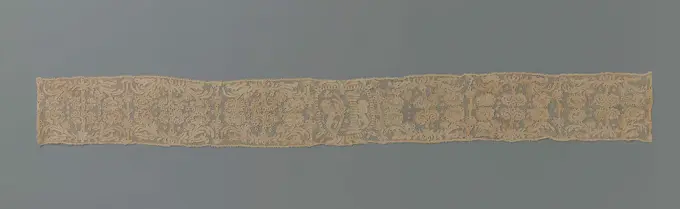
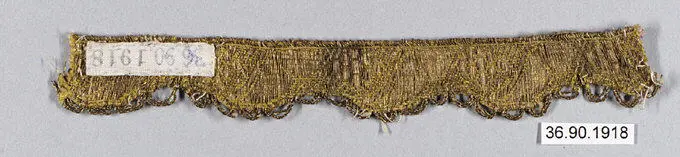
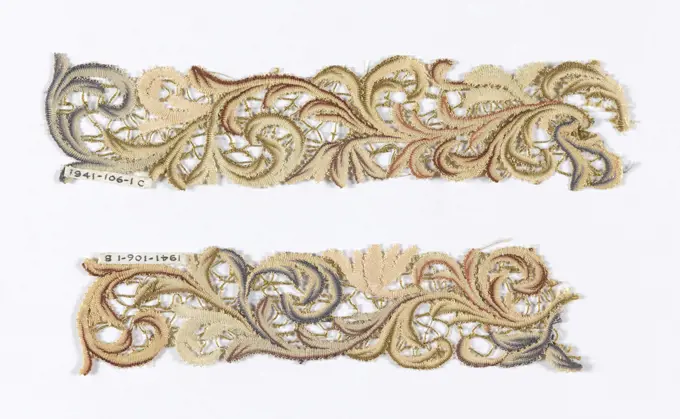
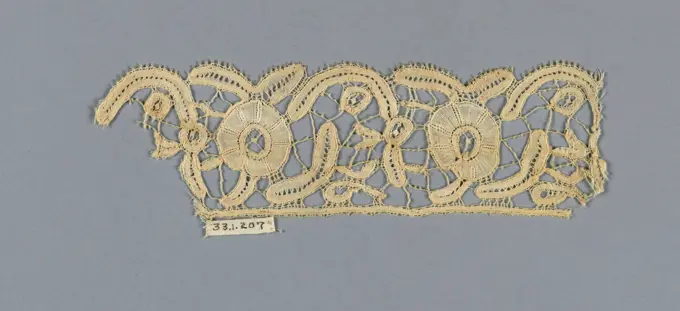
Strip or collar of needle side with symmetrical pattern with flowers and curlinged feathered leaves, anonymous, c. 1885 - c. 1899 Strip or collar of natural -colored needle side: Venetian relief side. Symmetrical and rich pattern with flowers and curlinged feathered leaves. In the middle of the strip there is a candelabar motif from which a slender comes down on both sides and then curls with a large bow and ends in an exotic flower with a four-lobble flower heart. Similar flowers return next to the curling and volute -forming feathered leaves in the rest of the pattern. The motifs are made with feston stitches where recesses and many types of decorative stitches provide nuances. The motives are provided with relief contours. In the flower hearts and around the outside of some larger leaves, cordons decorated with picots are used for extra relief. The motifs are connected by a potente soil. Top and bottom of the strip are straight finished, with the bottom with picots. The short sides
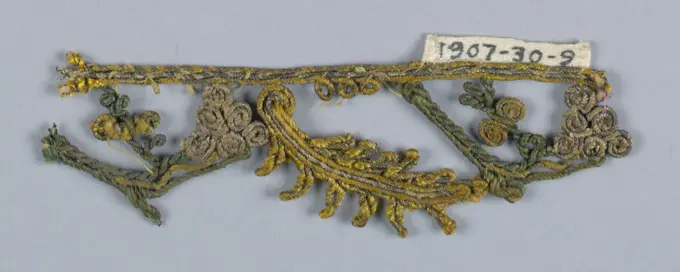
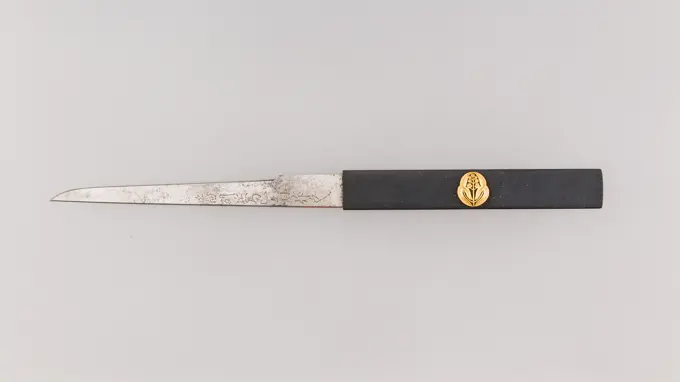
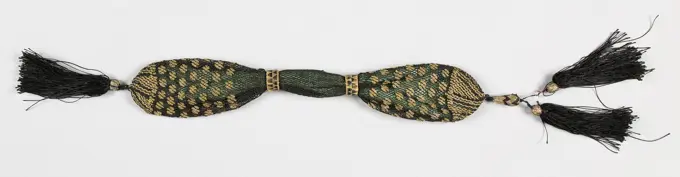
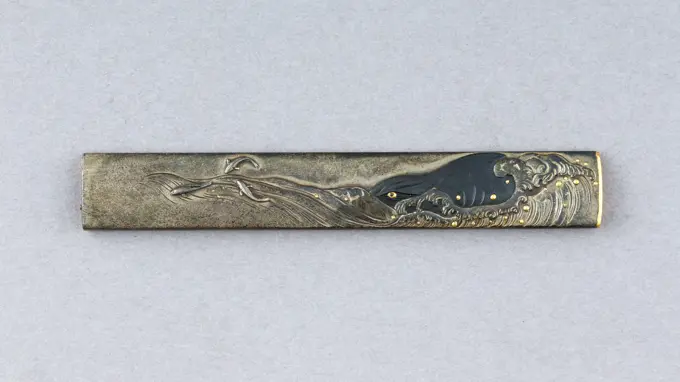
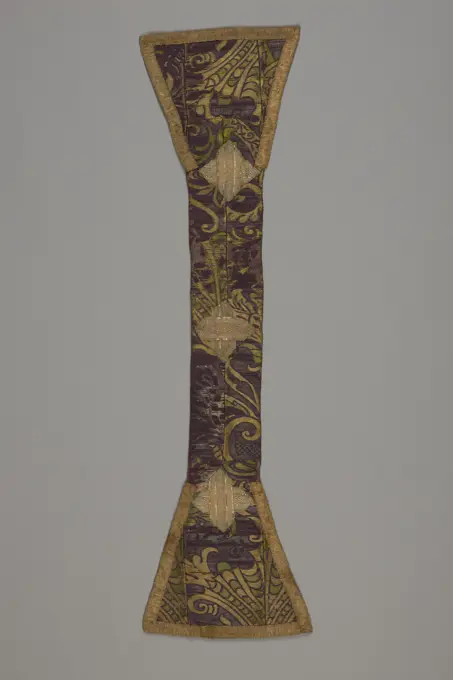
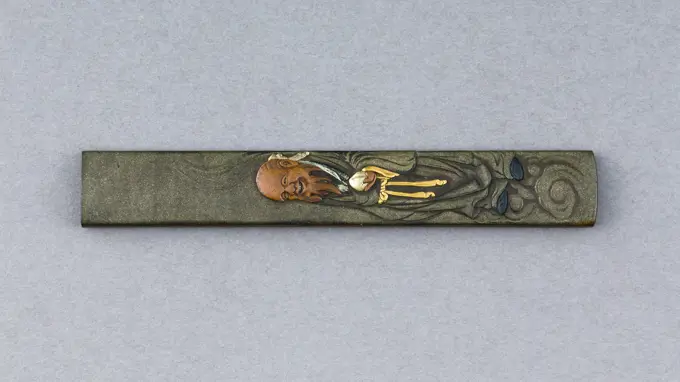
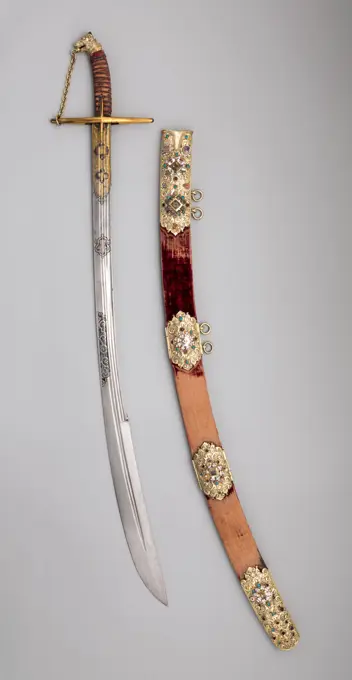
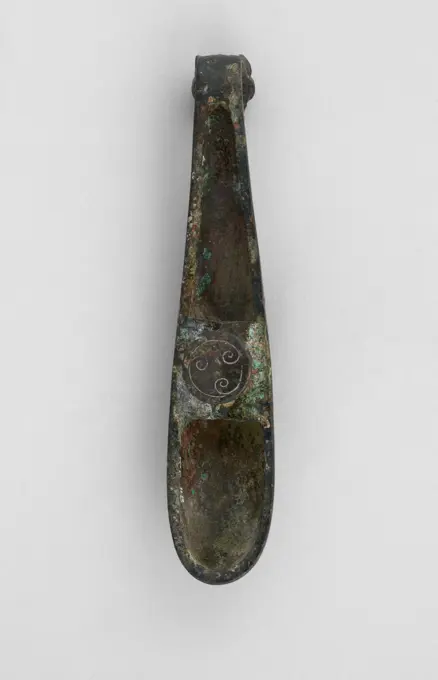
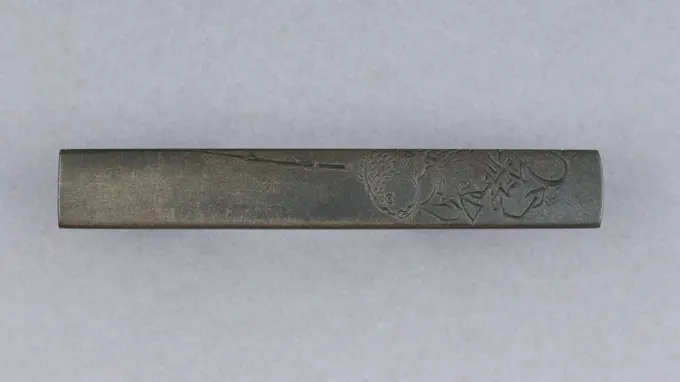
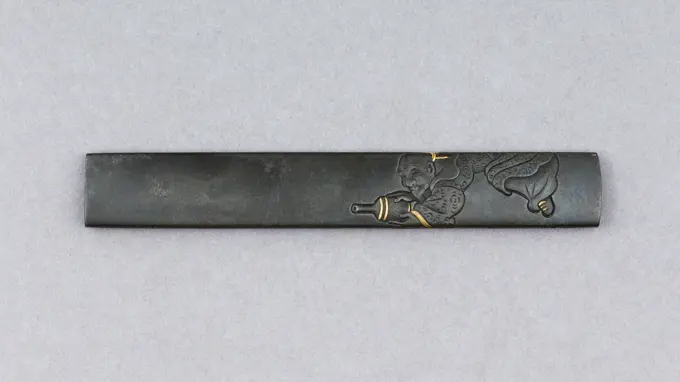
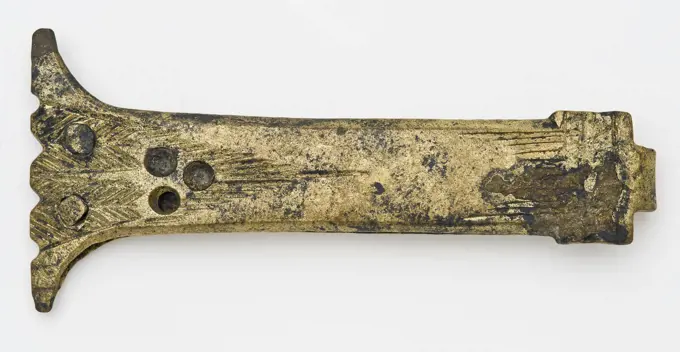
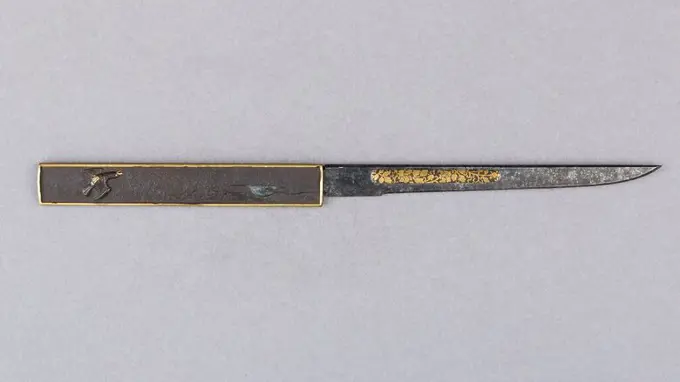
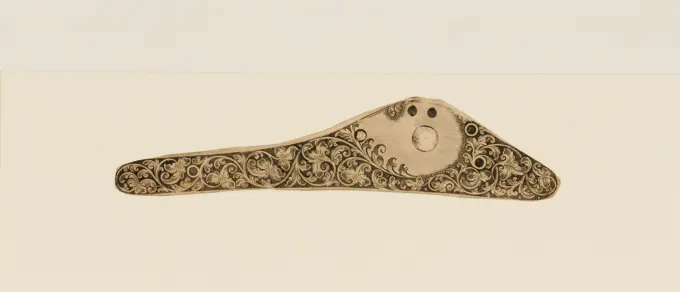
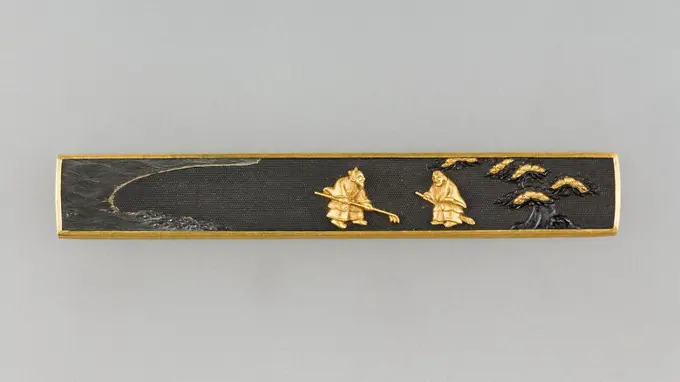
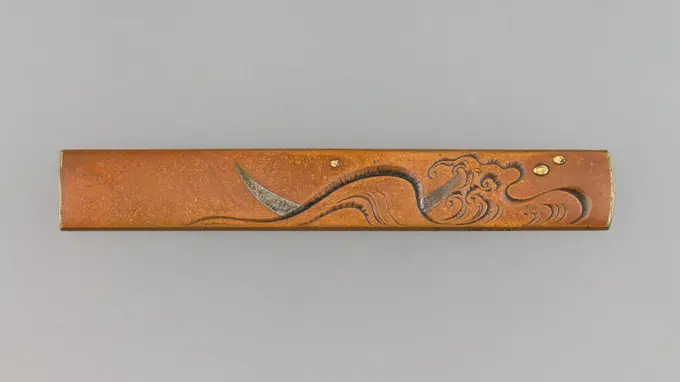
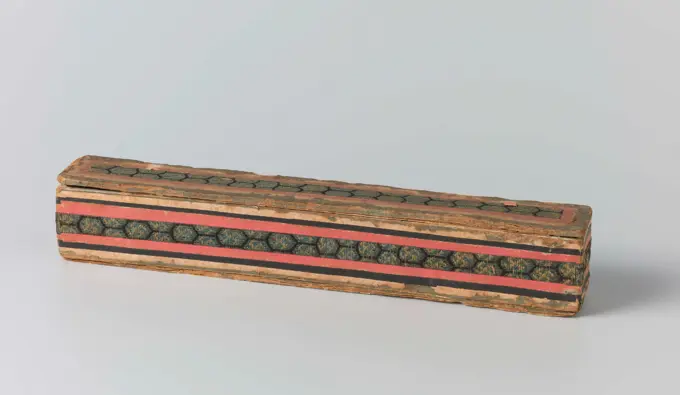
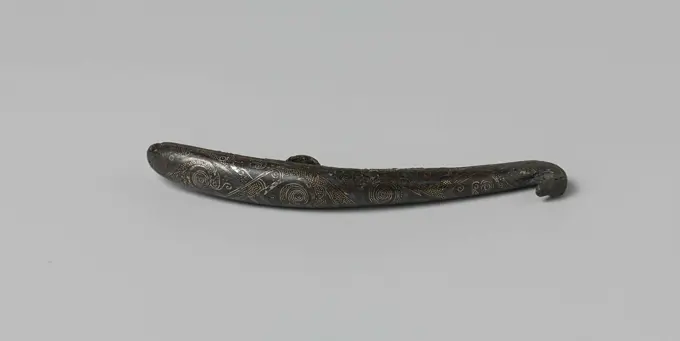
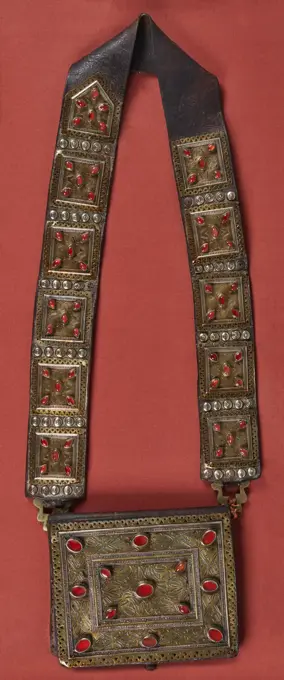
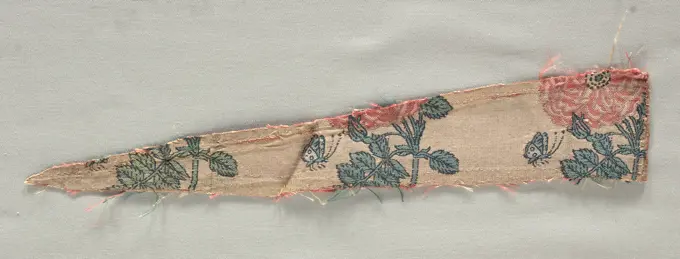
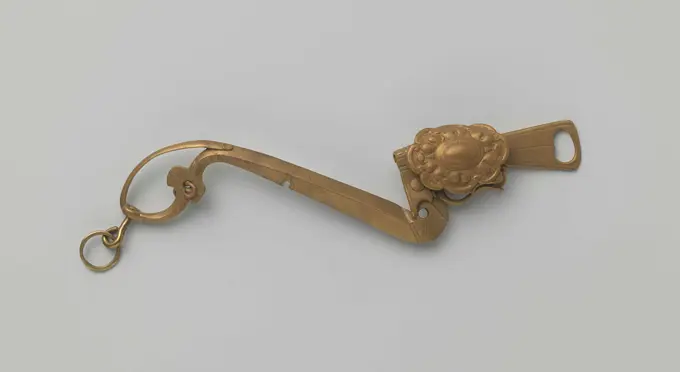
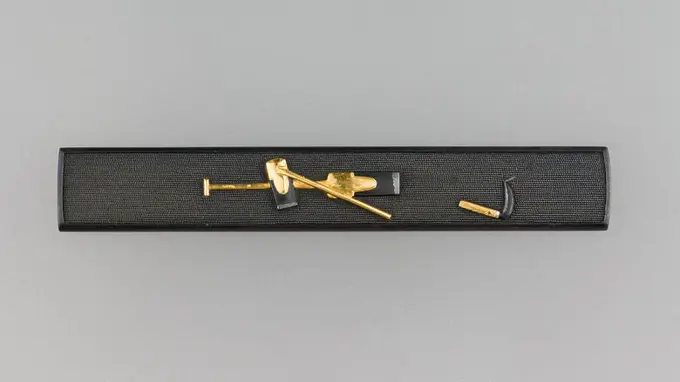
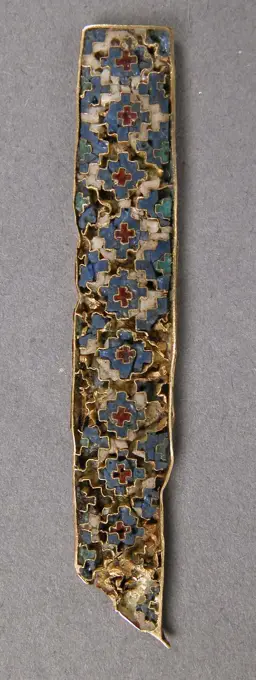
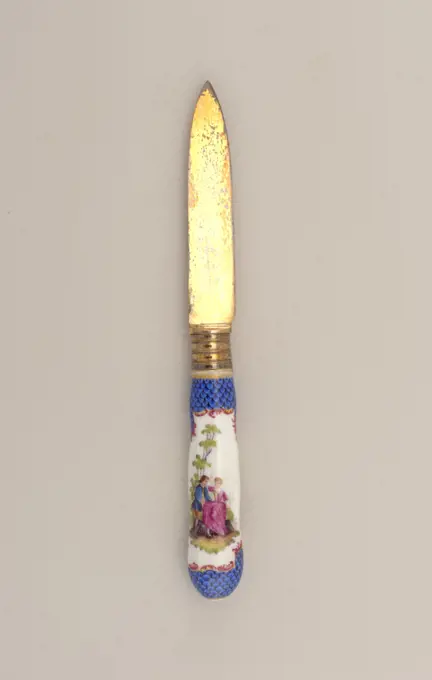
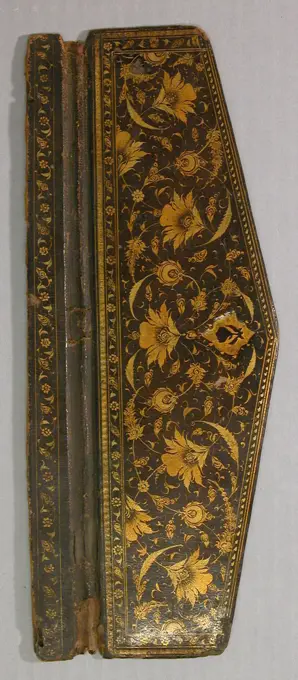
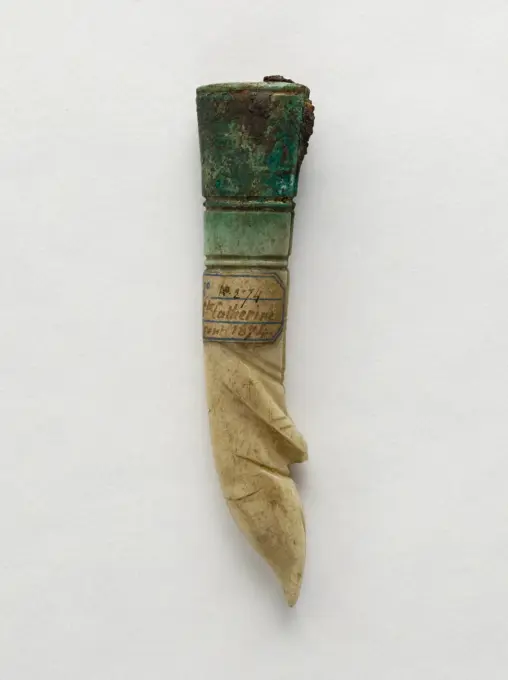
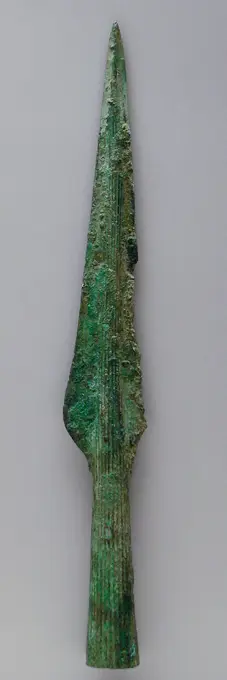
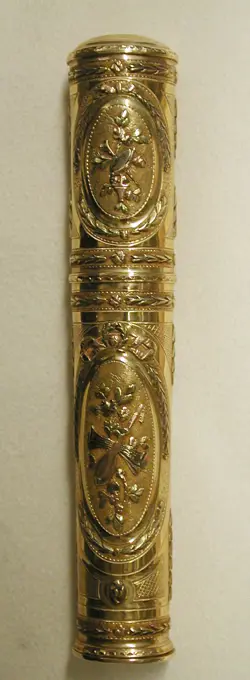
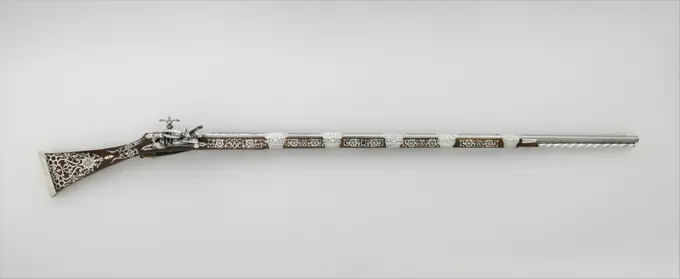
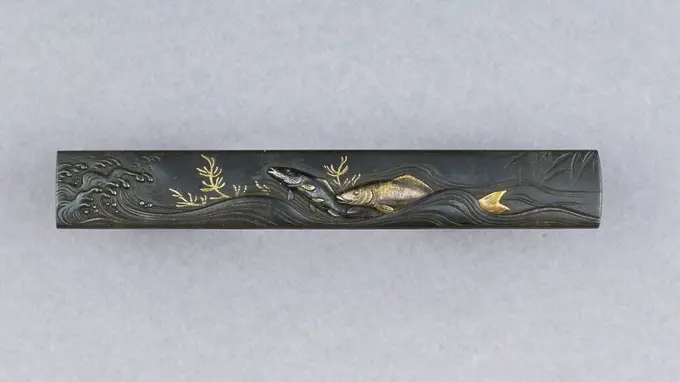
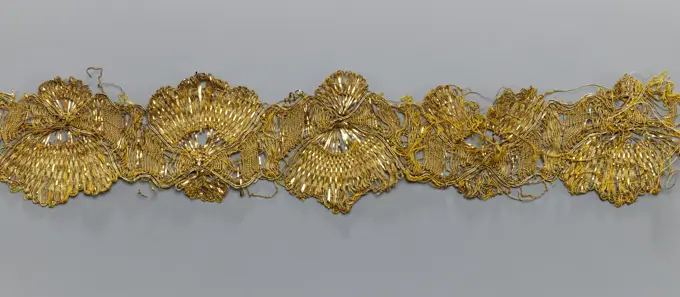
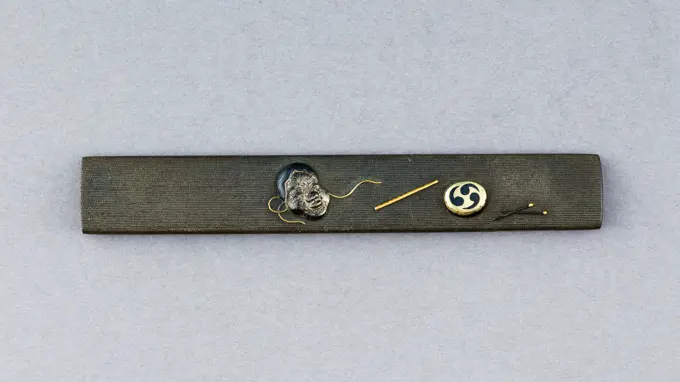
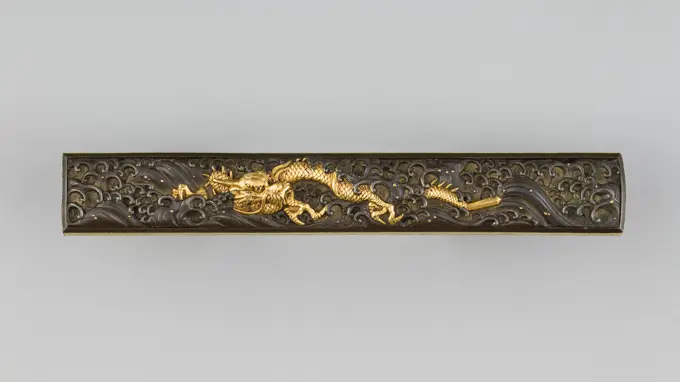
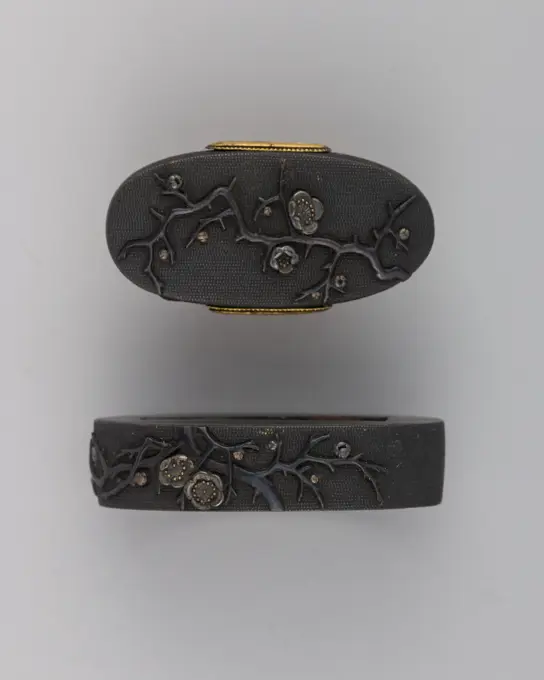
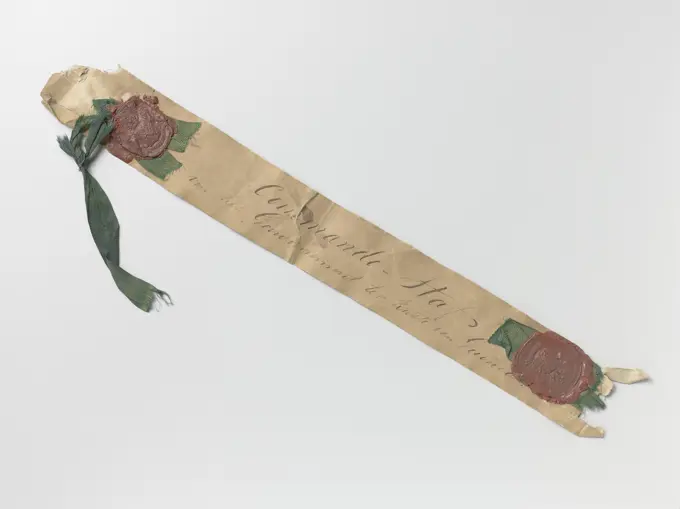
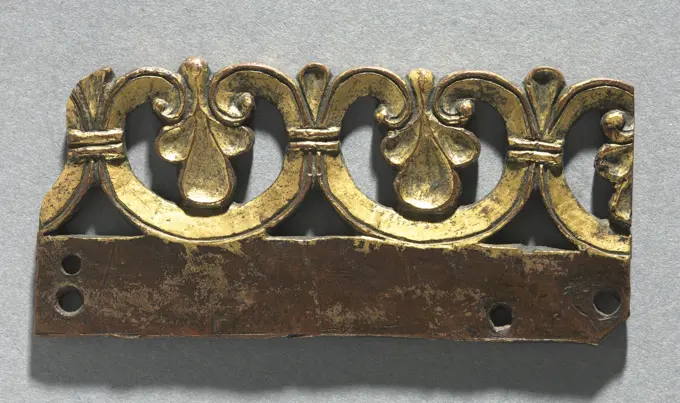
Feather with button ,, 1801 A silver ear iron with two buttons. This includes: two such pins (B, C) and two such springs (D, E). The two feathers are marked, master sign: a tree. Alkmaar silver (metal) A silver ear iron with two buttons. This includes: two such pins (B, C) and two such springs (D, E). The two feathers are marked, master sign: a tree. Alkmaar silver (metal)Strip bobbin with connected wavy flower stems with one flower, anonymous, c. 1650 - c. 1699 Strip of natural -colored bobbin: Old Flemish side. The repeating pattern consists of connected wavy flower stems, with one flower and one leaf on either side of the stem. The flower consists of six lobes around a circular flower heart. The motifs are made in linen battle with openwork edges and with recesses in the Bloemhart. The motifs are connected by a traly land: a five -part ground. The top and bottom of the strip are straight. Southern Netherlands linen (material) bobbin lace / old Flemish lace Strip of natural -colored bobbin: Old Flemish side. The repeating pattern consists of connected wavy flower stems, with one flower and one leaf on either side of the stem. The flower consists of six lobes around a circular flower heart. The motifs are made in linen battle with openwork edges and with recesses in the Bloemhart. The motifs are connected by a traly land: a five -part ground. The top aFeather with button ,, 1801 A silver ear iron with two buttons. This includes: two such pins (B, C) and two such springs (D, E). The two feathers are marked, master sign: a tree. Alkmaar silver (metal) A silver ear iron with two buttons. This includes: two such pins (B, C) and two such springs (D, E). The two feathers are marked, master sign: a tree. Alkmaar silver (metal)Strook naaldkant met twee klimmende leeuwen.Strip natural-colored coniferous lace. Heraldic motif with a standing oval in the middle with two climbing lions, the right lion at a column. Three ovals formed on both sides by mirrored flower branches. Motifs in buttonhole stitches without contours, on a muse soil applied. Top and bottom finished with a straight edge to which small 'sticks' hang. The short sides are straight finished.MountKnife Handle (Kozuka) ca. 1615-1868 Japanese A kozuka is a handle of a by-knife that is part of a sword mounting. It is kept in a slot on the reverse of a katana scabbard, often with a matching kōgai (hairdressing tool).. Knife Handle (Kozuka) 34654Dagger; unknown Lurista workshop; approx. 1300 600 BC ; period of Iron (-1300-00-00--600-00-00);White weapons, Luristian browns, iron period (approKnife Handle (Kozuka) 1789-1876 Japanese A kozuka is a handle of a by-knife that is part of a sword mounting. It is kept in a slot on the reverse of a katana scabbard, often with a matching kōgai (hairdressing tool).. Knife Handle (Kozuka) 29802Knife Handle (Kozuka) ca. 1615-1868 Japanese A kozuka is a handle of a by-knife that is part of a sword mounting. It is kept in a slot on the reverse of a katana scabbard, often with a matching kōgai (hairdressing tool).. Knife Handle (Kozuka) 34547Strip or collar of needle side with symmetrical pattern with flowers and curlinged feathered leaves, anonymous, c. 1885 - c. 1899 Strip or collar of natural -colored needle side: Venetian relief side. Symmetrical and rich pattern with flowers and curlinged feathered leaves. In the middle of the strip there is a candelabar motif from which a slender comes down on both sides and then curls with a large bow and ends in an exotic flower with a four-lobble flower heart. Similar flowers return next to the curling and volute -forming feathered leaves in the rest of the pattern. The motifs are made with feston stitches where recesses and many types of decorative stitches provide nuances. The motives are provided with relief contours. In the flower hearts and around the outside of some larger leaves, cordons decorated with picots are used for extra relief. The motifs are connected by a potente soil. Top and bottom of the strip are straight finished, with the bottom with picots. The short sides Stole;  around 1750 (1745-00-00-1755-00-00);Knife Handle (Kozuka) ca. 1615-1868 Japanese A kozuka is a handle of a by-knife that is part of a sword mounting. It is kept in a slot on the reverse of a katana scabbard, often with a matching kōgai (hairdressing tool).. Knife Handle (Kozuka) 34600Dagger (Pesh-kabz) with Sheath. Culture: Indian. Dimensions: L. with sheath 17 1/4 in. (43.8 cm); L. without sheath 16 in. (40.6 cm); L. of blade 11 1/2 in. (29.2 cm); W. 1 11/16 in. (4.3 cm); Wt. 10.6 oz. (300.5 g); Wt. of sheath 4.4 oz. (124.7 g). Date: 18th-19th century. Museum: Metropolitan Museum of Art, New York, USA.Knife case, Medium: silk, metallic Technique: woven silk velvet with raised metallic embroidery, For catalogue information, see 1962-58-11-a,b., 18th century, embroidery & stitching, Knife casePrzeszo Przyszoci unknownList fragment: Gilded list of pâte ornaments, left style., C. 1700 - c. 1899 frame Gilded list of oak leaves with acorns. List part, left style. With written on the back: 'Panel R. or by, Left Hand Side'.  wood (plant material). gold leaf gildingDagger with a sheathYataghan with a scabbardFragment of paneling, wood (pine), carved and painted, Two lower motifs of pilasters, curved in plan, painted white and blue. Vase on console carved in relief, crowned by a cornucopia containing various fruits., France, ca. 1785, architecture, Decorative Arts, Fragment of panelingPrzeszo Przyszoci unknownKnife Handle (Kozuka) ca. 1615-1868 Japanese A kozuka is a handle of a by-knife that is part of a sword mounting. It is kept in a slot on the reverse of a katana scabbard, often with a matching kōgai (hairdressing tool).. Knife Handle (Kozuka) 34618Saber with Scabbard and Carrying Belt early 17th century Polish This is one of a series of twelve jeweled sabers made in Hungarian style for use at the Saxon court in Dresden. These twelve swords are recorded as having had new wrist chains added in 1687 and as having been used again in 1709. This example bears what may be the mark of Georg Hoffmann (recorded 1586-1609), a goldsmith working in Breslau (now Wrocaw, Poland). Listen to experts illuminate this artwork's story Listen Play or pause #4430. Saber with Scabbard and Carrying Belt Supported by Bloomberg Philanthropies We're sorry, the transcript for this audio track is not available at this time. We are working to make it available as soon as possible.. Saber with Scabbard and Carrying Belt. Polish. early 17th century. Steel, gold, silver, leather, wood, textile, semiprecious stones. SwordsStrip of needle side with double rosette flower, anonymous, c. 1500 - c. 1599  Strip of natural needle side, reticella. A repeating pattern of one rosette flower with eight petals, with a rosette flower with the same number of petals in the center. The pattern, so every rosette flower, covers the full width of the strip. At the top and bottom are finished with a straight edge. Italy linen (material)Staple, 0206. Bronze. Cernuschi Museum, Asia Museum of Asia in the city of Paris.Siercraft for an evening mantle of mixed side with rose hedge, Martha Berkers, 1915 Ornamental piece for an evening mantle of natural -colored mixed side - bobbin in combination with needle side - Brussels Duchesse. There are roses on a wide -spread braid that usually support on two leaves. An intermediate ornament consists of single and double volutes and many small flowers. Lock linen (material) mixed lace / mixed Brussels Ornamental piece for an evening mantle of natural -colored mixed side - bobbin in combination with needle side - Brussels Duchesse. There are roses on a wide -spread braid that usually support on two leaves. An intermediate ornament consists of single and double volutes and many small flowers. Lock linen (material) mixed lace / mixed BrusselsSword knife hilt, anonymous, 1500 - 1900 Kozuka in the form of a pillar () With a flying range in Email Cloisononne. Japan . Kozuka in the form of a pillar () With a flying range in Email Cloisononne. Japan .Knife Handle (Kozuka) 18th century Japanese A kozuka is a handle of a by-knife that is part of a sword mounting. It is kept in a slot on the reverse of a katana scabbard, often with a matching kōgai (hairdressing tool).. Knife Handle (Kozuka) 35041Knife Handle (Kozuka) ca. 1615-1868 Japanese A kozuka is a handle of a by-knife that is part of a sword mounting. It is kept in a slot on the reverse of a katana scabbard, often with a matching kōgai (hairdressing tool).. Knife Handle (Kozuka) 34572Brass book fittings with decoration, decorative fittings ground find copper metal, whipped riveted engraved Double horseshoe with at the end hook Other end is flared and scalloped Two holes with pins archeology Rotterdam rail tunnel book close adornment Soil discovery, Rotterdam tunnel trajectory.Architectural Fitting (Gong). China, Qishan county, Shaanxi province. Date: 770 BC-481 BC. Dimensions: . Bronze. Origin: China. Museum: The Chicago Art Institute, Chicago, USA.Knife Handle (Kozuka) with Blade. Culture: Japanese. Dimensions: L. including blade 8 1/4 in. (21 cm); L. excluding blade 3 3/4 in. (9.5 cm); W. 9/16 in. (1.4 cm); thickness 3/16 in. (0.5 cm); Wt. 1.3 oz. (36.9 g). Date: 18th century. Museum: Metropolitan Museum of Art, New York, USA.Twenty-Five Inked Impressions (or "Pulls") of Engraved Firearms Ornament ca. 1845-65 2002.233.2-24, .26: Gustave Young American, born Prussia This group of twenty-five pulls record the decoration of firearms engraved by the famous German-American artist Gustave Young, and includes one pull taken from the left action of a counter plate engraved in the 1840s by Ernst Moritz, who trained Young in Zella, Thuringia, Germany. The pulls include impressions taken from lockplates, receivers, barrel tangs, hammers, and other metal components engraved with scrollwork and hunting scenes.Young ranks among the most well-known nineteenth-century engravers of American firearms, and is today most recognized for his work with Colt. He immigrated to the United States from Germany in 1852, engraving for Colt from 1853-58 and working as Colts primary engraving contractor from 1855-58 (see acc. nos. 2002.233.2-.26; 2003.521; 2009.330; 2010.481a-l). He became a naturalized citizen in 1858. After a hiatus inKnife Handle (Kozuka). Culture: Japanese. Dimensions: L. 3 13/16 in. (9.7 cm); W. 9/16 in. (1.4 cm); thickness 1/4 in. (0.6 cm); Wt. 1.4 oz. (39.7 g). Date: 18th century. Museum: Metropolitan Museum of Art, New York, USA.Knife Handle (Kozuka). Culture: Japanese. Dimensions: L. 3 13/16 in. (9.7 cm); W. 9/16 in. (1.4 cm); thickness 3/16 in. (0.5 cm); Wt. 1.1 oz. (31.2 g). Maker: Iwama Masayoshi (Shoro) (Japanese, 1764-1837). Date: late 18th-mid-19th century. Museum: Metropolitan Museum of Art, New York, USA.Purse (or Sash), 63 3/4 x 3 1/2 in. (161.93 x 8.89 cm) (including ties), Cotton, zipper, buttons, ChinaSilk brokaat ribbon; A continuous pattern of pink/ orange windows and stars, anonymous, c. 1700 - c. 1725 Silk brokaat ribbon. A continuous pattern of pink/ orange windows and stars is applied to a silver -colored surface. The edges are trimmed with decorative band. West-Europa geheel: silk. brocade (textile). silver thread Silk brokaat ribbon. A continuous pattern of pink/ orange windows and stars is applied to a silver -colored surface. The edges are trimmed with decorative band. West-Europa geheel: silk. brocade (textile). silver threadKnife 18th-19th century Caucasian. Knife 31400Trimming; silk and metal-wrapped thread; 1907-30-9Knife Handle (Kozuka) with Blade blade, dated 1688; knife handle, before 1870 Japanese A kozuka is a handle of a by-knife that is part of a sword mounting. It is kept in a slot on the reverse of a katana scabbard, often with a matching kōgai (hairdressing tool).. Knife Handle (Kozuka) with Blade 29675Belt Plate Fragment 500-700 Frankish. Belt Plate Fragment 464806 Frankish, Belt Plate Fragment, 500700, Iron, silver and brass inlay, Overall: 2 7/8 x 1 1/4 x 3/16 in. (7.3 x 3.2 x 0.5 cm). The Metropolitan Museum of Art, New York. Gift of J. Pierpont Morgan, 1917 (17.191.117)Gold diadem 3rd century B.C. Greek, South Italian or Etruscan Fourteen rosettes are attached to a single band of gold that has scalloped and turned-up edges. The petals are secured in the center by a granulated sphere. The balls that emerge on short wires from between the petals of each flower are granulated on alternating rosettes.. Gold diadem. Greek, South Italian or Etruscan. 3rd century B.C.. Gold. Hellenistic. Gold and SilverLongcase clock with calendrical, lunar, and tidal indications (The Graves Tompion). Culture: British, London. Dimensions: Overall: 77 × 17 × 8 in. (195.6 × 43.2 × 20.3 cm). Maker: Thomas Tompion (British, 1639-1713); Case attributed to Jasper Braem (active ca. 1677-ca. 1686). Date: ca. 1677-80.Tompion combined the technical advances made by English clockmakers with his own superb workmanship and ingenious designs to produce timepieces that contributed vastly to the fame of English clock making in the second half of the seventeenth century. One of Tompion's earliest surviving longcase clocks, this example was made before he began systematically numbering his works sometimeafter 1685. The dial indicates hours and minutes, subdivided into ten-second intervals (on the silvered chapter ring), calendrical information (in variouis apertures), and the phases, aspects, and ages of the moon in its monthly cycle, as well as times of high tide at London Bridge (on the central revolving disk). TDagger-Ax (Ge). Culture: China. Dimensions: W. 3 in. (7.6 cm); L. 10 1/2 in. (26.7 cm). Museum: Metropolitan Museum of Art, New York, USA.Bracelet; Roman Empire; 250 - 400; Gold; 1.4 × 6.3 cm (9,16 × 2 1,2 in.)Sword (Falcata). Culture: Iberian. Dimensions: H. 20 15/16 in. (53.2 cm); H. of blade 17 in. (43.2 cm); W. 2 5/8 in. (6.7 cm); D. 13/16 in. (2.1 cm); Wt. 1 lb. 0.7 oz. (473.4 g). Date: 5th to 1st century B.C. and later.The falcata was a popular type of sword in the Iberian Peninsula from the fifth to the first century B.C. Closely related in form to slashing weapons found in Greece, it is distinguished by the fact that its blade is double-edged for about half of its length, whereas Greek specimens normally have a single cutting edge.Although its old patina was removed and an inaccurate modern wood grip was added sometime before it was acquired, The Metropolitan Museum's falcata occupies an important place among the examples known to survive because of the otherwise fine state of preservation of its blade, which is structurally intact and only superficially corroded. Museum: Metropolitan Museum of Art, New York, USA.. Rectangular fan box made of thick paper with silk with honey degree pattern in which yellow swastikas, on red paper. On the inside of the lid, red huchong is printed.Stole;  2nd half 18th century (1751-00-00-1800-00-00);Belt hook with decor of arabesque, spirals and fine points.profile half-circular; Rich Decor or Arabesque, Spirals and Fine Dots.young rubber tree forest for rubber industry  on white backgroundCoran holder (usual name), 1800. Golden silver, Cornales and Leather. Cernuschi Museum, Asia Museum of Asia in the city of Paris.Galloon late 18th-early 19th century European. Galloon 224962Galloon late 18th-early 19th century European. Galloon. European. late 18th-early 19th century. Silk and metal thread. Textiles-TrimmingsFragment, early 1600s. Iran, early 17th century (period of Shah Abbas). Compound tabby ground with diasper pattern, brocaded; silk; overall: 6.5 x 34.5 cm (2 9/16 x 13 9/16 in.).Knife Handle (Kozuka). Culture: Japanese. Dimensions: L. 3 13/16 in. (9.7 cm); W. 9/16 in. (1.4 cm); thickness 1/4 in. (0.6 cm); Wt. 1.3 oz. (36.9 g). Date: ca. 1615-1868. Museum: Metropolitan Museum of Art, New York, USA.Stola, of red velvet and gold thread, gold passion and green frills, anonymous, c. 1000 - c. 1999 Stola of red velvet and gold thread, gold consideration and green frills at the ends.  textile materials. velvet (fabric weave). Stola of red velvet and gold thread, gold consideration and green frills at the ends.  textile materials. velvet (fabric weave).Stangschaar van een paardenbit.The two-poured and signed objects each consist of five parts: the rod ending at one end in a loop, the two riveted fasteners on both sides of the place, where the actual bit was mounted, the rosette and the rosette mounted on these pieces and this rod part eye that has been applied at the end of the loop in the opening. A is a ring with A, to which the rein was confirmed, as well as the mounting link for the currently missing link chain, which covenants the two rods. This link is placed in the opening in the loop by two kruinden. In the long part of the rod there is another hole in which the second currently missing link chain was mounted. The slightly larger opening in the section where the rod makes a sharper angle can be served for the short lens (trens). The two large holes masked by the rosette have or for one chain or rod and for the belt under the chin of the horse. The kidney-shaped hole on the strange end above this section was the fixing point fDagger (Khanjar) with Sheath. Culture: Indian, Mughal. Dimensions: H. with sheath 14 7/16 in. (36.7 cm); H. without sheath 14 1/4 in. (36.2 cm); H. of blade 9 7/8 in. (25.1 cm); W. 2 7/8 in. (7.3 cm); Wt. 8.2 oz. (232.5 g); Wt. of sheath 1.7 oz. (48.2 g). Date: 19th century. Museum: Metropolitan Museum of Art, New York, USA.Busk 17th century French Amidst decoration, there are two medallions on each side with figures on the front: a man and a woman; Cupid standing on a heart and a quiver of arrows. On the back: a man salutes a lady who holds an arrow; Venus, standing on a quiver of arrows holds an arrow and flaming hearts.. Busk 85407Knife Handle (Kozuka). Culture: Japanese. Dimensions: L. 3 13/16 in. (9.7 cm); W. 9/16 in. (1.4 cm); thickness 1/4 in. (0.6 cm); Wt. 1.2 oz. (34 g). Date: mid-19th century. Museum: Metropolitan Museum of Art, New York, USA.Terracotta fragment of a bell-krater (bowl for mixing wine and water) 460-440 B.C. Greek, Attic Below the rim, a band of laurel. Terracotta fragment of a bell-krater (bowl for mixing wine and water). Greek, Attic. 460-440 B.C.. Terracotta; red-figure. Classical. VasesElement of a Border for an Icon Frame 10th century Byzantine. Element of a Border for an Icon Frame 464524 Byzantine, Element of a Border for an Icon Frame, 10th century, Cloisonn enamel, gold, Overall: 1/4 x 1 15/16 x 1/16 in. (0.7 x 5 x 0.2 cm). The Metropolitan Museum of Art, New York. Gift of J. Pierpont Morgan, 1917 (17.190.653)Knife with Porcelain Handle Depicting a Couple Flirting, silver, gold, porcelain, vitreous enamel, Leaf-shaped blade, silver-gilt. Angular bolster, banded ferrule. Irregular shaped white porcelain handle. On front and back a scene with a flirting couple in front of a tree. Blue scalloped pattern with red scrolls on top and end of handle., England, 18th century, cutlery, Decorative Arts, knife, knifePetrahil unknownBelt, one of a pair, late 20th century, 23 5/8 x 1 7/8 in. (60.01 x 4.76 cm) (without ties), Cotton, China, 20th centuryFlap of a Bookbinding (Jild-i kitab) 17th century. Flap of a Bookbinding (Jild-i kitab) 445223Fragment faience dish, purple and blue on white, Chinese border in Wanli style, dish plate crockery holder earth discovery ceramic earthenware glaze tin glaze, Cooked archeology Rotterdam City triangle Haagseveer Target Targets Soil discovery: Targets 1956 Rotterdam.Sheath for which both sides are shown, c. 1500 - c. 1600 print Both sides of the sheath are decorated with candelabers on which a man stands on the left and a woman with a flower in her hand on the right. In the middle, a band runs with a candle slicer, intended to decorate the side of the sheath. Germany (possibly) paper engravingScraper / Strigilis;  VI-IV century BC (-600-00-00--301-00-00);Comb, 7th-10th century, 3/4 x 2 3/4 in. (1.9 x 7 cm), Gold, China, 7th-10th centuryDagger (Pesh-kabz) with Sheath 18th-19th century Indian, Mughal. Dagger (Pesh-kabz) with Sheath 31823Knife handle. Gallo-Roman. Bone. Paris, Carnavalet museum. The handle includes a bipartite decor a suide of sudden, treated schematically, and extending a molded cylinder. Gallo-Roman, Gallo-Roman time, knife handle, bone, archeological vestigeMiniature Shaft-hole Axehead. Iran, Luristan, circa 1350-1000 B.C.. Arms and Armor; axes. Bronze, castFibula. UnknownCollar, cuffs, and vestee, Medium: silk Technique: bobbin lace, Polychrome silk set of collar, cuffs and vestee worked in a scrolling leaf pattern and joined by brides., Venice, Italy, late 19th century, lace, Collar, cuffs, and vesteeMusic keys, c. 1870 - c. 1920    wood (plant material)Sealing wax case (étui) 1775-81 French, Paris In eighteenth-century Europe, Paris led the production of high-quality luxury goods. Parisian goldsmiths made a wide range of small, personal articles such as snuffboxes; étuis to hold sealing wax, tweezers, or utensils for sewing; souvenirs, which contained thin ivory tablets for note taking; and shuttles for knotting lace. Gold snuffboxes and boxes decorated with portrait miniatures were prized and frequently given as royal gifts, often to ambassadors or members of the court in lieu of cash payments for their services. Coveted and admired, these boxes were produced from a variety of materials. The best were skillfully made of gold and embellished with diamonds, enameled decoration, lacquer, and other luxurious materials. By the middle of the century, the taking of snuff had become an entrenched social ritual, and the snuffbox, too, had become an important social prop. Snuffboxes were considered highly fashionable accessories, with some meMiquelet Rifle of Ali Pasha lock and stock, dated A.H. 1224/A.D. 1809-10; barrel, 18th century lock and stock, Algerian; barrel, European Algerian firearms are typically very long and fitted with smoothbore barrels imported from Europe. The finest guns have stocks inlaid with silver (and occasionally gold), pierced and engraved with meandering floral and geometric designs. This example is unusual in bearing the name of the maker, his patron (an aga, probably an official at the court of the dey of Algiers), and the date. The silver is struck with an Algerian hallmark.. Miquelet Rifle of Ali Pasha. lock and stock, Algerian; barrel, European. lock and stock, dated A.H. 1224/A.D. 1809-10; barrel, 18th century. Steel, wood, silver, copper alloy, textile. Firearms-GunsHunting Cleaver (Waidpraxe) of Ernst August II Konstantin, Duke of Saxe-Weimar-Eisenach. German. Date: 1755-1758. Dimensions: Cleaver: Overall L. 36.2 cm (14 1/4 in.) Blade L. 25 cm (9 7/8 in.) Weight: 2 lb.Cleaver in scabbard weight: 2 lb. 2 oz. Steel, bronze, gilding, horn, wood, leather, and silk. Origin: Germany. Museum: The Chicago Art Institute, Chicago, USA.Sword ca. 4th-3rd century B.C. China. Sword. China. ca. 4th-3rd century B.C.. Bronze with inlay of turquoise. Eastern Zhou dynasty, Warring States period (475-221 B.C.). MetalworkDagger-Ax (Ge) China. Dagger-Ax (Ge). China. Bronze. Shang dynasty (ca. 1600-1046 B.C.). MetalworkBelt Plate 7th century Frankish. Belt Plate 465065 Frankish, Belt Plate, 7th century, Iron, silver, Overall: 4 x 2 3/16 x 3/4 in. (10.2 x 5.6 x 1.9 cm). The Metropolitan Museum of Art, New York. Gift of J. Pierpont Morgan, 1917 (17.191.348)Saber. Culture: Turkish. Dimensions: L. 38 in. (96.5 cm); L. of blade 32 3/4 in. (83.2 cm); Wt. 1 lb. 15 oz. (889 g). Date: Grip and guard, second half of the 17th century; blade, late 18th-19th century.The green nephrite grip is carved with a rippling pattern that echoes the crucible, or "watered," steel of the blade. The Arabic inscriptions on the blade include one verse praising the infinite gentleness and power of God and another verse referring to the sword called dhu'l-faqar. The latter was one of the swords of the prophet Muhammad and was widely regarded as a symbol of spiritual and political authority. Museum: Metropolitan Museum of Art, New York, USA.Watch with chain, D. Cochin, c. 1735 - c. 1770 Watch with silver chain with enamelled dial with cityscape. An allegorical representation is driven in the outer cabinet. The chain is composed of 5 chains on which a white cachet hangs. London silver (metal). Watch with silver chain with enamelled dial with cityscape. An allegorical representation is driven in the outer cabinet. The chain is composed of 5 chains on which a white cachet hangs. London silver (metal).Handle-Shaped Jade. China. Date: 1100 BC-900 BC. Dimensions: 12.7 × 2.2 × 0.9 cm (5 × 0.9 × 0.4 in.). Jade. Origin: China. Museum: The Chicago Art Institute, Chicago, USA.Knife Handle (Kozuka). Culture: Japanese. Dimensions: L. 3 13/16 in. (9.7 cm); W. 9/16 in. (1.4 cm); thickness 1/4 in. (0.6 cm); Wt. 1.1 oz. (31.2 g). Date: 18th century. Museum: Metropolitan Museum of Art, New York, USA.Folded Shirt with Child's Head for "New York Clothing House, Baltimore." Matchsafe; USA; brass; 7 x 3 x 1.6 cm (2 3/4 x 1 3/16 x 5/8 in. )Strip -Fragment of the lace;  XVIII/19th century (1751-00-00-1850-00-00);Fragment (Belgium); linen; 1933-1-207Knife Handle (Kozuka) ca. 1615-1868 Japanese A kozuka is a handle of a by-knife that is part of a sword mounting. It is kept in a slot on the reverse of a katana scabbard, often with a matching kōgai (hairdressing tool).. Knife Handle (Kozuka) 34637Knife Handle (Kozuka) late 18th century-early 19th century Japanese A kozuka is a handle of a by-knife that is part of a sword mounting. It is kept in a slot on the reverse of a katana scabbard, often with a matching kgai (hairdressing tool).. Knife Handle (Kozuka). Japanese. late 18th century-early 19th century. Copper-silver alloy (shibuichi), gold. Sword Furniture-KozukaSword-Hilt Collar and Pommel (Fuchigashira) 18th-19th century Japanese A fuchigashira is a pair of matching sword fittings comprising the fuchi (collar at the base of the grip of the sword hilt) and kashira (pommel cap at the end of a sword hilt).. Sword-Hilt Collar and Pommel (Fuchigashira). Japanese. 18th-19th century. Copper-gold alloy (shakud), silver. Sword Furniture-Fuchi-KashiraSocket from a Spearhead or a Ceremonial Staff. Culture: Tibetan or Mongolian. Dimensions: L. 11 3/4 in. (29.8 cm). Date: ca. 1607-17. Museum: Metropolitan Museum of Art, New York, USA.MoldingCommanders baton of the Dutch Governor of the Gold Coast, anonymous, c. 1850 - c. 1900  Elongated paper with red paint stamp of the Government of Guinea with green ribbon on both ends. Middle Inscription: Commandostaf of the Government Government of Guinea. Guinea paper. textile materials. sealing wax writing (processes)  GuineaGlass Fragment 14th-15th century European. Glass Fragment. European. 14th-15th century. Colorless glass. Glass-StainedBourse. GAL1991.40.6Muffin Pan. Dated: c. 1939. Dimensions: overall: 18.9 x 35.4 cm (7 7/16 x 13 15/16 in.) Original IAD Object: 15 3/4" long; 10" wide. Medium: graphite on paperboard. Museum: National Gallery of Art, Washington DC. Author: Maurice Van Felix.Loop between 1819 and 1838. Silver 2nd title for Holland Fairly wide strip decor scrolls and small flowers on a dotted backgroundFragment of an Ornamental Crest from a Reliquary Shrine, c. 1165-1180. Mosan, Meuse Valley, Maastricht, 12th century. Gilded copper, émail brun (brown enamel); overall: 7.2 x 3.2 cm (2 13/16 x 1 1/4 in.).