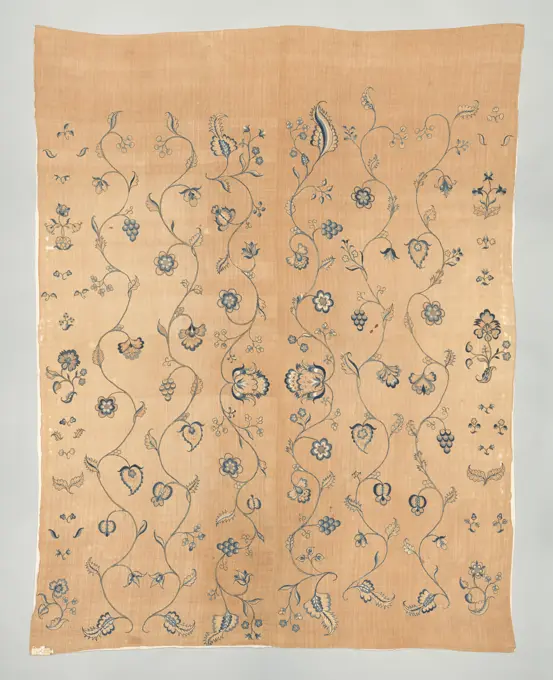
Historical Textiles and Fabrics

A selection of intricate historical textiles from various periods, featuring rich colors and designs, highlighting the craftsmanship of different eras.
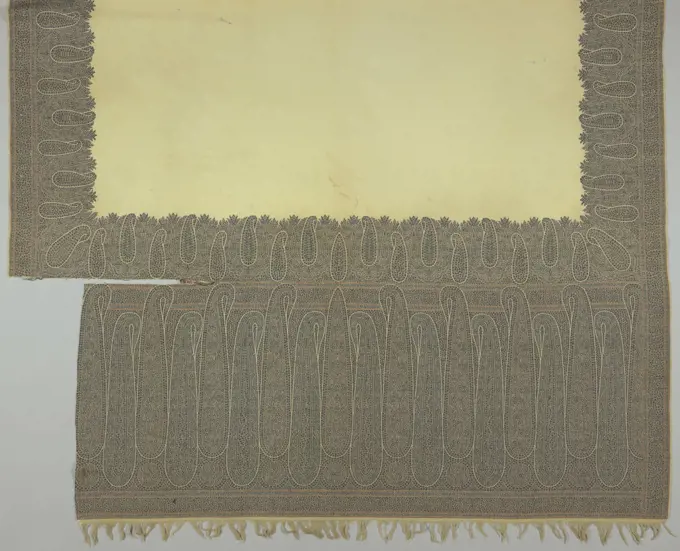
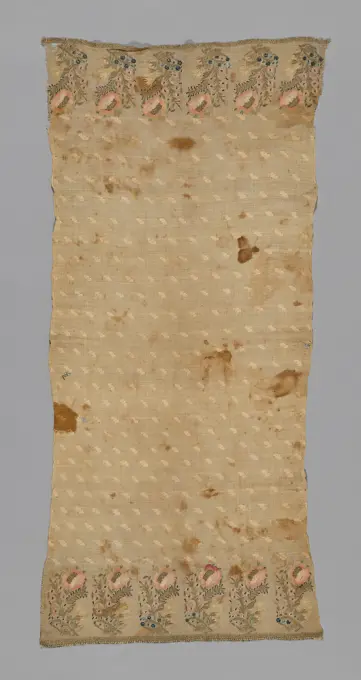
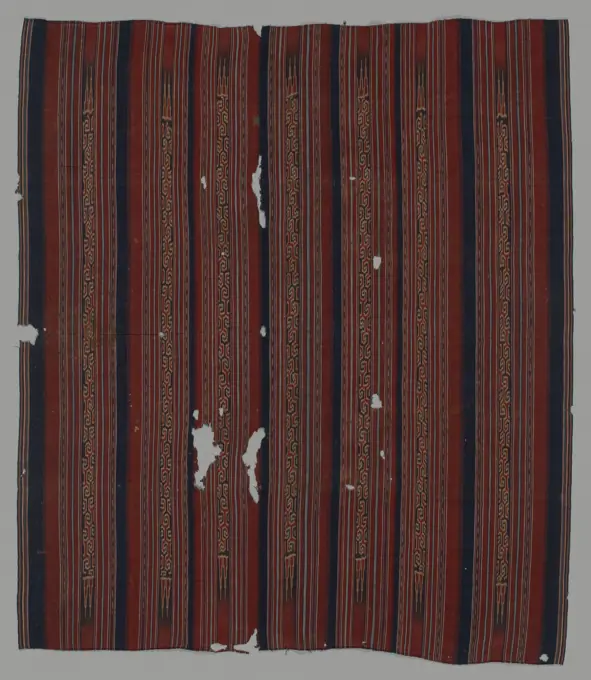
Shawl, woven, Europe, 19th century, costume & accessories, Shawl
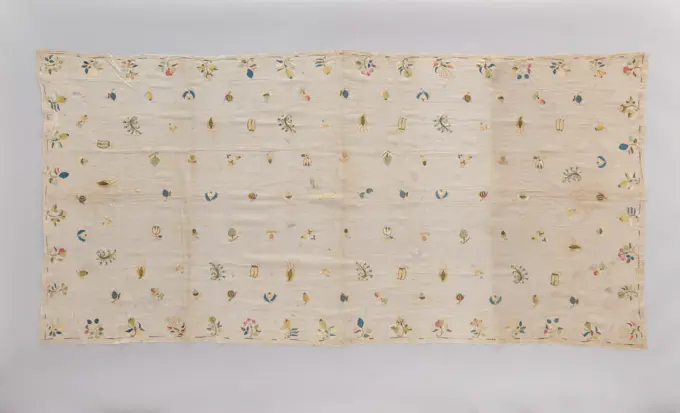
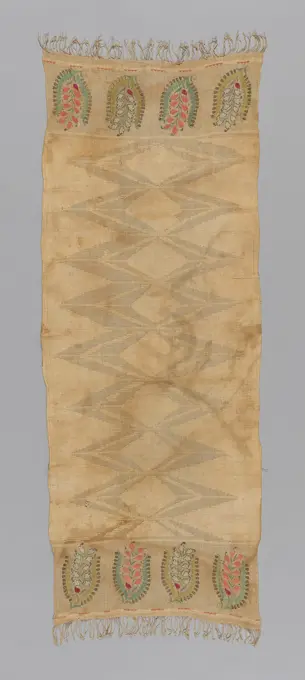
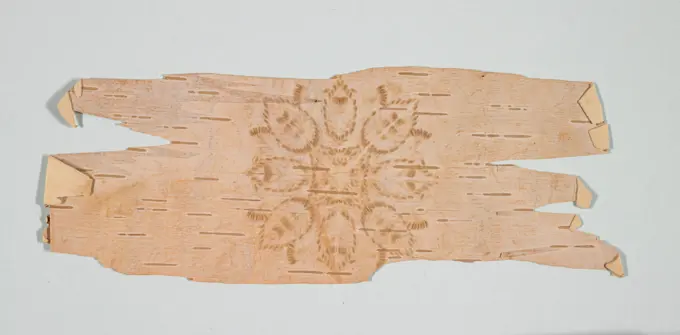
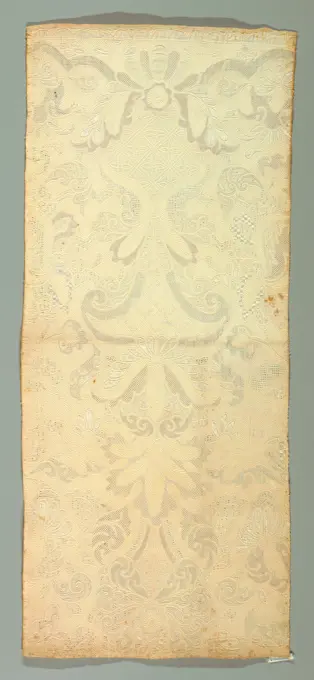
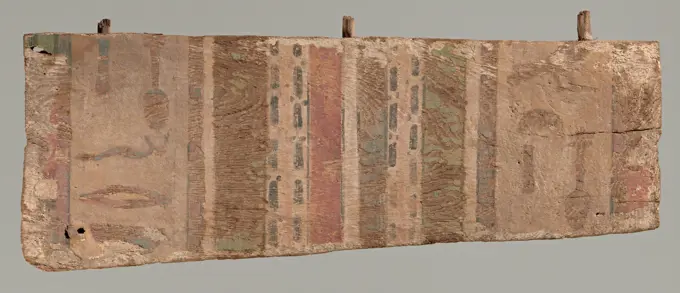
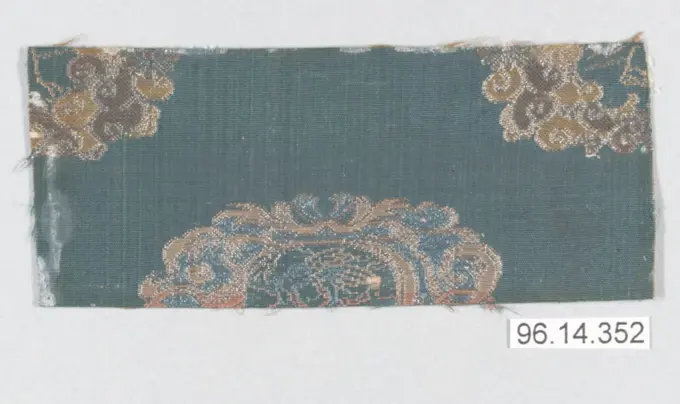
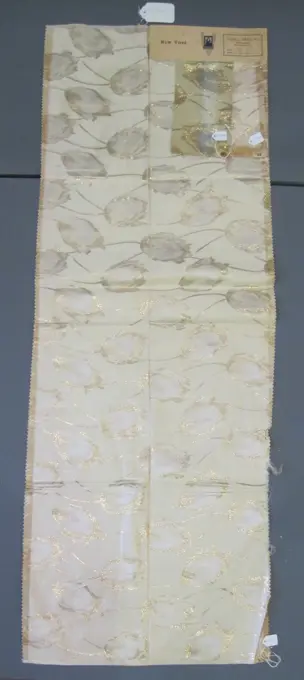
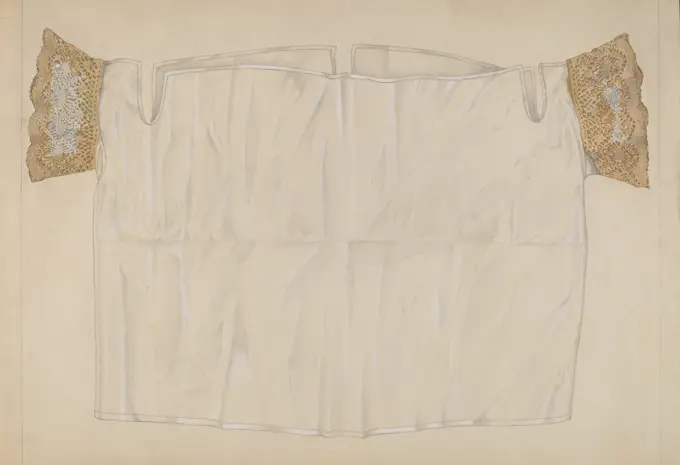
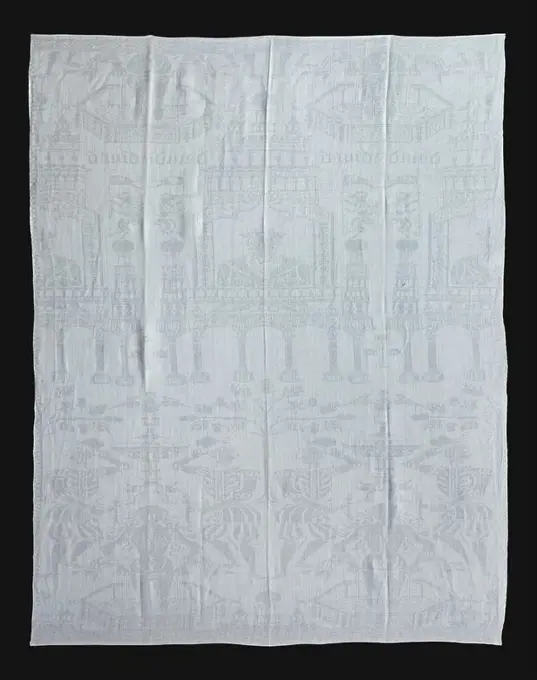
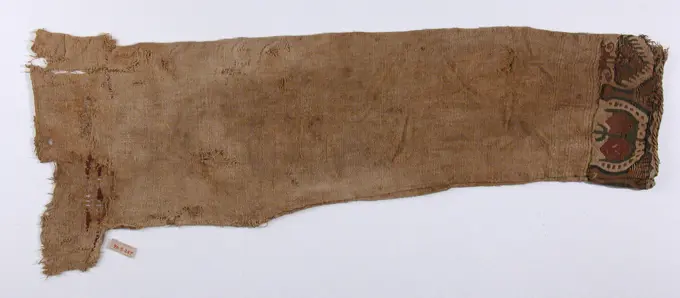
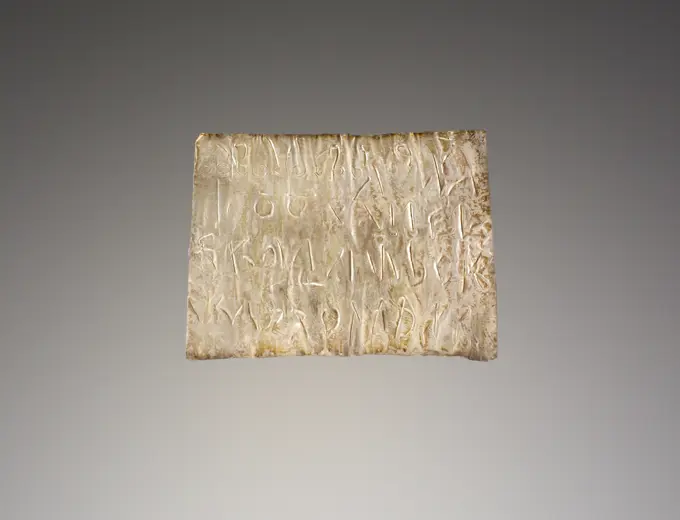
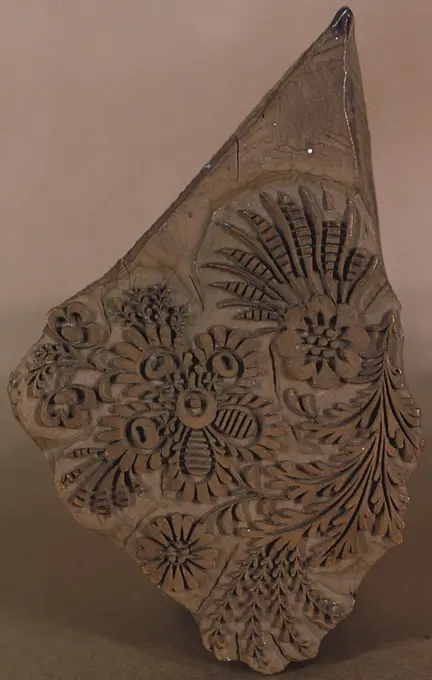
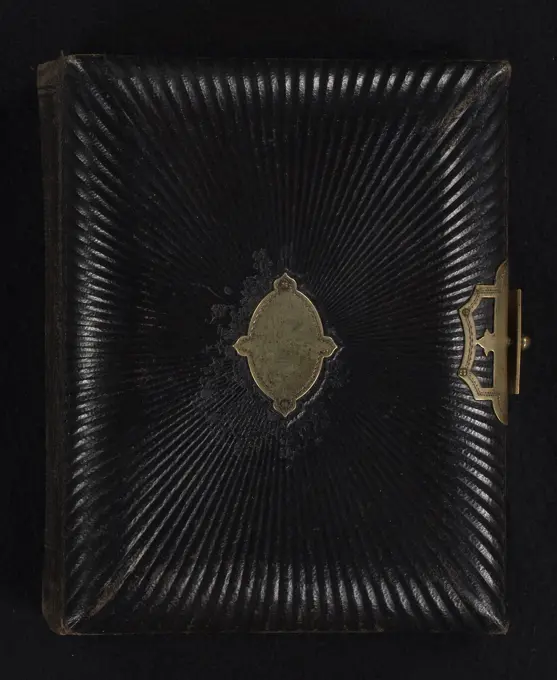
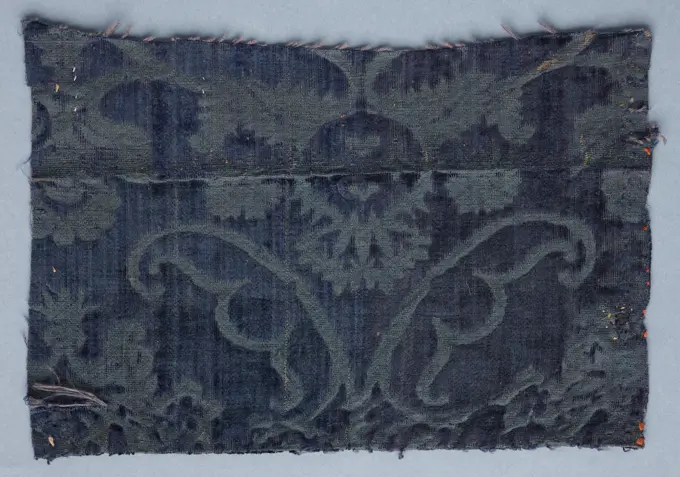
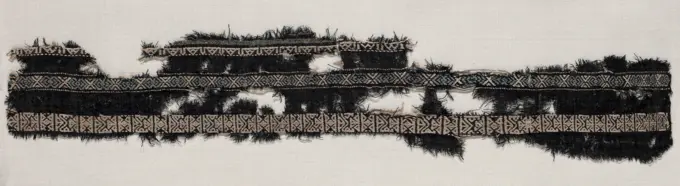
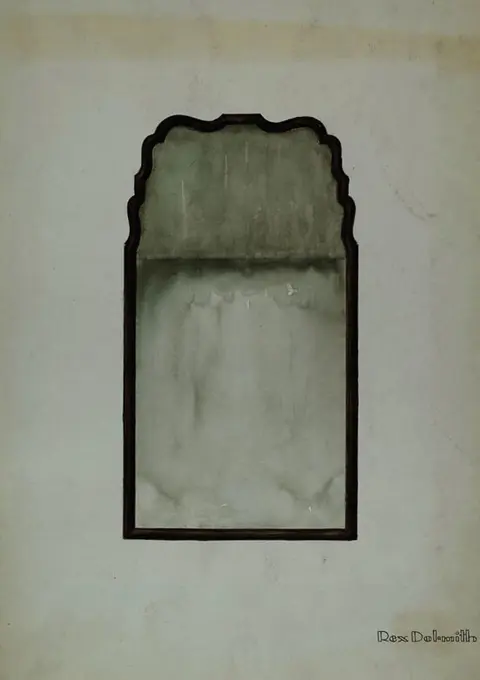
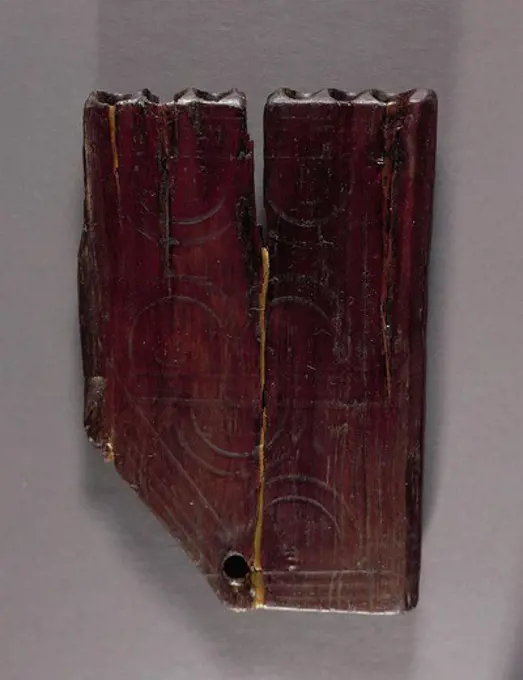
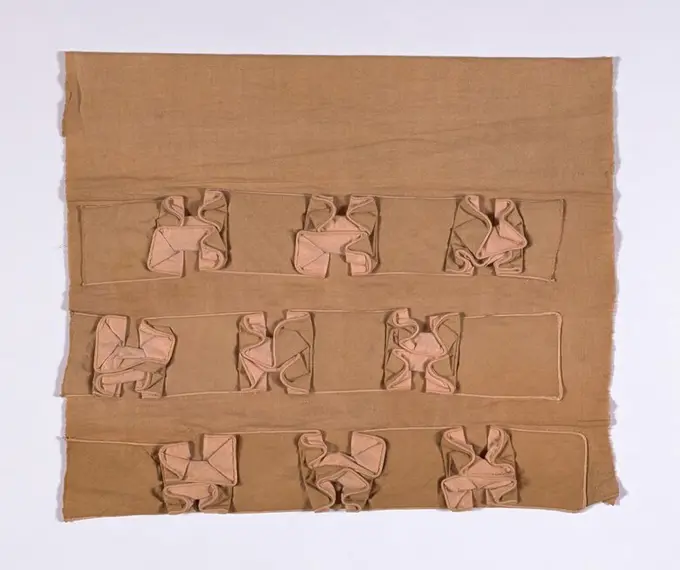
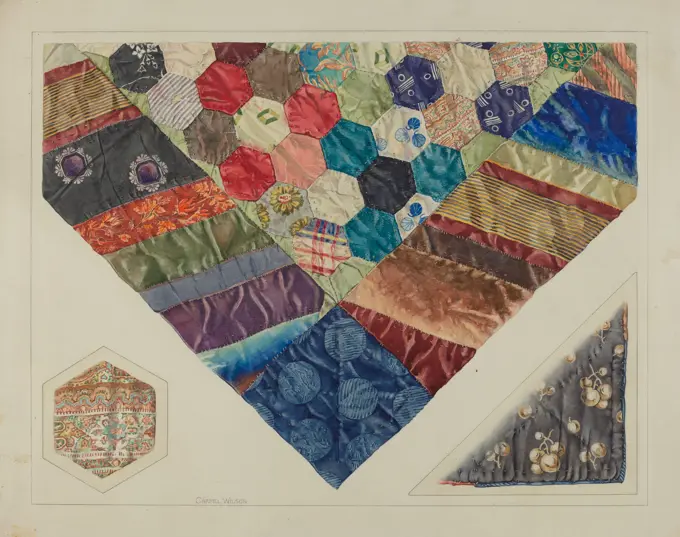
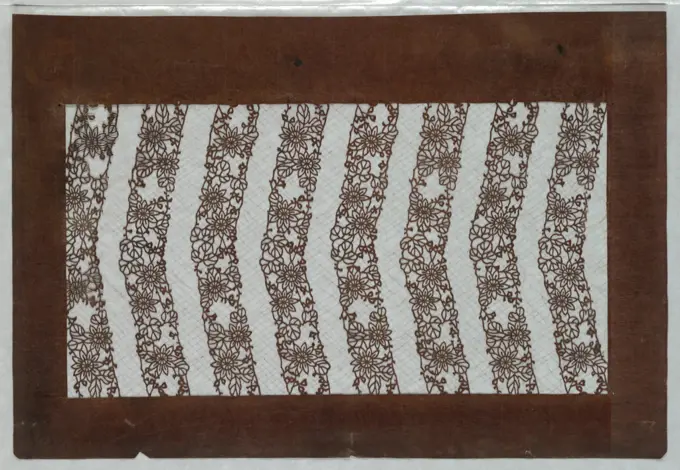
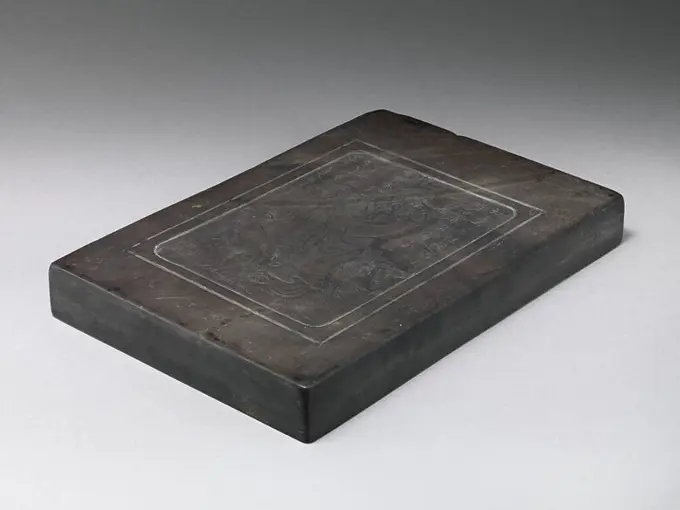
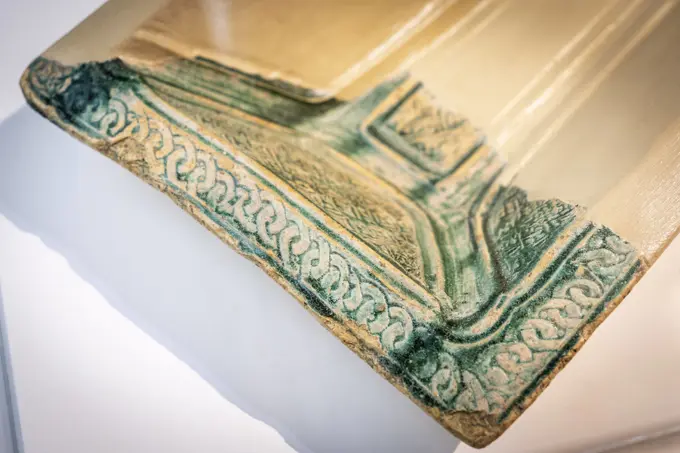
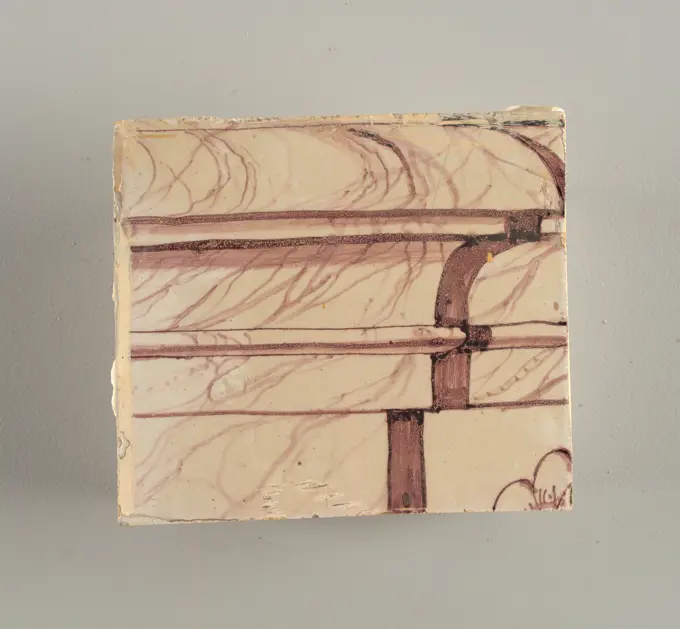
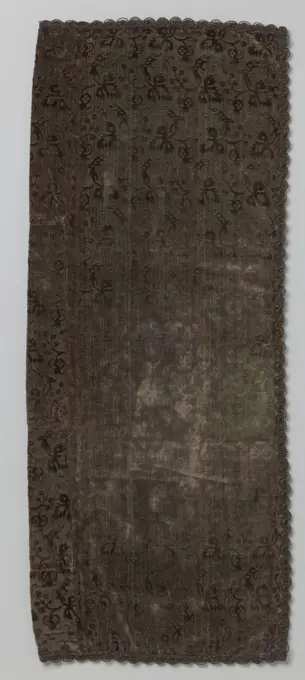
Dress of Purple Silk Velvet ,, 1600 - 1699 A dress of dark purple side, composed of six pieces. A spray pattern of a twig of one leaf, one flower and a button. On three sides surrounded by gold galon colored in the same shade as the velvet. Lining of purple satin. Cf. BK-NM-11903-52. Italy (possibly) silk. satin. velvet (fabric weave). cotton (textile) A dress of dark purple side, composed of six pieces. A spray pattern of a twig of one leaf, one flower and a button. On three sides surrounded by gold galon colored in the same shade as the velvet. Lining of purple satin. Cf. BK-NM-11903-52. Italy (possibly) silk. satin. velvet (fabric weave). cotton (textile)Piece 18th-19th century Japan. Piece 65963Kesa Made 1701-1800 Japan. Silk and gilt-paper strip; twill and satin weaves with supplementary patterning wefts .Napkin of linen with pellet pattern ,, 1726 White linen napkin with peel pattern, brand GS 60 and 1726 Northern Netherlands (Possible) linen (material) White linen napkin with peel pattern, brand GS 60 and 1726 Northern Netherlands (Possible) linen (material)Textile Swatches Onondaga Silk Company, Inc. (1925-1981).. Silk, possibly synthetic fiber, metal, a: 46 1/2 x 17 in. (118.1 x 43.2 cm).Shawl, woven, Europe, 19th century, costume & accessories, ShawlTextile 19th century Japan. Textile 68048Towel Made 1801-1900 Turkey. embroidered .Fragment 16th century Italian. Fragment 230585Towel or Napkin Made 1801-1900 Turkey. embroidered . AnonymousTextile (England); crewel wool, cotton, linenNapkin with pattern of crosswork ,, c. 1675 - c. 1700 Napkin from Wit Linnamast with a pattern of an infinite report from network with a blocked cross on the intersection, with thickening on the sides and with filling of trap -contoured concentric polygons, also blocked. Two open hems. Marked with Hole brand M.P. And smaller unreadable brand. Haarlembrabant linen (material) Napkin from Wit Linnamast with a pattern of an infinite report from network with a blocked cross on the intersection, with thickening on the sides and with filling of trap -contoured concentric polygons, also blocked. Two open hems. Marked with Hole brand M.P. And smaller unreadable brand. Haarlembrabant linen (material)Fragment, Medium: silk, metallic thread Technique: uncut supplementary warp pile (velvet), Fragment of tan silk uncut velvet on a ground tan silk shot through with metallic threads. Design of formalized tiny branches with blossoms, alternating horizontal rows turning left and right., Italy, late 16th century, woven textiles, FragmentChurch tablecover. unknown, authorTextile Swatches Onondaga Silk Company, Inc. (1925-1981). , 1948-1959. 72 silk; 28 metal, largest component (a): 24 x 18 in. (61 x 45.7 cm).    1948-1959Towel Made 1801-1900 Turkey. Embroidered .Veil. unknown, authorTwo wide strips of German side from around 1660, from the collection of the Kunstwerbemuseum in Dresden, Germany, Anonymous, 1888 photomechanical print This print is part of a cover with 49 prints and a list of images. Dresden paper collotype lace Artificial museumBitten Pattern, early 20th century, 2 1/4 x 6 in. (5.7 x 15.2 cm) (irregular), Birchbark, United States, 20th centuryFragment (Italy); velvetSection Of A Petticoat (England); linen embroidery, cotton cording, cotton foundationFragment sarkofagu skrzyniowego (fragment ścianki szczytowej od strony stóp). unknown, authorArm of a child, Giacomo Cavedone (attributed to), 1587 - 1660 drawing   paper. graphite (mineral). chalk  child. armsTowel, Medium: raw silk, metal sequins Technique: embroidered on plain weave with punched work, Each end of a plain white towel embroidered with a large stylized floral ornament rising out of a small vase, in white silk, silk floss, and small, tarnished silver discs, surrounded by a wide border of eyelet punched work. Row of animal and floral motifs surmounts border, and on each end a short fringe of linen with silver discs is attached., Greece, late 18th-early 19th century, embroidery & stitching, TowelTextile, Medium: silk, gilt parchment wrapped around silk core Technique: two partially interconnected structures; 41 satin plus 13 twill, Green silk twill background with a design of serpentine stems with pomegranate blossoms and buds in gold and coral., Venice, Italy, ca. 1500, woven textiles, TextileStrip bobbin with infinitely winding ribbon, anonymous, c. 1700 - c. 1724 Strip of natural -colored bobbin, Milanese side. The strip is made or used for a superplie. The pattern is formed by an infinitely winding ribbon. A repeat of the pattern can be seen where the ribbon a bit only wriggles along the upper edge, so that the mesh soil is not intersected by the ribbon. This creates rectangular blocks, full of branches with incised leaves and flower buds. The twists are held together by a diamond -shaped Maas soil. The ribbon is made in linen battle with openwork edges, sporadically also recesses occur in the center of the ribbon. In a few leaves and flowers a decorative soil has been made in shape or some potented braids have been applied. The top is finished with a separate clost edge. The irregular shells along the underside stem from the pattern with the winding ribbon. Malib linen (material) bobbin lace Strip of natural -colored bobbin, Milanese side. The strip is made or used for Piece 18th-19th century Japan. Piece 66077Textile Swatches Onondaga Silk Company, Inc. (1925-1981). , 1948-1959. Silk, metal, a: 47 1/2 x 17 1/4 in. (120.7 x 43.8 cm).    1948-1959William Frank, Baby's Shirt, c 1930 Baby's ShirtAltar cloth, Medium: linen Technique: patchwork of techniques, including needlework on knotted net; bobbin and needle lace, Long rectangular altar cloth of embroidered net squares arranged in two rows. The two alternating motifs are a diamond within a square and a cross within a square. Each square has areas of plain weave cutwork with needle lace fillings and is edged by a band of bobbin lace. Both side and front edges have a band of bobbin lace with knotted tassels in between each scallop., Europe, late 19th century, lace, Altar clothTextile Fragment 9th-10th century. Textile Fragment 448117Textile (France); silk, metallic thread; Anonymous bequest in memory of Albert and Rebecca Elsberg; 1938-82-56-dOld cardboard Old cardboard Copyright: xZoonar.com/J.xSandvikx 2082988Napkin with David and Bathsheba. Culture: Dutch. Dimensions: Overall: 42 x 36 in. (106.7 x 91.4 cm). Date: ca. 1590-1600. Museum: Metropolitan Museum of Art, New York, USA.Textile Fragment 4th century. Textile Fragment 443324Fragment Made 1601-1700 Spain. silk .Textile Fragment 5th-6th century. Textile Fragment 443753Kant, anonymous, c. 1900 photograph  France paper. metal cyanotype laceLamella. UnknownPrinting Block (France); woodPiece 18th century Japan. Piece 71787Textile Fragment ca. 1035-94. Textile Fragment. ca. 1035-94. Linen, silk; plain weave, tapestry weave. Attributed to Egypt. Textiles-WovenBand, Medium: linen, silk, metallic thread Technique: embroidered, darned, withdrawn elements, Fragment of a narrow band with lions rampant, birds, geometric motifs, and stylized plant forms. Natural linen is drawn, cut and wrapped with dark brown silk and embroidered with metallic thread accents., Spain, 16th-17th century, embroidery & stitching, BandSketchbook with 67 blades.sketchbook consisting of 67 blades with architecture studies in Amsterdam, Zaltbommel, Utrecht, Leiden, Haarlem, Woerden, Rotterdam, Gouda, Breda, Den Bosch, Nijmegen, Groenlo, Dordrecht, Zutphen, Beverwijk, Muiden, Heemskerk and Hanover , Paris and Berlin.Old, Dry Paper With Torn Edges Curled Isolated on a White BackgroundPortrait of a woman in the profile; Petting, Adrienne De; 1886 (1886-00-00-1886-00-00);Flowers, neutral background, female portraits, portraits from the profilePhoto album with 42 photos, Dutch, L.J. Heart Camp, Diverse Manufacturers, 1860 - 1900  Photo album with 42 photos on 21 magazines with insert pass-partouts. The album only contains portraits and a photo of a dog. The photos are from various manufacturers, including Bernardus Bruining (Leiden), Jan George Mulder (Haarlem) and Abraham Koorenhoff (Leiden), some photos are anonymous.  leather. cardboard. photographic support. copper (metal). paper albumen print historical persons. historical persons - BB - woman. head-gear: hat. head-gear: cap. moustacheFragment of silk fabric  pomegranate pattern unknownMats, 1800s , maker unknown. Gift of Florence Suisted, 1984.possible Loincloth, Tie, Fragment , 1532-1700 or 1000-1400. Cotton, camelid fiber, 8 1/4 × 15 3/8 in. (21 × 39.1 cm), as sewn on plastic sheet.   Arts of the Americas 1532-1700 or 1000-1400Daguerreotype plate with no image. UnknownFragment of Border, 800s. Egypt, 9th century. Wool: plain weave wtih supplementary weft; overall: 9 x 46.4 cm (3 9/16 x 18 1/4 in.).Portrait of Willem I van Oranje.round Glass Plate in Wooden Mount. Full Portrait of Willem I van Oranje in Armor, a scepter in His Right hand.Pier-glass. Dated: c. 1936. Dimensions: overall: 35.4 x 24.4 cm (13 15/16 x 9 5/8 in.) Original IAD Object: none given. Medium: watercolor, colored pencil, and graphite on paper. Museum: National Gallery of Art, Washington DC. Author: Rex Dolmith.Decoration reminiscent of bars; Ruszczyc, Ferdynand (1870-1936); 1910 (1910-00-00-1910-00-00);Partage Plus, vignette projects, purchase (provenance)Wooden pan flute, found in a water wellGiant Entada sea-beans in the pod, from Madagascar. Used as a source of lucky bean charms or as a musical rattle.Sample (Dress Trimming). England or France. Date: 1815-1835. Dimensions: 31.12 × 37.78 cm (12 1/4 × 14 7/8 in.). Cotton, twill weave; appliquéd with cotton, twill weave lined with cotton, plain weave. Origin: France. Museum: The Chicago Art Institute, Chicago, USA.Flounce ca. 1867 Verdé, Delisle & Cie. Trimmings of real handmade lace were very expensive prized possessions, and a piece as fine as this may never have been used. Queen Victoria had tried unsuccessfully to revive interest in Honiton laces, handmade in Devon, with the order for her magnificent wedding flounce, but the craft was already too far gone in the face of competition from machine production. After 1861 she wore the flounce with her mourning dress for the rest of her life.As a result of the disappearance of lacemaking by hand on a commercial scale, collecting antique handmade lace became very popular in the late nineteenth century. Pieces such as collars and flounces were purchased to be worn. Exhibition pieces continued to be made, mostly in the form of handkerchief borders, until at least 1900. The Museum owns a number of fine examples.. Flounce 226966Fragment of the fabric;  beginning of the 18th century (1700-00-00-1715-00-00);Fabrics, purchase (provenance)Fragment of silk fabric unknownWhite tile with border of blue leaves, tile pilaster footage fragment ceramics pottery glaze, d 0.9Wall Facing (Netherlands); tin-glazed earthenware, underglaze; 5 tiles tall, various wideFragment Brown silk brocade velvet. Fragment with pattern of round or oval medallions filled with a shielded figure around which hyacinth branches.Elongated scarf made of white cotton with a border of silver thread windows on the short side, within which fantasy blooms in green, light pink, blue with yellow, anonymous, c. 1800 - c. 1900 Elongated scarf of white cotton with a border of silver thread windows on the short side, within which fantasy flower in green, light pink, blue with yellow. The edges are supplemented with ditto flowers but smaller. Turkey (Possible) whole: Cotton (textile). Decoration: Silver thread. Decoration: embroidering Elongated scarf of white cotton with a border of silver thread windows on the short side, within which fantasy flower in green, light pink, blue with yellow. The edges are supplemented with ditto flowers but smaller. Turkey (Possible) whole: Cotton (textile). Decoration: Silver thread. Decoration: embroideringSkirt panel, Medium: silk Technique: warp face plain weave and velvet, Black dress fabric that starts at the top with no pile and then adds horizontal stripes of velvet that gradually turn to grey/tan and the pile becomes longer at the bottom., France, mid-19th century, woven textiles, Skirt panelFragments Made 1048-1055 Iran. Silk, brocaded .Bible illustrations, c. 1550 - c. 1699    wood (plant material)Textile (USA); linenFan case, Paper, Plain white paper box., France, late 19th century, costume & accessories, Fan caseCarmel Wilson, Silk Couch Cover, c 1938 Silk Couch CoverFlowers, Mulberry paper (kozo washi) treated with fermented persimmon tannin (kakishibu), and silk threads (itoire), Vines and leaves connect flowers organized in a chevron. Silk threads were added to support the stencil structure., Japan, mid 18th - early 19th century, textile designs, Katagami, KatagamiCap crown, Medium: linen Technique: bobbin lace, Brussels style, Cap crown worked with a floral design and central floral motif., Belgium, 18th century, lace, Cap crownMagic wand ca. 2124-1504 B.C. Middle Kingdom-Early New Kingdom. Magic wand 546006Hammered Silver Ornament Plaque 11th-late 15th century Chimú or Chancay. Hammered Silver Ornament Plaque 309088Carpet Fragment 16th century. Carpet Fragment. 16th century. Wool. Attributed to Egypt. Textiles-RugsRitual Cloth(Sokong)Wall Facing (Netherlands); tin-glazed earthenware, underglazeEmpty ceramic round plate on dark textured concrete background Empty ceramic round plate on dark textured concrete background. Cutlery, preparation for dinner Copyright: xZoonar.com/TetianaxChernykovax 21973732Womans Sarung (Sora Langi)Album met voorstellingen van planten, dieren en volkeren van West- en Oost-Indië.Album with 48 performances on 47 album blades. The album contains the series entitled: Les Indes Orientales et Occidentales, et Autres Lieux. It is a title print, six cards (numbered B to G) and forty performances of plants, animals and peoples in West and East Indies. The series is decided with a vignette. Leather strap with a bract.Shawl, 19th century, 88 1/2 x 31 1/4in. (224.8 x 79.4cm), Cotton wove, Turkey, 19th centuryPiece 18th century Japan. Piece 71195Tiraz Fragment; linen, silkStrip of black bobbin with symmetrical compositions with tulips and roses, c. 1670  Strip of black bobbin. The symmetrical pattern consists of a heart -shaped composition in the middle, which is flanked on the left and right by a funnel -shaped composition. The center of the heart is formed by two leaves twisted to each other, which form a hanging drop with a split -shaped flower on the left and right. The spout of the funnel is formed by the curved stems of two roses of each other. Although most of the motifs are tight, the flowers are more naturalistic and recognizable as tulips and roses. The motifs are connected by a Maas soil, the litter. The motifs are made in linen battle with openwork edges. In some motives, subtly the mains stroke has been applied as a decorative land. At the top and bottom are straight finished with picots. France (possibly) silk bobbin laceSquare Plaque 3rd century B.C.-A.D. 2nd century Vicús. Square Plaque 314888Jean Carriès (1855-1894). "Floor covering, pilaster fragment". Museum of Fine Arts of the City of Paris, Petit Palais. 24202-6 Ceramic, fragment, pilaster, reverse, soilPiñaClothPiece Japan 18th centurySculpture of The Ninth Station of the Cross by Solon. Unknown maker, FrenchSketchbook (38 leaves, linencover).  Artist: Edwin Austin Abbey, American, 1852-1911, M.A. (HON.) 1897Piece 18th-19th century Japan. Piece 67258Textile (England); woolWorkpiece for diploma beautiful crafts, Geesje Smid, c. 1890 - c. 1900 Excellent fine macramé in red and white. Netherlands Excellent fine macramé in red and white. NetherlandsCloths of linen with pleated strip, applied leaves and the initials BU, c. 1935 Cloths of linen in flat binding, with a set strip set at the top. Part of the sides and the underside has an open hem. The top is decorated with apply leaves and a bet with the initials BU (Brusse-Urtebise). The sheet is for a wax mark. North Brabant linen (material) embroidering Cloths of linen in flat binding, with a set strip set at the top. Part of the sides and the underside has an open hem. The top is decorated with apply leaves and a bet with the initials BU (Brusse-Urtebise). The sheet is for a wax mark. North Brabant linen (material) embroideringInkstone with Su Wu. Culture: China. Dimensions: H. 9 1/2 in. (24.1 cm); W. 6 3/4 in. (17.1 cm); D. 1 in. (2.5 cm). Date: 18th-19th century.The back of this inkstone is adorned with a picture of Su Wu (d. 60 B.C.), an emissary of the Han dynasty who was detained by a nomadic ruler to tend goats in the frigid steppeland of southern Siberia. It is carved out of a fine-grained stone with natural markings that was quarried in Shaoxiang, Guangdong Province. Its low water permeability and low absorbency, as well as the inclusion of moderately hard grains within its fine structures, make it an excellent material for inkstones. Museum: Metropolitan Museum of Art, New York, USA.pool for ritual ablutions pool for ritual ablutions, decorated with the cord of eternity, 12th-13th century AD, Shaltish Saltés, islamic period, Huelva Museum, Huelva, Andalusia, Spain Copyright: xZoonar.com/BartomeuxBalaguerxRotgerx 21720770Wall Facing (Netherlands); tin-glazed earthenware, underglaze; 5 tiles tall, various wideBedcover with appliqued crewel embroidery motifs ca. 1760 original embroidery Member of the Cabot family Eighteenth-century American embroidered domestic furnishings, such as curtains and bedcovers, are rare survivals, and most examples are found preserved in museums. The Met is lucky to have quite a number of pieces, collected between 1922 and the present day (22.55, 24.188, 44.140. 61.48.1,.2, 2000.205). Few pieces, whether bedcovers, bed curtains, or indeed items of embroidered clothing, are in pristine original conditionthis type of embroidery was considered so valuable, and so evocative of the amateur embroiderer who spent the hours of time working it, that it was frequently salvaged and reused. In all likelihood, the embroidered vines on this bed cover originally decorated a set of narrow head bed curtains. When the fine linen of bed curtains became too worn, the embroidery was carefully cut out, and appliqued onto a heavier linen sheet in order to use it as a bedcover. It is noChest of drawers from the 1st half of the 19th century from the collection of Karol Malczewski from Warsaw in 1918 - a side view on a 1: 5 scale; Sztolcman, Władysław Roman (1873-1950); 1918 (1918-00-00-1918-00-00);