Historical Textiles and Fabrics

An assortment of antique textiles from different cultures, showcasing intricate designs and historical craftsmanship.
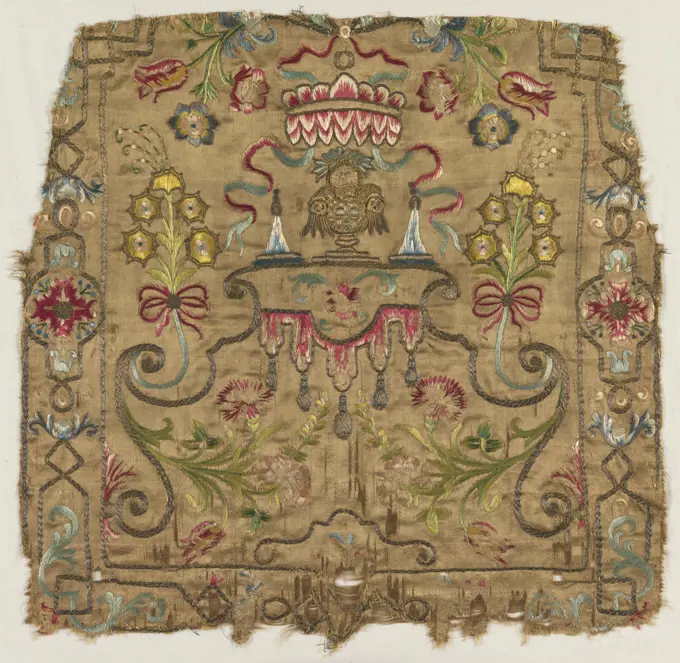
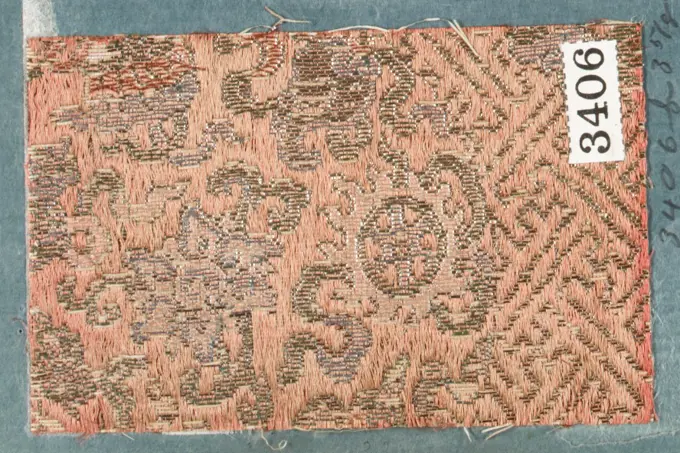
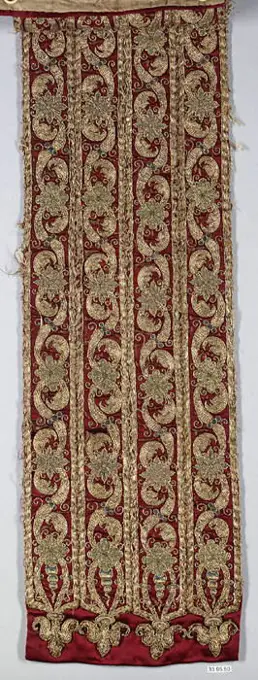
Fragment, Medium: silk and metallic embroidery on silk foundation Technique: embroidered on satin weave, Fragment showing an urn on a bracket under a canopy surrounded by flowers and leaves with ribbons., Europe, early 18th century, embroidery & stitching, Fragment
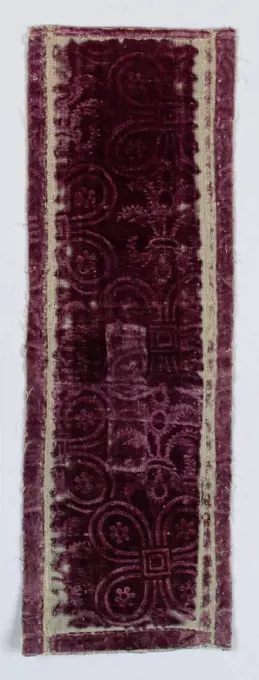
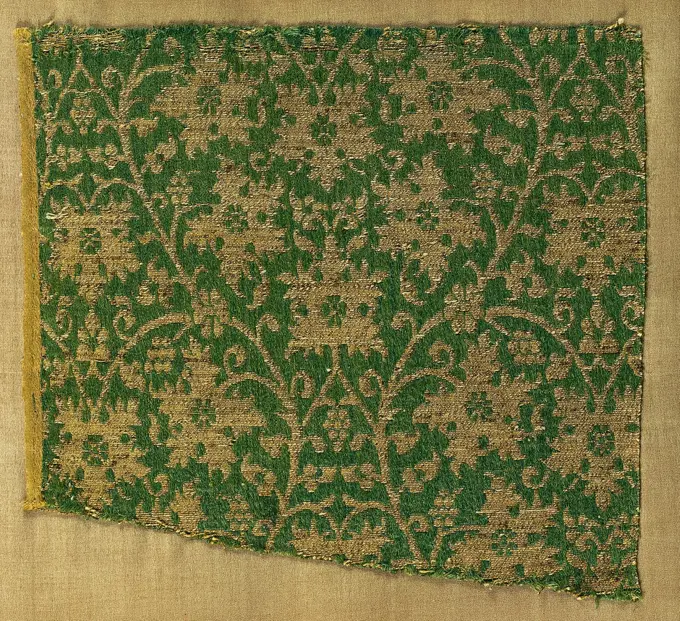
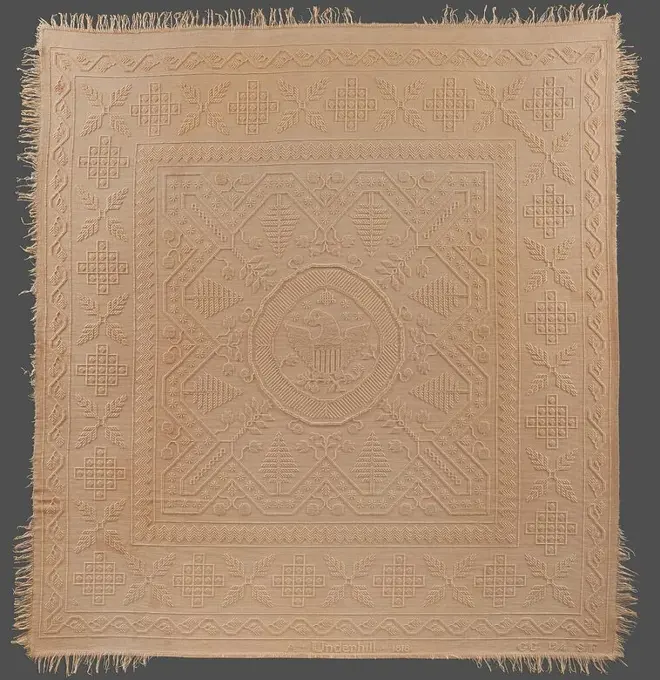
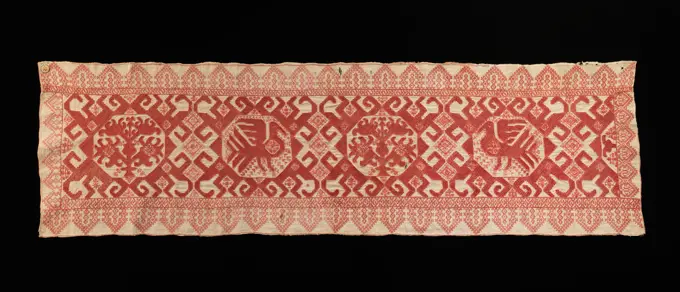
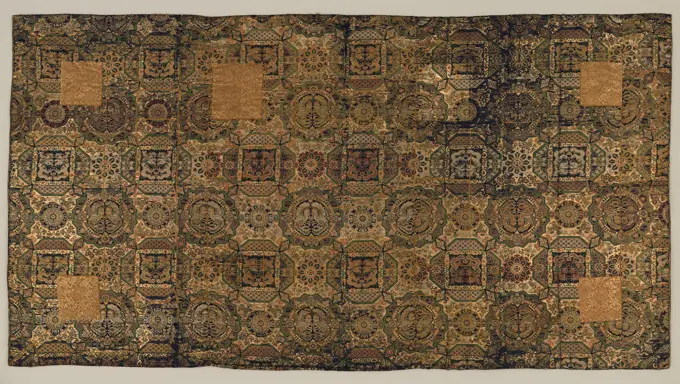
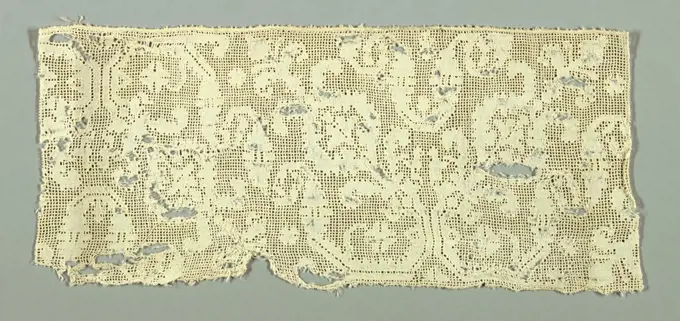
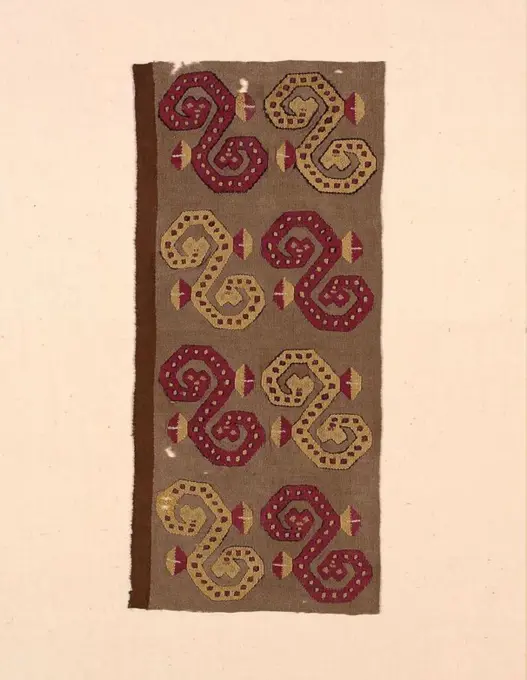
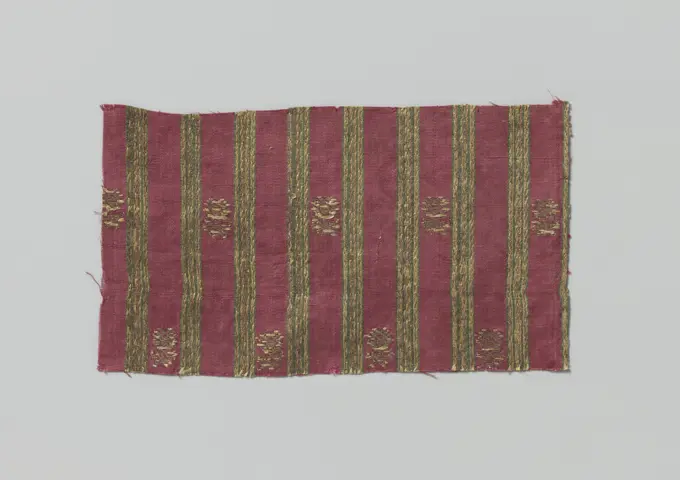
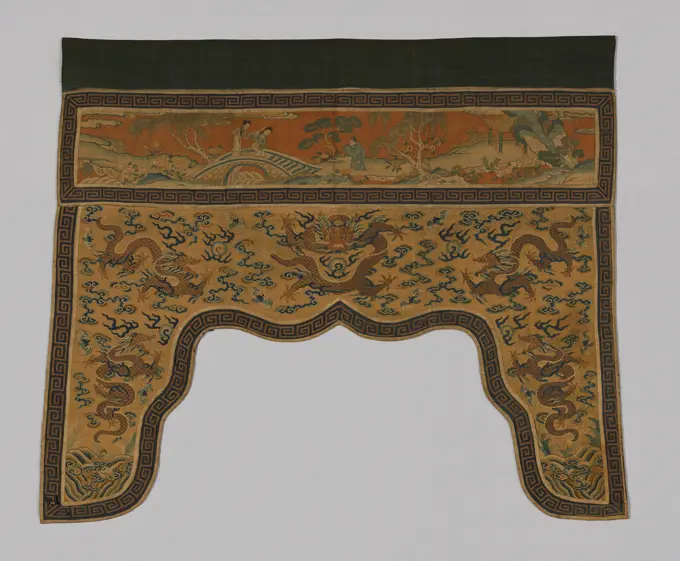
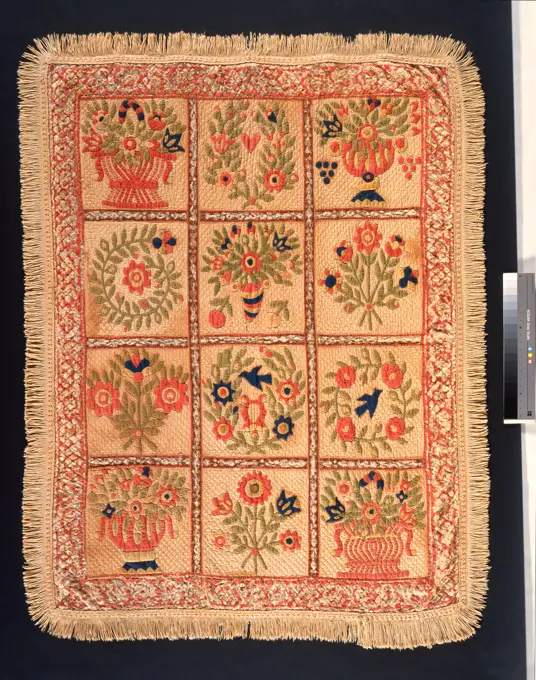
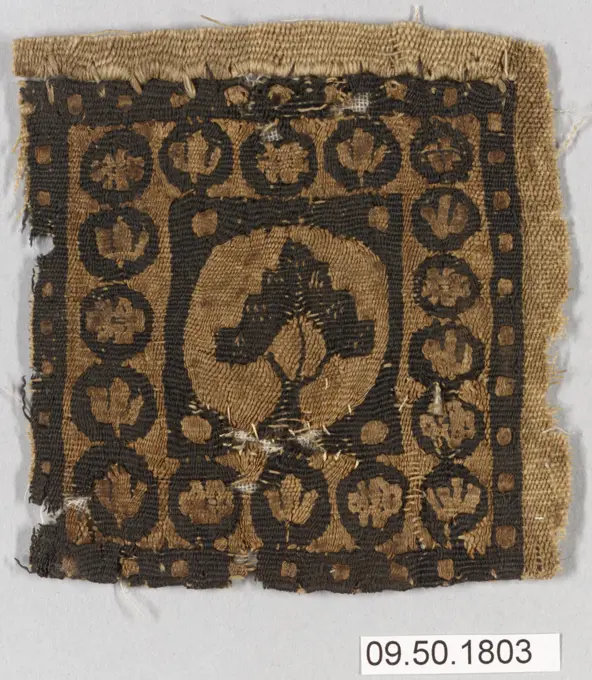
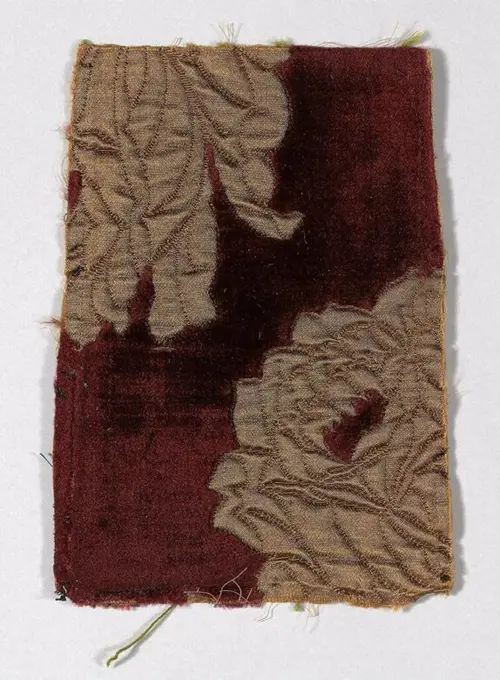
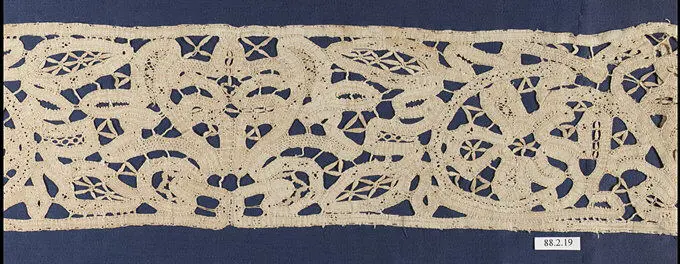
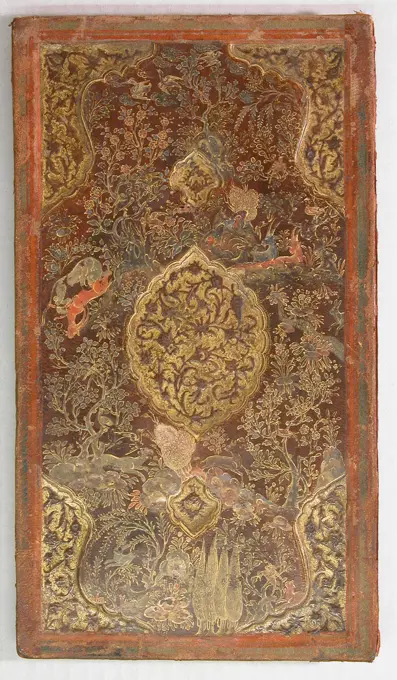
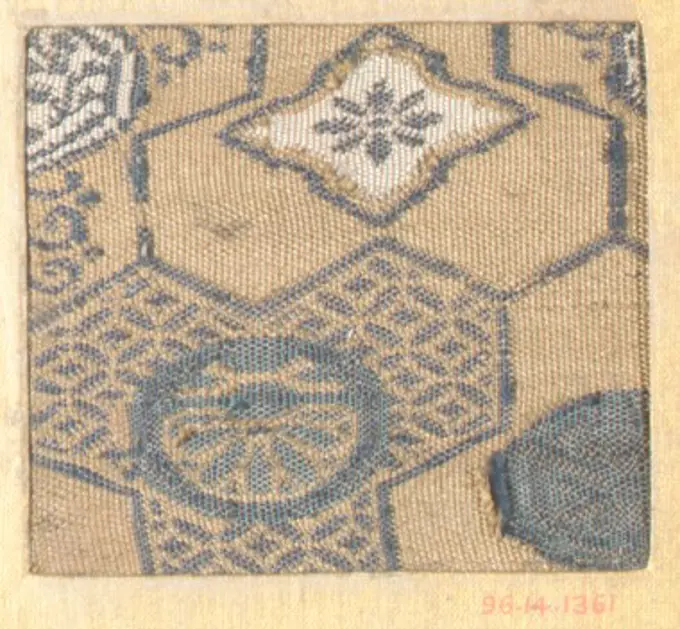
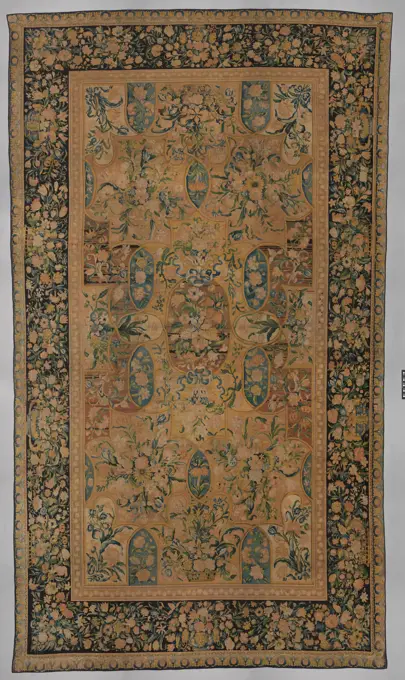
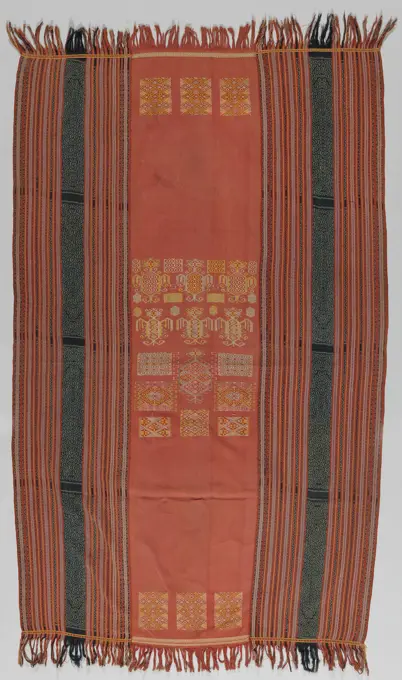
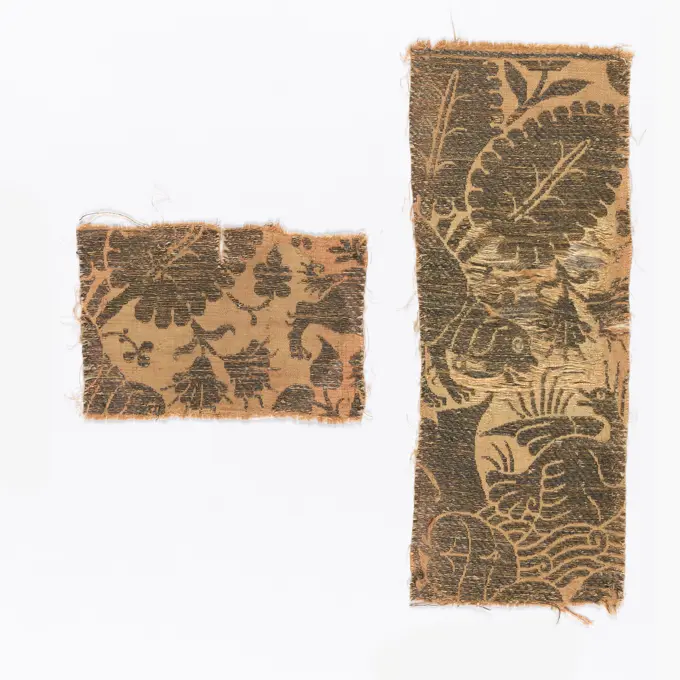
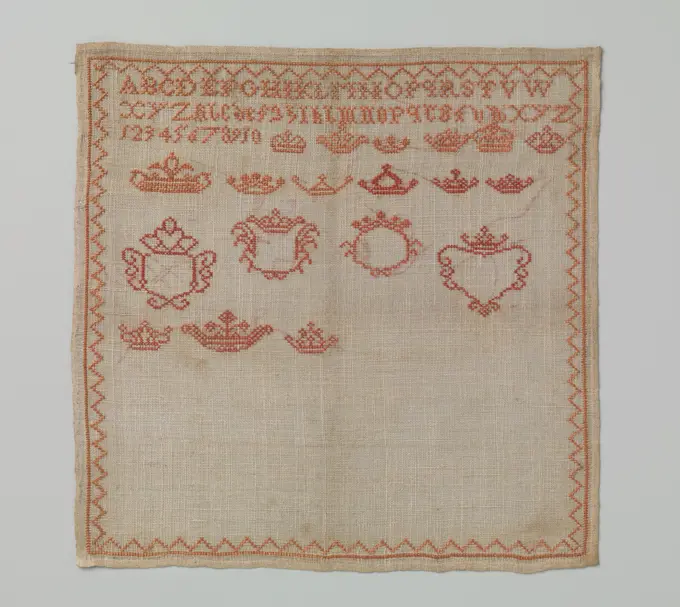
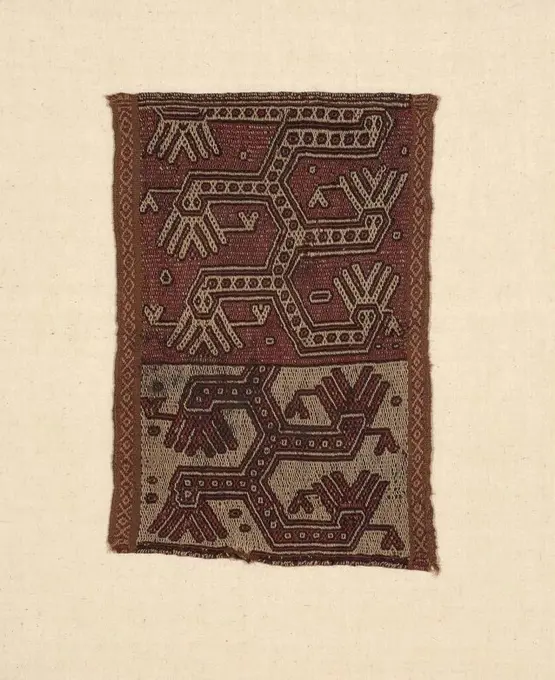
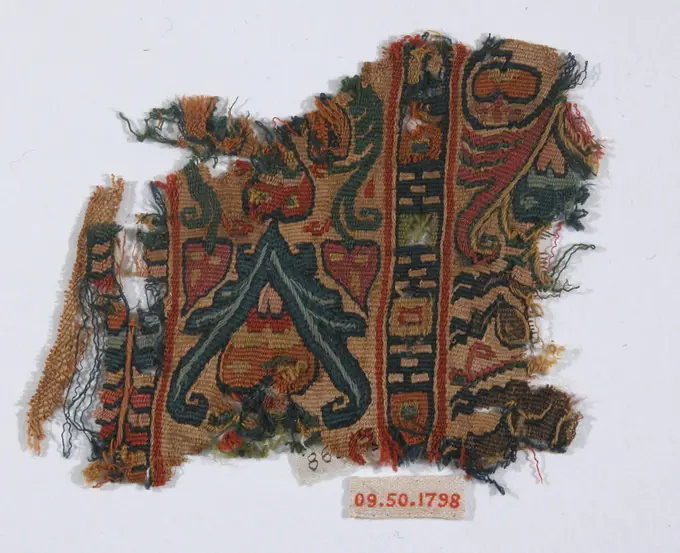
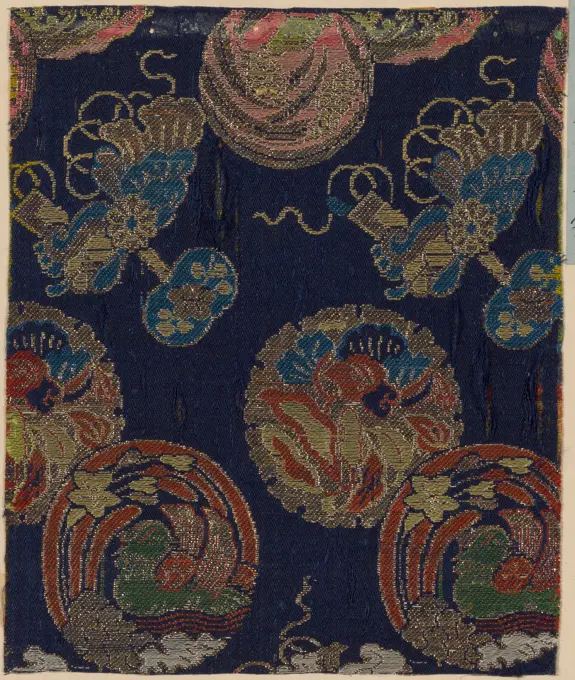
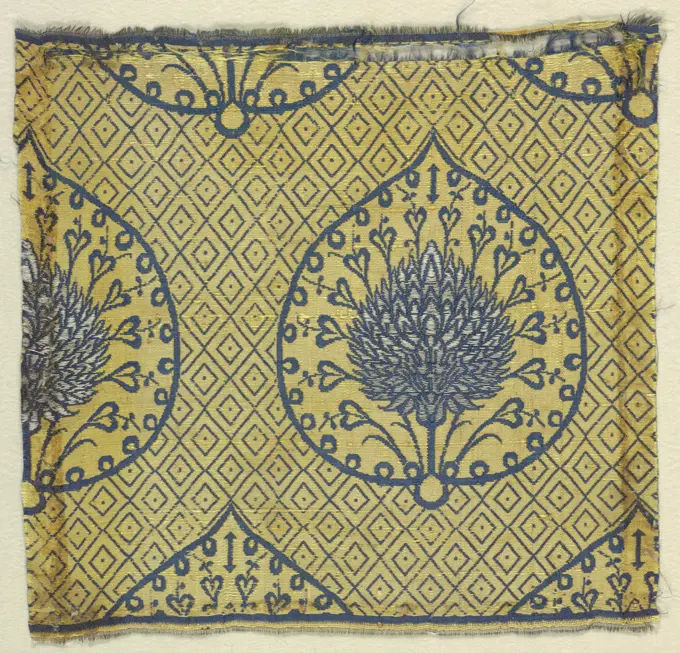
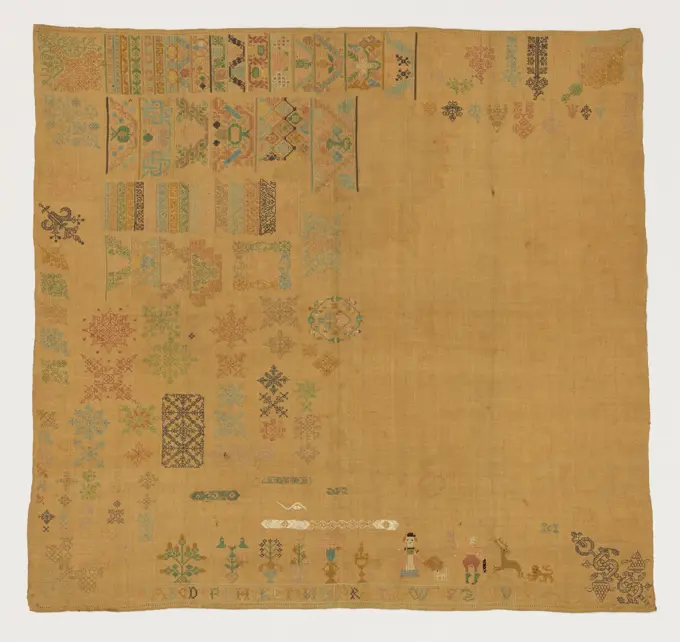
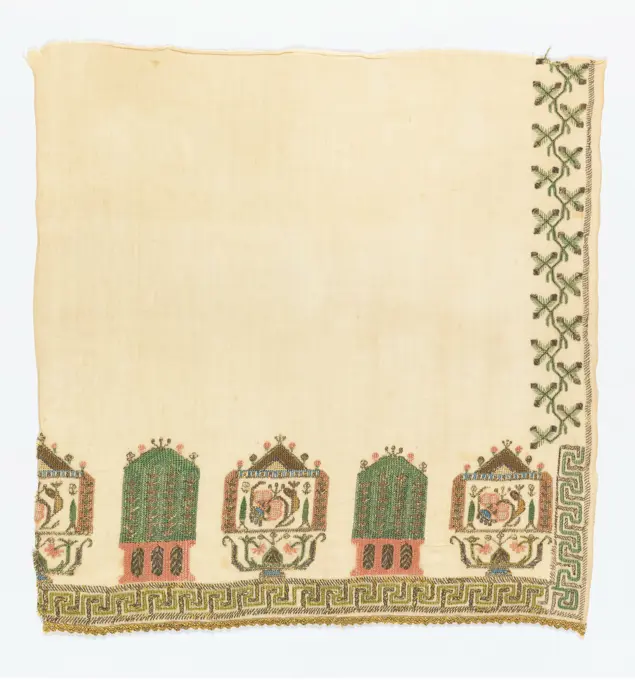
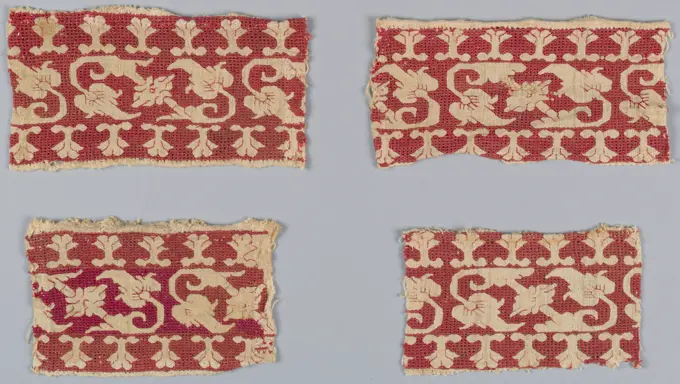
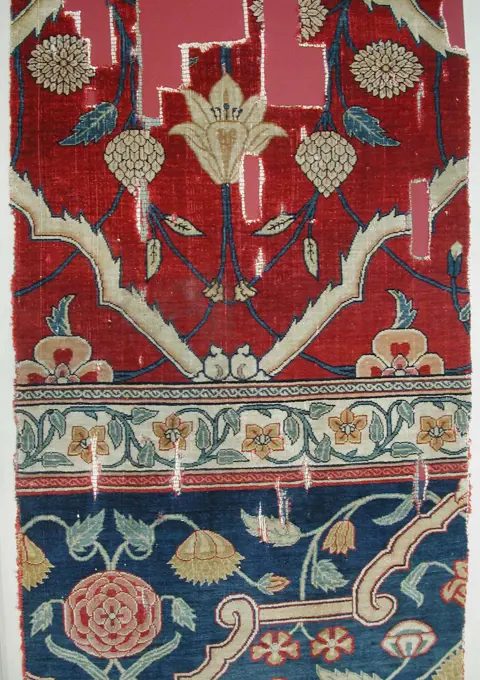
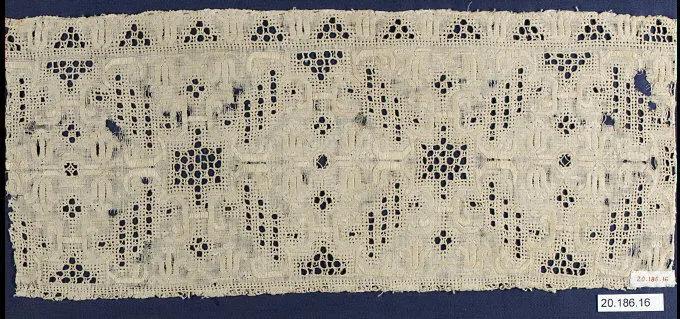
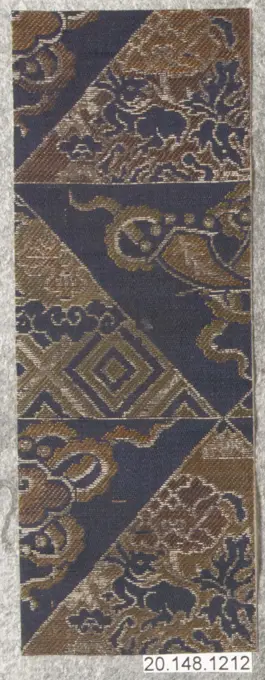
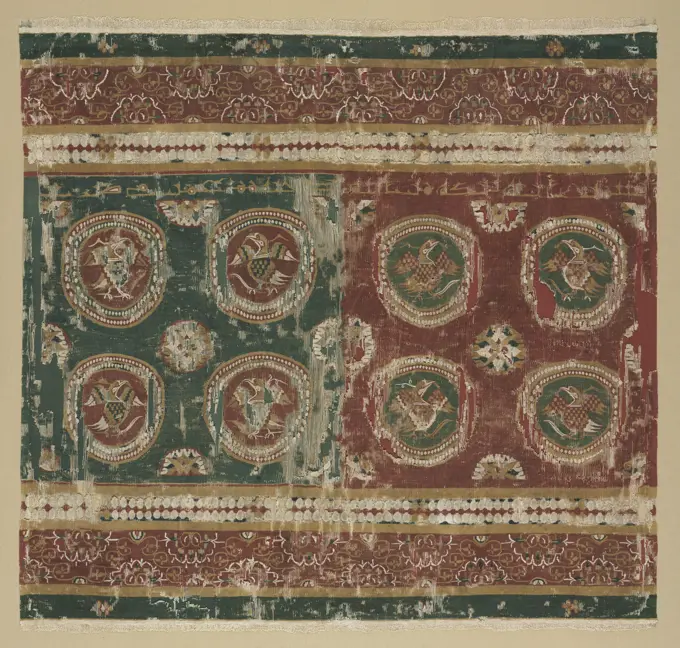
Textile 19th century Japan. Textile 68040Cover (France); Designed by Raymond Duncan (1874 - 1966); cottonUpholstery for a chair unknownPiece 17th century China. Piece 71283Fragment Multicolor silk satin with a pattern of flowers and flower teoles, vine and winding edges on salmon colors. Fragment multicolor silk tissue, with an ocher-colored soil (faded to salmon color). The pattern has lace lingers along which floral and vines. The garlands are fields in which a vase-decorated vase with a flower bouquet on a rosette with leafy flower branches.Fragment, 17th century; silkFragment brown ciselé velvet with pattern of palmets with veins saved in beige, anonymous, c. 1500 - c. 1599 Fragment brown silk ciselé velvet with recesses with pattern of palmets with veins saved in beige. Knee silk Velvet chiseled Fragment brown silk ciselé velvet with recesses with pattern of palmets with veins saved in beige. Knee silk Velvet chiseledFragment, Medium: silk and metallic embroidery on silk foundation Technique: embroidered on satin weave, Fragment showing an urn on a bracket under a canopy surrounded by flowers and leaves with ribbons., Europe, early 18th century, embroidery & stitching, FragmentTextile (Italy); silk, gilded parchment wound around linen coreRibbon Made 1810 France. Silk, gold and silver metal thread (wound around a silk fiber core), warp-faced plain weave; additional metal threads in float pattern tied at intervals. backed with glazed cotton; fringed at one end in silver .Textile (Egypt); cottonFragment, Medium: silk Technique: cut and uncut supplementary warp pile (velvet) in a plain weave foundation, Fragment of cut and uncut dark green velvet in a pattern of leafy sprigs and barrettes on a yellow ground., Italy, 16th-17th century, woven textiles, FragmentTextile (India); silkFragment, Medium: cotton Technique: resist-printed on plain weave, Coarse undyed cotton plain cloth forms design against red ground. At right, broad incomplete border of rosettes with octagons, dots, and geometric forms. At left, plain red ground at top, double band of ogive forms and wavy-edged squares. Ground design of whirling sun motif., India, 14th-15th century, printed, dyed & painted textiles, FragmentFragment, Medium: silk Technique: 4&1 satin, Red and yellow damask with heraldic animals in small cartouches., Spain, late 16th-early 17th century, woven textiles, FragmentFragment striped silk tissue with flower branches. A fragment of a silk tissue. Flets red rips with vertical stripes of green and gold. In the red golden flower branches.Piece 18th-19th century Japan. Piece 66059Fragment. Italy. Date: 1601-1700. Dimensions: 21cm x 9.5 cm (8 1/4 x 3 3/4 in.). Silk, plain compound cloth; brocaded. Origin: Italy. Museum: The Chicago Art Institute, Chicago, USA.Fragment of maniple or stole, Medium: silk Technique: supplementary warp forming raised pile (velvet); then embossed, Fragment embossed with a quatrefoil pattern. a 'ghost' outline of a cross that was once present on the fabric., 16th-17th century, woven textiles, Fragment of maniple or stoleLampas with scrolling vines and grape leaves, 1300s. Probably Iran. Lampas: silk and gold thread; overall: 21.6 x 23.5 cm (8 1/2 x 9 1/4 in.).Counterpane, Bolton type. Culture: American. Dimensions: 108 1/2 x 100 in. (275.6 x 254 cm). Maker: G. G.. Date: 1818. Museum: Metropolitan Museum of Art, New York, USA.Bed curtain border late 18th century Russian This object is from the collection of Natalia de Shabelsky (1841-1905), a Russian noblewoman compelled to preserve what she perceived as the vanishing folk art traditions of her native country. Traveling extensively throughout Great Russia, she collected many fine examples of textile art of the wealthy peasant class. From the 1870s until moving to France in 1902, Shabelsky amassed a large collection of intricately embroidered hand-woven household textiles and opulent festival garments with rich decoration and elaborate motifs. The Brooklyn Museum holdings include many fine examples including the majority of the garments. Portions of Shabelsky's collection are also housed at the Museum of Fine Arts, Boston, the Cleveland Art Museum, and the Russian Museum of Ethnography in St. Petersburg.The embroidery technique on this piece is unusual, and creates a surface texture like that of a knitted fabric. Russian women took particular pride in embroiFragment of Sash 18th century. Fragment of Sash 453978Piece 18th-19th century Japan. Piece 66525Fragment multicolored seals with salmon -colored stock a pattern of flowers and flower gardens, vine and winding edge tires, anonymous, c. 1720 - c. 1730 Fragment multicolored silk tissue, with an ocher -colored soil (faded to salmon color). The pattern has Kantlingers along which flower and vines. The garlands form fields in which a vase decorated with a flower bouquet on a rosette with browseeen flower branches. France silk Fragment multicolored silk tissue, with an ocher -colored soil (faded to salmon color). The pattern has Kantlingers along which flower and vines. The garlands form fields in which a vase decorated with a flower bouquet on a rosette with browseeen flower branches. France silkBid rug with two cross panels, Kula ,, 1800 - 1900 Bid rug with two cross panels, Kula. Midfield: all around a gray -beige mihrab with flat, straight -lined gable top and two columns of stems with flowers, a Koblat blue edge with yellow Anjelieren, which runs like a swing. Have a wide top panel and a narrow down panel and black stock, each with a row of beige carnations. Edges: multiple. There are six stripes in black, white and ocher between ocher yellow hems with current flower vines. Care wool Bid rug with two cross panels, Kula. Midfield: all around a gray -beige mihrab with flat, straight -lined gable top and two columns of stems with flowers, a Koblat blue edge with yellow Anjelieren, which runs like a swing. Have a wide top panel and a narrow down panel and black stock, each with a row of beige carnations. Edges: multiple. There are six stripes in black, white and ocher between ocher yellow hems with current flower vines. Care woolEva Wilson, Eagle Coverlet, c 1938 Eagle CoverletTextile (Near East); silk and metallicCover. Turkey. Date: 1801-1825. Dimensions: 140 x 141.6 cm (55 1/8 x 55 3/4 in.). Silk and tinsel; embroidered. Origin: Turkey. Museum: The Chicago Art Institute, Chicago, USA.Velvet Fragment, 1400s. Italy, 15th century. Velvet (cut and brocaded); silk and metal; overall: 72.7 x 38.8 cm (28 5/8 x 15 1/4 in.).Textile. Culture: European. Dimensions: Overall: 7 1/4 × 6 3/16 in. (18.4 × 15.7 cm)Storage (Mat): 13 × 12 in. (33 × 30.5 cm). Date: 13th century. Museum: Metropolitan Museum of Art, New York, USA.Fragment. Italy. Date: 1675-1700. Dimensions: 18.4 x 14.6 cm (7 1/4 x 5 3/4 in.). Silk, plain weave with supplementary pile warps forming cut, uncut, and voided velvet. Origin: Italy. Museum: The Chicago Art Institute, Chicago, USA.Fragment 16th century Italian. Fragment 222923Fragments (Spain); silk and metal thread; Bequest of Marian Hague; 1971-50-39-aPiece 18th-19th century Japan. Piece 67291Bed Hangings And Bed Cover (Iran); silk ribbon and chenille on a wool foundationKesa Made 1701-1800 Japan. During the kesaís early history, the design of the garment was highly codified, based upon the standards and practices of individual sects. But during the Edo period, when Japan essentially closed its borders and artists looked inward for inspiration, innovations were introduced that challenged this rigid tradition. The columns of patches universal to kesas were now occasionally inferred by motifs that created the desired impression, such as lines drawn on the surface of the uncut fabric or, as here, the addition of cording, now incomplete owing to wear.. Silk and gilt-paper strip; twill weave with secondary binding warps and supplementary patterning wefts, with couched plied silk .Słucka belt Manufactory of conciliate belts in Sąk, the period of Jan Mad Anski (1767  1780)Fragment of cutwork, Medium: linen Technique: withdrawn element work, Fragment with a design of angular stems with motifs of two conventionalized flowers in a diagonal arrangement, placed alternately, up and down. Design left in reserve with a background of small squares of tightly wrapped threads., Italy, 17th century, lace, Fragment of cutworkFragment, 1420-1955. Iran or Iraq. Silk: compound twill weave; overall: 20.2 x 27 cm (7 15/16 x 10 5/8 in.).Piece 18th-19th century Japan. Piece 66426Fragment. Probably central coast, Peru. Date: 1000-1476. Dimensions: 36.2 x 16.5 cm (14 1/4 x 6 1/2 in.). Cotton and wool (camelid), plain weave with inserts of slit and single dovetailed tapestry weave with interlaced and wrapping outlining wefts. Origin: Peru. Museum: The Chicago Art Institute, Chicago, USA.Fragment (Italy); silk, metallicBand. Culture: Italian. Dimensions: L. 11 1/2 x 5 inches (29.2 x 12.7 cm). Date: 17th century. Museum: Metropolitan Museum of Art, New York, USA.Textile Fragment, late 16th century. Turkey, Bursa, late 16th century. Brocaded silk with metal thread weft; average: 38.1 x 19.1 cm (15 x 7 1/2 in.).Carpet unknownPiece 18th-19th century Japan. Piece 66355Fragment striped silk tissue with flower branches, anonymous, 1800 - 1899 A fragment of a silk tissue. Fleet red rips with vertical stripes of green and gold. In the red golden flower branches. India (possibly) silk. A fragment of a silk tissue. Fleet red rips with vertical stripes of green and gold. In the red golden flower branches. India (possibly) silk.. Tapestry weave .Fragment of wine red satin fabric, anonymous, c. 1600 - c. 1625 Wine red satin fabric (silk warping with linen impact), shots with gold that forms a pattern of rectangular figures, composed of a tulip -shaped flower and leaves. Germany (possibly)France (possibly) Ketting: Silk. Elements: Linen (material). Wine red satin fabric (silk warping with linen impact), shots with gold that forms a pattern of rectangular figures, composed of a tulip -shaped flower and leaves. Germany (possibly)France (possibly) Ketting: Silk. Elements: Linen (material).Kesa Made 1801-1833 Japan. silk .Chef De Piece (France); Produced by LeLievre Heutte Vimeux & Comp.; linen warp, cotton weft; Warp: 71 cm (28 in.). Weft: 83.5 cm (32 3/4 in.) Both selvages are present. Pattern: The size of the minimum unit and the printing blocks are the same (determined by registration marks left by the blocks): Height: 25.5 cm (10 in.). Width: 20 cm. (8 in.).Child's Quilt, 'Baltimore Album'Brocade, 1800s. India, Benares, 19th century. Brocade, "kimkhwab"; silk with gold and silver; overall: 15.9 x 9.5 cm (6 1/4 x 3 3/4 in.).Strip, late 1800s. Denmark, late 19th century. Embroidery; cotton on linen; overall: 25.4 x 36.2 cm (10 x 14 1/4 in.).Towel, 19th century, L.32 x W.19-3/4 in., linen, silk; needlework, Turkey, 19th centuryFragment; silkHandkerchief, 1700s. France, 18th century. Embroidery on linen ground; lace edging; overall: 46.3 x 46.3 cm (18 1/4 x 18 1/4 in.).Square 3rd-4th century. Square 445834Matelasse (pieces from dress 1923.1639a). France. Date: 1880-1890. Dimensions: 17.1 × 12 cm (6 3/4 × 4 3/4 in.)warp repeat: 21.6 cm (8 1/2 in.). Garnet velvet with moss green satin allover design of single large roses. Velvet, satin and wool.Matelasse is Jacquard figured fabric of heavy compound weave having raised pattern as if quilted or wadded. It was made of all materials or combinations of materials. Origin: France. Museum: The Chicago Art Institute, Chicago, USA.Strip 17th century Northern Italian. Strip 212569Red side fragment with pattern in gold and silver wire, anonymous, c. 1600 - c. 1699 Fragment of red silk with a pattern in a twill of browned gold and silver thread, probably in the form of cartouches, filled with feather plume-shaped figures, and surrounded by wide ornament tires. Netherlands silk.. lampas (textile material) Fragment of red silk with a pattern in a twill of browned gold and silver thread, probably in the form of cartouches, filled with feather plume-shaped figures, and surrounded by wide ornament tires. Netherlands silk.. lampas (textile material)Bookbinding (Jild-i kitab) 16th century Objects like this bookbinding were typically displayed in open niches in reception rooms of upper-class Syrian residences during the Ottoman period. Bookbinding (Jild-i kitab) 453503Bedspread. England. Date: 1701-1725. Dimensions: 155.6 × 136.5 cm (61 1/4 × 53 3/4 in.). Linen, tabby; backed with coarser linen, embroidery thru top layer only. Embroidered in silk floss.Stitches: Back, chain, satin, running cross, herringbone, buttonhole, fishbone, speckling. Origin: England. Museum: The Chicago Art Institute, Chicago, USA.Piece 18th-19th century Japan. Piece 67080Carpet (tapis) third quarter 17th century Savonnerie Manufactory The initial goal of the Savonnerie manufactory was to imitate knottedpile carpets from the Near East, which were much admired in Europe, but during Louis XIVs reign the workshop established its own style. The field of this particular carpet still shows a dependence on Persian designs in its use of differently shaped compartments that are linked by strapwork. In a fusion of traditions, the naturalistic blossoms that fill these medallions as well as the cream-colored ground between them are purely European in nature. The broad border has a dense floral pattern against a black ground, which includes vases, baskets, and bowls of flowers similar to those found on so-called Louis XIII carpets. Among the depicted blooms are tulips and crown imperials, popular flowers that had been introduced to Western Europe from the Near East during the late sixteenth century.That carpets were not always treated with respect is borne out by aSampler, 1840. Mexico, 19th century. Embroidery; average: 17.8 x 80 cm (7 x 31 1/2 in.).Fragment, 17th century; silkPurse, Medium: silk, metallic Technique: needle knotting (bebilla), Drawstring bag with large metal tassel at bottom. Diagonal bands of white netting separated by bands of metallic purl. Bebilla flowers and fruit applied along netting and in a deep border at the top., Turkey, 19th century, knotted, knitted and crocheted textiles, PurseShawl. Shawl with geometric, bird and crochet motifs.Fragment (Italy); silk, metal wrapped linen; Warp x Weft (A): 31.1 x 12.2 cm (12 1/4 x 4 13/16 in.) Warp x Weft (B): 10.5 x 15.9 cm (4 1/8 x 6 1/4 in.)Unfinished brand patch from red silk on linen, anonymous, c. 1790 - c. 1810  Unfinished brand patch. The embroidery has fifteen crowns, four cartouches with crowns and a full alphabet. Leiden silk. linen (material) embroideringEastern carpet with the hundred antiques ,, 1600 - 1699 Eastern carpet with the hundred antiques. Midfield: A blue background is covered with rows of the so -called hundred antiques in beige, gray blue and brown, including a table, a blossom branch in a square pot, a brush pot, a fan, a callboard, a bell, two compiled feathers, a spherical vase And a standing brush. Rand is plain beige. China, 17th century Ming period China wool. cotton (textile) Eastern carpet with the hundred antiques. Midfield: A blue background is covered with rows of the so -called hundred antiques in beige, gray blue and brown, including a table, a blossom branch in a square pot, a brush pot, a fan, a callboard, a bell, two compiled feathers, a spherical vase And a standing brush. Rand is plain beige. China, 17th century Ming period China wool. cotton (textile)Piece 18th-19th century Japan. Piece 66683Fragment Made 1625-1675 Italy. Plain compound cloth .Towel End early 19th century. Towel End 443088Fragment. Italy. Date: 1575-1600. Dimensions: 21.0 x 10.2 cm (8 1/4 x 4 in.). Silk, cut and uncut velvet weave. Origin: Italy. Museum: The Chicago Art Institute, Chicago, USA.Fragment. Peru, Possibly Rimac Valley, central coast. Date: 1000-1476. Dimensions: 38.1 x 26.4 cm (15 x 10 3/8 in.). Wool (camelid), three-color complementary warp weave. Origin: Peru. Museum: The Chicago Art Institute, Chicago, USA.Textile Fragment 5th-6th century. Textile Fragment 445829Fragment Made 1775-1825 Japan. Plain compound twill, silk & gilr paper; 2 strips to m.m. .Fragment of a tunic, anonymous, c. 500 - c. 799 Fragment of a tunic with sewn -up decorations consisting of two tabulae, two clavi and two wide wide tires. The sown parts have different decorations. Tabulae: Dark blue soil with red two riders with nimbus and raised hand in a circle with leaf vines. Clavi: red soil with a repetitive motif of wrinkled flower branches in red, orange, blue, yellow and green on dark blue soil in oval. In between windline with white dots, on one side a border with white line motifs. Wide tires: Dark blue soil with windows forming winding motif with alternately a circle and an octagon with a stylized motif. Three stripes are woven in the substrate tissue in nine places using a thicker impact. Egypt Necklace: Linen (Material). Necklace and impact: Wool tapestry Fragment of a tunic with sewn -up decorations consisting of two tabulae, two clavi and two wide wide tires. The sown parts have different decorations. Tabulae: Dark blue soil with red two riders with niFragment (France); linenSilk Damask Fragment, 1800s. China, Qing dynasty (1644-1911). Silk, damask; overall: 36 x 31.2 cm (14 3/16 x 12 5/16 in.).Fragment, Medium: silk Technique: double cloth, Design of palmettes in yellow and blue., Turkey, 19th century, woven textiles, FragmentSampler (Spain); silk on linen; Bequest of Marian Hague; 1971-50-167Fragment; silk, metal, and cottonFragment (Italy); silk; Warp x Weft: 19 x 35.3 cm (7 1/2 x 13 7/8 in.)Piece 18th-19th century Japan. Piece. Japan. 18th-19th century. Silk. Textiles-WovenBand (Italy); linen, silkStop flap of cotton in which multicolored silk nine stops of different sizes have been worked and a show in Petit Point in the middle surrounded by crowns and wreaths with initials, Anno 1837. This is an example of a second test in stopping public work and Leeschool in Amsterdam. The stopwerk is of high quality and the very large stop in the left lower corner, with the side-executed sides, deserves respect. The romantic castle landscape and the decorative edge are embroidered over one duster. The stops are arranged in a horizontal row, v.l.n.r. and v.b.nb.: Spitskoop, eyelet (recognition sign of this school), shopping hook: striker, knitteek (good example, see also rear broker lot!), Continuous, flat binding, peak player, spitskoop, twill. The open zoom is made with a linen thread. AH stands for Alida Haring, the handicraft player.Textile Fragment third quarter 17th century. Textile Fragment 453218Strip 16th century Italian. Strip 220826Fragment, Medium: silk, metallic yarns Technique: twill weave, Narrow band showing repeating pattern of flowers and birds., Iran, 17th-early 18th century, woven textiles, FragmentFragment of silk fabric (top of a pall)  flower twig motif unknownTextile 19th century Japan. Textile. Japan. 19th century. Textiles-WovenTextile, China, 18th-19th century, woven textiles, TextileHandkerchief Nidecka studioPiece 18th-19th century Japan. Piece 67810Piece 19th century Japan. Piece 72198Pillow cover with Arabic inscription, 800s. Egypt, al-Bahnasa. Wool and linen: tapestry weave; overall: 80 x 83.2 cm (31 1/2 x 32 3/4 in.); mounted: 93.3 x 95.9 cm (36 3/4 x 37 3/4 in.).