Historical Tools

Artifacts showcasing historical tools and weapons, including knives and guns. Each piece tells a story of craftsmanship from different cultures.
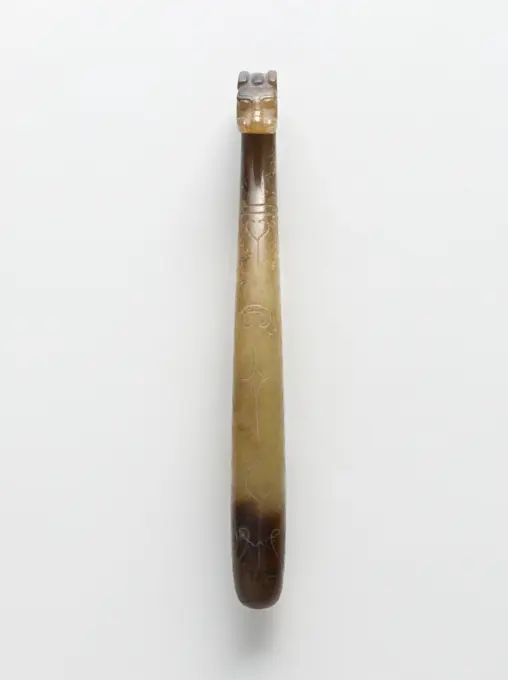
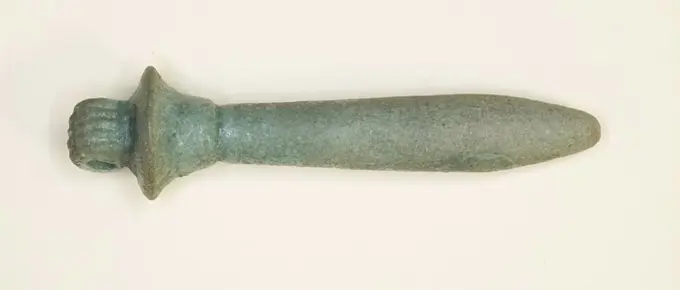
Clip. Jade, China, undoubtedly Han dynasty (206 BC-220 AD). Paris, Cernuschi museum. 78602-22 Staple, attachment, Asian civilization, Chinese civilization, han dynasty, fixation, jade, fine stone, symbolic stone
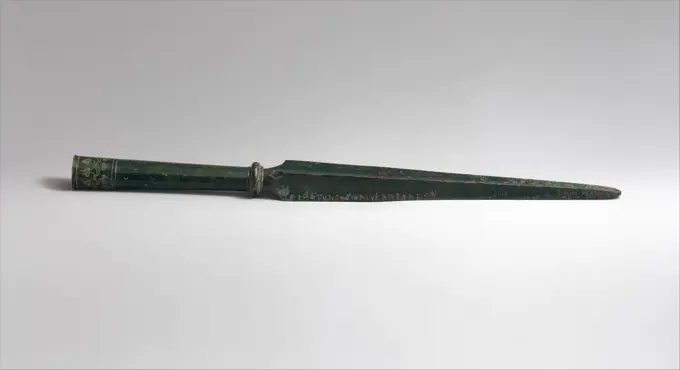
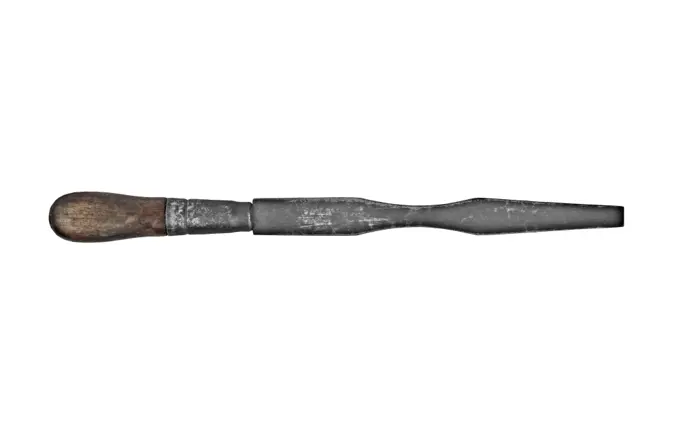
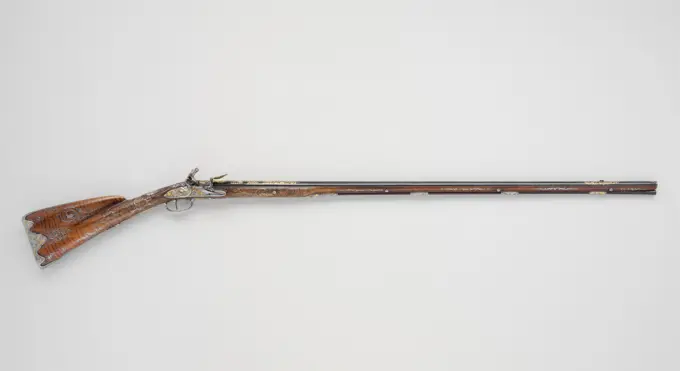
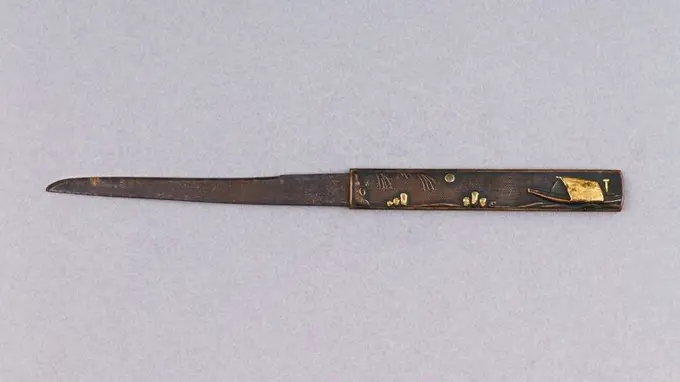
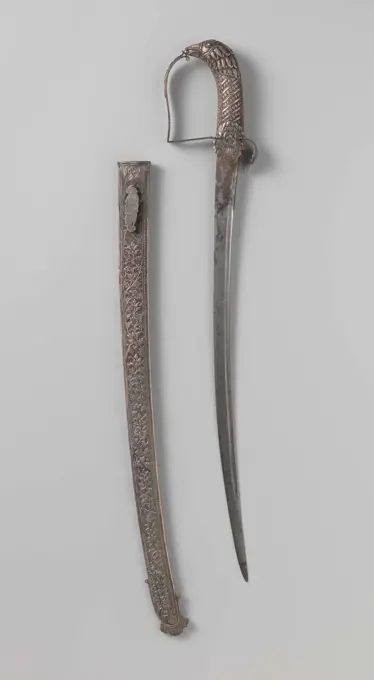
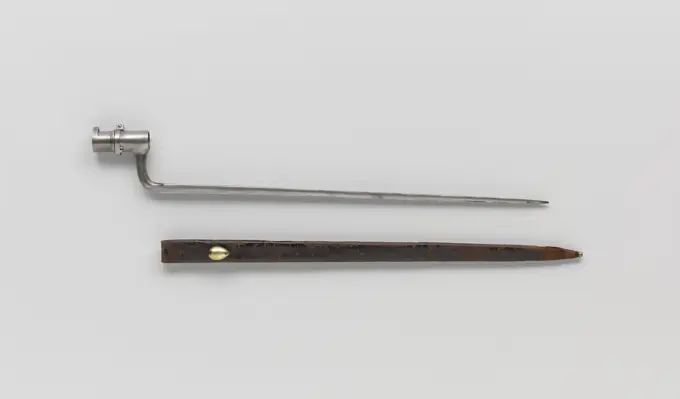
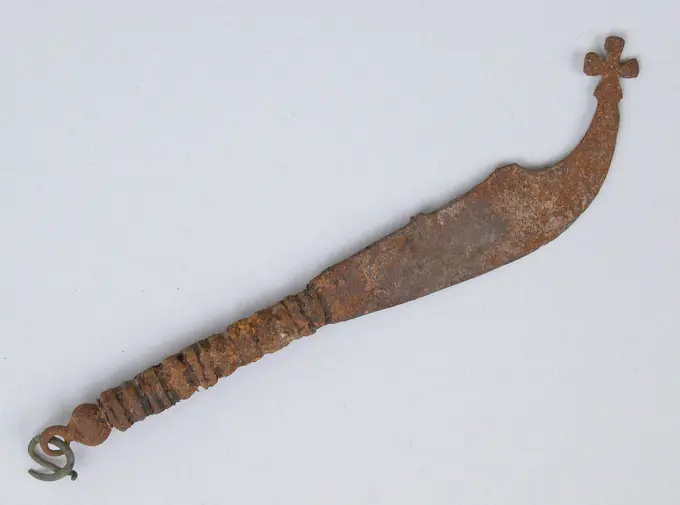
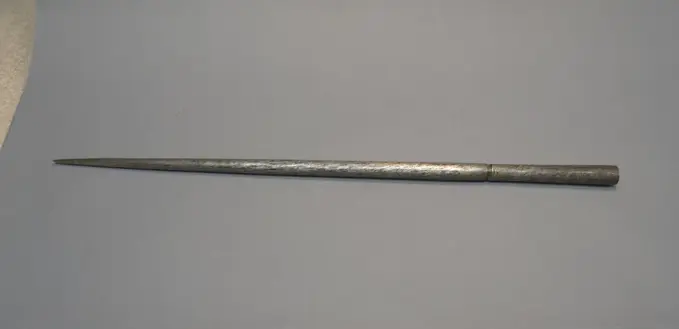
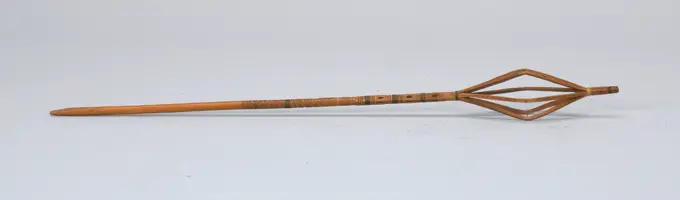
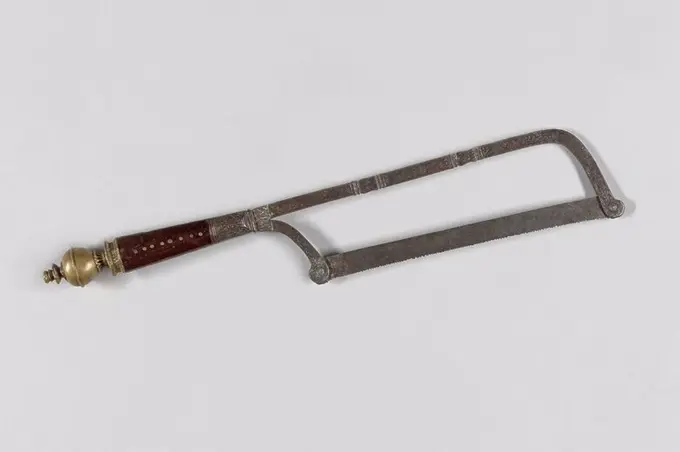
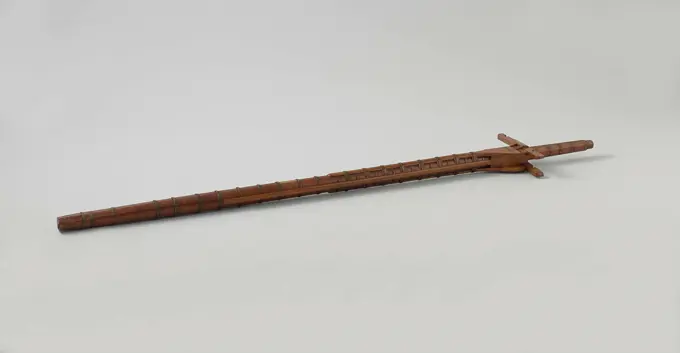
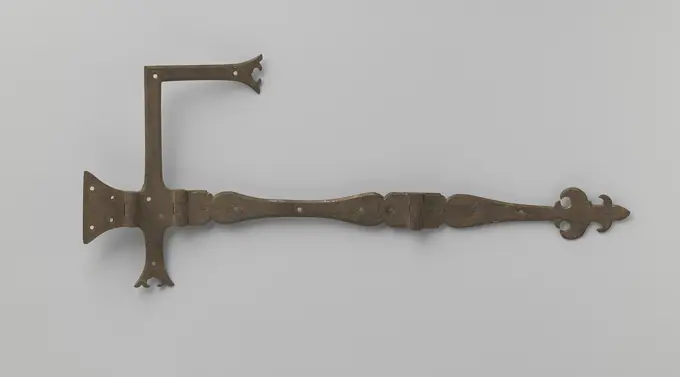
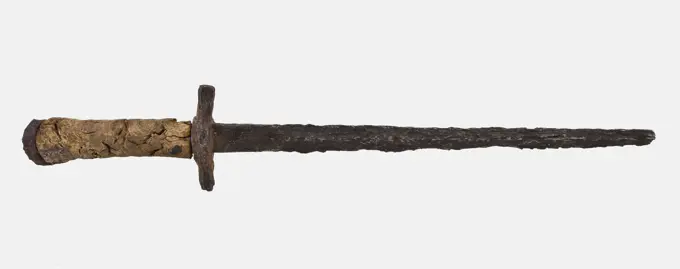
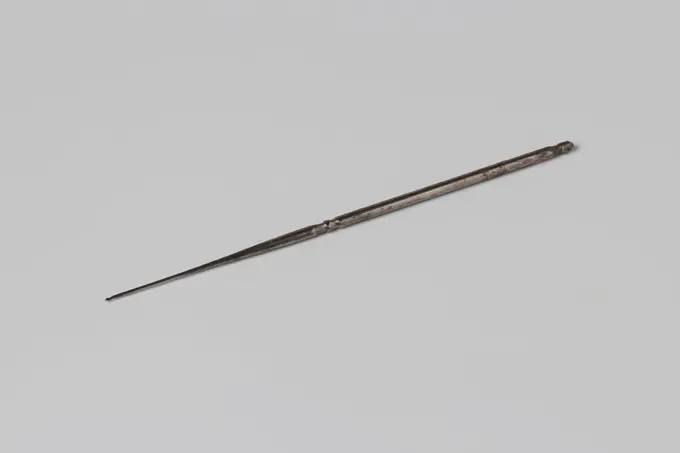
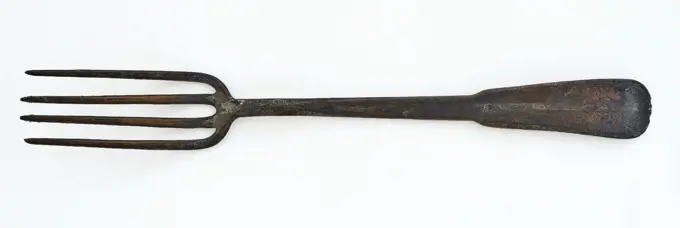
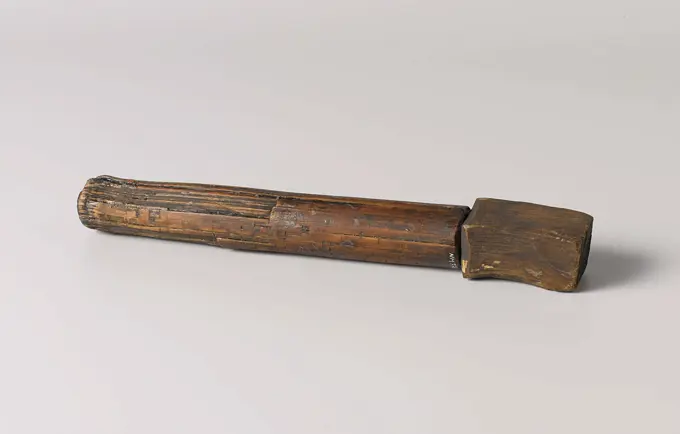
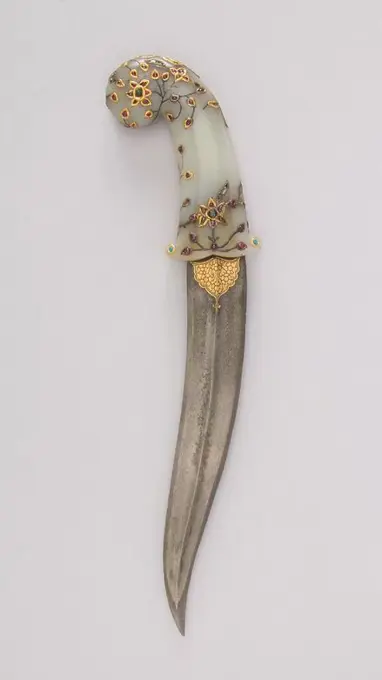
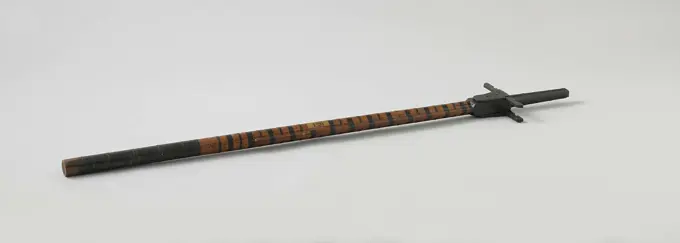
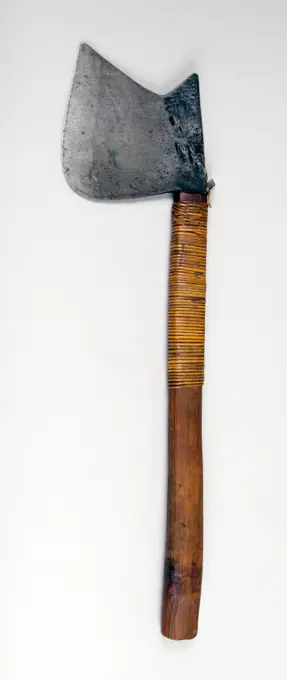
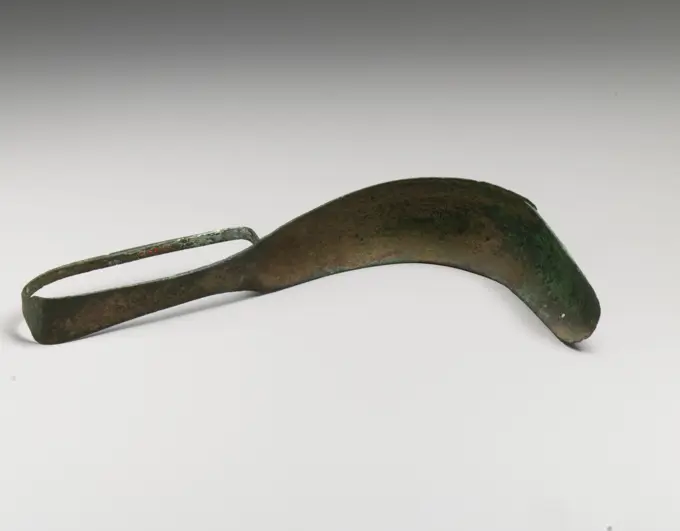
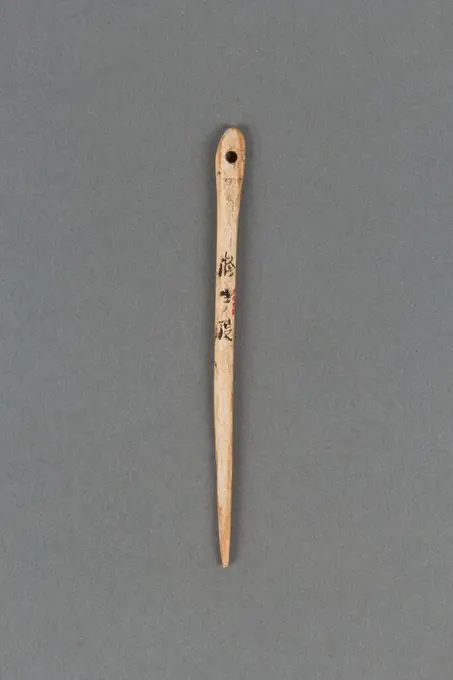
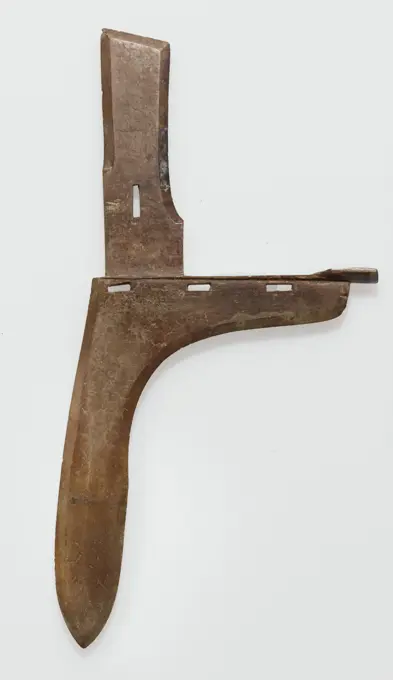
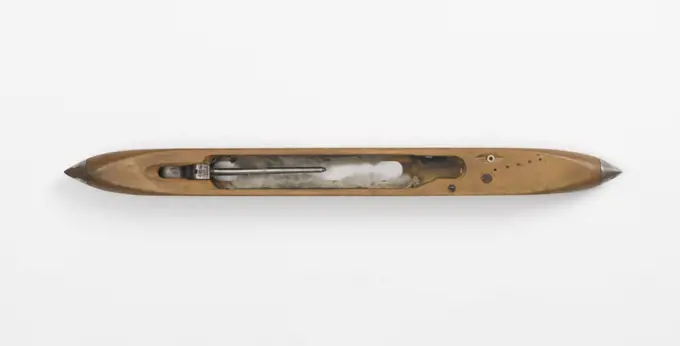
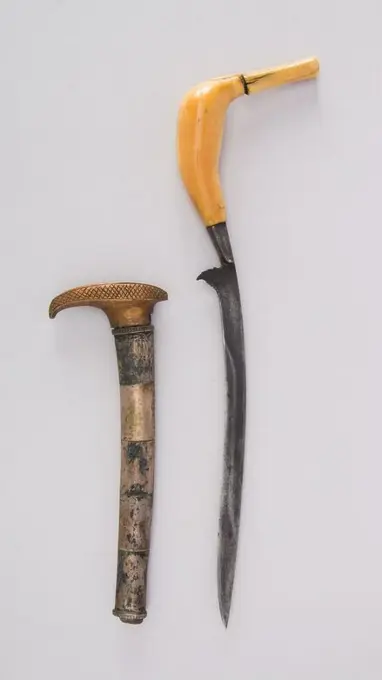
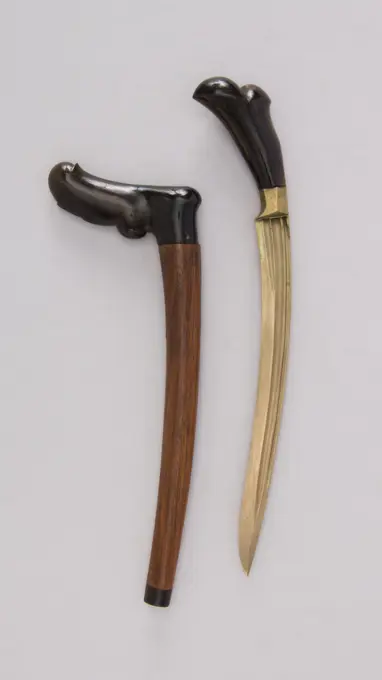
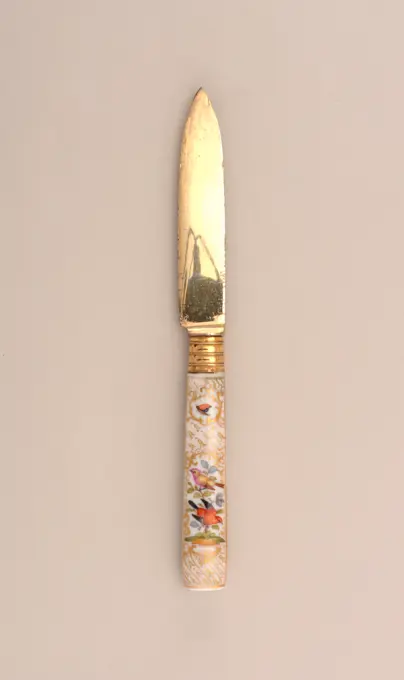
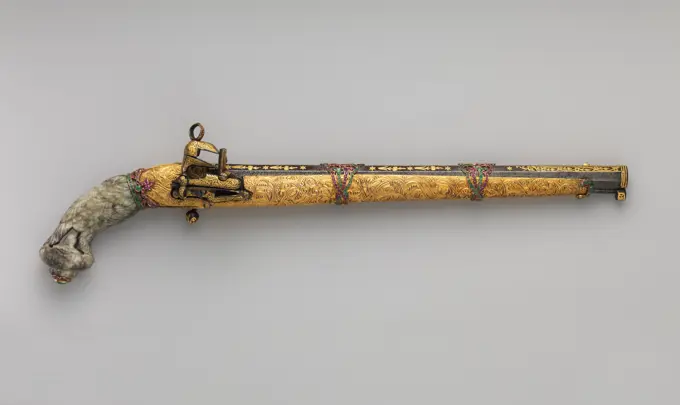
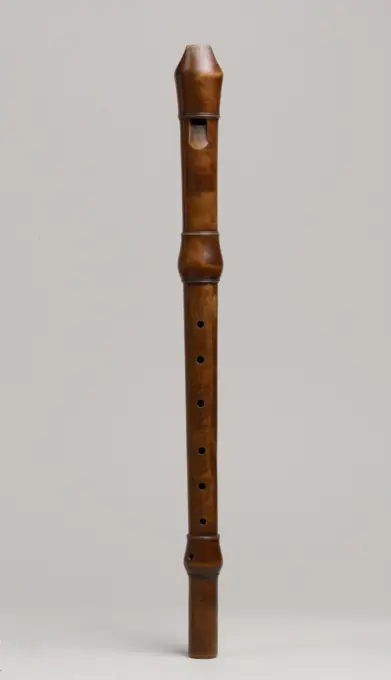
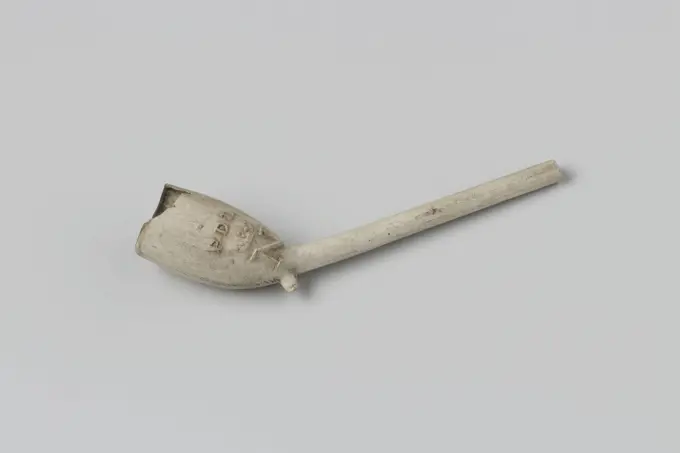
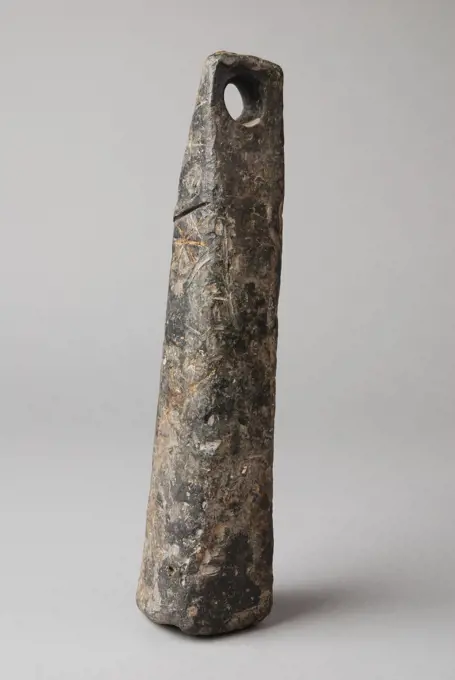
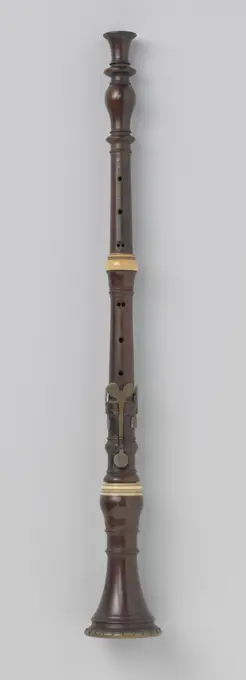
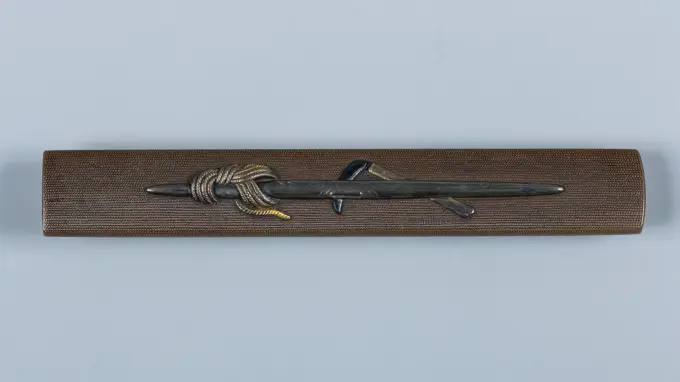
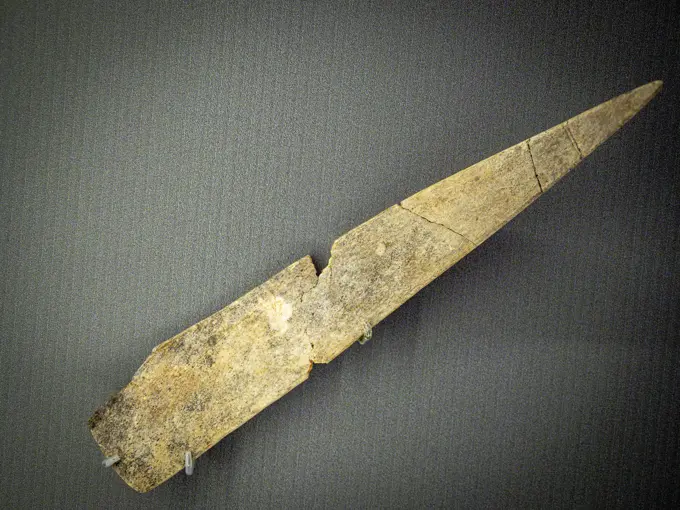
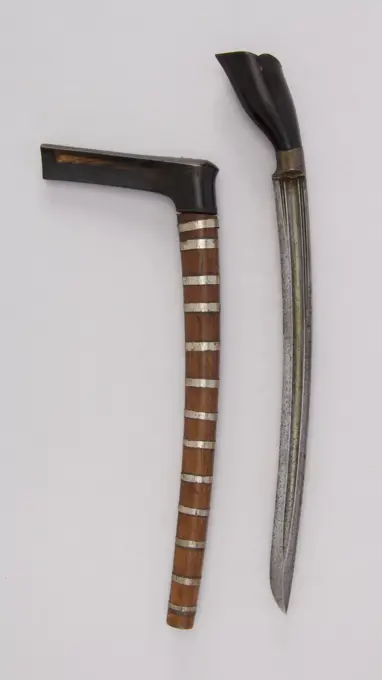
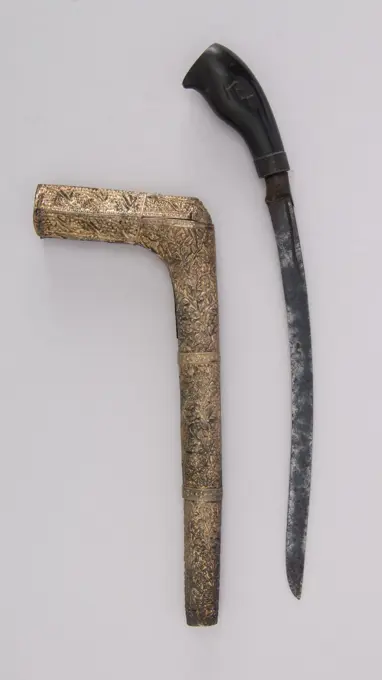
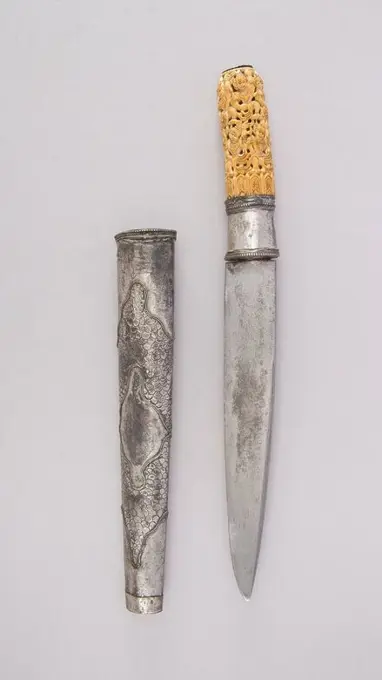
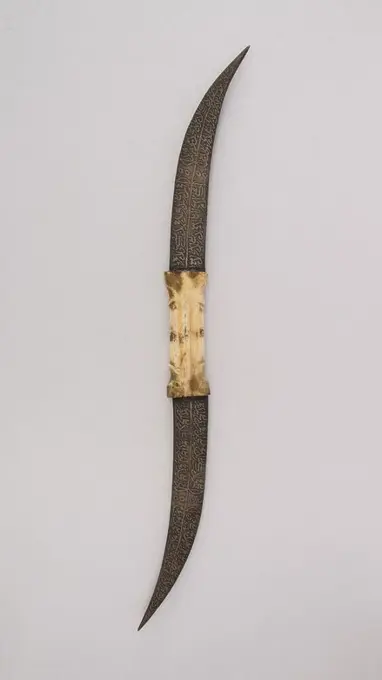
Knife. Culture: Syrian. Dimensions: H. 20 5/8 in. (52.4 cm); W. 1 9/16 in. (4 cm); Wt. 8.7 oz. (246.6 g). Date: 18th-19th century. Museum: Metropolitan Museum of Art, New York, USA.Fragment of a slot (like a guts) and at the other end rectangular flat. Fragment of drilling iron, a slot (like a guts) at one end (like a gout) and rectangular to the other end. The fragment has previously been part of a fret drill than a drilling folder.Bronze spear-butt ca. 500 B.C. Greek A spear-butt covers the end of a spear that touches the ground. This particularly fine example bears the inscription sacred to the Tyndaridai from the Heraeans. The Tyndaridae are Kastor and Polydeukes. The Heraeans are the inhabitants of a city in Arkadia from whom the spear-butt was taken as part of the victors' booty.. Bronze spear-butt 253560 Greek, Bronze spear-butt, ca. 500 B.C., Bronze, total length 16 5/8 in. (42.3 cm); length without socket 10 13/16 in. (27.5 cm). The Metropolitan Museum of Art, New York. Fletcher Fund, 1938 (38.11.7)vintage  carpenter screwdriver over white, clipping pathFlintlock Gun ca. 1750 Le Faure French This slender and elegant gun represents the great refinement of form, design, and function achieved by French gunmakers in the eighteenth century and emulated across Europe. The delicate silver wire inlays of its stock are based on French pattern books from 1705, while the carved and chiseled ornament of the stock, lock, and other fittings shows a wide range of Rococo motifs drawn from designs published as late as the 1740s.. Flintlock Gun. French, Paris. ca. 1750. Steel, gold, wood (walnut), silver. Paris. FirearmspinchingClip. Jade, China, undoubtedly Han dynasty (206 BC-220 AD). Paris, Cernuschi museum. 78602-22 Staple, attachment, Asian civilization, Chinese civilization, han dynasty, fixation, jade, fine stone, symbolic stoneChang (jaw harp) mid-20th century Afghan. Chang (jaw harp). Afghan. mid-20th century. Iron. Aqcheh, Faryab Province, Afghanistan. Idiophone-Plucked / DepressedKnife Handle (Kozuka) with Blade. Culture: Japanese. Dimensions: L. including blade 8 in. (20.3 cm); L. excluding blade 3 13/16 in. (9.7 cm); W. 9/16 in. (1.4 cm); thickness 3/16 in. (0.5 cm); Wt. 1 oz. (28.3 g). Date: 19th century. Museum: Metropolitan Museum of Art, New York, USA.Tools.Each ship was fitted with carpentry tools for making repairs. On Nova Zembla, these tools came in handy for building the Safe House’. It is striking how little the tools have changed over the centuries; many of them can still be found in modern toolboxes.Fibula;  VI-V century BC (-600-00-00--401-00-00);Whet-steel 18th century possibly Italian. Whet-steel. possibly Italian. 18th century. Steel. Metalwork-SteelSabel van de Verenigde Indische Compagnie.Increased cling of voc Sable, re-assembled with silver hilt. This ball with bird head. Angle fist holder handle with driven bees () Motif. Sheath with floral and leaf motifs inside edge. Oirband with seedillemotief.Staff, 20th century, 43 1/2 x 3 1/2 x 1 3/4 in. (110.5 x 8.9 x 4.4 cm), Wood, shell eyes, Tanzania, 20th centuryBayonet, anonymous, 1843 socket bayonet The bayonet has a standard bayonet closure. Black leather sheath with a brass knot. Belonging to a percussion weather. Netherlands iron (metal). leather. brass (alloy)Knife with carved legs, different browns, engraved decoration and ornamental nails, blade of forged iron, knife cutlery soil find leg Horn iron metal, archeologyModel of a Made Mast, anonymous, c. 1821 demonstration model Round mast with square top, ears, longitudinal and side bowls. The mast foot is quite square and consists of eight parts: the square mast king is, unlike other masts, placed diagonally, so with the corners to the sides of the mast, so that the cheeks are triangular in diameter, their outside. Three cheeks at the back have been added from the Mastgat that run all the way up, while the front three parts stop just above the longitudinal people; From this point the mast consists of eight parts again and becomes square again. The parts are held together with a large number of tubs. Two side bowls strengthen the whole; They also support the longitudinal people together with the ears, which are not attached to the front of the mast with irons and bolts. A driving bed has been applied between the ears. At the Mastgat there are two notches for the ears and two for the visitors, if the mast is reversed. model maker: Netherlands (possibKnife 580-640 Coptic. Knife 474927Shaft or mandrel for jade carving 20th century China These steel drills with blunt points (zhuangding or dingzi in Chinese), flat heads (tuozi), or curving heads (wazi) are used for high relief carving, undercutting, and fine shaping of small jade works. The craftsman holds the jade in one hand against the drill, which is mounted on a spinning shaft. He or she rotates the shaft using foot treadles, while continuously applying abrasives, usually sand mixed with water, to the tip of the drill, which cuts the jade.. Shaft or mandrel for jade carving. China. 20th century. Steel. HardstoneArrowhead ca. 480-330 B.C. Greek, Cypriot. Arrowhead 244214Wire brush with handleImplement; wood, carvedBone Saw from a Hunting Trousse. France. Date: 1501-1600. Dimensions: 36.8 cm (14 1/2 in.). Steel, brass, and fruitwood. Origin: France. Museum: The Chicago Art Institute, Chicago, USA.Model of a Made mast. Model of a scraped mast. Round mast with octagonal top, ears, longitudinal expansion and calves, driving bed, rotary bowl and sideshows. The mast itself consists of an octagonal mast king surrounded by eight cheeks, with neuten connected against sliding; The mast top consists of the king alone. The front cheek is slightly longer than the other. The parts are held together by tub tires. A number of short shelves around the mast forms a flat dragon and behind half a sight. The side scales have been extended and broadened and form the ears; A tray is applied to the mast. The ears have clocks that support the longitudinal extension and the calves.Batter ..Thin model of military dagger with double-edged blade, military dagger dagger knife stab weapon weapon fragment soil find iron wood metal, forged Model gothic military dagger Wooden handle with thick flat curved metal knob and straight - coupled with the rest of the dagger - cruciform crossbar. The blade is double-edged and flat diamond-shaped. Kling mainly suitable as thrust weapon with cutting ability archeology Rotterdam Delfshaven Lage Erf dagger personal equipment defense clothing accessory militaria gothiek Soil discovery excavation Lage Erf in Delfshaven.Fragment of buyer from the wreck of the East India Hollandia.parts or artifacts; eroded fragments: Materials; Copper.Lacquer Hairpin with Geese second half of the 19th century Japan. Lacquer Hairpin with Geese 58438Cooking stones with button and degeneration. A covers of steel with button and degeneration. Address: Imra / Schützt.Copper fork with four long teeth and flat handle with spatula-shaped end, fork cutlery soil find copper metal, archeology City Triangle Rotterdam Town Hall City Hall archaeological find in the soil Stadhuisbouw post office.Inner part of patterned size consisting of rectangular block and stick. Inside part of a patterning mall consisting of a rectangular block with a straight stick with round diameter. Part of pattern form. Description NM-7769-1 and NM-7769-2. The mold served to make a paper pattern in which the cargo gunpowder and the bullet could be prepared for a shot. Kruit and bullet were fixed by means of a thread. The shooter did not have to load his firearm than to bite the bottom of the cartridge and stamping the pattern with bullet and already in the course of his weapon. The military musket was not loaded into the battle with so much precaution, the bullet went loose in the course, possibly wound with a piece of paper. Have you wanted to shoot about some distance than careful loading was needed, hence the presence of this device in maintaining Huys.Dagger (Khanjar). Culture: Indian, Mughal. Dimensions: H. 14 in. (35.6 cm); H. of blade 9 1/8 in. (23.2 cm); W. 3 9/16 in. (9 cm); D. 1 1/16 in. (2.7 cm); Wt. 14 oz. (396.9 g). Date: 19th century. Museum: Metropolitan Museum of Art, New York, USA.Model of a Made mast. Round mast with round top, homer and ears, calves, longitudinal extraction, bribe and rotacle scale. The mast itself consists of four parts: two heavy, one front and one behind, form the mast king, connected inside with welding; Two thin cheeks complete the whole and are also connected to the mast king with welding. The parts are held together by tub tires; Black painted tires also indicate mast wheats. The driving bed is a thickening of the rotary bowl. The ears support the longitudinal expenses and calves.Axe ((Kalyo Kangyu) 19th century Indian, Assam, Naga. Axe ((Kalyo Kangyu). Indian, Assam, Naga. 19th century. Iron, wood, rattan. Shafted WeaponsKnife 19th century North African (Berber). Knife. North African (Berber). 19th century. Steel, copper alloy, bone, tooth (elephant), brass, wax, ivory, ruby. KnivesBoarding Knife. Entermes of odd design. The blade runs through to the bottom of the handle, for which an oval opening is arranged as a kind of impact bracket. At the bottom of the handle is a blunt point. The handle is lined with lead.Spoon probe. Spoon probe 250644 Spoon probe, Silver  Bronze , 1/2  4 1/8 in. (1.2  10.5 cm). The Metropolitan Museum of Art, New York. Rogers Fund, 1917 (17.230.117)Infrost of a pipe, mounted with silver.Infrost or a pipe, mounted with silver. O.A. A Dial With WiserKnife 18th-19th century Indian or Nepalese. Knife. Indian or Nepalese. 18th-19th century. Steel, silver. KnivesBatter, c. 1400 - c. 1950   iron (metal)   iron (metal)Bone hairpin. Culture: Greek or Roman. Dimensions: H.: 5 3/8 in. (13.7 cm). Date: ca. 1st century B.C.-1st century A.D..The head of the pin is shaped like a hand. Museum: Metropolitan Museum of Art, New York, USA.Knife. Culture: Javanese. Dimensions: H. 13 3/8 in. (34 cm); H. of blade 10 in. (25.4 cm); W. 1 3/8 in. (3.5 cm); Wt. 3.9 oz. (110.6 g). Date: 16th-19th century. Museum: Metropolitan Museum of Art, New York, USA.Knife (England); Made by William Boswell; agate, silver, steel; L x W x D: 20.6 x 1.6 x 1.6 cm (8 1/8 x 5/8 x 5/8 in.)Batter ..Bronze strigil (scraper) 5th-4th century B.C. Greek In the Greek world, olive oil was basic for skin care. After oil was applied to the body, a strigil was used to scrape the surface of the skin clean. Numerous representations on vases indicate that athletes followed this procedure after exercising. While most examples are of bronze, strigils also exist in silver and glass.. Bronze strigil (scraper). Greek. 5th-4th century B.C.. Bronze. Classical. BronzesPrehistory, Germany, Bronze Age. Knife with handle in shape of a woman carrying a bowl. From Itzehoe.Knife Coin China. Knife Coin 61138Needle. Culture: Japan. Dimensions: W. 1/8 in. (.3 cm); L. 3 5/8 in. (9.2 cm). Museum: Metropolitan Museum of Art, New York, USA.Bone pin. Culture: Roman. Dimensions: H.: 2 3/8 in. (6 cm). Date: ca. A.D. 300-450.Similar pins found in excavations in Rome have been dated to the late Roman period (4th-5th century A.D.). Museum: Metropolitan Museum of Art, New York, USA.Excerpt or part of the wreck of the East Indians Hollandia, Anonymous, Before 1743 fragment. part Varied parts or fragments, bar(-shaped) fragments; fragm, eroded, one end broken. Netherlands wood (plant material)   SecondMesheft ending in stylized goat paw, with floral decoration in which leftover enamel, handle knife cutlery soil find copper brass metal enamel, cast enameled brass knife handle ending in stylized bokkepoot with floral decoration in which traces of enamel archeologyKnife with Recumbent Horse 5th century B.C. North China. Knife with Recumbent Horse 59438Pestle, 1800-1825, 17 1/2 x 2 15/16 x 3 1/8 in. (44.4 x 7.5 x 7.9 cm), Wood, bone, Solomon Islands, 19th centuryDecorated with two dragonflies in silver against a dark background.Short Sword with Four Kulans' Heads on the Handle 10th-8th century BC Northeast China. Short Sword with Four Kulans' Heads on the Handle 59465Dagger-axe ge, 7th-3rd century BCE, 9 1/4in. (23.5cm), Bronze, China, 7th-3rd century BCEClasp knife -Shuttle, Medium: wood with metal fixtures, lined with fur, Shuttle of light colored fine grained wood. Ends tipped with metal. Metal rod for holding bobbin. Opening for bobbin lined with grey fur., France, 19th century, appliances & tools, ShuttleEared Dagger Spanish 1540 The grip is characterized by the large circular "ears" at the end of the tang. To these ears and to the sides of the tang are riveted plaques of bone which form the ears, grips, and spindle-shaped guard. These plaques are carved with foliage, with one ear inscribed AVDA FORTVNA the other FIDES FICIT. The ears are attached through shims to the tang by rivets secured by large buttons of gilt steel in the form of pine cones, with engraved and gilt rosette washers. The straight blade is double edged, with edges of unequal length; the base of the blade is of thickened rectangular section and extends asymmetrically toward the upper edge. The tang, the base of the blade, and the shims are deeply blued and damascened in gold with a variety of hunting scenes set against a dense foliate background.The exotic-looking ear dagger appears to have been introduced into Europe through Spain and is apparently of Moorish origin. One of the earliest documented examples, now preseKnife (Bade-bade) with Sheath. Culture: Sumatran, Acheen. Dimensions: H. with sheath 14 1/4 in. (36.2 cm); H. without sheath 14 1/4 in. (36.2 cm); W. 4 9/16in. (11.6 cm); Wt. 9.1 oz. (258 g); Wt. of sheath 2 oz. (56.7 g). Date: 16th-19th century. Museum: Metropolitan Museum of Art, New York, USA.STOP OR TARZOWA; Unknown Nubian workshop; VII-VIII century (690-00-00-710-00-00);Faras (Sudan), relief decorations, Nubian art, braid, altar partitions, Polish excavations in Faras (Sudan)Bronze strigil (scraper) 1st century B.C. - 1st century A.D. Roman The shape of the strigil and its spring handle identify it as a type that became established in the first half of the first century B.C. The inscription probably gives the name of the owner, Agemachos.. Bronze strigil (scraper) 247500Gore Melanesian (Aoba Island, Vanuatuan) late 19th centuryKnife from Board ofRevenueLetteropener.  Artist: Bela Lyon Pratt, American, 1867-1917, Art School Certificate of Completion, 1888, B.F.A. 1899Knife (Bade-bade) with Sheath 18th-19th century Indonesian, Sulawesi. Knife (Bade-bade) with Sheath 31641Knife with Porcelain Handle Knife; Germany; porcelain, gilding, steel; L x W x D: 18.7 x 2 x 1.2 cm (7 3/8 x 13/16 x 1/2 in.); The Robert L. Metzenberg Collection, gift of Eleanor L. Metzenberg; 1985-103-224Miquelet Pistol ca. 1850-75; lock, dated 1145 A.H. / 1732 A.D. Turkish This extravagantly decorated pistol incorporates a fine pattern-welded barrel, dated 1732, with nineteenth-century mounts and was presumably created for ceremonial purposes.. Miquelet Pistol. Turkish. ca. 1850-75; lock, dated 1145 A.H. / 1732 A.D.. Steel, nephrite, gold, emeralds, garnets, gold. Firearms-Pistols-FlintlockAlto Recorder in F mid-18th century Thomas Stanesby Jr. Stanesby and his father, along with Peter Bressan, were the finest makers of recorders and flutes in England at this period. This alto recorder in F' is stamped "STANESBY/IUNIOR/F," and has a flutelike foot joint, perhaps in response to the growing popularity of the transverse flute by the 1720s.. Alto Recorder in F. British. mid-18th century. Boxwood. United Kingdom. Aerophone-Whistle Flute-recorderPedang machete with a vaginaEVENTAIL. "Country scene, musician and woman in Park". Gouache on skin, sculpted ivory frame rejected painted and gold, mother -of -pearl button. Paris, Carnavalet museum. 100087-24 Fashion accessory, EventailKnifeScepter (Gui) with Miscellaneous Poems by Tao Qian (AD 365-427), 1122 or later. China, Possibly Qing dynasty (1644-1911), Qianlong period (1736-1795). Translucent white jade; overall: 2.8 x 0.3 cm (1 1/8 x 1/8 in.).Matchlock musket, anonymous, 1600 - 1650  Musket with wick lock. The final plate has engraved ends in the form of acanthus leaves and a lonthane in the vom of the head of a fantasy animal. The barrel is equipped with a small iron vizier grain at the tromp and on the back of a rectangular block grooved for the rearvizier; Stamped HS above a button in a shield and a large F. The flask is inlaid with cow horn and round and oval pieces of mother -of -pearl whose larger pieces are engraved with praise, hunters on foot and on horseback and lions; The rest of the wood is decorated here and there with leaf -shaped decorative buttons from yellow buyer. The chest of drawers and flask plate are made of gilded yellow buyer and engraved with praise; The angled tractor bracket is made of iron; The loading stick has a hood of cow horn. Netherlands iron (metal). horn (animal material). mother of pearl. wood (plant material). brass (alloy) engraving / inlay (process) / gilding game, hunted animals. hunBracketFragment Tobacco Pipe, Pieter de Leeuw, 1745 - 1785 Fragment tobacco pipe with the letters p d l and crowned N. of the excavations on the Hofstede Arentsburg 1827-1831 under the supervision of Professor Reuvens. Schoonhoven pipe clay Fragment tobacco pipe with the letters p d l and crowned N. of the excavations on the Hofstede Arentsburg 1827-1831 under the supervision of Professor Reuvens. Schoonhoven pipe clayPlumb, originating from seafaring, plumb measuring instrument ground find lead metal, cast Lead with round hole at top Rectangular cross section upwards becoming narrower. Cracked marks Shallow hollow at the bottom. Here grease was greased and on the basis of the material that stuck to it, one could determine what the seabed consisted of. Was used in conjunction with rope with knots in it for each fathom one knot on side: lying arrow cross archeology measuring boating shipping gauge maritimeOboe, Coenraad Rijkel, c. 1700 Hobe of fruit wood, mounted with ivory rings and with copper on the chalice. Three copper valves. Marked in three places in banderollen: C Rijkel. Amsterdam fruitwood. brass (alloy). ivory Hobe of fruit wood, mounted with ivory rings and with copper on the chalice. Three copper valves. Marked in three places in banderollen: C Rijkel. Amsterdam fruitwood. brass (alloy). ivoryKnife Handle (Kozuka) 17th century Got Teij (Mitsumasa) Japanese This kozuka features a design of a camping pole and a sickle.. Knife Handle (Kozuka). Japanese. 17th century. Copper, gold, silver. Sword Furniture-KozukaJavelin tip; Unknown Middle Eastern workshop; IX - VI century BC (-900-00-00--501-00-00);Weapons, Luristan browns, spear caves, iron period (approx. 1300-ok. 600 BC), purchase (provenance)Austrian saber of a cavalry officer wz. 1904Hair Ornament. Culture: Japan. Dimensions: W. 1/4 in. (.6 cm); L. 4 1/4 in. (10.8 cm). Museum: Metropolitan Museum of Art, New York, USA.Passe -Partout for Painting, Anonymous, 1368 - 1644 Passe-partout for painting basket filled with flowers. China silk. ink. dye Passe-partout for painting basket filled with flowers. China silk. ink. dyeYeah for paper;  nineteenth century (1885-00-00-1899-00-00);Hornbill Hornbill, Lumentxa cave, Lekeitio, Arkeologi Museoa, Aqueologico museum, Bilbao, Bizkaia, Basque Country, Spain Copyright: xZoonar.com/Tolox 22845437Weed Vase. Frank Lloyd Wright (United States, Illinois, Chicago, 1867-1959)James A. Miller and Brother (United States, Illinois, Chicago, established 1874). United States, designed circa 1893; made circa 1898. Furnishings; Accessories. CopperCrossbow Bolt, 1500s-1600s. Germany, 16th-17th century. Wood, leather, steel; average: 37.2 cm (14 5/8 in.).Crochet iron ,, 1700 - 1800 A crochet iron, consisting of a vertical round rod and a horizontal flat rod, which includes the first with a round eye and is provided with a turning trailer. The top end of the vertical rod and the pivot of the hinge are provided with a twisted iron button. Netherlands iron (metal) A crochet iron, consisting of a vertical round rod and a horizontal flat rod, which includes the first with a round eye and is provided with a turning trailer. The top end of the vertical rod and the pivot of the hinge are provided with a twisted iron button. Netherlands iron (metal)Knife and Fork with Sheath 18th century Sri Lankan. Knife and Fork with Sheath 32260Pipe 11th-12th century() Nepal (Kathmandu Valley). Pipe 39364Knife with a sheathKnife (Bade-bade) with Sheath 18th-19th century Malayan. Knife (Bade-bade) with Sheath 31640Knife (Bade-bade) with Sheath 18th-19th century Minangkabau. Knife (Bade-bade) with Sheath 31857Dagger with Sheath (Dah Hmyaung). Culture: Burmese. Dimensions: H. with sheath 17 5/8 in. (44.8 cm); H. without sheath 16 9/16 in. (42.1 cm); W. 1 11/16 in. (4.3 cm); Wt. 1 lb. 0.2 oz. (459.3 g); Wt. of sheath 7.2 oz. (204.1 g). Date: 19th century. Museum: Metropolitan Museum of Art, New York, USA.Amulet of a Papyrus Column. Egyptian. Date: 664 BC-343 BC. Dimensions: H. 5.4 cm (2 1/8 in.); diam. 1.6 cm (5/8 in.). Faience. Origin: Egypt. Museum: The Chicago Art Institute, Chicago, USA. Author: Ancient Egyptian.Lock and hinge, Cast and engraved steel, iron, Circular lock and chest, with hasp and key (pair with -135); circular lock-plates with scalloped and serrated outer edge and wide pierced border containing ornamental motifs of devil's head, lions, monkeys and flowers, inlaid with brass; stirrup-shaped hasps with two staples, decorated with incised imbrications and foliate scrolls, each with hinged strap with foliated end; two keys., Spain, late 16th-mid- 17th century, metalwork, Decorative Arts, Lock and hingePot hook 306-30 B.C. Ptolemaic Period. Pot hook. 306-30 B.C.. Bronze or copper alloy. Ptolemaic Period. From Egypt, Upper Egypt, Thebes, Asasif, MMA excavations, 1921Woodcarving knife -Sword and Scabbard 16th-18th century Southern or eastern Tibetan. Sword and Scabbard 27800Kris of King William I.This kris was presented to King William I by the Sultan of Madura, Cakra Adinigrat VIII, in 1835. In an accompanying letter, the sultan expressed a thousand thanks for his appointment as a Commander in the Order of the Dutch Lion. His gift to the king was a kris made at my kraton [= palace’. Two of the 117 diamonds decorating the scabbard are missing.