Historical Tools and Accessories

Models and artifacts showcasing historical tools like hairpins and coaches’ horns, reflecting craftsmanship from various cultures.
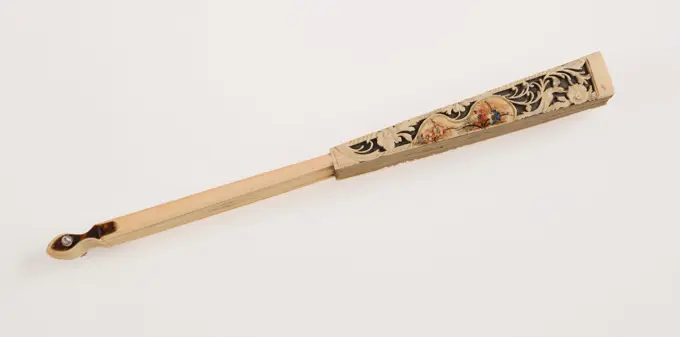
Eventail: "Pastoral scene; near a leading shepherdess, a seated couple, basket in front of them, man seated on the right". Cabretille, gouache, openwork and painted ivory, pivot rhinestones. Paris, Carnavalet museum. 99159-13
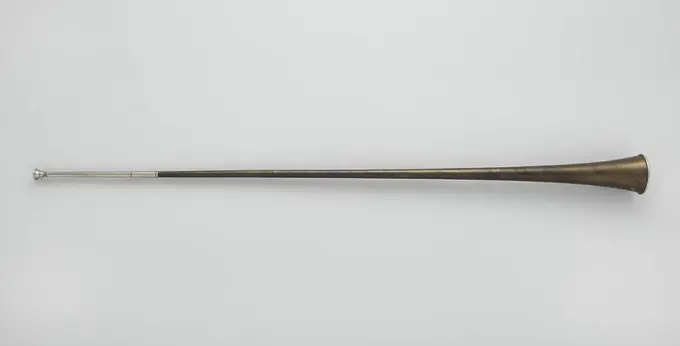
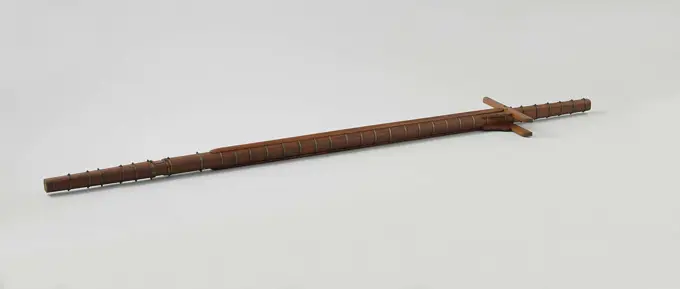
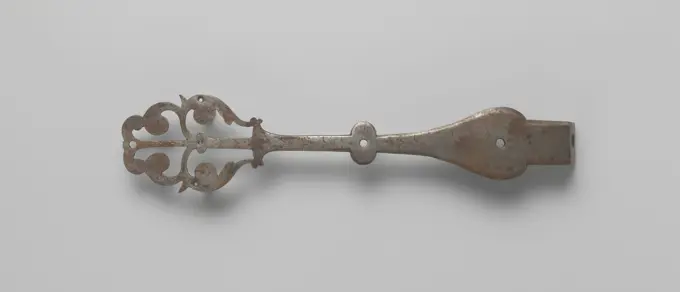
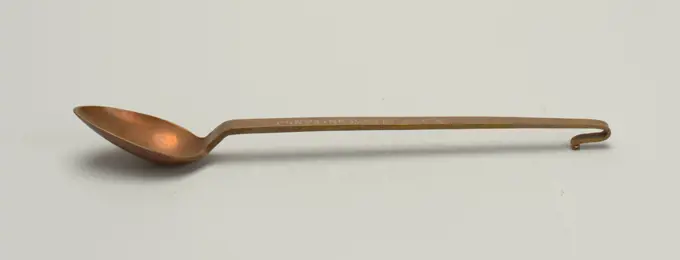
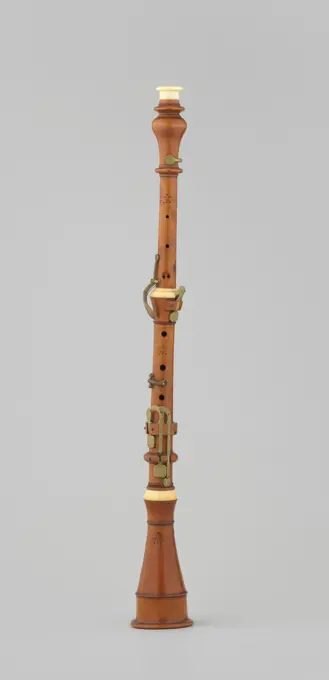
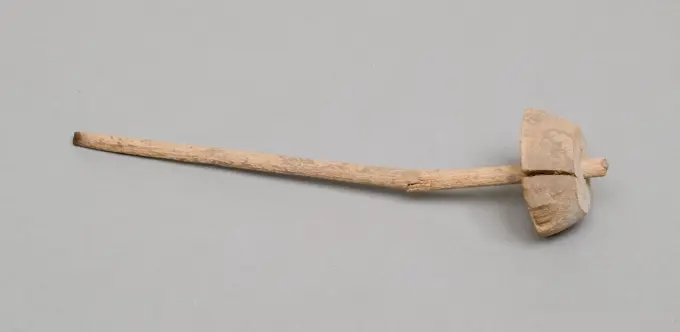
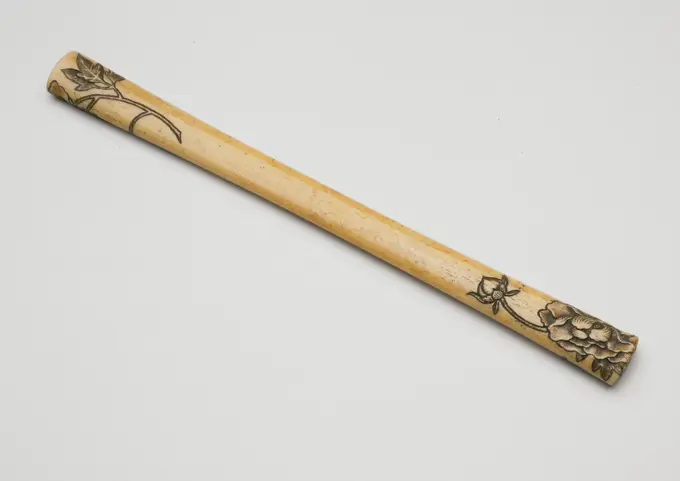
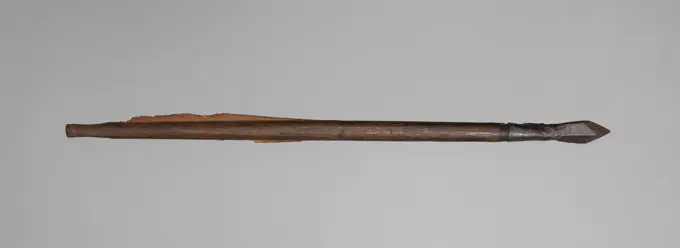
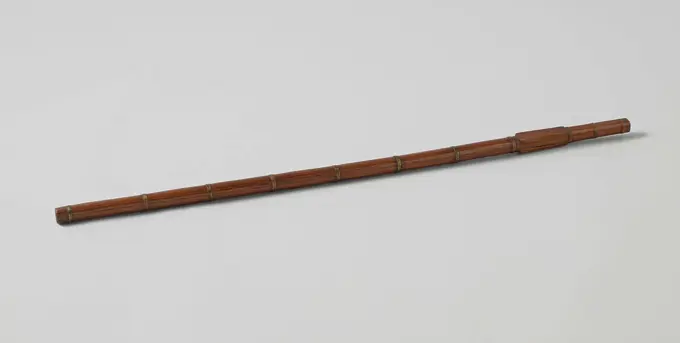
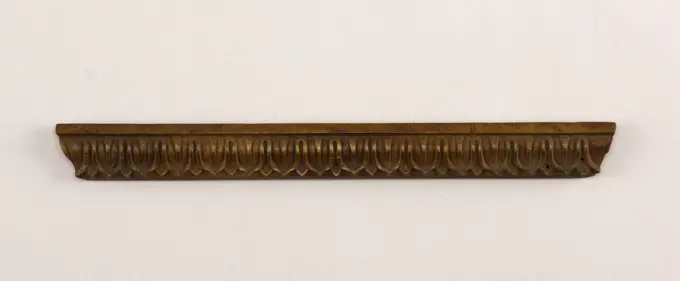
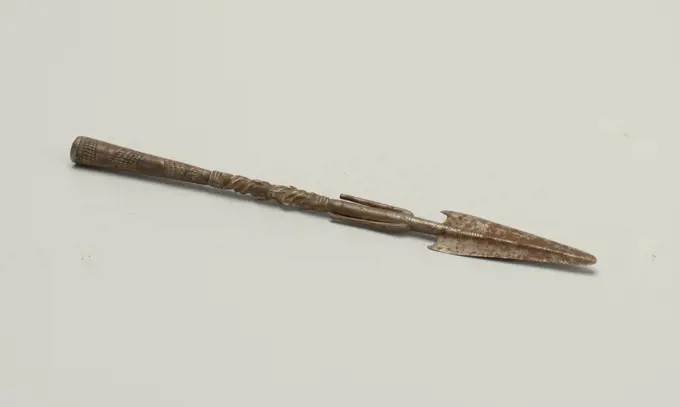
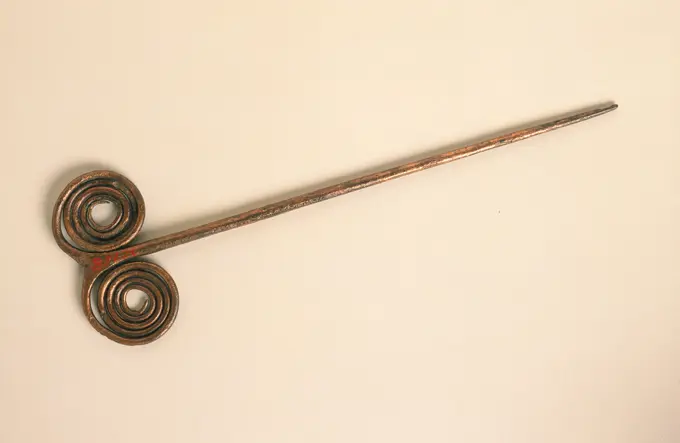
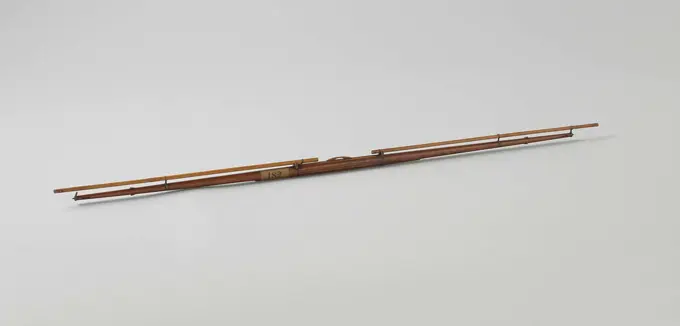
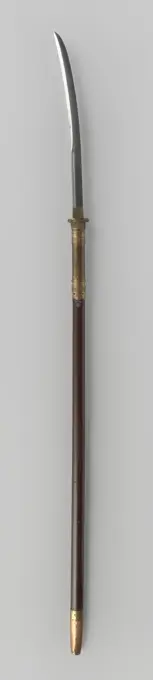
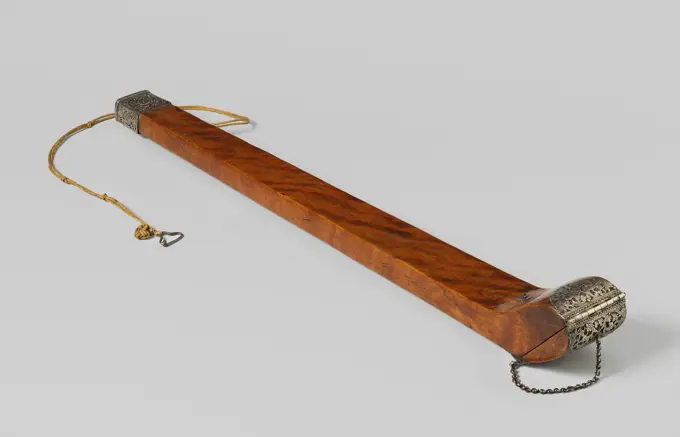
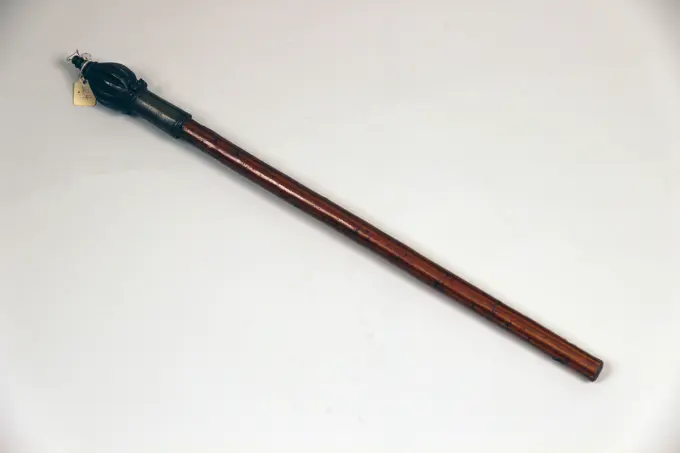
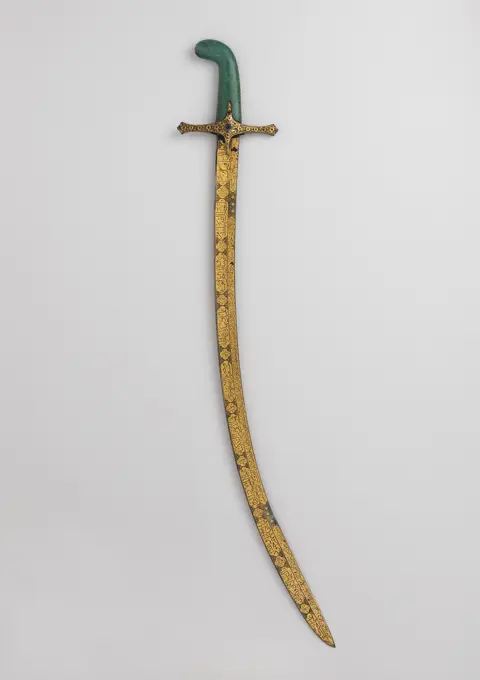
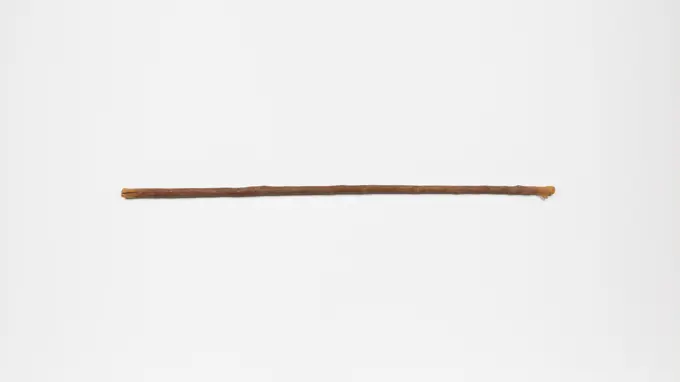
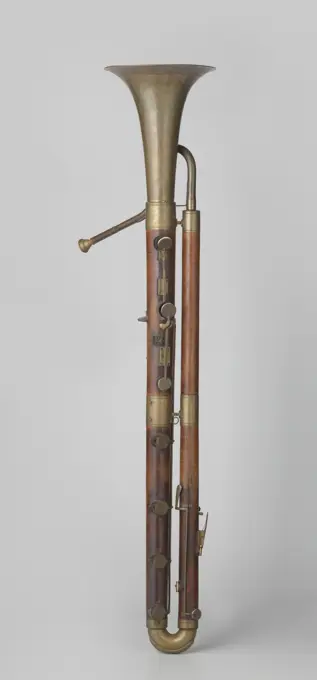
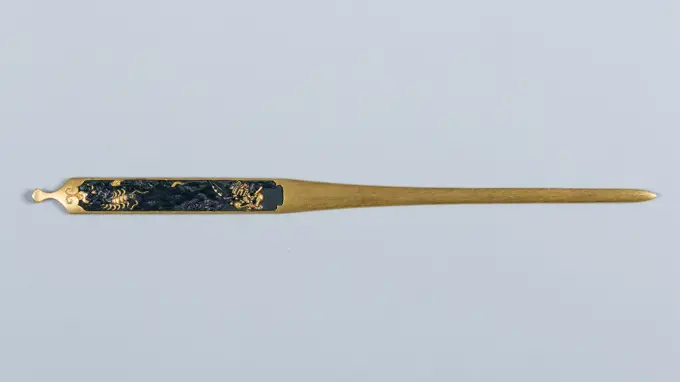
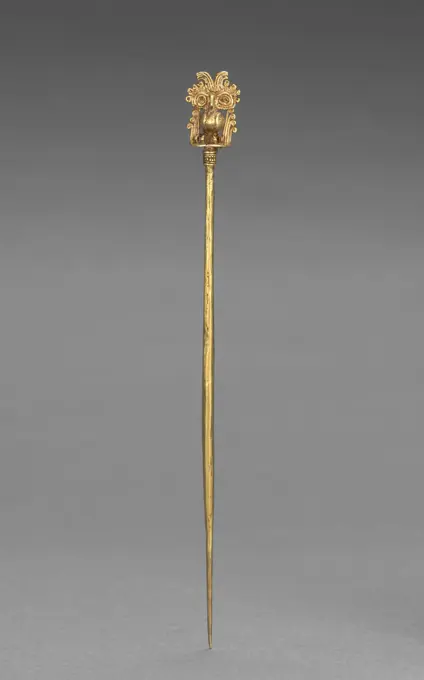
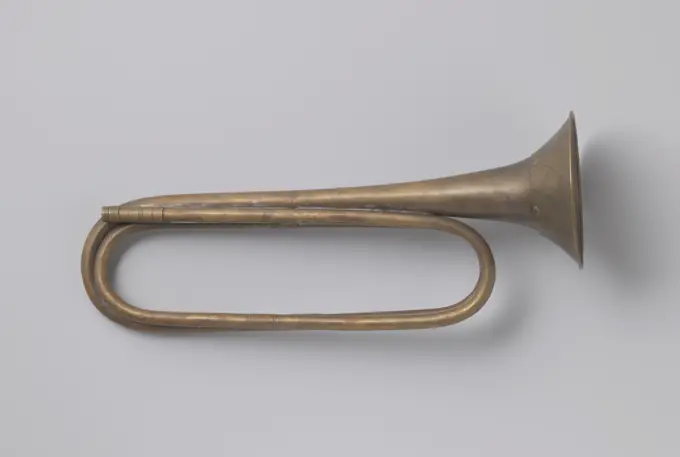
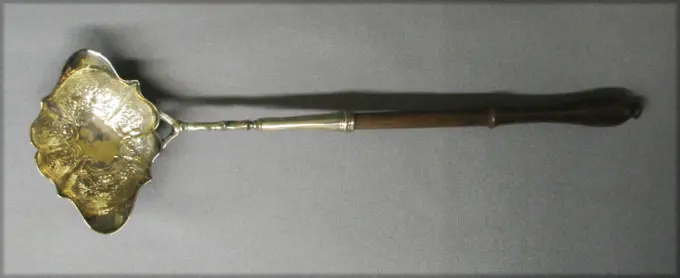
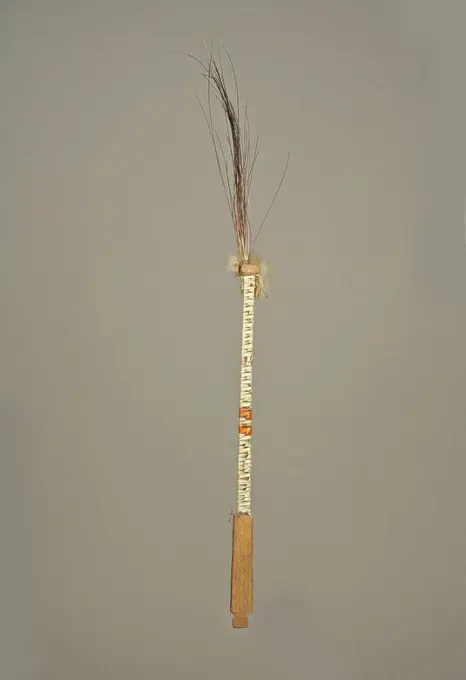
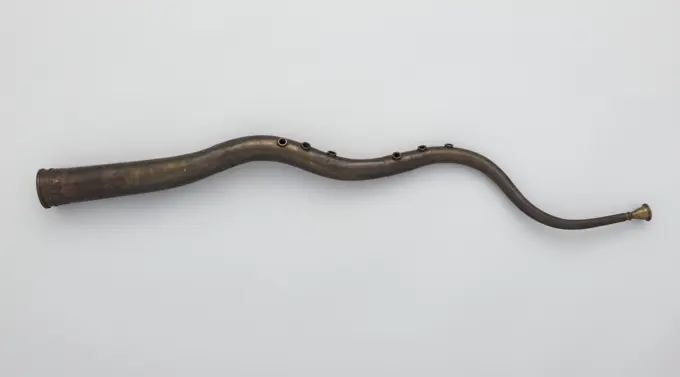
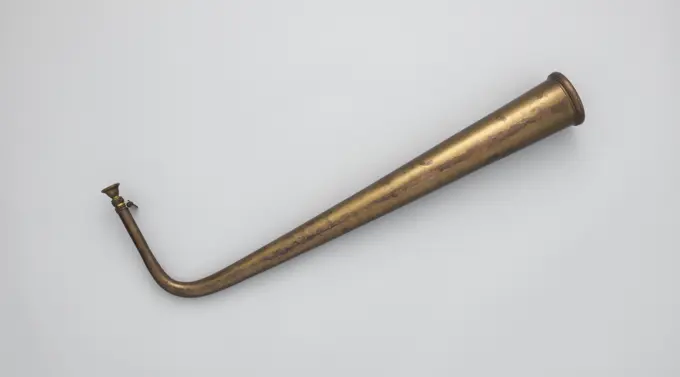
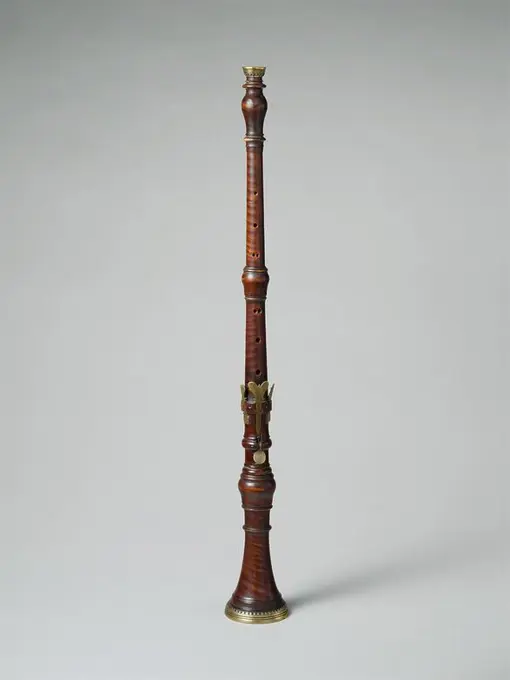
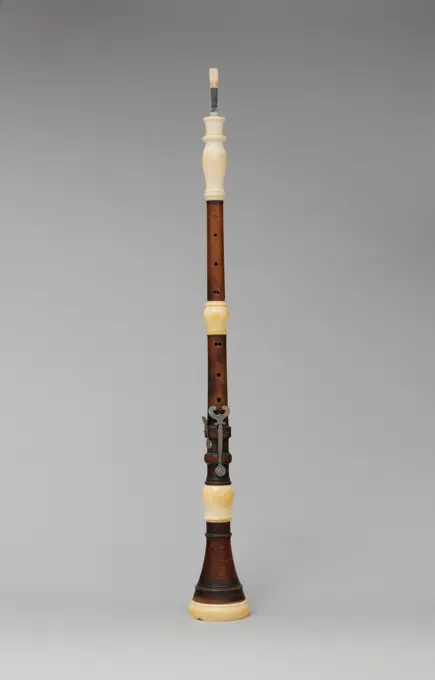
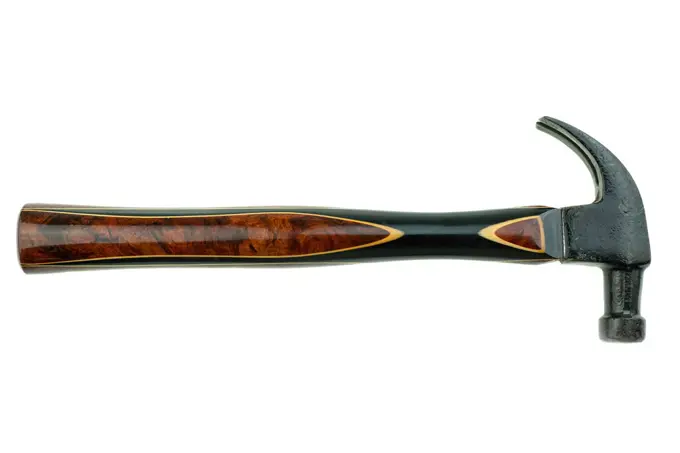
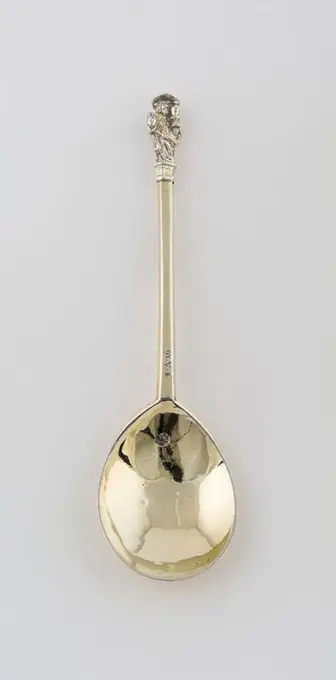
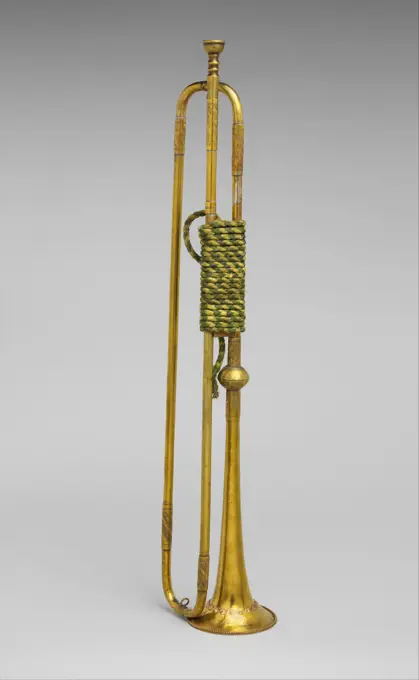
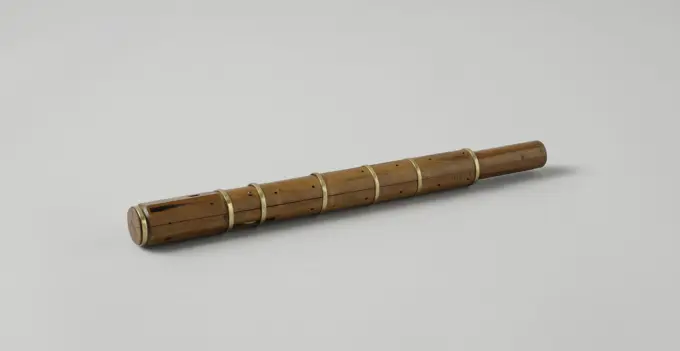
Model of Part of a Made Topmast, anonymous, 1821 demonstration model Model of the part of a round steng. The steng consists of a king and four cheeks, connected to neuten and held together with tubs. The heel is square and has a final wood hole. Diagonally through the heel is a disk for the stenwear grip, and below it a slot for the true stenwear rod. model maker: Netherlands (possibly)after design by: United Kingdom wood (plant material). brass (alloy)Hairpin 500-700 Frankish. Hairpin 465310 Frankish, Hairpin, 500700, Bronze-gilt, Overall: 6 3/4 x 3/16 in. (17.1 x 0.5 cm). The Metropolitan Museum of Art, New York. Gift of J. Pierpont Morgan, 1917 (17.192.241)Coach Horn in C. Culture: European. Dimensions: 48 1/8 × 3 3/16 × 3 3/16 in. (122.2 × 8.1 × 8.1 cm). Date: ca. 1825-89. Museum: Metropolitan Museum of Art, New York, USA.Knife for Chopstick and Knife Kit -Souvenir Trade, early 1900s. Japan, Meiji period (1868-1912) to Taishō period (1912-26). Enamel, wood, walrus ivory or bone, metal; overall: 27.8 cm (10 15/16 in.); blade: 15.3 cm (6 in.).Eventail: "Pastoral scene; near a leading shepherdess, a seated couple, basket in front of them, man seated on the right". Cabretille, gouache, openwork and painted ivory, pivot rhinestones. Paris, Carnavalet museum. 99159-13Model of a Made mast. Round mast with square top, ears, longitudinal expansion and sideshows. The mast base is quite square and consists of twelve parts, six in the middle and three cheeks on either side. Four cheeks at the rear are added from the mast hole that go completely upwards, while the front four parts are just above the longitudinal seals; From this point the mast consists of twelve sharing again and becomes square again. The parts are held together with a large number of tub tires. Two side scales strengthen the whole; They also support the longitudinal seals together with the ears that are not against the sides, but are attached to the front of the mast with irons and bolts. With the mast hole, two notches are for the ears and two for the longitudinal extension, if the mast is turned around.Part of a door rod, anonymous, 1600 - 1800 Door fittings of Vertind IJzer, part of a door strap, decorated with engraving. The batter is from the hinge as follows: a baluster -shaped start, transfersing into a narrow, straight from which some leaf motifs spring from the end, which curls like volutes. The whole ends in a pointed leaf.  iron (metal). tin (metal) forging / engraving Door fittings of Vertind IJzer, part of a door strap, decorated with engraving. The batter is from the hinge as follows: a baluster -shaped start, transfersing into a narrow, straight from which some leaf motifs spring from the end, which curls like volutes. The whole ends in a pointed leaf.  iron (metal). tin (metal) forging / engravingMusket, anonymous, 1638 matchlock rifle Wick lock rifle (musket); octagonal drawn run; brass visor grain; Vizierkeeep in the room, two brands smashed at the room and the year: 1638; flaked slot plate of which front part wide; Powder pan with hinged pandel and screen attached to the lock plate; Iron tractor bracket and loading stick which are not matching; open worked iron band; Nuthouten flask. Netherlands Drawer, Kolf: Walnut (Hardwood). Batter, Loop, Slot: Iron (Metal)   Low CountriesStaff ca. 1981-1975 B.C. Middle Kingdom. Staff 575163Spoon, Copper, Ovoid bowl with straight, long handle ending in hook., France, 1864, metalwork, Decorative Arts, SpoonOboe, Johann Samuel Stengel, c. 1810 Hobo van Palmhout, mounted with ivory. Seven brass valves. Marked on all parts: 3 crowns / stem / 3 flowers. The third gap is double. There are two voice holes in the cup and two remaining holes from where once a finger support has been. Bayreuth boxwood. ivory. brass (alloy) Hobo van Palmhout, mounted with ivory. Seven brass valves. Marked on all parts: 3 crowns / stem / 3 flowers. The third gap is double. There are two voice holes in the cup and two remaining holes from where once a finger support has been. Bayreuth boxwood. ivory. brass (alloy)Spindle New Kingdom, Ramesside ca. 1295-1070 B.C. View more. Spindle. ca. 1295-1070 B.C.. Wood. New Kingdom, Ramesside. From Egypt, Memphite Region, Lisht North, Cemetery, MMA excavations, 1913-14. Dynasty 19-20Damasquine round malacca cane decorated with hunting scenes. Around 1835. Galliera, fashion museum of the city of Paris. Accessory, damask, decor, detail, malacca, masculine, male model, round pommel, hunting scene, cane caneHairpin (Kogai) with Design of Peonies. Ozaki Kokusai (Japan, 1835-circa 1892). Japan, second half of 19th century. Jewelry and Adornments; pins. Stag antlerCooking stones with button and degeneration. A covers of steel with button and degeneration. Address: Imra / Schützt.Crossbow Bolt, 1500s-1600s. Germany, 16th-17th century. Wood, leather, steel; average: 37.2 cm (14 5/8 in.).Clarinet, Hijd van den Horn, c. 1800 Palmhout clarinet with white legs tires and five copper valves. Leiden boxwood (hardwood). ivory. brass (alloy). ebony (wood) Palmhout clarinet with white legs tires and five copper valves. Leiden boxwood (hardwood). ivory. brass (alloy). ebony (wood)Russian Bassoon.Russian bassoon with copper attachment and mouthpieces and valves.Oboe, anonymous, c. 1850 - c. 1900 Oboe with two brass valves. The third gap is double. There are two holes in the cup. Not marked. The oboe is in a wooden briefcase covered with leather and brown velvet. The briefcase is in all likelihood not belonging to the oboe. Oboe with two brass valves. The third gap is double. There are two holes in the cup. Not marked. The oboe is in a wooden briefcase covered with leather and brown velvet. The briefcase is in all likelihood not belonging to the oboe.Model of a Made Mast.Round mast with square top. The mast itself consists of eight parts: two heavy, a front and a rear, form the mast king, connected inside with welding; Three cheeks on either side, the middle of which are also connected to the mast king even with welding, completely complete it. The parts are held together by tub tires. At the height of the homer and the march the mast becomes square; In addition, the corners have been completed slightly. In terms of composition, this mast is comparable to NG-MC-126. This model can be exploited.Mount; bronze (gilt)Model of a Main Topgallant Yard.Model of a large Bramra. Simple model of a ra.Vuursteen Walbus, Johann Jacob Behr, 1700 - 1710 musketoon. flintlock weapon Flint Walbus for the Staatse Army. The lock is unadorned except for a signature and a groove. The heavy loop has a wider tromp with an iron visor grain; The rear visor is also made of iron; The loop is stamped on the left with the number 52 and on the bottom with a brand that cannot be identified. The flask is simply cut and branded on the handle with the number 21. The iron batter is unadorned and consists of four loading stokkers, a accolade screw plate and an unprocessed, oval thumb plate; The chest of drawers has an iron roof. Liège (possibly) iron (metal) engraving / cuttingLance point, Wrought steel, Flat point with central spine above two fins held close to shank. Shank twisted below and furnished with small projecting barbs above hollow flaring socket decorated with scaled bands. Other raised decoration of lines and cones., Central or East Africa, 19th century, metalwork, Decorative Arts, Lance pointDouble-Spiral Pin. Eastern Europe, Chalcolithic period, circa 5000 B.C.. Jewelry and Adornments; pins. Copper, hammeredPistool with Radslot with richly inserted drawer and flask with ivory and mother -of -pearl, anonymous, c. 1600 - c. 1625  Radslot gun made of wood and with iron round smooth run. The lock plate was removed from the drawer. The flask is attached to the drawer with a wooden screw. The drawer is decorated with mother -of -pearl and ivory, various motifs with the figures of a hare and a wolf with floral motifs of pearl. The square pumping rack is made of ivory and has a flower with four leaves on each side. The flask is round and has four radial lines, between each line a flower with four leaves surrounded by two floral motifs of mother -of -pearl. Under the drawer a wooden seam with an ivory head. West-Europa loop: iron (metal). kolf, lade: ivory. kolf, lade: mother of pearl. lade: wood (plant material)Oboe, Jan Steenbergen, c. 1700 - c. 1750 Hobe of Palmhout with three brass valves. At the bottom of the cup is an ivory ring and two holes. The third and fourth gap are double. Marked on the middle part and on the cup: I. Steenbergen in a banderole / Fleur de Lis. Amsterdam boxwood. brass (alloy) Hobe of Palmhout with three brass valves. At the bottom of the cup is an ivory ring and two holes. The third and fourth gap are double. Marked on the middle part and on the cup: I. Steenbergen in a banderole / Fleur de Lis. Amsterdam boxwood. brass (alloy)Pearl Torell, Hitching Post, c 1936 Hitching PostCosmetic spoon. Dynasty: Dynasty 18. Date: ca. 1550-1295 B.C.. Museum: Metropolitan Museum of Art, New York, USA.SwordClarinet, Johann Andreas Mollenhauer, c. 1840 C Palmhout clarinet. Fulda boxwood (hardwood). ivory. brass (alloy) C Palmhout clarinet. Fulda boxwood (hardwood). ivory. brass (alloy)Crossbow Bolt, 1500s-1600s. Germany, 16th-17th century. Wood, leather, steel; average: 37.2 cm (14 5/8 in.).Drumstick -Frame, Cast and blackened bronze, Vertical rectangular frame decorated with lotus and palmette motifs., France, ca. 1820, metalwork, Decorative Arts, FrameModel of a Rudder with a Double Head. Model of a stir with a long square stirrer with two holes for stirring pins. It has seven roll holes and the stirring hooks and care tape are brinked. There is a hole in the stirring blade.Whip handle of Nebiry ca. 1479-1458 B.C. New Kingdom This whip handle probably had leather thongs attached to the slot at the top. It is inscribed with the name and title of Nebiri, who was the skipper of a boat. The inscription also names Senenmut, a well known official in the joint reign of Hatshepsut and Thutmose III. Among Senenmut's titles was "Overseer of Works" which probably included oversight the boats that transported supplies for various building projects. Traces of blue paint have been found in the hieroglyphs.As skipper of a boat, Nebiri may have used the whip to keep time for his crew of oarsmen, as seen in the detail of a wall painting shown above.. Whip handle of Nebiry 547577Bronze sickle ca. 12th century B.C. Cypriot. Bronze sickle. Cypriot. ca. 12th century B.C.. Bronze. Late Bronze Age. BronzesModel of a Main Topsail Yard.Model of a large Marsera, with two leaching muscles. Special is the trellis to the RA in the middle, to reinforce and as protection against wear.Clarinet.Clarinet with six valves.Sword 9th century This sword has an iron blade and was adorned with gilt-bronze elements on the cross guard and quillon. Parts of its wooden scabbard remain fused to the blade, which also was decorated with gilt-bronze mounts at the center and tip. The form of this sword, with its straight, double-edged blade, seems to be a Central Asian type.. Sword. 9th century. Iron, wood, gilded bronze. Excavated in Iran, Nishapur. Arms and ArmorTarget Bolt ca. 1575-1650 German, probably Saxony. Target Bolt. German, probably Saxony. ca. 1575-1650. Steel, copper alloy, wood (oak). probably Saxony. Archery EquipmentSilver beam of weighing scal from the wreck of the Dutch East India ship Hollandia, anonymous, 1700 - in or before 1743  Weighing scales, fragm; strip, both ends broken, flat oval in section, bevelled upper side with a vertical octogonal faceted baluster topped by a pivot eye. Netherlands silver (metal)   SecondWall anchor. Culture: American. Dimensions: 5 x 1 1/4 x 16 in. (12.7 x 3.2 x 40.6 cm). Date: ca. 1740.More elaborate New York Dutch colonial houses were often faced with brick rather than pine clapboards. Wrought-iron wall anchors, such as this example with a fleur-de-lis design, helped secure the exterior wall to the wood posts and beams within. Museum: Metropolitan Museum of Art, New York, USA.Flint rifle à la Modèle an IX, Royal Rifle Factory Culemborg, 1809 - 1810 flintlock gun Flint rifle or drag underwear à la Modèle an IX (1800-1801). The final plate carries an inscription with the name of the factory and is stamped on the outside with a crowned L and on the inside with a T with the letters underneath the NG. The barrel is stamped on top with B181 and on the bottom with a crowned D, a V and two non -identifying walking might brands, namely a cross in a circle and a bead. The flask hardly shows any cutting. The batter consists of three treadmills, the front and rear of yellow icon, the middle of iron with an iron hinged bracket, an iron tractor plate, an yellow-cut tractor bracket with another hinged bracket and a yellow-shaped l-shaped screw plate stamped i.c and F ; Quality marks have been stamped on the middle and rear band: a h above a flower challenge and a D under a star; The steel chest of drawers is a later addition, since it is too short for this gun. Culemborg Fork, 1700s. Italy, 18th century. Metal end, ivory handle; overall: 17.2 cm (6 3/4 in.); without handle: 8.3 cm (3 1/4 in.).Lans belonging to Cornelis Tromp, Anonymous, c. 1650 - c. 1679 pike Lans with lacquered wooden stick, yellow -cut shoe, curved blade with yellow and red -copper batter. Short model. With sheath. The blade of the lance has a Japanese shape, but misses a hole in the sting for the attachment of the blade to the stick. The Angel has a rough surface that was rubbed with resin and so fixed in the hole of the stick. This way of assembling is characteristic of stick weapons and white weapons from Southeast Asia. North Vietnam (Possible) copper (metal). brass (alloy). cypress (wood). lacquer (coating). steel (alloy)Anonymous. Képi's "Jugular False", led by Leclerc when entering Paris on 08/25/1944 ". Embroidery. 1941-1947. General Leclerc Museum of Hauteclocque and the Liberation of Paris, Jean Moulin Museum. 158807-8Pin. Culture: Chimú or Inca. Dimensions: Length 11-1/16 in. (28 cm). Date: 14th-15th century. Museum: Metropolitan Museum of Art, New York, USA.Ornament (common name). Cernuschi Museum, Asia Museum of Asia in the city of Paris.Infant for a pipe, with initials Dr. A wooden pipe fitting, at the silver batter with floral motifs, dating: Anno 1661, and inscription: D.R. The cup has a silver batter with flower and leaf motifs. The closure works with a pin to a chain that can be attached to an eye. The shaft has two openings. On the underside an eye to which an iron attachment with a long rope with the same confirmation at the end.Mace 18th-19th century Persian. Mace. Persian. 18th-19th century. Iron, wood, reed, lacquer. Shafted WeaponsStaff ca. 2030-1640 B.C. Middle Kingdom. Staff. ca. 2030-1640 B.C.. Wood. Middle Kingdom. From Egypt, Upper Egypt, Thebes, Asasif, East of Pabasa, Radim, MMA excavations, 1918-19Dagger (Katar) with Sheath 19th century Indian. Dagger (Katar) with Sheath 31469oregano spices on white background. oreganoSaber 1522-66 Turkish, probably Istanbul This saber is fitted with one of the finest and best-preserved Islamic blades of the sixteenth century. Its gold-inlaid decoration consists of Qur'anic inscriptions that stress the sovereignty of God and the wisdom and power of his servant Solomon. These appear to be clever allusions to the Ottoman sultan Süleyman the Magnificent. The equally opulent cross guard is chiseled in relief and damascened in gold, and was formerly inlaid with gems. The grip is a later replacement. Listen to experts illuminate this artwork's story Listen Play or pause #6659. Overview: The Arts of the Ottoman Courts Play or pause #826. Kids: Saber Supported by Bloomberg Philanthropies We're sorry, the transcript for this audio track is not available at this time. We are working to make it available as soon as possible.. Saber. Turkish, probably Istanbul. 1522-66. Steel, gold, fish skin, wood. probably Istanbul. Swordscloseup Cinnamon stick spice isolated on white backgroundEVENTAIL. "Venus presides over the love shooting training". Gouache on skin, ivory frame and cut -off cut and encrusted with gold, red stone with pivot. Paris, Carnavalet museum. 100087-27 Fashion accessory, EventailStaff, forked ca. 1550-1295 B.C. New Kingdom. Staff, forked. ca. 1550-1295 B.C.. Wood. New Kingdom. From Egypt, Upper Egypt, Thebes, Dra Abu el-Naga, Carnarvon/Carter excavations, before 1911. Dynasty 18Engelse boogspanner.Bow tensioner consisting of two iron, partly bearded, pivot arms with wooden handles and two iron pulleys. Such tensioners were relatively simple to disconnect from the crossbow. The tensioner was taken before the column shot (the wooden central part).Sword Scabbard. Culture: Persian. Dimensions: H. 32 1/8 in. (81.6 cm); W. 1 1/2 in. (3.8 cm); Wt. 8.1 oz. (229.6 g). Date: 19th century. Museum: Metropolitan Museum of Art, New York, USA.Pa. German Meat Chopper. Dated: 1935/1942. Dimensions: overall: 52.5 x 30.3 cm (20 11/16 x 11 15/16 in.). Medium: watercolor, graphite, and colored pencil on paperboard. Museum: National Gallery of Art, Washington DC. Author: Nicholas Amantea.Earring -Blade and Mounting for a Short Sword (Wakizashi) blade, 16th century; mounting 19th century Japanese A wakizashi is a short sword with a blade between 30 and 60 cm long, usually worn in tandem with a full-length sword (katana). Wakizashi were fashionable in the Muromachi period (1392-1573) and later.. Blade and Mounting for a Short Sword (Wakizashi). Japanese. blade, 16th century; mounting 19th century. Steel, wood, brass, lacquer, copper-gold alloy (shakud), ray skin (samé), silk, silver. Gifu. SwordsCane; malacca (rattan), burlwood, gilded brass, leatherBashoorn.Hoods Bashoorn Met Kopen Beker, noticed: invented and manufactured by Streitwolf in Göttingen.Parasol button or umbrella button of painted wood; On the button is a pattern of tulips, Gustav Schnitzler, c. 1920 Parasol button or umbrella button of painted wood. A pattern of pink tulips is burned on the button. A leather belt sticks through the handle. Nijmegen wood (plant material). riem: leather Parasol button or umbrella button of painted wood. A pattern of pink tulips is burned on the button. A leather belt sticks through the handle. Nijmegen wood (plant material). riem: leatherCandle Holder (France); iron, fruitwood (pear)Halve meter met handvat.Half a meter with distribution and calculation in decimeters. First decimeter in centimeters. V.Z.V. Label and brandSpear Head. Culture: Iranian. Dimensions: L. 15 in. (38.1 cm). Date: dated A.H. 1001/A.D. 1593-94.Heads of this type were used on the spears of mounted warriors. The Persian inscription in the two cartouches praises the weapon's prowess: "Constantly it drinks the water from the fountainhead of the heart.". Museum: Metropolitan Museum of Art, New York, USA.Set of Sword Fittings (Mitokoromono) late 17th-early 18th century Got Tsj Japanese These mitokoromono feature a design of Tawaratota battling a giant centipede.. Set of Sword Fittings (Mitokoromono). Japanese. late 17th-early 18th century. Copper-gold alloy (shakud), gold, silver, ink, paperLime Dipper or Pin with Owl, 1-800. Isthmian Region (Colombia), Calima, Yotoco period. Gold, cast; overall: 22.4 x 2 x 1.6 cm (8 13/16 x 13/16 x 5/8 in.). An engaging miniature owl forms the finial of this dipper, which was used during coca-chewing rituals. Typically, coca leaves were chewed into a quid; then, with a dipper, lime made from powdered seashells was added to the quid to enhance the leaves' gentle stimulating effects. Contemporary natives regard coca as crucial to creating both social camaraderie and communion with supernatural forces; the same may have been true in the past.Trumpet, anonymous, c. 1800 Trumpet in ash. A wreath has been laid around the cup, decorated with leaf ornaments and garlands and three Adries crosses. The top edge is decorated with two grooves and a border of shell motifs and relief. Mouthpiece is missing.  brass (alloy) Trumpet in ash. A wreath has been laid around the cup, decorated with leaf ornaments and garlands and three Adries crosses. The top edge is decorated with two grooves and a border of shell motifs and relief. Mouthpiece is missing.  brass (alloy)Fish knife. Korzec (manufaktura porcelany ; 1790-1832), factoryLadle 1751-52 British. Ladle 208872Ceremonial Paddle, 1700s-1800s. Polynesia, Ra'ivavae, Austral Islands, 18th-19th Century. Wood; overall: 115 x 24.7 cm (45 1/4 x 9 3/4 in.). Fine, chip-carved patterns cover the blades and shafts of Austral Islands ceremonial paddles. Squatting human figures carved around the butt are called tiki tiki tangata, meaning man-gods. The shafts of early paddles are usually round in cross-section; 19th-century examples are sometimes square.Infantry Pike 1800-1900 Europe. Wood and steel .Tobacco Pipe, 1700s to mid-1800s. Japan, Edo period (1615-1868). Metal; overall: 17.6 cm (6 15/16 in.).Knife with it to the widening handle, Wiener Werkstätte, 1907 Silver knife, with steel blade. It is flat and broadens towards the end. Vienna German silver. steel (alloy) Silver knife, with steel blade. It is flat and broadens towards the end. Vienna German silver. steel (alloy)Hair Dressing Tool (Kogai) early 15th century Japanese This is one of the oldest kogai outside of Japan. It was made in the so-called kokinko (old goldsmith) style. The design, featuring a crane, turtle, pine tree, bamboo, and plum tree, is known as kishomon (auspicious) and was intended to bring the owner good luck.. Hair Dressing Tool (Kogai). Japanese. early 15th century. Copper alloy (yamagane), gold. Sword Furniture-KogaiDouble flute, 4th century BCE - 7th century CE, 13 1/4 x 1 1/2 x 1 in. (33.66 x 3.81 x 2.54 cm), Ceramic, Mexico, 4th century BCE - 7th century CEGlove puller of varnished wood, with a metal spring between the two shears.Crochet hook from silver and agate, c. 1400 - c. 1950 Crochet hook from silver and agate, with loose removable crochet hook or pin.  silver (metal). agate (chalcedony) Crochet hook from silver and agate, with loose removable crochet hook or pin.  silver (metal). agate (chalcedony)William Frank, Chopping Knife, c 1942 Chopping KnifeFeather Symbol. Culture: Mesquakie or Potawatomi. Dimensions: H. 12 x W. 3/8 in. (30.5 x 1 cm). Date: 1790-1890. Museum: Metropolitan Museum of Art, New York, USA.Tenor cornett 19th century Probably French. Tenor cornett. Probably French. 19th century. Brass. France. Aerophone-Lip Vibrated-hornPochette. Culture: French. Dimensions: Height: 16 1/2 in. (41.9 cm). Date: ca. 1700-1799. Museum: Metropolitan Museum of Art, New York, USA.Bone hairpin with bust of a woman 2nd-3rd century A.D. Roman Surmounted by bust of a woman.. Bone hairpin with bust of a woman 251506 Roman, Bone hairpin with bust of a woman, 2nd3rd century A.D., Bone, H.: 4 7/8 in. (12.4 cm). The Metropolitan Museum of Art, New York. Fletcher Fund, 1924 (24.97.80)SpoonOboe, Heckel, c. 1850 - c. 1860 Hobo of dark brown stained palmhout, consisting of four parts. The oboe has twelve silver valves with round plates, four ivory rings, a silver finger support and an extra stamp to change. The third gap is double. The Fis Resonans cover is on a rod mechanism; This was added or repaired later. Marked on all three parts: Heckel (in an arc) / library (in an arc). Biebrich boxwood. silver (metal). ringen: ivory Hobo of dark brown stained palmhout, consisting of four parts. The oboe has twelve silver valves with round plates, four ivory rings, a silver finger support and an extra stamp to change. The third gap is double. The Fis Resonans cover is on a rod mechanism; This was added or repaired later. Marked on all three parts: Heckel (in an arc) / library (in an arc). Biebrich boxwood. silver (metal). ringen: ivoryOhotniche Rogi sounding D 1873-89 Nicolas N. Fedorov Russian. Ohotniche Rogi sounding D. Russian. 1873-89. Brass. Moscow, Russia. Aerophone-Lip Vibrated-hornMusketmaat, anonymous, c. 1590 - c. 1596  Musketmaat, complete. The leather of the musket size is torn here and there.  brass (alloy). leather striking (metalworking)  Nova Zembla. Saving HuysCompass or divider, fragment. Compass or divider, fragment 250567 Compass or divider, fragment, Bronze, Other: 6 5/8 in. (16.8 cm). The Metropolitan Museum of Art, New York. Rogers Fund, 1917 (17.230.33)Oboe. Culture: Netherlands. Dimensions: L. 57.6 cm (22 11/16 in.). Date: ca. 1700. Museum: Metropolitan Museum of Art, New York, USA.Przeszo Przyszoci LimogesKnife 8th century B.C. Northeast China or southeast Inner Mongolia. Knife 52163Oboe ca. 1750 Castel Italian. Oboe 503457Old traditional curved claw hammer on white backgroundNozzle of a fire engine from the wreck of the Dutch East India ship Hollandia, anonymous, 1700 - in or before 1743  Fire engine, firehose nozzle; bent, circular tapering tube, one both ends integral shaped sockets with flanged rims, upper end externally threaded and fitting into nozzle. Netherlands copper (metal)   SecondApostle Spoon: St. John the Divine. London, England. Date: 1609-1610. Dimensions: 18.1 x 5.1 cm (7 1/8 x 2 in.). Silver gilt. Origin: London. Museum: The Chicago Art Institute, Chicago, USA.Natural Trumpet late 17th century Johann Wilhelm Haas German Natural trumpets such as this were used in the military and in royal pagentry. The production and playing of trumpets in Germany during the seventeenth and early eighteenth centuries was strictly regulated by a guild system. The four generations of the Haas family were the most prolific and prominent dynasty of brass instrument makers working in Nuremberg. Their trumpet output ranged from simply ebellished brass examples such as this to ornately decorated silver trumpets with gold gilding like 54.32.1. Natural Trumpet. German. late 17th century. Brass. Nürnberg, Germany. Aerophone-Lip Vibrated