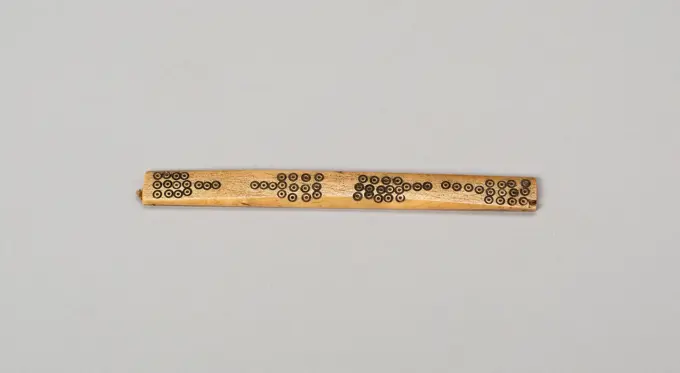
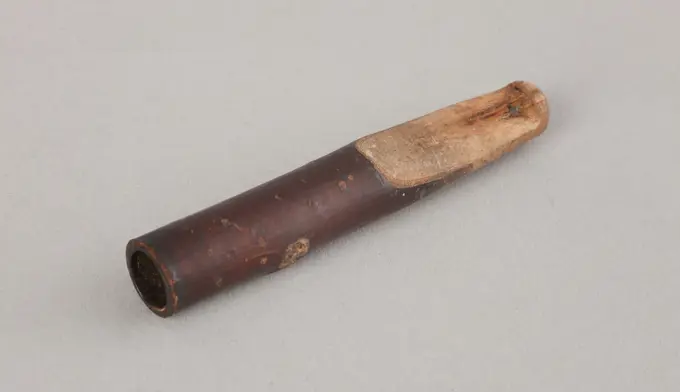
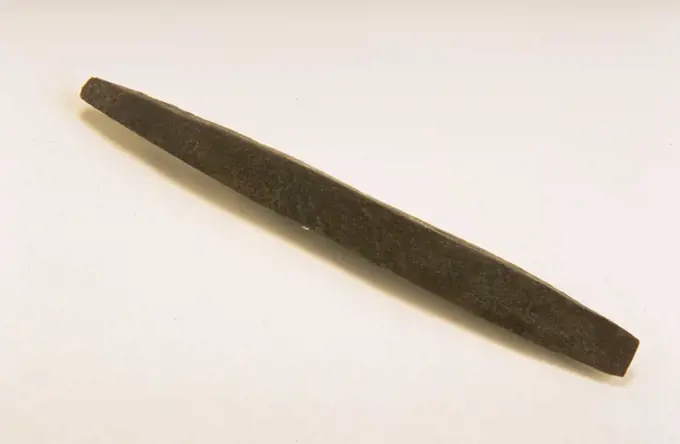
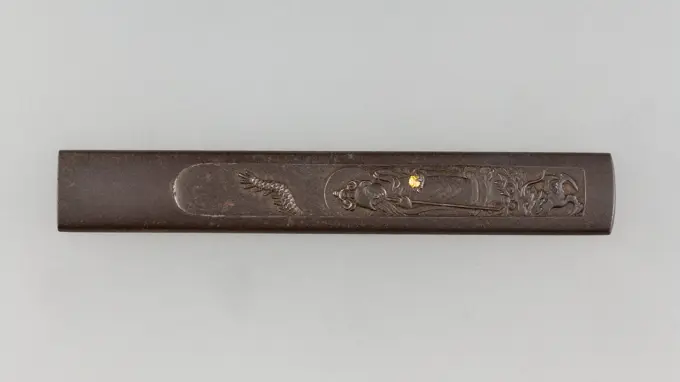
Historical Tools and Objects

An assortment of historical items, including tools and decorative objects, showcasing craftsmanship and artistry from various cultures and centuries.
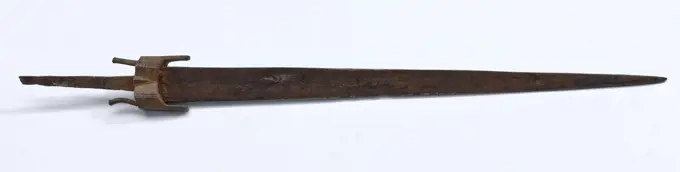
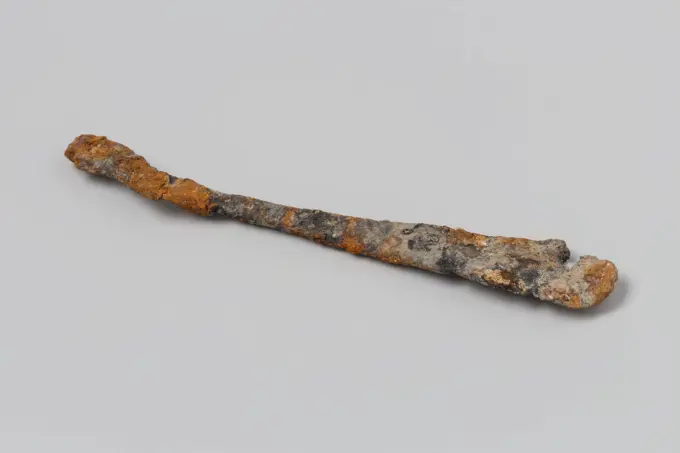
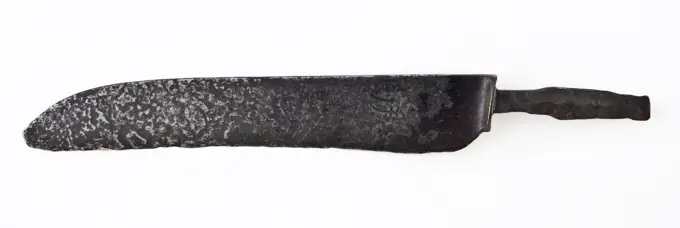
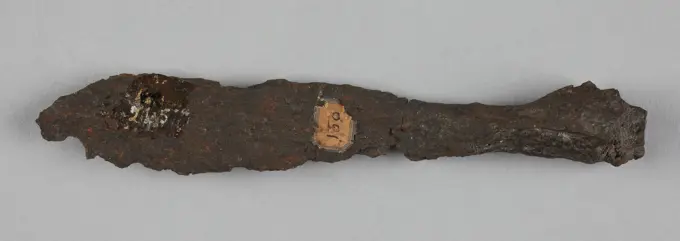
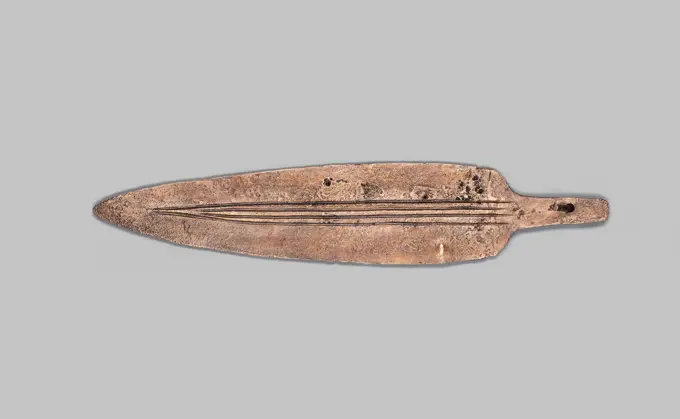
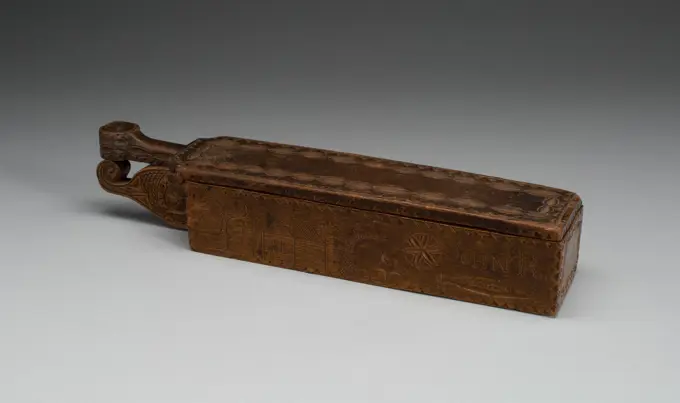
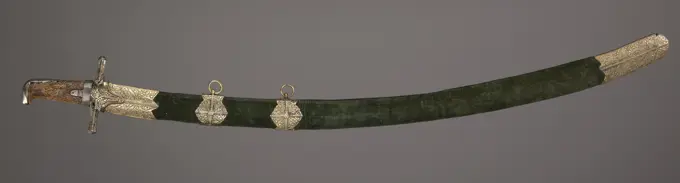
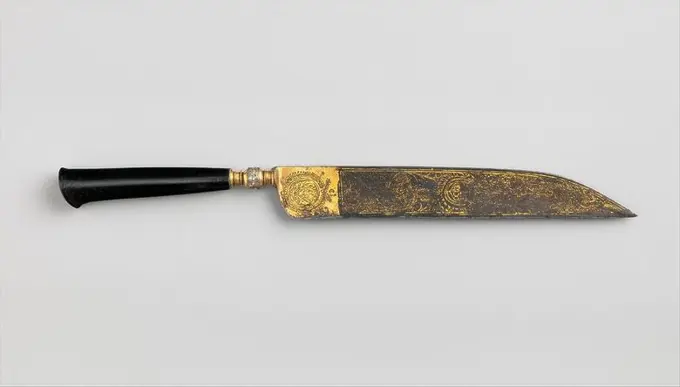
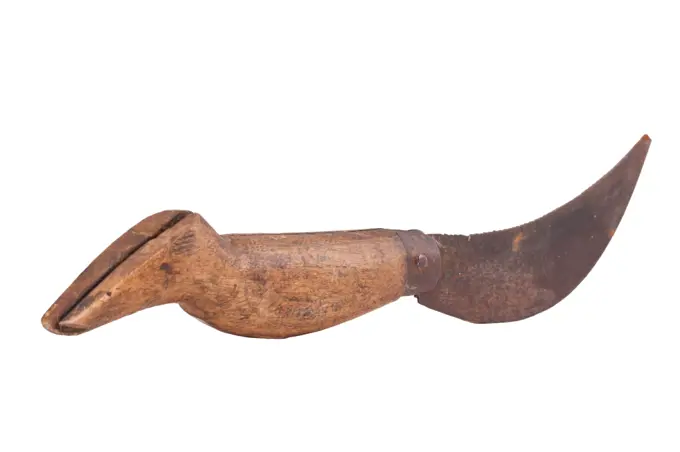
Blade with baffle plate of kidney dagger with single blade, kidney dagger dagger knife stab weapon weapon fragment soil find iron metal, forged blade The blade is single-edged. Kling suitable for general carving archeology cave hunter kloot dagger kliodolk ballad decoration status symbol personal equipment defense clothing accessory militaria
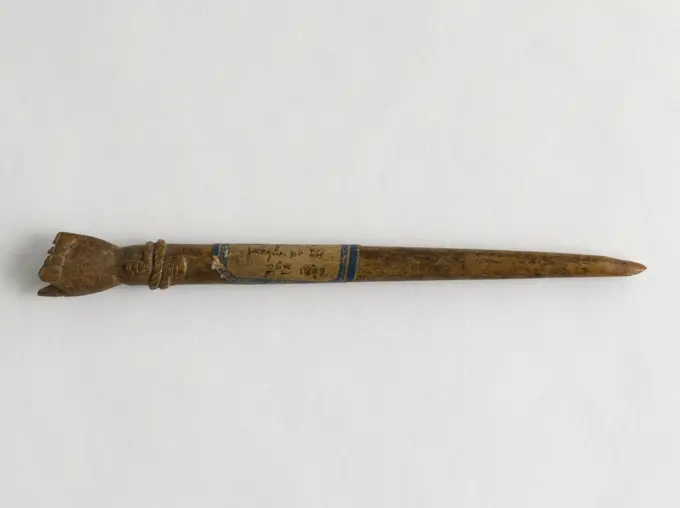
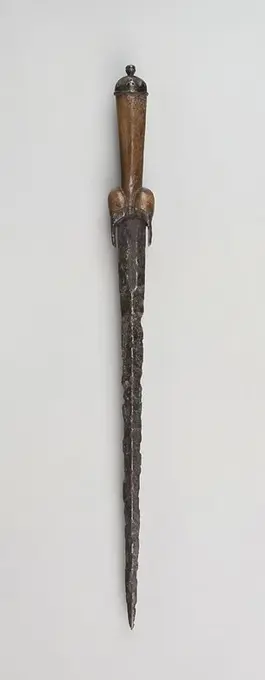
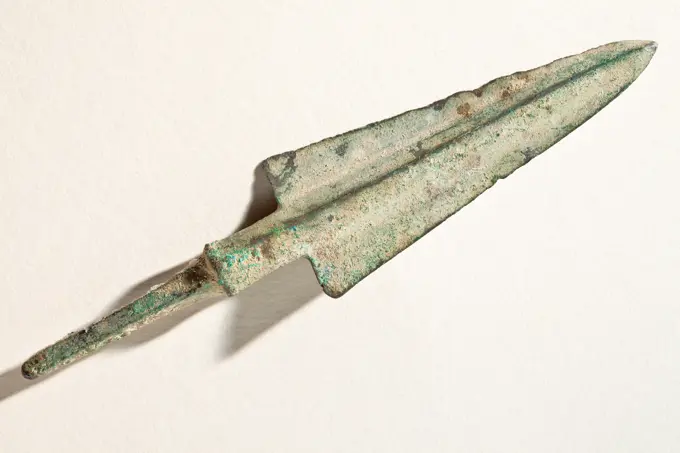
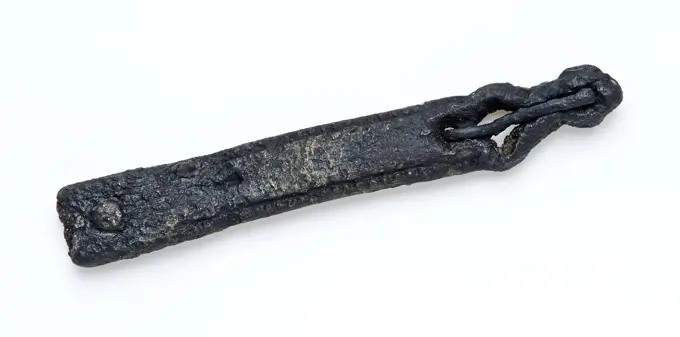
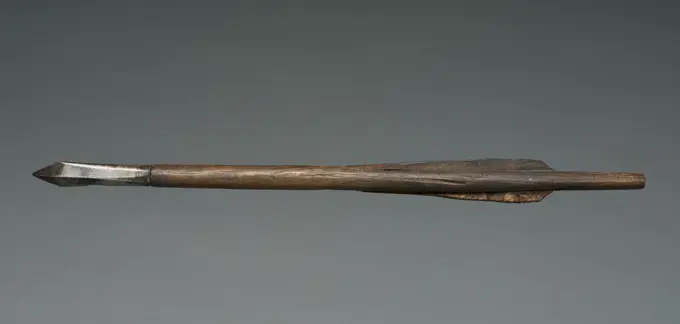
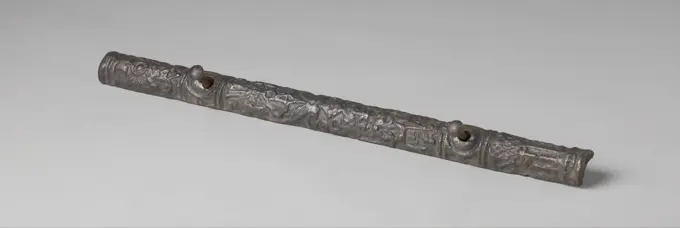
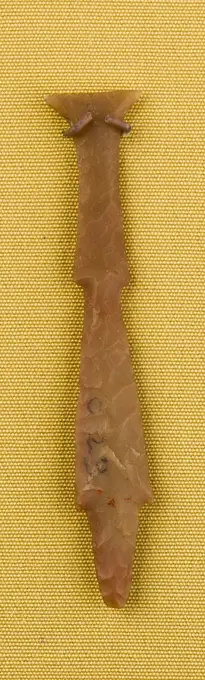
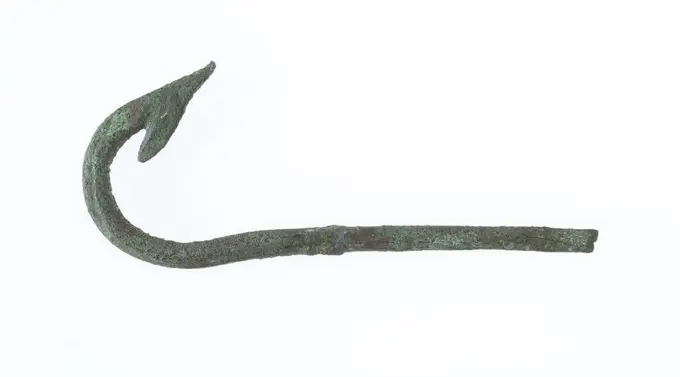
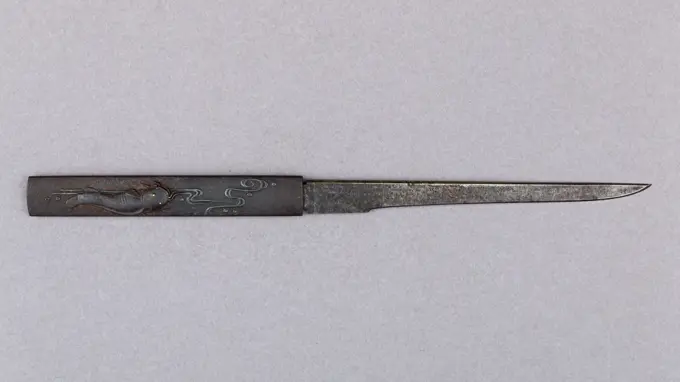
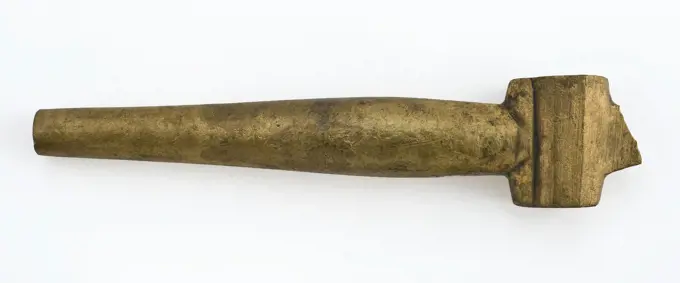
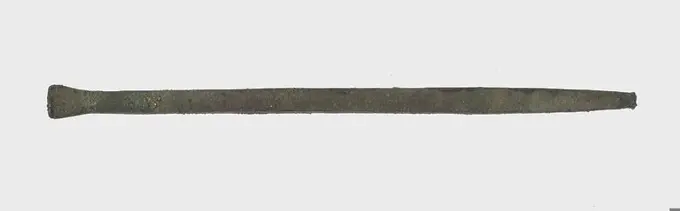
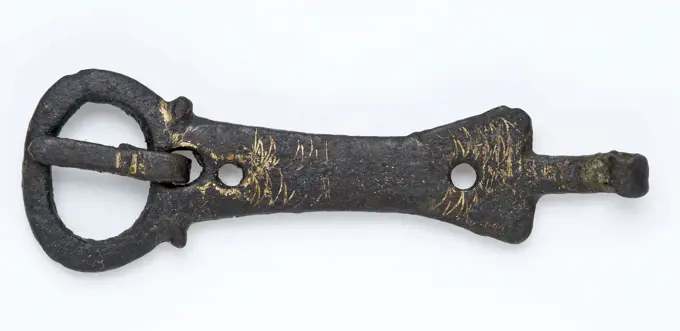
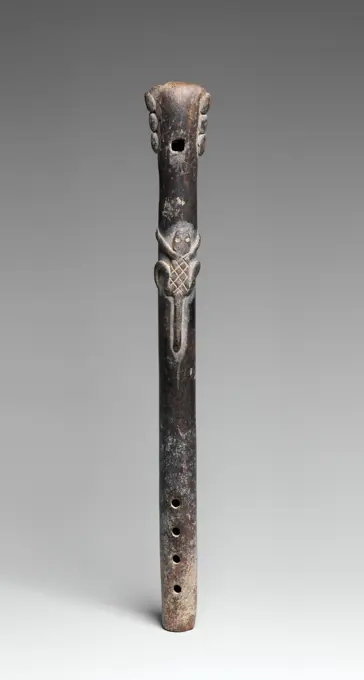
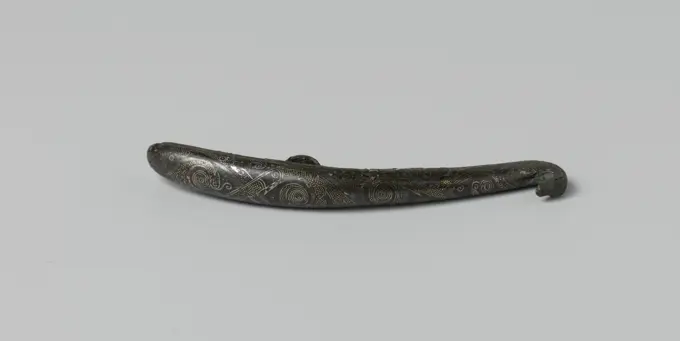
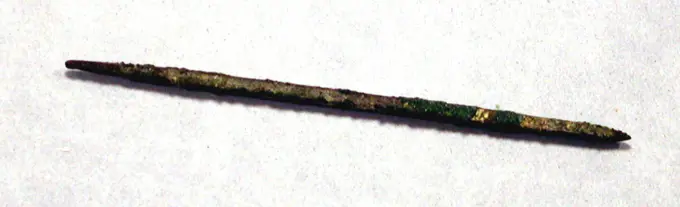
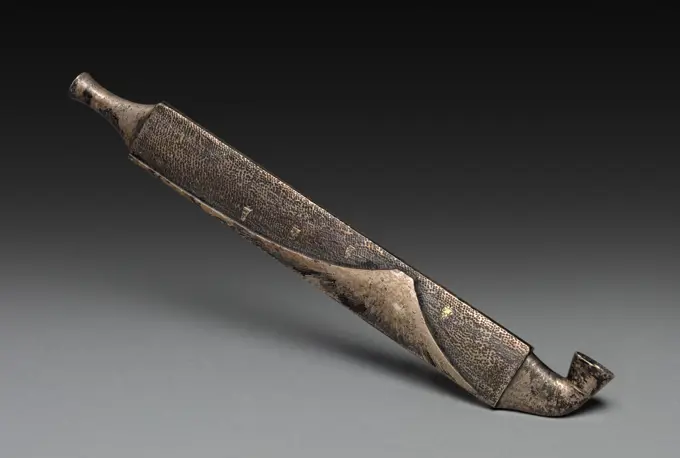
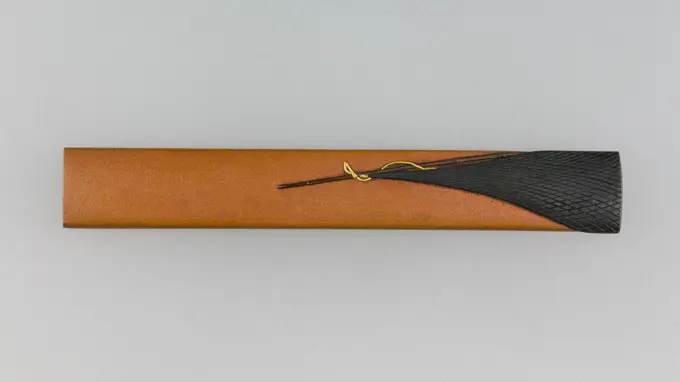
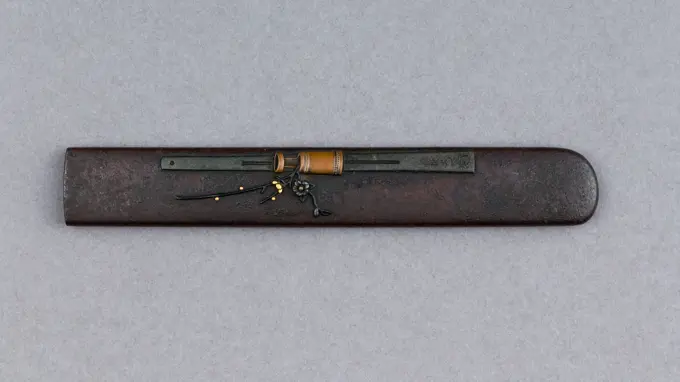
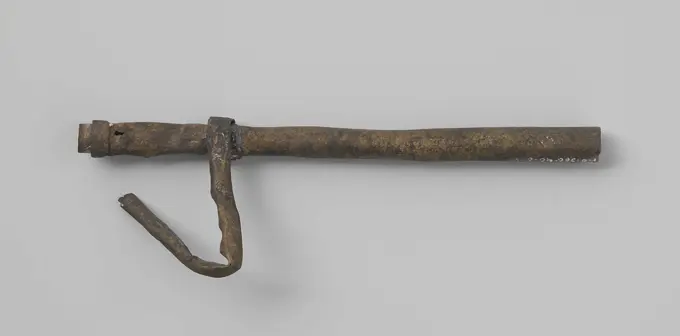
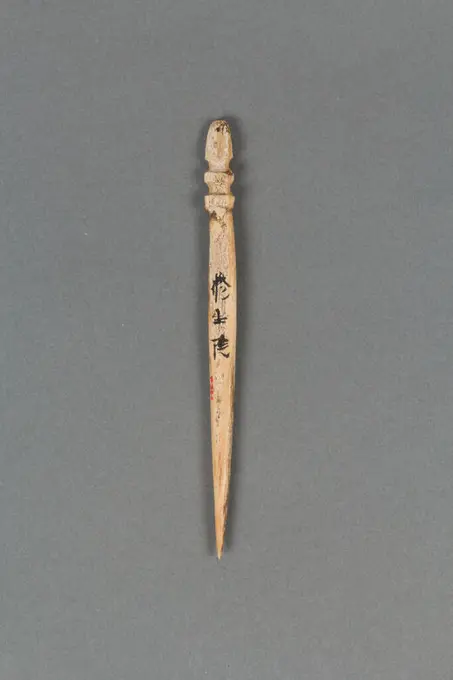
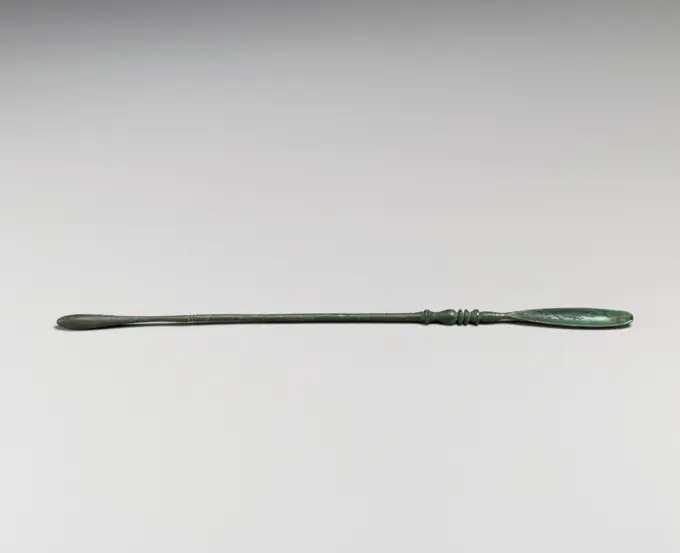
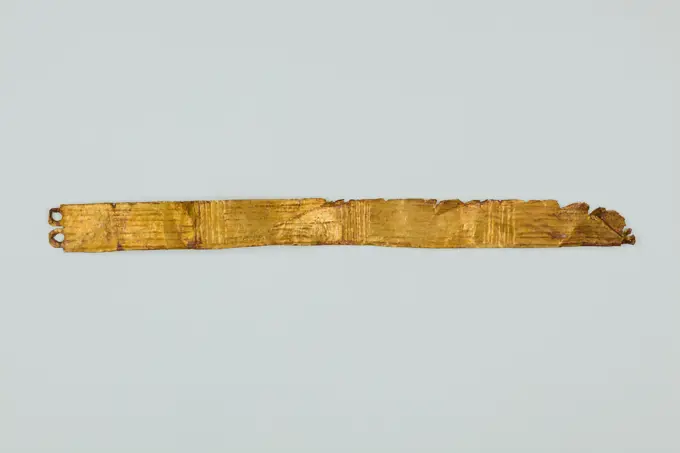
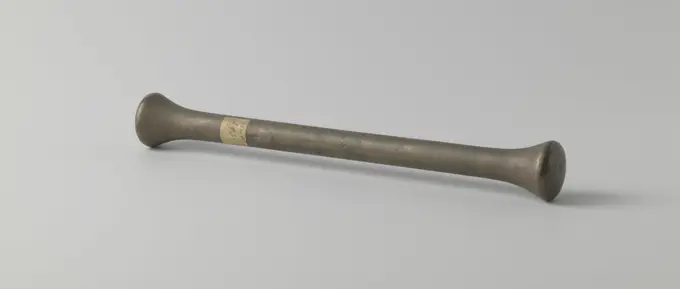
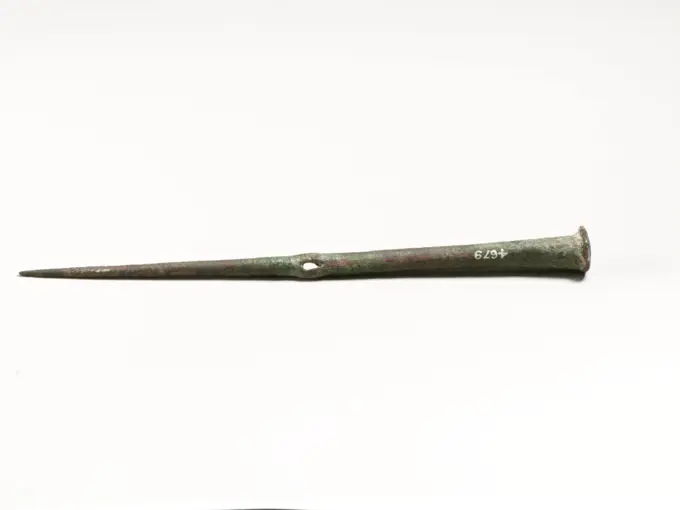
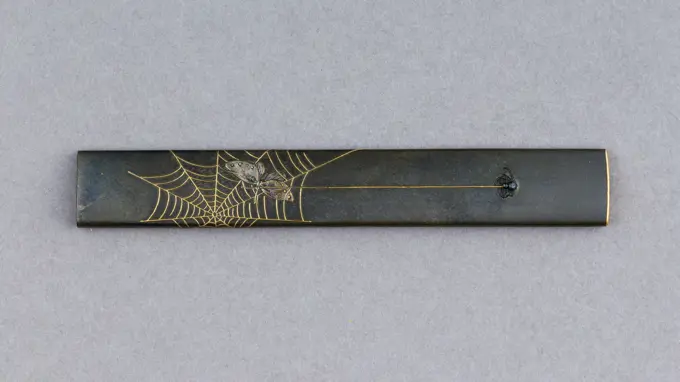
Guts of hollow chisel with sloping cuts whose chisel is equipped with an edge frame, anonymous, c. 1590 - c. 1596  Guts of hollow chisel. Stop chisel with sloping cutting cut of which the chisel is equipped with an edge frame. The wooden handle is missing.  iron (metal) forging  Nova Zembla. Saving HuysLance point, Wrought steel, Long flat head with two rear barbs above series of 15 projecting barbs; the whole above a series of 8 opposed barbs at teh head of the tapering hollow socket., Central or East Africa, 19th century, metalwork, Decorative Arts, Lance pointModel of a Mainyard, anonymous, c. 1750 - c. 1800 demonstration model Model of a large RA, consisting of two pieces that are connected with a long sloping weld and a number of connected welds and that are held together by tubs. Netherlands wood (plant material). brass (alloy)Hair pin. Gallo-Roman. Bone. Paris, Carnavalet museum. Hair and Gallo-Roman, Gallo-Romain, Object, Bone, Archeological Vestige, ToiletFragment of a Pipe Stem 18th-19th century View more. Fragment of a Pipe Stem. 18th-19th century. Silver, wood, and brass. Attributed to probably Iran. MetalBlade with baffle plate of kidney dagger with single blade, kidney dagger dagger knife stab weapon weapon fragment soil find iron metal, forged blade The blade is single-edged. Kling suitable for general carving archeology cave hunter kloot dagger kliodolk ballad decoration status symbol personal equipment defense clothing accessory militariaBallock Dagger. North European, possibly Flemish. Date: 1490-1510. Dimensions: L. 47 cm (18 1/2 in.)Blade L. 34.5 cm (13 5/8 in.)Wt. 9.5 oz. Ivy root and bone. Origin: Northern Europe. Museum: The Chicago Art Institute, Chicago, USA.Excerpt of a stem of a fork or spoon from the wreck of the East Indians Hollandia, Anonymous, 1700 - in or before 1743 spoon Fragments: stem of fork or spoon; fragm, id. NG 1980-27H67.  tin (metal)   SecondRazor sharpening toolStick of a pennant. Stick of a pennant.Three Knives with Sheath 18th-19th century Indian. Three Knives with Sheath 31457Bronze shovel 5th century B.C. Etruscan Simple shovel with handle ending in an animal hoof.. Bronze shovel 251124 Etruscan, Bronze shovel, 5th century B.C., Bronze, Other: 9 15/16 in. (25.2 cm). The Metropolitan Museum of Art, New York. Rogers Fund, 1921 (21.88.131)Peak point of officer's peak, peak pile weapon weapon ground find iron metal, forged archeology militariaBalance-Beam Scale with Incised Circles in Paddle-like Design 1000-1470 Peru. Bone . NazcaCigar holderUpper sill, decorated with cut ornament (fragment), anonymous, c. 1600 - c. 1699 Fragment of a wooden top sill of a door, decorated with cut ornament. Netherlands oak (wood) Fragment of a wooden top sill of a door, decorated with cut ornament. Netherlands oak (wood)ESCOPLO. BRONCE S.V a.C.(DEPOSITO: MUSEO ARQUEOLOGICO NACIONAL).File, flat and without handle, anonymous, c. 1590 - c. 1596  File, flat and without handle. The file shows parallel rows of sharp notches on both sides.  iron (metal) forging  Nova Zembla. Saving HuysMeat fork of Vertind iron with decorated handle, anonymous, 1762 Meat fork from Vertind iron. The handle is decorated with a toiled pattern of small circles with a dot in the middle and around it a strap of dots and a tire of stripes. Two broadening have been applied in the handle, one of which is open, the other is decorated with a flower pattern. A copper plate has also been applied to the handle with the year 1762 and the letters AVD. Northern Netherlands (possibly) wrought iron (iron alloy). copper (metal). tin (metal) forging / engraving Meat fork from Vertind iron. The handle is decorated with a toiled pattern of small circles with a dot in the middle and around it a strap of dots and a tire of stripes. Two broadening have been applied in the handle, one of which is open, the other is decorated with a flower pattern. A copper plate has also been applied to the handle with the year 1762 and the letters AVD. Northern Netherlands (possibly) wrought iron (iron alloy). copper (metal).Nail 15th-16th century European. Nail. European. 15th-16th century. Iron. Metalwork-IronKnife Handle (Kozuka) 18th century Japanese A kozuka is a handle of a by-knife that is part of a sword mounting. It is kept in a slot on the reverse of a katana scabbard, often with a matching kgai (hairdressing tool).. Knife Handle (Kozuka). Japanese. 18th century. Iron, silver, gold. Sword Furniture-KozukaFigurine of OsirisSpearhead. Iran, Luristan, circa 1000-550 B.C.. Arms and Armor; spears. BronzeLong lanyard, ending in constricted buckle, belt buckle fastener component ground find copper leather metal, archeology Rotterdam City Triangle Spaarbankstraat Markt Binnenrotte Soil discovery Inner rift between former Spaarbank and Markthoek Spaarbankstraat.Whistle African (Central) late 19th century View more. Whistle. African (Central). late 19th century. Wood. Aerophone-Whistle Flute-whistleHairpin 500-600 Frankish. Hairpin 465488 Frankish, Hairpin, 500600, Copper alloy, Overall: 3 1/4 x 1/8 x 1/16 in. (8.3 x 0.3 x 0.2 cm). The Metropolitan Museum of Art, New York. Gift of J. Pierpont Morgan, 1917 (17.193.173)Crossbow Bolt, 1500s-1600s. Germany, 16th-17th century. Wood, leather, steel; average: 37.2 cm (14 5/8 in.).Corner part of a stove, 1660 Cast iron corner part of a stove. Decorated with a lion's head and other motives. Germany iron (metal) casting Cast iron corner part of a stove. Decorated with a lion's head and other motives. Germany iron (metal) castingNotched projectile point with transverse tip ca. 3100-2900 B.C. Early Dynastic Period. Notched projectile point with transverse tip. ca. 3100-2900 B.C.. Flint. Early Dynastic Period. From Egypt, Northern Upper Egypt, Abydos, Umm el-Qaab, Tomb of Djer, Egypt Exploration Fund excavations. Dynasty 1Iron ash or tear stone pivot. Iron shaft or pivot of grindstone; Parts of the complete grindstone with water basin in the Archangelsk collection.Fish hook. Dimensions: l. 8.1 cm (3 3/16 in). Dynasty: Dynasty 19-20. Date: ca. 1295-1070 B.C.. Museum: Metropolitan Museum of Art, New York, USA.Steel of a spoon from the wreck the East Indians Hollandia, 1700 - in Or Before 1743 spoon Spoon handle, silver.  silver (metal)Knife Handle (Kozuka) with Blade ca. 1615-1868 Japanese A kozuka is a handle of a by-knife that is part of a sword mounting. It is kept in a slot on the reverse of a katana scabbard, often with a matching kōgai (hairdressing tool).. Knife Handle (Kozuka) with Blade 25798Yellow metal tap without spout, with stopper with handle in the shape of half three pass, spigot part soil found bronze brass metal total, Yellow metal spigot with supply pipe without spout, Stop with broken three-sided handle so that two half circles are left, archeologie Rotterdam Stadscentrum Stadsdriehoek Schielandshuis crane holder component barrel beer wine Soil discovery: Schielandshuis during restoration 1981-1985.Słupek przegrody ołtarzowej. warsztat nubijski, workshopPipe, 7 1/8 x 1 x 1 1/4 in. (18.1 x 2.54 x 3.18 cm), Bone, animal hide (), United StatesBlade of chopping knife, with flat side and side with blood channel, striking mark in the trench and sting and on leaf C V D K, finger recess in the heel, cleaver knife kitchen utensils soil find iron metal, Unreadable mark and C v D K archeologyCarpenter's Chisel. Dimensions: l. 11 cm (4 5/16 in). Dynasty: Dynasty 18. Reign: reign of Amenhotep III. Date: ca. 1390-1353 B.C.. Museum: Metropolitan Museum of Art, New York, USA.Knife with a handle ending in a hoof, anonymous, 1500 - 1600 Blade of iron. The wooden handle is decorated with copper frame with four round plates on both sides and a crown in the form of a hoof at the end. Southern Netherlands heft: copper (metal). heft: wood (plant material). lemmet: iron (metal) engraving Blade of iron. The wooden handle is decorated with copper frame with four round plates on both sides and a crown in the form of a hoof at the end. Southern Netherlands heft: copper (metal). heft: wood (plant material). lemmet: iron (metal) engravingCopper buckle on long frame with hook, buckle fastener part soil find brass brass metal, w 1.7 casted punched Copper belt fittings and buckle Small oval buckle with angel Elongated fittings with two fixing holes ending in narrow piece with curl. Unclear what the function of the curl was Zigzag pattern on one side possible remnant of gilding or engraving and perhaps due to heavy-handed cleaning of the object archeology Rotterdam City Triangle Botersloot Binnenrotte leather clothing belt adorn close Soil discovery Rotterdam collapses Binnenrotte behind the Botersloot.Flute 200 B.C.-100 A.D. Colima. Flute. Colima. 200 B.C.-100 A.D.. clay. PreColumbian. Colima, Mexico. Aerophone-Whistle Flute-recorderCrossbow Bolt, 1500s-1600s. Germany, 16th-17th century. Wood; average: 37.2 cm (14 5/8 in.).Hornbill, Lumentxa cave, Lekeitio, Arkeologi Museoa, Aqueologico museum, Bilbao, Bizkaia, Basque Country, Spain.Lever, 1600s. England, 17th century. Stained wood; overall: 51.2 cm (20 3/16 in.).Seat hook with backdrop of arabesks, spirals and fine points, anonymous, c. -300 - c. -200 Profile half-circle-shaped; Rich setting of arabesks, spirals and fine dots. China bronze (metal). silver (metal). gold (metal) Profile half-circle-shaped; Rich setting of arabesks, spirals and fine dots. China bronze (metal). silver (metal). gold (metal)Flintlock Gun. Barrelsmith: Le Faure (French, Paris, active ca. 1750-90). Culture: French, Paris. Dimensions: L. 58 in. (147.3 cm). Gunsmith: Mollier (French, Paris, active ca. 1750). Date: ca. 1750.This slender and elegant gun represents the great refinement of form, design, and function achieved by French gunmakers in the eighteenth century and emulated across Europe. The delicate silver wire inlays of its stock are based on French pattern books from 1705, while the carved and chiseled ornament of the stock, lock, and other fittings shows a wide range of Rococo motifs drawn from designs published as late as the 1740s. Museum: Metropolitan Museum of Art, New York, USA.Buckle with long fastening strip, hinged buckle, clasp fastener component soil find bronze brass copper metal, archeology Rotterdam City triangle Meent Binnenrotte Soil discovery Inner rotte corner Meent (next to small pub).Model ax ca. 1981-1802 B.C. Middle Kingdom. Model ax. ca. 1981-1802 B.C.. Copper, wood, animal hide. Middle Kingdom. From Egypt, Middle Egypt, Asyut (Lykopolis), Tomb of Ankhef (Tomb 9), Khashaba excavations. Dynasty 121 El.Length of 1 tbsp with handle. Foldable by hinge. V.Z.V. label.Hand-forged blade with narrowing stinger, baffle, marked on blade with FF or two swords, blade knife cutlery ground find iron metal, mark on blade with FF or two swords archeology underground pit Rotterdam City center Stadsdriehoek Oostplein Soil discovery: underground pit Oostplein 15061976Sample of soldering bar lead from Tiffany Studios. Culture: American. Dimensions: Dimensions unavailable. Maker: Tiffany Studios (1902-32). Date: 1900-1907.Tiffany Studios (1902-1932) became well-known for its leaded-glass products, including lampshades (see 1974.214.15a,b; 1986.81.1a,b,c; 2011.99.3). During the course of its operation, the lampshade department was one of the most innovative and successful craftsmen's shops in America. To produce these complex objects, a skilled craftsperson would rely on cartoons to cut out brass templates that would then be used as guides to cut the hundreds of individual pieces of glass. The shade would then be assembled on a rounded wooden model or "form" and the glass pieces secured together with soldered lead. The American Wing's collection includes several objects involved in the fabrication of Tiffany's glass lampshades such as: a workbench (1980.497.1), a wooden model (1980.497.4), cartoons (1980.497.14), tools for cutting glass (1980.497.2,.Barbed Point 3rd century B.C.-A.D. 2nd century Vicús. Barbed Point 315499Spoon ca. 9th-10th century A.D. Islamic. Spoon 322937Model of a Made Bowsprit, anonymous, c. 1800 - c. 1850 demonstration model Model of a round bowsprit of four pieces consisting of that are connected to connected lip bags inside. The end is flattened at the top. The tub tires have been painted. Netherlands wood (plant material)Tobacco Pipe, early to mid-1800s. Japan, Edo period (1615-1868). Silver; overall: 13.8 cm (5 7/16 in.).Sweatworming iron. Bronze. Carnavalet museum, history of Paris.File, flat and without handle. File, flat and without handle. The file shows parallel rows of sharp notches on both sides.Oval tray, the long sides are urged. The leaf has a narrow, raised edge. The tray has been marked, but the brands are false.Knife Handle (Kozuka) first half 19th century Japanese A kozuka is a handle of a by-knife that is part of a sword mounting. It is kept in a slot on the reverse of a katana scabbard, often with a matching kōgai (hairdressing tool).. Knife Handle (Kozuka) 29697Klinga sztyletu. unknown, authorOne of Three Pieces of an Arrow, First Intermediate- Middle Kingdom, 2123- 1814 BC. Egypt, First Intermediate period- Middle Kingdom, 2123- 1814 BC. Wood; part 1: 15.3 cm (6 in.).Knife Handle (Kozuka) ca. 1615-1868 Japanese A kozuka is a handle of a by-knife that is part of a sword mounting. It is kept in a slot on the reverse of a katana scabbard, often with a matching kōgai (hairdressing tool).. Knife Handle (Kozuka) 34516Brush belonging to Suzuribako.Penseel belonging to Suzuribako. Gold.MUÑECA ROMANA DE MERIDA REALIZADA EN MARFIL. Location: MUSEO ARQUEOLOGICO NACIONAL-COLECCION. MADRID.Trumpet from the wreck of the East Indied Flying Heart. Part brass wind instrument and loose ring. See NG-1986-46-5 and 7.Knife (Golok) with Sheath. Culture: Malayan. Dimensions: L. with sheath 15 11/16 in. (39.8 cm); L. without sheath 14 7/8 in. (37.8 cm); L. of blade 10 3/8 in. (26.4 cm); W. 1 9/16 in. (4 cm); Wt. 7.6 oz. (215.5 g); Wt. of sheath 1.6 oz. (45.4 g). Date: 18th-19th century. Museum: Metropolitan Museum of Art, New York, USA.Net buoy -Hair Ornament. Culture: Japan. Dimensions: W. 1/4 in. 9.6 cm); L. 4 1/8 in. (10.5 cm). Museum: Metropolitan Museum of Art, New York, USA.Kama kanjarCurette. Curette 251901 Curette, Bronze, Other: 6 3/4 in. (17.1 cm). The Metropolitan Museum of Art, New York. Fletcher Fund, 1925 (25.78.121)Amulet, sheet gold, bracelet 664-380 B.C. Late Period. Amulet, sheet gold, bracelet 561520Hornbill, Lumentxa cave, Lekeitio, Arkeologi Museoa, Aqueologico museum, Bilbao, Bizkaia, Basque Country, Spain.Stamper van Brons, Anonymous, 1700 - 1800 Stamper of cast bronze. This becomes slightly wider towards the ends. Netherlands bronze (metal) casting Stamper of cast bronze. This becomes slightly wider towards the ends. Netherlands bronze (metal) castingHay Knife. Dated: 1938. Dimensions: overall: 24.3 x 35.7 cm (9 9/16 x 14 1/16 in.). Medium: watercolor, graphite, and colored pencil on paperboard. Museum: National Gallery of Art, Washington DC. Author: Herman O. Stroh.Bronze eyelet-type pin ca. 14th century B.C. Mycenaean "Eyelet" type with perforation halfway down shaft.. Bronze eyelet-type pin 244402Knife Handle (Kozuka) ca. 1615-1868 Japanese A kozuka is a handle of a by-knife that is part of a sword mounting. It is kept in a slot on the reverse of a katana scabbard, often with a matching kōgai (hairdressing tool).. Knife Handle (Kozuka) 34522Grants with 2 flowing. 1850. GAL1994.213.XWooden cone, cone toy relaxant game ground find wood cone, sawn twisted archeology Rotterdam Hillegersberg-Schiebroek Terwegge Stoopweg rail tunnel children's toys play bowling cone game archaeological find in the soil Rotterdam found on the Stoopweg in the dump from the trajectory of the railway tunnel.Lancer point (title awarded). Bronze. Carnavalet museum, history of Paris.Crossbow Made 1565-1575 Nuremberg. Steel, fruitwood, staghorn, ivory, silk fiber, and hemp .Miniature bow -Ladle, miniature 6th century B.C. Cypriot. Ladle, miniature. Cypriot. 6th century B.C.. Bronze. BronzesKnife Handle (Kozuka) early 19th century Marukawa Hiroyoshi Japanese A kozuka is a handle of a by-knife that is part of a sword mounting. It is kept in a slot on the reverse of a katana scabbard, often with a matching kgai (hairdressing tool).. Knife Handle (Kozuka). Japanese. early 19th century. Copper-silver alloy (shibuichi), gold, silver, copper-gold alloy (shakud). Sword Furniture-KozukaShrine of Saint Lachtin's Arm early 20th century (original dated 1106) Irish. Shrine of Saint Lachtin's Arm 463164Sword and scabbard ca. 7th century A.D. Sasanian Kings of the Sasanian period (224-651 A.D.) are almost always depicted with a sword suspended from the belt, a motif appropriate to the victor in combat. This iron sword with a gold-covered wooden scabbard is a splendid example of the type adopted by the Sasanians from the Hunnish nomads who roamed Europe and Asia in the sixth and seventh centuries, shortly before the beginning of the Islamic era. It has a long and narrow grip with two finger rests, and the scabbard has a pair of P-shaped projections to which two straps of different lengths were originally attached. The straps held the sword suspended from the warrior's belt in such a way that it could easily be drawn even by a warrior on horseback.The sword itself is inlaid with garnets and glass, and a pattern of overlapping feathers decorates the surface. That a similar pattern can be seen on the helmet of a Sasanian warrior has led scholars to suggest it may be symbolic of the ZoroasKnife (Germany); steel, brass, mother-of-pearl; L x W: 22.5 x 2.5 cm (8 7/8 x 1 in.); The Robert L. Metzenberg Collection, gift of Eleanor L. Metzenberg; 1985-103-97Knife Handle (Kozuka). Culture: Japanese. Dimensions: L. 3 13/16 in. (9.7 cm); W. 9/16 in. (1.4 cm); thickness 1/4 in. (0.6 cm); Wt. 1.1 oz. (31.2 g). Date: 1789-1876. Museum: Metropolitan Museum of Art, New York, USA.Fork, belonging to Bridal Fair, Anonymous, 1597 Fork of iron with three teeth and golden lifts. De Steel broadens to the worked end. The steel is equipped with engraved and decorated with Niëlllo. On the side the year 1597 and the letters IDL. Northern Netherlands gold (metal). iron (metal) Niello (technique) Fork of iron with three teeth and golden lifts. De Steel broadens to the worked end. The steel is equipped with engraved and decorated with Niëlllo. On the side the year 1597 and the letters IDL. Northern Netherlands gold (metal). iron (metal) Niello (technique)Yuge Dinka people ca. 1890 Most sub-Saharan horns and trumpets are side-blown and single-pitched, although a hole at the tip of many examples may be opened or closed to vary the pitch. Blowholes appearing on the tube's convex or concave side may be culture-specific. Despite diminished use as military instruments, horns and trumpets remain important power symbols in royal regalia and ritual.Box c 1790-1860 United States. Maple . Artist unknownPrzeszo Przyszoci unknownPutty knife on whiteMusket size without a cap, with ears, bottom of brass and leather and piece of rope, anonymous, c. 1590 - c. 1596  Musket size without a cap, with ears, bottom of brass and leather and piece of rope.  brass (alloy). leather. rope striking (metalworking)  Nova Zembla. Saving HuysDagger, 918-1392. Korea, Goryeo period (918-1392). Bronze; overall: 1.3 cm (1/2 in.).Linga Pendant Second half of the 8th-second half of the 10th century Indonesia (Java). Linga Pendant 50095Luther D Wenrich, Wooden Egg Beater, c 1940 Wooden Egg BeaterKnife. Culture: Italian. Dimensions: L. 11 9/16 in. (29.3 cm); L. of blade 7 1/4 in. (18.4 cm); W. 1 1/16 in. (2.7 cm); W. of blade 1 1/16 in. (2.7 cm); thickness of blade 1/8 in. (0.3 cm); Wt. 2.8 oz. (80 g). Date: 17th century. Museum: Metropolitan Museum of Art, New York, USA.This is a penknife on the white background. This is from Anatolia and very old object.Rattle mid 19th century Colombian. Rattle 501329Knife Handle (Kozuka). Culture: Japanese. Dimensions: L. 3 13/16 in. (9.7 cm); W. 9/16 in. (1.4 cm); thickness 1/4 in. (0.6 cm); Wt. 1 oz. (28.3 g). Date: ca. 1615-1868. Museum: Metropolitan Museum of Art, New York, USA.