Historical Tools

Artifacts showcasing historical tools and weapons, including knives and guns. Each piece tells a story of craftsmanship from different cultures.
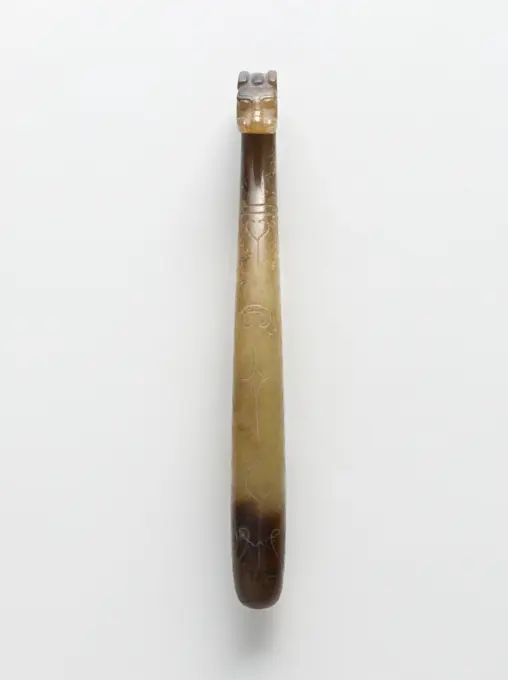
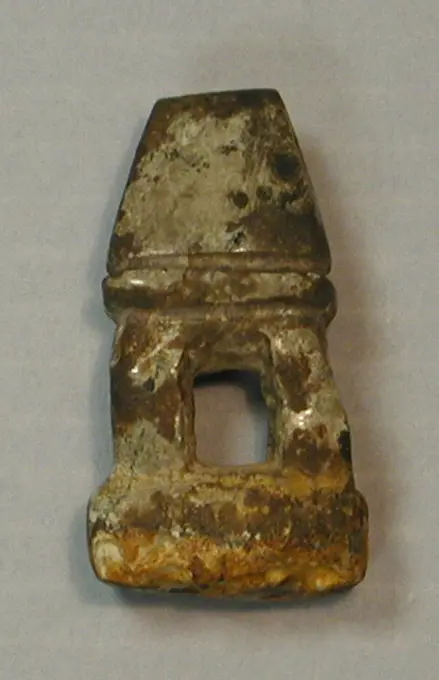
Clip. Jade, China, undoubtedly Han dynasty (206 BC-220 AD). Paris, Cernuschi museum. 78602-22 Staple, attachment, Asian civilization, Chinese civilization, han dynasty, fixation, jade, fine stone, symbolic stone
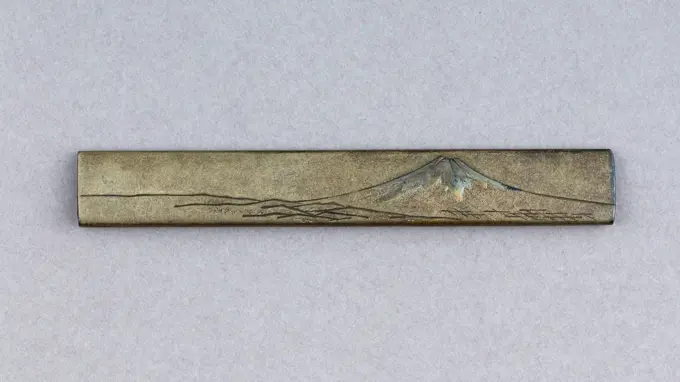
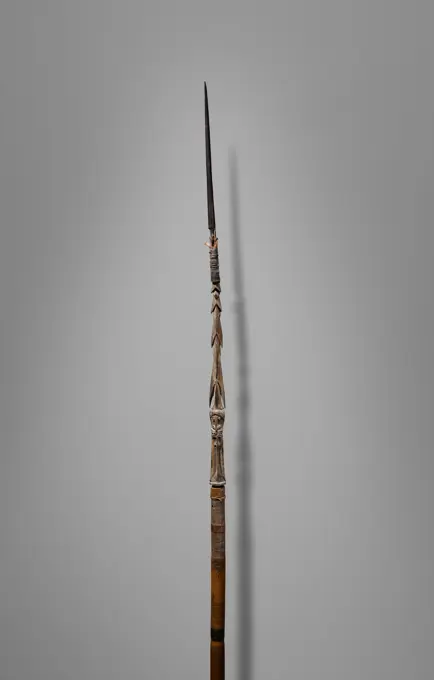
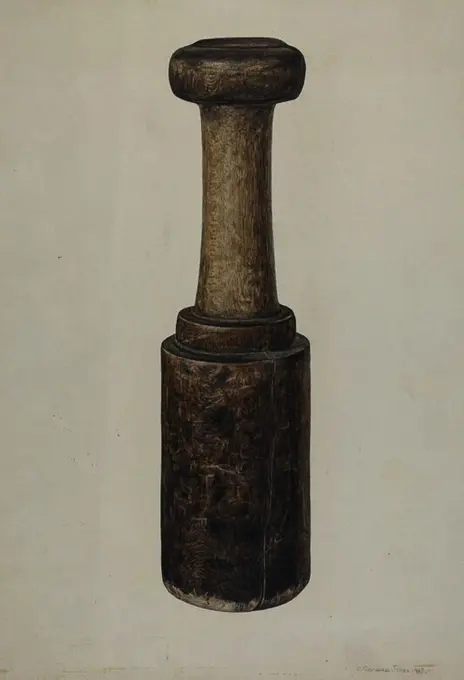
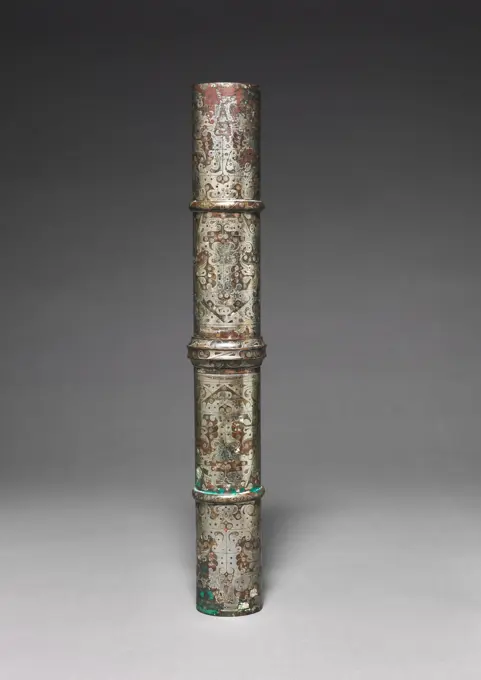
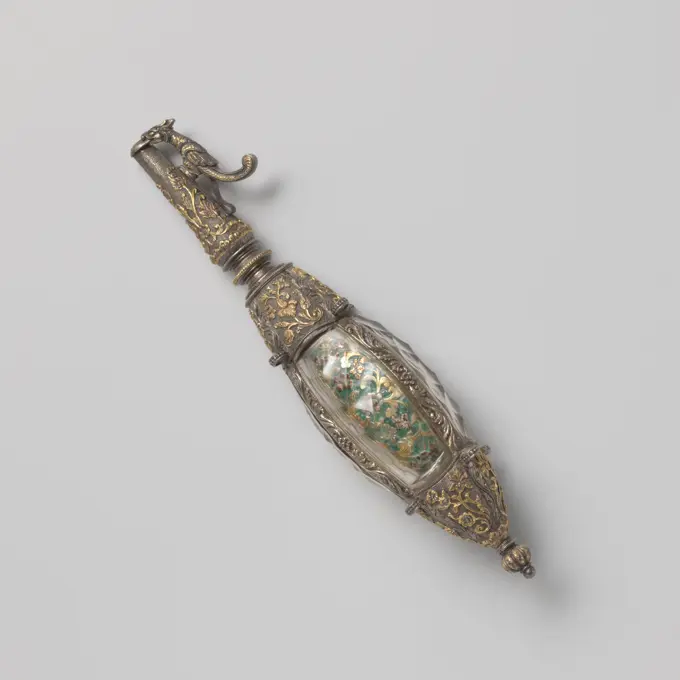
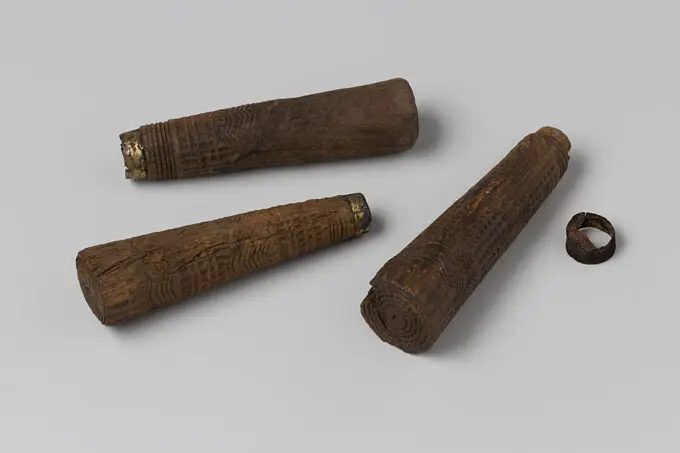
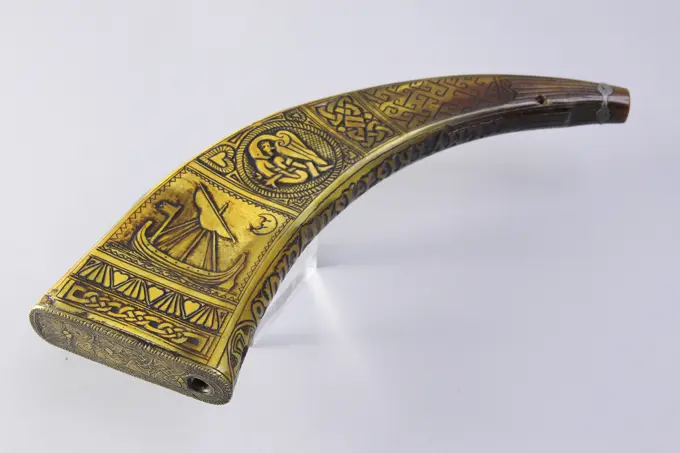
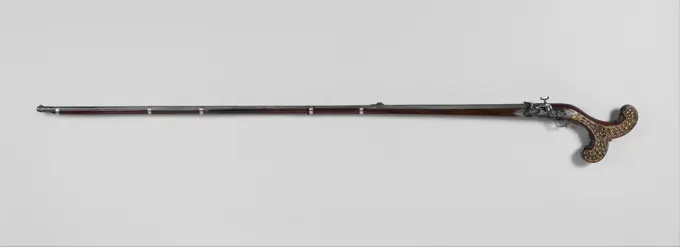
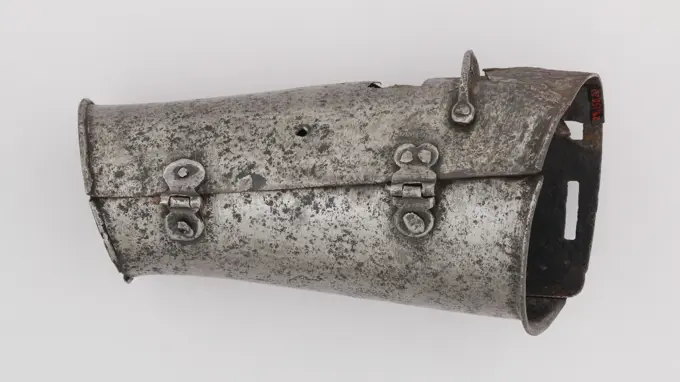
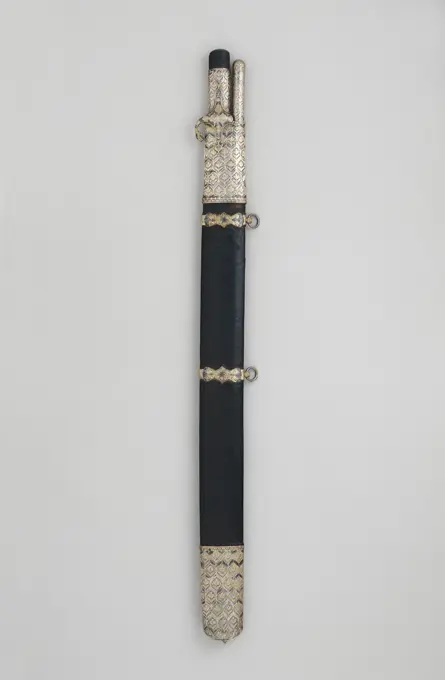
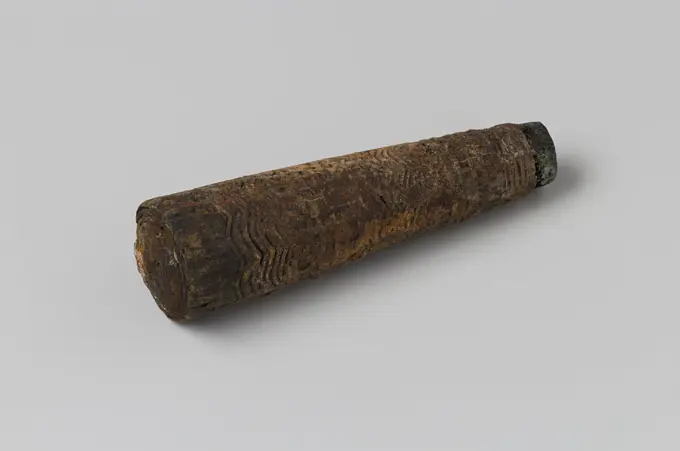
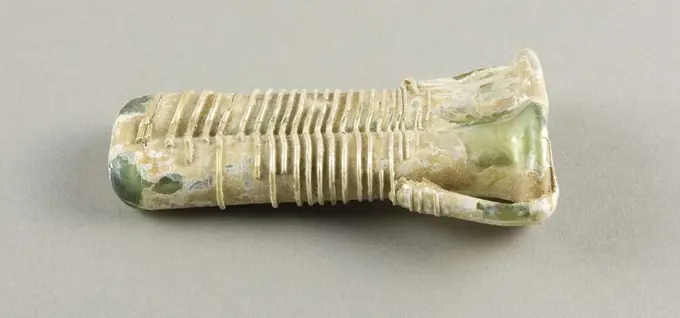
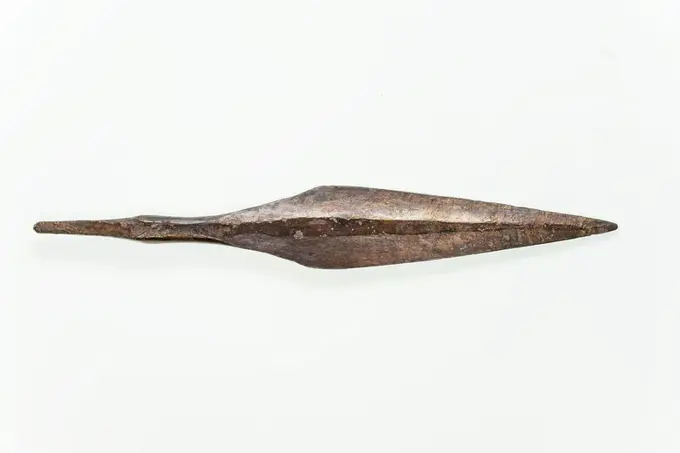
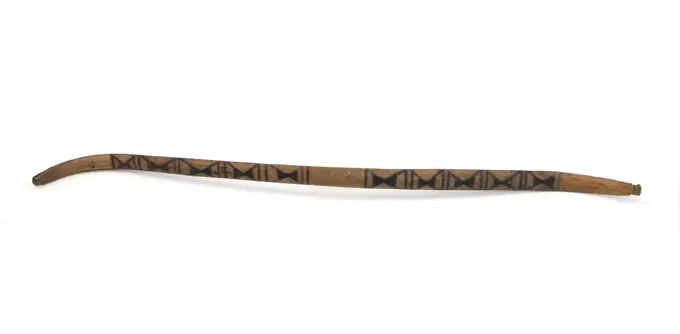
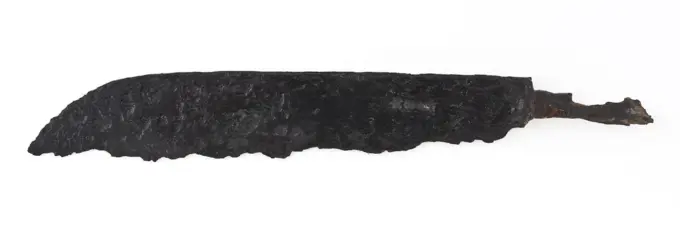
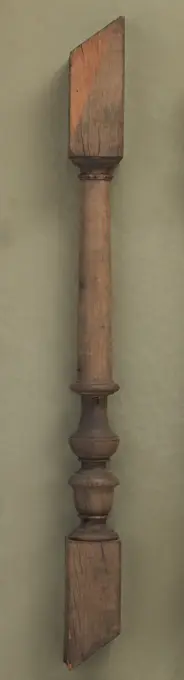
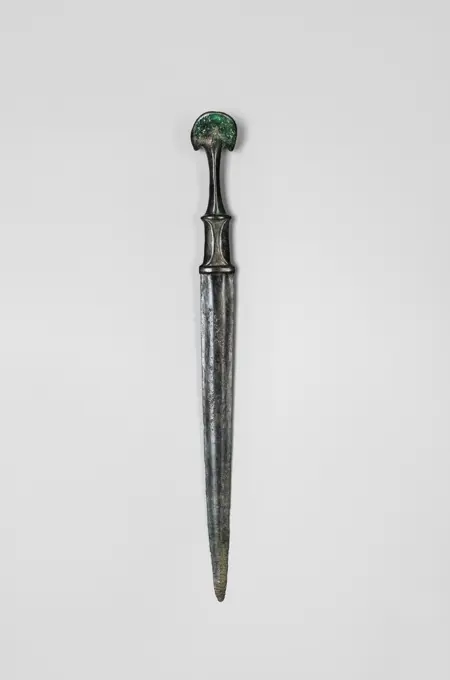
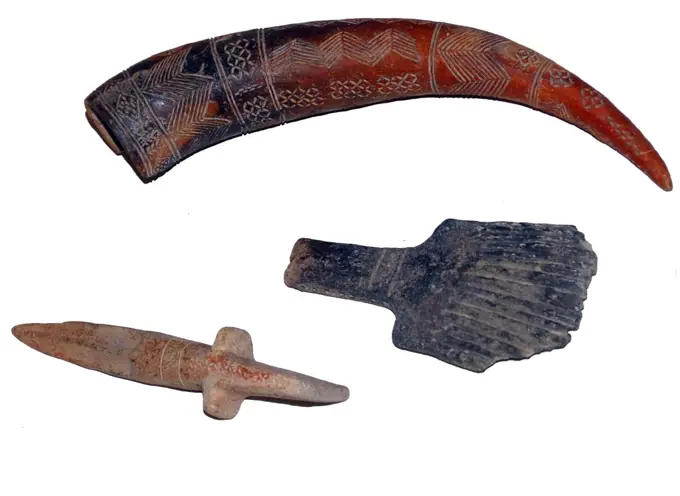
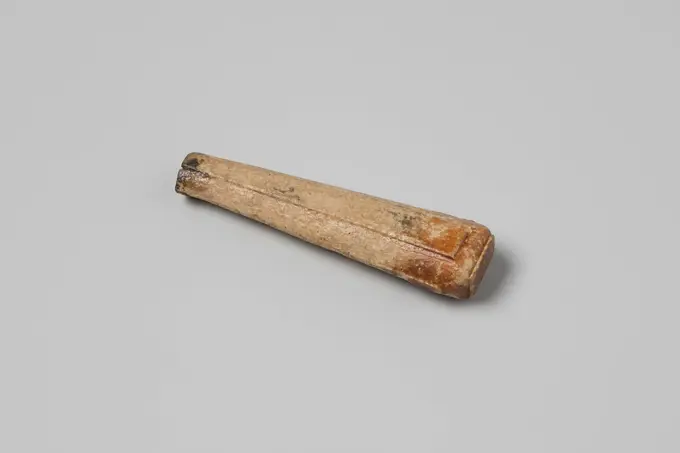
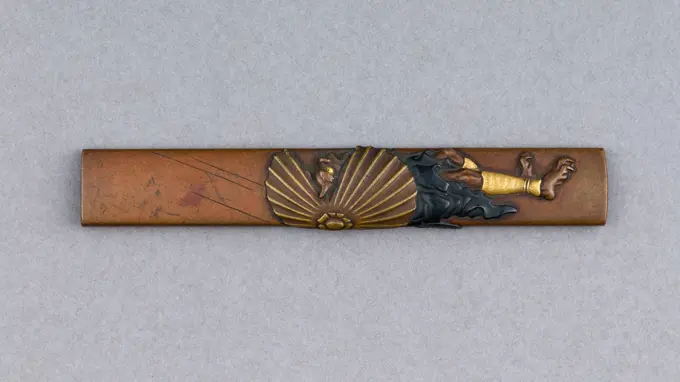
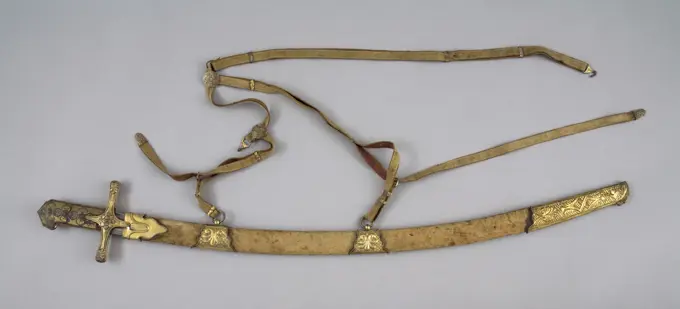
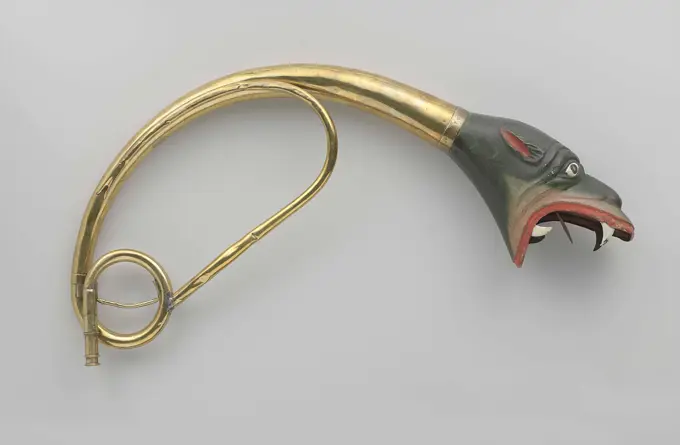
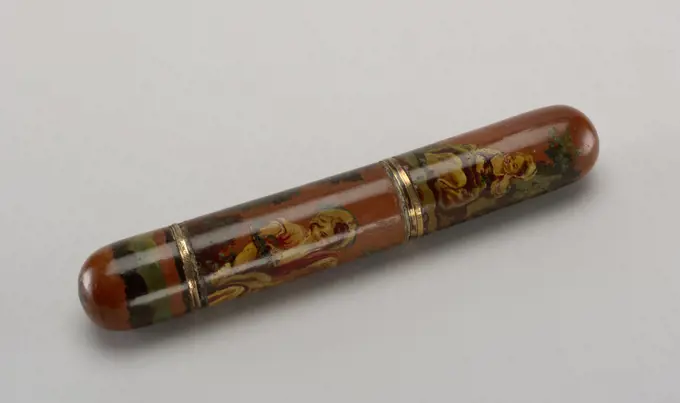
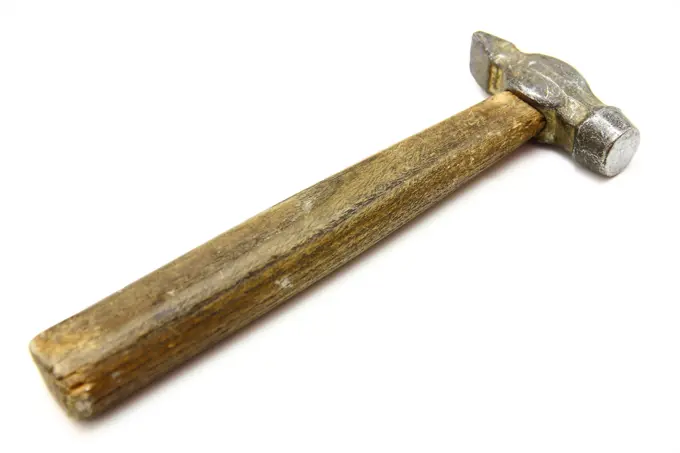
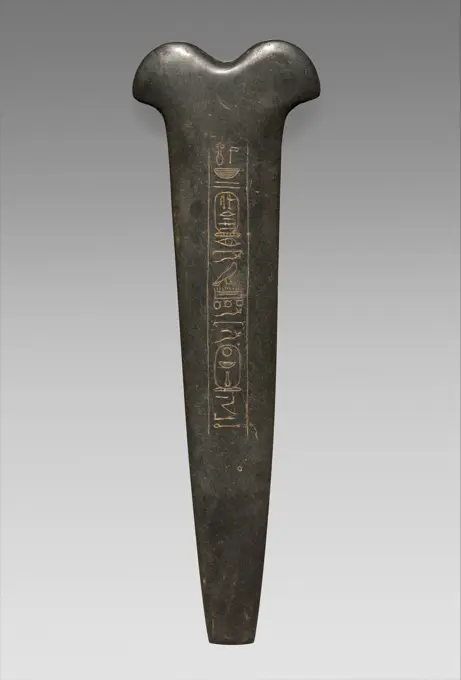
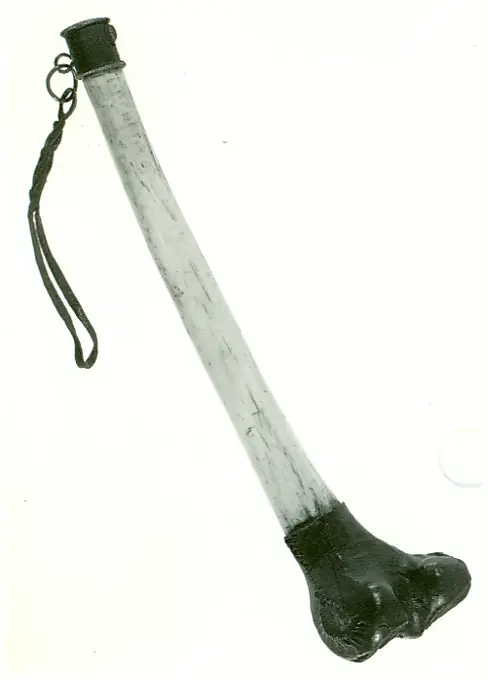
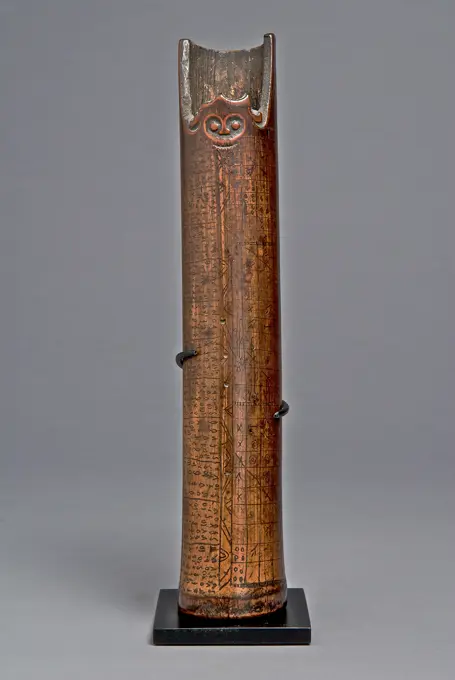
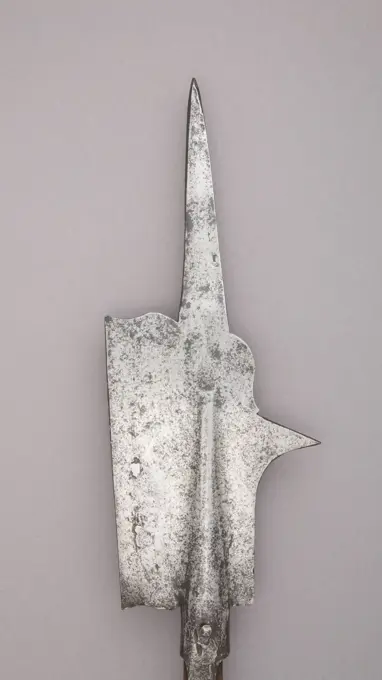
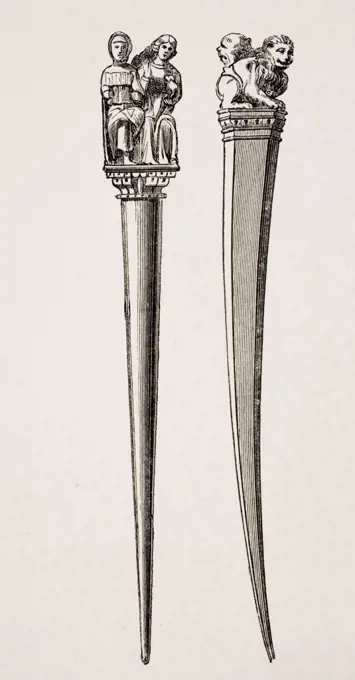
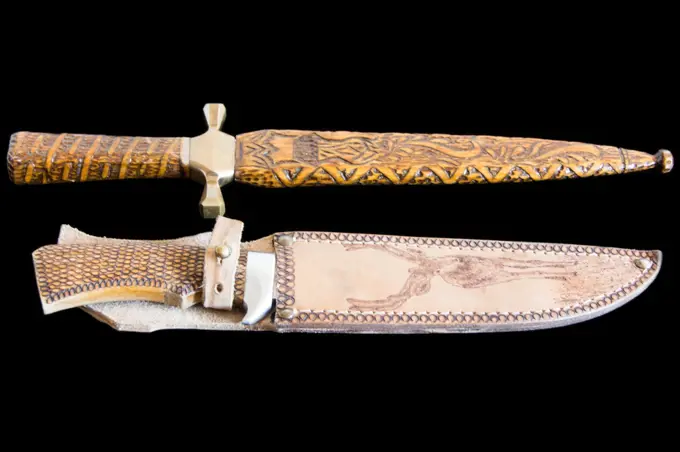
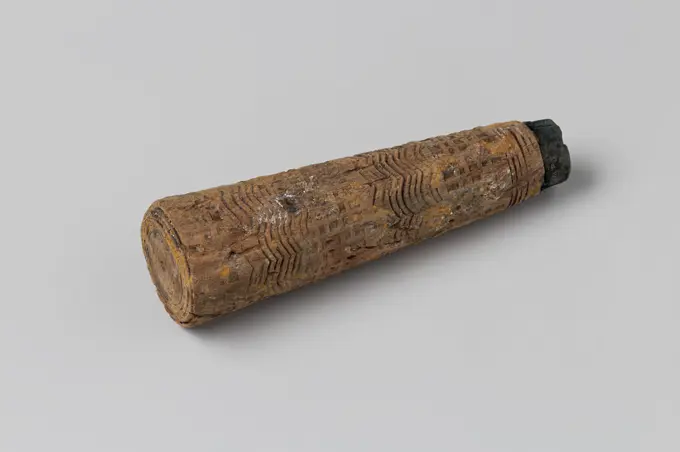
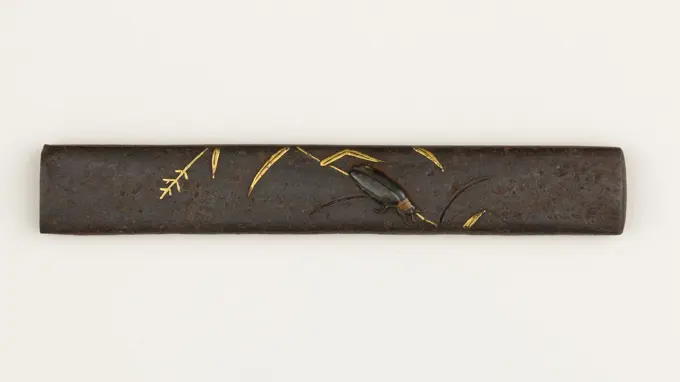
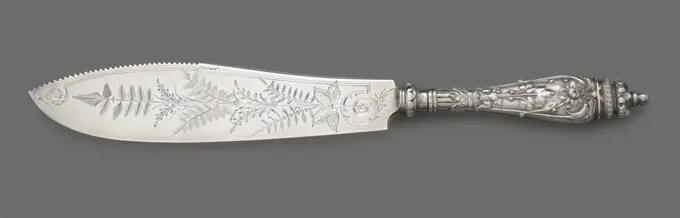
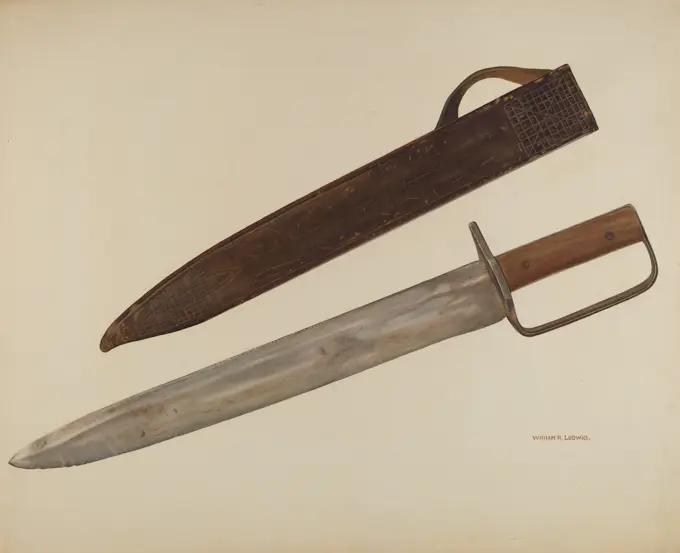
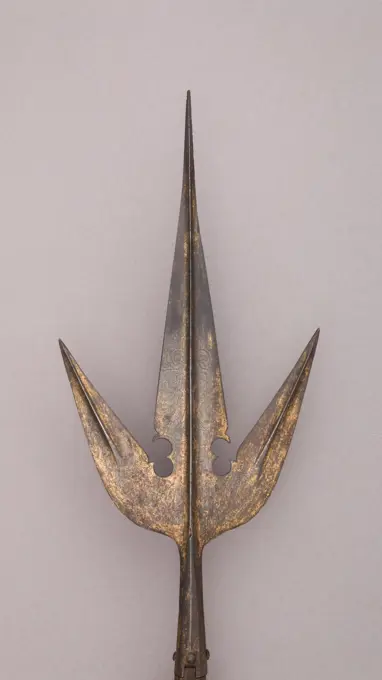
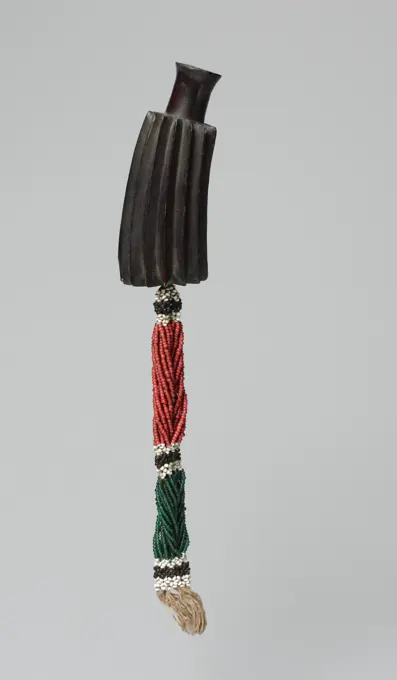
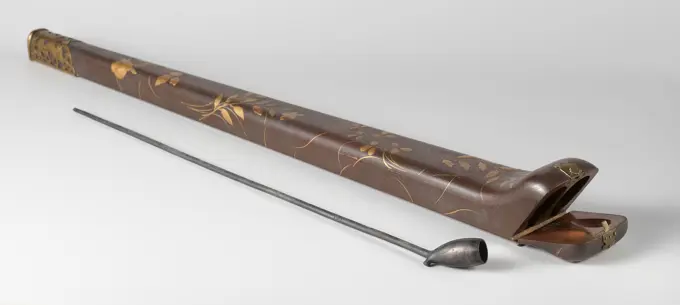
Right Greave, 1801-1900. Germany, 19th century. Steel with black paint; overall: 27.3 x 33 cm (10 3/4 x 13 in.).Medical Instrument with Spatula Finial. UnknownKnife with Porcelain Pattern, Meissen Porcelain Manufactory, German, active from 1710 to the present, hard paste porcelain, vitreous enamel, steel, silver, Straight-sided, leaf-shaped blade. Horizontal bands on bolster, silver ferrule, octagonal in section. White pistol-shaped porcelain handle, octagonal in section. Multi-color Chinoiserie decoration with tiger, bamboo and flowers on one side, and flowers on the reverse side., Germany, after 1730, cutlery, Decorative Arts, knife, knifeKnife Handle (Kozuka) ca. 1615-1868 Japanese A kozuka is a handle of a by-knife that is part of a sword mounting. It is kept in a slot on the reverse of a katana scabbard, often with a matching kōgai (hairdressing tool).. Knife Handle (Kozuka) 34507Musette, anonymous, c. 1850 - c. 1899 Musette van Palmhout, mounted with ivory and with four brass valves. A thumb hole on the upper part. Two voice holes in the cup.  boxwood. ivory. brass (alloy) Musette van Palmhout, mounted with ivory and with four brass valves. A thumb hole on the upper part. Two voice holes in the cup.  boxwood. ivory. brass (alloy)Knife with Ram's Head. Culture: China. Dimensions: L. 10 5/8 in. (27 cm). Date: 12th-11th century B.C.. Museum: Metropolitan Museum of Art, New York, USA.Copper pin ca. 2650 B.C. Early Dynastic Period. Copper pin. ca. 2650 B.C.. Copper alloy. Early Dynastic Period. From Egypt, Northern Upper Egypt, Abydos, Umm el-Qaab, Tomb of Khasekhemui, Egypt Exploration Fund excavations. Dynasty 2SpearGrape Crusher. Dated: 1939. Dimensions: overall: 35.7 x 24.6 cm (14 1/16 x 9 11/16 in.) Original IAD Object: 24" long; 3 1/16" in diameter. Medium: watercolor and graphite on paperboard. Museum: National Gallery of Art, Washington DC. Author: Clarence Secor.Knife with Sheath. Culture: Philippine, Zamboanga. Dimensions: L. with sheath 15 1/4 in. (38.7 cm); L. without sheath 12 3/4 in. (32.4 cm); W. 2 in. (5.1 cm); Wt. 10.2 oz. (289.2 g); Wt. of sheath 4.5 oz. (127.6 g). Date: 18th-19th century. Museum: Metropolitan Museum of Art, New York, USA.Chariot Canopy Shaft, 202 BC- 9. China, Western Han dynasty (202 BC-AD 9). Bronze inlaid with silver; overall: 42.4 cm (16 11/16 in.).A set of cutlery composed of a spoon, fork and knife C.K. Professional school in the wooden industryManiple;  1st half 18th century (1701-00-00-1750-00-00);Kruithoorn, Anonymous, c. 1700 - c. 1800 Jewel of silver with golden gear. The belly of sharpened glass, which means that a second tube can be seen from green and brown enamel. Necklaces are missing. Southern India silver (metal). glass. Jewel of silver with golden gear. The belly of sharpened glass, which means that a second tube can be seen from green and brown enamel. Necklaces are missing. Southern India silver (metal). glass.Messenheften en koperring uit het wrak van de Oost-Indiëvaarder Hollandia.Knife, handle, cylindrical: tapering; flat upper end, turned decoration of alternating bands of wavy lines and square and rectangular blocks, with concentric circles at lower end (wavy line pattern shows slight variation), ferrules, id. NG 1980-27H426.Dagger, Before 1916. Philippines. overall: 29.1 cm (11 7/16 in.); blade: 22 cm (8 11/16 in.).Powder horn -Jatagan with the vaginaFlintlock Gun 17th-18th century Sri Lankan This long, dramatically shaped gun is one of only five highly decorated Sinhalese long arms (bondikula thuwakkuwa) known to survive from the seventeenth and eighteenth centuries. Measuring more than seven feet in length it features a bifurcated butt--a characteristic unique to Sinhalese guns, thought to be in use since as early as the sixteenth century--and is distinguished by its remarkable ornamentation. Pierced ivory panels, sensitively carved with scrolling foliate designs (liya vela and liya pata) that emanate from and around two central flowers (sna-mala), are inset into the stock, which itself is carved with scrolling foliate ornament (liya pata). Silver plates embossed with screwpine flowers (vetakeyiya mala) frame the lock, which is positioned on the left side of the gun, as was standard on Sinhalese firearms of the period. The two-stage barrel, with brass-inlaid transverse bands at its transition, is silver-damascened with an undulaHalberd 1380-1430 Swiss. Halberd 34293Three pieces of iron. Three pieces of iron from very irregular shape.Black Laeken mourning, finished with dull black ribbon from Taf, Anonymous, c. 1800 - c. 1850 Black Laeken funer. The lamfer consists of a strip of sheet that is squeezed in triple pleats. This strip has been set to a reinforced and doubled mounting item, to which two ribbons are attached. The pleated part is trimmed with black ribbon from TAF. Netherlands geheel: cloth. lint: silk. lint: taffeta Black Laeken funer. The lamfer consists of a strip of sheet that is squeezed in triple pleats. This strip has been set to a reinforced and doubled mounting item, to which two ribbons are attached. The pleated part is trimmed with black ribbon from TAF. Netherlands geheel: cloth. lint: silk. lint: taffetaForearm Defense (Vambrace) ca. 1450-70 Italian This is part of a large find of medieval armor discovered in 1840 in the ruins of the fortress of Chalcis, on the Greek island of Euboea (then a Venetian colony called Negroponte). The fortress had been captured and destroyed by the Turks in 1470. Now divided largely between the Ethnological Museum, Athens, and The Metropolitan Museum of Art, the Chalcis hoard contains many rare and unusual elements of fourteenth- and fifteenth-century armor. Of particular importance are the variety of headpieces and the many fragments of brigandines (armor for the torso constructed of small plates riveted to layers of fabric), some of which retain portions of their original velvet covering. The Chalcis armor provides a unique picture of the armament used in the Aegean, one of the easternmost military outposts of the Venetian empire.. Forearm Defense (Vambrace) 23099Saber and Dart with Scabbard 17th century Mounts and scabbard, Turkish; blade, European The silver-gilt and niello decoration on this set of throwing dart and saber, as well as the dragon-head quillon, date the ensemble to Ottoman Turkey during the late seventeenth century. Dragon terminals were popluar with Ottoman metalworkers through much of the sixteenth to eighteenth century, but there is considerable variation in the form of the dragons. The stylized, roundish heads of this saber are of a late seventeenth-century type; a comparable example can be seen on a jug sent as a gift to the empress of Russia in 1692. A similar dating for the set is supported by the very similary silver-gilt decoration on a saber in the Wallace Collection, London, that bears an inscription stating that it was made in Constantinople in the year 1700 (no. 0A 1750). The comparison with the Wallace Collection saber is important, as the inscription on the latter demonstrates that this kind of work was produced Knife lift from the wreck of the East Indiesman Hollandia.knife, Handle, Cylindrical: tapering; ID. NG 1979-403H, Ferrule, ID. NG 1980-27H426.Cosmetic Container. Roman; Levant or Syria. Date: 301 AD-400 AD. Dimensions: 12.1 × 6.4 × 3.2 cm (4 3/4 × 2 1/2 × 1 1/4 in.). Glass, blown technique. Origin: Syria. Museum: The Chicago Art Institute, Chicago, USA. Author: ANCIENT ROMAN.Crossbow Bolt, 1500s-1600s. Germany, 16th-17th century. Wood, leather, steel; overall: 37.2 cm (14 5/8 in.). Also known as a quarrel, crossbow bolts are stockier than arrows, are constructed of durable materials, and can be reused on the field of battle.Arrow or Javelin Point of Neferkhawet. Dimensions: L. 11.4 cm (4 1/2 in.); W. 1.6 cm (5/8 in.); Greatest thickness 0.6 cm (1/4 in.). Dynasty: Dynasty 18, early. Reign: reign of Thutmose I-early sole Thutmose III. Date: ca. 1504-1447 B.C.. Museum: Metropolitan Museum of Art, New York, USA.Wooden Spindle Made 1000-1476 Peru. Wood .Goudgalon for Broek from J.R. Thorbecke, c. 1850  Goudgalon for Broek belonging to the office of J.R. Thorbecke as Minister of the Interior. Netherlands textile materialsKanyáhte kánowa (Snapping turtle shell rattle) Native American (Iroquois) 19th century Small turtle shell rattles are frequently used by Native Americans. However, the shells of large snapping turtles were originally used by Seneca and Iroquois singers during the Great Feather Dance and in healing rituals of the False Face Company. Iroquois mythology maintains that the earth rests on the back of a turtle. View more. Kanyáhte kánowa (Snapping turtle shell rattle). Native American (Iroquois). 19th century. Shell, wood, cherry pits?, leather. Native American. Tonowanda, New York, United States. Idiophone-Shaken-rattleSugarTongs.   Maker: T. Spear, American (?)Knife with Porcelain Handle Knife; Manufactured by Meissen Porcelain Manufactory (Germany); Painted by Ferner Workshop, Thuringen; Germany; porcelain, vitreous enamel, steel, gold; L x W: 20.8 x 1.8 cm (8 3/16 x 11/16 in.); The Robert L. Metzenberg Collection, gift of Eleanor L. Metzenberg; 1985-103-183Bronze Age. Neunheiligen. Dagger blade, 2300-1800BC. Artist: Unknown.Bow -Blade with curved end and narrowed sting, blade knife cutlery soil find iron metal, Blade with narrowed sting and forged handle protector Unclear smashed trademark blade archeology Rotterdam rail tunnel cutting Soil discovery: rail tunnel Rotterdam.Ceremonial blade 2nd millennium B.C. China. Ceremonial blade. China. 2nd millennium B.C.. Jade (nephrite). Neolithic period-Shang dynasty (ca. 1600-1046 B.C.). JadeJatagan in Schede with Bandelier, Anonymous, 1700 - 1900 yatagan Slightly bent sabel with blade without a blood channel. Golden rattling with a floating work. The Houtenschede is covered with black velvet, with the point and the opening with golden upholstery with the same floating. On the golden upholstery at the opening two gold rings with two gracefully braided strings of blue silk and silver wire with two balls, on which the bandelier is located. Red velvet Bandelier, the downside woven from blue silk and gold thread, two brushes reinforced with silver thread. Indonesia (possibly)Bali sabel: steel (alloy). gold (metal). schede: wood (plant material). schede: silk. bandelier: velvet (fabric weave). bandelier:. bandelier: silver thread forging / cutting / braidingMusketmaat without cap, with leather and brass soil and leather ears and remaining string. Musketmaat without cap, with leather and brass soil and leather ears and remaining string.Dish;  approx. 3200 3050 BC ; Predominating period, Nagada III (-3200-00-00--3050-00-00);Frombork, REVINDication, collection of ancient Egypt, KingdomDagger (Khanjarli) with Sheath 17th-18th century Indian. Dagger (Khanjarli) with Sheath 31458Clarinet, anonymous, c. 1810 C Palmhout clarinet with seven valves. Marked on the barrel with crowned C. marked "geisler" on the mouthpiece.  wood (plant material). boxwood C Palmhout clarinet with seven valves. Marked on the barrel with crowned C. marked "geisler" on the mouthpiece.  wood (plant material). boxwoodBaluster late 17th-early 18th century British. Baluster. British. late 17th-early 18th century. Pine. WoodworkSztylet. nieznany warsztat luristański, workshopBronze tools buried with the dead of the Vounous Cemeteries, CyprusKoekijzer with inscription 1569, Anonymous, 1569 A cookie iron for circular waffles and cookies. One circular shape centrally shows the Last Supper with Christ and eleven apostles from above seen at a round table with counting, knives and chalices. Around it is the inscription: Drink.und.is.daneben.got.nit.gis.volg.sin.seiner.lers.wierst.verloren.nimer.me. (R). The other circle shows two coats of arms, one with a goat and one with a bird (stork), With a nitrated helmet above it. Between the helmets the year 1569. There is the inscription around this middle section: Hanns.ortner.sibilla.stainingerin.sein.hausfrau. The outside sides of the circular shapes and handles are undecorated. At the bottom one of the handles a hook that can be attached to the other handle. Germany iron (metal) forging / engraving A cookie iron for circular waffles and cookies. One circular shape centrally shows the Last Supper with Christ and eleven apostles from above seen at a round table with counting, knives Knife (Kard) 18th-19th century Persian, Qajar. Knife (Kard). Persian, Qajar. 18th-19th century. Steel, gold, enamel, agate. KnivesSword (Ayda Katti) 19th century Indian, Coorg. Sword (Ayda Katti). Indian, Coorg. 19th century. Steel, brass, horn (stag). Karnataka. SwordsKnife lift from the wreck of the East India Hollandia. Knife-Handle, Straight-Sided: tapering; Hexagonal Faceted, Oval in Section, 2 Sides Ribbed, Flat Upper End.Knife Handle (Kozuka) 18th century Japanese A kozuka is a handle of a by-knife that is part of a sword mounting. It is kept in a slot on the reverse of a katana scabbard, often with a matching kōgai (hairdressing tool).. Knife Handle (Kozuka) 35147Goldsmithery, Damascened daggers made of gold, silver, bronze and niello, from Mycenae and Pylos, GreeceSpoon 19th century possibly French. Spoon 188185Spoon with a Panther. Culture: Roman. Dimensions: Overall: 4 13/16 x 1 x 5/8 in. (12.3 x 2.5 x 1.6 cm). Date: 3rd-4th century.A slit on the top of the handle, perhaps for the insertion of a blade, suggests this object may have functioned as both a knife and a spoon. Museum: Metropolitan Museum of Art, New York, USA.Carabela with vaginaTemple Model 1st-8th century Mezcala. Temple Model 317532Flint Striker. Iran, Qajar, 19th century. Metal. MetalworkBazuin, the cup in the form of an open hose or dragon head, belonged to J. Willers, in 1830-32 staff musician at the Grenadiers and Hunters Regiment. Copper wind instrument without valves: a slightly curved tube spoils itself to the cup that is beaten in the shape of a slound beam (with tongue) and painted in green, red and white (eyes and teeth). A signature has been taken on the neck side of the cup: 'Charles Kretzschmann a Strasbourg'. Coulisse is missing.Spear Head ca. 750-90 B.C. Etruscan. Spear Head. Etruscan. ca. 750-90 B.C.. Bronze. Shafted WeaponsEgypt dagger, 18. centuryMusical Instruments at the South Kensington Museum: Mountain Horn, 1870. 'The mountain horn, of wood, bound with brass, is nearly 8 ft. long, and is one of those used by the Alpine herdsmen of Switzerland, and likewise in Sweden, to give signals to each other, or to call their cattle together, as well as to beguile their leisure with pastoral music'. From "Illustrated London News", 1870.SERIE VENECIA 10 - 1958. Author: ANGEL FERRANT (1890-1961). Location: PRIVATE COLLECTION. MADRID. SPAIN.Huntsman's knife 18th century possibly Southern German. Huntsman's knife. possibly Southern German. 18th century. Steel, wood, brass. Metalwork-SteelRadslotpistool, anonymous, c. 1650  Radslot gun with silver battle decorated in the lobe style, almost certainly Hollands; Part of a couple. The lock is engraved with flowers and equipped with a silver partners with relief decoration and a silver rooster stood in the form of a cherub; The battle feather row is chiseled with a crucifix. The loop is stamped on the left with a brand in the form of probably a dagger and on the bottom with the letters PW and a leaf in a circle. The ebbenhouten flask is simply cut and inlaid with an ivory shield framed by curls of inlaid silver thread; Behind the loop the flask is inlaid with silver thread in the form of a lily; The handle is inlaid with shelly ivory plates framed by stars and curls of silver wire. In addition to the iron tractor bracket, the batter is of silver and consists of a chest of drawers, both engraved with a crucifix, and a wide -ranging silver flask button, decorated on both sides with nacegated repoussé leafs, curls and a face wiRectangular bag with lid over it. Rectangular bag with lid over it. The bag has been divided in half inside the length. The front half has seven equally large compartments. The rear half has two courses. The carrying strap is decorated with stitching and has a point at the end. The lid is with a flap over the bag. The lid has round corners and a point in the middle. The lid has a crowned weapon like decoration in the middle, in copper fittings. Above the flap is a leather decoration.DOUBLE ACTION ROMAN WATER PUMP FROM THE SOTIEL CORONADA MINE (HUELVA). Location: MUSEO ARQUEOLOGICO NACIONAL-COLECCION. MADRID. SPANIEN.Mes met een heft van faience.Knife with a lifts of faience. Multicolored painted with flowers and lambrequins.Case for sealing wax, Lacquered wood, tortoisehell, gold, Lacquered wood case, painted in pastoral scenes and human figures, lined with shell; long compartment one end, short compartment other end, France, 18th century, containers, Decorative Arts, Case for sealing waxmetal hammer over white background The old metal hammer with the wooden handle lies on a white background Copyright: xZoonar.com/AlexanderxStrelax 3904589Ritual Implement Dedicated by a King Senwosret to Nebhepetre Mentuhotep II ca. 1961-1840 B.C. Middle Kingdom Known as a pesesh-kef, this magical instrument has its origins in early Egyptian culture. It may represent an implement used to cut the umbilical cord. The pesesh-kef was employed in the Opening of the Mouth ritual, during which a priest would hold the implement to the mouth of a cult statue or mummy, allowing it to receive offerings. The inscription indicates that this implement was dedicated to Nebhepetre Mentuhotep II by one of the Senwosret kings, likely Senwosret III.. Ritual Implement Dedicated by a King Senwosret to Nebhepetre Mentuhotep II 544199Rkangling 19th century Tibetan The thighbone of a lama priest is the original form of the more common metal trumpets. A single rkang-gling ('leg bone flute') is used with a pellet drum to escape epidemics. Pairs signal the entry of ritual dancers, and perform rituals connected with fierce deities. The head of a chu-srin (Sanskrit: makara), a sea monster or a dragon, often provides a decorative metalwork bell. When the rkang-gling is made of metal, bosses decorated with trefoils cover the joints where the sections of cooper and/or silver tube are joined. The trefoil, a three cusped design, is an emblem of power and authority and is used as the head of a scepter. The chu-srin and dragon are associated with water and rain and may decorate the rkang-gling.. Rkangling 505032Ceremonial Knife (Tumi). Possibly Chimú; North coast, Peru. Date: 1000-1470. Dimensions: 15.6 x 9.1 cm (6 1/8 x 3 9/16 in). Bronze. Origin: Peru. Museum: The Chicago Art Institute, Chicago, USA.Cap and Ball Revolver. Dated: c. 1937. Dimensions: overall: 20.3 x 31.1 cm (8 x 12 1/4 in.). Medium: watercolor, graphite, and gouache on paper. Museum: National Gallery of Art, Washington DC. Author: LeRoy Robinson.Double Sword with Scabbard. Culture: Chinese. Dimensions: L. with scabbard 34 1/2 in. (87.6 cm); L. of each without scabbard 32 5/16 in. (82.1 cm); L. of each blade 25 5/8 in. (65.1 cm); W. 3 1/2 in. (8.9 cm); Wt. of sword (a) 15.8 oz. (447.9 g); Wt. of sword (b); 13.9 oz. (394.1 g); Wt. of scabbard 8.3 oz. (235.3 g). Date: 18th-19th century. Museum: Metropolitan Museum of Art, New York, USA.Knife Handle (Kozuka) ca. 1615-1868 Japanese A kozuka is a handle of a by-knife that is part of a sword mounting. It is kept in a slot on the reverse of a katana scabbard, often with a matching kōgai (hairdressing tool).. Knife Handle (Kozuka) 34545Beam. Date/Period: Before 1862. Ethnological object. Author: Micronesia Palau Islands.Radslotpistool, anonymous, c. 1650  Radslot gun with silver battle decorated in the lobe style, almost certainly Hollands; Part of a couple. The lock is engraved with flowers and equipped with a silver partners with relief decoration and a silver rooster stood in the form of a cherub; The battle feather row is chiseled with a crucifix. The loop is stamped on the left with a brand in the form of probably a dagger and on the bottom with the letters PW. The ebbenhouten flask is simply cut and inlaid with an ivory shield framed by curls of inlaid silver thread; Behind the loop the flask is inlaid with silver thread in the form of a lily; The handle is inlaid with shelly ivory plates framed by stars and curls of silver wire. In addition to the iron tractor bracket, the batter is of silver and consists of a chest of drawers, both engraved with a crucifix, and a wide -ranging silver flask button, decorated on both sides with nacegated repoussé leafs, curls and a face with leaves, and an unproContainer with MagicWritingSpoon with a Panther 3rd-4th century Roman A slit on the top of the handle, perhaps for the insertion of a blade, suggests this object may have functioned as both a knife and a spoon.. Spoon with a Panther 465324Halberd 1450-60 Swiss. Halberd 27868Styli used for writing in the 14th century. From a 19th century print.AZAGAYA. PALEOLITICO. (DEPOSITO: MUSEO ARQUEOLOGICO NACIONAL).Photo of cold weapon on black backgroundKnife lift from the wreck of the East Indiesman Hollandia.knife, Handle, Cylindrical: tapering; ID. NG 1979-403H, Ferrules, ID. NG 1980-27H426.Flint ca. 3rd-7th century A.D. Sasanian. Flint 323201Knife Handle (Kozuka) ca. 1615-1868 Japanese A kozuka is a handle of a by-knife that is part of a sword mounting. It is kept in a slot on the reverse of a katana scabbard, often with a matching kōgai (hairdressing tool).. Knife Handle (Kozuka) 25782Dress Sword. Culture: American. Dimensions: L. 32 in. (81.3 cm). Maker: Handle by John Bailey (American, active New York, 1736-1815); Blade by Andrea Ferara (born 1530). Date: 1775-90. Museum: Metropolitan Museum of Art, New York, USA.isolated blades of two old wooden weathered paddles (oars) with stains and cracksPrehistory, Italy. Bronze daggers. From Torre Galli, province of Vibo Valentia.Radslotpistool.Part of a couple. The lock is unfromed; The outer wheel is engraved with an S and has a hook on the bottom; The Pandekel is opened with a printing pin. The round loop is on top of a rib, flanked at the rear by two short ribs; Mounted below with c.m.i.l. The flask has a hexagonal handle; The kolf bud is from ivory; Three screw plates of cow horn are among the three final bolts; The handle is inlaid on both sides with a triangle of ivory under two laps, as if the kolf traces are. Apart from the loop-shaped iron tractor bracket, the batter of gold-plated geelkoper is from a drawer cap, a round loading cooker and a tire around the flask; The ebony loading stick is equipped with an ivory hood.Tiffany & Co., Cake Knife, Sterling silver.HALLEBARDE GE (common name). Cast iron, bronze, cast iron. Cernuschi Museum, Asia Museum of Asia in the city of Paris.William Ludwig, Trench Knife and Sheath, c 1941 Trench Knife and SheathFragments of pipe stems from the wreck of the East India Flying Heart. Three pieces of stem from an earthen golden pipe, blue purple and pink colored. No decorations. Fragments or bowls and votes.Staff Weapon 16th century German. Staff Weapon. German. 16th century. Steel, wood (beech), gold, textile. Shafted WeaponsCurling Iron. Dated: c. 1939. Dimensions: overall: 46 x 35.5 cm (18 1/8 x 14 in.). Medium: watercolor, graphite, pen and ink, and colored pencil on paper. Museum: National Gallery of Art, Washington DC. Author: Wellington Blewett.chewed on pencilSnuff Container, 1800s-1900s. Africa, Southern Africa, South Africa, Northern Nguni-style maker. Wood, glass beads, shell, and cotton; overall: 20.3 cm (8 in.).Saxon bow and arrow, 10th century. Handcoloured lithograph by Joseph Strutt from his own Sports and Pastimes of the People of England, Chatto and Windus, London, 1876.Table knife and fork 18th century Southern German or Flemish. Table knife and fork. Southern German or Flemish. 18th century. Steel, silver. Metalwork-SteelPijp, 1700 - 1740 Pipe in Japanese pipe freestone, unclear whether this pipe belongs to the box. De Pijp is marked: Peter Berger from Grenzhausen Westerwald, active 1734-1771). Japan pipe clay   Japan Pipe in Japanese pipe freestone, unclear whether this pipe belongs to the box. De Pijp is marked: Peter Berger from Grenzhausen Westerwald, active 1734-1771). Japan pipe clay   Japan