Historical Weaponry

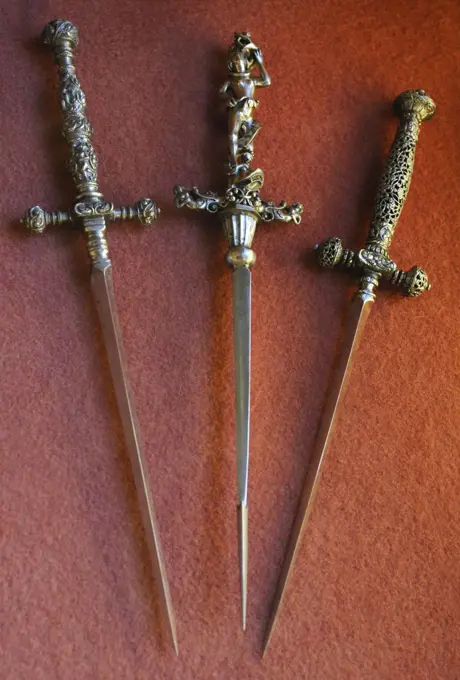
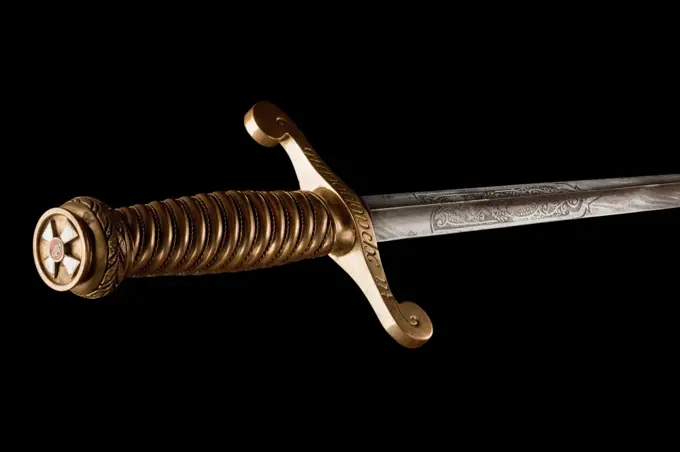
A selection of ornate historical weapons including spears and swords, showcasing intricate designs from different cultures.

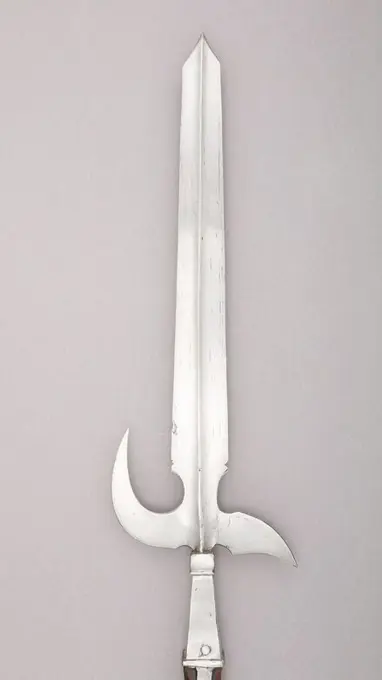
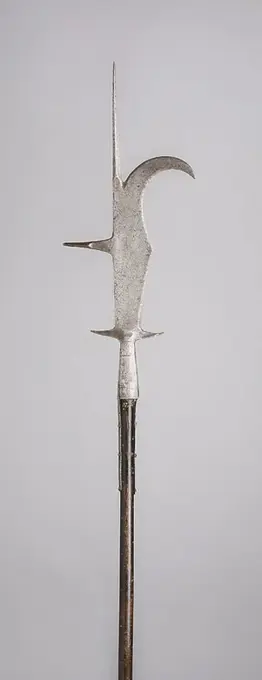
Halberd 17th century Italian. Halberd 25846
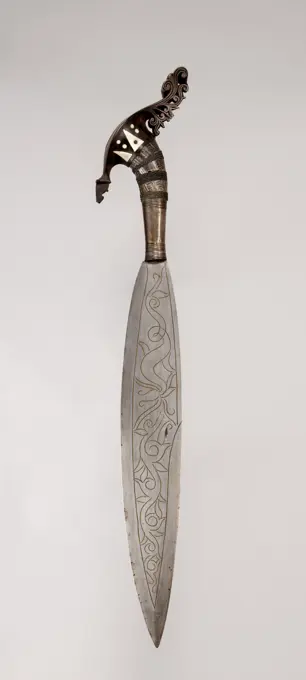
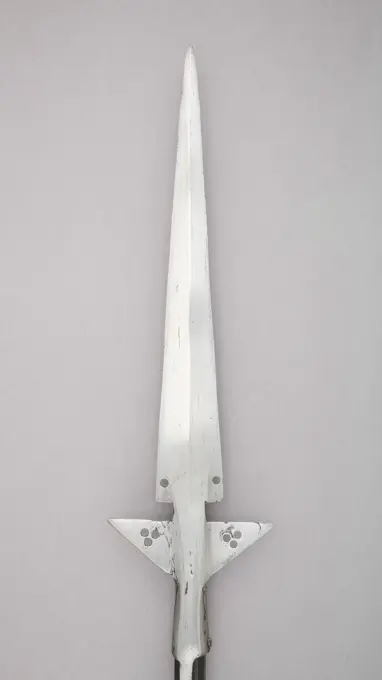
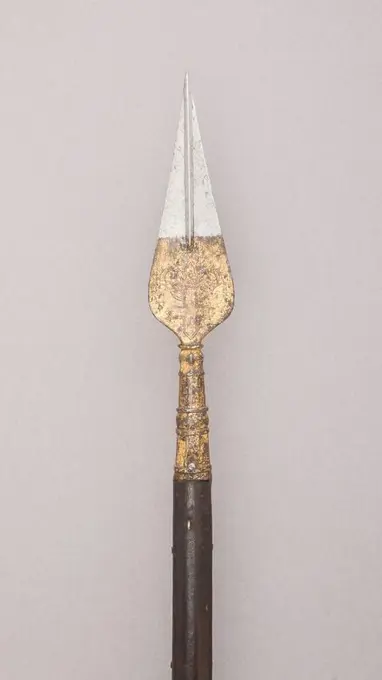
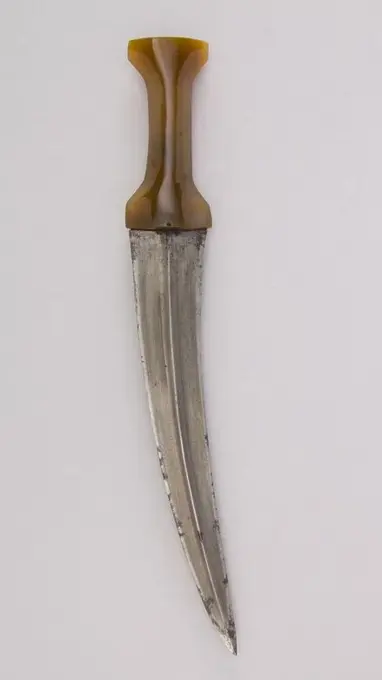
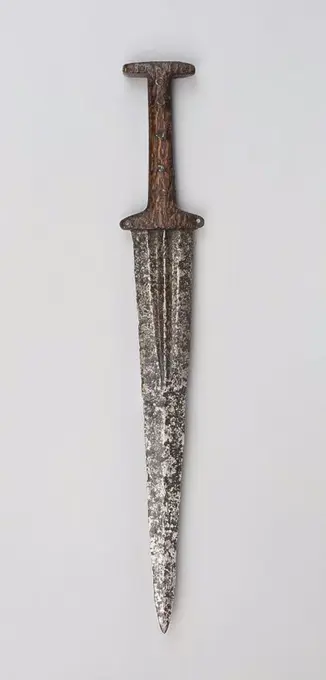
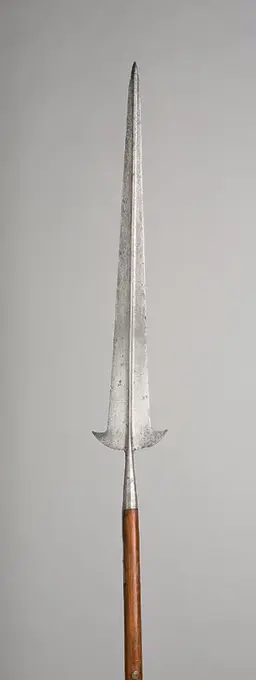
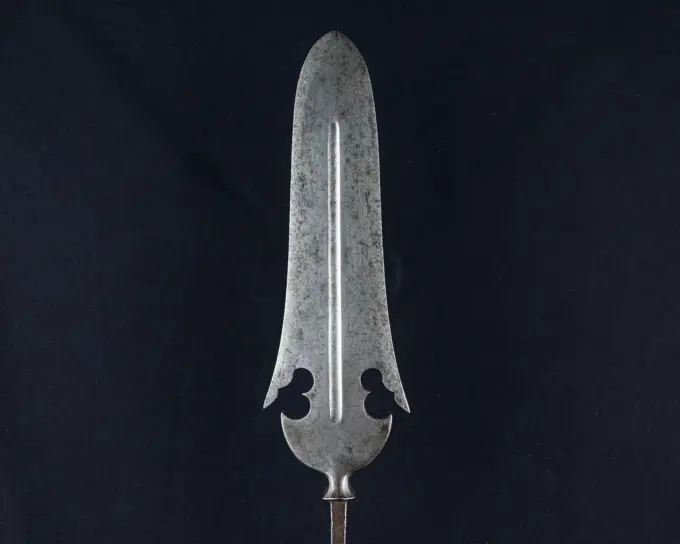
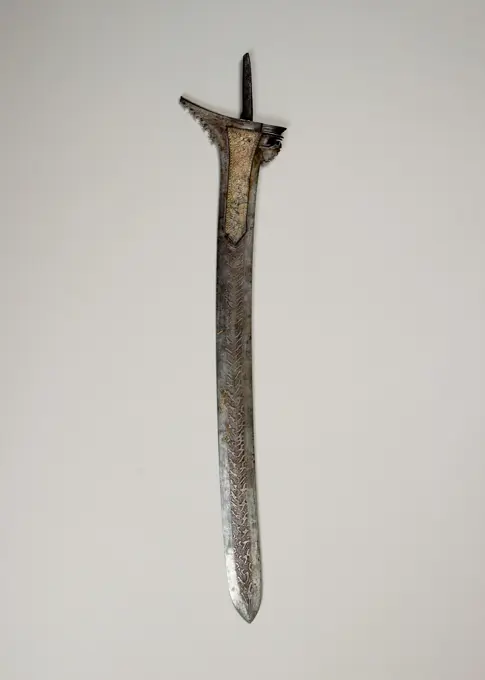
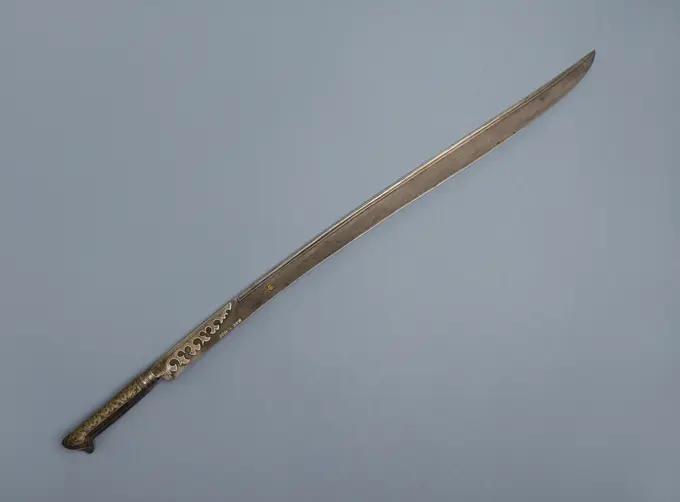
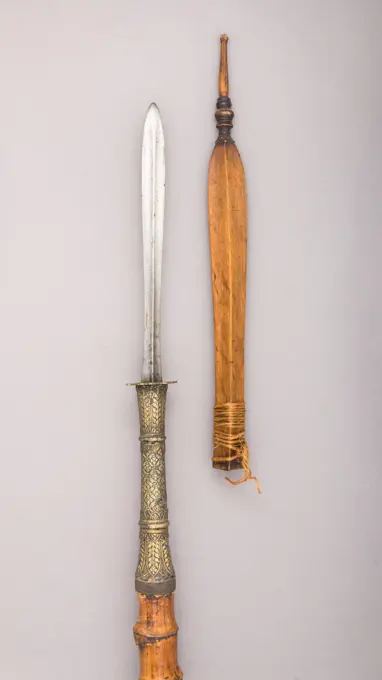
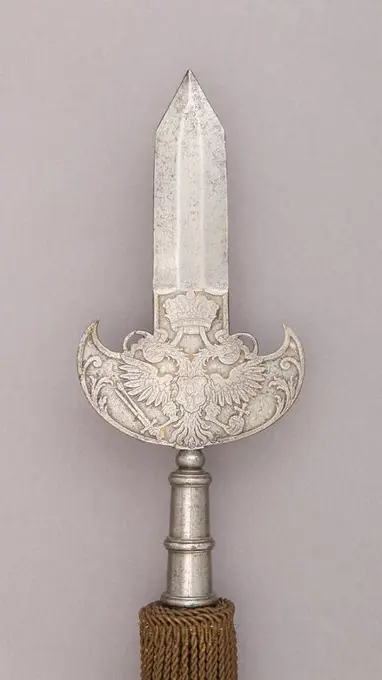
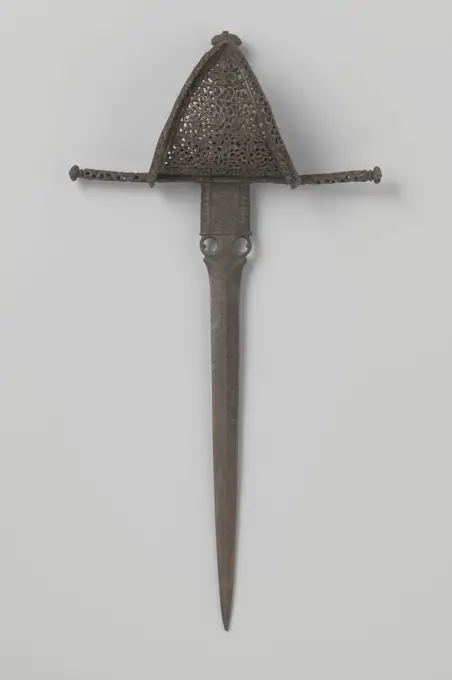
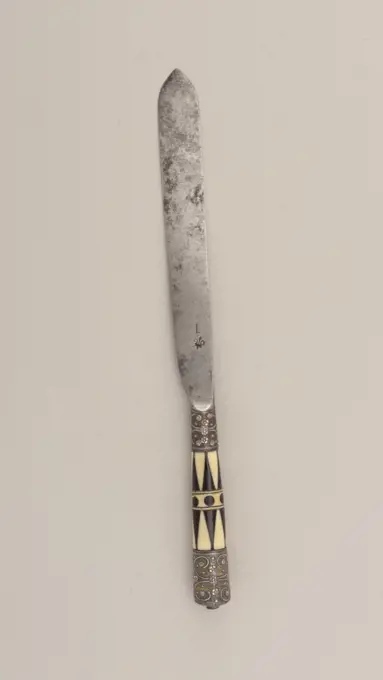
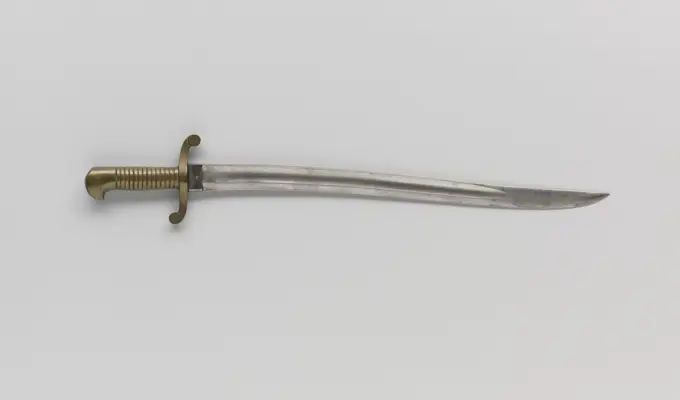
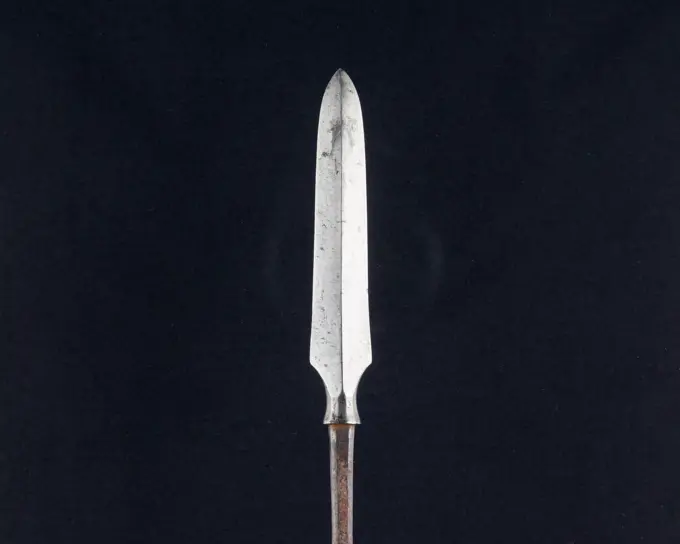
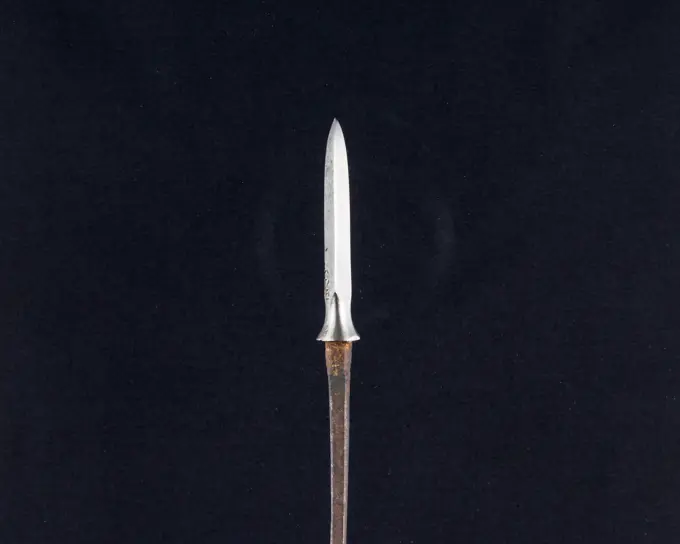
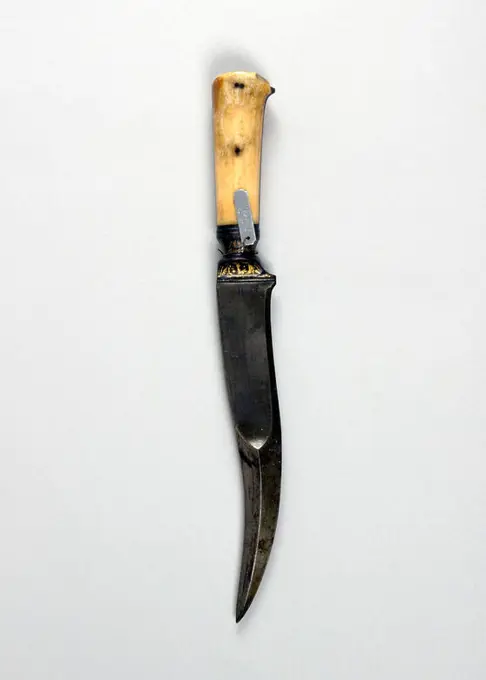
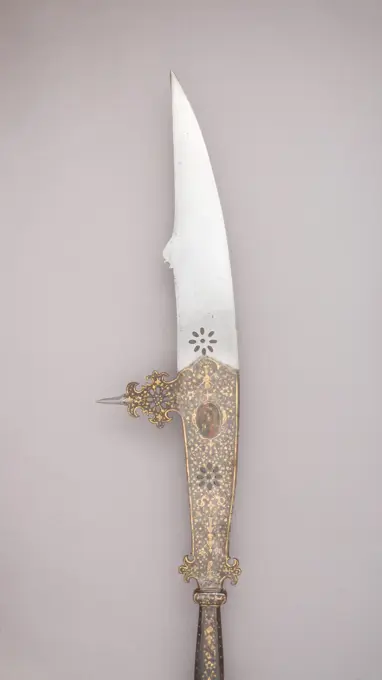
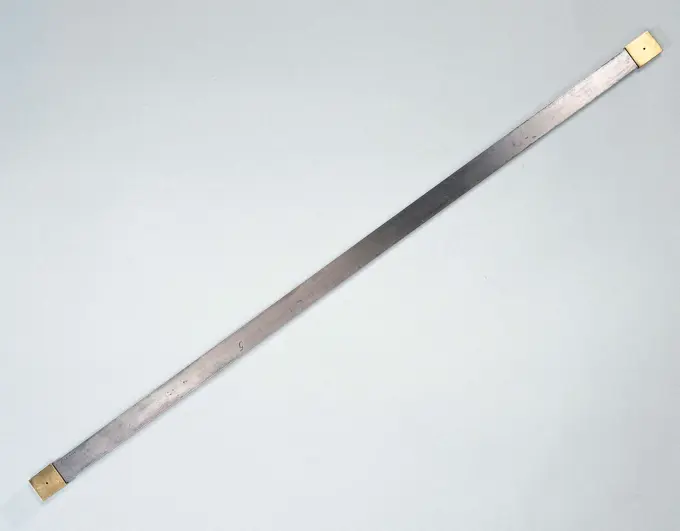
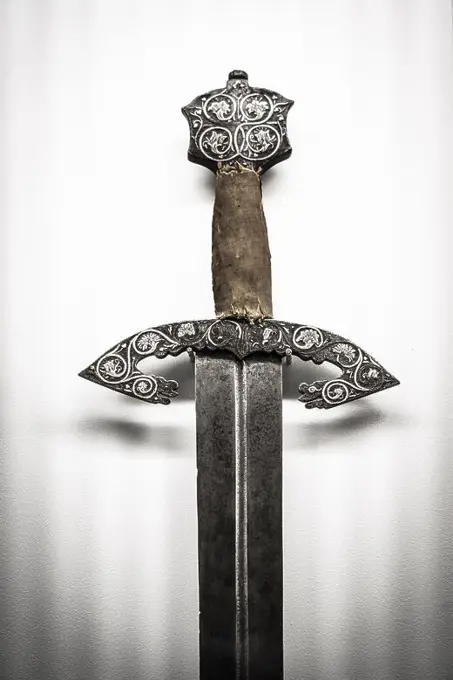
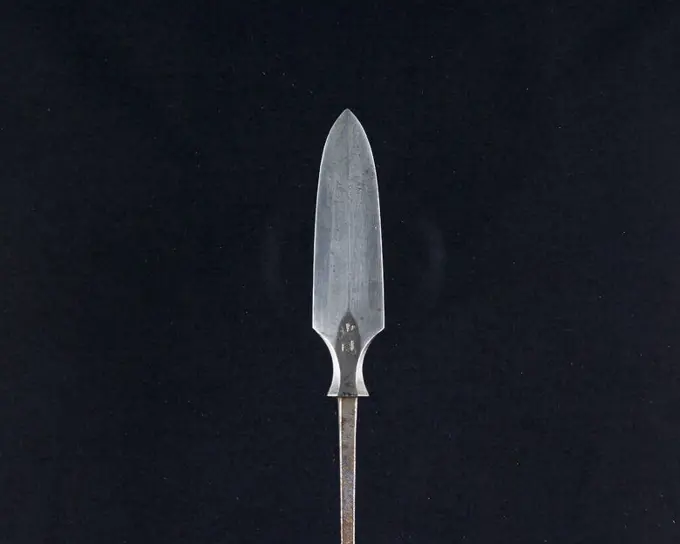
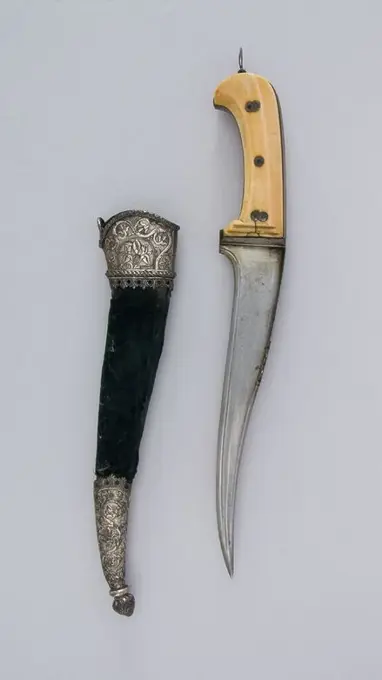
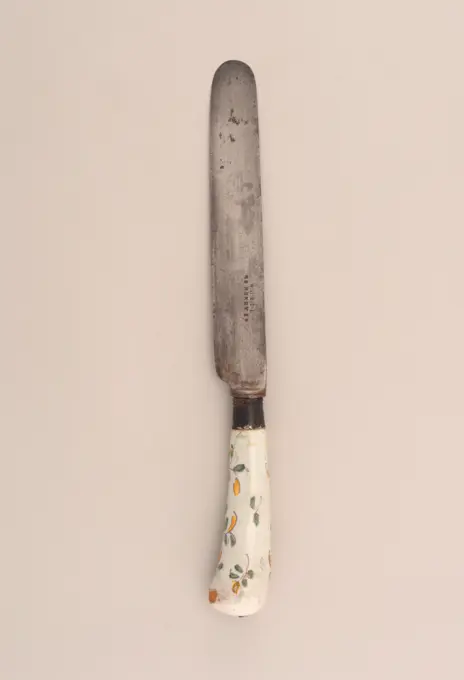
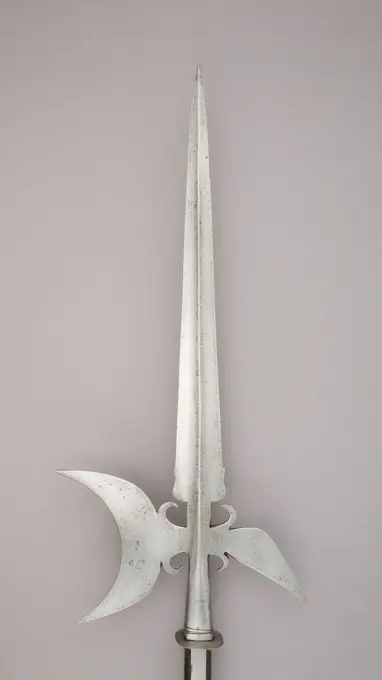
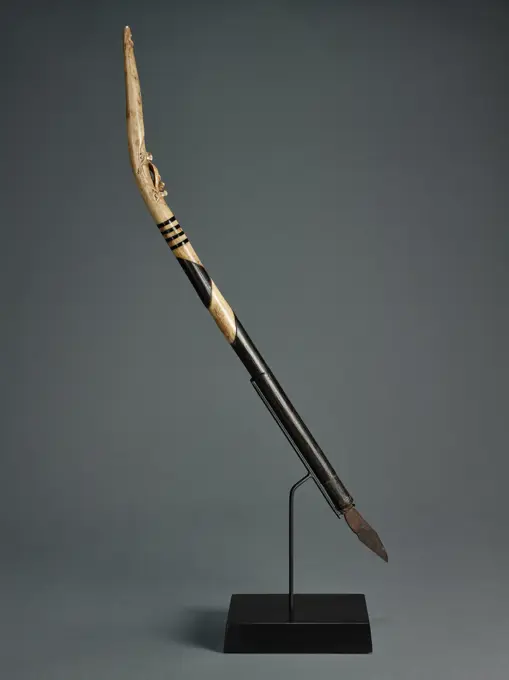
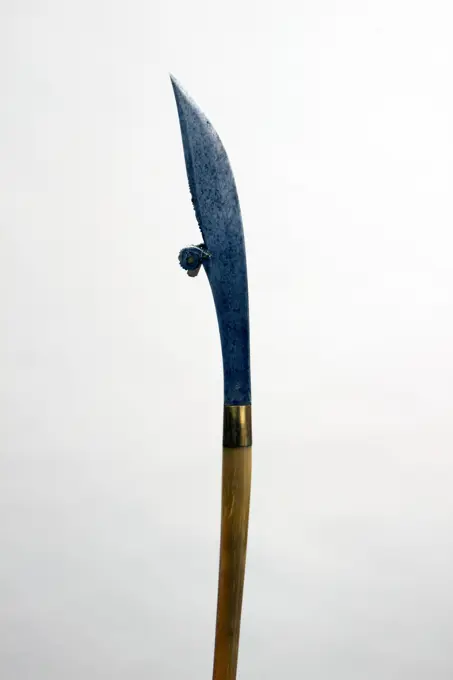
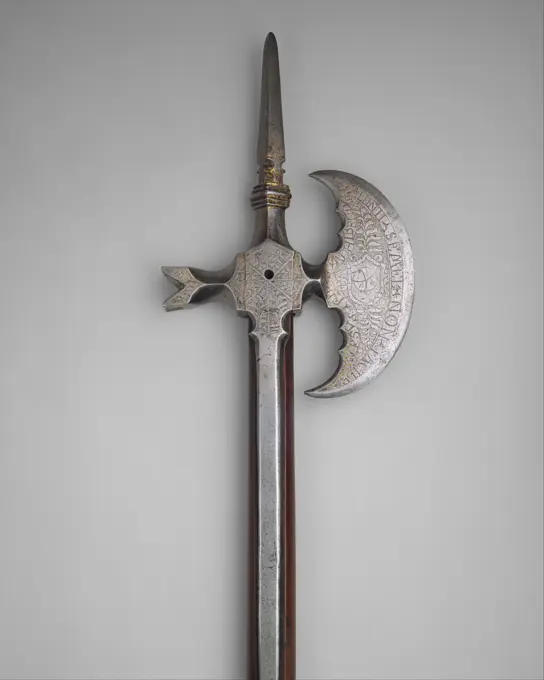
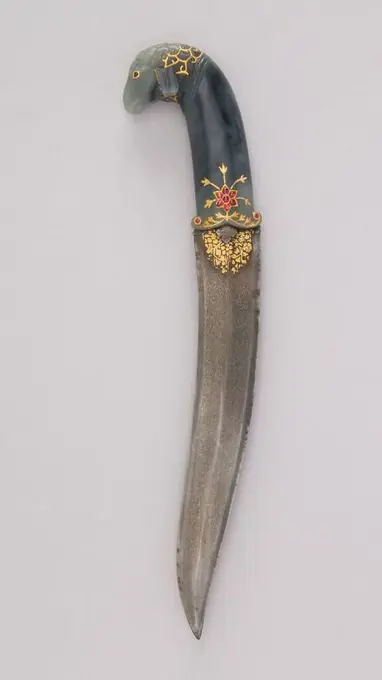
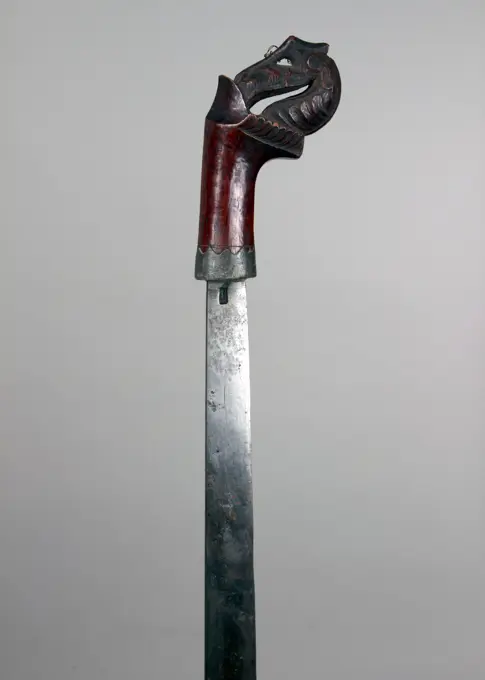
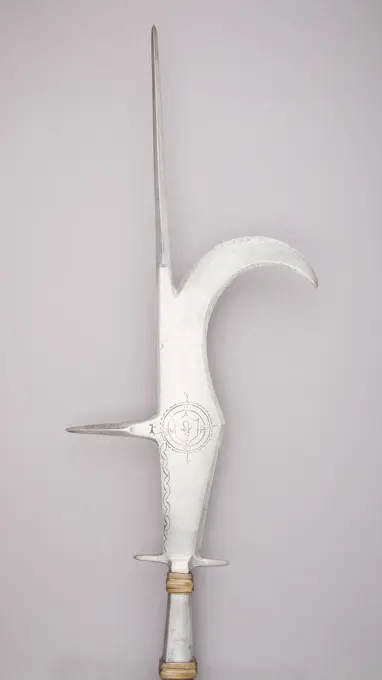
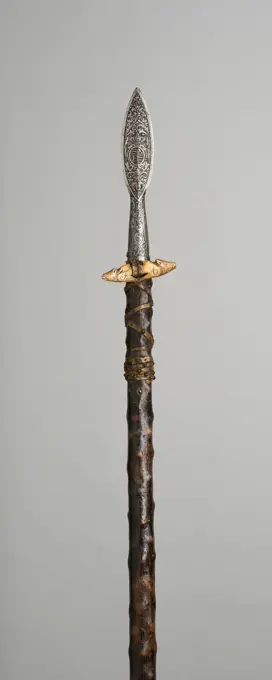
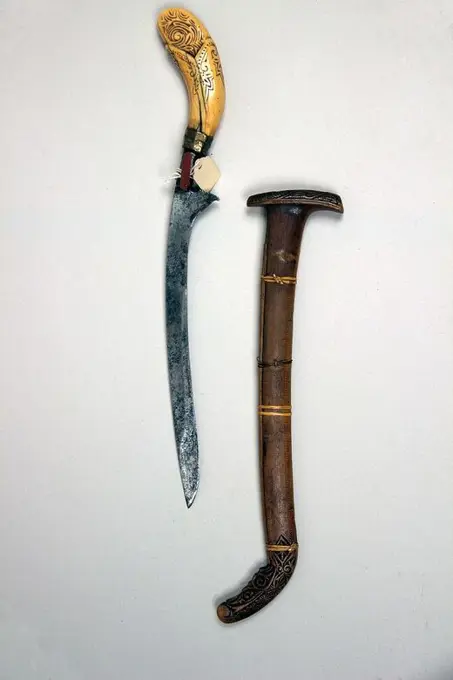
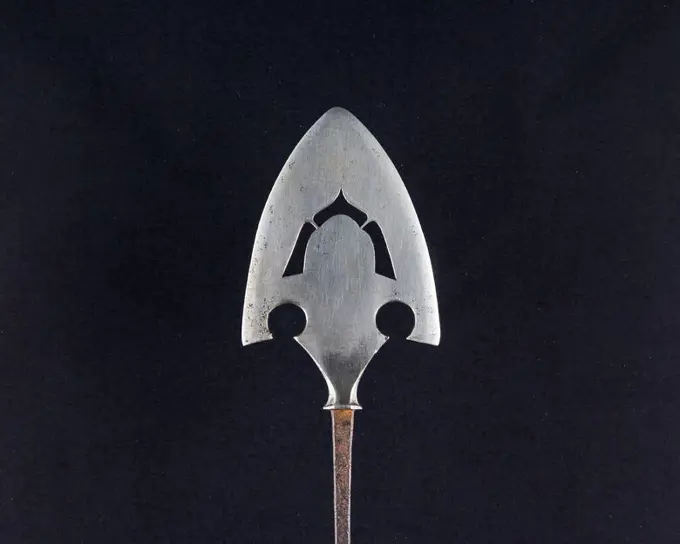
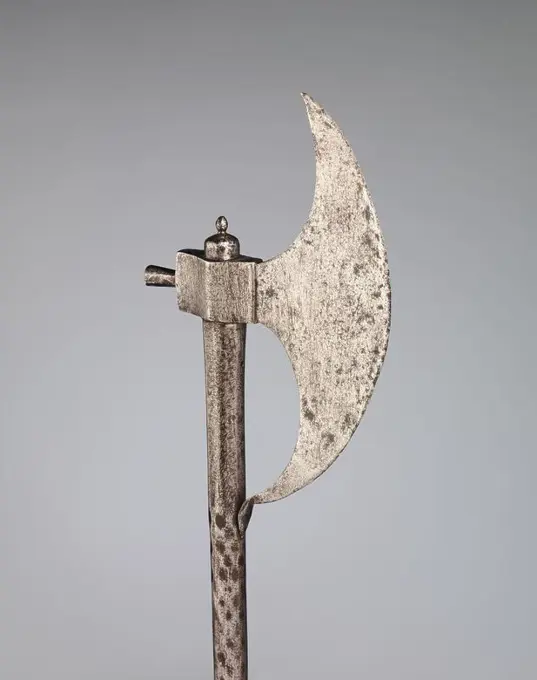
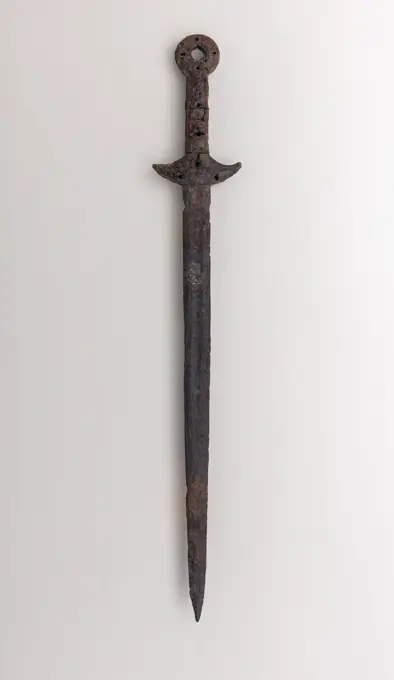
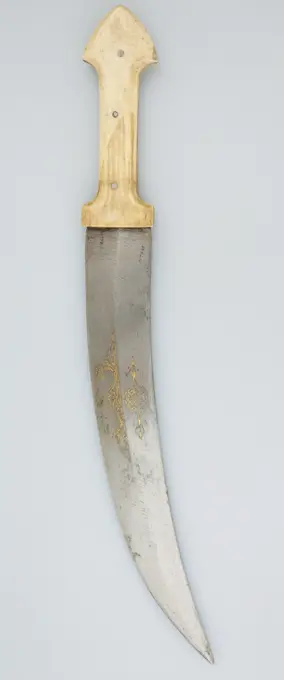
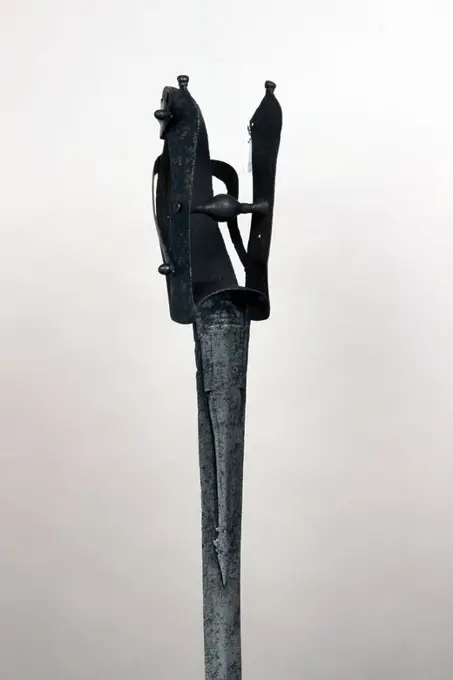
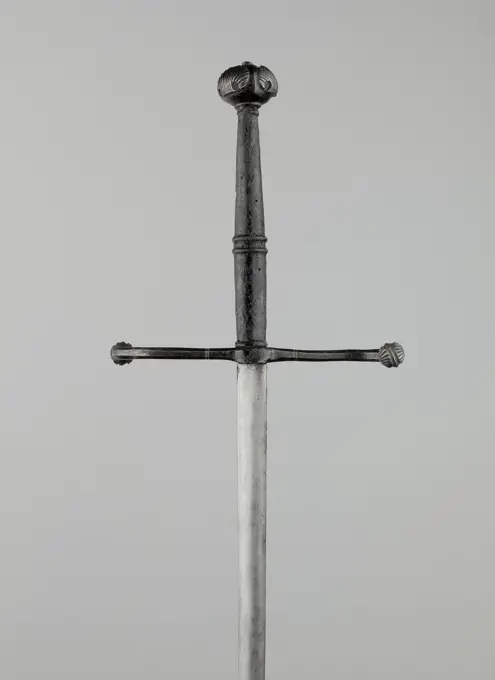
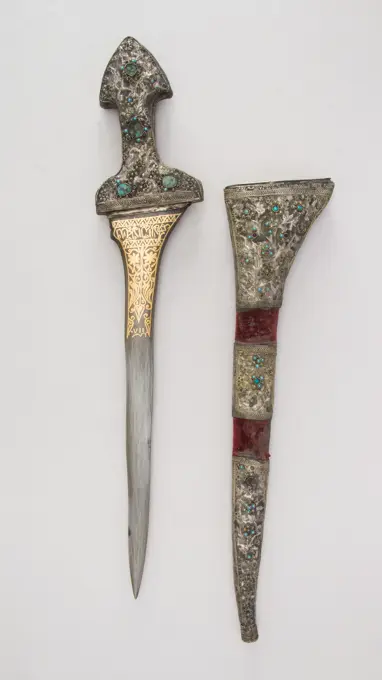
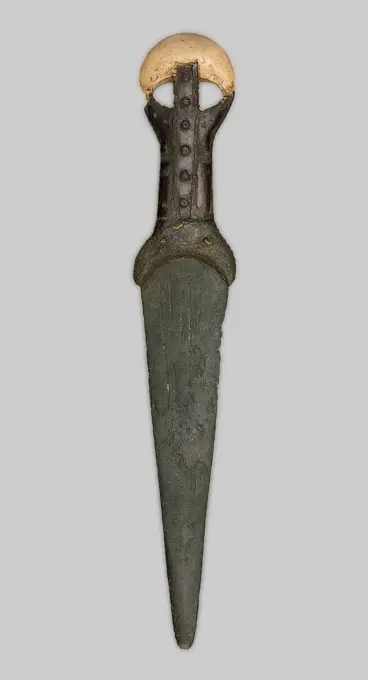
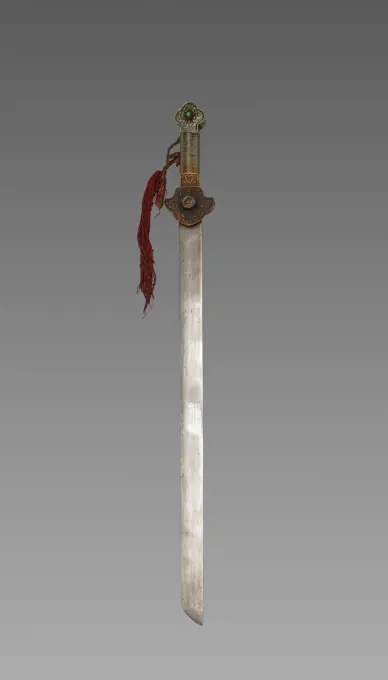
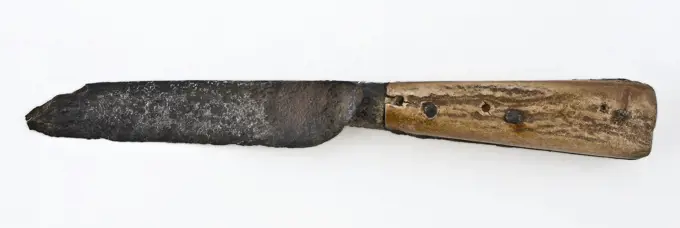
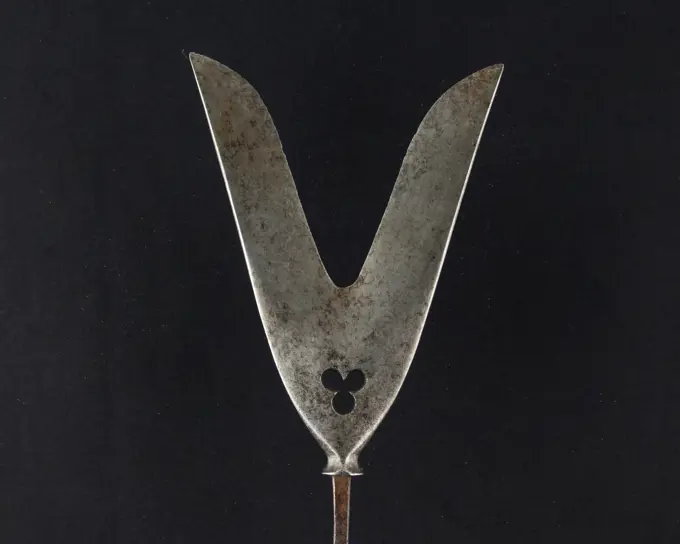
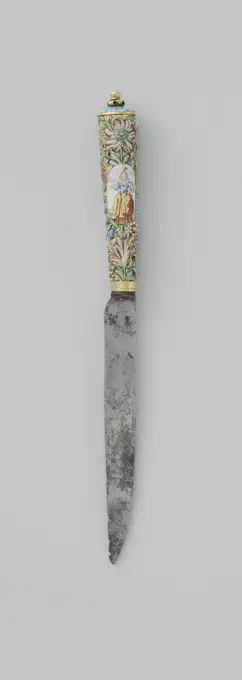
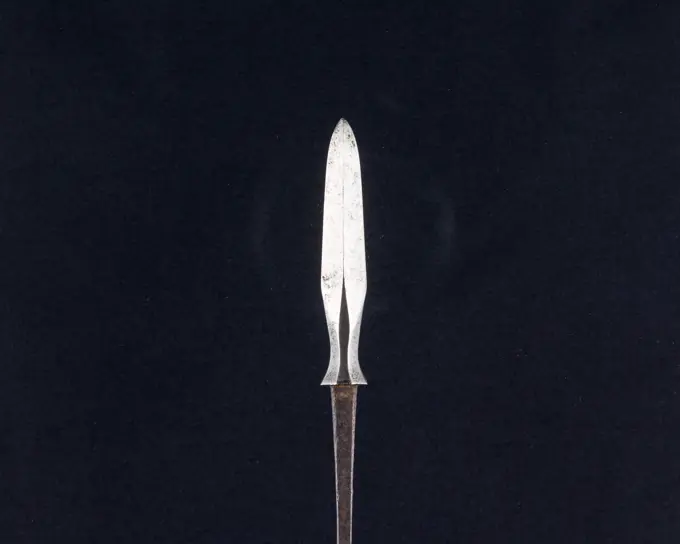
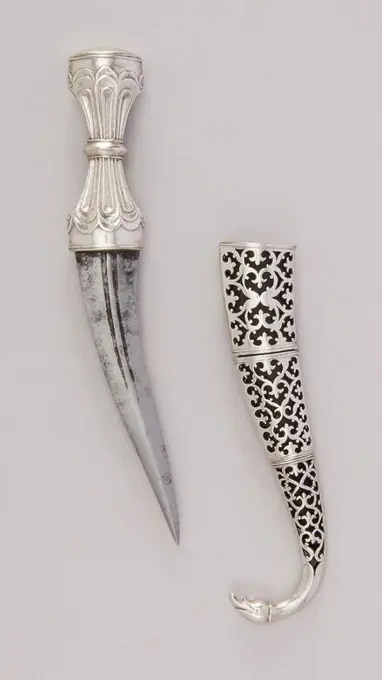
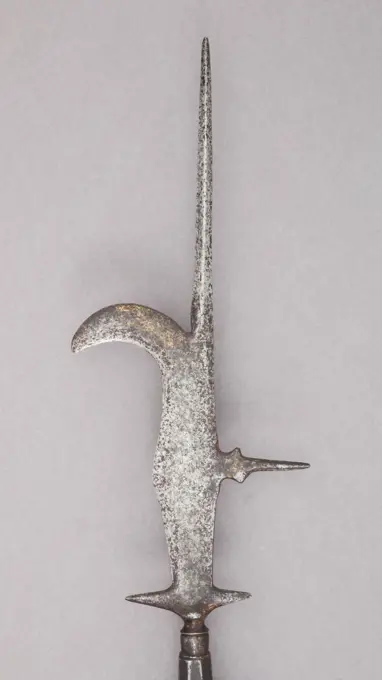
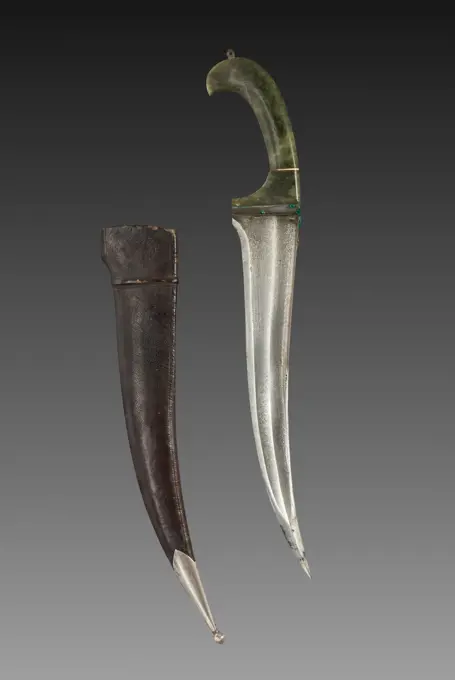
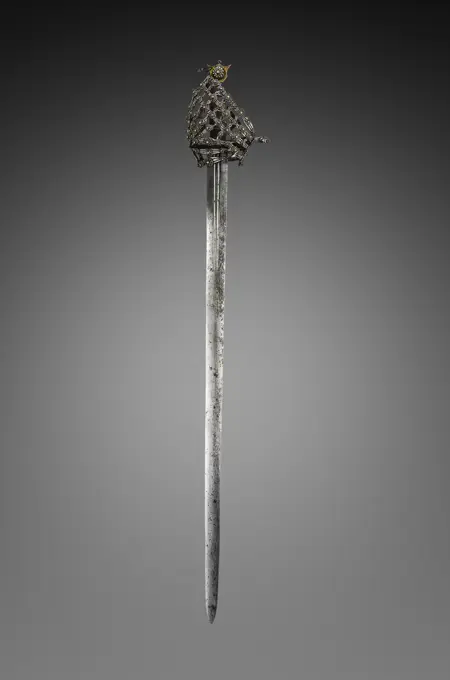
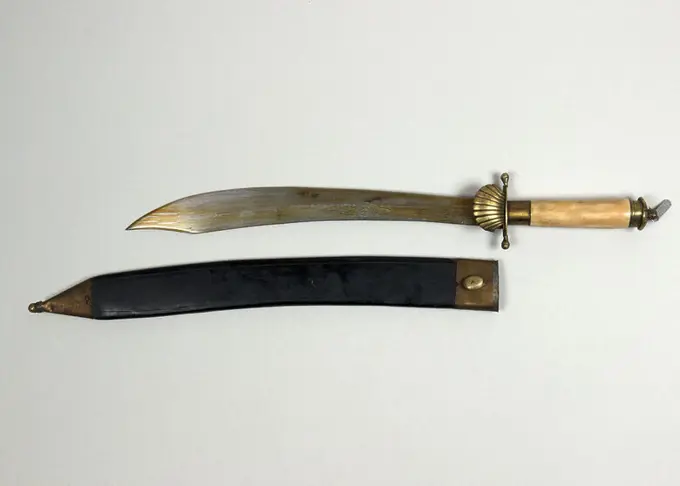
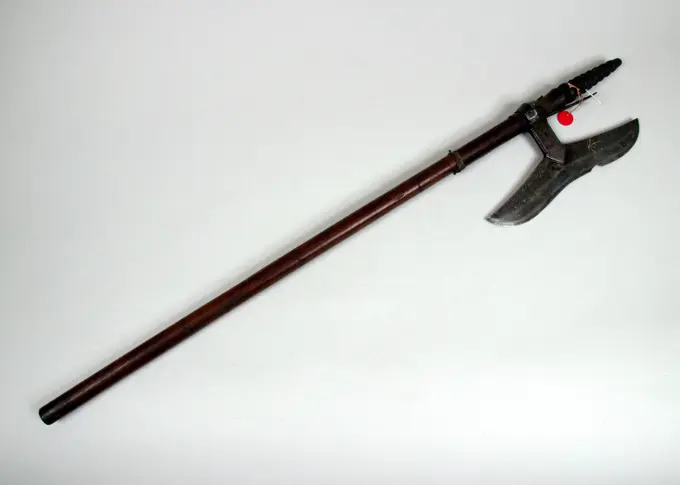
Partisan ca. 1600 French, Paris. Partisan 26775Sword (Barong), Before 1916. Philippines. overall: 68.3 cm (26 7/8 in.); blade: 45.5 cm (17 15/16 in.).Wing Spear (Fluegellanze) ca. 1500 Western European. Wing Spear (Fluegellanze) 25842Spontoon. Culture: Italian, Savoy. Dimensions: L. 88 3/4 in. (225.5 cm); L. of head 10 1/8 in. (25.7 cm); W. 2 1/2 in. (6.4 cm); Wt. 2 lbs. 14 oz. (1304.1 g). Date: ca. 1630. Museum: Metropolitan Museum of Art, New York, USA.Traveling Knife Knife; silver, steel, brass; L x W: 17.4 x 1.8 cm (6 7/8 x 11/16 in.); The Robert L. Metzenberg Collection, gift of Eleanor L. Metzenberg; 1985-103-274Dagger (Jambiya). Culture: Indian. Dimensions: H. 15 1/4 in. (38.7 cm); H. of blade 10 9/16 in. (26.8 cm); W. 2 1/8 in. (5.4 cm); D. 1 1/16 in. (2.7 cm); Wt. 10.9 oz. (309 g). Date: 19th century. Museum: Metropolitan Museum of Art, New York, USA.Halberd 17th century Italian. Halberd 25846Partisan ca. 1600 Austrian. Partisan. Austrian. ca. 1600. Steel, wood, gold. Shafted WeaponsHalberd. Culture: Italian. Dimensions: L. 92 in. (233.8 cm); L. of head 24 in. (61 cm); W. 7 1/4 in. (18.5 cm); Wt. 4 lbs. (1814.4 g). Date: 17th century. Museum: Metropolitan Museum of Art, New York, USA.Guarded Dagger (Katar) 17th century Indian, Thanjavur; blade, European. Guarded Dagger (Katar) 31416Baselard. French, possibly Swiss. Date: 1400-1500. Dimensions: L. 40 cm (15 3/4 in.)Blade L. 28.5 cm (11 1/4 in.)Wt. 10.5 oz. Wood and steel. Origin: France. Museum: The Chicago Art Institute, Chicago, USA.Partisan ca. 1550 Italian. Partisan 26778Partisan. Italian. Date: 1510-1550. Dimensions: Blade L. 93 cm (36 5/8 in.) Wt. 4 lb. 6 oz.measure object for overall length. Steel and wood (pine). Origin: France. Museum: The Chicago Art Institute, Chicago, USA.Arrowhead (Yanone) 18th century Japanese Although today Japanese warriors are renowned most for their swordsmanship, archery, especially from horseback, has been an essential part of samurai warfare and culture for centuries. Arrows were fitted with heads of varying shape according to their intended use in war, the hunt, or target practice. Arrowheads made for use on the battlefield incorporated different designs intended for specialized purposes such as the piercing of armor or to cause maximum damage to horses and unarmored personnel.Large arrowheads, pierced and elaborately chiseled with landscapes, birds, flowers, dragons, and Buddhist divinities, were created to be admired for the beauty of their metalwork and design rather than for use in archery. Such highly elaborate examples may have been made for presentation or as a votive offerings to a shrine.. Arrowhead (Yanone). Japanese. 18th century. Steel. Archery Equipment-ArrowheadsPartisan ca. 1570 Italian. Partisan 26696Blade for a Kris 18th-19th century Philippine, Moro. Blade for a Kris 31394Partisan 18th century German, Saxony. Partisan 34309JagaganKnife (possibly Germany); steel, horn, silver, mother-of-pearl, ivory; L x W: 20.5 x 1.9 cm (8 1/16 x 3/4 in.); The Robert L. Metzenberg Collection, gift of Eleanor L. Metzenberg; 1985-103-90Sabel of the United Indian Company, Anonymous, 1700 - 1786 sabre VOC Sabel clinging of VOC, again mounted with silver hilt. Raign button with bird head. Angle bracket handle with driven bees () Motive. Schede with flower and leaf motifs within edge. Oirband with rocaillem motif. Java iron (metal). silver (metal). wood (plant material) forging  JavaLance with Sheath 18th-19th century Thai. Lance with Sheath 30679Bill. Italian. Date: 1480-1520. Dimensions: Blade with socket L. 69.8 cm (27 1/2 in.)Wt. 4 lb. 8 oz. Steel, wood (chestnut), and brass. Origin: Italy. Museum: The Chicago Art Institute, Chicago, USA.Dagger (Khanjar). Culture: Indian, Mughal. Dimensions: H. 14 1/16 in. (35.7 cm); H. 9 3/4 in. (24.8 cm); W. 3 3/8 in. (8.6 cm); Wt. 6.3 oz. (178.6 g). Date: 19th century. Museum: Metropolitan Museum of Art, New York, USA.Partisan. Culture: German, Saxony. Dimensions: L. 81 1/4 in. (206.4 cm); L. of head 12 1/2 in. (31.8 cm); W. 5 1/4 in. (13.3 cm); Wt. 3 lbs. 12.7 oz. (1720.8 g). Date: 18th century. Museum: Metropolitan Museum of Art, New York, USA.Smallsword. Blade: Peter Munch; Germany, Solingen, c. 1595-1660. Date: 1640-1670. Dimensions: Overall L. 91.5 cm (36 in.)Blade L. 76 cm (29 7/8 in.)Wt. 1 lb. 2 oz. Steel and copper. Origin: Germany. Museum: The Chicago Art Institute, Chicago, USA.Knife (USA); Made by Gorham Manufacturing Company (United States); silver; L x W x D: 19.8 x 2.1 x 0.7 cm (7 13/16 x 13/16 x 1/4 in.)Spanish dagger, Anonymous, 1600 - 1625 A Spanish dagger, of which the triangular basket, as well as the cross consists of openwork tendrils. The rest is decorated with braided iron wire. The two cutting blade has one floor for the thumb at the top. Probably from the Pedro de Belmonte studio, Toledo. (Steel, citized) Spain steel (alloy). iron (metal) A Spanish dagger, of which the triangular basket, as well as the cross consists of openwork tendrils. The rest is decorated with braided iron wire. The two cutting blade has one floor for the thumb at the top. Probably from the Pedro de Belmonte studio, Toledo. (Steel, citized) Spain steel (alloy). iron (metal)Guarded Dagger (Katar) 17th century Indian, Thanjavur. Guarded Dagger (Katar) 31414Knife, steel, silver, gold, ivory, bone, Blade with straight sides and leaf-shaped point; hollow bolster. Ferrules silver-gilt with floral pattern. Tapered handles of ivory and bone inlaid in triangular pattern. In middle of handle black inlaid dots and two horizontal bands. Silver-gilt caps with floral pattern on end of handle., London, England, ca. 1610, cutlery, Decorative Arts, KnifeSword, Before 1916. Indonesia, Sulawesi (Celebes). overall: 66.4 cm (26 1/8 in.); blade: 52.1 cm (20 1/2 in.).Small Sword, c. 1650-70. France, 17th century. Steel, iron, silver inlay; wood and brass wire; overall: 90.8 cm (35 3/4 in.); blade: 74.1 cm (29 3/16 in.); guard: 6.7 cm (2 5/8 in.).Partisan ca. 1750 Austrian. Partisan 26675Bayonet, P. Stevens, 1862 sword bayonet A saber bayonet with solid bronze grip, which has a slot with which it fits on the loop; He has a pare rod with buttons; The blade has a flat back, a slot and is bent with the cut inwards. Maastricht iron (metal). bronze (metal)Arrowhead (Yanone) 18th century Japanese Although today Japanese warriors are renowned most for their swordsmanship, archery, especially from horseback, has been an essential part of samurai warfare and culture for centuries. Arrows were fitted with heads of varying shape according to their intended use in war, the hunt, or target practice. Arrowheads made for use on the battlefield incorporated different designs intended for specialized purposes such as the piercing of armor or to cause maximum damage to horses and unarmored personnel.Large arrowheads, pierced and elaborately chiseled with landscapes, birds, flowers, dragons, and Buddhist divinities, were created to be admired for the beauty of their metalwork and design rather than for use in archery. Such highly elaborate examples may have been made for presentation or as a votive offerings to a shrine.. Arrowhead (Yanone). Japanese. 18th century. Steel. Archery Equipment-ArrowheadsTable knife 18th century Italian. Table knife. Italian. 18th century. Steel, silver. Metalwork-SteelArrowhead (Yanone) 18th century Japanese Although today Japanese warriors are renowned most for their swordsmanship, archery, especially from horseback, has been an essential part of samurai warfare and culture for centuries. Arrows were fitted with heads of varying shape according to their intended use in war, the hunt, or target practice. Arrowheads made for use on the battlefield incorporated different designs intended for specialized purposes such as the piercing of armor or to cause maximum damage to horses and unarmored personnel.Large arrowheads, pierced and elaborately chiseled with landscapes, birds, flowers, dragons, and Buddhist divinities, were created to be admired for the beauty of their metalwork and design rather than for use in archery. Such highly elaborate examples may have been made for presentation or as a votive offerings to a shrine.. Arrowhead (Yanone). Japanese. 18th century. Steel. Archery Equipment-ArrowheadsDagger (Zirah Bouk). Culture: Persian. Dimensions: H. 10 1/2 in. (26.7 cm); W. 1 1/4 in. (3.2 cm); Wt. 10.2 oz. (289.2 g). Date: 18th-19th century. Museum: Metropolitan Museum of Art, New York, USA.Sword from the Armory of Schloss Ambras, Innsbruck. Hilt: German or possibly Austrian (Innsbruck); Blade: German, Passau. Date: 1560-1600. Dimensions: Overall L. 114 cm (44 7/8 in.)Blade L. 97.8 cm (38 1/2 in.)Wt. 3 lb. 5 oz. Steel, brass, wood, and leather. Origin: Germany. Museum: The Chicago Art Institute, Chicago, USA.Fauchard ca. 1550 Italian, Venice Two rosettes pierce the long knife-like blade which has a spike set on a decoratively cut and pierced base at right angles to the back; between the blade and its socket are two trefoil-shaped lugs. The lower half of the blade, including the spike, is blued, chiseled, and damascened in gold; the decoration on each side includes flowers, grotesques, a sun, and a trophy composed of two conucopias and a flaming torch. An oval medallion on the right side is painted with the arms of the counts of Tiepolo, and that on the left side contains the arms of the counts of Valmarana, both ancient Venetian families. Above the arms of Valmarana is a helmet crested with a palm tree and scroll inscribed MODVS. The octagonal wooden shaft is covered with red velvet (now rubbed) and is studded with gilt iron nails.The palm tree was thought to grow stronger the more weight it bore, and so became an emblem for perserverence. Even more specific, in Italian symbolism, it seemsDeux Mètres. Iron size stick with removable copper ends. Size division in front in decimeters, from 10 to 20; On the downside in pieces of 33.3 cm, from 3 to 6. Front inscription: METRES. Reverse: SE and signature: Baradelle a Paris.decorated hilt of ceremonial sword, 15th century, Álava Armory Museum, Vitoria, Basque Country, Spain.Arrowhead (Yanone). Culture: Japanese. Dimensions: L. 8 1/4 in. (21 cm); L. of head 2 3/4 in. (7 cm); W. 3/4 in. (1.9 cm); Wt. 0.8 oz. (22.7 g). Date: 18th century. Museum: Metropolitan Museum of Art, New York, USA.Dagger (Pesh-kabz) with Sheath. Culture: Afghan. Dimensions: L. 15 in. (38.1 cm); L. of blade 8 7/8 in. (22.5 cm)H. with sheath 15 1/8 in. (38.4 cm); H. without sheath 13 9/16 in. (34.4 cm); W. 1 15/16 in. (4.9 cm); Wt. 1 lb. 1.9 oz. (507.5 g); Wt. of sheath 3.5 oz. (99.2 g). Date: 18th-19th century. Museum: Metropolitan Museum of Art, New York, USA.Fork (possibly France); steel, silver, earthenware; L x W: 22.6 x 2.3 cm (8 7/8 x 7/8 in.); The Robert L. Metzenberg Collection, gift of Eleanor L. Metzenberg; 1985-103-213Halberd ca. 1600 possibly Flemish. Halberd 26089KnifeKnife 18th-19th century Thai. Knife 31605Horsemans Ax of Cardinal Ippolito de Medici (1511-1535) ca. 1530-35 Italian This elegantly proportioned and delicately ornamented ax probably served more as a symbol of authority than as a weapon for mounted warfare. The surfaces are etched and gilt with foliage on an obliquely hatched ground, in the manner of early-Italian ornamental prints. The ax blade is further decorated on one side with a shield enclosing the Medici arms and a Latin inscription around the edges BENIFICIVM ? DANDO ? ACCEPIT ? QVI ? DIGNO ? DEDIT (He who confers a benefit has received one if he has given it to a man worthy of it), and on the other side with the device of an inflatable soccerlike ball and the inscription FALLENTI ? NON ? FACILE ? RVRSVS ? ADHIBENDA ? EST (Trust is not again to be placed easily in those who have once deceived). Although the inflatable ball was used as a personal badge by several members of the Medici family, here it most likely refers to Cardinal Ippolito de' Medici (1511-1535), a Dagger. Culture: Indian, Mughal. Dimensions: H. 11 3/8 in. (28.9 cm); H. of blade 8 in. (20.3 cm); W. 2 1/8 in. (5.4 cm); D. 3/4 in. (1.9 cm); Wt. 7.4 oz. (209.8 g). Date: 17th-18th century. Museum: Metropolitan Museum of Art, New York, USA.Sword (Klewang) 16th-19th century Acheen. Sword (Klewang). Acheen. 16th-19th century. Wood, lead. Aceh, Sumatra. SwordsGuisarme ca. 1510 Italian. Guisarme. Italian. ca. 1510. Steel, wood, copper alloy. Shafted WeaponsParrying daggerBoar Spear Made 1680-1700 Austria. Steel, brass, staghorn, leather, wood, and silk velvet .Knife with Sheath 18th-19th century Chinese. Knife with Sheath 31565Four knives and a fork belonging to Emperor Charles V.Charles V acquired this portable cutlery set in Italy. The two large knives bear his arms and the chain of the Order of the Golden Fleece. Above this is the emperors crown and below it the Burgundian cross of Saint Andrew with the mythical pillars of Hercules (signifying the end of the world). They are all symbols of the emperors power.Knife (Dha) with Sheath 18th-19th century Thai. Knife (Dha) with Sheath 31609Scabbard for Sword, 1800s. India, Bhutan. Iron with gilt and leather; overall: 52.1 cm (20 1/2 in.); blade: 42.6 cm (16 3/4 in.).Table knife with handle representing St. Anthony of Padua 19th century possibly German, Bavarian. Table knife with handle representing St. Anthony of Padua. possibly German, Bavarian. 19th century. Steel, ivory. Metalwork-SteelCaucasian kama knife with a scabbardDagger (Bade-bade) with Sheath. Culture: Sumatran, possibly Acheen. Dimensions: L. with sheath 16 7/16 in. (41.8 cm); L. without sheath 12 7/8 in. (32.7 cm); W. 3 1/2 in. (8.9 cm); Wt. 6.2 oz. (175.8 g); Wt. of sheath 1.1 oz. (31.2 g). Date: 16th-19th century. Museum: Metropolitan Museum of Art, New York, USA.Arrowhead (Yanone). Culture: Japanese. Dimensions: L. 7 3/4 in. (19.7 cm); L. of head 3 in. (7.6 cm); W. 1 7/8 in. (4.8 cm); Wt. 1.3 oz. (36.9 g). Date: 18th century. Museum: Metropolitan Museum of Art, New York, USA.Miecz krótki obosieczny. warsztat bosporański, workshopHalabardaKnife with ivory handle, Venus and Amor, dated, knife dagger metal iron gold tin ivory, forged carved engraved Iron knife or dagger. Double edged leaf Partly gilded and engraved with floral motifs. Tapered short ivory parapet with winged cherub's head Heft consists of naked Venus an Amor with bundle of arrows on its back on its right leg Marked in the leaf and gilt: You And fleur de lis Master brands of the blacksmith stab standing marriage VenusAx (Berdiche or Balta). Culture: Syrian or Egyptian. Dimensions: L. 36 1/4 in. (92.08 cm); W. 6 3/4 in. (17.0 cm); Wt. 3 lb. 1 oz. (1378 g). Date: ca. 1500.This ax, with its long, faceted steel shaft and distinctively shaped blade, is typical of those carried by the Mamluks of Egypt and Syria in the late fifteenth to early sixteenth century. Museum: Metropolitan Museum of Art, New York, USA.Ring-Pommel Sword 14th century Swiss. Ring-Pommel Sword. Swiss. 14th century. Steel, copper, ivy root. SwordsKnife blade, probably 18th century; hilt, 17th century blade, Italian; hilt, Dutch. Knife 35171Kris with Sheath 16th-19th century Madurese. Kris with Sheath 31369Kama kanjarDagger (Katar). Culture: Indian, Vijayanagara. Dimensions: L. 39 1/8 in. (99.4 cm); W. 4 1/16 in. (10.3 cm); D. 4 1/2 in. (11.4 cm); Wt. 2 lbs. 4.2 oz. (1026.3 g). Date: 17th century. Museum: Metropolitan Museum of Art, New York, USA.Spanner for a Wheel-Lock Gun, c. 1600-1650. Germany, 17th century. Steel, with punched, engraved, and pierced decoration; overall: 4.5 cm (1 3/4 in.).Thrusting Sword (Estoc) Made 1515-1550 Germany. Stiff-bladed swords or estocs were designed to pierce through the joints or gaps of plate armor. They were often kept on the front of the saddle of a well-equipped man-at-arms and used as an auxiliary weapon in addition to an arming sword, war hammer, or mace. This example has a triple-edged blade that is triangular in cross-section with hollow ground or fluted sides, features that make the blade both ridged and light.. Steel, wood, and leather .knife wuit scabbard, Nuba tribe, Sudan, 19th century, Castle of San Carlos, seventeenth century, Palma, Mallorca, Spain.Knife with Porcelain Handle, Chelsea Porcelain Manufactory, English, established ca. 1743/45, steel, silver; soft paste porcelain, vitreous enamel, Sabre-shaped blade, plain bolster. Silver ferrule with scalloped edge. Pistol-shaped handle decorated in relief with floral sprays., England, ca. 1750-1755, cutlery, Decorative Arts, knife, knifeKris with Sheath Blade, 1766-67; Mount, 19th century Malayan with Turkish mountings. Kris with Sheath 31393Lilijka Polish scoutPartisan of Johann Georg II of Saxony (reigned 1656-80) ca. 1660 German This staff weapon was carried by the bodyguards of the Prince-Electors of Saxony.. Partisan of Johann Georg II of Saxony (reigned 1656-80) 22188Rapier ca. 1600-1620 German, possibly Munich The hilt of this rapier is attributed to Munich, where master steel chiselers Daniel and Emmanuel Sadeler and Caspar Spt produced wheellock firearms with locks and barrels lavishly decorated in much the same style as this superb hilt.. Rapier. German, possibly Munich. ca. 1600-1620. Steel, gold, wood, copper. possibly Munich. SwordsKnife with Sheath 18th-19th century Indonesian, Sulawesi (possibly the Philippines). Knife with Sheath 31663Dagger with a bone;  Pahmu, 12 dynasty (0-00-00-0-00-00);Collection of ancient Egypt, LouvreKris van Bali with Schede, Anonymous, c. 1800 - c. 1899 kris Kris van Bali, simple model, in simple sheath with a band around it. The blade seems to have been bent. Taken on the Expedition of Lombok in 1894. Bali kling: iron (metal). greep, schede: wood (plant material)   LombokSword, 1800s. Tibet. Iron and silver with bone, turquoise, leather and brass; overall: 79.4 cm (31 1/4 in.); blade: 66.7 cm (26 1/4 in.).Ancient sabre Ancient sabre. A smart variant of the fighting weapon Copyright: xZoonar.com/ValeryxxSibrikovx 5812363Knife with straight blade, with pointed end and legs, knife cutlery soil find iron bone metal, archeology underground pit Rotterdam City center Stadsdriehoek Oostplein Soil discovery: underground pit Oostplein.Arrowhead (Yanone) 18th century Japanese Although today Japanese warriors are renowned most for their swordsmanship, archery, especially from horseback, has been an essential part of samurai warfare and culture for centuries. Arrows were fitted with heads of varying shape according to their intended use in war, the hunt, or target practice. Arrowheads made for use on the battlefield incorporated different designs intended for specialized purposes such as the piercing of armor or to cause maximum damage to horses and unarmored personnel.Large arrowheads, pierced and elaborately chiseled with landscapes, birds, flowers, dragons, and Buddhist divinities, were created to be admired for the beauty of their metalwork and design rather than for use in archery. Such highly elaborate examples may have been made for presentation or as a votive offerings to a shrine.. Arrowhead (Yanone). Japanese. 18th century. Steel. Archery Equipment-ArrowheadsCousa dated 1741 German. Cousa. German. dated 1741. Steel, wood, gold, textile. Shafted WeaponsKnife with enamelled flowers and a medallion with a figure in a landscape, anonymous, c. 1650 Gold and iron knife. The handle is decorated with enamelled flowers in relief, with a medallion in between with a figure in a landscape. It is crowned by a button with diamond. jeweler: Netherlandsjeweler: Amsterdam gold (metal). iron (metal). precious stone (material) Gold and iron knife. The handle is decorated with enamelled flowers in relief, with a medallion in between with a figure in a landscape. It is crowned by a button with diamond. jeweler: Netherlandsjeweler: Amsterdam gold (metal). iron (metal). precious stone (material)Arrowhead (Yanone) 18th century Japanese Although today Japanese warriors are renowned most for their swordsmanship, archery, especially from horseback, has been an essential part of samurai warfare and culture for centuries. Arrows were fitted with heads of varying shape according to their intended use in war, the hunt, or target practice. Arrowheads made for use on the battlefield incorporated different designs intended for specialized purposes such as the piercing of armor or to cause maximum damage to horses and unarmored personnel.Large arrowheads, pierced and elaborately chiseled with landscapes, birds, flowers, dragons, and Buddhist divinities, were created to be admired for the beauty of their metalwork and design rather than for use in archery. Such highly elaborate examples may have been made for presentation or as a votive offerings to a shrine.. Arrowhead (Yanone). Japanese. 18th century. Steel. Archery Equipment-ArrowheadsDagger with Sheath. Culture: South Indian. Dimensions: H. with sheath 10 1/8 in. (25.7 cm); H. without sheath 8 5/8 in. (21.9 cm); H. of blade 5 1/4 in. (13.3 cm); W. 1 5/16 in. (3.3 cm); Wt. 6.3 oz. (178.6 g); Wt. of sheath 3.4 oz. (96.4 g). Date: 18th-19th century. Museum: Metropolitan Museum of Art, New York, USA.Stilettoes. Ca. 1650. Brescia or Veneto, Italy. Knights' Hall. The State Hermitage Museum. Saint Petersburg. Russia.Knife (Kukri) with Sheath 19th century Indian or Nepalese, Gurkha. Knife (Kukri) with Sheath 31693Naval dirk from provisional goverment epoch in Russia. Made in 1917Small Sword, 1640-60. Germany, Passau (), 17th century. Steel, wood, steel wire, copper, chiseled shell guard; blade: blued, gilded, pierced and engraved; overall: 104.5 cm (41 1/8 in.); blade: 86 cm (33 7/8 in.); guard: 7.6 cm (3 in.). During the 1700s, the small-sword emerged as a light, quick weapon. Like the rapier it was carried by unarmored civilians, the noblemen of the upper classes. Over time this delicate sword became more an accessory of male attire than a weapon essential to life and death. The sword hilt, which shows even when the blade is sheathed, became the ground for elaborate decoration. These small-swords thus represent the final stage in the evolution of the sword, from the edged weapons of antiquity to the elegantly refined blades of the 1700s and 1800s.Guisarme for a Child 16th century Italian. Guisarme for a Child 25083Roncone ca. 1525 Italian. Roncone. Italian. ca. 1525. Steel, gold, textile, wood. Shafted WeaponsArrowhead (Yanone) 18th century Japanese Although today Japanese warriors are renowned most for their swordsmanship, archery, especially from horseback, has been an essential part of samurai warfare and culture for centuries. Arrows were fitted with heads of varying shape according to their intended use in war, the hunt, or target practice. Arrowheads made for use on the battlefield incorporated different designs intended for specialized purposes such as the piercing of armor or to cause maximum damage to horses and unarmored personnel.Large arrowheads, pierced and elaborately chiseled with landscapes, birds, flowers, dragons, and Buddhist divinities, were created to be admired for the beauty of their metalwork and design rather than for use in archery. Such highly elaborate examples may have been made for presentation or as a votive offerings to a shrine.. Arrowhead (Yanone). Japanese. 18th century. Steel. Archery Equipment-ArrowheadsDagger, 1800s. India, 19th century. Iron with bone and silver; overall: 41 cm (16 1/8 in.); blade: 27.7 cm (10 7/8 in.).Schiavona Broadsword, 1700s. Italy, Venice, 18th century. Steel, brass, leather and wood; overall: 100.3 cm (39 1/2 in.); blade: 84.4 cm (33 1/4 in.); grip: 10.5 cm (4 1/8 in.); guard: 14.8 cm (5 13/16 in.). This broadsword or basket-hilted sword is a type that was often carried by the bodyguards of the Doge of Venice who came from the Dalmatian Coast of present-day Croatia and were then called Schavoni in Venice. The complex barred guard slopes forward and protects the hand.Hunting Knife with Sheath. Culture: Javanese. Dimensions: L. with sheath 21 1/4 in. (54 cm); L. without sheath 18 in. (45.7 cm); L. of blade 13 in. (33 cm); W. 2 1/2 in. (6.4 cm); Wt. 12.4 oz. (351.5 g); Wt. of sheath 2.6 oz. (73.7 g). Date: 16th-19th century. Museum: Metropolitan Museum of Art, New York, USA.Axe 18th-19th century Indian, Khond. Axe. Indian, Khond. 18th-19th century. Steel, wood, paste. Shafted Weapons