Historical Weaponry

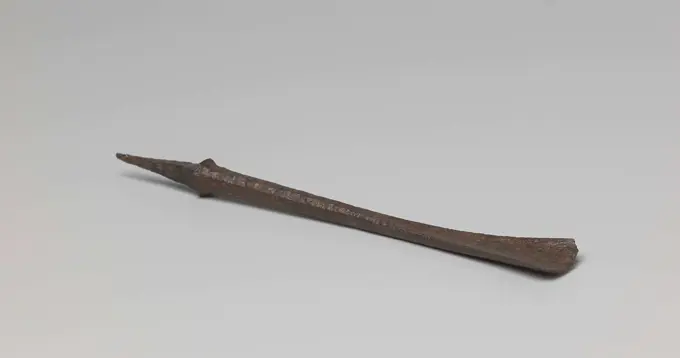
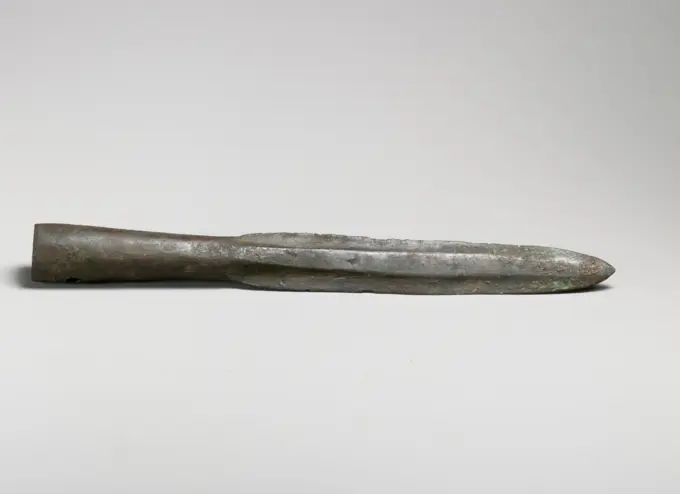
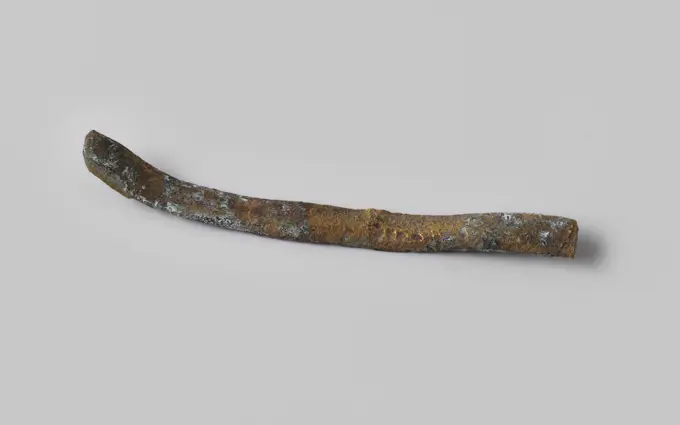
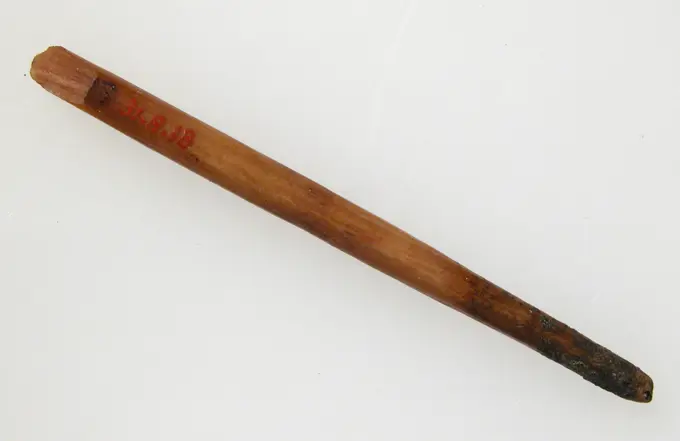
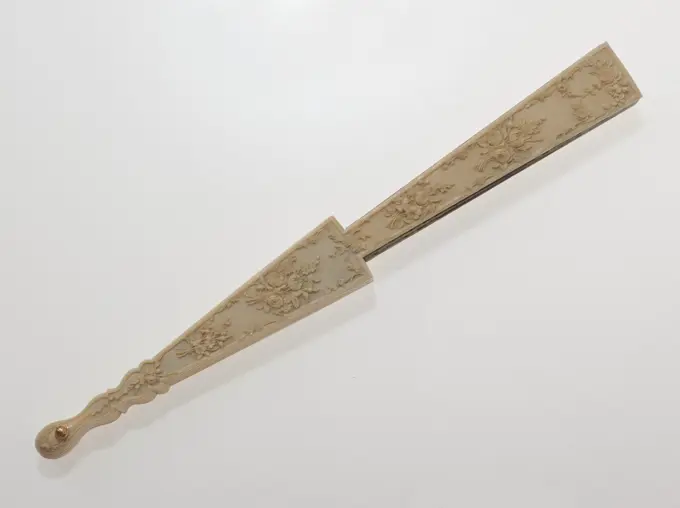
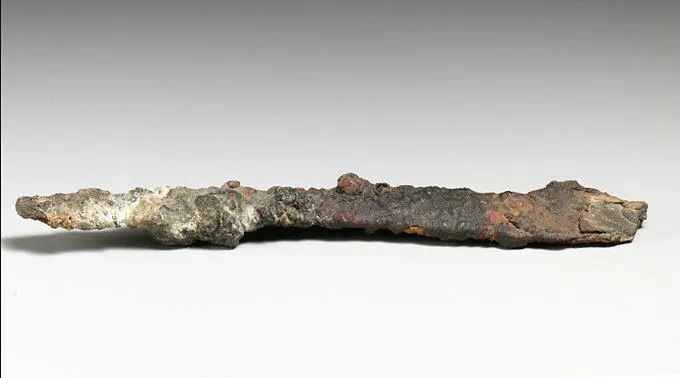
Artifacts of ancient weaponry including lance tips, chisels, and spearheads made from bronze and iron, showcasing details from different historical periods.
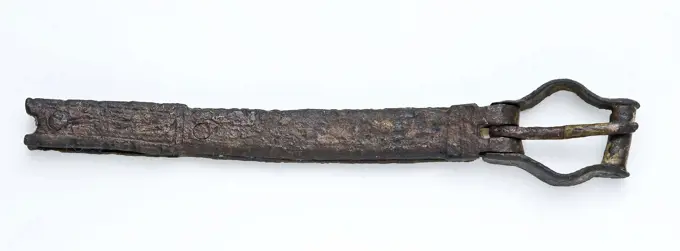
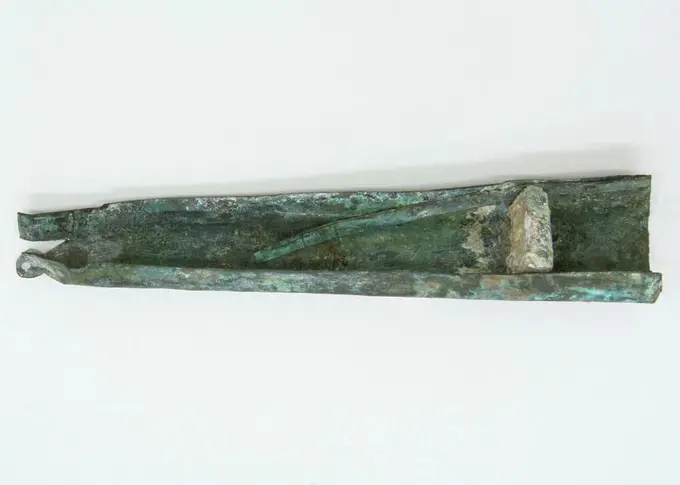
Buckle with leather fragments, long decorated strip and hinged stirrup buckle, buckle fastener part soil find bronze leather metal, At the base of the herd framed block in which engraved decoration archeology Rotterdam City Triangle Spaarbankstraat Market Binnenrotte Soil discovery Inner rotte between former Savings Bank and Market corner Spaarbankstraat .
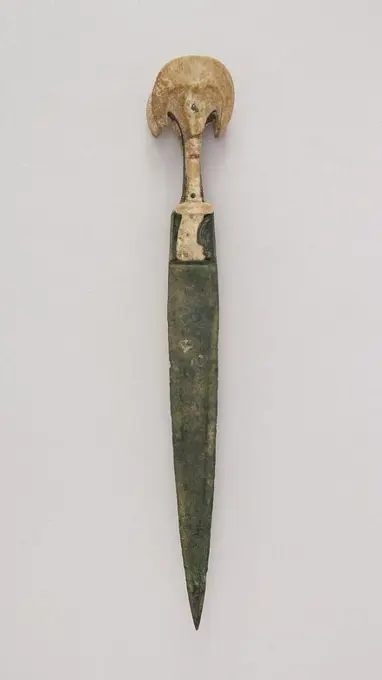
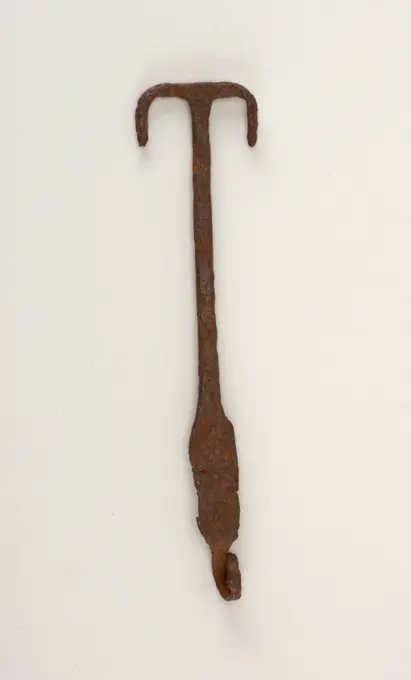
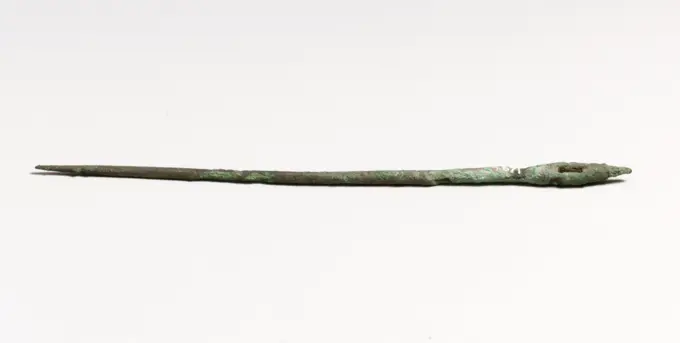
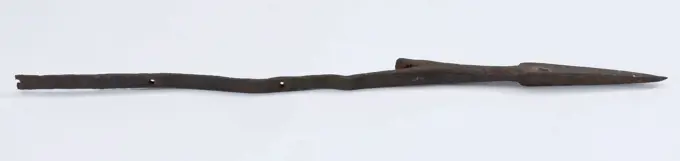
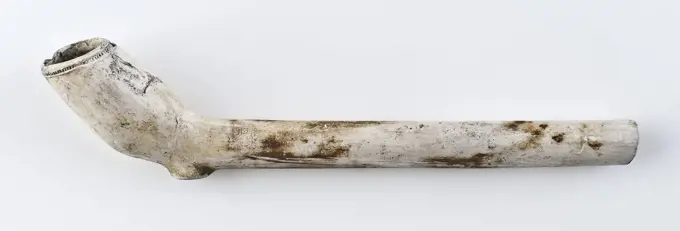
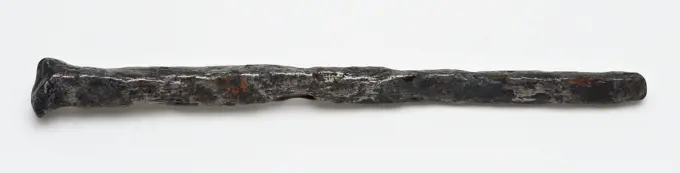
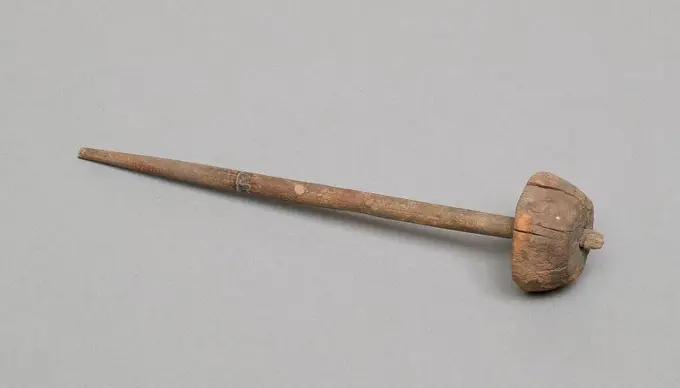
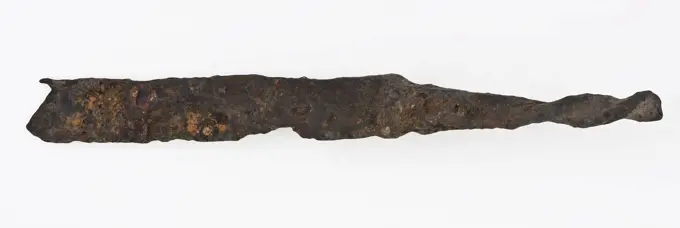
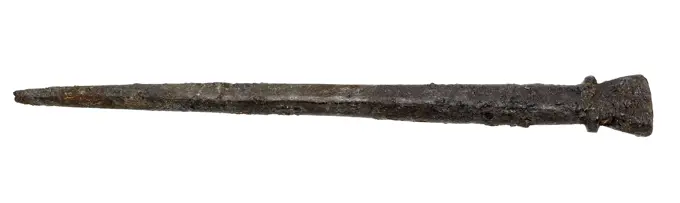
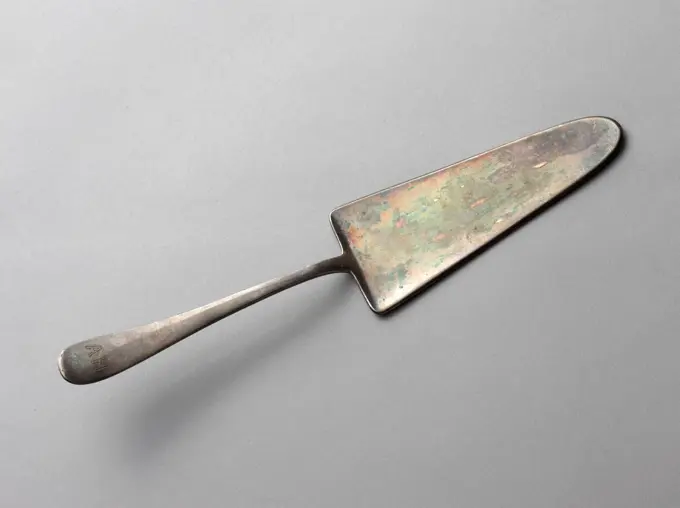
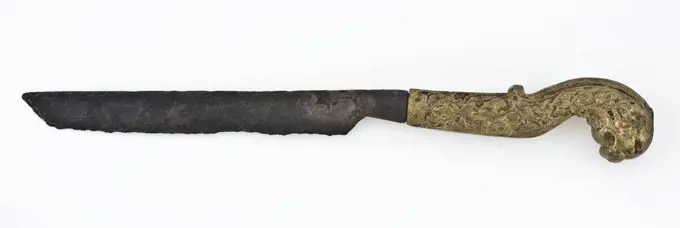
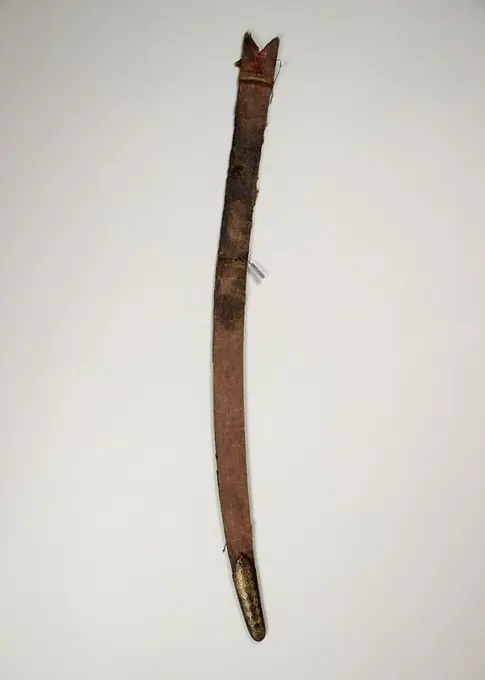
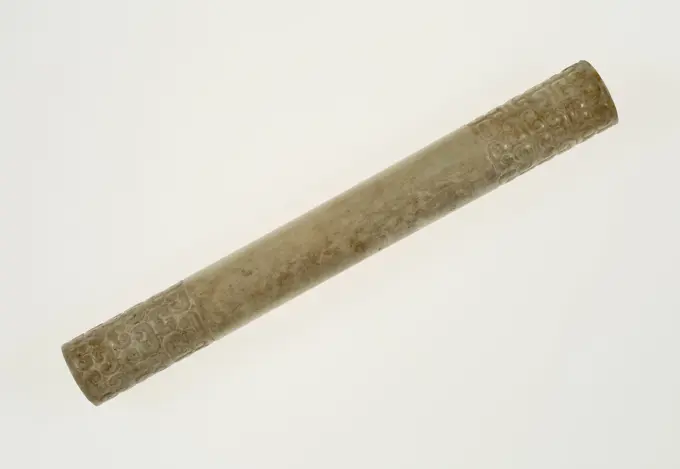
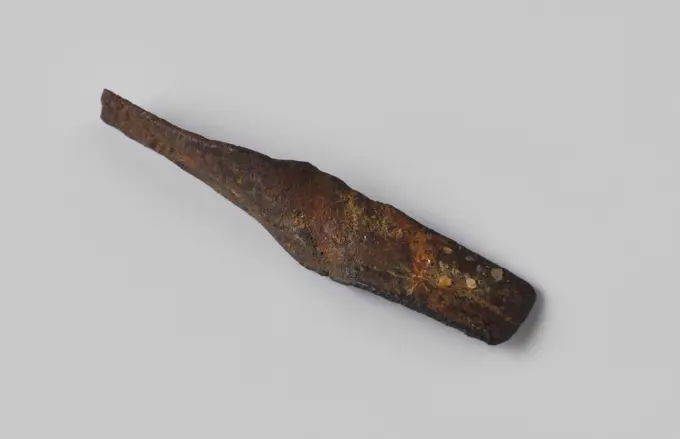
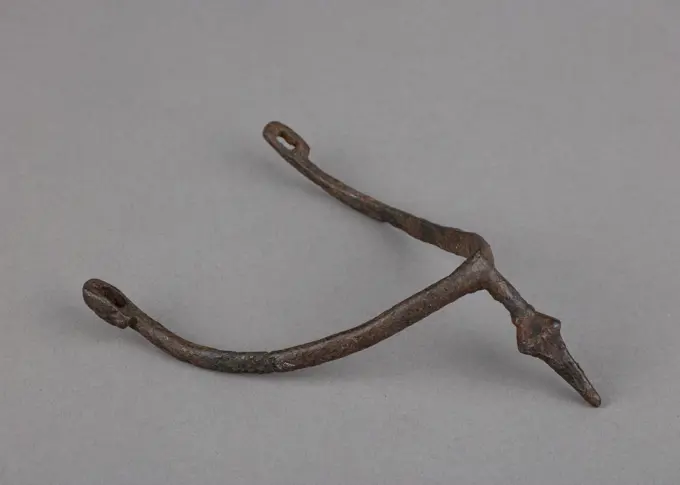
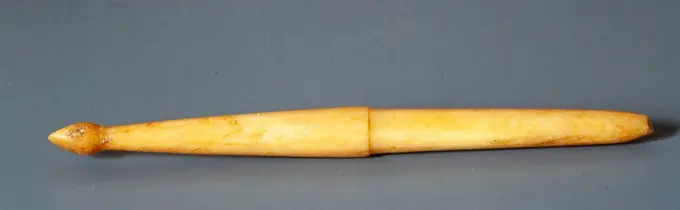
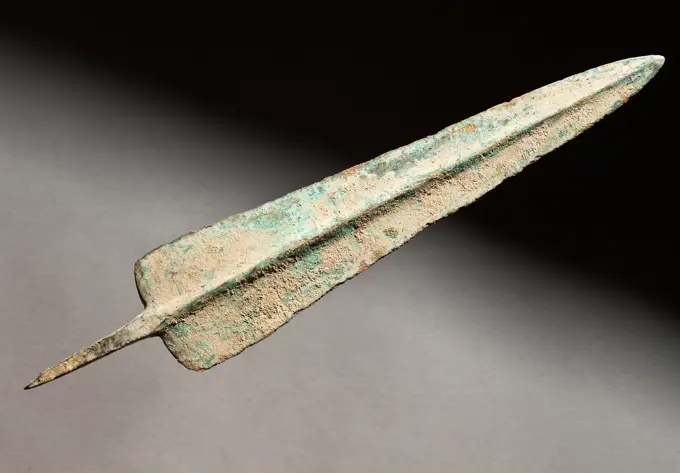
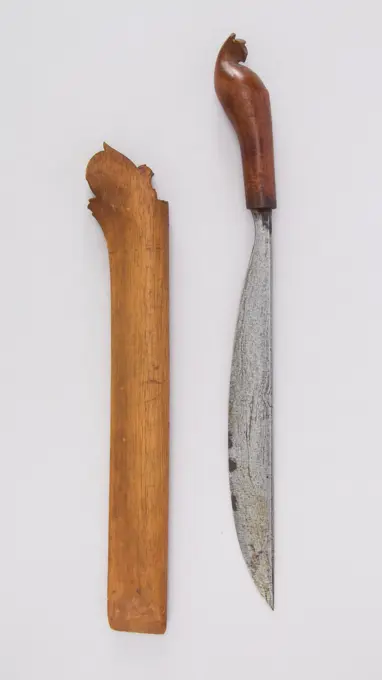
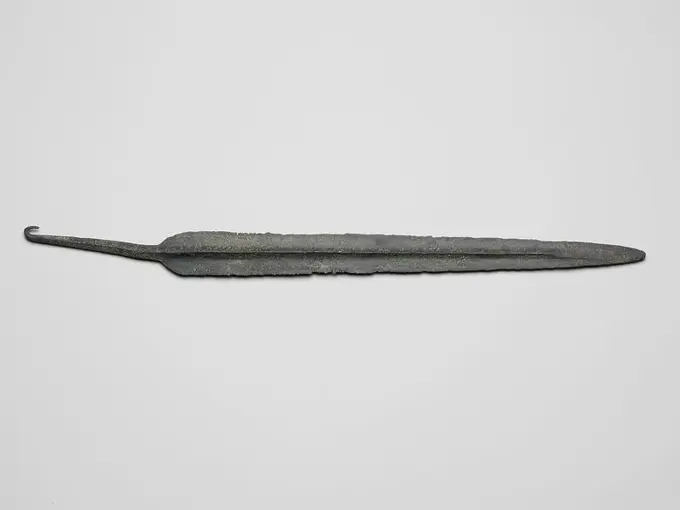
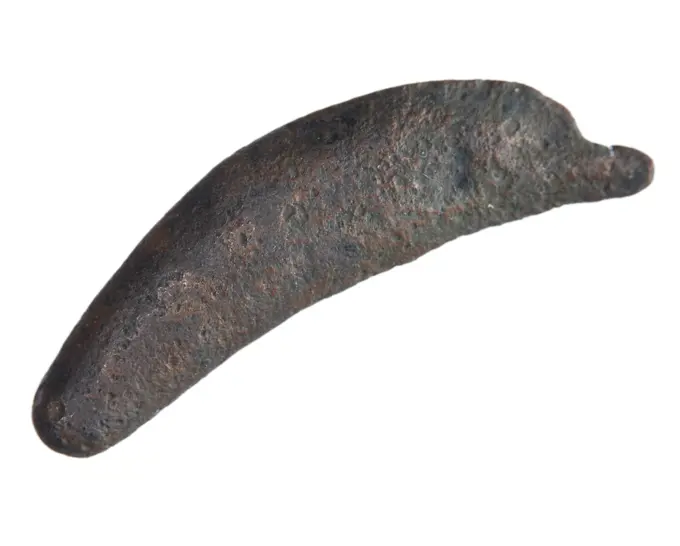
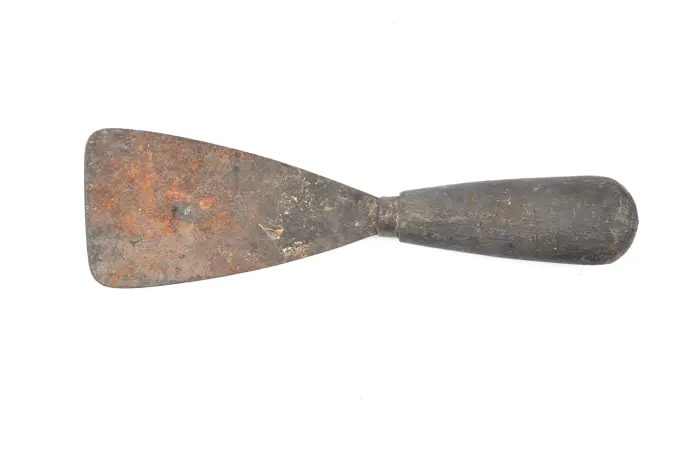
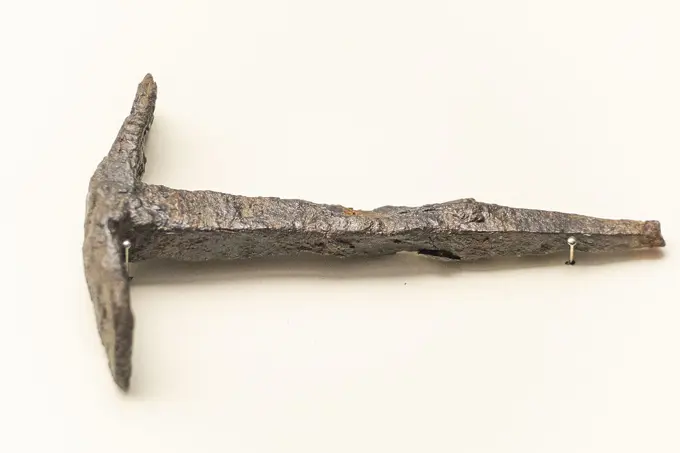
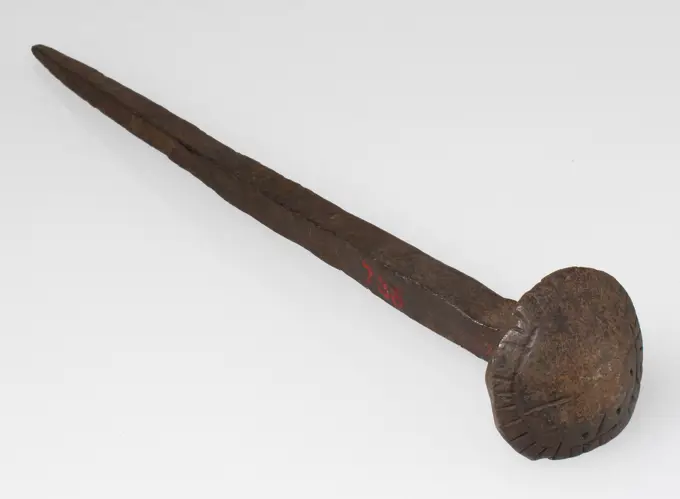
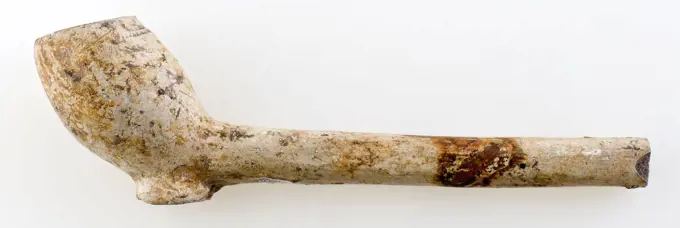
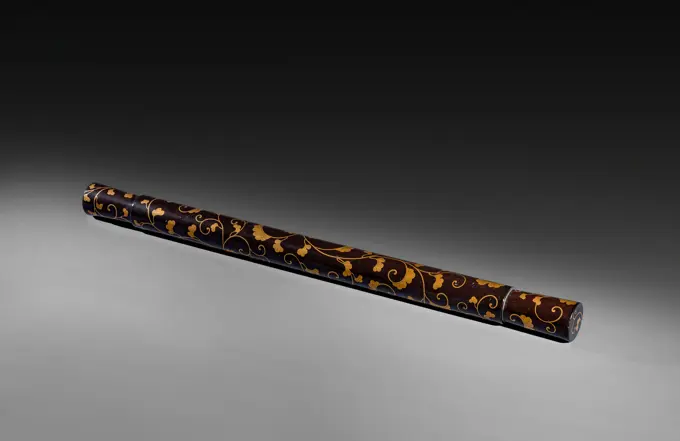
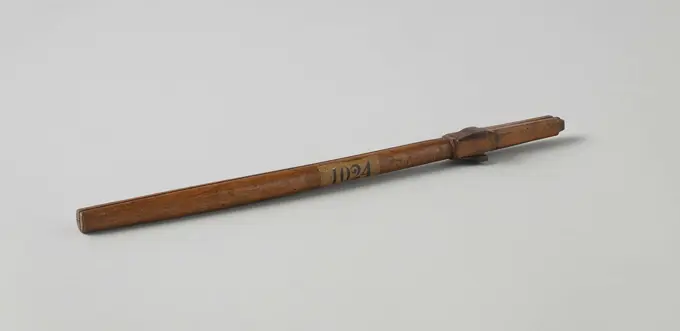
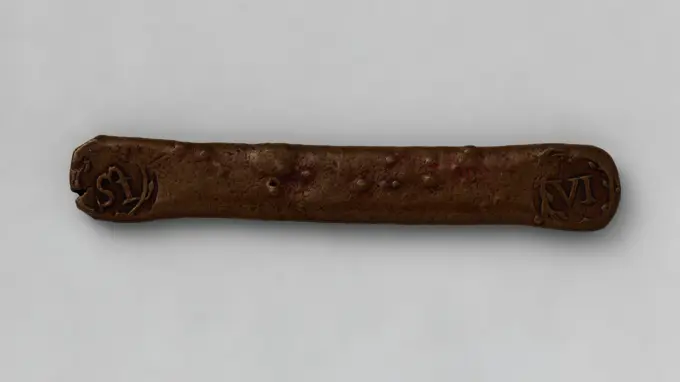
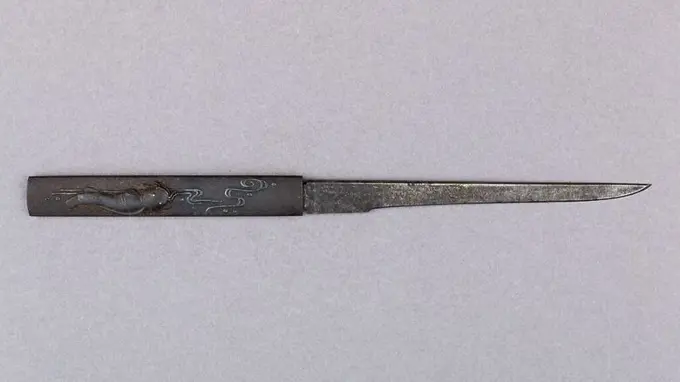
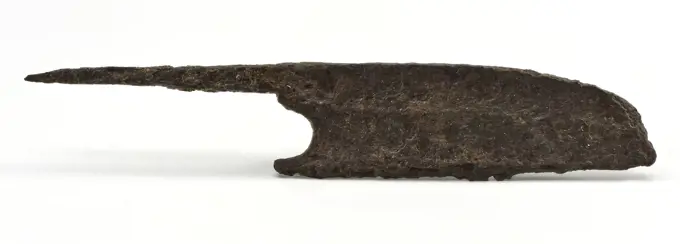
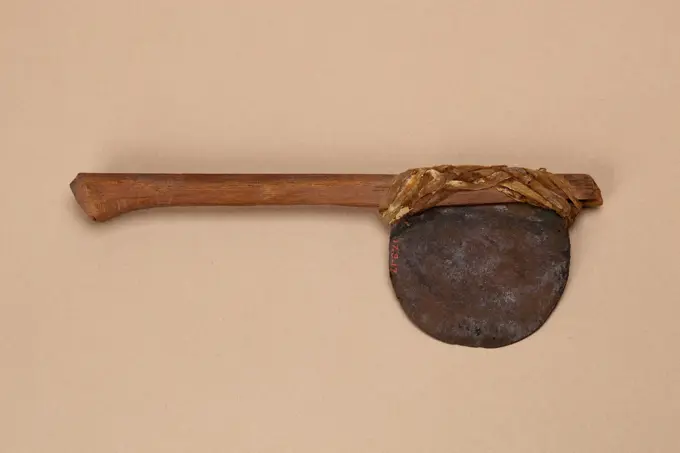
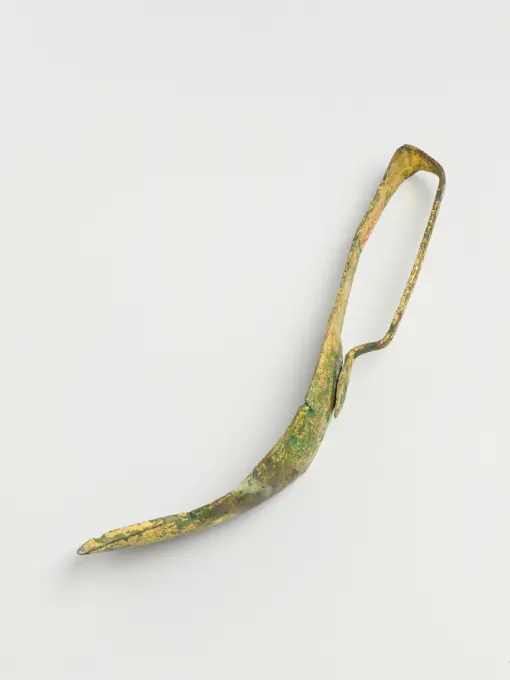
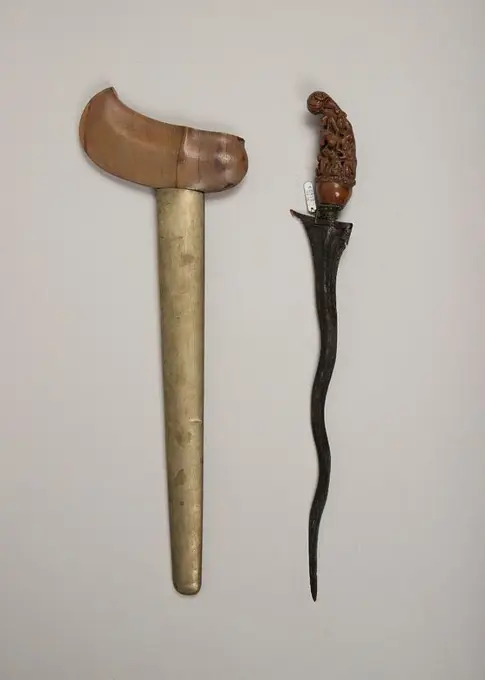
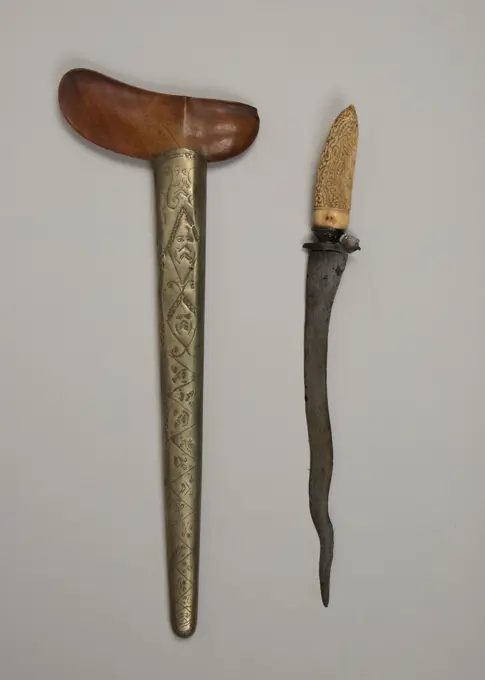
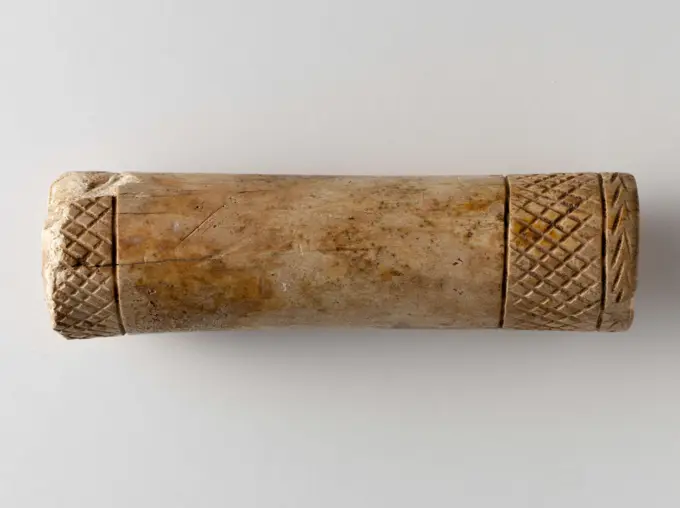
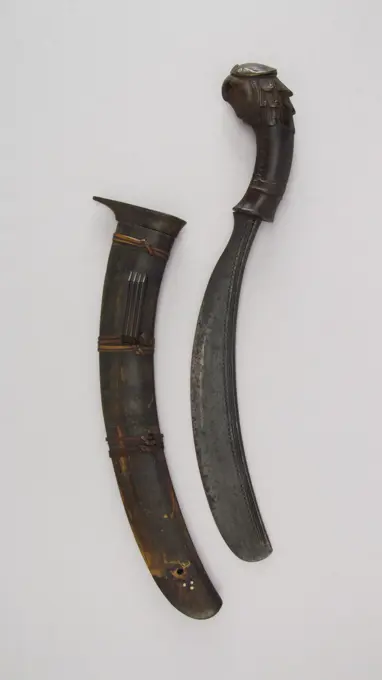
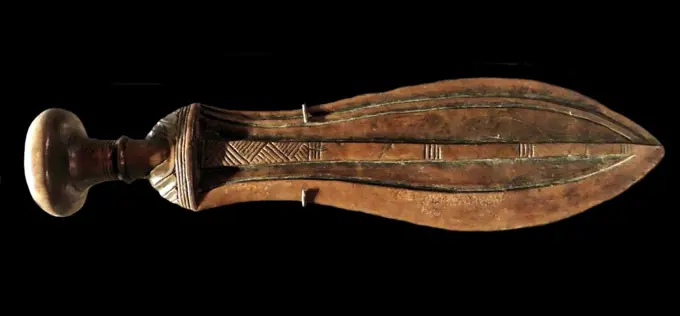
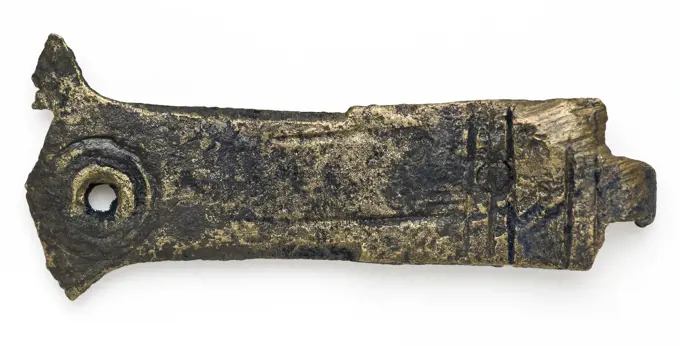
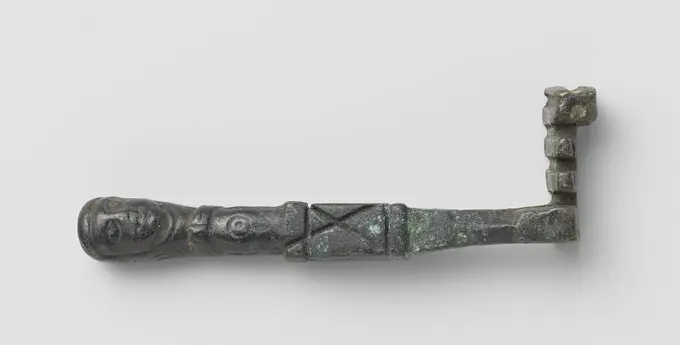
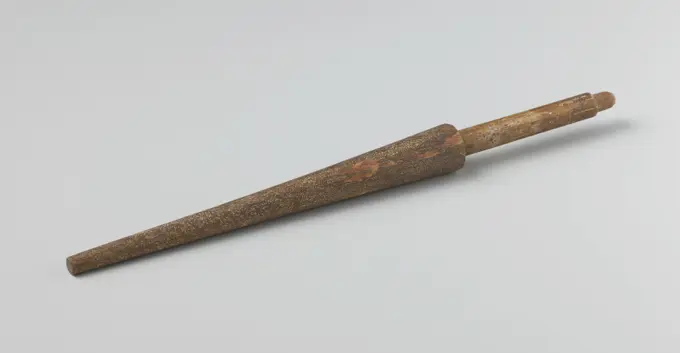
Upper part of the lance of St. Joris, Anonymous, 1850 - 1875 Top part of the lance of St. Joris, possibly not original. unknown wood (plant material) Top part of the lance of St. Joris, possibly not original. unknown wood (plant material)Guts or hollow chisel with sloping sliding cut whose chisel is provided with an edge list. Guts or hollow chisel. Seat chisel with sloping sliding cut whose chisel is equipped with an edge frame. The wooden handle is missing.Bronze spearhead ca. 1400-1050 B.C. Minoan Spearhead.. Bronze spearhead 252404 Minoan, Bronze spearhead, ca. 14001050 B.C., Bronze, L. 10 in. (25.4 cm). The Metropolitan Museum of Art, New York. Bequest of Richard B. Seager, 1926 (26.31.484)Excerpt of copper from the wreck of the East Indians Hollandia, 1700 - in or before 1743 fragment Varied parts or fragments, strips and strip-shaped fragments; fragm. Netherlands copper (metal)   SecondBlade of dagger with one cutting blade with incised figures on the blade, kidney dagger dagger knife stab weapon weapon fragment soil finding iron metal, forged blade The blade is single-edged and flat triangular in diameter. Kling suitable for general carving Decoration can be found right under the heel of the blade and consists of an embossed drawing on one side in the form of what flower on stem with two leaves standing on circle and underneath it could have loose crown-like shape his archeology dagger decoration status symbol personal equipment defense clothing accessoryOintment Stick Fragment 4th-7th century Coptic. Ointment Stick Fragment 477761Knife -Buckle with leather fragments, long decorated strip and hinged stirrup buckle, buckle fastener part soil find bronze leather metal, At the base of the herd framed block in which engraved decoration archeology Rotterdam City Triangle Spaarbankstraat Market Binnenrotte Soil discovery Inner rotte between former Savings Bank and Market corner Spaarbankstraat .Eared Dagger. Culture: Iranian, Lorestan. Dimensions: L. 14 13/16 in. (37.6 cm); W. 2 1/4 in. (5.7 cm); Wt. 14.3 oz. (405.4 g). Date: ca. 1100 B.C.. Museum: Metropolitan Museum of Art, New York, USA.Key; 1910-1-7Hand rake on whiteNeedle Cypriot. Needle. Cypriot. Bronze. BronzesKnife -Lancer at Ouillet. Bronze Age. Copper alloy, cast iron. Coming from: Lit de la Seine, Villeneuve-Saint-Georges, 1843. Paris, Musée Carnavalet. Bronze age, copper alloy, weapon, cast iron, launch a carnation, point, protohistory, protohistoricPoint of an enterpiek or cavalry lance, enterpiek lance pole weapon weapon founding iron metal, forged Metal enterpiek or cavalry lance without shank with three-sided point with flat sides. Two langlets or shaft springs one of which has been broken down archeology weapon spear halberd lance militariaAx From a Foundation Deposit, Hatshepsut's Temple ca. 1479-1458 B.C. New Kingdom. Ax From a Foundation Deposit, Hatshepsut's Temple. ca. 1479-1458 B.C.. Wood (tamarix), Bronze or copper alloy. New Kingdom. From Egypt, Upper Egypt, Thebes, Deir el-Bahri, Temple of Hatshepsut, forecourt, Foundation Deposit 3, 4, 5 (B, C, D), MMA excavations, 1923-24. Dynasty 18Clay pipe, marked with smooth handle, clay pipe smoking equipment smoke floor pottery ceramic pottery, pressed finished baked Clay pipe marked with smooth handle. Heel mark Shrinking or drying crack in the boiler. Part of rust color is removed from the handle with sharp object. Heel mark is crooked stamped heel mark: MA under sword in beaded archeology smoking tobaccoWrought iron nail, nail, nail fastener soil find iron metal, forged Hand forged iron nail or nail Conical shape square section archeology build fasten carpenterScissors 618 CE-907 CE China. Silver with chased and ringmatted decoration .Spindle. Dimensions: l. 22 cm (8 11/16 in); diam. 4.5 cm (1 3/4 in). Dynasty: Dynasty 19-20. Date: ca. 1295-1070 B.C.. Museum: Metropolitan Museum of Art, New York, USA.Crossbow stock -Messenheft from the wreck of the East Indians Hollandia, Anonymous, 1700 - in Or Before 1743  Knife, handle, cylindrical: tapering; id. NG 1979-403H, ferrule, id. NG 1980-27H426. Netherlands wood (plant material). copper (metal)   SecondPieter van Vliet, Clay pipe with mark PV, clay pipe smoking equipment smoke floor pottery ceramics pottery, pressed finished baked clay pipe with mark on kettle embossed small heel without stamping surface mark: PV with dot above the base of the V under crown archeology indigenous pottery smoking tobaccoWhite clay pipe, marked, with decorated handle, clay pipe smoking equipment smoke floor pottery ceramics pottery, hand-formed baked White clay pipe marked with decorated handle Stalk decorated with rings of points and teeth radial stamping technique. Heel brand heel mark: person holding long object archaeological tobacco smokingBlade with attached handle protector and twisted, narrowed sting, blade knife cutlery soil find iron metal, Blade with forged lifting guard twisted narrowed angel archeology Rotterdam rail tunnel cutting Soil discovery: rail tunnel Rotterdam.Writing pen with tip and spatula-shaped end, writing pen soil find copper iron metal, forged Writing stick or stylus Conical rod ending in point and spatula triangle on the other side. Excellent points at the base of the triangle archeology Rotterdam City Triangle Botersloot Binnenrotte writing notes Soil discovery collapses Binnenrotte back Botersloot (savings bank) from medieval layer.Knife lift from the wreck of the East Indiesman Hollandia.knife, Handle, Cylindrical: tapering; ID. NG 1979-403H, eroded.Fish hook ca. 1295-1070 B.C. New Kingdom, Ramesside. Fish hook. ca. 1295-1070 B.C.. Bronze. New Kingdom, Ramesside. From Egypt, Memphite Region, Lisht North, Cemetery, MMA excavations, 1913-14. Dynasty 19-20War 1939-1945. Adolf Hitler's initial tart shovel. General Leclerc Museum of Hauteclocque and the Liberation of Paris, Jean Moulin Museum. 75314-28 Argenserie, war 1939-1945 39-45, object, tart shovel, Second World War, table serviceTable knife with iron blade and brass curved ornamented handle with dolphin head, knife cutlery soil find brass iron metal, forged cast engraved Mark on blade: PI archeology Rotterdam Stadscentrum Stadsdriehoek Blaak Soil discovery at De Blaak.Sword Scabbard. Culture: Persian. Dimensions: H. 32 7/8 in. (83.5 cm); W. 1 7/8 in. (4.8 cm); Wt. 6.2 oz. (175.8 g). Date: 18th-19th century. Museum: Metropolitan Museum of Art, New York, USA.Perforated Cylinder 500 BCE-400 BCE China. Jade .Fragment rotated copper strip from the wreck of the East Indians Hollandia, 1700 - in Or Before 1743 fragment Varied parts or fragments, strips and strip-shaped fragments; fragm. Netherlands copper (metal)   SecondPrick Spur late 12th century possibly Italian The prick spur was the first type of spur to be invented, and it consists of a goad or prick, more or less pointed, connected to side arms or a heel plate. The earliest spurs were probably simple thorns attached at the back of the heel, before they started to be made out of metal in antiquity. Prick spurs were the main type of spurs used in the Middle Ages until the mid-14th century, when they were supplanted by rowel spurs, which appeared in Europe a century before and with which they had cohabitated for a time. As a knights status was closely related to his horse, spurs became one of the symbols of chivalry, and one of the tokens given to him during his knighting.. Prick Spur. possibly Italian. late 12th century. Iron alloy. Equestrian Equipment-SpursSpear 18th-19th century Bornean. Spear. Bornean. 18th-19th century. Brass, bamboo. Shafted WeaponsFragment paneling from a coffin from the wreck of the East Indiesman Hollandia. Box, paneling; = fragm, broken, eroded; Oblong, Rectangular, Flat, 1 Vertical Groove, Along One Long Side Discolored Imprint or Metal Band.Roman needle, bone, 3rd century, Can Rafart. Museum: MUSEO DE MATARÓ.Spearhead. Iran, Luristan, circa 1000-550 B.C.. Arms and Armor; spears. BronzeKnife lift from the wreck of the East Indiesman Hollandia.knife, Handle, Cylindrical: tapering; ID. NG 1979-403H, Ferrules, ID. NG 1980-27H426.Knife (Golok) with Sheath 18th-19th century Malayan. Knife (Golok) with Sheath. Malayan. 18th-19th century. Wood. KnivesHandle of tools from the wreck of the East India Hollandiaia. Tools And Instruments, Various Tools, Unclassifiable Tool Handle; Fragm, Deforge: Oblong, Rounded Upper End, Narrowed Lower End.Copper alloy spearhead. Culture: Cypriot. Dimensions: 20in. (50.8cm). Date: ca. 2500-2000 B.C..Leaf-shaped blade with a hooked tang. Museum: Metropolitan Museum of Art, New York, USA.Greece, Sarmacja, Olmia, V The beginning of the 4th century BC, Dolphin money, AE MintBronze dipping or stirring rod 1st-2nd century A.D. Roman, Cypriot. Bronze dipping or stirring rod 244319EVENTAIL. "Leaf adorned with five patterns of average inspiration with lilac frame, birds and loves", ed. Moreau 1857. Painted on swan skin, carved, openwork, and painted ivory. Paris, Carnavalet museum. 100131-13 Fashion accessory, EventailKnife. Knife 244234Musket size, fragment consisting of brass sleeve with soil. Musket size, fragment consisting of brass sleeve with soil.Tubular protective cover or part of sleeve, tube holder soil find brass cork metal h 4,1, Tubular protection cap with convex head archeology Rotterdam City Triangle Schielandshuis Short Hoogstraat packing keep transport Soil discovery: Gallery garden Schielandshuis.Corner part of a stove (fragment), 1660 Cast iron corner part of a stove. Decorated with a lion's head and other motives. Germany iron (metal) casting Cast iron corner part of a stove. Decorated with a lion's head and other motives. Germany iron (metal) castingKnife 18th-19th century Thai. Knife 31568Primitive musical stringed instrument.Spachtel - Putty knife on white Spachtel - Putty knife on white Copyright: xZoonar.com/lantapixx 7262064stonecutter, Roman villa of Saucedo, Museum of the Councils and the Visigoth Culture, Church of San Román,Toledo, Castilla-La Mancha, Spain.Nail 15th-16th century European. Nail. European. 15th-16th century. Iron. Metalwork-IronScissors -Drawing passener with a pen shaft, anonymous, c. 1590 - c. 1596  Drawer with a pen shaft with ink on one leg. The legs are slightly bent at the hinge. A leg has broken down.  iron (metal) forging  Nova Zembla. Saving HuysDagger (Dirk) Blade 1500-1200 B.C. British In its complete state the blade would have been completed by a grip, and secured to it by bronze rivets.. Dagger (Dirk) Blade. British. 1500-1200 B.C.. Bronze. DaggersModel Pick from a Foundation Deposit ca. 1479-1458 B.C. New Kingdom. Model Pick from a Foundation Deposit. ca. 1479-1458 B.C.. Wood. New Kingdom. From Egypt, Upper Egypt, Thebes, Deir el-Bahri, Tomb of Senenmut (TT 353), Foundation deposit 5a, MMA excavations, 1926-27. Dynasty 18Spring Device. Culture: possibly French, possibly German. Dimensions: L. 4 1/2 in. (11.4 cm). Date: 13th century. Museum: Metropolitan Museum of Art, New York, USA.Pottery Flute ca. 1300-1500 Aztec. Pottery Flute. Aztec. ca. 1300-1500. Clay. Late Post Classic period (Pre-Columbian). Mexico. Aerophone-Blow Hole-vessel fluteClay pipe of unusual size with wide flat heel, unnoticed, clay pipe smoking equipment smoke floor pottery ceramics pottery, pressed finished baked Clay pipe of unusual size with wide flat heel unnoticed Pipe is larger and thicker than usual archeology smoking tobaccoMicroPhoto in a pen holder with six faces on the port of Ramsgate, England, Anonymous, 1857 - c. 1930 microphotograph. binocular. collage  Ramsgatemaker: France bone (material). penhouder: metal. glass  harbour RamsgateBrass book fitting consisting of two hinged parts, decorative fittings soil found brass copper metal, engraved Two hinged pieces of batter; one with two holes with pointed end and others with hook on the end archeology Rotterdam rail tunnel book close ground Soil discovery: trajectory rail tunnel Rotterdam.2000 A2.106.1. Iron Hammer, Mediaeval. Found at Weoley CastleVaginal knowledgeClay pipe with heel mark and decorated handle, slim and double conical model, clay pipe smoking equipment smoke floor pottery ceramic pottery h 3,2, pressed in shape finished baked Pipe with double conical head and heel. Heel mark Decorated stem with fields of four diamond-shaped stamps in which fleur de lis Heel mark: GW archeology Rotterdam railway tunnel indigenous earthenware tobacco smoking Soil discovery: railway tunnel Rotterdam.Nail. Culture: European. Dimensions: Overall: 1 1/2 x 9 3/4 in. (3.8 x 24.8 cm). Date: 15th-16th century. Museum: Metropolitan Museum of Art, New York, USA.Obi Rack, 1615-1868. Japan, Edo period (1615-1868). Wood with lacquer; overall: 63.6 cm (25 1/16 in.).Model of a Made Mast.Part of a round mast with square top, nommer with ears and driving bed. The mast itself consists of three parts, a part front and two rear, inside with welding together. The nommer is square and between the fairly short ears is the driving bed.Canoe bailer -Bar or 6 stivers; Ceylonese Emergency Japanese Copper Coin, United Oostindische Compagnie, 1700 - 1750 coin Copper mint in the form of a rectangular bar. Front: on the right end in a leaf -wreath VI and on the left end in a wreath st (t vice versa). Reverse: on the right end in a leaf -wreath VI and on the left end in a wreath st (t vice versa). Colombo copper (metal) striking (metalworking)Caddy spoon 18th century Portuguese. Caddy spoon. Portuguese. 18th century. Silver gilt. Metalwork-SilverRetractor withspatulaKnife Handle (Kozuka) with Blade. Culture: Japanese. Dimensions: L. including blade 8 5/8 in. (21.9 cm); L. excluding blade 3 13/16 in. (9.7 cm); W. 9/16 in. (1.4 cm); thickness 1/4 in. (0.6 cm); Wt. 1.7 oz. (48.2 g). Date: ca. 1615-1868. Museum: Metropolitan Museum of Art, New York, USA.Upper part of a flute, black, with white legs tires. Upper part of flute, black, with white legs tiresWork knife for chopping food, work knife knife kitchen utensils soil find iron metal, forged Heavy blade for chopping food. Blade formed with cavity immediately after the cutting edge that the blade experiences little frictional resistance during cutting through the product archeology butcher butcherTwo-piece bronze mold for handle of spoon, mold casting tools tool kit base metal bronze, cast Two-piece bronze mold for pouring handle for spoon Rotterdam tin foundry tin pourer tin Meeuws Druy handicrafts Forms come from the origin 18th century Rotterdam tinnegieter J Druy. The large molds that were not signed or dated were the property of the tinker guild and were rented to the small tin caster.Axe, 19th century, 19 3/4 x 2 5/8 in. (50.2 x 6.7 cm), Stone; wood, United States, 19th centurySword Scabbard 18th-19th century Persian. Sword Scabbard 30943Fragment iron from the wreck of the East Indians Hollandia, 1700 - in Or Before 1743 fragment Parts of artefacts; eroded fragments: materials; iron. Netherlands iron (metal)   Second. Bed cord has been knotted with four wires. At the top of a knotted loop, followed by a horizontal butter button (Turkish knot) where the ends of wires are visible. After this a square knot work (farmer's plague) with a horizontal butter-button (T.K.) and attachment of new wires at a quarter of the length. Continuation of the square button that is closed with a horizontal butter button. After this, a wider part follows crocked with vertical shapes, decided with a large decorative button (t.k.) with brush.Model ax ca. 1981-1802 B.C. Middle Kingdom. Model ax. ca. 1981-1802 B.C.. Copper, wood, animal hide. Middle Kingdom. From Egypt, Middle Egypt, Asyut (Lykopolis), Tomb of Ankhef (Tomb 9), Khashaba excavations. Dynasty 12Gilt bronze strigil ca. 1st-3rd century A.D. Roman In the Greek world, the strigil is most often associated with athletes and the gymnasion. But for the Romans, the baths and the culture of bathing were so popular that the implement became part of the everyday equipment of ordinary people.. Gilt bronze strigil. Roman. ca. 1st-3rd century A.D.. Bronze, Gold. Imperial. Bronzespisciformes, rib with fish engraving and reticules, Upper Magdalenian, El Pendo, Escobedo, Museum of prehistory and archeology (MUPAC), Santander, Cantabria, SpainIron Concretion from the wreck of the East Indies Fleet Hart, which was decided in 1735, possibly part of a spoon drill, c. 1700 - c. 1735 concretionary stone The concretion has the shape of a small gutter and may have been the (sharp) end of a spoon drill in shape and dimensions. Concretion.  concretionary stoneGold and silver rhyton. Goldsmith art. Scythian Civilization, 5th Century BC.Nail 15th-16th century European. Nail. European. 15th-16th century. Iron. Metalwork-IronBody ornament Japan By the Middle Jōmon period, the food supply in Japan had stabilized enough that the Jōmon people could focus their activities more on crafts and spiritual life. This led to the development of a wide variety of body ornaments, including necklaces and hairpins, some of which feature very elaborate designs. It is speculated that body ornamentation may have served a religious or spiritual purpose, but it may also have represented social rank and status.. Body ornament. Japan. Bone. Final Jōmon period (ca. 1000-300 B.C.). BoneKris with Sheath. Culture: Javanese. Dimensions: L. with sheath 19 11/16 in. (50 cm); L. without sheath 16 3/4 in. (42.5 cm); L. of blade 13 in. (33 cm); W. 2 1/4 in. (5.7 cm); D. 1 1/2 in. (3.8 cm); Wt. 4.6 oz. (130.4 g); Wt. of sheath 5.9 oz. (167.3 g). Date: 16th-19th century. Museum: Metropolitan Museum of Art, New York, USA.Kris with Sheath 16th-19th century Javanese. Kris with Sheath 31396Winged Pendant before 16th century Tairona. Winged Pendant 317462Fragment of bone ". OS. Dynasty of Shang (1765 - 1122 BC), China. Paris, Muse Cernuschi. Fragment d'os Asian art, Chinese art, art of extreme-East, shang dynasty, prehistoric time, spoque shang, fragment, bone, prehistorySword with Scabbard 18th-19th century Bornean. Sword with Scabbard 31088Olga Boznańska table knife L Lefrèrewooden sword made by the Kuba tribe, Democratic Republic of the Congo 1900top view of wooden spoon with f Chia seeds top view of wooden spoon with portion of Chia seeds isolated on white background Copyright: xZoonar.com/ValeryxVoennyyx 14285978Bow-Shaped Fibula, 450-1 BC. Classical. Bronze; overall: 4.5 cm (1 3/4 in.).Copper book fittings, decorated, decorative fittings fittings closure soil find copper brass metal, cast punched riveted engraved Copper strip part of book fittings Beveled sides protruding end. Decorated with transverse and longitudinal grooves archeology Rotterdam rail tunnel book protect close close transport Soil discovery: trajectory rail tunnel Rotterdam.Adze ca. 1479-1458 B.C. New Kingdom. Adze. ca. 1479-1458 B.C.. Wood, bronze or copper alloy, leather. New Kingdom. From Egypt, Upper Egypt, Thebes, Deir el-Bahri, Temple of Hatshepsut, forecourt, Foundation Deposit 5 (E), MMA excavations, 1923-24. Dynasty 18The Amsterdam apothecary and art collector Emmanuel Vita Israël. He donated his collection, comprising keys dating from Roman antiquity to the 19th century, to the Koninklijk Oudheidkundig Genootschap (Royal Antiquarian Society) in 1937. Vita Israël claimed that his key collection had grown more or less by accident: being one of the few collectors of keys, dealers automatically made their way to him.