Historical Weaponry

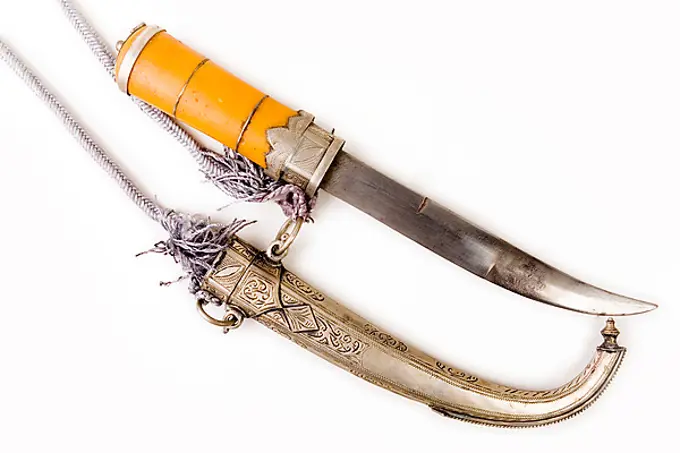
Diverse collection of ornate daggers and swords from various cultures, including Persian and Indian influences, showcasing intricate designs and historical significance.

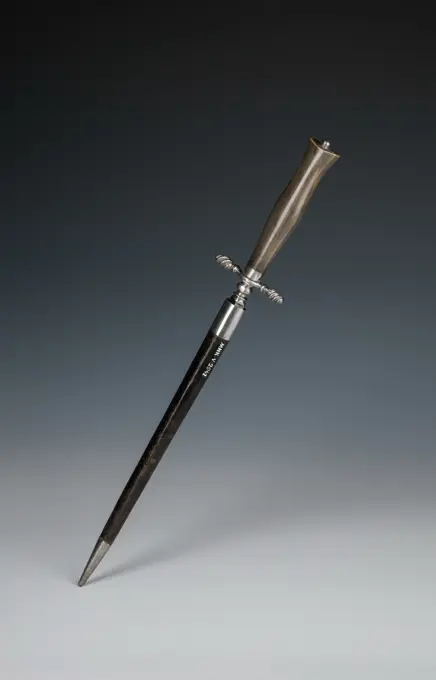
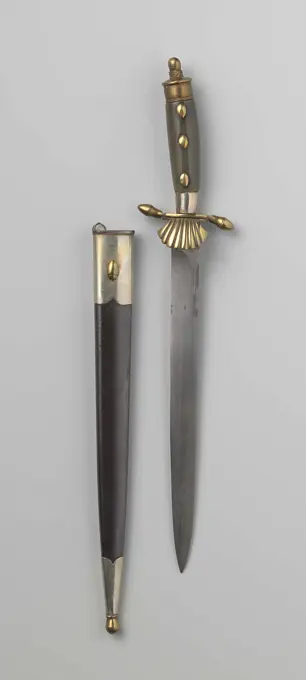
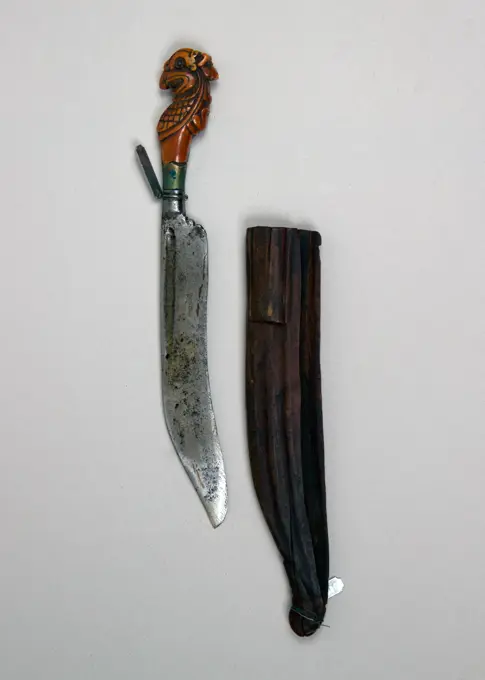
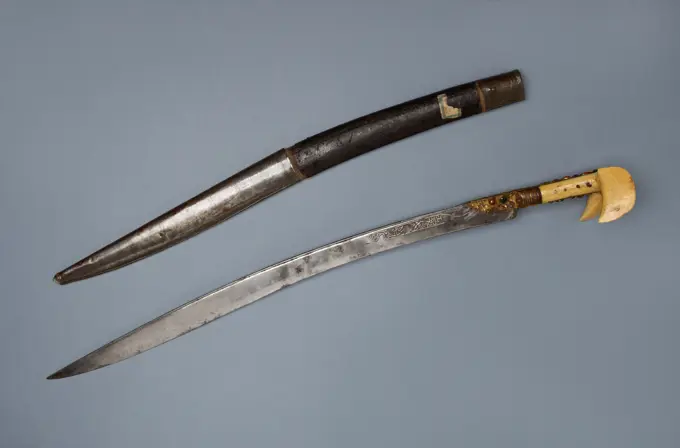
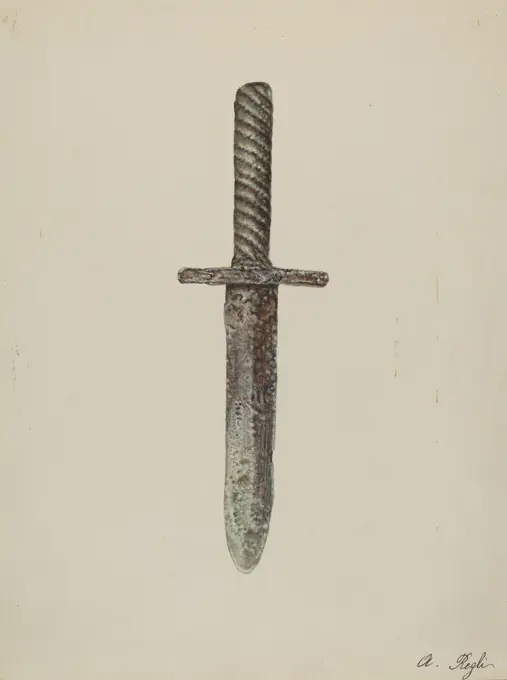
Dolk Aceh War, Anonymous, 1916 dagger Dagger with sheath. The sheath is made of black leather and has a steel word juice with a round carrier button. At the bottom of the dagger steel batter with a copper button. The dagger has a steel one -cut blade that ends in a somewhat curved point. The hilt has a downwarmed shell -shaped pare heart. The handle is made of wood in which three oval -shaped copper nails are stuck. The handcap is made of copper. Indonesia word of cracker, batter, blade: steel (alloy). Parear heart, handwood: copper (metal). Handle: Wood (Plant Material)   Aceh
Dolk Aceh War, Anonymous, 1916 dagger Dagger with sheath. The sheath is made of black leather and has a steel word juice with a round carrier button. At the bottom of the dagger steel batter with a copper button. The dagger has a steel one -cut blade that ends in a somewhat curved point. The hilt has a downwarmed shell -shaped pare heart. The handle is made of wood in which three oval -shaped copper nails are stuck. The handcap is made of copper. Indonesia word of cracker, batter, blade: steel (alloy). Parear heart, handwood: copper (metal). Handle: Wood (Plant Material) Aceh
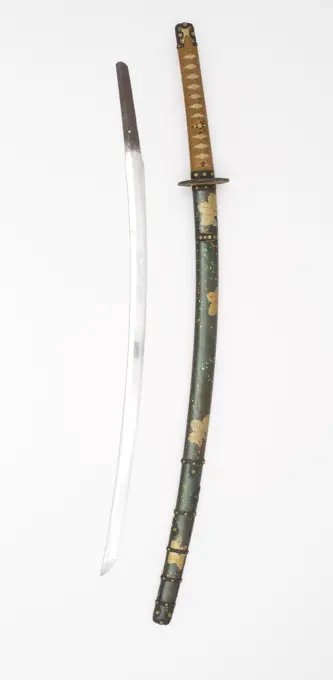
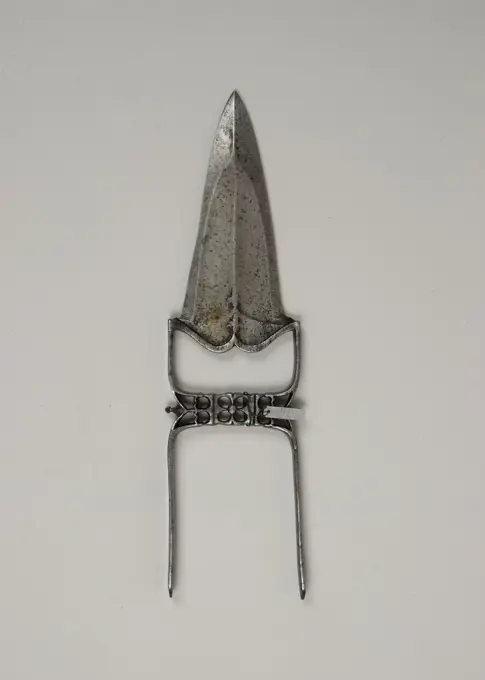
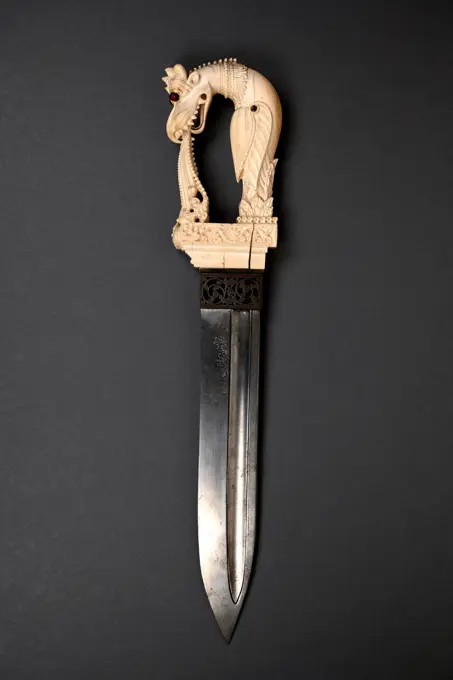
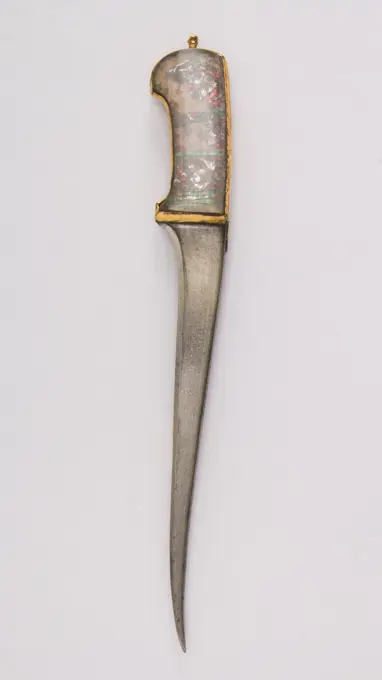
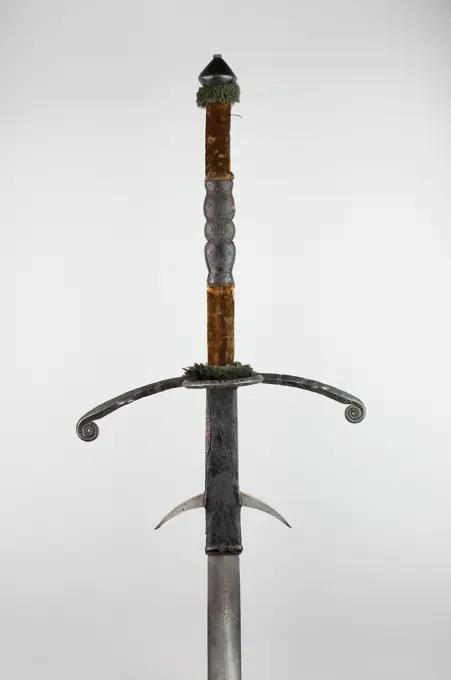
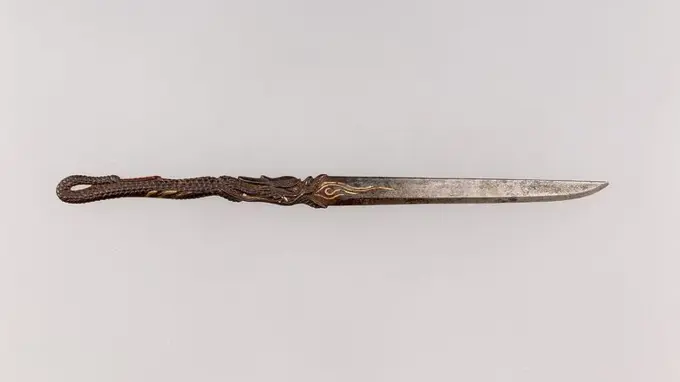
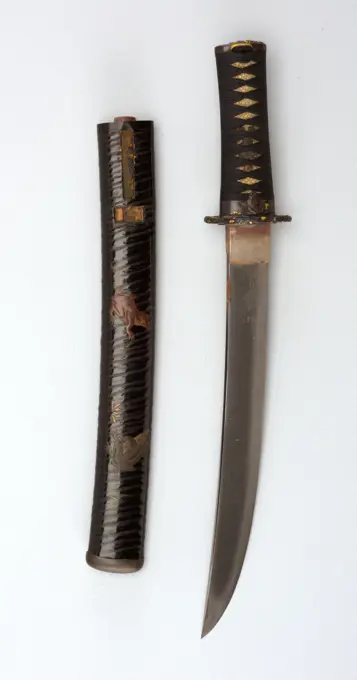
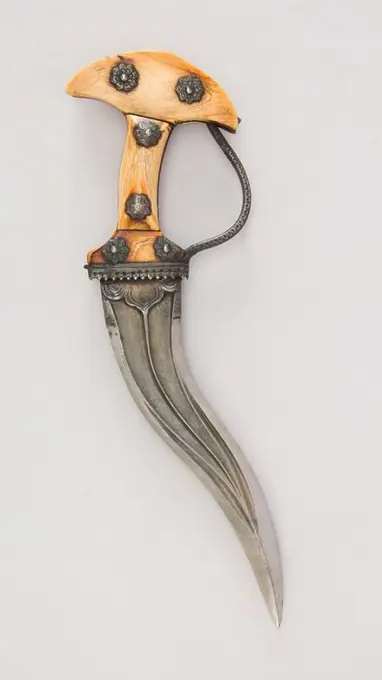
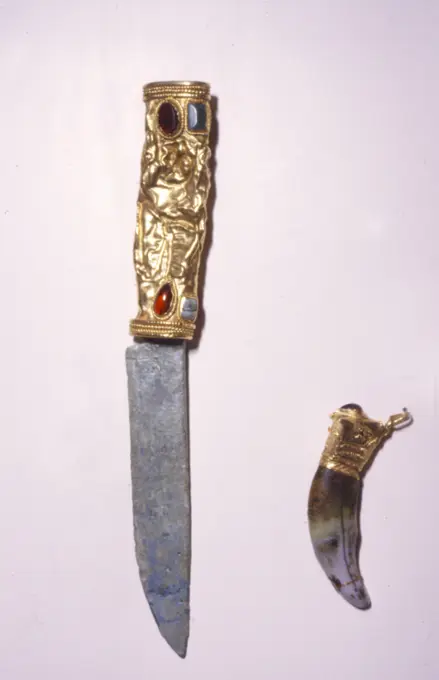
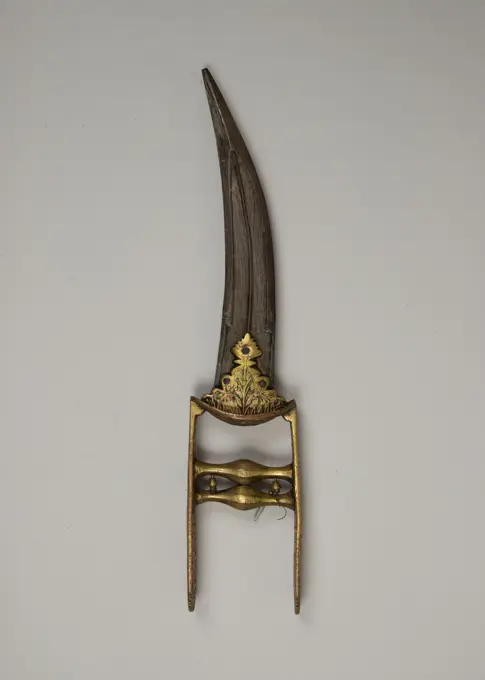
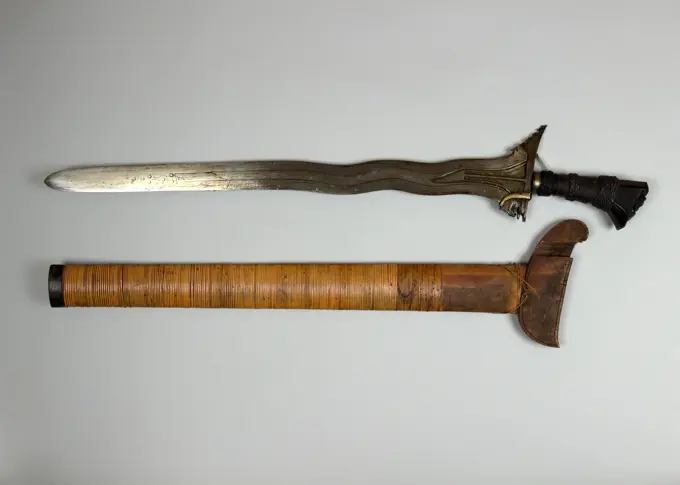
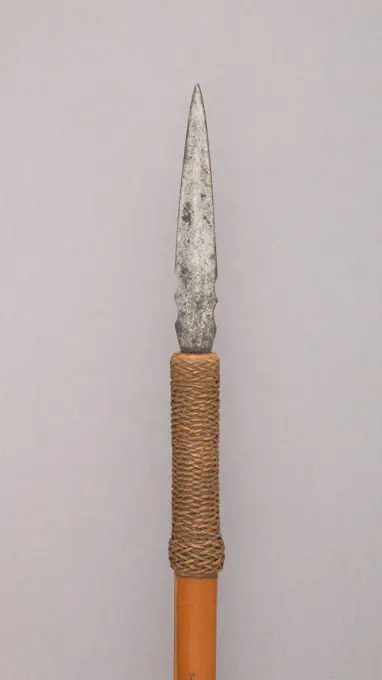
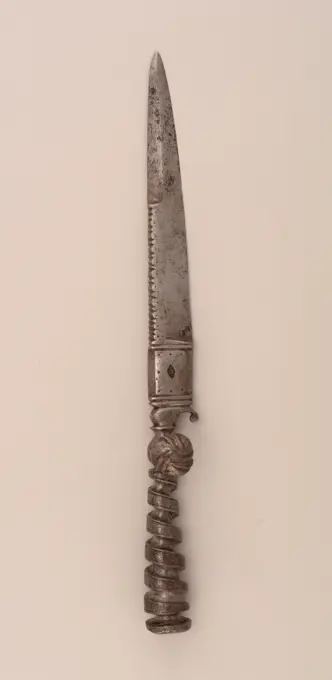
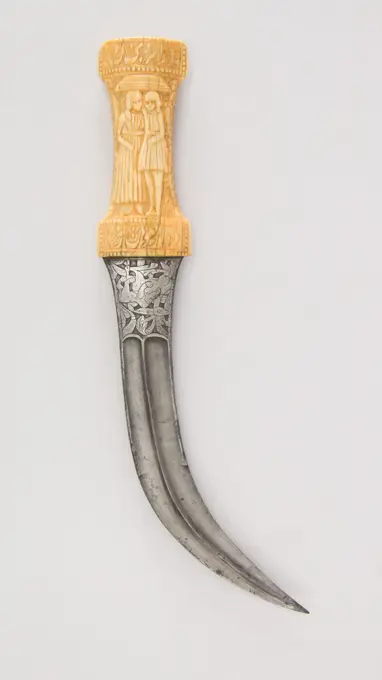
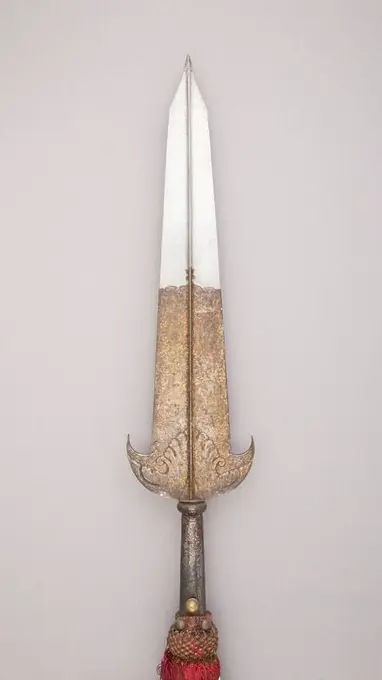
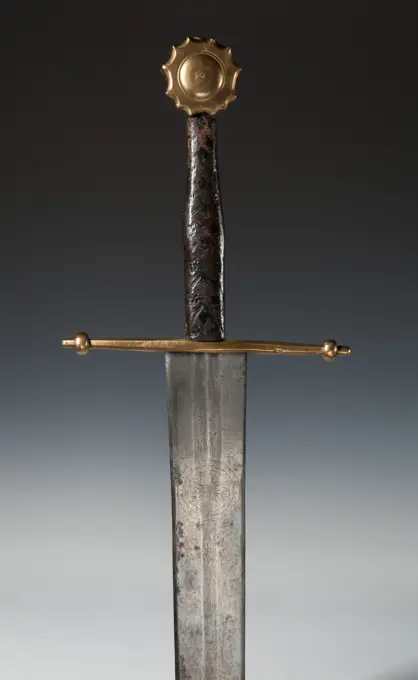
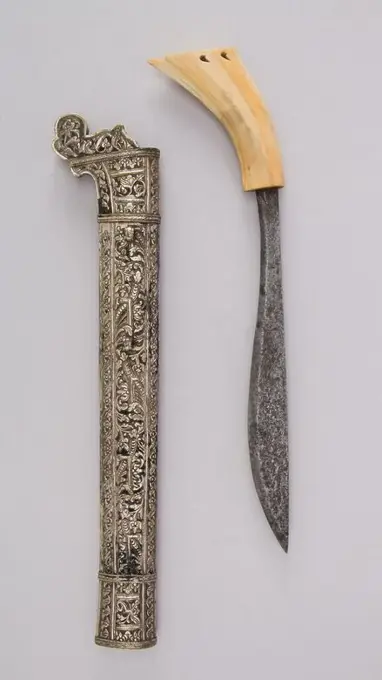
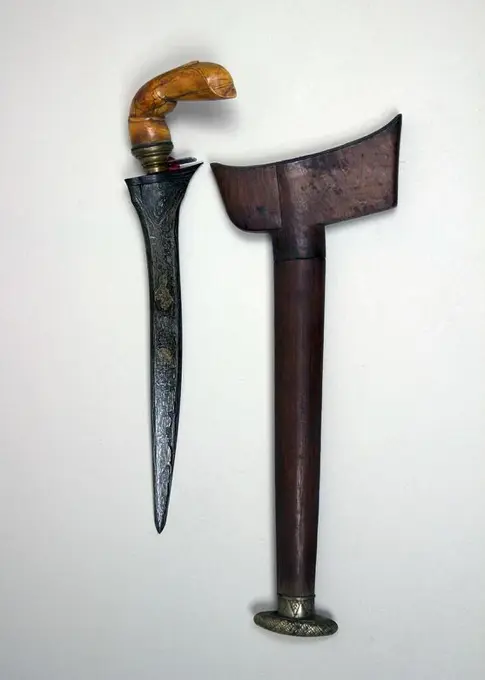
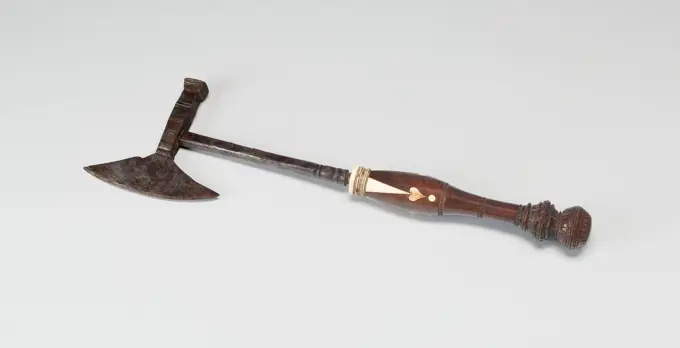
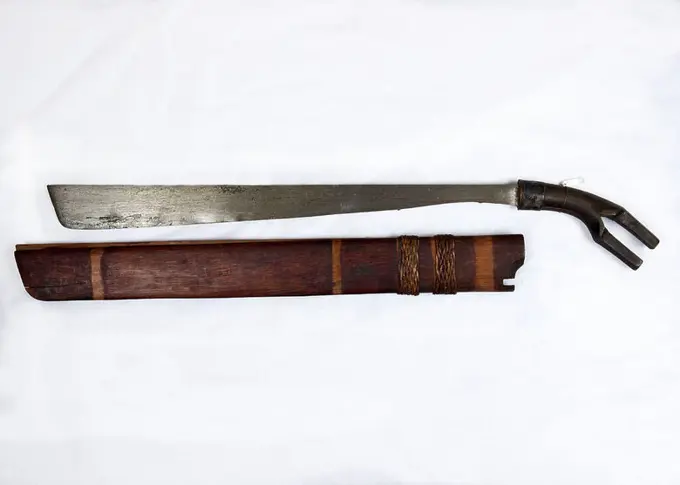
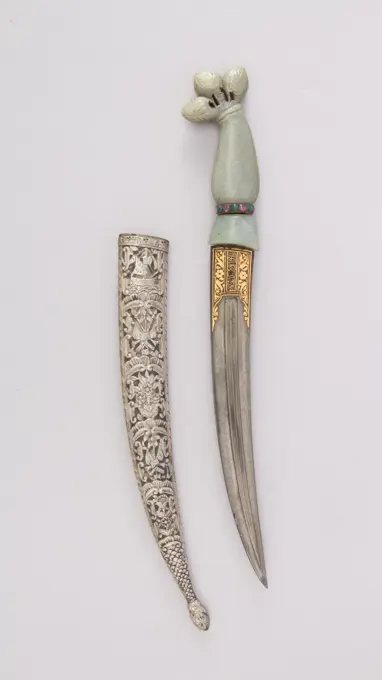
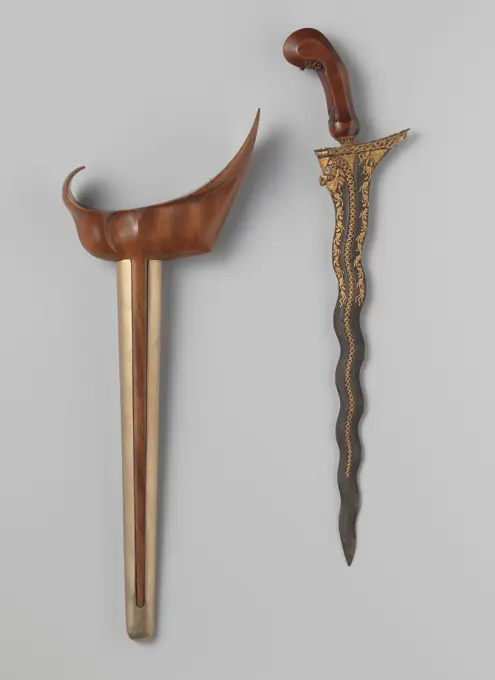
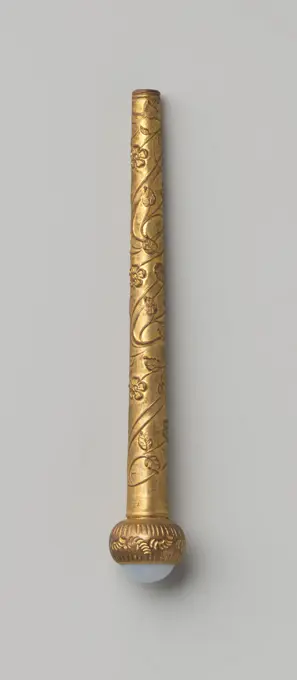
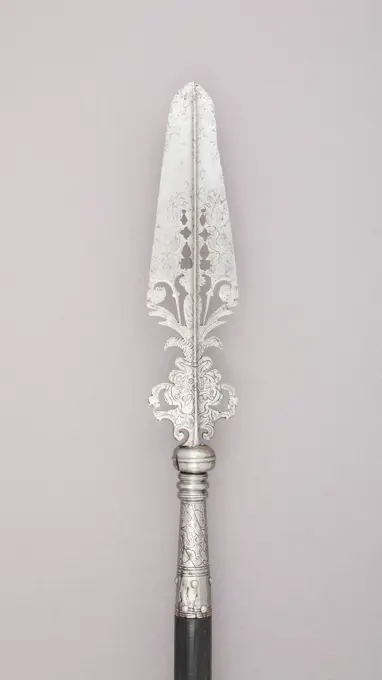
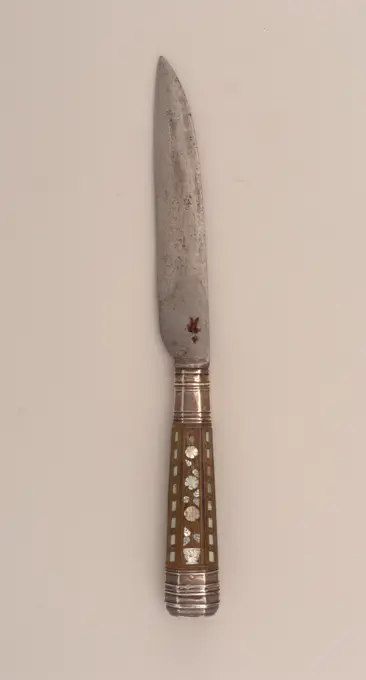
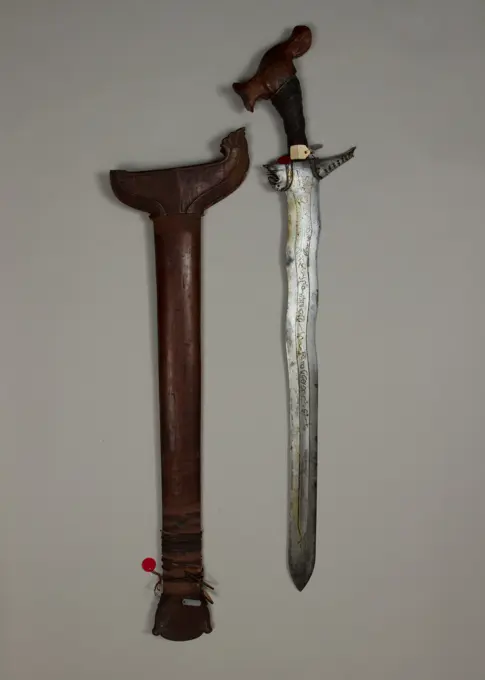
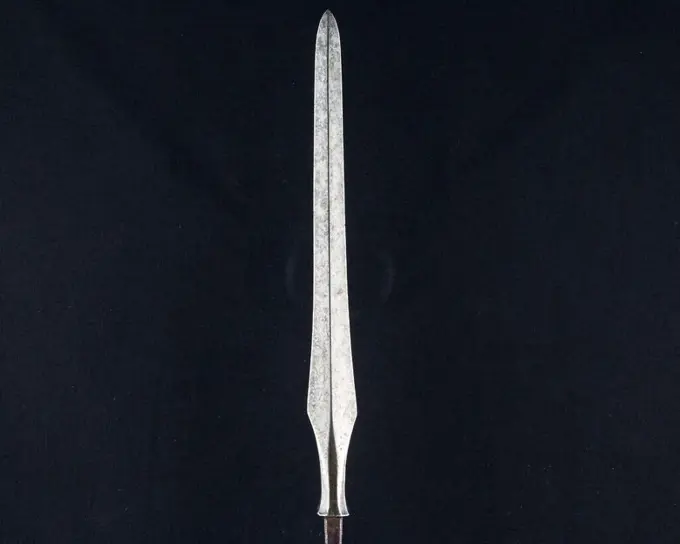
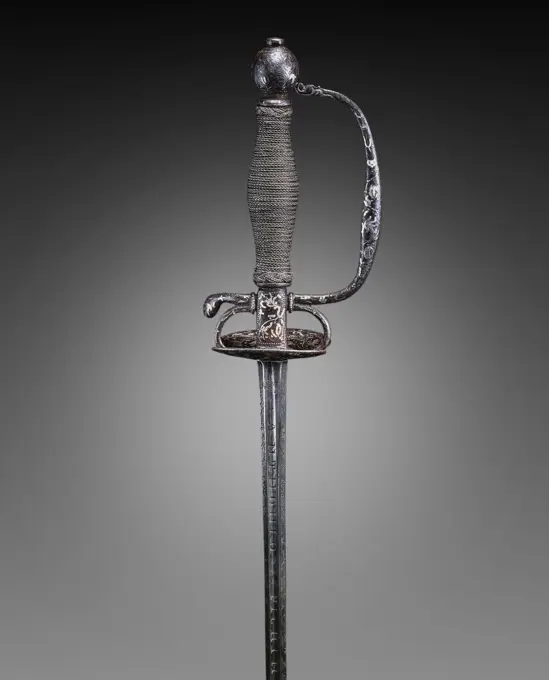
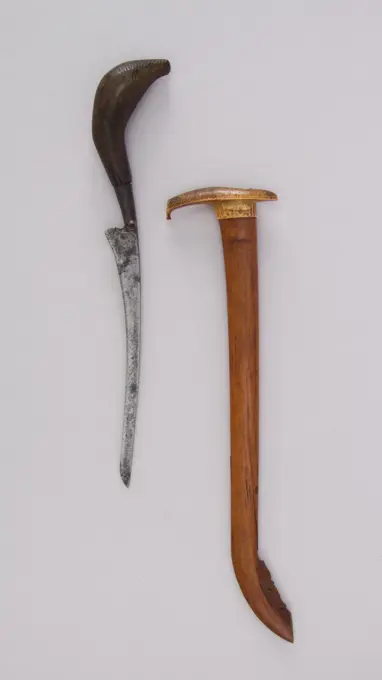
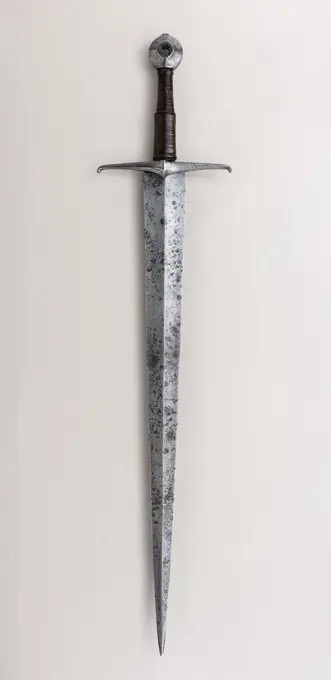
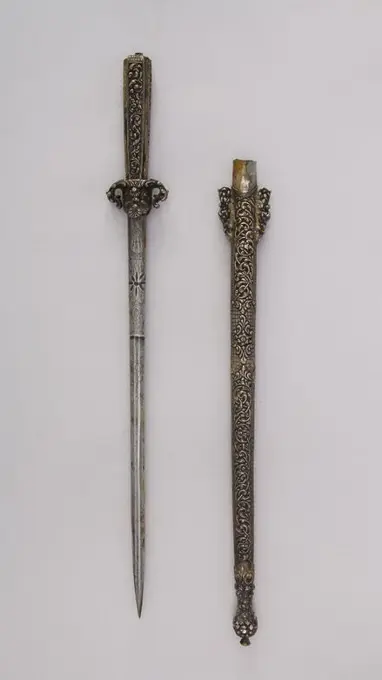
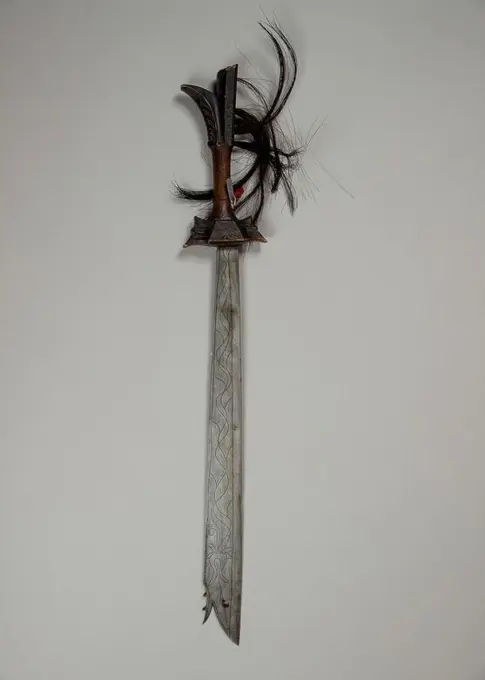
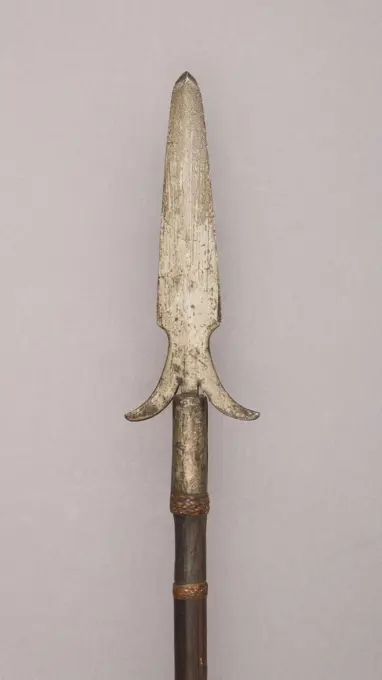
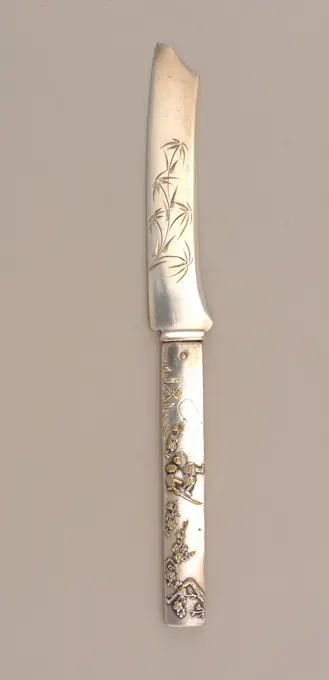
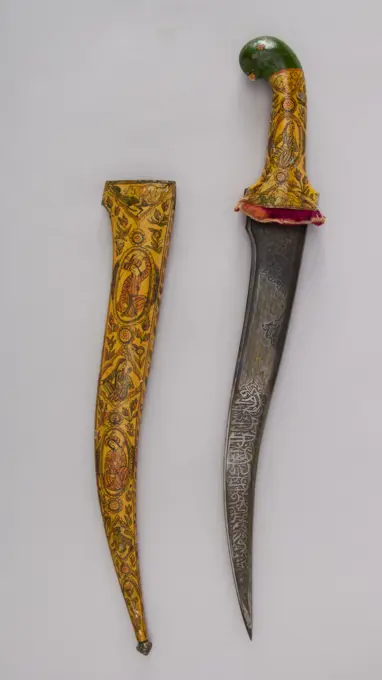
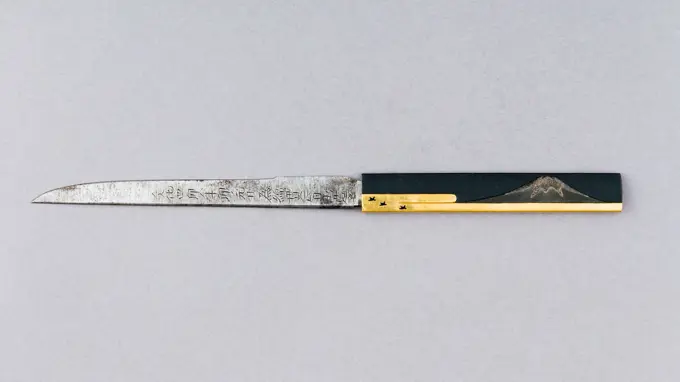
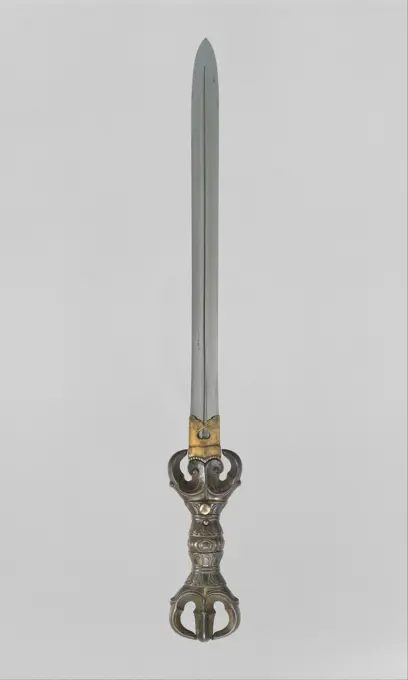
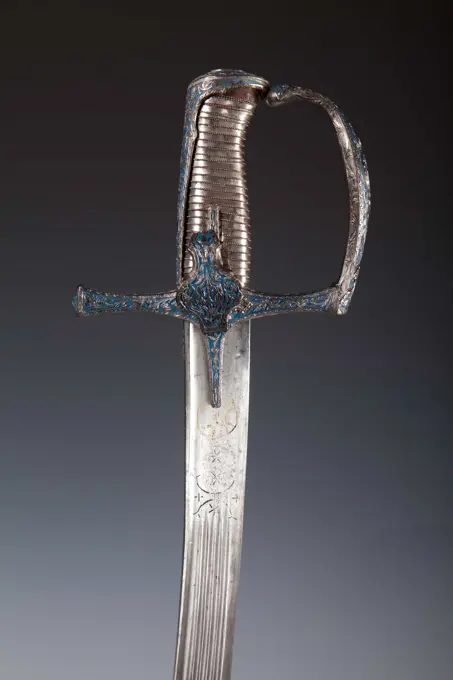
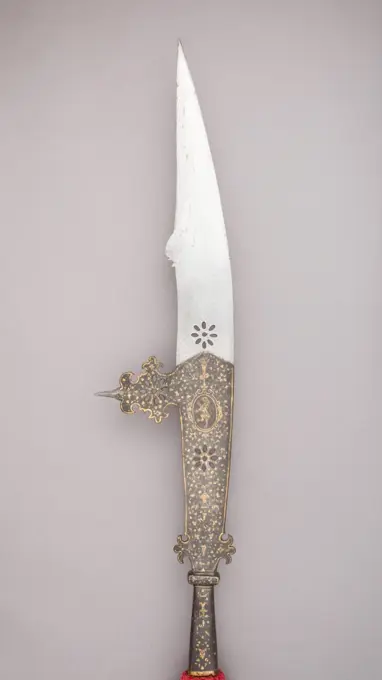
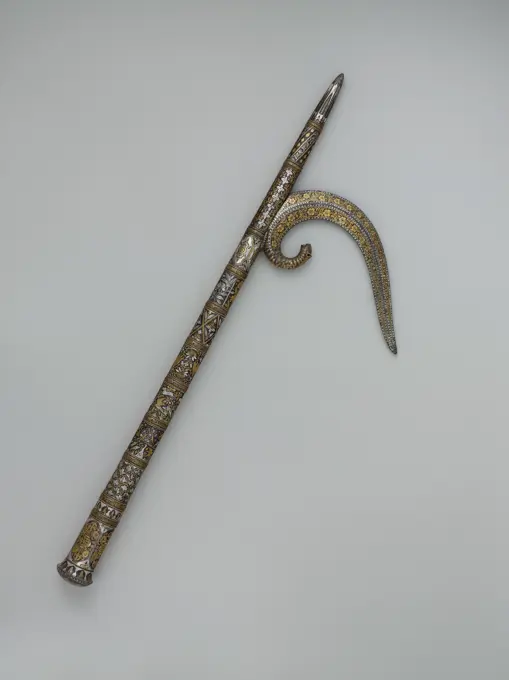
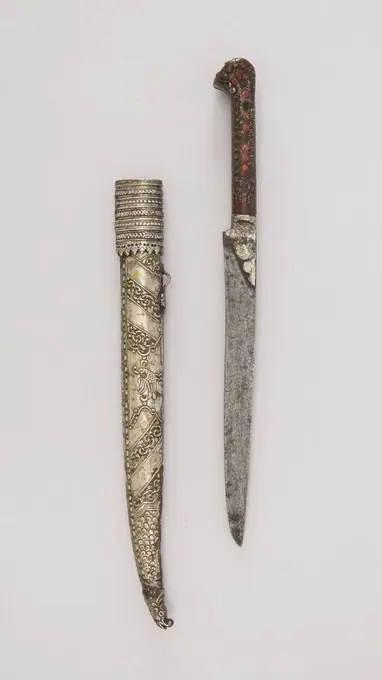
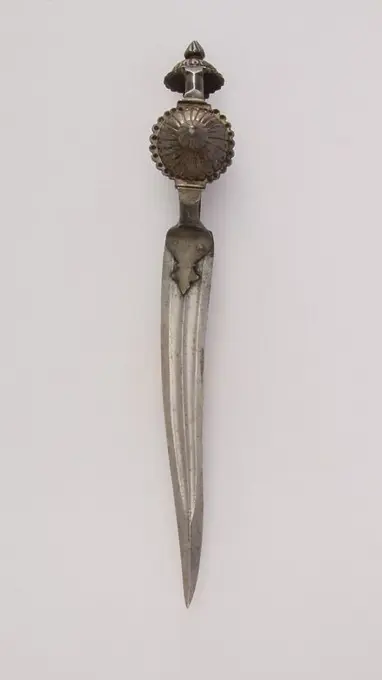
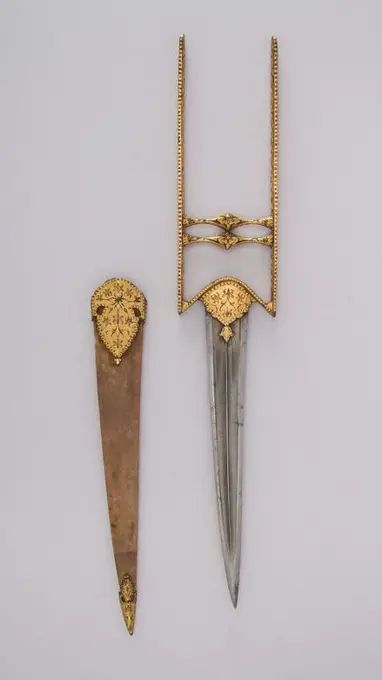
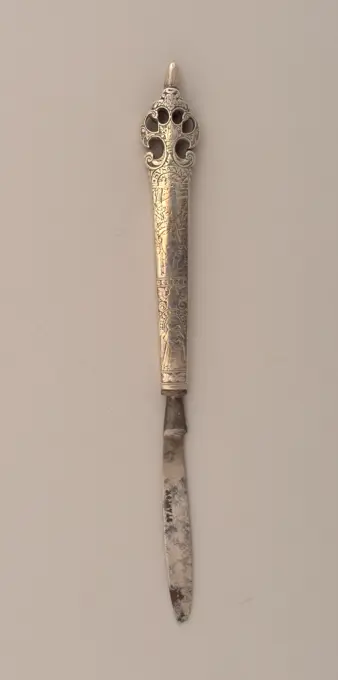
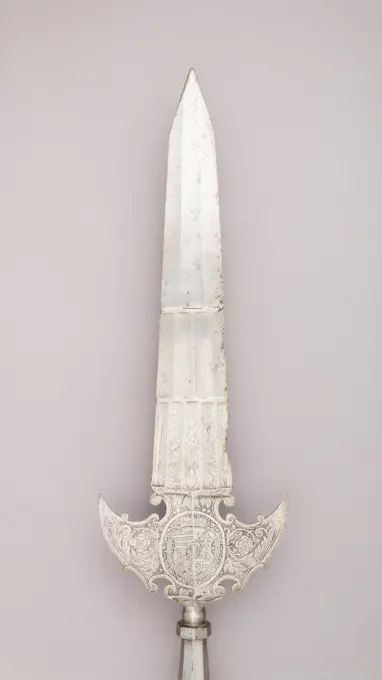
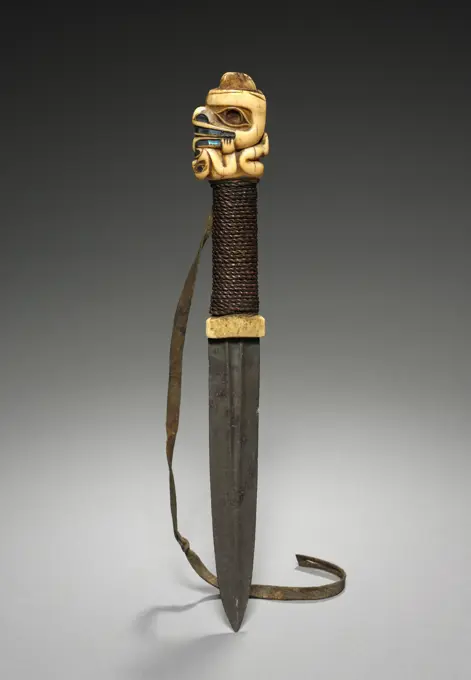
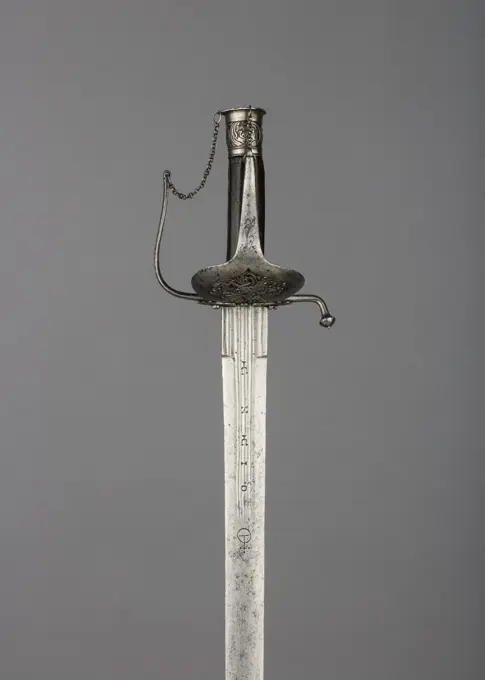
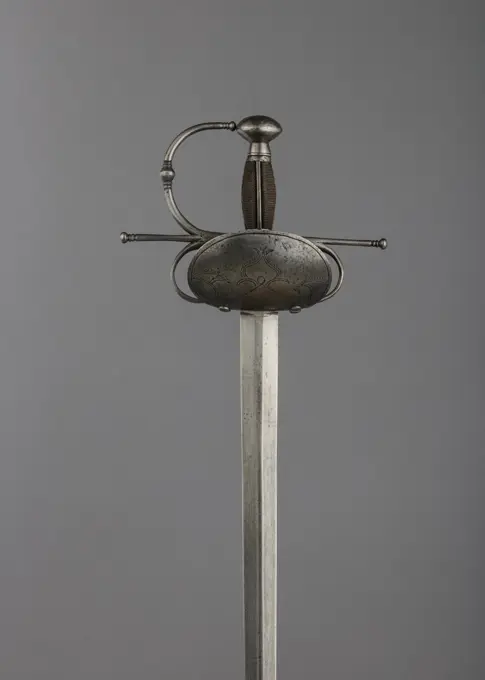
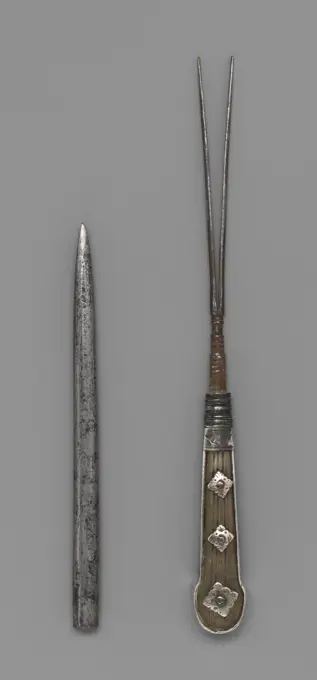
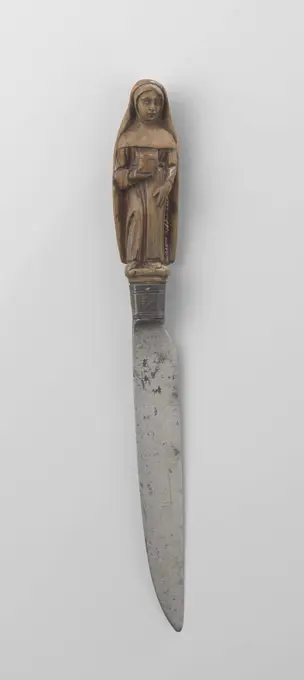
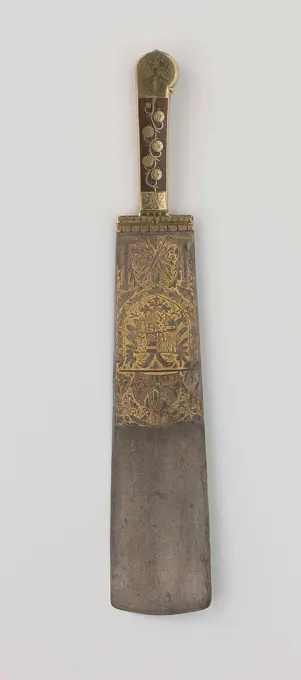
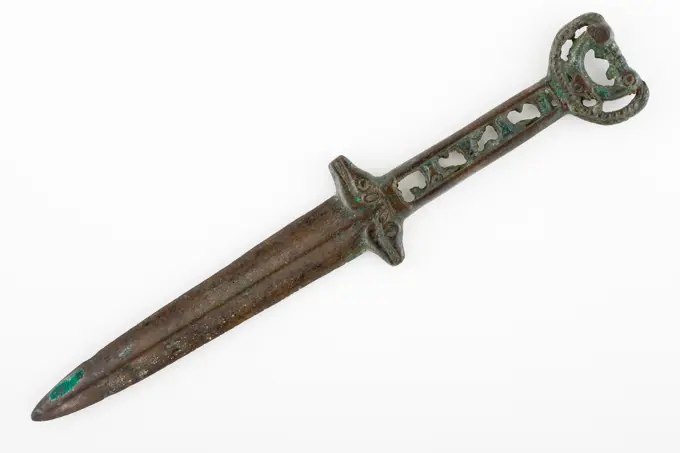
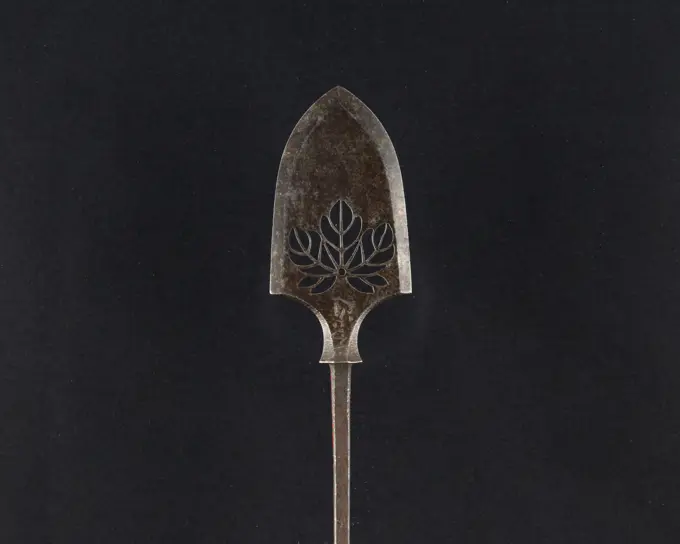
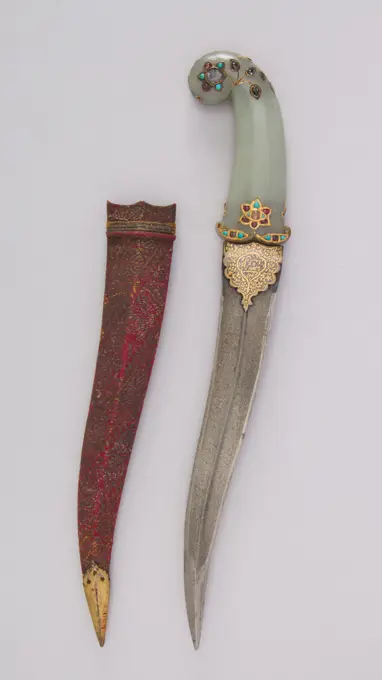
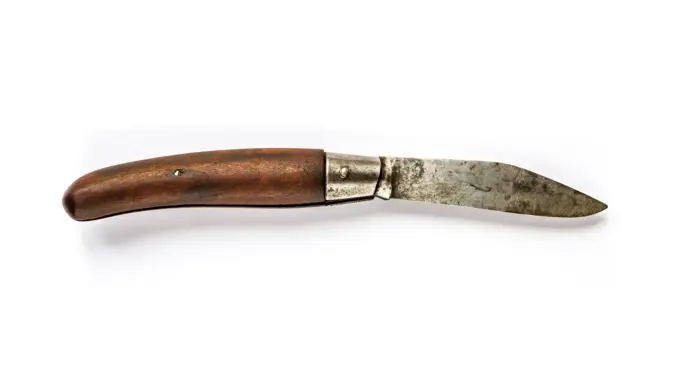
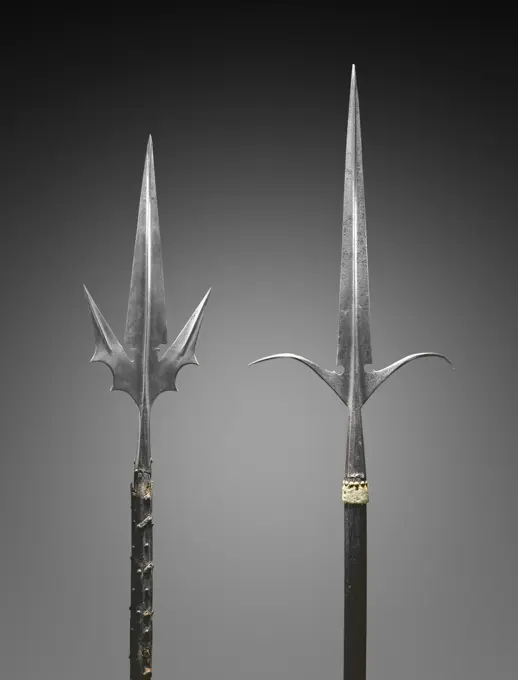
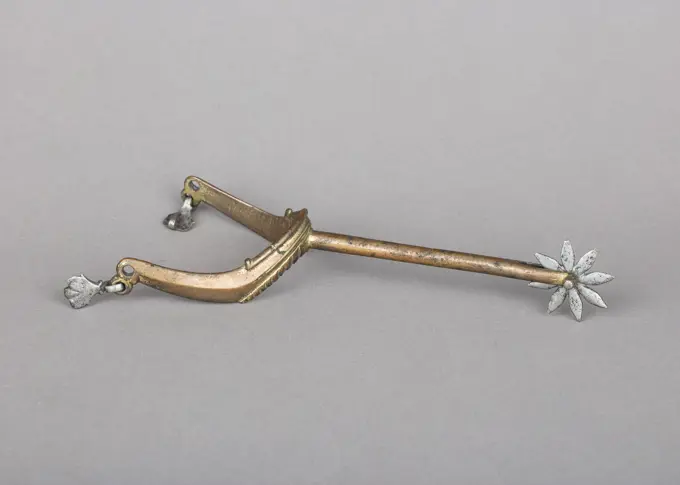
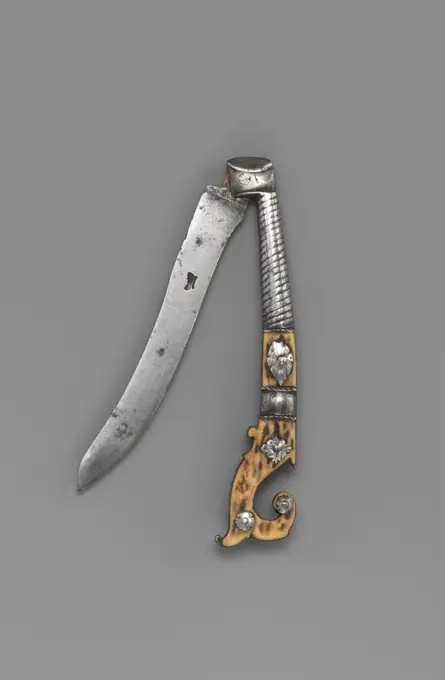
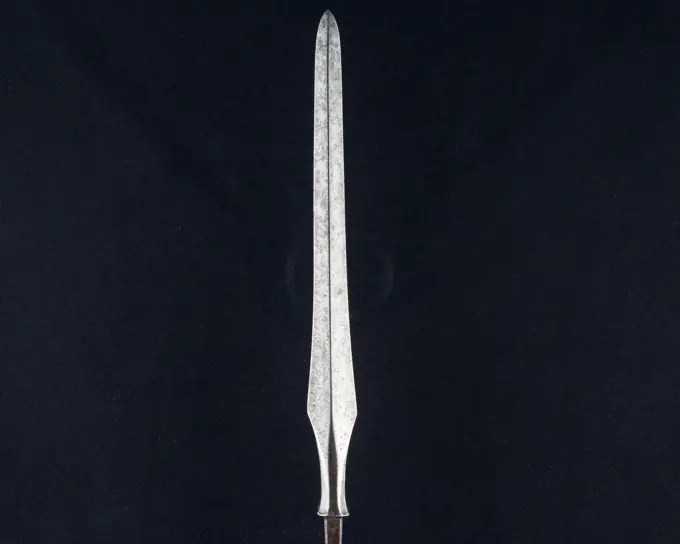
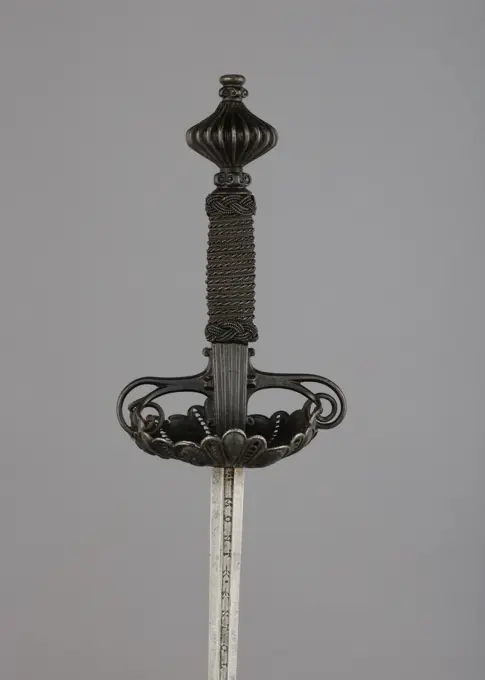
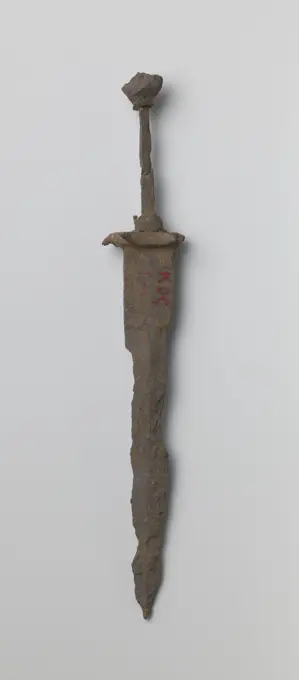
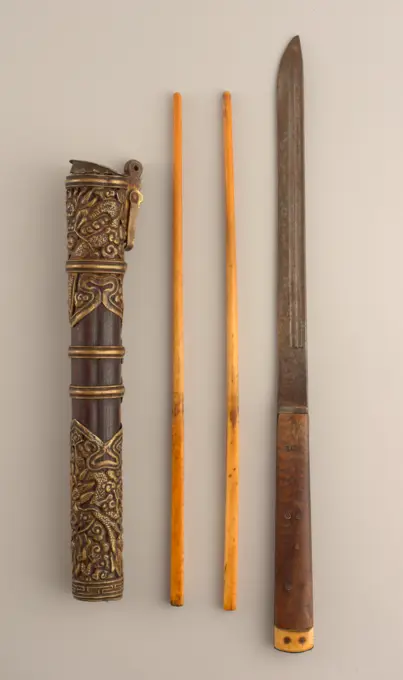
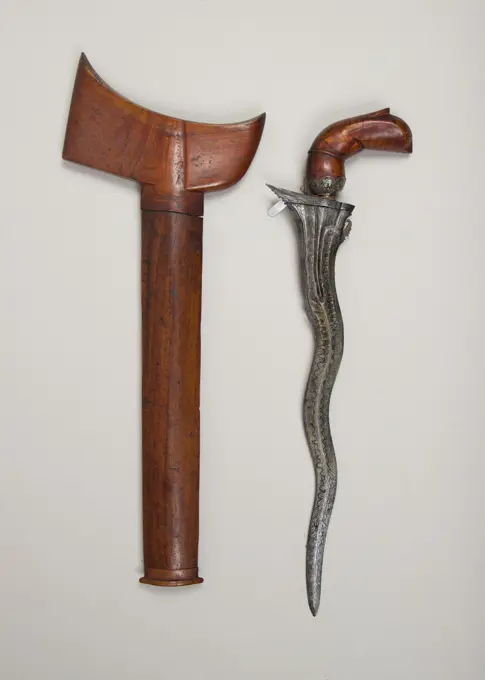
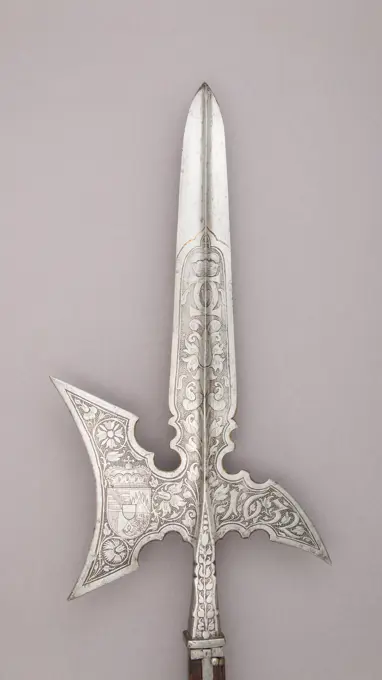
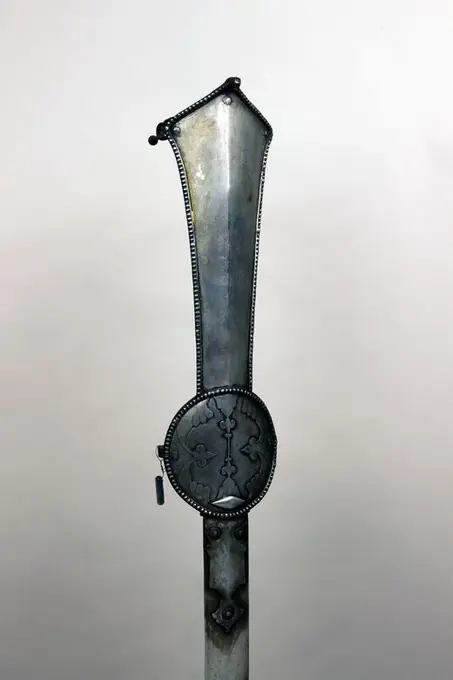
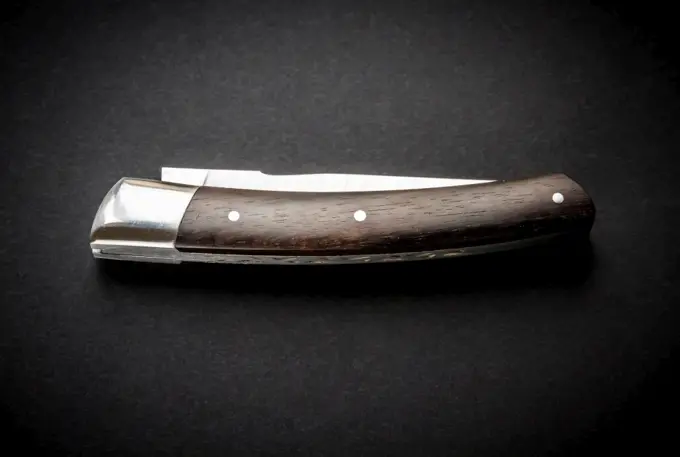
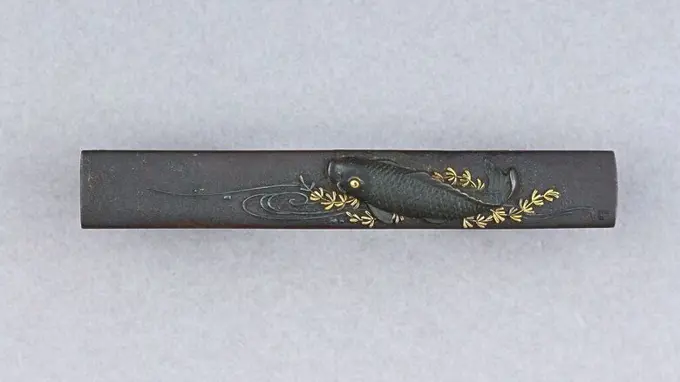
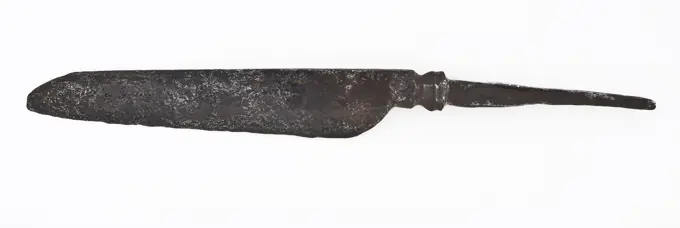
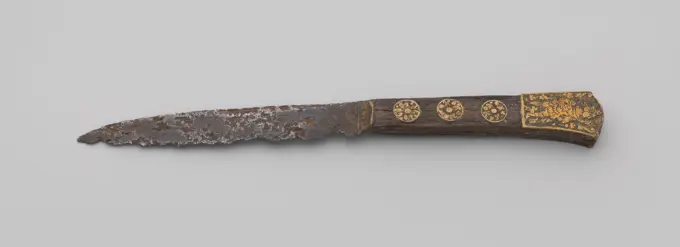
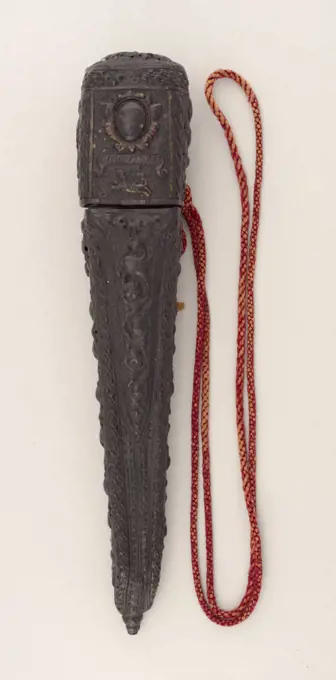
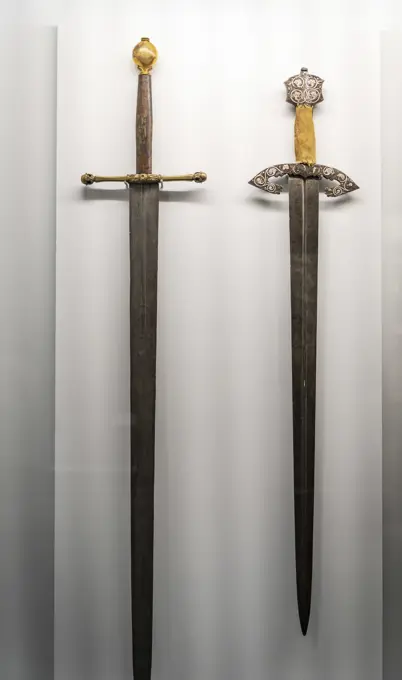
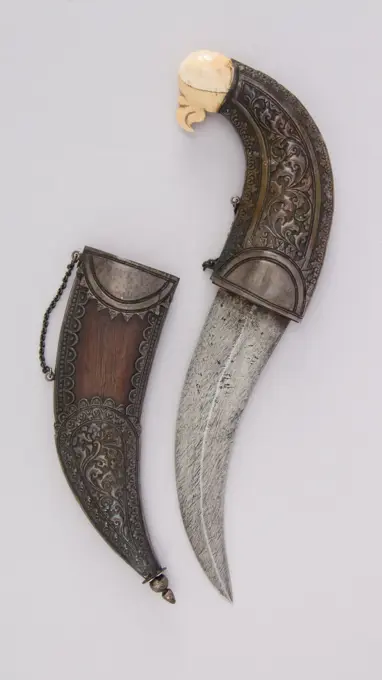
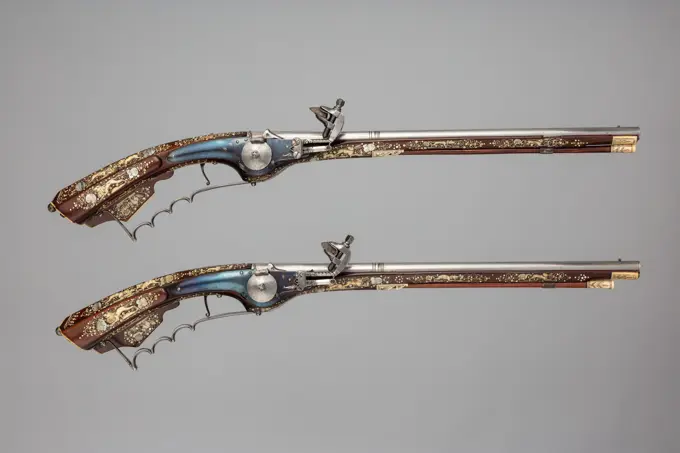
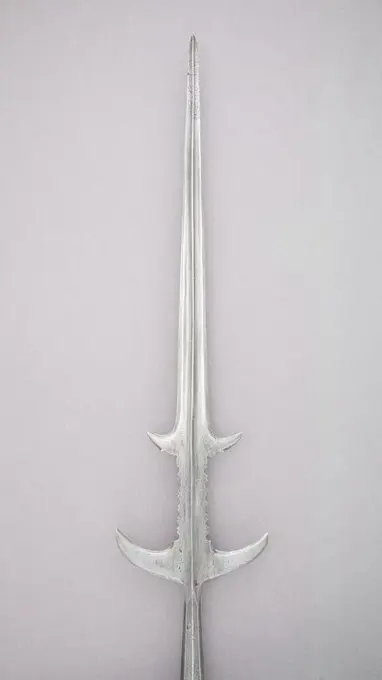
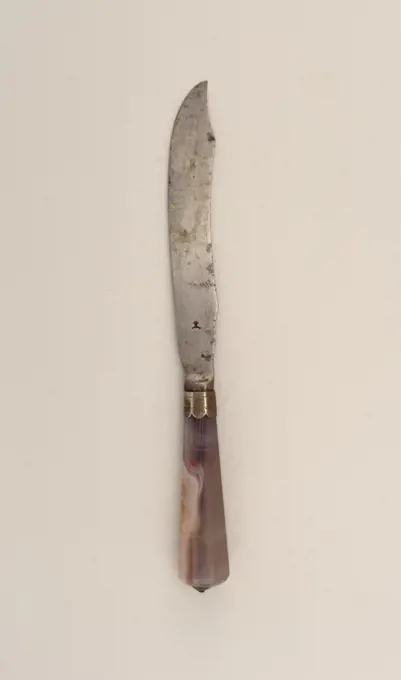
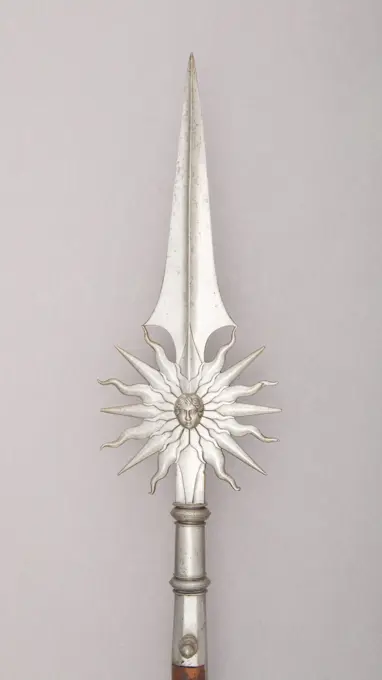
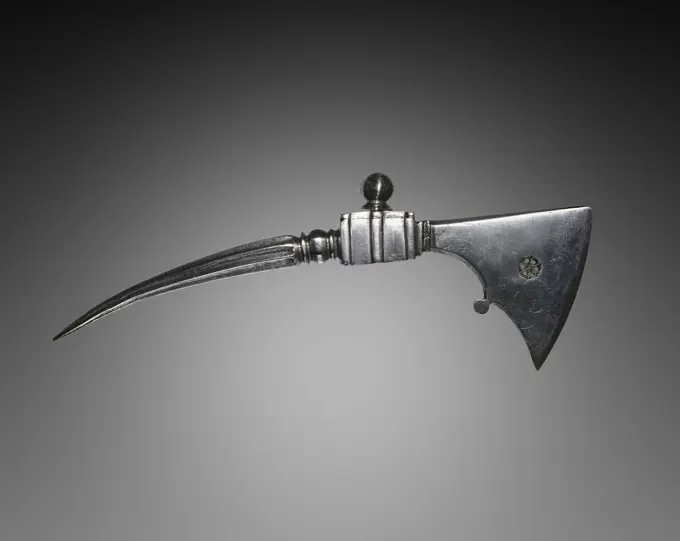
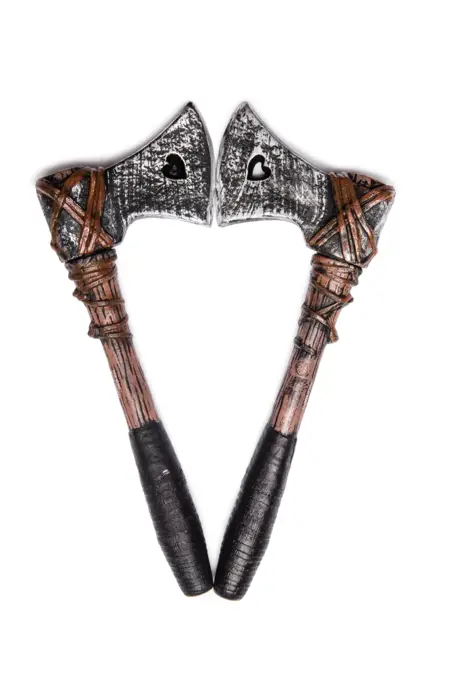
Dagger (Jambiya). Culture: Persian, Qajar. Dimensions: H. 15 3/8 in. (39.1 cm); H. of blade 10 1/2 in. (26.7 cm); W. 5/16 in. (0.8 cm); D. 1 3/16 in. (3 cm); Wt. 11.4 oz. (323.2 g). Date: 19th century. Museum: Metropolitan Museum of Art, New York, USA.Long Sword Blade and Mountings from Daisho Pair of Swords. Yokoyama Sukenaga (Japan, Kyoto, active 1830-1851). Japan, 18th-19th century. Arms and Armor; swords. Steel, copper, gold foil, lacquer on wood, shakudo, and silkBallock Dagger 1600-1640 Scotland. Ivy root, iron, and copper .Dagger (Katar) 17th-18th century Indian. Dagger (Katar). Indian. 17th-18th century. Steel. DaggersDagger with Yali Hilt 1800-1850 This opulent carved and jeweled dagger consists of an ivory carved hilt mounted on a straight, broad metal blade. The hilt takes the form of a mythical yali or vyala (leogryph or sometimes part lion, part elephant, part horse) which was an auspicious symbol in southern Indian architecture. The high quality, style of carving, inlaid jewels and opulent details of thIs dagger reveal that it is a royal object made for courtly or ceremonial use. Its inscriptions show evidence of having been in the armory of Maharaja Krishnaraja Wadiyar III (1794-1868) of Mysore and then entering British ownership. View more. Dagger with Yali Hilt. 1800-1850. Hilt: Ivory; carved and inlaid with glass, ruby, spinel, and emeraldBlade: Steel. Attributed to Southern India, Mysore or wider Madurai region. Arms and ArmorDagger (Pesh-kabz) 18th-19th century Indian. Dagger (Pesh-kabz) 31439Two-Handed Sword with Scabbard Made 1580-1600 Germany. Steel, iron, wood, silk velvet textile, wood fiber, and leather .Dolk Aceh War, Anonymous, 1916 dagger Dagger with sheath. The sheath is made of black leather and has a steel word juice with a round carrier button. At the bottom of the dagger steel batter with a copper button. The dagger has a steel one -cut blade that ends in a somewhat curved point. The hilt has a downwarmed shell -shaped pare heart. The handle is made of wood in which three oval -shaped copper nails are stuck. The handcap is made of copper. Indonesia word of cracker, batter, blade: steel (alloy). Parear heart, handwood: copper (metal). Handle: Wood (Plant Material)   AcehKnife Handle (Kozuka) with Blade. Culture: Japanese. Dimensions: L. including blade 8 1/8 in. (20.6 cm); L. excluding blade 4 in. (10.2 cm); W. 1/2 in. (1.3 cm); thickness 3/16 in. (0.5 cm); Wt. 1 oz. (28.3 g). Date: 16th century. Museum: Metropolitan Museum of Art, New York, USA.SheathDagger (Khanjarli). Culture: Indian. Dimensions: H. 12 9/16 in. (31.9 cm); H. of blade 8 1/4 in. (21 cm); W. 3 15/16 in. (10 cm); Wt. 15.7 oz. (445.1 g). Date: 17th-18th century. Museum: Metropolitan Museum of Art, New York, USA.Roman Period dagger with gold handle. Romano-German.Knife (France); earthenware, silver, steel; L x W x D: 25 x 2.1 x 1.6 cm (9 13/16 x 13/16 x 5/8 in.); 1943-37-1Dagger (Katar) 18th century Indian. Dagger (Katar) 31524Kris with Sheath 18th-19th century Philippine, Mindanao. Kris with Sheath. Philippine, Mindanao. 18th-19th century. Steel, wood, horn, cane, cord. KrissesSpear 19th century Taiwanese. Spear. Taiwanese. 19th century. Steel, wood (bamboo). Shafted WeaponsKnife (possibly Spain); steel; L x W: 26.5 x 3.8 cm (10 7/16 x 1 1/2 in.); The Robert L. Metzenberg Collection, gift of Eleanor L. Metzenberg; 1985-103-15Dagger (Jambiya) 19th century Persian, Qajar. Dagger (Jambiya). Persian, Qajar. 19th century. Steel, ivory (walrus). DaggersPartisan. Culture: French, Paris. Dimensions: L. 9 ft. (274.2 cm); L. of head 27 3/4 in. (70.5 cm); W. 6 3/8 in. (16.2 cm); Wt. 6 lbs. 14 oz. (3188.5 g). Date: ca. 1600. Museum: Metropolitan Museum of Art, New York, USA.Two handed sword of Krakow executionersDagger (Golok or Pedang) with Sheath. Culture: Sumatran. Dimensions: H. with sheath 18 5/16 in. (46.5 cm); H. without sheath 14 5/8 in. (37.1 cm); W. 3 1/2 in. (8.9 cm); Wt. 7.8 oz. (221.1 g); Wt. of sheath 10.2 oz. (289.2 g). Date: 16th-19th century. Museum: Metropolitan Museum of Art, New York, USA.Kris with Sheath. Culture: Indonesian, Sumbawa Island. Dimensions: L. with sheath 16 7/8 in. (42.9 cm); L. without sheath 13 1/8 in. (33.3 cm); L. of blade 11 in. (27.9 cm); W. 5 1/8 in. (13 cm); Wt. 11.9 oz. (337.4 g); Wt. of sheath 5.1 oz. (144.6 g). Date: 18th-19th century. Museum: Metropolitan Museum of Art, New York, USA.Shingling Hammer 1600-1699 Italy. Iron, wood, and ivory .Sword (Klewang) with Scabbard. Culture: Indonesian, Sulawesi. Dimensions: L. with scabbard 27 1/8 in. (68.9 cm); L. without scabbard 25 3/4 in. (65.4 cm); L. of blade 20 in. (50.8 cm); W. 4 in. (10.2 cm); Wt. 1 lb. 8.8 oz. (703.1 ); Wt. of scabbard 7.5 oz. (212.6 g). Date: 18th-19th century. Museum: Metropolitan Museum of Art, New York, USA.Dagger with a sheathPartisan Made 1520-1540 France. Steel and wood .Javanese Kris. Kris, blade in Pamor technique with Gourdincrustatie, consisting of scaly naga that follows the golf movement of blade. Ganja feeding of flower and leaf motifs.Jatagan with the vaginaKnife with Sheath Hilt, 18th century; blade, 19th century Hilt, Indian, Mughal; blade, Turkish. Knife with Sheath 31441Javanese Kris, Anonymous, 1800 - 1900 Kris, blade in pamor technology with gold incusation, consisting of scaly Naga that follows the wave movement of blade. Ganja for the seeking of flower and leaf motifs. Java iron (metal). nickel (metal). gold (metal) Kris, blade in pamor technology with gold incusation, consisting of scaly Naga that follows the wave movement of blade. Ganja for the seeking of flower and leaf motifs. Java iron (metal). nickel (metal). gold (metal)Konian handle and round button of driven copper, for an umbrella or umbrella; with moonstone, Gustav Schnitzler, c. 1910 - c. 1920 Konisch handle and round button of driven copper, for an umbrella or umbrella. The button consists of a moonstone -contained moonstone. Nijmegen whole: copper (metal). Button: Moonstone Konisch handle and round button of driven copper, for an umbrella or umbrella. The button consists of a moonstone -contained moonstone. Nijmegen whole: copper (metal). Button: MoonstonePartisan ca. 1700 Italian. Partisan 26705Knife; steel, silver, wood, mother-of-pearl, brass; L x W: 24.5 x 2.5 cm (9 5/8 x 1 in.); The Robert L. Metzenberg Collection, gift of Eleanor L. Metzenberg; 1985-103-108Kris with Sheath 18th-19th century Philippine, Moro. Kris with Sheath. Philippine, Moro. 18th-19th century. Steel, wood, cane (rattan). KrissesArrowhead (Yanone). Culture: Japanese. Dimensions: L. 13 3/4 in. (34.9 cm); L. of head 7 5/8 in. (19.4 cm); W. 3/4 in. (1.9 cm); Wt. 3.1 oz. (87.9 g). Date: 18th century. Museum: Metropolitan Museum of Art, New York, USA.Small Sword for a Boy, c. 1650-1680. Italy, 17th century. Steel, wood; hilt with inlaid floral designs in silver; overall: 78.1 cm (30 3/4 in.); blade: 63.2 cm (24 7/8 in.); guard: 5.2 cm (2 1/16 in.).MisericordeKnife (Bade-bade) with Sheath 16th-19th century Sumatran, possibly Acheen. Knife (Bade-bade) with Sheath 31684Sword 1375-1450 Western European. Sword. Western European. 1375-1450. Steel, iron, wood. SwordsDolk Atjeh-oorlog.Dagger with sheath. The sheath is made of black leather and has a steel mouth funnel to which a round bearing button is. At the bottom of the dagger steel fittings with a copper button. The dagger has a steel quoted blade that ends in a somewhat curved point. The hilt has a precise shell-shaped pearer heart. The handle is made of wood where three oval-shaped copper nails are stuck. The handle cap is from buyer.Boiler link. .Dagger with Sheath. Culture: Persian. Dimensions: L. with sheath 18 1/16 in. (45.9 cm); L. without sheath 16 13/16 in. (42.7 cm); L. of blade 12 1/4 in. (31.1 cm); W. 1 7/8 in. (4.8 cm); D. 13/16 in. (2.1 cm); Wt. 7.8 oz. (221.1 g); Wt. of sheath 7.8 oz. (221.1 g). Date: 19th century. Museum: Metropolitan Museum of Art, New York, USA.Sword (Campilan). Culture: Indonesian, Sulaweis Utara (North Celebes). Dimensions: L. 26 3/4 in. (67.9 cm); L. of blade 18 3/4 in. (47.6 cm); W. including hair 6 in. (15.2 cm); W. excluding hair 3 7/8 in. (9.8 cm); Wt. 14.2 oz. (402.6 g). Date: 18th-19th century. Museum: Metropolitan Museum of Art, New York, USA.Spear (Kay-Yan) 18th-19th century Philippine, Igorot. Spear (Kay-Yan) 30659Kanjar with a scabbardKnife (USA); Made by Gorham Manufacturing Company (United States); silver; L x W x D: 19.8 x 2.1 x 0.7 cm (7 13/16 x 13/16 x 1/4 in.)Dagger with Sheath 19th century Persian, Qajar. Dagger with Sheath 32253Knife Handle (Kozuka) with Blade ca. 1615-1868 Japanese A kozuka is a handle of a by-knife that is part of a sword mounting. It is kept in a slot on the reverse of a katana scabbard, often with a matching kōgai (hairdressing tool).. Knife Handle (Kozuka) with Blade 34625Blade and Mounting for a Double-Edged Dagger (Ken) blade, late 12th-early 13th century; mounting, 14th century Japanese The symbolic significance of the triple-pronged vajra, as well as its shape, made it an appropriate choice for use as the hilt of a sacred sword (ken), as demonstrated by this extremely rare example of an Esoteric Buddhist ritual object in the form of a ken. The blade dates from the late Heian or early Kamakura period (late twelfth to early thirteenth century), and the gilt-copper vajra hilt was probably made in the early Nambokuch period (mid-fourteenth century). In Buddhist iconography the sword represents the defense of religious doctrine and the defeat of falsehood and evil. It is an emblem of intelligence and, by extension, of the victory of spiritual knowledge, which opens the path to enlightenment. Combined with a vajra hilt it signifies the sword of wisdom (e-ken), one of the major attributes of Fud My-, also referred to as the Great Immovable One. Fud waMace. German. Date: 1475-1525. Dimensions: L. 49.2 cm (19 3/8 in.) Wt. 1 lb. 12 oz. Steeel, iron, wood, and fish skin. Origin: Germany. Museum: The Chicago Art Institute, Chicago, USA.Hussar's sabre with the blade co called Batorówka, owned by General Jan Skrzynecki, with scabbard and belt hangerGlaive of the Bodyguard of the Tiepolo Family ca. 1600 Italian. Glaive of the Bodyguard of the Tiepolo Family 26694Elephant Goad late 17th-early 18th century The shaft and hooklike blade of this ceremonial implement are beautifully decorated in an onlay technique ("false damascening"). The decoration of the shaft, in particular, combines Mughal and Deccani taste in the two landscape scenes and in the late Mughal floral patterns, so the goad probably dates from the period when the Deccan was part of the Mughal empire. One side of the hook has a Persian inscription, "With all his heart, Farijdar Khan became the slave of 'Ali," indicating a Shiite owner.. Elephant Goad. late 17th-early 18th century. Steel or iron, inlaid with gold and silver. Attributed to India, Deccan. MetalKnife (Phia Kaetta) with Sheath 18th-19th century Sri Lankan. Knife (Phia Kaetta) with Sheath 31549Knife with Sheath. Culture: Turkish. Dimensions: H. with sheath 15 3/4 in. (40 cm); H. without sheath 12 1/2 in. (31.8 cm); W. 1 1/16 in. (2.7 cm); Wt. 5.4 oz. (153.1 g); Wt. of sheath 5.6 oz. (158.8 g). Date: 19th century. Museum: Metropolitan Museum of Art, New York, USA.Dagger (Bichuwa). Culture: Indian, South Indian. Dimensions: H. 14 3/8 in. (36.5 cm); H. of blade 9 1/2 in. (24.1 cm); W. 2 1/8 in. (5.4 cm); Wt. 12.5 oz. (354.4 g). Date: 18th century. Museum: Metropolitan Museum of Art, New York, USA.Dagger (Katar) with Sheath. Culture: Indian, Mughal. Dimensions: H. with sheath 20 5/16 in. (51.6 cm); H. without sheath 19 1/8 in. (48.6 cm); W. 3 1/4 in. (8.3 cm); Wt. 14 oz. (396.9 g); Wt. of sheath 2 oz. (56.7 g). Date: 17th-18th century. Museum: Metropolitan Museum of Art, New York, USA.Knife (The Netherlands or Flanders); silver, steel; L x W: 13.9 x 1.6 cm (5 1/2 x 5/8 in.); The Robert L. Metzenberg Collection, gift of Eleanor L. Metzenberg; 1985-103-76Partisan ca. 1630 German. Partisan 26717Fighting Knife, late 1800s-early 1900s. Northwest Coast, Tlingit, 19th century. Steel, leather, cord, and walrus ivory inlaid with abalone shell; overall: 3.8 x 4.8 cm (1 1/2 x 1 7/8 in.); blade: 19.1 cm (7 1/2 in.).Small Sword possibly Italian or Spanish; blade, possibly German, Solingen ca. 1700 View more. Small Sword. possibly Italian or Spanish; blade, possibly German, Solingen. ca. 1700. Steel, wood, leather. possibly Solingen. SwordsRapier Spanish late 17th century The rapier was the principal civilian sidearm throughout the sixteenth and seventeenth centuries. Designed for cut-and-thrust fencing of progressively complex techniques, the rapier is characterized by a double-edged blade with an acute point and an elaborate guard for the hand. The guards, usually of iron or steel, were subject to a variety of embellishment. They were engraved, chiseled, gilded, damascened, and encrusted in gold and silver in keeping with fashionable styles. Unless otherwise noted, the materials, attributions, and dating given here refer to the hilts. Rapier blades, invariably of steel, bear a variety of makers marks denoting their origin in the two principal centers of blademaking, Toledo in Spain and Solingen in Germany. View more. Rapier. Spanish. late 17th century. Steel, copper wire. SwordsWhet-steel 18th century possibly Swiss. Whet-steel. possibly Swiss. 18th century. Steel, horn, silver. Metalwork-SteelThe nun bears a pot in her right handKnife, agate, silver, steel, Sabre-shaped blade with curved upper edge. Plain bolster, silver engraved ferrule with scalloped border. Flaring, faceted agate handle, silver conical mount on top., possibly Scotland, n.d., cutlery, Decorative Arts, KnifeFour knives and a fork belonging to Emperor Charles V.Charles V acquired this portable cutlery set in Italy. The two large knives bear his arms and the chain of the Order of the Golden Fleece. Above this is the emperors crown and below it the Burgundian cross of Saint Andrew with the mythical pillars of Hercules (signifying the end of the world). They are all symbols of the emperors power.Jatagan with the vaginaDagger. Western Inner Mongolia or Northern China, 5th century B.C.. Arms and Armor; daggers. BronzeArrowhead (Yanone) 18th century Japanese Although today Japanese warriors are renowned most for their swordsmanship, archery, especially from horseback, has been an essential part of samurai warfare and culture for centuries. Arrows were fitted with heads of varying shape according to their intended use in war, the hunt, or target practice. Arrowheads made for use on the battlefield incorporated different designs intended for specialized purposes such as the piercing of armor or to cause maximum damage to horses and unarmored personnel.Large arrowheads, pierced and elaborately chiseled with landscapes, birds, flowers, dragons, and Buddhist divinities, were created to be admired for the beauty of their metalwork and design rather than for use in archery. Such highly elaborate examples may have been made for presentation or as a votive offerings to a shrine.. Arrowhead (Yanone). Japanese. 18th century. Steel. Archery Equipment-ArrowheadsDagger (Khanjar) with Sheath 18th-19th century Indian, Mughal or Deccan. Dagger (Khanjar) with Sheath. Indian, Mughal or Deccan. 18th-19th century. Steel, jade, gold, turquoise, crystal, garnet, ruby, gemstone silk, silver, copper. DaggersTraditional wooden pocket knife isolated on a white background. Traditional wooden pocket knife isolated on white backgroundCorsèque (Chauve-Souris), c. 1530. North Italy, 16th century. Steel; round wood haft with leather straps; overall: 183.5 cm (72 1/4 in.); blade: 22.2 cm (8 3/4 in.). The corsèque is a pole arm with a symmetrical three-pronged head consisting of a central double-edged blade and two sharp, upturned wings. The side blades served several functions: as guard to protect the soldier's hand when a thrust was delivered with the central blade; as a hook for unseating a mounted opponent; and to trip the opponent's horse. The corsèque was used mostly in Italy and France from the 1400s to the early 1600s.Rowel Spur in the Style of the 15th Century 15th and 19th century German This spur, made in the 19th century, reproduces a 15th-century spur, reusing authentic medieval rowel and hooks.. Rowel Spur in the Style of the 15th Century. German. 15th and 19th century. Copper alloy, gold, iron. Equestrian Equipment-SpursFolding table knife late 18th century Southern German or Swiss. Folding table knife. Southern German or Swiss. late 18th century. Steel, buckshorn, silver. Metalwork-SteelArrowhead (Yanone) 18th century Japanese Although today Japanese warriors are renowned most for their swordsmanship, archery, especially from horseback, has been an essential part of samurai warfare and culture for centuries. Arrows were fitted with heads of varying shape according to their intended use in war, the hunt, or target practice. Arrowheads made for use on the battlefield incorporated different designs intended for specialized purposes such as the piercing of armor or to cause maximum damage to horses and unarmored personnel.Large arrowheads, pierced and elaborately chiseled with landscapes, birds, flowers, dragons, and Buddhist divinities, were created to be admired for the beauty of their metalwork and design rather than for use in archery. Such highly elaborate examples may have been made for presentation or as a votive offerings to a shrine.. Arrowhead (Yanone). Japanese. 18th century. Steel. Archery Equipment-ArrowheadsRapier hilt, probably Dutch; blade, Spanish, Toledo ca. 1630 The rapier was the principal civilian sidearm throughout the sixteenth and seventeenth centuries. Designed for cut-and-thrust fencing of progressively complex techniques, the rapier is characterized by a double-edged blade with an acute point and an elaborate guard for the hand. The guards, usually of iron or steel, were subject to a variety of embellishment. They were engraved, chiseled, gilded, damascened, and encrusted in gold and silver in keeping with fashionable styles. Unless otherwise noted, the materials, attributions, and dating given here refer to the hilts. Rapier blades, invariably of steel, bear a variety of makers marks denoting their origin in the two principal centers of blademaking, Toledo in Spain and Solingen in Germany. View more. Rapier. hilt, probably Dutch; blade, Spanish, Toledo. ca. 1630. Steel, iron, wood. Toledo. SwordsDolk, anonymous, c. 1300 - c. 1800 dagger Iron dagger without hilt. Found in the IJ at the works for Central Station. Netherlands (possibly) iron (metal)   Central Station (Amsterdam)Chopsticks, Knife And Case (Japan); wood, bamboo, brass, ivory; a: L:23.4 x W:5 x H: 5 b. L:23.4 x W:5 x H: 5 c: L: 27.5 x W:2 x H: 1.2 d: L: 20.2 x W: 4 x H: 2.5Kris with Sheath 18th-19th century Indonesian, Sumbawa. Kris with Sheath 31391Halberd with the Arms of Liechtenstein Family dated 1632 Austrian. Halberd with the Arms of Liechtenstein Family 27641Gauntlet Sword (Pata). Culture: Indian, South Indian. Dimensions: L. 51 1/8 in. (129.9 cm); W. 4 13/16 in. (12.2 cm); D. 3 1/2 in. (8.9 cm); Wt. 2 lb. 10.6 oz. (1207.7 g). Date: 18th century. Museum: Metropolitan Museum of Art, New York, USA.Traditional wooden pocket knife on a black background. Traditional wooden pocket knife on black backgroundKnife Handle (Kozuka). Culture: Japanese. Dimensions: L. 3 13/16 in. (9.7 cm); W. 9/16 in. (1.4 cm); thickness 3/16 in. (0.5 cm); Wt. 0.6 oz. (17 g). Date: ca. 1615-1868. Museum: Metropolitan Museum of Art, New York, USA.Blade with angel, separation between here has slightly profiled band, blade knife cutlery soil find iron metal, Straight cut and back two marks on blade archeology Rotterdam City Triangle Groenendaal underground pit archaeological find in the soil Rotterdam underground pit Groenendaal 1977.Knife with wooden handle decorated with engraved copper, anonymous, 1500 - 1600 Blade of iron. The wooden handle is decorated with three round copper plates with a rosette on either side. The copper crowning shows a harnessed man on one side with a star -shaped scepter in one hand and a staff in the other. The other side shows an almost completely naked woman with flowers. Southern Netherlands heft: wood (plant material). heft: copper (metal). lemmet: iron (metal) engraving Blade of iron. The wooden handle is decorated with three round copper plates with a rosette on either side. The copper crowning shows a harnessed man on one side with a star -shaped scepter in one hand and a staff in the other. The other side shows an almost completely naked woman with flowers. Southern Netherlands heft: wood (plant material). heft: copper (metal). lemmet: iron (metal) engravingCase for Traveling Cutlery, Leather, wood, wool, brass, Box for three implements, follows the shape of a spoon. Lid attached to bottom with two small hinges on back small hooks and rings on front side. Top of lid stamped leather with gold; an urn with flowers in the centre, a laurel wreath and chains on each side, flowers, grapes and pears along the sides. Inside of box covered with green wool fabric., Germany, second half 18th century, cutlery, Decorative Arts, Case for Traveling Cutlerysword and ceremonial greatsword, 15th century, Álava Armory Museum, Vitoria, Basque Country, SpainHunting Trousse (Waidpraxe) with the Coat of Arms and Initials of Christian II, Elector of Saxony Made 1604-1614 Germany. Steel, iron, silver, gilding, staghorn, wood, and leather . Joachim PuttlostAmerican 20th Century, Dirk, 1935 1942 DirkDagger (Jambiya) with Sheath 19th century Indian. Dagger (Jambiya) with Sheath 31839Pair of Wheellock Pistols or Carbines ca. 1650 Silesian, probably Teschen This pair of wheellocks may be classified as either pistols or carbines. The stocks are inlaid with engraved staghorn and mother-of-pearl, the decoration featuring scrollwork populated with animals including lions, rabbits, bears, and hunting dogs. On the cheek an angel plays a lute above a griffin. The pair's convex lock plates are blued with external wheels and button pancover releases.. Pair of Wheellock Pistols or Carbines. Silesian, probably Teschen. ca. 1650. Steel, mother-of-pearl, staghorn, wood (cherry or fruitwood). Firearms-Pistols-Wheellock. It consists of an accumulation of fighting and each other biting animals.Persian topPartisan. Culture: Italian. Dimensions: L. 98 in. (248.9 cm); L. of head 30 in. (76.2 cm); W. 7 in. (17.8 cm); Wt. 5 lbs. 7.1 oz. (2469.2 g). Date: 1500-1550. Museum: Metropolitan Museum of Art, New York, USA.Knife, agate, silver, steel, Sabre-shaped blade with curved upper edge. Plain bolster, silver engraved ferrule with scalloped border. Flaring, faceted agate handle, silver conical mount on top., possibly Scotland, n.d., cutlery, Decorative Arts, KnifePartisan ca. 1700 French. Partisan 25850Halberd, c. 1600-25. France, early 17th century. Steel, pierced; appliqué masks in brass; octagonal wood haft with studs and leather straps; overall: 239 cm (94 1/8 in.); blade: 48 cm (18 7/8 in.). The halberd was a staff weapon favored by European infantries (foot soldiers) of the 1400s and 1500s for its versatility and deadly effect. The word halberd comes from the German words Halm (staff) and Barte (axe). The halberd is, in fact, an axe that served multiple functions: the axe blade was used for hacking, the spike for thrusting, and the beak for piercing plate armor or for pulling a knight from his saddle. The halberd was used by shock troops (those who lead an attack) and by Swiss and German mercenaries. After about 1550, the halberd gradually became less functional. Its large blade provided space for coats of arms and insignia. By the late 1500s, the parade halberd had become a ceremonial weapon for palace guards.Battle Axe, late 1500s. Italy, late 16th Century. Steel, inset with copper rosette; blade: 8.3 cm (3 1/4 in.); head: 27.3 cm (10 3/4 in.).Morocco dagger, 19. jahrhundertAxe isolated on the white background