Historical Weaponry

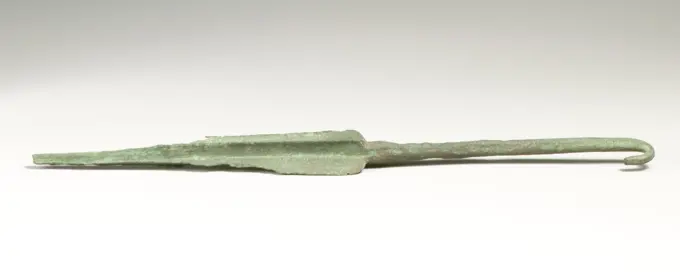
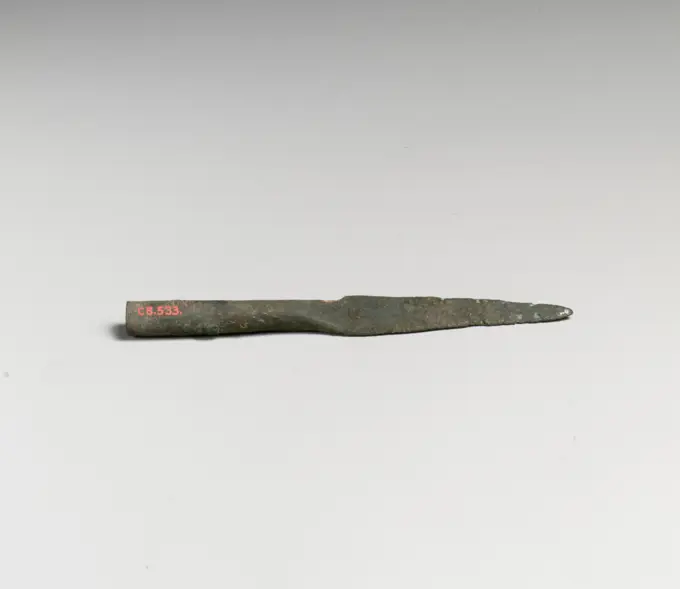
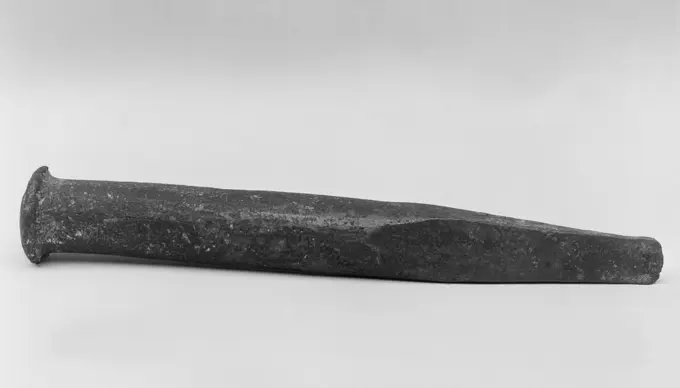
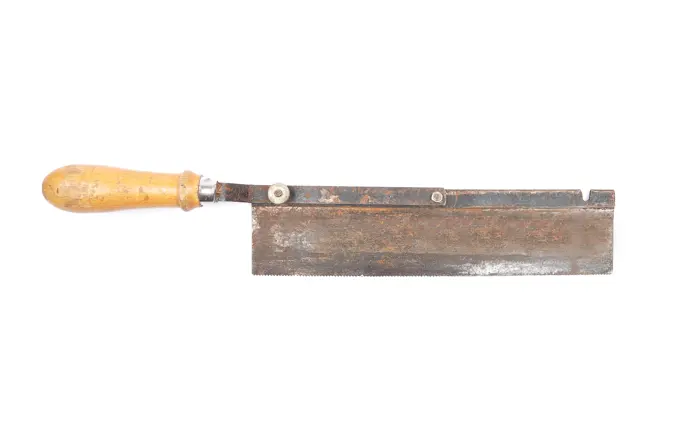
A range of antique weapon parts and accessories, including swords and decorative blades, showcasing intricate craftsmanship and historical significance.

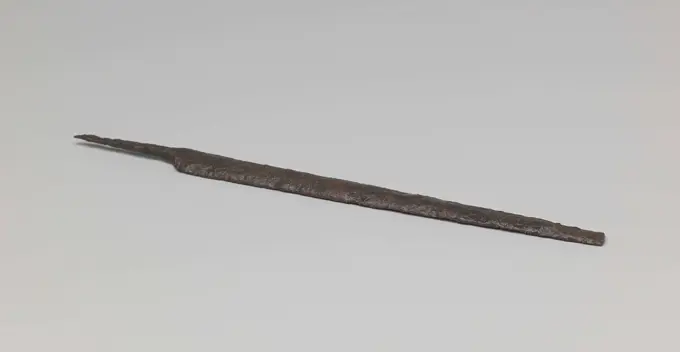
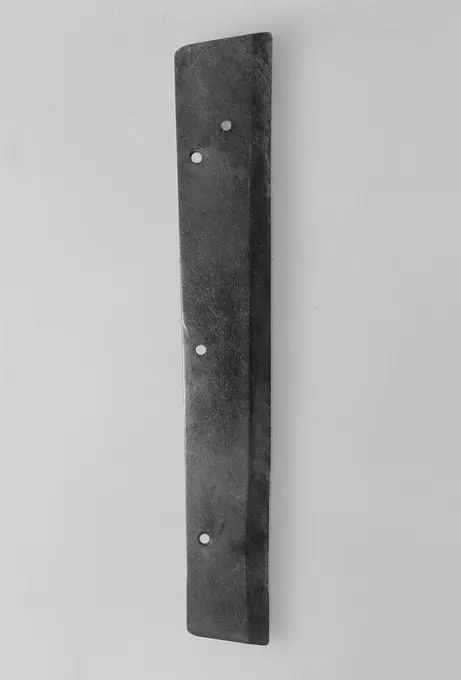
Iron blade of a double -edged sword, anonymous, c. 1300 - c. 1400  Iron blade of a double -edged sword, without a blood channel. The handle is missing. The blade has a sting, which contains a hole to confirm the handle. Some letters inlaid on either side of the blade in brass. According to tradition, dredged in the river near Sliedrecht. Netherlands iron (metal). brass (alloy)   Sliedrecht
Iron blade of a double -edged sword, anonymous, c. 1300 - c. 1400 Iron blade of a double -edged sword, without a blood channel. The handle is missing. The blade has a sting, which contains a hole to confirm the handle. Some letters inlaid on either side of the blade in brass. According to tradition, dredged in the river near Sliedrecht. Netherlands iron (metal). brass (alloy) Sliedrecht
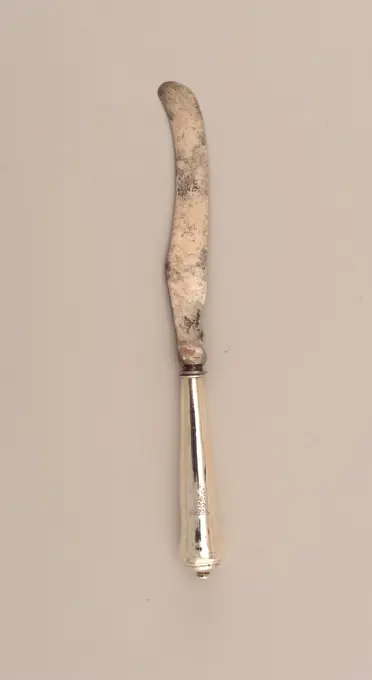
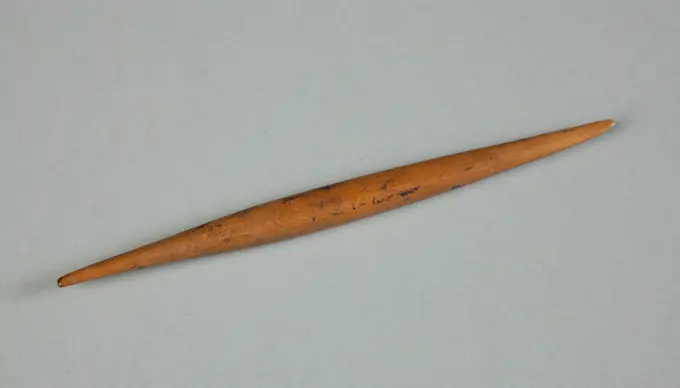
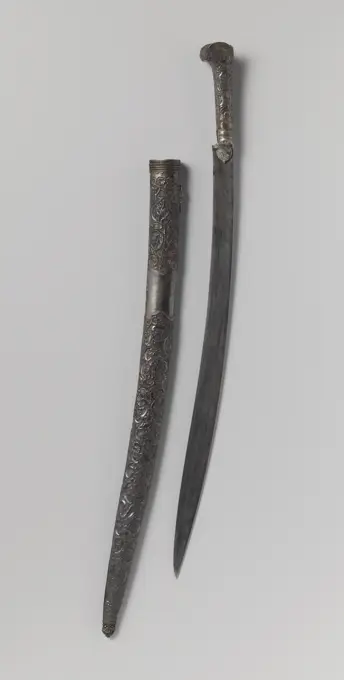
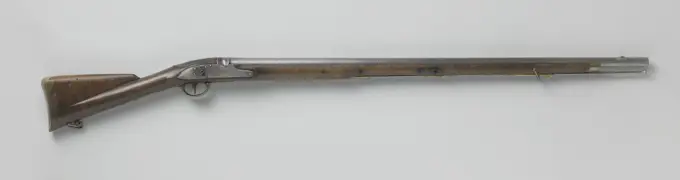
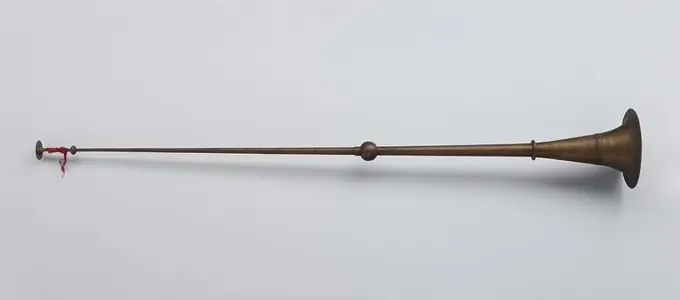
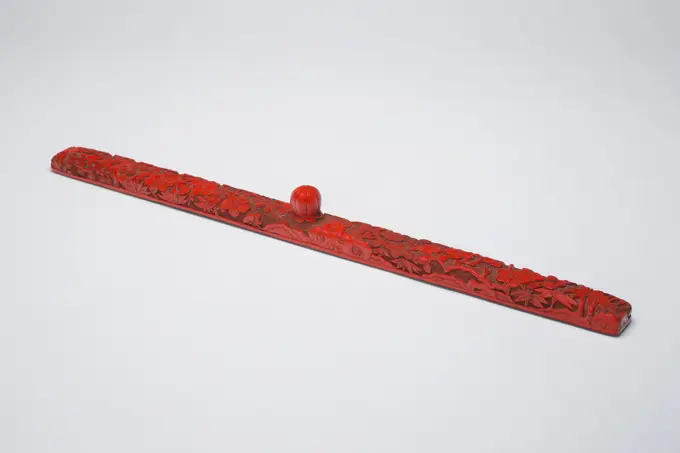
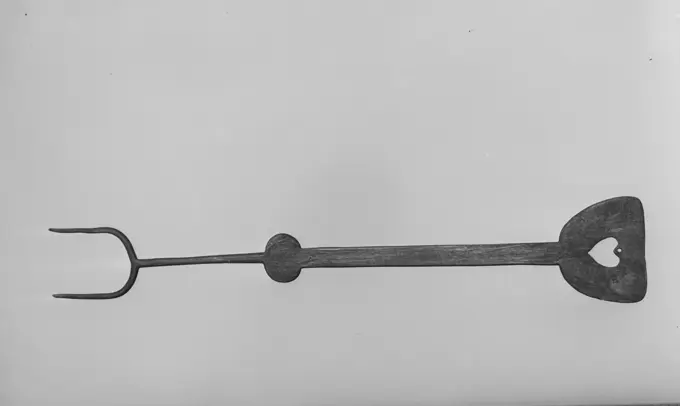
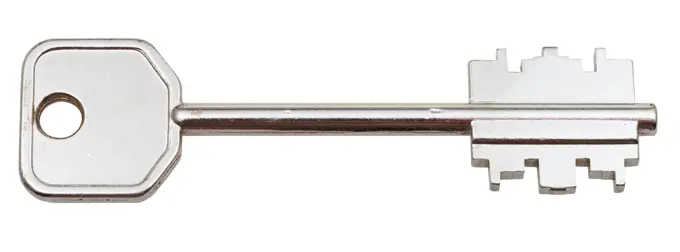
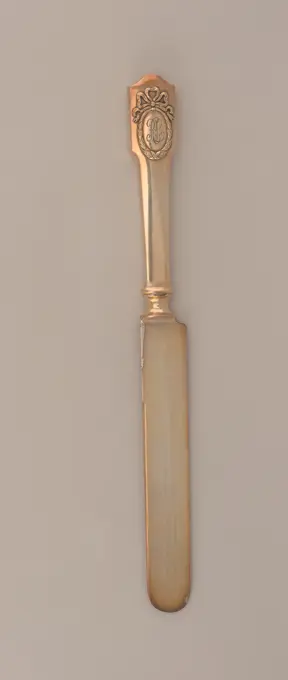
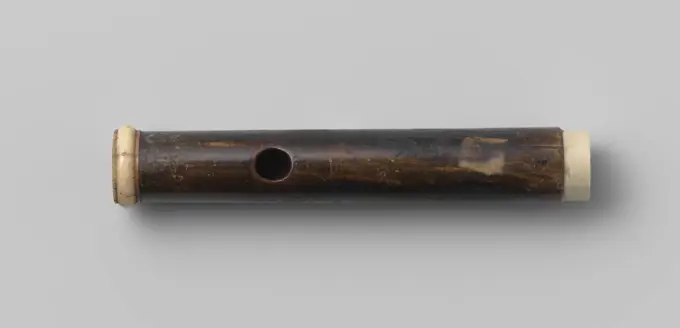
Iron blade of a double -edged sword, anonymous, c. 1300 - c. 1400  Iron blade of a double -edged sword, without a blood channel. The handle is missing. The blade has a sting, which contains a hole to confirm the handle. Some letters inlaid on either side of the blade in brass. According to tradition, dredged in the river near Sliedrecht. Netherlands iron (metal). brass (alloy)   SliedrechtHartsvanger met schede.Hearts catcher or yacht sword. The hilt consists of a green-made, asymmetrical ivory handle handle with gold-plated geelkoper and with a grooved pearl rod of the same material; The handle is grooved spirally for a single copper strap, the panels between them are grooved in turn diagonal or cross; In addition, an overhanging plate, where a restored copper necklace runs to the pearl rod. The unilateral blade with a light curve is sanded and has a narrow groove à la Montmorency; Etched with the Swordsger address. The black leather sheath is in the middle of the bearing side and has gold-plated copper fitting consisting of a hook strap with an oval hook and a pointed bottom strap with a knurled edge at the top and below a button.Shell Spindle and Copper Spindle Whorl before 16th century Peruvian. Shell Spindle and Copper Spindle Whorl 309274Cosmetic Applicator or Pin. Afghanistan, 3rd century. Jewelry and Adornments; pins. IvoryStaff with Cross 5th-6th century. Staff with Cross 445355Walking stick of wood with a button on a button, anonymous, c. 1700 - c. 1750 IJzerhout walking stick (). The button consists of a sliced satek head connected to the stick by an ornament. Europe ironwood cutting  Friesland IJzerhout walking stick (). The button consists of a sliced satek head connected to the stick by an ornament. Europe ironwood cutting  FrieslandPrzeszo Przysoci unknownTorch Carried at Chamberlain Celebration, 1906. Wooden stick with red cloth wrapped at one end & Chamberlain Celebration Medal attached (same medal as 1984N36).Bazuin.koperen Bazuin.Pen with which Mr D.U. Stikker signed the NATO treaty, Esterbrook, 1949 ribbon (material) Pen with which Mr D.U. Stikker signed the NATO treaty. Black pen holder with a silver point, at the end of the end. Can be sprayed apart in two halves, so that the Inkress reservoir is opened. The white ribbon with inscription (NG-698-9-D) is tied to the red-white-blue ribbon of the book (NG-698-9-A). United States of America silver (metal). plastic (organic material). silk casting / striking (metalworking)Fork with (originally) four teeth and flat handle with pointed end, fork cutlery soil find tin metal, Fork with four tines tipped steel end ankle archaeology Rotterdam rail tunnel food Soil discovery: rail tunnel Rotterdam.Steel with oval cross -section and a spherical and rectangular end, anonymous, c. 1590 - c. 1596  Steel with oval cross -section, rectangular at one end and at the other. Is it a handle of a sledgehammer  wood (plant material) cutting  Nova Zembla. Saving HuysKnife (probably Netherlands); silver, steel; L x W: 19.6 x 1.6 cm (7 11/16 x 5/8 in.); The Robert L. Metzenberg Collection, gift of Eleanor L. Metzenberg; 1985-103-2Modeling Spatula in Clay  Sculptural Tool Teofila LenartowiczSword, anonymous, c. 1800 - c. 1899 sword Iron straight hilt with five nails, each holding a copper handle plate on either side. Iron pare rod, each with a button. Ricasso with diamond -shaped decoration. Straight two -edged blade with bone.  iron (metal). copper (metal)Yatagan Met Schede, Anonymous, 1600 - 1799 yatagan Curved saber or yatagan with silver hilt in an ornamental relief worked wooden with silver covered sheath. A Turkish inscription on the blade. Turkey (Possible) silver (metal). iron (metal)Karabijn English Dragonders, Anonymous, c. 1815  Carabinet of the English dragoons, marked on the final plate: `gr 'under Kroon and` Tower', control brand. The carbine has a fixed chest of drawers and a smooth run. De Haan has been repaired. The carbine was brought from the battlefield of Waterloo by J.J. Nepveu, 2nd lieutenant at the 6th Hussars Regiment. England (possibly) loop: iron (metal). lade: wood (plant material). trekkerbeugel: brass (alloy)   Waterloo. EnglandWalking stick with a straight handle, anonymous, c. 1795 - c. 1805 Walking stick of a knots branch, with a straight hook. Many over the full length and in the straight hook. Netherlands whole: Wood (plant material) cutting Walking stick of a knots branch, with a straight hook. Many over the full length and in the straight hook. Netherlands whole: Wood (plant material) cuttingClub -Wooden bow, small size, longbow toy relaxant soil find wood, cut Small size longbow. Practice material for children toys Kips at the ends for attachment of the string archeology Rotterdam City triangle Meent Market Binnenrotte militaria child child's play archery games Soil discovery: pit corner Meent Markt (Binnenrotte).Crooked knife -Pin Roman. Pin 250638 Roman, Pin, Bronze, Other: 4 1/4 in. (10.8 cm). The Metropolitan Museum of Art, New York. Rogers Fund, 1917 (17.230.111)File, half round without handle, with parallel reversals and on the convex side local notches. File, half round without handle, with parallel reversions. The file is grater shaped with sharp dots, on the convex side locally notches are visible. The upper tip has been demolished.Key first half 14th century German The decoration of Gothic iron locks and keys was often elaborate and of the highest standard of workmanship. The motifs were frequently drawn from Gothic architecture, reproducing on a miniature scale complicated tracery patterns and even tiny statuettes. A number of these tiny locks were compound, with some of the mechanisms concealed from view, and required two or even three keys used in sequence to open them. It has been suggested that the greatly expanded use of locks on doors, or coffrets and other types of storage chests was a result of the increasing urbanization of life and the new emphasis on material wealth and private ownership which developed in the late Middle Ages.. Key 463346Church Warden Type Clay Pipe, 1700-1900. .Partisan last quarter 15th century Italian, probably Bologna. Partisan 25085Lans, anonymous, after 1599 - before 1899 pike Lans with ogief -shaped iron blade on an iron nodus. The blade is at a conical copper head with three profile tires. The wooden stick is brown and decreases slightly in diameter. At the top of the stick, the number 2 is notified. Europe kling: iron (metal). schacht: wood (plant material). kop: copper (metal)   LombokLapa (Trumpet). Culture: Chinese. Dimensions: 56 5/16 × 7 1/2 × 7 9/16 in. (143 × 19.1 × 19.2 cm). Date: late 19th century. Museum: Metropolitan Museum of Art, New York, USA.Flute Burmese (Karenni) late 19th centuryCosmetic Applicator. Roman; Levant or Syria. Date: 301 AD-400 AD. Dimensions: 17 × 1 × 1 (6 5/8 × 3/8 × 3/8 in.). Bronze. Origin: Syria. Museum: The Chicago Art Institute, Chicago, USA. Author: Ancient Levantine.Awl Cypriot. Awl 244216Infantry Pike 1700-1800 Germany. Steel and wood (oak) .Bronze punch ca. 3000-1050 B.C. Minoan The shaft is rectangular below and rounded above.. Bronze punch 247619Fragment of a stem from a fork or spoon from the wreck of the East Indiesman Hollandia. Fragments: voice or fork or spoon; Fragm, ID. NG 1980-27H67.Ellemaat from Borculo, Anonymous, c. 1800  Length of 1 tbsp with handle from Borculo. Inscription with ink (illegible) and v.z.v. label. Borculo wood (plant material)   BorculoBlaaspijp, c. 1400 - c. 1950 A bladder pipe, partly copper. One of the points is missing.  copper (metal) A bladder pipe, partly copper. One of the points is missing.  copper (metal)Scroll Weight Made 1400-1599 China. Carved cinnabar lacquer .Knife with agates lifts in Foudraal, Anonymous, 1600 - 1699 Knife with agates lifts and gilded silver frame. In the part of pressed leather.  silver (metal). leather. agate (chalcedony) Knife with agates lifts and gilded silver frame. In the part of pressed leather.  silver (metal). leather. agate (chalcedony)Crossbow Bolt, 1500s-1600s. Germany, 16th-17th century. Wood, leather, steel; average: 37.2 cm (14 5/8 in.).Fork;  19th century (1800-00-00-1810-00-00);Bow -Knife with lifting in the form of a man with musket and hunting dog. Het lift consists of a men's figure cast in two parts in the 17th century clothing with a musket and a hunting dog.Metal fishing hook, bent loop as fastening eye, short point, fishhook Soil discovery copper brass tin metal, drawn Metal fishing hook with curved loop at the end as mounting eye. Highlighted Small kink in the arch towards the tip. Undefined metal archeology Rotterdam fish fisherman Soil discovery Rotterdam.EVENTAIL. Gouache on silk, embroidery and sequins, ivory gold nets. Paris, Carnavalet museum. Eventail: Fashion accessory, EventailNeedle Cypriot. Needle 244365Steel hook with flattened handle, Imra, c. 1900 - c. 1950 A steel hook with flattened handle. Address: Imra / Geschützt. Germany (possibly) whole: Steel (Alloy) A steel hook with flattened handle. Address: Imra / Geschützt. Germany (possibly) whole: Steel (Alloy)Fork 1700-1800 American. Fork. American. 1700-1800. Wrought iron. Made in Pennsylvania, United StatesOld rusty hammer isolated on white background Spear, 1700s. Japan, Edo period (1615-1868). overall: 252.7 cm (99 1/2 in.); blade: 30.5 cm (12 in.).Bow -Round wooden stick on which a pointed double spiral is set. So -called 'Pigstaart'., Anonymous, 1700 - 1800  Round wooden stick on which a pointed double spiral is set. Under the base of the spiral is a copper ring around the shaft. At the bottom of the shaft is a bobbin with a flat bottom. A copper plate has been beaten on the bottom.  leather. copper (metal). wood (plant material) cutting / striking (metalworking) / forgingButtons hook of ivory with monogram jvn.- knobby of ivory with monogram jvn, in embroidered bag.Double-sided door key for lever tumbler lock Double-sided big door key for lever tumbler lock isolated on white background Copyright: xZoonar.com/ValeryxVoennyyx 5660470"Louis XVI" tableware Knife; Designed by Joseph E. Birmingham; Manufactured by Shreve & Co.; USA; silver; cm: L: 25.3 x W: 2.3Weaving tool. Dimensions: l. 50.5 cm (19 7/8 in). Dynasty: Dynasty 19-20. Date: ca. 1295-1070 B.C.. Museum: Metropolitan Museum of Art, New York, USA.Iron door rig, anonymous, c. 1500 Iron door tengel. unknown iron (metal) Iron door tengel. unknown iron (metal)vintage tile setting hammer over white backgroundAlto recorder.altobloat, marked from Heerde.Spade from the wreck of the East Indians Princesse Maria, Anonymous, 1686  Wooden spade. Shovel. Netherlands wood (plant material)   Scilly IslandsSpatula, all.cu. Paris, Carnavalet museum. 51855-3 SPATULAWooden Spindle before 16th century Peruvian. Wooden Spindle 309272Hair pin ca. 3500-3300 B.C. Predynastic, Naqada II. Hair pin 561771Pike probably 1600 Italian. Pike. Italian. probably 1600. Steel, wood (ash). Shafted WeaponsTea Spoon 1800-1830 Lewis and Smith. Tea Spoon 8441Ceremonial Blade. Culture: China. Dimensions: W. 2 15/16 in. (7.5 cm); L. 18 in. (45.7 cm). Date: 2nd millennium B.C.. Museum: Metropolitan Museum of Art, New York, USA.Walking stick -Flute (head), anonymous, c. 1800 Head of flute, black, with white legs tires  wood (plant material). bone (material). copper (metal) Head of flute, black, with white legs tires  wood (plant material). bone (material). copper (metal)Descant recorder.Cabling or Flute Douce of brown wood, marked: W. Beukers.Pewter spoon with rat tail under spoon, flat handle, spoon cutlery soil find tin metal, archeology Rotterdam City Triangle Mariniersweg Soil discovery: Mariniersweg Rotterdam 1983.Chisel on whiteStaff of Amenhotep ca. 1479-1458 B.C. New Kingdom Sometime in the early joint reign of Hatshepsut and Thutmose III, a twelve-year-old boy named Amenhotep was buried on the hillside below the tomb chapel of Hatshepsut's well-known official, Senenmut (36.3.252). Although still a child, Amenhotep was well provided for. On top of his wooden coffin lay a forked staff (shown here) and a necklace of lentoid faience beads (36.3.154). Beside the coffin were food offerings of bread and beer (36.3.161), and a variety of fruits including raisins, dates, dom palm nuts, sycamore figs, and a pomegranate. A beautiful stone shabti figure (see 19.3.206) had been laid next to the coffin. Its inscription identified it as a gift from Amenhotep's brother, Senu. This shabti is now in the Egyptian Museum, Cairo.Inside Amenhotep's coffin were two bright blue faience armlets (36.3.155), sized for an adult rather than a child, and a pair of red leather sandals (36.3.159). On the mummy were pieces of jewelry, incCigar holderWalk of a lontroer with an iron loop and octagonal cross -section, anonymous, c. 1590 - c. 1596  Walk of a lontroer with an iron loop and octagonal cross -section. The tail has been partially demolished, as well as two of the three walking codes that served to attach the loop in the drawer of the rudder. Remains of the pan and the pandice screw are still present as well as the corvet on the loop and a profile for the attachment of a dioptervizier, three hafs and a corvet.  iron (metal) forging  Nova Zembla. Saving HuysModel of a Mainyard, anonymous, c. 1850 demonstration model Model of a large RA, with two lee sailing muscles. Particulars are the slats around the RA in the middle, for reinforcement and as protection against wear and tear, and the lee sails with rollers. Netherlands wood (plant material). brass (alloy)Nail 15th-16th century European. Nail. European. 15th-16th century. Iron. Metalwork-IronSpoon with perpendicular to the stem placed, oval baking, Wiener Werkstätte, 1907 Spoon with an oval, perpendicular to the stem placed container. The stem is flat and broadens towards the end. Vienna German silver Spoon with an oval, perpendicular to the stem placed container. The stem is flat and broadens towards the end. Vienna German silverLacrosse stick -Hollow metal object, narrowed and ending in ball, decorative fittings, decorative fittings clothing accessories clothing soil finds tin silver metal, Narrow hollow metal object narrow tapering and ending in ball Wide end hole archeology Rotterdam rail tunnel confirm Soil discovery: trajectory rail tunnel Rotterdam.Bronze strigil (scraper). Culture: Roman. Dimensions: length 8 3/4in. (22.2cm). Date: 1st century A.D..In the Greek world, the strigil is most often associated with athletes and the gymnasion. But for the Romans, the baths and the culture of bathing were so popular that the implement became part of the everyday equipment of ordinary people, and such strigils were mass produced. They often bear the stamp of the maker; the one here reads: L.MUC.F (made by Lucius Mucius). Museum: Metropolitan Museum of Art, New York, USA.Whip of which wicker frame with green sides ribbon, each time interrupted by a silver nodus and a ring on top, on top of a Konian button with engraved crown edge, Lucas Boerhaave, 1779 Groom wheep. Wicker frame wounded with green silk ribbon, each time interrupted by a silver unadorned nodus. The Konian button is engraved with a crown edge. From under a silver ring. Silver brands on the button. Alkmaar skeleton:. Ribbon: Silk. Knob: Silver (Metal). node: Silver (Metal) forging / engraving Groom wheep. Wicker frame wounded with green silk ribbon, each time interrupted by a silver unadorned nodus. The Konian button is engraved with a crown edge. From under a silver ring. Silver brands on the button. Alkmaar skeleton:. Ribbon: Silk. Knob: Silver (Metal). node: Silver (Metal) forging / engravingLegs pointed with four barbs, pointed harpoon soil found bone, sawn cut cut Late stone age archeology Maglemose culture Rotterdam Maasvlakte prehistoric stone age late stone age fishing fishing catch feeding hunt Ground discovery Maasvlakte Maglemose culture.Musket; Lontslotmusket.Lontlotguis (musket); octagonal drawn course; brass vizier grain; Vizierkeep in the room, in the room two brands and the year: 1638; Flaking slot plate of which front part wide; Powder panel with hinged pandle and screen mounted on the lock plate; Iron tractor bracket and loading stick that are not matching; openwork iron band; Walnut flask.Partisan - Leading Staff 1600-1700 Italy. Steel, wood (pine), brass, and iron .Nagelas from V.O.C. ship De 'Witte Leeuw', Before 1613  Wooden nail axle with octagonal end.  wood (plant material)   Sint-HelenaVertical flute, c. 1800, 24 5/16 x 1 1/8 in. (61.75 x 2.86 cm), Bamboo, China, 18th-19th century, The Chinese have used bamboo to create functional objects since the Stone Age. The material is inexpensive and extremely versatile. The Zhu bu, or Bamboo Treatise, from the third century describes how to use bamboo for food, the manufacture of paper, pipe stems, buckets, brush handles, medicine, and musical instruments. The excavated tomb of Marquis Yi of Zheng (433 BCE) yielded several wind instruments made of lacquered wood and bamboo. These included pan pipes, reed mouth-organs, and two transverse flutes. While much later in date, this bamboo flute is similar in size and structure to the one being played by the Eastern Han tomb figurine shown here. It is not certain when the bamboo flute was first used by the Chinese, but it was common throughout the Bronze Age and, by the Han dynasty, it seems to have gained popularity as an instrument for entertaining. The bamboo flute, like the qin, Copper alloy spearhead ca. 2500-2000 B.C. Cypriot Leaf-shaped blade with a hooked tang.. Copper alloy spearhead 244164Kang T'ung Tibetan mid 19th-19th century View more. Kang T'ung. Tibetan. mid 19th-19th century. bone. Tibet; Tibet, China. Aerophone-Lip Vibrated-trumpet / tromboneFedral for a knife of wood and batter from Tin, Anonymous, 1578 Wooden parting for a knife, where the blade can be put in the sheath. The pewter batter is decorated with ornaments and has openings, making the wood visible. At the opening of the Foedraal you can see semi -figures of a man and a woman, the back has a start to get a cord through. The underside of the fedal is decorated with dragon head. Germany tin (metal). wood (plant material) Wooden parting for a knife, where the blade can be put in the sheath. The pewter batter is decorated with ornaments and has openings, making the wood visible. At the opening of the Foedraal you can see semi -figures of a man and a woman, the back has a start to get a cord through. The underside of the fedal is decorated with dragon head. Germany tin (metal). wood (plant material)Brush holder. Culture: British. Dimensions: Length: 23 in. (58.4 cm). Date: early 19th century. Museum: Metropolitan Museum of Art, New York, USA.Spearhead. Spearhead 244568Hair pin ca. 1635-1458 B.C. Second Intermediate Period-Early New Kingdom. Hair pin 546994a hundred;  19th century (1800-00-00-1810-00-00);Stone Mason's Chisel ca. 1550-1295 B.C. New Kingdom. Stone Mason's Chisel. ca. 1550-1295 B.C.. Bronze or copper alloy. New Kingdom. From Egypt. Dynasty 18Saege - Hand saw on white Saege - Hand saw on white Copyright: xZoonar.com/lantapixx 7204127Dagger. Culture: Indian, Mughal. Dimensions: L. 14 in. (35.6 cm); L. of blade 9 1/4 in. (23.5 cm); W. 2 1/8 in. (5.4 cm); D. 1 1/16 in. (2.7 cm); Wt. 9.4 oz. (266.5 g). Date: 18th century. Museum: Metropolitan Museum of Art, New York, USA.Tobacco Pipe, early to mid-1800s. Japan, Edo period (1615-1868). Metal; overall: 15.3 cm (6 in.).Raises of knife, round cross-section, to the end flared and provided with acanthus motifs in relief, has knife cutlery soil find copper metal w 10.0, archeologyNail 15th-16th century European. Nail. European. 15th-16th century. Iron. Metalwork-IronRectangular straight handle of spoon, with tower termination, spoon cutlery soil find tin metal, Quadrangular straight handle with tower termination archeology Rotterdam rail tunnel food Soil discovery: route rail tunnel Rotterdam.Knife with Blue Pattern on Porcelain Handle, Saint-Cloud Porcelain Manufactory, French, active by 1693 - 1766, porcelain, vitreous enamel, silver, steel, Leaf-shaped blade, almost straight edges, plain bolster. Silver ferrule with horizontal bands. Tapering white porcelain handle with dark blue floral and scrolled decoration. Silver button cap at the top of the handle., France, ca. 1730, cutlery, Decorative Arts, knife, knife