Historical Weaponry

A range of antique weapon parts and accessories, including swords and decorative blades, showcasing intricate craftsmanship and historical significance.

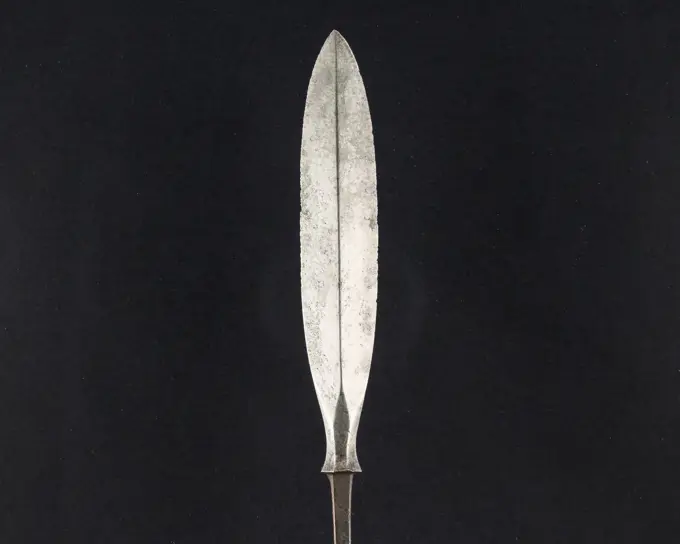
Iron blade of a double -edged sword, anonymous, c. 1300 - c. 1400  Iron blade of a double -edged sword, without a blood channel. The handle is missing. The blade has a sting, which contains a hole to confirm the handle. Some letters inlaid on either side of the blade in brass. According to tradition, dredged in the river near Sliedrecht. Netherlands iron (metal). brass (alloy)   Sliedrecht
Iron blade of a double -edged sword, anonymous, c. 1300 - c. 1400 Iron blade of a double -edged sword, without a blood channel. The handle is missing. The blade has a sting, which contains a hole to confirm the handle. Some letters inlaid on either side of the blade in brass. According to tradition, dredged in the river near Sliedrecht. Netherlands iron (metal). brass (alloy) Sliedrecht
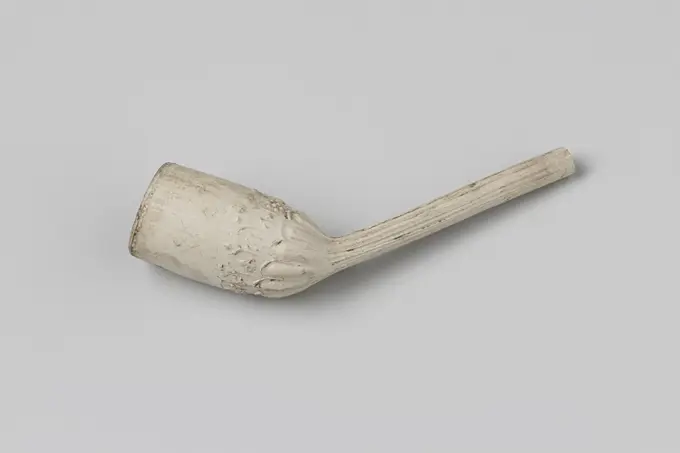
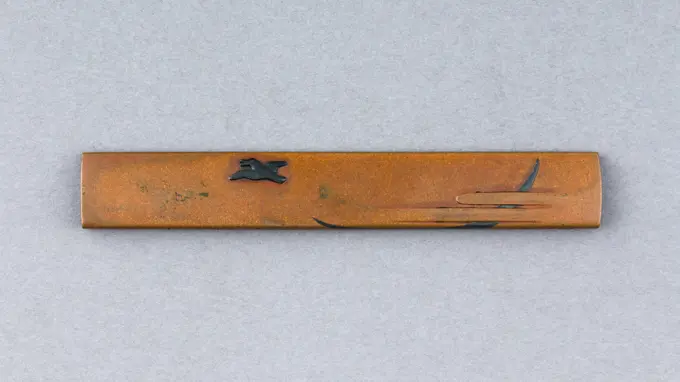
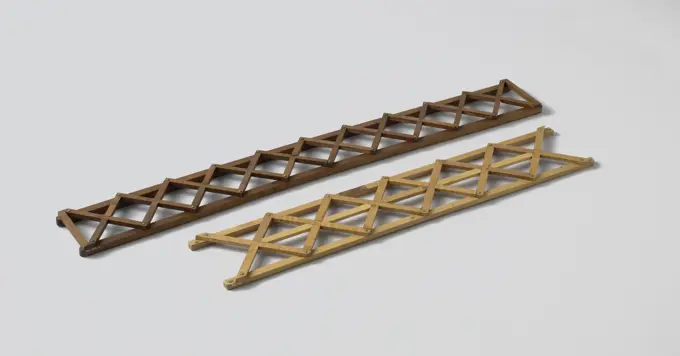
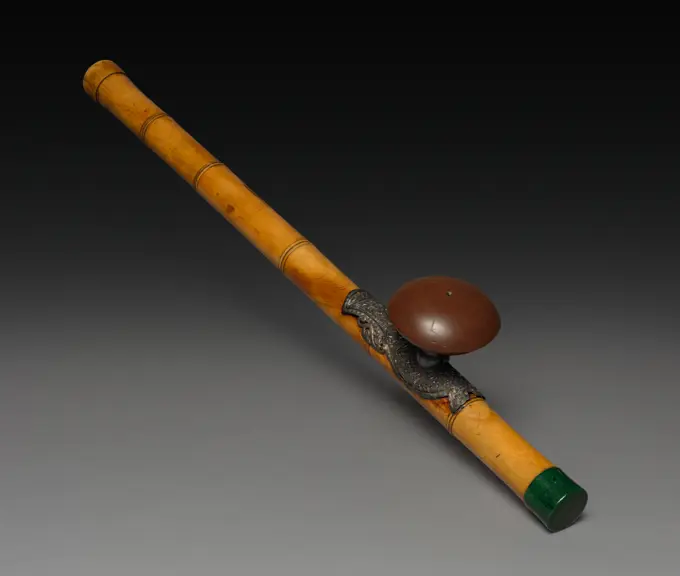
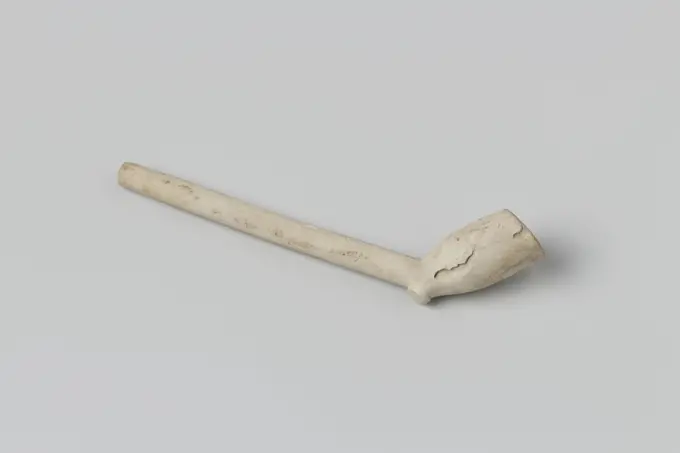
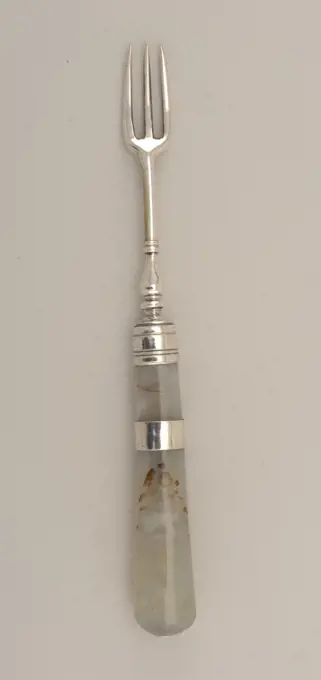
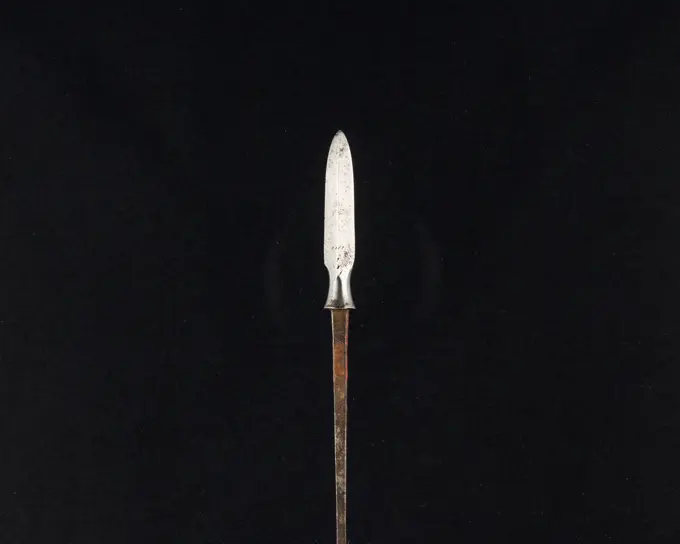
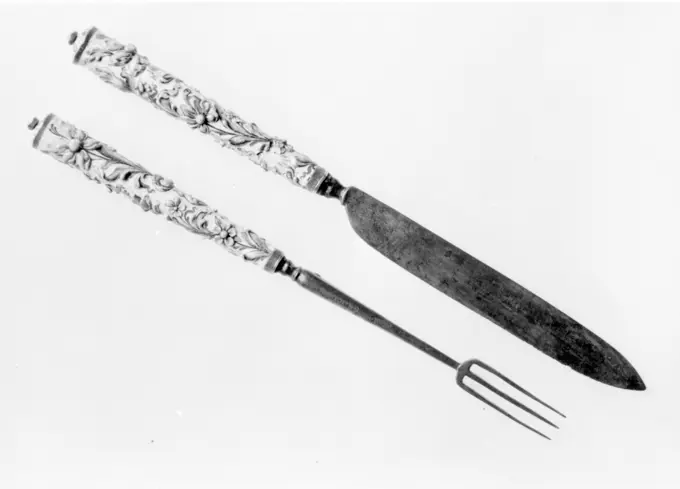
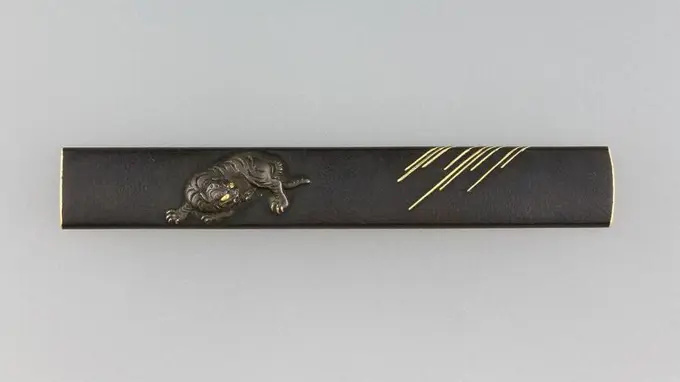
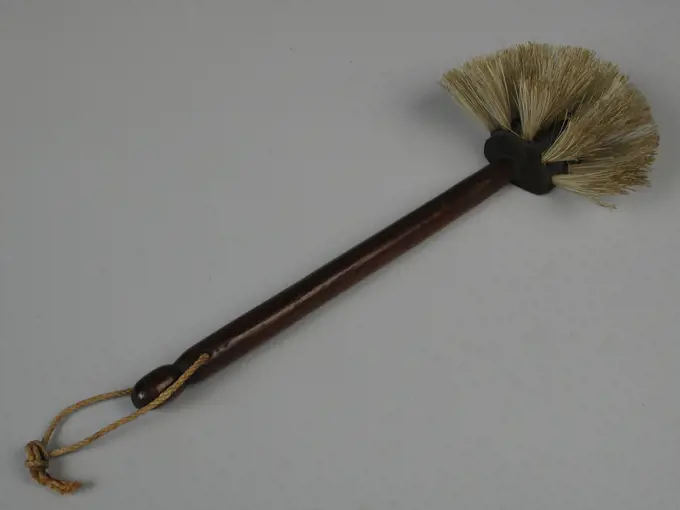
Te Poel, Mahogany miniature window brush, pan brush brush kitchen utensils miniature toy relaxant model wood Mahogany twisted stem natural colored hair semi-circular shaved at end of long handle hanging rope 1868 Sibilla van Embden playing cleaningNigenkin ( 弦 琴 ) 19th century Japanese. Nigenkin ( 弦 琴 ) 502119Toggle -Fragment tobacco pipe.fragment tobacco pipe with floral fashed motif with stained flowers. Of the excavations at the Hofstede Arentsburg 1827-1831 under the supervision of professor Reuvens.Fitting in the form of a candle, 1750 Fitting in the form of a candle was probably part of the wall arm Northern Netherlands (possibly)Netherlands (possibly) copper (metal) Fitting in the form of a candle was probably part of the wall arm Northern Netherlands (possibly)Netherlands (possibly) copper (metal)Knife Handle (Kozuka) ca. 1615-1868 Japanese A kozuka is a handle of a by-knife that is part of a sword mounting. It is kept in a slot on the reverse of a katana scabbard, often with a matching kōgai (hairdressing tool).. Knife Handle (Kozuka) 34613Staff, forked. Dimensions: L. 104 cm (40 15/16 in). Dynasty: Dynasty 18. Date: ca. 1550-1295 B.C.. Museum: Metropolitan Museum of Art, New York, USA.Model of Diagonal Framing, 1814 instruction model Model that demonstrates the cross connection according to Robert Seppings. It consists of two road beams, between which diagonal braces, supporters and keys are applied. United Kingdom wood (plant material). brass (alloy)   EnglandTwo Models of Diagonal Framing, anonymous, after Sir Robert Seppings, c. 1822 instruction model Two models that demonstrate the cross -context according to Robert Seppings. They consist of two road beams, between which diagonal braces, supporters and keys are applied. United Kingdom wood (plant material). brass (alloy)   EnglandPIEZA DE AJUAR PALEOLITICO: AZAGAYAS O PUNTAS DE LANZA DE LA CUEVA DEL EL PENDO (DEPOSITO: MUSEO ARQUEOLOGICO NACIONAL).drawing wooden meter ruler drawing wooden meter ruler isolated on white background Copyright: xZoonar.com/ValeryxVoennyyx 5978258Knife with Porcelain Handle Knife; steel, porcelain; L x W: 24.9 x 2.6 cm (9 13/16 x 1 in.); The Robert L. Metzenberg Collection, gift of Eleanor L. Metzenberg; 1985-103-201Sandboard with a heart-shaped manager at the top and at the bottom of a container with lid. A line has been engraved along the edge of the sanding board. The grinding board is marked: STK. = Amsterdam, JRL. = B (1761), Mt. = Pieter of Somerwil I, Crowned O and a ax.Knife lift from the wreck of the East Indiesman Hollandia.knife, Handle, Cylindrical: tapering; ID. NG 1979-403H, Ferrules, ID. NG 1980-27H426.Opium Pipe, 1800s. China, Qing dynasty (1644-1911). Ivory with repoussé decoration; overall: 55.9 cm (22 in.).Tabakspijp., anonymous, c. 1400 - c. 1950 Tobacco pipe. Old brand no.9.  earthenware. pipe clay Tobacco pipe. Old brand no.9.  earthenware. pipe clayArrowhead (Yanone) 18th century Japanese Although today Japanese warriors are renowned most for their swordsmanship, archery, especially from horseback, has been an essential part of samurai warfare and culture for centuries. Arrows were fitted with heads of varying shape according to their intended use in war, the hunt, or target practice. Arrowheads made for use on the battlefield incorporated different designs intended for specialized purposes such as the piercing of armor or to cause maximum damage to horses and unarmored personnel.Large arrowheads, pierced and elaborately chiseled with landscapes, birds, flowers, dragons, and Buddhist divinities, were created to be admired for the beauty of their metalwork and design rather than for use in archery. Such highly elaborate examples may have been made for presentation or as a votive offerings to a shrine.. Arrowhead (Yanone). Japanese. 18th century. Steel. Archery Equipment-ArrowheadsWalking stick of turtle with driven, gilded copper button, anonymous, c. 1700 - c. 1715 Walking stick of turtle with gilded copper -driven button. Europe whole:. Button: Copper (Metal) cutting / forging Walking stick of turtle with gilded copper -driven button. Europe whole:. Button: Copper (Metal) cutting / forgingTwo-piece bronze mold for large serving spoon, mold casting tool tools equipment base metal bronze wood iron, cast Two-piece bronze mold for pouring large serving spoon with rat tail or needle as transition from oval tray to handle Rotterdam tin foundry tin stainer tin Meeuws Druy craft Shapes are from the originally 18th century Rotterdam inkwell J Druy. The large molds that were not signed or dated were the property of the tinker guild and were rented to the small tin caster.Joint, Spliff, ReeferFork, Agate, silver, steel, Fork has three short tines, curved shoulders, long baluster shaped neck. Silver ferrule with horizontal bands, plain silver band on the handle. Agate handle oval in section with rounded top, small metal mount on top., Germany, ca. 1720-50, cutlery, Decorative Arts, ForkAncient Egyptian, Scribe's palettes, for writing with reeds, from the tomb of Tutankhamen 1323 BC. New KingdomStraightRazorDoor Bolt Third Intermediate Period (Kushite) ca. 712-660 B.C. or later View more. Door Bolt. ca. 712-660 B.C. or later. Wood. Third Intermediate Period (Kushite). From Egypt, Upper Egypt, Thebes, Khokha, Tomb MMA 830-A, MMA excavations. Dynasty 25 or laterBlade 2000 BCE-1000 BCE China. Jade .Textile Swatch; Manufactured by Deerfield Society of Blue and White Needlework (American, 1896-1926) (United States)Third Flute, Johann Heinrich Gottlieb Streitwolf, c. 1810 Palmhout flute with five valves. Marked: Streitwolf Göttingen. Göttingen boxwood (hardwood). rosewood (wood). brass (alloy). horn (animal material) Palmhout flute with five valves. Marked: Streitwolf Göttingen. Göttingen boxwood (hardwood). rosewood (wood). brass (alloy). horn (animal material)Lime Spoon, Bird 15th-16th century Inca. Lime Spoon, Bird 315303Trivet 1700-1800Tooth of a fork from the wreck of the East Indians Hollandia, Anonymous, 1700 - in or Before 1743  Prong, fork. Netherlands copper (metal)   SecondHead-breaker used as a blunt weapon. Wood, stone and plant fiber. Karaja indians. Bananal Island, Brazil. Museum of the Americas. Madrid, Spain.Game call -Knife (possibly Netherlands), ca. 1730; shark skin, silver, steel; L x W: 16.7 x 1.7 cm (6 9/16 x 11/16 in.); The Robert L. Metzenberg Collection, gift of Eleanor L. Metzenberg; 1985-103-138-bBark cloth beater from Bugotu, Isabel, Solomon Islands. Dated 1901Sealing wax case (étui) 1783-84 Possibly by Joseph Etienne Blerzy French In eighteenth-century Europe, Paris led the production of high-quality luxury goods. Parisian goldsmiths made a wide range of small, personal articles such as snuffboxes; étuis to hold sealing wax, tweezers, or utensils for sewing; souvenirs, which contained thin ivory tablets for note taking; and shuttles for knotting lace. Gold snuffboxes and boxes decorated with portrait miniatures were prized and frequently given as royal gifts, often to ambassadors or members of the court in lieu of cash payments for their services. Coveted and admired, these boxes were produced from a variety of materials. The best were skillfully made of gold and embellished with diamonds, enameled decoration, lacquer, and other luxurious materials. By the middle of the century, the taking of snuff had become an entrenched social ritual, and the snuffbox, too, had become an important social prop. Snuffboxes were considered highly fashionablBallpoint pen Ballpoint wooden pen isolated on white background Copyright: xZoonar.com/AndreyxEreminx 2389037Drumsticks that probably belong to the drum of the Rotterdam militia, drumstick stick percussion instrument musical instrument acoustic wood h 44,5, brown sticks belonging to gold-colored drum with white sheets and red-white-blue edges in triangle motif Rotterdam percussion drum tambour music fanfare procession militaria militiaCelt before 16th century Maya (). Celt 317305Vanilla sticks isolated on a white backgroundBishop Hill: Fire Extinguisher. Dated: c. 1938. Dimensions: overall: 54.5 x 43.4 cm (21 7/16 x 17 1/16 in.) Original IAD Object: 32" long; 3" thick; 36" overall. Medium: watercolor and graphite on paperboard. Museum: National Gallery of Art, Washington DC. Author: Hardin Walsh.Arrowhead (Yanone) 18th century Japanese Although today Japanese warriors are renowned most for their swordsmanship, archery, especially from horseback, has been an essential part of samurai warfare and culture for centuries. Arrows were fitted with heads of varying shape according to their intended use in war, the hunt, or target practice. Arrowheads made for use on the battlefield incorporated different designs intended for specialized purposes such as the piercing of armor or to cause maximum damage to horses and unarmored personnel.Large arrowheads, pierced and elaborately chiseled with landscapes, birds, flowers, dragons, and Buddhist divinities, were created to be admired for the beauty of their metalwork and design rather than for use in archery. Such highly elaborate examples may have been made for presentation or as a votive offerings to a shrine.. Arrowhead (Yanone). Japanese. 18th century. Steel. Archery Equipment-ArrowheadsRod Signelak from the wreck of the East Indians' t Vliegend Hart ,, 1700 - 1735 sealing wax Rod seal polish pink -red in color with the print of a seal at one end: under a crown it says 'Prince // .... illegible'. Sealing wax. Netherlands sealing waxKnife and fork second half 17th century Dutch. Knife and fork. Dutch. second half 17th century. Steel, enamel on copper, garnets. Metalwork-SteelKnife handle ca. 1750-75 British, Staffordshire. Knife handle. British, Staffordshire. ca. 1750-75. Salt-glazed stoneware. Ceramics-PotteryPowder Horn 1770 Colonial American. Powder Horn 29567Okonite (Shop)Old hammer on a metallic backgroundKnife Handle (Kozuka). Culture: Japanese. Dimensions: L. 3 13/16 in. (9.7 cm); W. 9/16 in. (1.4 cm); thickness 1/4 in. (0.6 cm); Wt. 1.1 oz. (31.2 g). Date: ca. 1615-1868. Museum: Metropolitan Museum of Art, New York, USA.Staff. Dimensions: L. 137 cm (53 15/16 in.). Dynasty: Dynasty 12. Date: ca. 1981-1802 B.C.. Museum: Metropolitan Museum of Art, New York, USA.Eresel with sheath of the vice-admiral th. F. van Capellen; Sabel for Officer British Marine Executive Branch, M 1805.English Officer Cable for Marines, Model "Stirrup Hilt", from approximately 1805 (British Commissioned Naval Officers Sword). Hilt: buyer lionevest with ivory handle surrounded with copper wire. In the middle a shield with crowned weapon. Front bar and half pearl rod with two shields with an engraved crowned anchor. The blade is two-edged. Damask in blue and gold. On front woman figure leaning on an anchor. Above the initials G. R. with a crown. On the right Neptune with trident on a shell. Above weapentrophy with the royal weapon. Signed. A medallion has been sitting on the handle, possibly from the civilian service branch of the carrier.Circular hooks, vintage engraved illustration. Magasin Pittoresque 1853.Pendant 9th-14th century. Pendant. 9th-14th century. Glass. Made in Egypt possibly. GlassCopper spoon with fig-shaped bowl, on transition to stem the letters IVT, spoon cutlery soil find copper bronze metal, Struck in the stem: IVT connection lines between the letters and after the T archeologyViolin Bow mid-18th century French Plain round pernambuco stick, pearwood frog, button not original. Hatchet and swan head.. Violin Bow 500544Tenor Slide Trombone in B-flat 1827-49 Jeremias Franciscus Verhoeven Belgium Trombones with circular upper joints were often used in Belgian and Dutch military bands. The mouthpiece here has a shape typical of Belgian trombones.. Tenor Slide Trombone in B-flat 503958Pipe and Stem, c. 1880-1890, 3 5/16 x 19 1/4 x 1 5/8 in. (8.41 x 48.9 x 4.13 cm) (overall), Catlinite, United States, 19th centuryHinge 1700-1800 American. Hinge. American. 1700-1800. Wrought iron. Made in Hudson Valley, New York, United StatesClose up of old chiselThe dirk of the officer Soviet military - marine sea fleetESPADA DE LA EDAD DE BRONCE - 1100 - 900 a.C. Location: ARCHAEOLOGICAL MUSEUM. Orense. SPANIEN.War 1939-1945. Dagger its with bélière. General Leclerc Museum of Hauteclocque and the Liberation of Paris, Jean Moulin Museum. 77431-6 Weapon, Assaut Battalion, knife, dagger, military equipment, war 1939-1945, war 1939-1945 39-45, war 39-45, object, paramilitary oragnization, SA, Second World War, Section of Assault, NaziMessenheft from the wreck of the East Indians Hollandia, Anonymous, 1700 - in Or Before 1743  Knife, handle, cylindrical: tapering; id. NG 1979-403H, ferrules id. NG 1980-27H426. Netherlands wood (plant material)   SecondOboe, Hendrik Richters, c. 1720 Hobo van Ebony, mounted with ivory. The three silver valves are richly engraved with musician figures. Marked: H. Richters. Amsterdam ebony (wood). ivory Hobo van Ebony, mounted with ivory. The three silver valves are richly engraved with musician figures. Marked: H. Richters. Amsterdam ebony (wood). ivoryvintage jewelers piercing saw over white background, clipping pathDessert Knife (France); Designed by F. Nicoud (French, active 1890); silver, steel, mother-of-pearl, gilding; L x W x D: 20 x 1 x 0.8 cm (7 7/8 x 3/8 x 5/16 in.)PALETA DE PLATA REPUJADA 1675. Location: CATEDRAL-INTERIOR. Toledo. SPAIN.twisted old manuscript on canvasANFORAS PUNICA TIPO OBUS PROCEDENTE DEL SANTUARIO DE NUESTRA SEÑORA DE LA LUZ. Location: MUSEO ARQUEOLOGICO-COLECCION. MURCIA. SPAIN.Clothes brush ca. 1743-45 Johann Christoph Stenglin German. Clothes brush 231594Metallic scraper with wooden handle metallic scraper with wooden handleHu-Ch'in & Bow, Shêng, San-Hsien and P'i-P'a. The Hu-Ch'in (left) was one of the most popular musical instruments in Peking. The P'i-P'a had a body that was nearly a foot in diameter and was usually played by men who were hired as minstrels or ballad-singers in the South of China.Case L. BERNSTEINKnife Handle (Kozuka). Culture: Japanese. Dimensions: L. 3 13/16 in. (9.7 cm); W. 9/16 in. (1.4 cm); thickness 5/16 in. (0.8 cm); Wt. 1.1 oz. (31.2 g). Date: 1770-1852. Museum: Metropolitan Museum of Art, New York, USA.Pair of drumsticks, training pad, practicing for drummers. Copy paste. Music learning concept.. Pair of drumsticks, training pad, practicing for drummers. Copy paste. Music learning conceptSnuff Box, 1850-1900, Nigeria, maker unknown. Gift of E W Bergin, 1966.Atlantic jackknife clam (Ensis directus) (Ensis americanus) shells on beach, Wadden Sea, Germany, EuropeHalf model or a tambangan.Black-white stacking model (starboard) of a canoe. He has two pointed ends, the vent is coming up. A cleat at both ends. Scale 1:10 (Scale by model).polished tholeiite rock isolated macro shooting of geological collection mineral - polished tholeiite magmatic basalt, Tholeiitic basalt rock isolated on white background Copyright: xZoonar.com/ValeryxVoennyyx 10387444Vintage Photograph. Hand holding baton for composing music. Frame 2It is a metal piece usually attached near the rear wheel of the bicycle and on which the chain is placed. It is a modified newer version and has a bolt in the center, vintage engraved line art illustration. Bicycle Accessories 1900.azadas cuernoPOLONIA. GDANSK. MUSEO ARQUEOLOGICO.Fancy chopstickRat trap and rat poison, pest control, rat baitBorgpen from the wreck of the East Indians Meresteijn, Anonymous, 1693 - 1702  Copper Borgpen, massively narrowing around in the middle, one end is a curved point. Belongs to the Borgring NG-1975-79B-ME. The pen was beaten by the ring that was attached to a coffin, for example. The curved point of the pen then hooked into the lid and held it in place. Bail Handle. Netherlands copper (metal)   Cape of Good HopeShadow Puppet (Wayang Kulit) of Gada, from the set KyaiDrajatThe Te Horo outrigger float - to show the two forward sets of peg and lashing holes, 08 October 1960, North Island, by Leslie Adkin. Gift of Adkin Family, 1997.Oval glasses case of wood with painted layer of turtle, hinged cover in the upper part, spectacle case tube holder wood paint metal turtle velvet, Narrow oval glasses case with painted outer layer of turtle About third part from the short side is cover with hinge that can turn 90 °. The inside of the tube is partly covered with layer of velvet that is strongly discolored. Probably it has originally had pink-red color. The upper side of the tube also seems to have corrugated metal edge as can also be seen in objects with cloisonné technique mayor Wadenoijen man see vision farsighted eye correction correction Glasses and spectacle tube belonged to Arie van Heemskerk-wandwijk Born in 1775 in Giessen-Nieuwkerk. Died on 1857.08.17 in Tiel. Was mayor of Wadenoijen.Four copper alloy lance heads.Stibnite. mineralsKriminaltechnisches Institut, KTI, Forensic Science Institute, fingerprinting, fingerprints on evidence are made visible, police, Landeskriminalamt, LKA, State Criminal Police Office, North Rhine-Westphalia, Germany, EuropeHieroglyphic sign containing a magical spell for protectionShadow Puppet (Wayang Kulit) of a Prop (Ricikan), from the set KyaiDrajatAnefo photo collection. Assignment RVD Medisch Historic exhibition Waaggebouw Amsterdam. August 14, 1949. Amsterdam, Noord-Holland