Historical Weaponry and Tools

Various historical items including swords and digging sticks, showcasing craftsmanship and materials from different cultures and eras.
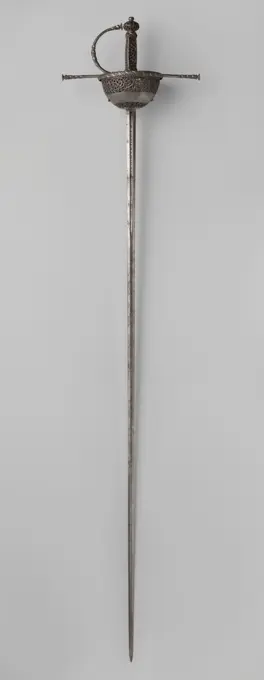
Rapier, anonymous, 1500 - 1600 rapier Rapier with hilt with geometric patterns and leaf motifs in à jour. The blade on top worked with row drilled holes.  iron (metal)
Rapier, anonymous, 1500 - 1600 rapier Rapier with hilt with geometric patterns and leaf motifs in à jour. The blade on top worked with row drilled holes. iron (metal)
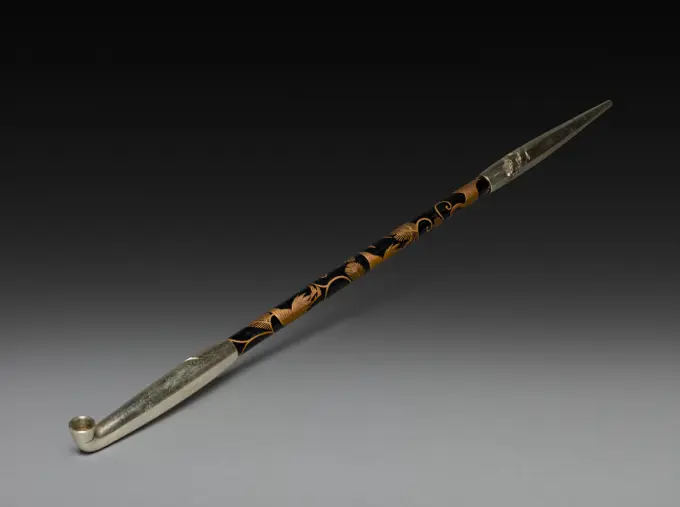
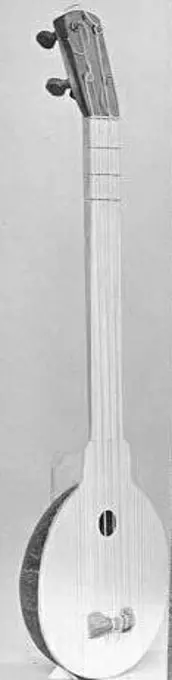
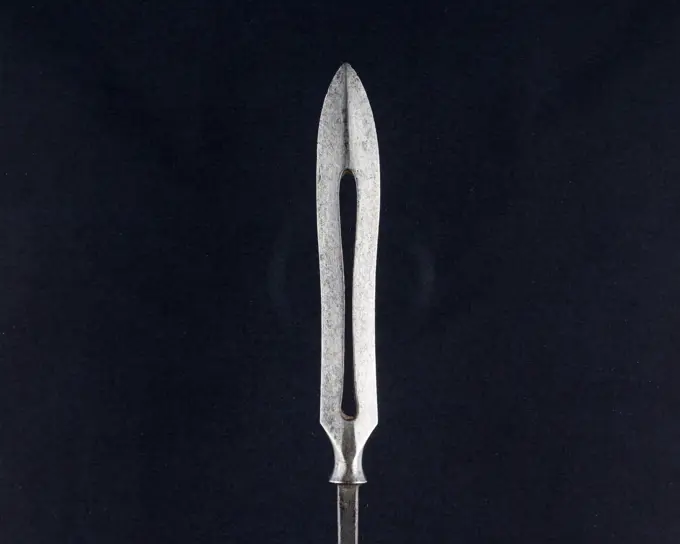
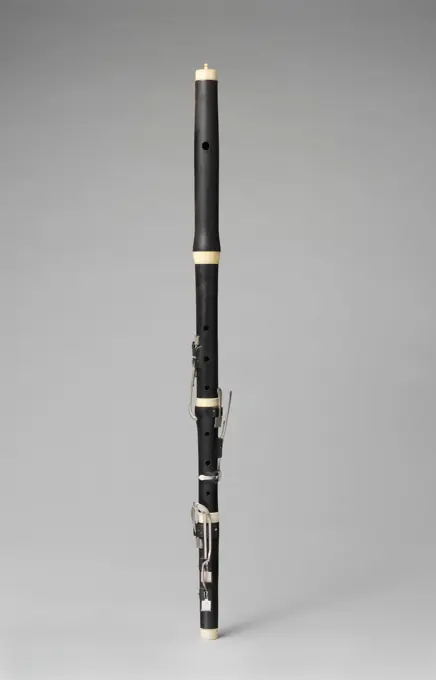
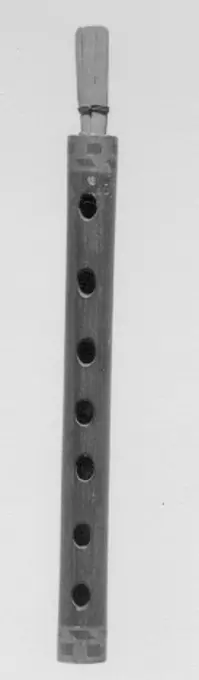
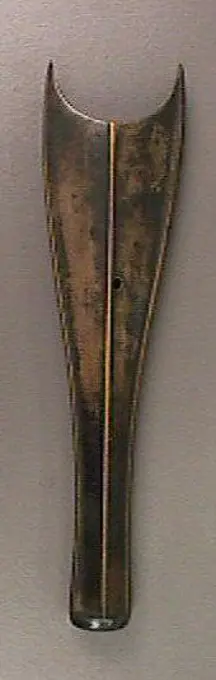
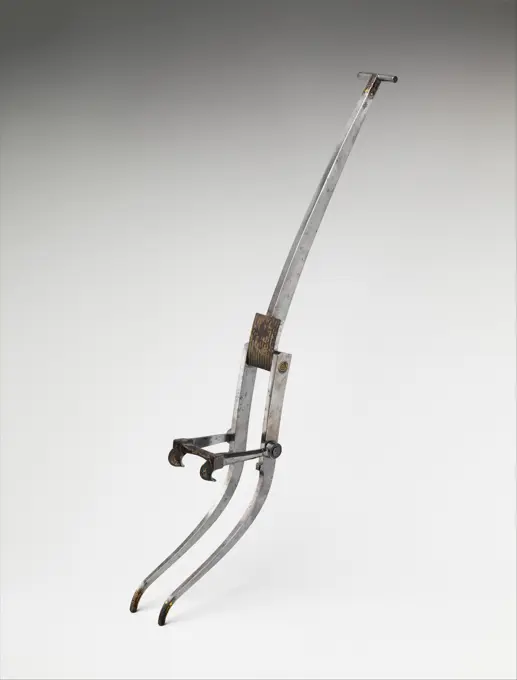
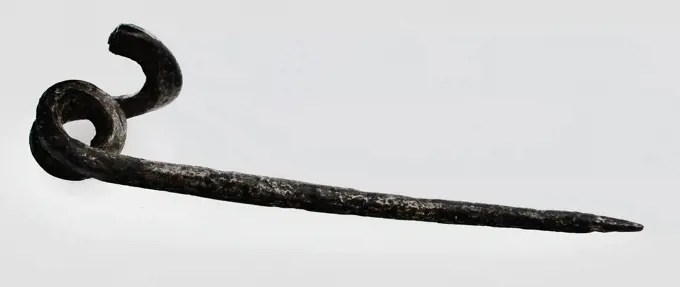
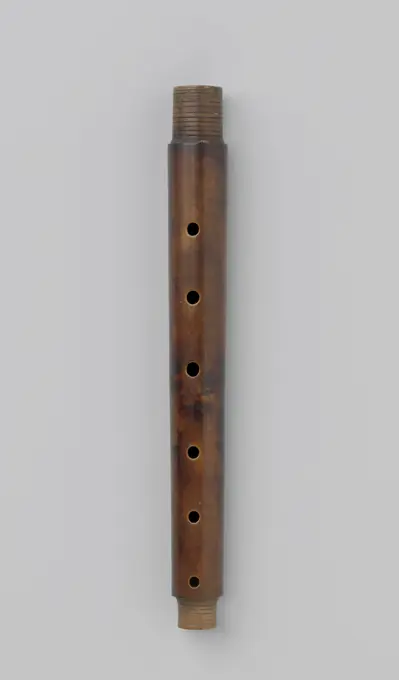
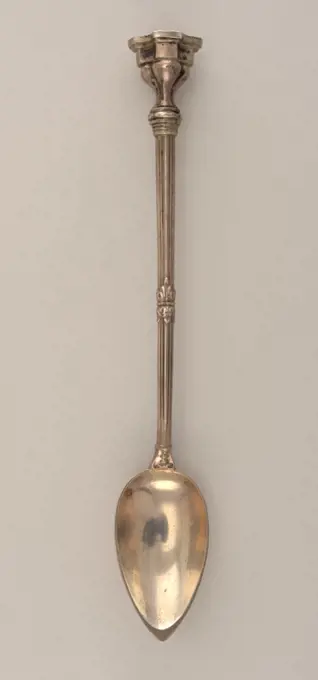
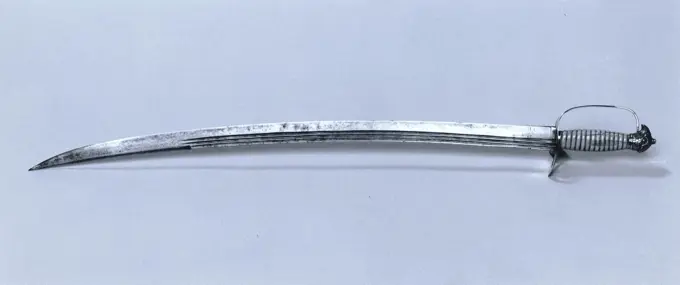
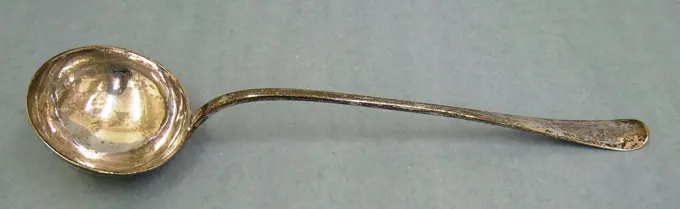
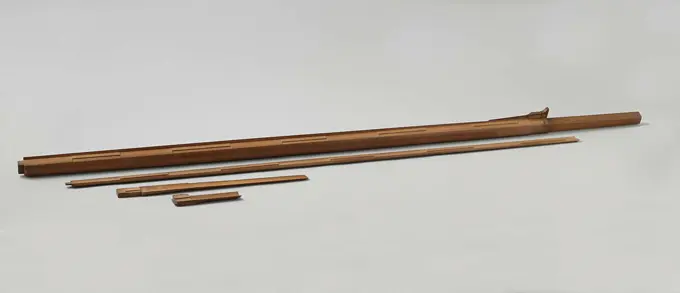
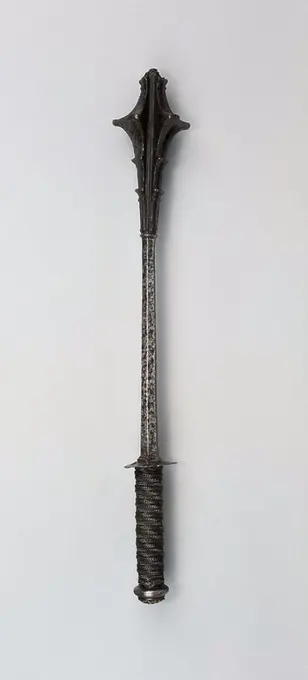
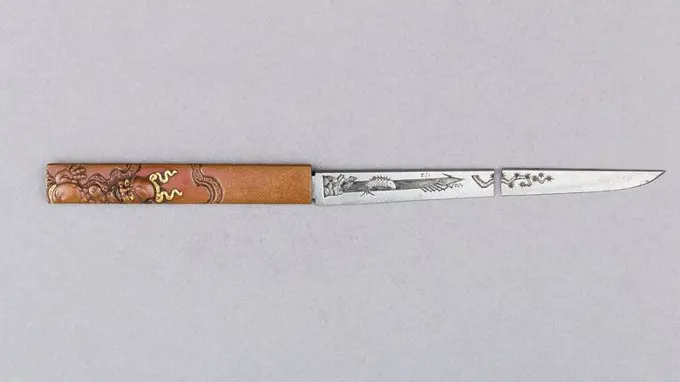
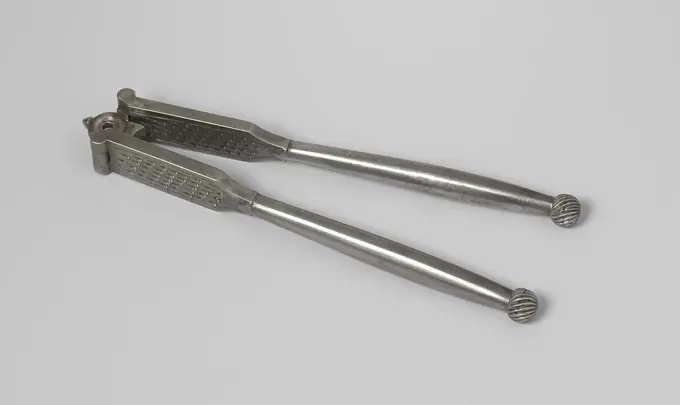
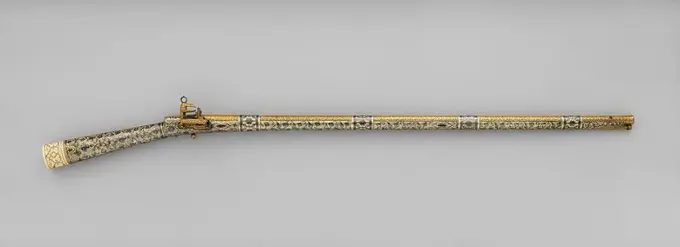
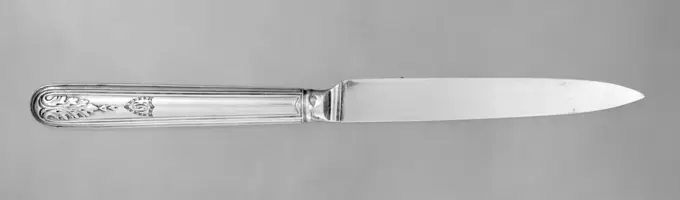
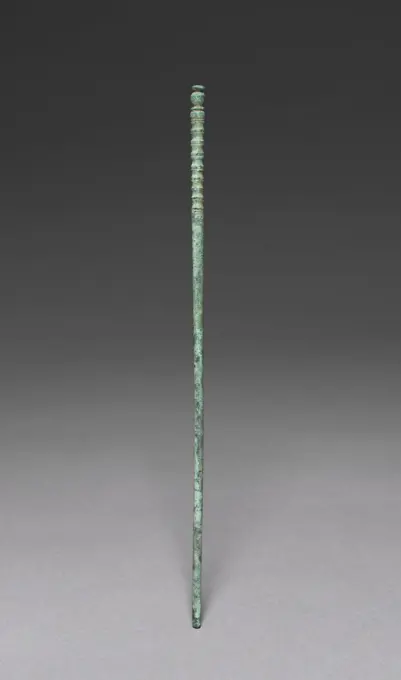
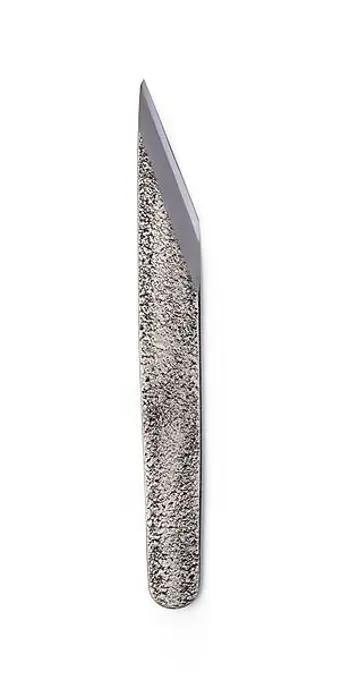
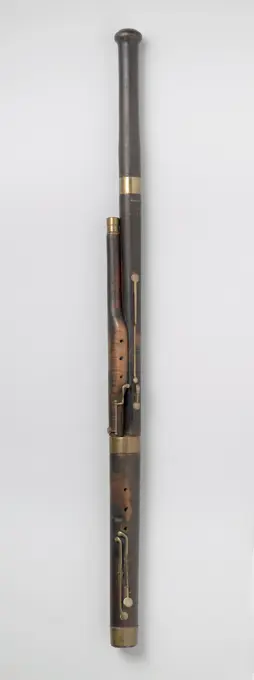
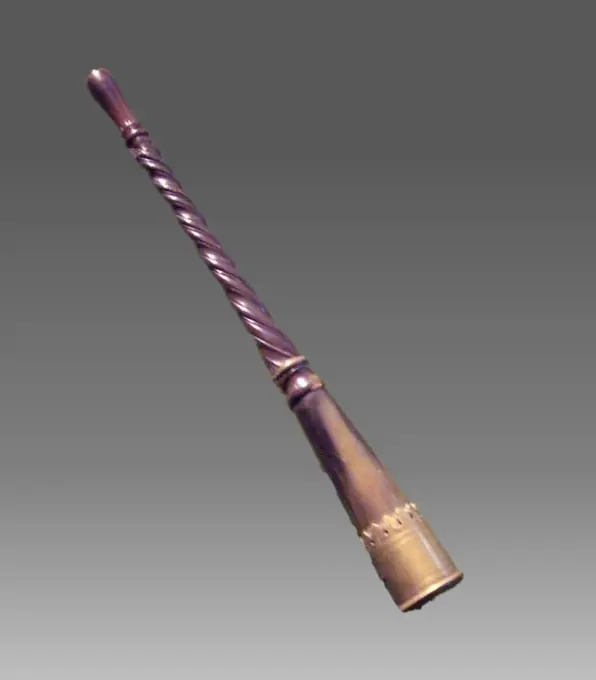
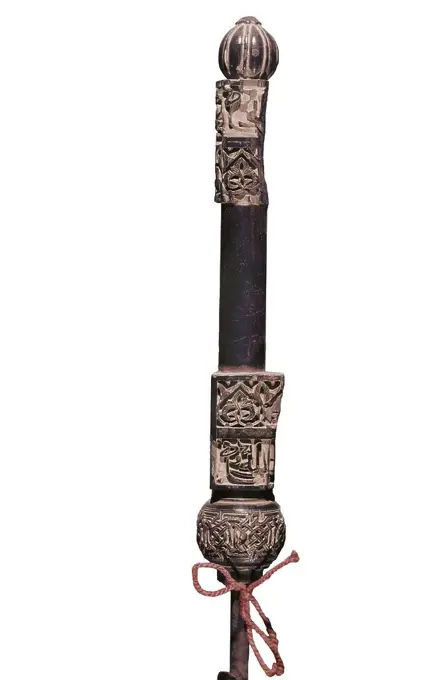
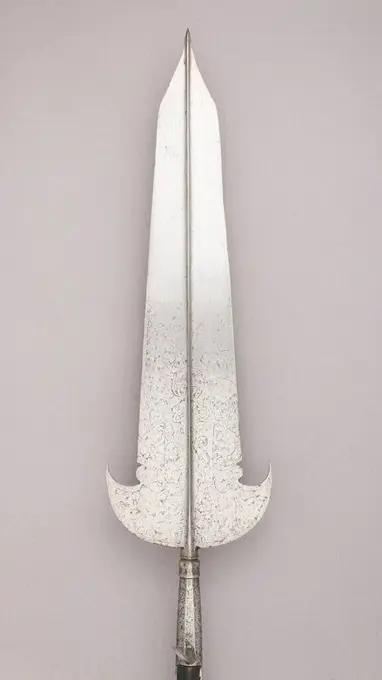
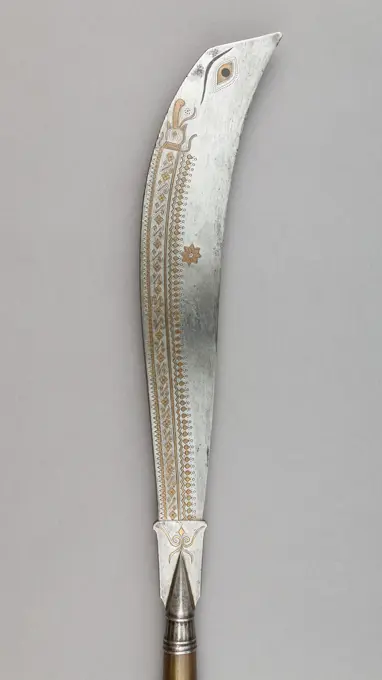
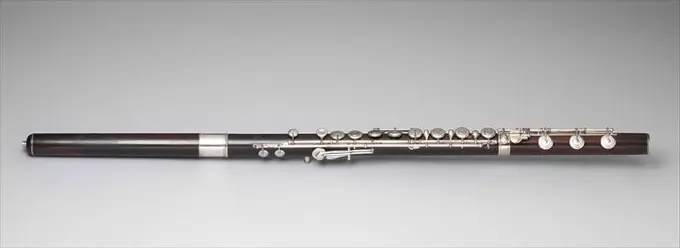
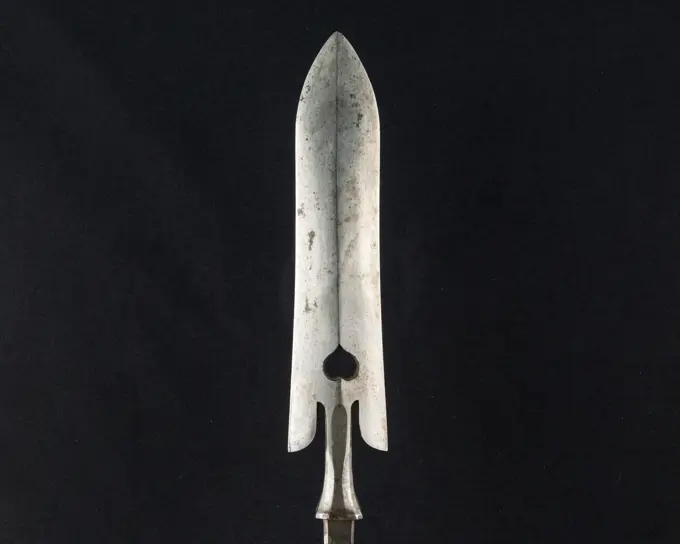
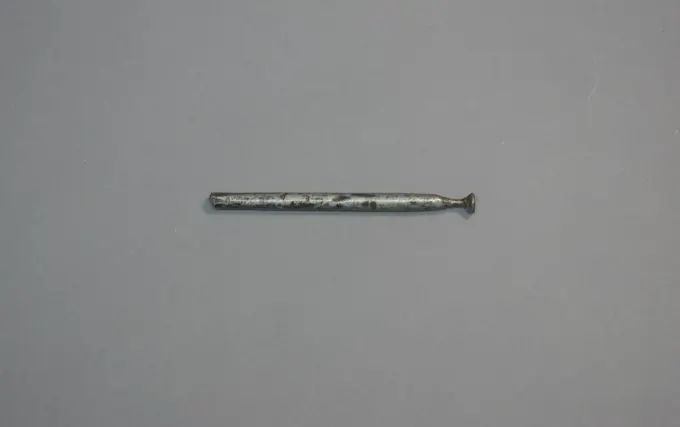
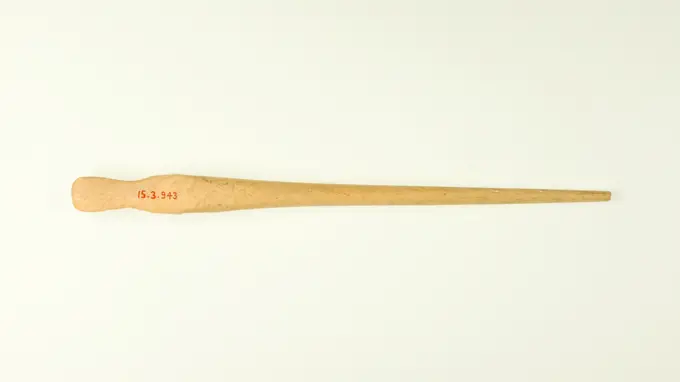
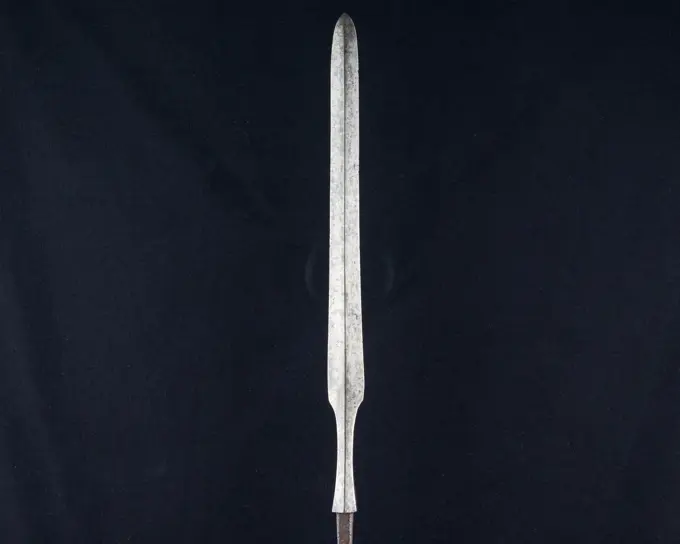
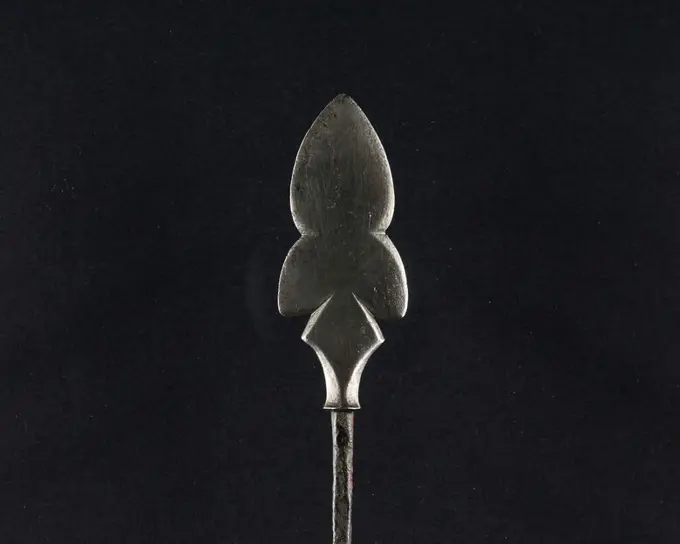
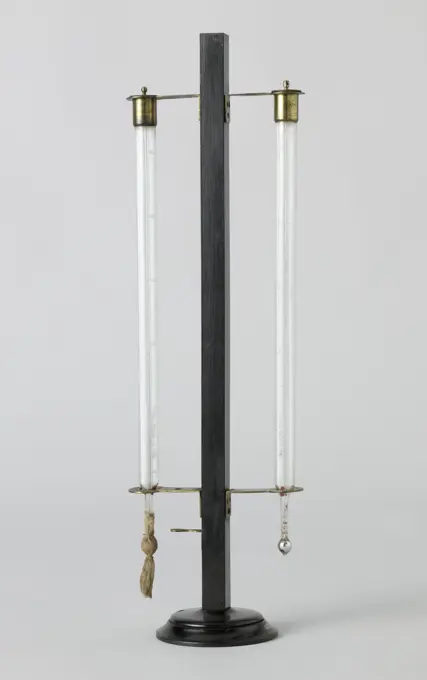
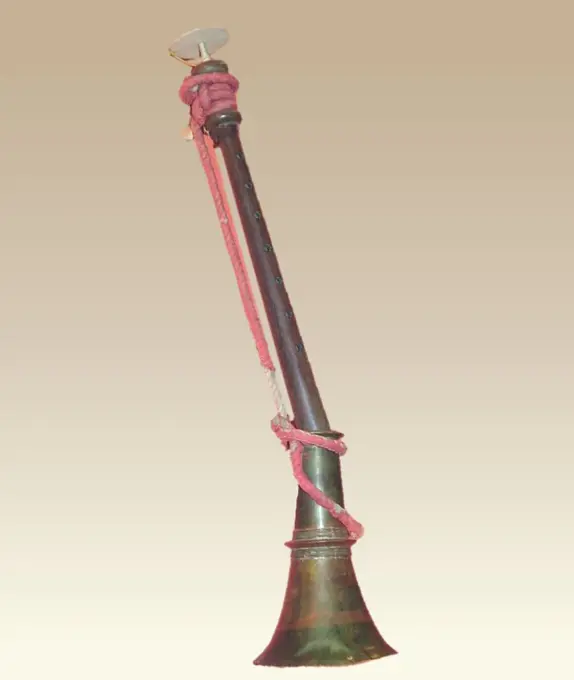
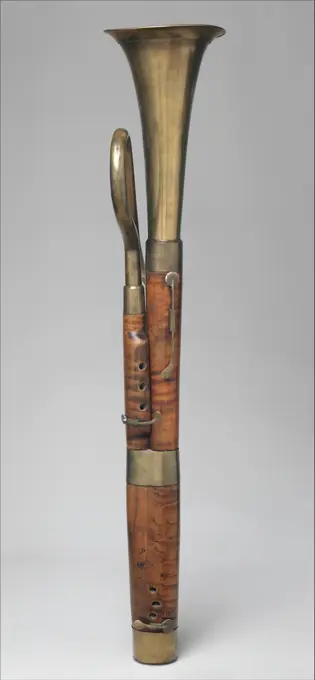
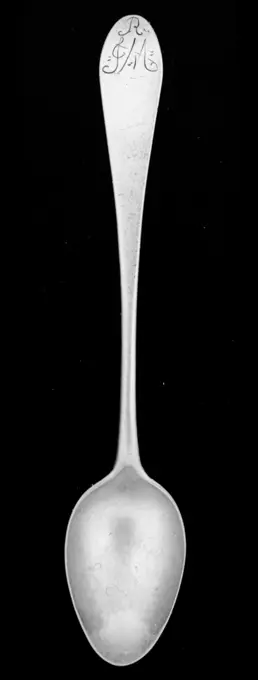
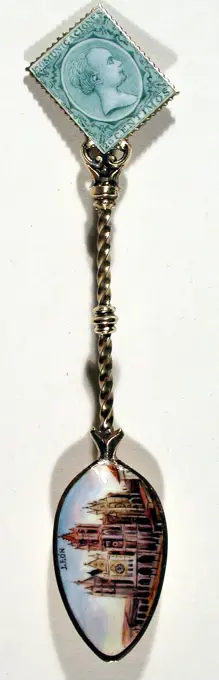
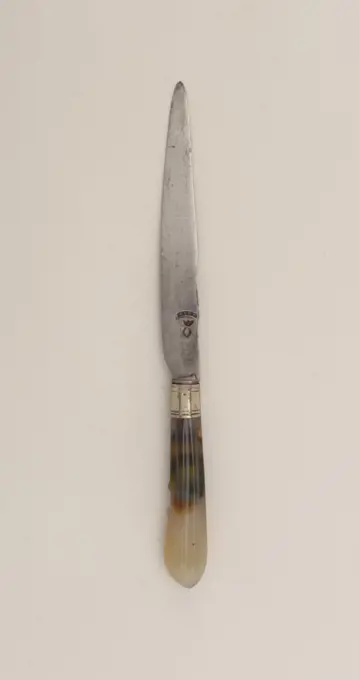
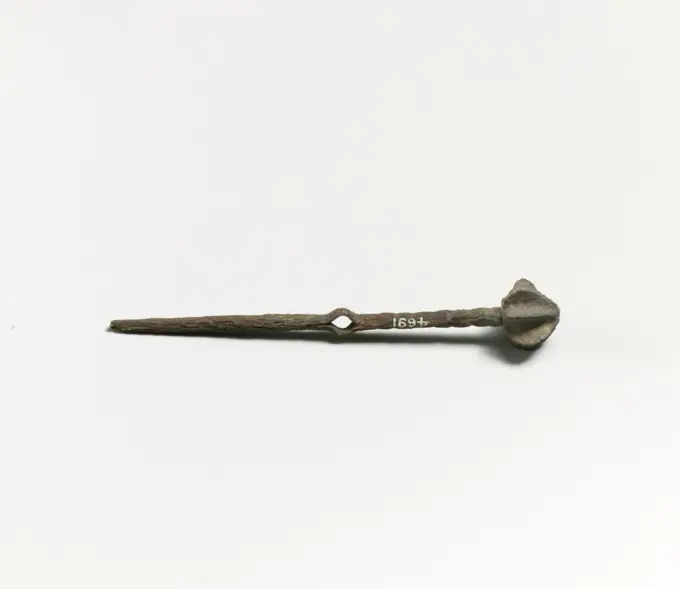
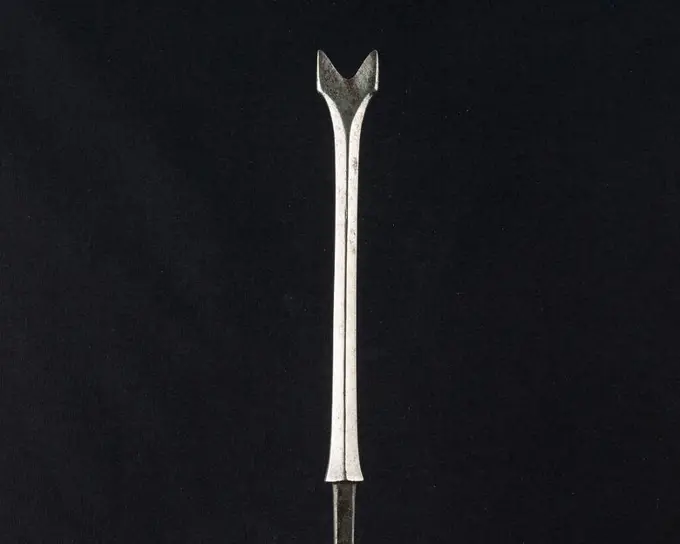
Arrowhead (Yanone). Culture: Japanese. Dimensions: L. 9 1/4 in. (23.5 cm); L. of head 4 1/2 in. (11.4 cm); W. 3/4 in. (1.9 cm); Wt. 1.4 oz. (39.7 g). Date: 18th century. Museum: Metropolitan Museum of Art, New York, USA.Cavaco 19th century Spanish. Cavaco 500849PorringerSpoon.   Maker: Nicholas Roosevelt, American, 1715-1769Sergeantshellebaard, 1600 - 1699 Halberd Short blade with a strong tapered shape; At the bottom of two porters. Tapered house with two ring -shaped profiles above and below. The house has a right through gap through which the ax and hook have been put through. Both the ax and the hook are worked. A primitive standing lion has been cut out in the ax, a decorative diamond -shaped motif in the hook. Two ramped feathers. Round stick with shoe. Low Countries wood (plant material). iron (metal)   EuropeArrowhead (Yanone) 18th century Japanese Although today Japanese warriors are renowned most for their swordsmanship, archery, especially from horseback, has been an essential part of samurai warfare and culture for centuries. Arrows were fitted with heads of varying shape according to their intended use in war, the hunt, or target practice. Arrowheads made for use on the battlefield incorporated different designs intended for specialized purposes such as the piercing of armor or to cause maximum damage to horses and unarmored personnel.Large arrowheads, pierced and elaborately chiseled with landscapes, birds, flowers, dragons, and Buddhist divinities, were created to be admired for the beauty of their metalwork and design rather than for use in archery. Such highly elaborate examples may have been made for presentation or as a votive offerings to a shrine.. Arrowhead (Yanone). Japanese. 18th century. Steel. Archery Equipment-ArrowheadsTransverse Flute in G ca. 1830 Johann Wendelin Weisse German. Transverse Flute in G 505689Souvenir spoon with view of the Roman Colosseum European late 19th centuryNeedle sheath 17th century Italian. Needle sheath. Italian. 17th century. Wood. Textiles-Methods and MaterialsWooden Bow, First Intermediate period- Dynasty 12, 2123-1914 BC. Egypt, First Intermediate period- Middle Kingdom, Dynasty 10-12, 2123-1814 BC. Wood; overall: 72.8 cm (28 11/16 in.).Quanzi Chinese late 19th centuryChape (Terminal of a Scabbard) 900-600 B.C. Irish. Chape (Terminal of a Scabbard) 470330Spanning Lever (Gaffle or "Goat's-Foot" Lever) probably third quarter of the 16th century Spanish, Madrid. Spanning Lever (Gaffle or "Goat's-Foot" Lever). Spanish, Madrid. probably third quarter of the 16th century. Steel, gold, silver. Madrid. Archery EquipmentPaddleNeedle of fibula or mantle pin, fibula fastener soil find bronze metal, cast drawn bronze needle of fibula. Curled feather and pointed end archeology Geervliet Bernisse roman time early Middle Ages dress fastening pins Soil discovery Geervliet Nieuw Markenburg 1966.Pants of dark blue sheet with gold -colored decorative band on the side seams, De Jong (firm), 1909 Pants made of dark blue sheet with gold -colored decorative band on the side seams. Button closure for; tape with buckle behind; bags in his seams. Arnhem wool Pants made of dark blue sheet with gold -colored decorative band on the side seams. Button closure for; tape with buckle behind; bags in his seams. Arnhem woolMedical Instrument. UnknownAlto Recorder (Middle Joint), Thomas Coenrat Boekhout, c. 1700 Middle part of an alto block flute, marked on top between third and fourth hole. Amsterdam wood (plant material) Middle part of an alto block flute, marked on top between third and fourth hole. Amsterdam wood (plant material)Sword Cane with Scabbard 17th century hilt, scabbard, Indian; blade, European. Sword Cane with Scabbard 31153Spoon, silver, Pointed oval bowl, reeded tubular stem with converging leaves at mid-stem with baluster-lobed terminal below quatrefoil lozenge crusher., France, 19th century, cutlery, Decorative Arts, SpoonBelt hook 4th-3rd century B.C. China. Belt hook 64536WalkingStickSword.   Maker: William Ball, American, 1763-1815Poo-Do-Parana (flute) 19th century Native American (Brazilian). Poo-Do-Parana (flute) 501338Ladle.   Maker: Philip Syng, Jr., American, 1703-1789Ear probe . Ear probe  251905 Ear probe , Bronze, Other: 6 5/8 in. (16.8 cm). The Metropolitan Museum of Art, New York. Fletcher Fund, 1925 (25.78.125)Model or a made mast. Round mast with square top, ears and rhombuside. The mast itself consists of a square king and four cheeks, which were interpreted on the king with switching welding. The ears are connected to the king with dovetail connections and additionally aggravated with bars. A long driving bed or a rotary scale is placed between the ears.Mace. German. Date: 1450-1500. Dimensions: L. 50.8 cm (20 in.)object needs to be weighed. Iron and brass. Origin: Germany. Museum: The Chicago Art Institute, Chicago, USA.Knife Handle (Kozuka) with Blade. Culture: Japanese. Dimensions: L. including blade 8 13/16 in. (22.4 cm); L. excluding blade 3 13/16 in. (9.7 cm); W. 9/16 in. (1.4 cm); thickness 5/16 in. (0.8 cm); Wt. 1.8 oz. (51 g). Date: 18th century. Museum: Metropolitan Museum of Art, New York, USA.Glass ligula (ear pick). Culture: Roman. Dimensions: H.: 6 in. (15.2 cm). Date: 1st century A.D. or later.Translucent greenish yellow, with applied bowl in same color.Long rod as handle with square cross section in middle and spirally twisted at both ends; a small circular, almost flat bowl applied at one end.Broken at one end with point missing; iridescent weathering.Similar implements, often described as cosmetic spoons, were made in metal and bone; some examples are also displayed in Gallery 171, Case 17. Museum: Metropolitan Museum of Art, New York, USA.Bronze horse pin, vintage engraved illustration. From Natural Creation and Living Beings.vintage letter opener knife isolated on white, clipping pathWater droplet on a bottle of wineIron nutcracker consisting of two parts running around a hinge. Part consists of a slender handle and a flat, rectangular piece that is roughly made to hold the note. The ends of the handles are decorated with balls with spiral relief. Inscription; On one handle: J. C. J. van Speijk / (downside) gunboat. On the other handle: 5 Feb!. 1831 / (downside) NO2.Flintlock Rifle. Culture: Caucasian, Kubachi, Dagestan. Dimensions: L. 52 in. (132.08 cm); Cal.56 in. (14.22 mm). Date: ca. 1800-1850.This rifle was probably made in the Dagestani village of Kubachi, the principal armsmaking center in the Caucasus. The Arabic inscription on the barrel, "Owned by Aba Muslim Khan Shamkhal," and the very high quality of the workmanship suggest that it belonged to a member of the family of the ruling prince (shamkhal). Museum: Metropolitan Museum of Art, New York, USA.Manuel G Runyan, Strap Hinges, c 1939 Strap HingesKnife (one of three) 1798-1809 François Charles Gavet French. Knife (one of three) 200325Hairpin, 1523-1028 BCE, 4 1/2 x 3/16 in. (11.43 x 0.48 cm), Mottled grey-green jade, China, 16th-11th century BCEBamboo toothpick closeup isolated on white background.Chopstick, 918-1392. Korea, Goryeo period (918-1392). Bronze; overall: 25.9 cm (10 3/16 in.).Dagger (Katar) 17th-18th century Indian. Dagger (Katar) 31422Glaive for the Bodyguard of Emperor Maximilian II Made 1564 Austrian. Pole arms (staff weapons) were used not only in warfare and hunting, but also in sporting combat and ceremonies. The term refers to a family of edged weapons attached to wooden staffs. With the exception of the lance, which remained the weapon of the mounted knight, all other staff weapons were wielded by men on foot by 1600. With the development of firearms and their introduction as infantry weapons, pole arms lost their importance on the field, and from the mid-16th century, they were reserved for use in sporting contests and by princely bodyguards for ceremony and parade. The blades lent themselves to embellishmentóengraving, etching, or other forms of decorationóand provided a perfect surface for the coats of arms of noble or princely families. The ceremonial use of staff weapons continues to this day with the Swiss Guards at the Vatican and Britainís Yeomen of the Royal Guard.. Steel, iron, gilding, oak, and silHalberd ca. 1530 Italian. Halberd 25907Spinning rod for fishing isolated. Spinning rod for fishingNeedle with Two Eyes. UnknownCraftmans Knife on a white backgroundBassoon, August Friedrich Andreas Knochenhauer, c. 1855 Fagot with ten valves. Top Berlin maple (wood) Fagot with ten valves. Top Berlin maple (wood)Clay pipe, marked, decorated with fleur de lis stamps, clay pipe smoking equipment smoke floor pottery ceramics pottery, pressed finished baked Clay pipe marked with fleur de lis stamps decorated handle Decoration consists of set of five stamps on the shaft of the stem left and to the right of it two stamps Heel brand heel: animal with four legs and high curled tail archeology tobacco smokingThree Samples of Iron Cable, Andrew Smith, 1850 - 1858 cable Three samples of iron cable, all cable stroke. One consists of three times three strands, each built up of thirteen yarns; It has a circumference of two inches and weighs three pounds. The other two, one of which is galvanized, consist of four strands of seven yarns, with a heart of rope; The galvanized cable has a circumference of 1 5/8 inches and weighs two pounds nine ik us the fathom, the other has a circumference of 1 7/8 inches and weighs three pounds two ounce the fathem. United Kingdom iron (metal). ropeStaff, curved ca. 1550-1295 B.C. New Kingdom. Staff, curved. ca. 1550-1295 B.C.. Wood. New Kingdom. From Egypt, Upper Egypt, Thebes, Dra Abu el-Naga, Carnarvon/Carter excavations, before 1911. Dynasty 18Spearhead. Culture: Bronze Age. Dimensions: Overall: 15 9/16 x 2 3/8in. (39.5 x 6.1cm)wood: 5 1/8in. (13cm). Date: 1200-800 B.C..This spearhead represents the highest tradition of the British Bronze Age. The piece is undeniably beautiful: its shape is elegant and spare to the point of evoking modern art. The socket of the spearhead is hollow and includes two peg holes. These would allow the shaft of the spear to be replaced often without undue difficulty; a possession such as this would be much too valuable not to use again and again. When given to the Museum, there was in fact a small section of wood still remaining inside.The spearhead almost certainly comes from the Selbourne/Blackmoor hoard of Bronze Age objects, found in the nineteenth century in Hampshire. The hoard was acquired by two great nineteenth-century collectors: first by the antiquarian George Roots, and then by General A. H. Pitt-Rivers, an omnivorous collector especially interested in British objects and also a renSpoon (France); silver; L x W x D: 16.9 x 3 x 1.8 cm (6 5/8 x 1 3/16 x 11/16 in.)Yeah one hundred; Malcz, Karol (1797-1867), Gerlach (Warsaw; 1760-), Silver Products Factory K.F. Malcza (Warsaw; Sreber label; 1828-1864); 1825-52 (1852-00-00-1852-00-00);Falconer's Horn 16th-18th century German. Falconer's Horn 503943Lazio Viterbo Viterbo Museo Civico1. Hutzel, Max 1960-1990 Views of paintings (Middle Ages through 18th c.), frescoes, a tabernacle, coffin, sculpture reliefs, portal fragments, busts, sculpture, tapestry found in the Pinacoteca, Second floor gallery and Second floor cloister sequences. Antiquities: Many views of Etruscan and Roman fragments, sculpture, sarcophagi, pottery, masks, jewelry and other objects found in the Storeroom sequence (inventory numbers on back of prints), and the Cloister, Second floor Cloister, Valle Giulia, Sala Romana and Sala Etrusca sequences. General Notes: There are eight separate numerical sequences for this location. The cloister as an architectural structure, rather than museum site, is documented in the record and file for S. Maria della Verita, Cloister, all views of which are stored in Medieval core collection. Five views from the Museo Civico Second floor cloister sequence are stored in Medieval. German-born photographer and scholar Max Hutzel (1911-1BASTON DEL CARDENAL CISNEROS 1,50M EMPUÑADURA 35CM - MEDIADOS DEL SIGLO XIV O PRINCIPIOS DEL SIGLO XV - EBANISTERIA NAZARI. Location: CONVENTO DE LAS JUANAS. Alcalá de Henares. MADRID. SPANIEN.Partisan. Culture: possibly French. Dimensions: L. 8 ft. 2 1/8 in. (249.1 cm); L. of head 27 11/16 in. (70.3 cm); W. 7 5/16 in. (18.6 cm); Wt. 5 lbs. 10 oz. (2551.5 g). Date: ca. 1600. Museum: Metropolitan Museum of Art, New York, USA.Ancient Egyptian, Scribe's palette, for writing with reeds, from the tomb of Tutankhamen 1323 BC. New KingdomSacrificial Knife 19th century Indian, Bengal () or Nepalese Just as Durg was a manifestation of the focused anger of the gods, so too was the godess Kl (literally, "the black one") an emanation born of the wrath of Durg. Kl is worshiped both as the most bloodthirsty member of the Hindu pantheon and, conversely, as the most life affirming. The goddess's dichotomous nature as destroyer and savior is implicit in sacramental weapons, which were used in the ritualistic slaughter of animals offered to her as sacrifices.Kl is said to have sprung fully formed, in the midst of battle, from the forehead of an enraged Durg. The very image of death, with dark shriveled skin, wild disheveled hair, a wide gaping mouth with bared fangs, clad only in a necklace and skirt made from the body parts of her opponents, and driven by an insatiable lust for their blood, she is the consummate destroyer. She also appears as the personified rage of other, usually benign, goddesses, including Prvat, Transverse Flute in C. Culture: French. Dimensions: Total length: 70.9 cm (27 15/16 in.)Embouchure L: 62.7 cm (24 11/16 in.). Maker: Louis Lot (French, La Couture 1807-1896 Chatou). Date: 1856. Museum: Metropolitan Museum of Art, New York, USA.Arrowhead (Yanone) 18th century Japanese Although today Japanese warriors are renowned most for their swordsmanship, archery, especially from horseback, has been an essential part of samurai warfare and culture for centuries. Arrows were fitted with heads of varying shape according to their intended use in war, the hunt, or target practice. Arrowheads made for use on the battlefield incorporated different designs intended for specialized purposes such as the piercing of armor or to cause maximum damage to horses and unarmored personnel.Large arrowheads, pierced and elaborately chiseled with landscapes, birds, flowers, dragons, and Buddhist divinities, were created to be admired for the beauty of their metalwork and design rather than for use in archery. Such highly elaborate examples may have been made for presentation or as a votive offerings to a shrine.. Arrowhead (Yanone). Japanese. 18th century. Steel. Archery Equipment-ArrowheadsFluitglas, anonymous, c. 1590 - c. 1700 Flute glass on a flat foot. The trunk consists of a ribbed, hollow nodus between two discs. Funnel -shaped chalice. Veniceglassblower: Netherlands glass glassblowing Flute glass on a flat foot. The trunk consists of a ribbed, hollow nodus between two discs. Funnel -shaped chalice. Veniceglassblower: Netherlands glass glassblowingFork, steel, Fork has two tines. Scale pattern around shoulder. Baluster neck, pistol-butt handle with overall spiral pattern. End domed with molded concentric rings and central button., Europe, ca. 1760, cutlery, Decorative Arts, ForkYataghan (Sword) with Grip of Walrus Tusk Ivory. Turkey, 1727-1728/A.H. 1140. Arms and Armor. Steel with walrus tusk ivory, inlaid in gold (sword); leather, incised and stamped gold (scabbard)Drill for carving jade 20th century China These steel drills with blunt points (zhuangding or dingzi in Chinese), flat heads (tuozi), or curving heads (wazi) are used for high relief carving, undercutting, and fine shaping of small jade works. The craftsman holds the jade in one hand against the drill, which is mounted on a spinning shaft. He or she rotates the shaft using foot treadles, while continuously applying abrasives, usually sand mixed with water, to the tip of the drill, which cuts the jade.. Drill for carving jade 62068Scoop illustration vector on white backgroundESPADA DE IÑIGO LOPEZ DE MENDOZA SEGUNDO CONDE DE TENDILLA - SIGLO XV - PLATA DORADA - 140,5 x 31,5 cm. Location: MUSEO LAZARO GALDIANO-COLECCION. MADRID. SPANIEN.Hair pin ca. 1295-1070 B.C. New Kingdom, Ramesside. Hair pin 568370Arrowhead (Yanone) 18th century Japanese Although today Japanese warriors are renowned most for their swordsmanship, archery, especially from horseback, has been an essential part of samurai warfare and culture for centuries. Arrows were fitted with heads of varying shape according to their intended use in war, the hunt, or target practice. Arrowheads made for use on the battlefield incorporated different designs intended for specialized purposes such as the piercing of armor or to cause maximum damage to horses and unarmored personnel.Large arrowheads, pierced and elaborately chiseled with landscapes, birds, flowers, dragons, and Buddhist divinities, were created to be admired for the beauty of their metalwork and design rather than for use in archery. Such highly elaborate examples may have been made for presentation or as a votive offerings to a shrine.. Arrowhead (Yanone). Japanese. 18th century. Steel. Archery Equipment-ArrowheadsDessert Knife (France); Designed by F. Nicoud (French, active 1890); silver, steel, mother-of-pearl, gilding; L x W x D: 20 x 1 x 0.8 cm (7 7/8 x 3/8 x 5/16 in.)Copper Pin before 16th century Peruvian. Copper Pin 315350Clarinet in E-flat Henry H. Prentiss American 1830-1860 Henry Prentiss (born Roxburry 25 June 1801; died Boston 1859) manufactured musical instruments, umbrellas and sheet music, which he sold from his shop on Court Street in Boston, Massachusetts in the 19th-century. Waterhouse, NLI, 310.Overall size: 490.Bore: c-hole 11.0; f-hole 11.4.Conical part: 118.Technical description: Dark stained boxwood with ivory ferrules and brass keywork. Five pieces: mouthpiece, barrel, upper section, lower section, bell. Long tenon English-style mouthpiece grooved for cord. Typical English-style flask shaped barrel. The keys are mounted in square wooden rings, which is rather archaic for an instrument made around the middle of the 19th century. Speaker liner projects about 4mm into the bore. Levers for L4, tone-hole and key for R4 mounted in a bell-shaped swelling. Zig-zag F3/C5 lever guided in a rudiment of a round turned wooden ring.L0:   T; speaker.L1:   T; throat A♮.L2:   T.L3:   T.L4:   E3/B♮4; FLeather belt isolated on the white backgroundArrowhead (Yanone). Culture: Japanese. Dimensions: L. 9 1/4 in. (23.5 cm); L. of head 3 1/8 in. (7.9 cm); W. 1 1/4 in. (3.2 cm); Wt. 1.5 oz. (42.5 g). Date: 18th century. Museum: Metropolitan Museum of Art, New York, USA.Psychrometer, H. Geissler, 1846  Humidity meter of the psychrometer type, with two thermometers in a standard, incomplete. The scale of both thermometers goes from -12 ° to +44 ° Celsius. One thermometer has a sock around the mercury ball, which is made moist. From the temperature difference between the two thermometers caused by the evaporation of the moisture, the humidity of the air can be read. The foot of De Standaard is weighted with lead. instrument maker: The Hagueafter design by: Berlin wood (plant material). brass (alloy). lead (metal). glass. mercury. wax. textile materialsHairpin, mid 20th century, 9 5/8 x 1 5/16 x 1/2 in. (24.45 x 3.33 x 1.27 cm), Wood, Tanzania, 20th centuryScepter of Authority, mid 20th century, 40 1/2 x 8 3/8 x 8 3/8 in. (102.9 x 21.3 x 21.3 cm), Metal, wood, cloth strips, leather, Nigeria, 20th centuryHammered Copper Chisel 1st-mid-16th century Peru; north coast (). Hammered Copper Chisel 309097Clarinet in B-flat Clementi & Co. British ca. 1805 The composer and pianist Muzio Clementi (born Rome, Italy 23 January 1752, died Evesham/Worcestershire 10 March 1832) established in 1802 a piano manufacture in London. He also sold woodwind instruments (Waterhouse, NLI, 65). Overall size: 665Bore: c-hole 13.6; f-hole 13.6.Conical part: 198.Technical description: Boxwood with ivory ferrules and brass keywork. Six pieces: mouthpiece, barrel, upper section, middle section for the fingers of the right hand, lower section with keys, bell. Long-tenon English-style ebony mouthpiece grooved for cord. Waisted English-style barrel. Rudiments of square wooden rings. Speaker liner projects almost to the centre of the bore. Levers for L4, tone-hole and key for R4 mounted in a bell-shaped swelling. Zig-zag F3/C5 lever guided in a rudiment of a square wooden ring. Bevelled G3 touchpiece.L0:  T; speaker. L1:  T; throat A. L2:  T. L3:  T. L4:  E3/B4; F3/C5. R1:  T; trill key for throat A-Flat vector painting tools in childish style. Hand drawn art supplies, paint brushes for acrylic, gouache. Clipart elements isolated on white backgroundAlto recorder.altotblute, Marked v. Aardenberg.Object ID #18706117; Manufactured by Gorham Manufacturing Company (United States); horn, silver; L x W(e): 36.1 x 2.4 cm (14 3/16 x 15/16 in.); Bequest of Julian Clarence Levi; 1972-5-3-eNorth Mälarstrand.Knife, c. 1725. Germany, Augsburg(), 18th century. Gold; overall: 22.3 cm (8 3/4 in.).Flat vector painting tools in childish style. Hand drawn art supplies, paint brushes for acrylic, gouache. Clipart elements isolated on white backgroundSouvenir spoon with view of Roman Colosseum European late 19th centuryHnè late 19th century Burmese Spare reeds are attached near the upper end of this hnè. As is common in many traditions of shawm playing, the entire reed of the hnè is taken into the players mouth. The lips rest against the pirouette, or bone disk, behind the reed.. Hnè 500766Hand holding swordRussian Bassoon ca. 1830 Martin (Jean François frères or fils). Russian Bassoon 500951Nehemiah Dodge, Tea Spoon, c. 1790, silver.Close up liquid droplets on syringe on white backgroundSouvenir spoon with view of the Cathedral in León and finial in form of a postage stamp European late 19th centuryFork with a handle (goat);  18th century (1701-00-00-1800-00-00);Knife, steel, silver, agate, Leaf-shaped blade has curved upper edge. Octagonal silver ferrule, engraved. Faceted agate handle, tapering towards the point, small projections on one side of handle., possibly Netherlands, ca. 1660, cutlery, Decorative Arts, KnifeBai Ming (born in 1965). "Painten roller". Porcelain babble. 2011. Paris, Cernuschi museum. Asian art, Chinese art, porcelain table, porcelain, rollingClarinet (Upper Joint), Heinrich Borders, 1820 - 1840 Middle part clarinet, made of palmhout with brass valves Dresden boxwood (hardwood). brass (alloy) Middle part clarinet, made of palmhout with brass valves Dresden boxwood (hardwood). brass (alloy)Flat vector painting tools in childish style. Hand drawn art supplies, paint brushes for acrylic, gouache. Clipart elements isolated on white backgroundTobacco Pipe, early to mid-1800s. Japan, Edo period (1615-1868). Wood and metal; overall: 43.6 cm (17 3/16 in.).Sword with Scabbard. Culture: Caucasian. Dimensions: H. with scabbard 39 3/8 in. (100 cm); H. without scabbard 33 3/4 in. (85.7 cm); H. of blade 28 3/4 in. (73 cm); W. 2 in. (5.1 cm); Wt. 1 lb. 1.8 oz. (504.6 g); Wt. of scabbard 8.7 oz. (246.6 g). Date: 19th century. Museum: Metropolitan Museum of Art, New York, USA.Bronze eyelet-type pin ca. 14th century B.C. Mycenaean "Eyelet" type with distaff head.. Bronze eyelet-type pin 244410Handle (Kozukka);  18th century (1701-00-00-1800-00-00);