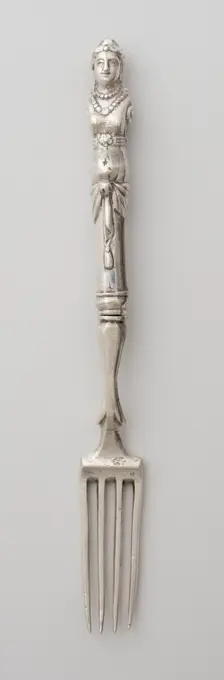
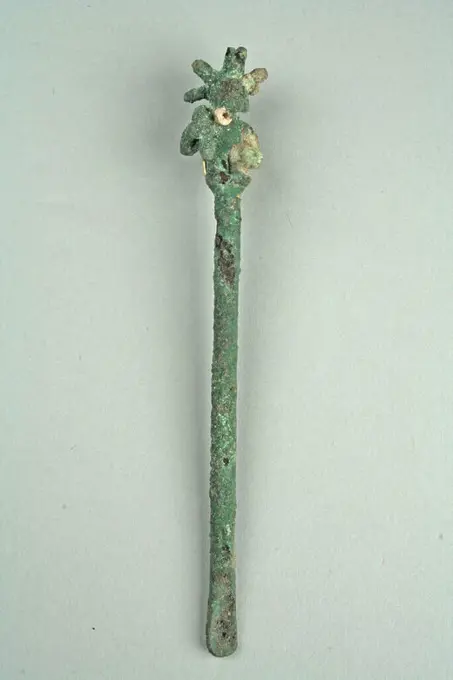
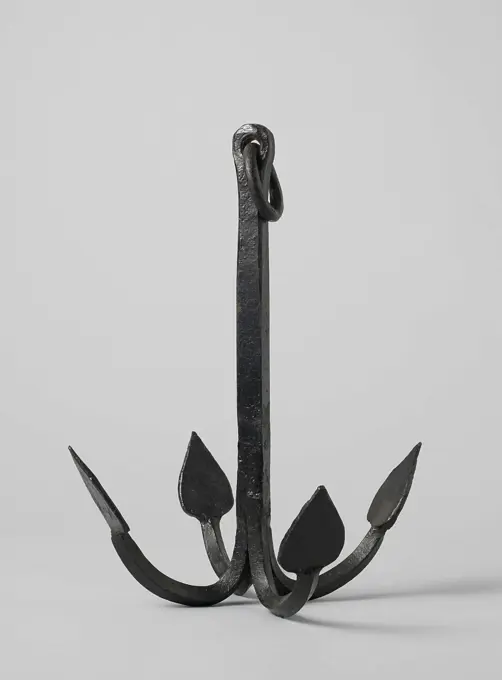
Historical Weaponry Collection

An assortment of historic weaponry artifacts, featuring swords, poleaxes, and other antique tools reflecting craftsmanship and design.

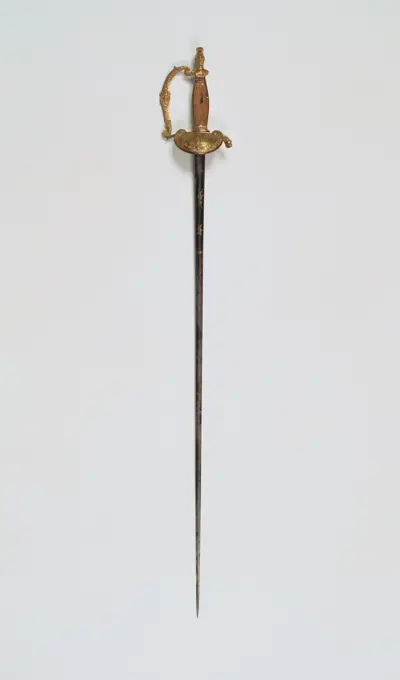
Officiersdegen, anonymous, c. 1400 - c. 1950 sword Degen with copper hilt, movable bump plate and silver grip. The blade is browned with gold -plated ornaments, on one side illegible inscription, on the other side: a Amsterdam. With sheath. From Baron J.W.C. van Ittersum, 2nd battalion hunters. Degen is broken and Schede is missing.  iron (metal). copper (metal). silver (metal). gilding (material) gilding
Officiersdegen, anonymous, c. 1400 - c. 1950 sword Degen with copper hilt, movable bump plate and silver grip. The blade is browned with gold -plated ornaments, on one side illegible inscription, on the other side: a Amsterdam. With sheath. From Baron J.W.C. van Ittersum, 2nd battalion hunters. Degen is broken and Schede is missing. iron (metal). copper (metal). silver (metal). gilding (material) gilding
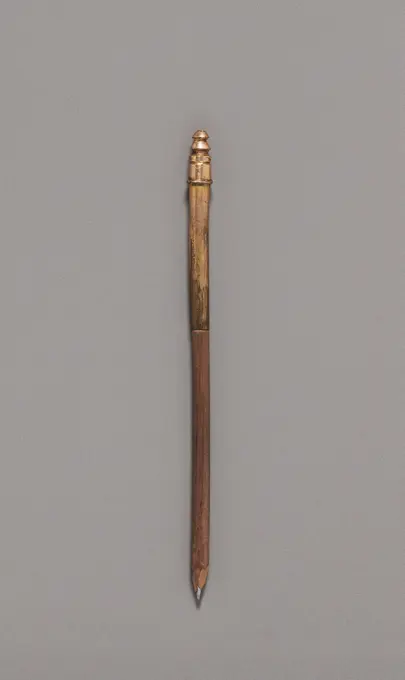
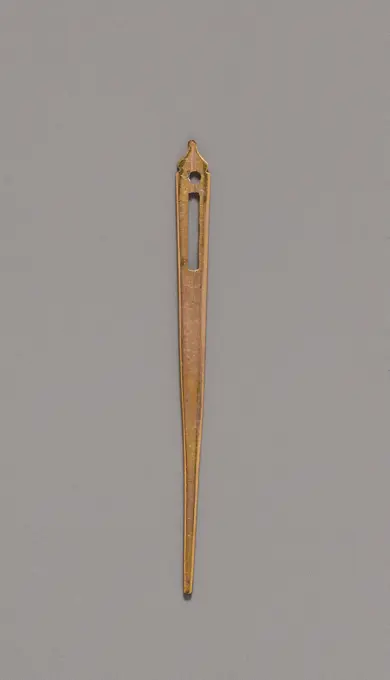
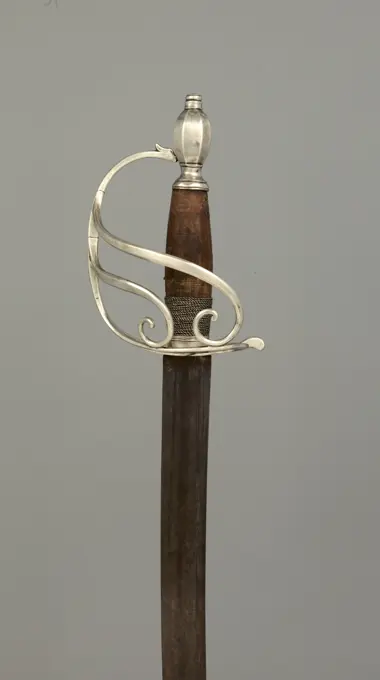
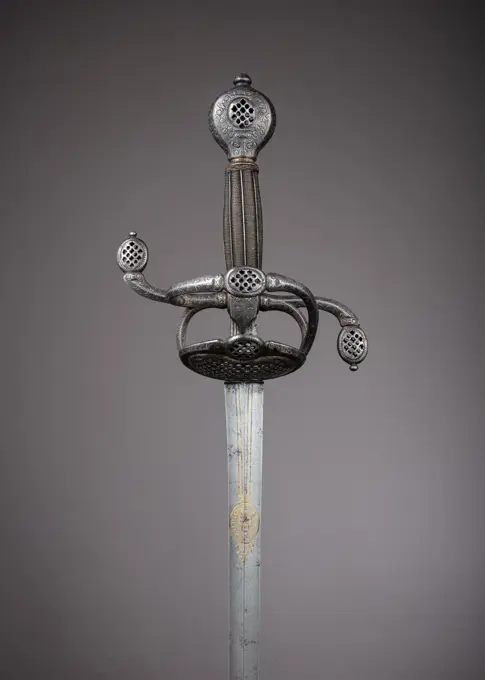
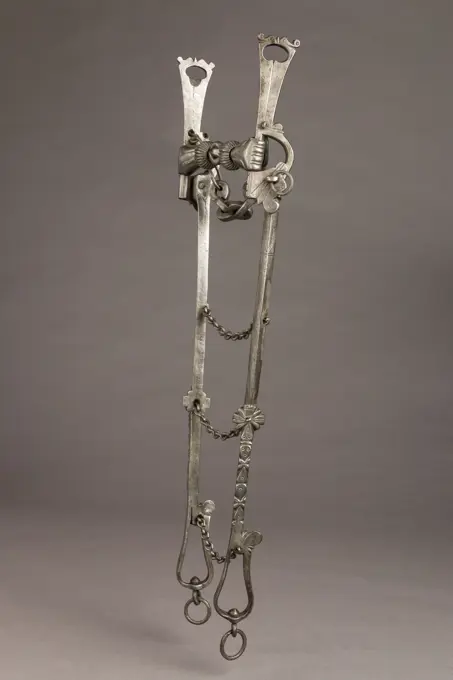
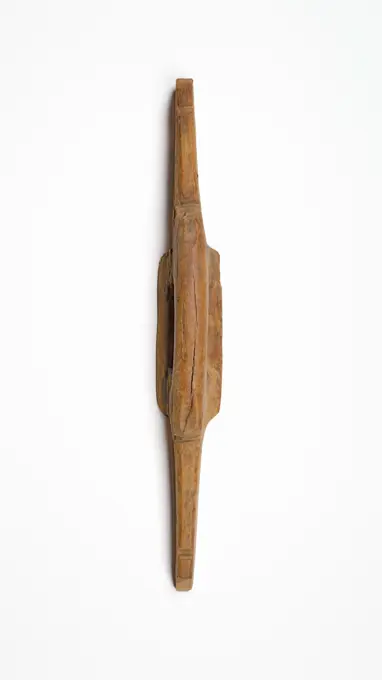
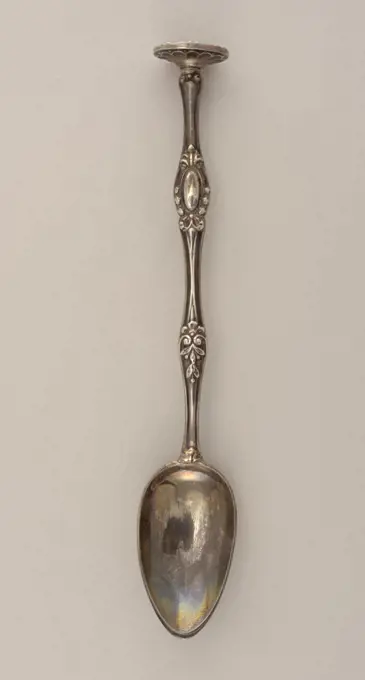
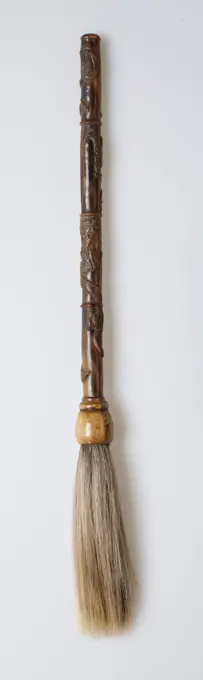
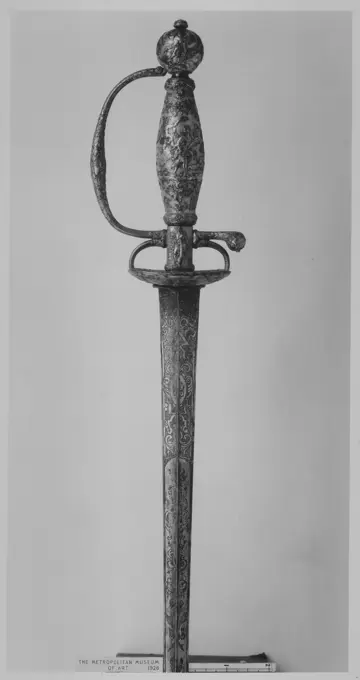
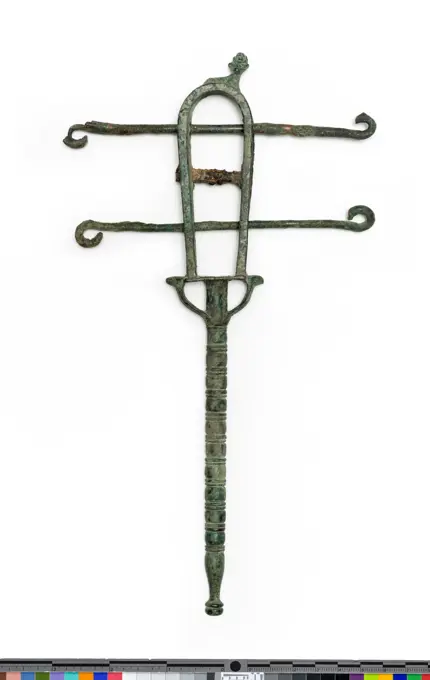
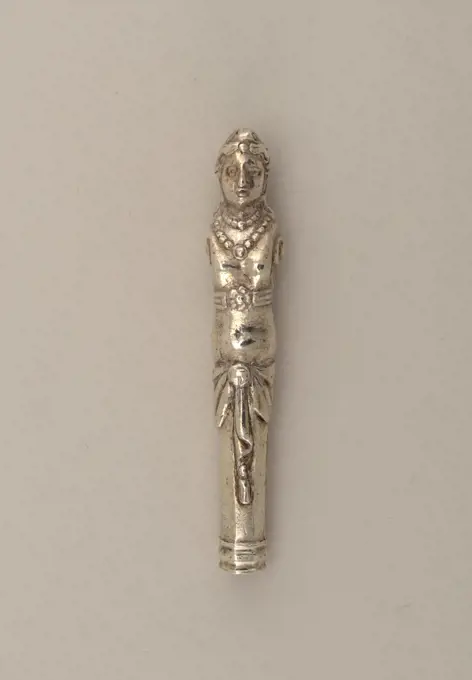
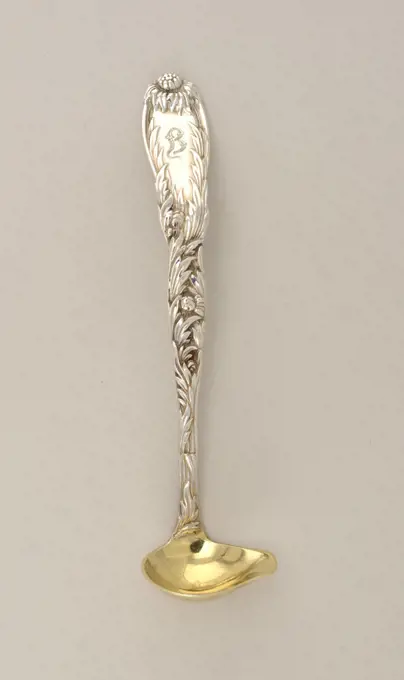
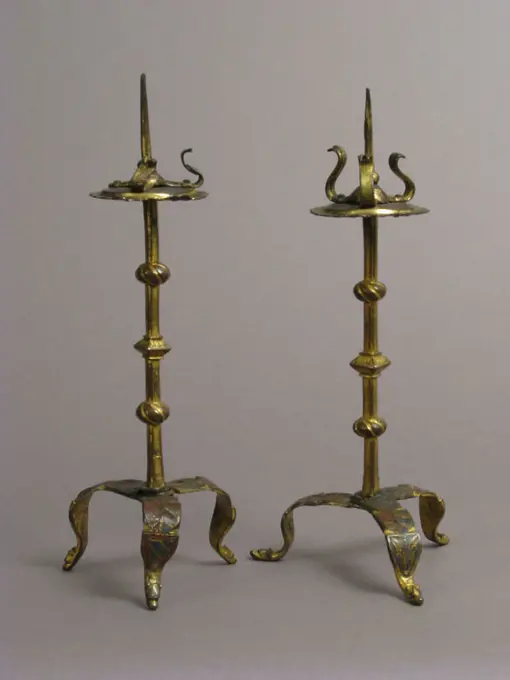
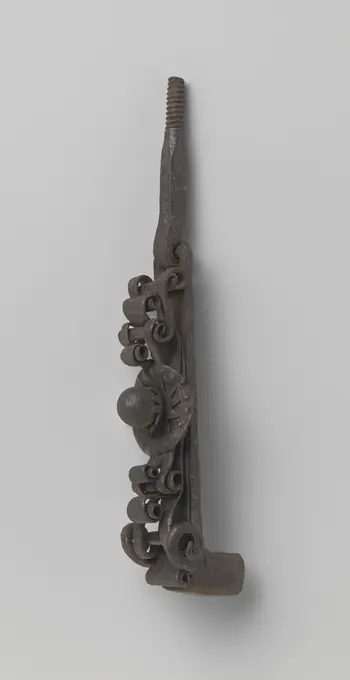
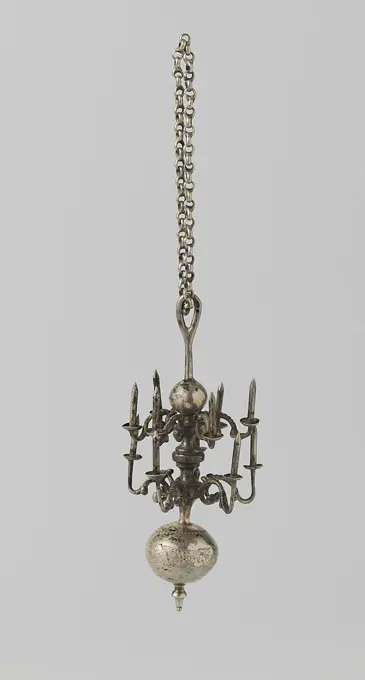
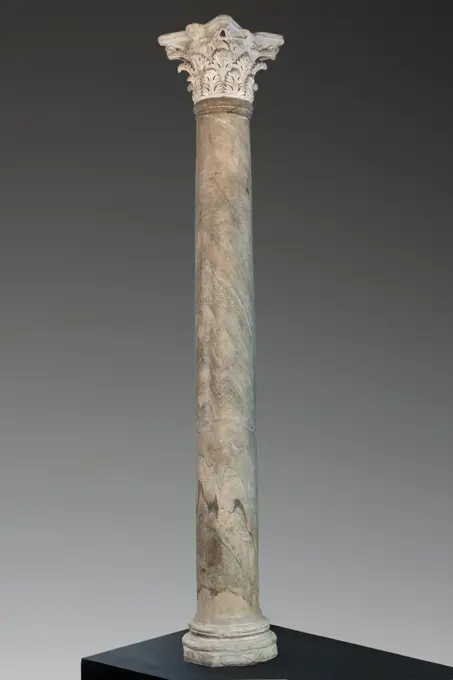
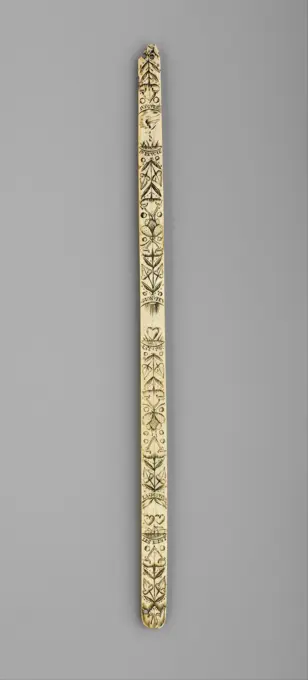
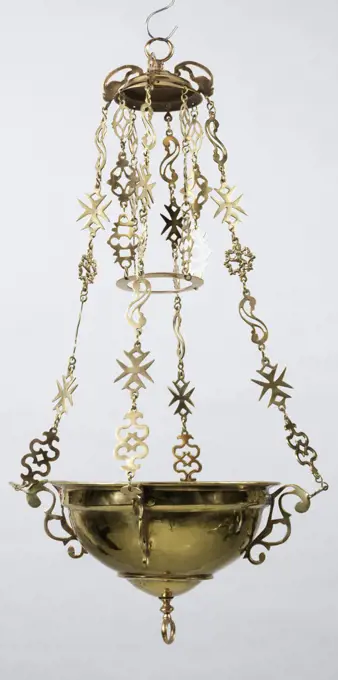
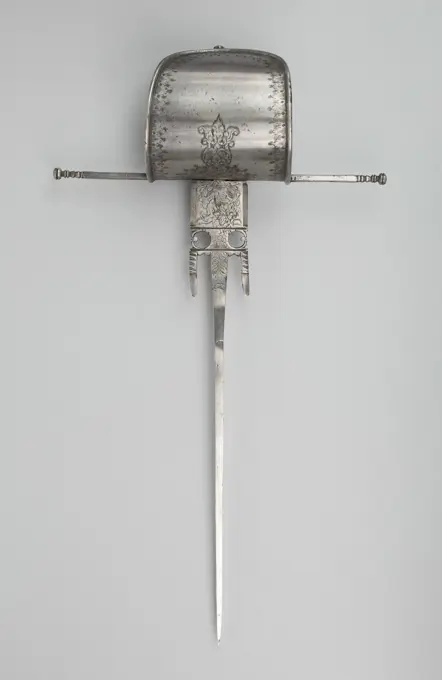
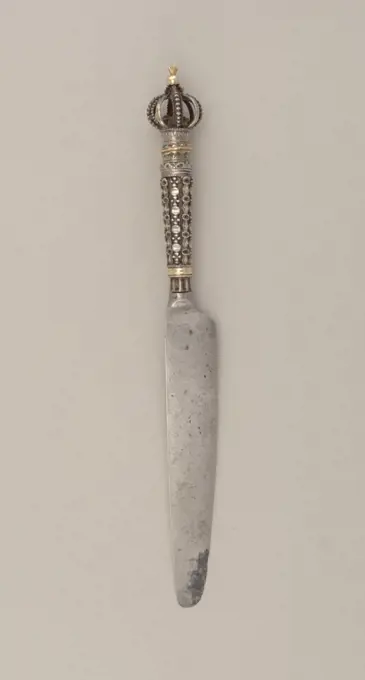
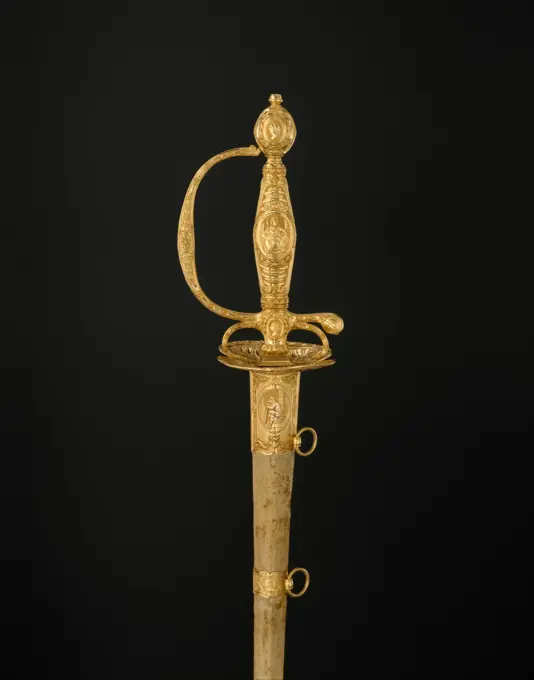
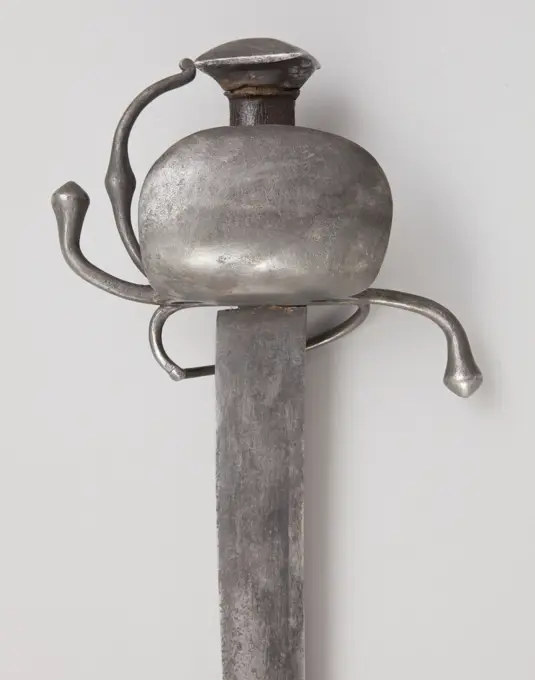
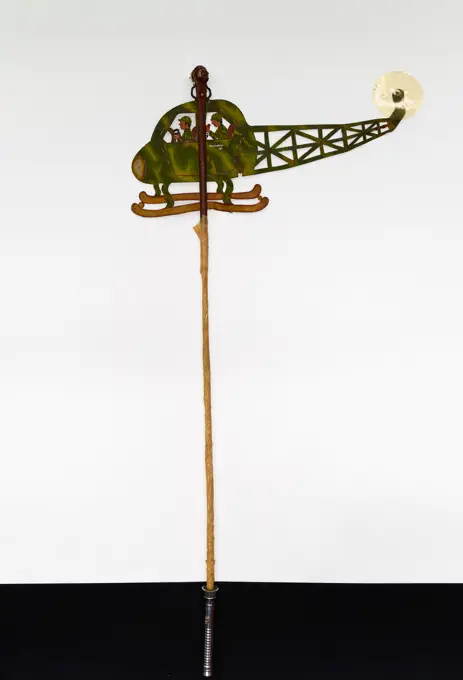
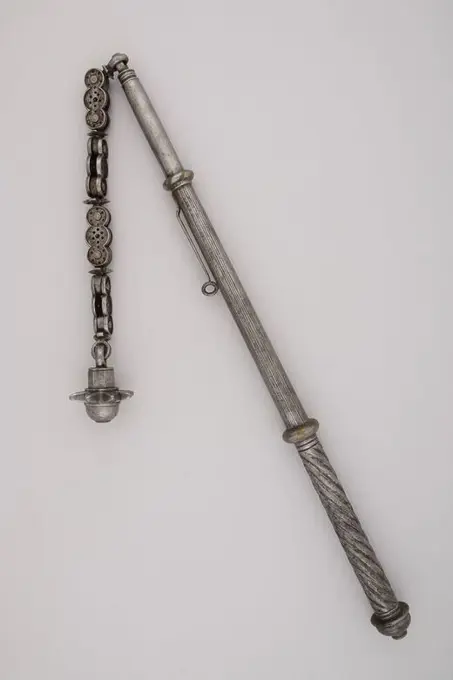
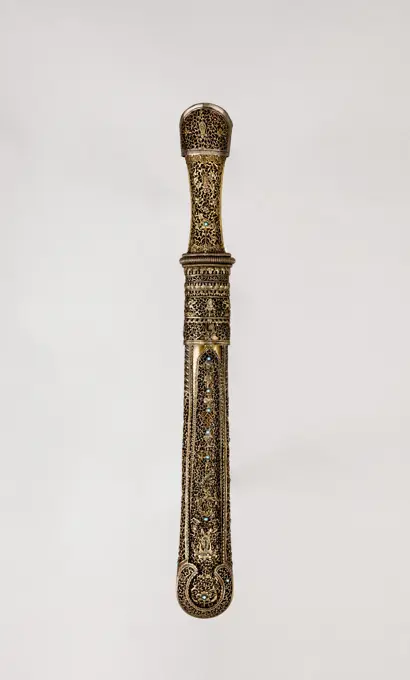
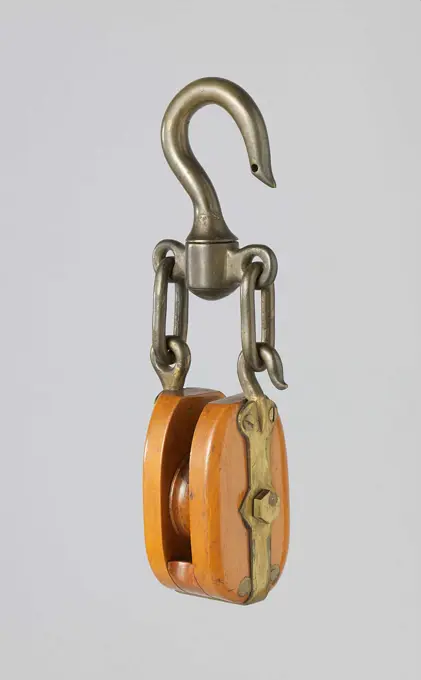
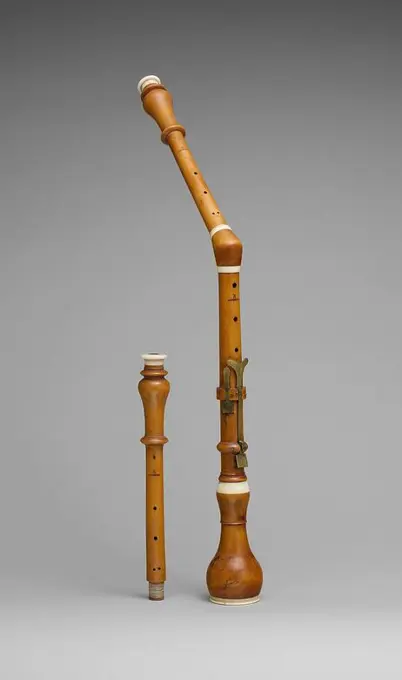
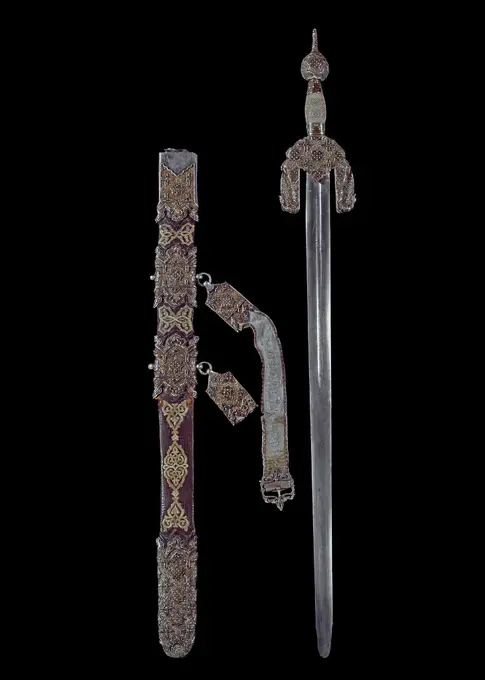
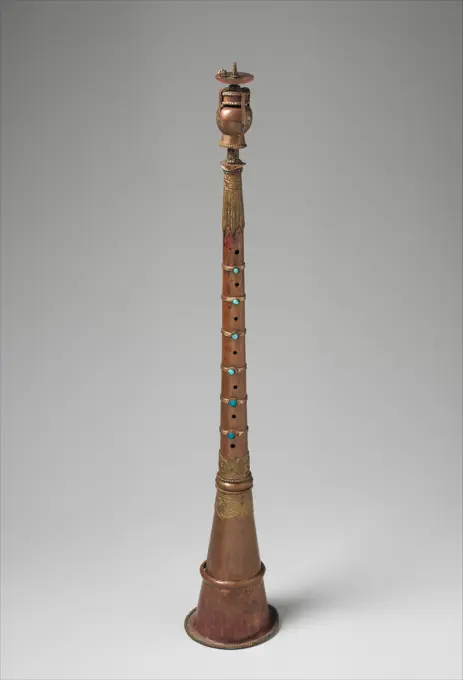
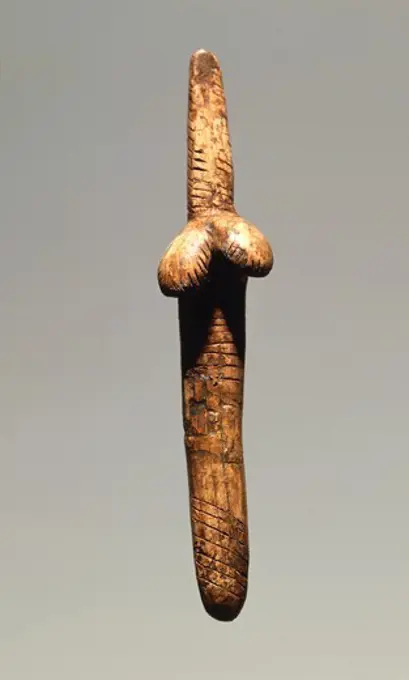
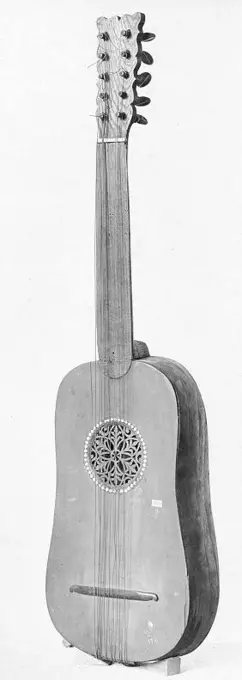
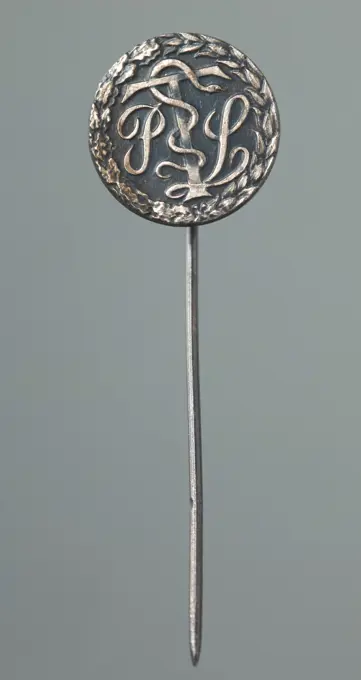
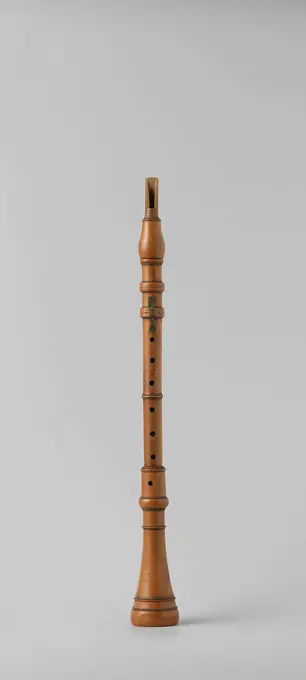
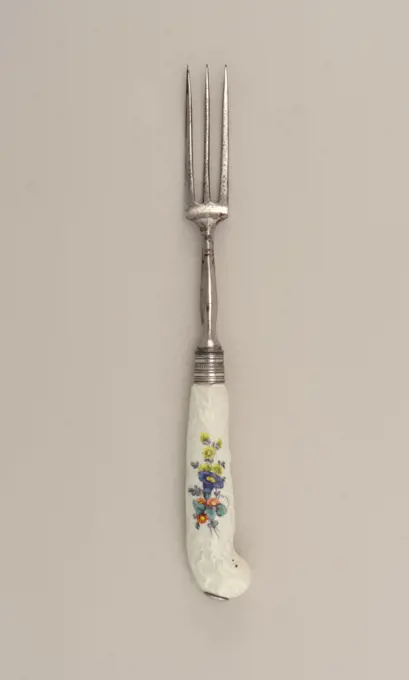
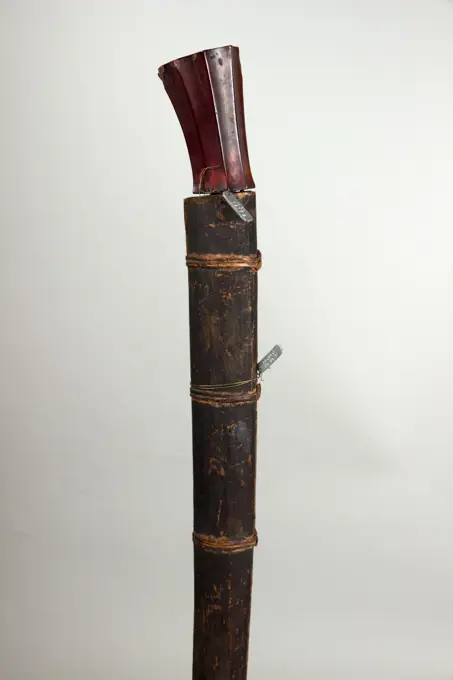
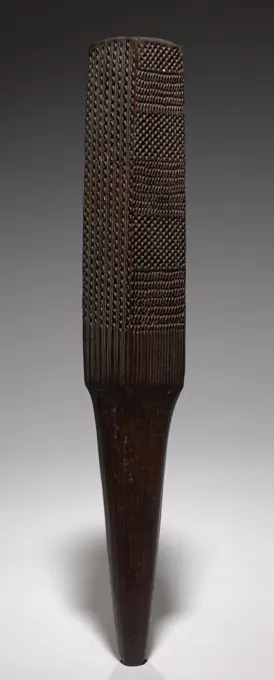
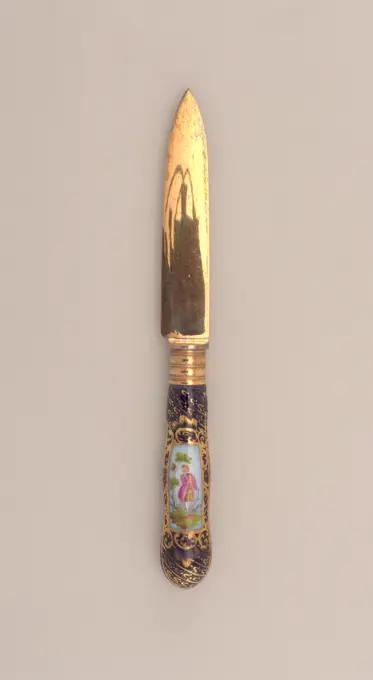
Officiersdegen, anonymous, c. 1400 - c. 1950 sword Degen with copper hilt, movable bump plate and silver grip. The blade is browned with gold -plated ornaments, on one side illegible inscription, on the other side: a Amsterdam. With sheath. From Baron J.W.C. van Ittersum, 2nd battalion hunters. Degen is broken and Schede is missing.  iron (metal). copper (metal). silver (metal). gilding (material) gildingPoleax Made 1450-1530 Italy. The poleaxóso named whether it has an ax- or hammerheadówas designed to smash, break, or pierce through armor. It could be mounted either with a long or short staff. It was used in infantry battle, knightly tournaments, and judicial combat. The sharp hook, pronged hammerhead, and point on this poleax suggest it was intended for lethal purposes.. Steel and oak .Pencil, c. 1770. England, 18th century. Luxurious personal objects were an essential part of a privileged wardrobe during the 1700s and early 1800s, emphasizing their owners refinement and wealth. Especially popular were étuis, small ornamented cases containing miniature sewing, writing, or grooming implements that hung at a womans waist from an ornate clasp, known as a chatelaine. Despite its glittering surface, this small expensive set disguised a system based on the labor and suffering of enslaved or indentured people, whether in gold and stone mines or the shop where it was made.Needle, c. 1770. England, 18th century. Luxurious personal objects were an essential part of a privileged wardrobe during the 1700s and early 1800s, emphasizing their owners refinement and wealth. Especially popular were étuis, small ornamented cases containing miniature sewing, writing, or grooming implements that hung at a womans waist from an ornate clasp, known as a chatelaine. Despite its glittering surface, this small expensive set disguised a system based on the labor and suffering of enslaved or indentured people, whether in gold and stone mines or the shop where it was made.Spear 18th-19th century Bornean. Spear 30783Smallsword and Scabbard Made 1775-1795 England. In the late 18th century brilliant-cut steel beads became highly fashionable. The style, which may have originated in England, quickly spread to the French and Russian courts. These beads were set into walking sticks, buckles, buttons, and hilts like this fine example made by Thomas Prosser, an eminent cutler in Bloomsbury, London.The decorations added a bedazzling effect as flickering candlelight reflected off the hilt in dimly lit rooms. Caricatures from the period lampoon this flashy style by showing a lady overcome by the bright light emitting from a gentlemanís cut-steel accessories.. Steel, two gold alloys, gilding, brass, parchment, and wood . Thomas Prosser (Craftsperson)Cavalry Officer's Saber ca. 1793-95 Hilt by Parry & Musgrave American This saber is exceptional among eighteenth-century American silver-hilted examples for the fact that it is constructed with a basket-hilt. The design for the hilt is likely to have been derived from British prototypes as the knuckleguard with scrolled side-bars is related in conception to the hilts of some eighteenth-century British sabers, including a silver-hilted officers spadroon made in London ca. 1744-45, which is preserved in the Royal Armouries, Leeds (inv. IX.2187); a saber, of ca. 1775-85, in the Royal Collection at Windsor Castle; and a 1788 pattern Royal Regiment of Horse Guard saber, of ca. 1788, in Brown University, Rhode Island. The olive shape of the pommel is equally unconventional and may similarly reflect British influence although the comprable pommels of British sabers are never facetted.In addition to its typological singularities, the hilt of this saber is remarkable for the fact that it can bRapier ca. 1630-40 hilt, Dutch or Flemish; blade, German The rapier was the principal civilian sidearm throughout the sixteenth and seventeenth centuries. Designed for cut-and-thrust fencing of progressively complex techniques, the rapier is characterized by a double-edged blade with an acute point and an elaborate guard for the hand. The guards, usually of iron or steel, were subject to a variety of embellishment. They were engraved, chiseled, gilded, damascened, and encrusted in gold and silver in keeping with fashionable styles. Unless otherwise noted, the materials, attributions, and dating given here refer to the hilts. Rapier blades, invariably of steel, bear a variety of makers marks denoting their origin in the two principal centers of blademaking, Toledo in Spain and Solingen in Germany.. Rapier. hilt, Dutch or Flemish; blade, German. ca. 1630-40. Steel, iron wire, wood. SwordsCeremonial Arrowhead 1500-1600 Italy. Steel, gilding .Sword, Before 1916. Philippines. overall: 70.2 cm (27 5/8 in.); blade: 56.9 cm (22 3/8 in.).Curb Bit 17th century German This bit was used for the training of young horses and starting them with the curb bit. Despite their impressive aspect, the straight elongated shanks were in fact thought to be more gentle on the horse, because of the longer reaction time in their leverage effect and the fact that they were stopped by the horse's chest at some point. Curb bits were also used with a very light hand, the well-trained horses responding by anticipation to the slightest move of the reins. The scatches, (flattened triangular elements composing this mouthpiece), were slightly stronger in their effect and more resistant than the traditional conical canons also used at the time. The banquets, the parts of the cheekpieces to which the mouthpiece is attached, can be opened for switch out the mouthpiece, a feature particularly appreciated on dressage bits in Germany.At the beginning of the training, this bit would have been combined with a cavesson, a rigid noseband, often made of iroShield handle ca. 2124-1504 B.C. Middle Kingdom-Early New Kingdom Found in the debris of Tomb MMA 808, this is the handle from a wooden shield. It was originally attached to the shield by a set of holes. The ends were later cut off, and notches cut to replace the holes.. Shield handle. ca. 2124-1504 B.C.. Wood. Middle Kingdom-Early New Kingdom. From Egypt, Upper Egypt, Thebes, Sheikh Abd el-Qurna, Tomb of Sebeknakht (MMA 808), MMA excavations, 1913-14. Dynasty 11-18Spoon, silver, Oval bowl, the shaped stem embossed with berried sprig at mid-stem and ribbon-tied, bell flower surrounded oval cartouche above, with oval crusher, the underside chased with gadroons., France, 19th century, cutlery, Decorative Arts, SpoonBoar Spear 16th century German. Boar Spear 27058Calligraphy brush, late 19th century, 11 × 1 3/16 × 1 3/16 in. (27.94 × 3.02 × 3.02 cm), Stone, hair, China, 19th century, In Chinese literati culture, the brush, a writing implement, is known as one of the 'four treasures of the study' along with the inkstick, inkstone, and paper. Brush handles are commonly constructed from bamboo, but some brushes have handles of sandalwood, jade, carved bone or ivory, and other precious materials as demonstrated by these examples. During late imperial times, artists catered to the tastes of gentlemen collectors and elaborated brushes with motifs derived from folklore, legends, superstitious beliefs as well as religious subjects from Confucianism, Buddhism, and Daoism.Spoon (France); Made by Phillipe Berthier; silver; L x W x D: 19.1 x 3.2 x 2.2 cm (7 1/2 x 1 1/4 x 7/8 in.)Calligraphy brush, late 19th century, 15 × 1 × 1 in. (38.1 × 2.54 × 2.54 cm), Horn, horse hair, China, 19th century, In Chinese literati culture, the brush, a writing implement, is known as one of the 'four treasures of the study' along with the inkstick, inkstone, and paper. Brush handles are commonly constructed from bamboo, but some brushes have handles of sandalwood, jade, carved bone or ivory, and other precious materials as demonstrated by these examples. During late imperial times, artists catered to the tastes of gentlemen collectors and elaborated brushes with motifs derived from folklore, legends, superstitious beliefs as well as religious subjects from Confucianism, Buddhism, and Daoism.Case (probably Italy); leather, silk; L x W: 22.6 x 4.9 cm (8 7/8 x 1 15/16 in.); The Robert L. Metzenberg Collection, gift of Eleanor L. Metzenberg; 1985-103-254-aDoor Pull 15th-16th century European. Door Pull. European. 15th-16th century. Iron. Metalwork-IronEnglish horn, Guillaume Triébert, c. 1830 English horn (or althobo) van Esdoornhout () Excited with black leather. Eight brass valves. The third gap is double. Two voice holes in the cup. Marked on all three parts: Barbican Tower with 3 tilting / Triebert / A Paris. The upper and lower part of each part is decorated with a golden plant motif. Paris maple (wood). leather. copper (metal). brass (alloy) English horn (or althobo) van Esdoornhout () Excited with black leather. Eight brass valves. The third gap is double. Two voice holes in the cup. Marked on all three parts: Barbican Tower with 3 tilting / Triebert / A Paris. The upper and lower part of each part is decorated with a golden plant motif. Paris maple (wood). leather. copper (metal). brass (alloy)Boiler, Anonymous, 1700 - 1800 A forged iron octagonal needle tube with screw -on lid decorated with a leaf ornament. England (possibly) iron (metal) forging A forged iron octagonal needle tube with screw -on lid decorated with a leaf ornament. England (possibly) iron (metal) forgingSmallsword ca. 1730-35 French By the early seventeenth century, the rapier, a long slender thrusting sword, began to dominate as the gentlemans weapon of choice. During the course of the century, however, as civilian fencing techniques became more specialized and refined, the rapier developed into a lighter, trimmed-down weapon known by about 1700 as the smallsword. Smallswords, often richly decorated, remained an integral part of a gentlemans wardrobe until the wearing of swords in civilian settings went out of fashion at the end of the eighteenth century, at which time pistols were replacing swords as arms most frequently used in personal duels. The majority of smallsword hilts are made of silver or steel, but many also employ a wide variety of luxurious materials, such as gold, porcelain, and enamel. At their best, smallswords combine the crafts of swordsmith, cutler, and jeweler to create an elegant weapon that was also a wearable work of art.. Smallsword 22927Pin with Camel. Northern Afghanistan, 2000-1500 B.C.. Jewelry and Adornments; pins. BronzeSistrum with Recumbant Cow. Egypt, 664-30 BCE. Tools and Equipment. BronzeWindow cornice. unknown, authorDegen with sheath from J.M. Foot, anonymous, c. 1800 - c. 1855 sword Degen with leather sheath. Hilt, fire gilt and ornamented. The hilt consists of a button, front bracket, half parent bar and two bumps, one of which is foldable. The wooden handle is partly covered with plate iron. With iron blew, fire galvany, etched blade with trench. Iron sheath with fire-gaunted copper top and middle tire with carrying rings and ditto button. West-Europa Kling: Iron (Metal). hilt: copper (metal). Handle: Silver (Metal). Schede: Leather engraving  West-EuropaDagger Indian, Mughal 18th century View more. Dagger. Indian, Mughal. 18th century. Steel, jade. DaggersHandle, Silver, Handle in the shape of female caryatids, handle can be screwed on implement, probably Italy, late 17th century, cutlery, Decorative Arts, HandleChrysanthemum, Tiffany & Company, American, established 1853, Silver, Deep round bowl, gilded, on angled handle; relief-decorated with design in Chrysanthemum pattern, with engraved 'B' in reserve., 1880-91, cutlery, Decorative Arts, Mustard spoon, Mustard spoonSouvenir spoon European late 19th centuryYuping Xiao. Culture: Chinese. Dimensions: Height: 25 9/16 in. (65 cm)Diameter: 9/16 in. (1.4 cm). Maker: Zhishan Zheng (Chinese, 1814-1892). Date: ca. 1890.The Yuping xiao, an end-blown flute from Guizhou province (south-west China), provides a softer, more refined tone than more robust sounding versions used in ensembles. These qualities, associated with scholar's instruments, make it suitable for solo playing or for duets with the qin (fretless long zither). Some xiao like this one have poems inscribed on them. Museum: Metropolitan Museum of Art, New York, USA.Flute, c. 500-200 BC. Peru, Northern Highlands, Chavín de Huantar(), Chavín style (1000-200 BC). Hammered and cut gold; overall: 14 cm (5 1/2 in.).Photo tandard, 1870 - 1900 frame   metalSpoon (Italy); bronze; L x W: 15.4 x 4 cm (6 1/16 x 1 9/16 in.); The Robert L. Metzenberg Collection, gift of Eleanor L. Metzenberg; 1985-103-28Oboe in C before 1735 Jacob Denner German Boxwood, ivory, three brass keys. Denner (1681-1735) is considered to be one of the best oboe makers of his time.. Oboe in C 502022One of a Pair of Traveling Candlesticks. Culture: French. Dimensions: Overall: 10 7/8 x 4 3/8 in. (27.7 x 11.1 cm). Date: ca. 1290-1310.The legs of the candlesticks fold, allowing for flat storage of the object. Seven different coats of arms are represented, but some of them are inaccurately drawn, suggesting they were chosen purely as design motifs rather than armorial bearings. Museum: Metropolitan Museum of Art, New York, USA.Sitar late 19th century Indian Six-stringed sitar with gourd body and no sympathetic strings. Originally a gourd providing additional balance but little resonance was attached near the top of the hollow neck.. Sitar. Indian. late 19th century. Gourd, wood, ivory, metal. India. Chordophone-Lute-plucked-frettedDoorklopper.a by knocker.Bone pin 1st-4th century A.D. Roman, Cypriot The busts were worked separately and attached. Such ornate pins were probably used as hair ornaments.. Bone pin 244086Oboe, Gerhard I Hanken & Son, c. 1850 Hobo of Palmhout with ivory and brass rings and twelve brass valves (1 of which is missing). The third gap is double. The oboe is in an original briefcase. Rolling mechanism at C-Cis. Marked on the upper part and on the cup: flower / G. Hanken / Rotterdam / flower. The upper part is marked with a flower. The middle part is marked with a flower above the fourth hole and one between the fourth and fifth gap. Rotterdam boxwood. ivory. brass (alloy) Hobo of Palmhout with ivory and brass rings and twelve brass valves (1 of which is missing). The third gap is double. The oboe is in an original briefcase. Rolling mechanism at C-Cis. Marked on the upper part and on the cup: flower / G. Hanken / Rotterdam / flower. The upper part is marked with a flower. The middle part is marked with a flower above the fourth hole and one between the fourth and fifth gap. Rotterdam boxwood. ivory. brass (alloy)Bone Awl, late 1800s. America, Native North American, Gaigwu (Kiowa), late 19th century. Bone; overall: 11.4 cm (4 1/2 in.).Crown with two rows of six arms on top of each other attached to a profiled strain. The trunk runs down in a large sphere with an engraved floral tire. The top of the trunk has a wearing eye through which a chain hangs. An arm of the crown has broken down. The crown has been marked: Mt. = C. van der Aa and a written letter J.Column with the Corinthian capital;  1. PO. II century (101-00-00-150-00-00);Polish excavations in Tell ATRIB (Egypt)Bronze incense burner ca. 300 B.C. Etruscan, Faliscan The incense burner has three equine legs, a diagonally articulated shaft originally with a small animal running up it, and a square element at the top with four birds surrounding the container for the grains of incense. It belongs to a group of pieces made in the Faliscan area of southern Etruria.. Bronze incense burner 257529Busk 17th century French The weeping eye reads, "until I see you again." The sun shining on a heart declares, "my love is pure." The vignette of two hearts over a house is inscribed, "love joins them.". Busk 84187Altar lamp, Brass, Prefericulum shaped, and suspended by four chains from an inverted bowl. The chains return, and support a round ring which hangs, centered to the main body of the lamp and about ten inches above it. The main body of the lamp is unadorned save for two fillets, a rolled, splayed rim and a ring which is attached to the lowermost point of the lamp. The inverted bowl is decorated by a torus and surmounted by a ring. Four handles in wrought scroll shapes act as brackets for the four suspension chains. The links of the chains are wrought in forms of bucklers, Maltese crosses (eight-point crosses), clefs, rampant lions, each connected by small eight-shaped links., Italy, 18th century, lighting, Decorative Arts, Altar lampFigure Lime Spoon. Culture: Inca. Dimensions: L. 3 11/16 in. (9.4 cm). Date: 15th-16th century. Museum: Metropolitan Museum of Art, New York, USA.Model of a Dreg. Model of a Dreg.Tassel (Italy); linenParrying Dagger 1690-1710 Spain. Steel, wood, and copper wire .Dagger (Katar) 17th century Indian, Thanjavur; blade, European. Dagger (Katar) 31407Knife, Silver, gold, steel, Tapered straight-sided blade, plain bolster. Handle with fluted joint at blade, surmounted by gold band, raised quatre foil and circle bands arranged lengthwise, silver crown and gold facetted bands on dressed silver; end with hollow crown of eight bands, four beaded, topped with ball-shaped finial with fleur-de-lis in gold., probably Netherlands, late 17th century, cutlery, Decorative Arts, KnifeObelisk 1795-1805 Burslem. Stoneware (basaltware) . Wedgwood Manufactory (Manufacturer)Thymiaterion. UnknownSmallsword with Scabbard hallmarked 1773-74 Master GG French An example of the highest quality Parisian goldsmiths' work, the hilt is decorated with figures of the Classical deities Mars, Minerva, Jupiter, and Hercules, and the personifications of Justice and Prudence.. Smallsword with Scabbard 26557Fork With Attachable Spoon (Netherlands); silverJhr. J.M. de Bosch Kemper, Anonymous, c. 1810 sword Degen with fire gilt copper hilt, Louis XVI style. Button in the form of a female bust with helmet. Ornamented front bracket, including lion heads. A mother -of -pearl plate on partly metal handle. Half pare bar with lion's head. Pump plate with weapon trophy and lion heads. Back: small shot with lion's head. Three -sided glowing and fire guld ingeste blade. Worn by Jhr. J.M. De Bosch Kemper. Netherlands (possibly) Kling: Iron (Metal). hilt: copper (metal). Handle: Mother of Pearl. Handle: Wood (plant material). hundred: Gold (Metal) forging / etching / sawingSinclair saberEVENTAIL. "Diane and Actéon". Watercolor gouache on applied paper on the background of tulle, ivory frame carved, repercussions and painted, pivot rhinestones. Paris, Carnavalet museum. 100087-30 Fashion accessory, EventailShadow Puppet (Wayang Kulit) ofHelicopter.   Maker: Ki Enthus Susmono, Indonesian, 1966-2018Eating spoon -Military Flail. Culture: possibly German. Dimensions: L. 43 5/8 in. (110.8 cm); L. of head and chain 16 1/2 in. (41.9 cm); W. 2 11/16 in. (6.8 cm); Wt. 5 lb. 6 oz. (2438.1 g). Date: possibly 16th century. Museum: Metropolitan Museum of Art, New York, USA.Shaffron (Horse's Head Defense). Culture: probably Iranian. Dimensions: H. 23 7/8 in. (60.6 cm); W. 8 1/4 in. (21 cm). Date: late 15th-early 16th century.Like armored warriors, horses were usually protected by defenses of steel plate, leather, or reinforced textile. Fluted and engraved shaffrons like this were used throughout the Middle East, notably in Iran, Ottoman Turkey, and the Mamluk Empire in Egypt and Syria. This example is inscribed on the forehead "Help from Allah and a speedy victory," a talismanic Qur'anic phrase (61:13) frequently found on armor. Museum: Metropolitan Museum of Art, New York, USA.Base for a Cross 11th century Byzantine. Base for a Cross 466252Double-Ended Cup, 1700-1800. Pinto Collection - Purchased from Edward H Pinto, 1965.. Made in Sweden. This birch burr fluted double cup is Swedish, dating from the 18th century. Burr wood was used for many luxury drinking vessels as not only is it both rare and beautiful, but it is capable of withstanding both dry and damp conditions. The diagonal flutes on this cup mirror the designs found on Swedish silver at this time.Dagger, c. 1750. Northeast India. Brass with gilt grip; overall: 37.2 cm (14 5/8 in.); blade: 23.6 cm (9 5/16 in.).Model of a Snatch Block.Model of a chinnaking block, the house of which is open at the top. The brass attachment comprising the housing ends in an eye on one side and a hook to the other in which links are beaten that connect the house to a rotating hook.Staff, 19th century, 58 5/8 x 6 x 2 3/16 in. (148.91 x 15.24 x 5.56 cm), Wood, iron, natural pigments, Democratic Republic of the Congo, 19th centuryEnglish Horn. Culture: German. Dimensions: Total L.: 63.7 cm (25-1/8 in.). Maker: H. Grenser. Date: before 1807.This boxwood instrument stems from the heyday of theGrenser company, when it maintained a work force of six. The angled version ofthe horn (hence the name cor anglé) is characteristic of German instruments ofthe second half of the eighteenth century. The pitch of the longer uppersection is a' = 430 Hz, the shorter about 440 Hz. Museum: Metropolitan Museum of Art, New York, USA.ESPADA Y VAINA DE BOABDIL O MUHAMMAD V (1459/1528) - ULTIMO REY MORO DE GRANADA. Location: ALCAZAR / MUSEO DEL EJERCITO-COLECCIÓN. Toledo. SPAIN.Rgya-Gling 19th century Tibetan Rgya-gling (shawm) may be used in temple orchestras or may alternate with dung-chens for the morning and evening calls from the monastery roof. Like other Tibetan wind instruments this double-reed example is played in pairs. The reed (not present) fits onto the thin metal tube (staple) atop the ornate metal pirouette (disk) that slips into the small end of the wooden tube. A monk takes the reed completely into his mouth and presses his lips against the disk provided above the pirouette's bulbous assemblage. Double-reed instruments like the European oboe used two reeds that are secured at their bases to produce a loud, penetrating and "nasal" sound. Listen to experts illuminate this artwork's story Listen Play or pause #9362. Rgya-Gling Supported by Bloomberg Philanthropies We're sorry, the transcript for this audio track is not available at this time. We are working to make it available as soon as possible.. Rgya-Gling 502008Prehistory, Czech Republic, Paleolithic. Stylized female figure in bone, cm. 8.7 cm. From Dolni Vestonice.Wheel barometer ca. 1770 John Whitehurst. Wheel barometer 203690Chitarra Battente 19th century Italian. Chitarra Battente 500858Lazio Rieti Rieti Museo del Tesoro del Duomo5. Hutzel, Max 1960-1990 Photos are all of metalwork: crucifixes, chalices and monstrances in most part. Negatives without prints also show some statuary. Owner: Cathedral Object Notes: Hutzel photo campaign date: December 27, 1982. His notes indicate that this is the "Museum of the Processional Cross," however TCI indicates that it is the Museo del Tesoro del Duomo. It is also possible that negatives without prints may belong to the Museo Civico in Rieti. German-born photographer and scholar Max Hutzel (1911-1988) photographed in Italy from the early 1960s until his death. The result of this project, referred to by Hutzel as Foto Arte Minore, is thorough documentation of art historical development in Italy up to the 18th century, including objects of the Etruscans and the Romans, as well as early Medieval, Romanesque, Gothic, Renaissance and Baroque monuments. Images are organized by geographic region in Italy, then by province, city, site cApostle spoon: St. Bartholomew 1592/93 William Cawdell The set (67.166.1-.13) includes a master spoon with a figure of Christ and twelve apostle spoons. Martin Hewitt who made the Saint Andrew spoon had served his apprenticeship under William Cawdell. Both were specialist spoonmakers.. Apostle spoon: St. Bartholomew. British, London. 1592/93. Silver, partly gilded. Metalwork-SilverShuttleKnife and Fork, 1700s. Italy, 18th century. Metal blade, ivory handle; overall: 19.7 cm (7 3/4 in.); blade: 10.9 cm (4 5/16 in.).PTL badge (Polish Medical Society) unknown labelClarinet.Early 18th-century clarinets, of varying materials including boxwood, ivory and ebony, had just two keys; this number soon grew, giving the player more possibilities. By the end of the 18th century the clarinet was used in the orchestra and as a solo instrument, for instance in Mozarts music. This instrument, with two keys, is one of the earliest survivors.Bed leg (one of four) 16th century Italian. Bed leg (one of four). Italian. 16th century. Iron. Metalwork-IronFork with Porcelain Handle, steel, silver, porcelain, Three curved tines, waisted shoulder, and baluster-shaped neck. Banded silver ferrule. Pistol-shaped white porcelain handle, decorated with raised scrollwork and floral sprays on front and back in yellow, blue, red, green, pink and purple. Small silver cap at the end of the handle., Germany, ca. 1765-70, cutlery, Decorative Arts, fork, forkRackChain 15th-16th century European. Chain. European. 15th-16th century. Iron. Metalwork-IronHarley Kempter, Marking Tool, c 1940 Marking ToolScabbard, 19th century. Philippines. overall: 49.3 cm (19 7/16 in.).Fish Fork (USA); Manufactured by Gorham Manufacturing Company (United States); silverModel of a Pile Driver, anonymous, anonymous, c. 1819 demonstration model Simple heit device, almost identical to NG-MC-46. The pile block is caught by scissors and hoisted to the top with a winch, where it is automatically released. Netherlands wood (plant material). brass (alloy). ropeka; Koenigliche Porzellanmanufaktur (Meissen; 1807/14-1918); around 1820 (1815-00-00-1825-00-00);Spear with Three Points, Zhou dynasty (1045-256 BC). China, Zhou dynasty (c. 1046-256 BC). Bronze; overall: 2.3 cm (7/8 in.).'Assyrian Head' pattern, Meriden Silver Plate Company, 1869-1898, silver plate, Handle with scrolled foliate ornament and antique style crowned mask at tip; smooth unadorned bowl., 1885-86, cutlery, Decorative Arts, Spoon, SpoonSpoon with oval container and stem crowned with stadholder Willem III, Anonymous, 1653 The oval container is connected to the cast steel by means of a faceted needle, of which the lower, triangular, somewhat motif -built part encloses the upper, quadrant, widening part. The latter is placed overhoeks and is crowned by a four -sided Ionian capital, on which the harnessed Stadholder Willem II stands with commandostaf and long sword. Amsterdam silver (metal) gilding The oval container is connected to the cast steel by means of a faceted needle, of which the lower, triangular, somewhat motif -built part encloses the upper, quadrant, widening part. The latter is placed overhoeks and is crowned by a four -sided Ionian capital, on which the harnessed Stadholder Willem II stands with commandostaf and long sword. Amsterdam silver (metal) gildingSword with Scabbard 16th-19th century Batak. Sword with Scabbard. Batak. 16th-19th century. Ivory. Sumatra. SwordsCandlestandTapa Cloth Beater (l'e kuku), before 1930. Polynesia, Hawaii, 20th century. Wood; overall: 38.7 cm (15 1/4 in.). To make tapa, a decorated bark cloth, Hawaiian women used the four-sided beater to pound the inner bark of the paper mulberry tree, softened by a week of soaking in sea water. The cloth was beaten in several stages, starting with the most coarsely grooved side of the mallet and gradually reaching the finest grooved side. Although many Polynesian groups produced tapa cloth, only Hawaiian tapa cloth beaters were incised with a variety of "watermark" patterns. The prepared cloth was decorated with overlaying, cord snapping, free-hand painting, and printing techniques.Helmet. Culture: Indian, Mughal. Dimensions: H. including mail 22 3/4 in. (57.8 cm); H. including nasal 10 1/4 in. (26 cm); H. excluding mail and nasal 8 1/4 in. (21 cm); W. 7 3/4 in. (19.7 cm); D. 8 3/4 in. (22.2 cm); Wt. 3 lb. 8.2 oz. (1593.2 g). Date: 18th century. Museum: Metropolitan Museum of Art, New York, USA.Penannular Brooch. Ireland, 17th-18th century. Jewelry and Adornments; brooches. Bronze, castOrnamental fence of the De Voorst house, Daniël Marot (I), c. 1675 - c. 1700 Wrought iron decorative fence of the entry fence of Huize De Voorst. Warnsveld iron (metal) forging / gilding  House De Voorst Wrought iron decorative fence of the entry fence of Huize De Voorst. Warnsveld iron (metal) forging / gilding  House De VoorstArrow Point, 1700s. Japan, Edo period (1615-1868). Steel; overall: 18.4 cm (7 1/4 in.); head: 5.6 cm (2 3/16 in.).Knife (possibly England); silver, gold, porcelain; L x W: 18.3 x 1.4 cm (7 3/16 x 9/16 in.); The Robert L. Metzenberg Collection, gift of Eleanor L. Metzenberg; 1985-103-219