Historical Weaponry Collection

An assortment of historic weaponry artifacts, featuring swords, poleaxes, and other antique tools reflecting craftsmanship and design.

Officiersdegen, anonymous, c. 1400 - c. 1950 sword Degen with copper hilt, movable bump plate and silver grip. The blade is browned with gold -plated ornaments, on one side illegible inscription, on the other side: a Amsterdam. With sheath. From Baron J.W.C. van Ittersum, 2nd battalion hunters. Degen is broken and Schede is missing.  iron (metal). copper (metal). silver (metal). gilding (material) gilding
Officiersdegen, anonymous, c. 1400 - c. 1950 sword Degen with copper hilt, movable bump plate and silver grip. The blade is browned with gold -plated ornaments, on one side illegible inscription, on the other side: a Amsterdam. With sheath. From Baron J.W.C. van Ittersum, 2nd battalion hunters. Degen is broken and Schede is missing. iron (metal). copper (metal). silver (metal). gilding (material) gilding
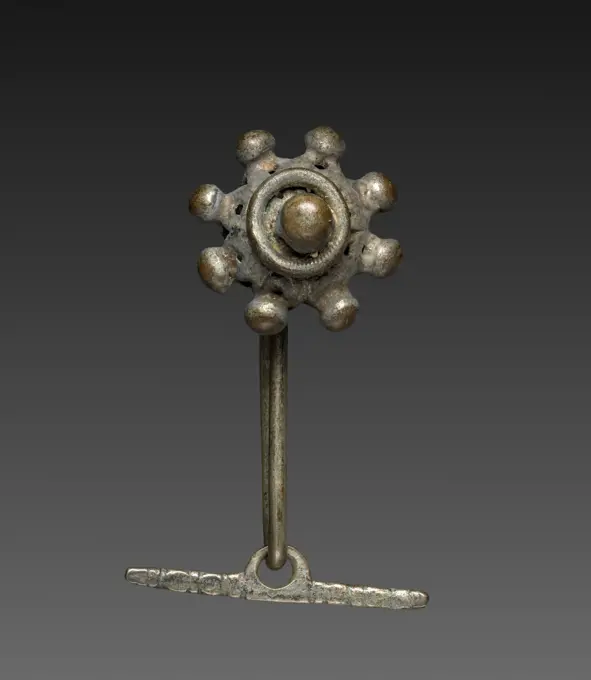
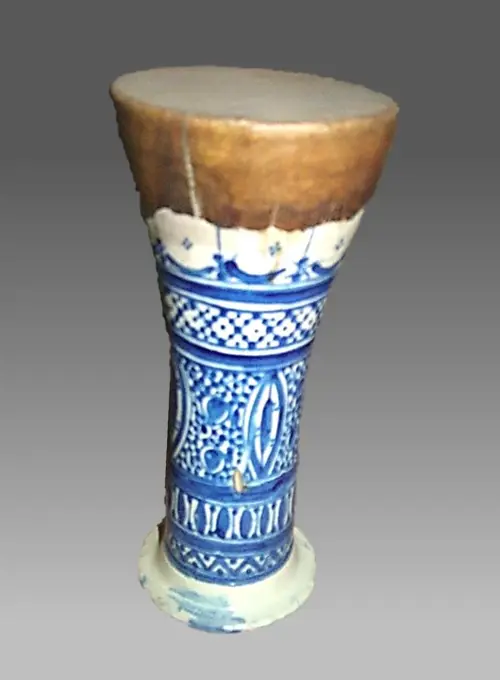
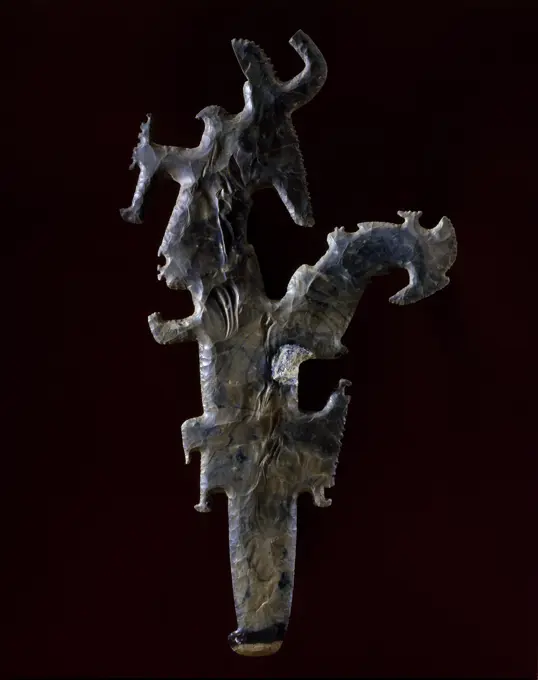
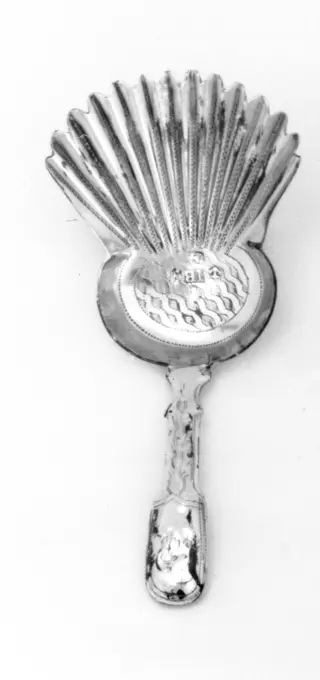
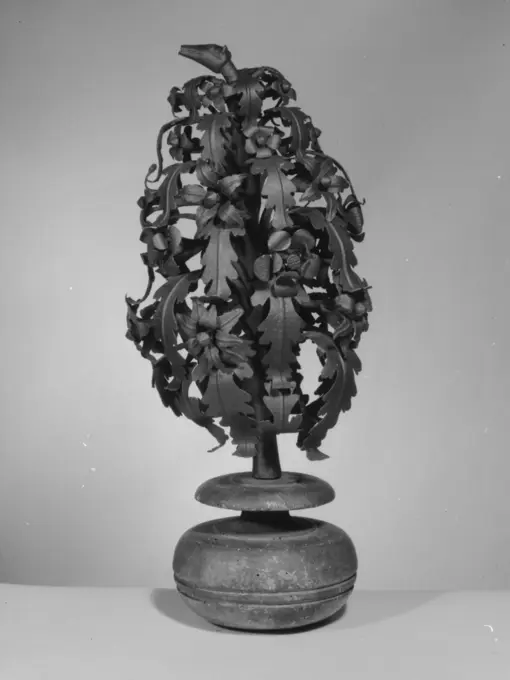
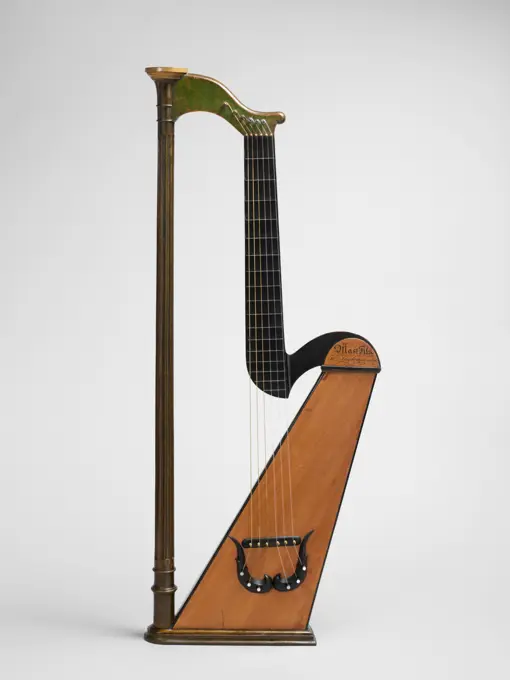
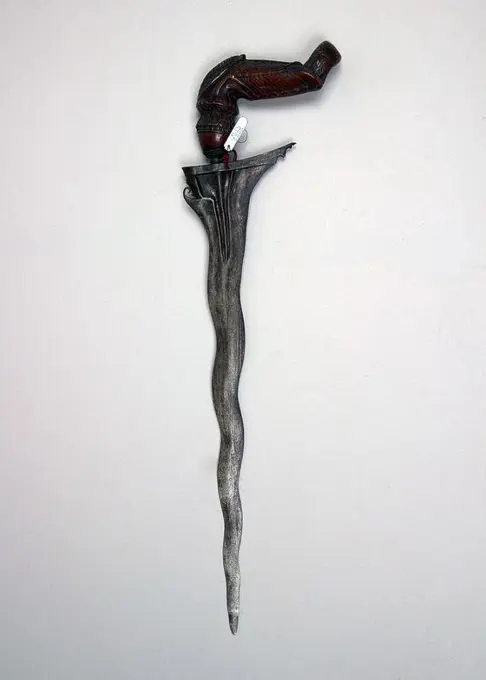
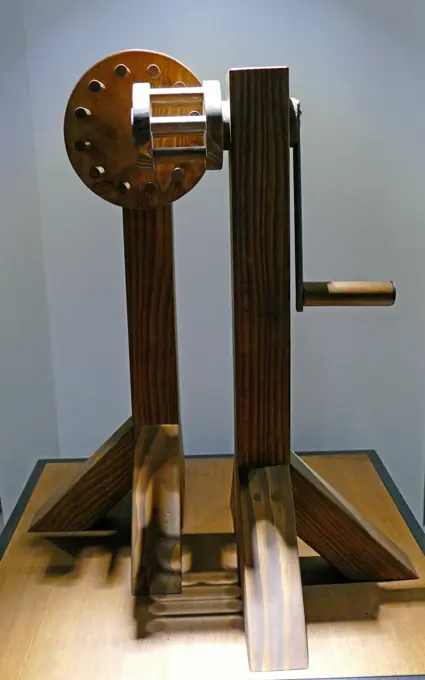
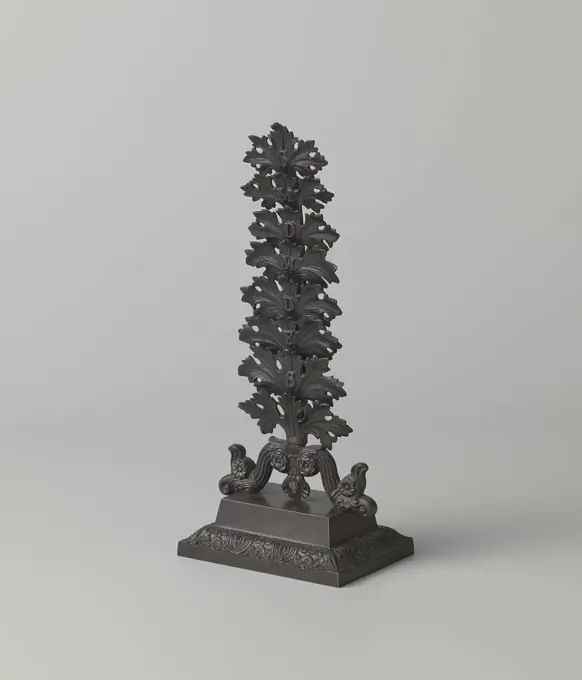
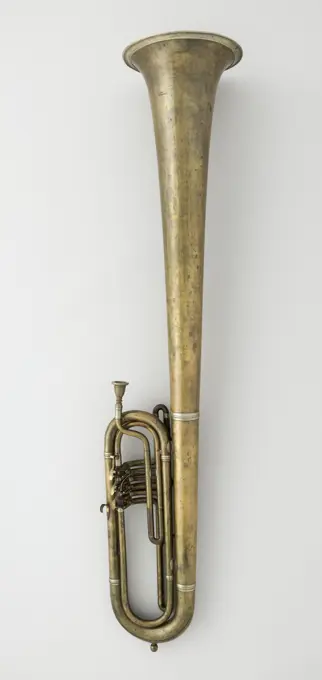
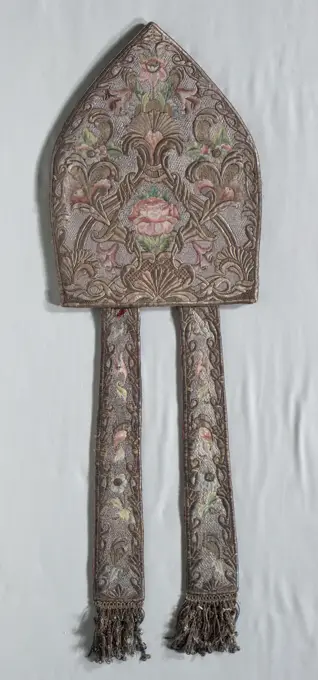
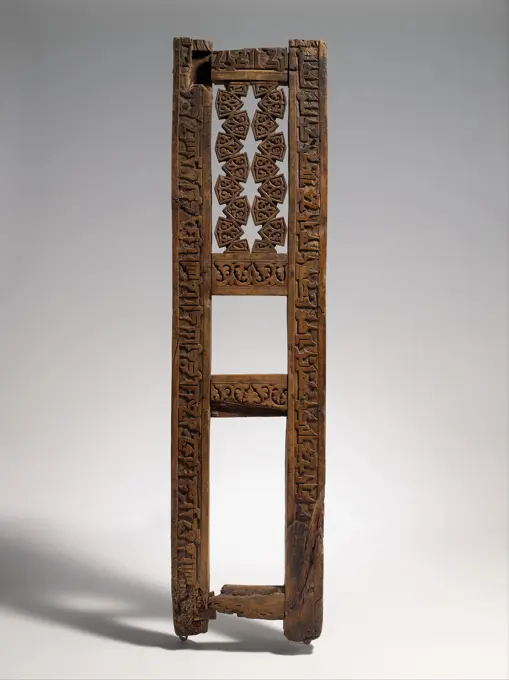
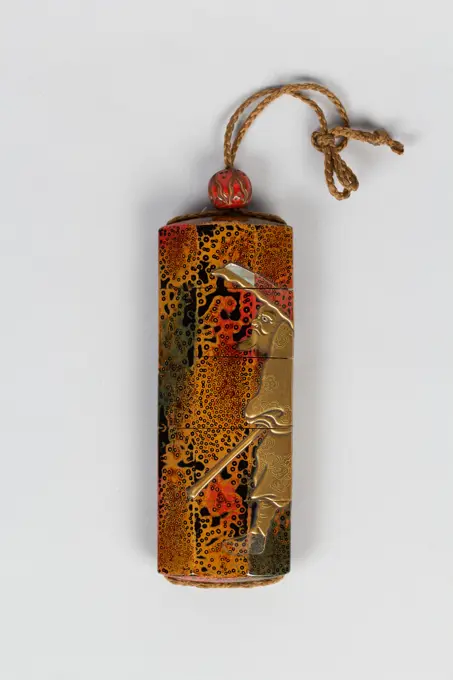
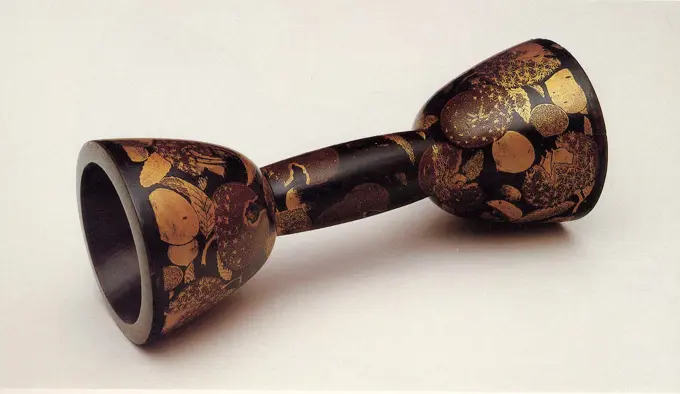
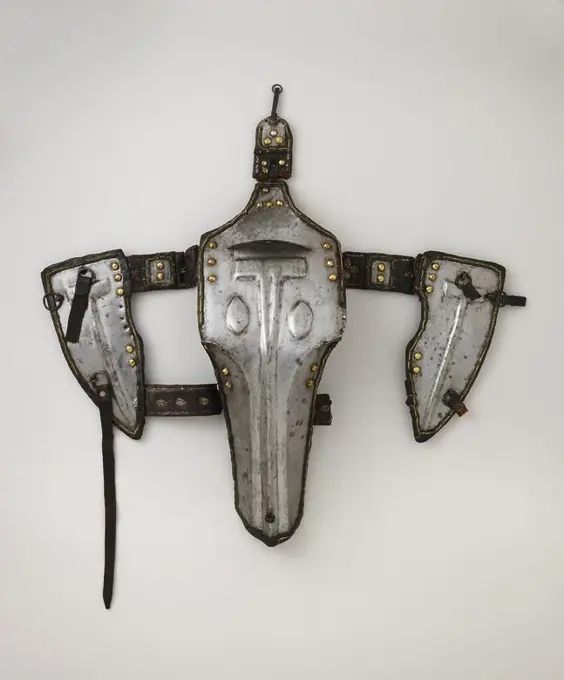
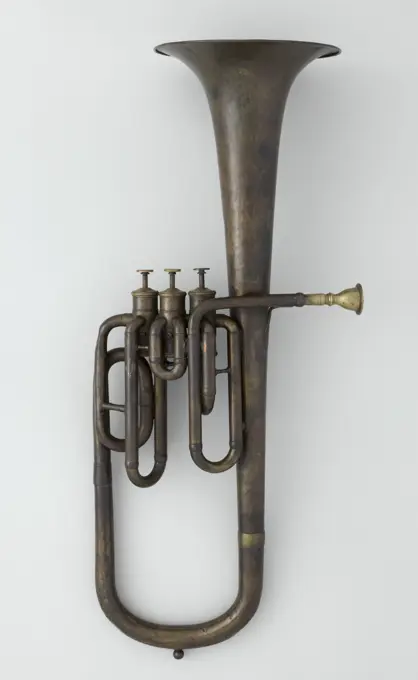
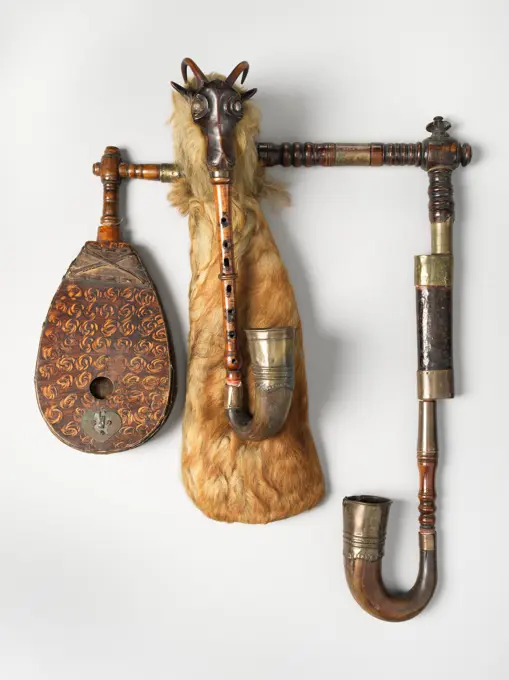
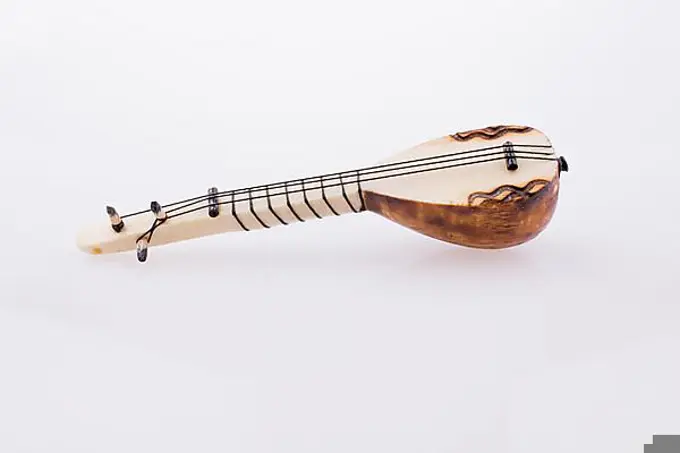
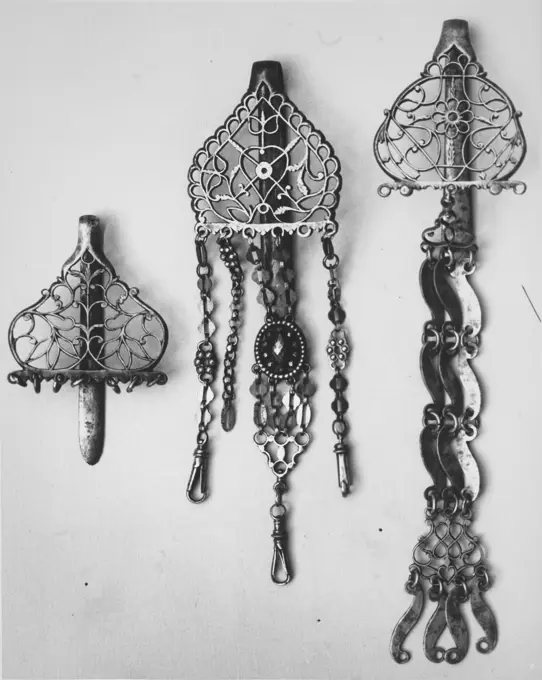
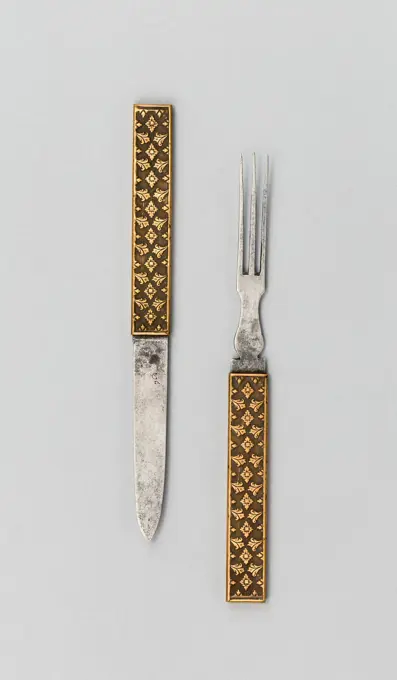
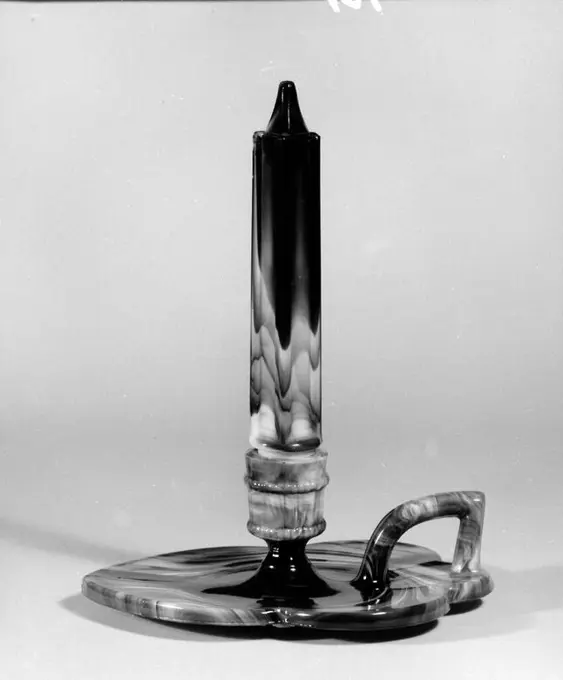
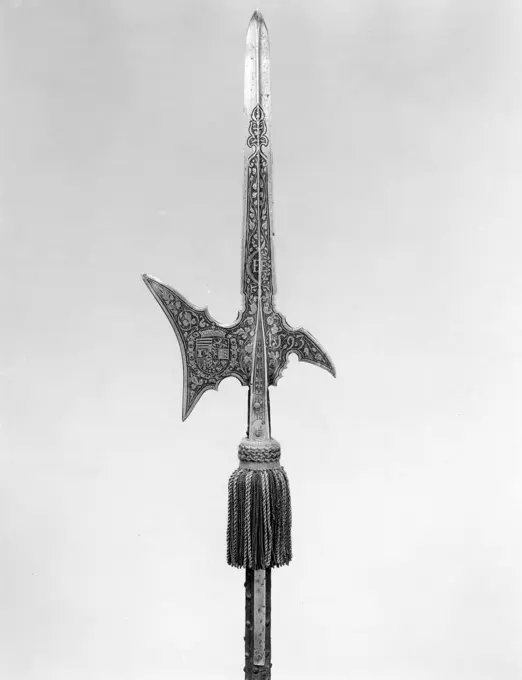
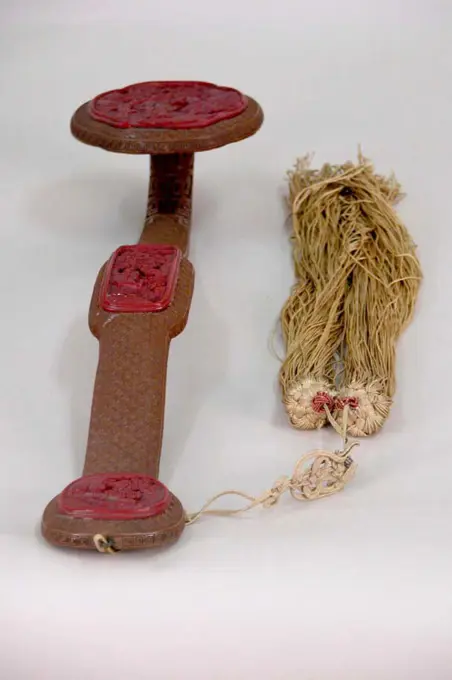
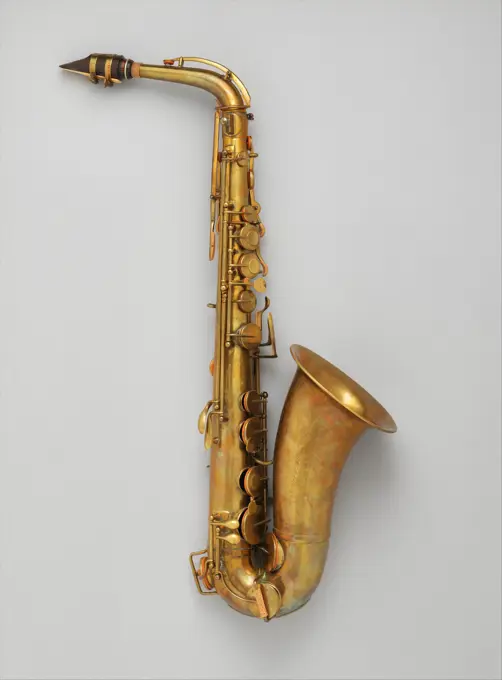
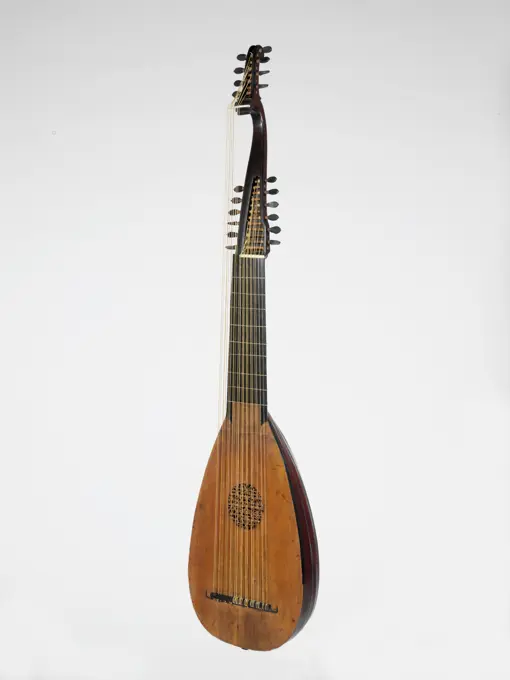
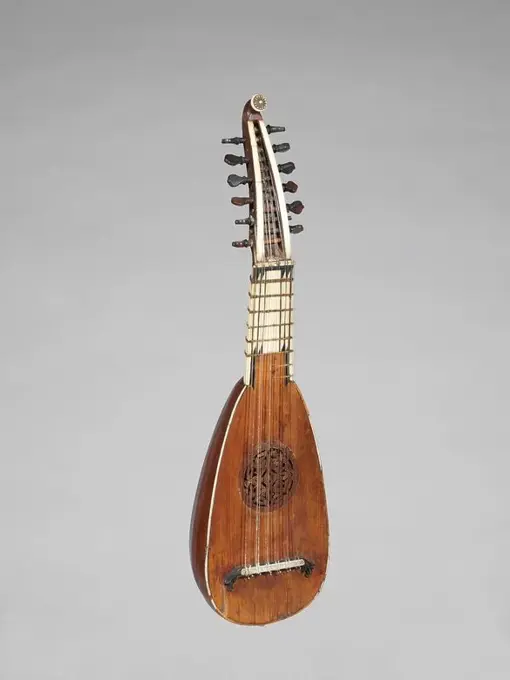
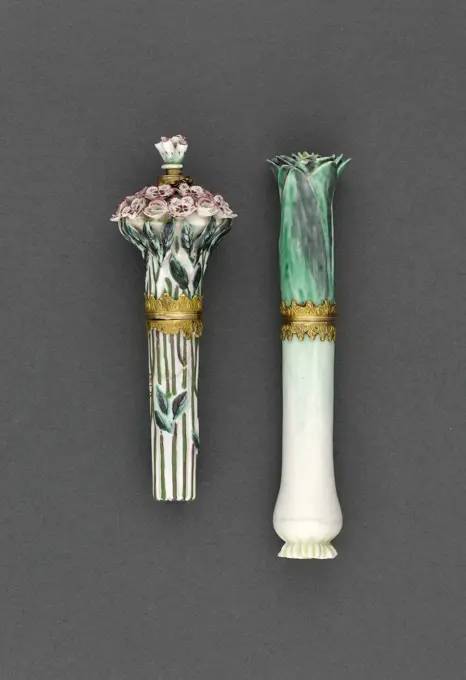
Ombi late 19th century Fang/Pahuin Unlike the triangular European harp, the arched harp consists of two elements, a soundbox with a curved neck rising from it. Strings made of gut or plant fiber rise diagonally from the soundtable.. Ombi 501978Candlestick, lignum vitae or yew, turned, England, early 1800s, Decorative Arts, CandlestickButton, 1800s. Sardinia, 19th century. Silver; overall: 7 cm (2 3/4 in.).Hammer of the Second Supervisor of an unknown lodge. unknown, authorT'arija late 19th century Morrocan This slender vase-shaped drum is used in the spiritual music of the Aissawa and Daqqa polyrhythmic ensembles of Marrakech to accompany ritual dance.. T'arija 500974Abruzzo L'Aquila Castelvecchio Subequo S. Francesco, Museum. Hutzel, Max 1960-1990 Reliquaries, processional cross (15th century) statues- including a silver Madonna and Child with Angels, sculpture-including wooden statue of Christ, and frescoes Roman sculpture fragments, bronze sculpture, bronze plate, iron sword, roman coins German-born photographer and scholar Max Hutzel (1911-1988) photographed in Italy from the early 1960s until his death. The result of this project, referred to by Hutzel as Foto Arte Minore, is thorough documentation of art historical development in Italy up to the 18th century, including objects of the Etruscans and the Romans, as well as early Medieval, Romanesque, Gothic, Renaissance and Baroque monuments. Images are organized by geographic region in Italy, then by province, city, site complex and monument.Scepter with Profile Figures 7th-8th century Maya This flint scepter shows two profile faces wearing elaborate headdresses. Maya artists skillfully chipped flint, a fragile and challenging medium, into imaginative multifigure and geometric shapes. The gray-brown source stone retains some of its white cortex at the center of the sculpture. A curled blade forms the bottom portion could have been attached to a wooden handle or staff as an emblem of rulership. There is evidence that the Maya believed flint (or chert) to have been created when lightning struck the earth, thereby imbuing it with supernatural power. The association of flint scepters and lightning is explicit in this work. The larger of the two figures sits on a wide element with three small appendages that may represent a throne, and the smaller figure extends out from his back, as if being carried. He has foreshortened limbs: a leg that hangs off of the front of the throne, and an arm that extends forward with a gesturing haCandlestick ca. 1720 American. Candlestick. American. ca. 1720. Brass. Probably made in United StatesJohn Bettridge, Caddy Spoon, 1822/23, silver.Table Centerpiece 1745-1755 Turin. This silver and glass plateau is a rare survival of the festive table decorations that were so popular in the 18th century. It formed the visual climax of a formal dinnerís final course; dessert. Designed in the Rococo style, the centerpiece has a border of asymmetrical scrolls, waves, and flower clusters, further enlivened by alternating reflective and matte surfaces. Decorative arrangements of sugar-paste or porcelain figures were placed on the mirrored surfaces of the plateau to entertain dinner guests, and it would have been surrounded by candles that would have shed light on the elaborate arrangement. This plateau was made in Turin, Italy, but the practice of decorating aristocratic tables with miniature gardens, and even scenes from contemporary plays and operas, extended throughout Europe.The centerpiece is composed of three sections, so users had the option of shortening it for more intimate gatherings by removing the center section. Affixed tAdvertising sign of a locksmith's workshopWineglass late 16th-early 17th century Dutch. Wineglass. Dutch. late 16th-early 17th century. Glass. GlassModel of an Anchor, anonymous, c. 1800 instruction model Model of an ordinary anchor, consisting of a shaft with a curved arm with anchor hands on the ends. Wooden anchor; Iron Ankerring with anchorage of tacked rope. Scale 1:10 (estimate). Netherlands iron (metal). wood (plant material). brass (alloy). ropePair of finials 17th century Italian. Pair of finials. Italian. 17th century. Iron. Metalwork-IronHarp Guitar 1827 Joseph Laurent Mast French This unusual instrument six single strings like a guitar, but has several body features like a harp. The unusual spruce soundboard is reminscient of that of a harp, but faces forward and is parallel to the strings, instead of sitting perpendicular to the strings as on a pedal harp. Behind the soundboard is a cylindrical body made of bent maple. The body is stained green and has two oval sound holes. The wide, lower end of the body rests on a flat plate that allows the instrument to stand on its own. The harp-like column measures 88.5 cm in height and is fluted. At the top is a circular cornice. The six strings of the harp pass over a scalloped fingerboard with seventeen inlaid frets of nickel silver. At the top, the strings are attached to iron pins with square heads that require a special wrench to be tuned. On the soundboard, the strings terminate with a pin bridge, with hitch pins defining the end of the sounding length. Though the instrumKris. Culture: Javanese. Dimensions: L. 16 13/16 in. (42.7 cm); W. 5 1/4 in. (13.3 cm); Wt. 8.2 oz. (232.5 g). Date: 16th-19th century. Museum: Metropolitan Museum of Art, New York, USA.Bourse. Gal1959.18.2Halberd. Culture: Swiss. Dimensions: L. 8 ft. 10 in. (269.1 cm); L. of head 24 1/2 in. (62.2 cm); W. 10 3/8 in. (62.2 cm); Wt. 5 lbs. 12 oz. (2610 g). Date: ca. 1470. Museum: Metropolitan Museum of Art, New York, USA.Reconstruction of a Cog-wheels Lantern Mechanism based upon a drawing by Leonardo Da Vinci; Codex Atlanticus - folio 4 v. This mechanism, already widely used in Leonardo's time, shows us how passionate he was about the friction, performance and wear of cog-wheels for transferring circular motion from one plane to another. The Cog-wheels Lantern Mechanism meant that a motion in a vertical plane could be changed into a motion in a horizontal one.. Playing card holder consisting of Acanthus leaves on a voluntary frame. A map holder from iron (Fer de Berlin). The holders consist of eight above each other, increasingly smaller acanthus leaves on a voluntary frame, standing on a rectangular base decorated with acanthus sheet. On the Acanthus leaves, the initial letters of the days of the week (S M D M F S). At the back the inscriptions: 'Kratzenberg / Acad. Kunsth. In Berlin '' Deponirt B.D. Königl. Acad. d. Künste '. Note: Kratzenberg or Knabenberg.Over-the-Shoulder bass saxhorn in E-flat ca. 1870 Ernst Seltmann American The over-the-shoulder horn, as used by Civil War bands, was the most distinctively American form of the saxhorn. Its backward-facing bell enabled it to be heard by troops marching behind the band.. Over-the-Shoulder bass saxhorn in E-flat. American. ca. 1870. Brass, nickel-silver. Philadelphia, Pennsylvania, United States. Aerophone-Lip Vibrated-trumpet / trombonePipe bowlThe Benin Empire (1440-1897) was a pre-colonial African state in what is now modern Nigeria. It is not to be confused with the modern-day country called Benin (and formerly called Dahomey).Natural horn in F. copper natural horn in F. traces of different repairs, mouthpiece has been broken.Embroidered Miter, 1700s. Italy, 18th century. Silk; metal thread embroidery on silk; overall: 92.5 x 30.8 cm (36 7/16 x 12 1/8 in.).Knife, Fork and Spoon with Cap of a Trousse-Sheath 1650-1700 Europe. Iron, horn, and leather .Lvta (lute). Culture: Turkish. Dimensions: H. 88.6× W/ 28 × D. 11.5 cm (34 7/8 × 11 × 4 1/2 in.). Date: ca. 1870. Museum: Metropolitan Museum of Art, New York, USA.Shaffron (Horse's Head Defense). Culture: German, Augsburg. Dimensions: H. 22 3/4 in. (57.8 cm); W. 10 1/2 in. (26.7 cm); Wt. 3 lb. 14 oz. (1767 g). Date: ca. 1570-80.The fine quality of the hammer-work, the elegant form, and the decorative washers and plume-holder of brass are stylistic features pointing to an Augsburg origin. The shaffron probably was made to accompany a plain tournament armor of polished steel like one also in the Metropolitan Museum's collection (acc. nos. 29.154.1 and 14.25.689). Museum: Metropolitan Museum of Art, New York, USA.Paul Kramer SA. Liberation tie epingle, with the Lorraine cross and winged victory. Metal, 1944-1955. General Leclerc Museum of Hauteclocque and the Liberation of Paris, Jean Moulin Museum.Fragment of a Pulpit dated A.H. 546/A.D. 1151 This fragment comes from a minbar, or pulpit, from which announcements and Friday sermons were delivered to the Muslim community. This section with part of a Qur'anic verse inscribed on it would have formed part of the minbars side. The patron of the minbar, Abu Bakr b. Muhammad, was related to Sultan Sanjar. Listen to experts illuminate this artwork's story Listen Play or pause #6689. Fragment of a Pulpit, Part 1 Play or pause #6747. Fragment of a Pulpit, Part 2 Supported by Bloomberg Philanthropies We're sorry, the transcript for this audio track is not available at this time. We are working to make it available as soon as possible.. Fragment of a Pulpit 449016The Reich Emblems Returned to Nuremberg.This is the Reichs-Apple with the Scepter. September 06, 1938. (Photo by Atlantic).Case (Inr) with Design of Shoki with Wide Hat and Sword 18th-19th century Japan. Case (Inr) with Design of Shoki with Wide Hat and Sword. Japan. 18th-19th century. Lacquer, wakasa nuri, mottled ground, gold and silver hiramakie, raden; Interior: roiro and fundame. Edo period (1615-1868). InrDrum body with decoration of chestnuts early 17th century Japan. Drum body with decoration of chestnuts 40361Model of a Lifeboat Release, J.P.H. From Schmidt to Altenstadt, 1879 demonstration model Model of a sloop trap, on a ground board. With a lever, two hooks, with which the hoist of the davits is locked up, are detached so that they open under the weight of the sloop. Netherlands (possibly) wood (plant material). iron (metal)Shaffron (Head Defense) for a Camel. Culture: Turkish. Dimensions: H. 19 (48.3 cm); W. 7 1/2 in. (19 cm); D. 3 1/2 in. (8.9 cm); Wt. 3 lb. 14.2 oz. (1763.3 g). Date: possibly 17th century.Camels were used in the Middle East not only for transport but also for battle. Judging from its sharply angled profile, this shaffron of steel plate was probably intended for a war camel. By contrast, shaffrons for horses have flat profiles. Museum: Metropolitan Museum of Art, New York, USA.Alto Saxhorn in E-flat ca. 1850-60 possibly French Alto saxhorn in E-flat with three Berlin valves. Saxhorns are a family of valved brass instruments developed by Adolphe Sax in the mid-nineteenth century. His design was copied by numerous rival makers.Saxhorns were widely used in military and civilian bands and are the forebears of the modern euphonium, tenor horn and baritone. Saxhorns were designed as a uniform family of instruments with members ranging from soprano to contrabass. All shared a simililar tubing layout, bore profile and valve system. As a result, all members of the family produced a similar timbre, or tone color, across their range and because the fingering was the same on each instrument, players could easily switch between various members of the saxhorn family.. Alto Saxhorn in E-flat. possibly French. ca. 1850-60. Brass, nickel-silver. France. Aerophone-Lip VibratedModel of An Artificial Reef. Model of a water palisade or water rider. It is a roof-shaped framework with two rows of sharp points at the top, pointing in one direction. On the one hand, the ordinary anchors, to the other, has dredges.Bock F. Ch. Wohlborld German 19th century Instruments made from the skin of a horned billy goat and decorated with a carved wooden goats head were once common in the area of Bohemia, Moravia, Saxony, and Silesia. They usually played dance music and were paired with fiddles. View more. Bock. German. Wood, horn, goatskin, cane reed, metal, various materials. 19th century. Nürnberg, Gemany. Aerophone-Reed Vibrated-bagpipeTurkish musical instrument saz on a white backgroundLock 15th-16th century European The decoration of Gothic iron locks and keys was often elaborate and of the highest standard of workmanship. The motifs were frequently drawn from Gothic architecture, reproducing on a miniature scale complicated tracery patterns and even tiny statuettes. A number of these tiny locks were compound, with some of the mechanisms concealed from view, and required two or even three keys used in sequence to open them. It has been suggested that the greatly expanded use of locks on doors, or coffrets and other types of storage chests was a result of the increasing urbanization of life and the new emphasis on material wealth and private ownership which developed in the late Middle Ages.. Lock. European. 15th-16th century. Iron. Metalwork-IronChatelaine 17th-19th century. Chatelaine 444670Knife and Fork 1800-1900 Europe. Steel and brass .Candlestick and Candle. Dimensions: 2 1/2 x 5 1/4 x 6 1/2 in. (6.4 x 13.3 x 16.5 cm). Date: 1880-90. Museum: Metropolitan Museum of Art, New York, USA.Folding armchair 16th century Italian (Tyrolese or North Italian). Folding armchair 197163Pair ofCandlesticks.   Maker: Reed and Barton, American, founded 1840Old Wooden Coiling Machine Old wooden coiling machine for wool on an isolated studio background Copyright: xZoonar.com/AndreyxSkatx 12615931CHANDELIER  Made from Crystal Glass by  Defries and Son manufacturers       Date: 1862Cylinder Seal. Mesopotamia, 1590-1150 B.C.. Tools and Equipment; seals. StoneOboe, Guillaume Triébert, c. 1850 - c. 1899  Paris  ParisHalberd of Archduke Ernst of Austria (1553-1605) dated 1593 German The head consists of a broad axe blade with concave cutting edge and decoratively cusped sides, a long spear blade with raised median rib, a down-turned hook with cusped edges, and a rectangular socket with two side straps. The etched decoration includes foliate scrolls on a blackened, dotted background, surrounding the emblems of Archduke Ernst of Austria (1553-1605): on each side of the spear blade is the monogram EE flanked by palm and laurel branches; on the left side of the axe blade are the archducal arms surrounded by the collar of the Order of the Golden Fleece and surmounted by an archducal bonnet; on the right side of the axe blade is the Burgundian Saint Andrew's cross and fire steels; and on either side of the hook is the date 1593. The original wooden shaft is octagonal in section, covered with red fabric and studded with brass nails; the tassel mounted at the top of the shaft is modern.This halberd is one Sceptre China. Sceptre. China. Cinnabar lacquer. Qing dynasty (1644-1911), Qianlong period (1736-95). LacquerChandelier ca. 1853 This gaslight chandelier and pair of wall sconces (64.36.4, .5) come from the parlor of the Tweedy House, built in 1853 in North Attleboro, Massachusetts. The three full-length female figures personify Art, Science, and Industry--the driving forces of the mid-nineteenth century.. Chandelier 1966Wind Chimes in A Room With Shadows 1093512417Basset Horn.Bass thorn with fifteen valves.Flower pyramid, c. 1692 - c. 1700 Flower pyramid of Faience, blue painted in the glaze, consisting of eleven segments. Delft . Flower pyramid of Faience, blue painted in the glaze, consisting of eleven segments. Delft .Sculpture1938M158. Homer, 1779-80. Basalt. Fine grained unglazed black stoneware.. Manufacturer: Wedgwood & Bentley.. In 1774 the firm of Oliver & Hoskins supplied Wedgwood with a plaster cast of Homer based on a sculpture in Naples Museum. The bust was reworked by William Hackwood, Wedgwood's modeller.Alto saxophone in E-flat ca. 1855 Adolphe (Antoine Joseph) Sax Belgian, active France When the saxophone was patented in 1846, the wind family lacked a robust lower voice. Sax developed the saxophone to fill this gap. Although he struggled to promote the instrument to conservative orchestral composers, it enjoyed success as a band instrument during Saxs lifetime. The saxophone achieved universal popularity through jazz and pop, two genres that, ironically, did not exist until long after its invention. These associations, emblematic of America, have made the saxophone a potent cultural and political symbol.The saxophone has become one of the most widespread instruments in the world. Its vocal qualities, such as its highly expressive and flexible tone and the ease with which pitch can be manipulated to play “blue” notes made it the archetypal instrument of jazz. These traits also led to the saxophones adoption as an instrument of traditional music in many different cultures. Its versatArmor for the Tilt ca. 1585 Italian. Armor for the Tilt. Italian. ca. 1585. Steel, leather. Armor for ManLute 1669 Pietro Railich German (active Italy) Railich built this instrument in a very particular time period when Renaissance tuning was incorporating new Baroque ideas. Therefore, it is difficult to know if it was conceived as a ten-course lute, following the old tradition, or as one of the new, innovative eleven-course lutes. The rather small body has twenty-one ribs made of snakewood.Like most of the lutes built before the eighteenth century, this instrument was modified to follow innovations in music. A repair label indicates that in 1720, Anton Fichtl of Vienna refurbished the instrument as a swan-neck lute. An interesting perforation on the bridge allows the instrument to change between eleven courses (the first two courses single) and ten courses (all double). This is the only known surviving eleven-course, swan-neck lute; the most common configuration is thirteen courses.. Lute. Italian. 1669. Spruce, snakewood, ebony. Padua, Italy. Chordophone-Lute-plucked-frettedLiège, Val Saint Lambert, Glass MuseumMandolin. Culture: Italian. Dimensions: L. 52.5 cm (20-3/4 in.); body L. 23.5 cm (9-1/4 in.); body W. 14.5 cm (5-3/4 in.); string L. 29 cm (11-1/2 in.). Maker: Giovanni Battista Bizaro (Italian, Treviso, active ca. 1770-1780). Date: 1770. Museum: Metropolitan Museum of Art, New York, USA.Angel, additive at candlestick. This object is an addition to the candlestick (BK-NM-2381). The angel holds a connecting element with both hands, where two eyes are mounted on the ends, so that the candles can be inserted.English anonymous. Studies. Porcelain. 18th century. Paris, Cognacq-Jay museum. 56642-2 Etui, leek, porcelainBOLEADORAS ARGENTINAS - 1850/1900 - PIEDRA Y CUERO - PROCEDENTE DE LA PAMPA-PATAGONIA ARGENTINA. Location: MUSEO DE AMERICA-COLECCION. MADRID. SPANIEN.Suit of armorMount Vernon CommemorativeFork. Manufacturer: Shepard Manufacturing Company, American, 1892-1923After design by: Henry H. Evertsen, American, active ca. 1870-1900Retailer: Franklin A. Whelan, American, 1853-1926Honorand: George Washington, American, 1732-1799, LL.D. 1781Honorand: Martha Washington, American, 1731-1802Dolciano, Oboe, Bassoon, Oboe Da Caccia and Basset Horn. The Oboe Da Caccia is a bassoon raised a fourth in pitch, although the Dolciano owes its name to the original bassoon this example is slightly different to its namesake.Harp 18th century Italian. Harp 501659