Historical Weaponry Implements

An array of historical weapons including swords, halberds, and staffs, each showcasing intricate craftsmanship and design elements from different cultures.

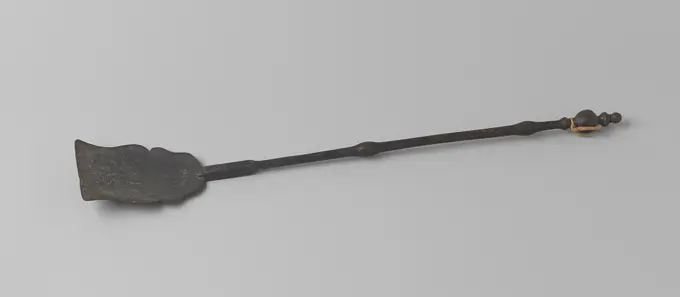
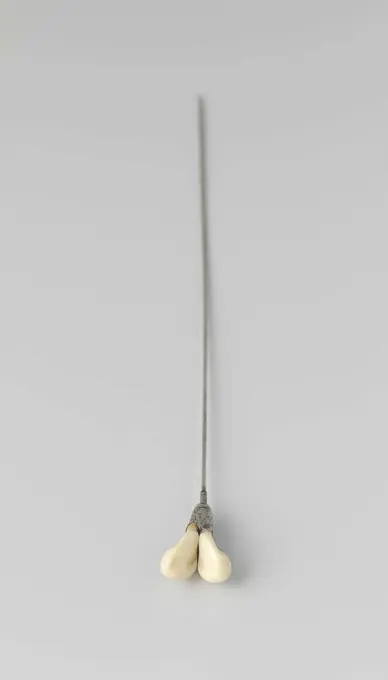
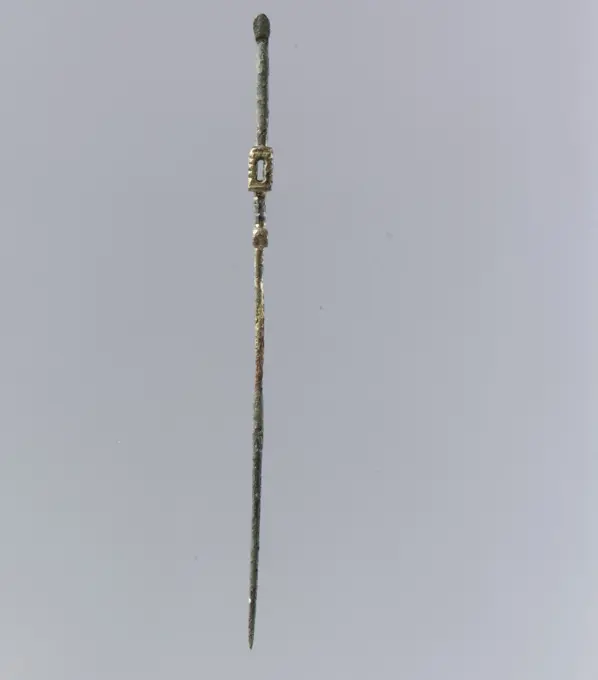
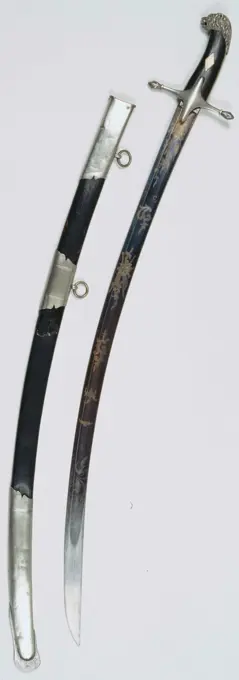
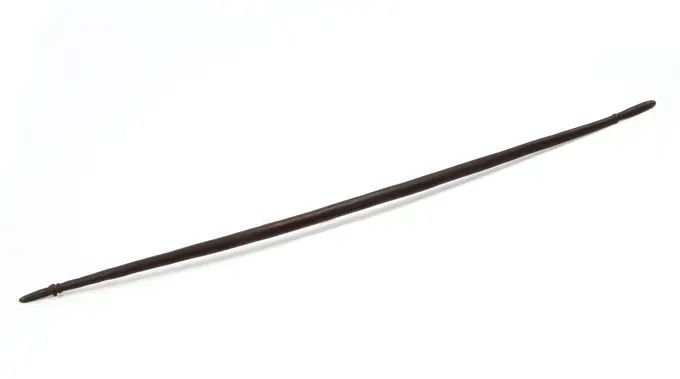
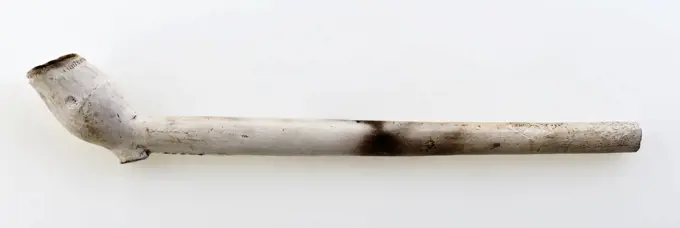
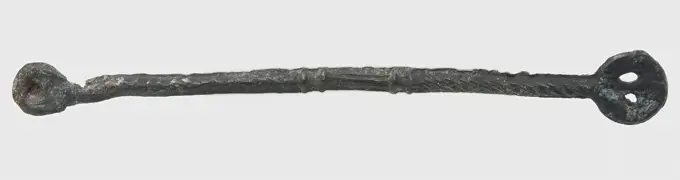
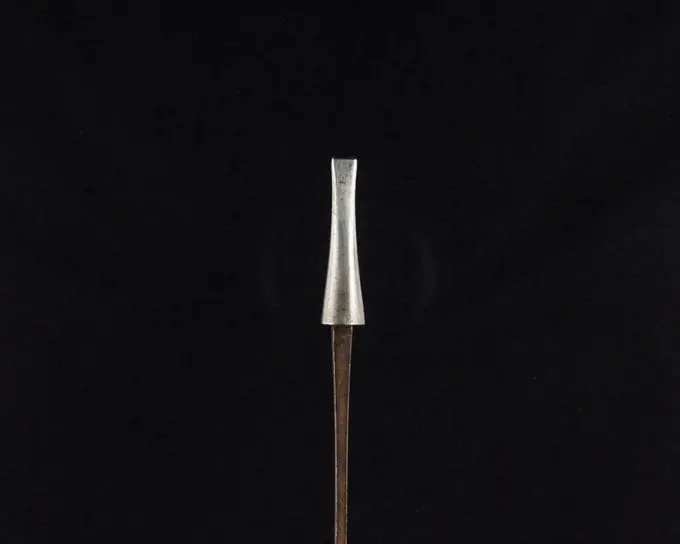
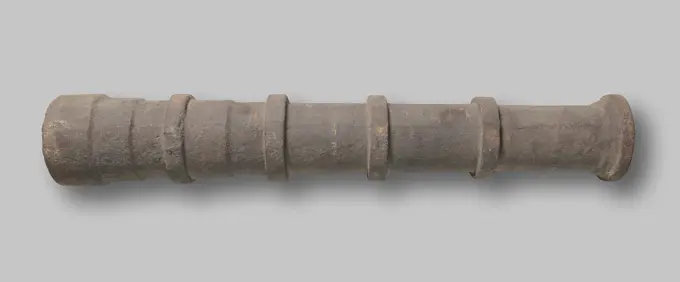
Bergwerkwerkstok with ax or hammer and in the stick an open -up weapon with German text, Anonymous, 1785 Oval stick, turned up about 1/3 of the length at the top, a flat copper wire runs through the trench. At the top a copper decorative ax, upwards in a declining point, on which a cap. On the Bijtje engravings and an open worker in which two crossed hammers. On the one hand, the engravings present a man with a mountain worker stick and a man who is cutting stone on a mountain slope, on the other a man with a stick and inscription: ICHU Täglisch in der Erden Deine Wect: mit Freuden An Middle Europe wood (plant material). copper (metal). iron (metal) forging / engraving Oval stick, turned up about 1/3 of the length at the top, a flat copper wire runs through the trench. At the top a copper decorative ax, upwards in a declining point, on which a cap. On the Bijtje engravings and an open worker in which two crossed hammers. On the one hand, the engravings present a man with a mountain wor
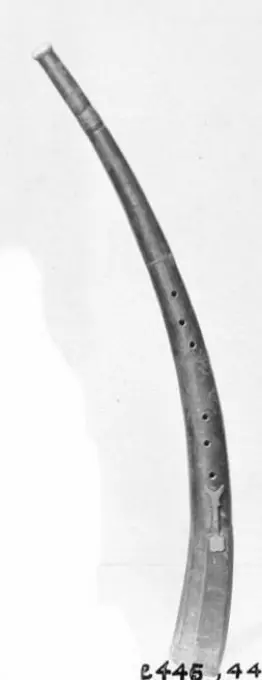
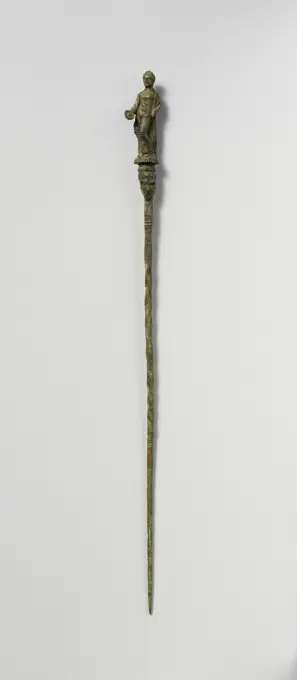
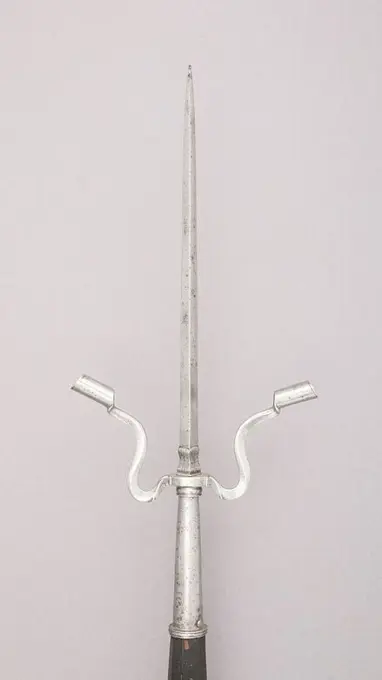
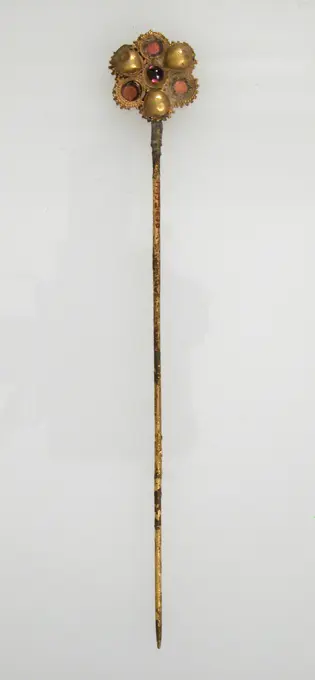
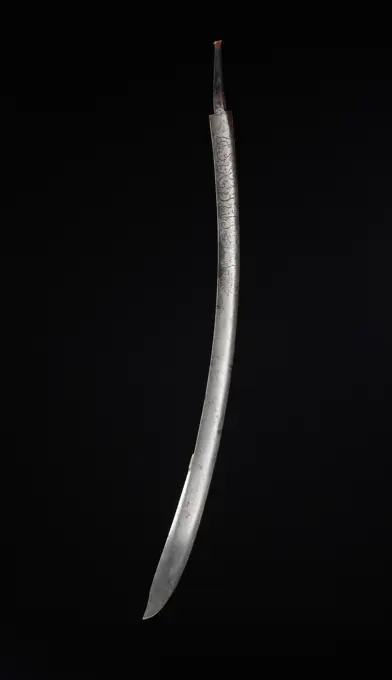
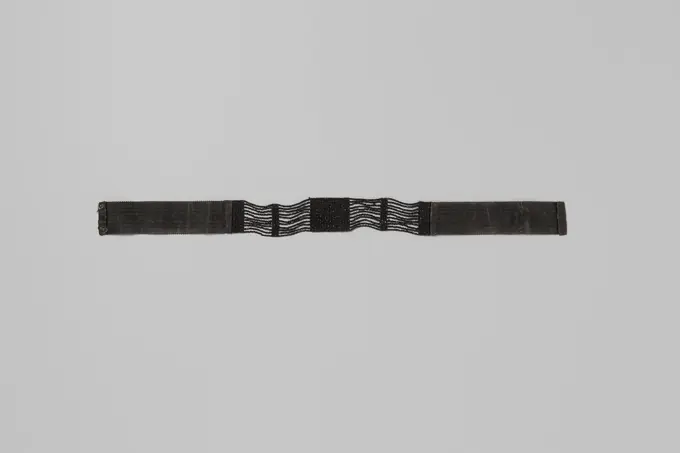
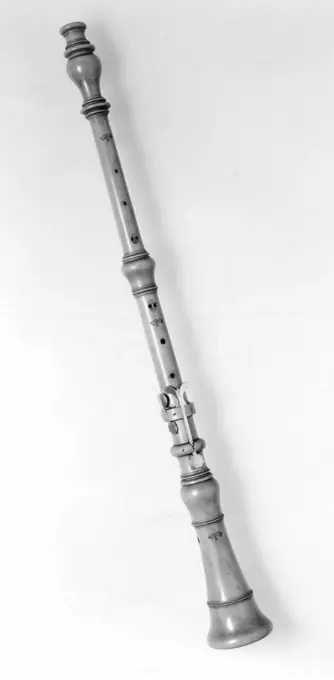
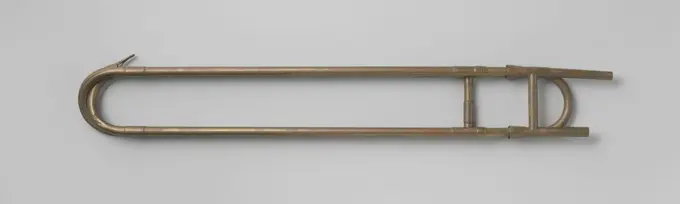
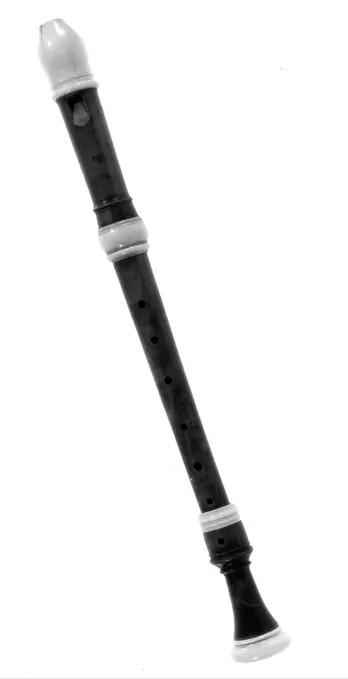
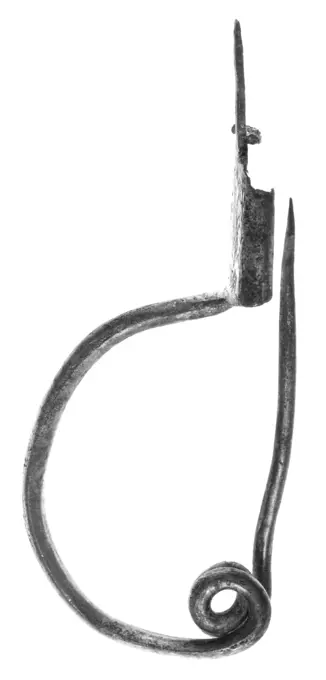
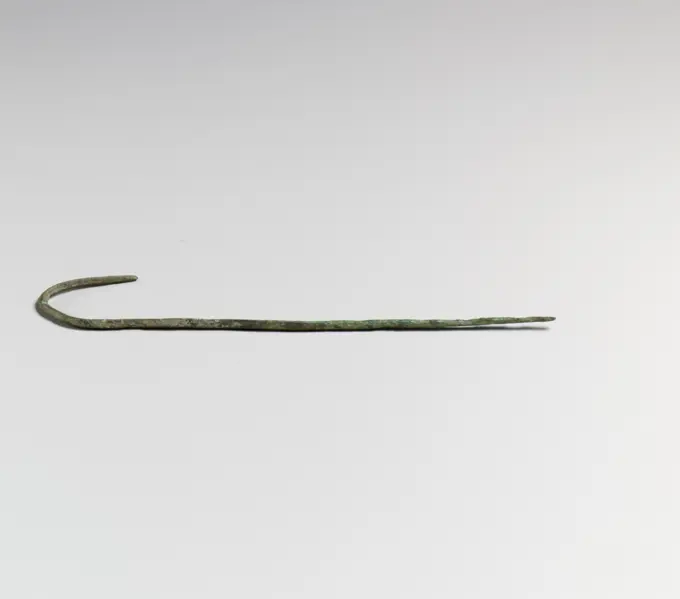
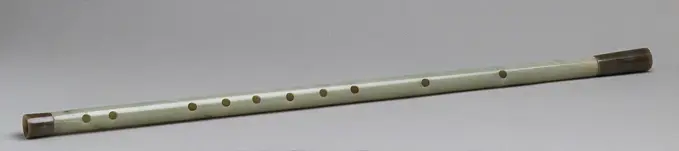
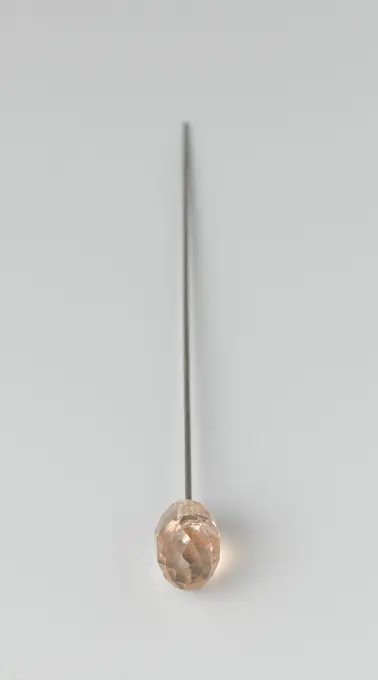
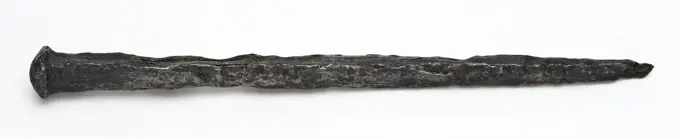
Degen of rapier, anonymous, c. 1550 - c. 1650 sword. rapier Degen or Rapier with a twisted wooden rilt, a white basket and an S-shaped pare bar.  iron (metal)Bergwerkwerkstok with ax or hammer and in the stick an open -up weapon with German text, Anonymous, 1785 Oval stick, turned up about 1/3 of the length at the top, a flat copper wire runs through the trench. At the top a copper decorative ax, upwards in a declining point, on which a cap. On the Bijtje engravings and an open worker in which two crossed hammers. On the one hand, the engravings present a man with a mountain worker stick and a man who is cutting stone on a mountain slope, on the other a man with a stick and inscription: ICHU Täglisch in der Erden Deine Wect: mit Freuden An Middle Europe wood (plant material). copper (metal). iron (metal) forging / engraving Oval stick, turned up about 1/3 of the length at the top, a flat copper wire runs through the trench. At the top a copper decorative ax, upwards in a declining point, on which a cap. On the Bijtje engravings and an open worker in which two crossed hammers. On the one hand, the engravings present a man with a mountain worA staff of command, anonymous, c. 1600 - c. 1699  A staff from Command. Attached with small copper nails at the back.  copper (metal). iron (metal). wood (plant material)Hellebaard, Anonymous, 1500 - 1699 Halberd Hellaard with openwork ball; Traces of engraved weapon of Orange.  wood (plant material). iron (metal)Crutch Dagger (Zafar Takieh, "Cushion of Victory"). Culture: Indian, Mughal; blade, European. Dimensions: L. 18 1/2 in. (47 cm); W. 4 15/16 in. (12.5 cm); Wt. 12.6 oz. (357.2 g). Date: 18th century. Museum: Metropolitan Museum of Art, New York, USA.GraceShovel of iron. One shovel.Houwer met schede volgens overlevering toebehoord hebbende aan M.A. de Ruyter.Hack with straight blade with persian tip and trench. Flower and plant motifs engraved on the blade. Handle of red-colored ivory, contained in it two flowers, made up of small cuts and dots filled with dark fabric. The handle is strongly discolored on one side. Pareer rod, bump plate, front bracket and button of yellow copper; with different mythological figures and scenes and plant and animal motifs. On pearl block LEDA and the swan. Black leather sheath with selectable point and copper belt hook on which nude figure. Cling engraved with floral motifs.Kohl Applicator. Egypt, New Kingdom, 1550-1070 B.C.. Tools and Equipment. BronzeStylus Cypriot. Stylus. Cypriot. Bronze. BronzesTools, anonymous, c. 1590 - c. 1596 drill Sculpture or nasalegar, T-shaped consisting of drill and handle. The drill has a flattened tacking end or ship head, in which the wooden handle or stool is fixed in the middle. The shaft is elongated and rectangular in diameter. The drill is half a cylindrical shape with a cutting mouth. The handle is marked in the middle by two continuous lines. The Avegaar is turned around with a cross tongue. Spoon gap.  wood (plant material). iron (metal) cutting / forging  Nova Zembla. Saving HuysThe dipstick of the A.P., c. 1650 - c. 1900 The dipstick of the Amsterdam level.  wood (plant material). iron (metal) The dipstick of the Amsterdam level.  wood (plant material). iron (metal)Bayonet, Joseph Alexandre Robert, c. 1832 - c. 1835 bayonet The bayonet lifts a blind triangular in diameter and a mounting method similar to the normal bayonet closure, incomplete. Rifle and bayonet were found separately, but brought together because of accurate passes. Paris iron (metal). leatherSheath at the Jacob van Heemskerk sword. Sheath at the Jacob van Heemskerk sword.Pin. Pin 251922 Pin, Bronze, Other: 1 x 13 7/8 in. (2.5 x 35.2 cm). The Metropolitan Museum of Art, New York. Fletcher Fund, 1925 (25.78.142)Breinaaldenschede, oval, with continuous wave pattern, Martinus van Leeuwen, c. 1845 - c. 1855 The Breinaaldenschede, which is oval in diameter, consists of a dense end, a long center that is open on one side and a dense sliding cap, in shape equal to the end, which closes over a short smooth part of the sheath. End and centerpiece are separated by a wide profiled band and the same profiled band runs along the lower edge of the cap. The sheath is completely decorated with an engraved continuous wave pattern; A rush -hour shield has been applied to the cap. The letters GML built out of dots are engraved on the top of the cap. Amsterdam silver (metal) The Breinaaldenschede, which is oval in diameter, consists of a dense end, a long center that is open on one side and a dense sliding cap, in shape equal to the end, which closes over a short smooth part of the sheath. End and centerpiece are separated by a wide profiled band and the same profiled band runs along the lower edge of the cap. Hollow pointed meat stalk, possibly scabbard, meat stalk soil found iron metal, forged beaten sawn Large hollow iron pin meat stalk Conical in shape with sharp tip and deeply sawn end through which parts are formed to clamp decoration material in archeology Valckensteyn Poortugaal Albrandswaard serve serving feasting decoration archaeological find in the soil Poortugaal Castle Valckensteyn.Statteniedegen with silver hilt with address, Puttelaar (II), Anthony van, c. 1700 - c. 1725 small-sword Statkeniegen with silver hilt with address: Van 'Anthony van Puttelaar Junior. Mr. Swaartveger in the Kalverstraat over the Gapersteeg to Amsterdam '. Amsterdam iron (metal). silver (metal)Tenor Cornetto in D 17th century French A rare crescent-shape taille de cornet à bouquin, which features six finger holes (no thumb hole) and a closed key. It is composed of two carved-out wooden halves that were glued together and wrapped with leather. The ivory ring and mouthpiece are not original.. Tenor Cornetto in D. French. 17th century. Wood, leather, metal. France. Aerophone-Lip Vibrated-trumpet / tromboneCeremonial Knife (Tumi) 2nd-7th century Moche. Ceremonial Knife (Tumi) 315341Knife (Germany); Designed by Joseph Maria Olbrich (Austrian, 1867 - 1908); Manufactured by Christofle (France), G. Leykauf (German,); metal, steel, silver; L x W x D: 25 x 2.2 x 1.7 cm (9 13/16 x 7/8 x 11/16 in.)Arrow Point, 1700s. Japan, Edo period (1615-1868). Steel; overall: 17.8 cm (7 in.); head: 3.2 cm (1 1/4 in.).Bronze perfume dipper 4th-3rd century B.C. Etruscan Rogers Fund, 1923 (23.160.88)Bronze or ivory dippers were often used by the Etruscans to apply scented oils and perfumes to the hair and body. The two bronze examples shown here are decorated with small figures of nude females, one of whom holds a libation bowl.. Bronze perfume dipper 246694Pin 6th-8th century Irish. Pin 468286Horn late 19th century Xhosa Most Sub-Saharan horns and trumpets are blown from the side rather than from the tip where they may be pierced to allow the player to sound different notes by opening and closing the end hole. Depending on regional tradition, blowholes may have a distinctive shape and appear on the concave or convex curve of the tube. Despite diminished importance as military signal instruments, side-blown horns remain a symbol of power and retain an important position in royal regalia. They are played singly or more often, in a large ensemble.. Horn 501085PitchStaff Weapon. Culture: Italian. Dimensions: L. 41 7/8 in. (106.4 cm); L. of head 32 1/4 in. (81.9 cm); W. 2 1/2 in. (6.4 cm); Wt. 4 lbs. 9 oz. (2069.5 g). Date: ca. 1580. Museum: Metropolitan Museum of Art, New York, USA.Silver Products Factory K.F. Malcza (Warsaw; Sreber label; 1828-1864), Malcz, Karol (1797-1867); 1887 (1887-00-00-1887-00-00);Four knives and a fork belonging to Emperor Charles V, anonymous, 1532 Fork with a handle of Ebony, inlaid with a simple flower rank decorations in copper. A inscription on the blade. Italy iron (metal). ebony (wood). copper (metal) Fork with a handle of Ebony, inlaid with a simple flower rank decorations in copper. A inscription on the blade. Italy iron (metal). ebony (wood). copper (metal)Wall arm, decorated with flowers and candle holder, anonymous, c. 1650 - c. 1750 Wall arm of wrought iron. Long rod of wrought iron bends up on one side at the end and ends in a wrought iron flower. Just before the curve is the fat catcher with candle holder. The other side ends in a hook for hanging with three wrought iron flowers. A second rod is installed under these flowers, which also ends in a hook for hanging. This claimed rod is slightly curved and just beyond the flowers to the first rod. Then the rod bends down again ending in a flat curl. Low Countries iron (metal) forging Wall arm of wrought iron. Long rod of wrought iron bends up on one side at the end and ends in a wrought iron flower. Just before the curve is the fat catcher with candle holder. The other side ends in a hook for hanging with three wrought iron flowers. A second rod is installed under these flowers, which also ends in a hook for hanging. This claimed rod is slightly curved and just beyond the flowers to thWalking stick covered with Balein and button in the form of Pijp, Steinberg, c. 1815 - c. 1840 Walking stick covered with black Balein. The button in the shape of a pipe is made of Hoorn. London whole: Balene. Pijpekop: Horn (Animal Material). mouthpiece: bone (material). Ring: Brass (Alloy) cutting / cutting / cutting / striking (metalworking) Walking stick covered with black Balein. The button in the shape of a pipe is made of Hoorn. London whole: Balene. Pijpekop: Horn (Animal Material). mouthpiece: bone (material). Ring: Brass (Alloy) cutting / cutting / cutting / striking (metalworking)Club. Tonga, circa 1840. Arms and Armor. WhaleboneNeedle Cypriot. Needle 244381safety pinBronze pin ca. 2500-1600 B.C. Cypriot Simple form.. Bronze pin 244387Sword with Scabbard Grip and guard, late 17th century; blade, 17th century Grip and guard, Turkish, Ottoman; blade, European The nielloed silver moutns are typical of Ottoman weapons, although the use of lapis lazuli are rare. The straight European blade suggests that this cavalry weapon was carried in addition to the more usual curved saber. Pairs of weapons with straight and curved blades were common in eastern Europe in the seventeenth century.. Sword with Scabbard. Grip and guard, Turkish, Ottoman; blade, European. Grip and guard, late 17th century; blade, 17th century. Steel, silver, gold, copper-silver alloy (niello), lapis lazuli, wood, leather. SwordsPseudoture saberKaval late 19th century Eastern European. Kaval 501479Stylish ballpoint pen of white gold on a greyBlack silk ribbon neck ribbon, with a front piece of gitten, anonymous, c. 1925 - c. 1950 Hill ribbon, 'cats' band', from black moiré side ribbon, with a front piece of cut black beads. The beads are lined high in eleven rows and secured by standing beams and a square in the middle. Netherlands (possibly) lint: silk. kraal: jet (coal) basting / grinding Hill ribbon, 'cats' band', from black moiré side ribbon, with a front piece of cut black beads. The beads are lined high in eleven rows and secured by standing beams and a square in the middle. Netherlands (possibly) lint: silk. kraal: jet (coal) basting / grindingSword ca. 1450 Western European (possibly Italian) With its simple cruciform hilt, this sword is representative of the knightly sword of the Middle Ages; its basic shape did not change significantly between 1200 and 1500. The large discoidal pommel served as a counterweight to the double-edged blade and gave the fighter full mastery of a perfectly balanced weapon. The slightly down-curved quillons of the guard not only made the blocking of an enemy's blow easier, they were particularly important for greater ease of handling the sword on horseback; they came into fashion about 1300. The double-edged blade has a rounded tip, indicating that it was designed primarily for slashing, though it could be used for a thrust.The "running wolf" mark inlaid with copper on one side of the blade was the guild mark of the renowned swordsmiths of Passau, a small town situated on the Danube at its confluence with the river Inn, on the border between Austria and Germany. The town's name derives from a unpaste; Malcz, Karol (1797-1867), Silver Products Factory K.F. Malcza (Warsaw; Sreber label; 1828-1864); 1852 (1850-00-00-1860-00-00);Needle with Two Eyes. UnknownCopper meat stew with two notches at the top, meat stalk soil found copper metal, whipped sawn yellow copper meat stew Conical pin with sharp tip and cross-cut tip resulting in four parts to clamp decoration material in archeology serving feast food decorationArrow, 1800s. Japan, Edo period (1615-1868) to Meiji period (1868-1912). Bamboo shaft tipped with metal point and heeled with feathers; average: 89.9 cm (35 3/8 in.).Hellebaard with original elm stick and iron point, anonymous, c. 1600 - c. 1699 Halberd Hellebaard with original elm stok and iron point. Marked on one of the feathers with: Ch No. 10.  iron (metal). wood (plant material)Leatherworking needle -Linstock. Culture: Italian. Dimensions: L. 75 1/2 in. (191.8 cm); L. of head 16 in. (40.6 cm); W. 6 7/8 in. (17.5 cm); Wt. 2 lbs. 0.7 oz. (927 g). Date: 17th century. Museum: Metropolitan Museum of Art, New York, USA.Hairpin 7th century Frankish. Hairpin 465306 Frankish, Hairpin, 7th century, Gold or gilt, glass paste, stone, filigree, Overall: 5 7/16 x 3/4 x 1/4 in. (13.8 x 1.9 x 0.6 cm) knop: 3/4 x 1/4 in. (1.9 x 0.6 cm). The Metropolitan Museum of Art, New York. Gift of J. Pierpont Morgan, 1917 (17.192.238)Klucz. unknown, authorStaff. Iran, circa 150 B.C.-A.D. 225 or later. Arms and Armor; swords. Bronze on iron, castropes with knot isolated on white backgroundSmallsword with Scabbard. Culture: French. Dimensions: L. 38 1/2 in. (97.7 cm); L. of blade 32 3/8 in. (82.2 cm); W. 3 1/2 in. (8.9 cm); D. 3 in. (7.6 cm); Wt. 14 oz. (396.9 g); Wt. of scabbard 3 oz. (85 g). Date: ca. 1762. Museum: Metropolitan Museum of Art, New York, USA.Cyfrowe Dziedzictwo KulturoweSnuffer hook, vintage engraving. Snuffer hook, vintage engraved illustration. Magasin Pittoresque 1853. Copyright: xZoonar.com/PatrickxGuenettex 10673833Spoon with elongated oval bowl and flat spatula-shaped handle, spoon cutlery soil find tin metal, poured Oblong oblong trench rounded stem end Rat tail Reverse side stem unclear stamped angel brand archeology Rotterdam railroad tunnel food Soil discovery: trajectory rail tunnel Rotterdam.Has ribbon of black silk ribbon, with a front piece of guys. Has lint, 'catsband', from black moire silk ribbon, with a front piece of cut black beads. The beads are high in eleven rows and secured by standing beams and a square in the middle.MatchHat pin with iron pen and engraved crown-shaped button in which two parts of white leg.Pin 7th century () Frankish Pins were used to secure a veil or to hold a hairstyle in place. Most were made simply of copper alloy, sometimes tinned to look like silver, but some were elaborate objects, showcasing an array of metalsmithing techniques.. Pin. Frankish. 7th century (). Copper alloy with a later gold patina. Made in Northern France. Metalwork-CopperStrip of black machine side with wavy dotted line between daisies, anonymous, c. 1900 - c. 1914 Strip of black machining side. The repeating pattern consists of a row of six -leaf daisies on the center line that are connected with a wavy dotted line. The motives are connected to a machine tuler. A very fine pearl list forms a sculpy edge of semi -circular shells under each flower. The scrap edge is finished with picots. The top of the strip is straight finished. Calais cotton (textile) Strip of black machining side. The repeating pattern consists of a row of six -leaf daisies on the center line that are connected with a wavy dotted line. The motives are connected to a machine tuler. A very fine pearl list forms a sculpy edge of semi -circular shells under each flower. The scrap edge is finished with picots. The top of the strip is straight finished. Calais cotton (textile)Hat Pin (USA); glass, silverSable with sheath of the Frisian Schutterij.sabel with black wooden hilt with lion's head. The blade is brainted with gold-plated ornaments, on a silk inscription: H & Z, on the other side: A Amsterdam. With black leather sheath with Berlin silver batter. From J.G. Van Wageningen, in 1830-1832 Major Commander 1st Battalion 1st Department of Mobile Friesche Schutterij.Kris Sheath 16th-19th century Javanese. Kris Sheath 660029Needle Used For Making Nets ca. 1550-1458 B.C. New Kingdom. Needle Used For Making Nets. ca. 1550-1458 B.C.. Bronze or copper alloy. New Kingdom. From Egypt, Upper Egypt, Thebes, Asasif, Courtyard CC 41, Pit 3, Burial D 1, In bowl 16.10.438, MMA excavations, 1915-16. Dynasty 18, earlyBow -North African rifle with Amsterdam Loop, Anonymous, 1755 - 1756 rifle The Mediterranean lock is made in Algiers of Tunis; The final plate is narrow and runs in a curve; The rooster is equipped with two finger bars in the form of cones with coral at the ends; chiseled in relief with praise; The tractor has the shape of a knob with coral; Arab inscriptions are on the final plate and rooster. The run is marked on the back with the Wapen van Amsterdam and on the bottom with the letters IC and an unclear brand; The sight grain is made of a loader. The flask is inlaid with silver leafs and arabesks, and with coral; The frontade has been shortened and closed with white cow horn; The screw plates for the three lock bolts are also made of white cow horn and have the shape of flower skins; shows remnants of a protective bump behind the lock. The batter consists of a gilded brass plaque inlaid with circles of coral and engraved with praise, and a slider of silver can with flowers and praise in reAlto Recorder in F-sharp 17th century (before 1686) Hieronimus Franciscus Kynseker German. Alto Recorder in F-sharp. German. 17th century (before 1686). wood, horn. Nuremberg, Germany. Aerophone-Whistle Flute-recorderShawm 19th century Possibly Indian. Shawm. Possibly Indian. 19th century. Wood. India. Aerophone-Reed Vibrated-double reedOld classic vintage shaver razor isolated on a white background. Old vintage shaver isolated on a white backgroundClay pipe, marked, stem decorated with fleur de lis stamps, clay pipe smoking equipment smoking floor found ceramic earthenware, pressed finished baked Clay pipe marked stem decorated with fleur de lis stamps made in fields of four. Heel mark. heel mark: LI left and right of L spot archeology tobacco smokingSmall tin bar, decorated with hatching, two round ends, toy relaxant soil find tin metal, cast Small tin rod Decorated with diagonal and crossing hatching. Pouring seams partly still present. Finishing in small round pages with two holes on one side Probably piece of pewter toys from several parts archeology Rotterdam IJsselmonde indigenous product child play child's play Soil discovery: Castle IJsselmonde pit 2 Rotterdam 1972.Arrowhead (Yanone). Culture: Japanese. Dimensions: L. 7 1/2 in. (19.1 cm); L. of head 1 1/2 in. (3.8 cm); W. 3/8 in. (1 cm); Wt. 0.8 oz. (22.7 g). Date: 18th century. Museum: Metropolitan Museum of Art, New York, USA.Craft cord (for a whistle) for a scout uniform unknown labelGuenbri late 19th century Egyptian. Guenbri. Egyptian. late 19th century. Wood, parchment. Egypt. Chordophone-Lute-plucked-unfrettedA steel hook with flattened handle, imra, c. 1900 - c. 1950 A steel hook with flattened handle. Address: Imra / Geschützt. Germany (possibly) whole: Steel (Alloy) A steel hook with flattened handle. Address: Imra / Geschützt. Germany (possibly) whole: Steel (Alloy)Oboe in C before 1792 H. C. Tölcke (Heinrich Carl). Oboe in C. German. before 1792. boxwood, brass. Brunswick, Germany. Aerophone-Reed Vibrated-double reedEngraving depicting a navigator's scoop. Dated 19th centuryHerrauou late 19th century Malagasy. Herrauou 501114Copper Lime Spoon with Bird Top 15th-16th century Inca. Copper Lime Spoon with Bird Top 315249Snuffer hook, vintage engraved illustration. Magasin Pittoresque 1853Rotting of rattan, mounted with gilded silver and copper, anonymous, c. 1780 - c. 1799 Rotting of rattan, mounted with gilded silver and copper. Antwerp rotting: rattan. knop: silver (metal). knop: copper (metal) cutting / gilding Rotting of rattan, mounted with gilded silver and copper. Antwerp rotting: rattan. knop: silver (metal). knop: copper (metal) cutting / gildingPinOboe ca. 1770-90 Thomas Collier British. Oboe. British. ca. 1770-90. Wood, metal. London, England, United Kingdom. Aerophone-Reed Vibrated-double reedTrombone (fragment), anonymous, c. 1830 musical instrument. wind instrument. trombone The tube part and slide from a bastrombone by J. Verruisse in 1830/32 at the Kurassiers No. Regiment. 9. Netherlands copper (metal) casting / cutting / soldering / snipping / drillingAlto Recorder ca. 1700 Joseph Bradbury Recorders were popular with both professional and aristocratic amateur players during the Renaissance and Baroque periods. Baroque recorders, like the alto seen here, were constructed of three detachable joints and had a brighter and more colorful sound than the Renaissance instruments. When enthusiasm for consort playing faded, soprano and alto recorders flourished as solo instruments until the demand for greater volume and expressivity led to a decline in popularity at the end of the eighteenth century.. Alto Recorder 505681Sleeve for knife and fork, with engraved flower drinks. Sleeve lid, silver, with engraved flower drinks. Confirmed with chain to a chtelaine (B).Sweden, Blekinge, Blekinge, Karlskrona, Karlskrona, external marina (depicted, town).Sweden, Blekinge, Blekinge, Karlskrona, Karlskrona, External War Gogs (depicted, City)Fibula. UnknownNose Flute late 19th century Bornean. Nose Flute. Bornean. late 19th century. bamboo, rattan. Borneo. Aerophone-Blow Hole-nose fluteSpoon ca. 1670-90 British, London. Spoon 192240Moulinet 1739-40 John Le Sage British This piece is unusual, as the stirrers for chocolate pots were usually wood. The wooden handle extension is modern. The twirler called a molinillo, was invented in Spain in the sixteenth century.. Moulinet. British, London. 1739-40. Silver, wood. Metalwork-SilverBronze hook-pin 2nd millennium B.C. Minoan Different uses have been proposed for this object type including weaving, as a hair ornament, and as a prototype for the fibula or safety pin.. Bronze hook-pin 252396 Minoan, Bronze hook-pin, 2nd millennium B.C., Bronze, L. 5 in. (12.5 cm). The Metropolitan Museum of Art, New York. Bequest of Richard B. Seager, 1926 (26.31.475)Dizi late 18th-early 19th century probably Chinese In addition to the blowhole (right) and finger holes, the dizi has an extra hole between the finger holes and blowhole that is covered by a membrane or a tissue-thin piece of bamboo that produces a poignant buzzing tone. There may also be a number of vent holes at the end from which tassels are frequently hung and poems may be inscribed on the flute as an additional decoration. Dizi are usually made of bamboo, but more durable materials, such as marble or, as in this case, jade, may be used. This flute, like other dizi, could be used in solo performance or in the kungu opera, one of the styles contributing to Beijing opera.. Dizi 503050Metal hat pin with drip -shaped rose glass, cut in facet, anonymous, c. 1900 - c. 1915 Metal hat pin with drip -shaped rose glass button, cut in facet. Netherlands (possibly) pen: Metal. button: Glass forging / grinding Metal hat pin with drip -shaped rose glass button, cut in facet. Netherlands (possibly) pen: Metal. button: Glass forging / grindingHand-forged nail, nail, nail fastener bottomfound iron metal, forged Wrought iron nail Long pointed rod with square cross section little protruding head archeology build carpenter nailingArrowhead ca. 9th century B.C. Iran. Arrowhead 325198Throw Stick ca. 1635-1458 B.C. Second Intermediate Period-Early New Kingdom. Throw Stick 565778PinGietijzeren achterlader.Cast iron room piece with four annular thumps. The room and the wooden tray in which the cannon originally situated have not been preserved. Rear loader. The cannon was found when breaking down the southern fortress wall of Groningen in 1880.