Historical Weaponry Implements

An array of historical weapons including swords, halberds, and staffs, each showcasing intricate craftsmanship and design elements from different cultures.

Bergwerkwerkstok with ax or hammer and in the stick an open -up weapon with German text, Anonymous, 1785 Oval stick, turned up about 1/3 of the length at the top, a flat copper wire runs through the trench. At the top a copper decorative ax, upwards in a declining point, on which a cap. On the Bijtje engravings and an open worker in which two crossed hammers. On the one hand, the engravings present a man with a mountain worker stick and a man who is cutting stone on a mountain slope, on the other a man with a stick and inscription: ICHU Täglisch in der Erden Deine Wect: mit Freuden An Middle Europe wood (plant material). copper (metal). iron (metal) forging / engraving Oval stick, turned up about 1/3 of the length at the top, a flat copper wire runs through the trench. At the top a copper decorative ax, upwards in a declining point, on which a cap. On the Bijtje engravings and an open worker in which two crossed hammers. On the one hand, the engravings present a man with a mountain wor
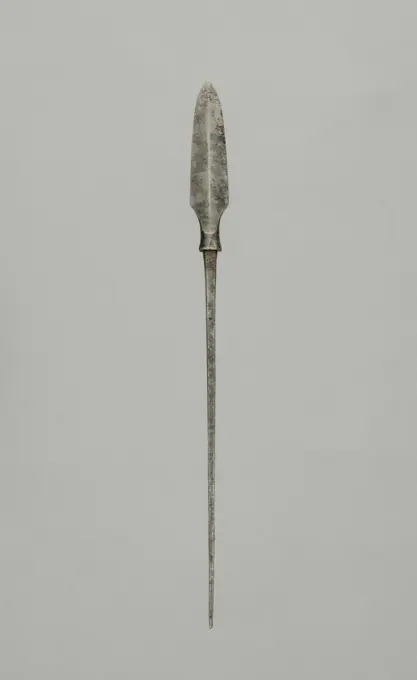
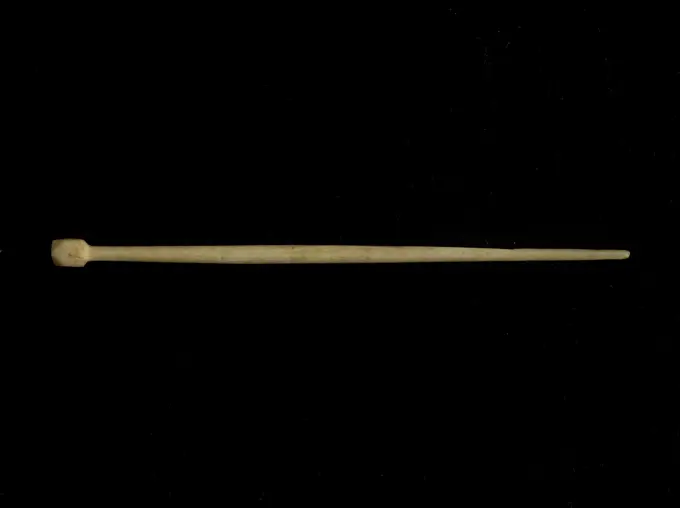
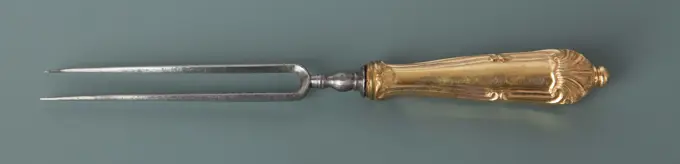
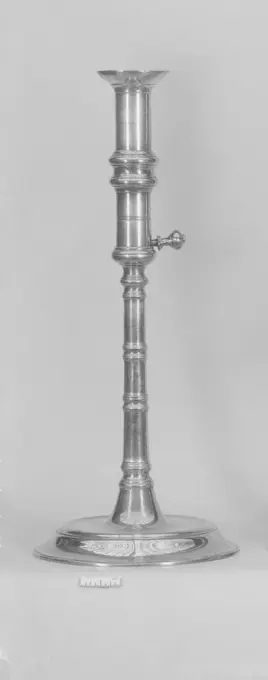
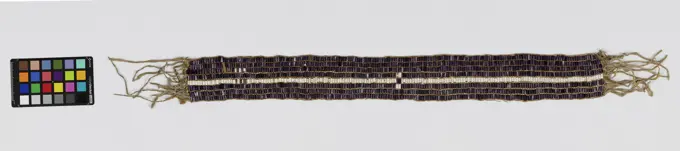
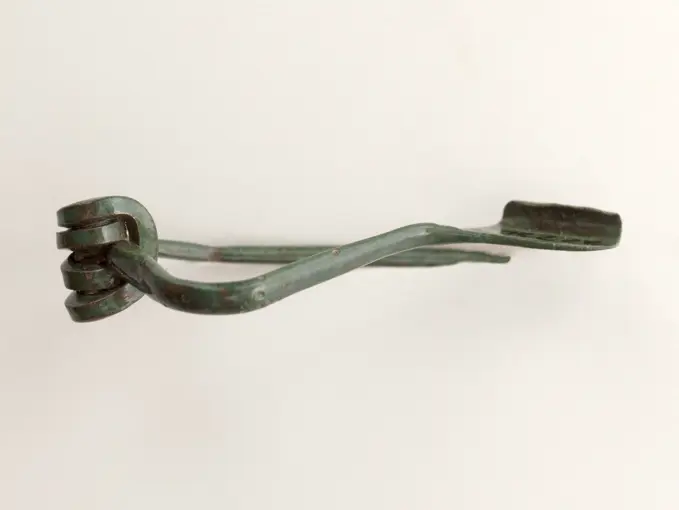
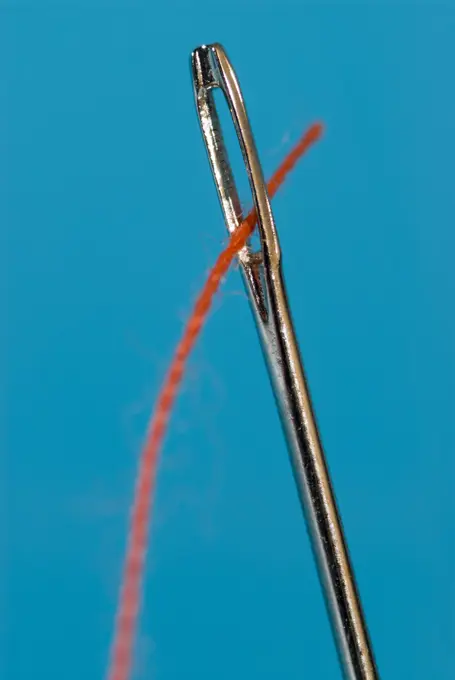
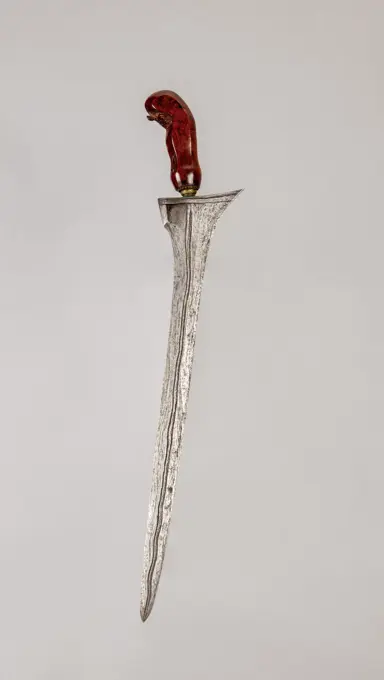
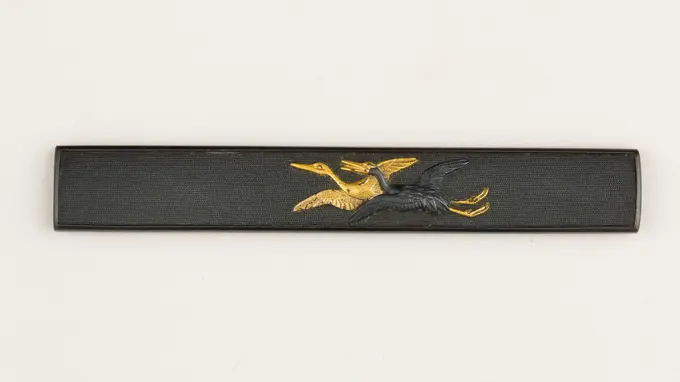
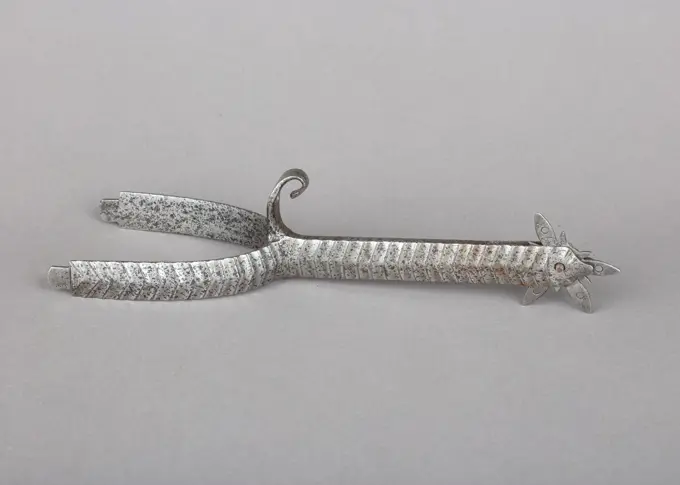
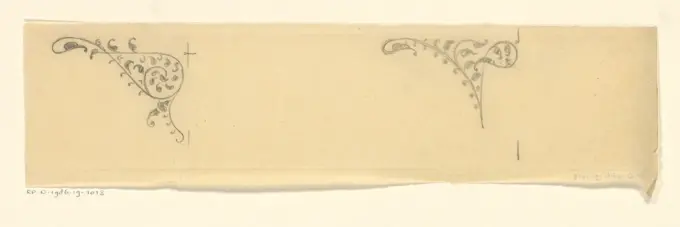
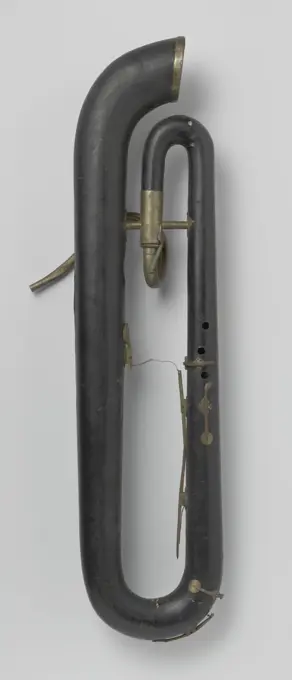
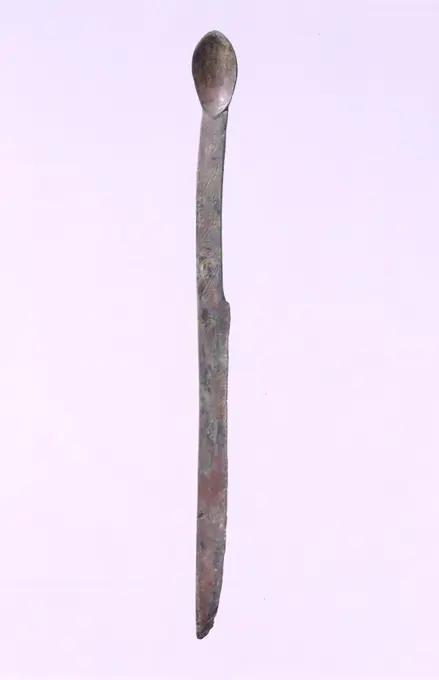
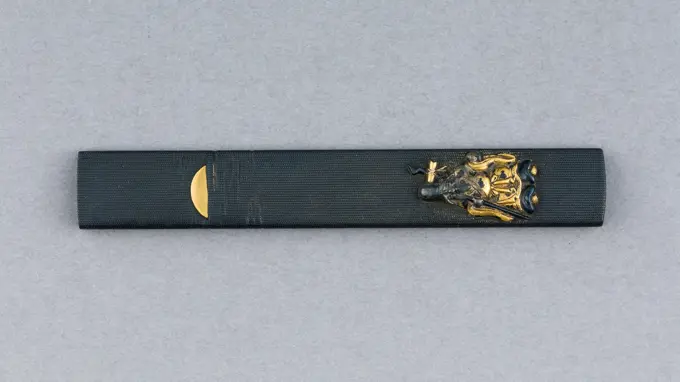
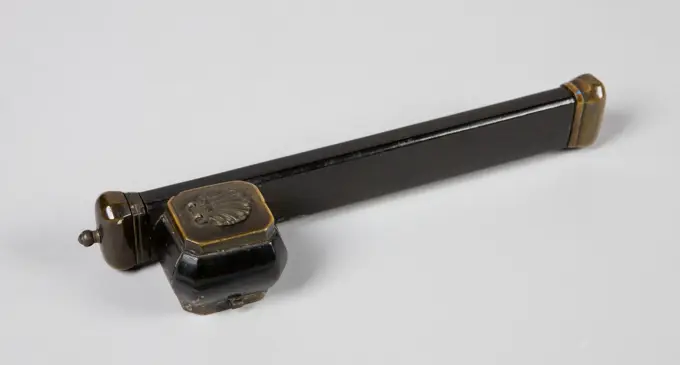
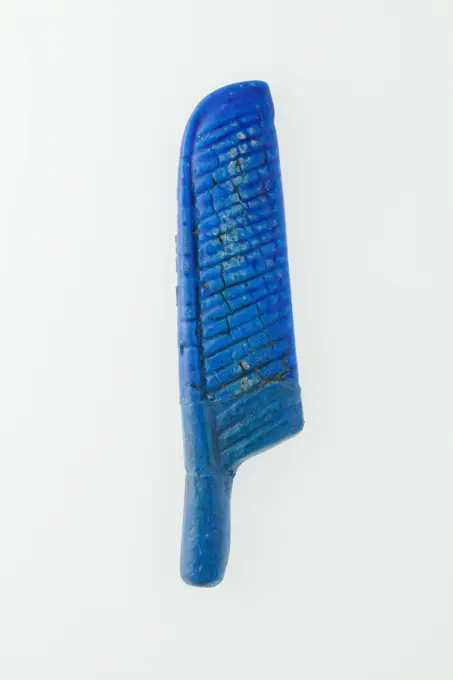
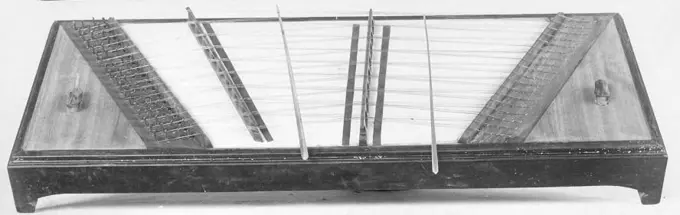
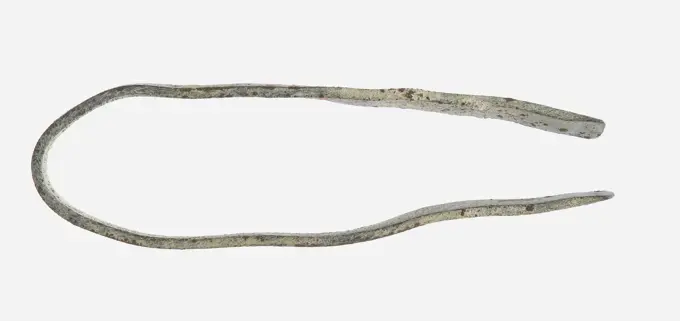
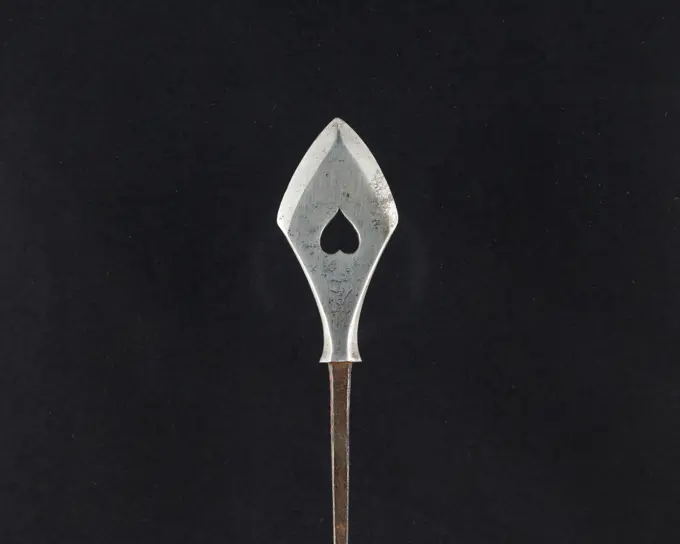
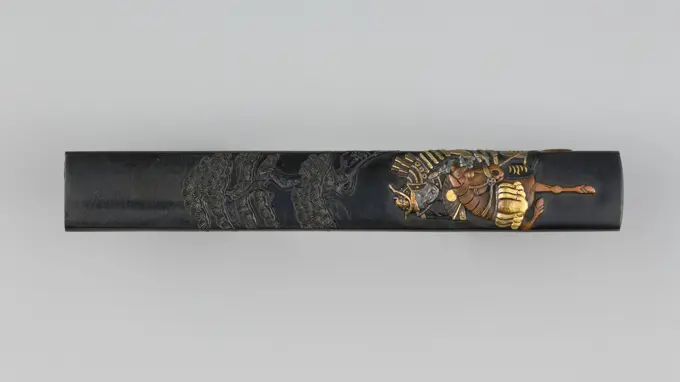
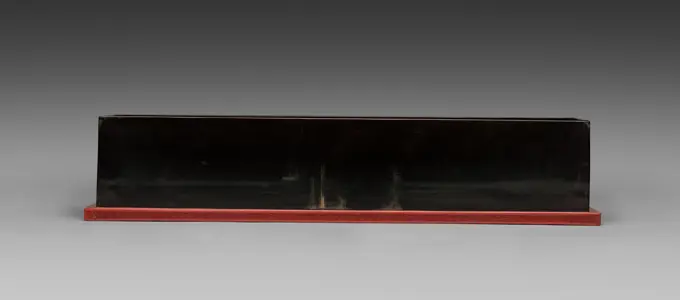
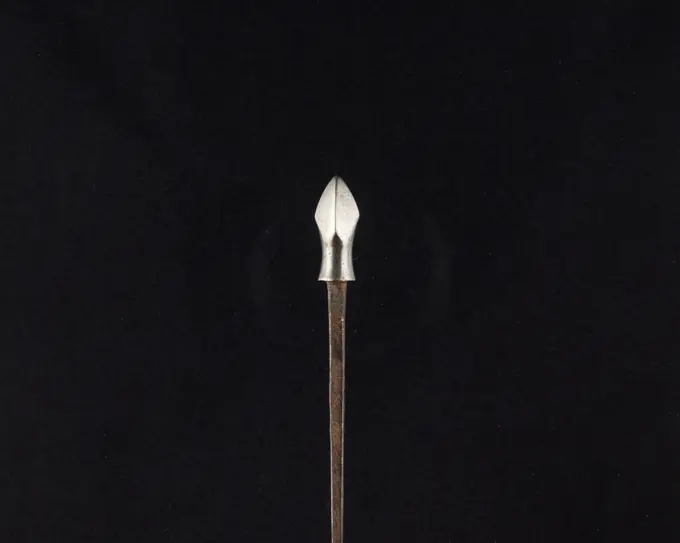
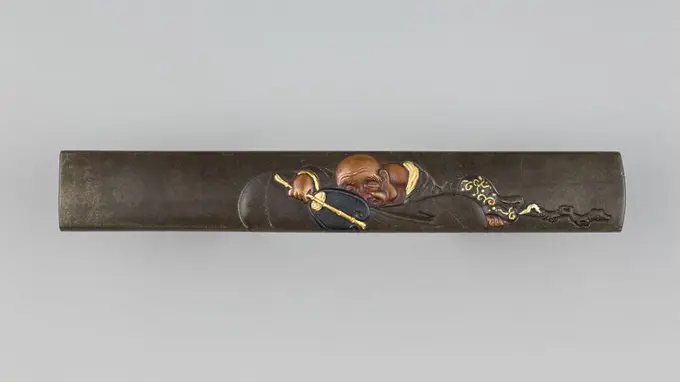
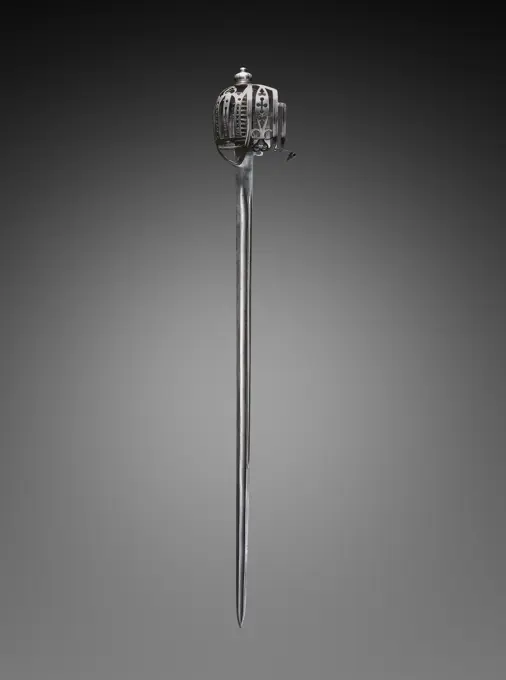
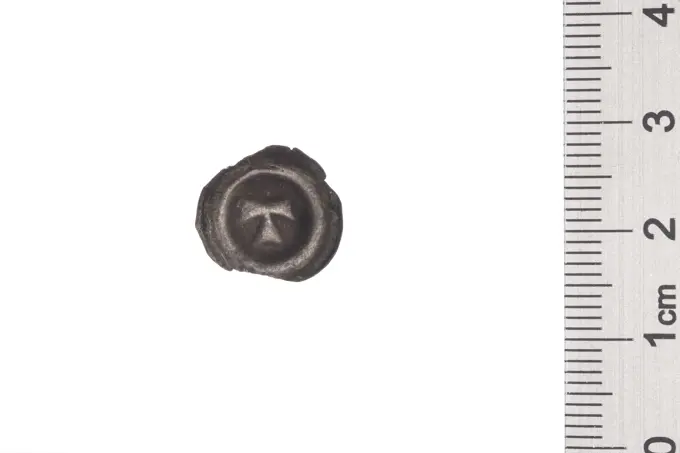
Attic Black-Figure Eye Cup Rim Fragment. UnknownBracelet isolated on the white backgroundFragmentary Fibula. UnknownArrow Point, 1700s. Japan, Edo period (1615-1868). Steel; overall: 18.5 cm (7 5/16 in.); head: 5.8 cm (2 5/16 in.).Medical Instrument or Stylus. UnknownHair pin. Gallo-Roman. Bone. Paris, Carnavalet museum. Archaeological vestige, bone, hair hair, Gallo-Roman time, era, gallo-romain, gallo-roman, hairpin, object, object, bone, period, toilet, archeological vestige, toiletCopper Needle before 16th century Peruvian. Copper Needle 315654Unmarked, Caddy Spoon, c. 1800-15, silver.Spoon, silver, Pointed oval bowl, twisted stem, circular crusher terminal., Paris, France, mid-19th century, cutlery, Decorative Arts, SpoonNecklace -ForkCandlestick 1700-1750. Candlestick. 1700-1750. BrassGlass bottle 4th-5th century A.D. Roman Translucent blue green; handle and trails in translucent cobalt blue.Thick rim, folded over and in, forming narrow, irregular mouth; tall cylindrical neck with slightly concave side and tooled horizontal indent at base; small piriform body; thick bottom, tooled into solid knob base tapering to point, with pontil scar; rod handle applied to sides of neck, forming arched loop over mouth.Trail decoration comprises eight elements: from top to bottom, a single horizontal trail around upper neck, a spiral trail wound four times around neck, another spiral trail wound five times around neck, a single thick horizontal trail around lower neck, a spiral trail wound eight time around body, a single thick horizontal trail around top of base knob, another single thick horizontal trail around lower down base knob, and a thick trail drawn across bottom of knob.Intact, but parts of trail around body missing and also one side of trail across bottom of knob base (Spoon 1680-81 Possibly by Benjamin Prosser. Spoon 192258Vaginal knowledgePair of candlesticks European probably 19th century View more. Pair of candlesticks. European. probably 19th century. Brass. Metalwork-BrassFestival frame serpentine concept banner. Realistic illustration of festival frame serpentine vector concept banner for web design. Festival frame serpentine concept banner, realistic styleWampum belt -Looking Glass. Culture: American or British. Dimensions: 48 x 20 in. (121.9 x 50.8 cm). Retailer: John Elliott Sr. (1713-1791). Date: 1762-67. Museum: Metropolitan Museum of Art, New York, USA.Fibula. Copper alloy. Ie-iiie century. Paris, Carnavalet museum. 51539-6 Staple, copper alloy, attachment, Gallo-Roman time, fibula, Gallo-RomanPin Roman. Pin. Roman. Bronze. BronzesMam late 19th century David James Blaikley British. Mam. Egyptian (repro). late 19th century. Wood. Egypt (British repro). Aerophone-Reed Vibrated-pipeEdward Bashaw, Ink Marking Pen, c 1940 Ink Marking PenArrow Point, 1700s. Japan, Edo period (1615-1868). Steel; overall: 19.2 cm (7 9/16 in.); head: 18.8 cm (7 3/8 in.).Red thread into a needle thread the thread into a needleFibula with the head of the snake; unknown, unknown South -Lady workshop; V-IV century BC (-500-00-00--301-00-00);Sword (Kris), 1800s. Java. Iron with carved wooden handle; overall: 46.1 cm (18 1/8 in.); blade: 36.5 cm (14 3/8 in.).Arrowhead (Yanone) 18th century Japanese Although today Japanese warriors are renowned most for their swordsmanship, archery, especially from horseback, has been an essential part of samurai warfare and culture for centuries. Arrows were fitted with heads of varying shape according to their intended use in war, the hunt, or target practice. Arrowheads made for use on the battlefield incorporated different designs intended for specialized purposes such as the piercing of armor or to cause maximum damage to horses and unarmored personnel.Large arrowheads, pierced and elaborately chiseled with landscapes, birds, flowers, dragons, and Buddhist divinities, were created to be admired for the beauty of their metalwork and design rather than for use in archery. Such highly elaborate examples may have been made for presentation or as a votive offerings to a shrine.. Arrowhead (Yanone). Japanese. 18th century. Steel. Archery Equipment-ArrowheadsMarriage Scroll Case. Sri Lanka, 18th century. Tools and Equipment; cases. SilverForks, vintage engraved illustration.Shroud strut with twisted (ebony) Wooden handle, in metal setting whimsical twig with many side arms, stirring stick stirrer kitchenware wood coral metal, blown rad engraving Candy beater (stirring stick) made of wood and coral farewell birth birth share candy glass candy beater birthBottle with two white fillets 16th century probably Spanish. Bottle with two white fillets. probably Spanish. 16th century. Glass. Glassrusty iron chain isolated on white rusty iron chain isolated on white background Copyright: xZoonar.com/ValeryxVoennyyx 6191806Knife; imari porcelain, silver, steel; L x W: 27.6 x 2.5 cm (10 7/8 x 1 in.); The Robert L. Metzenberg Collection, gift of Eleanor L. Metzenberg; 1985-103-225Fragment of the lace;  End of the 17th century (1691-00-00-1700-00-00);Child's Sword, c 1780. France, Paris, 18th century. Stainless steel, silver and brass wire inlay; overall: 73.7 cm (29 in.).Knife Handle (Kozuka) late 18th-early 19th century Japanese A kozuka is a handle of a by-knife that is part of a sword mounting. It is kept in a slot on the reverse of a katana scabbard, often with a matching kōgai (hairdressing tool).. Knife Handle (Kozuka) 26163Rowel Spur, in the Style of the 15th-16th Century 19th century German This spur, probably made in the 19th century, reproduces the style of an early 15th-16th century German example.. Rowel Spur, in the Style of the 15th-16th Century. German. 19th century. Iron alloy. Equestrian Equipment-SpursVase 101 CE-200 CE Syria. Glass, blown technique . Ancient LevantineFUSIL AMETRALLADOR VICKERS BRITANICO DE 7,7 mm. CON CARGADOR CIRCULAR Y BIPODE REPLEGADO. Location: ALCAZAR / MUSEO DEL EJERCITO-COLECCIÓN. Toledo. SPAIN.Belt -Drill for carving jade 20th century China These steel drills with blunt points (zhuangding or dingzi in Chinese), flat heads (tuozi), or curving heads (wazi) are used for high relief carving, undercutting, and fine shaping of small jade works. The craftsman holds the jade in one hand against the drill, which is mounted on a spinning shaft. He or she rotates the shaft using foot treadles, while continuously applying abrasives, usually sand mixed with water, to the tip of the drill, which cuts the jade.. Drill for carving jade 62066Very small pewter fetch, fire tools and toys, fetch miniature toy relaxant soil find tin metal, cast Fragment of miniature toy probably oblong strip of tin with saw teeth on one side and slanting eye on the other side. Decorated with pseudo characters archeology Rotterdam child play child's play Soil discovery: Rotterdam.Copper alloy spearhead ca. 2500-2000 B.C. Cypriot Leaf-shaped blade with a hooked tang.. Copper alloy spearhead. Cypriot. ca. 2500-2000 B.C.. Bronze. Early Bronze Age. BronzesPastoral staff 19th century, after 17th century original British, after Russian original This electrotype is after a seventeenth-century original a treasure of the Patriarch, Moscow, at the time of reproduction.. Pastoral staff. British, after Russian original. 19th century, after 17th century original. Silver on base metal. Metalwork-ElectrotypeClose-up of a fluteCord with tassel, Medium: silk, metallic thread Technique:, Sword carrier made of long white silk cord trimmed with elaborate tassels of gold, sequins and cut glass. Bodies of tassels made of gold thread, and the skirts are made of twisted gold threads. Cords furnished with silk and gold rings to slip and adjust cords for use as a sword carrier., France, 1700-1750, trimmings, Cord with tasselOld classic vintage shaver razor on a black background. Old vintage shaver on a black backgroundFlower ornaments, Reinier Willem Petrus de Vries (1874-1953), 1884 - 1952 drawing   tracing paper. pencil  flowers ~ ornamentSerpent, anonymous, c. 1815 - c. 1830 musical instrument. wind instrument. serpent Elongated serpent, with 5 valves and 7 holes, consisting of a wooden tube covered with thin black leather that broadens towards the cup. The valves are of (partly fire gilt) copper. The batter is made of metal. A copper band is attached around the cup with nails. The inside of the cup is painted red with vines: the leaves in gold and black and the grapes in blue and gold. The mouthpiece is missing. Europe wood (plant material). copper (metal). metal. leather bending / sawing / soldering / painting / forging / casting / gildingTrench craftsmanship. Vase made of artillery scales for the field Schneider WZ 1897, cal. 75 mmCopper alloy spearhead ca. 2500-2000 B.C. Cypriot Leaf-shaped blade with a hooked tang.. Copper alloy spearhead 244157Bronze Sword, Mycenaean, from Corfu. Dated 12th Century BCKnife-Spoon first half of the 1st millennium B.C. Northeast China. Knife-Spoon 58543Soprano Curtal in C 19th century Probably French. Soprano Curtal in C. Probably French. 19th century. Wood, brass. France. Aerophone-Reed Vibrated-double reedKnife Handle (Kozuka) ca. 1615-1868 Japanese A kozuka is a handle of a by-knife that is part of a sword mounting. It is kept in a slot on the reverse of a katana scabbard, often with a matching kōgai (hairdressing tool).. Knife Handle (Kozuka) 34707Guitar back deck. back of the lacquered wooden guitar soundboardSilversmith's Art, 20th century. Koloman Moser (1868-1918), Silver vase with fretwork motif, Art Nouveau style, 1904.Wheellock Rifle dated 1668 Caspar Spät German The buttplate is inlaid with a griffin bearing a sword (the coat of arms of the Spät family), suggesting that this rifle was made for personal use by Caspar Spät or another family member.. Wheellock Rifle 23339Close-up of a beadBuckle China. Buckle 61213Inkwell with the pen of a bachelorBlack mannequin on a over white backgroundInlay, hieroglyph 664-610 B.C. Late Period, Saite A quantity of faience hieroglyphs and border elements was found in the tomb or courtyard of Nespekashuty. These are displayed in galleries 127 and 130. They are of similar size and manufacture, so seem to have belonged to a single object, likely of wood. Some of the signs belong to the standard offering formula, others mention Osiris and Anubis, so they certainly suggest an item of funerary furniture - a box, a screen, or a coffin although coffins are not usually inlaid in faience and remnants of Nespekashuty's were painted.Unfortunately, there are no signs indisputably pointing to Nespekashuty's names or titles. Although it seems likely that the fairly elaborate piece of equipment to which they testify belonged to the main burial of this tomb, and not to the Third Intermediate Period burials found in the courtyard or to the material apparently cleared from the Hathor Shrine at Deir el Bahri or to the other sets of late shabtis found inFlute.Flute of ebony with ivory. Signature: Apelberg Copenhagen.Hammered Silver Tube 8th-mid-16th century Peru; north coast (). Hammered Silver Tube 309193Yangqin () 19th century Chinese. Yangqin (). Chinese. 19th century. Wood. China. Chordophone-Zither-struck-dulcimerTweezers ca. 1390-1353 B.C. New Kingdom. Tweezers. ca. 1390-1353 B.C.. Bronze. New Kingdom. From Egypt, Upper Egypt, Thebes, Malqata, Palace of Amenhotep III, Houses G-K, MMA excavations, 1910-11. Dynasty 18Model of a Made Mast, Mauritzen, 1828 demonstration model Round mast with square top, ears, side bowls and driving bed, damaged. The mast itself consists of a mast king surrounded by eight cheeks; Four cheeks are quite heavy, the four that fill the corners are very thin. The heavy cheeks at the front and rear become thicker and broaden at the height of the Hommer and form the driving bed and the flat back piece; The heavy cheeks on the sides run all the way up, where they form the square top together with the king. The cheeks and mast king are connected to nuten and welding against sliding; The tub tires have been painted. The side bowls have been extended and widened and form the ears. Scale 1:12 (scale on model). Java wood (plant material)Suona ( ) body late 19th century Chinese. Suona ( ) body. Chinese. late 19th century. Wood, brass. China. Aerophone-Reed Vibrated-double reedParrying Dagger. Spanish. Date: 1690-1710. Dimensions: L. 56 cm (22 1/6 in.)Blade L. 45.5 cm (17 7/8 in.)Wt. 1 lb. 7 oz. Steel, wood, copper, and iron. Origin: Spain. Museum: The Chicago Art Institute, Chicago, USA.Arrowhead (Yanone) 18th century Japanese Although today Japanese warriors are renowned most for their swordsmanship, archery, especially from horseback, has been an essential part of samurai warfare and culture for centuries. Arrows were fitted with heads of varying shape according to their intended use in war, the hunt, or target practice. Arrowheads made for use on the battlefield incorporated different designs intended for specialized purposes such as the piercing of armor or to cause maximum damage to horses and unarmored personnel.Large arrowheads, pierced and elaborately chiseled with landscapes, birds, flowers, dragons, and Buddhist divinities, were created to be admired for the beauty of their metalwork and design rather than for use in archery. Such highly elaborate examples may have been made for presentation or as a votive offerings to a shrine.. Arrowhead (Yanone). Japanese. 18th century. Steel. Archery Equipment-ArrowheadsSouvenir spoon with view of Medici Palace, Florence European late 19th centuryClose zip seamless. Realistic zipper fastener vector. Metallic gold silver white elegant zip locker. Graphic illustrationPectoral made of gold, precious stones and vitreous pastes with udjat eye of Horus, from Treasure of TutankhamenOboe, anonymous, c. 1850 Hobo of Glamped Esdoornhout with Berlin's silver valves. Paris maple (wood). German silver Hobo of Glamped Esdoornhout with Berlin's silver valves. Paris maple (wood). German silverRazor shell, Razor clam, Razor fish, Sword razor (Ensis arcuatus) shells on white backgroundStaff, forked ca. 1550-1295 B.C. New Kingdom. Staff, forked. ca. 1550-1295 B.C.. Wood, European White Birch. New Kingdom. From Egypt, Upper Egypt, Thebes, Dra Abu el-Naga, Carnarvon/Carter excavations, before 1911. Dynasty 18Knife Handle (Kozuka) late 18th-early 19th century Hamano Naochika Japanese A kozuka is a handle of a by-knife that is part of a sword mounting. It is kept in a slot on the reverse of a katana scabbard, often with a matching kgai (hairdressing tool).. Knife Handle (Kozuka). Japanese. late 18th-early 19th century. Copper-gold alloy (shakud), gold, silver, copper. Sword Furniture-KozukaDrill, vintage engraved illustration. Industrial encyclopedia E.-O. Lami - 1875.Frank Eiseman, Weather Vane, c 1939 Weather VaneThe elaborate design, superior craftsmanship, and inscription carved into the red cinnabar lacquer proclaim the imperial pedigree of this scroll box. On either end appears a five-clawed dragon, a design reserved only for an emperor. More dragons twist and wind through swirling clouds and waves along the length of the boxs sides and top. The carving is intricate and vigorous, while the design is controlled and regular. This box originally housed the handscroll, CMA 1969.31, private portraits of the Emperor Qianlong, his empress, and 11 other favorites among his presumed 40 or more wives during his 60-year reign. Base for a Carved Lacquer Scroll Box, 1736-95. China, Qing dynasty (1644-1911), Qianlong reign (1736-95). Cinnabar carved lacquer on wood; overall: 14 x 14.7 x 59 cm (5 1/2 x 5 13/16 x 23 1/4 in.).Salad bowl;  the beginning of the 20th century (1901-00-00-2000-00-00);Trim, 19th century, 20 x 2 1/2 in. (50.8 x 6.35 cm), Silka; passementerie, United States, 19th centurypaintbrush stationery hand drawn vector. paint pallette, watercolor painter, thick thin brush paintbrush stationery sketch. isolated black illustration. paintbrush stationery sketch hand drawn vectorTube for Eye Paint (Kohl) in the Shape of a Papyrus Column ca. 1550-1295 B.C. New Kingdom. Tube for Eye Paint (Kohl) in the Shape of a Papyrus Column 552604Hair pin ca. 1981-1640 B.C. Middle Kingdom. Hair pin. ca. 1981-1640 B.C.. Bone. Middle Kingdom. From Egypt, Memphite Region, Lisht North, Cemetery, MMA excavations, 1906-07. Dynasty 12-13Arrowhead (Yanone) 18th century Japanese Although today Japanese warriors are renowned most for their swordsmanship, archery, especially from horseback, has been an essential part of samurai warfare and culture for centuries. Arrows were fitted with heads of varying shape according to their intended use in war, the hunt, or target practice. Arrowheads made for use on the battlefield incorporated different designs intended for specialized purposes such as the piercing of armor or to cause maximum damage to horses and unarmored personnel.Large arrowheads, pierced and elaborately chiseled with landscapes, birds, flowers, dragons, and Buddhist divinities, were created to be admired for the beauty of their metalwork and design rather than for use in archery. Such highly elaborate examples may have been made for presentation or as a votive offerings to a shrine.. Arrowhead (Yanone). Japanese. 18th century. Steel. Archery Equipment-ArrowheadsBow before 1750 French. Bow 506718Gift Tapp. >>Smart dagger Smart dagger of the medieval soldier. It was used for hunting Copyright: xZoonar.com/VALERY-SIBRIKOVx 20011081Knife Handle (Kozuka). Culture: Japanese. Dimensions: L. 3 13/16 in. (9.7 cm); W. 9/16 in. (1.4 cm); thickness 3/16 in. (0.5 cm); Wt. 1.2 oz. (34 g). Maker: Hamano Toshihiro (Japanese, died 1861). Date: late 18th-mid-19th century. Museum: Metropolitan Museum of Art, New York, USA.Basket-Hilt Broadsword, c. 1740. Scotland, Stirling(), 18th century. Steel, pierced hilt; wood and leather grip; overall: 106.6 cm (41 15/16 in.); blade: 91.3 cm (35 15/16 in.); grip: 11.3 cm (4 7/16 in.); hilt: 14.6 cm (5 3/4 in.).bracteate heller. Toszek, issuerEastern hatchetFragment of a pipes stem from the wreck of the East India Flying Heart. Part of a handle of an earthen Gouda pipe, blue-witten in color. Fragments or bowls and votes.Standard from the bridle of the horse Alice that was ridged by the Prince of Orange on 12 August 1831. Wooden black painted standards consisting of one long and two shorter parts with a wide round pedestal and a narrower around top piece between which a circumcised rotated stake is attached. At the standard there is a paper with a wax seal and a description of the origin of the object. The horse was shot from the horse by a gun bullet on the aforementioned date at Bautersem.Bottle 17th century possibly Dutch. Bottle. possibly Dutch. 17th century. Glass. GlassTurkish crescent, 1825 - 1832 musical instrument. percussion instrument. Turkish crescent A Turkish Schelleboom. Worn by the Eleve musician A. Maas, chapelmaster J. Barnevel, Major Boelen, Colonel F () Stroecker. 12th Infantry Department. Netherlands (possibly)Sketch cute pen and pencil in vintage style