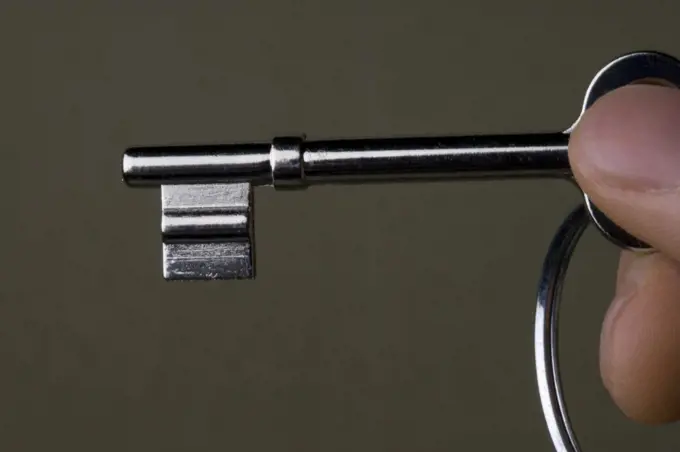
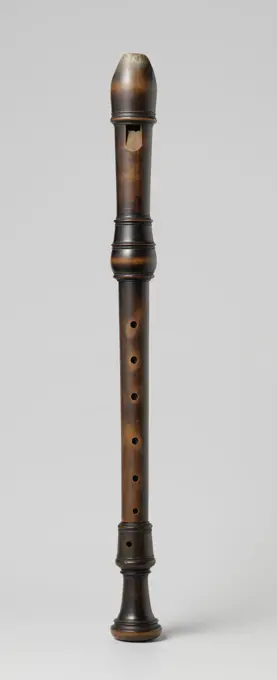
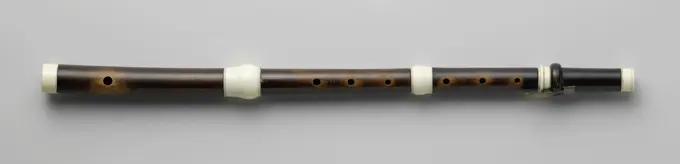
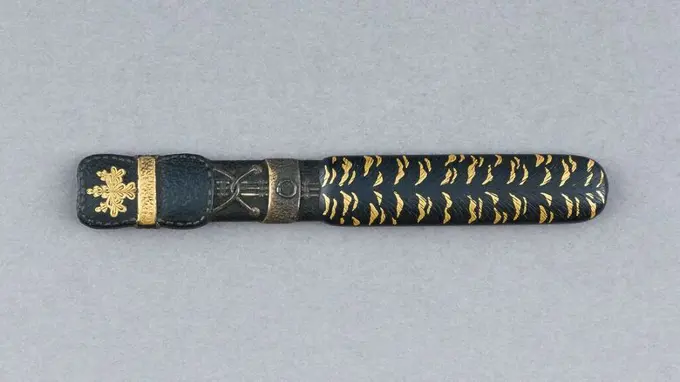
Historical Weapons

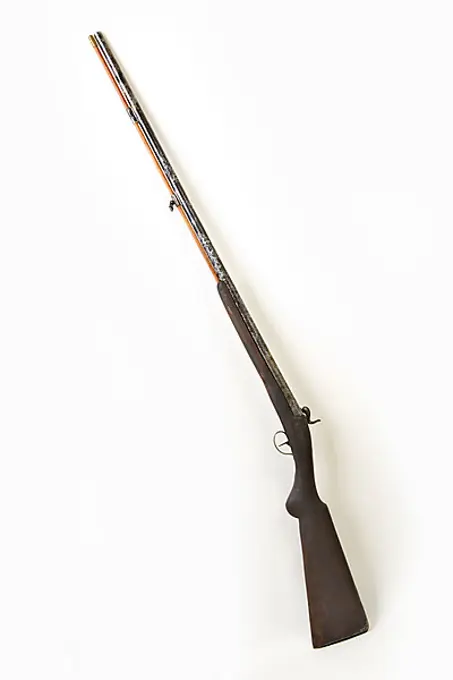
A range of historical weaponry, featuring swords, daggers, and flintlock rifles, showcasing intricate designs, materials, and craftsmanship from various eras.
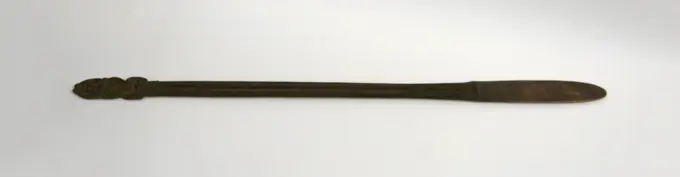
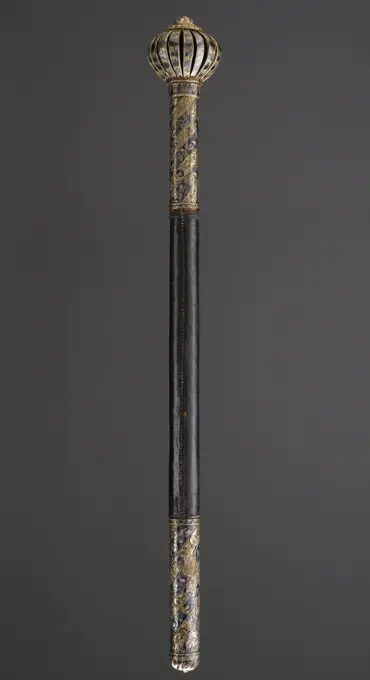
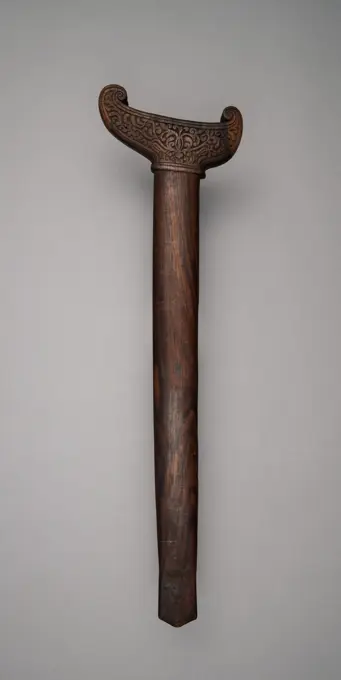
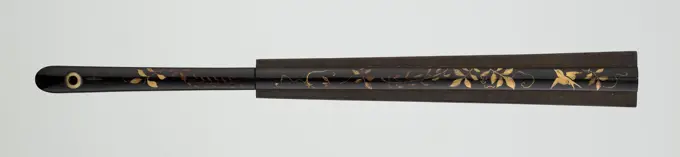
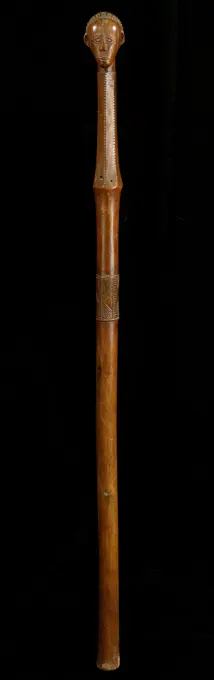
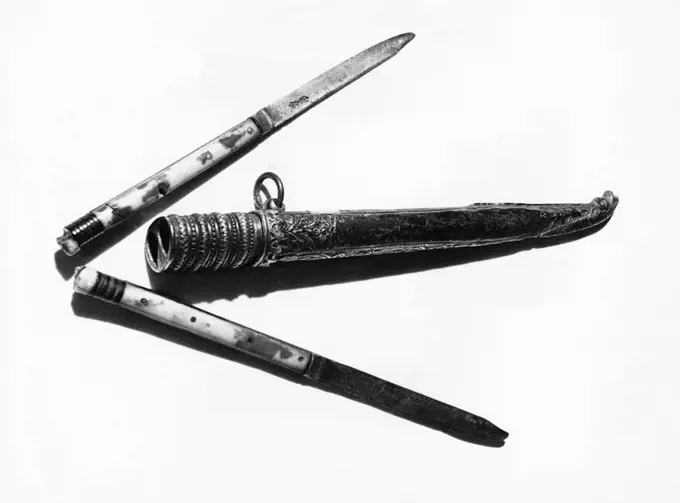
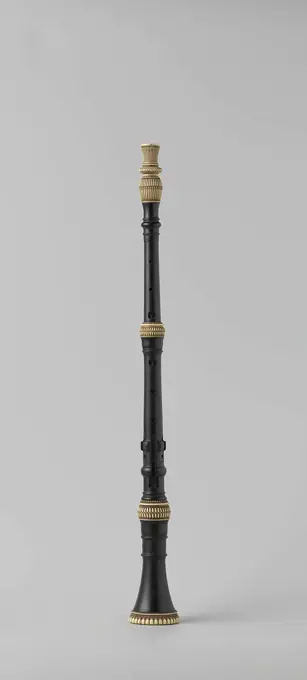
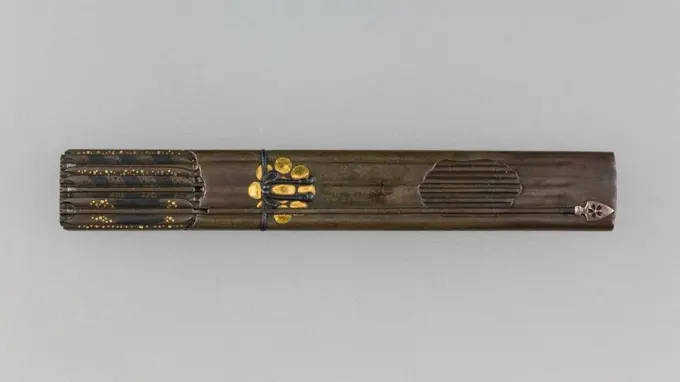
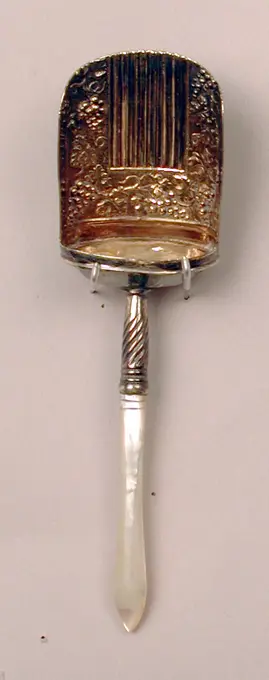
Sago Paddle, late 19th-early 20th century, 45 5/16 x 2 7/16 x 3/4 in. (115.09 x 6.19 x 1.91 cm), Wood, Papua New Guinea, 19th-20th century
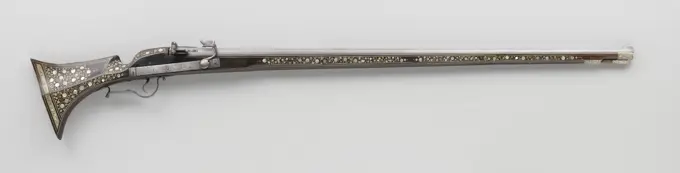
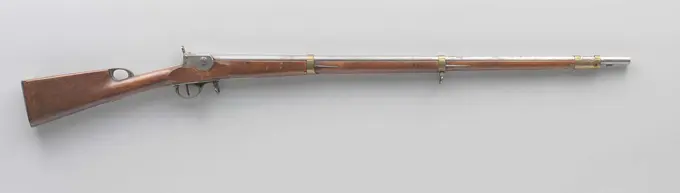
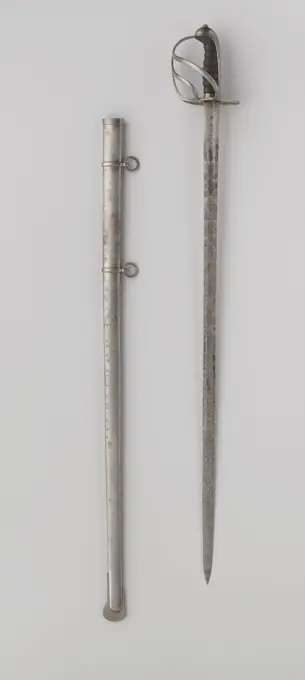
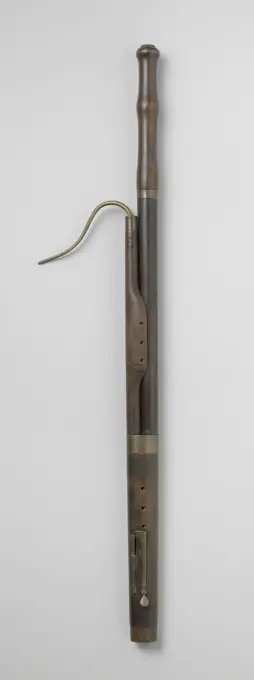
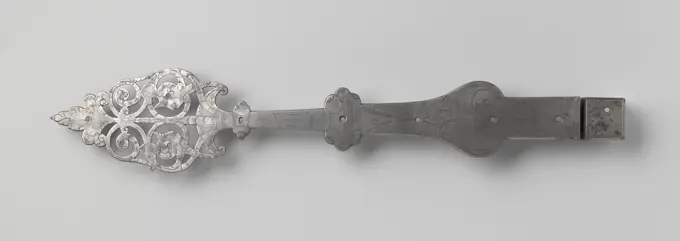
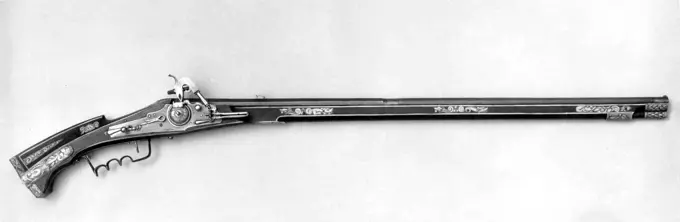
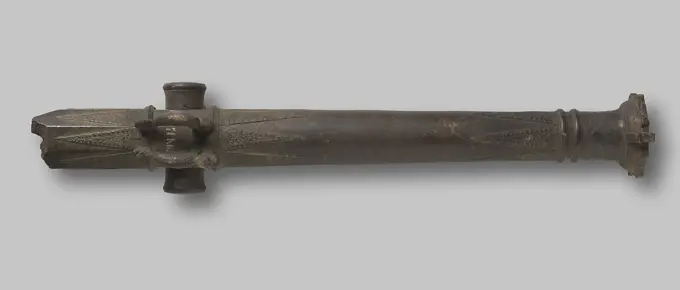
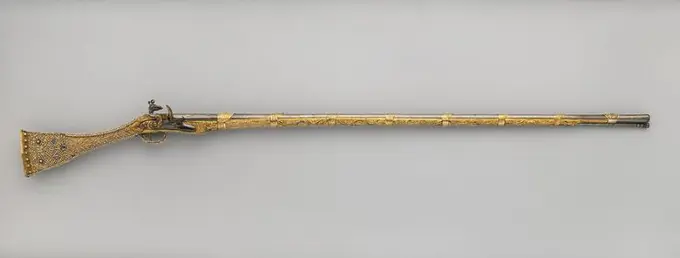
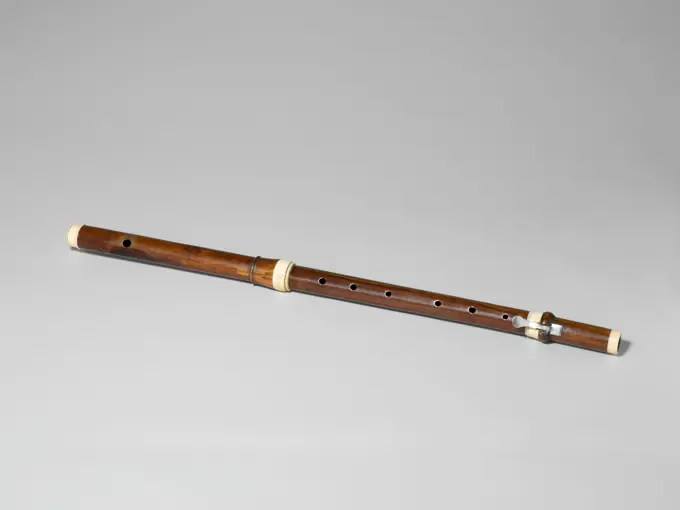
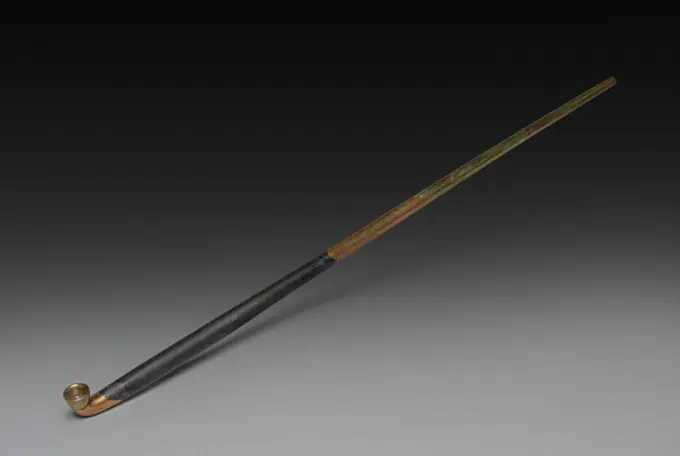
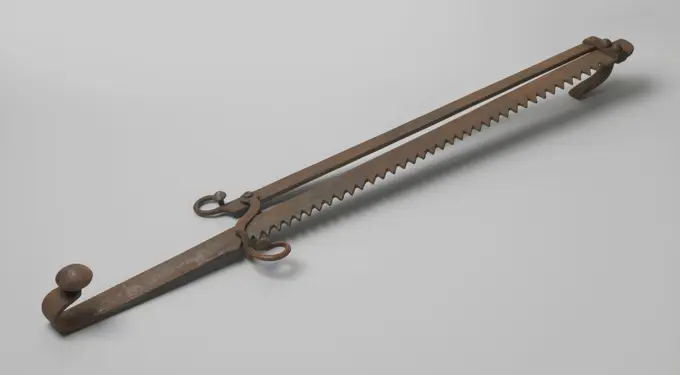
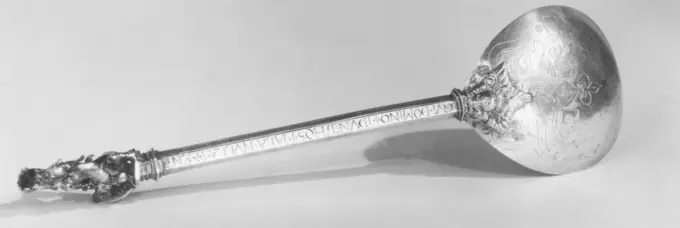
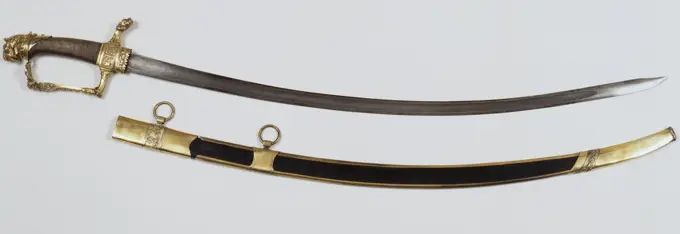
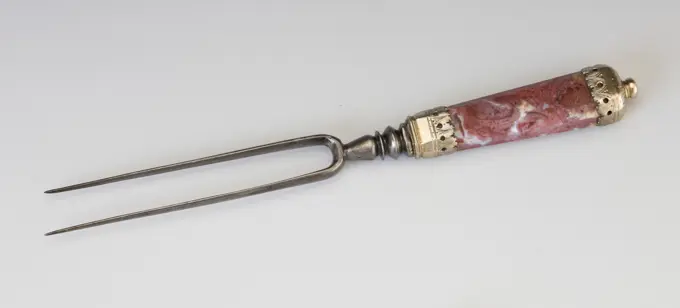
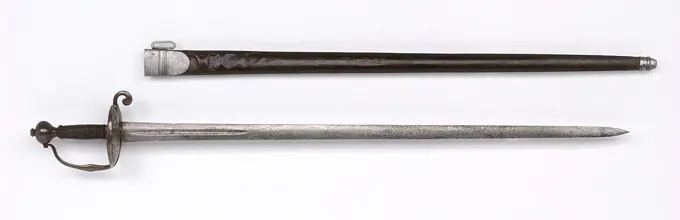
Zwaard met schede.Épée wallonne with authentic sheath. The iron hilt consists of an anti-clock with a prominent angel button on it and the fist bracket to be screwed into both the pearl rod with a curl at the end and a small, four-leaf flour on the end knob stamped, as in the parallel brackets that are filled with an Ajour processed plate with circles and asterisks; provided with a thumb bow; The wooden handle is thicker in the middle and wounded with a challenge wire of different thicknesses and a braided grip ring on top and bottom. The straight blade is two-sided and has labeled a groove on both sides with Sahagom and under the groove a running wolf; On the Angel stamped with a crowned monogram BC, on a side under the arms of Amsterdam. The wooden sheath is covered with oil cloth and equipped with an iron lock, a carrier ring on the right and an iron bottom strap.DaggerPrzeszo Przyszoci unknownScabbard, Before 1916. Philippines. overall: 1.3 cm (1/2 in.).Flining stone rifle Amsterdam militia, Anonymous (attributed to), 1782 flintlock gun The final plate is stamped on the inside with an unclear brand. At the back of the loop is a wide ring with the remains of the Amsterdam brand and not to be identified on the bottom; There is a bayonethaft under the tromp. The flask is simply cut. The yellow-loving batter includes two sliding running loops, an S-shaped screw plate and a thumb plate engraved with 1782 // W.K. 31. // N = 89; The loading stick is made of steel. Amsterdam brass (alloy). steel (alloy) engraving  AmsterdamIg A;Percussion Gun, anonymous, 1843 percussion rifle PERCUSSIE transformed flint rifle, front loader with a slippery loop. The loop has five flat sides at the room, a chimney, and is decorated with crossed anchors and wears a date stamp 1818; There is a visor at the connection of the tail piece. The lock is a converted flint lock, the flint rooster replaced by a percussion rooster, the pan sagged, pandel and pan spring removed. The gun has a leather carrying tape; The loading stick is missing. There is an unclear red paint stamp on the flask. With bayonet. Netherlands iron (metal). brass (alloy). wood (plant material). leather.Sago Paddle, late 19th-early 20th century, 45 5/16 x 2 7/16 x 3/4 in. (115.09 x 6.19 x 1.91 cm), Wood, Papua New Guinea, 19th-20th centuryMatchlock caliver, anonymous, 1600 - 1625  The rectangular lock plate is cut with groups of lines, engraved with a leaf ornament and stamped with the brand of a hunting horn. The barrel is equipped with an iron vizier grain on the tromp and a rearvizier in the form of a block with a groove entered and a cross -shaped extension on the front; transformed fire screen, with a partially ajour processed upper edge; The bottom of the pan soldered to the loop has a cross and beads in relief; Stamped at the bottom with a brand in the form of a hand. The walnut flask has a triangular handle; Inlaaded with cow horn in panels formed by double strips, filled with a tendril pattern and circles, engraved with spirals or with leaves, and with larger circles of mother -of -pearl in between. Apart from the iron tractor bracket whose rear part of the flask is removed, the batter is of engraved cow horn and consists of two drawers in the front, engraved with panels with overlapping leaves, pumping sheets Dessert fork; Würtembergische metallwarefabrik - WMF (Germany; Wytwónia Z Otnarz; 1880-1914); after 1880 (1890-00-00-1914-00-00);Breech-Loading Gun, Robert System.Back chargle with internal percussion lock and bayonet with sheath. Smooth loop. The room is opened by folding an arm on the flask, with which the rooster is tensioned at the same time. The rooster is brought down and strikes upwards against a small inflammatory tube of the paper pattern.Officers' label with Schede Light Cavalerie No. 4 of W.J.K. Van Rappard, Anonymous, in OR After 1849 - Before 1879 sabre Officer model cavalry label with hilt and sheath, originating from the heavy cavalry M 1849. Widded by W.J.K. Knight of Rappard. Kling long, straight and two-sided cutting. On one side inscription: 'Me fecit' and on the other: '1534'. De Schede has two tires and loose rings. The blade is probably not authentic. West-Europa Kling, handcap, Schede: Iron (Metal). Korf, Angel, Sleepplaat: Iron (Metal). Handle: Leather   NetherlandsBassoon, Johannes van de Knikker, c. 1780 - c. 1800 Fagot of maple wood with four copper valves and with eight uncovered holes. Copper "s" and copper rings of which the lower one is missing. Tilburg maple (wood). copper (metal) Fagot of maple wood with four copper valves and with eight uncovered holes. Copper "s" and copper rings of which the lower one is missing. Tilburg maple (wood). copper (metal)simple needle-holder, medical equipment, surgical instrument, history of medicineSword and Scabbard (scabbard), 1700s. Java, 18th century. Steel and ivory; blade: 47 cm (18 1/2 in.); hilt: 12.8 cm (5 1/16 in.); scabbard: 51.4 cm (20 1/4 in.).Hair pin ca. 1700-1550 B.C. Second Intermediate Period. Hair pin. ca. 1700-1550 B.C.. Ivory. Second Intermediate Period. From Egypt, Memphite Region, Lisht North, Tomb of Nakht (493), outside NE corner, Pit 468, MMA excavations, 1913-14. Dynasty 13, late-18, earlyTeutonic two handed swordStaffInkwell with a pencil caseMusketmaat, complete with leather sleeve and string. Musketmaat, complete with leather sleeve and string.Dagger (Kaiken);  19th/20th century (1867-00-00-1912-00-00);clean packing aluminium. net design of packaging made of aluminium. For foodSeat chisel with sloping cut and around handle. Seat chisel with sloping cut and around handle. The chisel has been demolished.Bow, anonymous, c. 1700 Bow for Bass-Viola da Gamba. Netherlands (possibly) Bow for Bass-Viola da Gamba. Netherlands (possibly)Door stalk of iron iron, decorated with engraving and fool heads, anonymous, 1600 - 1700 Door stalk of eater decorated with engravings. The batter is from the hinge as follows: a baluster -shaped start, transfersing into a narrow, straight from which some leaf motifs spring from the end, which curls like volutes. In the middle of it, two fool heads look at each other. The whole ends in a pointed leaf.  iron (metal). tin (metal) engraving Door stalk of eater decorated with engravings. The batter is from the hinge as follows: a baluster -shaped start, transfersing into a narrow, straight from which some leaf motifs spring from the end, which curls like volutes. In the middle of it, two fool heads look at each other. The whole ends in a pointed leaf.  iron (metal). tin (metal) engravingRod; L x W x D: 25 x 1.5 cm (9 13/16 x 9/16 in.)1 El, anonymous, c. 1800  Length of 1 tbsp with handle. Foldable by hinge. V.z.v. label. Netherlands wood (plant material). scharnier: brass (alloy)   NetherlandsSpeaking Trumpet 19th century French. Speaking Trumpet. French. 19th century. Brass. France. Aerophone-Lip Vibrated-trumpet / tromboneMusketmaat complete, with a crack in soil and not completely fitting cap, anonymous, c. 1590 - c. 1596  Musketmaat complete, consisting of a cone -shaped van, a lid, goat leather upholstery and a cord. The musket size has a crack in the bottom and the cap no longer fits completely.  brass (alloy). leather. rope soldering / striking (metalworking)  Nova Zembla. Saving HuysSzewski File, Raszpal unknown labelBronze front canon, left part, Maritz et Fili, 1845 cannon Left part of length edge of a front loader. Ring -shaped grape with ridge on it. There is a dent in the ridge (instead of gap). Close Zundgat with rectangular recess. Foundry brand between kulas brand and first break; collar; partly drilled at the mouth. Equipped with tapping and dolphins in the form of a handle. Gothicant: ridge for tap and dolphin, on top of the loop. Left part of crowned weapon made up of leaves with a part of the letter W. The Hague bronze (metal) castingDistaff, 20th century, 38 1/4 x 1 1/8 x 1 3/16 in. (97.2 x 2.9 x 3 cm), Wood, Morocco, 20th centuryScepter, late 19th century, 33 1/2 x 1 1/4 x 1 1/4 in. (85.1 x 3.2 x 3.2 cm), Wood, Democratic Republic of the Congo, 19th centuryWheellock Gun Made for the Bodyguard of the Prince-Elector of Saxony dated 1589 German, Dresden The barrel of this gun is in two stages, the rear half faceted, the front half round, and is blued, with a band of engraved and gilt floral patterns at both ends and in the center. The front and rear sights are also gilt. On the barrel are stamped the initails Z H of Zacharias Herold (Støckel 513), the date 1589, and the initials M B of an unidentified barrelsmith (Støckel 3879). On the breech plug is the number 8.The lock is fitted with a safety catch and a spring-closed pan cover with button release. The wheel is housed under a domed cover of gilt brass engraved with Saxon coat of arms. On the lock plate is the fleur-de-lis mark of Zacharias Herold (Støckel 512). The trigger is provided with a screw regulating the pull (which is generally very sensitive in wheellocks).The walnut stock is inlaid with staghorn carved and engraved with fantastic animals, human and animal mask, an eagle, a busGore Melanesian (Aoba Island, Vanuatuan) late 19th centuryFedral for a pipe, with silver mounted, anonymous, 1700 - 1800 Fedral for a pipe, mounted with silver. Ao A dial with wiser Netherlands (possibly) silver (metal). wood (plant material) Fedral for a pipe, mounted with silver. Ao A dial with wiser Netherlands (possibly) silver (metal). wood (plant material)Fork (probably Northern Germany); steel, brass; L x W: 28.4 x 2.8 cm (11 3/16 x 1 1/8 in.); The Robert L. Metzenberg Collection, gift of Eleanor L. Metzenberg; 1985-103-16Bronzen kanon op spil of standaard.Elongated gun, of which is broken down. With dolphins in the form of dragons, resting on mik, which runs in round item. Two taps where the mik is beaten. Mouth walks wide in an octagonal head, on which the visor. On the course, from the fractions / tires embossing embossed (kepers) Triangles with arabesken. The room or. Downside is octagonal.Stamper van Brons with Nodus, Gerhard Schimmel, 1676 The bronze cast in the middle has a profiled knot in the middle, ends more or less pear -shaped on both sides and is decorated with four pairs of screws. Deventer bronze (metal) casting The bronze cast in the middle has a profiled knot in the middle, ends more or less pear -shaped on both sides and is decorated with four pairs of screws. Deventer bronze (metal) castingFlintlock Gun. Culture: gun, Turkish, Albania or Macedonia; lock, French. Dimensions: L. 62 7/8 in. (159.7 cm). Date: barrel, possibly late 17th century; lock, mountings, decorations early 19th century. Museum: Metropolitan Museum of Art, New York, USA.vintage rusty combination wrench over white background, clipping pathCrossbow Bolt, 1600s. Germany, 17th century. Wood (flights missing) and steel; overall: 37 cm (14 9/16 in.).Bagpipe chanter, anonymous, c. 1850 - c. 1896 Pip of a bagpipe England wood (plant material) Pip of a bagpipe England wood (plant material)Transverse Flute ca. 1720-40 Garion French This flute is a late example of the three joint design pioneered by the Hotteterre family during the seventeenth century. Making flutes with separate joints instead of in one piece allowed instrument makers to have greater control over the tapering of the internal bore profile, which improved intonation and response. Although this flute lacks the Baroque-style decorative balusters and beads of Hotteterre-type flutes, its basic layout and tonehole placement mirrors that of Hotteterre's instruments.. Transverse Flute. French. ca. 1720-40. Rosewood, ivory, silver. Paris, France. Aerophone-Blow Hole-side-blown flute (transverse)Hitoyogiri early 17th century Attributed to Ōmori Sōkun 森宗勲 The shakuhachi, the Japanese bamboo end-blown flute descends from the hitoyogiri.Both instruments have four finger holes and a thumb hole, are held vertically, and have a blowing edge formed by an outward cut at the rim. The hitoyogiri was popular during the Edo period (1603-1868) but ceased to be used by the 19th century as the shakuhachi developed into its final form.. Hitoyogiri 503036Tobacco Pipe, 1700s to mid-1800s. Japan, Edo period (1615-1868). Metals; overall: 36.9 cm (14 1/2 in.).Chimney hook, 1600 - 1699 An iron fire hook, without decoration. Netherlands iron (metal) An iron fire hook, without decoration. Netherlands iron (metal)Model of a 6-Pounder Gun, anonymous, 1800 demonstration model Model of a cannon of 6 pounds, incomplete: the role horse is missing. The 30.5 cm long run has a caliber of 15.8 mm. The inscriptions are engraved on the barrel, along with two crossed anchors and palm branches. Scale 1: 6 (scale on model). Rotterdam (possibly) bronze (metal)Meter with handle, Hendrik Aeneae, c. 1800  Length of one meter with handle, divided into decimeters and calculated: 1, 2 etc. up to 9. First decimeter in centimeters (not calculated). The 5-cm stripe vertical stripe with arrow points at both ends. The 5-dm stripe a vertical line through which 2 crossing arrows (4 arrow points). V.z.v. 2 brass shoes and label. Netherlands wood (plant material). schoenen: brass (alloy)   NetherlandsHalf-moon-shaped bugle (halbmond), anonymous, c. 1800 Hunting horn (half moon) in D van Messing. A wreath is laid around the cup, which is decorated at the top with a border of shell moths and relief. Rings are attached for a carrying strap in the middle and at the two ends. Germany (possibly) copper (metal) Hunting horn (half moon) in D van Messing. A wreath is laid around the cup, which is decorated at the top with a border of shell moths and relief. Rings are attached for a carrying strap in the middle and at the two ends. Germany (possibly) copper (metal)Three spoons ca. 1560-80 P. N.. Three spoons 204968Spoon, Silver, Pointed oval bowl, partly fluted then twisted stem with circular gadrooned crusher terminal., France, mid-19th century, cutlery, Decorative Arts, SpoonDetail. >>Priming Flask with Baldric 19th century Caucasian. Priming Flask with Baldric 23383Box of Pen Nibs. Manufacturer: Joseph Gillott & SonsFlute, anonymous, c. 1830 Palmhout flute with nine valves, four composite parts. There are a loose pen and a metal box with valves. Europe wood (plant material). boxwood Palmhout flute with nine valves, four composite parts. There are a loose pen and a metal box with valves. Europe wood (plant material). boxwoodvedano olona abstract  rusty brass brown knocker in a  door  closed wood lombardy italy  vareseHonorable with Schede van Daniel Velsberg for resuming the gunboat Schrik on March 23, 1804, N. Jonnard, in Or Before 1804 presentation sword Sabel with crooked one -cutting blade, grabbed a grip with silver thread. The pare rod in the form of a lion's head, front bridge in the form of a volute crowned with an angel's head, pommel in the form of a helmet with wreath and feathers. Hilt completely gilded. Black leather sheath attached with gold -plated silver; Inscription on one side above, on the other: B. M. Two large round carrying rings, blunt copper point. Signed: N. Jonnard. Inscription Schede: Van Wege the State Bewien by the Council of the Navy of (etc). Netherlands (possibly)France (possibly) iron (metal). wood (plant material). silver (metal). textile materials. leather. copper (metal) forging / casting / cutting / braiding / engraving / gilding / sewingFork and knifeBue Balabala late 19th century Melanesian. Bue Balabala. Melanesian. late 19th century. bamboo. Aoba island, Ambae, Vanuatu. Aerophone-Blow Hole-panpipeKeyVaginal knowledgeMedical Instrument with Flat Finial. UnknownHand Saw with Blade, 1600s. Europe, 17th century. overall: 20.4 x 61 cm (8 1/16 x 24 in.).Chimney hook. An iron fire hook, without decoration.Bolt isolated on whiteWall Sconce 1700-1730. Wall Sconce. 1700-1730. TinRigger's screw. Swant clamp or pollinator around the main rope to clamp the stocking or the dicker block while applying the binding. It consists of a type of vice on two gliders.Alto Recorder, Willem Beukers (1703-1781), c. 1750 Altoblock flute, marked M. Beukers. Amsterdam maple (wood) painting Altoblock flute, marked M. Beukers. Amsterdam maple (wood) paintingSilver headed walkingstickFlute, Engelbert Terton, c. 1730 Flute of stained palm wood with heavy ivory rings and bean's silver valve. Marked: E. Terton, above which a crown and including a climbing lion. In Groen étui of Leer. Amsterdam boxwood (hardwood). silver (metal). ivory. German silver Flute of stained palm wood with heavy ivory rings and bean's silver valve. Marked: E. Terton, above which a crown and including a climbing lion. In Groen étui of Leer. Amsterdam boxwood (hardwood). silver (metal). ivory. German silverWalking-Stick Flute/Oboe Georg Henrich Scherer German ca. 1750-57 This rare instrument, combining a transverse flute and an oboe in the form of a walking stick, is made of narwhal tusk, a precious material once valued higher than gold and believed to be from the horn of the mythological unicorn. The upper part of the walking stick is fashioned as a transverse flute and the lower part as an oboe. To play the instrument as an oboe, a double reed must be inserted at the lower end and the one key repositioned. Georg Henrich Scherer was the last and most important member of a well-known eighteenth-century family of German woodwind makers. Among his clients was Frederick the Great, who played and owned a small collection of flutes. The king pursued a scientific interest in testing the acoustical attributes of different materials, which may account in part for the use of narwhal tusk. This instrument is said to have been a gift from Frederick to his finance minister, Friedrich von der Horst. Ancient lantern  in the Museum-reserve Tsaritsyno" (Moscow) in Moscow isolated vector hand drawing illustration in black color on white backgroundKnife Handle (Kozuka). Culture: Japanese. Dimensions: L. 3 13/16 in. (9.7 cm); W. 9/16 in. (1.4 cm); thickness 1/4 in. (0.6 cm); Wt. 1 oz. (28.3 g). Date: ca. 1615-1868. Museum: Metropolitan Museum of Art, New York, USA.Marovany late 19th century Malagasy. Marovany 501169High angle view of Turkish knives, 1890sOboe.Hobo, black ebony with ivory, three valves, six holes of which two double and two in the cup.Long brass pen with two open, oval eyes at the ends, fines needle, penalty needle Soil discovery copper brass metal, w 1.1 cast drawn Long copper object At both ends an oval opening is not closed. Possibly penalty needle or spit archeology Rotterdam fishing fishing fishing roasting Soil discovery: Rotterdam.Knife Handle (Kozuka). Culture: Japanese. Dimensions: L. 3 13/16 in. (9.7 cm); W. 9/16 in. (1.4 cm); thickness 3/16 in. (0.5 cm); Wt. 1 oz. (28.3 g). Date: 18th century. Museum: Metropolitan Museum of Art, New York, USA.Scoop 1813-14 Samuel Pemberton. Scoop. British, Birmingham. 1813-14. Silver, parcel gilt, mother-of-pearl. Metalwork-SilverFast-working metal camera by Voigtländer & Sohn for Daguerreotype No. 84, made of metal, circa 1845, for early photographic imaging.Then is Ready for the Vulcanite Stem. July 28, 1954.Hacksaw on Wall9 Spindle Shafts or Spindles , 1000-1400. Wood, pigment, Longest: 1/8 x 1/8 x 9 3/4 in. (0.3 x 0.3 x 24.8 cm).   Arts of the Americas 1000-1400Handle and forging the sacristy door of the Bernardine in Czerniaków in Warsaw - general views on a scale of 1: 2 and 1: 4; Trojanowski, Edward (1873-1930); 1916 (1916-00-00-1916-00-00);Andiron with cooking pots and a pair of fire tongs, anonymous, c. 1590 - c. 1596  Iron roasting iron or cooker on four iron feet and three iron crosses, one of which is movable (a sort of large strives), to install large cooking boilers.  iron (metal) forging  Keep huys. Nova ZemblaCross Bow. Dated: 1935/1942. Dimensions: overall: 35.2 x 20.3 cm (13 7/8 x 8 in.). Medium: watercolor, graphite, and heightening on paper. Museum: National Gallery of Art, Washington DC. Author: American 20th Century.Storage jar ca. 3rd-7th century A.D. Sasanian. Storage jar 322677Traditional Bamboo Flute of the Laotians people, Laos. Southeast Asia. Laos and the wild populations of Indochina 1877 by Doctor Jules Harmand (1845 - 1921) Old 19th century engraving from Le Tour du Monde 1880Percussions cap muzzleloader of the 19. th century 9mmThree Models of Fuses, anonymous, c. 1850 - c. 1860 demonstration model. instruction model Three models of wooden tubes for grenades of different caliber. Two are conical wooden tubes with a hollow bowl at the top, in which the rolled wick was laid; The long tube of this pair is not completely pierced. The third model has a convex top, closed with a wooden plug. A groove runs around the head and a hole has been drilled right through the tube: the wick is led outside and laid around the groove. A fourth model, an English metal tube from 1860, is missing. Netherlands (possibly) wood (plant material)Samurai weapons- cremonial scabbard knives. 19th cent. Japan.Yeah one hundred; Tauron-Parisot (couples; Factory; 1839-); 1. PO. 19th century (1850-00-00-1850-00-00);Trompe de Chasse in C 1759-69 Joseph Raoux French The horn was used during the hunt to communicate with participants who were often spread out beyond the range of the human voice. A series of distinctive calls kept the hunt apprised of events as they unfolded in the field. This compact form of the horn, referred to as the trompe maricourt, was used for the "small hunt" of rabbits, squirrels and other small game pursued on foot.. Trompe de Chasse in C. French. 1759-69. Brass. Paris, France. Aerophone-Lip Vibrated-hornLazio Roma Rome Museo degli Strumenti Musicali64. Hutzel, Max 1960-1990 German-born photographer and scholar Max Hutzel (1911-1988) photographed in Italy from the early 1960s until his death. The result of this project, referred to by Hutzel as Foto Arte Minore, is thorough documentation of art historical development in Italy up to the 18th century, including objects of the Etruscans and the Romans, as well as early Medieval, Romanesque, Gothic, Renaissance and Baroque monuments. Images are organized by geographic region in Italy, then by province, city, site complex and monument.Edison's incandescent light globe in a table lamp fitting, 1891. Artist: UnknownOld antique door and door handleClasps, vintage engraving. Clasps, vintage engraved illustration. Magasin Pittoresque 1853. Copyright: xZoonar.com/PatrickxGuenettex 10673883One weapon cartridges ammunition on clean background. Single isolated bullet on white background.