Historical Weapons

A range of historical weaponry, featuring swords, daggers, and flintlock rifles, showcasing intricate designs, materials, and craftsmanship from various eras.
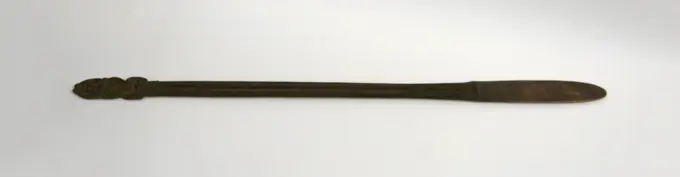
Sago Paddle, late 19th-early 20th century, 45 5/16 x 2 7/16 x 3/4 in. (115.09 x 6.19 x 1.91 cm), Wood, Papua New Guinea, 19th-20th century
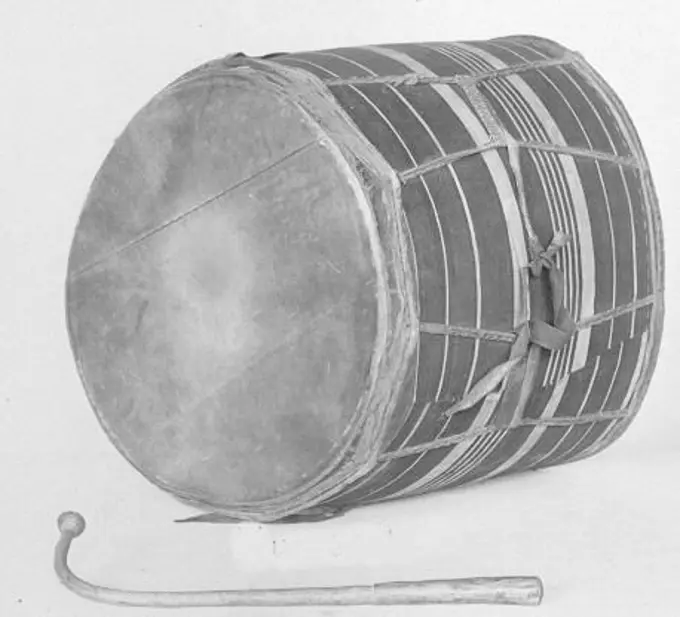
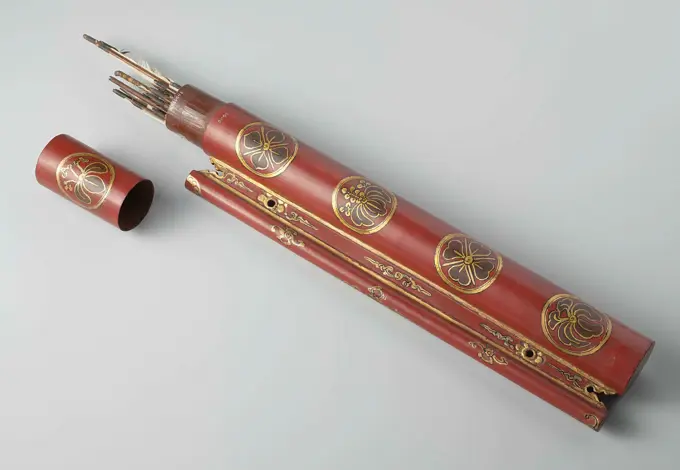
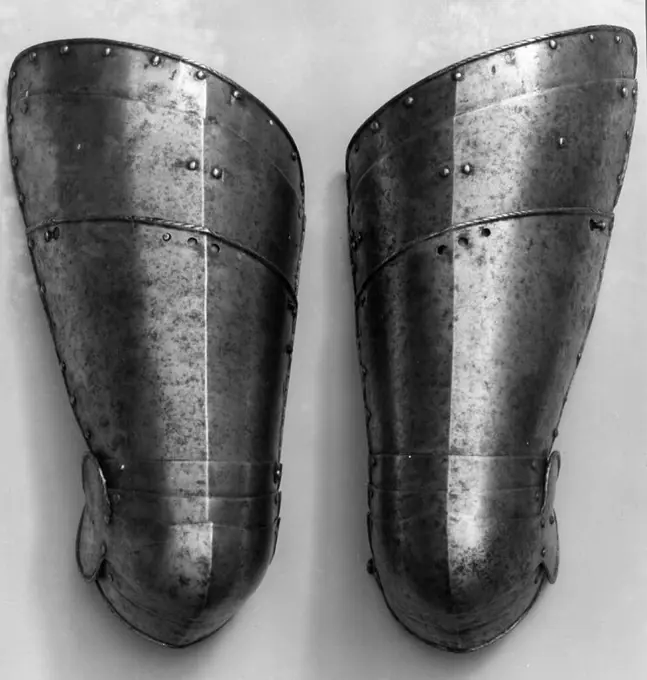
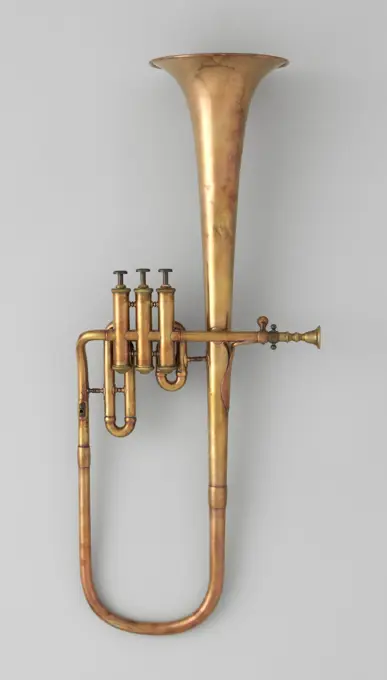
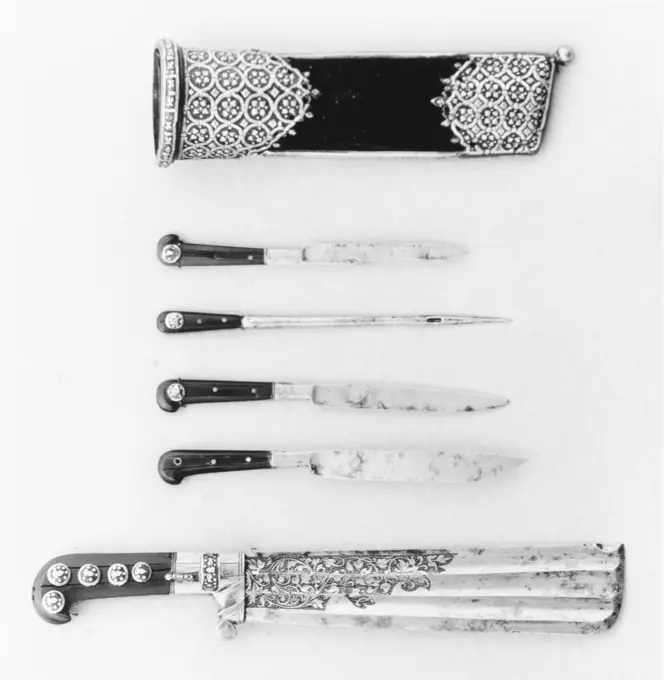
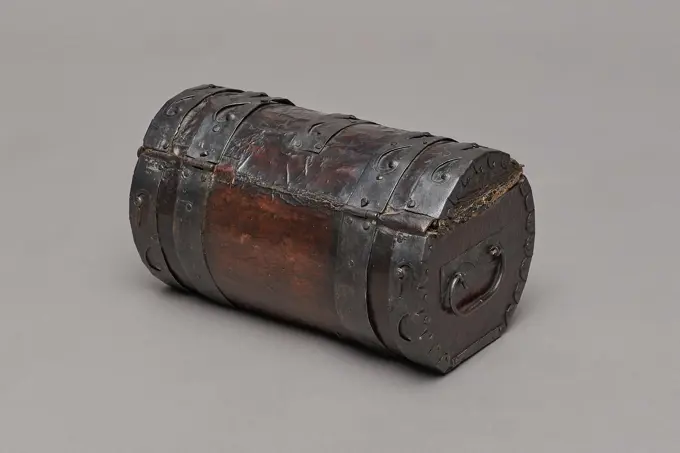
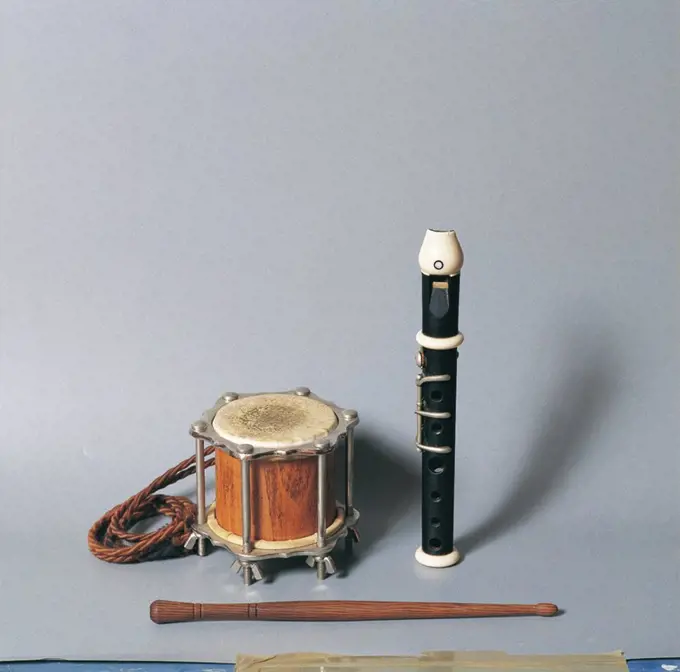
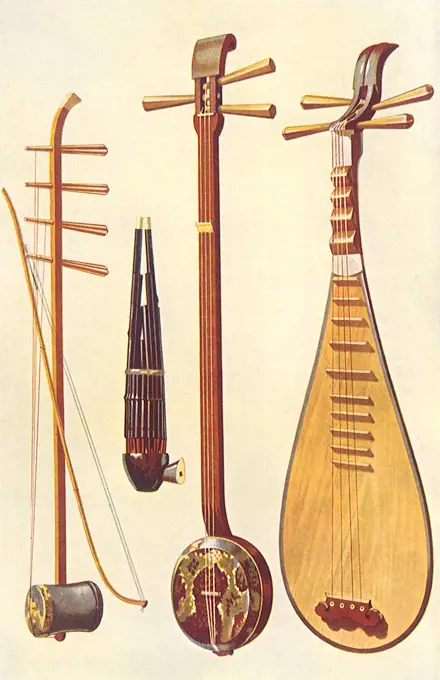
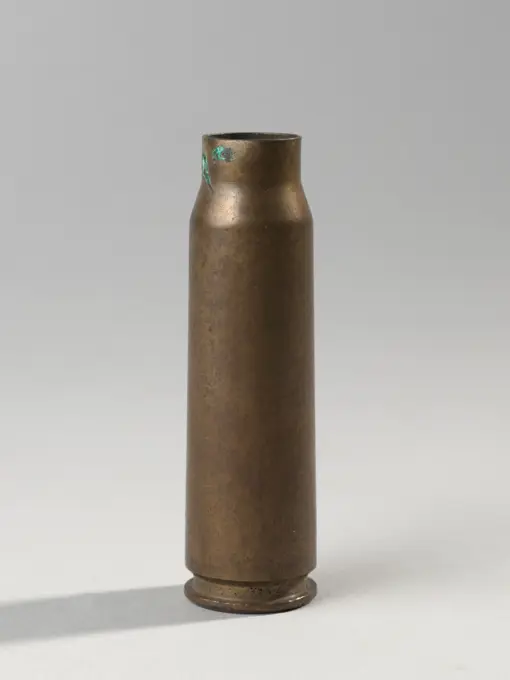
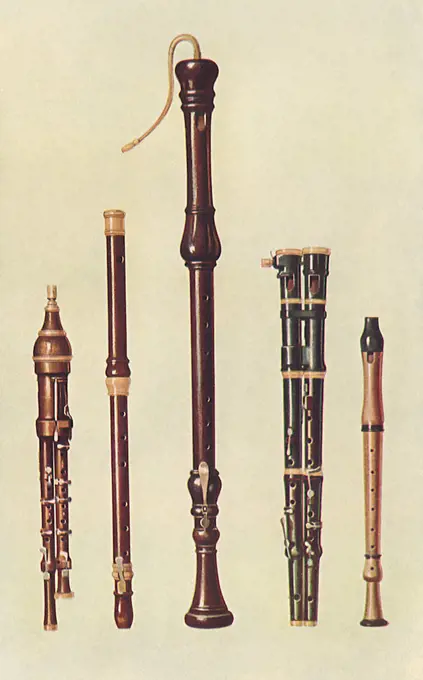
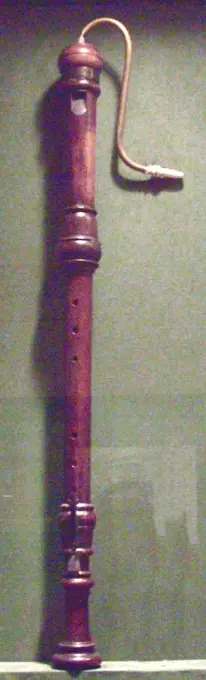
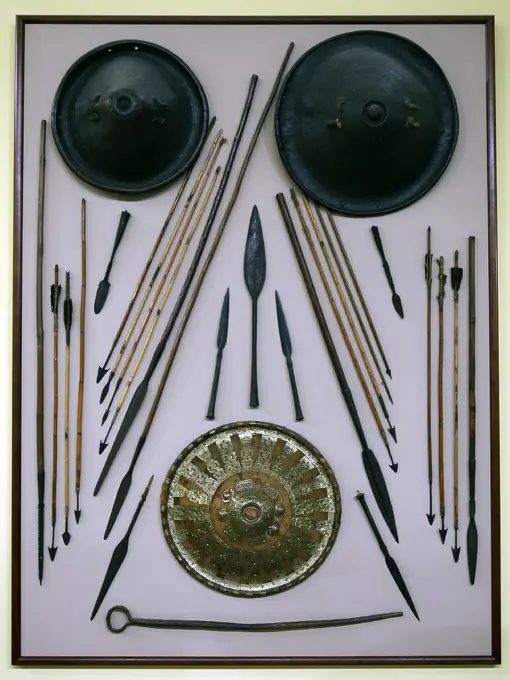
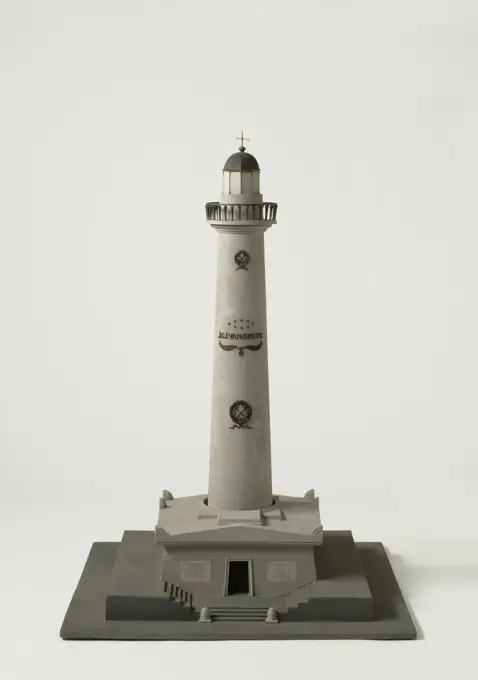
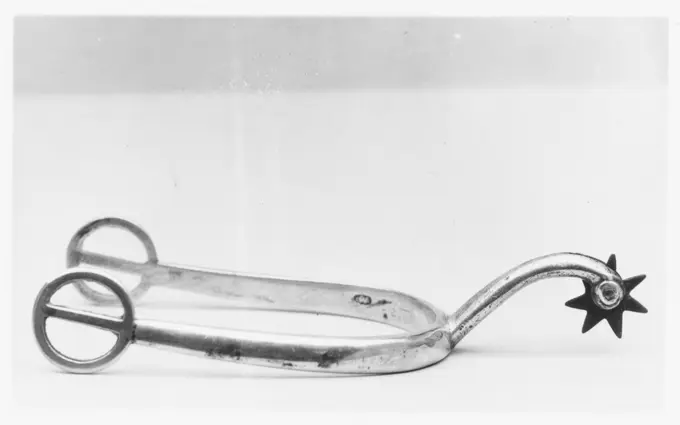
Spur 1770-1800 Paul Revere Jr. American. Spur. American. 1770-1800. Silver. Made in Boston, Massachusetts, United StatesDouble-Barrel Wheellock Pistol Made 1565-1575 Germany. Steel, copper alloy, leather, and wood .Ganga Dagomba or Hausa people 19th centurySeven Samples of Lightning Conductors, anonymous, 1848 lighting conductor Seven samples of lightning sleds or thunder chains for ships in the form of copper wire, all Wantlag. Three consist of four cable strands of three because strands of seven, six and five yarns respectively. The other four, all with a rope in the heart, all consist of five cable strands of seven yarns each that differ in thickness. Netherlands copper (metal). ropeDISTINTOS MODELOS DE MACHETES, BAYONETAS Y CUCHILLO- BAYONETA PARA LOS DISTINTOS TIPOS DE FUSIL Y MOSQUETON USADOS DURANTE LA GUERRA CIVIL. Location: PRIVATE COLLECTION. MADRID. SPAIN.Arrow sleeve with 28 arrows associated with arms rack of Cornelis Tromp. Arrow sleeve with 28 arrows. The wooden sleeve is red lacquered and decorated with imitations of Japanese family weapons, Mons. The arrows are made of bamboo with a glass point.The iron hand of the knight Götz von Berlichingen, Gottfried Götz von Berlichingen zu Hornberg, with the iron hand (born around 1480 in Jagsthausen, died 23 July 1562 at Hornberg Castle), German imperial knight, illustration, reproduction from a 19th century model. Authentic, File restored for optimal use, Exact date of original unknown, Historical, A metal, mechanical prosthesis in the shape of a hand with outstretched fingersCigar holder in caseold cartridge belt on white backgroundScrollweight, one of a pair, 18th century, 11/16 x 1 x 11 in. (1.7 x 2.5 x 27.9 cm), Zitan, China, 18th centuryNight Signal, anonymous, c. 1860 - c. 1865 instrument A wooden stick with a pan for pyrotechnic fire and a fire lock at the end, the tractor of which is halfway through the stick. Russia wood (plant material). brass (alloy). iron (metal)   SiberiaHooked Harp early 19th century German or Austrian. Hooked Harp 504197Collection Dutch Heidematschappij. Drain tubes. undatedSleigh bell -Relieffernrohr oder Scherenfernrohr in gestreckter Stellung, Art eines Telestereoskops, eines binokularen Fernrohr, Historisch, digitale Reproduktion ...Eyeglass Case. Culture: American. Dimensions: 6 7/8 x 1 1/8 x 1/2 in. (17.5 x 2.9 x 1.3 cm). Maker: Hood and Tobey. Date: ca. 1860. Museum: Metropolitan Museum of Art, New York, USA.clarinet and flute from Tagalog culture, Luzon Island, wood, 19th century, Philippines, Anthropology National Museum, Madrid, Spain.Orchestral Horn 1830-40 Tabard. Orchestral Horn 501687Pair of Thigh Defenses (Cuisses) with Knee Defeneses (Poleyn). Culture: German, Augsburg. Dimensions: H. of each 19 1/4 in. (48.9 cm); W. of each 9 1/2 in. (49.5 cm). Date: 16th century. Museum: Metropolitan Museum of Art, New York, USA.Alto Saxhorn in B-flat ca. 1900 Attributed to Gautrot aîné French This instrument was typical of the saxhorn form widely used in military and brass bands in a number of different sizes. It was one of many designs by Sax that Gautrot copied with little alteration. Gautrot was Saxs most formidable rival and patent disputes embroiled them in multiple lawsuits.. Alto Saxhorn in B-flat. French. ca. 1900. Brass. Paris, France. Aerophone-Lip Vibrated-hornHunting Knife with a Set of Implements (Trousse) ca. 1570 German, possibly Bavaria. Hunting Knife with a Set of Implements (Trousse) 25154Ministry of Information First World War Official Collection View of the head of the Black Rod to be presented to the Senate of Canada through Sir Robert Borden by the Empire Parliamentary Association, United Kingdom Branch. It is to replace the Rod is an exact replica of the one used in the House of Lords with the exception that Maple Leaves are emblazened in place of Trefoil which are on the Red in the House of Lords. The head is of gold.It is a long metal structure having a hollow metal space where the handle bar is inserted and then fixed to the front frame, vintage engraved line art illustration. Bicycle Accessories 1900.Drill bits of a dental drillSnuff Bottle (stopper), 1644-1911. China, Qing dynasty (1644-1911). Glass; overall: 8 cm (3 1/8 in.).Psaltery, 1800s. China, Qing dynasty (1644-1911). Wood; overall: 59.8 x 15 cm (23 9/16 x 5 7/8 in.).Close-up photograph of surgical instruments used during World War One. These instruments were crucial in performing medical procedures and saving lives on the battlefield. The photograph was taken by the S.C. photographers on July 22, 1920, and is labeled with the identifying number 60844.Gourd with Stopper, late 19th-early 20th century, 10 1/8 x 4 1/4 x 4 1/4 in. (25.7 x 10.8 x 10.8 cm) (overall without rope), Gourd, wood, beads, rope, leather, Tanzania, 19th-20th centuryHorn in D first half 18th century Probably German Both the horn's flairing bell size and the tubing correspond to brass hunting horns used by the middle of the eighteenth century. A scratched D” on the bell indicates pitch and suggests that the horn was made to be played. The outer brown glaze imitates thecolor of brass, while the dark glaze on the black-stained surface of the inner bell imitates the black varnish often seen on seventeenth- and eighteenth-century brass hunting horns. This horn confirms a German source of 1745 that mentions that in some areas peasants made horns and trumpets of clay.. Horn in D. Probably German. first half 18th century. Pottery. Germany (probably). Aerophone-Lip VibratedJra (small) Sz, late 19th century Turkish One of the small versions of the Turkish saz or balama with three pairs of strings.. Jra (small) Sz,. Turkish. late 19th century. Wood. Turkey. Chordophone-Lute-plucked-frettedCoffret. unknown, authorGlass Negative of Okonite (Shop)Karamuza 19th century Greek. Karamuza. Greek. 19th century. Cane, wood, horn, sheepskin. Greece. Aerophone-Reed Vibrated-bagpipeSpoon 19th century Japan. Spoon 59883Flabiol, Catalonian woodwind musical instrument, and Tambori (small drum).FOTOGRAFIA BLANCO Y NEGRO AÑOS 60.Wood mortar and pestle on a white backgroundChinese Strings. 18-cm Shell.Pointed 18 cm of grenade. The grenade is 51 cm long and has a 176 mm caliber. He has twisted two rings for a drawn loop with three drawing fields and a pipe hole. There are three shallow holes for the ammunition faucet.20 mm bus socket. Brass, 1945. General Leclerc Museum of Hauteclocque and the Liberation of Paris, Jean Moulin Museum. 78983-23 Armament, weapon, canon, war 1939-1945, war 39-45, ammunition, shells, Second World WarFlageolets and Flutes. Bass Recorder ca. 1700 Johann Schell German The bass recorder, although seldom played on its own, provided important harmonic and rhythmic support to the recorder consorts popular during the Baroque period. This is one of four surviving bass recorders by Schell, one of the most respected Nuremberg recorder makers of his generation.. Bass Recorder 506053Italian colonial empire. Colonial expansion in Eritrea and Somalia. Abyssinian weapons. 19th century.Harmonica ca. 1895 Ch. Weiss Since their invention around 1830, harmonicas have been folk instruments. Though different variants were developed, including chromatic, bass, tremolo, chord, and octave harmonicas, the simple diatonic harmonica, with ten or fourteen double holes, is still commonly used. It uses blow and draw, and can be pitched in C, G, or any other key. Harmonicas are best suited for slow, simple melodies that express the player's feelings. In America, the harmonica became the portable and inexpensive instrument of choice for the cowboy, the gold miner, and the blues and country musician, often accompanied by banjo or guitar. This one is marketed as a "trio Harp," with two reeds per tone.. Harmonica 501241Opt.verkstan range meter KMF.Sweden, Blekinge, Blekinge, Karlskrona, Karlskrona, External War Gogs (depicted, City)Mandora ca. 1700-1799 Italian. Mandora 505265Model of a Lighthouse, anonymous, 1840 show model Wooden model of a round lighthouse on a square building. The whole model is covered with sand and dyed gray in two colors. The mausoleum -like building, which is in fact built around the foot of the tower, has a reduced entrance on the land side, flanked by the Latin inscriptions. The tower has five round windows mat wreaths on the Zeezijde, and on the land side two wreaths with crossed anchors, and the inscription J.C.J. From speyk below stars and above the military William order hung on two palm branches. The Tienkant Kuip has a round circuit with a balustrade of torches; Of the ten windows, the four are blinded on the land side. Tienkante dome with wind vane. Scale 1:20 (Obreen). Netherlands wood (plant material). bronze (metal). glass. gypsum. sand  lighthouse, lightship Egmond aan Zee. Lighthouse J.C.J. Van SpeijkSet of office tools. A contour. A vector illustration.