Historical Weapons

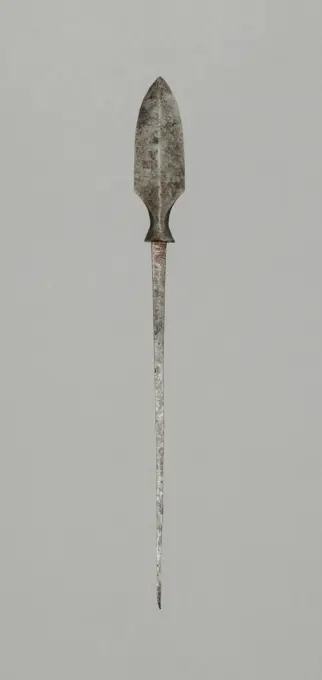
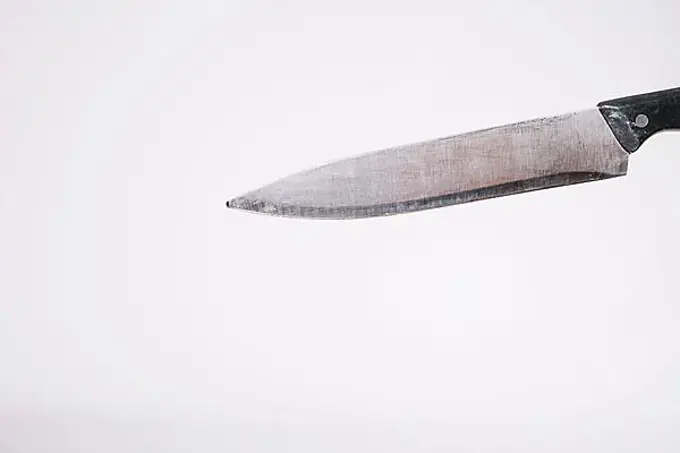
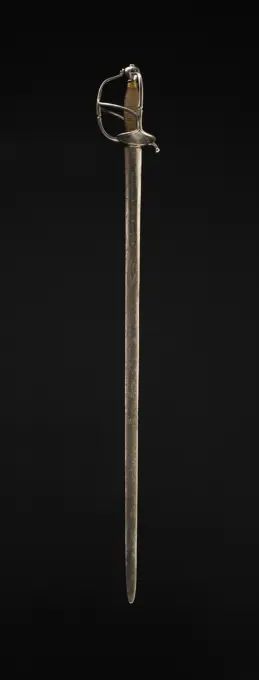
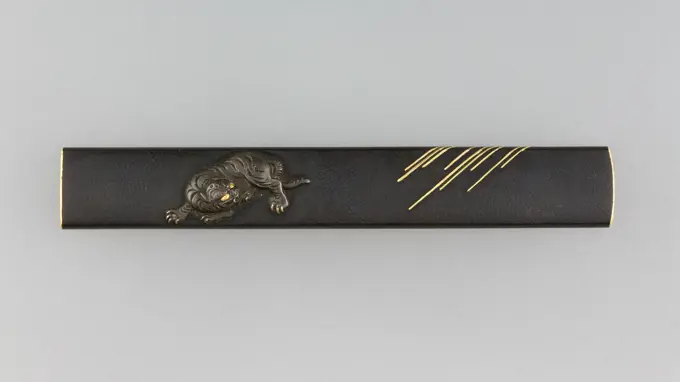
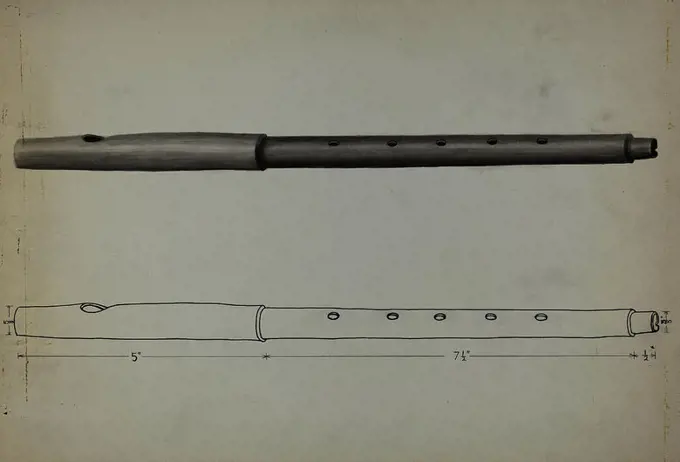
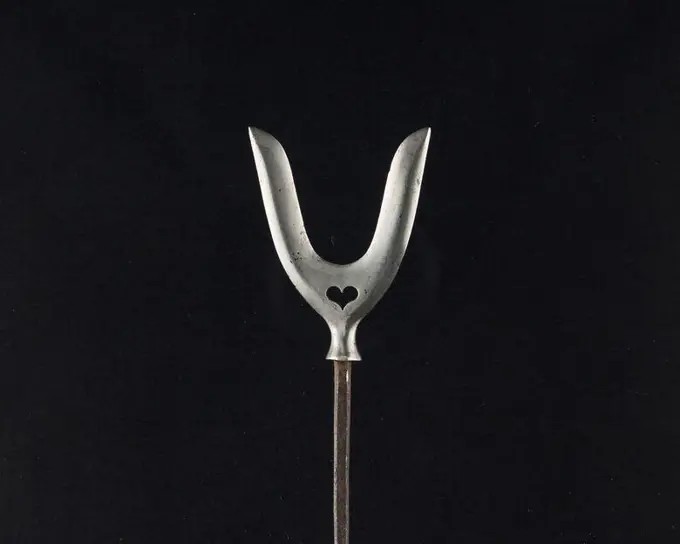
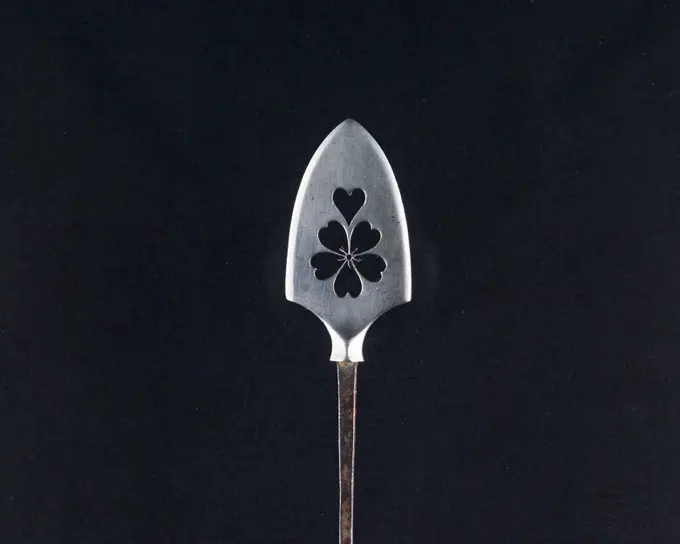
An array of historical weapons and tools, including bayonets and ceremonial swords, presented in a minimalist style, emphasizing their craftsmanship and historical significance.
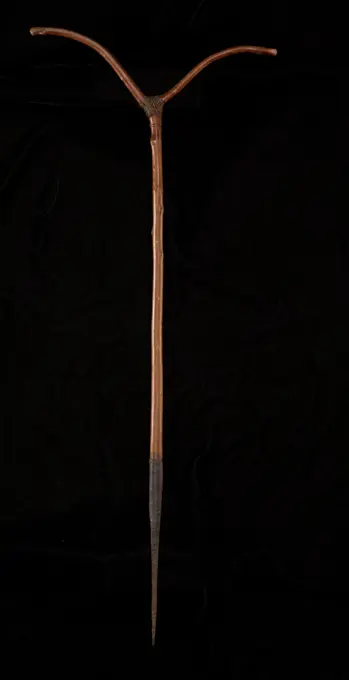
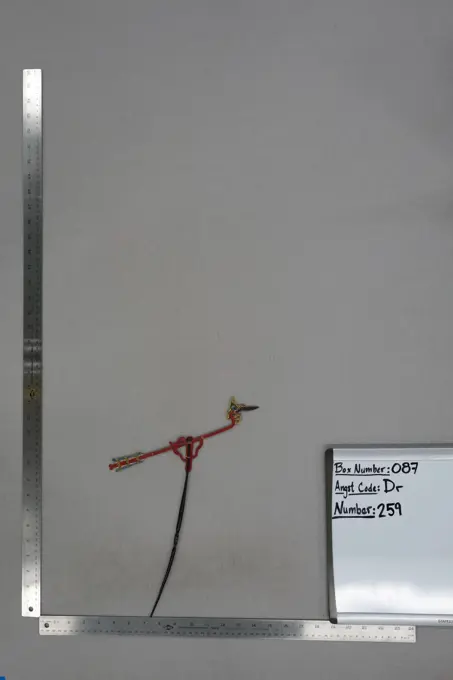
Staff, 1900-1950, 38 × 14 9/16 × 1 in. (96.52 × 36.99 × 2.54 cm), Wood, metal, Ethiopia, 20th century
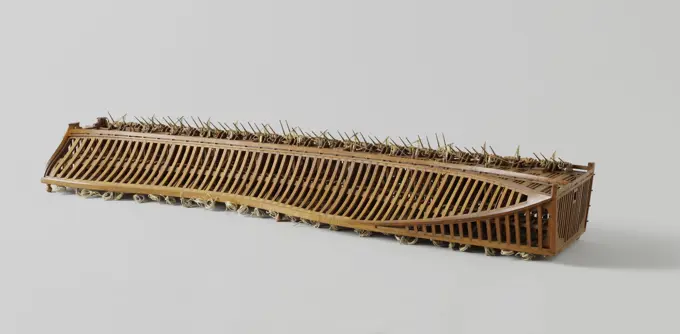
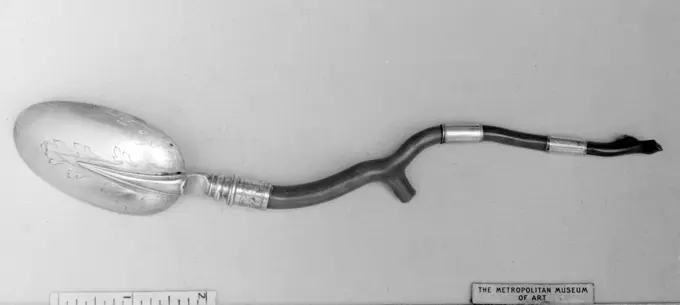
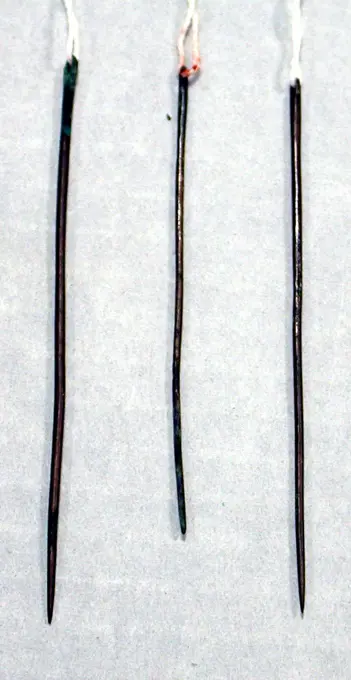
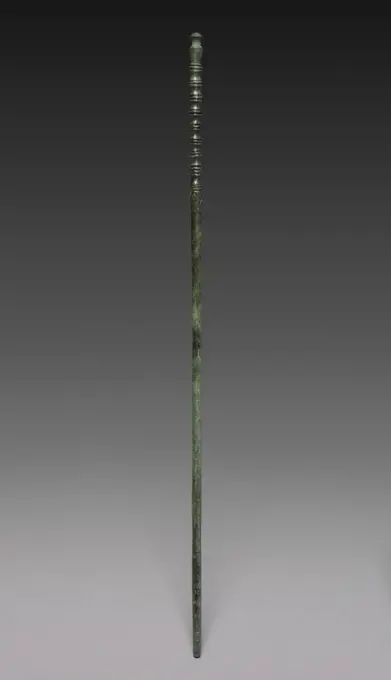
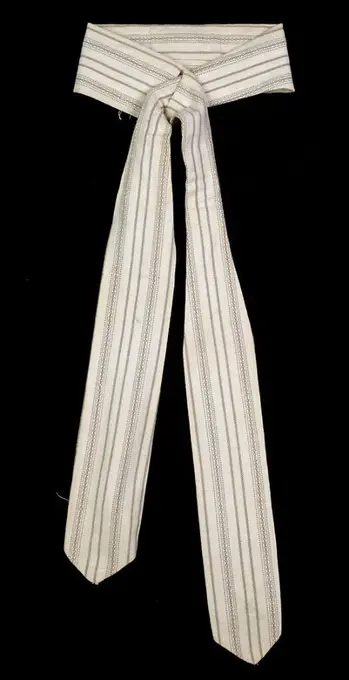
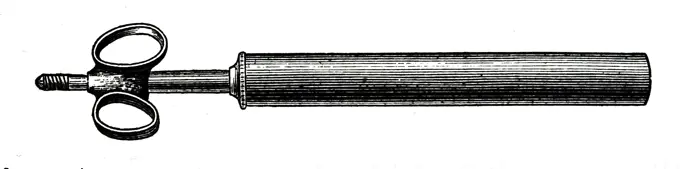
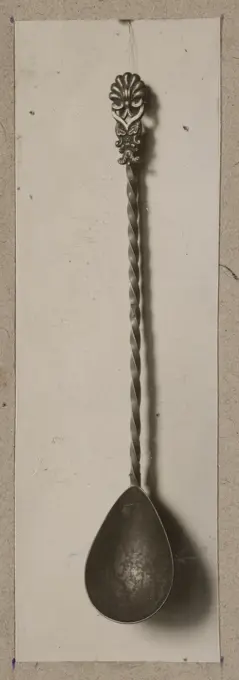
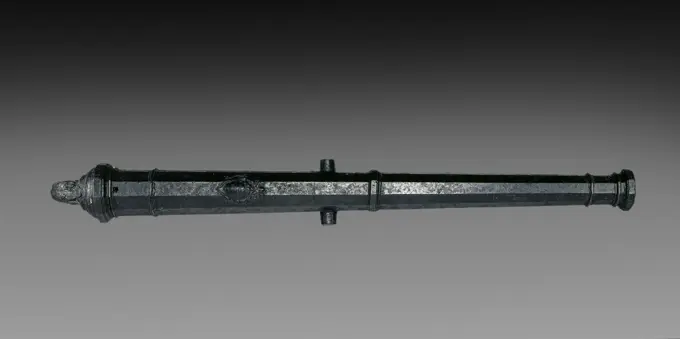
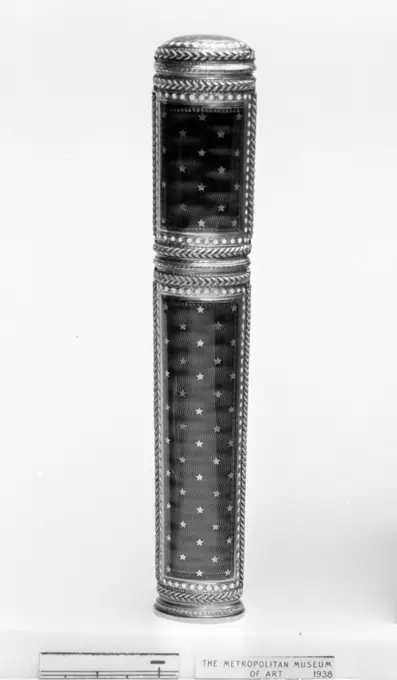
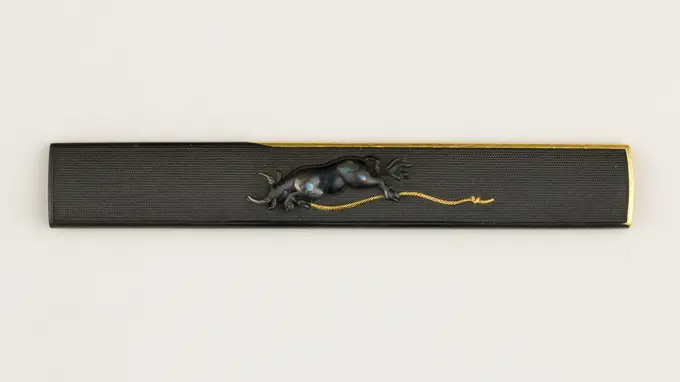
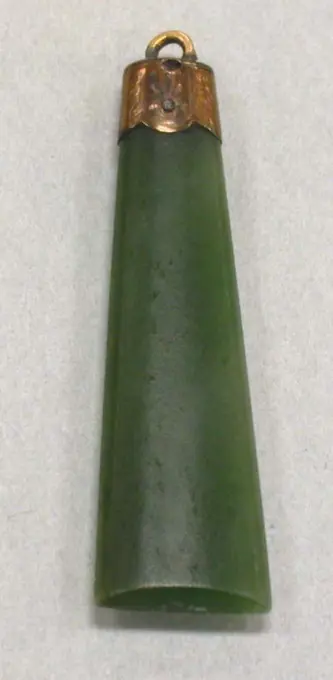
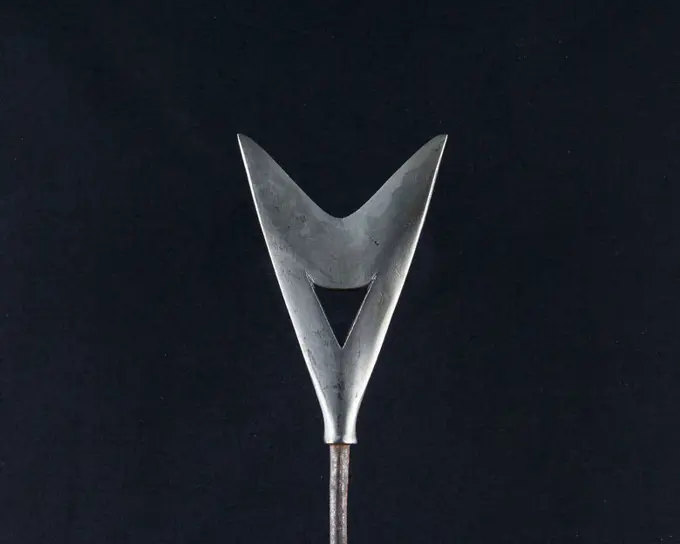
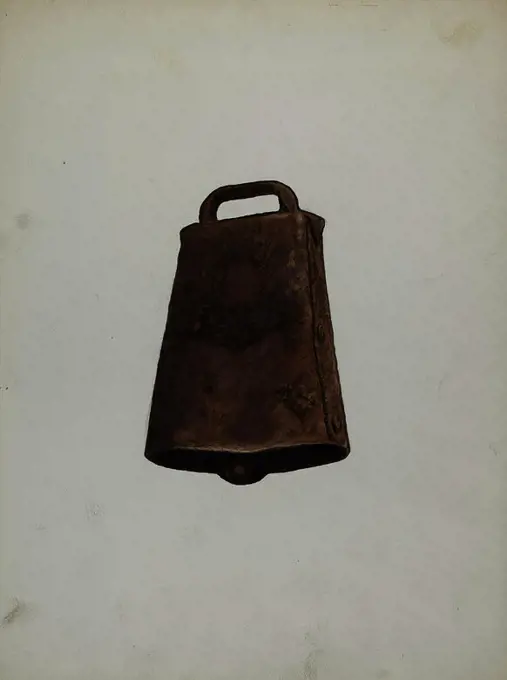
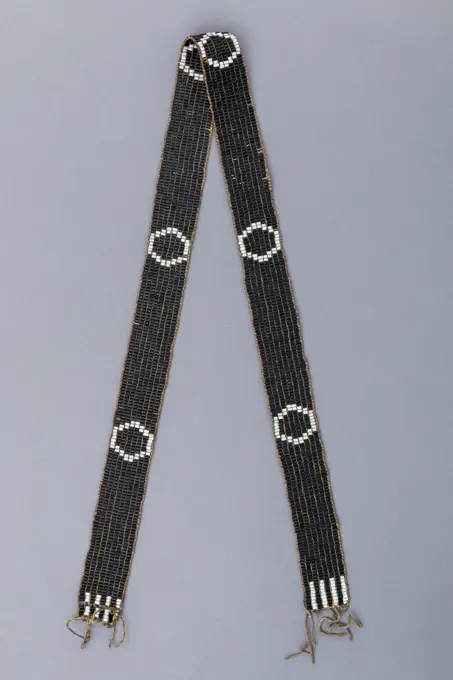
Shoulder Belt for a Powder Horn probably early 19th century European or Native American This belt decorated with glass beads was acquired in 1939 with a powder horn (acc. no. 39.87a, b), The belt (39.87b) is currently displayed with a different powder horn (37.131.16a).. Shoulder Belt for a Powder Horn. European or Native American. probably early 19th century. Glass, leather. Firearms AccessoriesBracelet isolated on the white backgroundHalf of a Compass. UnknownJabiru and Mokuy figures. Bark art. 20 th century. Northen Australia. Carved and painted wood. Museum of World Cultures, Barcelona. Spain.Oboe, Stephan Koch, c. 1820 - before 1828 Hobo van Palmhout with thirteen silver valves (special 'folding valve' for B). The third gap is double. The stamp can be regulated. Marked on all parts: two -headed eagle / S. Koch / Wien. In original suitcase (covered with leather), with cardboard reed box, an old reed, a marker, and a hood for the pen connection of the upper part. The key to the suitcase is missing. Vienna boxwood. silver (metal). koffer: leather. rietdoosje: cardboard Hobo van Palmhout with thirteen silver valves (special 'folding valve' for B). The third gap is double. The stamp can be regulated. Marked on all parts: two -headed eagle / S. Koch / Wien. In original suitcase (covered with leather), with cardboard reed box, an old reed, a marker, and a hood for the pen connection of the upper part. The key to the suitcase is missing. Vienna boxwood. silver (metal). koffer: leather. rietdoosje: cardboardArrow Point, 1700s. Japan, Edo period (1615-1868). Steel; overall: 19.8 cm (7 13/16 in.); head: 19 cm (7 1/2 in.).Roll of white parchment paper on isolated background Roll of white parchment paper on isolated background Copyright: xZoonar.com/DANKOxNx 22988545Model of a ship camel, anonymous, c. 1780 - c. 1840 demonstration model Construction model of a ship's cabinet, the starboard half of a few. The skin is omitted so that the construction and layout are visible. The hull is rectangular, on one side adapted to the shape of a fitting ship's hull. The model has three levels: soil, intermediate deck and upper deck; Inside it is divided into six compartments by waterproof Scots. The rear compartment houses the cabin intermediate deck: the opening for the galley chimney is indicated. The model is fully detailed with twenty -eight pumps in two rows, thirty roasting pills with ropes that are led to the bottom by tubes, ten spouts to let the camel fill up, a crane bar, a betting and eleven shutters. The helm is missing. Amsterdam (possibly) wood (plant material). brass (alloy). ropeIron bedstead, close upPlastic rope isolated on the white backgroundMexican fencepost cactus next to an agave dark wall behind themwet old rusty metal chain isolated on white backgroundBeautiful Double-edged Straight Sword Jian Vector. Vintage Arm Blanche Saber Jian With Golden Handle And Green Stones. Antique Aggression Weapon With Metal Detail Template Realistic 3d Illustration. Beautiful Double-edged Straight Sword Jian VectorCreepy steel knifePlastic rope isolated on the white backgroundWallonian swordFolding measureSpoon late 17th-early 18th century probably Dutch or German. Spoon 188184 probably Dutch or German, Spoon, late 17thearly 18th century, Silver, coral, L. 8 1/2 in. (21.6 cm). The Metropolitan Museum of Art, New York. Gift of Mrs. Samuel P. Avery, 1897 (97.2.160)Zucchini on white backgroundHammered Copper Needle Peru; north coastChopstick, 1000s-1100s. Korea, Goryeo period (918-1392). Bronze; overall: 29.2 cm (11 1/2 in.). In Korea, chopsticks made of metal such as brass, silver, and gold were excavated from ancient tombs and ruins dated to the 6th century at the earliest. Burial goods often include utilitarian objects such as table wares and utensils because the dead were believed to need them in the afterlife.Knife Handle (Kozuka). Culture: Japanese. Dimensions: L. 3 13/16 in. (9.7 cm); W. 9/16 in. (1.4 cm); thickness 1/4 in. (0.6 cm); Wt. 1.1 oz. (31.2 g). Date: ca. 1615-1868. Museum: Metropolitan Museum of Art, New York, USA.Cravat. Culture: American. Date: ca. 1888. Museum: Metropolitan Museum of Art, New York, USA.Alto Flute mid-19th century Johann Ziegler. Alto Flute 504190An engraving depicting a bicycle pump. Dated 19th centuryModel Lighthouse Scheveningen The Netherlands, Q. Harder, 1875Side view of a violinTube ca. 9th-7th century B.C. Assyrian. Tube 324374Paint brush with a natural bristle, isolated on white background Paint brush with a natural bristle, isolated on white background Copyright: xZoonar.com/OleksandrxKostiuchenkox 9783135Stick of tortoiseshell 1700-1950 Japan. Stick of tortoiseshell. Japan. 1700-1950. Tortoiseshell. AccessorySopranino Clarinet in High F ca. 1800 Boisselot aîné Clarinets in F replaced the shawms in Janissary music and were widely used in military music until the mid-1800s.. Sopranino Clarinet in High F. French. ca. 1800. Boxwood, ebony, brass, ivory. Montpellier, France. Aerophone-Reed Vibrated-single reed cylindricalSilver from the 16th century in the collections of the National Museum in Warsaw - a general view in the front;  around 1920-1922 (1918-00-00-1922-00-00);Toggle -Easel ca. 1890 American. Easel 3476Lluís Masriera / Tenedor, pieza de cubertería Art Déco en plata, 1935. Colección privada. Author: LLUÍS MASRIERA I ROSÉS.Falconet with Arms of Gian Pietro Carafa, Pope Paul IV, 1555-59. Italy, possibly Genoa, 16th century. Bronze; diameter: 11.2 cm (4 7/16 in.); overall: 162.2 cm (63 7/8 in.); bore: 4.7 cm (1 7/8 in.).Trumpet-mouth (abrasive-holder). Culture: China. Dimensions: L. 5 1/4 in. (13.3 cm); Diam. 1 in. (2.5 cm). Date: 20th century.These steel drills with blunt points (zhuangding or dingzi in Chinese), flat heads (tuozi), or curving heads (wazi) are used for high relief carving, undercutting, and fine shaping of small jade works. The craftsman holds the jade in one hand against the drill, which is mounted on a spinning shaft. He or she rotates the shaft using foot treadles, while continuously applying abrasives, usually sand mixed with water, to the tip of the drill, which cuts the jade. Museum: Metropolitan Museum of Art, New York, USA.Sealing wax case (étui) 1784-85 French, Paris In eighteenth-century Europe, Paris led the production of high-quality luxury goods. Parisian goldsmiths made a wide range of small, personal articles such as snuffboxes; étuis to hold sealing wax, tweezers, or utensils for sewing; souvenirs, which contained thin ivory tablets for note taking; and shuttles for knotting lace. Gold snuffboxes and boxes decorated with portrait miniatures were prized and frequently given as royal gifts, often to ambassadors or members of the court in lieu of cash payments for their services. Coveted and admired, these boxes were produced from a variety of materials. The best were skillfully made of gold and embellished with diamonds, enameled decoration, lacquer, and other luxurious materials. By the middle of the century, the taking of snuff had become an entrenched social ritual, and the snuffbox, too, had become an important social prop. Snuffboxes were considered highly fashionable accessories, with some meKnife Handle (Kozuka) 17th century Got Renj (Mitsutomo) Japanese A kozuka is a handle of a by-knife that is part of a sword mounting. It is kept in a slot on the reverse of a katana scabbard, often with a matching kgai (hairdressing tool).. Knife Handle (Kozuka). Japanese. 17th century. Copper-gold alloy (shakud), gold, silver. Sword Furniture-KozukaLavender essential oil.Martin-Bell Dyna Soar Model B.W.VBead China. Bead 43156Rod Late Period 664-332 B.C. View more. Rod. 664-332 B.C.. Copper. Late Period. From Egypt, Upper Egypt, Thebes, Asasif, Tomb MMA 812, MMA excavations, 1929-30. Dynasty 27-30Section of the Atlantic TelegraphCable. Retailer: Tiffany and Company, American, founded 1837spool of thread and needle isolated on a white  backgroundPartisan 1500-1550 Italian. Partisan 25624Pilaster 16th century Italian or French. Pilaster. Italian or French. 16th century. Wood, gold leaf. Woodwork-ArchitecturalBeads, 3. Beads, 3. Glass. GlassClose-Up of a Wood Screw, Inclined PlaneAegerine with Smoky Quartz, Mt. Malosa, Zomba, Malawi, AfricaBasset Horn in F early 19th century Italian or German. Basset Horn in F. Italian or German. early 19th century. Wood, ivory, brass. Italy or Germany. Aerophone-Reed Vibrated-single reed cylindricalClose-up Pipette mit einem hyaluronischen feuchtigkeitsspendende 24k Gold Serum auf einem schwarzen Hintergrund. Schönheit Hautpflege Konzept Schönheit und Spa. Close-up pipette with a hyaluronic moisturizing 24k gold serum on a black background. Beauty skin care concept Beauty and spa. Copyright: xZoonar.com/IrinaxKvyatkovskayax 22736158Entire pen, anonymous, c. 1590 - c. 1596 pen Whole more pen.  . cutting  Nova Zembla. Saving HuysMandora 1778 Hénocq (the younger) French. Mandora 500547Orthoceras Fossil Sculpture on white backgroundModel Club ca. 1981-1802 B.C. Middle Kingdom. Model Club. ca. 1981-1802 B.C.. Wood. Middle Kingdom. From Egypt, Memphite Region, Lisht South, debris, MMA excavations, 1913-14. Dynasty 12Pendant 19th century New Zealand. Pendant 44047Aerial view of parallel rusty metal rods lying on a white sandy surface, creating a stark contrast of textures and tones, Gulhi, South Male Atoll, Maldives.wet old rusty metal chain isolated on white wet old rusty metal chain isolated on white background Copyright: xZoonar.com/ValeryxVoennyyx 6184016Textile Swatches Onondaga Silk Company, Inc. (1925-1981). , 1948-1959. Silk, 47 x 16 1/4 in. (119.4 x 41.3 cm).    1948-1959Guiro late 19th century Cuban. Guiro 501289A sash from the funeral of Adam Mickiewicz in Krakow on July 4, 1890Boarding axes. "Tomahawk" model, made by John Yates & Co., England (1838-1859), curved blade model, c. 1850 and English 1859 pattern, c.1859-1890. Maritime Museum. Lisbon, Portugal.Support walk stick icon. Realistic illustration of support walk stick vector icon for web design isolated on white background. Support walk stick icon, realistic styleKnife and fork 17th century Dutch or British. Knife and fork 197136Arrowhead (Yanone) 18th century Japanese Although today Japanese warriors are renowned most for their swordsmanship, archery, especially from horseback, has been an essential part of samurai warfare and culture for centuries. Arrows were fitted with heads of varying shape according to their intended use in war, the hunt, or target practice. Arrowheads made for use on the battlefield incorporated different designs intended for specialized purposes such as the piercing of armor or to cause maximum damage to horses and unarmored personnel.Large arrowheads, pierced and elaborately chiseled with landscapes, birds, flowers, dragons, and Buddhist divinities, were created to be admired for the beauty of their metalwork and design rather than for use in archery. Such highly elaborate examples may have been made for presentation or as a votive offerings to a shrine.. Arrowhead (Yanone). Japanese. 18th century. Steel. Archery Equipment-ArrowheadsArrowhead (Yanone). Culture: Japanese. Dimensions: L. 9 in. (22.9 cm); L. of head 2 1/2 in. (6.4 cm); W. 2 1/2 in. (6.4 cm); Wt. 1.3 oz. (36.9 g). Date: 18th century. Museum: Metropolitan Museum of Art, New York, USA.Red thread into a needle thread the thread into a needleTassel; linenPair of Swarovski Ambary Chopsticks. Swarovski is an Austrian producer of luxury cut lead glass. Founded by Daniel Swarovski (1862-1956). Dated 2014Fork (possibly England); silver, gold, porcelain; L x W: 18.7 x 1.8 cm (7 3/8 x 11/16 in.); The Robert L. Metzenberg Collection, gift of Eleanor L. Metzenberg; 1985-103-221Cola splash Cola splash ,model released, Symbolfoto Copyright: xZoonar.com/SergeyxMironovx 3694971 ,model released, Symbolfoto ,property releasedShadow Puppet (Wayang Kulit) of a Prop (Ricikan), from the set KyaiDrajatOpened old vintage book isolated on white backgroundOld drawing tools in a box on a green backgroundEnglish Horn ca. 1825-50 possibly German or Italian. English Horn 504244Arrowhead (Yanone). Culture: Japanese. Dimensions: L. 8 5/8 in. (21.8 cm); L. of head 3 1/4 in. (8.3 cm); W. 2 1/8 in. (5.4 cm); Wt. 1.5 oz. (42.5 g). Date: 18th century. Museum: Metropolitan Museum of Art, New York, USA.Cow Bell. Dated: c. 1940. Dimensions: overall: 35.7 x 26.6 cm (14 1/16 x 10 1/2 in.) Original IAD Object: 6"h; 4 1/2"wide; 2 1/2"diameter. Medium: watercolor, colored pencil, gouache, and graphite on paper. Museum: National Gallery of Art, Washington DC. Author: Georgina King.3d Illustration glass fish isolated on white background 3d Illustration blue glass fish isolated on white background Copyright: xZoonar.com/VictorxGladkiyx 9221949Knife Handle (Kozuka) 1770-1852 Japanese A kozuka is a handle of a by-knife that is part of a sword mounting. It is kept in a slot on the reverse of a katana scabbard, often with a matching kōgai (hairdressing tool).. Knife Handle (Kozuka) 29920Wooden Fife. Dated: c. 1936. Dimensions: overall: 35.6 x 24.3 cm (14 x 9 9/16 in.) Original IAD Object: 13" long. Medium: watercolor, graphite, and pen and ink on paper. Museum: National Gallery of Art, Washington DC. Author: Edward L. Loper.Shadow Puppet (Wayang Kulit) of a Prop (Ricikan), from the set KyaiDrajatWall clock, rejuvenating with a top at the top, covered by a tympanum, Jan Copies, c. 1690 Hanging clock, glued with ebony on oak core. The solid Ebben consoles are attached to the blade, which is covered by a tympanum on the top. They have been treated as a squat, naked figures, on which the four Tuscan corner columns are. The columns wear a main frame with segment façade. The copper dial is on a bottom layer of black sheet between cast copper cherubs such as corner pieces and a garland at the bottom. In an oval with laurel wreath the pendulum appears with a bird on a fruit basket. Atlas is on the bell. Copper weights on cords. Marked on the dial: Jan Kopies, Westzanen. The Bol of Atlas has been added. Westzaan wood (plant material). oak (wood). ebony (wood). brass (alloy). iron (metal). glass. velvet (fabric weave) Hanging clock, glued with ebony on oak core. The solid Ebben consoles are attached to the blade, which is covered by a tympanum on the top. They have been treated as a squArrowhead (Yanone). Culture: Japanese. Dimensions: L. 7 3/8 in. (18.7 cm); L. of head 2 1/4 in. (5.7 cm); W. 1 3/4 in. (4.5 cm); Wt. 0.9 oz. (25.5 g). Date: 18th century. Museum: Metropolitan Museum of Art, New York, USA.Glass Fragment late 12th-early 13th century European. Glass Fragment. European. late 12th-early 13th century. Pot metal glass. Glass-StainedEarflare Shaft 6th-7th century Moche (Loma Negra). Earflare Shaft 313482Silver bracelet of twenty-two connected Dutch-Indian dimes, c. 1940 - c. 1950 Silver bracelet of twenty-two connected Dutch-Indian dimes (including the coins in the baking closure), with a baking closure and a gourmet safety chain. The bracelet is not inspected. Netherlands silver (metal)   Dutch East Indies, The Silver bracelet of twenty-two connected Dutch-Indian dimes (including the coins in the baking closure), with a baking closure and a gourmet safety chain. The bracelet is not inspected. Netherlands silver (metal)   Dutch East Indies, Thegreen plastic coil zip fastener close up green plastic coil zip fastener close up isolated on white background Copyright: xZoonar.com/ValeryxVoennyyx 5455416illustration of English tales, folk tales, and ballads.Arrowhead (Yanone). Culture: Japanese. Dimensions: L. 6 1/4 in. (15.9 cm); L. of head 2 3/8 in. (6 cm); W. 1 1/4 in. (3.2 cm); Wt. 0.9 oz. (25.5 g). Date: 18th century. Museum: Metropolitan Museum of Art, New York, USA.CandlestickFishing hookRed fort taj mahal noisy crackers on blue background celebrating Diwali Deepawali festival  Bombay Mumbai  Maharashtra Copyright: xNitinxKelvalkar/DinodiaxPhotoxMonument with the symbol of Dacian, a Dacian sword, made of concrete and bronze monument commemorating Lui Decebalus, the last king of Dacia, Siebenbuergen, Romania, EuropeClose up studio shot of 7.62 x 39mm bullet used with AK-47 on brown backgroundStorage bag with pouch, bracket and switch chain, anonymous, c. 1900 - c. 1910 Storage bag with elongated pouch of fine malves in a dark and silver-colored copper-zinc nickel and a bracket of gushed iron with filigin of the same copper-zinc nickel alloy, with a gushed iron switch chain and a decoration of ebony. Model: angular bracket with a cut on top and on both sides look for the switch chain. In the middle of the bracket a central field with decoration. Elongated pouch made of fine, round males that ends in a blunt point. Decoration: The midfield of the bracket is equipped with circles (flowers) And waves in filigrein. A pearl edge has been destroyed in the inner edges of the bracket. In the middle of the males is an elongated, geometric ornament, which ends in the blunt point that turns into a narrow plate of metal, which is provided with eyes on both sides. With two copper -colored nails, an elongated piece of ebony, equipped with four incisions, is confirmed on this. At the bottShadow Puppet (Wayang Kulit) of Keris, from the set KyaiDrajatRetro cartoon with texture. Isolated on White.Fragments Pijpensteel from the wreck of the East Indians Hollandia, Anonymous, 1700 - in Or Before 1743  Pipe, stem. Netherlands pipe clay   SecondEclill with a movable arm with a tomier;  Ok. PO. 18th century (1746-00-00-1755-00-00);acanthus (ornament), gift (provenance), measuring instruments