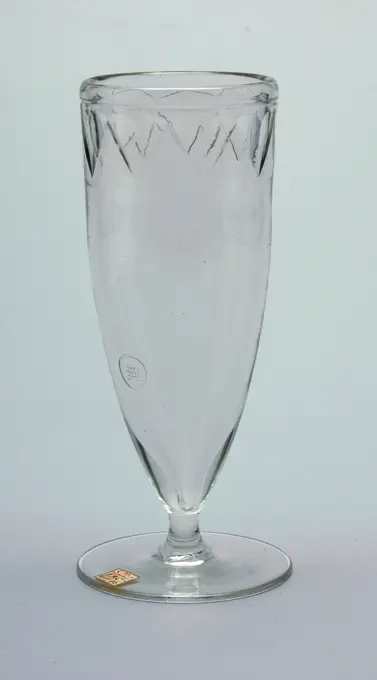
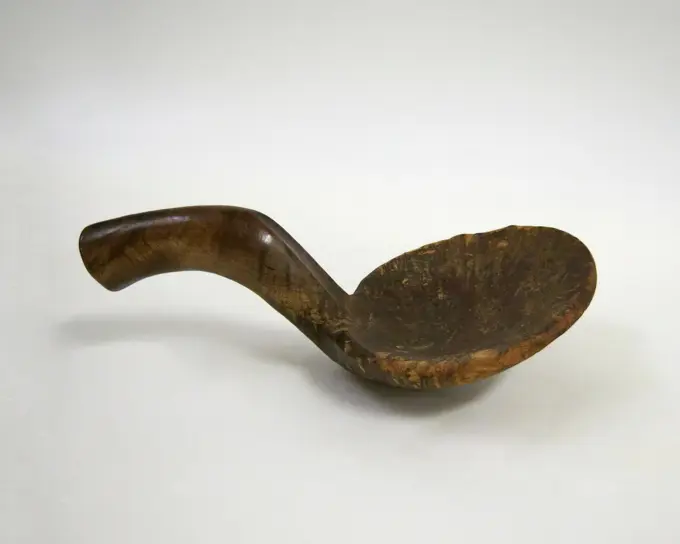
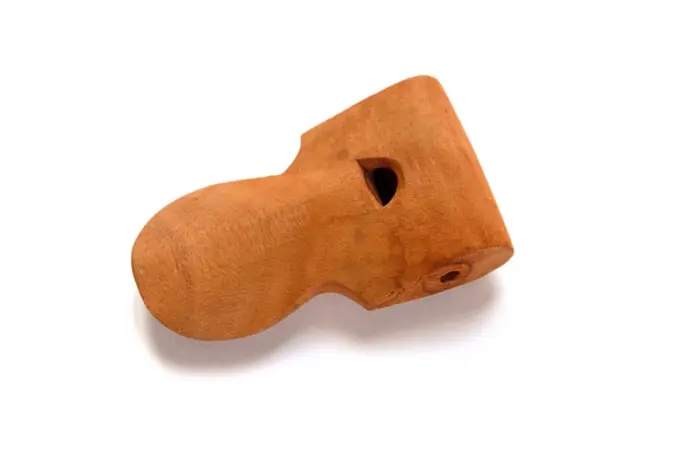
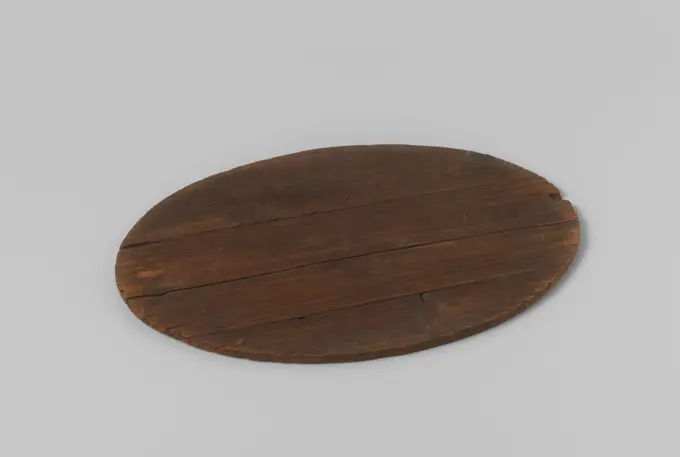
Historical Weapons and Artifacts

Images of antiquated weapons and utensils including a saber and decorative fork. Crafted from metal and ivory, showcasing historical craftsmanship.

Sabel of the Minister Cavalerie No. 2, Anonymous, 1815 sabre Sabel der Heavy Cavalry No. 2, Right with one groove and half kling. With iron hilt with two side brackets. Marked: AKN 2 E 65 and A 2 N 876, 1815. The sheath is missing and the blade is shortened.  Kling, bracket, handle hood: Iron (metal). Handle: Leather   Netherlands
Sabel of the Minister Cavalerie No. 2, Anonymous, 1815 sabre Sabel der Heavy Cavalry No. 2, Right with one groove and half kling. With iron hilt with two side brackets. Marked: AKN 2 E 65 and A 2 N 876, 1815. The sheath is missing and the blade is shortened. Kling, bracket, handle hood: Iron (metal). Handle: Leather Netherlands
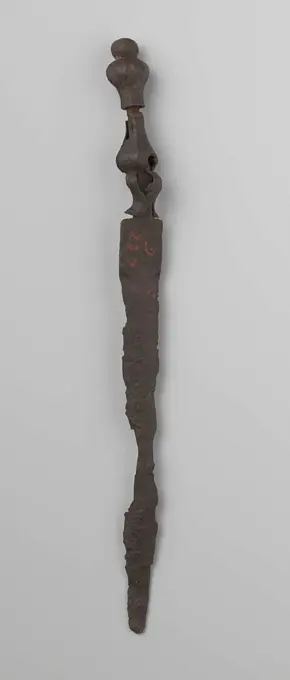
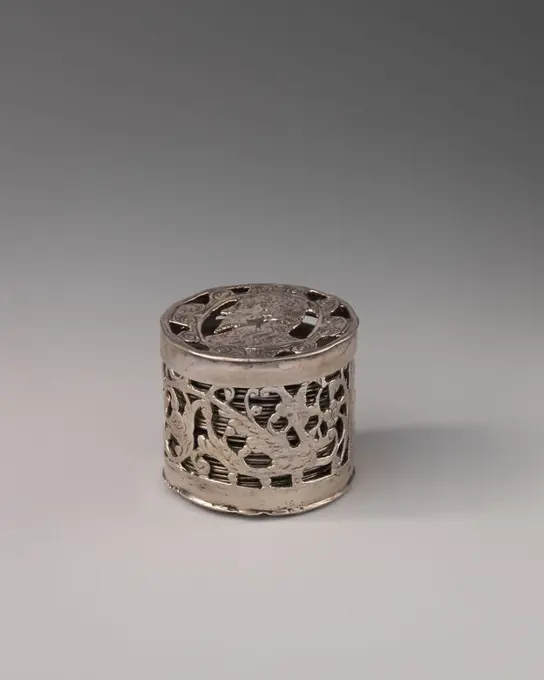
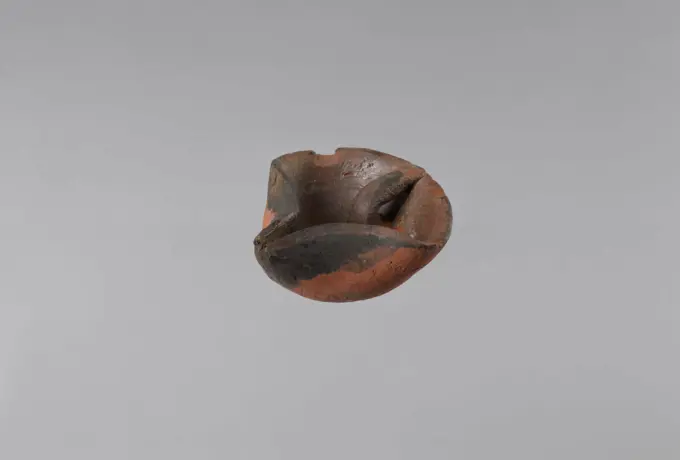
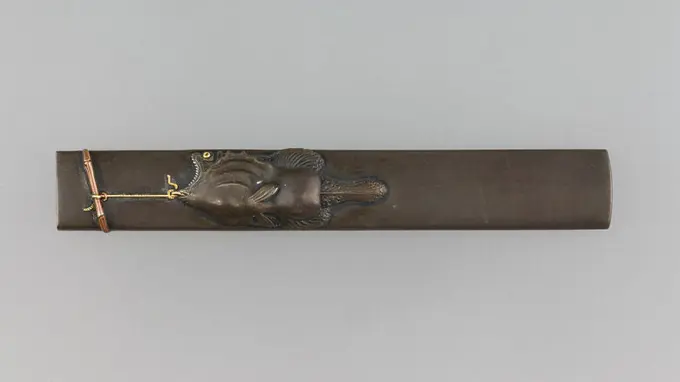
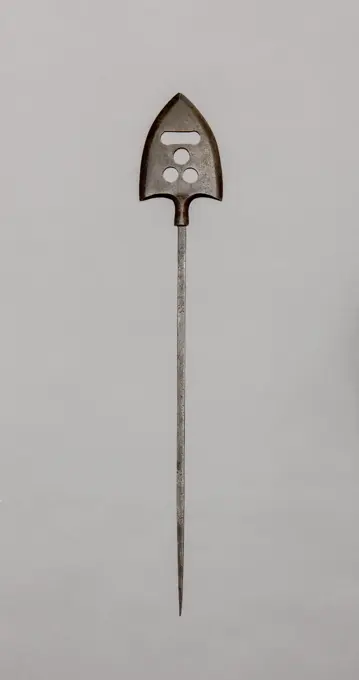
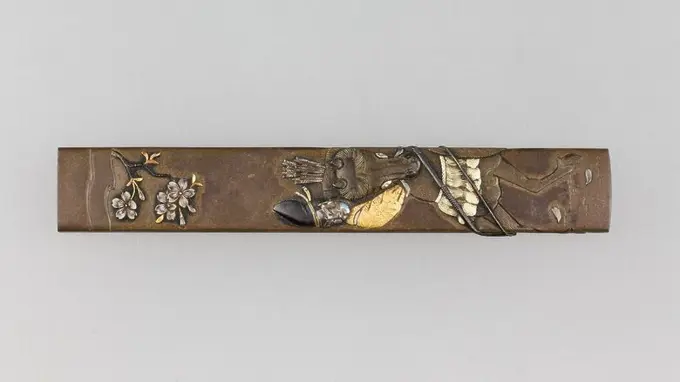
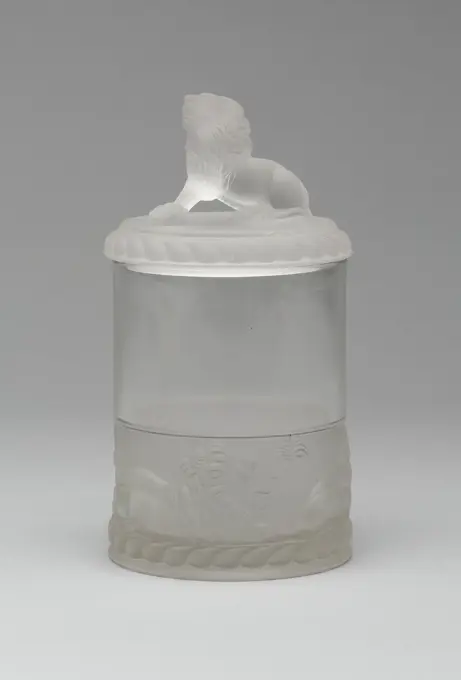
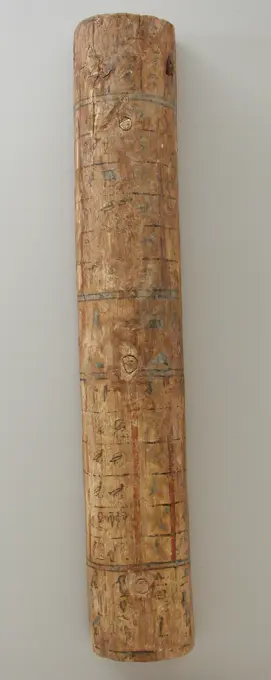
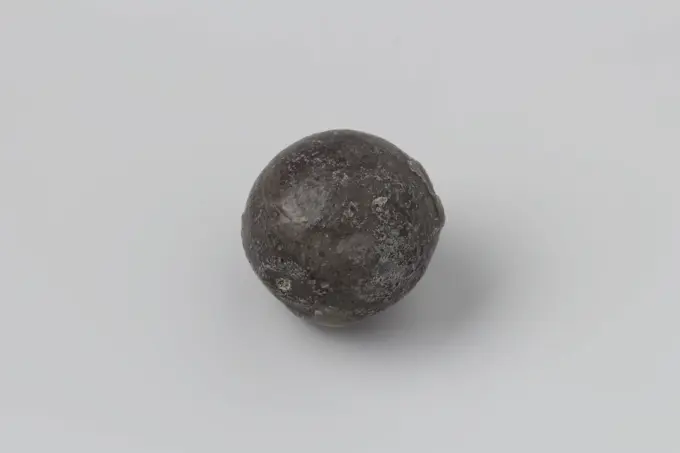
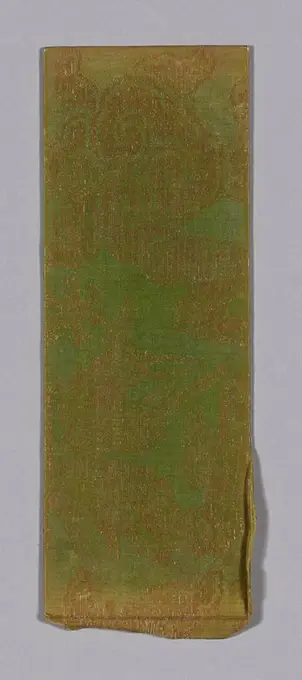
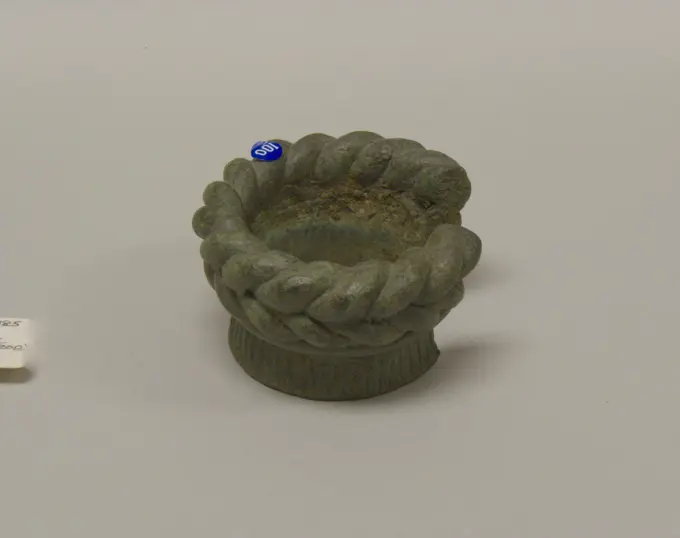
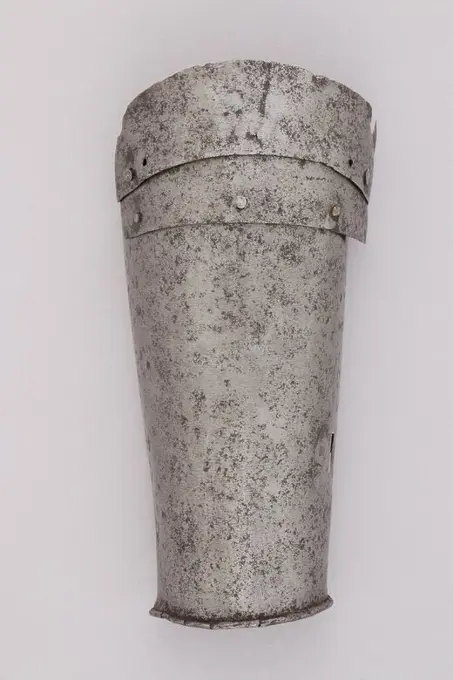
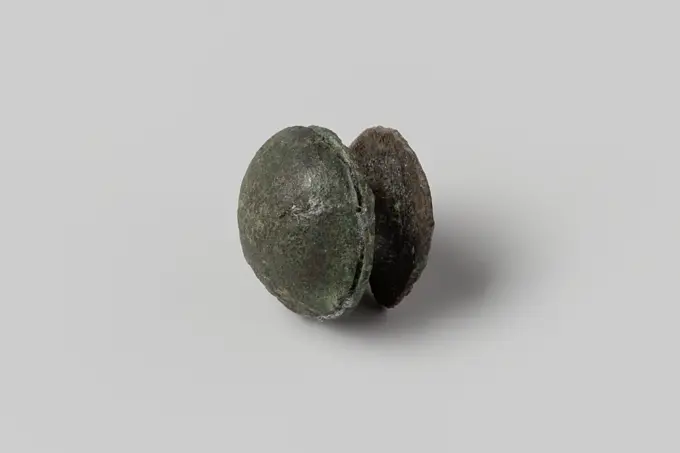
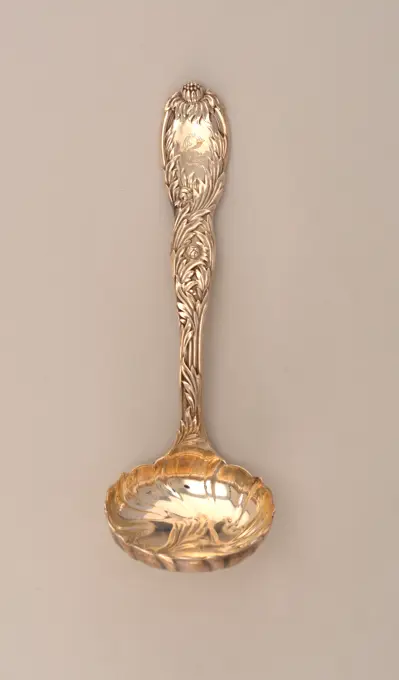
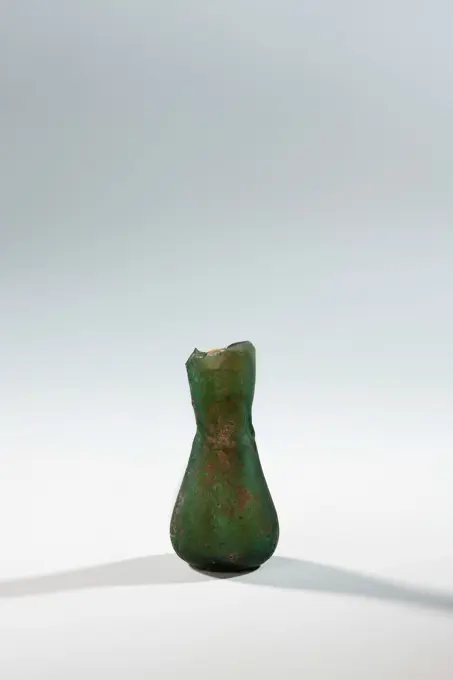
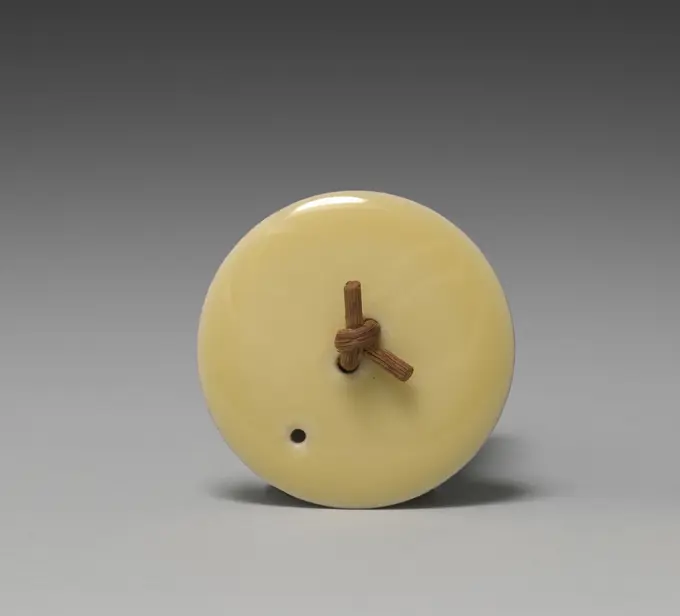
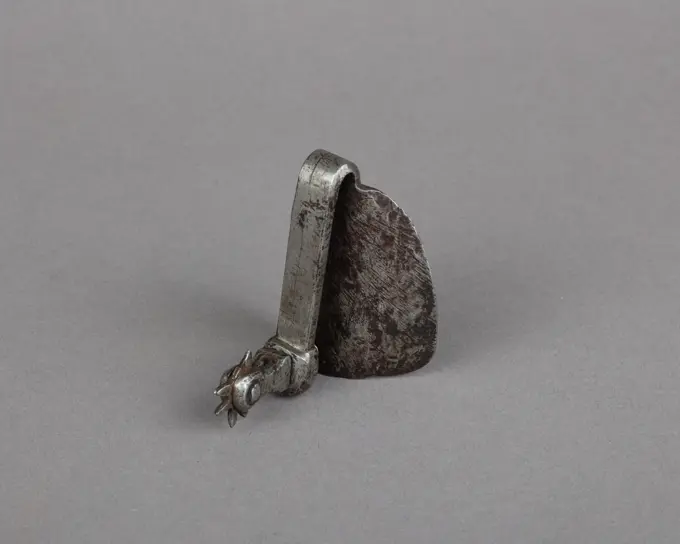
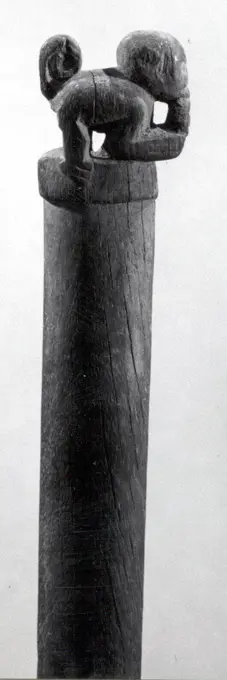
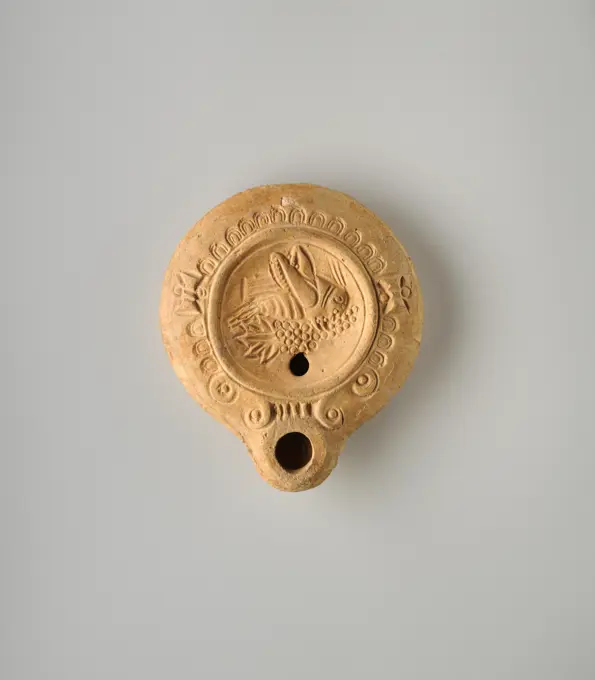
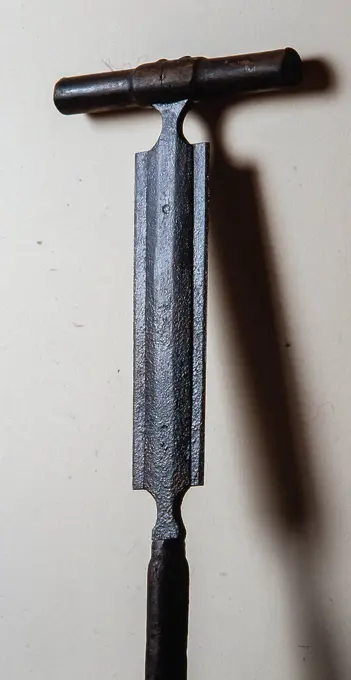
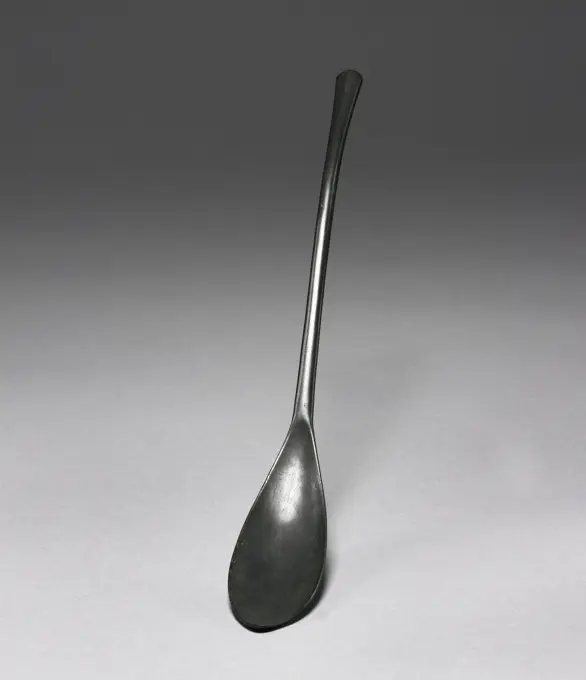
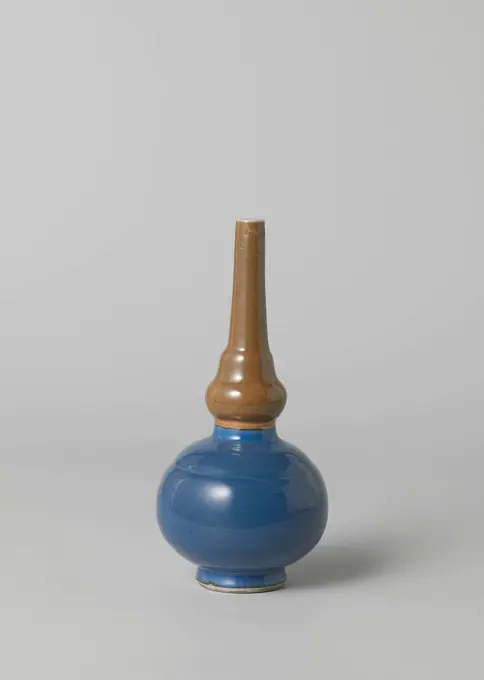
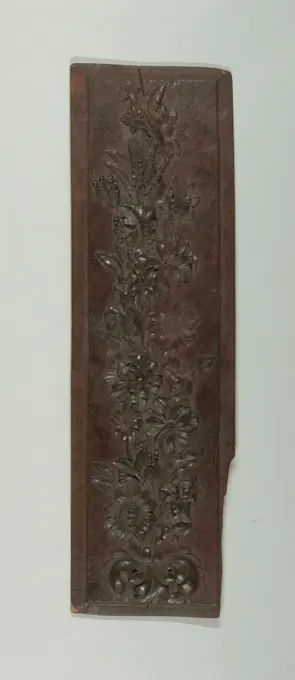
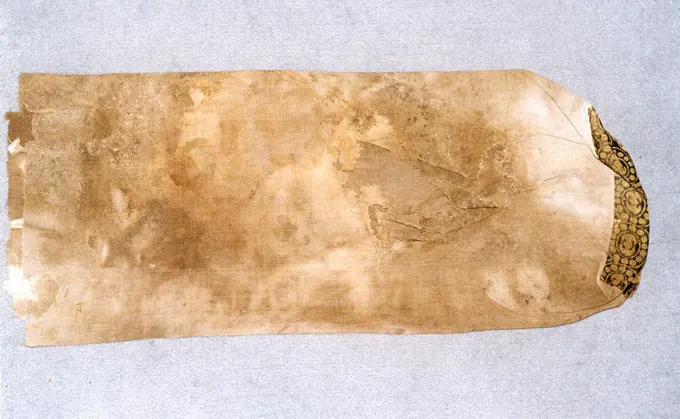
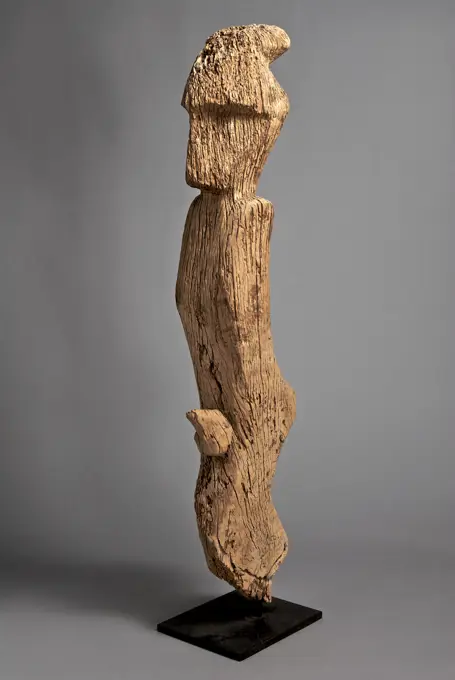
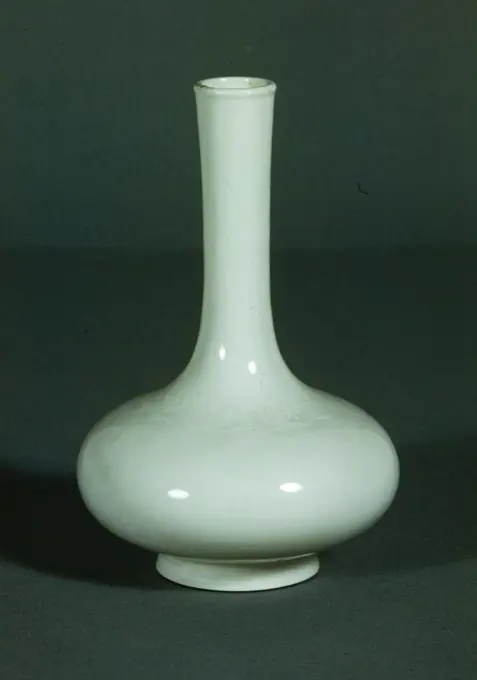
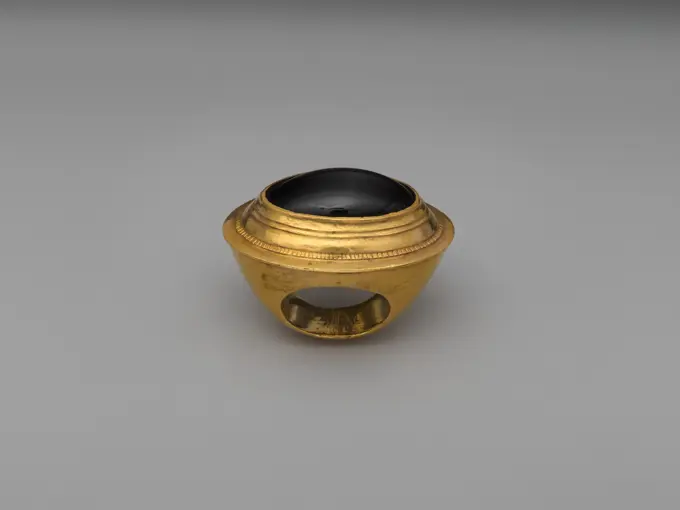
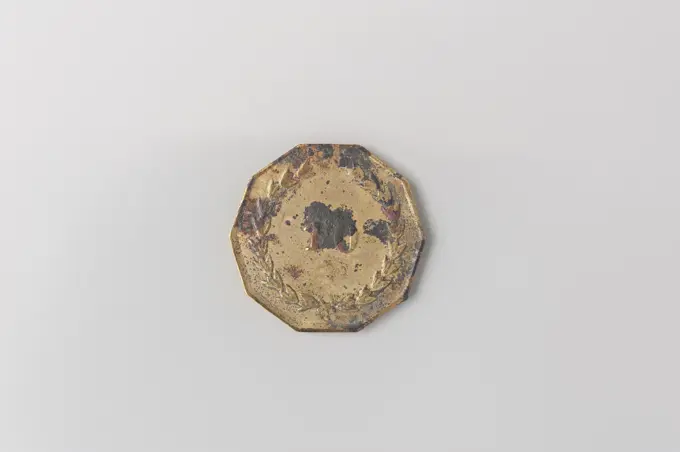
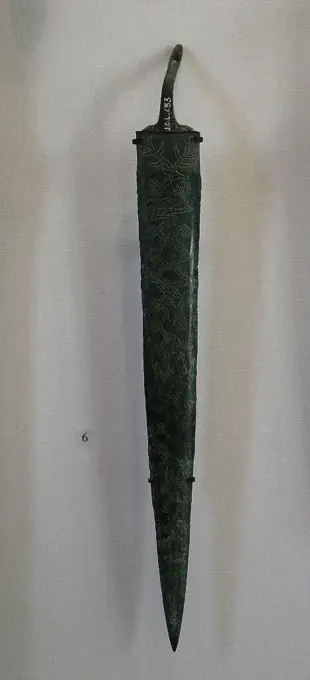
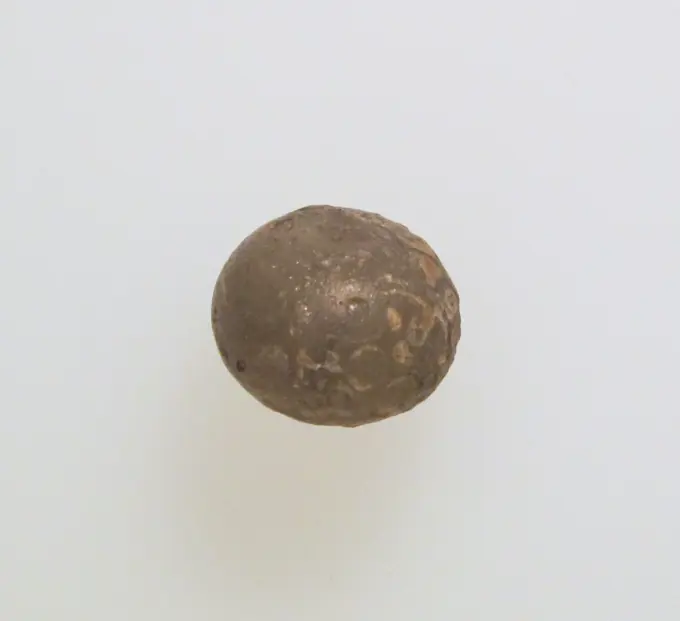
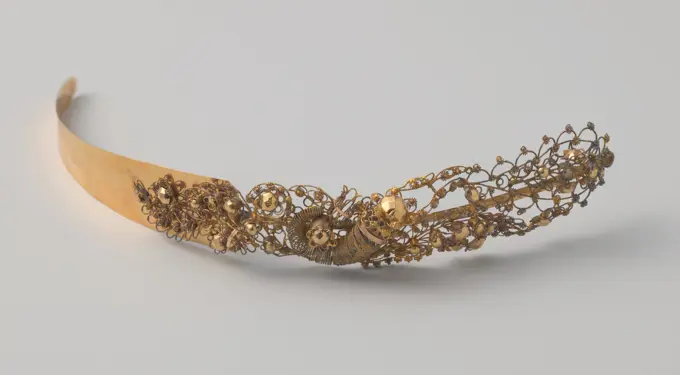
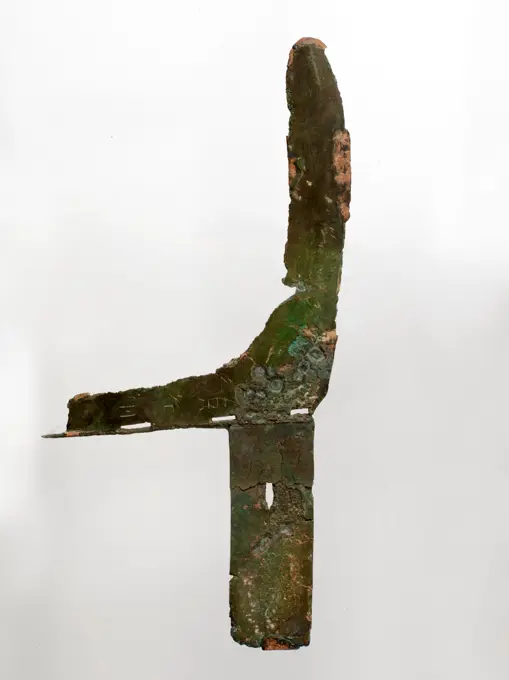
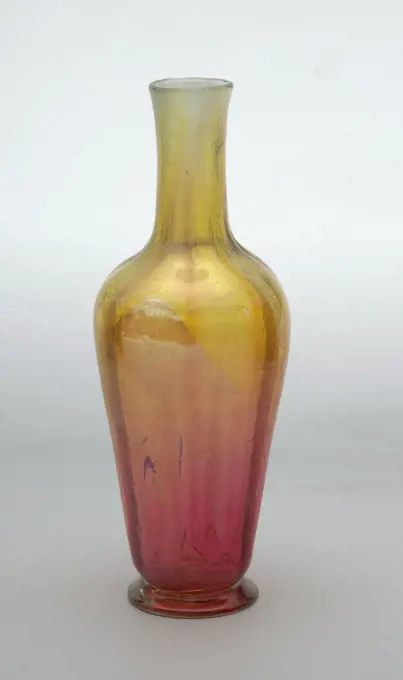
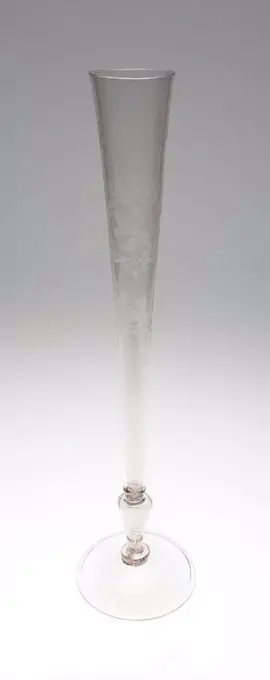
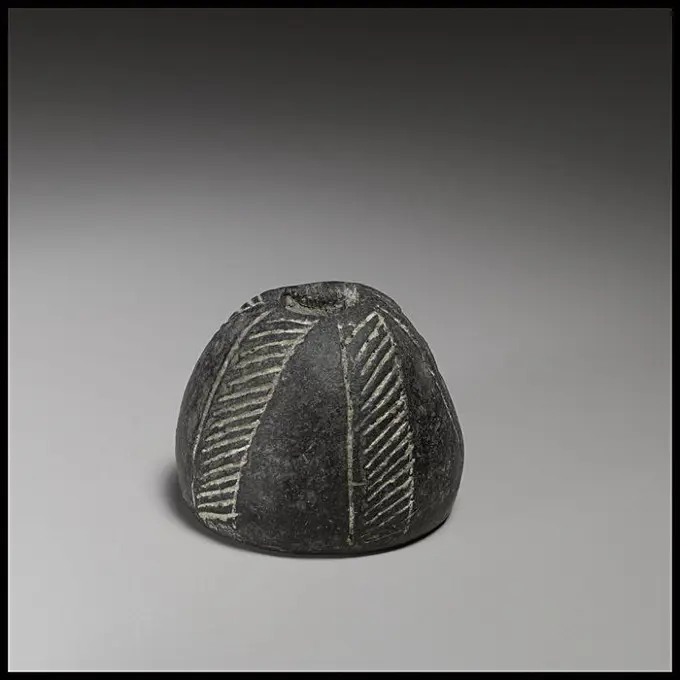
Sabel of the Minister Cavalerie No. 2, Anonymous, 1815 sabre Sabel der Heavy Cavalry No. 2, Right with one groove and half kling. With iron hilt with two side brackets. Marked: AKN 2 E 65 and A 2 N 876, 1815. The sheath is missing and the blade is shortened.  Kling, bracket, handle hood: Iron (metal). Handle: Leather   NetherlandsFork (Netherlands); ivory, silver, steel; L x W: 19.8 x 1.7 cm (7 13/16 x 11/16 in.); The Robert L. Metzenberg Collection, gift of Eleanor L. Metzenberg; 1985-103-168Ballastlood from the wreck of the East Indians Hollandia, Anonymous, 1700 - in or Before 1743  Ingot; (1) sim. NG 1979-268H, elongated (104.5l, 12.4w, 5.5h), corroded, marks visible 173, others illegible. Netherlands lead (metal)   SecondDolk of zwaard van ijzer.Dagger of iron with octagonal anti-clock. The handle is damaged. The blade is two-edged and tapered in a point.Counter box with thirty-two counters. Culture: British. Designer: Designed by Willem de Passe (Dutch, Cologne ca. 1597-ca. 1636 London). Dimensions: Box: 1 1/16 x 1 3/8 in. (2.7 x 3.5 cm);Counters: Diam. 1 1/16 in. (2.7 cm). Date: 1632-49. Museum: Metropolitan Museum of Art, New York, USA.AltarKordelasLid for a Sake Pourer, c. 1915-40. Seifū Yohei IV (Japanese, 1872-1951). Porcelain with yellow glaze and bamboo lid handle;Button from the wreck of the East Indians Hollandia, Anonymous, 1700 - in or before 1743 button Knoop. Button; domed plain top, silver-plated, flat base, loop-shank, lead-filled. Netherlands copper (metal)   SecondOil lamp. unknown, craftsmanKnife Handle (Kozuka). Culture: Japanese. Dimensions: L. 3 13/16 in. (9.7 cm); W. 9/16 in. (1.4 cm); thickness 5/16 in. (0.8 cm); Wt. 1.3 oz. (36.9 g). Maker: Ichijosai Hironaga (Hirotoshi) (Japanese, died ca. 1800-25). Date: mid-18th-early 19th century. Museum: Metropolitan Museum of Art, New York, USA.Sabel of the cavalry, with an etched blade, Peter Knecht, c. 1800 - c. 1850 sabre Sabel of the cavalry, with an etched blade. De Kling bears the inscription: "P. Knecht Solingen Schlagfrei Garantirt". Coming from Lieutenant Colonel L. de Perponcher. Solingen iron (metal) etchingRectangular Plaque 500 BCE-400 BCE China. Jade .Arrow Head, 1600s. Japan, Edo period (1615-1868). Iron; overall: 25.4 cm (10 in.).Funerary Staff 15th-16th century Inca. Funerary Staff 313226Ribbon of cream -colored mesh of 15 meters, c. 1900 - c. 1915 Ribbon of cream -colored mesh for 15 meters. Nijmegenfrance silk. Ribbon of cream -colored mesh for 15 meters. Nijmegenfrance silk.Coupon white cotton with crepe and smooth weaving lanes, Gustav Schnitzler, c. 1910 - c. 1940 Coupon white cotton with crepe and smooth weaving lanes. Nijmegen cotton (textile) Coupon white cotton with crepe and smooth weaving lanes. Nijmegen cotton (textile)Lid of turtle with Hertekop of silver (series of 28 pieces A to BB), Anonymous, c. 1700 - c. 1799 Turtle of turtle with Hertekop of silver (series from 28 pieces A to BB), Indonesia, 18th century Indonesia silver (metal) Turtle of turtle with Hertekop of silver (series from 28 pieces A to BB), Indonesia, 18th century Indonesia silver (metal)Fragment miseczki. warsztat nubijski, factoryScherf earthenware from the wreck of the East Indians' t Vliegend Hart ,, 1725 - 1735  Sharp earthenware, slightly bent with a round rander on the inside. There are remains of organic material within it. Brown price of color. Netherlands earthenwareKnife Handle (Kozuka). Culture: Japanese. Dimensions: L. 3 13/16 in. (9.7 cm); W. 9/16 in. (1.4 cm); thickness 1/4 in. (0.6 cm); Wt. 1.2 oz. (34 g). Date: end of 17th Century. Museum: Metropolitan Museum of Art, New York, USA.Lion covered dish c 1870-1900 United States. Glass . Artist unknownMiddle Kingdom Star Clock from a Rectangular Coffin Lid. Egypt, Middle Kingdom (2061 - 1665 BCE). Furnishings; Accessories. Wood, paint, gessoRoll with cream silk satin ribbon, c. 1925 Roll with cream silk satin ribbon. Nijmegenmaker: France silk Roll with cream silk satin ribbon. Nijmegenmaker: France silkSkewer, 1818-1819. Firm of William Eley (British), firm of William Fearn (British). Silver; overall: 30.2 cm (11 7/8 in.).Nose Ornament with Lateral Extensions in Suggesting Whiskers, Wings, or Fish Barbels. Nariño; Possibly Miraflores, Pupiales, Colombia. Date: 1000-1500. Dimensions: W. 17.4 cm (6 7/8 in.). Gold. Origin: Miraflores. Museum: The Chicago Art Institute, Chicago, USA.Pijpenkop from the wreck of the East Indians Hollandia, Anonymous, 1700 - in Or Before 1743  Pipe, bowl, bowlmark: crowned HE; fragm, 2hsm. 1,3. Netherlands pipe clay   SecondAppliqué for a funeral couch. UnknownPin ca. late 3rd-early 2nd millennium B.C. Bactria-Margiana Archaeological Complex. Pin 326781Reduced housing model: roof of the left pavilion. Terracotta. Cernuschi Museum, Asia Museum of Asia in the city of Paris.Wall Facing (Holland); tin-glazed earthenware, underglaze; 5 tiles tall, various wideBlunt Tipped Arrow ca. 1479-1458 B.C. New Kingdom. Blunt Tipped Arrow. ca. 1479-1458 B.C.. Reed, wood. New Kingdom. From Egypt, Upper Egypt, Thebes, Sheikh Abd el-Qurna, Tomb of Senenmut (TT 71), below, deposit of hunting weapons, MMA excavations, 1935-36. Dynasty 18Engraved bend stiver, 1000 - 2000   metal engraving   metal engravingMusketkogel from the wreck of the East Indians' t Vliegend Hart ,, c. 1700 - c. 1735  Lead spherical bullet that was fired from a musket. The bullet is dark gray in color. The bullet is immersed for conservation in beeswax. Identic to NG-1984-1, 3 to 5. Musket Caliber. Middelburg lead (metal)Sutra Cover. China. Date: 1590-1599. Dimensions: 12.8 × 35.6 cm (5 × 14 in.). Silk and gold-leaf-over-lacquered-paper strip, warp-float faced 4:1 satin weave with supplementary patterning wefts bound in weft-float faced 1:4 satin interlacings. Origin: China. Museum: The Chicago Art Institute, Chicago, USA.One from a Pair of Bracelets with Heavy Rope Braid 300 B.C.-A.D. 400 Thailand. One from a Pair of Bracelets with Heavy Rope Braid. Thailand. 300 B.C.-A.D. 400. Bronze. Late period. JewelryPart of a Forearm Defense (Vambrace). Culture: Italian. Dimensions: H. 8 1/2 in. (21.6 cm); W. 2 in. (5.1 cm); D. 4 1/4 in. (10.8 cm); Wt. 7.5 oz. (212.6 g). Date: ca. 1450-70. Museum: Metropolitan Museum of Art, New York, USA.Terracotta spindle whorl 6th-5th century B.C. Greek, Attic Like the two onoi (06.1021.52, 10.210.13) displayed nearby, this spindle whorl is a specialized piece of equipment used in working wool into thread. Carefully shaped and painted, it would have been attached to one end of the spindle to make it easier to rotate. Such objects were appropriate indeed for the graves of women.. Terracotta spindle whorl 252889 Greek, Attic, Terracotta spindle whorl, 6th5th century B.C., Terracotta, H. 1 1/2 in. (3.8 cm). The Metropolitan Museum of Art, New York. Gift of Albert Gallatin, 1927 (27.25)Caster And Cover (England); wood, turnedStirrup. Culture: West Slavic. Dimensions: H. 5 in. (12.7 cm); W. 5 1/8 in. (13 cm); D. 3/4 in. (1.9 cm); Wt. 2 oz. (56.7 g). Date: 12th-13th century.Horses had great importance in Slavic society, in both its social and religious aspects. Equestrian equipment, like stirrups, spurs and bits, are regularly found in their burials, even after their Christianization, among the goods warriors wanted to bring with them to the afterlife. The elite would sometimes even be accompanied by sacrificed horses, a meaningful practice at that time, considering the high economic value of horses. Museum: Metropolitan Museum of Art, New York, USA.Pipe froulty with pipe ,, 1733 Pijpenfoudral van Palmhout with year 1733 and inscription Bedach Alesmit. With copper fittings. There in Gouds Pijpje on the kettle the Dutch Virgin and a Vissman. Part of the handle is missing. Netherlands boxwood. brass (alloy). clay Pijpenfoudral van Palmhout with year 1733 and inscription Bedach Alesmit. With copper fittings. There in Gouds Pijpje on the kettle the Dutch Virgin and a Vissman. Part of the handle is missing. Netherlands boxwood. brass (alloy). clayGlass jar 3rd-4th century A.D. Roman Colorless with blue green tinge.Thickened, outsplayed rim, with rounded outer lip; body expands downwards to maximum diamter slightly above bottom, then curves in; small central kick on bottom, with traces of pontil mark.On upper part of body, horizontal trail wound slightly more than once.Intact; some bubbles, with a few very large; dulling, whitish weathering, and iridescence.. Glass jar 245237Hook 1500-500 B.C. India. Hook. India. 1500-500 B.C.. Copper. MetalworkSouvenir spoon with finial in form of Celtic cross British, Birmingham 1895-96Board knot out of the wreck of the East India Hollandia.boordewnoop. Stud; (1) Circular, domed top, Plain (1.3D, 1.1h).Fragment stemplowanego imadła amfory. Kinolis (ca 290-ca 250 a.C.), potter's workshopChrysanthemum Ladles; Manufactured by Tiffany and Co. (United States); USA; silver; L x W x D (a): 27.5 x 6.4 x 4.5 cm (10 13/16 x 2 1/2 x 1 3/4 in.)Inkstone with Knobbed Protrusions China. Inkstone with Knobbed Protrusions. China. Black limestone, possibly Lingbi. Qing dynasty (1644-1911). SculptureSmall bottle. unknown, craftsmanBeaker with Ruyi Head Handles 18th century China. Beaker with Ruyi Head Handles. China. 18th century. Nephrite. JadeLid for a Sake Pourer, c. 1915-40. Seifū Yohei IV (Japanese, 1872-1951). Porcelain with yellow glaze and bamboo lid handles;Rowel Spur 18th century German This is a branchless spur that could be attached directly at the back on a regular shoe, for occasional and casual riding. The neck is mounted on a screw used for tightening it to the shoes leather.This type of spur, particularly popular in the Germanic lands, is described in the entry Eperon in the Swiss Encyclopédie d'Yverdon published in 1772 by Fortuné Barthélemy de Félice. It is said that "these spurs not being maintained by any kind of tie, they can be lost very easily [.... We leave them to doctors, barbers, village priests, and monks. They are known in some countries and by some spur-makers by the name 'Carthusian spurs' (éperons à la chartreuse).". Rowel Spur. German. 18th century. Iron alloy. Equestrian Equipment-SpursFunerary Staffs 15th-16th century Inca (). Funerary Staffs. Inca (). 15th-16th century. Wood. Peru, Rio Ica. Wood-SculptureTerracotta oil lamp ca. A.D. 90-200 Roman Loeschcke Type 8. Mold-made, with shallow, deeply carinated body. Discus: locust facing right, eating grapes; a single filling hole at bottom. On shoulder, a pattern of impressed ovules, interrupted at the sides with two axe head-shaped designs. Stylized volutes flanking nozzle. Base ring outlined by two concentric grooves, and a flat base, with an impressed marker's mark, comprising two Greek letters: C , flanking a spray with three berries. Pinkish-buff clay.Intact.The lamp was probably made in Syria-Palestine.. Terracotta oil lamp. Roman. ca. A.D. 90-200. Terracotta; mold-made. Imperial. TerracottasHerramienta de curtidos, siglo XVIII. Museu de Reus.Fork; antler, steel, silver; L x W: 22.2 x 3.4 cm (8 3/4 x 1 5/16 in.); The Robert L. Metzenberg Collection, gift of Eleanor L. Metzenberg; 1985-103-155-aGlass inkwell. Culture: Roman. Dimensions: H.: 2 1/4 in. (5.7 cm)Diam.: 2 7/16 in. (6.3 cm). Date: 1st century A.D..Translucent cobalt blue.Almost vertical rounded rim; shallow, sloping shoulder with concave curve at base; folded horizontal flange; cylindrical body with slightly convex sides tapering downwards; another folded horizontal flange, forming base ring; convex bottom, pushed in at center, with large circular pontil mark.Intact; some bubbles; dulling, creamy weathering, and iridescence. Museum: Metropolitan Museum of Art, New York, USA.Fragment Pijpenkop from the wreck of the East Indians Hollandia, Anonymous, 1700 - in Or Before 1743  Pipe, bowl, bowlmark: sentry; fragm, 2hsm1. Netherlands pipe clay   SecondSpoon, 918-1392. Korea, Goryeo period (918-1392). Silver bronze; overall: 25.6 cm (10 1/16 in.).Panel from the Palace of Westminster. Culture: British. Designer: Designed by Augustus Welby Northmore Pugin (British, London 1812-1852 Ramsgate). Dimensions: Overall (confirmed): 24 3/8 × 9 5/8 × 11/16 in. (61.9 × 24.4 × 1.7 cm). Date: ca. 1847. Museum: Metropolitan Museum of Art, New York, USA.Rosewater Sprinkler or Bottle With Powder Blue and Light Brown. Rose water dropper or pine bottle of porcelain with spherical body with a horizontal, ingrangled line and thickenings in the long, narrow neck, covered with underglaze blue and café-au-lait glaze. The body is covered with bleu poudré (powder blue); The neck is covered with a light brown glaze. Bleu poudré with monochrome brown.Zig-Zag Vase; Designed by Max Snischek (Austrian, 1891 - 1968); Manufactured by J. & L. Lobmeyr GmbH (Austria); Austria; mouth blown crystal, cut and polishedYanqiang pipe for smoking opium unknownSpoon.   Maker: Bell & Brothers, American, ca. 1860-1895Ladle, 7-1/4 x 5-9/16 x 9-7/16 in. (18.4 x 14.1 x 24.0 cm), Burl wood, United StatesTraditional samba apito whistle isolated on a white background. Traditional samba apito whistle isolated on whitePanel belonging to a back glass painting, anonymous, c. 1795 - c. 1899 Wooden panel belonging to AK-RAK-2003-6-B.  wood (plant material)   Canton Wooden panel belonging to AK-RAK-2003-6-B.  wood (plant material)   CantonEar Spool, c. 400-900. Panama, Conte style, 5th - 10th century. Hammered gold; diameter: 3 cm (1 3/16 in.); overall: 3 cm (1 3/16 in.).Spiral Column Shaft. Culture: Italo-Byzantine. Dimensions: Overall: 49 7/8 x 6 1/4 in. (126.7 x 15.9 cm). Date: first half 13th century. Museum: Metropolitan Museum of Art, New York, USA.Animal head;  III-II century BC () (-300-00-00--201-00-00);Hammer -shaped fragment of iron., Anonymous, c. 1590 - c. 1596 fragment Hammer -shaped fragment of iron. It is most likely a part of the closing mechanism of a coffin.  iron (metal) forging  Nova Zembla. Saving HuysPanel; wood, carvedDekselfragment uit het wrak van de Oost-Indiëvaarder Hollandia. Parts, various, lid; cylindrical, moulded top with boss in centre (finial), narrow overhanging rim, vertical rim with concentric grooves, hollow core conical in section.Pillow ca. 7th-9th century A.D. Alanic. Pillow 327587Probe, fragmentary. Probe, fragmentary 250613 Probe, fragmentary, Bronze, Other: 1 1/4 in. (3.2 cm). The Metropolitan Museum of Art, New York. Rogers Fund, 1917 (17.230.80)Handle ca. 12th-13th century China. Handle 44711Pachava Melanesian (Pentecost Island. Vanuatuan) late 19th centuryMale AncestorFigureCylinders, pair 6th-5th century B.C. Greek, South Italian, Apulian. Cylinders, pair. Greek, South Italian, Apulian. 6th-5th century B.C.. Gold. Archaic or Classical. Gold and SilverBottle, 1662-1722, H.5-3/8 in., Porcelain, China, 17th-18th centuryShoulder Band Fragment 6th-8th century. Shoulder Band Fragment 445920Gold ring with garnet 3rd or 2nd century B.C. Greek Ring with garnet.. Gold ring with garnet. Greek. 3rd or 2nd century B.C.. Gold, garnet. Hellenistic. Gold and SilverCarnavalet museum, tokens collectionRain Cap for the Elevating Screw of a Carronade, anonymous, 1826 cap Rain cap for the Eleveers screw of a carronade. It has a cylindrical body with convex closing above and trumpet -shaped base, which has a cut -out for the Kulas and two holes for bolts, with which the cap was mounted on the guns. A large, loose ring is applied around the body, which shields the bolts from the rain and can easily be lifted to reach them. United States of America brass (alloy)Fork (possibly Germany); steel, horn, silver, mother-of-pearl, ivory; L x W: 20.1 x 1.7 cm (7 15/16 x 11/16 in.); The Robert L. Metzenberg Collection, gift of Eleanor L. Metzenberg; 1985-103-91Bronzes of Luristan. Dagger blade silk and adorned with interlacing and deer. Bronze. Iron II, 9th century BC. Louvre Museum. Paris. France.Pinhead Roman. Pinhead. Roman. Glass. GlassVessel with a hieratic inscription;  around 2686- around 2181 BC ; Old PAOpium Pipe, 1800s. China, Qing dynasty (1644-1911). Wood and ivory; overall: 54.4 cm (21 7/16 in.).Voornal van Goud, S. Greeuw Jzn, c. 1864  A golden roached, decorated at the front with branches and rosettes in filigrein. Coming from an old Zaans Kapstel. Hoorn (North Holland) gold (metal) filigreeBobbin ca. 1840 British. Bobbin. British. ca. 1840. Wood. Textiles-Methods and MaterialsFragment blowjob from the wreck of the East India Hollandia.Pipe, Bowl, Healmark illegible; fragment.Box -Stamp seal ca. 5th-7th century A.D. Sasanian. Stamp seal 327318Head of Hallebarde Ge ". Bronze. Zhou de l'Est dynasty (770-256 BC). Paris, Cernuschi museum. 101949-15 Archeology, Asian art, Zhou de l'Est, head Hallebarde Ge, Archeological VestigeVase, Mold-blown Favrile glass, Tall vase with long neck. Rose colored bottom ascends to yellow glass at top. Possible chill crack in glass., New York, New York, USA, ca. 1900, glasswares, Decorative Arts, VaseAlto Recorder in F 18th century German. Alto Recorder in F 501519Oudezijds Armhuis in Amsterdam, a lead that gave the right to peat from the Turfhuis, Anonymous, 1698  One -sided brass octagonal arms shed. Front: in round pearl edge: monogram of letters O, A and H Inside Cover. Reverse: Blanco. Amsterdam brass (alloy) striking (metalworking)  AmsterdamFlute Glass. Netherlands or Belgium. Date: 1655-1685. Dimensions: H. 44.5 cm (17 1/2 in.). Glass. Origin: Netherlands. Museum: The Chicago Art Institute, Chicago, USA.Terracotta conical-hemispherical spindle-whorl with flat base and rounded top ca. 1900-1725 B.C. Cypriot Spindle whorls aided in the making of cloth for garments and bedding. They were placed in tombs, perhaps so that the deceased could continue to spin wool in the afterlife.. Terracotta conical-hemispherical spindle-whorl with flat base and rounded top 240504