Historical Weapons and Tools

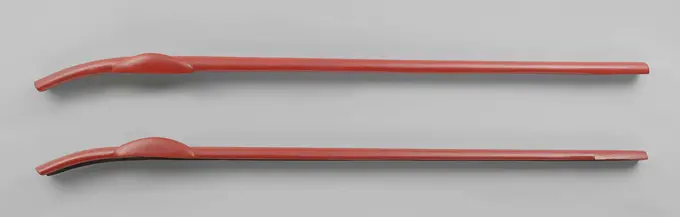
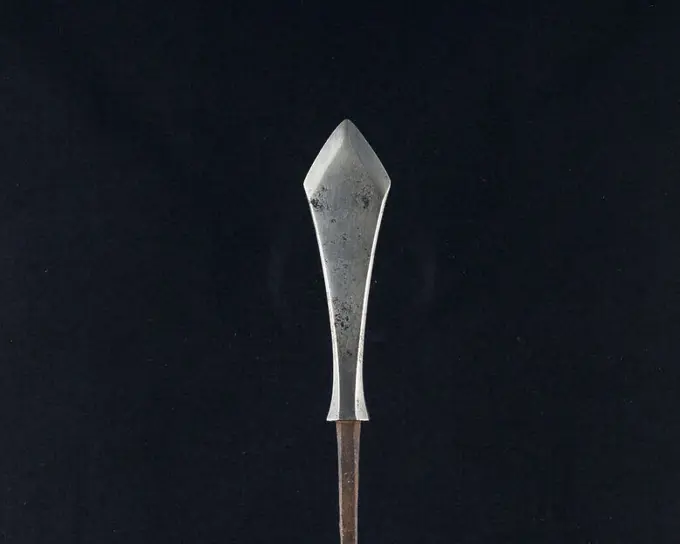
Artifacts including spears, swords, and hairpins, representing historical metalwork and design from various cultures.

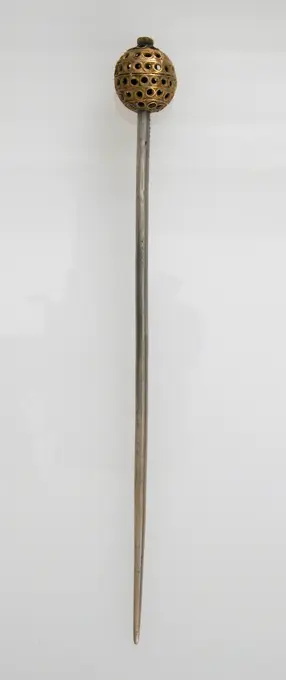
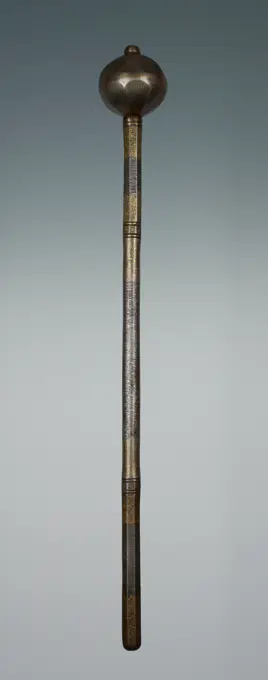
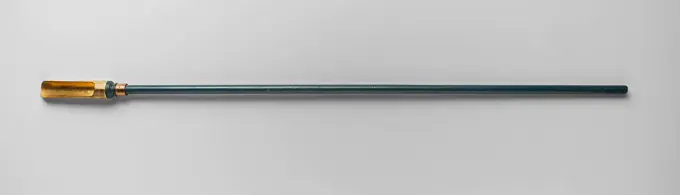
Tamboerstok from W. de Vries, Corporal Tamboer 2nd Bat in 1830/32. V. Department of Amsterdamsche Schutterij, 1814 - 1830  Tamboerstok or Tambour-Maître Stok from Pitriet. Bottom copper, partly steel profiled point. Two holes at the top, so that copper wire is applied, turned into hooks on both sides. A white metal chain around the stick. Top on both sides a hole, finished with white metal all around. On top of the stick a copper profiled ring, above which a silver ball with profile rings and vegetative ornaments. Silver brands in edge. From W. de Vries, in 1830/32 Corporal Tamboer 2nd Bat. V. Department of Amsterdamsche Schutterij.  silver (metal). copper (metal). metal sawing / drilling / casting / soldering / engraving
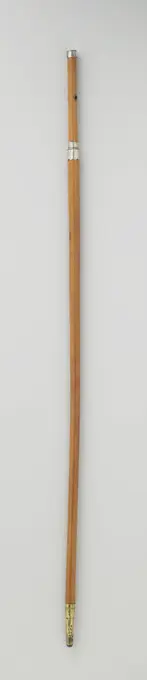
Tamboerstok from W. de Vries, Corporal Tamboer 2nd Bat in 1830/32. V. Department of Amsterdamsche Schutterij, 1814 - 1830 Tamboerstok or Tambour-Maître Stok from Pitriet. Bottom copper, partly steel profiled point. Two holes at the top, so that copper wire is applied, turned into hooks on both sides. A white metal chain around the stick. Top on both sides a hole, finished with white metal all around. On top of the stick a copper profiled ring, above which a silver ball with profile rings and vegetative ornaments. Silver brands in edge. From W. de Vries, in 1830/32 Corporal Tamboer 2nd Bat. V. Department of Amsterdamsche Schutterij. silver (metal). copper (metal). metal sawing / drilling / casting / soldering / engraving
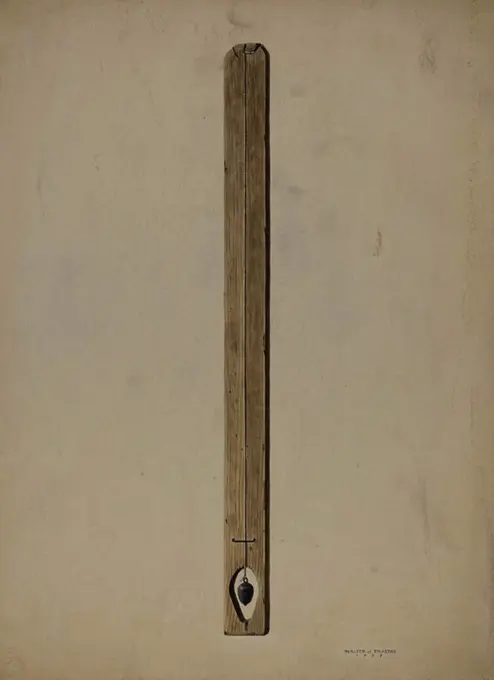
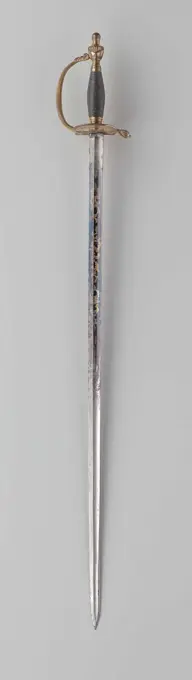
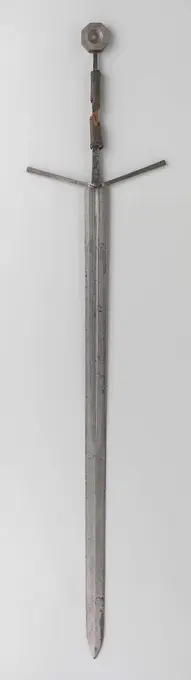
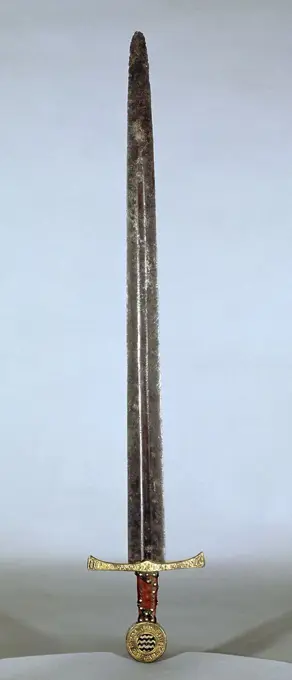
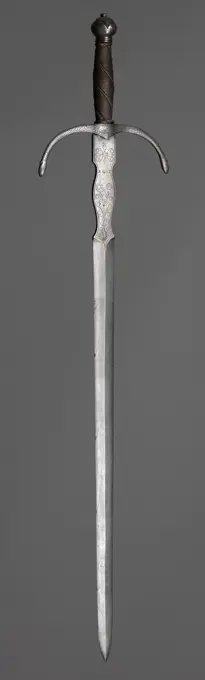
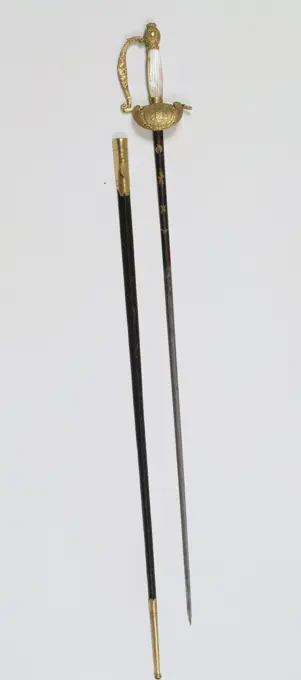
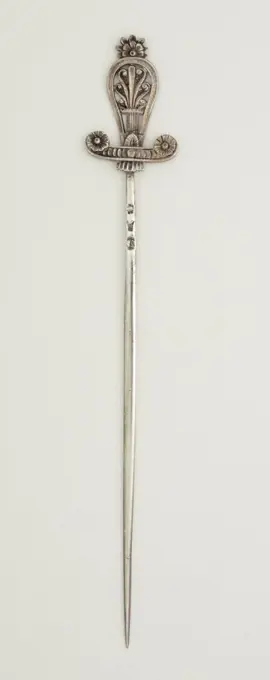
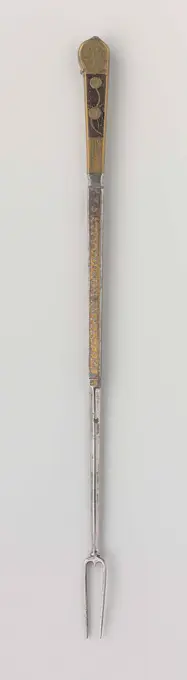
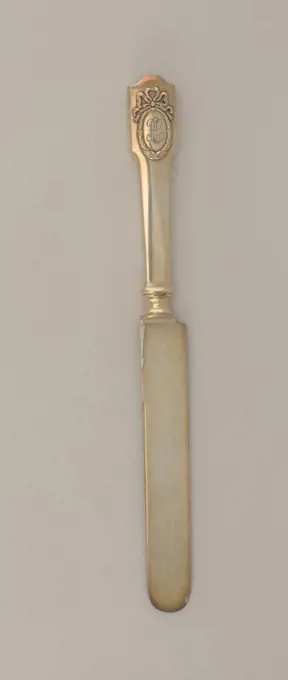
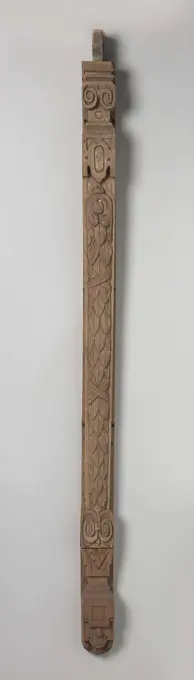
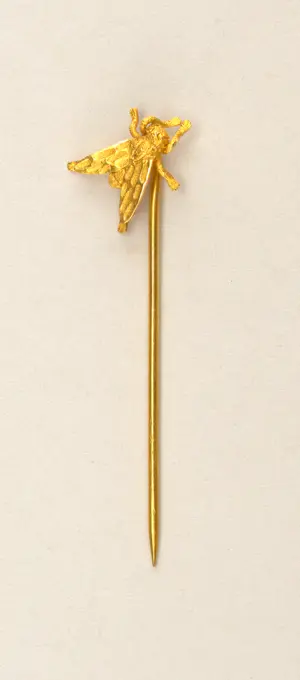
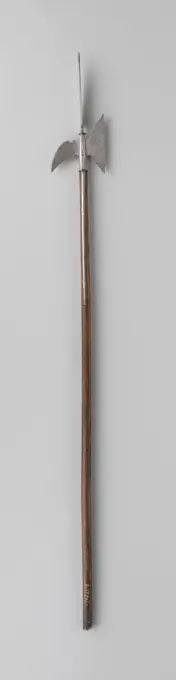
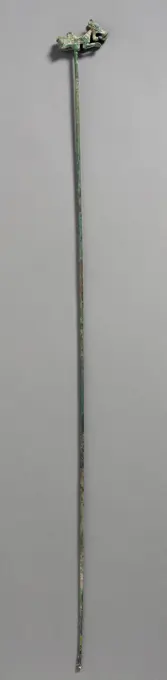
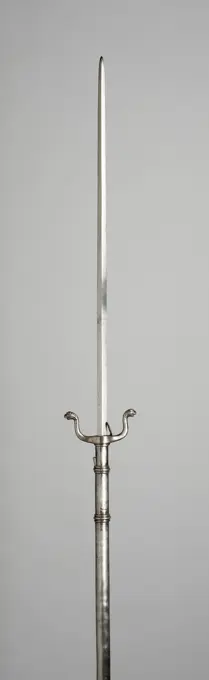
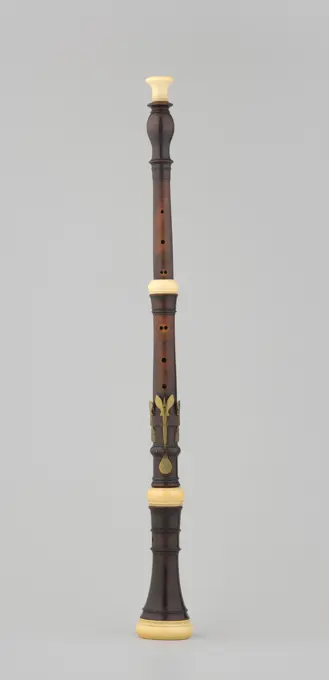
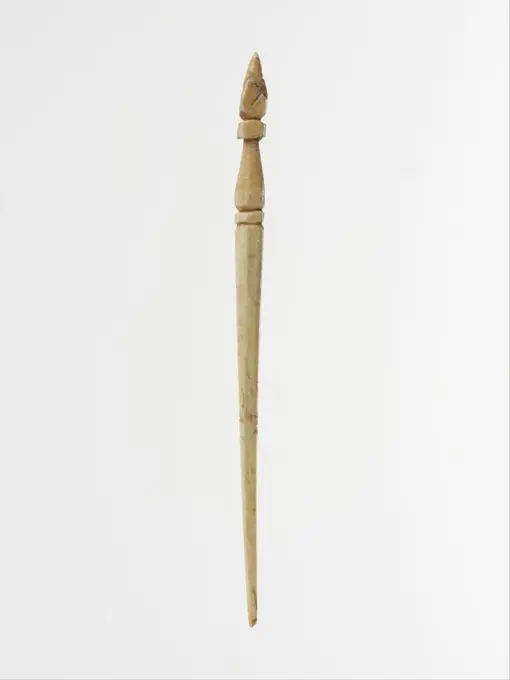
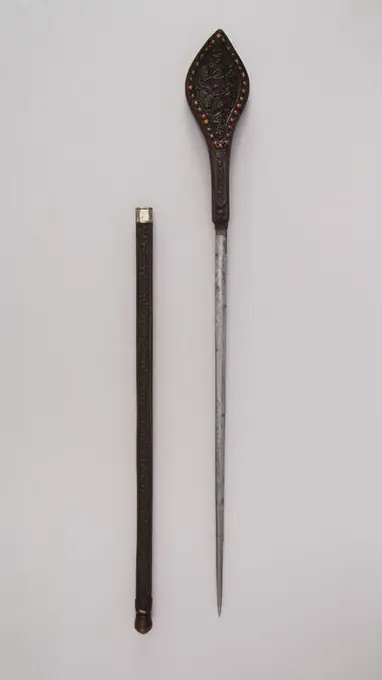
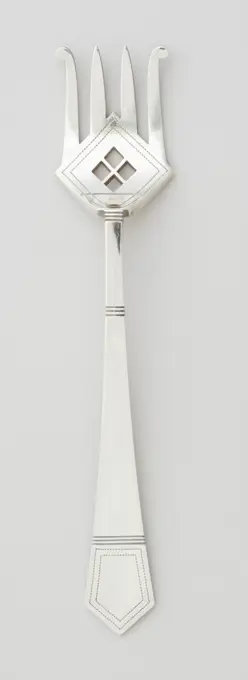
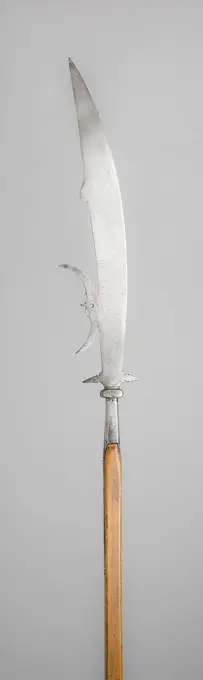
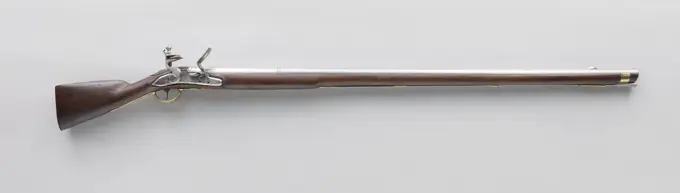
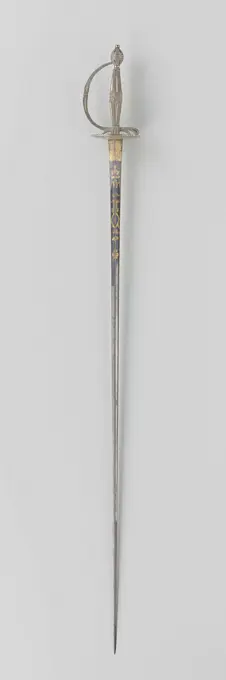
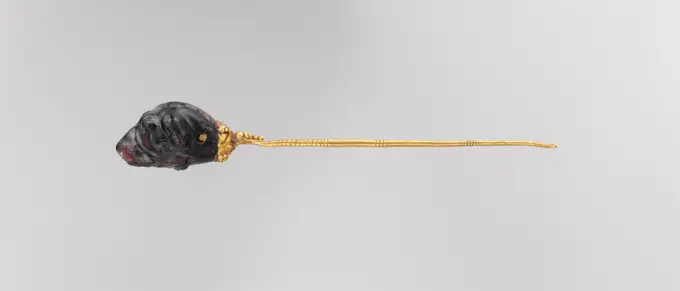
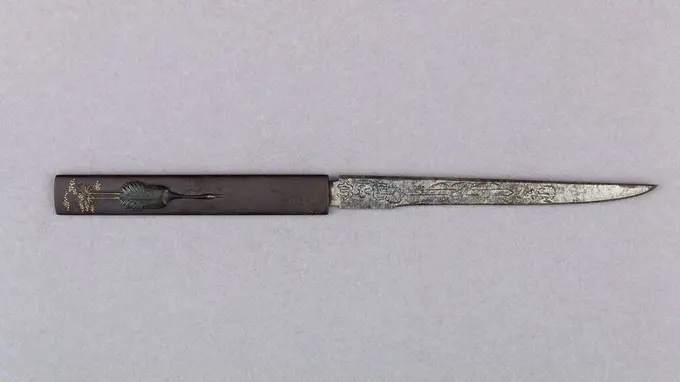
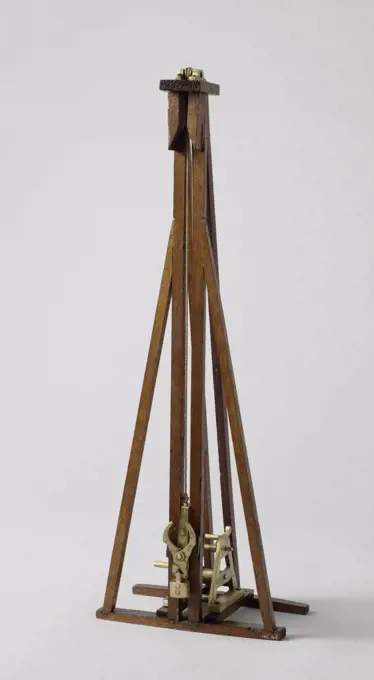
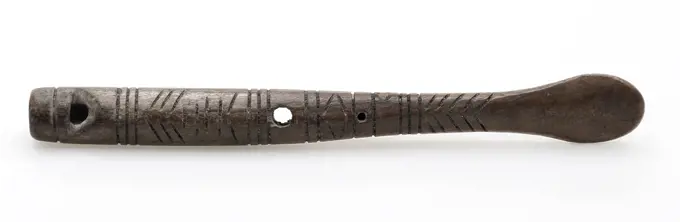
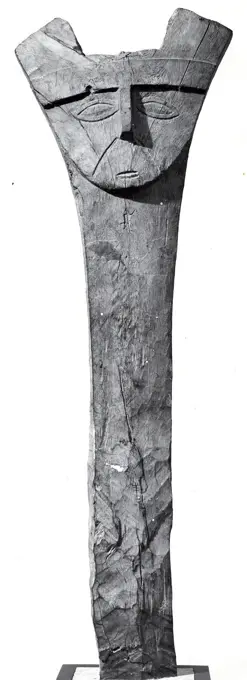
Pika unknown labelWallonian sword Wundes, Johannes (fl. 1580 1600)Hairpin 500-700 Frankish. Hairpin. Frankish. 500-700. Silver, gold. Made in Northern France. Metalwork-SilverScabbard Tweezers, 1880-1910. Africa, Sudan. overall: 31.2 cm (12 5/16 in.); blade: 19.9 cm (7 13/16 in.).Hartsvanger, Harmanus Ferhagrijs, 1775 - 1799 hunting hanger Heartvanger or hunting sword. The asymetrical hilt has a green made ivory grip in the form of the handle of a knife with three decorative buttons as if they were rivets, and is fitted with silver, including a bump plate, sawn and engraved to look like a bunch of curly praise and a pare rod That ends on both sides in a bird head. The curved blade is etched on either side with a signature framed by Arabesken and has a wide trench, at the top, etched with a fruit garland between leaf vines, and a narrower à la Montmorency. Amsterdam ivory. silver (metal) striking (metalworking) / engraving / sawing / etchingHeaddress Ornament 2nd century B.C.-A.D. 7th century Nasca. Headdress Ornament. Nasca. 2nd century B.C.-A.D. 7th century. Cotton, wood (thorn ). Peru. Wood-ImplementsTamboerstok from W. de Vries, Corporal Tamboer 2nd Bat in 1830/32. V. Department of Amsterdamsche Schutterij, 1814 - 1830  Tamboerstok or Tambour-Maître Stok from Pitriet. Bottom copper, partly steel profiled point. Two holes at the top, so that copper wire is applied, turned into hooks on both sides. A white metal chain around the stick. Top on both sides a hole, finished with white metal all around. On top of the stick a copper profiled ring, above which a silver ball with profile rings and vegetative ornaments. Silver brands in edge. From W. de Vries, in 1830/32 Corporal Tamboer 2nd Bat. V. Department of Amsterdamsche Schutterij.  silver (metal). copper (metal). metal sawing / drilling / casting / soldering / engravingStylus. Stylus. Ivory or boneSierdegen, Pieter Loos, c. 1700 small-sword The hilt is attached with iron in stripes interspersed with praise in high -relief and a recurring decorative element in the form of a climbing lion flanked by chalice -shaped praise in a triangle; The wooden handle is wound (restored) with twisted iron wire and has two iron rings on either side. The blade is boundary and has a hexagonal cross -section; The narrow center surface has a trench with a signature. Amsterdam iron (metal). wood (plant material). striking (metalworking)Walking stick of Johan van Oldenbarnevelt.Johan van Oldenbarnevelt was executed for treason against the state in the early hours of 13 May 1619. The elderly statesman mounted the scaffold leaning on his stick. Since then, various walking sticks have been put forward as having once belonged to him. Among them is the one on display here, the provenance of which, however, is unknown.Rapier with iron bracket figure and flat blade.Rapier with iron bracket figure and flat blade. The blade has a shallow groove on either side over a part of the length. The hilt has two fist brackets and is equipped with a spherical faceted button. The wooden handle shows traces of an original change of brass wire. The pearl rod has largely disappeared, no brands are visible. The bottom brackets from the hilt that protect the RICASSO are completely preserved.Guenbri late 19th century Algerian. Guenbri 501024PinDegen with copper bump bracket and silver handle.degen with copper bump bracket and silver handle. The Degen Has A Copper Movable Baffle Plate With Inscription 'J.H. Smaale '. Without Sheath. From J.H. Smaale, Captain Mobile Schutterij.Two-hander.This sword has an exceptionally long blade and may have been an actual fighting sword. A strong and well-trained soldier who fought with such a large sword received double pay and was thus known by the German term Doppelsöldner (double soldier). Leather would have originally been wound around the swords wooden grip. The quillons underneath the handle were originally straight.ESPADA CON EMPUÑADURA CON ORO E INSCRIPCION ARABE - SIGLO XIV - HIERRO - LARGO 1,08 M. Location: INSTITUTO VALENCIA DE DON JUAN-COLECCION. MADRID. SPAIN.Imitation of a medieval swordShovel 1795-1815 American. Shovel. American. 1795-1815. Brass, iron. Made in New York, New York, United StatesDegen with sheath from A.L. de Bruyn Kops, Anonymous, c. 1847 - c. 1890 sword Degen to A.L. De Bruyn Kops, chief engineer from Waterstaat. Netherlands (possibly) kling: iron (metal). gevest, mondingsband, bus: brass (alloy). schede: leather. felt (textile). greep: mother of pearl engravingSkewer, silver, Flat pin or blade with cast relief inverted volute, surmounted by openwork andthemion and cast flower terminal., Milan, Italy, 19th century, cutlery, Decorative Arts, SkewerFour knives and a fork belonging to Emperor Charles V.Charles V acquired this portable cutlery set in Italy. The two large knives bear his arms and the chain of the Order of the Golden Fleece. Above this is the emperors crown and below it the Burgundian cross of Saint Andrew with the mythical pillars of Hercules (signifying the end of the world). They are all symbols of the emperors power.Oar - Souvenir du 1er janvier 1892, descente des rapides de LachineSpoon Korea. Spoon. Korea. Bronze. Goryeo dynasty (918-1392). MetalworkOboe, Johann August Crone, c. 1780 Hobo of Palmhout with three rectangular brass valves and three ivory rings. The third gap is double. Marked on all three parts: Kroon / J a crone / flower. Leipzig Valves: Brass (Alloy). Boxwood. Rings: Ivory Hobo of Palmhout with three rectangular brass valves and three ivory rings. The third gap is double. Marked on all three parts: Kroon / J a crone / flower. Leipzig Valves: Brass (Alloy). Boxwood. Rings: IvoryJavelin shaft (see 36.3.207a) ca. 1479-1458 B.C. New Kingdom. Javelin shaft (see 36.3.207a). ca. 1479-1458 B.C.. Reed. New Kingdom. From Egypt, Upper Egypt, Thebes, Sheikh Abd el-Qurna, Tomb of Senenmut (TT 71), below, deposit of hunting weapons, MMA excavations, 1935-36. Dynasty 18Indian rockingDegen in schede van minister Jan van den Tempel.Degen in Schede belonged to the official costume by Jan van den Temple worn at the opening of the States General when he was Minister of Social Affairs.'Louis XVI' tableware, Joseph E. Birmingham, Shreve & Co., founded 1852, silver, Elongated flat blade with rounded end. Waisted shoulder. Handle of rectangular line ending in shouldered, rectangular terminal embossed with oval wreath with ribbon bow, enclosing monogram., ca. 1909, cutlery, Decorative Arts, Knife, KnifeGebeeldhouwde stijl van eikenhout, afkomstig uit het z.g. Huis van Alva, Warmoestraat te Amsterdam.Sculpted oak style without finish, from the Z.G. House of Alva, Warmoestraat in Amsterdam. In total it concerns two consoles, three broad and three narrow styles (BK-KOG-755-A to D, F to H). See also BK-KOG-754-1 to 7, these are 6 painted styles that come from the same house.Scarf Pin (possibly France); gold; Overall: 4 x 1.3 cm (1 9/16 x 1/2 in.)Ivory button hook with monogram jvn, anonymous, c. 1910 Ivory button hook with monogram jvn, in embroidered bag.  ivory Ivory button hook with monogram jvn, in embroidered bag.  ivorySergeantshellebaard, 1650 - 1700 Halberd Short blade with a strong tapered shape with a sharp middle bone; At the bottom of two porters. Light hexagonal tapered house with a slice -shaped button and a ring -shaped profile below. The house has a right through gap through which the ax and hook, which are forged into one, are stabbed through. This whole is secured with three flat -filed rivets. Both the ax and the hook have committed cutting out. Two ramped feathers. Round (ash wood) stick (black -painted) at the bottom. Shoe is missing. Low Countries wood (plant material). iron (metal)   Low CountriesAxe, Before 1922. Philippines. blade: 20.4 x 21.6 cm (8 1/16 x 8 1/2 in.).Bone Weaving Bobbin 8th-mid-16th century Peru; north coast (). Bone Weaving Bobbin 309258Walking staff with silver button. Walking staff or walking stick made from rotting but to European model. Silver handle.Arrow Point, 1700s. Japan, Edo period (1615-1868). Steel; overall: 17 cm (6 11/16 in.); head: 4.7 cm (1 7/8 in.).Meissel - Chisel on white Meissel - Chisel on white Copyright: xZoonar.com/lantapixx 7220617Walking Stick Belonging to Lieutenant Admiral Jan Corneliszoon Meppel (1609-1669), 1659  Rotting or walking stick of rattan with decorated button, eye, neck and point. On the neck a silver band with inscription "On / Jan Corneliszoon Meppel / Lieutenant Admiraal / Van Holland and Westvrisland / 1659". On the button an engraved portrait with the image of Lieutenant Admiral Jan Corneliszoon Meppel (1609-1669) and along the side the text "Gift of the State". The brass point is decorated with geometric motifs. Netherlands rattan. silver (metal). brass (alloy)   Hoorn (North Holland)Arrow Point, 1700s. Japan, Edo period (1615-1868). Steel; overall: 16.4 cm (6 7/16 in.); head: 4.6 cm (1 13/16 in.).Sacrificial Sword (Kartr or Chur) 19th century Indian, Bengal () or Nepalese Just as Durg was a manifestation of the focused anger of the gods, so too was the godess Kl (literally, "the black one") an emanation born of the wrath of Durg. Kl is worshiped both as the most bloodthirsty member of the Hindu pantheon and, conversely, as the most life affirming. The goddess's dichotomous nature as destroyer and savior is implicit in sacramental weapons, which were used in the ritualistic slaughter of animals offered to her as sacrifices.Kl is said to have sprung fully formed, in the midst of battle, from the forehead of an enraged Durg. The very image of death, with dark shriveled skin, wild disheveled hair, a wide gaping mouth with bared fangs, clad only in a necklace and skirt made from the body parts of her opponents, and driven by an insatiable lust for their blood, she is the consummate destroyer. She also appears as the personified rage of other, usually benign, goddesses, iAmsterdamse El or Ellemaat, Anonymous, c. 1590 - c. 1596 measuring rod. measuring instrument Wooden rod, Amsterdam El or Ellemaat. Netherlands wood (plant material) cutting  Nova Zembla. Saving HuysTable fork 17th century probably Hungarian. Table fork. probably Hungarian. 17th century. Steel, whalebone, bone, metal. Metalwork-Steelside view of wooden spoon with pink Himalayan Salt side view of wooden salt spoon with pink Himalayan Salt isolated on white background Copyright: xZoonar.com/ValeryxVoennyyx 13599877Mounting Pin for a Finial. Iran, Luristan, Luristan bronzes, circa 1000-650 B.C.. Jewelry and Adornments; pins. Bronze, castDegen of H. de Vos van Steenwijk (Cadet Kurassiers No. 3), S. de Jager, 1815 - 1830 sword The for officers Karabiniers or Kurassiers, 1815-1830. The blade is three -hand and the hilt of cast brass. Pearl on the handle, a jumping grenade on the shock. Under the bump plate 'S. de Jager 'and the letters' i.v.e.'. With engraving work, somewhat glowed and gilded. With black leather sheath. Mouth of brass and earphone with hook. Worn by H. Baron de Vos van Steenwijk as Cadet at the 3rd Kurassiers department. Haarlem gevest: brass (alloy). greep: mother of pearl. schede: leather. kling: iron (metal) engraving / gilding / inlay (process)  NetherlandsRoman cosmetic spatula, bone. Museum: MUSEO DE MATARÓ.Pin 7th century () Frankish Pins were used to secure a veil or to hold a hairstyle in place. Most were made simply of copper alloy, sometimes tinned to look like silver, but some were elaborate objects, showcasing an array of metalsmithing techniques.. Pin. Frankish. 7th century (). Silver, niello, gold sheet, filigree. Made in Northern France. Metalwork-SilverCombined Brandistock and Musket Rest 1600-1700 Italy, northern. Steel .Fire Shovel 1770-1800 American. Fire Shovel 3648Jaume Cubells / Escultura en madera, siglo XX. Biblioteca Museo Víctor Balaguer, Vilanova i la Geltrú.Oboe, Abraham van Aardenberg, c. 1700 - c. 1717 Hobo van Palmhout, mounted with ivory. Three brass valves. The third and fourth hole are double and there is a hole in the cup. Marked on all parts: jumping deer Aardenberg in a banderol / Fleur de Lis. Amsterdam boxwood. ivory. brass (alloy) Hobo van Palmhout, mounted with ivory. Three brass valves. The third and fourth hole are double and there is a hole in the cup. Marked on all parts: jumping deer Aardenberg in a banderol / Fleur de Lis. Amsterdam boxwood. ivory. brass (alloy)Rail spike - street lamppost isolated on white backgroundIvory pin. Culture: Roman. Dimensions: Diam.: 4 in. (10.2 cm). Date: late 2nd-3rd century A.D..Pin. Museum: Metropolitan Museum of Art, New York, USA.Busk 1675-1725 Italian Carved figures, fruits, flowers, and scrolls are edged with roping.. Busk 85403Baluster mid-18th century British. Baluster. British. mid-18th century. Oak. WoodworkDagger with Sheath. Culture: Turkish. Dimensions: L. with sheath 23 1/4 in. (59.1 cm); L. without sheath 22 in. (55.9 cm); W. 2 1/2 in. (6.4 cm); Wt. 4.9 oz. (138.9 g); Wt. of sheath 1.9 oz. (53.9 g). Date: 18th century. Museum: Metropolitan Museum of Art, New York, USA.Fork (Netherlands); Manufactured by J.M. van Kempen and Son, Voorschoten (Netherlands); silver; cm: L: 13 x W: 2.8Sword -Pin ca. 3rd-7th century A.D. Sasanian. Pin. Sasanian. ca. 3rd-7th century A.D.. Bronze. Sasanian. Iran, Qasr-i Abu Nasrspoon with ketchup sauce isolated on white background. spoon with ketchup sauceWalbus with flint lock, anonymous, c. 1700 - c. 1800 flintlock weapon. musketoon Walbus with wooden flask and drawer, and iron run. Iron hook at the bottom of the drawer. The flask has a simple decoration (brass) on the sides and back of the flask. The mall has a flint lock. Marked: on run: u; 8. Netherlands loop: iron (metal). haak: iron (metal). slot: iron (metal). kolfkap: brass (alloy). trekkerbeugel: brass (alloy). ladeband: brass (alloy). beslag: brass (alloy). lade: wood (plant material). kolf: wood (plant material) cutting / forging / castingGlaive Made 1580-1620 Brescia. Steel and wood . Italian SchoolArrow Point, 1700s. Japan, Edo period (1615-1868). Steel; overall: 11 cm (4 5/16 in.); head: 3.2 cm (1 1/4 in.).a hundred;  19th century (1800-00-00-1810-00-00);Flintlock Wall Piece, anonymous, c. 1825 - c. 1840 musketoon. flintlock gun Flint fortress (Walbuks) with battery lock; Profile band at room; elongated half oval iron visor grain; No visorkeep; Brand broke up at the bottom; flat lock plate and rooster with beveled sides; Bottom lock plate concave; Nutenhouten French flask; brass band around drawer; Four brass loading stickers whose front trumpet -shaped; wide round tractor bracket; brass flask; Iron cheststick with thicker front part; Brass counter -lock plate accolade shaped. In use in 1830. unknown Laadstok, lock, run: Iron (Metal). Batter: Brass (Alloy). Drawer, Kolf: Wood (Plant Material)Spear 18th-19th century Madurese. Spear 30779Kick at Singalese cannon or Lewuke's cannon ..Arrow Point, 1700s. Japan, Edo period (1615-1868). Steel; overall: 15.2 cm (6 in.); head: 3.8 cm (1 1/2 in.).a hundred;  XIX-XX century (1800-00-00-1810-00-00);wood cutting board isolated on white backgroundDegen met zilveren gevest.Ornamental degree. The Silver Hilt has crumbled decorations; The assembly is egg-shaped and divided into two surfaces, just like the handle; The pearl block is decorated on both sides with two hollow panels between the framed decoration; The fist bracket is disappointed in the anti-clock and disappears into the pearl block from which the short pearer rod releases, just like two short finger brackets that hit the baffle plate; The bump plate is decorated in the same way as the rest, but with Ajourwerk in between and not decorated at the bottom of the top, but stamped with the Stadskeur of Amsterdam and the initials of the silversmith. The blade has a hol-triangular diameter and is etched linearly on both sides, gilt against a blued background, with the address of the swordsger and symmetrical leaflets with a wreath on the outside, and on the carrying side partially asymmetrical leafs that the text l ' Honeur me fait servir framed, the words in gold plated panelGold pin with obsidian finial ca. 1st century A.D. Roman Gold pin wth an obsidian finial in the shape of an animal's head.. Gold pin with obsidian finial. Roman. ca. 1st century A.D.. Gold and Obsidian. Late Hellenistic or Early Imperial. Gold and SilverDegen with sheath of Jhr. G.P.C. Breugel. Those with copper bump plate. On the blade on both sides, the brand 1414. Also an image of a running animal. Three holes in the blade. With black leather sheath with copper fittings. From jhr. G.P.C. Breugel, in 1830-1832 1st lieutenant of the 1st battalion 2nd Department of Mobile North Holland Schutterij.Spoon 1663-64 John Smith. Spoon 197413Understop of umbrella or umbrella with buffalo horn button, wood and silver -colored ring, Gustav Schnitzler, c. 1920 - c. 1940 Understop of parasol or umbrella of bamboo with a button composed of sliced buffalo horn, a silver -colored metal ring and knotty wood. Nijmegen knob:. Button: Metal. Button: Wood (plant material). stick: bamboo cutting Understop of parasol or umbrella of bamboo with a button composed of sliced buffalo horn, a silver -colored metal ring and knotty wood. Nijmegen knob:. Button: Metal. Button: Wood (plant material). stick: bamboo cuttingSpoon possibly 18th century probably Southern Italian or possibly Sicilian or Algerian. Spoon. probably Southern Italian or possibly Sicilian or Algerian. possibly 18th century. Wood, coral, and brass. Natural SubstancesKnife Handle (Kozuka) with Blade. Culture: Japanese. Dimensions: L. including blade 8 3/8 in. (21.3 cm); L. excluding blade 3 13/16 in. (9.7 cm); W. 9/16 in. (1.4 cm); thickness 1/4 in. (0.6 cm); Wt. 1.6 oz. (45.4 g). Date: ca. 1615-1868. Museum: Metropolitan Museum of Art, New York, USA.Lorgnet with turtle or celluloid frame on a long octagonal handle with cannelure halfway and below, anonymous, c. 1900 Lorgnet with oval glasses and frame of dark turtle. Long handle in straight stick shape, split for the storage of the actual glasses. With hinge rotating glasses, nose bridge in arch shape. Netherlands (possibly) Glasses: Glass. frame: grinding Lorgnet with oval glasses and frame of dark turtle. Long handle in straight stick shape, split for the storage of the actual glasses. With hinge rotating glasses, nose bridge in arch shape. Netherlands (possibly) Glasses: Glass. frame: grindingShelf glass. Realistic empty store shelving. 3D interior wall furniture template. Isolated blank transparent bookshelf. Exhibition and gallery rack element. Vector shop showcase clear stand mockup. Shelf glass. Realistic empty store shelving. 3D interior wall furniture template. Isolated transparent bookshelf. Exhibition and gallery rack element. Vector shop showcase clear standModel of a pile driver, Anonymous, c. 1819Spoon 3rd-7th century. Spoon 445351Rod, probably managing at a meat wreath. Ridge with hook-shaped ends, probably to hang meat crown.Legs biting or rattle, decorated, spatula-shaped end, bite-tipped rattle whistle toy relaxing tool musical instrument soundstory found bottom leg, w 1.6 sawn cut drilled sanded Legs flute part of bite-bit and rattle Made of solid bone probably derived from cattle Oval cross-section ending in spatula shape. Mouth hole and keep holes drilled horizontally and vertically through the leg. Function other holes unknown probably used for attachment of bubbles. Decorated with grooves around and herringbone pattern at the top archeology native flutes playing child music toddler babyBurial Post 13th-15th century Ica. Burial Post 312640Twee geweerfoedralen behorend bij wapenrek van Cornelis Tromp.Two red cured wooden rifles belonging to the lont lock from the ensemble. The fods do not protect the full rifle, but only the top and were probably attached to the guns with silk ribbons.Staff of Office, early to mid-1800s. Central Africa, Democratic Republic of the Congo, Luba. Wood and iron; overall: 170 x 13.3 cm (66 15/16 x 5 1/4 in.).Hacksaw isolated on white backgroundCosmetic Applicator or Pin. Afghanistan, 3rd century. Jewelry and Adornments; pins. IvoryArrowhead () ca. 3rd century B.C.-3rd century A.D. Parthian () This bronze object may be an arrowhead with a long tang which has been modified or broken. It was discovered on the surface at Shahr-i Qumis in northern Iran, which has been identified as the ancient city of Hecatompylos, established by the Parthians as their capital by about 200 B.C. In Greek Hecatompylos means ‘a hundred gates,’ suggesting that the city was quite large. Indeed, the modern archaeological site includes several mounds, only a few of which have been excavated, and a vast area covered with potsherds. The Parthians were famed in antiquity as archers, and gave their name to the ‘Parthian shot,’ a tactic in which a mounted archer rides away from his enemy while firing arrows at him.The excavations at Shahr-i Qumis by the British Institute of Persian Studies in 1967 were co-sponsored by the Metropolitan Museum of Art. However, the museum did not acquire this arrowhead until 1978, as a result of the Met’s financiNeedle ca. 1295-1070 B.C. New Kingdom, Ramesside. Needle. ca. 1295-1070 B.C.. Bronze. New Kingdom, Ramesside. From Egypt, Memphite Region, Lisht North, Cemetery, MMA excavations. Dynasty 19-20Toilet brush, X-raySlagzwaard.Two-hunter with a later wooden handle and an early octagonal anti-clock that appears from a combat sword. The straight, double--edged blade has pearl hooks on either side and is decorated with grooves, wave patterns and small circles.Arrowhead (Yanone). Culture: Japanese. Dimensions: L. 8 3/4 in. (22.2 cm); L. of head 3 in. (7.6 cm); W. 7/8 in. (2.2 cm); Wt. 1.4 oz. (39.7 g). Date: 18th century. Museum: Metropolitan Museum of Art, New York, USA.Oval tray on legs; Pratt, Thomas Boulon & Humphreys, Arthur (Fl. 1763-1790); 1783/84 (1783-00-00-1784-00-00);Clarinet (Upper and Lower Joint). Middle part clarinet made of boxwood with ivory tire and brass valvesHair Pin, 7 1/8 x 2 x 1/2 in. (18.1 x 5.08 x 1.27 cm), Silver, ChinaOboe, anonymous, c. 1830 - c. 1840 Hobo van Palmhout, in the German tradition, with a short Viennese cup. The oboe has twelve octagonal brass valves and three ivory rings. The construction shows similarities with Heckel, the valves show similarities with Schott (with the exception of the D-es valve). Germany Boxwood. Valves: Brass (Alloy). Rings: Ivory Hobo van Palmhout, in the German tradition, with a short Viennese cup. The oboe has twelve octagonal brass valves and three ivory rings. The construction shows similarities with Heckel, the valves show similarities with Schott (with the exception of the D-es valve). Germany Boxwood. Valves: Brass (Alloy). Rings: IvoryPlumb Line and Board. Dated: 1939. Dimensions: overall: 38 x 27.9 cm (14 15/16 x 11 in.) Original IAD Object: 50 3/4" long; 3 3/4" wide. Medium: watercolor and graphite on paperboard. Museum: National Gallery of Art, Washington DC. Author: Walter Praefke.Pin ca. 3rd-7th century A.D. Sasanian. Pin 323098