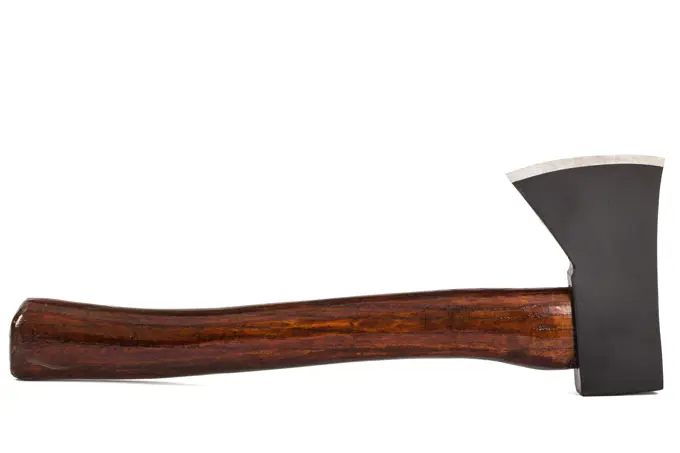
Historical Weapons Collection

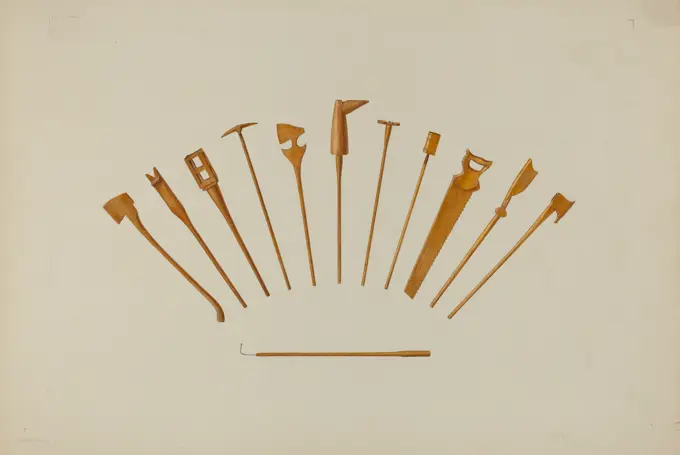
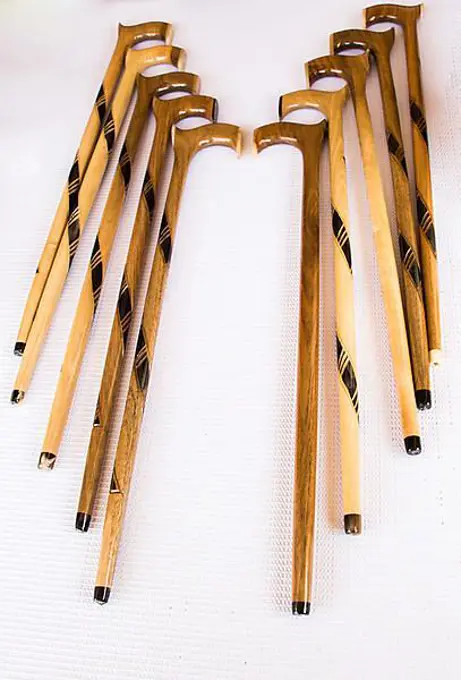
An assortment of antique weapons including swords, sabers, and halberds, made from iron and wood, reflecting craftsmanship from various historical periods.
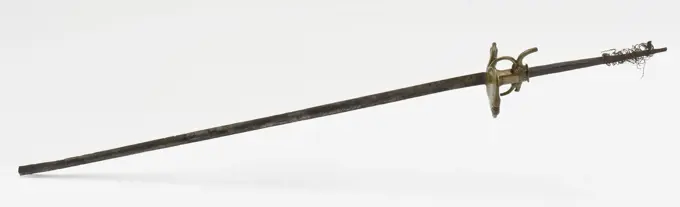
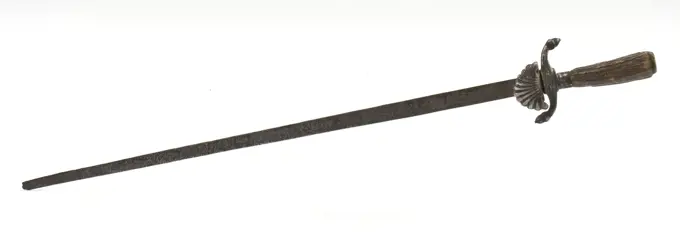
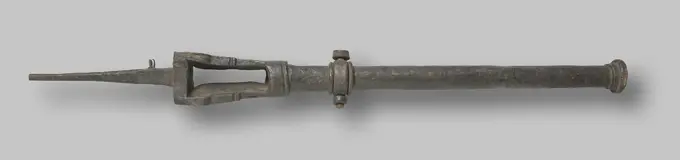
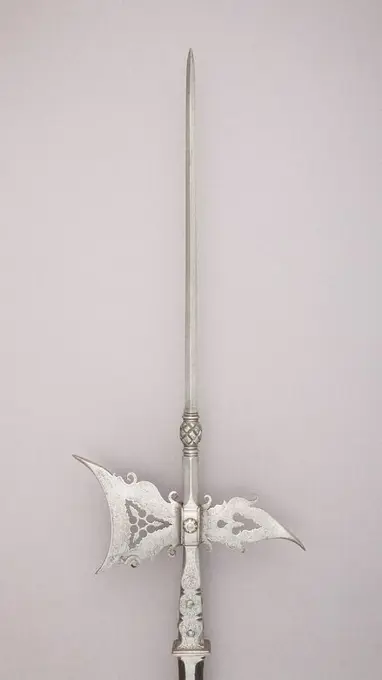
Early Dutch-style decorative dunes from the end of the seventeenth century, ornamental swords sword weapon weapon fragment soil find bronze wrought iron metal, cast forged Decorative dies Raised with more than four parts and made of bronze wood and metal wire wound and braided in different ways. In the cast parts decoration relief. The baffle plate is solid and dense. The blade is triangular eroded three-edged archeology knife saber sword decoration status symbol personal equipment defense clothing accessory militaria
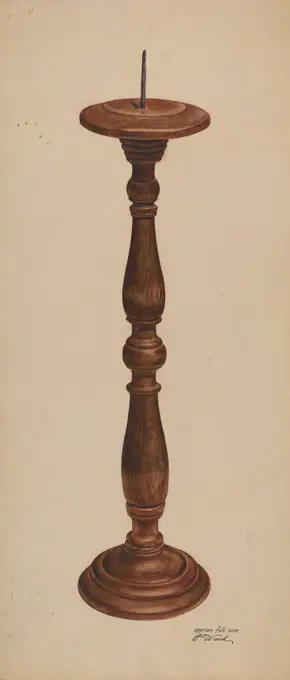
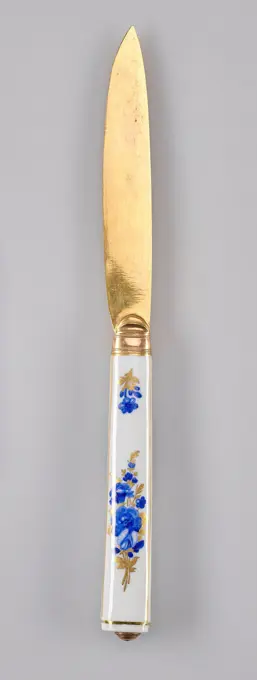
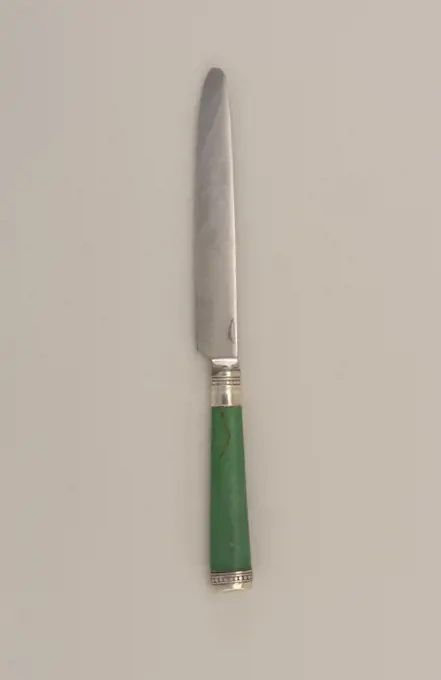
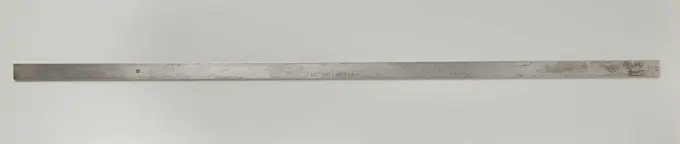
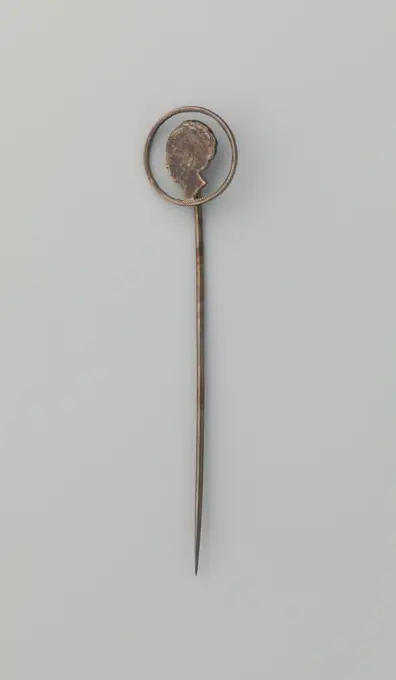
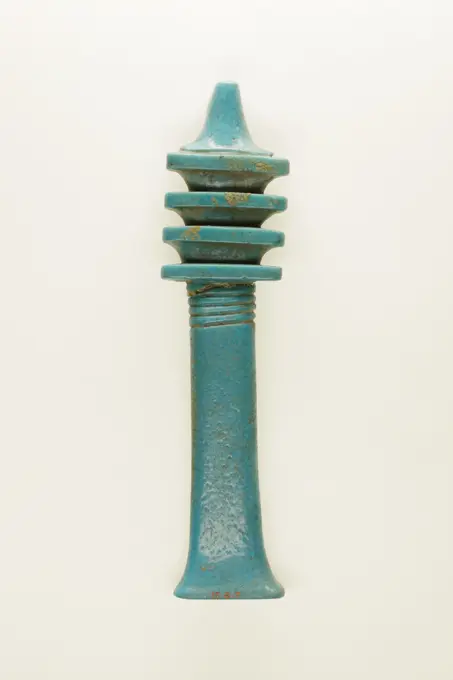
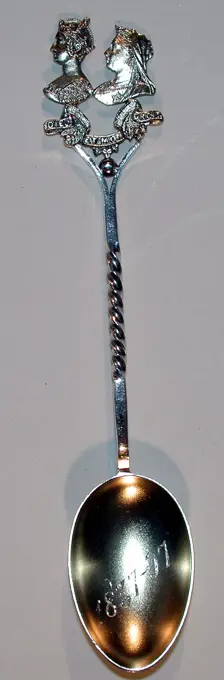
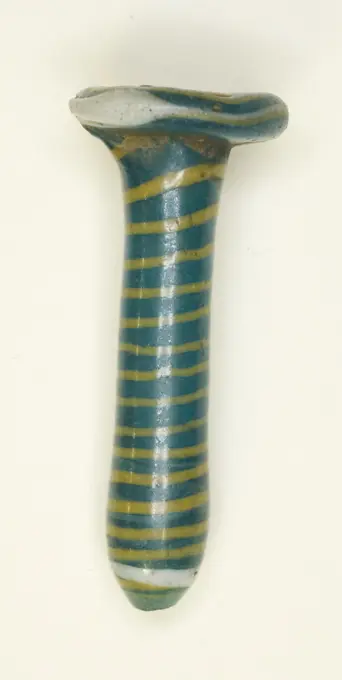
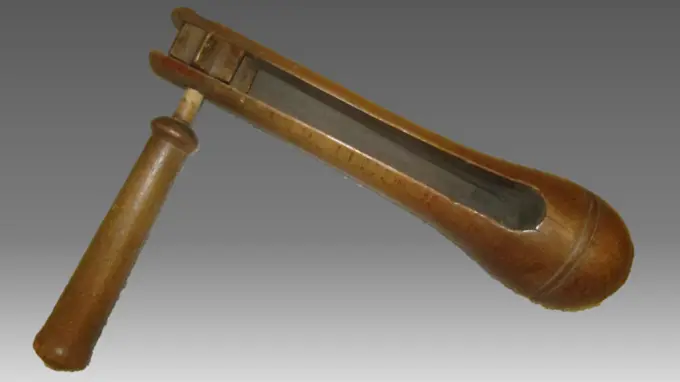
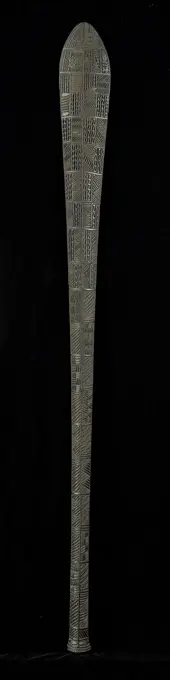
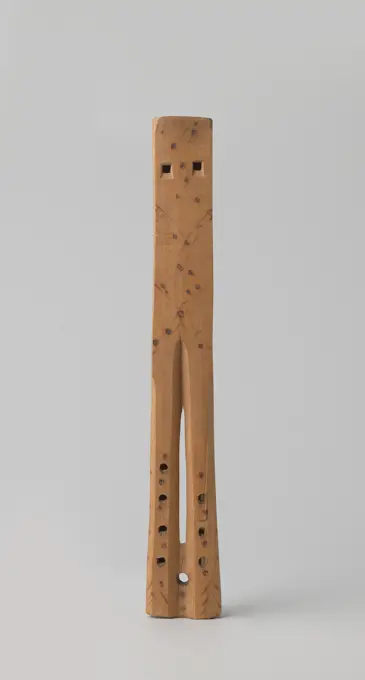
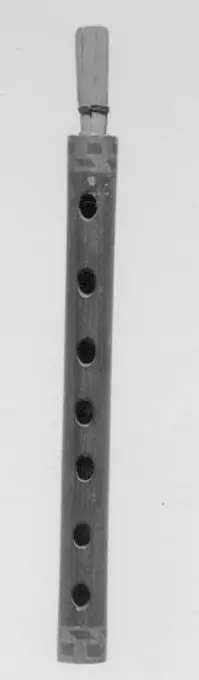
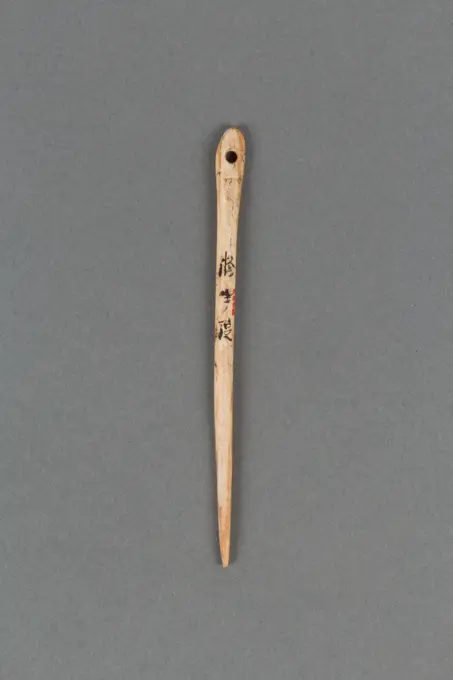
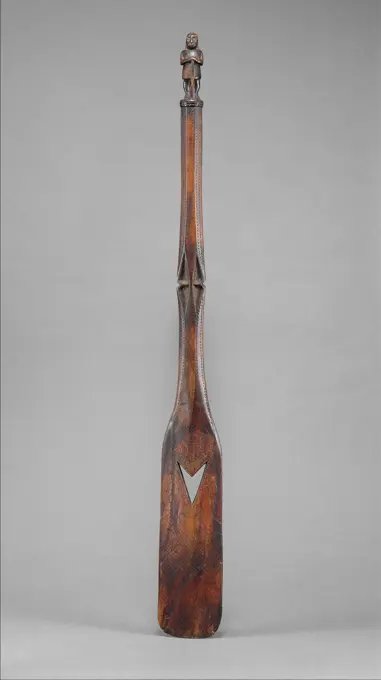
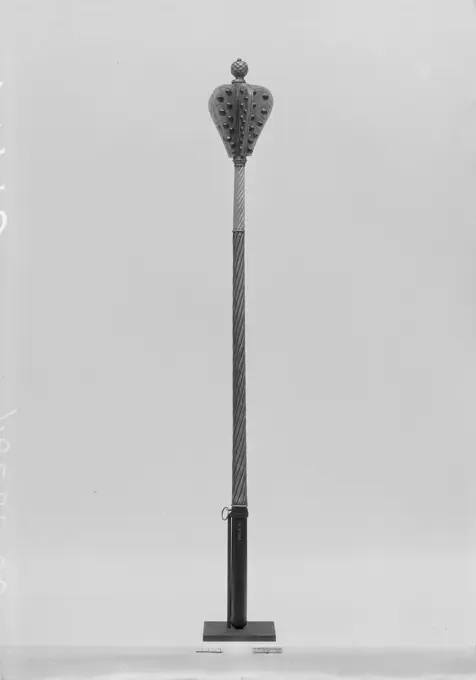
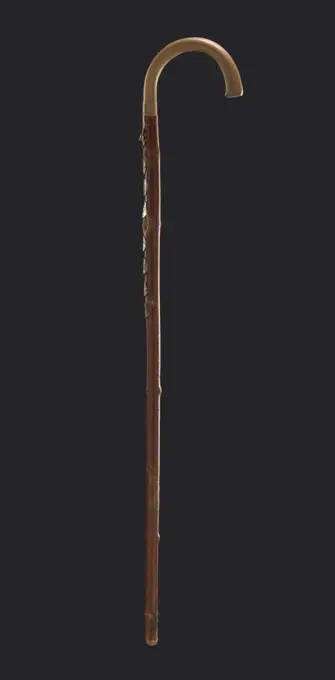
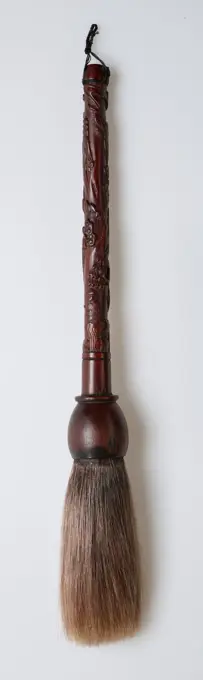
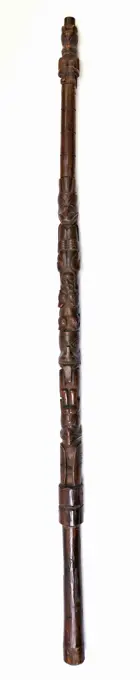
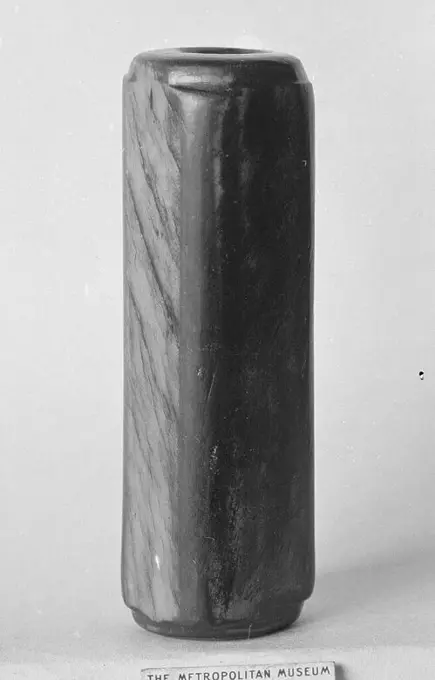
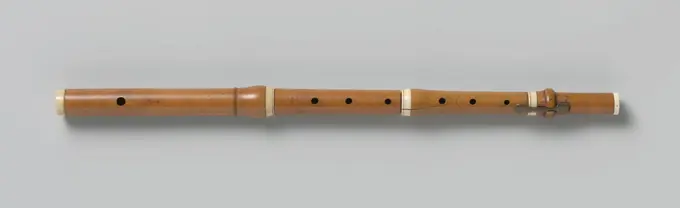
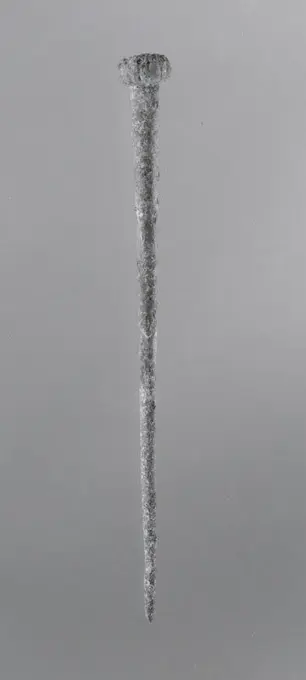
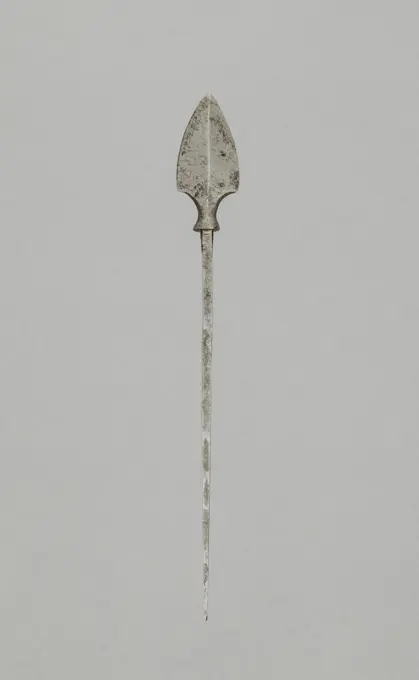
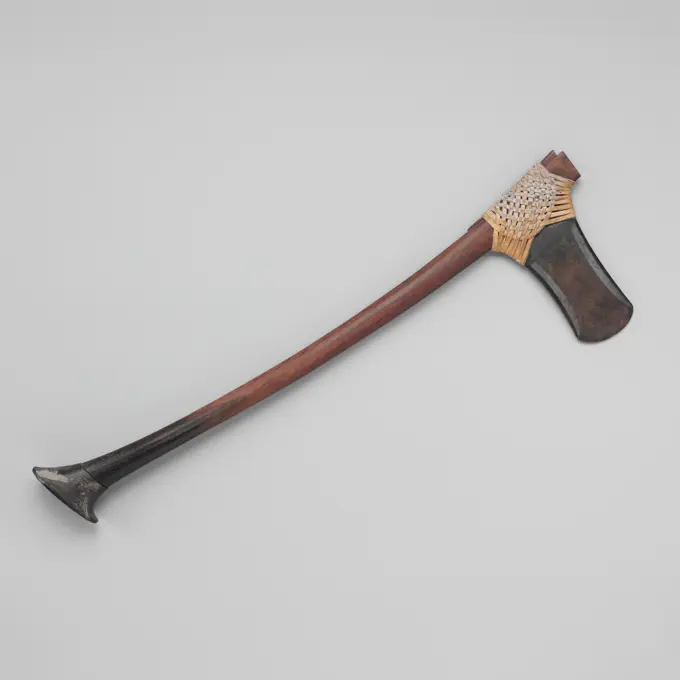
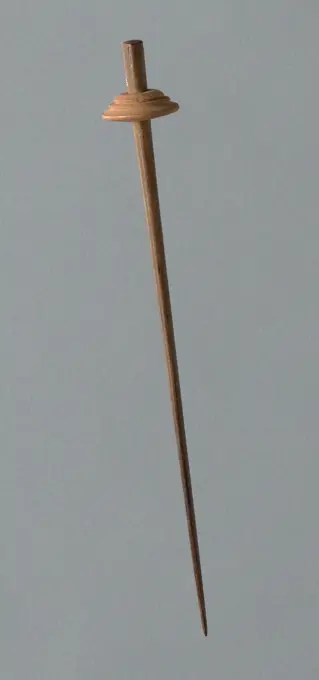
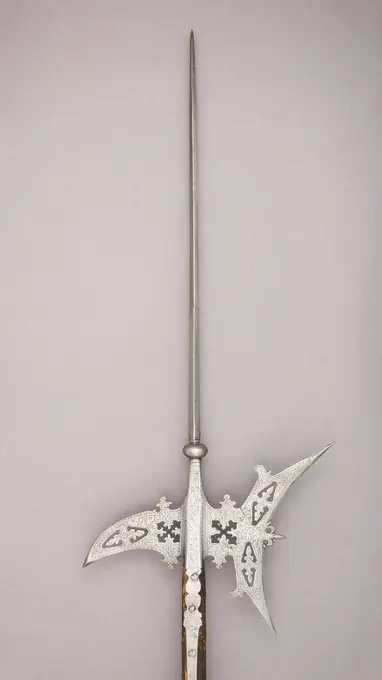
Copper Pin 15th-16th century Inca (). Copper Pin 315248knife, green-stained ivory, steel, silver, Part of a set of knives and forks ((1959-56-1-a/f), where a/d are knives, and e-f are forks)., knife (c,d): tapering, stained green ivory handle with beaded silver cap terminal and ferrule and steel blade. ((e,f) fork-->TBD), England, late 18th century, cutlery, Decorative Arts, knifeChild's catcher, heart catch weapon soil find wood cast iron wrought iron metal, Child's catcher with crossbound and flat non-cutting blade with back and cut side archeology toy child clothing accessory award status militariaSword (Kris), 1800s. Java. Iron with carved wooden handle; overall: 43.8 cm (17 1/4 in.); blade: 34.4 cm (13 9/16 in.).Cavalry Lance 1700-1800 Europe. Steel and wood (ash) .Whip, exaggerated with purple velvet with gold -colored flowers on the golden button on which a boy with wreath, hangs a brush of purple side with gold thread, anonymous, 1810 Whip covered with purple velvet on which golden flowers are embroidered. The button with an angel of gold. A long brush of purple side and gold thread hangs on the button. Battle of white leather. The whip belongs to an oak box with a key. Amsterdam Whip: Velvet (Fabric Weave). Button: Gold (Metal). Brush: Silk. brush:. Battle: Leather cutting / embroidering / braiding  Rome Whip covered with purple velvet on which golden flowers are embroidered. The button with an angel of gold. A long brush of purple side and gold thread hangs on the button. Battle of white leather. The whip belongs to an oak box with a key. Amsterdam Whip: Velvet (Fabric Weave). Button: Gold (Metal). Brush: Silk. brush:. Battle: Leather cutting / embroidering / braiding  Rome12 Décimètres.Iron size stick, on one side measure in decimeters, on the other side in Aune. Front inscription: 12 decimetres; Signature: Baradelle a Paris. Stirring inscription: Aune.Alto Recorder, Albertus van Heerde, c. 1700 Altoblock flute, marked by Heerde. Amsterdam boxwood (hardwood) Altoblock flute, marked by Heerde. Amsterdam boxwood (hardwood)Przeszo Przyszoci unknownWall anchor of the Gelderse Spijker in Arnhem, Anonymous, c. 1500 - c. 1600 Wall anchor, from the Gelderse Spijker in Arnhem. demolished in 1880. unknown iron (metal) Wall anchor, from the Gelderse Spijker in Arnhem. demolished in 1880. unknown iron (metal)Reverse pin of a dime with the portrait of Wilhelmina sawn out, c. 1940 - c. 1945 Reverse pin of a dime with the portrait of Wilhelmina sawn out. From an ensemble of eleven pieces by Miss Henriquez de Castro. Netherlands metal sawing Reverse pin of a dime with the portrait of Wilhelmina sawn out. From an ensemble of eleven pieces by Miss Henriquez de Castro. Netherlands metal sawingSpindle, c. 1st-3rd century. Peru, South Coast, Nasca style, early period. Wood with carved clay whorl; overall: 32.3 x 1.6 x 1.6 cm (12 11/16 x 5/8 x 5/8 in.).Figure-top spoon probably second half 19th century probably German. Figure-top spoon 188295Model or a time signal. Model of a timber on wooden base. Four round metal sheets crosslings mounted on top of a wooden pole can e.g. A lever at the foot in vertical or horizontal position. The lever can be guaranteed if the blades are in vertical position.Ear Plug or Kohl Applicator. UnknownWooden stick policeman.Waaierdug made of paper, outside covered with paper made of diamond pattern, inside blue gray, c. 1775 - c. 1780 Papier voyage box, outside covered with paper of diamond pattern, inside Blue gray covered  whole: Paper. whole: Watercolor (Paint) painting Papier voyage box, outside covered with paper of diamond pattern, inside Blue gray covered  whole: Paper. whole: Watercolor (Paint) paintingSaddle Axe ca. 1725-50 Iranian As the name implies, small axes of this type, tabarzin in Persian, were carried beneath a horsemans saddle, ready for use in handto-hand combat. The blade of this example is forged from crucible (“watered”) steel and is delicately chiseled with foliage and splitleaf arabesques that point to an eighteenth-century date.. Saddle Axe. Iranian. ca. 1725-50. Steel, wood, leather, gold. Shafted WeaponsWooden Spindle Made 1000-1476 Peru. Wood .Djed Pillar Amulet 664-30 B.C. Late Period-Ptolemaic Period The djed-pillar is a stylized representation of an early fetish that probably consisted of plant material. From the beginning of ancient Egyptian history it was used as a symbol signifying permanence. From the New Kingdom on it was associated with the god Osiris and identified as his backbone. The djed-pillar here was used as funerary amulet to ensure permanence and to closely connect the deceased to Osiris, a god who was revived after death.. Djed Pillar Amulet. 664-30 B.C.. Faience. Late Period-Ptolemaic Period. From Egypt. Dynasty 26-30Souvenir spoon with profile portraits of Queen Victoria 1896-97 Saunders & Shepherd. Souvenir spoon with profile portraits of Queen Victoria 211424Staff. Dimensions: L. 129 cm (50 13/16 in.). Date: ca. 2030-1640 B.C.. Museum: Metropolitan Museum of Art, New York, USA.Fragment of a spiral candlestick, Anonymous, 1550 - 1750 Unkind, wrought iron fragment from a whole of a spiral -shaped candlestick of wrought iron. A slender pin turns into the openwork, spiral -shaped trunk. A tube -shaped candle holder with handle can be placed in the trunk, which is adjustable in height. West-Europa iron (metal) forging Unkind, wrought iron fragment from a whole of a spiral -shaped candlestick of wrought iron. A slender pin turns into the openwork, spiral -shaped trunk. A tube -shaped candle holder with handle can be placed in the trunk, which is adjustable in height. West-Europa iron (metal) forgingFlint rifle, I. Behr, 1710 - 1780 flintlock gun Flint rifle or musket. The lock plate is signed, the inside is stamped with an M (). Two engraved rings run around the loop; The sight grain serves as a bayonethaft; At the top the loop is stamped with a N, at the bottom are two brands, hid and three laps in a triangle; N.38 is located at the Tromp. The flask is stamped on the right in the handle with the number 203 and on the left are cut initials, HC or HG. The iron batter includes four sliding runs, the tractor bracket cut with praised work and the steel cheer with the K.N.63.G stamp. Liègemaastricht iron (metal). steel (alloy) engraving / cuttingEar Stud or Bead 1350 BCE-1186 BCE Egypt. The hieroglyph for flourishing used in writing the name of the goddess Uto.. Glass, rod-formed . Ancient EgyptianRatchet late 18th-mid-19th century American or English. Ratchet 504466Souvenir spoon with view of Prague European late 19th centuryCrocodile Head Club (moungalaulau), late 18th-early 19th century, 44 1/2 x 3 7/8 x 1 11/16 in. (113.03 x 9.84 x 4.29 cm), Wood, Tonga Islands, 18th-19th century, Clubs were the favorite weapon of Tongan warriors, and the higher the rank, the better the quality. The fineness and unusual depth of the carving, expertly sculpted from hard wood, plus the inclusion of incised human figures and animals, make this one the property of a chief. There are many layers of symbolism in the weapon's design. Its rounded head references a crocodile, an animal respected for its power and ferocity. The repeated iclusion of shark and turtle motifs underscores the associations to regal and divine authority. Connections to powerful beings are also indicated through the carved human figures, who represent the ruler's notable ancestors.Large candlestick of wrought iron, Anonymous, Anonymous, 1400 - 1500 Large candlestick of wrought iron, standing on three legs. Each leg consists of two C-shaped rods, which come together in a sphere. At the bottom the legs walk outside. The three legs come together in the middle, on which the trunk is sounded. The trunk has a profiled nodus in the middle. The two equal parts of the trunk below and above the Nodus are twisted. At the top and bottom the trunk is a flat disc. The top has a raised edge and serves as a fat catcher, in the middle of the candle pin. The fat catcher with candle pin is modern. West-Europa iron (metal) forging Large candlestick of wrought iron, standing on three legs. Each leg consists of two C-shaped rods, which come together in a sphere. At the bottom the legs walk outside. The three legs come together in the middle, on which the trunk is sounded. The trunk has a profiled nodus in the middle. The two equal parts of the trunk below and above the Nodus are twisOnderstand of umbrella or umbrella of colored maple with knots button of colored, confused maple (), Gustav Schnitzler, c. 1920 - c. 1940 Understop of umbrella or umbrella of colored maple with knots button of colored, confused maple (). Nijmegen knop: maple (wood). stok: maple (wood) Understop of umbrella or umbrella of colored maple with knots button of colored, confused maple (). Nijmegen knop: maple (wood). stok: maple (wood)Nordic double deploy.a Wooden Nordic Double.Halberd dated 1574 German. Halberd 26709Sword Cane with Scabbard. Culture: hilt, scabbard, Indian; blade, European. Dimensions: L. with scabbard 47 1/2 in. (120.7 cm); L. without scabbard 46 3/4 in. (118.7 cm); W. 2 in. (5.1 cm); D. 2 in. (5.1 cm); Wt. 1 lb. 4.3 oz. (575.5 g); Wt. of scabbard 12.1 oz. (343 g). Date: 17th century. Museum: Metropolitan Museum of Art, New York, USA.Molding; wood, carvedQuanzi late 19th century Chinese. Quanzi. Chinese. late 19th century. Reed. Guan, China. Aerophone-Reed Vibrated-double reedSpoon 17th century () French. Spoon 188190 French, Spoon, 17th century (), Silver, parcel gilt and enameled, Length: 7 in. (17.8 cm). The Metropolitan Museum of Art, New York. Gift of Mrs. Samuel P. Avery, 1897 (97.2.166)Paul Ward, Candlestick, 1935 1942 CandlestickPick, 1500s. Germany, 16th century. Silver; overall: 12.1 x 1 cm (4 3/4 x 3/8 in.).Needle Japan The Jmon period is the earliest period in Japanese history, lasting from roughly 14,000 to 300 BCE. Using materials such as bone, antlers, and stone, the Jmon people created a variety of utilitarian objects, such as this needle. The small eye at the top would likely have served a function similar to a modern sewing needle, allowing the Jmon people to practice basic sewing and create textiles.. Needle. Japan. Bone. Final Jmon period (ca. 1000-300 B.C.). BonePresentation Flintlock Fowling Piece in the Eastern Fashhion Made 1810 Paris. Steel, gilding, silver, walnut, and baleen . Jean Le ClerkFunerary Staffs 15th-16th century Inca This imposing sculpted board, made from algarrobo wood (Prosopis chilensis), features a plain lower third terminating in a rounded, paddle-like lower edge. The shaft linking the lower section with the figures at the top of the implement was intricately carved to form a hollow three-dimensional lattice or openwork diamond pattern. The shaft is surmounted by a bulbous mound on which stand five figures; the central figure has a hand on head of the two figures flanking him. The flanking figures, in turn, stand with one foot on the backs of crouching figures carved perpendicular to the mound and facing outward. Two pairs of standing figures were carved on either side of the lower end of the shaft, at the top of the paddle. All figures but the one at the top center hold a cup to their chests. The front and back sides of the implement are identical with figures carved back to back. Traces of pigment and small fragments of metal remain in certain regions,Paddle 1850-75 Haudenosaunee (Iroquois). Paddle 319185Sceptre 18th century India. Sceptre. India. 18th century. Nephrite. JadeChocolate pot with a molinet, Ernest Cardeilhac, c. 1900 Palmhout steak with ivory handle. Paris boxwood. ivory Palmhout steak with ivory handle. Paris boxwood. ivoryOpium Pipe, 1800s. China, Qing dynasty (1644-1911). Wood;Design for a Scepter 16th century () Anonymous, German, 16th century German. Design for a Scepter 388460Laska with bunly from a trip to the Beskids and Soczelvas;  09.06.1932 (1932-00-00-1932-00-00);Sopranino Clarinet in D Max Stiegler German 1800-1858Calligraphy brush, late 19th century, 14 1/8 × 1 3/4 × 1 3/4 in. (35.88 × 4.45 × 4.45 cm) (without hanging loops), Wood, hair, China, 19th century, In Chinese literati culture, the brush, a writing implement, is known as one of the 'four treasures of the study' along with the inkstick, inkstone, and paper. Brush handles are commonly constructed from bamboo, but some brushes have handles of sandalwood, jade, carved bone or ivory, and other precious materials as demonstrated by these examples. During late imperial times, artists catered to the tastes of gentlemen collectors and elaborated brushes with motifs derived from folklore, legends, superstitious beliefs as well as religious subjects from Confucianism, Buddhism, and Daoism.Ceremonial staff -Awl Pike (Ahlspiess) ca. 1480 German. Awl Pike (Ahlspiess) 26722Deschler & Sohn Epingle of Cravate/Reverse of the aid to the Veterans National Socialist (NationalSozialistische KriegsopferversorGung - NSKOV) (attributed title), 1933. Silver metal. Museum of the Liberation of Paris - General Leclerc Museum - Jean Moulin Museum.Dagger (Katar). Culture: Indian. Dimensions: L. 16 7/8 in. (42.9 cm); W. 3 3/16 in. (8.1 cm); Wt. 12.1 oz. (343 g). Date: 17th-18th century. Museum: Metropolitan Museum of Art, New York, USA.Tube: Emblem of Earth. Culture: China. Dimensions: H. 2 3/4 in. (7 cm); W. 3/4 in. (1.9 cm); D. 3/4 in. (1.9 cm). Museum: Metropolitan Museum of Art, New York, USA.Flute, I. Christian c. 1810 Flute with a valve. Marked: I. Christiani. Intercourse Amsterdam wood (plant material) Flute with a valve. Marked: I. Christiani. Intercourse Amsterdam wood (plant material)Pin ca. 2600-2500 B.C. Sumerian. Pin 322906Forged iron cannon with key and lock. Forged Iron Cannon (Vogelaar) With Key and Lock. Hookbus with Mik.ForkBeater-In for a Loom. Dimensions: L. 223 cm (87 13/16 in.). Dynasty: Dynasty 12-18. Date: ca. 1991-1450 B.C.. Museum: Metropolitan Museum of Art, New York, USA.Flywhisk Handle. Society Islands, circa 1818. Tools and Equipment; handles. Sperm whale ivory, wood, and fiberBottle. Roman, Levant or Syria. Date: 101 AD-400 AD. Dimensions: H. 15.9 cm (61/4 in.); diam. 2.9 cm (1 1/8 in.). Glass, blown technique. Origin: Syria. Museum: The Chicago Art Institute, Chicago, USA. Author: ANCIENT ROMAN.Halberd. Culture: German. Dimensions: L. 98 3/16 in. (249.2 cm); L. of head 28 1/4 in. (71.7 cm); W. 12 in. (30.5 cm); Wt. 5 lbs. 10 oz. (2550 g). Date: ca. 1550. Museum: Metropolitan Museum of Art, New York, USA.Triple-Barrel Revolving Flintlock Fowling Piece from the Gun Cabinet of the Princes of Liechtenstein 1640-1660 Germany. When hunting fowl in flight, it was difficult to aim fast enough to get another shot with a second gun. This early flintlock fowling piece was designed to solve this problem. To get a quick second shot, and even a third, the hunter reset the cock, withdrew the lever in front of the trigger to release the barrels, manually rotated to the next charged barrel, and pulled the trigger again.Triple-barrel guns are exceptionally rare, as the weight typically rendered them too cumbersome. This gun, however, with its fine craftsmanship and thin-walled barrels, is actually the lightest fowling piece in this case.. Steel, brass, walnut, and horn . Tilman KeuksModel of Two Congreve Rockets with Launching Gear, anonymous, c. 1810 - c. 1840 demonstration model Model of two fire missiles on a launch device or chair, for land use. Made from dark wood. The missiles themselves consist of a pointed cylinder to which a long stabilization stick is attached to the side. The chair consists of a ladder -shaped frame that forms a tripod together with two legs; A running ring has been installed in the frame, which can be beaten around the front of a sloop and led the movement of the frame when hoisting and lowering for it, and for which the light is equipped with a fall. A metal room with flint lock is mounted on every leg of the frame. The flint locks have tractors with holes for a tractor rope; The ditches are also each other's mirror image, one left -handed, the other right -handed. The heads of the rockets are placed in the rooms under two brackets, the stabilization rods stabbed by brackets on the legs of the frame. model maker: Netherlands (possiblyKey;  18th century (1701-00-00-1800-00-00);A stain wire pen, U-shaped with a sliding plate, for hairpin-crocheted, goamepiece or hairpinwork. A stain wire pen, U-shaped with a sliding plate, for hairpin-crocheted, goamepiece or hairpinwork.Glaive for the Bodyguard of King of Hungry and Bohemia (Later Emperor) Maximilian II Made 1555-1575 Austrian. Pole arms (staff weapons) were used not only in warfare and hunting, but also in sporting combat and ceremonies. The term refers to a family of edged weapons attached to wooden staffs. With the exception of the lance, which remained the weapon of the mounted knight, all other staff weapons were wielded by men on foot by 1600. With the development of firearms and their introduction as infantry weapons, pole arms lost their importance on the field, and from the mid-16th century, they were reserved for use in sporting contests and by princely bodyguards for ceremony and parade. The blades lent themselves to embellishmentóengraving, etching, or other forms of decorationóand provided a perfect surface for the coats of arms of noble or princely families. The ceremonial use of staff weapons continues to this day with the Swiss Guards at the Vatican and Britainís Yeomen of the Royal GuHalf Model of a Launch, anonymous, c. 1850 - c. 1852 ship model. half model. builder's model Polychromed block model (starboard) of a sloop. Flat mirror. De Zeeg rises to both ends, one barkhout. Peaked around. United States of America wood (plant material)   North and Central AmericaCandle pricket (pair with 1975.1.1464) 17th century Spanish. Candle pricket (pair with 1975.1.1464) 460473Pin ca. late 3rd-early 2nd millennium B.C. Bactria-Margiana Archaeological Complex. Pin 326780Knife with Porcelain Handle Knife; Germany; glass, steel, gold, brass; L x W: 23.8 x 2.1 cm (9 3/8 x 13/16 in.); The Robert L. Metzenberg Collection, gift of Eleanor L. Metzenberg; 1985-103-179Arrow Point, 1700s. Japan, Edo period (1615-1868). Steel; overall: 17 cm (6 11/16 in.); head: 4.6 cm (1 13/16 in.).Piccolo in F early 19th century French. Piccolo in F. French. early 19th century. Ivory, silver. France. Aerophone-Blow Hole-side-blown flute (transverse)Shoes 16th century British. Shoes 101790Axe with wooden handle isolated on white background Axe with wooden handle isolated on white background Copyright: xZoonar.com/OleksandrxKostiuchenkox 10031050inner tubeSpoon stalk of silver ending in apostle character. Spoon stalk of silver ending in a gold-plated apostle figureArrow Point, 1700s. Japan, Edo period (1615-1868). Steel; overall: 15.3 cm (6 in.); head: 3.8 cm (1 1/2 in.).Kitchen forkHalf Model of an Ironclad Ram Ship.Stacking model and semi-model (starboard) of a ram tower vessel. It has a Ramsteven, cruiser gate, stir with rounded stir sheet. On the deck there are two deck homes, a front and a rear, both triangular in form so that they allow a maximum shot field for the dome midship. A chimney on the rear deck house. The seam is completely flat, the hull has a flat bottom with round kimps.Candlestick first half 14th century. Candlestick 444574Battle Ax of Baki ca. 1504-1447 B.C. New Kingdom This battle axe was found inside the coffin of a man named Baki, whose formal name was Bak-Amun. He was buried in the family tomb of Noferkhawt, who was probably his father or his father-in-law. The handle has been partially restored with modern wood. The rawhide lashing is modern, based on ancient examples.. Battle Ax of Baki. ca. 1504-1447 B.C.. Bronze or copper alloy, wood (with modern restoration), modern rawhide. New Kingdom. From Egypt, Upper Egypt, Thebes, Asasif, Tomb of Neferkhawet (MMA 729), east chamber, Burial of Baki (III), in coffin, mummy's right, MMA excavations, 1935-36. Dynasty 18, earlyAdjustable stand (pupitre de milieu) ca. 1800 French The lyre-shaped backrest suggests that this piece of furniture may have been used as a music stand. The use of mahogany and the severe neoclassical style suggests a date of circa 1800.. Adjustable stand (pupitre de milieu). French. ca. 1800. Mahogany, Lignum vitae, brass. Woodwork-FurnitureWooden Spindle with Ceramic Whorl Made 1000-1476 Peru. Wood .Model of an Optical Telegraph. Model of an optical telegraph on a foot. It consists of two posts associated by an axle why an arm runs; The two ends of that arm are two narrow arms attached, one with a counterweight, the other without. The main arm is moved by a rope walking over two discs on one side of the posts; The outside arms are moved with hoists on a drum between the posts and topped on cleats against the posts. In the rectangular positions with respect to the main arm, the outside arms can be fixed with a spring. Scale 1:22 (Scale by model).Halberd. Culture: Italian. Dimensions: L. 9 ft. 6 3/4 in. (291.4 cm); L. of head 32 1/4 in. (81.9 cm); W. 11 in. (27.9 cm); Wt. 6 lbs. 7 oz. (2920 g). Date: ca. 1560. Museum: Metropolitan Museum of Art, New York, USA.Thin stick (Badine) made of wood glued with turtle and fitted with a button of white porcelain, decorated with golden leaf, set in a gilded edge, anonymous, c. 1750 - c. 1775 Thin stick (Badine) made of wood glued with turtle and fitted with a button of white porcelain, decorated with gold leaf ornaments, put in a gilded edge. With copper ring. Netherlands (possibly) Core of Stok: Wood (Plant Material). Exterior stick:. Button: Porcelain. Decoration button: Gold (Metal). Rand: Silver (Metal). Point: Brass (Alloy) cutting / gluing / striking (metalworking) Thin stick (Badine) made of wood glued with turtle and fitted with a button of white porcelain, decorated with gold leaf ornaments, put in a gilded edge. With copper ring. Netherlands (possibly) Core of Stok: Wood (Plant Material). Exterior stick:. Button: Porcelain. Decoration button: Gold (Metal). Rand: Silver (Metal). Point: Brass (Alloy) cutting / gluing / striking (metalworking)scissorsHead of GrasshoperBelt -Ski. 1940-50. Hair Pin, 10 x 2 1/8 x 1 in. (25.4 x 5.4 x 2.54 cm), Silver, ChinaVintage retro street lanternHester Duany, Jack Straws, 1935 1942 Jack StrawsSet of wooden walking stick for saleOld pistol, Isolated on white background Old pistol, Isolated on white background Copyright: xZoonar.com/OleksandrxKostiuchenkox 8906163Flute.Flute of palm wood with nine valves, four composite parts. There are a loose pen and a metal box with valves.Knife, from a flatware dessert service, 18th century, Meissen Porcelain Factory, Meissen, Germany, est. 1710, Hard paste porcelain, gilt metal, Germany, 18th centuryClarinet (lower joint), Heinrich Grenser, 1820 - 1840 Part of Palmhout clarinet, with three holes, ivory tires and a brass valve Dresden boxwood (hardwood). ivory. brass (alloy) Part of Palmhout clarinet, with three holes, ivory tires and a brass valve Dresden boxwood (hardwood). ivory. brass (alloy)Arrowhead (Yanone) 18th century Japanese Although today Japanese warriors are renowned most for their swordsmanship, archery, especially from horseback, has been an essential part of samurai warfare and culture for centuries. Arrows were fitted with heads of varying shape according to their intended use in war, the hunt, or target practice. Arrowheads made for use on the battlefield incorporated different designs intended for specialized purposes such as the piercing of armor or to cause maximum damage to horses and unarmored personnel.Large arrowheads, pierced and elaborately chiseled with landscapes, birds, flowers, dragons, and Buddhist divinities, were created to be admired for the beauty of their metalwork and design rather than for use in archery. Such highly elaborate examples may have been made for presentation or as a votive offerings to a shrine.. Arrowhead (Yanone). Japanese. 18th century. Steel. Archery Equipment-Arrowheads