Historical Weapons Display

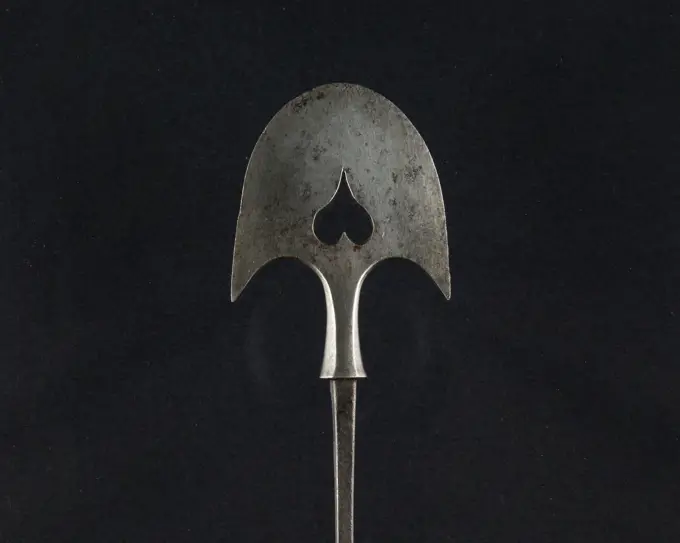
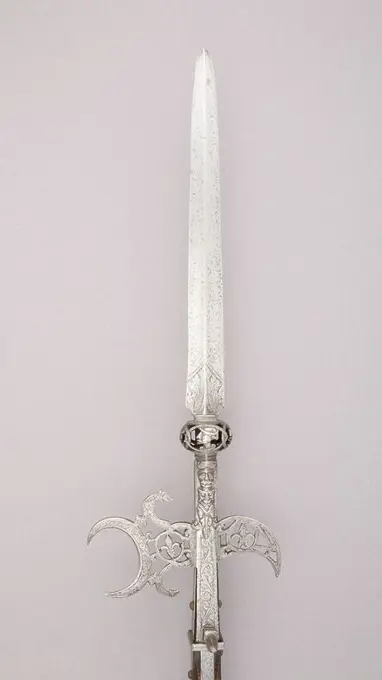
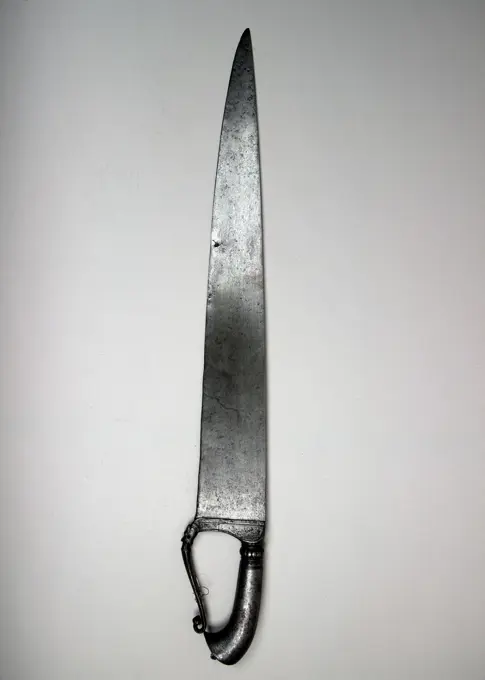
A collection of various historical weapons including swords and forks, showcasing their intricate designs and craftsmanship.

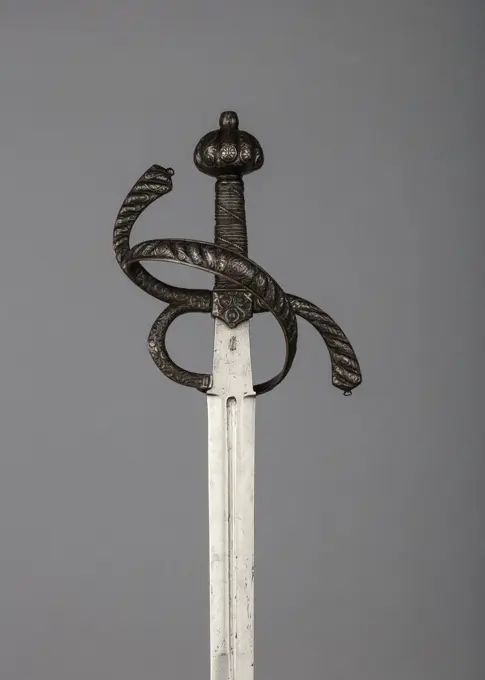
Rapier Spanish late 16th century The rapier was the principal civilian sidearm throughout the sixteenth and seventeenth centuries. Designed for cut-and-thrust fencing of progressively complex techniques, the rapier is characterized by a double-edged blade with an acute point and an elaborate guard for the hand. The guards, usually of iron or steel, were subject to a variety of embellishment. They were engraved, chiseled, gilded, damascened, and encrusted in gold and silver in keeping with fashionable styles. Unless otherwise noted, the materials, attributions, and dating given here refer to the hilts. Rapier blades, invariably of steel, bear a variety of makers marks denoting their origin in the two principal centers of blademaking, Toledo in Spain and Solingen in Germany. View more. Rapier. Spanish. late 16th century. Steel, wire, gold. Swords
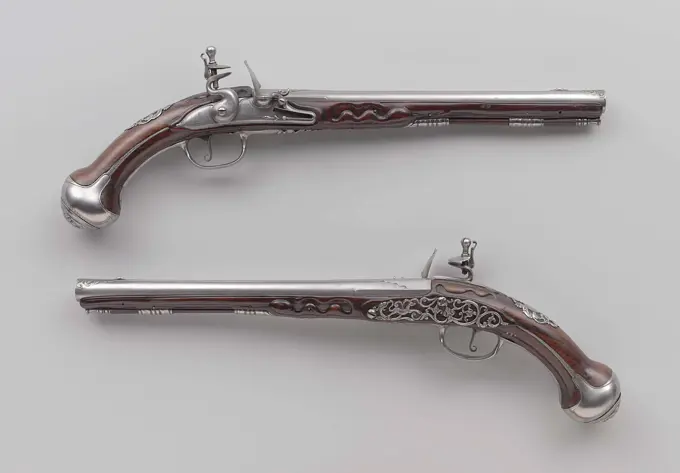
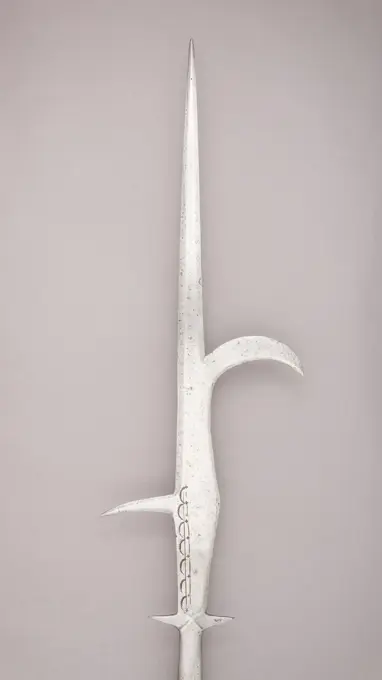
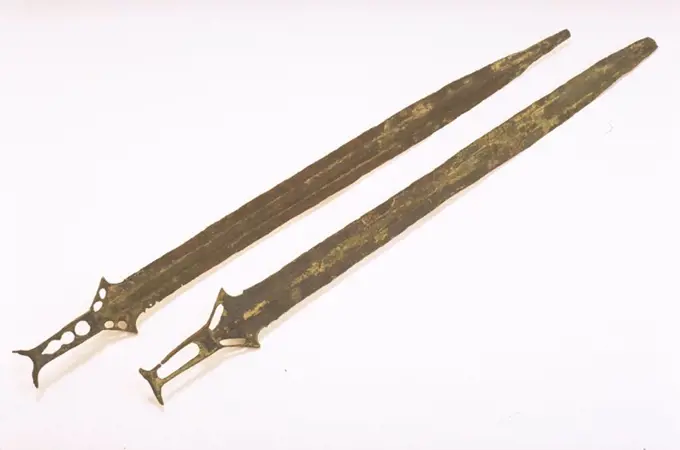
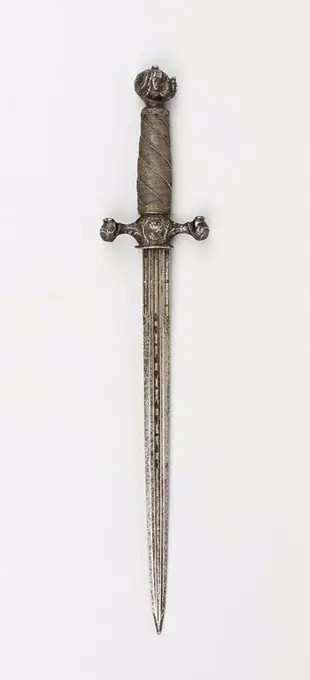
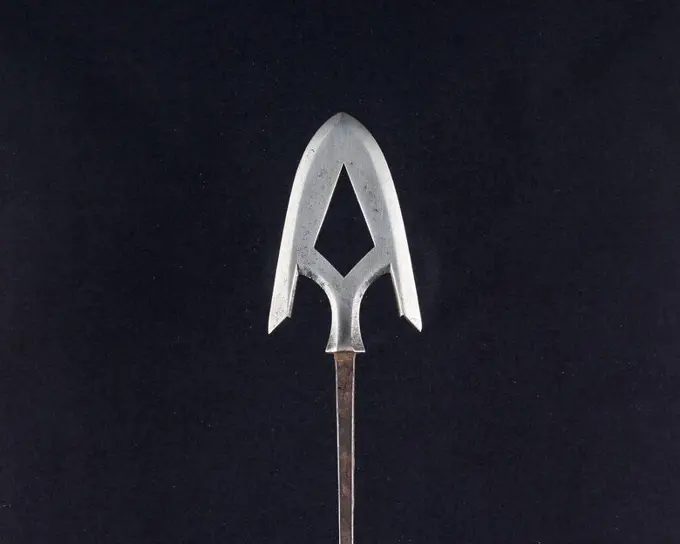
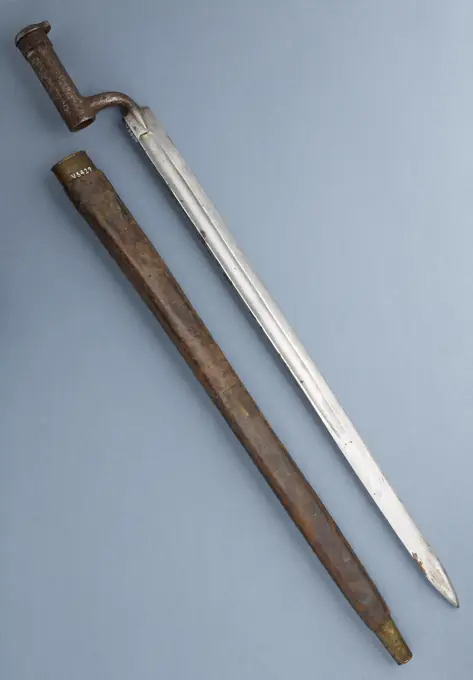
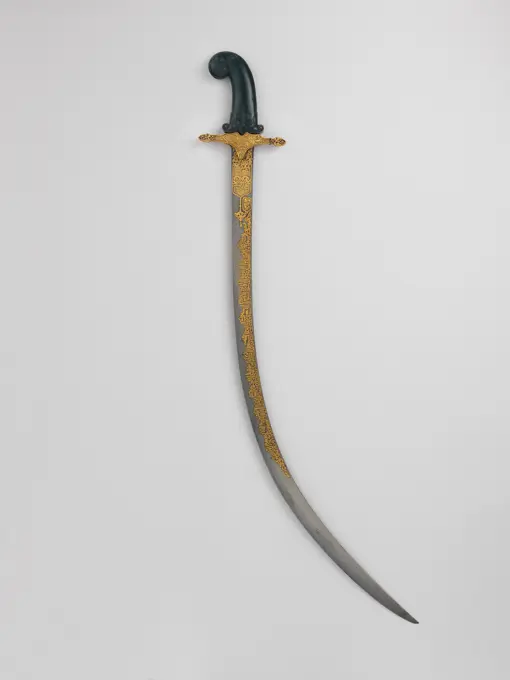
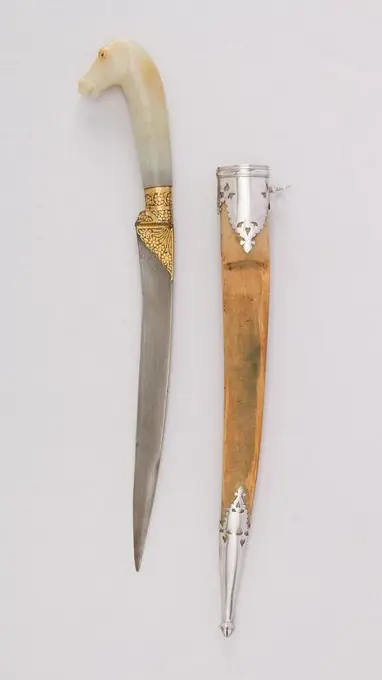
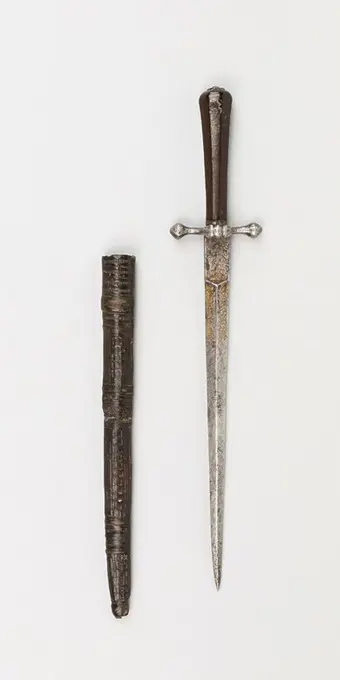
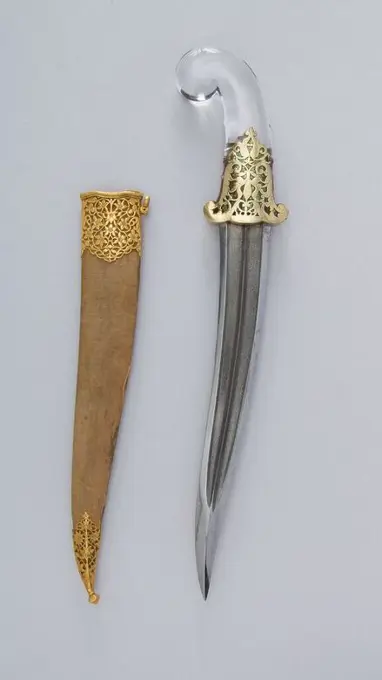
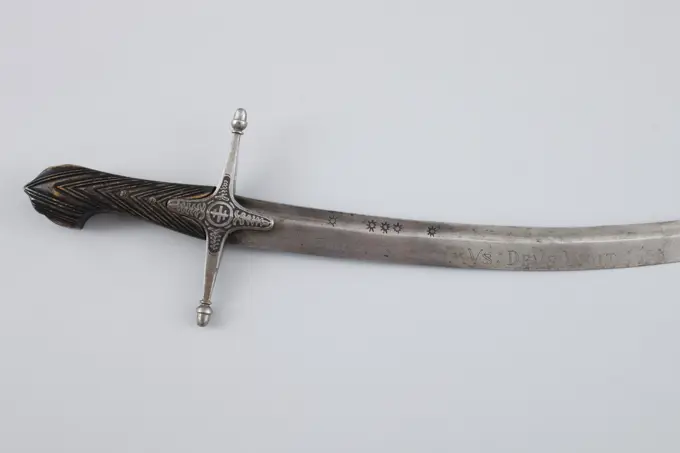
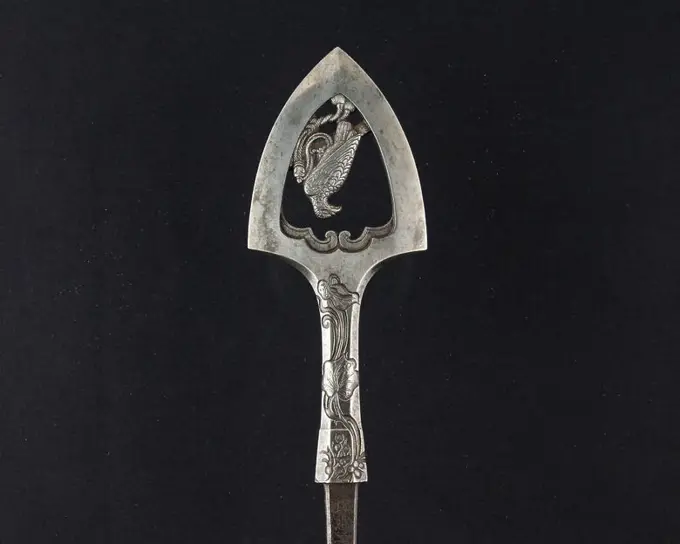
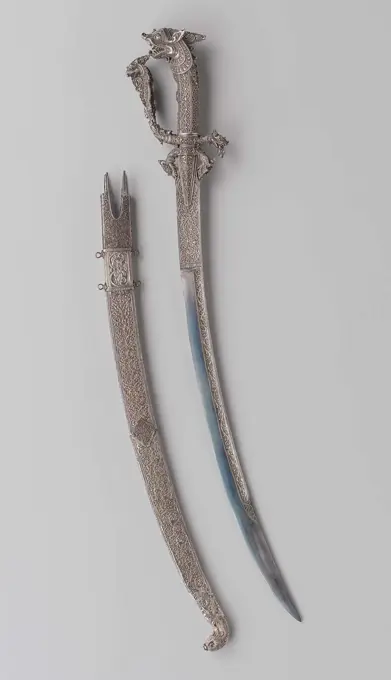
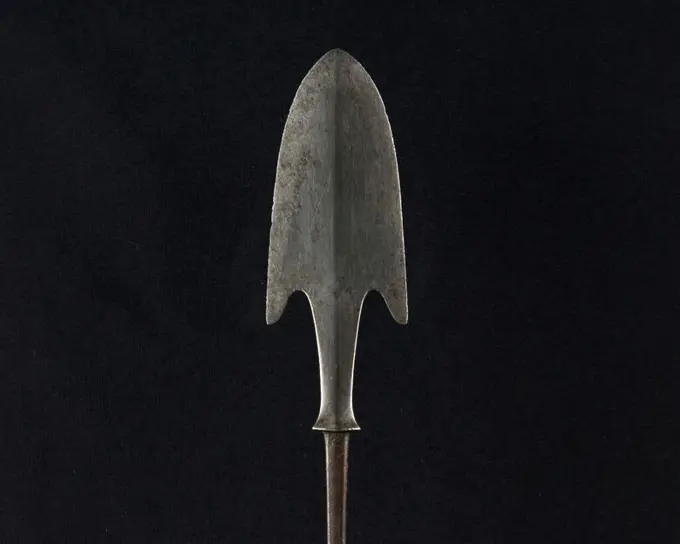
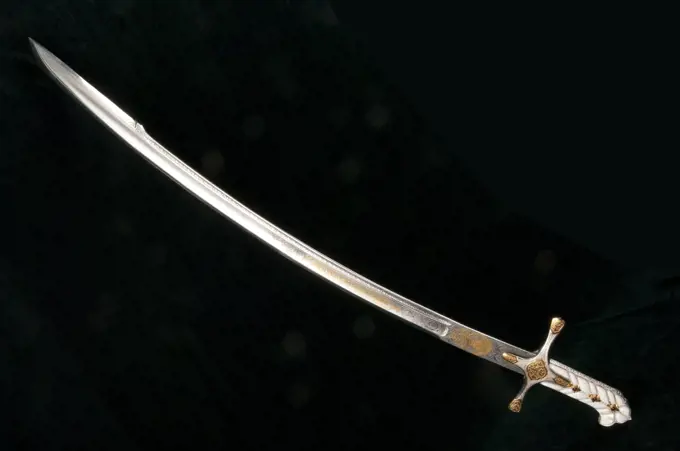
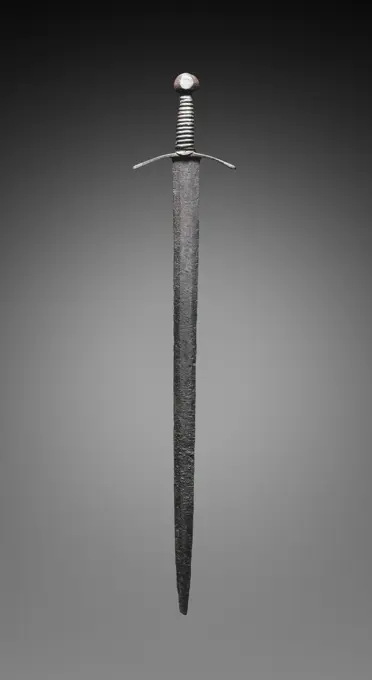
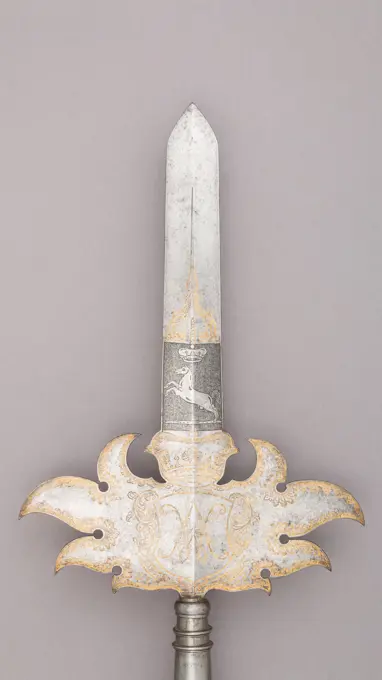
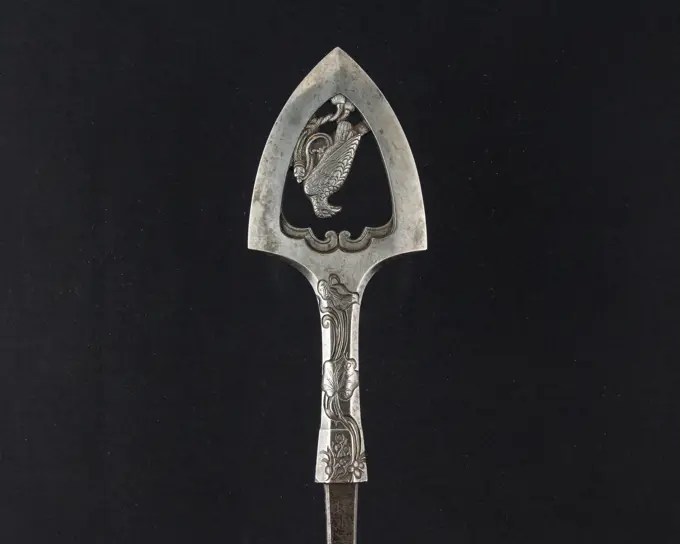
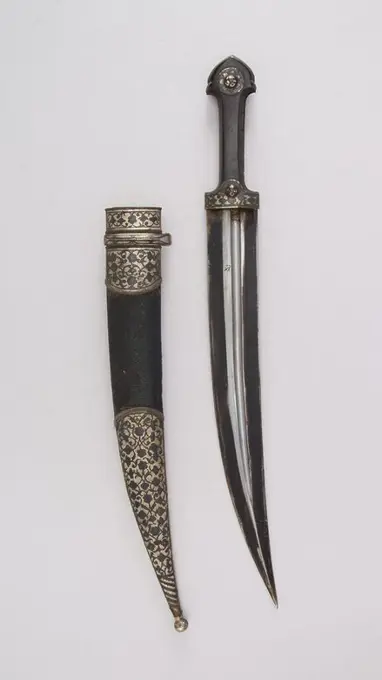
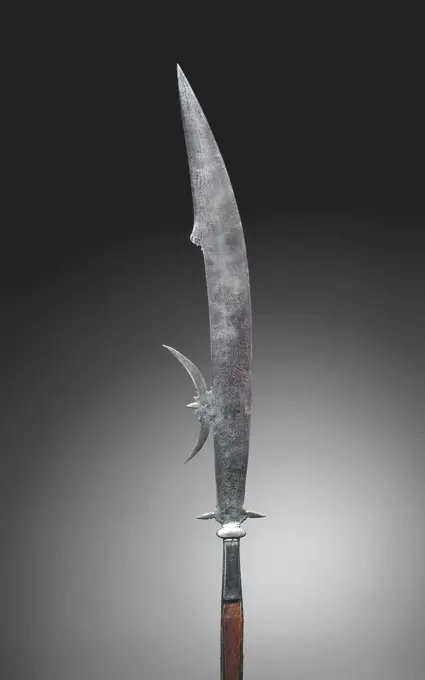
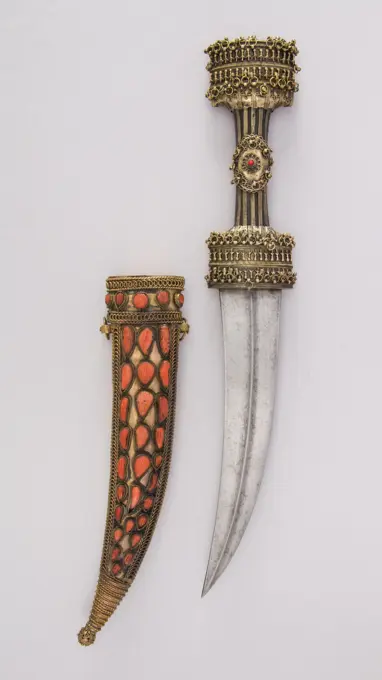
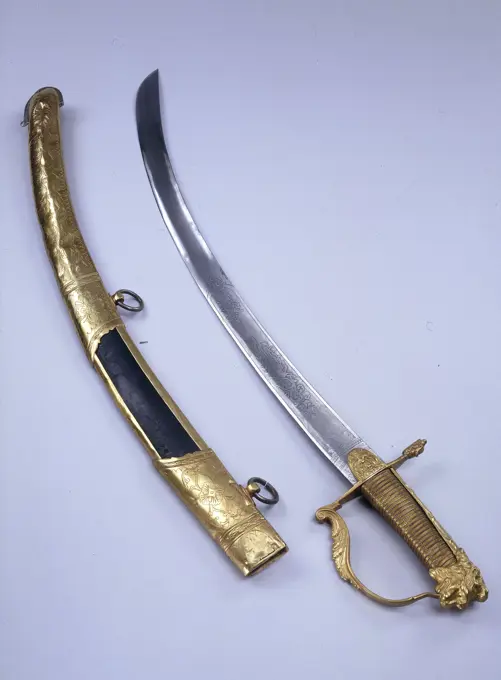
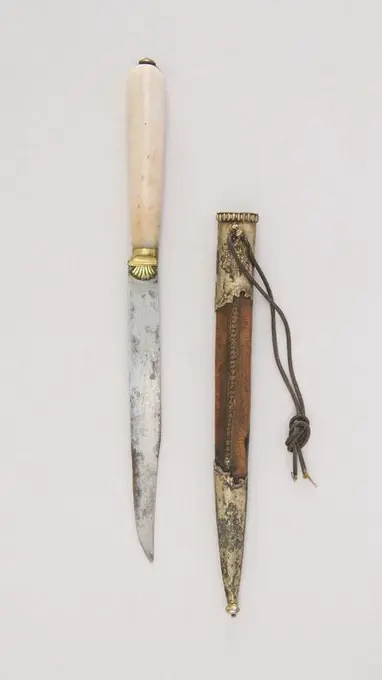
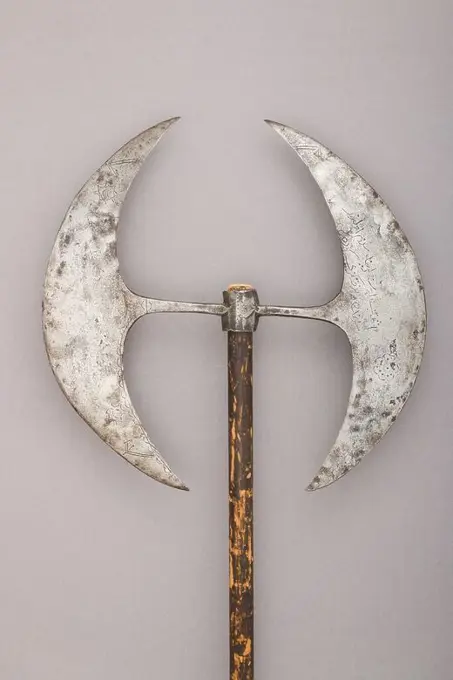
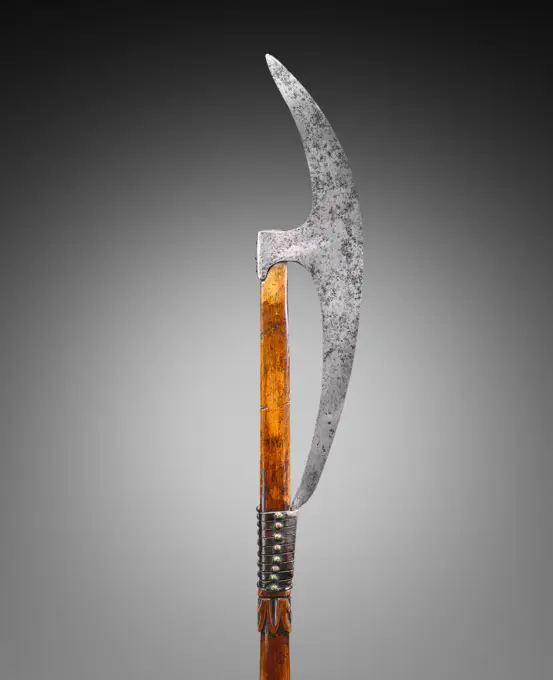
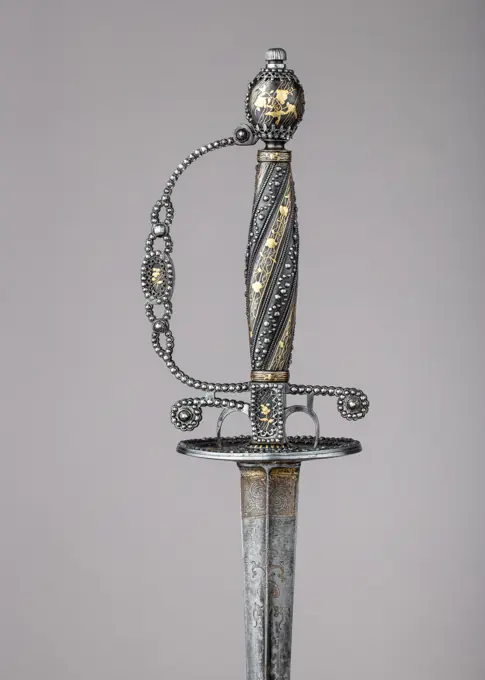
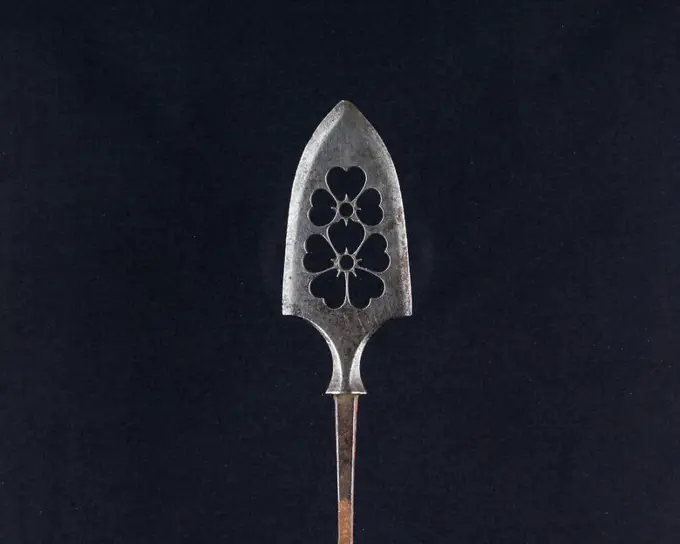
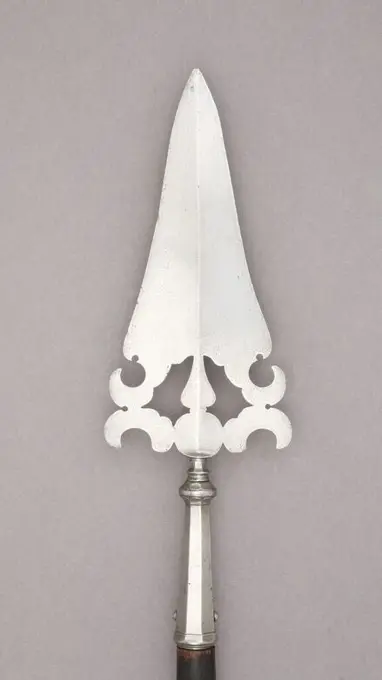
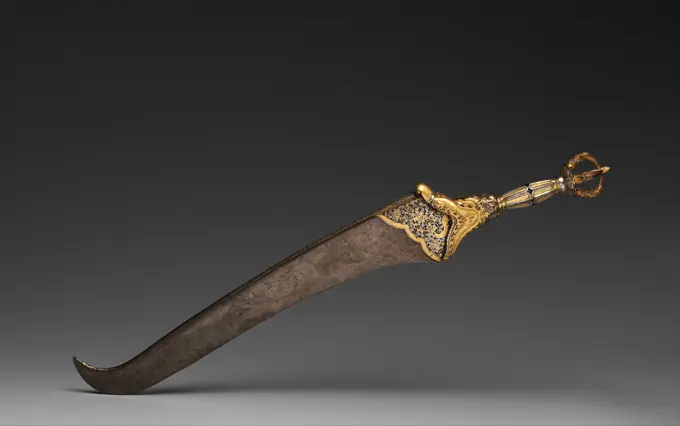
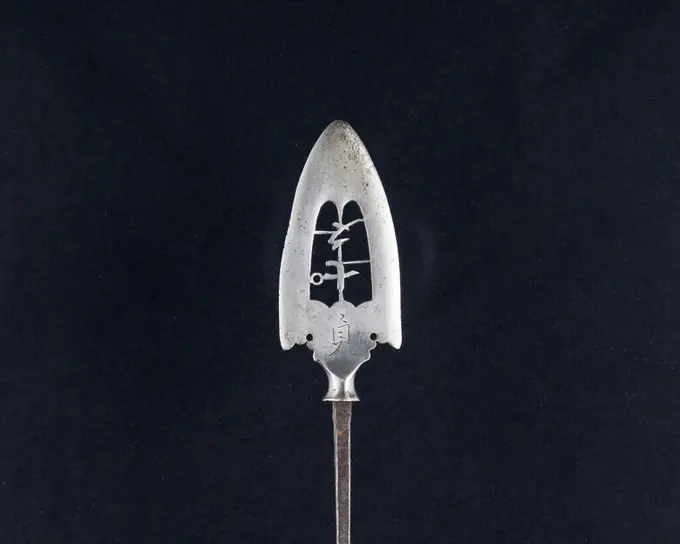
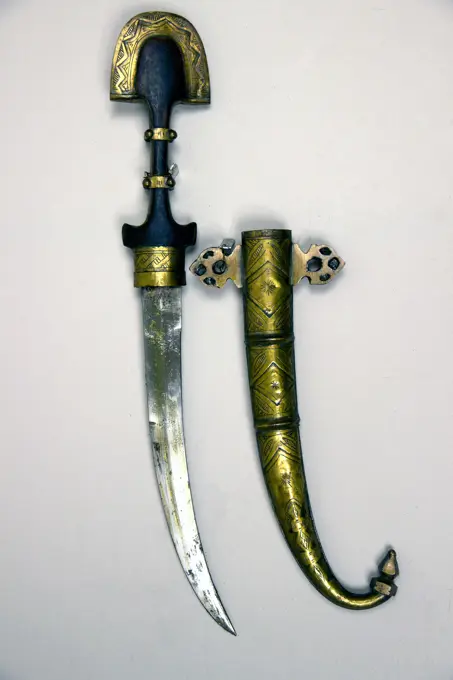
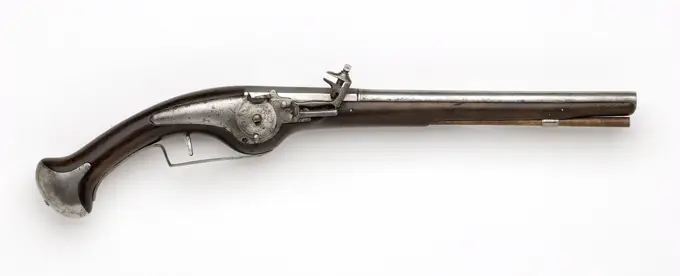
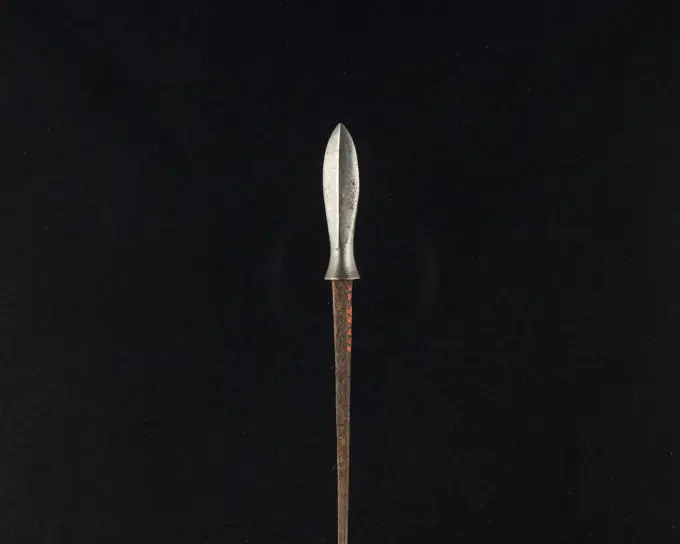
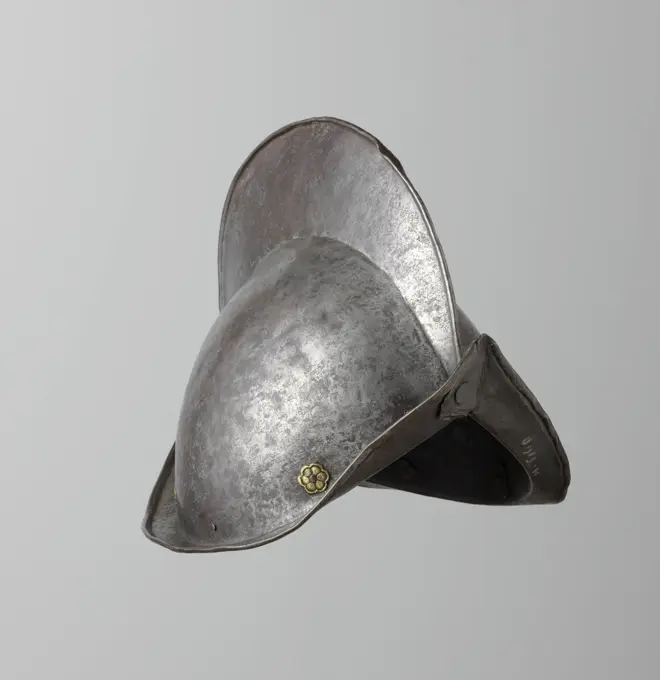
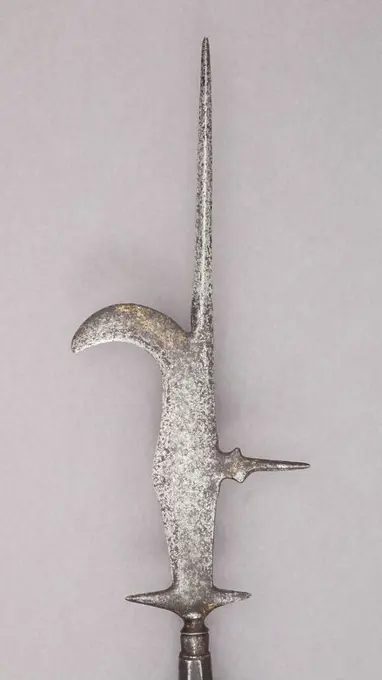
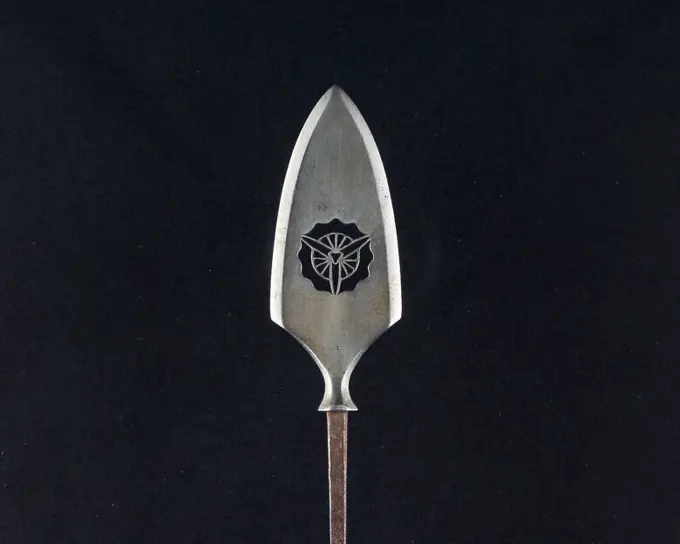
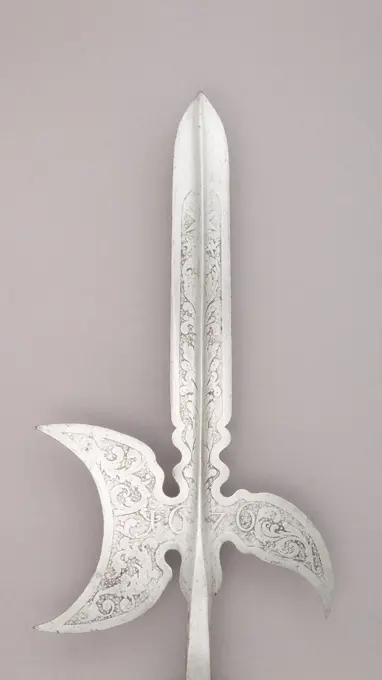
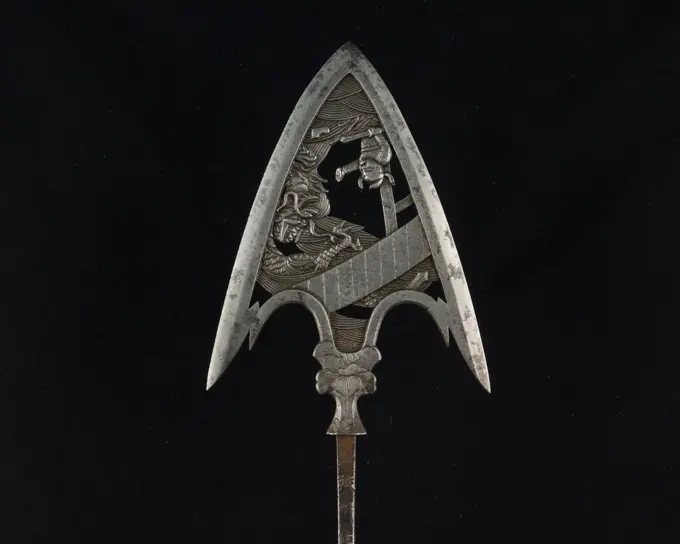
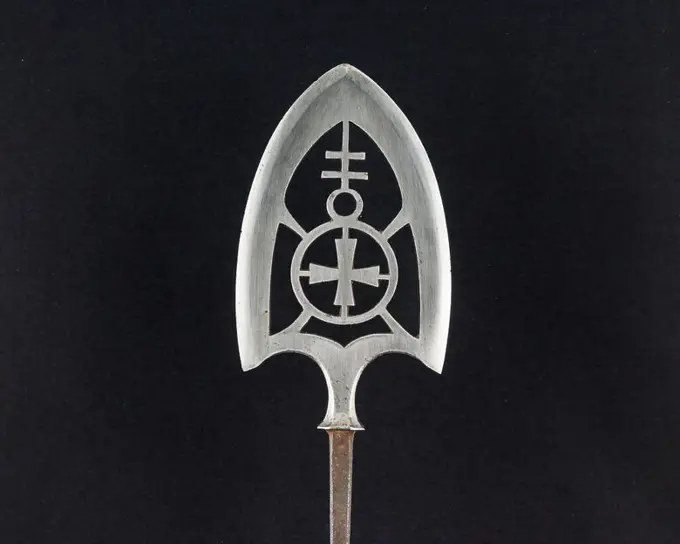
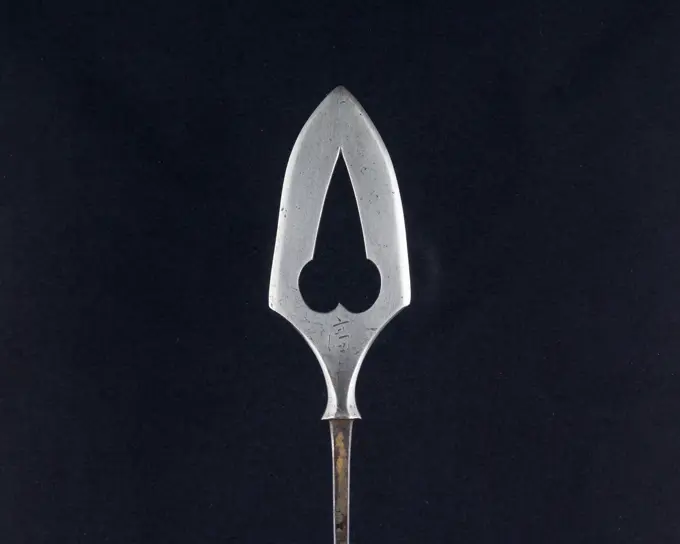
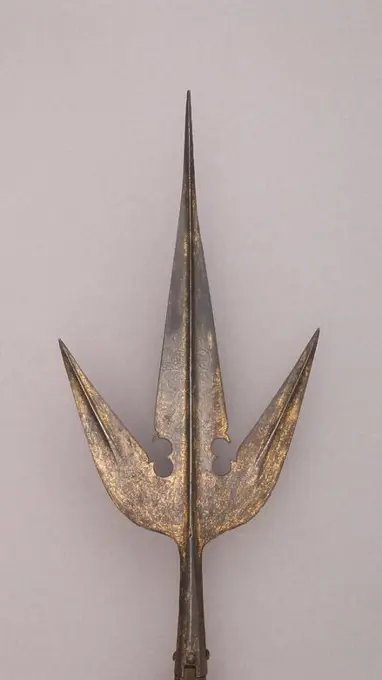
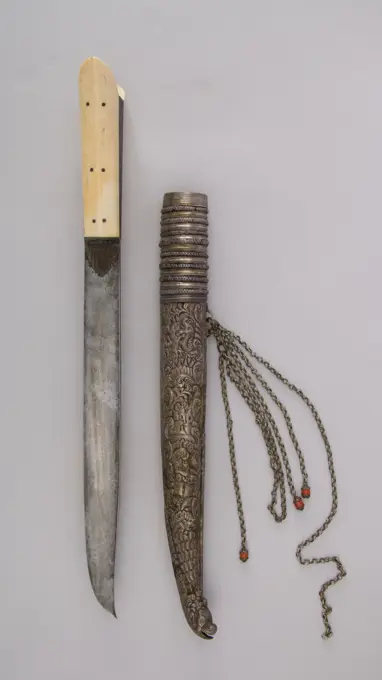
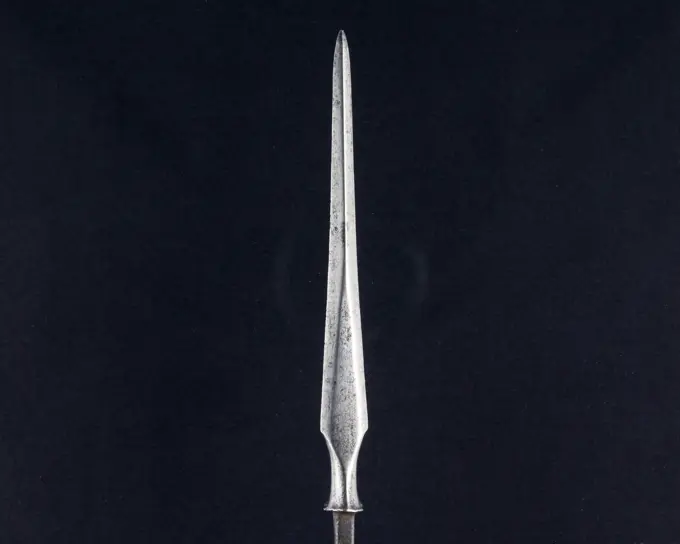
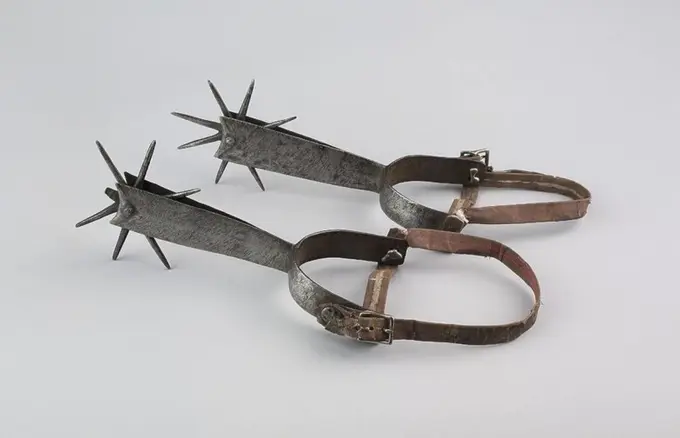
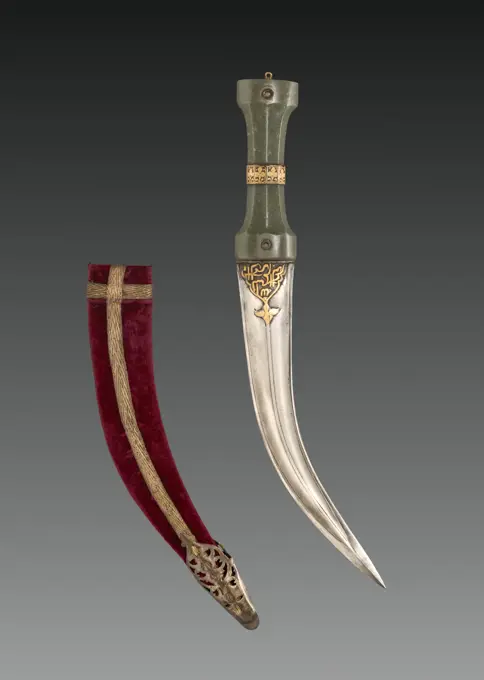
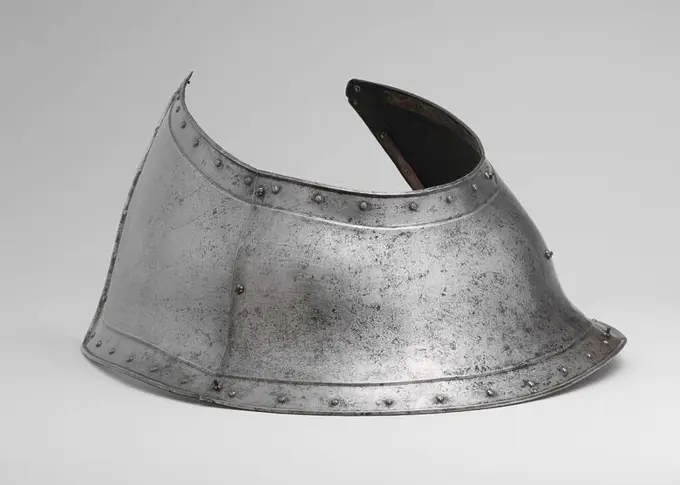
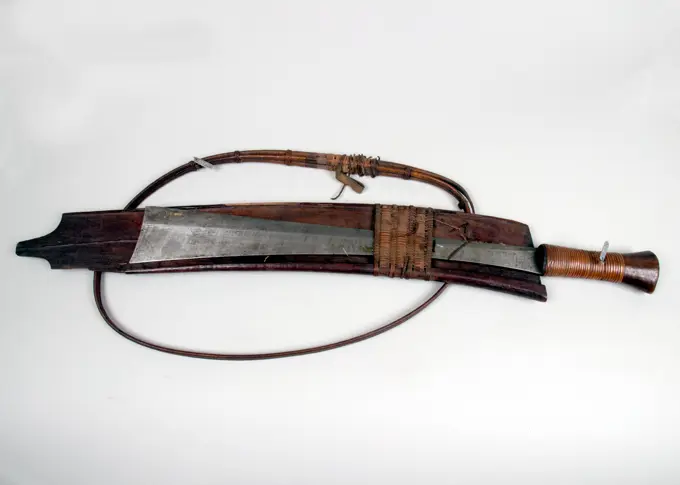
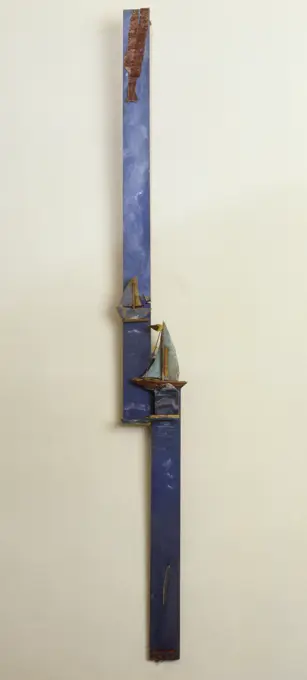
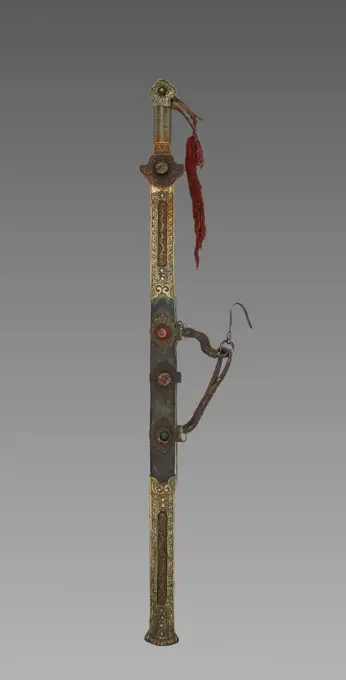
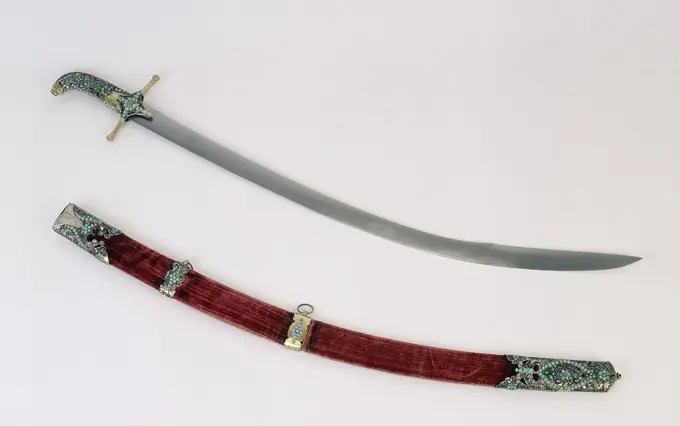
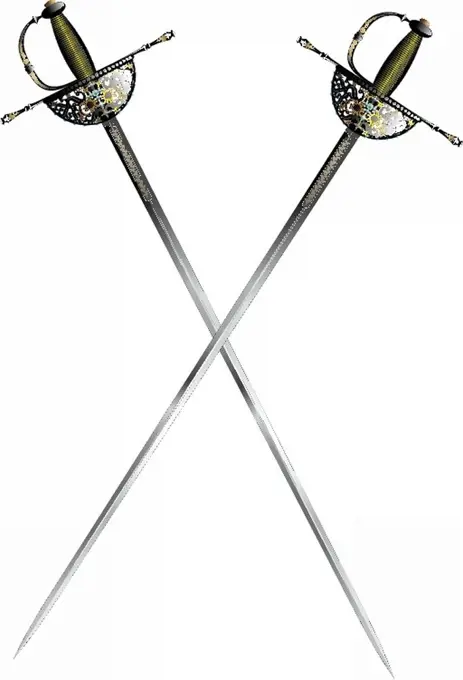
Dessert fork; Würtembergische metallwarefabrik - WMF (Germany; Wytwónia Z Otnarz; 1880-1914); after 1880 (1890-00-00-1914-00-00);Roncone ca. 1500 Italian The extraordinarily large head of the bill consists of a long, double-edged thrusting blade emerging from a body, which has on one side a cutting edge changing into a strongly curved hook, and on its back a sharp spike standing out at right angles. Two short spikes at the base of the blade serve as a guard. A simple ornament of dots and crescent lines is stamped along the back.The bill is a weapon developed from an agricultural tool, the pruning hook, with which a farmer would lop off unwanted branches on his fruit tress. It was particularly popular in western European countries, where it was one of the equivalents of the halberd in central Europe. In England the call to arms was "Bills and Bows," for spearmen and archers. It seems to have been one of the few types of polearms that the Spanish conquistadores and the early English colonists used in the New World.. Roncone. Italian. ca. 1500. Steel, wood (ash). Shafted WeaponsSword(Balato)ESPADAS HALLADAS EN LA RIA DE HUELVA. BRONCE AJUAR. (DEPOSITO: MUSEO ARQUEOLOGICO NACIONAL).Yatagan with ebony hilt. Yatagan with ebony hilt, engraved silver ornaments and leather sheath.Rapier Spanish late 16th century The rapier was the principal civilian sidearm throughout the sixteenth and seventeenth centuries. Designed for cut-and-thrust fencing of progressively complex techniques, the rapier is characterized by a double-edged blade with an acute point and an elaborate guard for the hand. The guards, usually of iron or steel, were subject to a variety of embellishment. They were engraved, chiseled, gilded, damascened, and encrusted in gold and silver in keeping with fashionable styles. Unless otherwise noted, the materials, attributions, and dating given here refer to the hilts. Rapier blades, invariably of steel, bear a variety of makers marks denoting their origin in the two principal centers of blademaking, Toledo in Spain and Solingen in Germany. View more. Rapier. Spanish. late 16th century. Steel, wire, gold. SwordsDagger. Italian. Date: 1650-1675. Dimensions: L. 35.5 cm (14 in.) Blade L. 23.3 cm (9 3/16 in.) Wt. 14 oz. Steel, wood, and iron wire. Origin: Italy. Museum: The Chicago Art Institute, Chicago, USA.Arrowhead (Yanone). Culture: Japanese. Dimensions: L. 6 3/4 in. (17.2 cm); L. of head 2 5/16 in. (5.9 cm); W. 1 1/2 in. (3.8 cm); Wt. 1.2 oz. (34 g). Date: 18th century. Museum: Metropolitan Museum of Art, New York, USA.Sword (Shamshir). Culture: Persian. Dimensions: H. 34 3/4 in. (88.3 cm); W. 4 3/4 in. (12.1 cm); Wt. 1 lb. 13.9 oz. (847.7 g). Date: 19th century. Museum: Metropolitan Museum of Art, New York, USA.Dagger (Katar) 18th-19th century Indian, Mughal. Dagger (Katar) 31467Corsesca 1530-1550 Italy. Steel, leather covered wood, latten (copper alloy), brass, and tassel .Dagger (Pesh-kabz) with Sheath. Culture: Indian. Dimensions: L. with sheath 19 13/16 in. (50.3 cm); L. without sheath 17 in. (43.2 cm); W. 2 3/4 in. (7 cm); Wt. 14.6 oz. (413.9 g); Wt. of sheath 4.4 oz. (124.7 g). Date: 18th-19th century. Museum: Metropolitan Museum of Art, New York, USA.. Sheath decorated with Haaievel decor; openwork tsuba with leaf and floral motifs; Equipped with two menuki, a Kozuka and Kogai.Dagger (Chilanum) with Sheath 18th century Indian. Dagger (Chilanum) with Sheath. Indian. 18th century. Iron, gold, leather. DaggersBayonet, model 1853, with a scabbard, according to beIIef, used by the insurgents of LangiewiczMilitary Smallsword and Scabbard of a Member of the British Royal Family Made 1775-1801 England. The stark military style of this smallsword hilt belies its royal purpose. It was made for one of George IIIís sons to wear with the Windsor pattern uniform, ceremonial garb that was intended only for members of the royal family and that included a deep blue coat with gold braid.In addition to this sword, the royal cutlers Bland and Foster made several others of the same pattern that are still in Windsor Castle today. Their shop was near the palace of Saint James in London.. Steel, silver, brass, gilding, wood, and lacquered snakeskin .Saber blade, 18th-19th century; guard and decoration on blade, 19th century; grip, 18th century blade, possibly Iranian; guard and decoration on blade, Turkish; grip, Indian Swords are appropriated through the recycling of materials and as spoils of war. Therefore it is no surprise that this sword has a precious Mughal grip made of black jade and a gold Ottoman guard that reads in naskhi script: "Sultan son of Sultan son of Sultan son of Suleiman Khan"; and on the back: "the name of God most compassionate and merciful." Although the name of an Ottoman sultan appears on the guard, it is not an indication of the provenance of the sword.Islamic devotional inscriptions dominate the decorative motifs of arms and armor. Efficacious prayers protect the soldier from the evils of war. The inscriptions on the elegant steel blade indicate the sword's talismanic function. In square kufic script, the inscriptions state the proclamation of faith along with the valuable Qur'anic Throne verse (2:255),Knife (Bade-bade) with Sheath. Culture: Malayan. Dimensions: H. with sheath 14 3/8 in. (36.5 cm); H. without sheath 13 7/16 in. (34.1 cm); H. of blade 10 1/2 in. (26.7 cm); W. 2 in. (5.1 cm); Wt. 5.8 oz. (164.4 g); Wt. of sheath 2.6 oz. (73.7 g). Date: 18th-19th century. Museum: Metropolitan Museum of Art, New York, USA.Knife (Kard) with Sheath. Culture: Indian, Mughal. Dimensions: H. with sheath 13 3/8 in. (34 cm); H. without sheath 12 5/16 in. (31.3 cm); H. of blade 8 in. (20.3 cm); W. 2 1/16 in. (5.2 cm); Wt. 5.1 oz. (144.6 g); Wt. of sheath 1.9 oz. (53.9 g). Date: 18th century. Museum: Metropolitan Museum of Art, New York, USA.Halberd 1530-1570 Germany. Steel and wood .Kris with Sheath. Culture: Javanese. Dimensions: L. with sheath 19 7/8 in. (50.5 cm); L. without sheath 19 1/2 in. (49.5 cm); L. of blade 16 1/4 in. (41.3 cm); W. 4 1/4 in. (10.8 cm); Wt. 9.6 oz. (272.2 g); Wt. of sheath 5.8 oz. (164.4 g). Date: 16th-19th century. Museum: Metropolitan Museum of Art, New York, USA.Dagger with Sheath. Scottish. Date: 1624. Dimensions: L. 32.5 cm (12 3/4 in.)Blade L. 23 cm (9 1/16 in.)Wt. 5 oz. Iron, brass, ebony, and leather (sheath). Origin: Scotland. Museum: The Chicago Art Institute, Chicago, USA.Dagger (Khanjar) with Sheath. Culture: Indian. Dimensions: H. with sheath 16 3/4 in. (42.5 cm); H. without sheath 15 5/8 in. (39.7 cm); H. of blade 10 3/4 in. (27.3 cm); W. 3 3/8 in. (8.6 cm); Wt. 13.9 oz. (394.1 g); Wt. of sheath 2.9 oz. (82.2 g). Date: 18th century. Museum: Metropolitan Museum of Art, New York, USA.Carabela with vaginaDagger with Sheath 19th century Persian. Dagger with Sheath 32255The kris or keris is an asymmetrical dagger most strongly associated with the culture of Indonesia, but also indigenous to Malaysia, Thailand and Brunei. It is known as kalis in the southern Philippines. The kris is famous for its distinctive wavy blade, but in the past, most had straight blades. Established by the Institute for Southern Thai Studies in 1991, this unusually good museum, set in an attractive series of Thai sala-type buildings, features a library (mainly in Thai) on southern Thai culture, and a well-documented series of exhibits on southern culture including nang talung shadow puppets, musical instruments, textiles, basketry, household artifacts, fishing equipment, jewellery and weapons. There is also a suan yaa samunprai or natural herb and medicinal garden in the well-tended grounds.Halberd 17th century German. Halberd 29610Arrowhead (Yanone). Culture: Japanese. Dimensions: L. 12 in. (30.5 cm); L. of head 5 in. (12.7 cm); W. 2 in. (5.1 cm); Wt. 5 oz. (141.7 g). Date: dated 1645. Museum: Metropolitan Museum of Art, New York, USA.Sword (Kris), 1800s. Java. Iron with carved wooden handle; overall: 42 cm (16 9/16 in.); blade: 33.4 cm (13 1/8 in.).Two sabres (kastanes) and a knife (piha-kaetta).Following an unsuccessful invasion of Kandy in 1764, the VOC troops nevertheless succeeded one year later in penetrating the kings centre of power. Peace negotiations failed and the troops plundered the palace and the city. The booty included many costly jewels and arms, including these three ornate weapons that were probably the kings personal property.Rapier Made 1620-1640 England. Iron, steel, and silver .Arrowhead (Yanone). Culture: Japanese. Dimensions: L. 11 1/4 in. (28.6 cm); L. of head 3 1/4 in. (8.3 cm); W. 1 1/4 in. (3.2 cm); Wt. 1.6 oz. (45.4 g). Date: 18th century. Museum: Metropolitan Museum of Art, New York, USA.Ancient sabre. A smart variant of the fighting weaponPartisan dated 1767 British. Partisan 34296Sword, c. 1400. European, early 15th century. Steel, leather, wire; overall: 85.3 cm (33 9/16 in.); blade: 71.7 cm (28 1/4 in.); quillions: 16.7 cm (6 9/16 in.); grip: 12.7 cm (5 in.). The principal weapon of the European knight was his sword, a simple weapon with a broad, two-edged blade, a straight crossguard, and a round pommel or counterweight. The pommel gave the knight full mastery of a perfectly balanced weapon. The basic shape of the sword did not change significantly between 1200 and 1500.Partisan dated 1718 German. Partisan 29388Arrowhead (Yanone) 18th century Japanese Although today Japanese warriors are renowned most for their swordsmanship, archery, especially from horseback, has been an essential part of samurai warfare and culture for centuries. Arrows were fitted with heads of varying shape according to their intended use in war, the hunt, or target practice. Arrowheads made for use on the battlefield incorporated different designs intended for specialized purposes such as the piercing of armor or to cause maximum damage to horses and unarmored personnel.Large arrowheads, pierced and elaborately chiseled with landscapes, birds, flowers, dragons, and Buddhist divinities, were created to be admired for the beauty of their metalwork and design rather than for use in archery. Such highly elaborate examples may have been made for presentation or as a votive offerings to a shrine.. Arrowhead (Yanone). Japanese. 18th century. Steel. Archery Equipment-ArrowheadsKnife with Sheath 16th-19th century Javanese. Knife with Sheath 31673Dagger (Pesh-Kabz) with Sheath. Culture: Persian. Dimensions: L. with sheath 16 1/2 in. (41.9 cm); L. without sheath 14 13/16 in. (37.6 cm); W. 1 3/4 in. (4.5 cm); Wt. 14.3 oz. (405.4 g); Wt. of sheath 3.9 oz. (110.6 g). Date: 19th century. Museum: Metropolitan Museum of Art, New York, USA.Rapier possibly French 16th century The rapier was the principal civilian sidearm throughout the sixteenth and seventeenth centuries. Designed for cut-and-thrust fencing of progressively complex techniques, the rapier is characterized by a double-edged blade with an acute point and an elaborate guard for the hand. The guards, usually of iron or steel, were subject to a variety of embellishment. They were engraved, chiseled, gilded, damascened, and encrusted in gold and silver in keeping with fashionable styles. Unless otherwise noted, the materials, attributions, and dating given here refer to the hilts. Rapier blades, invariably of steel, bear a variety of makers marks denoting their origin in the two principal centers of blademaking, Toledo in Spain and Solingen in Germany. View more. Rapier. possibly French. 16th century. Steel, silver. SwordsHalberd. Culture: probably Italian. Dimensions: L. 8 ft. 8 7/8 in. (266.4 cm); L. of head 22 1/16 in. (56 cm); W. 7 1/2 in. (19 cm); Wt. 5 lbs. 8 oz. (2494.8 g). Date: ca. 1570. Museum: Metropolitan Museum of Art, New York, USA.Khyber Knife 18th-19th century Afghan, Khyber. Khyber Knife. Afghan, Khyber. 18th-19th century. Steel, iron. KnivesArrowhead (Yanone) dated 1645 Japanese Although today Japanese warriors are renowned most for their swordsmanship, archery, especially from horseback, has been an essential part of samurai warfare and culture for centuries. Arrows were fitted with heads of varying shape according to their intended use in war, the hunt, or target practice. Arrowheads made for use on the battlefield incorporated different designs intended for specialized purposes such as the piercing of armor or to cause maximum damage to horses and unarmored personnel.Large arrowheads, pierced and elaborately chiseled with landscapes, birds, flowers, dragons, and Buddhist divinities, were created to be admired for the beauty of their metalwork and design rather than for use in archery. Such highly elaborate examples may have been made for presentation or as a votive offerings to a shrine.. Arrowhead (Yanone). Japanese. dated 1645. Steel. Archery Equipment-Arrowheads3d rendering of a ancient sword isolated on white background 3d rendering of a ancient sword isolated on white studio background Copyright: xZoonar.com/HugoxKurkx 14506112Dagger with Sheath. Culture: Caucasian, Cossack. Dimensions: H. with sheath 17 13/16 in. (45.2 cm); H. without sheath 17 1/4 in. (43.8 cm); H. of blade 12 1/2 in. (31.8 cm); W. 1 11/16 in. (4.3 cm); Wt. 9.9 oz. (280.7 g); Wt. of sheath 2.8 oz. (79.4 g). Date: 19th century. Museum: Metropolitan Museum of Art, New York, USA.Rapier Italian late 16th century The rapier was the principal civilian sidearm throughout the sixteenth and seventeenth centuries. Designed for cut-and-thrust fencing of progressively complex techniques, the rapier is characterized by a double-edged blade with an acute point and an elaborate guard for the hand. The guards, usually of iron or steel, were subject to a variety of embellishment. They were engraved, chiseled, gilded, damascened, and encrusted in gold and silver in keeping with fashionable styles. Unless otherwise noted, the materials, attributions, and dating given here refer to the hilts. Rapier blades, invariably of steel, bear a variety of makers marks denoting their origin in the two principal centers of blademaking, Toledo in Spain and Solingen in Germany. View more. Rapier. Italian. late 16th century. Steel, silver, iron wire, gold. SwordsGlaive (with Arms of Giustini Family), c. 1600-1620. Italy, Venice, 17th century. Steel, etched; wood haft; overall: 184.5 cm (72 5/8 in.); blade: 15.2 cm (6 in.). A glaive is a long staff weapon with a large cleaver or knife-like blade. The flat steel blade is conducive to ornamental decoration such as heraldic devices. The decorative nature of this weapon made it a favorite for ceremonial use.Small Sword, c. 1720-60. England, 18th century. Steel; piercing; perforation; overall: 97 cm (38 3/16 in.); blade: 80.5 cm (31 11/16 in.); grip: 12.6 cm (4 15/16 in.); guard: 7.7 cm (3 1/16 in.). During the 1700s, the small-sword emerged as a light, quick weapon. Like the rapier it was carried by unarmored civilians, the noblemen of the upper classes. Over time this delicate sword became more an accessory of male attire than a weapon essential to life and death. The sword hilt, which shows even when the blade is sheathed, became the ground for elaborate decoration. These small-swords thus represent the final stage in the evolution of the sword, from the edged weapons of antiquity to the elegantly refined blades of the 1700s and 1800s.Sword 18th-19th century Sri Lankan. Sword. Sri Lankan. 18th-19th century. SwordsThrusting Sword (Estoc) Made 1525-1550 Germany. Stiff-bladed swords or estocs were designed to pierce through the joints or gaps of plate armor. They were often kept on the front of the saddle of a well-equipped man-at-arms and used as an auxiliary weapon in addition to an arming sword, war hammer, or mace.This example with its crutch-shaped pommel (top end) is a rare type. This unusual device may have been designed to help wedge the back end of the sword hilt into the userís elbow or upper arm while holding the blade with two hands and pressing the point through a pinned opponentís armor.. Steel, brass, wood, and leather .Dagger (Jambiya) with Sheath 18th century Albanian. Dagger (Jambiya) with Sheath. Albanian. 18th century. Steel, wood, gold, brass, coral, copper. DaggersSabre of General Napoleon Bonaparte ,C18Knife with Sheath. Culture: Turkish. Dimensions: L. with sheath 12 in. (30.5 cm); L. without sheath 11 in. (27.9 cm); W. 13/16 in. (2.1 cm); Wt. 3.3 oz. (93.6 g); Wt. of sheath 1.7 oz. (48.2 g). Date: 18th-19th century. Museum: Metropolitan Museum of Art, New York, USA.Double-bladed Processional Axe. Culture: North Indian. Dimensions: L. 50 in. (127 cm); L. of head 15 1/4 in. (38.7 cm); W. 15 1/2 in. (39.4 cm); Wt. 2 lbs. 8.9 oz. (1159.5 g). Date: blade, 1170 A.H./1756-57 A.D.; shaft, 19th or 20th century. Museum: Metropolitan Museum of Art, New York, USA.Bardiche (Pole Axe), 1500s. Germany or Russia, 16th century. Steel, leather, brass; wood haft; overall: 178.5 cm (70 1/4 in.); blade: 14.2 cm (5 9/16 in.).Smallsword ca. 1775-80 Russian, Tula By the early seventeenth century, the rapier, a long slender thrusting sword, began to dominate as the gentlemans weapon of choice. During the course of the century, however, as civilian fencing techniques became more specialized and refined, the rapier developed into a lighter, trimmed-down weapon known by about 1700 as the smallsword. Smallswords, often richly decorated, remained an integral part of a gentlemans wardrobe until the wearing of swords in civilian settings went out of fashion at the end of the eighteenth century, at which time pistols were replacing swords as arms most frequently used in personal duels. The majority of smallsword hilts are made of silver or steel, but many also employ a wide variety of luxurious materials, such as gold, porcelain, and enamel. At their best, smallswords combine the crafts of swordsmith, cutler, and jeweler to create an elegant weapon that was also a wearable work of art.. Smallsword. Russian, Tula. cArrowhead (Yanone). Culture: Japanese. Dimensions: L. 8 3/4 in. (22.2 cm); L. of head 2 7/8 in. (7.3 cm); W. 1 1/4 in. (3.2 cm); Wt. 0.9 oz. (25.5 g). Date: 18th century. Museum: Metropolitan Museum of Art, New York, USA.Spontoon. Culture: Italian. Dimensions: L. 87 3/4 in. (222.9 cm); L. of head 14 7/8 in. (37.8 cm); W. 4 7/8 in. (12.4 cm); Wt. 2 lbs. 12 oz. (1247.4 g). Date: 18th century. Museum: Metropolitan Museum of Art, New York, USA.Vajra Flaying Knife ca. 15th century Eastern Tibet, Derge This flaying knife is styled in the Indian manner, with a long, hooked steel blade for butchering and flaying. A vajra (thunderbolt scepter), symbol par excellence of Tibetan Vajrayana Buddhism, forms the handle. The steel blade issues from a wide-jawed sea monster (makara) hilt, finely damascened with gold and silver.. Vajra Flaying Knife 39407Arrowhead (Yanone). Culture: Japanese. Dimensions: L. 6 7/8 in. (17.5 cm); L. of head 2 3/4 in. (7 cm); W. 1 1/4 in. (3.2 cm); Wt. 0.8 oz. (22.7 g). Date: 18th century. Museum: Metropolitan Museum of Art, New York, USA.Dagger (Jambiya) with Sheath 19th century Moroccan. Dagger (Jambiya) with Sheath 31754Kris with Sheath 18th-19th century Philippine, Sulu. Kris with Sheath 31265Radslot gun, Jan Aerts, 1655  Very simple military gun. The wheel has a wheel conductor at the bottom with a hole on the left to see if the battle feather was tense; There is a signature on both sides of the lock. There is an inscription on the barrel; Stamped on the bottom with a brand in the shape of a horseshoe and the letters IB above an inverted S. The flask is probably made of walnut wood. The iron batter consists of a loading sticker, among other things, a angular tractor bracket; The wooden chest of drawers has an iron roof. Maastricht wood (plant material). iron (metal) engravingKnife (Wedong) with Sheath 16th-19th century Javanese. Knife (Wedong) with Sheath 31600Hand protection medieval knight. Element protective armorArrowhead (Yanone) 18th century Japanese Although today Japanese warriors are renowned most for their swordsmanship, archery, especially from horseback, has been an essential part of samurai warfare and culture for centuries. Arrows were fitted with heads of varying shape according to their intended use in war, the hunt, or target practice. Arrowheads made for use on the battlefield incorporated different designs intended for specialized purposes such as the piercing of armor or to cause maximum damage to horses and unarmored personnel.Large arrowheads, pierced and elaborately chiseled with landscapes, birds, flowers, dragons, and Buddhist divinities, were created to be admired for the beauty of their metalwork and design rather than for use in archery. Such highly elaborate examples may have been made for presentation or as a votive offerings to a shrine.. Arrowhead (Yanone). Japanese. 18th century. Steel. Archery Equipment-ArrowheadsMorion, anonymous, c. 1600 - c. 1699 moron Morion, iron, white, made of two plates, deep helmet ball with high -ragging comb and the front and rear raised valves. The edge of the valve is surrounded. Around the base of the helmet ball around six yellow -lying decorative rosettes. Three ornamental rosettes are missing on both sides. Passed inside, two white scratches on both sides of the comb slot. Netherlands (possibly) iron (metal). copper (metal) striking (metalworking)Guisarme for a Child. Culture: Italian. Dimensions: L. 63 1/2 in. (161.3 cm); L. of head 15 in. (38.1 cm); W. 5 in. (12.7 cm); Wt. 1 lbs. 13.7 oz. (842 g). Date: 16th century. Museum: Metropolitan Museum of Art, New York, USA.Bevor (Barbote) Made 1470-1490 Spain. Steel .Spear with Sheath 16th-19th century Javanese. Spear with Sheath 30704Arrowhead (Yanone). Culture: Japanese. Dimensions: L. 10 3/8 in. (26.4 cm); L. of head 3 1/8 in. (7.9 cm); W. 1 1/4 in. (3.2 cm); Wt. 1.5 oz. (42.5 g). Date: 18th century. Museum: Metropolitan Museum of Art, New York, USA.Halberd of Frederick of Hesse, Prince-Bishop of Breslau (reigned 1671-82) dated 1676 German. Halberd of Frederick of Hesse, Prince-Bishop of Breslau (reigned 1671-82) 27027Arrowhead (Yanone) likely 16th century Japanese Although today Japanese warriors are renowned most for their swordsmanship, archery, especially from horseback, has been an essential part of samurai warfare and culture for centuries. Arrows were fitted with heads of varying shape according to their intended use in war, the hunt, or target practice. Arrowheads made for use on the battlefield incorporated different designs intended for specialized purposes such as the piercing of armor or to cause maximum damage to horses and unarmored personnel.Large arrowheads, pierced and elaborately chiseled with landscapes, birds, flowers, dragons, and Buddhist divinities, were created to be admired for the beauty of their metalwork and design rather than for use in archery. Such highly elaborate examples may have been made for presentation or as a votive offerings to a shrine.. Arrowhead (Yanone). Japanese. likely 16th century. Steel. Archery Equipment-ArrowheadsKanjar with a scabbardArrowhead (Yanone). Culture: Japanese. Dimensions: L. 12 7/8 in. (32.7 cm); L. of head 3 3/4 in. (9.5 cm); W. 2 1/4 in. (5.7 cm); Wt. 2.1 oz. (59.5 g). Date: 18th century. Museum: Metropolitan Museum of Art, New York, USA.Arrowhead (Yanone) 18th century Japanese Although today Japanese warriors are renowned most for their swordsmanship, archery, especially from horseback, has been an essential part of samurai warfare and culture for centuries. Arrows were fitted with heads of varying shape according to their intended use in war, the hunt, or target practice. Arrowheads made for use on the battlefield incorporated different designs intended for specialized purposes such as the piercing of armor or to cause maximum damage to horses and unarmored personnel.Large arrowheads, pierced and elaborately chiseled with landscapes, birds, flowers, dragons, and Buddhist divinities, were created to be admired for the beauty of their metalwork and design rather than for use in archery. Such highly elaborate examples may have been made for presentation or as a votive offerings to a shrine.. Arrowhead (Yanone). Japanese. 18th century. Steel. Archery Equipment-ArrowheadsSouvenir medieval dagger. An exact copy made of modern materialsStaff Weapon. Culture: German. Dimensions: L. 9 ft. 8 in. (294.6 cm); L. of head 19 3/4 in. (50.2 cm); W. 8 3/4 in. (22.2 cm); Wt. 4 lbs. 5.9 oz. (1981.6 g). Date: 16th century. Museum: Metropolitan Museum of Art, New York, USA.King's sword from Poland, a gift from Pope Innocent XI to John Sobiesky to commemorate the victory in 1673 at the fortress of Khotyn, Historic, digitally restored reproduction of an original from the 19th century, exact original date unknownPistol with a rock castleSilversmith's Art, England 20th century. Sheffield, lanceolate trowel with avorioline handle, ornated with handmade naturalistic motifs.Dagger (Yatagan) with Sheath 18th century Balkan. Dagger (Yatagan) with Sheath 32740Pipe stem and pipe bowl, 20th century, 15 1/4 × 2 × 5 3/4 in. (38.74 × 5.08 × 14.61 cm), Wood, terra cotta, metal, Cameroon, 20th centuryArrowhead (Yanone) 18th century Japanese Although today Japanese warriors are renowned most for their swordsmanship, archery, especially from horseback, has been an essential part of samurai warfare and culture for centuries. Arrows were fitted with heads of varying shape according to their intended use in war, the hunt, or target practice. Arrowheads made for use on the battlefield incorporated different designs intended for specialized purposes such as the piercing of armor or to cause maximum damage to horses and unarmored personnel.Large arrowheads, pierced and elaborately chiseled with landscapes, birds, flowers, dragons, and Buddhist divinities, were created to be admired for the beauty of their metalwork and design rather than for use in archery. Such highly elaborate examples may have been made for presentation or as a votive offerings to a shrine.. Arrowhead (Yanone). Japanese. 18th century. Steel. Archery Equipment-ArrowheadsPair of Spurs. Hungarian. Date: 1400-1600. Dimensions: L. 25.4 cm (10 in.); W. 8.3 cm (3 1/4 in.). Steel and leather. Origin: Hungary. Museum: The Chicago Art Institute, Chicago, USA.Khanjar dagger, c. 1600s. India, 17th century. Jade hilt with iron and gold; steel blade with iron and gold; wood sheath covered in velvet with metallic thread; overall: 34.4 cm (13 9/16 in.). Daggers with curved blades, known as khanjar, were worn tucked into the belt as one of the basic accessories for Mughal men. An all-purpose knife that could be used in hunting or fighting, the khanjar was also a visible status symbol. The use of jade and gold indicates that this dagger was owned by a member of the court. The gold inscriptions on the blade, just under the hilt, are quotations from the Quran, the most sacred book for Muslims. On one side is the opening line: “In the Name of God the Merciful and the Compassionate,” and on the other is a popular verse from chapter (sura) 61: “Help comes from God, and Victory is imminent.”Model of an Anchor. Model of a normal anchor, consisting of a shaft with a curved arm with anchor hands on the ends. Wooden anchor stick; Iron anchor ring with anchoring of gratted rope. Scale 1:10 (estimation).Sword (Saif) with Scabbard. Culture: Indian, Hyderabad or Arabian. Dimensions: H. with scabbard 37 3/4 in. (95.9 cm); H. without scabbard 36 in. (91.4 cm); W. 4 1/2 in. (11.4 cm); Wt. 1 lb. 11.2 oz. (771.1 g); Wt. of scabbard 9.3 oz. (263.7 g). Date: 18th-19th century. Museum: Metropolitan Museum of Art, New York, USA.Peytral. Culture: German, Nuremberg. Dimensions: 27 1/2 x 25 7/8 x 13 3/4 in. (69.9 x 65.8 x 34.8 cm); Wt. 8 lb. (3660 g).. Date: ca. 1510-20. Museum: Metropolitan Museum of Art, New York, USA.Spanleest belonging to row boots, Stricko, c. 1934 Spanleest belonging to the boot of a rijkostume, made of wood with corresponding stick. Netherlands wood (plant material). metal Spanleest belonging to the boot of a rijkostume, made of wood with corresponding stick. Netherlands wood (plant material). metalSpanleest belonging to row boots, Stricko, c. 1934 Spanleest belonging to the boot of a rijkostume, made of wood with corresponding stick. Netherlands wood (plant material). metal Spanleest belonging to the boot of a rijkostume, made of wood with corresponding stick. Netherlands wood (plant material). metalSword (Dao) with Scabbard and Baldric 19th century Indian, Assam, Naga Hills. Sword (Dao) with Scabbard and Baldric. Indian, Assam, Naga Hills. 19th century. Steel, wood, cane. Assam. Swordsthree dimensional mixed media composition by French-Algerian artist Yves Baume; Born 1933Sword, 1800s. Eastern Tibet. Iron and silver with bone, turquoise, leather and brass; overall: 79.4 cm (31 1/4 in.); blade: 66.7 cm (26 1/4 in.).ALFANJE Y VAINA-TURQUIA H.1570-90X13 CM-ACERO,MADERA.TEJIDO,PLATA,ORO,TURQUESAS. Location: PALACIO REAL-REAL ARMERIA DE MADRID. MADRID. SPAIN.Case (possibly Poland), ca. 1700; silver, wood; L x W: 16.8 x 2.7 cm (6 5/8 x 1 1/16 in.); The Robert L. Metzenberg Collection, gift of Eleanor L. Metzenberg; 1985-103-100-aKnife, Steel, tortoise-shell, silver, wood, Blade has straight upper edge, tapering towards the point. Drop bolster straight handle with flaring end. Shell in center decorated on front and back with tortoise shell, inlaid with silver. Scrolls, scallops acanthus leaves, a squirrel and a man in costume on one side; a bird and a nude figure on the reverse., France, ca. 1800, cutlery, Decorative Arts, Knifetwo crossed ornate saberFlight gun. Part of a couple. The lock is engraved with animals that are part of hunting; There is a signature on the lock plate. The loop has a trunk engraved with praise, is stamped with the weapon of Utrecht and wears the signature. The flask has simple carving. The batter is made of iron and includes an ajour processed screw plate with praise and a running dog, an incredible thumb plate framed by Ajour processed leaflets and two supports in the form of classic winged women's figures, and the kolf cap with a chiseled mask.Helmet. Culture: Indian. Dimensions: H. 19 in. (48.3 cm); Diam. 7 5/16 in. (18.6 cm); Wt. 2 lbs. 5.9 oz. (1074.4 g). Date: 18th-19th century. Museum: Metropolitan Museum of Art, New York, USA.