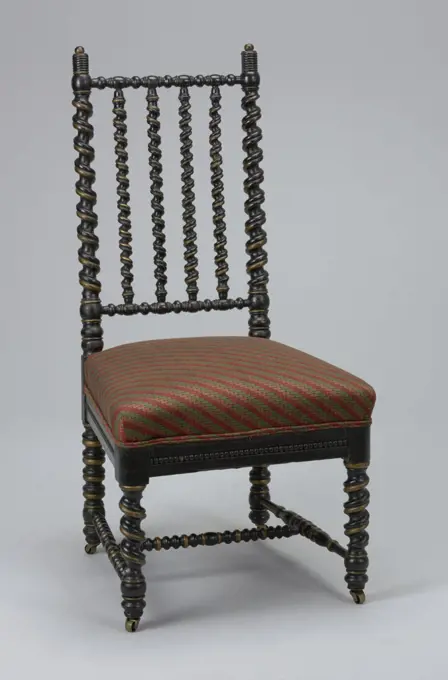
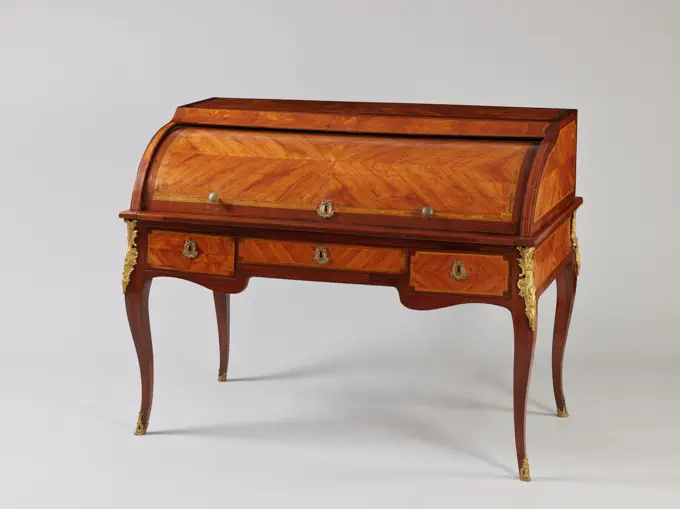
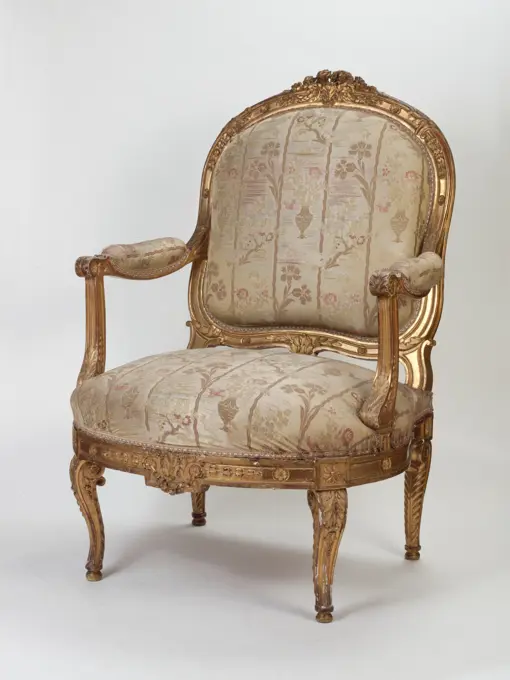
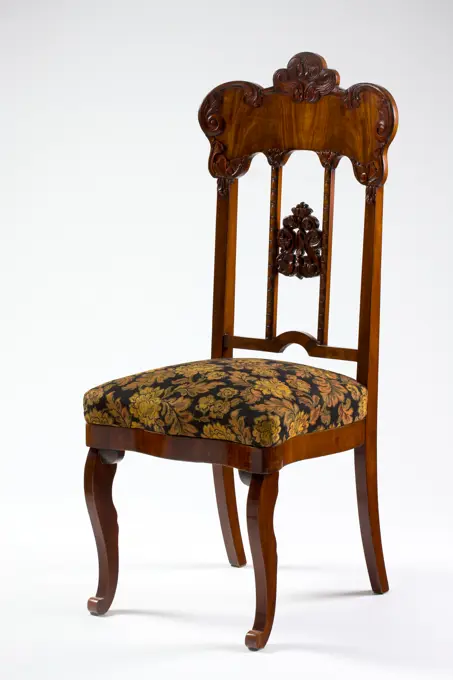
Historical Wooden Furniture

Elegant wooden furniture pieces, including chairs and tables, showcasing detailed craftsmanship from the 17th to 18th centuries.

Arm chair of walnut with flared parts. Arming stars with half female figures. Covered with nailed velvet., Anonymous, 1650 Covered armchair of walnut, resting on flared legs with houses and connected by a flung H-shaped cross and at the front by a flared upper sport placed between houses. The armrests and the backs' backs are also thrown. The armrest stars consist of half -displayed female figures on a round pedestal, which is placed on a square base. The upholstery is nailed. Northern Netherlands wood (plant material). walnut (hardwood). velvet (fabric weave) Covered armchair of walnut, resting on flared legs with houses and connected by a flung H-shaped cross and at the front by a flared upper sport placed between houses. The armrests and the backs' backs are also thrown. The armrest stars consist of half -displayed female figures on a round pedestal, which is placed on a square base. The upholstery is nailed. Northern Netherlands wood (plant material). walnut (hardwood). velvet (fab
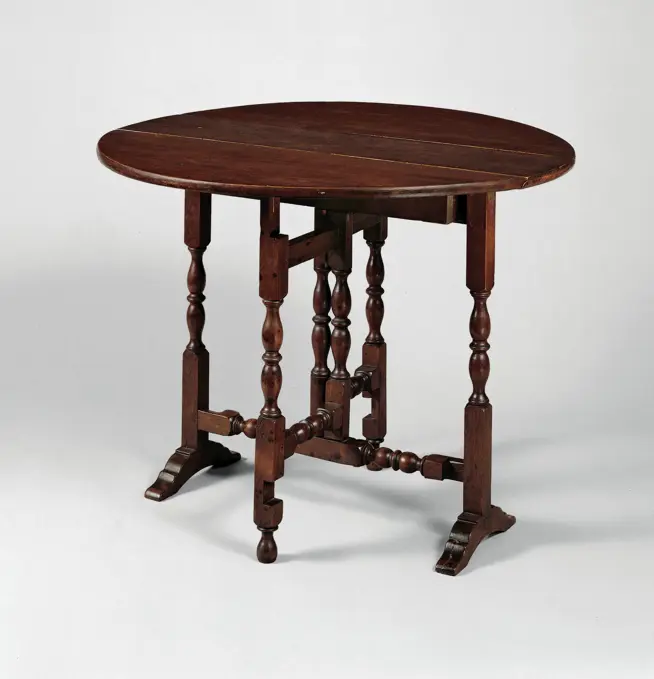
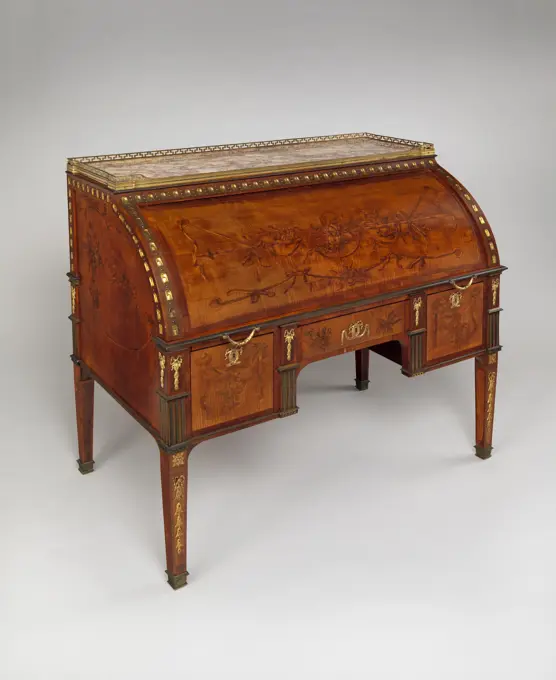
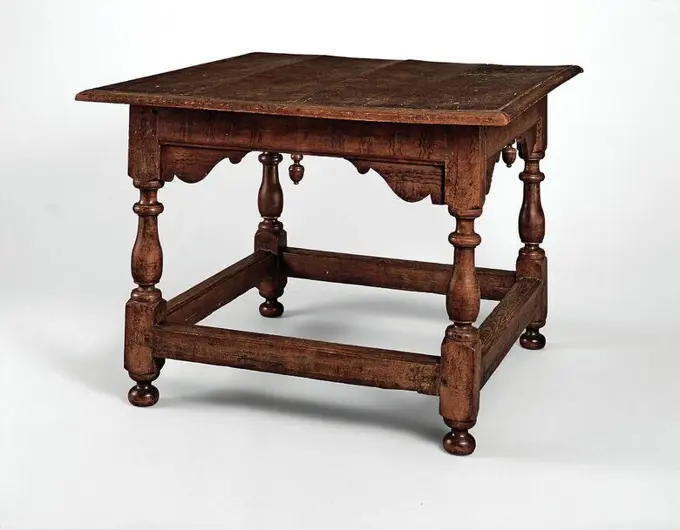
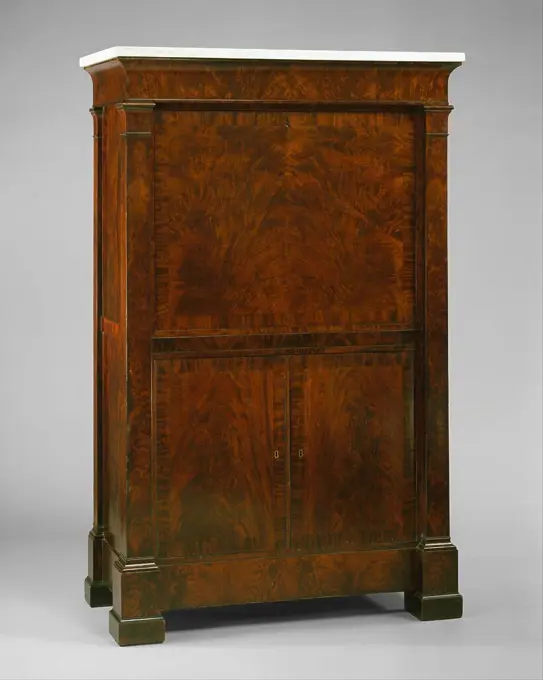
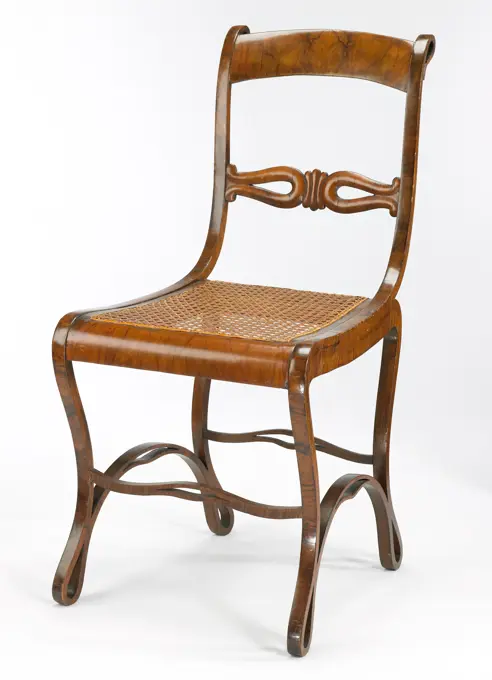
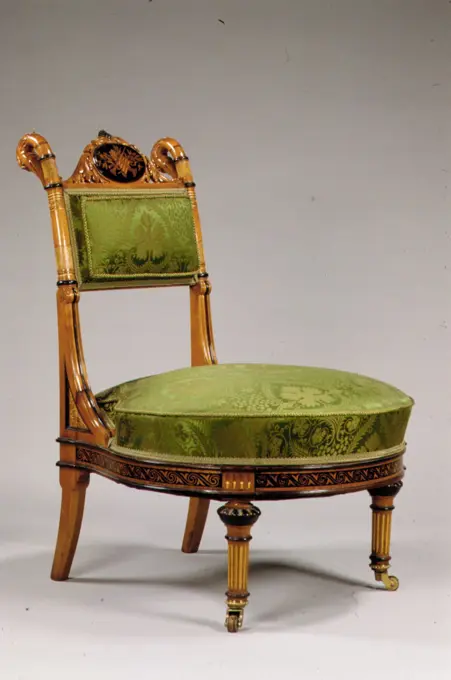
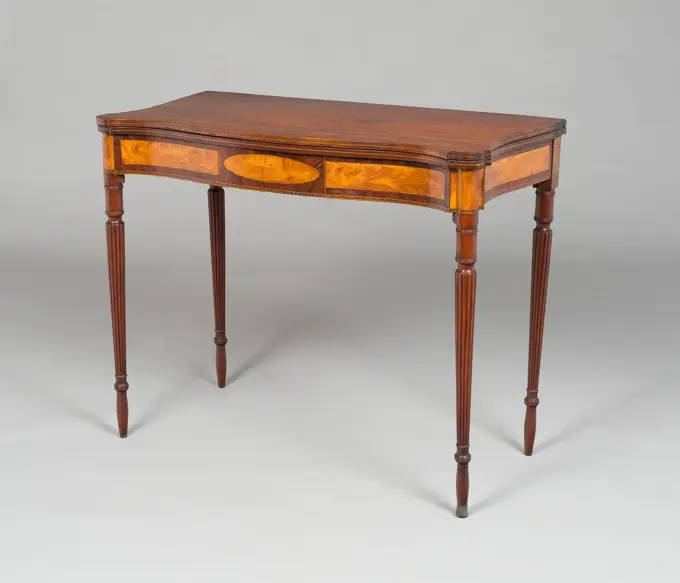
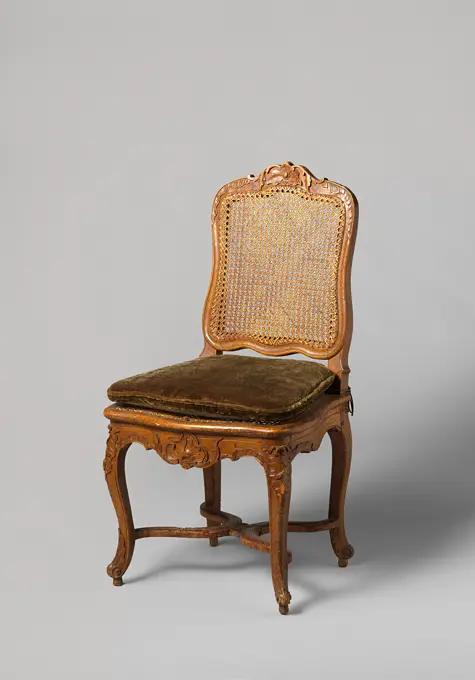
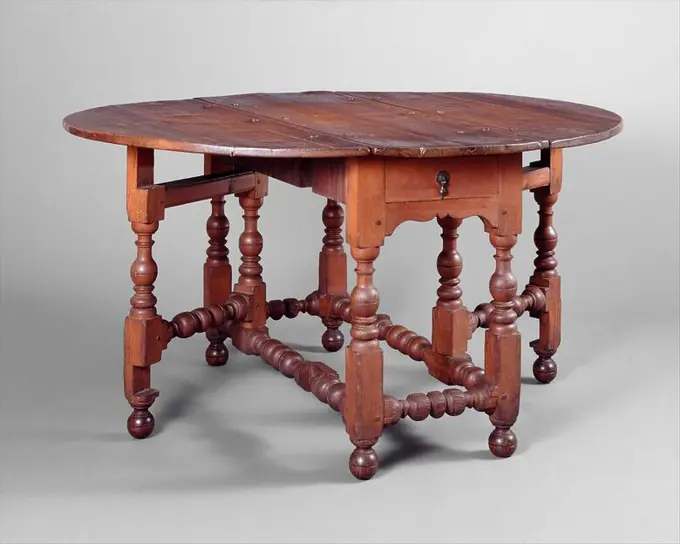
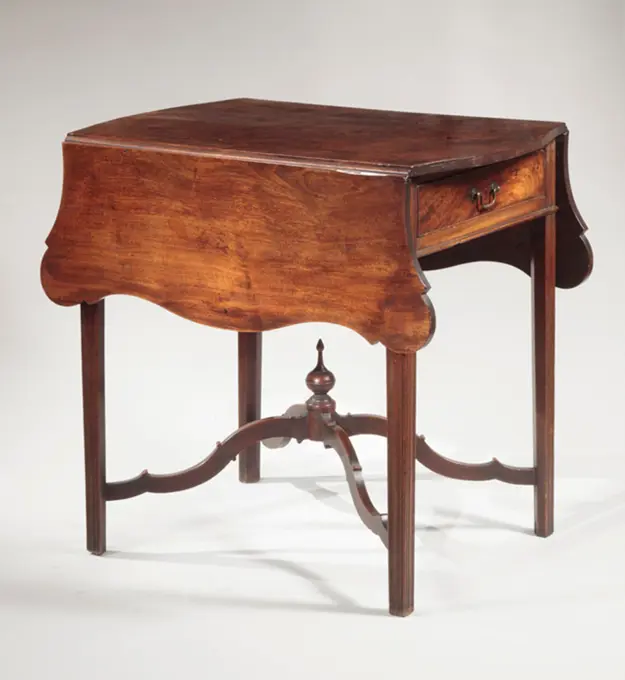
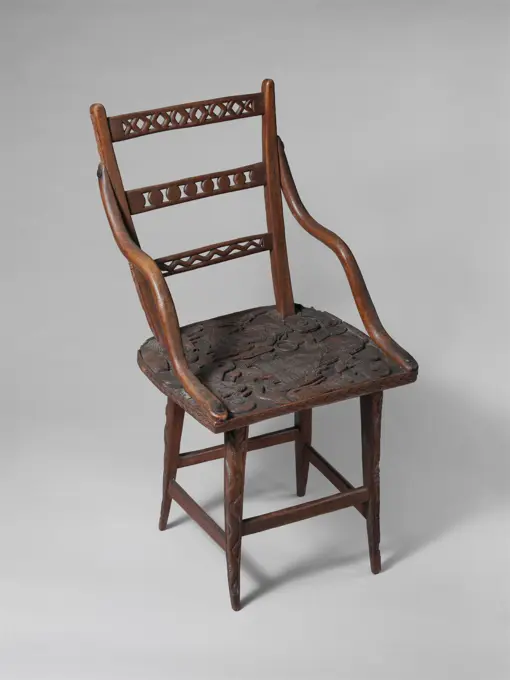
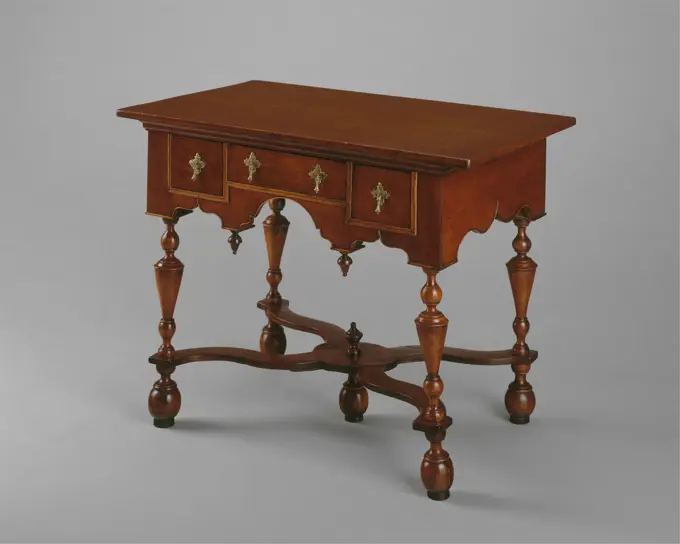
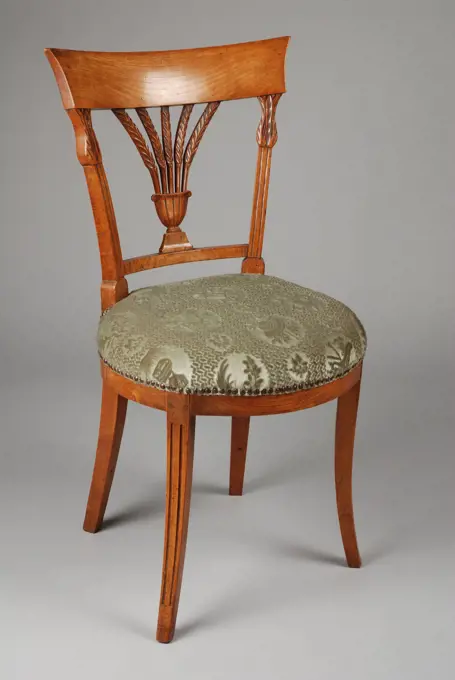
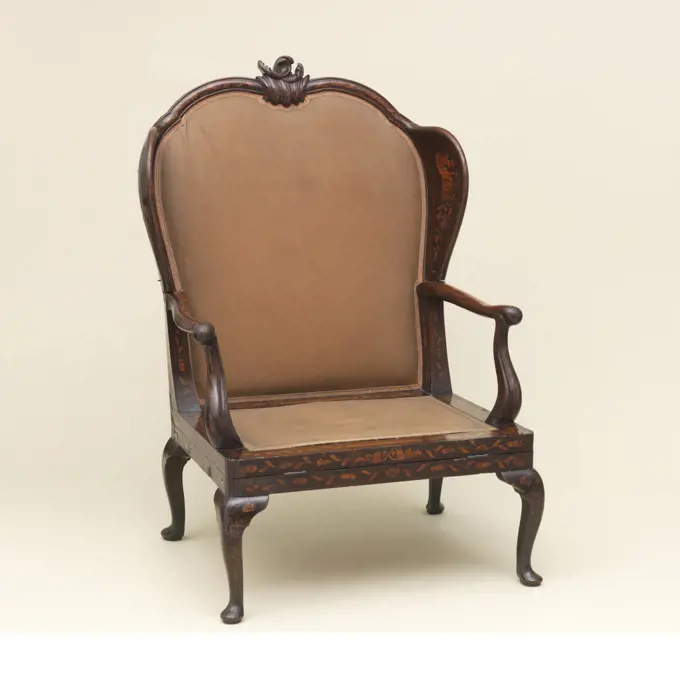
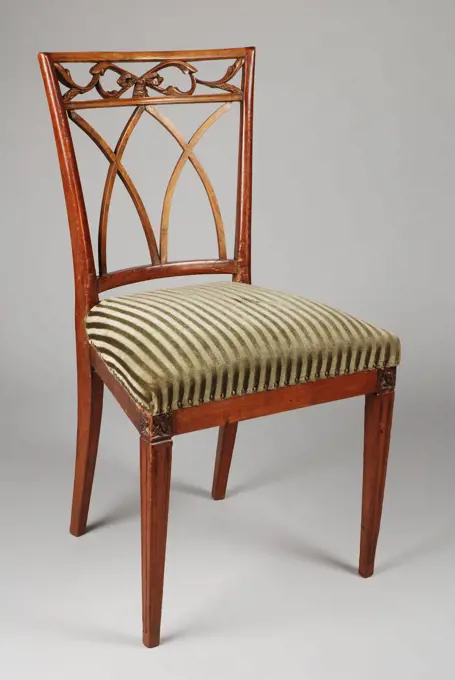
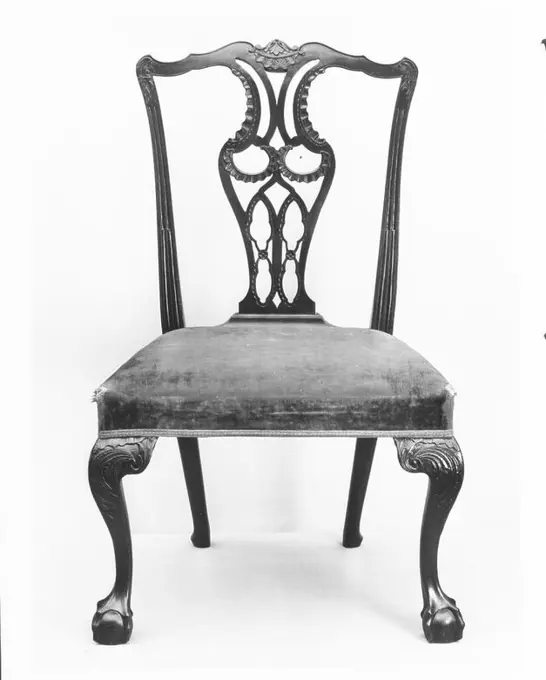
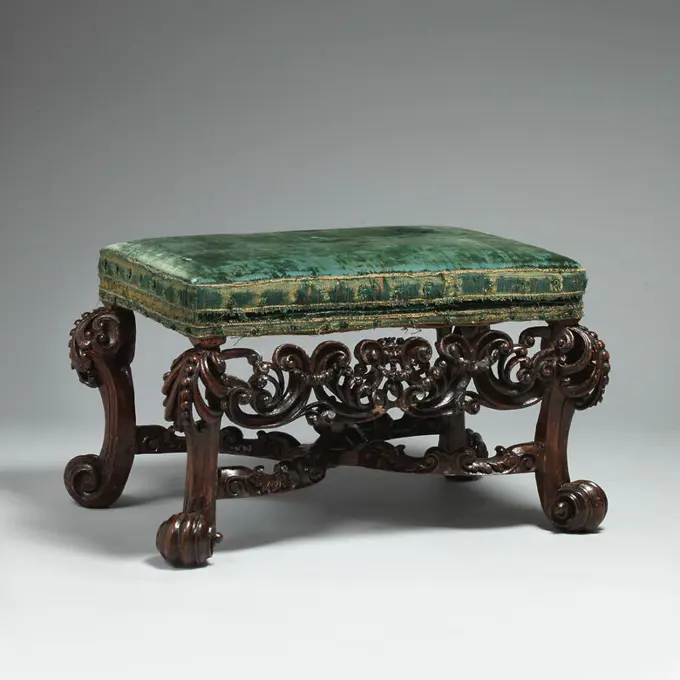
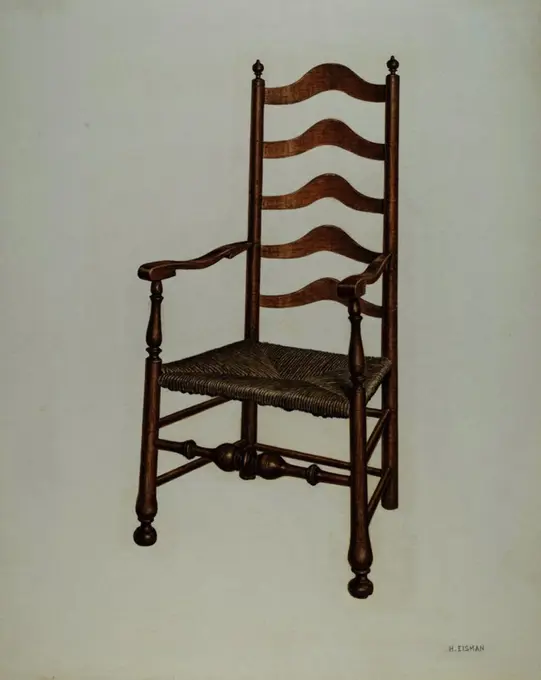
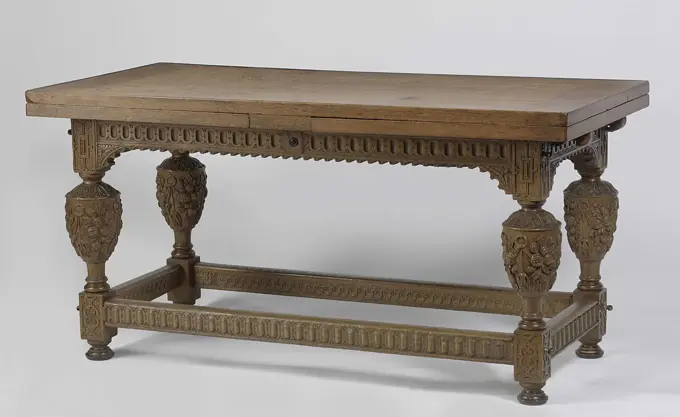
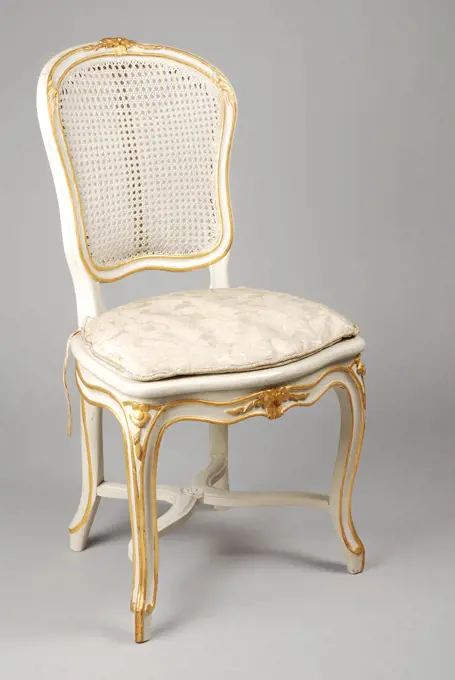
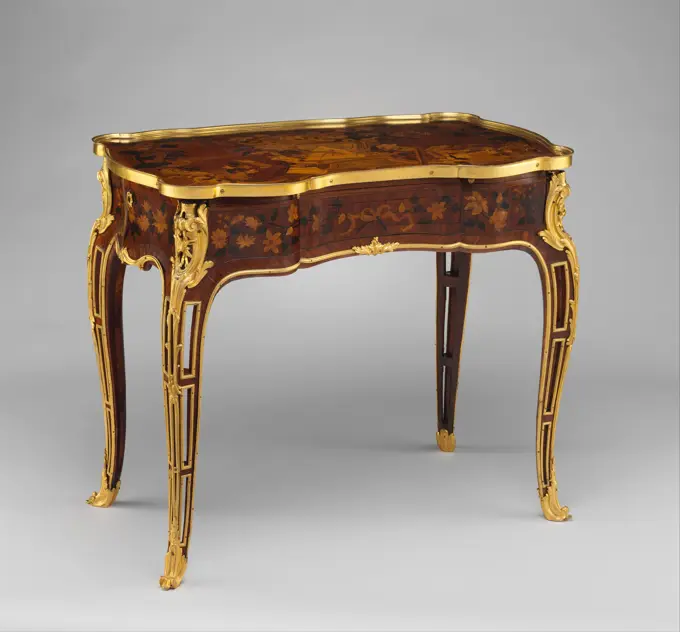
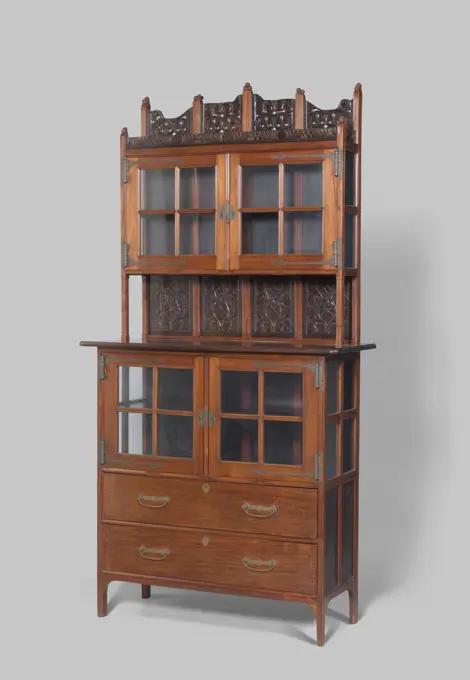
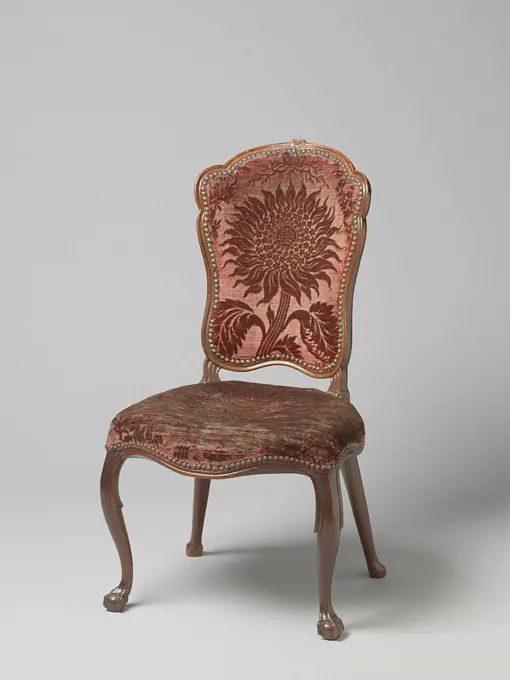
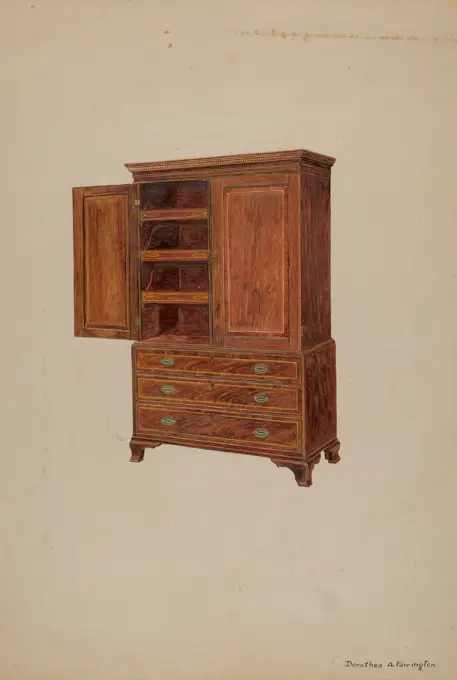
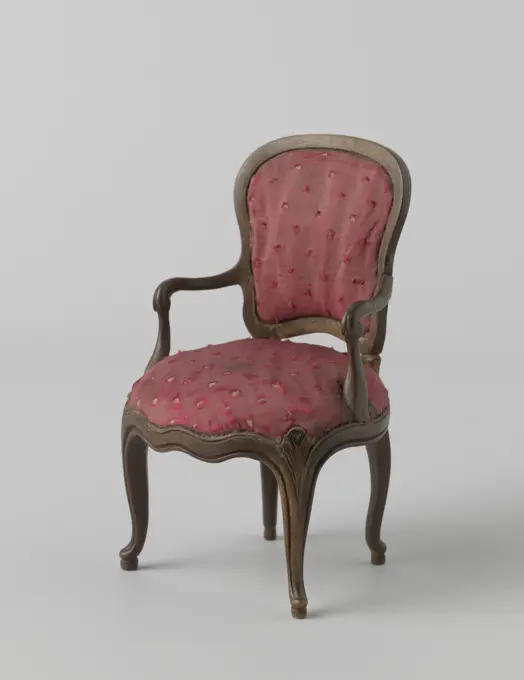
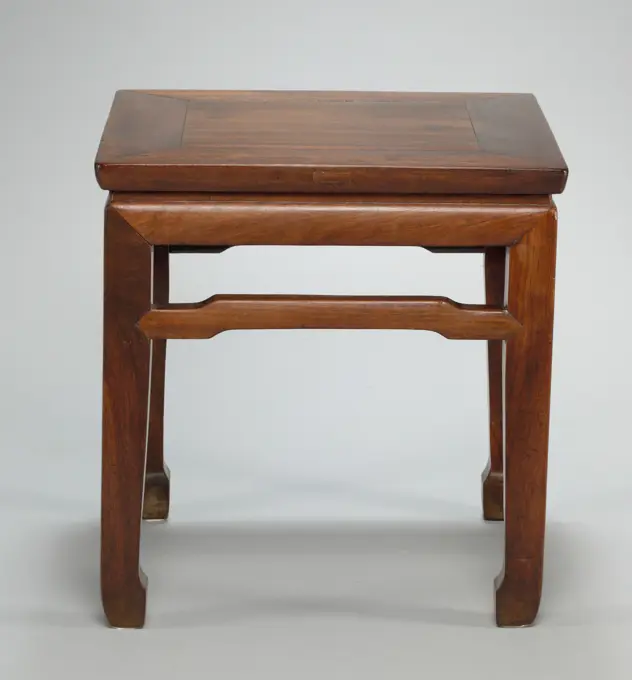
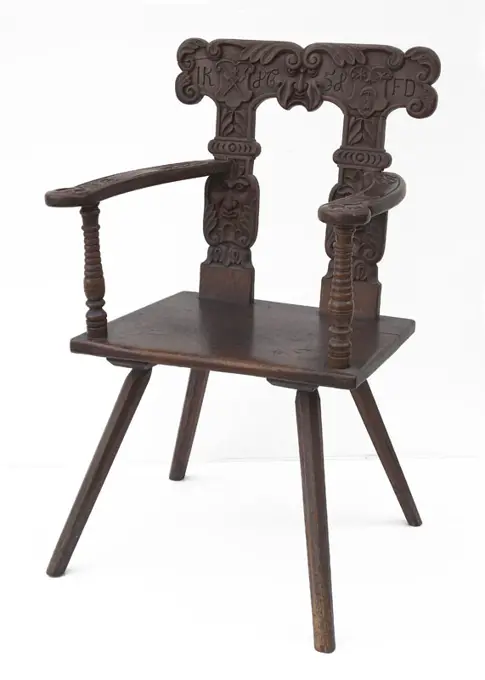
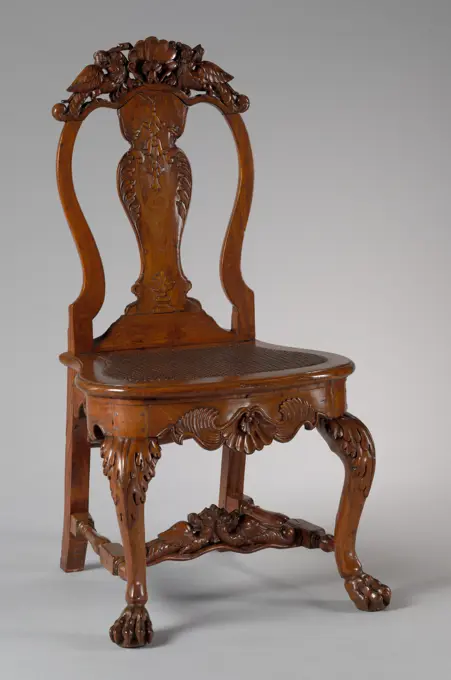
Side Chair, 1705-1715. Netherlands, 18th century. Tulipwood; overall: 102.3 x 54.6 x 51.5 cm (40 1/4 x 21 1/2 x 20 1/4 in.).Furniture, Anonymous, 1700 - 1800 Six mahogany seats with leather seats. The S-shaped front legs placed overhoek ends in claw and ball and wear leaf work on the swelling ending in a volute; The hind legs are bent backwards. The back shows a two-part open-up vertical connecting piece, which shows a braid tape motif, among other things made up of C-shaped volutes. The backstyles show cords of chalice clocks. The scalloped upper sill carries leaf work in the middle; The corners are upstairs. Great Britain wood (plant material). mahogany (wood). leather Six mahogany seats with leather seats. The S-shaped front legs placed overhoek ends in claw and ball and wear leaf work on the swelling ending in a volute; The hind legs are bent backwards. The back shows a two-part open-up vertical connecting piece, which shows a braid tape motif, among other things made up of C-shaped volutes. The backstyles show cords of chalice clocks. The scalloped upper sill carries leaf work in the middle; The cornerCard table 1765 British. Card table. British. 1765. Mahogany, with deal and oak; green damask. Woodwork-FurnitureArm chair of walnut with flared parts. Arming stars with half female figures. Covered with nailed velvet., Anonymous, 1650 Covered armchair of walnut, resting on flared legs with houses and connected by a flung H-shaped cross and at the front by a flared upper sport placed between houses. The armrests and the backs' backs are also thrown. The armrest stars consist of half -displayed female figures on a round pedestal, which is placed on a square base. The upholstery is nailed. Northern Netherlands wood (plant material). walnut (hardwood). velvet (fabric weave) Covered armchair of walnut, resting on flared legs with houses and connected by a flung H-shaped cross and at the front by a flared upper sport placed between houses. The armrests and the backs' backs are also thrown. The armrest stars consist of half -displayed female figures on a round pedestal, which is placed on a square base. The upholstery is nailed. Northern Netherlands wood (plant material). walnut (hardwood). velvet (fabDrop-leaf Table 1700-1730 American. Drop-leaf Table 3912Side Chair. Culture: American. Dimensions: 38 7/8 x 24 1/4 x 22 1/4 in. (98.7 x 61.6 x 56.5 cm). Date: 1765-75.Typical New York features, such as the carved tassel-and-ruffle design in the splat, the gadrooned seat rail, and the square claw-and-ball feet, are dis­played in this chair. It is thought to have descended in the great landholding Van Rensselaer family of Albany, New York. Museum: Metropolitan Museum of Art, New York, USA.Cabinet. unknown, creatorChair, Jan Ermans (attributed to), 1738 - 1739 Chair, walnut, sculpted with rocailles. Amsterdam walnut (hardwood). velvet (fabric weave)   Edam. Town hall Chair, walnut, sculpted with rocailles. Amsterdam walnut (hardwood). velvet (fabric weave)   Edam. Town hallPembroke Table c 1790-1805 New York City. Mahogany and Eastern white pine . Artist unknownWork and writing table ca. 1760 Laurent Rochette. Work and writing table. Laurent Rochette (born 1723). French, Paris. ca. 1760. Oak and pine veneered with mahogany, amaranth, partly green-stained and engraved maple, and bloodwood (), ebonized wood; gilt-bronze mounts; metal liners for writing equipment, blue silk.. Woodwork-FurnitureSide chair, Mahogany, poplar, horse hair, Back legs flat-sided, front legs flat excepting rounded front face; legs curve outward toward bottom, and back legs incline toward each other at bottom. Corner posts of back in a double curve terminating at top in an elementary volute form. Flat top rail bowed toward back, slightly arched, with a rectangular panel of inset veneer surrounded by beading. Splat horizontal, composed of small oblong faced with veneer, flanked on either side by horizontal coupled C-scrolls deeply carved with foliage, terminating in volutes. Seat flares from back to front, with straight edges., New York, USA, ca. 1820, furniture, Decorative Arts, Side chairOval table with falling leaves 1715-40 American In its overall design, this table exemplifies the type of small oval tables with a trestle base characteristic of New England. The simple, slim turned frame makes for a very compact unit that is easy to store when not in use. On this example the top is only 9 ¼ inches wide when the leaves are down.. Oval table with falling leaves 3914Rolltop desk ca. 1780 David Roentgen German The Roentgen manufactory was particularly well known for its rolltop writing desks with four, six, or even eight legs, distinguished in the 1770s by the accomplished marquetry á la mosaïque (also known as painting in wood”) and gilt-bronze mounts that decorated their exteriors. The marquetry motif on this example, which occurs elsewhere on Roentgen furniture, depicts flower and leaf bouquets twined around a pointed planting tool along with ribbon-tied pruning knives. The juxtaposition of what is probably a seeder or hoe with the pruning knives and bouquets constructs a narrative for the flowers that follows them from planting to harvest. The architectural interior of the desk contains pigeonholes and drawers, with fronts in striped tulipwood stained green and brown and handles shaped like lion masks holding small gilded rings. This desk was damaged, requiring major repairs. The front legs, originally detachable, are stationary replacements tLibrary Table. Culture: American. Dimensions: 29 1/2 x 66 x 39 1/2 in. (74.9 x 167.6 x 100.3 cm). Maker: Rose Valley; William Lightfoot Price (1861-1916). Date: 1904.Rose Valley, a utopian Arts and Crafts colony, was founded in 1901 near Moylan, Pennsylvania, by William Lightfoot Price, a Philadelphia architect, with a coterie of his politically liberal colleagues, clients, and friends. Inspired by the advocates of the British Arts and Crafts movement, John Ruskin and William Morris, the community was established for the "manufacture of ... materials and products involving artistic handicraft as are used in the finishing, decorating and furnishing of houses," according to its incorporation papers, dated July 17, 1901. Within a year, the Rose Valley Shops were producing furniture designed by Price as well as pottery, metalwork, and bookbindings. Rose Valley furniture is considered rare. At most, a few hundred pieces, each with significantly varying details, were made by a small team of Chair. unknown, creatorTable. Culture: American. Dimensions: 29 1/2 x 39 1/2 x 41 1/2 in. (74.9 x 100.3 x 105.4 cm). Date: 1680-1710.The square table is heavy and foursquare in the earlier seventeenth-century style, but it is also made of maple and has updated baluster turnings. Its apron and legs are enlivened by paint in imitation of the graining of expensive and exotic wood veneers. Museum: Metropolitan Museum of Art, New York, USA.. This chair is one of the first expressions of the Renaissance Revival style in the Netherlands. The furniture-maker meticulously copied a French print from 1839. His only addition was the family crest of Mr and Mrs van Voorst van Beest-Ruys, for whom he made the chair, on both the back and the embroidered seat.Secretary Abattant. Artist: Duncan Phyfe & Sons (1837-1840, active New York). Culture: American. Dimensions: 62 x 39 1/4 x 18 7/8 in. (157.5 x 99.7 x 47.9 cm). Maker: Possibly from the Workshop of Duncan Phyfe (1770-1854); D. Phyfe & Son (1840-1847). Date: 1835-45. Museum: Metropolitan Museum of Art, New York, USA.Boppard chair, c. 1836-1840, Michael Thonet, German (Prussian), German (Prussian), 1796-1871, 33 1/4 x 16 7/8 x 19 in. (84.46 x 42.86 x 48.26 cm), Bent and laminated wood, walnut veneer, cane, Germany (Prussia), 19th century, Indelibly identified as classics of modern design, the remarkable bentwood furnishings of Gebrüder Thonet continue to turn heads more than a century later. The history of bentwood furniture dates back centuries, but it was Michael Thonet, an enterprising cabinetmaker from Boppard-am-Rein in Germany, who propelled the notion of steam-bending woods (and subsequently, tubular metal) into the 20th century, representing a significant passage from craft to industrial production.Furniture. Armchair from mahogany children's stay consisting of three chairs and two armchairs. The round front legs are decorated with turning and with a border of semicircular profiles. The label-shaped hind legs run over in the back window with curved styles and upper spray and with an intermediate rule, decorated with symmetrically placed leaf classes, between which a vertically profiled lock piece. The S-shaped armrests and struts end in a volute; The underside of the struts wear semicircular profiles. Clad seat.Chair 1867-69 American Herter Brothers was the preeminent New York City cabinetmaking firm from the 1860s through the 1880s. Notable clients included the White House, William H. Vanderbilt, Jay Gould, and J. Pierpont Morgan. This chair may have been made for the LeGrand Lockwood mansion in Norwalk, Connecticut, built and decorated between 1867 and 1869. The marquetry plaque in the carved crest, depicting horns and pipes, alludes to the chairs intended use in the music room.. Chair 7551Armchair. unknown, joiner, Berka, Josef (fl. ca 1890-1900), upholstererCard Table c 1800-1815 Salem. Mahogany with birch veneers . Artist unknownStool;  beginning of the 20th century (1901-00-00-1915-00-00);Chair of nut and beech wood with s-shaped overhoeks places placed; X-shaped cross with rosette; Sliced flower and leafwork, back and seat of reeds, with loose cushion. Loose from note and beech wood (amublement) with s-shaped overhoeks places placed, connected by a swapped X-shaped cross with rosette. Rules and sills and legs are decorated with sliced flower and leaf motifs. Back and seat of braided reeds. Loose kisses from green shaved tripe (modern). See also: BK-16852-e up to P.Chair, anonymous, c. 1840 - c. 1850 Chair of rosewood with a covered seat, with hanging lambrequins with frills, with edge and diamonds and on top with coat of arms, in needlework. The space of the back, between two -channeled columns with Ionian capitals and consoles, connected by a bar with a mask, is filled with openwork grotesken. On top of a straight list of two of which has been awarded in which a coat of arms (of the genera of Voorst van Beest and Ruys). Decorated legs and downstairs sports. Utrecht (possibly) wood (plant material). rosewood (wood). linen (material). wool. silk. metal thread embroidering Chair of rosewood with a covered seat, with hanging lambrequins with frills, with edge and diamonds and on top with coat of arms, in needlework. The space of the back, between two -channeled columns with Ionian capitals and consoles, connected by a bar with a mask, is filled with openwork grotesken. On top of a straight list of two of which has been awarded in which a coat of arGate-leg Drop-leaf Table. Culture: American. Dimensions: 30 x 57 1/2 x 50 1/2 in. (76.2 x 146.1 x 128.3 cm). Date: 1700-1750. Museum: Metropolitan Museum of Art, New York, USA.Armchair ca. 1880 Herter Brothers. Armchair. American. ca. 1880. Rosewood and silk. Made in New York, New York, United StatesFurniture. Chair of mahogany, resting on square legs that narrow down to bottom and wearing acanthus rosons on the houses. The hind legs deviate backwards. The open curved and profiled back has a narrow middle style and two sloped rotated bars. The flushed sitting window is bent at the front with square corner pieces and is at the back hemisphere. The upholstery of green tripe is arranged later.Side chair, 20th century, 38 1/2 x 21 1/2 x 18 1/2 in. (97.79 x 54.61 x 46.99 cm), Mahogany, purple velvet seat, Guatemala, 20th centuryMahogany straight Chippendale chair, straight-seat chair seat furniture interior interior design wood mahogany beechwood velvet brass, Open worktop in which crown and garlands light green velor upholstery rejuvenated front legs with cannelures ChippendaleAuxiliary table;  3. W. 19th century (1851-00-00-1875-00-00);Side chair, one of a pair, c. 1710, 32 1/2 x 21 1/2 x 18in. (82.6 x 54.6 x 45.7cm), Walnut, England, 18th centuryArmchair en cabriolet ca. 1785 David Roentgen Well-known for intricate mechanical furniture and fine marquetry, the production of chairs was never a substantial output of the Roentgen workshop. In contrast to other cabinetmakers, his guild-exempt status allowed David Roentgen to make both case furniture as well as seat furniture. This neoclassical example incorporates an arched top rail with gilt-bronze knobs most likely for the loops of a cushion in order to make the backrest with its coiling serpents more comfortable for the user.. Armchair en cabriolet. German, Neuwied am Rhein. ca. 1785. Mahogany, gilt bronze, brass; modern suede upholstery. Woodwork-FurnitureBench. unknown, authorMiniature armchair, anonymous, c. 1650 Arm chair of rosewood wood, with the original upholstery of red sheet with a trapped pattern, trimmed with a woven silk strap in red and yellow. The legs with column -shaped sections are on pear -shaped balls. The back styles end in lion heads with rings. The underport is accolade-shaped scalloped. Northern Netherlands wood (plant material). rosewood (wood). cloth. silk Arm chair of rosewood wood, with the original upholstery of red sheet with a trapped pattern, trimmed with a woven silk strap in red and yellow. The legs with column -shaped sections are on pear -shaped balls. The back styles end in lion heads with rings. The underport is accolade-shaped scalloped. Northern Netherlands wood (plant material). rosewood (wood). cloth. silk. Tropical wood chair. The six S-shaped legs on claws are above the swells decorated with pelleted leafwork and are connected at the bottom by a nozzle cross. The front centers exhibit a palm with rocaille volutes. Round scalloped rule, with cane tensioned sitting window is decorated with seedill motifs. The back consists of four styles with housing and articulation and two scalloped sills, between which three fields filled with openwork leaf work.Pembroke Table c 1790 Philadelphia. Named for the woman who first commissioned a table of this type in England around the mid-18th century, the Pembroke table was a popular form in American furniture from the late 18th century through 1840. While such tables were primarily used for breakfast dining, as a small, practical table, it could have been utilized for other activities as well, including gaming, reading, and writing. Four fixed legs, two drop leaves, and swing rails (to support the hinged leaves when open) generally characterize Pembroke tables. This fine early example was likely made in Philadelphia and is distinctive for its lively, flat arched stretchers, which echo the curves of the serpentine-shaped drop leaves.. Mahogany, white pine, brass, and iron . Artist unknownSide chair 1700-1740 Bermudian, possibly The cresting, the simplicity of the banisters, and the turned stretchers placed high on the legs connect this chair to numerous similar examples that have survived in Bermuda.. Side chair 1714John Swientochowski, Serving Table, c 1939 Serving TableWall table of gilded oak, anonymous, 1700 - 1725 Wall table made of gilded oak. The overhoeks placed legs rest on hooves and exist, as well as the X-shaped cross, of volutes, decorated with acanthus leaves and bell cords; A rosette in hexagon at the intersection. The table rules exhibit a women's head between acanthus leaves and flower branches on the front of the front, and a palmet between acanthus leaves. France wood (plant material). oak (wood). gilding (material) gilding Wall table made of gilded oak. The overhoeks placed legs rest on hooves and exist, as well as the X-shaped cross, of volutes, decorated with acanthus leaves and bell cords; A rosette in hexagon at the intersection. The table rules exhibit a women's head between acanthus leaves and flower branches on the front of the front, and a palmet between acanthus leaves. France wood (plant material). oak (wood). gilding (material) gildingChair 19th century Edo peoples At its origins, the centralized city-state of Benin was founded by Edo-speaking peoples. The accounts by official court historians and descriptions provided by visitors evoke a vibrant cultural center continually redefined by its leadership through shifting internal and external power dynamics. According to oral tradition, circa 1300, Edo chiefs are reputed to have reached out to the leader of neighboring Ife, Oranmiyan, to establish a new divinely sanctioned royal dynasty. Since then, the investiture of Benins rulers to the title of obas has conferred upon them at once a role of chief priest officiating in important religious ceremonies and presiding over an elaborate structure of palace officials. During the fifteenth century reign of Oba Ewuare, Benins armies were formed and the fortification of its capital with a massive wall undertaken. In parallel, delegations of Portuguese traders assiduously sought to secure exclusive commercial treaties with thDressing table 1710-30 American Period inventories refer to this type of table as a chamber,” dressing,” or toilet” table, indicating its use in a bedroom for grooming. The drawers with drop pulls held brushes, combs, pomade pots, and scent bottles. Frequently made as companion pieces to high chests, dressing tables were often topped by a matching mirrored dressing stand or looking glass.. Dressing table 3419Egret Empire chair, chair furniture furniture interior design wood elm wood velvet, Egreen chair with green velvet upholstery and back panel vase with five ears of corn curved rugregel olive knobs on the back pillars bent out. With Louis Seize ornaments (vase cannelures) Empire Louis XVI Louis XVI Louis SeizePeridize and Chevallier. Dressing table. Satin veneer. Paris, Carnavalet museum. Powder, hairdresser. Above in three mobile parts, that of the middle has an inner ice, that of the sides discovers a locker closed by a plated cover, the one on the right is lower, which allows a small drawer opening in the belt of the furniture. Furniture, satin veneer, toilet tableSlant-Front Desk. Attributed to Heinrich Ludwig Rohde (German, 1683-1755) or Ferdinand Plitzner (German, 1678-1724); Germany, Mainz. Date: 1715-1725. Dimensions: 90 × 84 × 44.5 cm (35 7/16 × 33 1/16 × 17 1/2 in.). Marquetry with maple, amaranth, mahogany, and walnut on spruce and oak. Origin: Germany. Museum: The Chicago Art Institute, Chicago, USA.Walnut seat whose in the middle scalloped back is decorated with carving. Walnut seat, resting on articulated legs connected by an H-shaped cross. The front legs are vase-shaped and extra connected by a high scalloped sport. The trapezoidal sitting window is coated with modern green velvet. Grumic backrax plugs supported with cane stretched, flanked by detached, topic and rejuvenating, columnar back styles. The top in the middle-scalloped back is crowned by broken S-shaped carving, between which a shell pattern.ChairGate-leg Table 1700-1725 American. Gate-leg Table 3915Anonymous. Bedside table with sliding curtain in oak, walnut drawer, golden bronzes (overview on a light background), around 1760. Paris, Cognacq-Jay museum. Bronze gilded, oak, furniture, walnut, sliding curtain, Louis XV style, bedside table, drawer, 18th century, wood, furnitureFurniture set: chairTable;  beginning of the 19th century (1801-00-00-1815-00-00);Karolina (1861-1925) - collection, WereszczakowaHigh chest of drawers 1762-65 American European artisans flocked to the British colonies and plied their knowledge of foreign fashions to suit the tastes of local patrons. This chests scrolled pediment with a figural finial bust resembles plates in The Gentlemen and Cabinet Makers Director (1754) by British craftsman Thomas Chippendale. Similarly, the serpent-and-swan motif on the bottom drawer is based on a design by London carver Thomas Johnson in A New Book of Ornaments (1762). As true of period portraiture, furnishings reveal colonists awareness of European trends. The owner of this chest would have neatly stowed their couture and household linens safely in its drawers.. High chest of drawers. American. 1762-65. Mahogany, mahogany veneer, tulip poplar,yellow pine, white cedar. Made in Philadelphia, Pennsylvania, United StatesChair;  around 1750 (1740-00-00-1760-00-00);Side chair, wood, fabric, metal, Twirled turned stiles, rails and legs. Metal casters on feet. Seat upholstered in green, red, pink fabric., USA, 1850-55, furniture, Decorative Arts, Side chairCylindrical desk;  1770-1780 (1770-00-00-1780-00-00);Chair with overhoeks placed S -shaped legs on Boekshoeven, Anonymous, 1740 - 1760 Chair belonging to ameublement consisting of six covered walnut chairs and one arm chair, resting on overhoek-placed stretched s-shaped legs on boxing farms, which turn into the sitting window. The rounded, sculpted, sitting window has decorated decorations in floral pattern; As well as the upper sill of the elongated covered back window that is slightly sculpted from below and from the side. The stretched S-shaped armrests are supported by stretched out-in-backed S-shaped struts with volute and acanthus leaf decorations. Northern Netherlands (possibly) wood (plant material). walnut (hardwood). textile materials Chair belonging to ameublement consisting of six covered walnut chairs and one arm chair, resting on overhoek-placed stretched s-shaped legs on boxing farms, which turn into the sitting window. The rounded, sculpted, sitting window has decorated decorations in floral pattern; As well as the upper Ship table with top of white marble and back wall with mirror, claude-charles saunier, c. 1780 - c. 1790 Serve table glued with satin wood on oak core and decorated with gilded bronze. The rectangular furniture has rounded corners at the front. A connecting sheet, equipped with white marble and a gallery, rests on four conical -canling legs. On this magazine there are two Tuscan colonnets at the front; At the back pilasters, all with cannelures. The rule carries a gilded bronze openwork Frisian on Ebony soil on the front and sides. White marble top; On the back wall mirror. Paris wood (plant material). oak (wood). pine (wood). maple (wood). ebony (wood). marble (rock). bronze (metal). brass (alloy). copper (metal). looking glasses gilding Serve table glued with satin wood on oak core and decorated with gilded bronze. The rectangular furniture has rounded corners at the front. A connecting sheet, equipped with white marble and a gallery, rests on four conical -canling legs. On this magaArmchair. unknown, authorEikhout chair with a seat and back of leather, anonymous, 1675 - 1700 Eight oak seats with leather seat and back. The legs show house and suffered and are connected by an H-shaped cross. At the front is, between two houses, a wide forecution. The hind legs turn back. The back rests high on the struts and is bent from above. Northern Netherlands wood (plant material). oak (wood). elm (wood). leather Eight oak seats with leather seat and back. The legs show house and suffered and are connected by an H-shaped cross. At the front is, between two houses, a wide forecution. The hind legs turn back. The back rests high on the struts and is bent from above. Northern Netherlands wood (plant material). oak (wood). elm (wood). leatherJacob Georges (1739-1814). Archair at the Queen. Carved and golden beech; Garnish: Modern silk. 1770. Paris, Carnavalet museum. Dore, gilding, armchair, queen's armchair, stuck in sculpt, furniture, modern evening, fabric, 18th -18th 18th 18th 18th 18th 18th century, furnitureChest withdrawerChair of walnut with high back with cutting work of C-Voluten and Sunflower. S-shaped front legs placed overhoeks; Cross with scalloped side sports, Anonymous, 1700 - 1725 Covered chair of walnut. The hind legs turn backwards and the S-shaped front legs placed overhoeks on Bokhoeven have a widening and decorated swelling at the top. The cross has scalloped side sports; Forsport with Acanthus magazine between bonding C-Voluten. The high back, has a center leaf with C-Voluten and Sunflower and a scalloped top sill with a shell motif, both open. The sill shows volutes with shell. Upper part of the styles is stretched S-shaped. Northern NetherlandsNetherlandsGreat Britain wood (plant material). elm (wood). beech (wood). walnut (hardwood). textile materials Covered chair of walnut. The hind legs turn backwards and the S-shaped front legs placed overhoeks on Bokhoeven have a widening and decorated swelling at the top. The cross has scalloped side sports; Forsport with Acanthus magazine betweAnonymous. "Armchair". Wood, tapestry, around 1765. Museum of Fine Arts of the city of Paris, Petit Palais. 77386-1 Armchair, furniture, curve foot, Louis XV style, tapestry, wood, furnitureChair. unknown, authorBench, c. 1900. Attributed to Louis Majorelle (French, 1859-1926). Gilt wood; overall: 75 x 118.1 x 40.7 cm (29 1/2 x 46 1/2 x 16 in.). In the 20th century, designers of French furniture in the Art Nouveau style began to take inspiration from Rococo pieces of around 1750. With its gently curving forms, this bench exhibits the Majorelle firm's version of this refined taste. It is presently covered with a Japanese brocade of about 1900.Chair. Chair of walnut, sitting with floral, bronze-colored tripe lined, back with cane. The furniture has round baluster-shaped legs; The front legs exhibit a sphere in the upper part. Process has an arc shape; The rear cross sport and side sports show twisted sections. The high back has a profiled window with scalloped sills and a crowning award a shell with dependent festoon and small volutes in the form of bells on both sides. The seat rules are made of beech wood.Chair. unknown, creatorDutch mahogany metamorphic wing-backed folding bed chair, Mahogany, solid and veneered, inlaid with other woods, textile, Double arched top rail, crested with a complex of scrolls. Wood wings rest on slightly curved arms which are supported by curved channeled stumps. Flat seat framing. Cabriole front and rear legs. Chair inlaid on all surfaces with floral designs. Unfolds to form bed., Netherlands, mid-18th century, furniture, Decorative Arts, Bed chair, Bed chairEggshade Louis Seize chair, chair furniture furniture interior design wood elmwood velvet, Eight lions Louis Seize chair with curved bars in the back of the hood intersecting spike with spikes as ends green striped (new) velor upholstery on the front legs corner rosettes Louis XVI Louis XVI Louis SeizeTable with rectangular leaf. Decorated with leaf refints, flower buds and rosettes and with stylized volutes. Rules profiled. Rectangular ebony table decorated with sculpture. The four legs and the exercise are hurled and decorated with braid. The side rules are embossed against a convenient background decorated with leaf drinks with flower buds and rosettes; On the front and rear rule a narrow fries with similar sculpture, including stylized volute edges with leafwork. The rules are profiled to the rear sides. The rectangular blade that consists of two parts has a hemisphere profiled edge.Side Chair. Culture: American. Dimensions: 38 1/2 x 22 1/4 x 22 in. (97.8 x 56.5 x 55.9 cm). Date: 1770-90. Museum: Metropolitan Museum of Art, New York, USA.RoundaboutchairStool (one of a pair). Culture: British. Dimensions: Overall: 16 1/4 × 28 × 19 in. (41.3 × 71.1 × 48.3 cm). Date: ca. 1690.This stool and its mate (58.166.2) were formerly at Drayton House, Northamptonshire, England. Museum: Metropolitan Museum of Art, New York, USA.Chair. unknown, authorArmchair Zabrze, JózefTable. unknown, authorArmchair. Dated: 1940. Dimensions: overall: 43.3 x 34.6 cm (17 1/16 x 13 5/8 in.) Original IAD Object: 130 cm high; 58 cm wide.. Medium: watercolor, colored pencil, and graphite on paperboard. Museum: National Gallery of Art, Washington DC. Author: Harry Eisman.The two leaves under the tabletop can be pulled out, hence the name draw-leaf table’. When these withdrawing leaves are fully extended, the top drops down between them. The table’s length is thus doubled.Draw-leaf tables were fixtures in the homes of affluent citizens during the 17th century. This is an exceptionally luxurious example, with carving on the baluster legs.White painted straight rococo chair, chair furniture furniture interior design wood elm paint leaf gold rattan damask, Rattan seat and back cawio legs with brace-shaped underrun extra style in back carving gilded with loose gray damask cushion rococoChair. unknown, authorMechanical table ca. 1761-63 Jean-François Oeben Long recognized as one of Jean-François Oeben's masterpieces, this table (ca. 1761-63) was made for his frequent and most important client, Madame de Pompadour. The main charge of her coat of arms, a tower, appears at the top of the gilt-bronze mount at each corner. The marquetry of the topone of the finest panels in all of Oeben's furniturewas designed to reflect her interests in the arts and depicts a vase of flowers as well as trophies emblematic of architecture, painting, music, and gardening. The table, completed after Oeben's death by his brother-in-law Roger Vandercruse, demonstrates Oeben's talents, not only as a creator of beautiful furniture but also as a mechanic: an elaborate mechanism allows the top to slide back at the same time as the larger drawer moves forward, thereby doubling the surface area.. Mechanical table 206976Commode with three drawers, with marketing string including a medallion with vase, ramskoppen and festons, anonymous, anonymous (rejected attribution), 1775 - 1800 Commode decorated with Marketerie in satin, ebb, nut, coromandel and green stained maple wood on an oak core. The corner styles have gilded bronze seizure. The Marketerie shows a pattern on both drawers. In the middle a medallion, within which a vase with rams heads and festons. The upper sill is decorated with hexagonal fields and rosettes. The scalloped center part, which depends on the sill, carries a copper decorative piece. The leaf is made of gray marble (see BK-NM-15-A). Northern Netherlands wood (plant material). oak (wood). maple (wood). rosewood (wood). purpleheart (wood). holly (wood). marble (rock). metal. gilding (material). copper (metal) gilding Commode decorated with Marketerie in satin, ebb, nut, coromandel and green stained maple wood on an oak core. The corner styles have gilded bronze seizure. The MarketeOak table chair: folding backrest creates table, table chair table chair seating furniture furniture interior design oak wood, Twisted legs connected by lines of back and lines decorated with profiling.Lawrence Phillips and Isidore Sovensky, Court Cupboard, c 1937 Court CupboardDressing Table Made 1785-1795 London. Mahogany, satinwood and rosewood veneers, gilt metal and mirror glass . Thomas ScottPier Table 1825-30 American. Pier Table 20796Display cabinet consisting of an upper and upper cabinet with openwork panels in floral motifs, Theo Nieuwenhuis, c. 1905 Display cupboard of mahogany and coromandel wood consisting of a lower and upper cabinet resting on four high legs. The base cabinet has two drawers with two doors above it with a rod distribution of four windows each. The side walls consist of two panels of Coromandelhout and contain cut floral motifs with windows above it with a rod distribution of four windows each. The upper cabinet rests on the top of the lower cabinet by means of four corner styles that run into the side styles of the upper cabinet and end in a sculpted note. The upper cabinet has two doors with a rod distribution of four windows each. The rear wall between the two rear corner styles is divided into four panels of Coromandelhout separated from each other by oak styles and contain cut tibs and leaf motifs. On the front cupboard is a raised rule that is open in floral motifs. On the cupboard at Chair, mahogany, covered with velor d'Utrecht, on which a squeezed sunflower pattern. Chair covered with velor d'Utrecht, on which a pressed large sunflower pattern. The S-shaped front legs end in a bird claw with ball and are extra profiled to about the welfx. The hind legs neighborhood in spread stand back. The seat rules and the back rules and sills are vaulted. The upper spray of the coated back window is crowned by a small floral pattern. The upholstery is nailed. The hollow curved back window rests on cannellated vaulted struts.Dorothea A Farrington, Linen Press, 1935 1942 Linen PressMahogany neo-rococo chest of drawers, chest of drawers chest of drawers cupboard dressing table furniture interior design wood mahogany oak marble stone, White marble top and four drawers on the corner posts wood carving with matching vanity mirror, neorococoKneehole writing table ca. 1760 British. Kneehole writing table. British. ca. 1760. Mahogany, mahogany veneer, gilt bronze. Woodwork-FurnitureTable on four high legs with an upper and bottom. Table with two square table tops resting on four high legs. The four rejuvenating legs are blackly painted on the underside and placed a narrow band in a checkerboard motif on the top. From the middle of the legs, four sports with a wavy top runs into a cross shape. The sports contain a round hole and liberating in the middle from there. Here, a second table top with veneer is rested with veneer squares and a border in a checkerboard motif. The top is divided into twenty-five veneer squares with a round of pearl nut on the intersections and inlaid in a checkerboard motif.Table-mandatory;  4. W. 19th century (1876-00-00-1900-00-00);Plant decorations, classicism (style), message (provenance), rococo (style)Arm chair for dollhouse, Anonymous, c. 1750 Doll arm chair with red silk covered. With studies. Louis XV style.  walnut (hardwood). oak (wood). silk Doll arm chair with red silk covered. With studies. Louis XV style.  walnut (hardwood). oak (wood). silkCabinet of a Militia Company, anonymous, c. 1520 - c. 1530 Oak's sideboard with an open base. The front of the box is divided into four compartments. These are decorated with openwork panels that show tracing: a lily, a fireflike with crossed arrows and emperor crown, a fires and a flame () With royal crown. The middle style, which ends in an angelic figure with coatschild, separates two drawers. The side and rear walls are decorated with letter panels. The bobbins are decorated with lions. Belonged to a militia guild in Alkmaar. Alkmaar wood (plant material). oak (wood)   Provenhuis Paling and Van Foreest Oak's sideboard with an open base. The front of the box is divided into four compartments. These are decorated with openwork panels that show tracing: a lily, a fireflike with crossed arrows and emperor crown, a fires and a flame () With royal crown. The middle style, which ends in an angelic figure with coatschild, separates two drawers. The side and rear walls are decorated with leStool, 1644-1911. China, Qing dynasty (1644-1911). Chicken-wing wood (jichimu); 50.8 x 48.3 x 48.3 cm (20 x 19 x 19 in.).Chair. unknown, authorSide Chair 1795-1805 American. Side Chair. American. 1795-1805. Mahogany, oak. Made in New York, United StatesCard Table 1845-60 E. W. Hutchings. Card Table. American. 1845-60. Rosewood, maple. Made in New York, New York, United States