Intricate Antique Containers

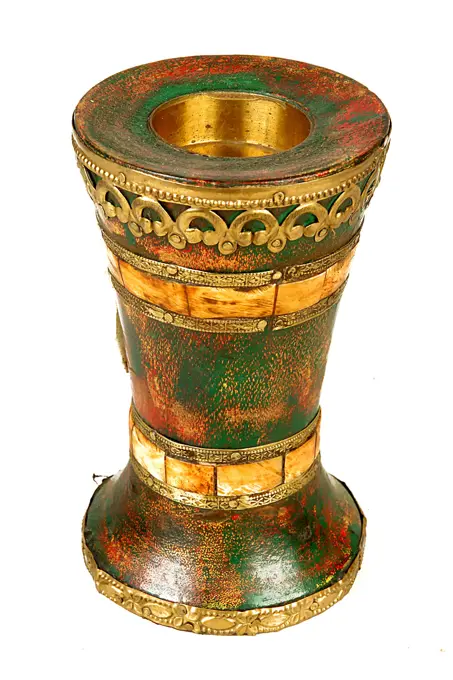
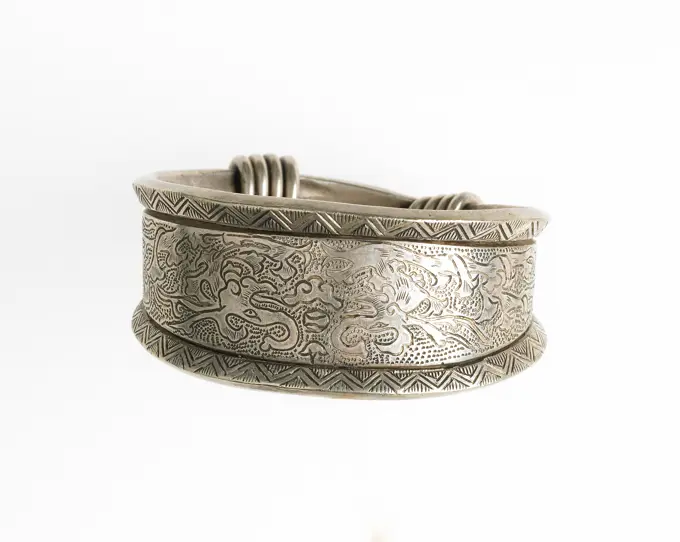
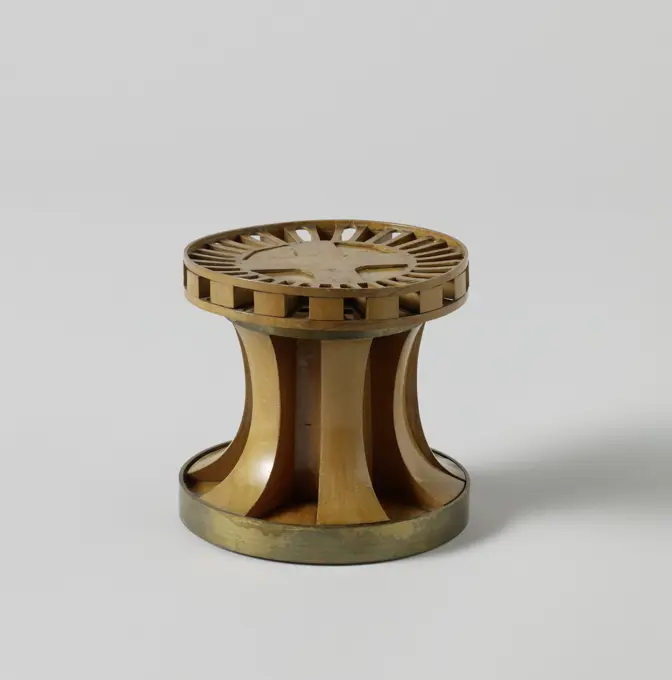
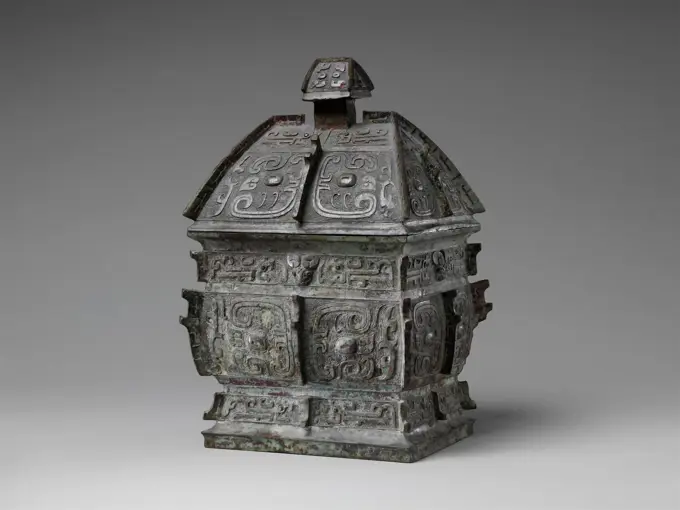
A range of detailed historical metal containers and candlesticks, showcasing ornate designs and craftsmanship typical of past centuries, reflecting rich artistic heritage.

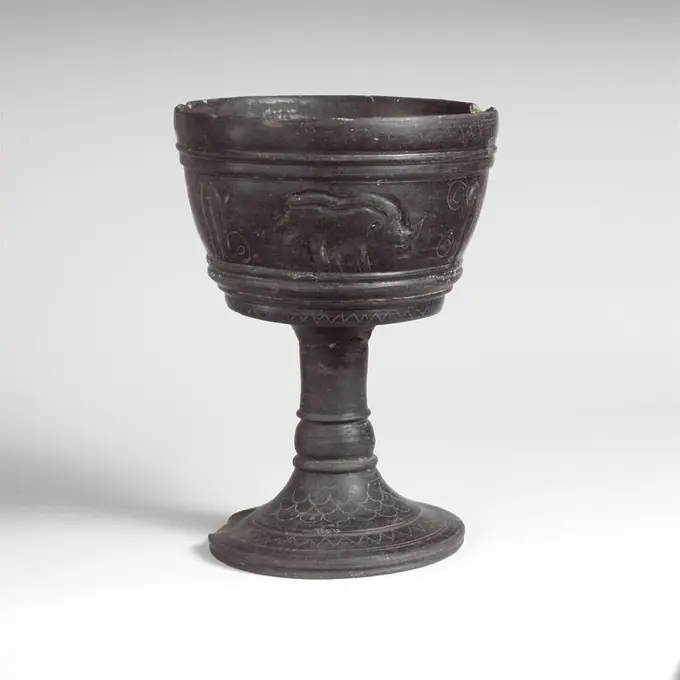
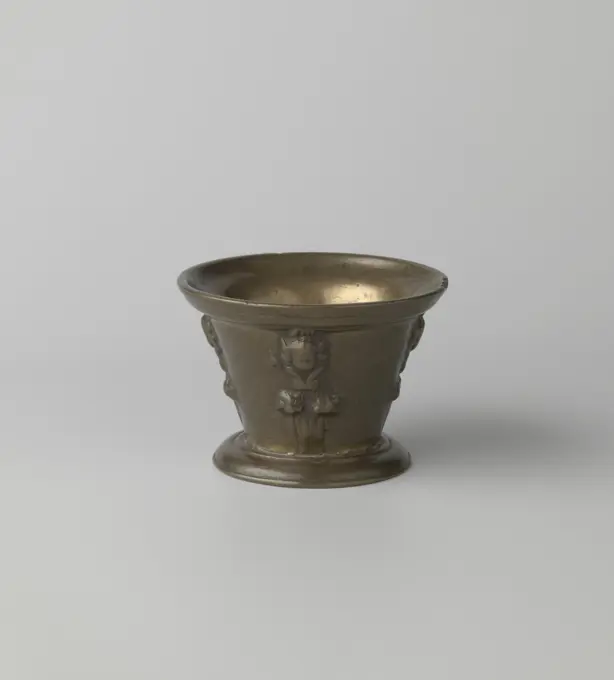
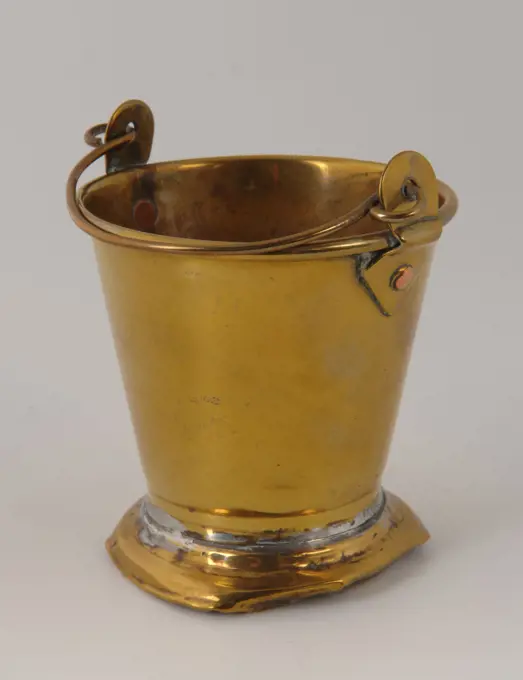
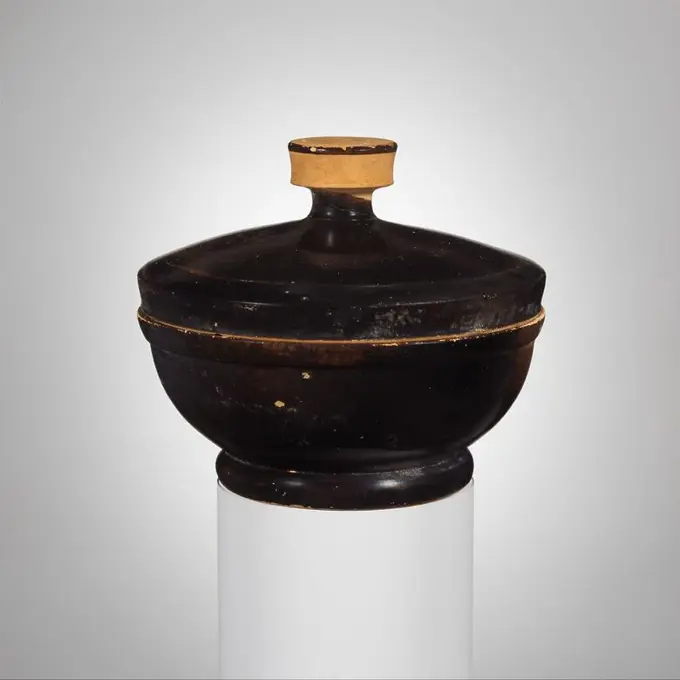
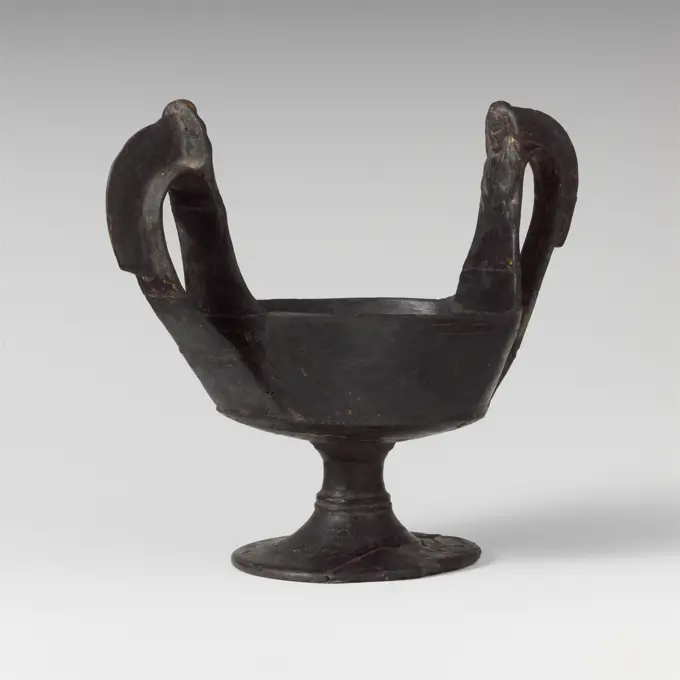
Cover cover, anonymous, c. 1650 - c. 1780 Cover of lead glaze pottery cover. The lid has a button and is decorated with rosettes pressed. Netherlands earthenware. lead glaze Cover of lead glaze pottery cover. The lid has a button and is decorated with rosettes pressed. Netherlands earthenware. lead glaze
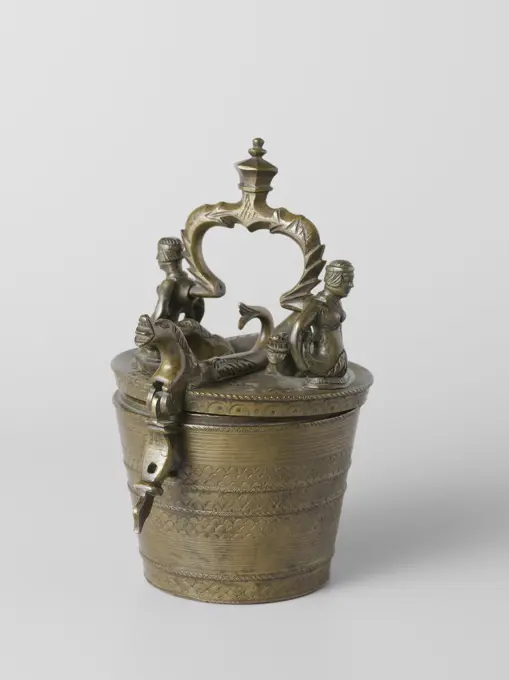
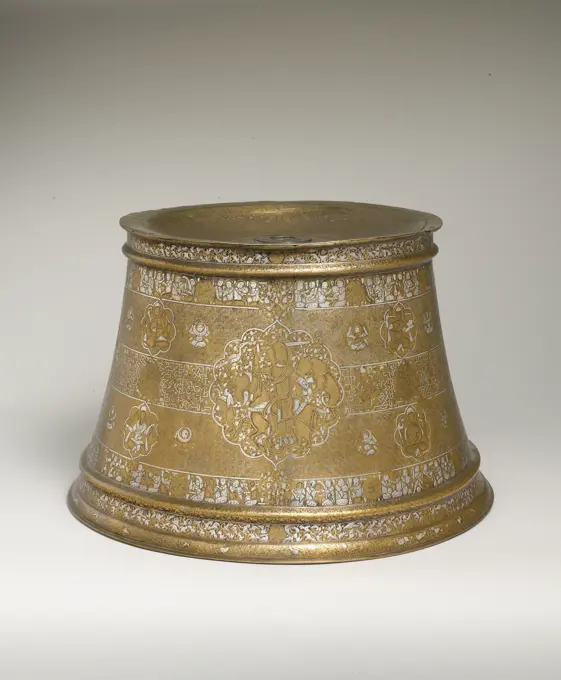
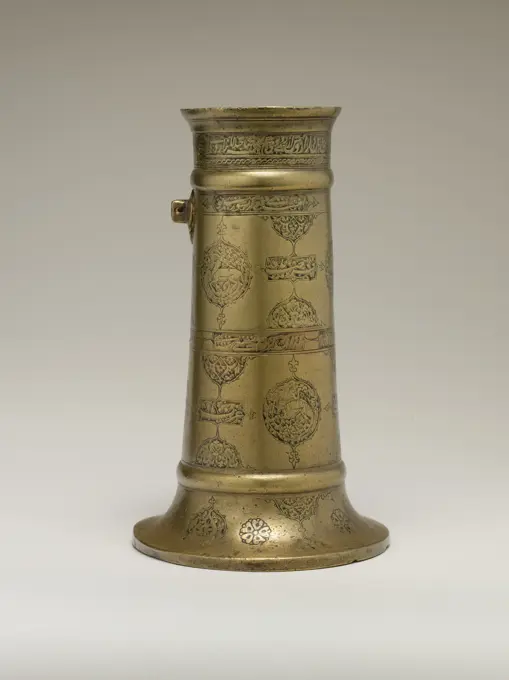
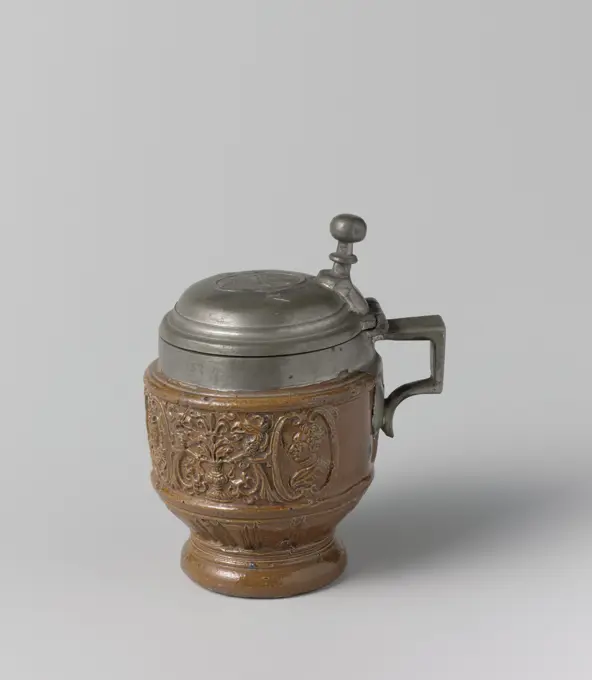
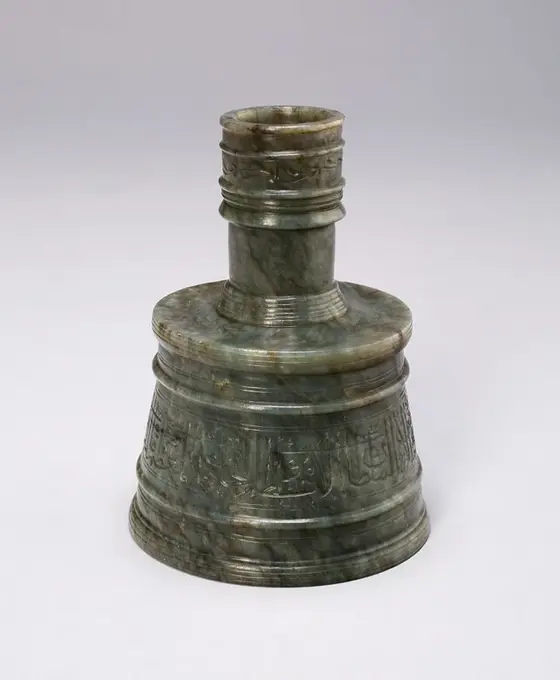
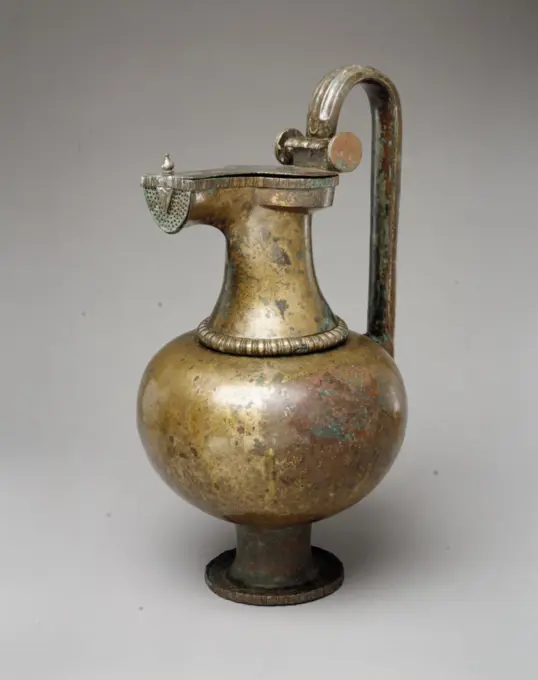
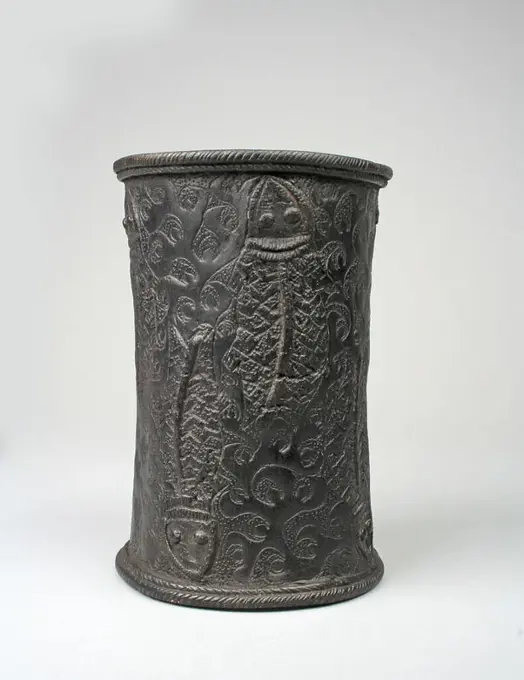
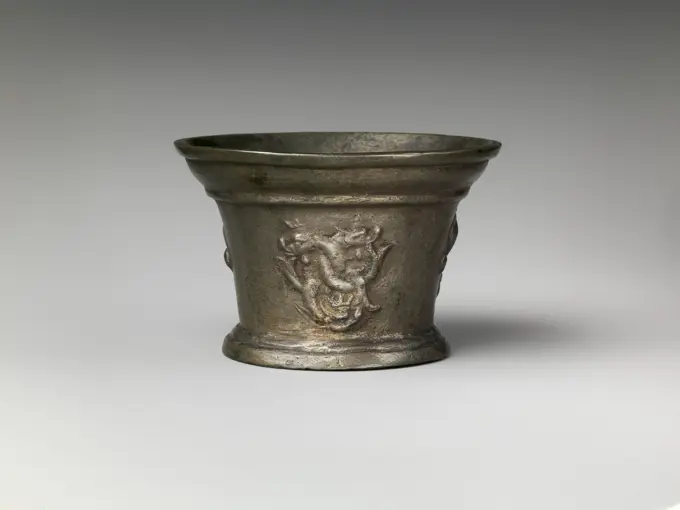
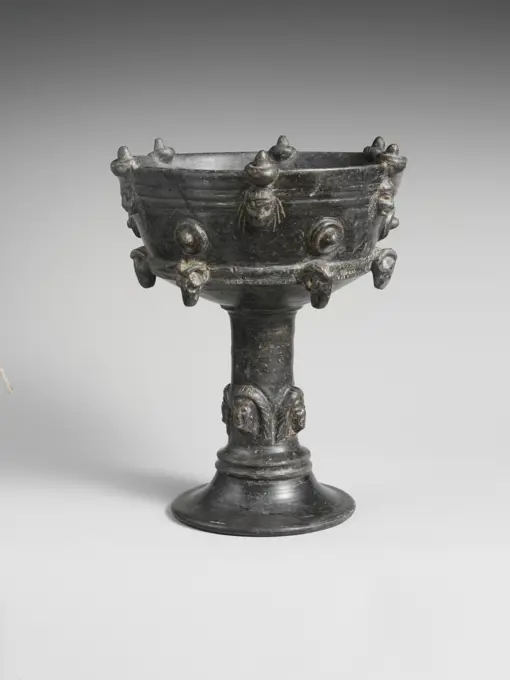
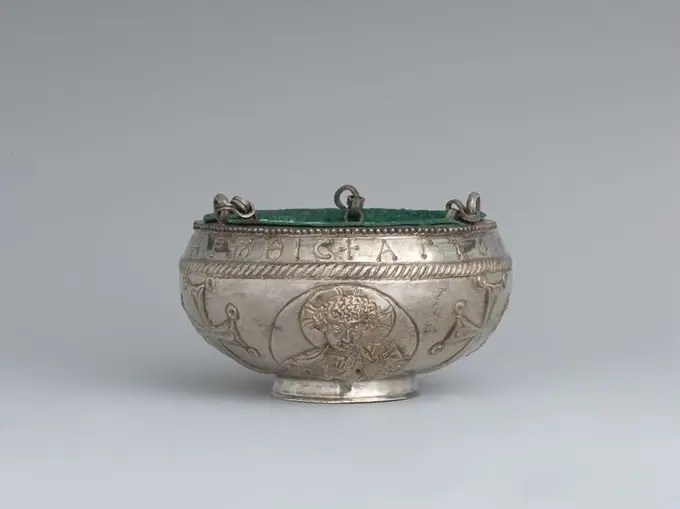
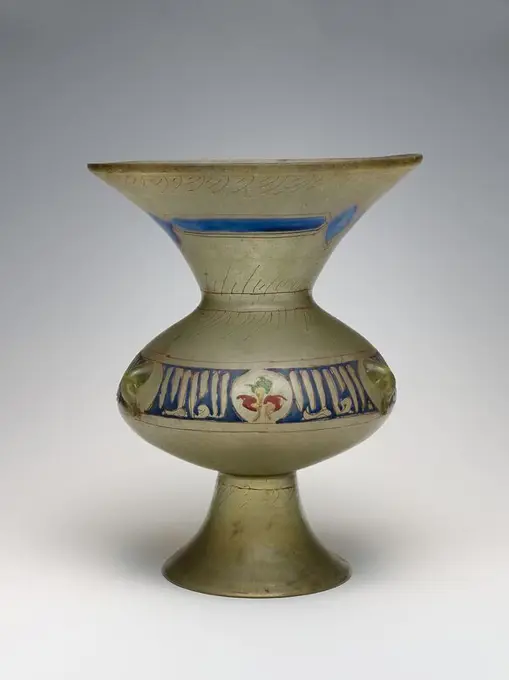
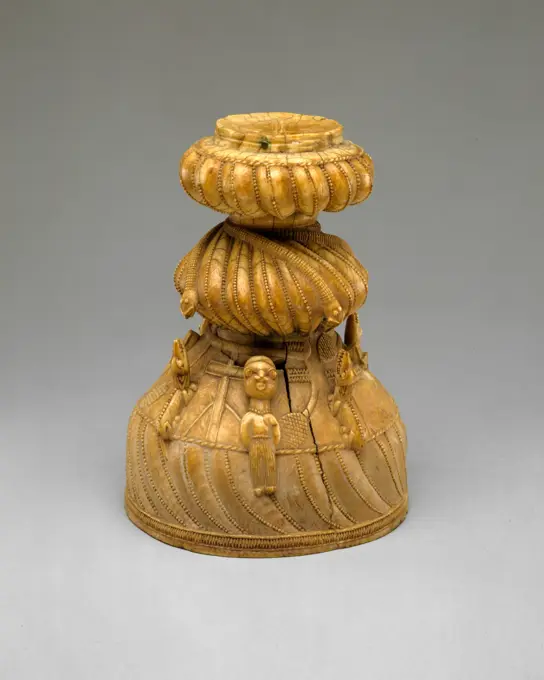
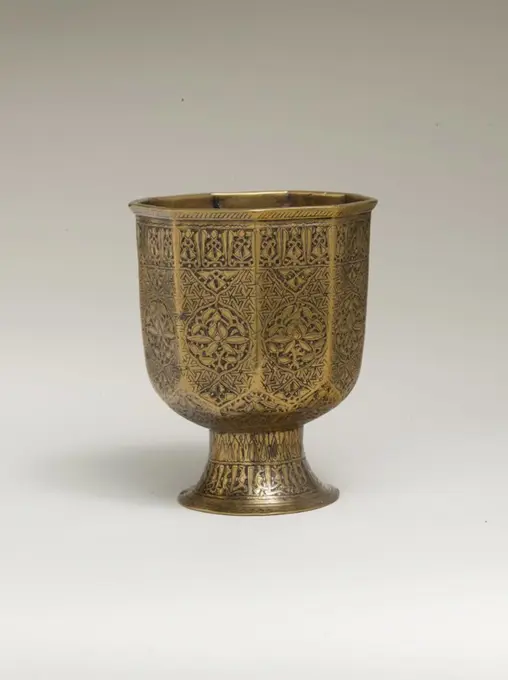
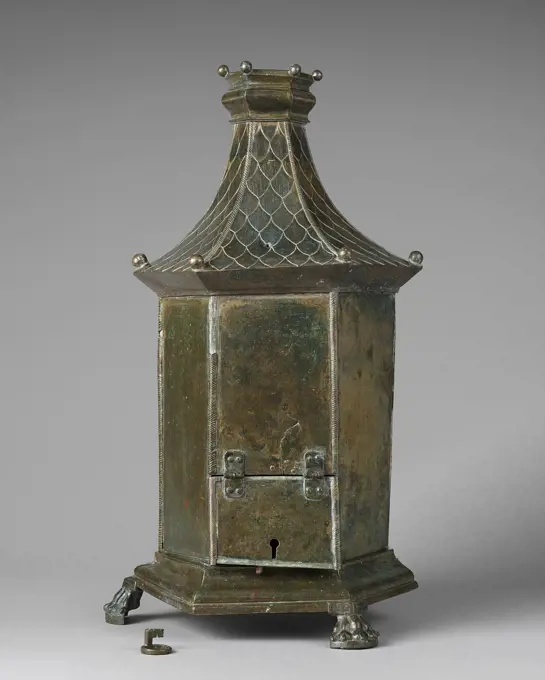
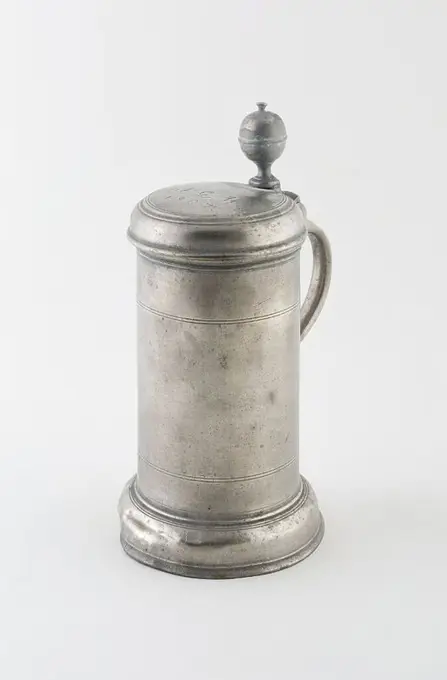
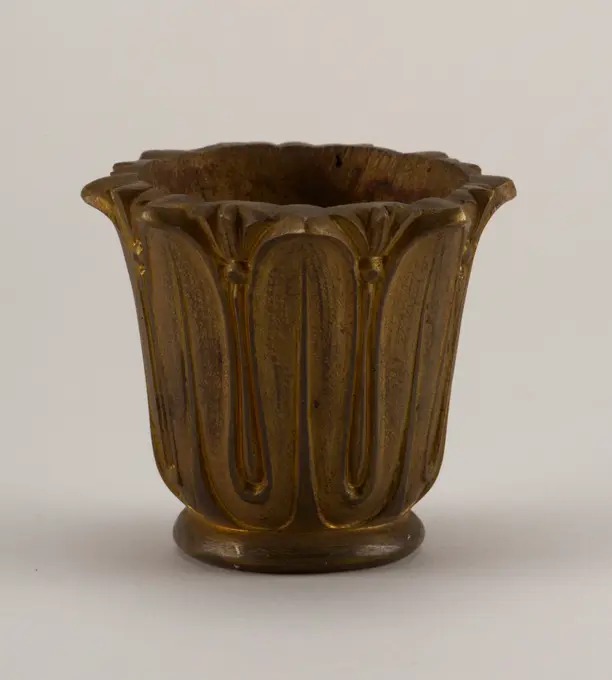
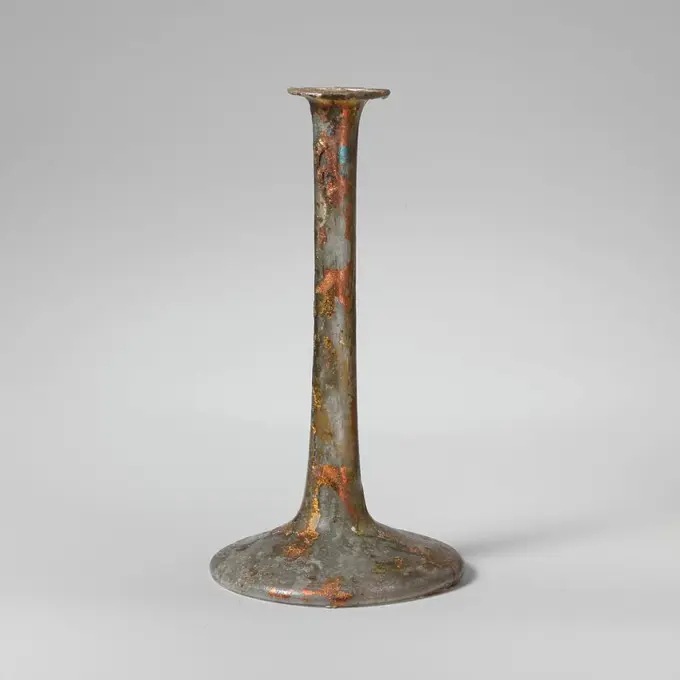
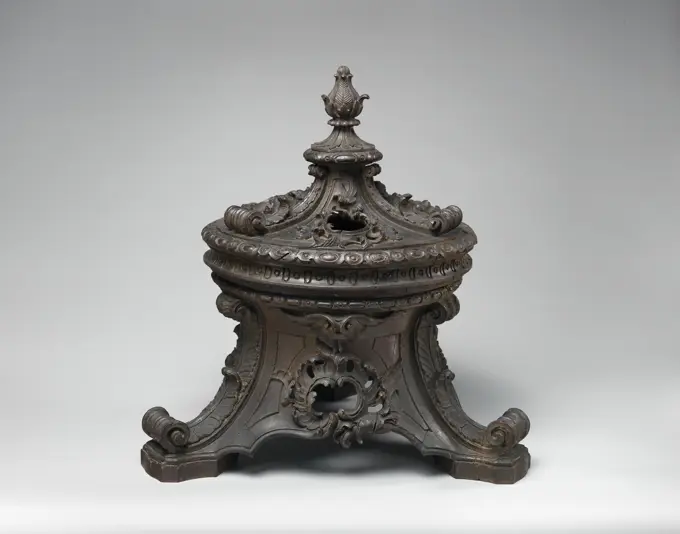
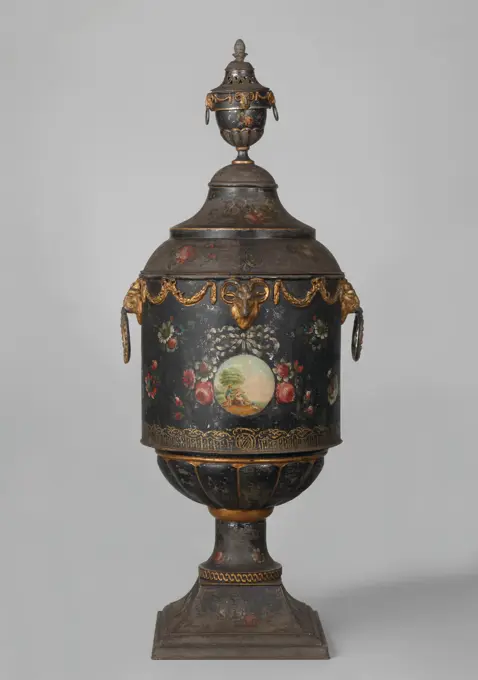
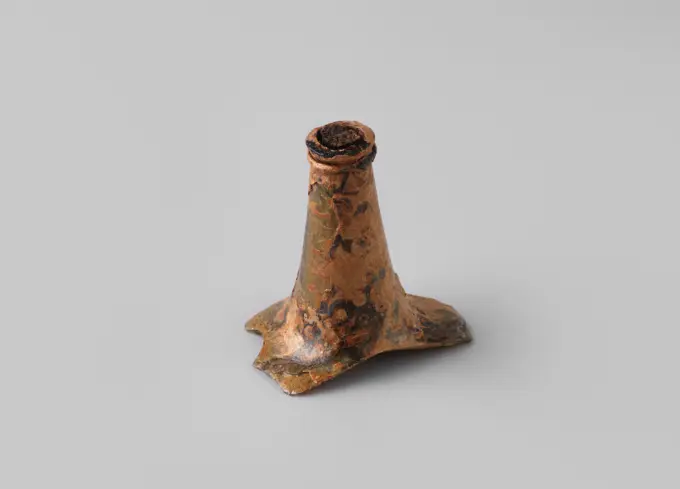
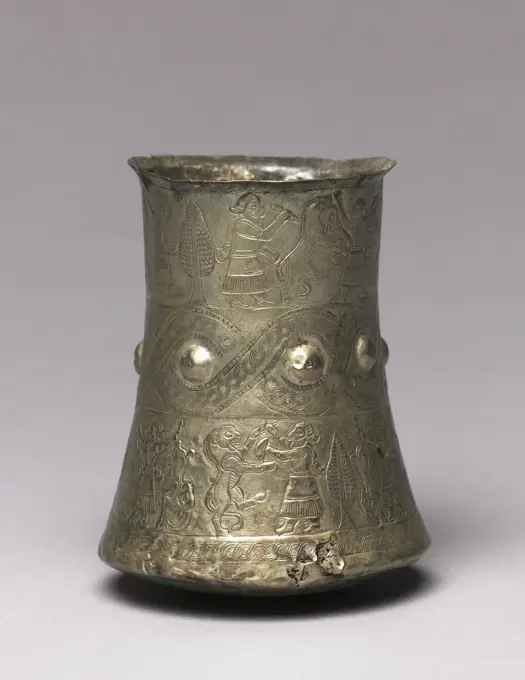
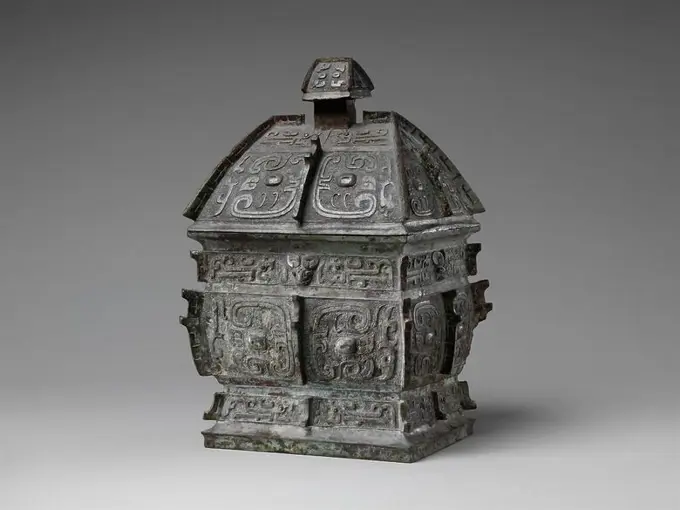
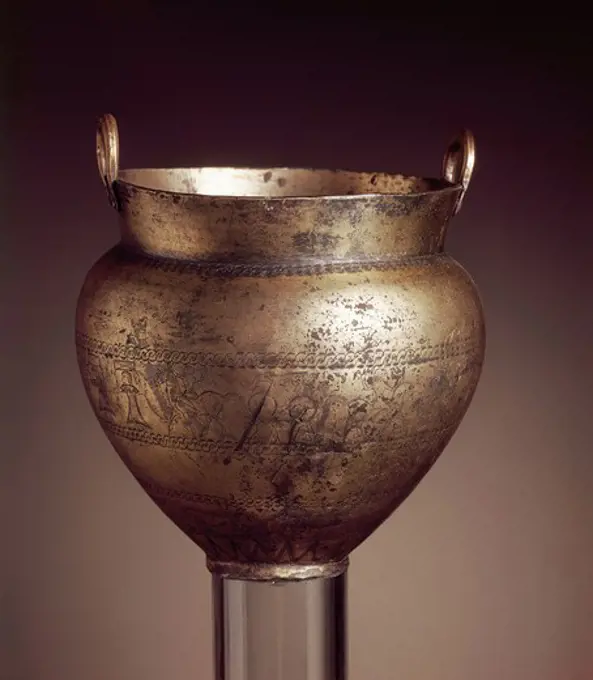
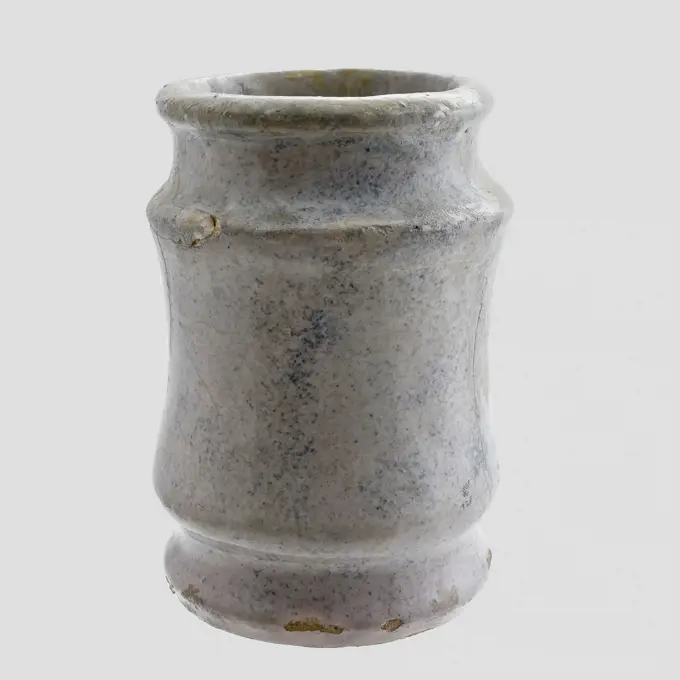
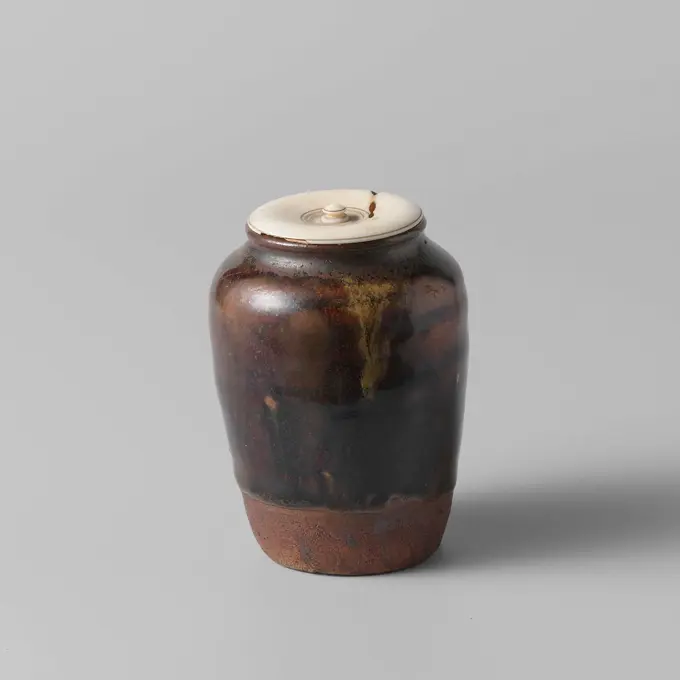
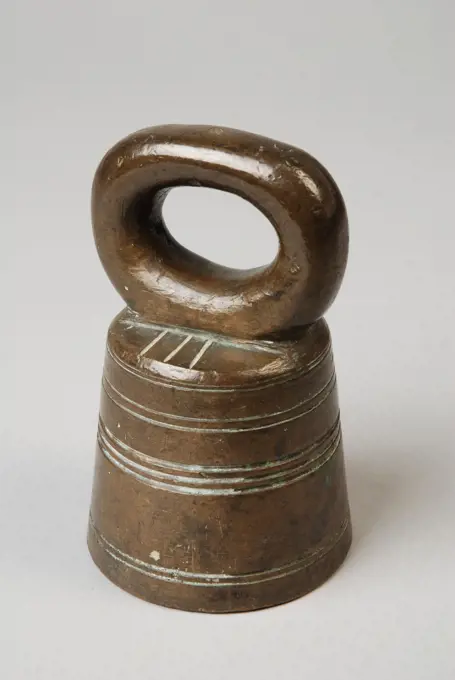
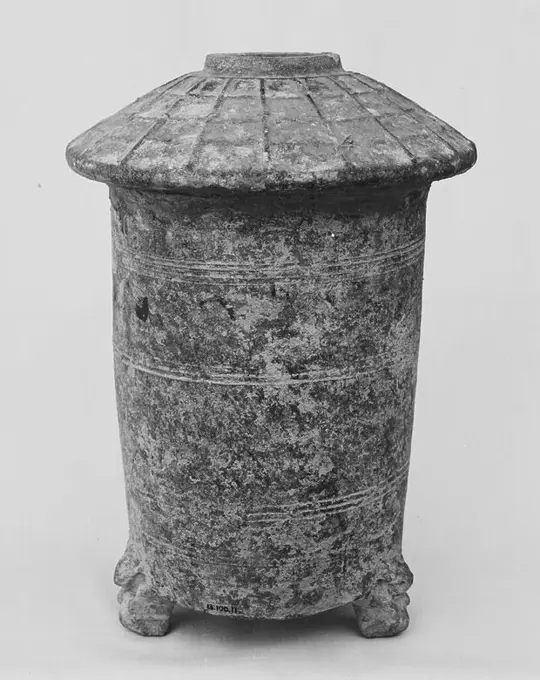
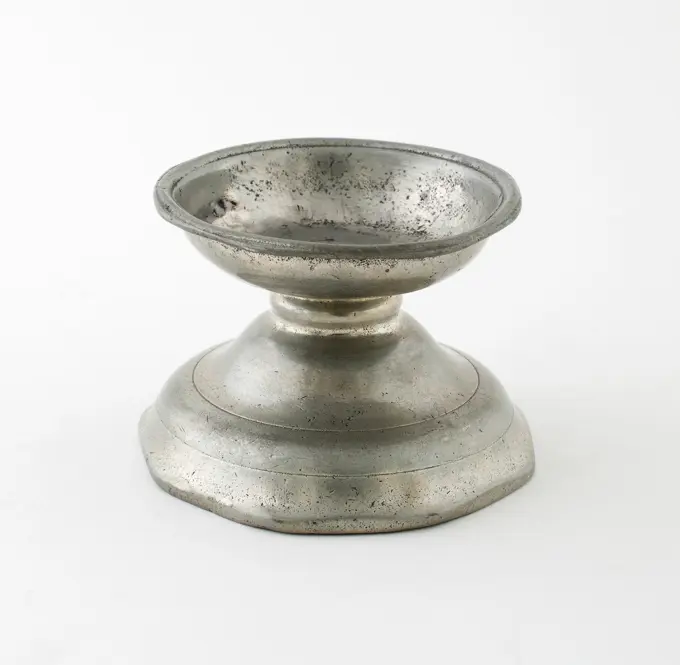
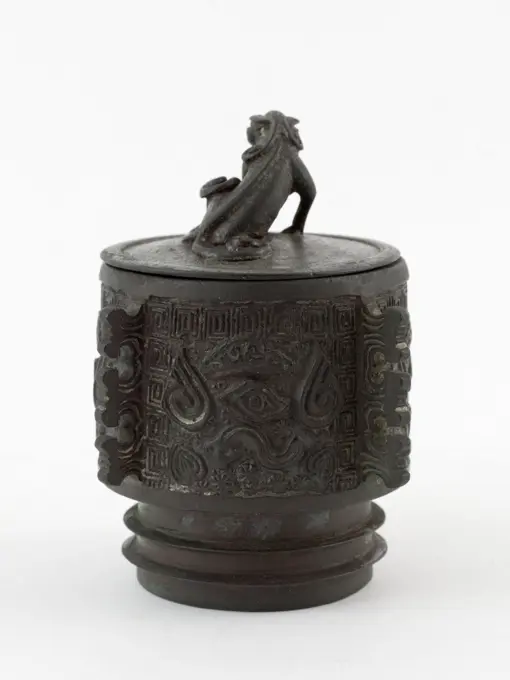
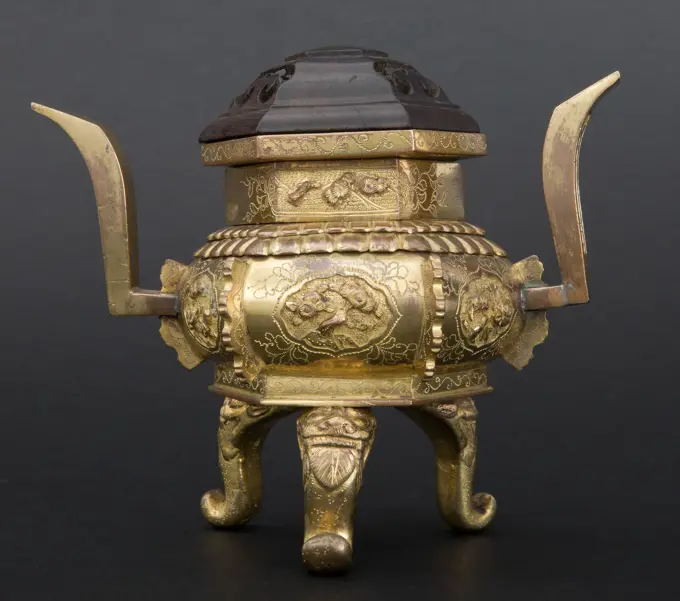
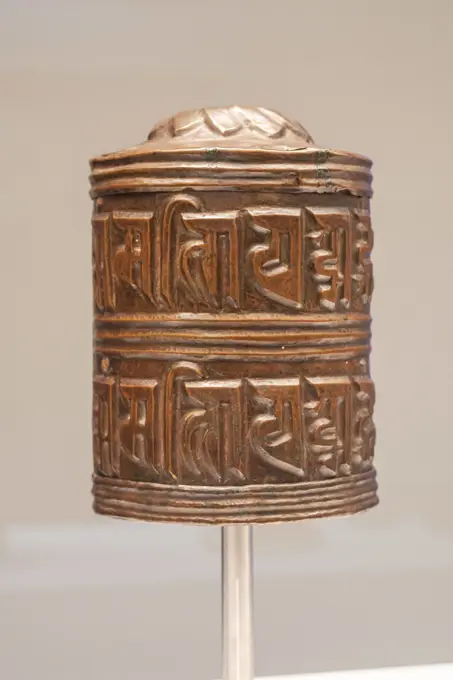
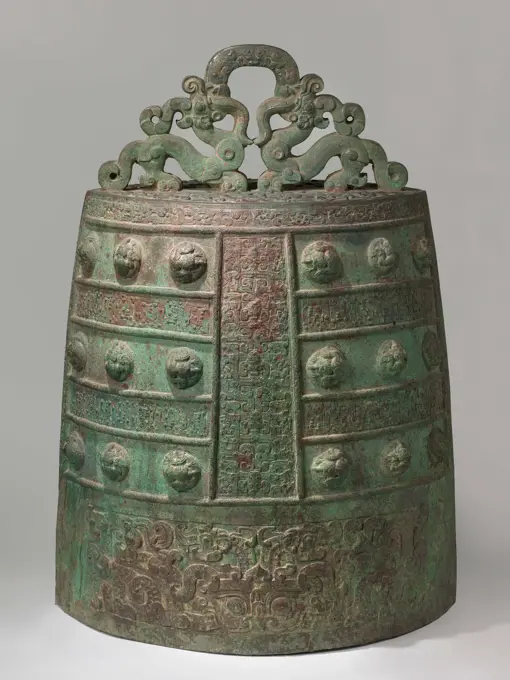
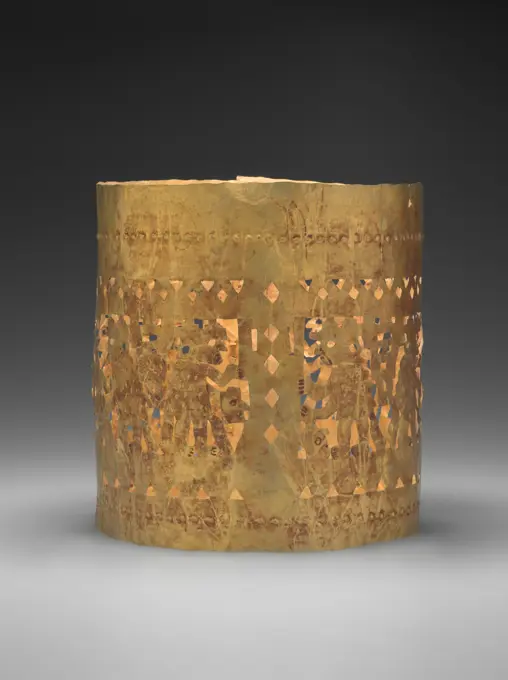
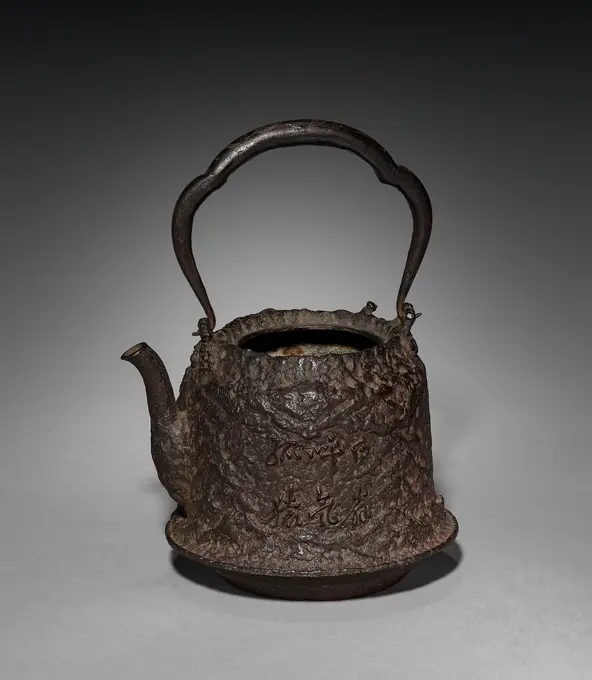
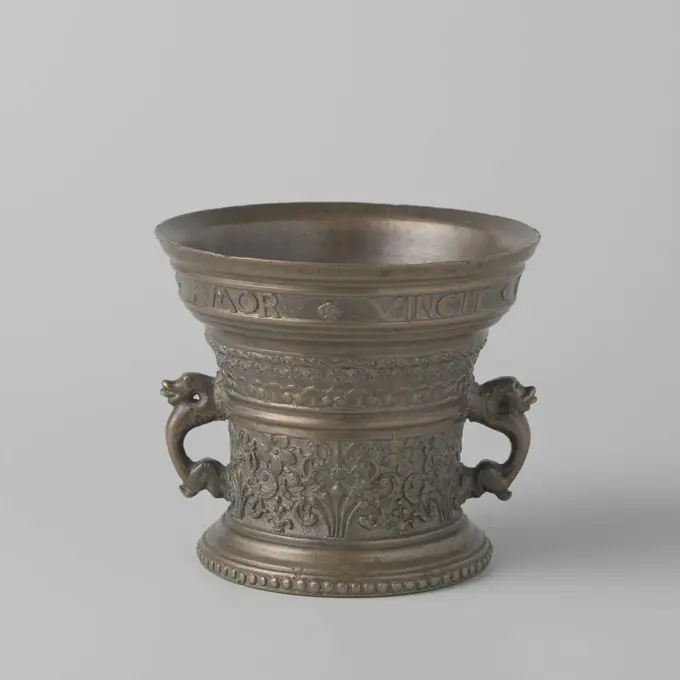
Purse with inscription: Amor Vincit Omnia Anno 1582. The molded round mortar widens upwards, has a high-wearing profiled border and a flared profiled foot. On the edge in Latin Majuskels The inscription Amor Omnia Anno 1582 with interpunctions, consisting of a stylized Wingerdeab (five times). The upper fries consists of a wound pearl and string edge, hanging stylized winger blades and stylized acanthus leaves. The lower fries consists of a rollerwork that results from four stalk-shaped turns with a baluster in the middle, a five-leaf rose and a stylized plant with three buttons. These motifs are repeated more than five times. The foot is decorated with a pearl edge. The ears have the form of dragons with covered head, hind legs and tail.Closing weight of sixteen Hollands Troois Pond, George Weinmann (Possible), Before 1614 The object consists of sixteen parts: ten weights (of which the two smallest and the closing is missing), the container and the lid (which form the house), a hinge, a closing bracket, two handle, the handle. The center point can be seen at the container, the lid and the weights. Baking and lid have narrow ribs, in which a cord motif is punched. The intervening surfaces have groaned rings, a punched of bows -put decoration and a punched ornament with, among other things, a star. The hinges and the handlees are sounded. At the end, the hinge is decorated with three cups at the end and runs out on the lid in two mounting parts in the form of two dragons, the ends of which run into a sharp angle to the hinge. The button of the handle fits in between. The closing bracket consists of a dragon with curled fish tail on the lid and further from a profiled piece, with which it can be secured on the wall of thCandlestick with Enthronement Scene second quarter 13th century This sophisticated candlestick illustrates various scenes celebrating the sovereigns power over both earth and cosmos: images of the planets appear alongside scenes of him slaying a lion and enjoying a royal feast. His authority becomes most evident in the enthronement scene. Here, a bearded figure bends to kiss the rulers right hand, alluding to the obligation of kissing the sovereigns hand or the floor before him. This courtly display of obeisance demonstrated the rulers supremacy and the loyalty of his subjects. Listen to experts illuminate this artwork's story Listen Play or pause #605. Candlestick with Enthronement Scene Supported by Bloomberg Philanthropies We're sorry, the transcript for this audio track is not available at this time. We are working to make it available as soon as possible.. Candlestick with Enthronement Scene. second quarter 13th century. Brass; engraved, incised, inlaid with silver. AttributedWood water lining around. The object is composed of the following parts: the bucket (poured and tightened), the handle (molded and screwed), the eye (cast). The round bucket (with center cat at the bottom in the bottom) has a hollow-profiled hollow foot and a hollow neck. In the vertical on the three-sided edge, the slightly stretched at the top of the round handle is attached in which two animal heads are extended and clenched at the top. The bucket is decorated with a holready rib in the middle and with ring profiles on foot and neck. The handle and the eye are replacements from later time.Wood water lining around. The object is composed of the following parts: the bucket (cast and turned), the handle and the eye (cast). The round bucket (with centergat in the flat bottom) consists of a holrond shaft, a globere upper and a holrond shaft with vertically cut edge. The bucket is decorated with ribs and grooved rings. In the vertical on the edge on the edge on the edge, the handle is attached, in which an output eye is clocked at the top. Handle and eye are replacements from later time.Grain mill (common name). Cernuschi Museum, Asia Museum of Asia in the city of Paris.Container withLidEngraved Lamp Stand with Cartouches and Medallions 16th century This distinctive tall, cylindrical shape is characteristic of a group of Safavid lamp stands which share a similar silhouette and ornamentation. Many are covered with lyrical and mystical verses by celebrated poets of the period, reflecting the important relationship between Persian poetry and the visual arts. Linked cartouches contain arabesques, animal motifs and calligraphic blessings, as well as lines in nastaliq which read:"To holy men thy face is light and seeing thy face is my light. Like men of heart I see my light only when near thee. Thou art the aim of the world; without thee it is nothing. I see all the world as a small thing of thee. ...candle; if you don't burn. I am a beggar; one day near thee...". Engraved Lamp Stand with Cartouches and Medallions. 16th century. Brass; cast, engraved, and inlaid with black compound. Attributed to Iran. MetalCover cover, anonymous, c. 1650 - c. 1780 Cover of lead glaze pottery cover. The lid has a button and is decorated with rosettes pressed. Netherlands earthenware. lead glaze Cover of lead glaze pottery cover. The lid has a button and is decorated with rosettes pressed. Netherlands earthenware. lead glazeJug with medallions and foliate scrolls, anonymous, c. 1560 - c. 1590 Jug of stoneware on high foot with a cylindrical body and short, wide neck. Covered with a brown Engobe. On the belly in relief a printed and imposed decoration of three portraits, one and face and two and profil, with a vase with leaf vines and bird heads in between. The lower part of the abdomen runs slanted and is divided into courses. The edge is in a pewter frame of later date with lid and ear. On the lid a medallion with a vase and the year '1714'. Raeren. Rae Stoneware. Glaze. Engobe. frame: tin (metal) vitrification Jug of stoneware on high foot with a cylindrical body and short, wide neck. Covered with a brown Engobe. On the belly in relief a printed and imposed decoration of three portraits, one and face and two and profil, with a vase with leaf vines and bird heads in between. The lower part of the abdomen runs slanted and is divided into courses. The edge is in a pewter frame of later date with lid and eaTerracotta footed cup. Culture: Etruscan. Dimensions: H. 7 9/16 in. (19.2 cm); diameter of mouth 5 5/16 in. (13.5 cm). Date: ca. 550 B.C..On high foot with frieze of boars in low relief. Museum: Metropolitan Museum of Art, New York, USA.Pijzel decorated with angel heads, anonymous, c. 1600 - c. 1625 The cast round auger extends strongly upwards, has a round -protruding edge and a flared round -profiled foot. The wall is decorated with a repeated angel's head above two hanging gathering gathering. France bronze (metal) casting The cast round auger extends strongly upwards, has a round -protruding edge and a flared round -profiled foot. The wall is decorated with a repeated angel's head above two hanging gathering gathering. France bronze (metal) castingFooted Cup with Lid 5th-6th century Korea. Footed Cup with Lid 39504metal worker: Gresnich, Yellow copper miniature pass through bucket, bucket crockery holder kitchenware miniature toy relaxant model copper brass, hammered soldered Wide foot conical wall on edge two lips as hinge for handle 1868 Sibilla van Embden wash play kitchenTerracotta covered bowl. Culture: Greek, Attic. Dimensions: H. with cover 3 7/8 in. (9.8 cm); H. without cover 2 1/4 in. (5.7 cm). Date: ca. 450-400 B.C..This vase is related to the covered bowl with one handle (23.43a, b) displayed nearby. They represent basically the same shape adapted to different functions by the presence or absence of a handle. Museum: Metropolitan Museum of Art, New York, USA.Candlestick (Sham'dan) with Titular Inscription. Iran or Central Asia. Date: 1400-1500. Dimensions: 9.4 x 7.0 cm (3 3/4 x 2 5/8 in.). Jade with incised decoration. Origin: Iran. Museum: The Chicago Art Institute, Chicago, USA. Author: Islamic.Cup Elias Adam German early 18th century View more. Cup. German, Augsburg. early 18th century. Silver gilt. Metalwork-SilverCocoon-Shaped Vessel 2nd-early 1st century B.C. China Vessels in the whimsical cocoon shape were most likely used for storing and serving a liquid such as wine.. Cocoon-Shaped Vessel 49901Bronze jug ca. 6th-early 5th century B.C. East Greek This exceptionally well-preserved, lidded jug with a strainer at the spout is of a rare type. It relates to the Archaic bronze oinochoe (wine jugs) of the so-called Rhodian class that were among the first Greek bronze vessels to be mass produced and exported around the Mediterranean region. It also has affinities with Anatolian metal vessels of the Phrygian and Lydian cultures.. Bronze jug 257506Wine Beaker (Gu) 13th-11th century B.C. China. Wine Beaker (Gu) 61322Bracelet: Mudfish. Culture: Edo peoples. Dimensions: Length 5-3/8 in.. Date: 16th-19th century. Museum: Metropolitan Museum of Art, New York, USA.Mortar 16th century French This modest object is an example of the utilitarian metalwork produced and used in massive numbers throughout the sixteenth century. An everyday version of the fantastic and virtuoso display mortars such as 2016.492 and 2017.11), the working mortar is made from bell metal: hard-wearing but considerably cheaper than bronze because of its higher tin content. All the same, it was decoratedcast from a mold lightly embellished with a simple, repeating crowned-dolphin motif.[Elizabeth Cleland, 2017. Mortar. French. 16th century. Bell metal. Metalwork-BronzeTerracotta chalice ca. 575-550 B.C. Etruscan High foot with human and rams' heads and conventional ornaments in relief.. Terracotta chalice 249106Covered Jar 20th century China. Covered Jar 50975Miniature urn (one of a pair) (part of a set) 1675-1700 Southern German Part of set of silver miniature furniture, 31.37.1-.22, and a box, 31.37.23.. Miniature urn (one of a pair) (part of a set) 196833The Attarouthi Treasure - Censer. Culture: Byzantine. Dimensions: Overall (without chain): 3 1/4 x 5 3/16 in. (8.2 x 13.2 cm)Overall (hanging with chain): 15 1/16 x 5 3/16 in. (38.2 x 13.2 cm)Diam. of foot: 2 5/16 in. (5.9 cm). Date: 500-650.With a youthful Christ with a cruciform halo, two archangels, and crossesInscribed in Greek: Of Saint John of the village of AttarouthaIn early images of Christ he is always shown as a youth with short, curly hair. His halo is cruciform with three arms to represent the cross upon which he died. The flanking medallions containing archangels, the guardians of heaven, suggest that here Christ is shown in heaven. Museum: Metropolitan Museum of Art, New York, USA.Mosque Lamp. Dimensions: H. 10 11/16 in. (27.1 cm)Max. Diam. 8 7/16 in. (21.4 cm). Date: second half 14th century. Museum: Metropolitan Museum of Art, New York, USA.Measure ca. 1720-60 A. Loir. Measure 208082Saltcellar Base 15th-16th century Sapi-Portuguese. Saltcellar Base. Sapi-Portuguese. 15th-16th century. Ivory. Sierra Leone. Bone/Ivory-ContainersVase with Pedestal BaseBeaker Made 1600 BCE-1050 BCE China. This elegantly dignified vessel displays the taut, slender profile and crisply cast surface decoration that distinguishes the finest bronzes made for late Shang royalty. Long tapered blades above a band of serpents encircle the wide, trumpet-mouthed neck. Monster masks (taotie) with angular horns surround the middle section. All motifs are organized in clearly defined quadrants, which are divided by striated flanges and reserved against a background of finely squared spirals.. Bronze .Footed Cup. Dimensions: H. 6 5/8 in. (16.8 cm)Diam. 5 1/2 in. (14 cm). Date: second half 14th century.Tall footed cups appear to have been popular during the Mongol period and are often illustrated in scrolls and miniature paintings. The Chinese gold cup, which was excavated in Inner Mongolia, and the Iranian brass cup are comparable in proportions and decoration, with the lotus flower enclosed in medallions being a common motif. The nine-sided vessel has been associated with a type of lidded bowl called a ghulladan that was used as a money vessel for pious purposes in Islamic Ilkhanid Iran. Museum: Metropolitan Museum of Art, New York, USA.Zun wine vessel, 10th century BCE, 9 1/16 × 8 1/4 in., 6.2 lb. (23.02 × 20.96 cm, 2.8 kg)5 1/8 × 4 13/16 in. (13.02 × 12.22 cm) (object part, foot), Bronze, China, 10th century BCEOffering Box and Key; Roman Empire; about A.D. 130-180; Bronze; 51 cm (20 1,16 in.)Urn withLidTankard. George Gotthelff Noster; German, 1739-1811; Oschatz, Saxony, Germany. Date: 1807. Dimensions: 24.8 x 12.1 x 15.3 cm (9 3/4 x 4 3/4 x 6 1/8 in.). Pewter. Origin: Saxony. Museum: The Chicago Art Institute, Chicago, USA.CapitalVase (usual name). Cernuschi Museum, Asia Museum of Asia in the city of Paris.Splendid and characteristic Hellenistic polychrome terracotta production from Centuripe (Enna) . 280220 A.D.m Museo Archeologico Regionale Antonino Salinas, Collection of Etruscan, Roman, Egyptian and Greek Works, Palermo, Palermo, Sicily, Italy, EuropeTea Urn And CoverTerracotta kantharos (drinking cup with high handles) 6th century B.C. Etruscan On each handle, a figure in reliefThis form of kantharos is related in shape to the kyathos. The kantharos is known in Attic pottery by 600 B.C., and it came to be specifically associated with the wine-god Dionysos.. Terracotta kantharos (drinking cup with high handles) 246226Chariot axle cap and linchpin 5th century B.C. China. Chariot axle cap and linchpin 61255Glass perfume bottle. Culture: Roman. Dimensions: 4 3/4in. (12.1cm)Other: 2 1/2 in. (6.3 cm)Diam. of rim: 1 in. (2.6 cm). Date: 2nd-3rd century A.D..Candlestick unguentarium.Colorless with greenish tinge.Rim folded out, over, and in; cylindrical, slightly concave neck; sides of body expanding downwards; pushed-in bottom with small, central kick, with part of pontil scar.Intact; bubbles; pitting and brilliant iridescence. Museum: Metropolitan Museum of Art, New York, USA.Oil Lamp (USA); steelCovered Bowl with Painted Decoration with Lid, 1400s. Siam, Sawankhalok ware, 15th century. Stoneware; overall: 10.8 cm (4 1/4 in.).Ewer or Vase 19th century China. Ewer or Vase. China. 19th century. Bronze. Qing dynasty (1644-1911). MetalworkPrzeszłość Przyszłości unknownJug. Low, cylindrical jug of stoneware with a tin lid and a tin angular ear. The jug is on a foot. The wall of the belly is in relief decorated with arabesque between which three medallions within which a portrait. The lid is decorated in a relief with a vase in a medallion and the year 1714.Brazier cover and base 18th century French. Brazier cover and base. French. 18th century. Carved wood (walnut). Woodwork-FurnitureLamp with Wickholder, 300-600. Eastern Mediterranean, Roman, 4th - 6th Century. Glass; overall: 9 x 11 x 9 cm (3 9/16 x 4 5/16 x 3 9/16 in.).Pharmaceutical can with a lidPurse with inscription: Devs Spes MEA 1565. The molded round auger widens upwards, has a profiled foot and has two rectangular ears. At the top between two ribs The inscription in Latin Majuskels Devs Spes Mea 1565 with interpunctions consisting of a rosette with three large and three small leaves (four times). On the wall, a frieze is applied to the upper of the two profiled ribs consisting of RAMSKOPS with GUIRANDES (seven times).Lid of lacquered tea -mer with flowers decorated, anonymous, c. 1775 - c. 1850 The can of lid just falls over the edge of the bucket and becomes narrower, first full -round, then hollow round. A vase shape is placed on the lid as a button, which looks like a smaller version of the tea -mer. Netherlands tin plate. paint (coating) The can of lid just falls over the edge of the bucket and becomes narrower, first full -round, then hollow round. A vase shape is placed on the lid as a button, which looks like a smaller version of the tea -mer. Netherlands tin plate. paint (coating)Fragment of a tankard (schnelle) with a coat of arms, anonymous, c. 1575 - c. 1599 Fragment of a jug (schnelle) of stoneware with cylindrical, tapered body. Top and ear are missing. Profiles above the foot. On the body in relief three times a printed and imposed, elongated compartment with a weapon surrounded by leaf vines. Above the weapon still half visibly a medallion with a Roman in a landscape surrounded by a flower lriek. Siegburg. Siegburg stoneware. glaze vitrification Fragment of a jug (schnelle) of stoneware with cylindrical, tapered body. Top and ear are missing. Profiles above the foot. On the body in relief three times a printed and imposed, elongated compartment with a weapon surrounded by leaf vines. Above the weapon still half visibly a medallion with a Roman in a landscape surrounded by a flower lriek. Siegburg. Siegburg stoneware. glaze vitrificationWood nest on wooden background and texture with copy space.Hals with cork of a wine bottle from the wreck of the East Indians Hollandia, Anonymous, 1700 - in or before 1743  Wine bottle, continental production, neck, onion-shaped bottle or bottle with vertical side; eroded, f-string rim, with cork. Netherlands cork (bark)   SecondPendant, 21 3/8 x 6 x 2 in. (54.29 x 15.24 x 5.08 cm) (with chain), Silver, ChinaHero and Animal Combat Beaker, 900-700 BC. Iran, Luristan, 9th-7th Century BC. Silver, repoussé, engraved; diameter: 7.7 cm (3 1/16 in.); overall: 10.1 cm (4 in.).Rectangular Wine Container (Fangyi). Culture: China. Dimensions: H. 11 in. (27.9 cm); W. 6 in. (15.2 cm); D. 7 in. (17.8 cm). Date: mid-10th century B.C..During the early Western Zhou dynasty, coherent animal mask images morphed into increasingly abstract patterns defined by curving, ribbon-like lines. A composite character is cast both on the interior of the vessel and on the inside of the lid: "Fu" (name, in the center) and "mian" (designation of rank, on either side). Museum: Metropolitan Museum of Art, New York, USA.Etruscan civilization, Situla from Chiusi, Siena ProvinceBasket 19th century Japan. Basket. Japan. 19th century. Bamboo and rattan. Edo (1615-1868) or Meiji period (1868-1912). BasketryWhite ointment jar, cylindrical with three constrictions, ointment jar pot holder soil find ceramic earthenware glaze tin glaze, hand turned baked glazed baked Cylindrical ointment jar with three necking one shallow constriction across the side wall High model. Fully covered with tin glaze. Yellow shard. Faience archeology Valckensteyn Poortugaal Albrandswaard health care indigenous pottery ointment packaging medical care pharmacy quack hygiene Ground discovery: castle Valckensteyn in Poortugaal now Albrandswaard.Karamono-Style Basket 19th century Japan. Karamono-Style Basket. Japan. 19th century. Hemp palm. Edo (1615-1868) or Meiji (1868-1912) period. BasketryPrehistory, China, Neolithic. Longshan Culture. Black eggshell pottery goblet (bei).. Fabric tea bus or chair of stoneware with an ivory lid, partly covered with a gray-brown glaze. The bottom of the bus is unglazed. Old label on the inside with 'satsuma'. Satsuma.Bronze stool weight with calibrated letter S and weight mark III, handle weight weight bronze, ft, Weight slightly conical with hollowed-out lines all around. Inscription in upper gauge letter S Roman numeral III (upper surface) measure roadsGranary Tower. Culture: China. Dimensions: H. 12 1/8 in. (30.8 cm); Diam. 8 1/4 in. (21 cm). Date: 1st-early 3rd century.Pottery models of houses and farm structures were commonly included in Eastern Han burials to provide for the afterlife. Museum: Metropolitan Museum of Art, New York, USA.Peony Basket 1795-1805 Japan. Bamboo . Wada RinshiFooted Salt 1695-1705 Europe. Pewter .POT. Bronze. Chine. Par musée musée malée. 70625-59 Chinese art, bronze, lid, close, decorative motif, pot, animalCadzielniczka on three legs, with a hexagon with a lid unknownGlasflasche.. Prints. 1912. The Miriam and Ira D. Wallach Division of Art, Prints and Photographs: Art & Architecture CollectionHookah Base. India, Mughal Empire, Uttar Pradesh, Agra (), circa 1800. Tools and Equipment; hookahs. Partially gilt white marbleTemple Bell. Culture: Indonesia (Java). Dimensions: H. 13 3/4 in. (34.9 cm). Date: ca. 11th-12th century. Museum: Metropolitan Museum of Art, New York, USA.Gebetsrad Prayer wheel, Nepal, 20th century, embossed copper cylinder and Lantsa script, MuEC, Barcelona, Catalonia, Spain LicenseRF Copyright: xZoonar.com/Tolox 23171180Miniature tankard 18th and 19th century possibly Norwegian. Miniature tankard. possibly Norwegian. 18th and 19th century. Silver, gilt. Metalwork-Silver-MiniatureWine Vessel (You). Culture: China. Dimensions: H. 6 3/4 in. (17.1 cm); W. 7 in. (17.8 cm). Date: 10th-9th century B.C.. Museum: Metropolitan Museum of Art, New York, USA.Water Pipe Part 18th-19th century. Water Pipe Part. 18th-19th century. Brass. Attributed to Iran or Central Asia. MetalLazio Viterbo Viterbo Museo Civico61. Hutzel, Max 1960-1990 Views of paintings (Middle Ages through 18th c.), frescoes, a tabernacle, coffin, sculpture reliefs, portal fragments, busts, sculpture, tapestry found in the Pinacoteca, Second floor gallery and Second floor cloister sequences. Antiquities: Many views of Etruscan and Roman fragments, sculpture, sarcophagi, pottery, masks, jewelry and other objects found in the Storeroom sequence (inventory numbers on back of prints), and the Cloister, Second floor Cloister, Valle Giulia, Sala Romana and Sala Etrusca sequences. General Notes: There are eight separate numerical sequences for this location. The cloister as an architectural structure, rather than museum site, is documented in the record and file for S. Maria della Verita, Cloister, all views of which are stored in Medieval core collection. Five views from the Museo Civico Second floor cloister sequence are stored in Medieval. German-born photographer and scholar Max Hutzel (1911-Cylinder Seal of Mycerinus, 2573-2124 BC. Egypt, Dynasty 4, reign of Mycerinus. Serpentinite; diameter: 1.2 cm (1/2 in.); overall: 2.1 cm (13/16 in.).Ewer. Iran or Afghanistan, 10th-11th century. Metal. Bronze, cast and engravedIncense Burner with Chrysanthemum and Knobbed Scrolls. China. Date: 1000-1099. Dimensions: H. 33.3 cm (13 1/4 in.) ; diam. 26.0 cm (10 1/4 in.). Cizhou ware; stoneware, slip-coated with incised decoration on ground of impressed rings (fish roe). Origin: China. Museum: The Chicago Art Institute, Chicago, USA.Brass design multicolour fitting on antique wooden candle stand, Jodhpur, Rajasthan, India Copyright: xSafatxAli/DinodiaxPhotoxGlass amphora with two handles 3rd-4th century A.D. Roman, Syrian While commonly available in the Roman Imperial period, glass served both quotidian uses and luxury wares. It was valued for its physical qualities and the technical sophistication of the glassmakers.. Glass amphora with two handles 330038Bracelet, 1 1/2 x 3 1/4 x 3 7/16 in. (3.81 x 8.26 x 8.73 cm), Silver, ChinaModel of a Capstan, anonymous, c. 1842 demonstration model Construction model of a capstan with an iron head. The drum has six clamps and two extra clamps in two of the cracks between the regular clamps. The head has sixteen holes for wind trees; He has the shape of a spoke wheel with a cross in the middle. The octagonal top of the drum has a cross -shaped incision, in which the cross of the head rests. Netherlands wood (plant material). brass (alloy)Fragment of a Processional Standard ('Alam) late 16th century Although it has lost its surrounding edge and crest of splayed finials, the heart of this monumental alam still remains. Pious inscriptions in thuluth relief and mirrored arrangements provide the beginning of a prayer for Shi’a imams, and mention names of the Prophet Muhammad and his family. Delicately pierced designs allow pinpricks of light to decorate the surface of the standard and also its shadow.. Fragment of a Processional Standard ('Alam) 457784Sword Pommel Made 1800-1900 Europe. Iron and silver .Basket 19th century Japan. Basket 62176Jar with archaistic patterns first half of the 19th century China. Jar with archaistic patterns. China. first half of the 19th century. Porcelain with relief brown slip ornaments and crackled glaze (Jingdezhen ware), wooden cover. Qing dynasty (1644-1911). CeramicsTankard. Culture: Hungarian, Nagyszeben. Dimensions: Overall: 7 1/2 x 5 1/4 in. (19 x 13.4 cm). Maker: Gregorius Gunesch (active ca. 1597). Date: late 16th century.The tapering cylindrical body of this tankard is embossed with female and male masks and a very dense pattern of strap- and scrollwork and festoons. Only the gadrooned foot rim, undecorated frame of the lid, and plain finial offer a moment of classical restraint.LiteratureEuropean Silver. Sale cat., Sotheby's, Geneva, May 13, 1986, p. 32, no. 85.Judit H. Kolba. Hungarian Silver: The Nicolas M. Salgo Collection. London, 1996, p. 30, no. 8.ReferencesTankards with similar handles were sold by Dr. Fischer Kunstauktionen in Heilbronn, sale no. 181, no. 4, and sale no. 182, no. 288.Elemr Koszeghy. Magyarorszgi tvsjegyek a kzpkortl 1867-ig / Merkzeichen der Goldschmiede Ungarns vom Mittelalter bis 1867. Budapest, 1936, no. 1342 maker's mark.Wolfram Koeppe 2015. Museum: Metropolitan Museum ofRectangular Wine Container (Fangyi) mid-10th century B.C. China During the early Western Zhou dynasty, coherent animal mask images morphed into increasingly abstract patterns defined by curving, ribbon-like lines. A composite character is cast both on the interior of the vessel and on the inside of the lid: Fu” (name, in the center) and mian” (designation of rank, on either side).. Rectangular Wine Container (Fangyi). China. mid-10th century B.C.. Bronze. Western Zhou dynasty (1046-771 B.C.). MetalworkRitual Vessel with a Cover 13th century Korea. Ritual Vessel with a Cover 57388. This bell once formed part of a large set attached to a wooden frame by their dragon handles. Two separate tones could be produced by striking the bell in two different places - in the middle and at an angle on the side. The knobs are decorated with a beast restraining a bird. The meaning of this motif is not clear.GoldCrown.  Maker: UnknownCandlestickCaddy BrothersSgabaLo. Walenwood chair, resting on a front and rear plate, placed in spread position, which are connected by a twisted sport with a button visible on the front. The rectangular seat is beveled on the corners and sticks with a profiled edge over the flat wide seat rules. The back has the shape of a reverse-legged triangle with two flat panels, separated by three styles. The upper spray sticks off on both sides with a small volute and is decorated with a row of half crains.Mortar and Pestle. Iran or Afghanistan, probably Khurasan, early 13th century. Metal. Bronze, engravedCovered Tea Kettle, 1615-1868. Japan, Edo period (1615-1868). Iron; overall: 22.9 x 12.7 cm (9 x 5 in.).