Intricate Historical Jewelry

A collection of ornate jewelry pieces including gold earrings, necklaces, and decorative mounts, showcasing intricate designs and cultural significance.

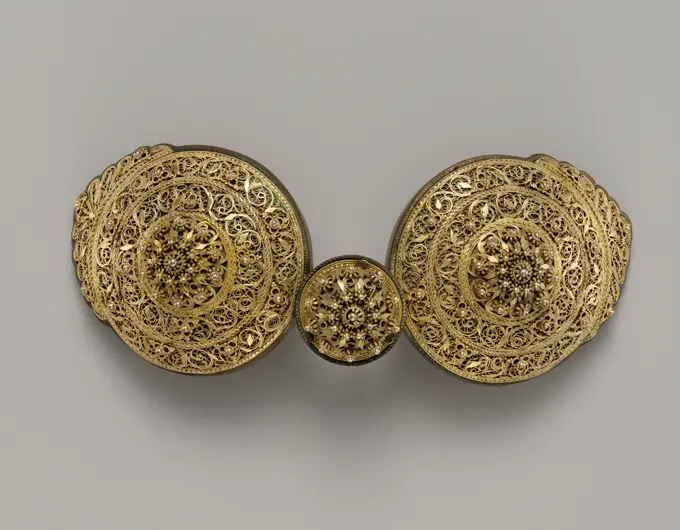
Parure of gold consisting of a necklace, a pair of bracelets, a brooch, a few earrings, a bunch of cufflinks, two hair needles and a pendant, Johan Lorenz Holzapfel, c. 1825 - c. 1840 Parure of gold consisting of a necklace, two bracelets, a brooch, a few earrings, a few cufflinks, two hair needles and a hanger. Made in filigrein. jeweler: Amsterdamjeweler: Amsterdamjeweler: Amsterdamjeweler: Netherlands gold (metal) filigree Parure of gold consisting of a necklace, two bracelets, a brooch, a few earrings, a few cufflinks, two hair needles and a hanger. Made in filigrein. jeweler: Amsterdamjeweler: Amsterdamjeweler: Amsterdamjeweler: Netherlands gold (metal) filigree
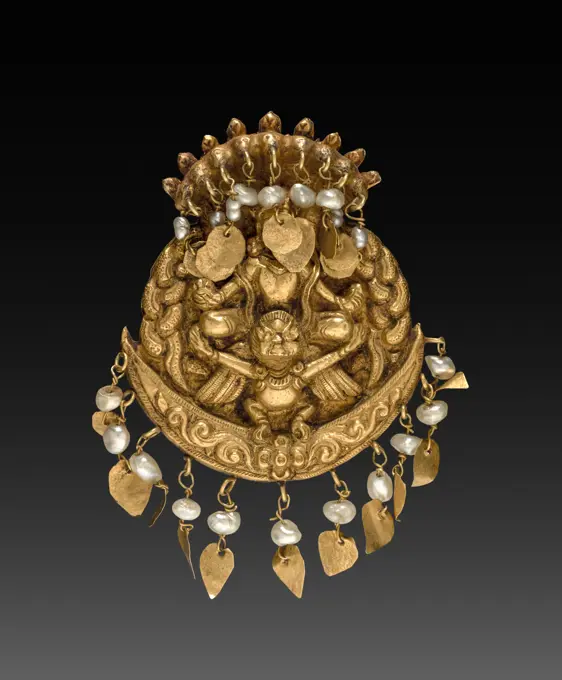
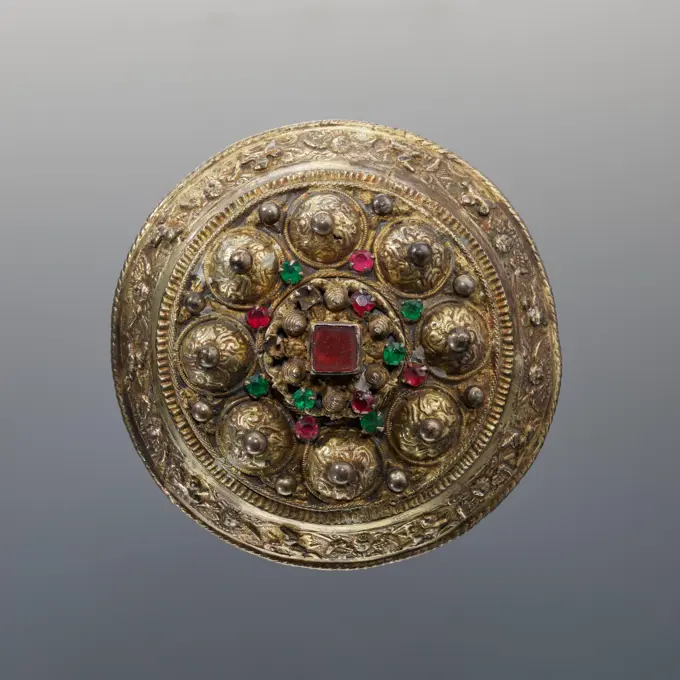
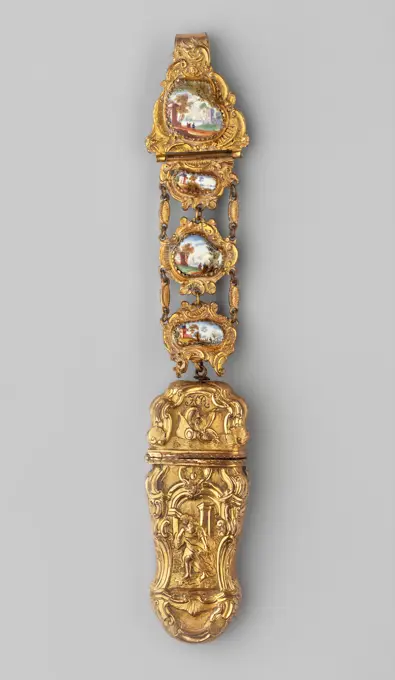
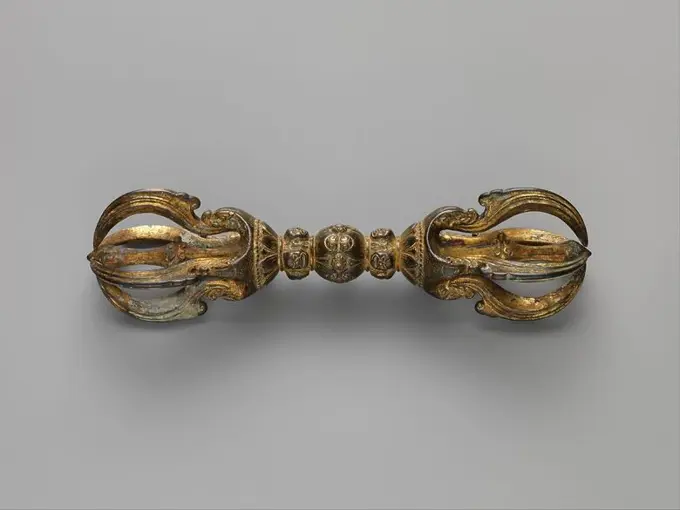
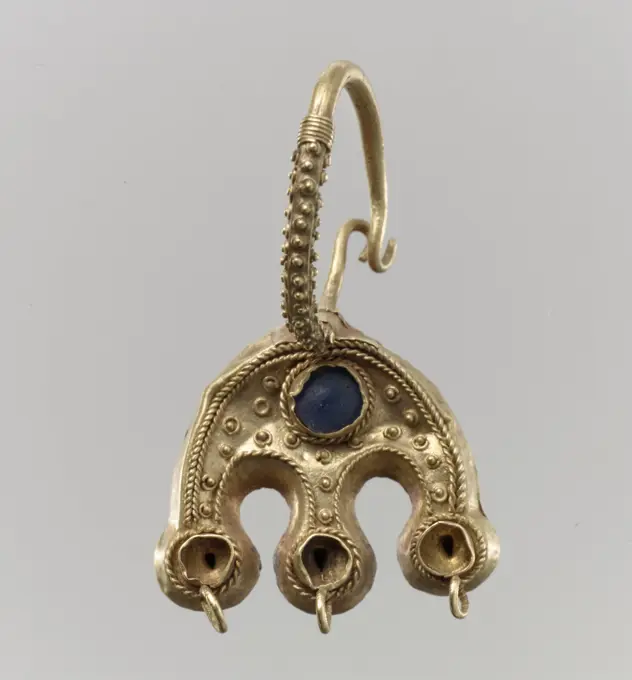
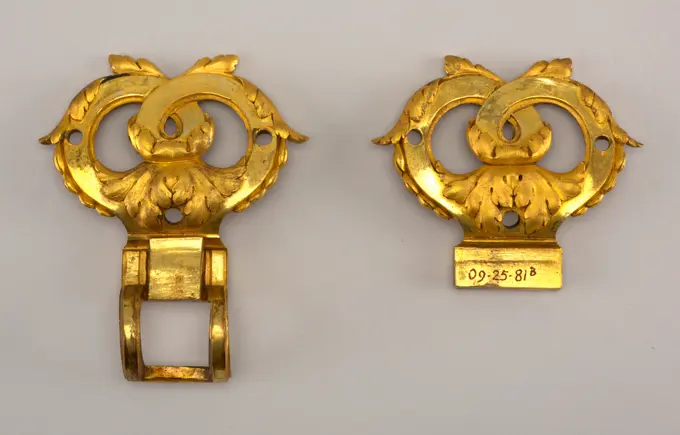
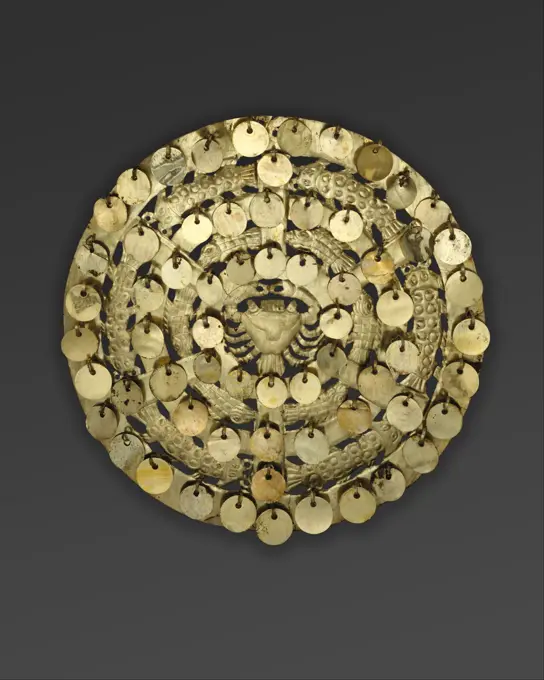
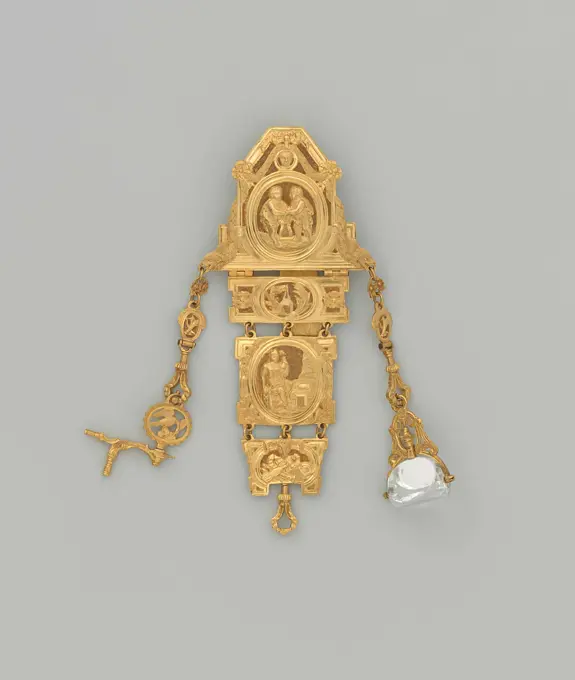
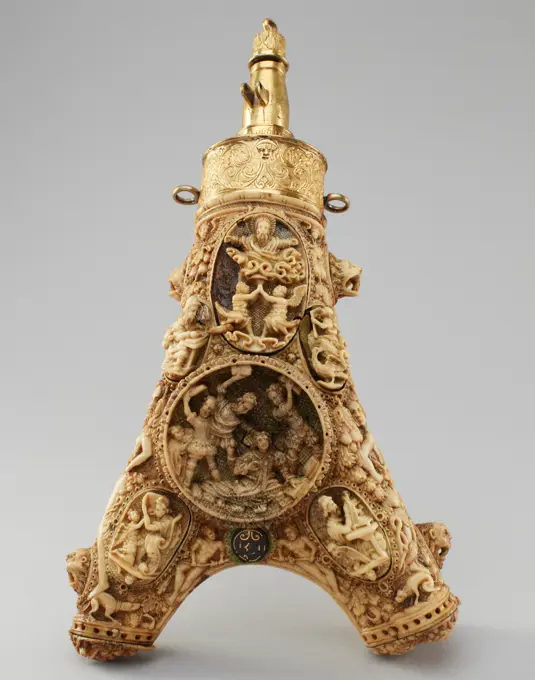
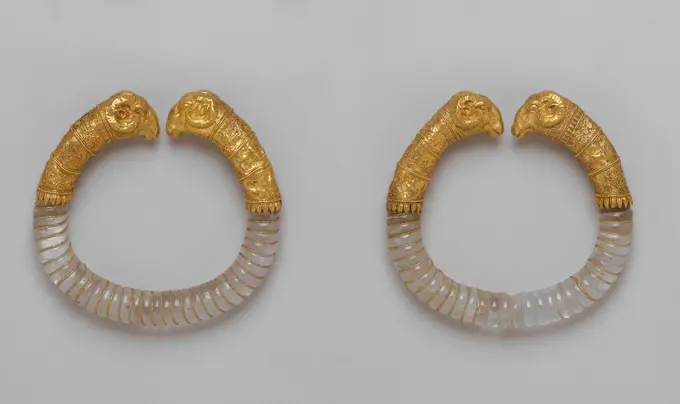
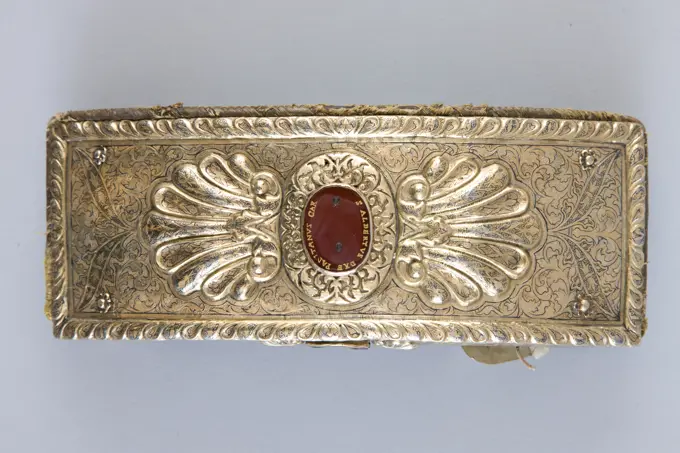
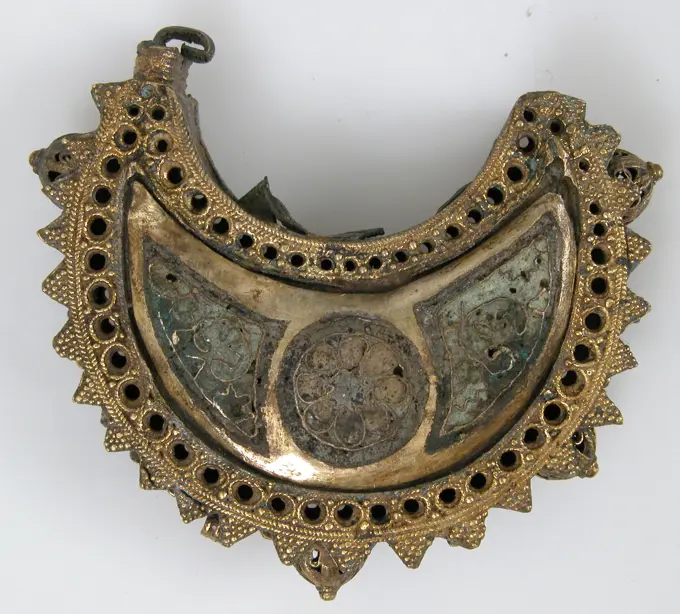
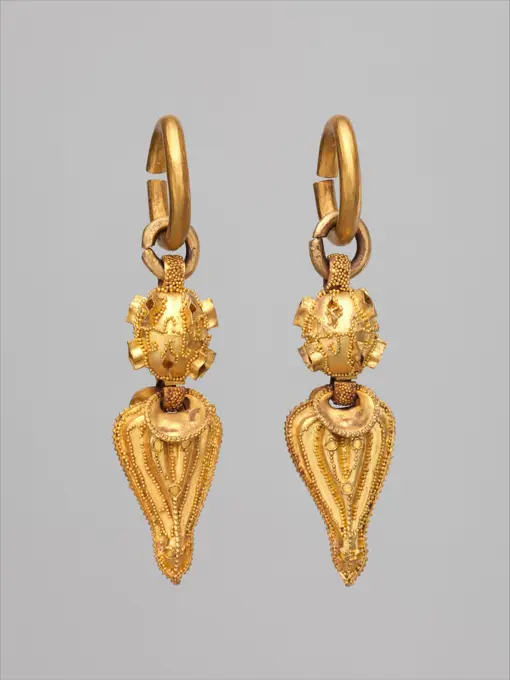
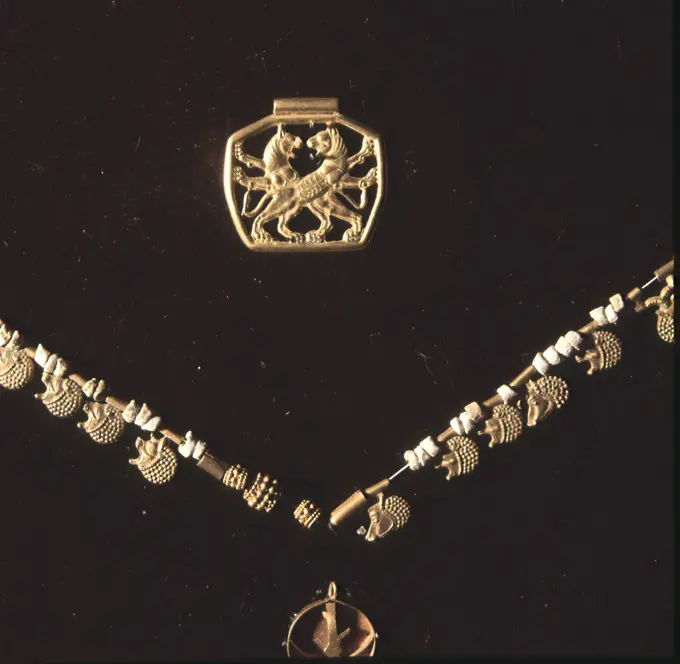
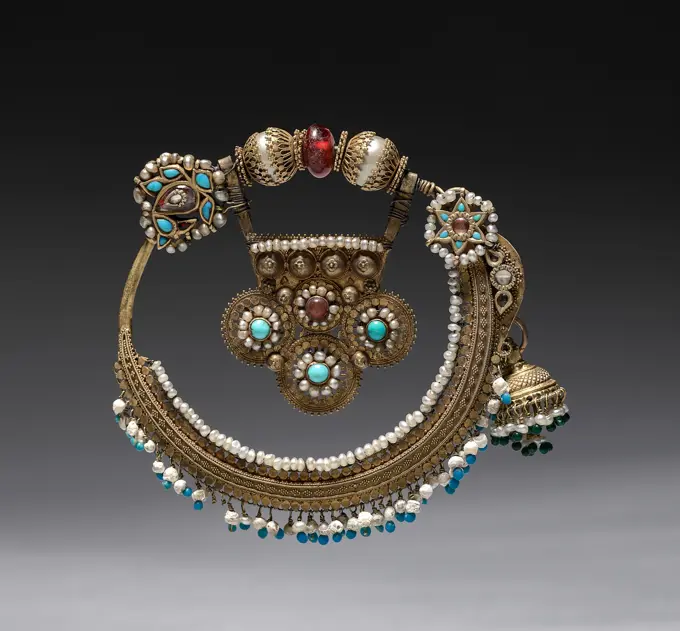
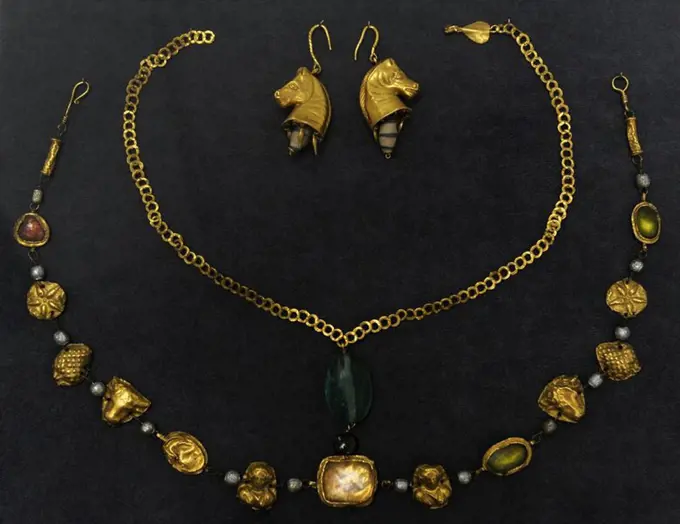
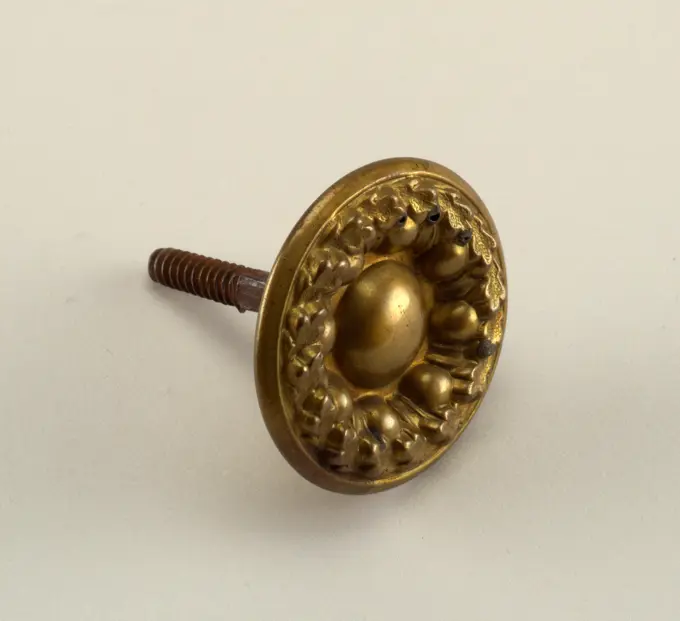
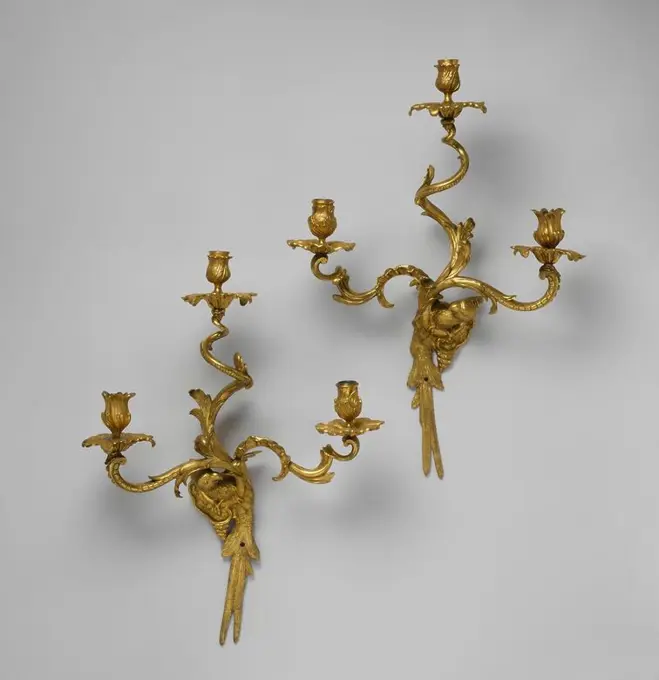
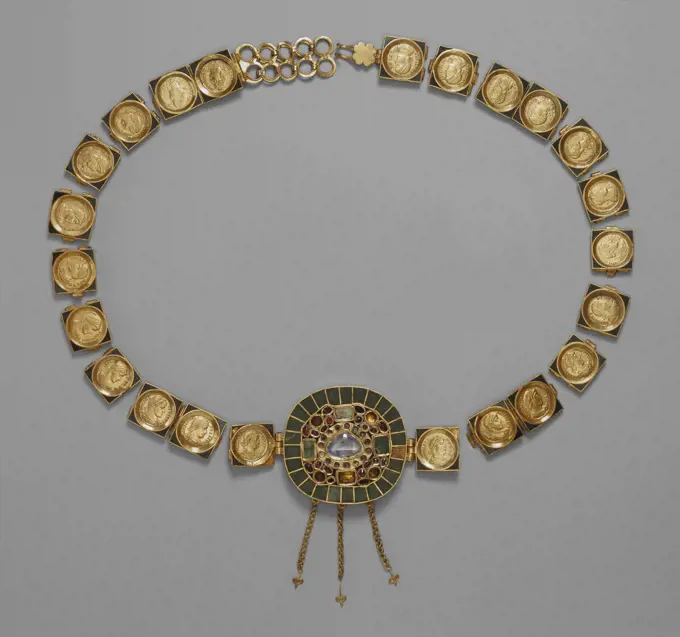
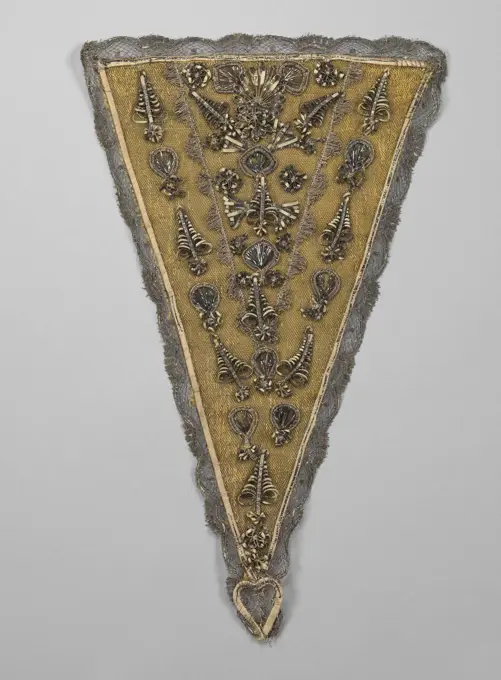
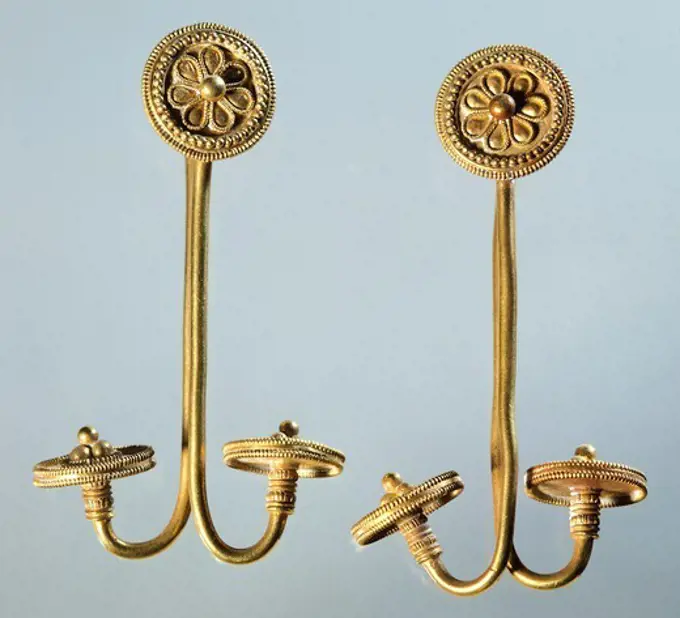
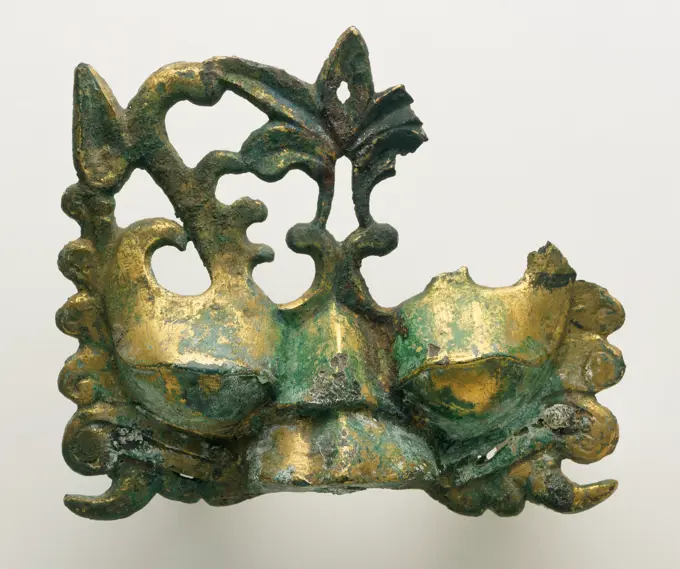
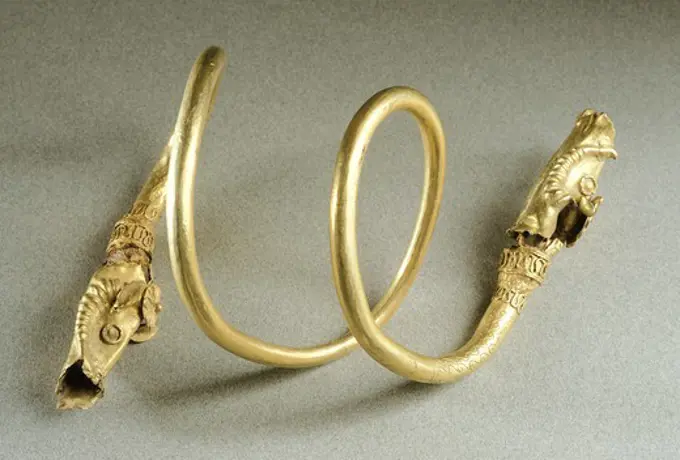
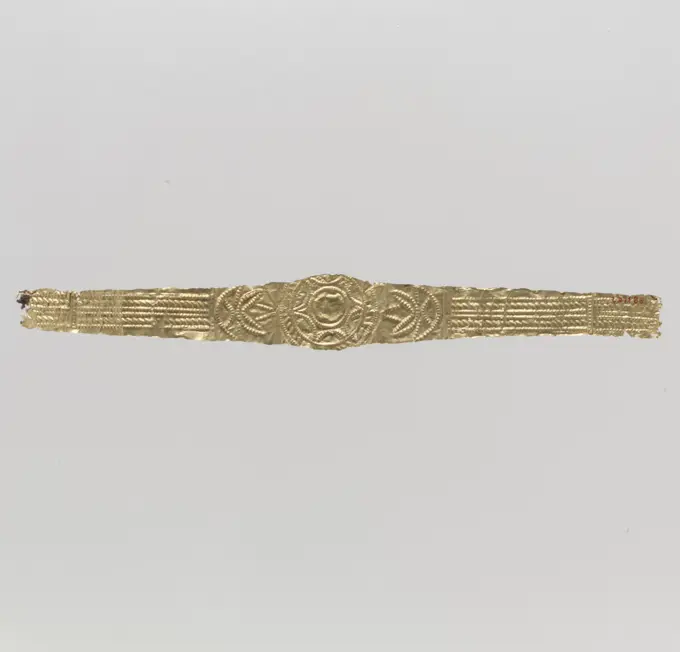
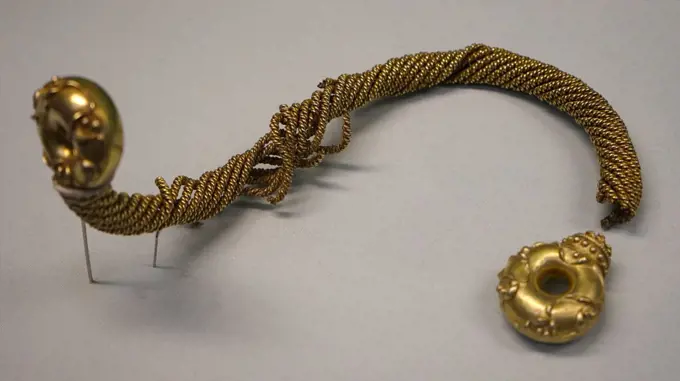
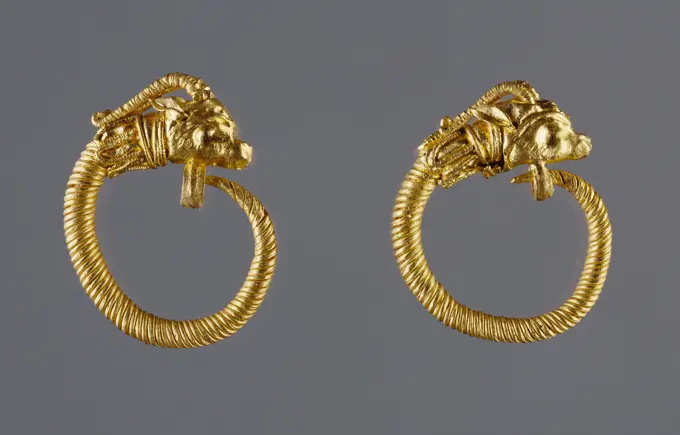
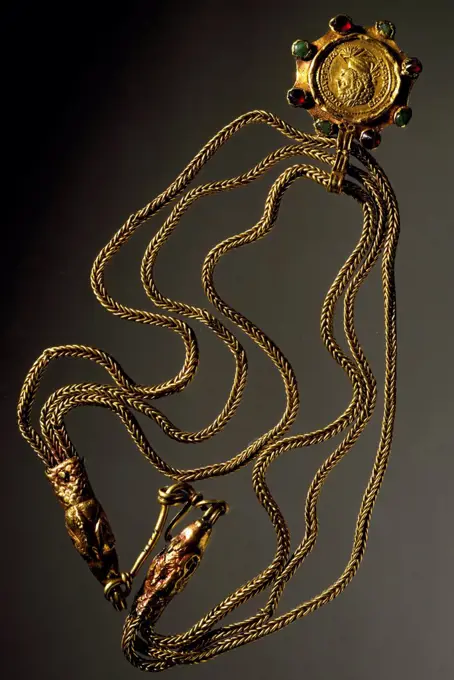
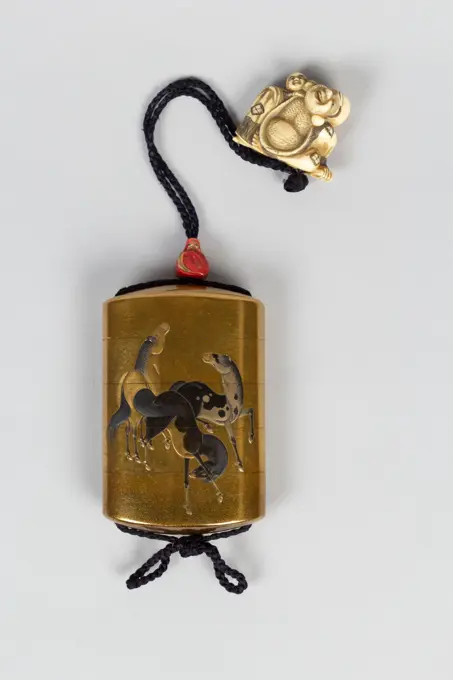
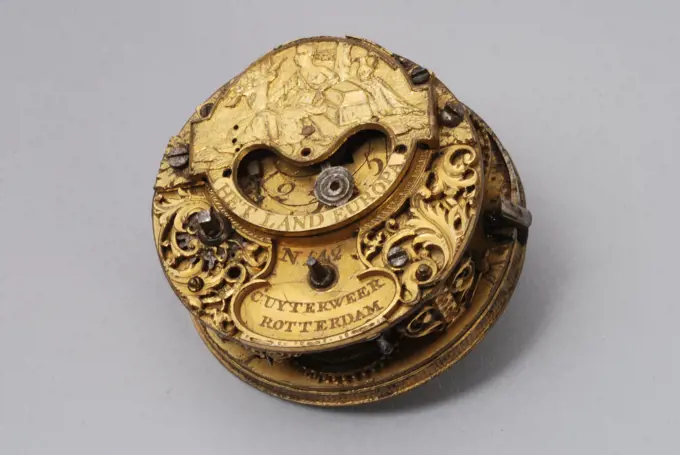
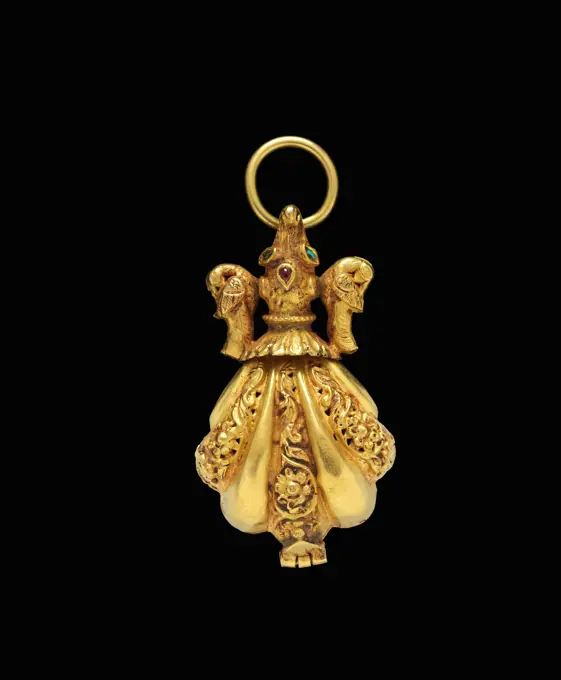
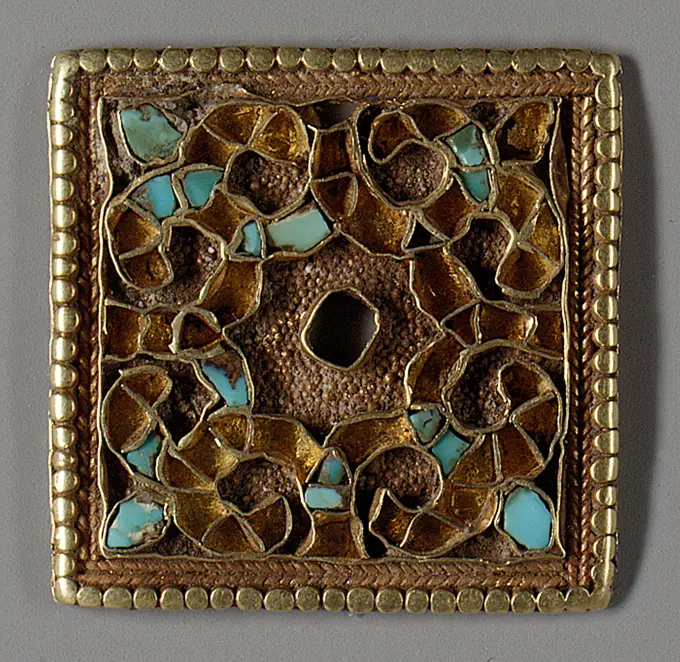
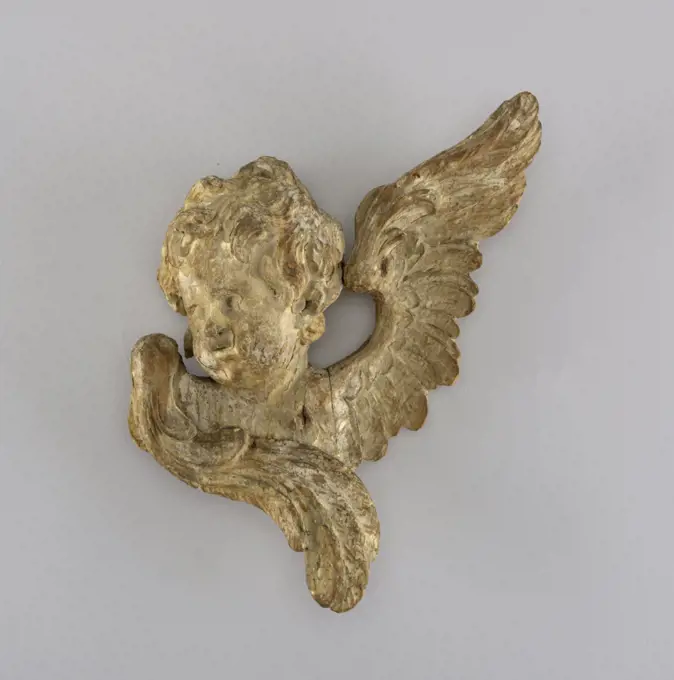
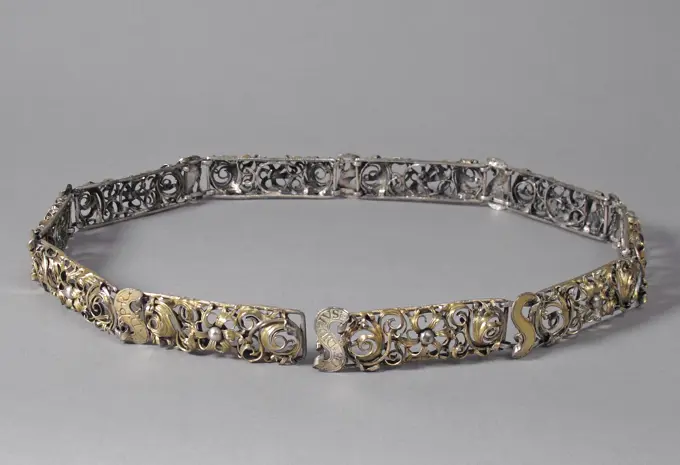
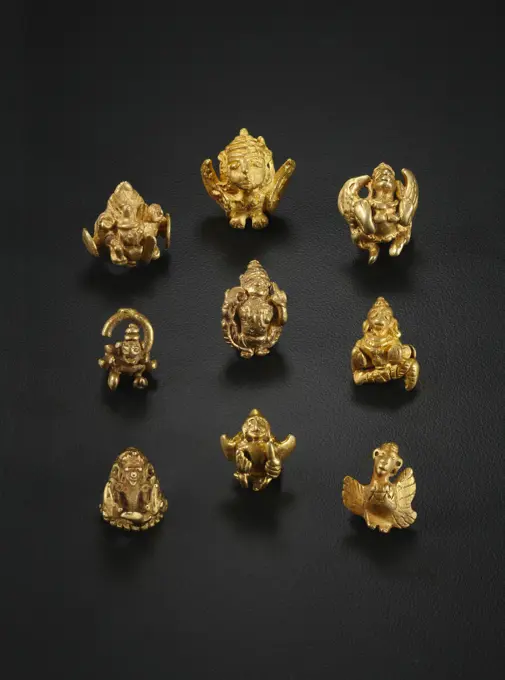
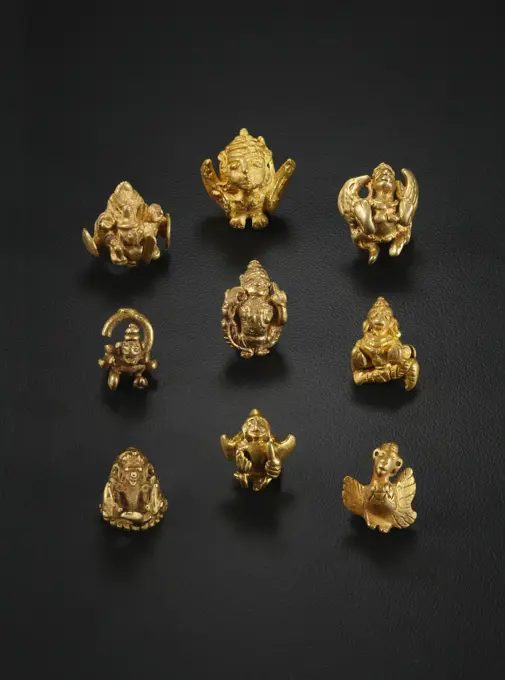
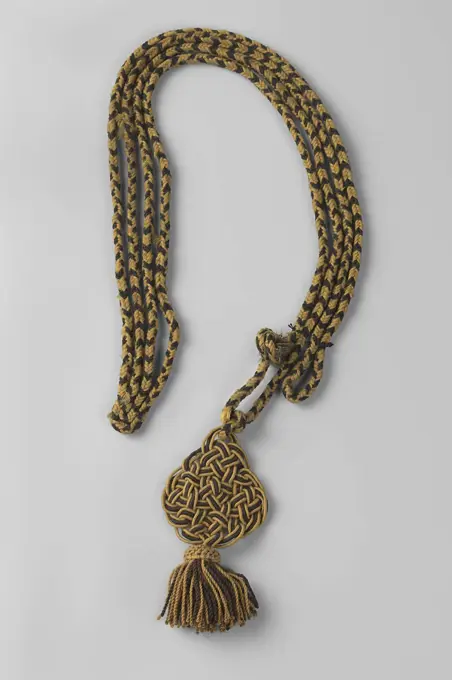
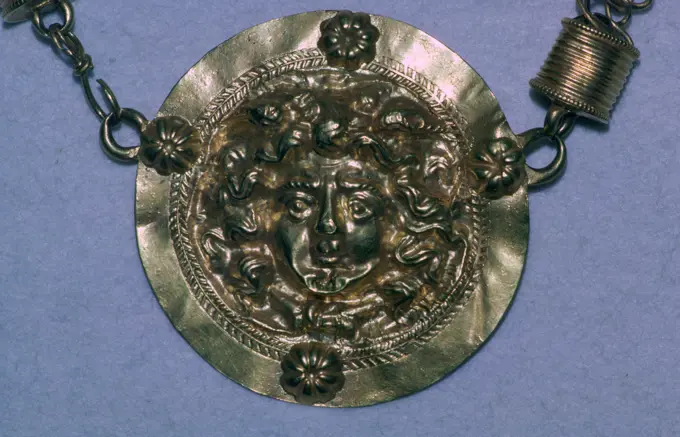
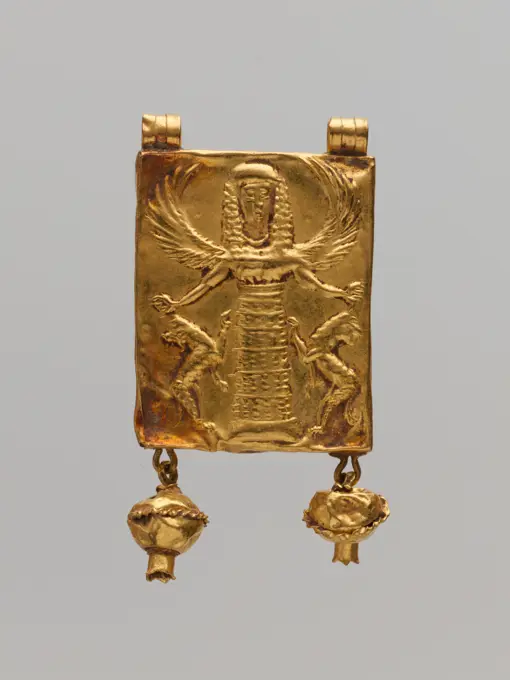
Mount (France); bronze; L x W: 19 x 2.3 cm (7 1/2 x 7/8 in.)Upholstery Trimming (USA)Earring with Four-Armed Vishnu Riding Garuda with Nagas (serpent divinities), 1600s or 1700s. Nepal, Kathmandu Valley. Repousse gold with pearls; overall: 3.7 cm (1 7/16 in.). In Nepal, sculptures of deities were adorned with jewelry larger than pieces made for human beings. This pair of earrings features the Hindu god Vishnu seated cross-legged riding his mount the man-eagle Garuda. Garuda's arms are outstretched, grabbing the tails of serpents whose braided bodies snake up both sides of each earring. His wings drape like a cape behind him, and his talons clutch his crescent moon perch. Serpent hoods rise up behind Vishnu like a canopy.Gold Necklace. Eastern Mediterranean, Probably Etruscan, Hellenistic period (325-50 B.C.). Jewelry and Adornments. GoldGirdle Clasp 19th century. Girdle Clasp. 19th century. Brass and gilded silver. Attributed to Turkey. JewelryJewelry suit consisting of a brooch and a pair of earringsPowder Flask 1590 Italy. Wood, red velvet, brass, and enamel .Parure of gold consisting of a necklace, a pair of bracelets, a brooch, a few earrings, a bunch of cufflinks, two hair needles and a pendant, Johan Lorenz Holzapfel, c. 1825 - c. 1840 Parure of gold consisting of a necklace, two bracelets, a brooch, a few earrings, a few cufflinks, two hair needles and a hanger. Made in filigrein. jeweler: Amsterdamjeweler: Amsterdamjeweler: Amsterdamjeweler: Netherlands gold (metal) filigree Parure of gold consisting of a necklace, two bracelets, a brooch, a few earrings, a few cufflinks, two hair needles and a hanger. Made in filigrein. jeweler: Amsterdamjeweler: Amsterdamjeweler: Amsterdamjeweler: Netherlands gold (metal) filigreeNose Ornament with Human Head and Condors Attacking Humans, c. 100-300. Peru, North Coast, Moche culture (50-800), Early Intermediate Period (AD 0-700). Gold alloy; overall: 9.5 x 16.5 x 1.6 cm (3 3/4 x 6 1/2 x 5/8 in.).Basket Earring 10th-11th century Byzantine. Basket Earring 465948 Byzantine, Basket Earring, 10th11th century, Gold, Overall: 1 1/8 x 7/8 x 13/16 in. (2.9 x 2.2 x 2 cm). The Metropolitan Museum of Art, New York. Rogers Fund, 1970 (1970.70.1)George Washington (1732-1799), LL.D.1781. Artist: UnknownCOLGANTE FORMA DE PEZ. Location: PRIVATE COLLECTION. MADRID. SPANIEN.RingCeltic civilization, Ireland. Goldsmith's art. The Broighter Gold. Embossed gold collar with clasp.Medallion with Christ's head, anonymous, c. 1800 - 1900 Box of gilded silver, in the form of a medallion with a ring on which it can be hung; Probably a reliquary holder. The front and back are decorated with a gilded, cast Christ's head in Nimbus with Leliekruis, around which flower buds in wire work. Spain silver (metal) gilding Box of gilded silver, in the form of a medallion with a ring on which it can be hung; Probably a reliquary holder. The front and back are decorated with a gilded, cast Christ's head in Nimbus with Leliekruis, around which flower buds in wire work. Spain silver (metal) gildingPair of Wall Lights. André-Charles Boulle (French, 1642 - 1732, master before 1666)Banded agate intaglio set in a large gold ring 3rd century B.C. Etruscan Satyr and goat. Banded agate intaglio set in a large gold ring 245921He will make for women's clothing;  XVII (1601-00-00-1700-00-00);Neseser with dishes on Châtelaine;  after. 18th century (1750-00-00-1750-00-00);Former MNW collections, woman, miniatures with architecture in landscape, message (provenance), sewing (accessories)Vajra. Culture: China. Dimensions: H. 1 1/4 in. (3.2 cm); W. 1 3/4 in. (4.4 cm); L. 8 1/2 in. (21.6 cm). Museum: Metropolitan Museum of Art, New York, USA.Earring 6th-7th century Byzantine. Earring. Byzantine. 6th-7th century. Gold and blue glass.. Made in Italy. Metalwork-GoldDoor LatchCutout Disk, Crab and Fish 2nd-3rd century Moche This impressive gilded copper disk depicts a crab, surrounded by alternating plain and embossed circular gold bands. The ornament was originally cut from a larger sheet of hammered copper and was subsequently gilded (Schorsch, 1998). Portions of the sheet were removed to create the central figure plus five concentric rings connected by six radiating bands or rays. The first, third and outermost circular bands are unworked, while the second and fourth bands have been embossed to depict six fish in profile. The central repoussé crab is masterfully represented with embossed eye stalks, mouth parts, pinchers, carapace, walking legs and tail. Even the articulation points of the leg joints are indicated. As with the crab, each fish in the inner band has been delicately embossed to indicate the piscine facial anatomy, scales and fins. The fourth circular band depicts spotted catfish illustrated in a dorsal view depicting eyes, fins and scales. Chatelaine of gold. Horse with a watch of gold (BK-VBR-357-1).Powder horn owned by King Henry VIII of EnglandPair of bracelets with rock crystal hoops and gold rams' heads ca. 330-300 B.C. Greek The rock crystal hoops of these bracelets have been carefully cut, carved, and polished to produce a twisted appearance, highlighted by wire bindings fitted into the valleys. The rams' heads emerge from long, elaborate collars decorated with three friezes enclosed within bands of darts and bordered by plain and beaded wire. The upper frieze, an ivy chain on a vine, is tied at the center with a Herakles knot and bears four bunches of grapes; the middle frieze has palmettes with pointed leaves; the third frieze, a palmette complex.. Pair of bracelets with rock crystal hoops and gold rams' heads. Greek. ca. 330-300 B.C.. Gold, rock crystal. Hellenistic. Gold and SilverAmmunition pouchOne of a Pair of Crescent-Shaped Earrings with Rosettes 12th century Kievan Rus' or Byzantine These earrings combine diverse artistic features-Byzantine (cloisonné enamel decoration), Kievan Rus' (enameling in segments), and Islamic (boxlike construction)-suggesting that the artist had knowledge of several traditions. The earrings have lost their suspension loops.. One of a Pair of Crescent-Shaped Earrings with Rosettes 464162Oval BezelRingOriental storm light, close-upEarring (One of a Pair) late 5th-early 6th century Korea Gold earrings were worn by both men and women of the Silla and Gaya elite and are the most prevalent type of jewelry found in tombs. Goldsmith techniques on display here range from simple hammering to the more complex method of granulation, in which tiny gold beads were adhered to the surface to create intricate designs.. Earring (One of a Pair) 53014Gold of Troy, Priams Treasure by anonymous artist, gold, 2400-2300 BC, Russia, Moscow, State A. Pushkin Museum of Fine ArtsOBJETOS DE EUGENIA DE MONTIJO - CAJA CON UN RETRATO DEL ZAR NICOLAS Y UN PASTILLERO CON SU INICIAL. Location: PRIVATE COLLECTION. MADRID. SPAIN. NICOLAS II OF RUSSIA.Gold medal and necklace. Persepolis. Hamadan. 4-6th cent BC. Teheran Museum.Mount, Gilded pressed copper, All over grapevine and grapes decoration, USA, ca. 1830-50, metalwork, Decorative Arts, MountNecklace. The mid-19th century witnessed a revival of interest in jewels on the part of artists and designers. Névillé derived inspiration from historical and archaeological shapes and ornamentation. The scenes on the medallions and the technique in which they are executed recall the heyday of 16th-century Limoges, known for its highly refined depictions painted in enamel.Hanger, Guillaume Louis Ploem, c. 1824 - c. 1838 Gold pendant. Made in filig train work. The pendant can be hung on both the brooch and the necklace. Amsterdam gold (metal) filigree Gold pendant. Made in filig train work. The pendant can be hung on both the brooch and the necklace. Amsterdam gold (metal) filigreeOrnamental Plaque of a Knight on Horseback ca. 1300 Western European, possibly British The original use of this plaque is unknown; it may have decorated a tomb or perhaps an elaborate piece of furniture. It provides an excellent picture of a fully armored knight of the late thirteenth or early fourteenth century.. Ornamental Plaque of a Knight on Horseback. Western European, possibly British. ca. 1300. Copper alloy, gold. Miscellaneous-Buckles & OrnamentNose Ring, 1800s. India. Silver gilt with stones and beads; diameter: 8.6 cm (3 3/8 in.).Roman jewellery of the Imperial Age. 1st-4th century AD. Museum of Fine Arts. Budapest. Hungary.Mount; L x W : 36.5 x 12 cm (14 3/8 x 4 3/4 in.)Mount Mount; brassSet of four three-light wall brackets. Culture: French. Designer: Design attributed to Charles Cressent (French, Amiens 1685-1768 Paris). Dimensions: 22 1/2 × 16 × 7 1/2 in. (57.2 × 40.6 × 19.1 cm). Maker: Casting and chasing attributed to Jacques Confesseur (ca. 1695-1759). Date: ca. 1745-49.The parrots' tails form an integral part of the overall design attributed to Charles Cressent (1685-1768). They may have been cast and chased by Jacques Confesseur, who collaborated with Cressent. In the catalogues of two sales that Cressent organized of his stock in 1749 and 1757, several pairs of wall lights with parrots, of either lacquered or gilded bronze, were listed. Strictly against guild regulations, Cressent, who was trained as both a cabinetmaker and a sculptor, had furniture mounts, wall lights, andirons, and other gilt-bronze furnishings made in his own workshop-a practice that brought him into conflict with the guild of casters and gilders. Although the model was popular and repeateCoin Belt; Roman Empire; about A.D. 379-395; Gold, enamel, sapphire, emerald, garnet, and glass; 79.1 cm (31 1,8 in.)Figure EarOrnamentDevant-de-Gorge or triangular brisket made of silver brookat between yellow silk ribbons covered with silver tulles, both decorated with ornaments of (originally plated) sheet silver over parchment and trimmed with a scalloped edge of silver tulle, side appliques, silk chenille, snares of (originally plated) sheet silver and silver thread. Devant-de-Gorge or triangular brisket, consisting of a silver-brocade center piece surrounded by yellow silk ribbons covered with silver tulle, both decorated with ornaments of sheet silver over parchment and trimmed with a scaled edge of silver tulle, silk appliques, silk chenille, snares of sheet silver and silver wire. Model: Triangular center piece of brocade with a silver chain and a yellow silk impact, ending in a heart-shaped ornament. The brocade had to give a gold impression, so the golden side was used. Switched off with, and with large lift stitches attached to a cream-colored rip silk edge, reinforced with parchment. Shoulder straps of yeOne square (attached to .2). UnknownOne square. UnknownBelt with Central Medallion. UnknownGold earrings from Kamiros, Rhodes (Greece). Goldsmith art, Greek Civilization, 8th-7th Century BC.Clasp for Cord or Chain withGemsFitting (Shi) in the Form of a Mask. China, Six Dynasties period, 317-581. Jewelry and Adornments; masks. Cast bronze with gildingRod Finial with Zoomorphic Motif 19th-20th century Indonesia (Java). Rod Finial with Zoomorphic Motif 50072Armlet, 1800s. Burma. Silver gilt; diameter: 8.9 cm (3 1/2 in.).Gold bracelet in the shape of a snake, from the Cucuteni-Baiceni treasure, Romania. Jewellery. Geto-Dacian Civilization, 5th Century BC.Funerary Fillet early 5th century A.D. Ostrogothic Gold diadems, worn on the head like a crown, were decorated with geometric patterns to match gold foil appliqués that were sewn onto the sleeves and neckline of festive clothing.. Funerary Fillet 246820FinialMountWatch. Culture: French, Paris. Dimensions: Overall: 1 1/2 × 1 1/4 × 5/8 in. (3.8 × 3.2 × 1.6 cm). Maker: Watchmaker: F. L. Meybom (active ca. 1650-80); Case attributed to Isaac Bergeron dit d'Argent (French, active 1649-97). Date: ca. 1670-75.Almost nothing is known about the watchmaker who signed the movement of this watch, F. Meybom AParis/St. Germain, except that he made at least three of these unusual square-plated movements. The Paris watchmaker Auguste Bretonneau (recorded working 1638-58) and Balthazar Martinot (recorded working 1661-97), both better known than Meybom, also made them. All three provided movements for cases that are almost identical to this one, and one of these has been plausibly attributed to the Paris goldsmith Isaac Bergeron. The case is covered with panels of blued steel overlaid with openwork floral designs of gold. It has a hinged cover of rock crystal with beveled sides set within a silver and diamond bezel that permits an unobstructed view of the white The Sedgeford Gold Torc terminal. Found in Sedgeford, Norfolk. Dated 100 BCHoop Earring with Ibex Head Finial. UnknownGolden Artifact From Choco Tribe In The Gold Museum In La Candelaria, The Old Town Of Bogota, ColombiaPrecolumbian Art. Large Gold Necklace from the Larrea Collection . Inca Gold work. Madrid, Museum of America. Location: MUSEO DE AMERICA-COLECCION, MADRID, SPAIN.Watch of gold with ciseled dial, J. Tarts, c. 1750 - c. 1800 Gold watch with a quoted dial with date instruction. The cupboard is driven with flowers and tiflets. The cupboard has been Indonesian work and a sirih box. clockmaker: Londonmaker: Indonesia (possibly) gold (metal) Gold watch with a quoted dial with date instruction. The cupboard is driven with flowers and tiflets. The cupboard has been Indonesian work and a sirih box. clockmaker: Londonmaker: Indonesia (possibly) gold (metal)Appliqué China. Appliqué. China. Gold. Han dynasty (206 B.C.-A.D. 220). MetalworkBadge or Harness Pendant 14th century Spanish Heraldry, or coat-of-arms, were vitally important in Europe throughout the Middle Ages and the Renaissance. Heraldic emblems were used to identify noble families, cities, regions, and even countries. In addition to being displayed on shields and flags, heraldry was incorporated into architectural decoration on the interior and the exterior of buildings, on furniture, works of art, clothing, and horse equipment. Harness pendants, like this example, would have been attached to a headstall, bridle, or other straps making up the tack of a horse ridden by a nobleman or noblewoman, or a member of their household. Many harness pendants also have decoration that is simply ornamental, or have symbols that are not specifically heraldic in nature.. Badge or Harness Pendant. Spanish. 14th century. Copper, gold enamel. Miscellaneous-BadgesNecklace 18th century. Necklace 446751Conch BirdRingLeech Fibula with Rosettes. UnknownGold necklace with medal of Caracalla, 215 AD, from Nicolaevo,Stara Zagora Region, Bulgaria. Thracian Civilization, 3rd Century.Gold earring with head of a goat 2nd-1st century B.C. Greek Circlet of twisted gold wire, which tapers from the goat's head at the front end to a hooked point which passes through a loop below the animal's throat.. Gold earring with head of a goat 242903Goldsmith's art, Italy, 16th century. Gilded metal, glass paste, quartz and emerald Venetian pendant.Pendant in the form of a cock. In the 16th century, large, irregularly shaped pearls often served as the point of departure for a jewellery design. In this case, the pearl forms the body of a cock. Its head, tail and feet are made of gold. The jeweller enamelled these parts in various colours and set them with (what are probably) rubies. This cock was certainly part of the Dutch stadtholders collection from the 18th century.Pair of Stirrups. Culture: Spanish or Argentinian. Dimensions: Stirrup (a); H. 8 1/2 in. (21.6 cm); W. 5 1/2 in. (14 cm); D. 4 3/8 in. (11.1 cm); Wt. 1 lb. 13.3 oz. (830.6 g); stirrup (b); H. 9 in. (22.9 cm); W. 5 1/4 in. (13.3 cm); D. 4 3/8 in. (11.1 cm); Wt. 1 lb. 11.1 oz. (768.3 g). Date: 18th century.This gilded pair of stirrups, decorated with rococo designs, is an early form of the typical 'bell stirrups' (estribos campana), a type that would become particularly popular in Argentina from the 19th century onwards. Such stirrups were introduced in South America through Jesuit missions in the 18th century. Museum: Metropolitan Museum of Art, New York, USA.Gold fibule, Italy. Goldsmith art. Greek civilization, Magna Graecia.Element of an Icon Frame 11th century Byzantine. Element of an Icon Frame 464519 Byzantine, Element of an Icon Frame, 11th century, Cloisonn enamel, gold, copper, Overall: 3/4 x 11/16 x 1/16 in. (1.9 x 1.7 x 0.2 cm). The Metropolitan Museum of Art, New York. Gift of J. Pierpont Morgan, 1917 (17.190.649)Case (Inr) with Design of Five Playing Horses 19th century Japan. Case (Inr) with Design of Five Playing Horses. Japan. 19th century. Lacquer, kinji, black, silver, gold hiramakie, takamakie, nashiji; Interior: nashiji and fundame. Edo period (1615-1868). InrCornelis Uyterweer, Inside pocket watch (without case) with pictured and written THE LAND EUROPE, pocket watch watch movement measuring instrument gold brass steel d 2,5, The clockwork with verge escapement with snek Fan-shaped pillars at the top side-sawed Awning for the snek. On the back plate silver closed bridge with driven representation of Europe sitting between wealth. Under the kidney-shaped opening for glass pane the text: THE LAND EUROPE. Behind it the visible part of the balance in the form of grooved lens. Beside the gorge square blued tip for the regulage. Around the signature an ocher-sawn floral ornament on the back platine No 142 C. UYTERWEER ROTTERDAM (under gaps) measuring measuring well-to-do citizensPair of Sword-Grip Ornaments (Menuki). Culture: Japanese. Dimensions: L. of each 1 1/2 in. (3.8 cm); Wt. of each 0.3 oz. (8.5 g). Date: 18th century. Museum: Metropolitan Museum of Art, New York, USA.Locket Pendant, Possibly a Pomander, in Shape of Shell with Animal-Headed Cap Flanked by a Small Bird on Sides 17th century The cap of the pendant takes the form of a makara (a fantastical aquatic beast) set with two turquoise eyes and a red stone in the center of its head. Makaras are Hindu mythological creatures sometimes composed of the body parts of many different animals and are prevalent in South Indian architecture. They are also often found on clasps of jewelry, and on decorative works such as alams and ewers. Traces of a red residue suggest that the pendant may have been filled with an aromatic substancewhich would have escaped hrough the pierced openings. Locket Pendant, Possibly a Pomander, in Shape of Shell with Animal-Headed Cap Flanked by a Small Bird on Sides 456927ORFEBRERIA. TESORO DE GUARRAZAR. ORFEBRERIA VISIGODA DESCUBIERTO EN EL AÑO 1853 Y 1861 EN GUARRAZAR , TOLEDO. CORONA VOTIVA DE RECESVINTO. MUSEO ARQUEOLOGICO NACIONAL. MADRID. ARTE VISIGODO.Ornamented Plaques 7th-9th century Eastern Central Asia or northern China This set of decorative plaques includes four nearly identical square pieces and one narrower rectangular form. On each of the plaques, beaded borders enclose finely granulated ground on which thin gold strips and turquoise inlays form a floral design. A braid made of gold threads extends between the borders and the design, composed on connected trefoils extending into the corners with a circle at the center.Technically and stylistically, these plaques are typical of ornaments found at seventh- and eighth-century sites in eastern Central Asia and in the northwestern Chinese province of Qinghai. Chinese sources indicate that metalworking flourished in this region under Tibetan dominion during the seventh and eighth centuries. The use of the trefoil motif and granulation provides evidence of active cultural and trade contact between West Asia and China.. Ornamented Plaques 55621 Eastern Central Asia or northern ChiTrimming repousse from the Vettersfelde treasure, goldCup or Bratina 19th century Scythian. Cup or Bratina 468772Carving, wood, painted, carved and gessoed, wood fragment of cherub, Italy, 18th century, Decorative Arts, CarvingPhoenician gold from Tarshish, Sardinia, 7th cent. BC, LEBANON.Cresecent Moon-Shaped Pendant with Foliate Design Second half of the 8th-second half of the 10th century Indonesia (Java). Cresecent Moon-Shaped Pendant with Foliate Design. Indonesia (Java). Second half of the 8th-second half of the 10th century. Gold. Central Javanese period. JewelrySilver head ornaments from India. Dated 19th CenturyFragment of a Girdle ca. 1500 German. Fragment of a Girdle. German. ca. 1500. Silver, silver gilt. Made in Upper Rhineland, Germany. Metalwork-SilverGold necklace with pendants, artefact from the Treasury of Tomb 7 in Monte Alban, Mexico. Detail of the pendant. Zapotec Civilization, classical period 200-900.V-shaped EarOrnamentPlaque with Vegetal Arabesque mid-7th-9th century Northwest China/Eastern Central Asia. Plaque with Vegetal Arabesque. Northwest China/Eastern Central Asia. mid-7th-9th century. Gold. period of Tibetan rule. MetalworkBird FigureOrnamentWinged FemaleOrnamentYellow / black catch cord at a Shako of the Hussaren Regiment No. 8. Catching yellow and black braided wool or cotton. With one brush and mirror.Gold Roman Gorgon's head pendant. Artist: UnknownGold pendant with Mistress of Animals 7th century B.C. Greek Greek gold pendant with a Potnia Theron.. Gold pendant with Mistress of Animals 257431Jewellery- gold earrings , Roman Imperial period. ITALY.Pectoral Disk 8th-12th century Coclé (Macaracas). Pectoral Disk 316675Golden ring isolated on the white background