Intricate Historical Jewelry

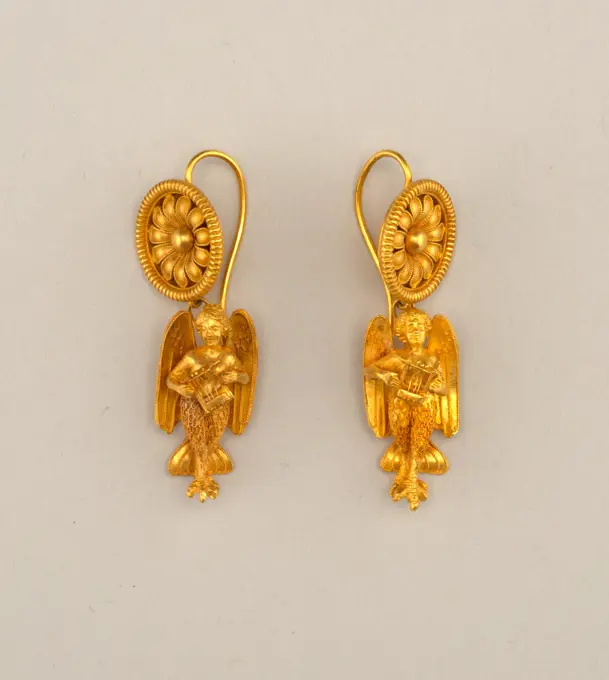
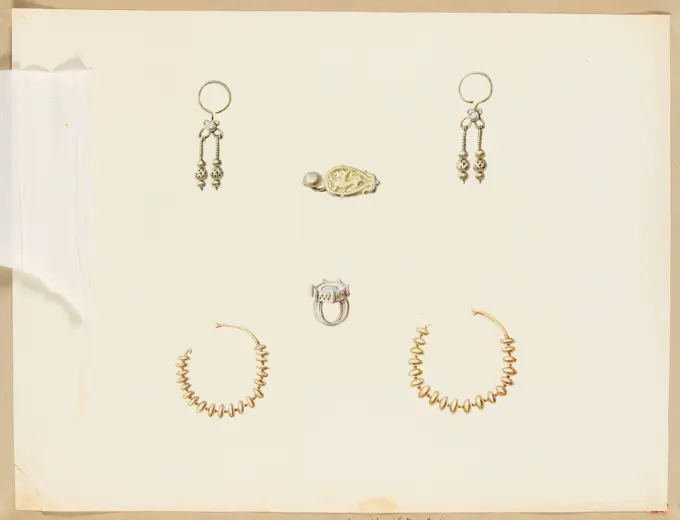
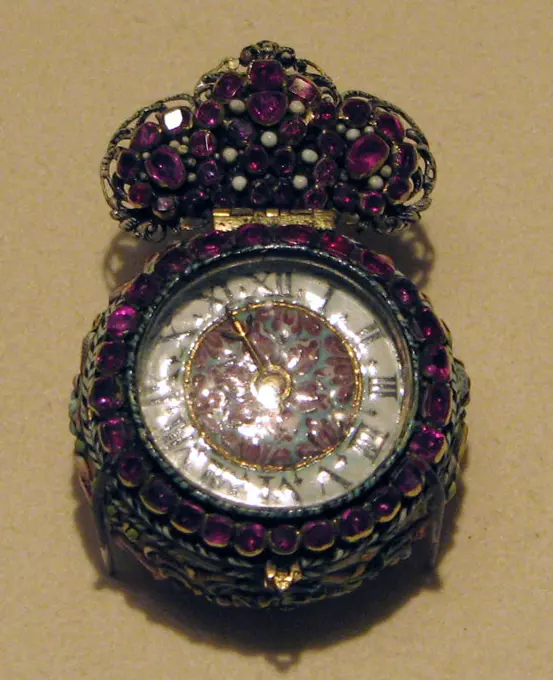
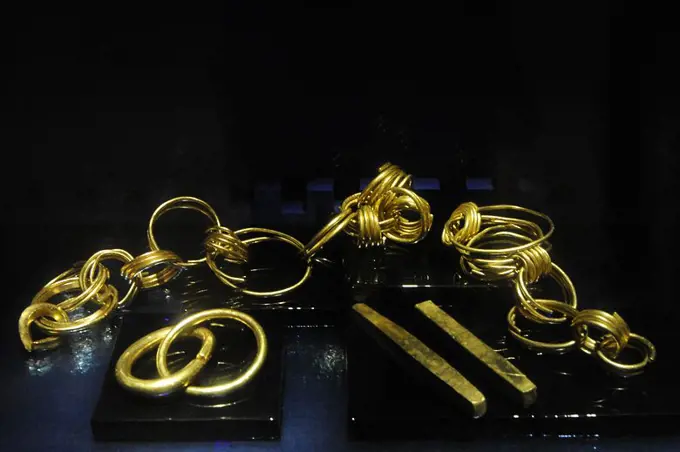
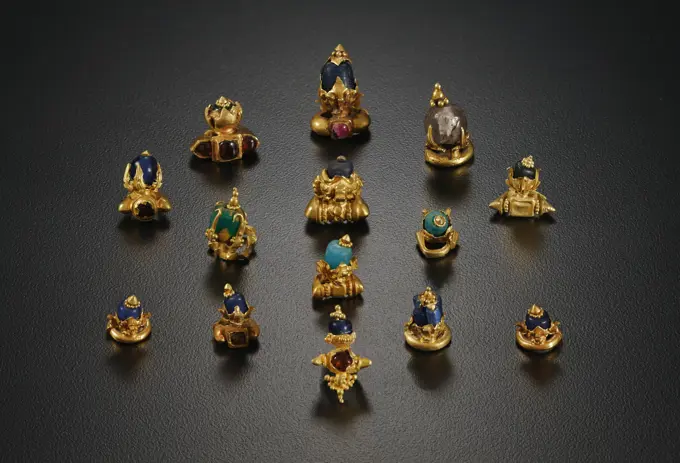
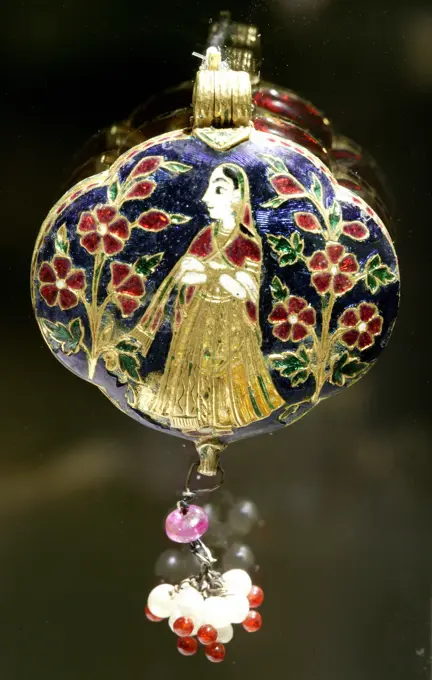
A collection of ornate jewelry pieces including gold earrings, necklaces, and decorative mounts, showcasing intricate designs and cultural significance.

Parure of gold consisting of a necklace, a pair of bracelets, a brooch, a few earrings, a bunch of cufflinks, two hair needles and a pendant, Johan Lorenz Holzapfel, c. 1825 - c. 1840 Parure of gold consisting of a necklace, two bracelets, a brooch, a few earrings, a few cufflinks, two hair needles and a hanger. Made in filigrein. jeweler: Amsterdamjeweler: Amsterdamjeweler: Amsterdamjeweler: Netherlands gold (metal) filigree Parure of gold consisting of a necklace, two bracelets, a brooch, a few earrings, a few cufflinks, two hair needles and a hanger. Made in filigrein. jeweler: Amsterdamjeweler: Amsterdamjeweler: Amsterdamjeweler: Netherlands gold (metal) filigree
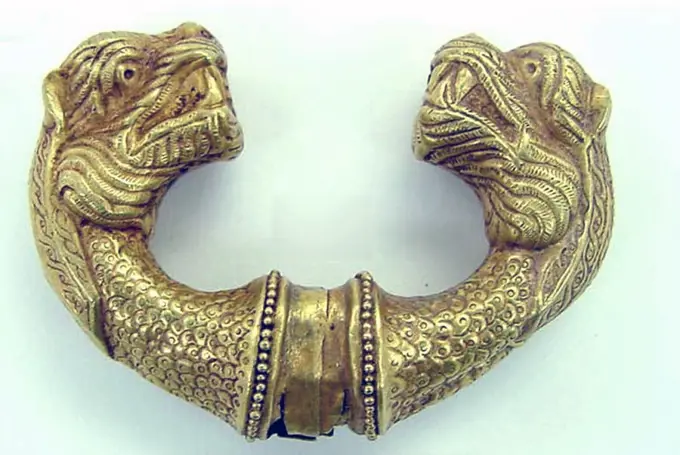
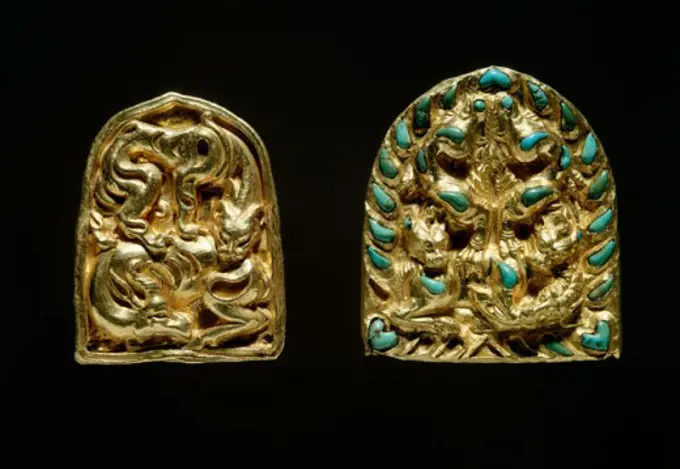
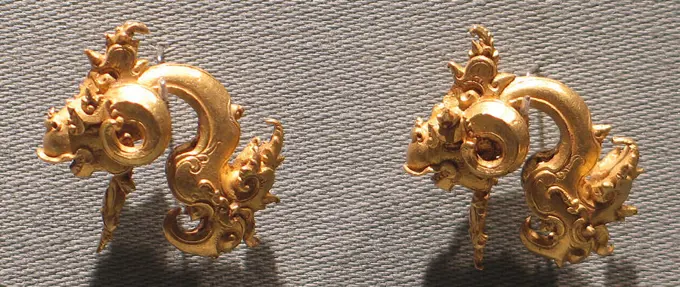
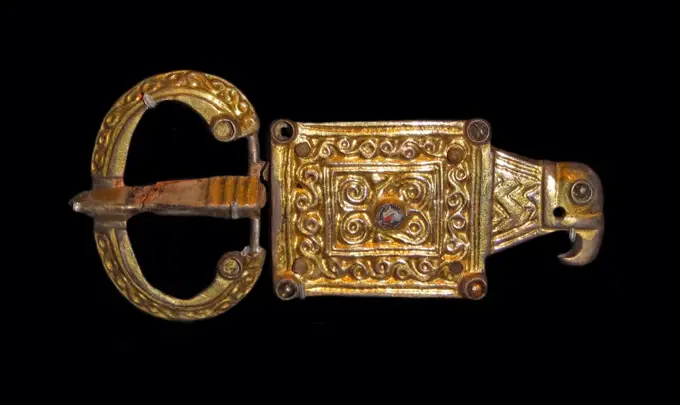
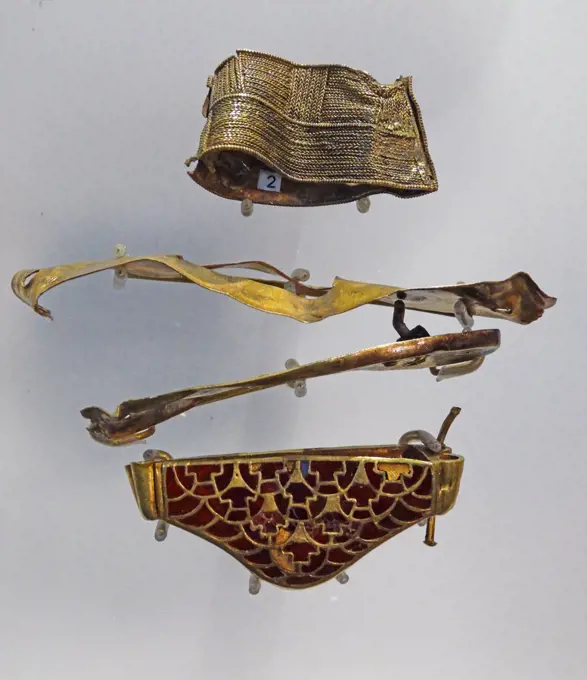
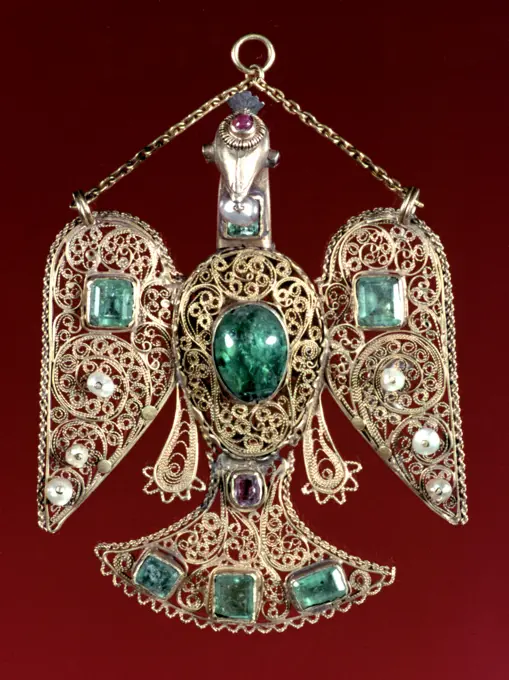
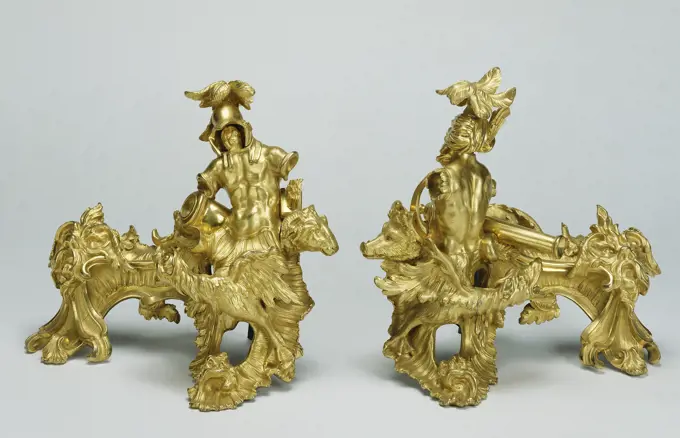
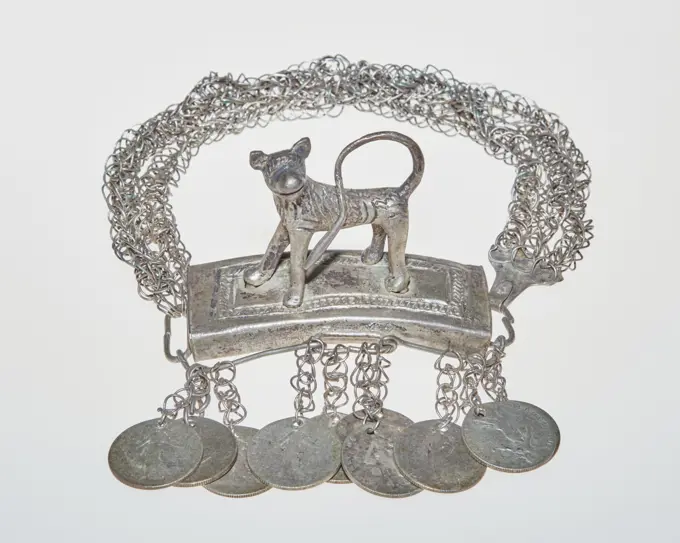
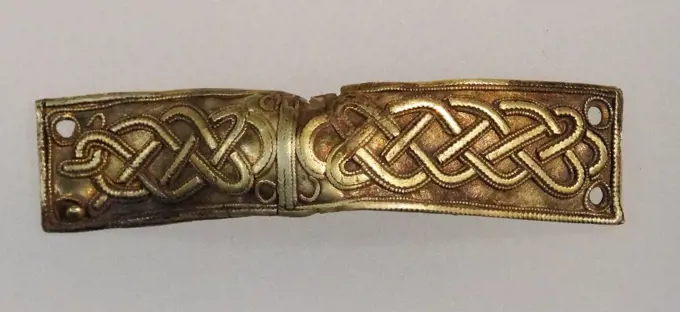
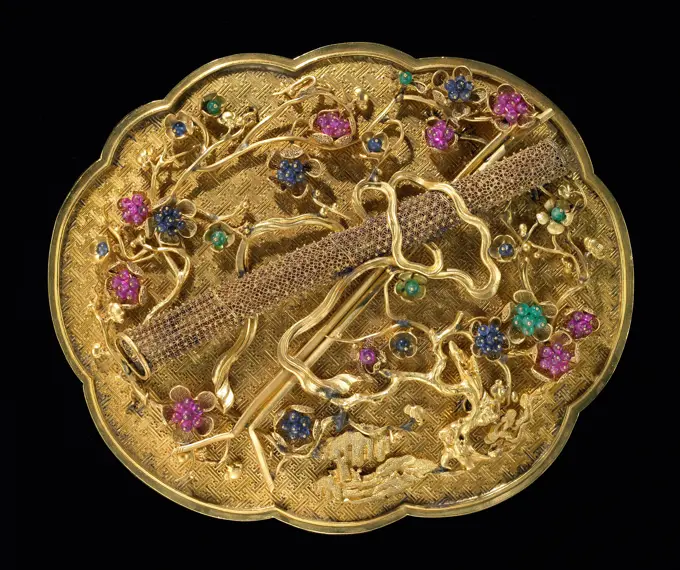
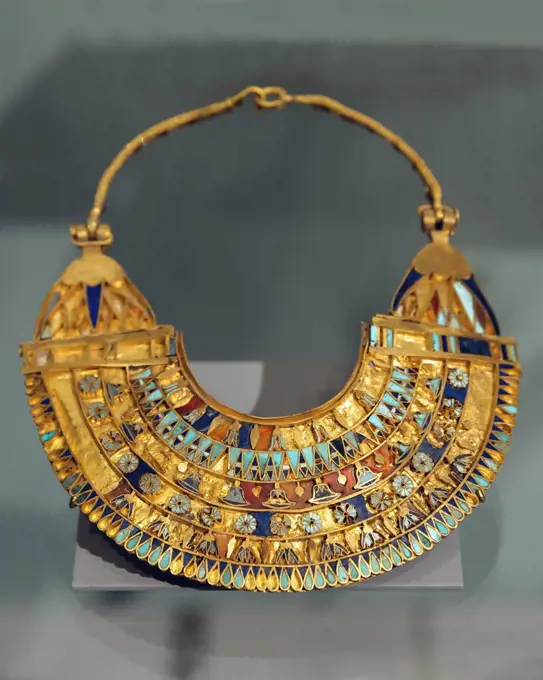
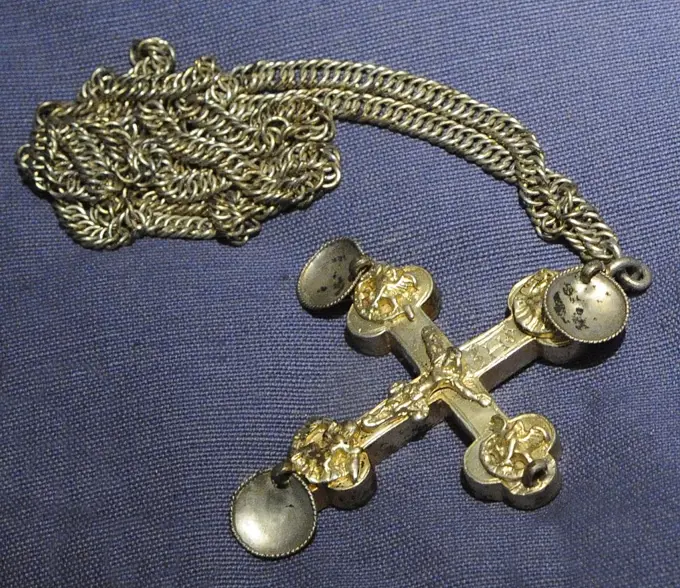
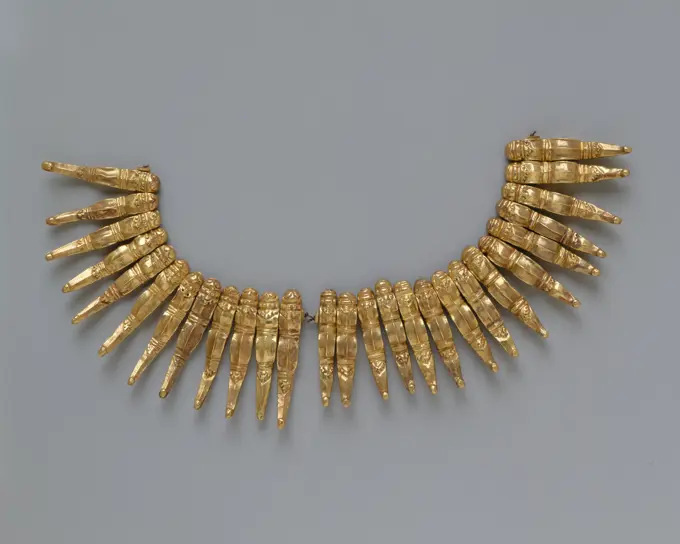
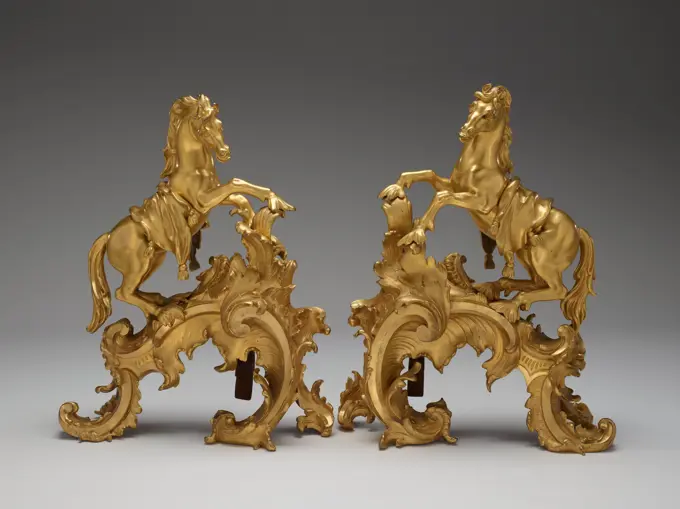
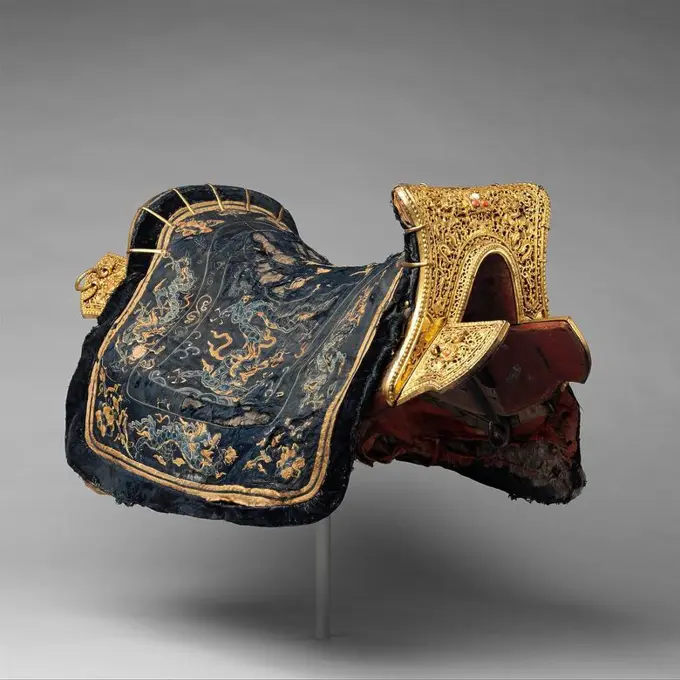
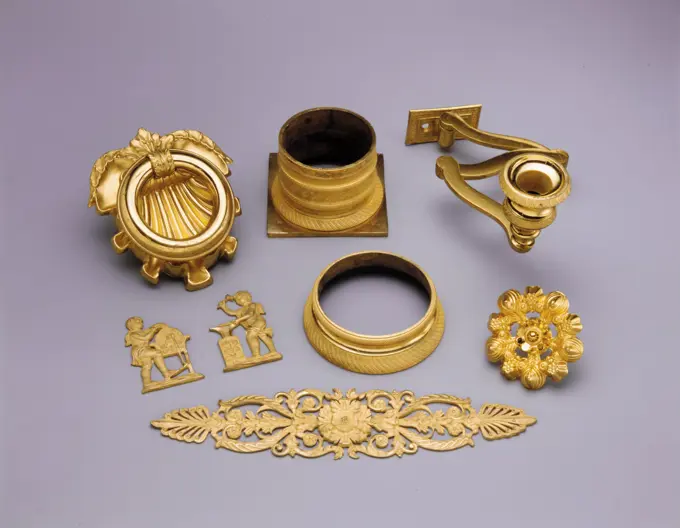
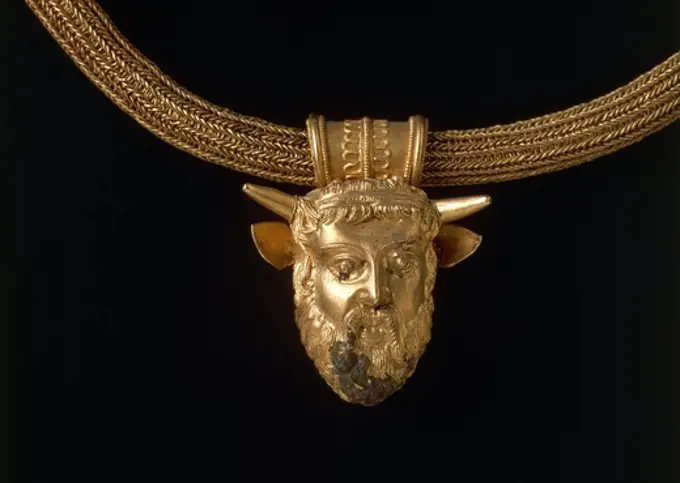
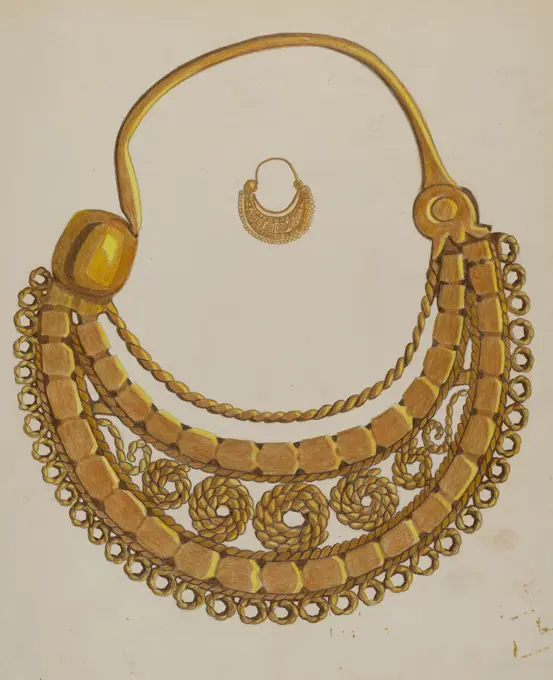
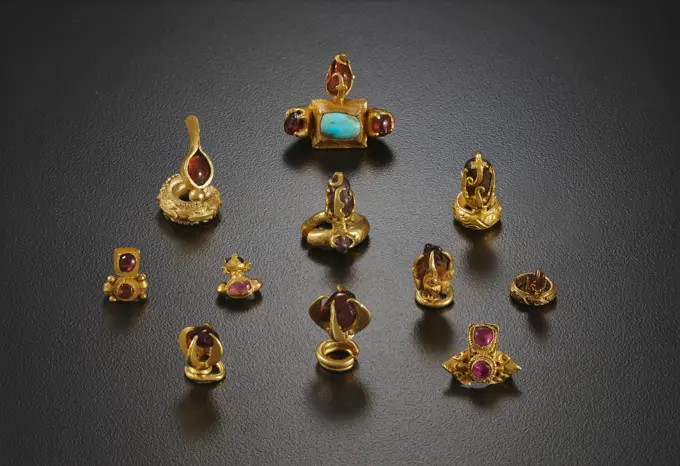
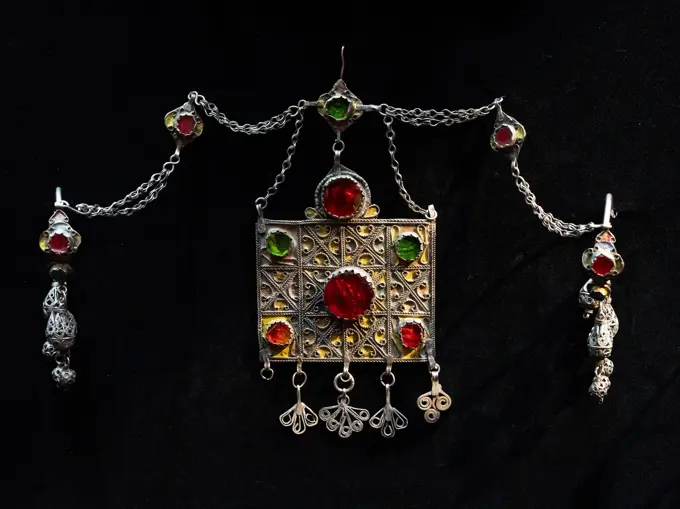
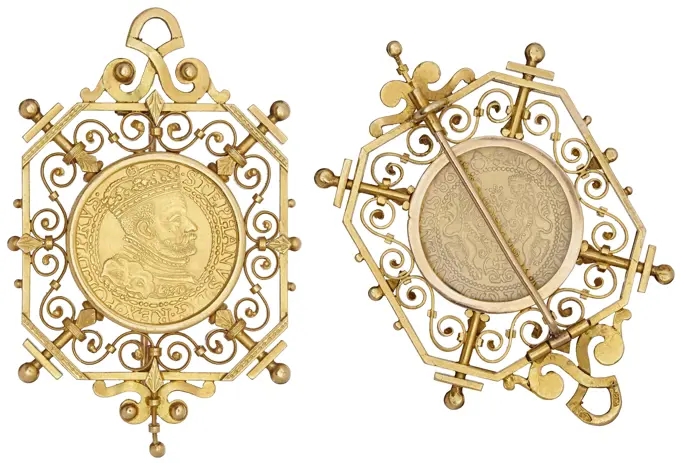
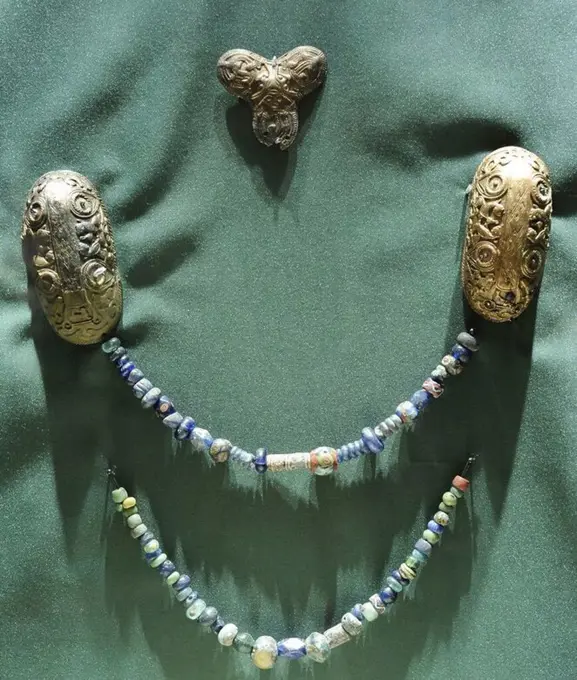
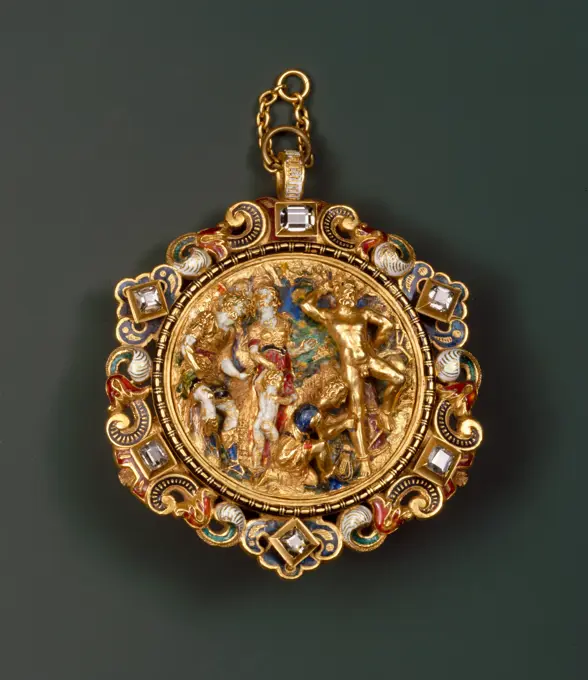
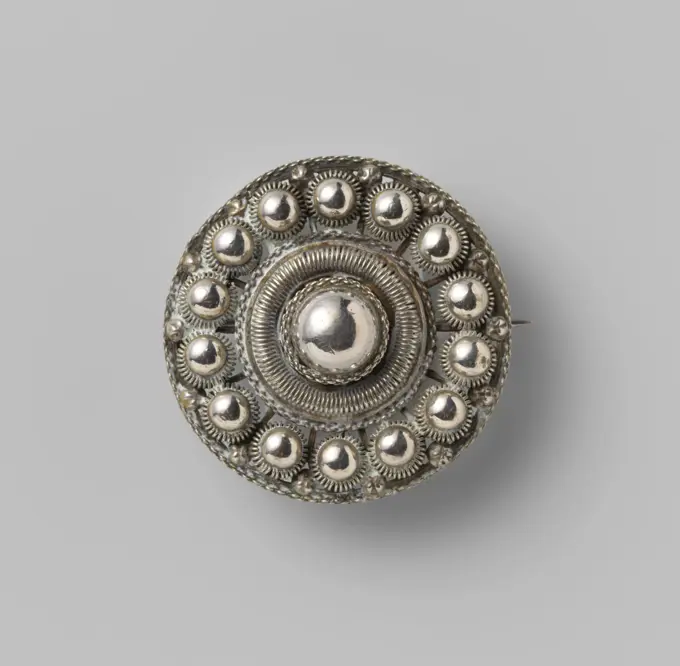
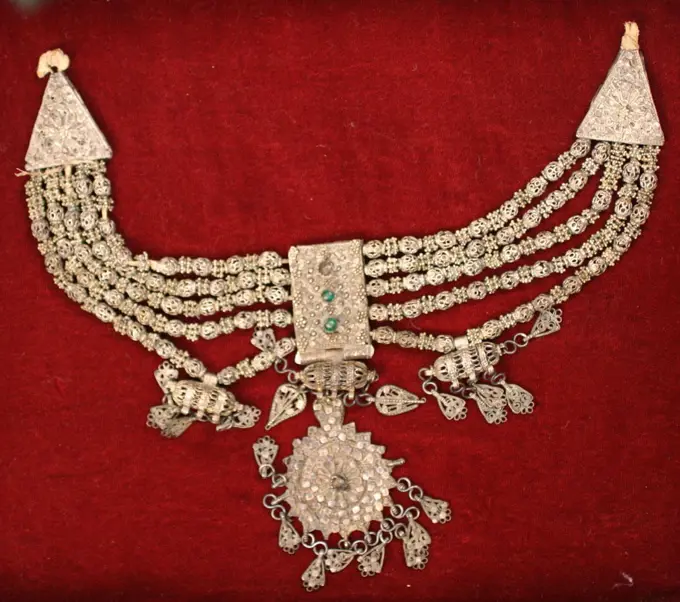
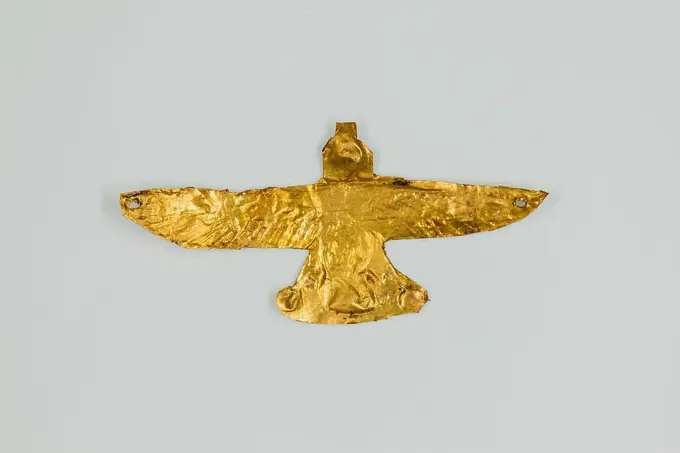
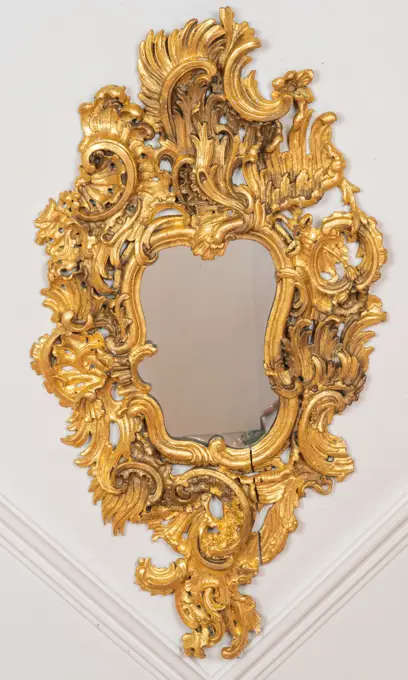
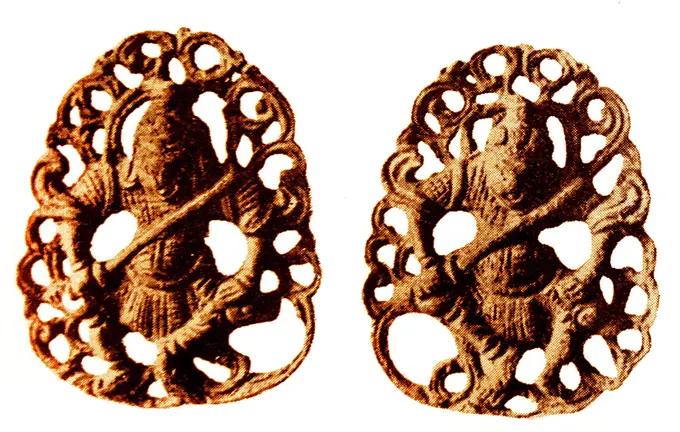
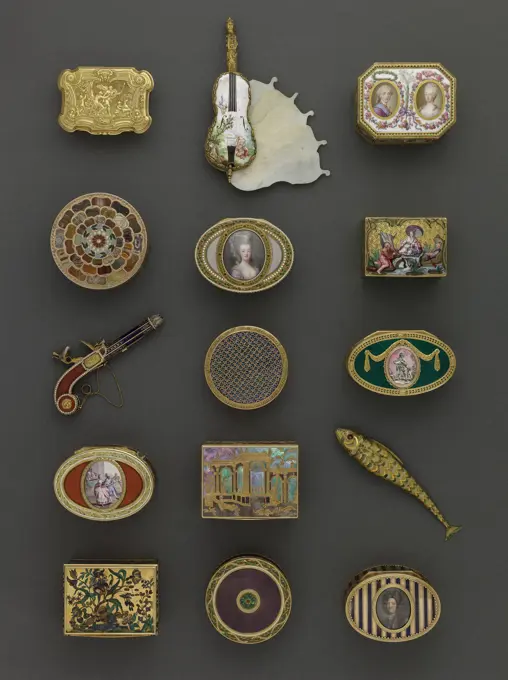
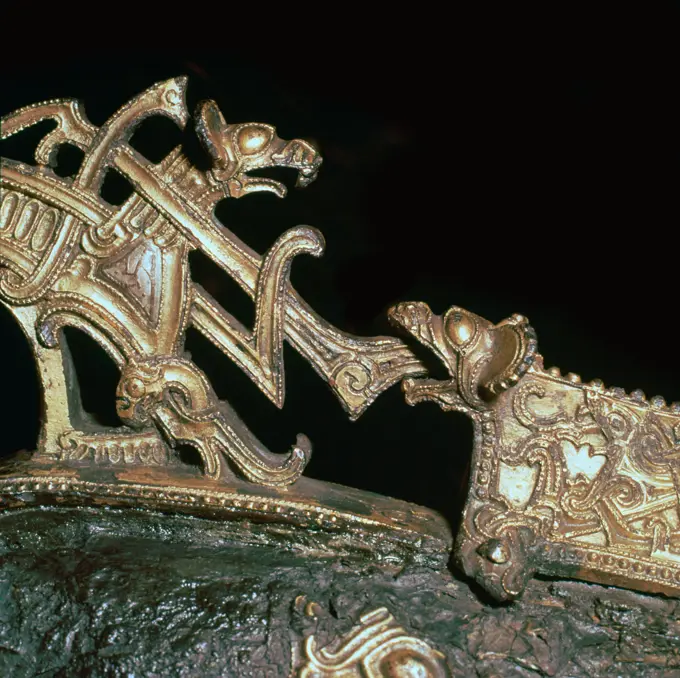
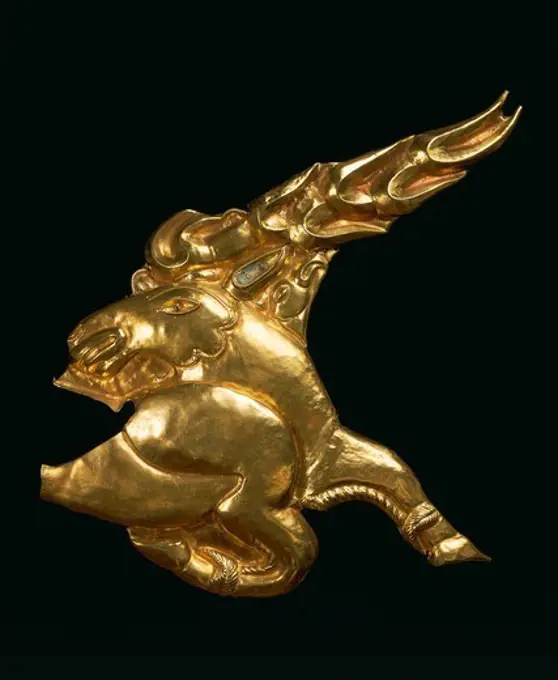
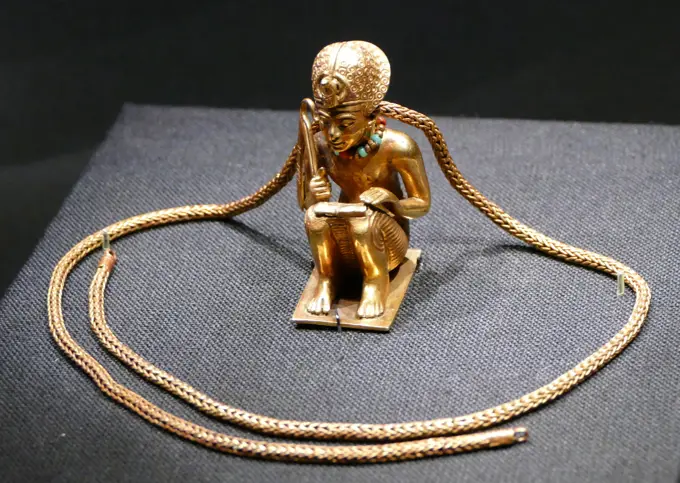
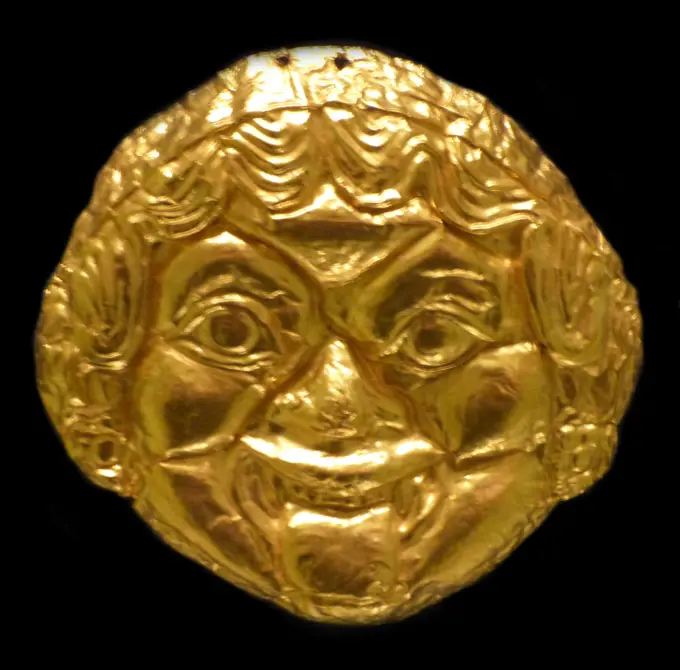
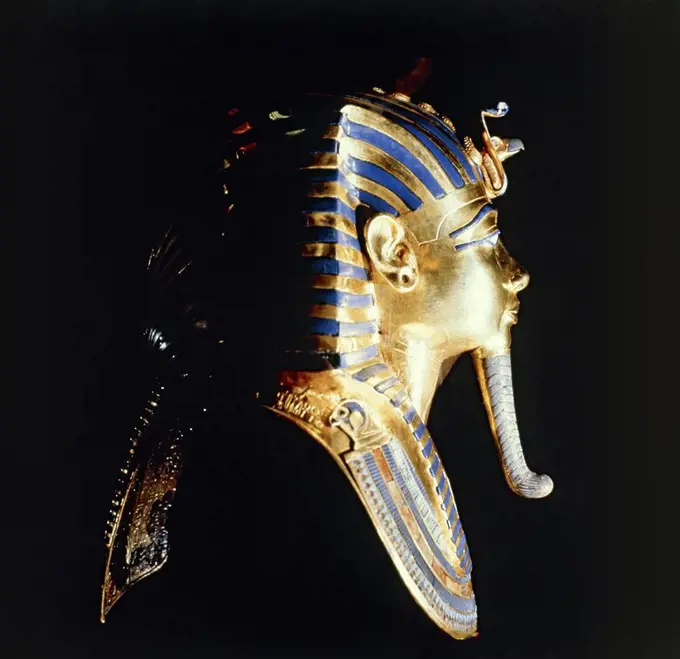
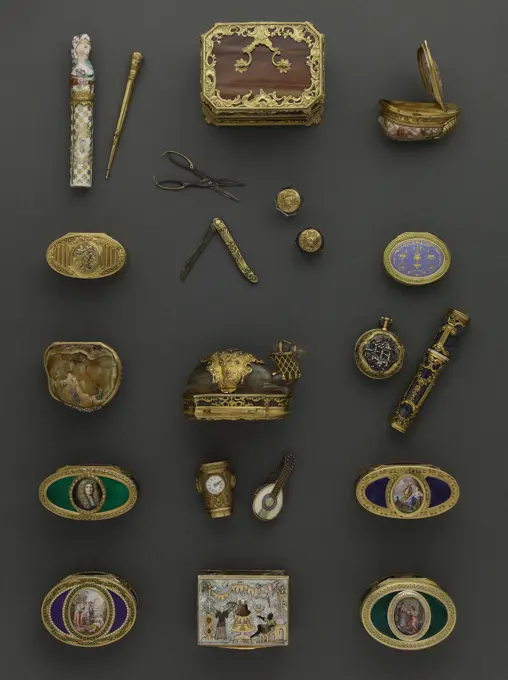
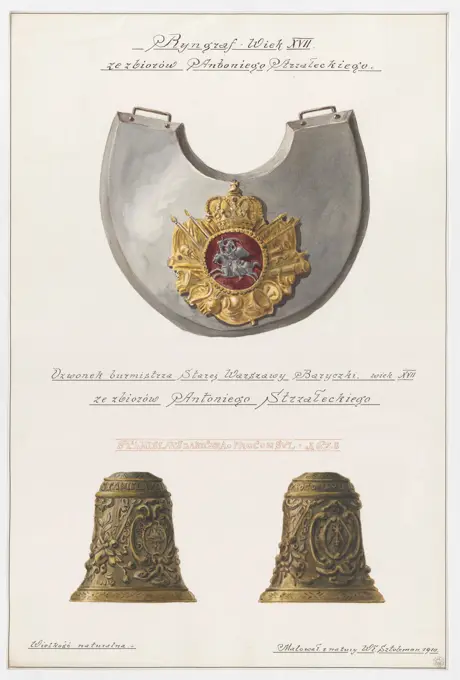
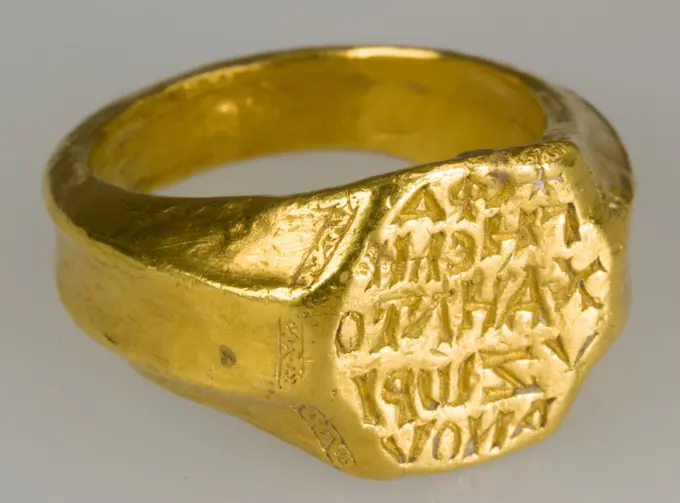
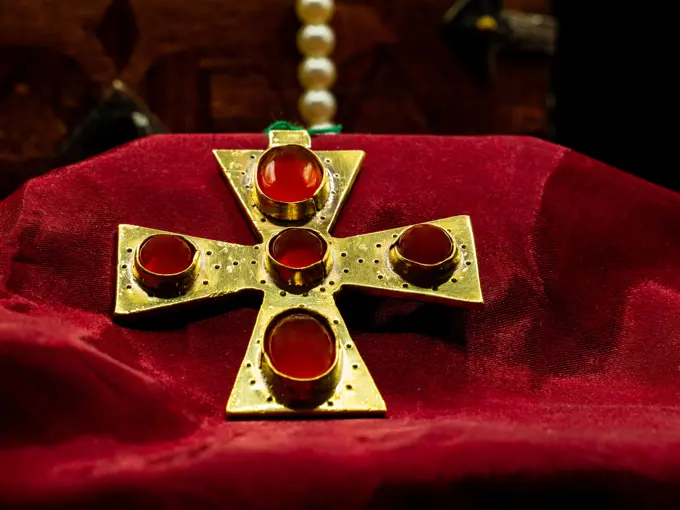
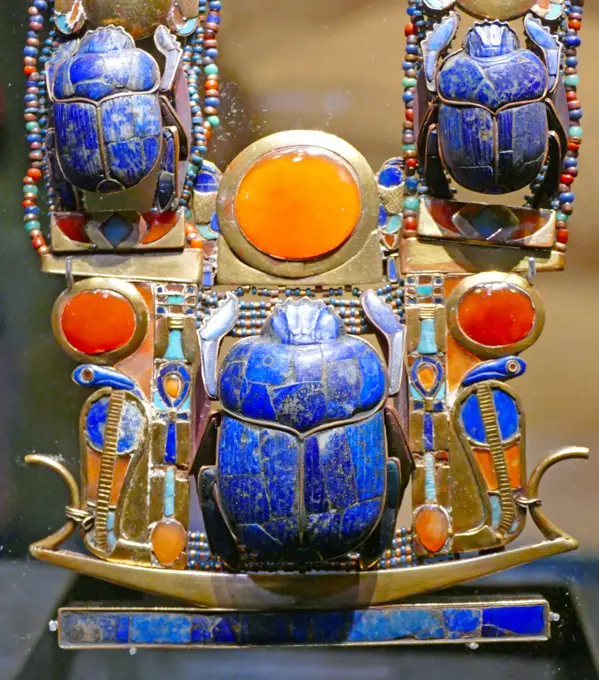
Pair of altar candlesticks. Culture: Italian. Dimensions: (.57): 35 × 6 7/8 in. (88.9 × 17.5 cm); (.58): 34 5/8 × 6 7/8 in. (87.9 × 17.5 cm). Date: ca. 1620-40. Museum: Metropolitan Museum of Art, New York, USA.Armlet (Bazuband) 1801-1900 India. Gold, diamonds, and seed pearls inset in the kundan technique, with polychrome enamel (minakari) .Adornment with Lion Heads mid-7th-9th century Northwest China/Eastern Central Asia. Adornment with Lion Heads. Northwest China/Eastern Central Asia. mid-7th-9th century. Gold. period of Tibetan rule. MetalworkBactrian Gold: Plaques Depicting a Panther Mauling an Antelope Artist Unknown Kabul Museum, Afghanistan Pair of gold, garnet, enamel, and glass earrings 2nd century B.C. Greek, Ptolemaic The earrings have terminals representing the head of Apis, the sacred Egyptian bull, identified by the sun disk and crescent set between his horns. In Ptolemaic Egypt, the cult of Apis was combined with that of Osiris to create a new Greco-Egyptian deity, Sarapis.. Pair of gold, garnet, enamel, and glass earrings 256190Pair of Ear Ornaments with Ram's Head Motif early 9th-14th century Indonesia (Java). Pair of Ear Ornaments with Ram's Head Motif 49725Gothic style buckle with rectangular plate deriving from Roman forms. The decoration reveals regional Gothic fashion. The gilded silver buckle with an eagle's head is typical of the northern Black Sea area which was settled by Crimean Goths. AD 400- 660; Kerch, Crimea, UkraineHilt Armour pieces: Pommel cap, with cloisonné decoration, upper hilt guard - upper plate, lower plate and upper hilt collar.Pair of altar candlesticks ca. 1620-40 Italian. Pair of altar candlesticks. Italian. ca. 1620-40. Gilt bronze, rock crystal. Metalwork-Gilt BronzeAn enamelled and gem set gold, eagle pendant, Islamic possibly north African 18th centuryAxtroki bowl. Gold. Late Bronze Age. Axtroki, Guipuzcoa, Spain. 12th-19th centuries BC. Archaeological Museum. Madrid. Spain.Brooch van Gold, Anonymous, c. 1900 - c. 1910 Brooch of gold, diamonds and email in the form of cornflowers in Art Nouveau style. Paris gold (metal). diamond (mineral). Brooch of gold, diamonds and email in the form of cornflowers in Art Nouveau style. Paris gold (metal). diamond (mineral).Pair of Firedogs; about 1735; Gilt bronze;Bracelet with animal ornament and coin pendants, late 19th century, 1 5/8 × 2 3/4 × 2 1/4 in. (4.13 × 6.99 × 5.72 cm) (pendant only), Silver, Benin, 19th century, More than one hundred years ago, the elite of the Danhomé Kingdom in West Africa would have worn these silver ornaments to adorn themselves and show off their wealth, and also to protect themselves from harm and evil. Fashioned by jewelers from imported silver coins, the ornaments were embellished with tiny sculptures that refer to past kings, heroic wars, and the Vodun religion. The coins attached to the ornaments date from between 1873 and 1910, bridging the last decades of the independent Kingdom and the first 15 years of French colonial rule.German anonymous. Rectangular white jade box mounted in gold. Decor of gold architectures. 1750-1760. Paris, Cognacq-Jay museum. 56058-1 Rectangular box, decor, architecture decor, white jade, bungate lacquer, gold, gold, architecture, architectureMount from the Staffordshire Hoard. Dated 6th CenturyBelt Buckle with Bovine 3rd-2nd century B.C. North China. Belt Buckle with Bovine. North China. 3rd-2nd century B.C.. Gilded bronze. MetalworkPresentation Box with Lid, 1779, 2 1/4 x 7 x 5 3/4 in. (5.72 x 17.78 x 14.61 cm), Cast and chased gold with rubies, sapphires, and jade, China, 18th centuryMiniature Broad Collar, Ptolemaic Period, Metropolitan Museum of Art, Manhattan, New York City, USA, North AmericaScandinavia. Reliquary cross. Jolster, Sogn og Fjordane. 13th century. Norway.JOYAS DEL SIGLO II AC DONADAS AL MUSEO POR ELENA STATHATOS. Location: MUSEO ARQUEOLOGICO-ORFEBRERIA. ATHENS. GREECE.Reliquary of the Corporales d'Arcavell (1516). Museum: MUSEO DE LA CATEDRAL DE URGELL.Two Sets of Necklace Beads in the Form of Stylized Insects 8th-early 10th century Indonesia (Java). Two Sets of Necklace Beads in the Form of Stylized Insects. Indonesia (Java). 8th-early 10th century. Gold. Central Javanese period. JewelryRing withSphereBraceletChevaux Marin' (seahorse) chenet, one of a pair, c. 1745-1750, 16 13/16 x 5 x 13 5/8 in. (42.7 x 12.7 x 34.61 cm), Gilt bronze, iron, France, 18th century, These andirons (firedogs) are decorated with sea-horses, which were sculpted as thoroughbred steeds, their hooves replaced with fins. The fact that sea-horses, which live in the water, are shown on fireplace equipment, refers to the ancient Greek theory that the cosmos is comprised of four, antithetical elements: fire, water, earth and air. Decorating a fireplace with sea-horses, symbols of water, would have been considered a clever juxtaposition. The concept of the four elements continued to be very much en vogue in France in the 18th century - at the same time, when science abandoned the concept, and the great chemist Antoine Lavoisier (1743-1794) paved the way for the modern periodic table of elements in his Méthode de nomenclature chimique (1787).Saddle. Culture: Chinese. Dimensions: H. including textile 13 3/4 in. (34.9 cm); L. 27 3/4 in. (70.4 cm); W. 14 1/2 in. (36.8 cm). Date: 17th-18th century.In terms of quality and style of workmanship this saddle is extremely similar to some of the best imperial Chinese saddles, such as one owned by the emperor Qianlong (r. 1736-96) and preserved in the Palace Museum, Beijing (G.171546). In addition to its very high quality, this saddle is also exceptional for having all of its original parts, including the elaborate seat cover of embroidered silk and the fittings of the saddletree. Although this type of saddle is often identified as Tibetan, the form of the saddle plates, the style of workmanship, and the type of saddletree, along with the similarity to imperial Chinese saddles, indicate it is more likely to be Chinese, perhaps from the imperial workshops. That it was used in Tibet, however, is demonstrated by the Tibetan letter ka, which is branded on the underside of the saddThe Carambolo treasure, 8th century BC, Pectoral minor, Archaeological museum, Sevilla, Region of Andalusia, Spain, Europe.rudraksha maalai, rudra seeds are encased in gold, chettinad, tamil nadu, india Copyright: xMxAmirtham/DinodiaxPhotoxWomens Pendant 17th-19th century Nepal Precious gemstones became increasingly available in the nineteenth century, and compositions became more elaborate over time.. Womens Pendant. Nepal. 17th-19th century. Gold, rubies, sapphires, emeralds and turquoise. JewelryFurniture Hardware 1820-30 Henry Kellam Hancock. Furniture Hardware. 1820-30. Gilt brass. Possibly made in France; Possibly made in EnglandCup, Tibet, China, 18th century, Bronze, Anthropology National Museum, Madrid, Spain.Gold coin pendant, AD 320s. Late Roman The gold pendant is set with a coin of Constantine the GreatVarious jewellery isolated on the white backgroundEar pendant with Haarwerk, F. Muhlenschmidt, 1841 Ear pendant with filigrein and hairwork. The stretched drop -shaped center piece is surrounded by filig train work with, among other things, horns and flowers from Zeeland buttons. Under, hanging, three mashed gold ornaments. The hook is connected by an eye at the top of the earring and is decorated with a mashed ornament and Zeeland buttons. The decoration of the hooks is different, one has a French lily as a middle part, the other a flower with volutes. The drop -shaped centerpiece shows hairwork on ivory under glass. The show is that of a box with the letters Cat, on which an urn and a mourning willow next to it. Brands on the hook with French lily: F: Klavertje 3: G = F. Gerder; to the left desired Leeuwekop; Jrl. F. Amsterdam gold (metal). ivory. glass. filigree Ear pendant with filigrein and hairwork. The stretched drop -shaped center piece is surrounded by filig train work with, among other things, horns and flowers from Zeeland . Hair comb of turtle, the back of which adorned with a gold-plated copper plate on which counterfeit pearls and robins, three gold-plated satyrkking and pendants are arranged with pearls. Eight teeth.Golden necklace with pendant in shape of head of Achelous, from Palestrina (ancient Praeneste), Rome province, ItalyTulita Westfall, Gold Earring, c 1937 Gold EarringGem BirdRingGold sheet in the shape of a bird. Inca culture (1400-1533 AD). Peru. Museum of the Americas. Madrid, Spain.Buckle, 1900s. China, 20th century. Gilt brass, engraved and set with semi-precious stones; overall: 8.4 cm (3 5/16 in.).Berber diadem from Djebel Siroua Berber diadem from Djebel Siroua, Morocco,Corral del Carbón , al-fundaq al-yadida, 14th century, Granada, Andalusia, Spain Copyright: xZoonar.com/BartomeuxBalaguerxRotgerx 21956771Cutout. Designer: Lockwood de Forest (American, New York 1850-1932 Santa Barbara, California). Dimensions: H. 6 1/8 in. (15.6 cm)W. 6 7/8 in. (17.5 cm). Date: ca. 1892.A key figure in the Aesthetic movement, New York-born artist Lockwood de Forest (1850-1932) was very inspired by Indian arts and crafts, and created the Ahmedabad Woodcarving Company in Gujarat, which exported many items to the United States. These cut and chased brass cutouts, designed by de Forest, were based on examples found in wood, plaster, and stone in Indian architecture. In his designs, they would have been used as ornament on architecture or furniture. Museum: Metropolitan Museum of Art, New York, USA.Wall light (one of a pair). Culture: French, Vincennes and Chinese. Dimensions: Height: 23 in. (58.4 cm). Date: birds 1662-1722, flowers and mounts ca. 1750.The parrots on pierced rockwork bases are of Chinese porcelain from the K'ang Hsi period (1662-1722), mounted as wall lights in Paris in the mid-eighteenth century. They are a standard export model of which a number of examples are known. Similar pairs of parrots were mounted in Paris at various periods as candelabra: a pair mounted about 1720 as two-branch candelabra is in the Lesley and Emma Sheafer Collection at the Metropolitan Museum (see 1975.58.1, .2); a pair mounted about 1750 as three-branch candelabra with soft-paste flowers is in the Historisches Museum, Basel;1 a pair mounted about 1770-80 as two-branch candelabra is in the Musée Nissim de Camondo, Paris;2 and another pair mounted in the nineteenth century as two-branch candelabra is in the Victoria and Albert Museum, London3.On the wall light with the parrot faBelt, 1800s. Yugoslavia, Dalmatia, 19th century. Silver; overall: 9 x 50.7 cm (3 9/16 x 19 15/16 in.).Gdańsk ducat. Goebel Jan (1578-1588), mint tenant, Goebel, Kasper (fl. 1577), mint tenant, Stefan I Batory (król polski ; 1575-1586), rulerTrefoil brooch, Hovinsholm, Ringaker k. Hedmark, 9th/10th century. Tortoise Brooch, Ringsaker k., Hedmark, 9th century. Beads, Hovland, Lavik k., Vestfold, Viking Age. Historical Museum. Oslo. Norway.Hat Badge Mounted as a Pendant with the Flaying of Marsyas first half 16th century and 1859-86 Albert André French. Hat Badge Mounted as a Pendant with the Flaying of Marsyas. Albert André (French, Lyons 1869-1954 Laudun). first half 16th century and 1859-86. Gold, enamel and diamondsGoese button of silver, c. 1919 - c. 1952 Goese button of silver with a hook closure. Worn by Marjan Unger's mother. Netherlands silver (metal) Goese button of silver with a hook closure. Worn by Marjan Unger's mother. Netherlands silver (metal)Silver and Blue Enamel Pendant, James Cromar Watt (Aberdeen, Scotland, 1862 - 1940)The Lothair Crystal, an engraved rock crystal made for King Lothair II of Carolingian. Dated 9th CenturyOMAN, GOLD JEWELRYPendants with chased bosses and filigree decoration. This type occurs in Gotland only. 11th century. From Stora Mafrids, Parish of Va_stergarn, Sweden. Sweden History Museum.Necklace 19th century In jewelry, the Arabian Peninsula retained very old traditions with remarkable fidelity. In Yemen, in particular, this can be explained by the fact that the practice was solely the preserve of the Jewish population, among whom the art was passed from father to son. This necklace is of a well-known type that was presented to a girl once she reached the marriage age. These necklaces always have parallel rows of small beads joined by rectangular plaques (here, there is one central plaque set with green glass) and with triangular endpieces decorated in filigree. Amulet cases are suspended from the lowest strand of beads; on this example, there are three amulet cases, and a star-shaped pendant hangs from the central one. Techniques remained traditional too. The shot-constructed beads in this example are most directly a survival from medieval Islamic times, but can be traced even farther back.. Necklace. 19th century. Silver. Made in Yemen. JewelryBa-bird amulet. Dimensions: l. 4.5 cm (1 3/4 in.) × h. 2.1 cm (13/16 in.). Dynasty: Dynasty 26-29. Date: 664-380 B.C.. Museum: Metropolitan Museum of Art, New York, USA.. The back plate is shaped as a shield with a wide edge of collapse and one after another along curly volutes, some smooth, decorated with leaves, others with a structure of rows of bulbs. The latter stem from horns of pleats. Between the volutes are fields of railing with rosettes on a roughened ground. Stealing with tulips in the middle of the field in the middle of winding, which depend on the volutes above. The plate is closed on top and bottom by fanning, foam and leafy motifs. The crowning award is flanked by two eagles seated on the volutes with headlines dawned towards each other. On the foam motif on the underside, the sufficiently built up with leaves made up with leaves are attached, whereby that is turned to the left and that from B to the right. The arm carries a large, hexagonal fat catcher with a round floor in the middle and an imposed, profiled outer edge. On top of that rests with a round, cured foot even hexagonal, molded, vase-shaped fat catcher with profiled lower Ernest Marret (died in 1853) and Gustave Baugrand (1826-1870). Party (necklace and earrings). Now, onyx, enamel. Around 1860. Museum of Fine Arts of the City of Paris, Petit Palais. Fashion accessory, jewelryMirror;  beginning of the 18th century (1700-00-00-1710-00-00);Inkstand. Pakistan, Panjab, Sialkot or Gujrat, Kotli Loharan, circa 1850-1870. Tools and Equipment; stands. Iron overlaid with gold wireSiren Earrings, Gold, Each earring with circular ornament in open-daisy design from which hangs a fantastic figure (head and upper body, human with wings and feet of a bird)., Rome, Italy, ca. 1870, jewelry, Decorative Arts, Pair of earrings, Pair of earringsGilt Bronze Ornaments from Koryo (Goreyo) (Goreyo) dynasty (918-1392).Earrings 1870-90 American. Earrings 110743French, Swiss, German goldsmiths and .... boxes and goldsmiths. 18th century. Paris, Cognacq-Jay museum. 56640-1 German, box, bourbon, seashell, wife, French family, woman, French, object, kneeverie, golden, pistol, fish, portrait, king, Swiss, celloPomander. French, Blois. Date: 1645-1655. Dimensions: 3.7 × 1.9 cm (1 7/16 × 3/4 in.). Gold and enamel. Origin: France. Museum: The Chicago Art Institute, Chicago, USA.Detail of a Viking neck-yoke for a pair of horses, 10th century Artist: UnknownPre-Columbian Gold pendants. Old traditional pieces dating back to 500AD. The Gold Museum. San Jose. Costa Rica. Central America.Centrepiece, work of the Parisian silversmith Claude Ballin the Younger (1660-1754), 1723. Detail. The State Hermitage Museum. Saint Petersburg. Russia.pair of gold earrings, Ermegeira cave, Torres Vedras, 3000-2500 BC, Portugal, Huelva Museum, Huelva, Andalusia, Spain.Prehistory, Hungary, Iron Age. Getae and Thracian civilization. Gold figure of deer. From Zoldhalompuszta.Siren Earrings Pair Of Earrings; Made by Fortunato Pio Castellani & Sons (Italy); Italy; gold; L x W x D (each): 5 x 1.7 x 1 cm (1 15/16 x 11/16 x 3/8 in.)Silver excavations near Walka Łęskiego. unknown, draughtsman, cartoonistWatch ca. 1660 Watchmaker: Johan Ulrich Schmidt Until 1702 the maker of small gold objects ornamented with enamel and set with jewels belonged to the same Augsburg guild of goldsmiths as the maker of silverware. As a general rule goldsmiths were exempt from marking their enameled objects owing to the danger of cracking the enamel. The maker of the jewel-like case of this tiny watch thus remains anonymous. The maker of the movement may have been the son of Nikolaus II Schmidt, but he was admitted to the guild of clockmakers as the son-in-law of the Augsburg clockmaker Konrad Kruetzer rather than by direct inheritance. As the son of an Augsburg clockmaker, he would have enjoyed advantages that were not otherwise granted to aspiring clockmakers.. Watch 194111Great Migration (375-550 AD) Timboholm Treasure. 7 kilo heavy gold. Contains gold bars and 26 spirals. Varnhem, Timboholm, Sweden. Historical Museum. Stockholm. Sweden.Blue Bead BirdRingCrouching gold figure of King Amenhotep III. reign of Tutankhamun 1336-1326 BC.Locket, c. 1700. India, Rajputana, Rajastahn, Jaipur (), early 18th Century. Gold and enamel; case: 3.1 x 3.5 cm (1 1/4 x 1 3/8 in.).Cross, Lothar 980 A.D. Antiques-Misc. Fifty guinea jewels: brooch, pendant, ring and bracelet in diamond, pearl, opal, sapphire and emerald. Chromolithograph from Edwin Streeter's Gems Catalog, Bond Street, London, circa 1895.Set of natural mineral gemstones of a certain typeGold repousse gorgoneion. The holes at the end perhaps indicate that it was an applique sewn onto a garment. Mid 6th century BC.shot of a pair of golden brooches with gems for medieval antique clothing used for decoration on red velvet shot of a pair of golden brooches with gems for medieval antique clothing used for decoration on red velvet Copyright: xZoonar.com/MarcoxDixBenedettox 22387615Gold mask of Tutankhamen. Museum: ARCHAEOLOGICAL MUSEUM, Bayreuth, EGYPT.Bust; woodFrench, Swiss, German and English goldsmiths. Boxes and goldsmiths. 18th century. Paris, Cognacq-Jay museum. 56640-4 German, box, chisel, knife, dromedary, epingle, french, musical instrument, mandoline, object, ofevrery, golden, Switzerland, animalGorget of an officer of the Lithuanian foot guards from the 18th century and hand bell with the Baryczka coat of arms with the inscription: Stanisław Bariczka Prokonsul 1628, from the collection of Antoni Strzałecki ; drawing for the publication: Dominika. Sztolcman, Władysław Roman (1873-1950), painterView of a gold jewelry seen from the storeLooped EarOrnamentV-shaped EarOrnamentGold Signet Ring of Michael Zorianos ca. 1300 Byzantine A Michael Zorianos was the first officer of the despot of Epiros in west-central Greece and one of the founders of a church in the town of Mokista sometime around the year 1300. Perhaps this ring belonged to him and was used to seal official documents.. Gold Signet Ring of Michael Zorianos. Byzantine. ca. 1300. Gold. Metalwork-Goldclose up shot of golden jewel pendant ancient medieval set with red ruby gems representing a cross close up shot of golden jewel pendant ancient medieval set with red ruby gems representing a cross Copyright: xZoonar.com/MarcoxDixBenedettox 22386834Little model crown placed on a linen canvasRing collar with a riding fight in high relief, anonymous, c. 1700 Silver ring collar. On the Half Maan-shaped collar, a riding fight in high relief has been presented. Augsburg (possibly) silver (metal) Silver ring collar. On the Half Maan-shaped collar, a riding fight in high relief has been presented. Augsburg (possibly) silver (metal)Hungary, Koýszeg, Koszeg, Castle, Holy Crown of Hungary, replica,Gold Inlaid Pectoral Chain, and Counterpoise with Lapis Scarab Flanked by Uraei. from the tomb of King Tutankhamen 1336 - 1326 B.C.