Intricate Lace Borders and Textiles

A collection of vintage lace borders and fabrics, showcasing floral and geometric patterns in elegant needle and bobbin lace techniques from the 17th to 18th centuries.

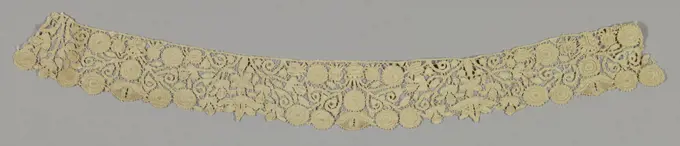
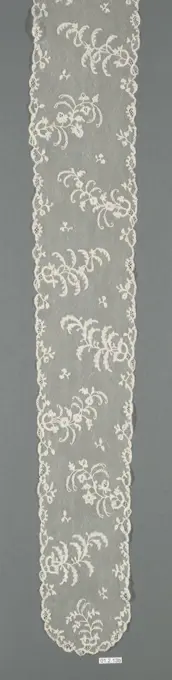
Lappet, Medium: linen Technique: bobbin lace, Mechlin style, Northern Europe, 18th century, lace, Lappet
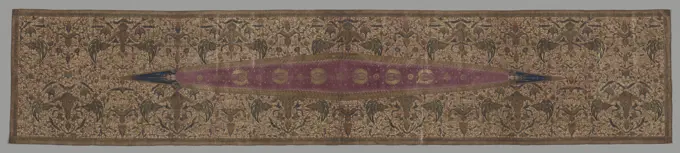
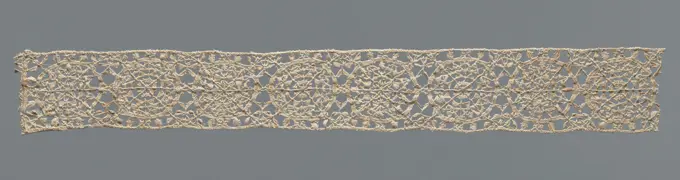
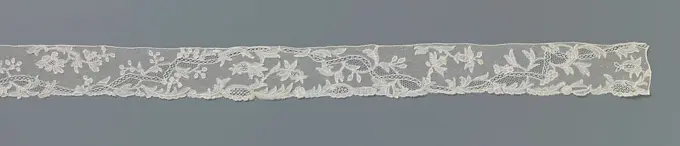
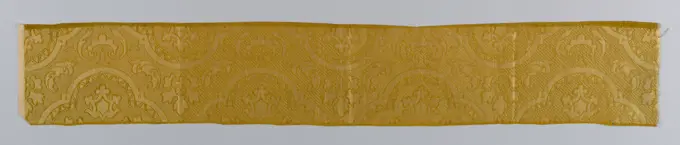
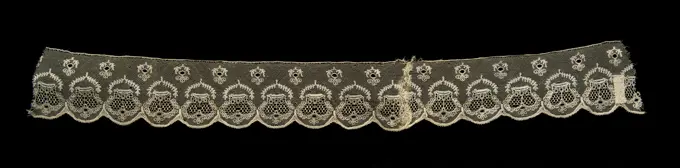
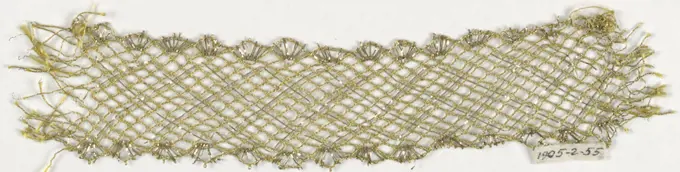
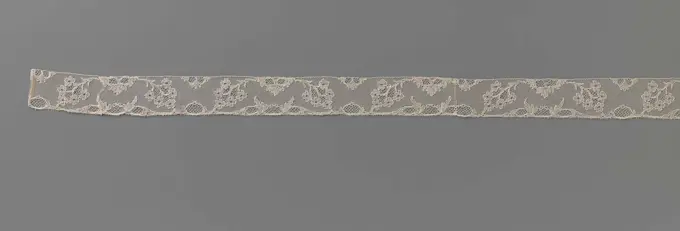
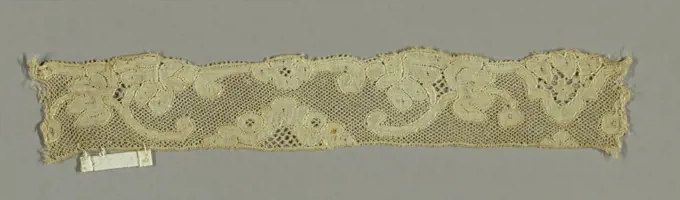
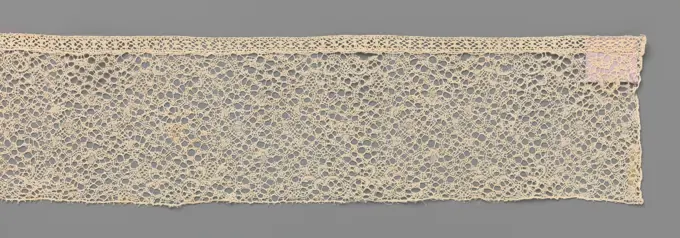
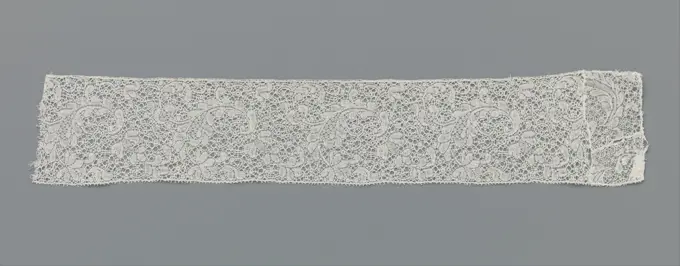
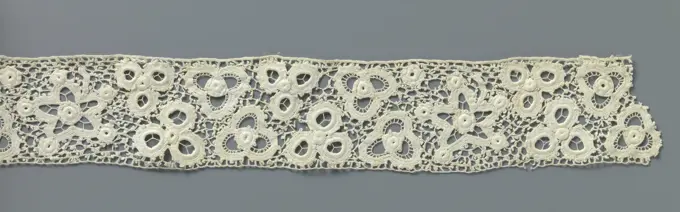
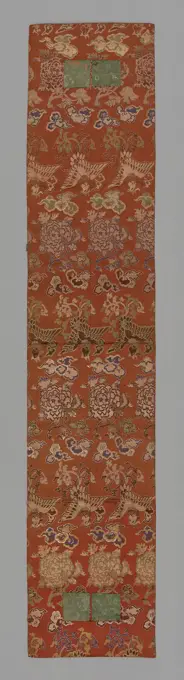
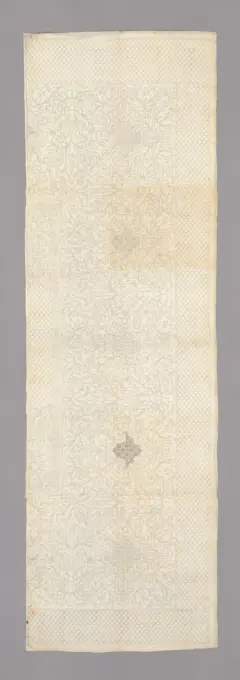
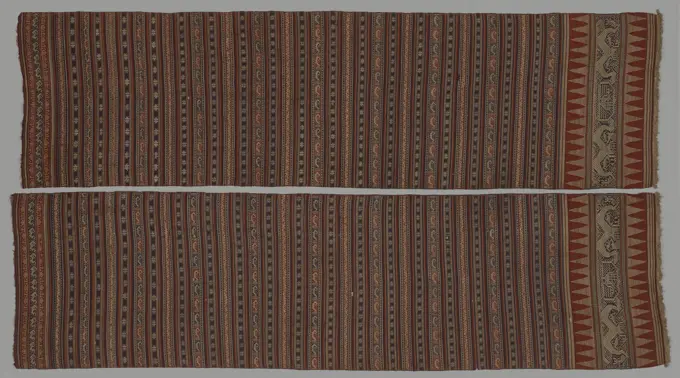
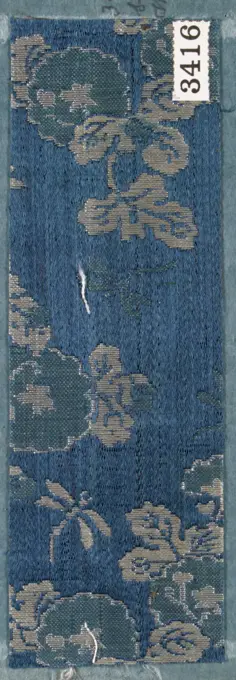
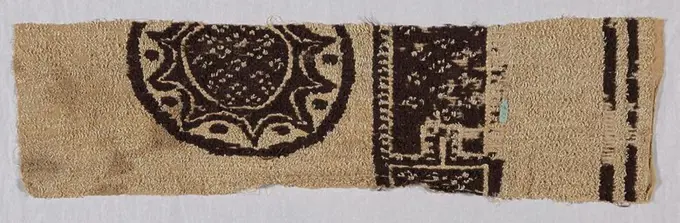
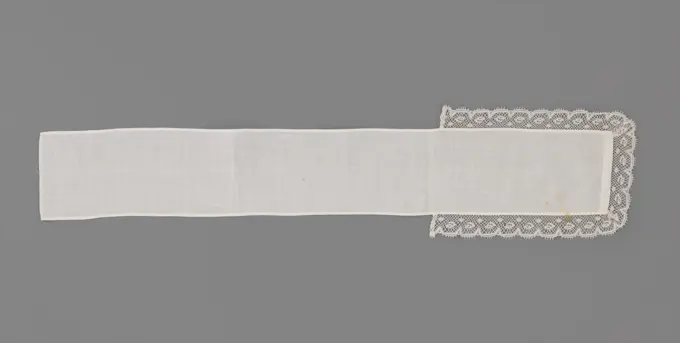
Border, Medium: linen Technique: needle lace (punto in aria), Band of floral and foliated forms densely spaced and connected by brides. Modes: portes., England, 17th century, lace, BorderEdging early 18th century Flemish. Edging 226060Gallon;  18th century (1701-00-00-1800-00-00);Textile, Medium: cotton Technique: printed on plain weave, Single flower and leaf pattern in red and black on a dark brown ground. Light brown outlines of the flower motif radiate out and fill the ground., USA, 1870-80, printed, dyed & painted textiles, TextileLappet, Medium: linen Technique: bobbin lace, Mechlin style, Northern Europe, 18th century, lace, LappetBreast Wrapper for a Courtier (KembenSemen)Hebrew ritual lace (one of four) early 18th century Italian, Burano. Hebrew ritual lace (one of four). Italian, Burano. early 18th century. Silk, needle lace. Textiles-LacesBorder, Medium: linen Technique: grid of laid cords with needle lace (reticella style), Border of square compartments filled with repeated floral form and edged with narrow border of zigzag design at either side., Italy, late 16th-early 17th century, lace, BorderFragment of lace. unknown, authorMutsenstrook van kloskant met zigzag-rivière.Strip natural colored Brussels climbing side. A river in zigzag line is crossed by spiral raft, enclosing impeller-shaped medallions. The motifs are connected by a draft ground. A coarse hexagonal soil has been applied in the Rivieres. On the fields that are bounded by the Rivier are twigs, to which flowers in the form of pomegranates, pears or winged insects. The strip is probably used or made for a hat.Border, Medium: linen Technique: bobbin lace, Brussels style, Duchesse style lace with a pattern of flowers, buds and leaves., Belgium, 19th century, lace, BorderBorder, Medium: linen Technique: needle lace, 6-sided reworked ground, Border of Point de France with freely spaced floral shapes. Pattern outlined by cordonnet., France, early 18th century, lace, BorderTrimming (Italy); silk, metallic thread, metal stripsNeedlepoint Lace Flounce, late 17th-18th century. England, late 17th-18th century. Lace, needlepoint: linen ; average: 35.7 x 302.3 cm (14 1/16 x 119 in.).Galloon 18th century French. Galloon. French. 18th century. Silk and cotton. Textiles-TrimmingsBobbin Lace Edging, 18th century. Belgium, Binche, 18th century. Lace, bobbin: linen; average: 6.1 x 143.2 cm (2 3/8 x 56 3/8 in.).Border, Medium: linen Technique: needle lace, 6-sided reworked grounds, Border with a garland of scrolled floral and foliated forms in a repeat pattern., France, mid-18th century, lace, BorderBorderGalloon 18th century French. Galloon 214015Towel scarf, 19th century, 13 1/2 x 111 in. (34.3 x 281.9 cm), Embroidery on linen with silk, Algeria, 19th centuryNarrow embroidered strap unknownTrimming (Italy); silk, metallic threadBorder, Technique: bobbin lace, Bobbin lace border, floral scroll; early 19th century Maline, early 19th century, lace, BorderTrimming (France); silkScarf, early 1900s. Algeria, early 20th century. Embroidery: silver strips on silk tabby ground; overall: 242.5 x 60.4 cm (95 1/2 x 23 3/4 in.).Border 18th century Flemish, Mechlin. Border 218192Border, Medium: linen Technique: bobbin lace, Binche style with snowflake ground, Binche style border with dense, swirling asymmetric floral pattern., early 18th century, lace, BorderTrimming, Medium: silk, metallic thread Technique: woven, Design of triangles with a lace border on one side., France, 17th century, trimmings, TrimmingSample (USA); Manufactured by Orinoka Mills (United States); 1989-80-39Galloon 17th-18th century Unknown. Galloon 213767Bobbin Lace with design known as "Crown Derby", 19th century. England, Bedfordshire, 19th century. Lace, bobbin; overall: 33 x 6.4 cm (13 x 2 1/2 in.).Band late 15th century Spanish. Band 466301Trimming, Medium: metal-wrapped silk thread, flat metal strips Technique: bobbin lace, Gold color lace border in a design of diagonally-crossing lines with scallops on both edges. In yellow silk and metallic thread., Italy, 17th century, lace, TrimmingFringe late 18th century Italian. Fringe 225113Fringe (Italy); gilt foil on silkFringe, Medium: silver foil on a silk core Technique: woven, Silver fringe with a plain-woven heading and a skirt of loops., Italy, 18th century, trimmings, FringeBorder, Medium: linen Technique: bobbin lace, Mechlin style, N. Europe, 18th century, lace, BorderNeedle's Engageante, Anonymous, c. 1760 - c. 1780 In a widened middle is a symmetrical three -part branch, from which a wavy branch with sliding scales originates. From the lace triangles are formed by a wavy ribbon, rosters and a fine and varied grid-Rivière, deep into the ground. Alençon side. France linen (material) Alençon Lace In a widened middle is a symmetrical three -part branch, from which a wavy branch with sliding scales originates. From the lace triangles are formed by a wavy ribbon, rosters and a fine and varied grid-Rivière, deep into the ground. Alençon side. France linen (material) Alençon LaceStrook kloskant met boogje van vergeet-mij-nietjes.Strip natural colosside: Mechelen side. The repetitive and symmetrical pattern consists of an arc shaped by two branches with forget-me-staples, which steal from a halved flower along the top of the strip. Middle under the bow lie along the underside of the strip three connected oval cartouches. Between the consecutive pattern with arcs is a slightly smaller halved flower and the right below, along the bottom, an oval cartouche. The motifs are connected by a fine Maas soil. The motifs are made in linseed with large recesses such as flower hearts and with thicker and shiny contour wires. Two different ornamental grounds have been applied in the cartouches and between the flour branches. Upper and bottom are straight finished, along the underside picots.Fragment, Medium: linen Technique: bobbin lace, Mechlin style, N. Europe, 18th century, lace, FragmentFragment (possibly England); linenOosters tapijt.Oriental carpet in runner format, the midfield of which is decorated with a grid pattern. Rosettes are in the hair of the windows. The edge is decorated with rigid floral ornaments.Trimming (Italy); silk, metallic threadStrip bobbin with a jumble of motifs, anonymous, c. 1675 - c. 1699 Strip of natural-colored bobbin, binche side. The repeating pattern consists of Wirwar made of small motifs made with different decorative grounds. The motifs are connected by an irregular decorative land, a snowflake land. The thin, very sparingly used fullwork is made in linen battle with openwork edges. The underside of the strip is straight finished and provided with picots. The top is finished with a separate strap. Southern Netherlands linen (material) Bobbi Lace / Binche Lace Strip of natural-colored bobbin, binche side. The repeating pattern consists of Wirwar made of small motifs made with different decorative grounds. The motifs are connected by an irregular decorative land, a snowflake land. The thin, very sparingly used fullwork is made in linen battle with openwork edges. The underside of the strip is straight finished and provided with picots. The top is finished with a separate strap. Southern NetherlandsShoulder Cloth(Selendang)Strip bobbin with hanging leaves and large spiders, anonymous, c. 1750 Strip of natural-colored bobbin, binche side. On a ringed snowflake ground there is a row of one -sided oriented hanging feathered leaves with a flower at the top. Top and bottom of the strip are straight finished, with the bottom with picots. One short side is equipped with a zoompje. On this side of the strip runs close to a width. Southern Netherlands linen (material) bobbin lace / Binche lace / large snowflake ground with ring Strip of natural-colored bobbin, binche side. On a ringed snowflake ground there is a row of one -sided oriented hanging feathered leaves with a flower at the top. Top and bottom of the strip are straight finished, with the bottom with picots. One short side is equipped with a zoompje. On this side of the strip runs close to a width. Southern Netherlands linen (material) bobbin lace / Binche lace / large snowflake ground with ringPassementerie 18th century Italian. Passementerie 219381Piece 18th century Japan. Piece 71713Kloskant intermediate mate with zigzag line, anonymous, c. 1875 - c. 1949 Piles of Natural -colored bobbin side: Mechelse side. In the middle of the fine grid, a Mechelen soil (also known as ice soil), an openwork band runs in Zigzaglijn, cut over by two types of rosettes. Belgium linen (material) bobbin lace / Mechlin (lace) Piles of Natural -colored bobbin side: Mechelse side. In the middle of the fine grid, a Mechelen soil (also known as ice soil), an openwork band runs in Zigzaglijn, cut over by two types of rosettes. Belgium linen (material) bobbin lace / Mechlin (lace)Border 18th century Flemish. Border. Flemish. 18th century. Bobbin lace. Textiles-LacesFragment late 17th century Flemish. Fragment 212508Naaktslak; Lombard album.Slug (Limax Sp.).Pair of lappets 18th century Flemish. Pair of lappets 212683Strip crocheted side with five -pointed stars and flowers made with open circles, anonymous, c. 1890 - c. 1909 Part of a strip of natural -colored Irish crocheted side. The original, repeating, pattern consists of a double row with a total of eight triangular floral motifs made with open circles, interspersed with one five -pointed star with a circle in the middle and a circle on each point. Crochet irregular mesh soil with picots. At the top and bottom are finished with a straight edge. Ireland cotton (textile) Part of a strip of natural -colored Irish crocheted side. The original, repeating, pattern consists of a double row with a total of eight triangular floral motifs made with open circles, interspersed with one five -pointed star with a circle in the middle and a circle on each point. Crochet irregular mesh soil with picots. At the top and bottom are finished with a straight edge. Ireland cotton (textile)Galloon 18th century French. Galloon 213910Border, Medium: linen Technique: needlework on gauze weave, Narrow border of heavy net embroidered with a pattern of confronted animals., Italy, 16th century, lace, BorderTrimming (France); silkStrip late 18th century Flemish. Strip. Flemish. late 18th century. Bobbin lace, point d'Angleterre. Textiles-LacesFragment (France); silk, metallic; Warp x Weft: 40.4 x 6.2 cm (15 7/8 x 2 7/16 in.); 1896-2-64Rokzoom of tulle embroidered with white beads. Rokzoom made of tulle with beads embroidered. Between the edges of continuous round beads run diagonally, as shaded, wide webs of long beads, interspersed by jobs of round beads.Ôhi (Stole) Made 1801-1825 Japan. Silk compound weave with ground of soft red loosely woven satin. .Fragment 17th century Italian, Sicily. Fragment. Italian, Sicily. 17th century. Silk on cotton. Textiles-EmbroideredStrip Application side with moes and various flowers, anonymous, c. 1850 - c. 1870 Strip of natural -colored application side: needle side applicated on mechanical tulle. Strooi pattern with coarse mosjes on a fine hexagonal Maas soil. The faintly scalloped lower edge stems from leaf branches with flowers in different shapes and sizes. Motives with relief contours of wide -founded wire bundles. Ornamental stitches in the flowers. The top is finished with a separate strap. Brussels linen (material) Strip of natural -colored application side: needle side applicated on mechanical tulle. Strooi pattern with coarse mosjes on a fine hexagonal Maas soil. The faintly scalloped lower edge stems from leaf branches with flowers in different shapes and sizes. Motives with relief contours of wide -founded wire bundles. Ornamental stitches in the flowers. The top is finished with a separate strap. Brussels linen (material)Trimming, Medium: silk Technique: woven, Red and tan trimming fragment showing a central band ornamented with touching rings and placed between red stripes., France, 18th century, trimmings, TrimmingÔhi (Stole) Made 1801-1825 Japan. .Bobbin Lace Lappet, 18th century. Belgium, Mechelen, 18th century (Louis XV period). Lace, bobbin: linen; average: 105.5 x 9.9 cm (41 9/16 x 3 7/8 in.).Needlepoint (Burano Point) Lace Insertion, 18th century. Italy, Burano, 18th century. Lace, needlepoint: silk; average: 7 x 115.6 cm (2 3/4 x 45 1/2 in.).Bedcover (Unfinished in three sections) Made 1701-1800 France. Cotton, plain weave, quilted in parts, design stamped in ink, lined with cotton, plain weave .Trimming (Italy); silk, metallic threadYoung Mans Dancing Waist Wrapper (Bidak)Textile (USA); Manufactured by Merrimack Manufacturing Company; cottonLace, 1700s, maker unknown. Bequest of Mrs Alice Bakewell, 1965.Band (France); linenCap streamer, Technique: bobbin lace, Along with 1974-52-43, makes up a pair of bobbin lace lappets, floral vine; late 18th century Maline, late 18th century, lace, Cap streamerTextile 19th century Japan. Textile 68050Border, Medium: silk Technique: cloth weave brocaded, Design of serpentine stem with leaves and flowers with narrow leaf border on one side and other side cut. Colors: light and dark pink, blue, green, brown, and white., France, late 18th century, woven textiles, BorderTrimming (Italy); linen, silk, silver threadStrook zwarte machinale kant met golvende stippellijn tussen madeliefjes.Strip black machining. The repeating pattern consists on the center line from a row of six-leaf daisies that are connected to a wavy dotted line. The motifs are connected to the Machine Toland with Lkaar. A very fine pearl table forms a sloping edge of semi-circular scallops under each flower. The sloping edge is finished with picots. The top of the strip is straight finished.Fragment early 19th century British, Buckinghamshire. Fragment 219447Fragment. Egypt. Date: 201 AD-1000. Dimensions: 22.5 × 77 cm (8 7/8 × 30 5/16 in.). Origin: Egypt. Museum: The Chicago Art Institute, Chicago, USA. Author: Ancient Egyptian.Kloskant's intermediate base with winding strap over the center line, anonymous, c. 1900 - c. 1909  Piles of natural -colored bobbin side. The pattern is formed by a strong winding strap over the center line of the strip. The strap is made with thicker threads than the traly -round with which it is connected. Up and bottom of the strip are straight finished, with four thicker threads being worked through the grille as a straight strap along the edges. Bohemen (possibly) linen (material) bobbin laceGallon;  around 1792 (1790-00-00-1792-00-00);Band, Medium: linen Technique: bobbin lace, Binche style with Binche ground, possibly Italy, 19th century, lace, BandGalloon 18th century French. Galloon 214102Band, Medium: silk and wool on cotton Technique: embroidered on plain weave, Rectangular panel of small stylized geometric motifs in blue, green and black on a predominantly dark yellow embroidered ground., Balkans, 18th-19th century, embroidery & stitching, BandStrikdas, rectangular, of linen batist with smooth-set sculpted and potented strip of Valenciennes side, c. 1880 - c. 1890 Strikdas, rectangular, of linen batist with smooth-set sculpted and potented strip of Valenciennes side. Netherlands linen (material) Valenciennes lace Strikdas, rectangular, of linen batist with smooth-set sculpted and potented strip of Valenciennes side. Netherlands linen (material) Valenciennes laceEdging 16th century Italian, Venice. Edging 221081Bobbin Lace (Punto di Milano) Flounce, 17th century. Italy, Milan, 17th century. Lace, bobbin; average: 17.8 x 224.1 cm (7 x 88 1/4 in.).PinTextile (Italy); cotton on cottonFragment Purple Silk Luweel, Anonymous, 1600 - 1699 A fragment Purple silk flu. On a purple soil horizontally ripped twigs with blades, grenades and buds on thick branches. Italy silk. velvet (fabric weave). ciselé velvet A fragment Purple silk flu. On a purple soil horizontally ripped twigs with blades, grenades and buds on thick branches. Italy silk. velvet (fabric weave). ciselé velvetTextile, China, 18th-19th century, woven textiles, TextileBorder, Block-printed on handmade paper, Ormolu or gilt bronze medallions. Larger motif alternates with a floral quatrefoil. Band of egg and dart along bottom edge. Narrow straight band along top edge. Printed in yellow ocher, brown and mauve on a pink ground., H# 663, France, 1800-1820, Wallcoverings, BorderFragment (Japan)Border; cotton, metalBand, Medium: linen Technique: bobbin lace, Narrow band of lace worked in a provincial style with a pattern of small blossoms., France, 19th century, lace, BandPiece 17th century Japan. Piece 72166Galloon 18th century French. Galloon 214101Panel for a Wedding Bed Cover, c. 1880, 42 x 12 3/4 in. (106.68 x 32.4 cm), Cotton, China, 19th centuryKnife 18th century possibly Italian. Knife. possibly Italian. 18th century. Steel, gold. Knives